June is Pride Month. So I thought I should make my first post of the month a post that deals heavily with LGBTQ issues. And although my many posts related to my musical Speakeasy almost invariably deal with LGBTQ issues, I choose to repost a more personal post on male bisexuality I originally published last September, and which is one of the more widely read articles to have appeared on Notes from a Composer:

The director of “Speakeasy”, Lissa Moira, and I were conducting another one of our weekly meetings pouring over the script and discussing staging and production issues, when I mused aloud that in many ways “Speakeasy” is an expression of my bisexuality.
“You are bisexual?” Lissa asked.
“I thought you knew”, I responded, dumbfounded.
How could Lissa, who has known me for years, not be aware of that fact about myself? It is not something I try to keep secret. And she’s known me for decades. But that is the problem with bisexuality. It is so easy to keep hidden, even if there is no intention to hide it. Society may not assume someone is heterosexual as categorically as society used to, but monosexuality – hetero or homosexuality – is nowadays still the default assumption.
 Or is it? Just these past weeks have seen a slew of studies showing that the upcoming generation of young adults are much more comfortable with sexual fluidity and placing themselves on the bisexual spectrum than older generations (see here and here and here). Charles Blow has written profound editorials about bisexuality in the New York Times. Entertainment websites keep posting lists of celebrity bisexuals (like this one or this one).
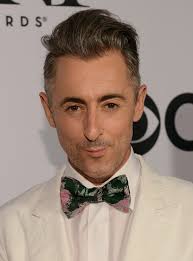
Except, those lists of celebrity bisexuals usually feature three women for every one male or must resort to listing men long deceased to beef up the ratio. Out bisexual males are still very rare in our culture. Even Alan Cumming (pictured above), who so deliciously professed erotic desire for men and women not once but three times while hosting the Tony Awards this year has not embraced the “bisexual” label (as far as I can tell) but is more likely to use the word “pansexual” if he allows any label to define him. And that is his prerogative. Labels are limiting. But the bisexual label seems particularly maligned and avoided, especially for men, at least until now. Perhaps with the millennial generation apparently showing so much more acceptance of sexual fluidity and bisexuality than their elders, this might finally change.
 But there is still so far to go. There are still so few works of art about bisexuals, especially bisexual men. I applaud the recent explosion of movies and TV shows centering on or featuring transgender stories. And gay and lesbian characters have been incorporated into mainstream entertainment for some time now (not that we have arrived yet anywhere near full narrative integration). But bisexual characters? Especially bisexual male characters? I have to go back to the 1970s and Sunday Bloody Sunday and Cabaret (pictured above) to find well drawn bisexual male characters. Torch Song Trilogy had one too but also gave sympathetic voice to a lot of biphobic prejudices. Yet that is over 30 years ago. What about in film, TV and Theater nowadays? Crickets.
Well, maybe not as much for bi women (Piper, the lead in Orange is the New Black, is surely bisexual, even though in the first two seasons no one appears to have used that term in reference to her). But what about bi men in movies, TV or theater? Where are they? Plenty of gay men to be found, and of course straight men still dominate our culture like nobody’s business. But bisexual men? Nada. Invisible. Don’t mention it.
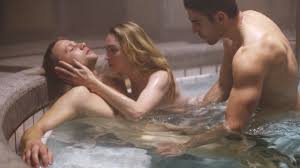
There may be hope. That pansexual orgy scene in episode six of the first season of Sense8 (pictured above) surely had me shouting “Hallelujah”! But the fact remains that the characters’ sexual fluidity was achieved through involuntary mind-melding – in their own space each character individually still seems to identify as hetero- or homosexual (at least by the end of Season 1).














 Notes from a Composer