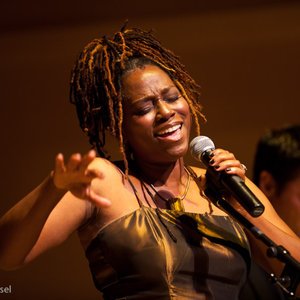
My friend and collaborator Jacqui Sutton has posted a video of her and the Frontier Jazz Orchestra performing “Grass Dolls”, a live performance that also functions as a video submission for NPR’s Tiny Desk concerts.
“Grass Dolls” is the first song Jacqui and I wrote together as part of our upcoming American Anthem song cycle, which Jacqui describes as a project to compose “individual anthems that seek to give voice to members of American society that have not historically felt included in the conversation about what it means to be an authentic American, and who decides what is American”. (Jacqui and I go way back. Listen to the demo recording of “Grass Dolls” as well as her covers of songs from my Mark Twain musical in this piece.)
One of the joys of collaborating with others on songwriting is when a true mixing and melding of one’s sensibilities with another’s sensibilities creates a new, unique sensibility that otherwise wouldn’t exist. So is it with the songs for American Anthem. These songs are a true blending of Jacqui’s and my sensibilities, so much so that I think of them as existing in their own independent universe.
In the case of “Grass Dolls” I couldn’t say anymore which parts were Jacqui and which parts were mine. I do remember that Jacqui came to me with the story of the Grass Dolls and pieces of melody and lyrics and rhythms, which we then together discussed and added to and shaped and massaged in my guest bedroom over note pads and my electric keyboard. But I can’t remember specifically which ideas and additions came from whom, and probably it is rather beside the point. Our work together that day was much like the grass blades being braided together to create the living doll in the imagination of the song’s narrator. Something that in combination comes alive and grows greater than the sum of its parts. When I hear “Grass Dolls”, I think of it as Jacqui’s song, and then need to remind myself that I shared in its creation.
Here the demo recording of Grass Dolls, followed by Jacqui’s YouTube notes:
The Oscar nominations were announced this morning. Here are the five Best Song nominees, three very much expected – the “La La Land” and “Moana” songs, one pretty much expected, “Can’t Stop the Feeling” from “Trolls”, and, as is customary in this category, one unexpected addition: “The Empty Chair” from “Jim: the James Foley Story”. But as Sting co-wrote and sings it, perhaps it should have always been more widely considered to be in the running, alongside songs like “Faith” by Stevie Wonder from “Sing”, “Running” by Pharell from “Hidden Figures”, “Drive it Like You Stole It” from “Sing Street”, which were three songs that had been much discussed as having good chances but ultimately didn’t get nominated.
“Audition (The Fools Who Dream)” from “La La Land”
Music by Justin Hurwitz; Lyric by Benj Pasek and Justin Paul
The first of two songs nominated from “La La Land”, the original movie musical, which received a record 14 nominations today (sharing that record with “All about Eve” and “Titanic”, two films that also went on to win Best Picture at the ceremony, which it seems will the very likely happy fate of “La La Land” too).
“Can’t Stop The Feeling” from “Trolls”
Music and Lyric by Justin Timberlake, Max Martin and Karl Johan Schuster
The “Happy” of this year. Kinda hard not to smile and shimmy when listening to the song from the first of two animated features represented in this category. Animated features tend to be consistently represented in this category. They also tend to win…
“City Of Stars” from “La La Land”
Music by Justin Hurwitz; Lyric by Benj Pasek and Justin Paul
…Except I believe that this will be the winner of the Oscar this year. The second song from “La La Land” to be nominated, it also functions as the movie’s main theme. And it has a melody that is immediately memorable as well as slinks and undulates in idiosyncratically appealing ways. The most distinctive song in this category of strong choices, in my view.
City of Stars – longer version – Ryan Gosling & Emma Stone
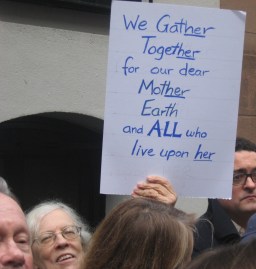
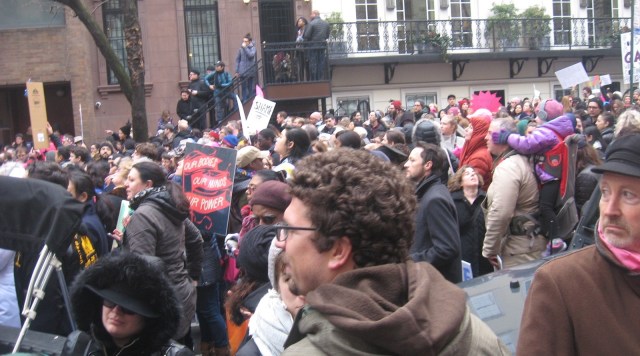
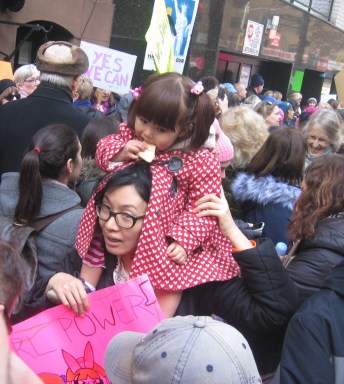
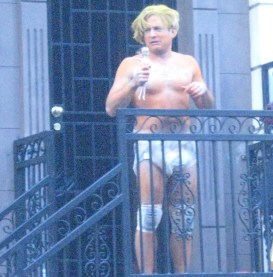
March began 11am . More marchers congregate in gathering area on 48th street in the shadow of Trump World Tower looming on 1st Avenue like Barad’hur (12pm)
We Shall Overcome – Bruce Springsteen (The Seeger Sessions)
– Special focus on Gay/Lesbian/Bisexual/Transgender/Queer Issues
Since “Notes from a Composer” debuted on the Interwebs almost two years ago, it has evolved a little bit beyond its originally intended focus on musicals, my own and universally. And over time I responded to that expansion of focus by adding new categories to the site archives covering all articles. I am happy to announce a big new addition, a one two three triple addition to the archive categories: Cinema Scope, Live! On Stage and LGBTQ Alphabet Soup!
It has become clear to me that these three themes – cinema, theater, queer sexuality – have become a big part of many of the approximately 200 blog pieces posted so far on Notes from a Composer, often even more central to certain articles than the original categorization(s) they were posted under. I also have realized that most of the popular posts here, including ones that continue to find more and more readers long after they were originally posted, happen to be articles that deal with cinema, theater and queer sexuality.
So it made sense to create those particular categories for the archives. And to add those category designations to previous articles that needed them.
To the right on every page of Notes from a Composer, just below the Twitter feed, are links to the various categories all posts here are filed under. If you want to read more articles about movies, click on “Cinema Scope”, to read about live performances as well as stories about life in the theater, click on “Live! On Stage”, if you are curious about Gay/Lesbian/Bisexual/Transgender sexuality, find “LGBTQ Alphabet Soup”.
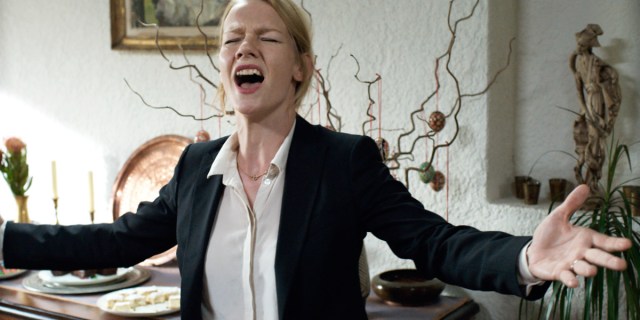
I finally saw “Toni Erdmann”, which A. O. Scott in the New York Times calls “by a wide margin the funniest almost-three-hour German comedy you will ever see”, which swept all the top awards (Picture, Director, Actor, Actress, Screenplay) at the European Film Awards this year, and if all things (as in English language and non-English language films) were equal at the Oscars, really should at least be nominated in those same Academy Awards categories, and not “just” hold the front runner position in the foreign language film race.
A.O. Scott, one of the best reviewers smartly and specifically writing about a movie without spoiling it by giving too much away, describes “Toni Erdmann” both as “a thrilling act of defiance against the toxicity of doing what is expected, on film, at work and out in the world” and “most simply but also most elusively, a sweet and thorny tale of father-daughter bonding”. It also happens to bring that chestnut of ballad bombast “The Greatest Love of All” back to the movies where it originated, possibly elevating it to a higher plain in the process. “Toni Erdmann” doesn’t save the song from the guilty pleasure cringe factor that envelopes it; in fact it ruthlessly takes advantage of the cringe factor for comedic effect. But just how throughout the movie embarrassing and absurd situations are played within the rhythms of uncomfortable naturalism rather than classic farce, thereby mining honest feelings and truths, so does the movie’s absurd performance of “The Greatest Love of All” render the words and message of the song more poignant, more meaningful than ever before.
That “ever before” didn’t begin with Whitney Houston but nearly a decade earlier with Muhammad Ali and George Benson (Listen Here).
Songwriters Michael Masser and Linda Creed wrote “The Greatest Love of All” for the 1977 bio-pic about Muhammad Ali “The Greatest”, which more than partly explains why the lyrics insist “learning to love yourself, it is thegreatest love of all”. It only takes a cursory knowledge of Muhammad Ali’s life, career and struggles to see how much of the song’s lyrics fit all too well in his biography:
I decided long ago, never to walk in anyone’s shadows
If I fail, if I succeed
At least I live as I believe
No matter what they take from me
They can’t take away my dignity
George Benson recorded the vocals for the song, which plays over the movie’s end credits, and was a modest hit as a single (peaking at #24 on the US charts). It is of course Whitney Houston’s cover that became the huge hit that defines the song nowadays in popular consciousness. However the recording was not initially considered a hit track by the record company. It was exiled to the B-Side of her first single “You Give Good Love”. Yet after radio stations started playing it too, Houston’s Greatest Love of All was released as a single and became her then biggest hit (at least until she sang that other great “Love” behemoth “I-ee-ay-ee-ay Will Always Love You-u-u-u-u-u”).
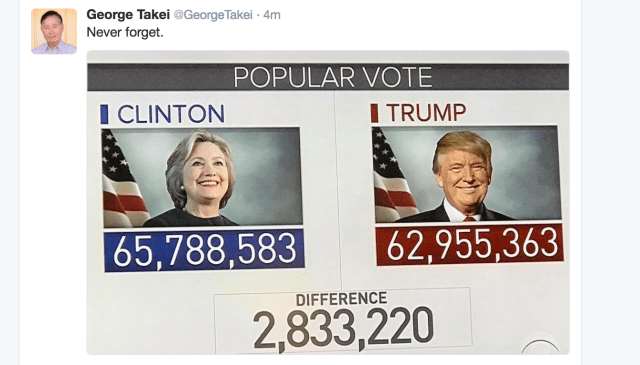
I’ve always had a complicated relationship with the song, starting with the original George Benson version. I understood the underlying positive message that in order to love well and live well you must be able to love yourself, have self worth (see full lyrics at bottom of this post). And nurturing children to find the “beauty they possess inside” is a good thing. However the lyrics never specifically talk about loving others well. Instead the narrator claims “I never found anyone to fulfill my needs; A lonely place to be; so I learned to depend on me.” When the song then dramatically, and in Houston’s case even bombastically, asserts loving yourself is the greatest love at all, one can be excused for fearing that we may be crossing over into a more vainglorious, even narcissistic form of love. There is self esteem, and then there is sociopathic self-regard, as a recent unpopularly elected political figure demonstrates. Of course, my therapist husband reminds me that that kind of narcissist doesn’t really love itself, and surely was not taught as a child to nurture positive self esteem, but on the contrary is a black hole of desperate need for love that can never be filled exactly because he is not capable of true self-love, only monstrous self-regard.
Oops, got a little side-tracked there. Back to the song and back to “Toni Erdmann”.
Last year I ushered in the new year with Hope for a New Year, featuring the cathartic finale “Hope” of my oratorio The Song of Job 9:11. A song of phoenix like rising from the ashes, a gently defiant assertion of faith in good overcoming the worst, culminating in joyous vocalese. Here the video of the 10th anniversary concert (I’ll repost an audio track with lyrics at the bottom of this post). :
This year, well, let’s face it 2016 has been a shit storm, and 2017 we start living with the consequences of the manure pile up.
On top of the national and global veer towards insanity we have endured a series of unexpected, untimely high profile deaths. George Michael’s was the first dreadful “Christmas Surprise”. And his song of social despair “Praying for Time” has consequently become the theme song of the transition into this not necessarily happy new year.
The song is about 27 years old, and when I heard it at the time I didn’t see why the ills the lyrics are lamenting should be any more pressing at that particular time. Today however some of the lines hit the ills and the mood of the nation, the world, with greater particularity:
This is the year of the hungry man
Whose place is in the past
Hand in hand with ignorance
And legitimate excuses
Almost reads like how many pundits described certain groups of voters this year…
Still, it’s the dark mood of the song, and it’s final message countering hope with the admonishment that maybe hope must wait, praying for time is all we can muster for now, that sadly truly resonates for me. Almost as a rebuke to last year’s posting of “Hope”…
And it’s hard to love, there’s so much to hate
Hanging on to hope
When there is no hope to speak of
And the wounded skies above say it’s much too late
Well maybe we should all be praying for time
When I first heard this song, I thought the bleak central message seemed unwarrented at that particular time in history compared to darker days in the past, including the then recent past I was old enough to remember. Today I feel myself shamefully drawn to the message. It feels too true for the here and now and days to come. Yet I shouldn’t want it to be.
But perhaps by this year’s end, we will feel ourselves having risen phoenix like from the ashes with brighter prospects actually visibly ahead. And the defiantly joyous conclusion of “Hope” will feel like something to be wholeheartedly believed again.
(Originally posted last Christmas… Last Christmas … sniff… R.I.P. George Michael…)
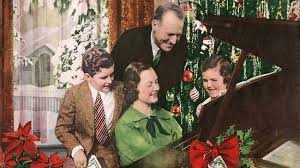
I plead guilty to being a bit of a Christmas Carol Grinch. OK, I used to be a BIG Christmas Carol Grinch, really loathing most carols and sometimes resorting to lip syncing rather than singing out loud when drawn into a festive sing along. This bad attitude probably stems from having been raised in a secular household blissfully devoid of Christianity. I still enjoyed all the pagan accouterments of the holiday, the decorated (Solstice) tree, the presents, a belief in Santa until I was five (OK, that may not be pagan). But being an aggressively atheistic kid, and stubborn, I didn’t enjoy singing about “Christ the Lord” or “God” or “Baby Jesus”. I admit my atheism at times was as obnoxious as the aggressive certainty of an overzealous Evangelist.
Now, I’ve put atheism behind me, but I still consider myself “spiritually unaffiliated” and still am a little allergic to the “C” and “J” words, as well as still a bit of a snob when it comes to the whole baby in the manger kitsch factor. Nonetheless, 22 years together with Ed has welded me firmly to a family that loves singing carols together, and has taught me to temper my unfestive disdain, and join in with the music.
And truth be told, the music to most Christmas carols is very beautiful. I still cringe a bit at the words, especially when it seems the lyrics of foreign carols have been mostly rewritten to interchangeable Christchild adoring homogeneity in English where there was a greater thematic variety in the original, and I still bristle at Beethoven’s Ode to Joy having been rewritten as a Christian Hymn (“Sacrilege, I say!”), but I’ve grown way mellower with age and will be happy to sing along with the program with all the Elders this holiday.
It is though a bit of an irony that I of all people, this longtime carol-phobe, have found myself writing what I only in hindsight realized were three perfectly seasonally appropriate carols. They are songs from my musical “beTwixt, beTween & beTWAIN” (about which I have posted before here and here) called “Pilgrims from America”, “Jerusalem” and “Sea of Galilee”. They are unreservedly suited for caroling occasions. They may not include the direct references to “Christ the Lord” or “Baby Jesus” but they should nonetheless please the sensibilities of all carol singing enthusiasts, even the very religious.
This post features holiday music from the damn bestest Lesbian holiday album ever:
Venus Envy’s 1990’s cult classic “I’ll be a Homo for Christmas”
The Williamsburgh Savings Bank Tower is the most famous building in Brooklyn. Completed in 1929 it remained the tallest building in Brooklyn for over 80 years. For all that time it stood alone as a kind of beacon in its corner of Brooklyn just north of Park Slope and South of Fort Greene and just across the way from BAM, the Brooklyn Academy of Music. You could give directions by it (“walk towards the big tower”, “walk away from the big tower”) because there was nothing tall like it near on the horizon. That has changed now that many similarly tall buildings have joined it only recently in the skyline, but the Williamsburgh Savings Bank Tower still stands unique and unequaled in the Brooklyn landscape.
The most wonderful part of the building is its old bank lobby with its marble floors, carved teller stations, 63-foot vaulted ceiling, character silhouetted windows, massive bank vault door, and 40-foot mosaic of New York as a Dutch colony.
For many years, after the bank had closed, the building was first occupied by dental offices (nicknamed “the Mecca of Dentistry”) which then got converted into luxury condos. But the amazing ground floor space remained mostly inaccessible. This winter however, every weekend the lobby is being opened up for an ongoing flee market. And although the building’s million dollar condo developers have renamed the architectural icon “One Hanson Place” and now refer to the main lobby highfalutingly as “Skylight”, the organizers of the flee market (and food mart in the basement below) reach back to the original name by calling the ongoing weekend flee market “Smorgasburg”.
The contrast of the imposing Byzantine-Romanesque architecture and impressive interior details with the eccentricity and discovery of the flee market makes for a fascinating treasure trove of imagery and contrasts. I went to the Williamsburgh Bank Tower and “Smorgasburg” twice so far and felt inspired to take many pictures, some I will be sharing here now.
Happy Holidays and enjoy this particularly Brooklyn treat. Hopefully the weekend indoor flee market can continue beyond its scheduled March conclusion, so that this fabulous interior space remains accessible for visiting and viewing.
Shadow and Light – Danny Ashkenasi (from the musical Speakeasy)
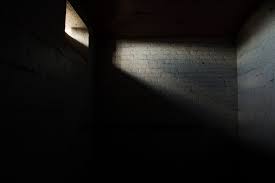
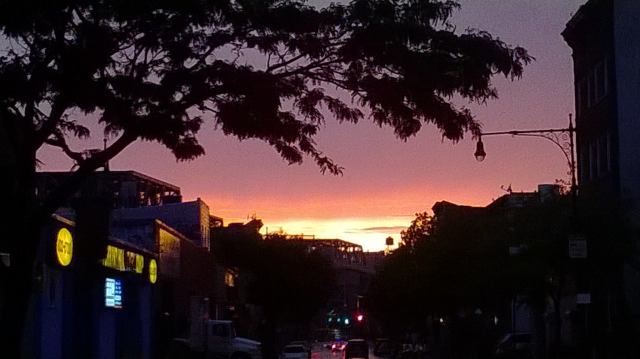
Today I will share some photos I have taken over the past few months that feature a play of light and shadow in a diverse variety. I’ll complement these images with songs about shadow and light, the first one actually called “Shadow and Light”, a song from my musical Speakeasy that I hadn’t yet shared on this blog before. A few of these pictures and tracks have been featured on Notes from a Composer before, a few will be included in an upcoming post. But most are unique to this post.
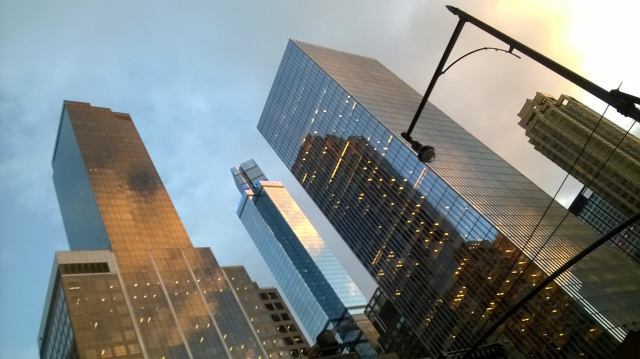
Above and to the right, twilight shadow and light reflections on Flatbush Avenue in Brooklyn near the Atlantic Mall (I particularly like how the actual clouds and blue skies align with the reflection of other clouds and sky in the building facade in the picture to the right).
Speaking of twilight in Brooklyn:
Twilight and Shadow – Howard Shore (LOTR)
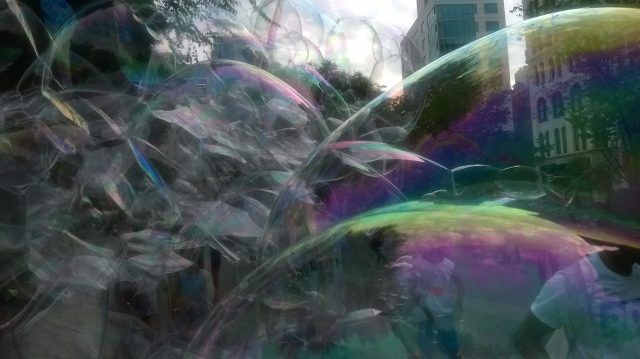
Manhattan bubbles breaking the light from overcast skies:
I moved to New York City in 1986 yet sometimes I still enjoy it like a tourist. You know the old joke about telling the tourists from the New Yorkers by who is looking up? Well, I may be a New Yorker of more than 30 years but I still like looking up in awe, and sometimes I’ll start taking some “beauty shots” just for the fun of it. Two-Fisted Touristing in my home town. So it was while I walked up last evening past the Hearst Tower on 8th avenue and the corner of 56th Street. The remarkable building, the first “green” high-rise office building completed in New York, rising from the preserved facade of the 1920’s Hearst building, and winner of 2006’s Emporis Skyscraper Award (“best skyscraper in the world completed that year!”), always catches my eye. Today it caught the late afternoon sun nicely too, as did the surrounding buildings. So I took a few pics of the upper delights all around the intersection and posted them on Facebook.
21 Brazil Articles! – 22 Covers of “Brazil”! – 19 Brazilian Music Tracks! – Countless Brazil Photos!
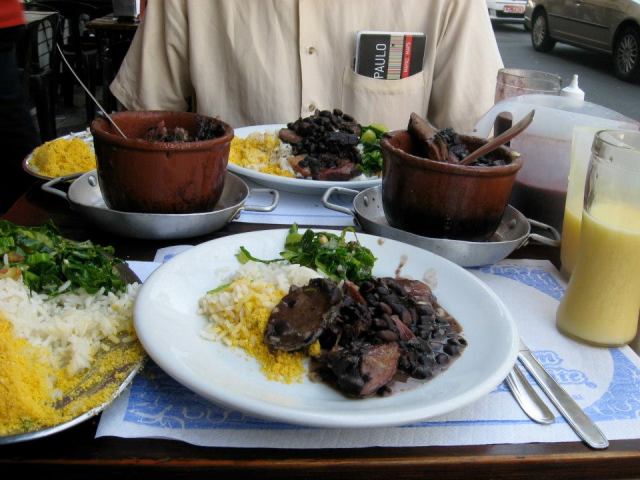
When I started the Two-Fisted Touristing Brazil Series I did not anticipate that it would grow to 21 articles (including this final one) over four months. So, collected here are introductions and links to all of them (just click on the titles), the whole feijoida in other words (well, I can’t use “the whole enchilada”, that’s not a Brazilian dish; feijoada however is the national Brazilian dish – a delicious black bean stew with meat, rice and vegetables).
I will also collect here every version of the song “Brazil” I posted throughout the series, 22 in all, which constitutes just about every cover of “Brazil” you can find on Itunes (give or take a straggler or two). I’ll also include every recording of Brazilian music that I incorporated throughout the series. It’s all here. The Whole Feijoada!
Our final meal of feijoada on our final day in Brazil, 2012
The Brazil series officially started with a reposting of a visit to the amazing waterfalls of Foz do Iguaçu, with the added bonus of including the first of the “Brazil” recordings.
Brazil, where hearts were entertaining June We stood beneath an amber moon And softly murmured “someday soon” We kissed and clung together
Except that the famous lyrics we associate with the song will not be heard yet in this first recording that originally spread the famous melody around the world thanks to the Disney movie “Saludos Amigos”. Here we hear the song as originally sung in Portuguese and known in Brazil as “Aquarela do Brasil”. Maybe it’s because I grew up with the famous English version, but I actually prefer the consistent holding of long notes on one syllable on the opening and ending notes of each line, rather than how in the original these notes are often doubled by two syllables.
The article about the fascinating divide of black and brown waters of the Amazon by Manaus was updated with new, more detailed images acquired a few weeks after the original posting when Ed and I returned to Manaus and got an even closer view of the divide than we had our first time in 2012.
Pink Martini gets the honors of being the first English language version of Brazil I share, not only because of her fine vocals, but also because she delicately captures both a slow ballad and dance-able uptempo approach to the song. And when the children sing “la la la” in the end it manages to be totally endearing rather than cheesy.
This post dives deeply into Piranha infested waters. But it’s not we who get bitten, it’s the piranhas who become our dinner. We also take our boat through the enchanting floating forests of the Amazon.
Michael Kamen’s arrangement of “Brazil”, for the soundtrack of Terry Gilliam’s classic movie “Brazil”, which has nothing to do with the country but is a dystopian satire literally named after the song, envelopes the tune in a sumptuous carnival atmosphere:
BRAZIL (Bachianos Brazil Samba) – Michael Kamen
Here is also where the (my mother will lament “only”) example of Brazil’s leading classical composer Heitor Villa-Lobos is included. That I am so much more familiar with Brazil’s popular music than Villa-Lobos specifically or the country’s classical music in general is probably to my discredit. I will however declare that this piece of absolute loveliness towers above just about all of the other Brazil series recordings in the whole feijoada.
Bachianas Brasilieras No 5 (Aria) – Heitor Villa-Lobos (Vocal: Heidi Grant Murphy)
Here we go to Rio! The Ipanema and Copacabana beaches! The Sugarloaf! And to get into the fun spirit of it all, we’ll lay Old Blue Eye’s take on “Brazil” on the turntable:
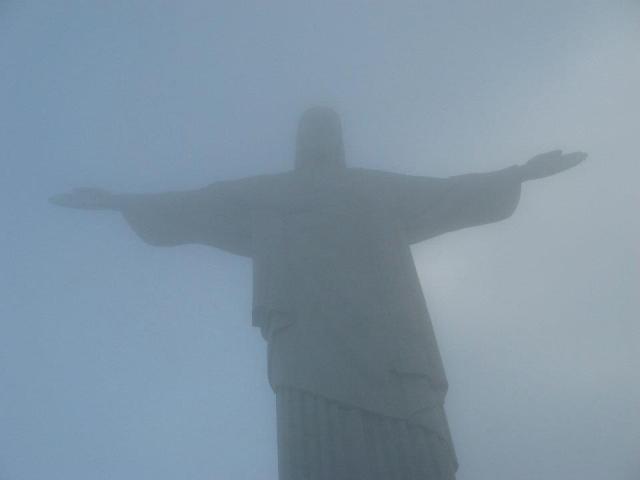
The second Rio-centric piece wanders through the city streets, rich in religious, spiritual and mysterious significance, ending up with the most unusual way to experience Rio’s famous Christ the Redeemer statue you are likely to find on the internet.
The Ritchie Family’s ridiculous Disco riff on Brazil (“You got me! You got me! YOU GOT ME!”) accompanies us along the way:
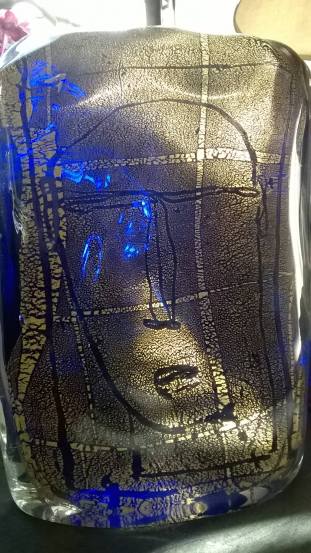
The morning sun dappled our blue and gold head sculpture just so the other day. So I took this picture.
That’s the version that should fit comfortably on your screen. For a BIGnified look at the details, plus details about the making of the piece, look below:
Brazil – Brazil Choir / Brazil String Orchestra / Quatuor Ébène / Richard Héry
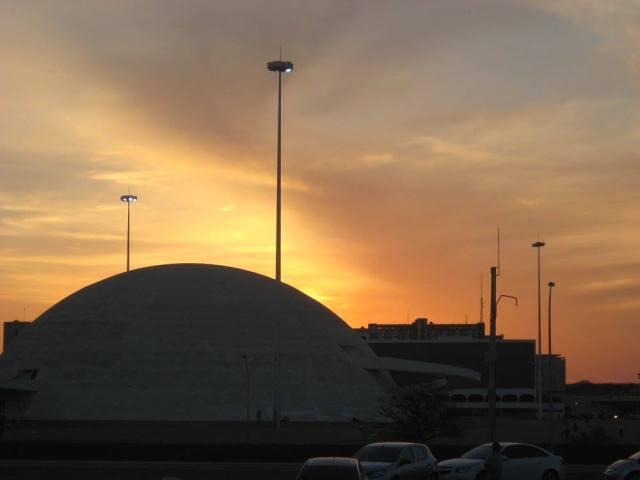
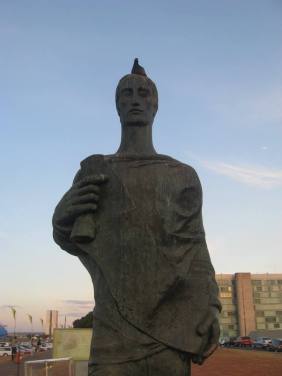
The last day of our second trip to Brazil, August 2016, was spent traveling from Manaus, in the Amazon, to Campinas, just north of São Paulo, to catch our flight back to the United States. We had a four hour stopover in Brasília, the planned city capital of Brazil. Enough time to catch a bus and take some pictures of the nerve center of the city , the mall with all the government buildings, just as the sun was setting.
Brasília was founded in 1960, developed much like Washington D.C. in the States as a city designed to be the federal capital of Brazil, within a federal district distinct as a municipality from the rest of the country. The city structure is known as the Pilot Plan, in the shape of an airplane or bird with a wide wingspan. The centers of all three branches of government (Congress, President and Supreme Court) are located in the head, or cockpit, of Brasília’s bird, or plane. And that is where these twilight pictures were taken.
National Museum
Ministerial buildings line up like domino pieces.
Statues and vendors in front of the National Cathedral
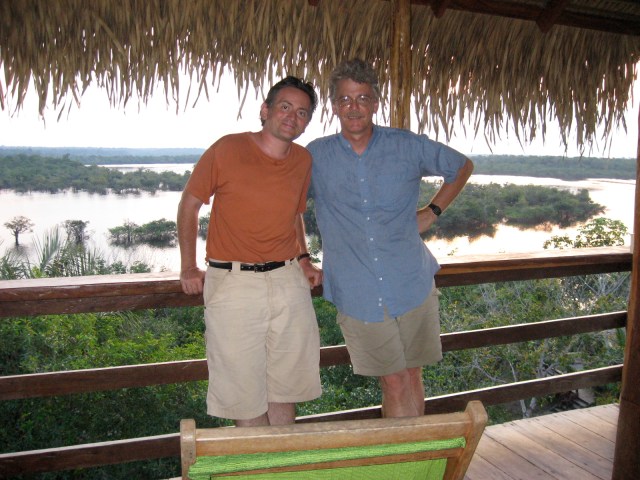
People from all over the planet come to Manaus to explore the Amazon. But where do the people from Manaus go on vacation? Presidente Figuerido, a resort town two hours north of Manaus and two degrees south of the equator. That is where Ed and I would climb 50 meters up a rainforest tree.
But before we go climb a tree, let’s take a look and dip in one of the many rainforest waterfalls that the region around Presidente Figuerido is known for. Unlike the falls of Iguaçu, these are accessible and relatively safe to utilize as a massive backscratcher.
The White Tree – Howard Shore (LOTR: Return of the King)
(Of course I can’t help myself from sprinkling this “tree” post with “tree” music. It’s what I do…)
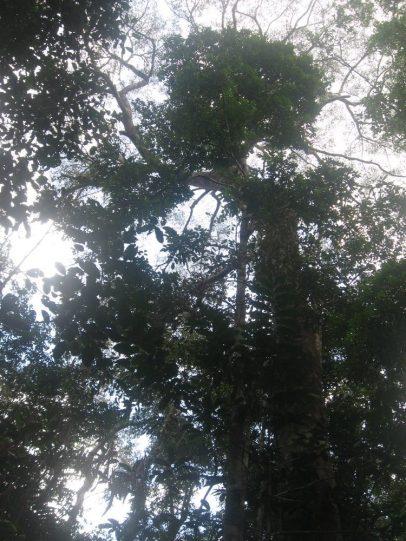
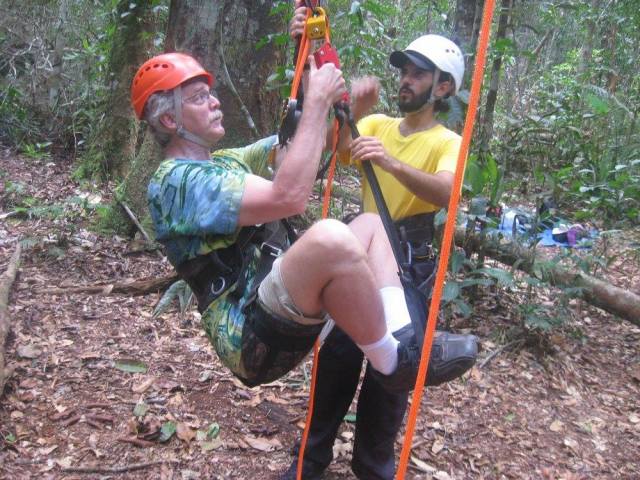
The dip in the waterfall was our “reward” or bonus after our tree-climbing excursion. Three guides drove us from Manaus past Presidente Figuerido to a particular location in the rainforest where a designated tree – particularly high and sturdy – is used for a vertical journey up to the canopy.
To the right is “our” tree.
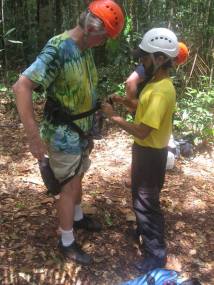
First one of the guides climbed up and attached the red cables – one for each of us – onto two sturdy branches about 50 meters above.
Dowland: The Lowest Trees Have Tops – Sting / Eden Karamazov
We were instructed in the proper technique using the cables and equipment to pull ourselves up – it’s quite the full body exercise, but easier if you are short and light – and then made our way to the canopy.
The Linden Tree – Osipov State Russian Folk Orchestra
 In the case of “Grass Dolls” I couldn’t say anymore which parts were Jacqui and which parts were mine. I do remember that Jacqui came to me with the story of the Grass Dolls and pieces of melody and lyrics and rhythms, which we then together discussed and added to and shaped and massaged in my guest bedroom over note pads and my electric keyboard. But I can’t remember specifically which ideas and additions came from whom, and probably it is rather beside the point. Our work together that day was much like the grass blades being braided together to create the living doll in the imagination of the song’s narrator. Something that in combination comes alive and grows greater than the sum of its parts. When I hear “Grass Dolls”, I think of it as Jacqui’s song, and then need to remind myself that I shared in its creation.















 Now, I’ve put atheism behind me, but I still consider myself “spiritually unaffiliated” and still am a little allergic to the “C” and “J” words, as well as still a bit of a snob when it comes to the whole baby in the manger kitsch factor. Nonetheless, 22 years together with Ed has welded me firmly to a family that loves singing carols together, and has taught me to temper my unfestive disdain, and join in with the music.
 And truth be told, the music to most Christmas carols is very beautiful. I still cringe a bit at the words, especially when it seems the lyrics of foreign carols have been mostly rewritten to interchangeable Christchild adoring homogeneity in English where there was a greater thematic variety in the original, and I still bristle at Beethoven’s Ode to Joy having been rewritten as a Christian Hymn (“Sacrilege, I say!”), but I’ve grown way mellower with age and will be happy to sing along with the program with all the Elders this holiday.
 It is though a bit of an irony that I of all people, this longtime carol-phobe, have found myself writing what I only in hindsight realized were three perfectly seasonally appropriate carols. They are songs from my musical “beTwixt, beTween & beTWAIN” (about which I have posted before
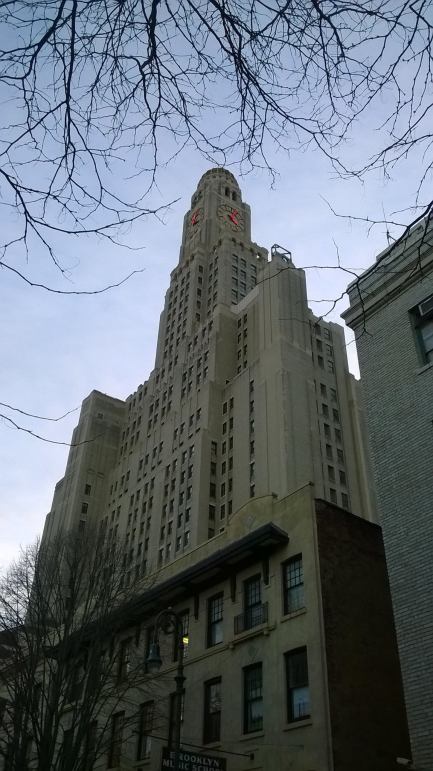 The Williamsburgh Savings Bank Tower is the most famous building in Brooklyn. Completed in 1929 it remained the tallest building in Brooklyn for over 80 years. For all that time it stood alone as a kind of beacon in its corner of Brooklyn just north of Park Slope and South of Fort Greene and just across the way from BAM, the Brooklyn Academy of Music. You could give directions by it (“walk towards the big tower”, “walk away from the big tower”) because there was nothing tall like it near on the horizon. That has changed now that many similarly tall buildings have joined it only recently in the skyline, but the Williamsburgh Savings Bank Tower still stands unique and unequaled in the Brooklyn landscape.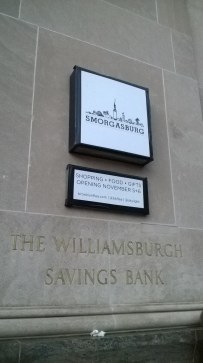


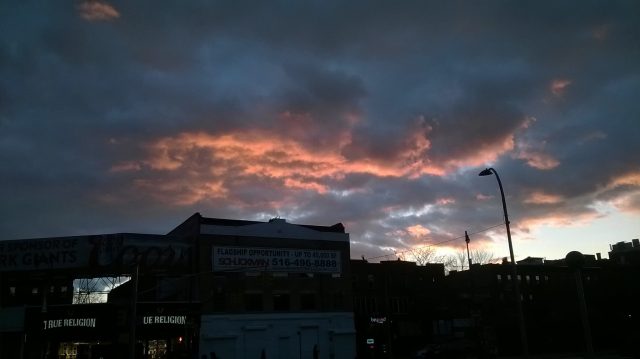
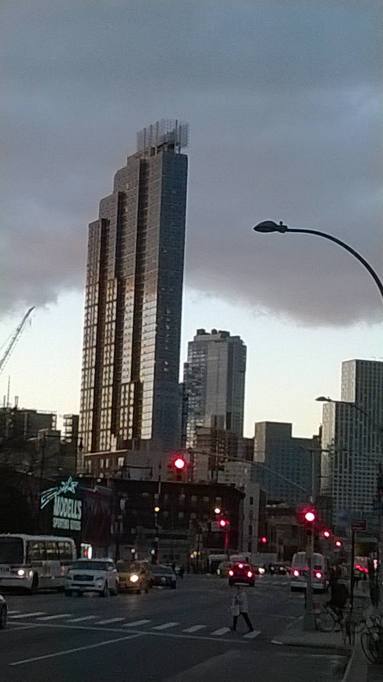 Today I will share some photos I have taken over the past few months that feature a play of light and shadow in a diverse variety. I’ll complement these images with songs about shadow and light, the first one actually called “Shadow and Light”, a song from my musical Speakeasy that I hadn’t yet shared on this blog before. A few of these pictures and tracks have been featured on Notes from a Composer before, a few will be included in an upcoming post. But most are unique to this post.
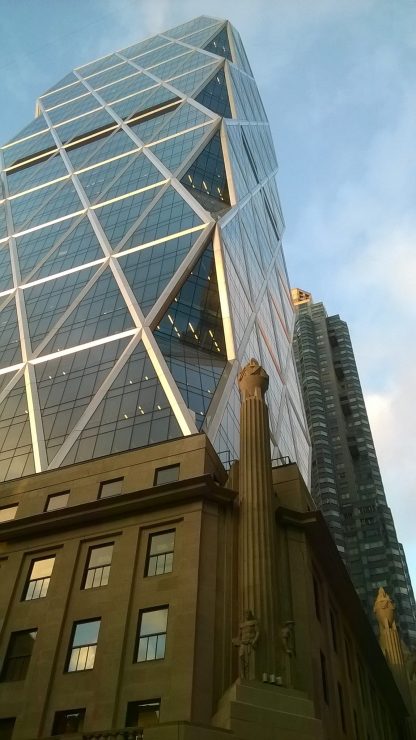 I moved to New York City in 1986 yet sometimes I still enjoy it like a tourist. You know the old joke about telling the tourists from the New Yorkers by who is looking up? Well, I may be a New Yorker of more than 30 years but I still like looking up in awe, and sometimes I’ll start taking some “beauty shots” just for the fun of it. Two-Fisted Touristing in my home town. So it was while I walked up last evening past the Hearst Tower on 8th avenue and the corner of 56th Street. The remarkable building,







 Brasília was founded in 1960, developed much like Washington D.C. in the States as a city designed to be the federal capital of Brazil, within a federal district distinct as a municipality from the rest of the country. The city structure is known as the Pilot Plan, in the shape of an airplane or bird with a wide wingspan. The centers of all three branches of government (Congress, President and Supreme Court) are located in the head, or cockpit, of Brasília’s bird, or plane. And that is where these twilight pictures were taken.