
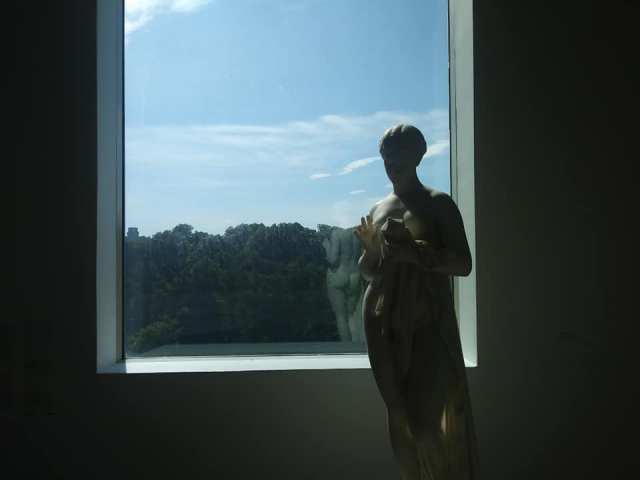
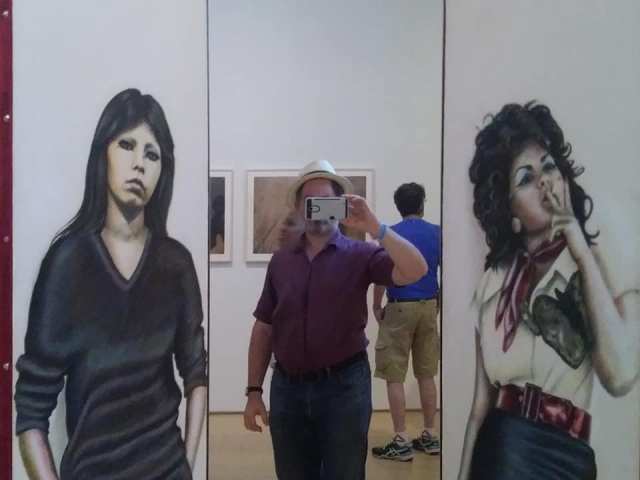
Yesterday at the Brooklyn Museum with an unwitting special focus on the feminine




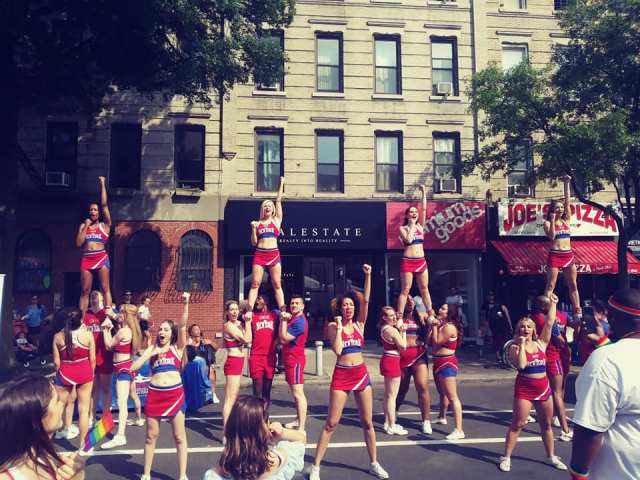
We are Family – Sisters Sledge









The following emails are actual. Only certain identifying details have been redacted.
Sunday, 7:01pm – Message from D- C- relayed via a service for independent contractors:
Hello,My name is D- ,I want lessons for my Daughter,she is 12 years old, Pls text (XXX) XXX-XXXX me or email to ( h——@gmail.com ) the cost of 1 hour per day total of 10 lessons in a month ?
Sunday 11:21 pm – Danny Ashkenasi to h—–@gmail.com
Please let me know between what two dates you would like to schedule the 10 lessons and (if 2pm will work for you) I will schedule out 10 specific dates that maximize the efficacy of the lessons.
Is Susan a beginner player, and if not, how many years has she been playing piano?
best,
Danny
I will write out a schedule (with my address) and an invoice for you. Should we have her start this Wednesday? Or we could start tomorrow (Tuesday) too, if you like. Since we are starting so soon, the check can be brought with your daughter at the first lesson.
But before I can create the schedule I need to know by what day should the 10 lessons end?
best,
Danny Ashkenasi
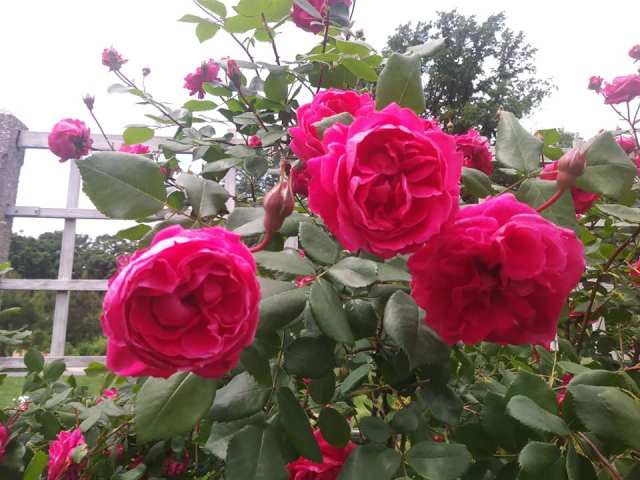
Another year… another June…


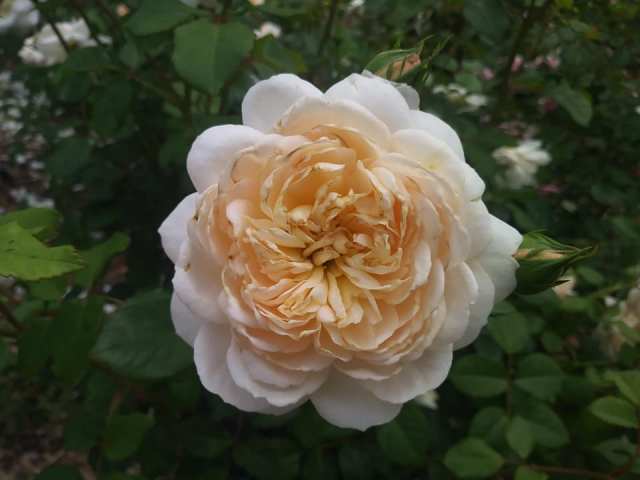
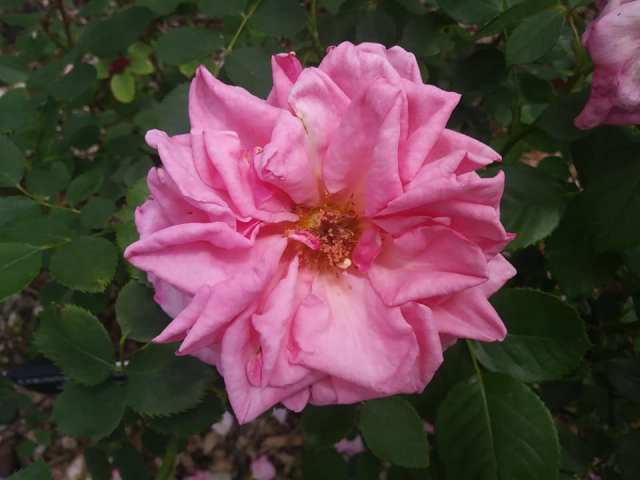
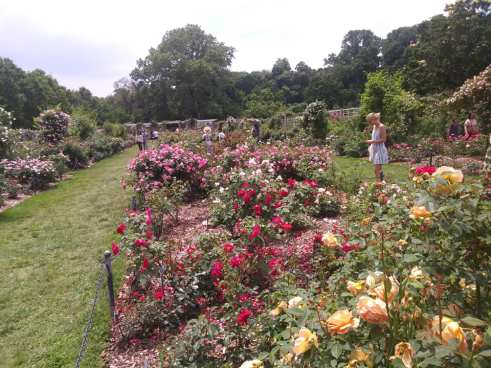 This year the rose garden at the Brooklyn Botanic Garden had received a “hard cut”, as we heard a passerby explain. Which made it still lovely but less lush than in years past. So I’ll focus on the close-up in this post.
And of course we’ll include a rosy little musical quiz, answers strewn among the tags below. (Warm-up question, which 1920’s tune begins with the above quoted lyric “another year, another June…”?)


Rose petaled question #1: For which movie did Bette Midler receive her first Academy Award Best Actress nomination? Bonus question, which movie provided her second?



There’s a new category here at Notes from a Composer: Arts-a-Poppin’.
(This category, like all the others, can be accessed on the right side of every site page, just below the tweet stream.)
After posting a double bill of selections from ART NY 2018 (after showcasing the 2016 and 2017 ART NY editions), it has become obvious that a special focus on the visual arts has crept into my blog as one more sideline to my shared musings and enthusiasms. And then too there is my propensity to share some of my artsy fartsy photographic experiences, which often have more than just a touristy angle, if that.
So now there is a blog archive that collects my sporadic enthusiasm for visual arts and visual amateur experimentations.
Where, in addition to the ART NY Extravaganzas, you may spend time with Rodin in Brooklyn.

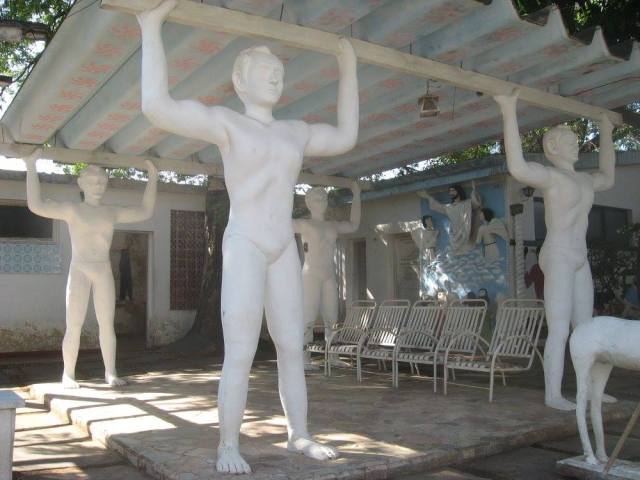
Or stumble upon hidden folk art in Brazil.
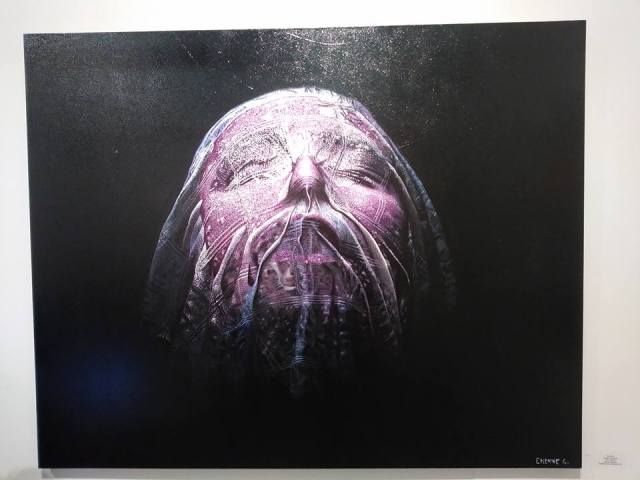
Etienne Garceau
Part 2 of my glimpse into ART NY 2018. Some more “celebrity sightings” in artist and subject just as in Part 1. Even more “shifting perspectives”, featuring videos of art work that show how they change, either because they include video imagery in motion, or because they alter depending on the perspective of their viewing. For example the changing colors of Zhang Hang Yi’s Flowerbed:

Or the far off / up close changes in Nemo Jantzen’s “Vogue”:
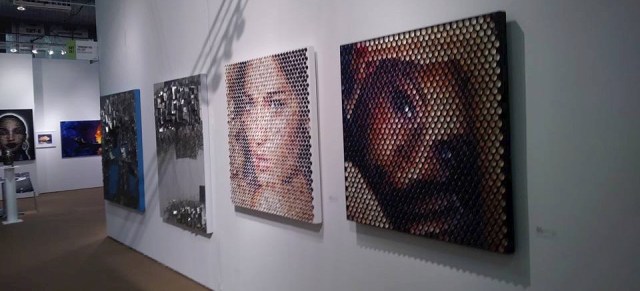
And as before, I’ll throw in a few more Art Song Puzzlers, the answers for which may be found tucked within the tags at the bottom of the post.
ART SONG QUERY #4
Which singer asked us to come away with her to sing about painting?
Hendrik Kerstas
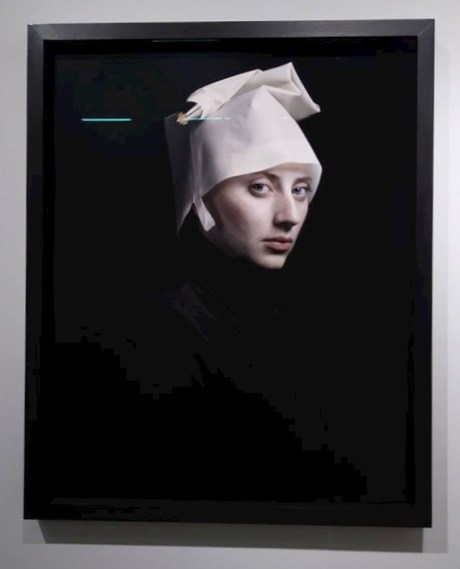
Roberto Fabelo


Frederico Uribe

Sinatra and Einstein by Will Kurtz


Florian Eymann

Leonor Anthony

Oliver Czarnetta

(Note the suspicious look I get from the minder at the end of this video:)

The large Yigal Ozeri portrait of Whoopi Goldberg behind the information desk by the entrance into ART NY 2018 was a hint that this year’s exhibition would have more than its fair share of celebrity sightings. Not only celebrities being depicted in the art. Also celebrities exhibiting. And by that I mean both famous artists like Pablo Picasso and Marc Chagall as well as famous actor Adrien Brody and famous quarterback Joe Namath.
We’ll get to those and much more intriguing art. And just as in my previous two blog posts on Art NY there will be another guessing game of “art” songs (with the answers hidden in the tags at the bottom of the post). 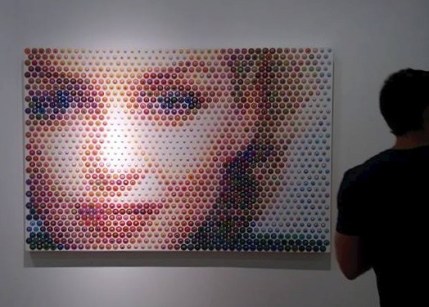 But this year for the first time I will also include some cool videos of art that changes over time or with shifting viewer perspectives.
For example Gavin Rain’s painting (with three dimensional candy striped paint cones) of (celebrity) Marilyn Monroe, an icon who would figure in quite a few Art NY 2018 works this year:
ART SONG QUERY #1
Which artsy pop diva is stepping into the part previously played by Barbra Streisand and Judy Garland and Janet Gaynor in what movie remake directed by which 4 time Oscar nominee?
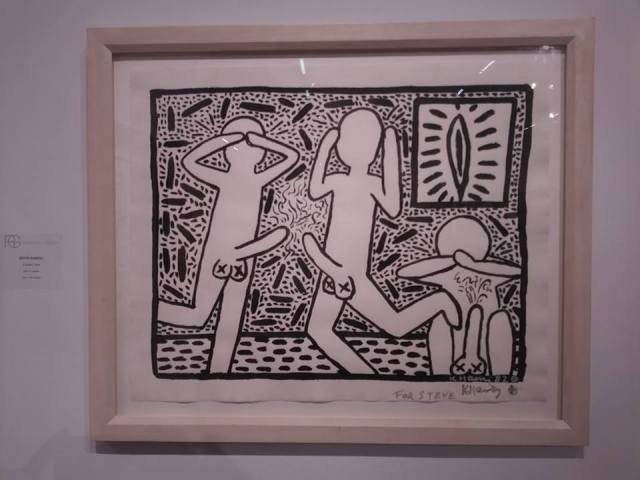
“See no vulva, hear no vulva, speak no vulva”, one might quip.

Speaking of celebrity artists, Keith Haring (above) must be included in that category, and once again ART NY had some of his work on display, including an example of his subway graffiti art (right), from early in his career when Haring would “deface” black posters which used to cover temporarily unrented subway station wall ad space. Yesterday’s illegal agitprop graffiti art had been roughly torn off the subway wall and is now today’s glass framed, expensive gallery offering.
Kenny Sharf:
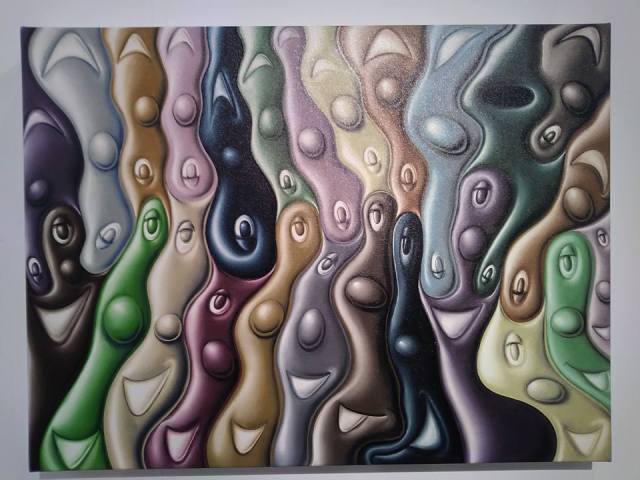
Cartoon sensibilities and celebrity cartoons come into play in a lot of pieces, like this one by Ron English:
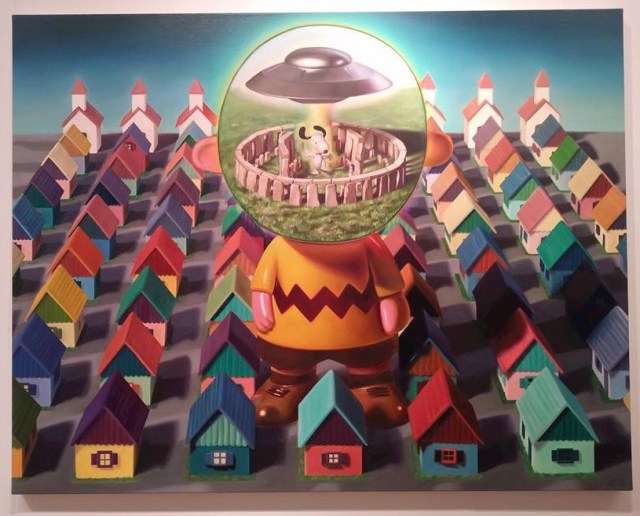

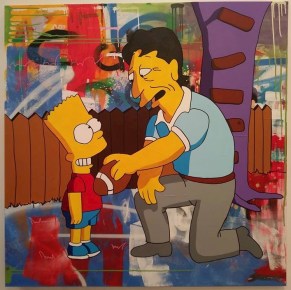 Or you can purchase an oil painting of a tv cartoon still of Bart Simpson and Joe Namath. Just one option of many on display at the Joe Namath Foundation Exhibition.
Which do you prefer, the yellow googly-eyed Joe or the shirtless hairy-chested Joe?
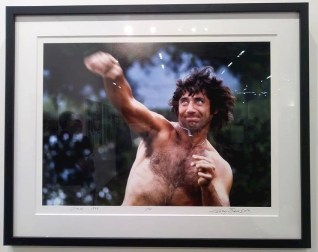
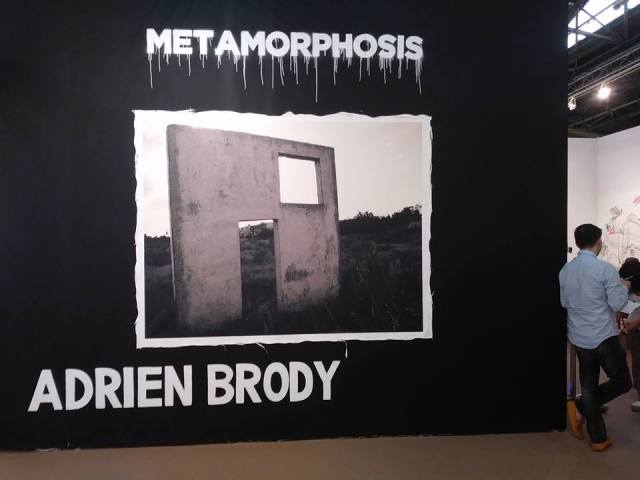
Right next to Joe Namath was Adrien Brody:
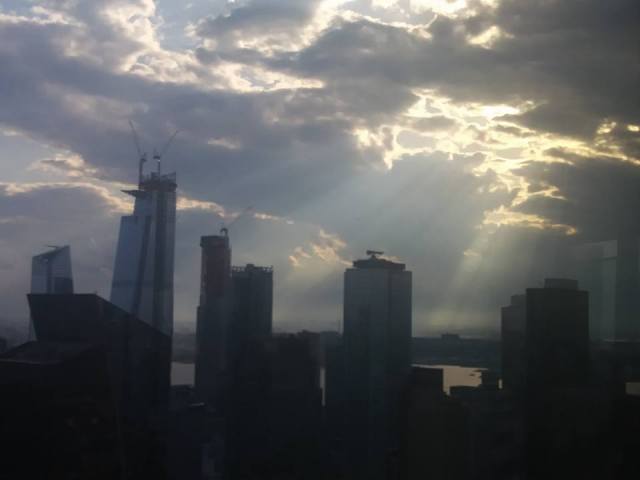
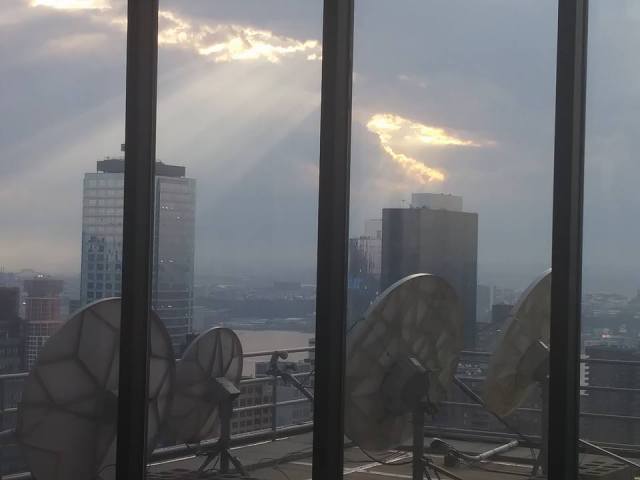
Ed and I were treated to dinner at The View restaurant on the top of the Marriott Hotel in Times Square. 48 stories high, the whole restaurant is perched on a circular platform that, like a very slowly rotating record, turns on an axis over the course of a little over an hour to present the patron with 360 degrees of high perched Manhattan city views.
Ed and I couldn’t help ourselves. We took a lot of photos.
And as is my wont in this kind of post, to make this a bit of a guessing game, I will sprinkle high flying city songs throughout, whose titles and artists shall remain a secret (easily sussed out via the tags at the bottom of the post).
High Flying City Song #1
(Sounds like she would have preferred to stay in merry old England)

The food, by the way, was OK. But not nearly commensurate with the rich prices. I’d say there is at least a 100% mark up for the views, which, depending on your perspective, may still make it worth the expense.

High Flying City Song #2
(These city high fliers are promising a whole new song, after over 35 years.)

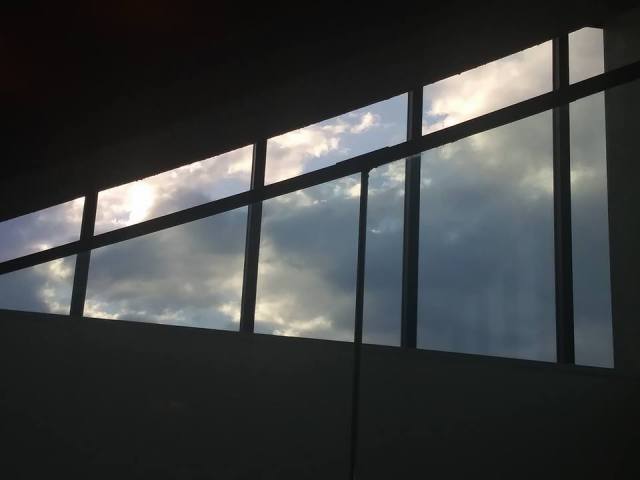
High Flying City Song #3
(This song was inspired by the NYC financial crisis of the 1970s, specifically the newspaper headline: “Ford to NY: Drop Dead”.)
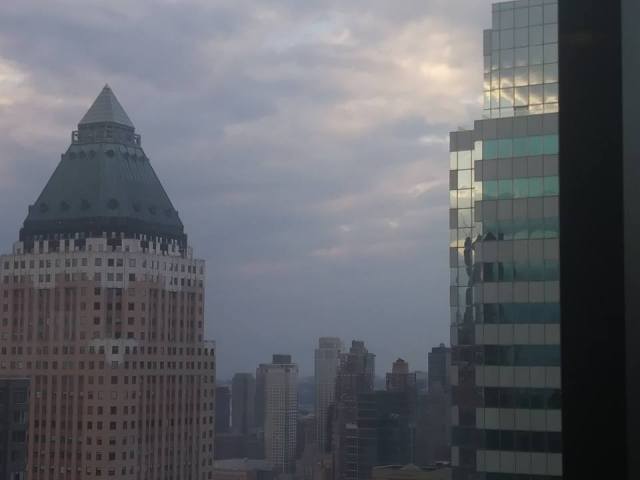
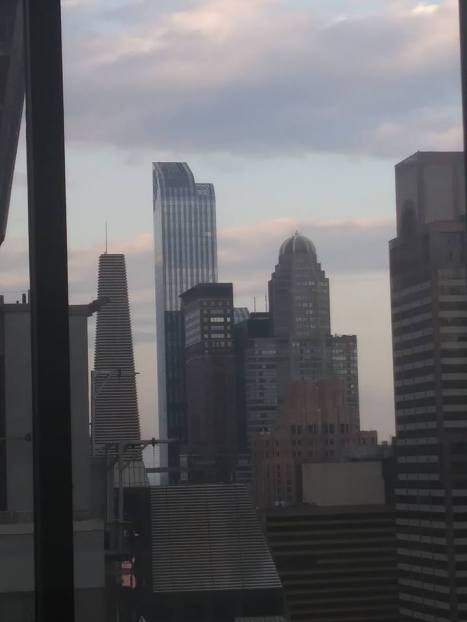
High Flying City Song #4
(How can you feel blue with such a view?)

Oh look, the moon:

Can you guess the show being advertised on the screen below? (The tags at the bottom include the answer.)

High Flying City Song #5
(I doubt the little tramp would have been able to afford this restaurant.)

Do you recognize a particularly famous building (above) by its silhouette? (Again, the tags include the answer.)
The public voting phase of the Carl Orff Competition concluded yesterday. Now I guess the public ratings of the 115 entries are being weighted and tabulated to determine five finalists. Five more finalists will be chosen by a select jury. Sometime in June, we are told, the ten finalists will be announced.
Also yesterday I received this email from a friend, Kevin Jillette, which I thought included some astute and well formulated comments about the competition and Rilke (the bold facing and underlining is Kevin’s):
Hey Danny,
Just wanted to let you know that I managed to hear and vote for your Orff Competition entry, along with about 19 others. The whole thing is pretty compelling: I’m fascinated not only by the range of inspiration and imagination on display, but also by the fact of the competition having so many entries! I found myself wondering about these composers’ back-stories — beyond what the brief bios revealed — and wanting to know why they decided to enter the competition.
And then there’s the music, of course. In the pile of entries I heard there were some attractive, precious and semi-precious stones; a handful of handsome and perfectly acceptable paste numbers; a couple of clinkers; and a few real gems. Your composition is in that last category.
One aspect of Rilke that I’ve always enjoyed — even when at his most inscrutable — is the distinctive mood/breath his poetry exhales. It’s like the atmosphere of a peculiar world from which his works have arrived, wherein one encounters seeming paradoxes like elegant primitivism or elegiac energy. Your song is a inspired setting of Rilke’s text, and (IMHO) it makes marvelous, imaginative use of the stipulated materials. But beyond that, through some kind of alchemy, you’ve also managed to capture and convey that mood. Which is why — to me — your piece wins.
Thanks Kevin, and thank you for permitting me sharing your thoughts.
You can listen to and follow the score of “Orpheus. Eurydike. Hermes” below:

April 25, 1998, oh how young we once were…
“So, where did the two of you meet?” we are often asked.
“In the back of a Greyhound bus,” we respond by rote, and await the inevitable follow up question.
It was exactly 25 years ago, April 25, 1993, on the way back to NYC from the big Gay and Lesbian March on Washington we had individually attended that weekend (back then Bi and Transgender were yet to be added to codify LGBTQ). I tell that story, and how our marriage exactly 5 years later made us out-law marrieds until the final federal seal of approval in 2015, in my “Our Time Has Come” blog post.

Ed and I, closer in time to today…
Today, on our 25th anniversary of togetherness, and 20th anniversary of marriage, let me share some little bits from our wedding, specifically the music of our wedding.
Ed is a Quaker with a capital Q, and so our wedding was a Quaker ceremony in the 15th Street Meeting House, with all the traditional Quaker trappings, including the marriage certificate with our vows written out in beautiful calligraphy, signed and witnessed by all assembled wedding guests. I like the Quaker wedding traditions, but call myself “spiritually unaffiliated”; if I have a religion, it is Music. So we found ways that music would be as much a part of our wedding as Quakerism.
But before I show how we accomplished that, let me start with the musical tradition that features in pretty much every wedding, the married couple’s first dance. We chose a double feature of songs, starting slow and then going full swing.
Heirat (Married) – Greta Keller – from Cabaret
Oh wie wunderbar, nichts ist so wie’s war, durch ein winziges Wort: Heirat
Aus dem Erdgeschoß wird ein Märchenschloß durch ein winziges Wort: Heirat
In the movie version of “Cabaret”, my all time favorite movie musical, only the German version of “Married” is heard playing on the phonograph. I’ve always found this recording awfully lovely, and it being from “Cabaret” and me having been born and raised in Germany, this “marriage” song felt just too appropriate. Besides, Ed and I do live in a ground floor apartment (Erdgeschoß) we’ve turned into our dream castle (Märchenschloß). Ed wanted to dance to something more upbeat too though. So after slow dancing to “Heirat”, we swung out to Ella Fitzgerald belting out Cole Porter’s “From This Moment On”.
From This Moment On – Ella Fitzgerald

Wedding photos and our Quaker marriage certificate

“Orpheus. Eurydike. Hermes” evokes the lead-up to Orpheus’ fateful turn to glance at Eurydice, the awestruck, awful regret at that moment and its terrible aftermath.
“Orpheus. Eurydike. Hermes” beginnt kurz vor den fatalen Rückblick Orpheus zur Eurydike, welches stilles Entsetzen und bewegte Reue auslöst, sowie den endgültigen Schicksalsfall.
Above you can read my description of the piece “Orpheus. Eurydike. Hermes” on my entry page for the Carl Orff Competition (you can also listen to my piece and rate it). When I submitted my entry and filled out the on-line forms, the text box provided for the composers to describe their piece was so small, I assumed there would be, like there usually is in these things, a strict, low word limit. Knowing I wanted to describe my piece in both English and German and worrying about how little text space I might be allowed, I wound up writing descriptions that are nearly haikus.
Orpheus’ fateful turn to glance at Eurydice
the awestruck, awful regret at that moment
its terrible aftermath
—
Der fatale Rückblick Orpheus zur Eurydike
welches stilles Entsetzen und bewegte Reue auslöst
sowie den endgültigen Schicksalsfall.
Well maybe not great poetry; I probably do a better job with my musical composition. But I did work hard to find just the right words in the right formulations. Yet the German and English descriptions are not really literal translations of each other, but the kind of freer reflections one finds when poetry is carefully translated, where the right dictionary definition may be better substituted by words or phrases with the right cultural and emotional connotations.

Which brings us to the differences between Rilke’s original German text and the English translation (both of which I reprint here, along with the score and recording of my interpretation). I set the original German text because it is the original Rilke, but also because it is superior to the English translation (a Spanish translation was also made available). There are many reasons why I think that, but I’ll share one example with just one word. In the English translation, Eurydice is said to no longer be Orpheus’ “property”. The word used in the original German is “Eigentum”. That is a direct, literally true translation. Eigentum means property. But Eigentum in German contains the word “Eigen”, which means “what is one’s own”. So “Eigentum” literally means “that which is one’s own”. Which is what “property” means too, but not in the way that includes a spoken reference to one’s sense of self. Also, the word “Eigentum” is full of lovely long held vowel sounds and soft consonants, whereas “property” boasts the opposite in all, only short, curt vowels and explosive consonants. In the English version I can only feel the ugly, mercantile, possessive aspects to describing Eurydice as belonging to Orpheus. In the original German I can also feel the loving, soulful connection.
Orpheus. Eurydike. Hermes – Danny Ashkenasi (text: Rainer Maria Rilke)
 It’s been four weeks since the public evaluation phase of the Carl Orff Competition went live, with two more weeks to go. I posted my blog piece about the competition parameters and my entry “Orpheus. Eurydike. Hermes” and put the word out to friends and family. Among the many kind responses that came my way, Aunt Azzie’s (AKA Alice Leake) succinct and evocative appreciation (reprinted above) is everything I could have wished for and then some.
Thanks, Azzie, your check is in the mail.
In addition to my post, you can listen to and also rate my competition entry here, and check out and rate any of the other 114 entries here.
 The Carl Orff Competition urges the public to “Please be fair! Vote for at least five entries and look at as many composers as possible.” In a newsletter they make the same appeal so that “in the end, the best composers win and not the best marketing specialists. ;-)”
Marketing specialists? Indeed, there are five or six entries that have amassed such a huge amount of page views that they leave all other competitors far behind. The implication being that even with the competition purveyors hoping to even out the playing field by favoring ratings from those who evaluate multiple entries, a huge “fan base” is likely to overtake all other factors. (I should add that of the 10 finalists, five will be chosen by the public vote, while the other five will be chosen by a jury.)
With that in mind, I thought I would highlight a half dozen or so entries that perhaps for lack of marketing muscle currently sit among the lowest page view counts in the competition so far, but which I found particularly accomplished, lovely, smart or all three in one. Caveat, these aren’t the only pieces I really enjoyed, just a few of the ones I have heard so far that deserve a bit more attention.
 Jelle Vansielegham’s composition is, in a word, lovely. Comfortably residing in the tradition of french impressionists. A moving, deeply expressive vocal line flows over excitedly murmuring harp arpeggios.

Like most competition entries, Vansielegham’s recording is computer generated and doesn’t include a sung vocal line. Instead a natural sounding cello takes its place, and you must read the score to see how well the words are supported by the beautifully rendered melody lines. The entry page is here.

Alessio Ferrante’s musical language suggests a performance as it might have occurred in ancient Greece itself. The main descending theme heard in the voice and the harp repeatedly evokes the ultimate descent back in the Underworld that will inevitably follow after the song’s subtle and sad conclusion. Here is his entry page.


Sometimes the right slice of music can be a sure fire happy picker upper.
These are dark, soul depressing, body wearying times we live in. More than once I have been hearing people talk about how they feel sick in their guts, their stomachs clenched since November 2016 or thereabouts.
Sleeplessness, heart palpitations, shortness of breath, the actual ailments, whether as metaphor or real symptom, can travel the body (politic), but since I find myself home on the couch today with a very real and lingering stomach discombobulation, I will go with the clenched guts.
How to feel better at least for the moment, when you know the real cure for this ailment will take time and diligence (pepto bismol and rest for my body, voter turn out and defending democracy and rule of law and ethics for the body politic)?
Some turn to alcohol or drugs to blast away the blues. That may work for a while but the side effects tend to be dire.
Safer may be the right comedic movie or book. Or a nice walk in just the right environment. That may take a few hours commitment and certain logistical efforts.
I have found one way to get a quick burst of happy, even if only for a few minutes, one that works without fail even on my often habitually melancholy nature.
There are certain songs, certain pieces of music, when they play I can not help but get happy. My mood will lift with certainty. I may even start dancing with glee, regardless of how I felt just the moment before. It’s like an aural Vitamin B shot.
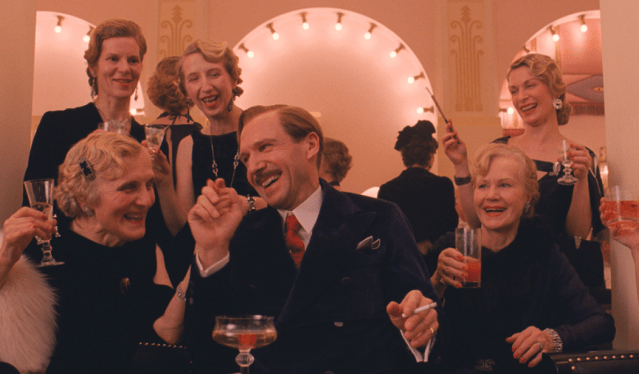
It just happened again 30 minutes ago when my laptop’s music shuffle played the final track from the soundtrack of Wes Anderson’s movie “The Grand Budapest Hotel”, originally heard during the conclusion of the film’s end credits:
Traditional Arrangement: Moonlight – Alexandre Desplat
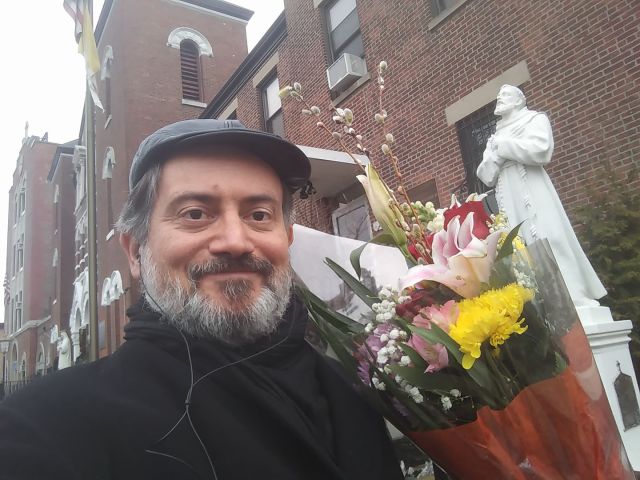
Three first grade operas have performed in their classrooms in front of an audience of parents, grandparents and loved ones. In three consecutive days 1-3’s “Diamond Kids”, 1-2’s “The Alicorns” and 1-1’s “Imagine” regaled audiences with stories, dialog, lyrics and music all created by the first graders themselves. I delighted in the spirited performances, the parents’ pride and joy, and the two massive bouquets of flowers and one bottle of 50% Kentucky bourbon I received as thanks.
There’s really no substitute to seeing the performances live, the classroom turned into a theater with set decoration and costumes designed by the kids, while the whole class as one chorus sings every song, while each individual child gets to act out a scene in the opera (if one character is in six scenes, six children share playing that character over the course of the performance). However it could be amusing (and edifying) to get a quick synopsis of each opera, with a sampling of some of the music and lyrics the children wrote, so here goes:

1-3’s opera centers around a field trip to the mines. Cal and Devin know about the secret Rocky Cave inside the mines, where they expect to find diamonds they plan to steal.
Meanwhile Alex annoys best friend Bex with offers of avocado and broccoli and a rather militant attitude against cookies and cake. It turns into quite the operatic contretemps:


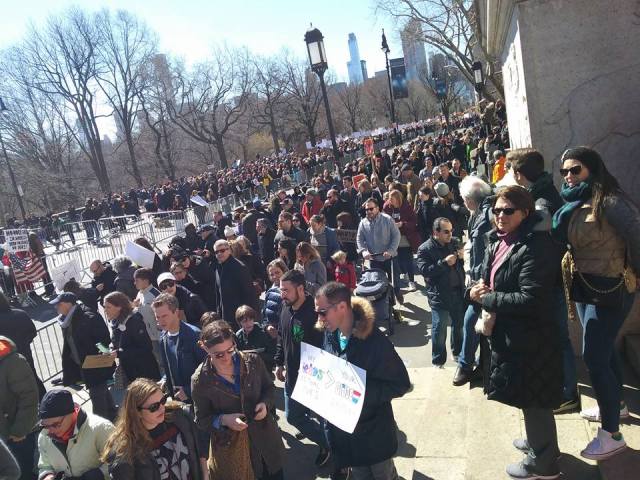
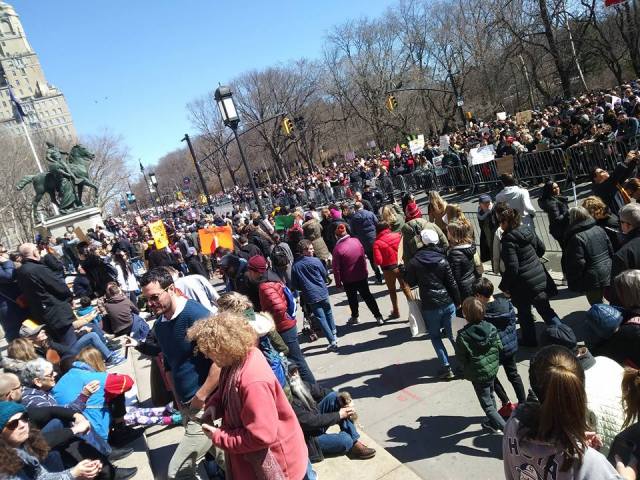
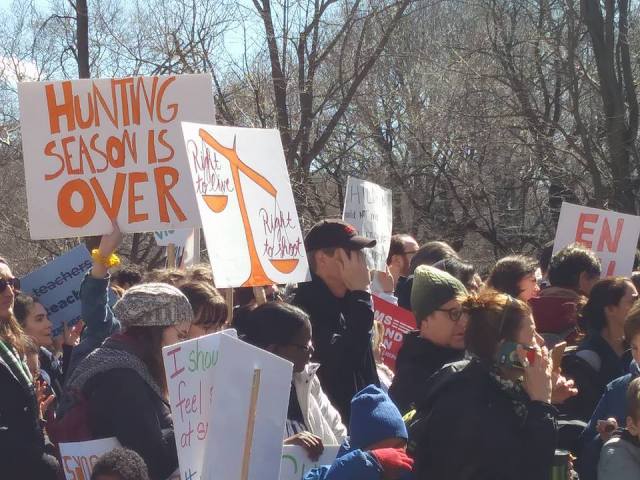
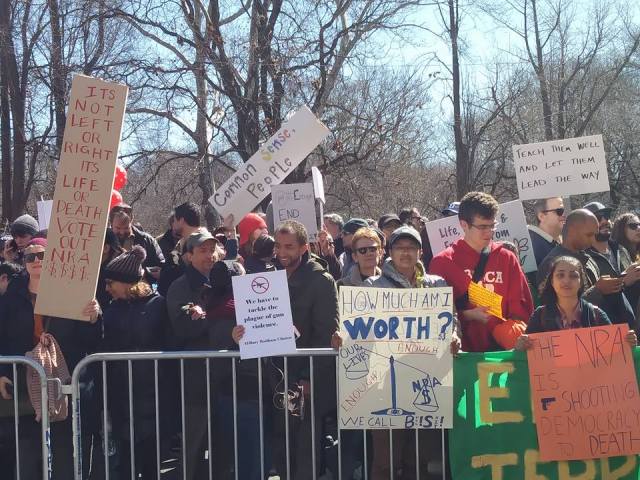
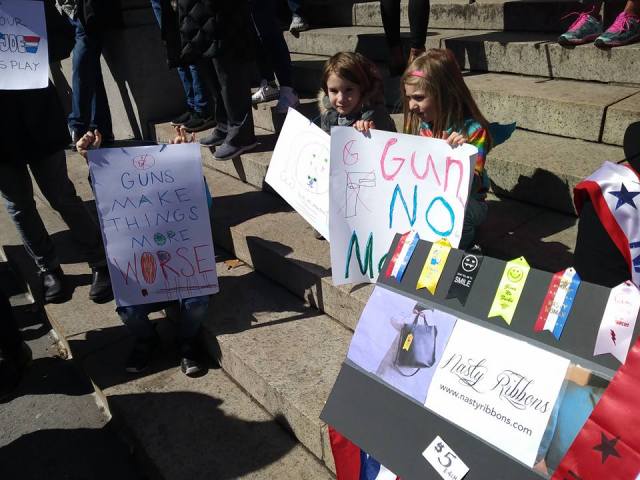
March 24 – March For Our Lives – Millions are on the streets in the USA.
Here are some impressions from New York City.
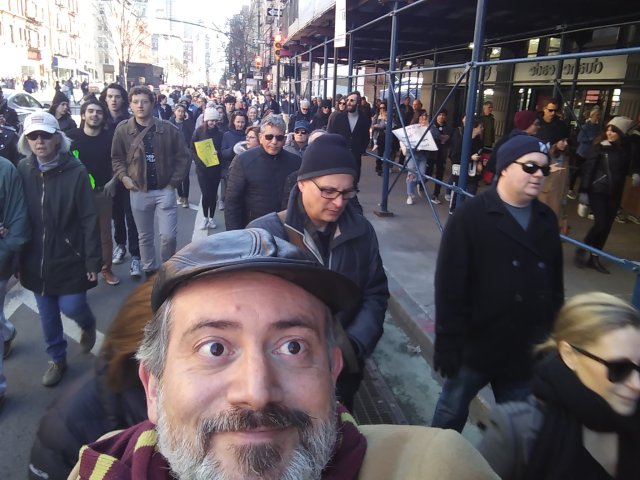
Subways were so congested, many of us got off at 59th street to go what should have been just a few blocks to get to the start of the march. But so many were participating that the entry into the starting area moved up to 79th and then 86th street. So thousands were already streaming up Columbus Avenue in a kind of major mini match just to get to the actual march.

Thousands waited for hours up Central Park West for their section to join the march:
Paul McCartney joined the march, telling reporters “This is what we can do, so I’m here to do it. One of my best friends was killed in gun violence right around here, so it’s important to me.” The march would pass by the spot where Lennon was assassinated.
Imagine – John Lennon
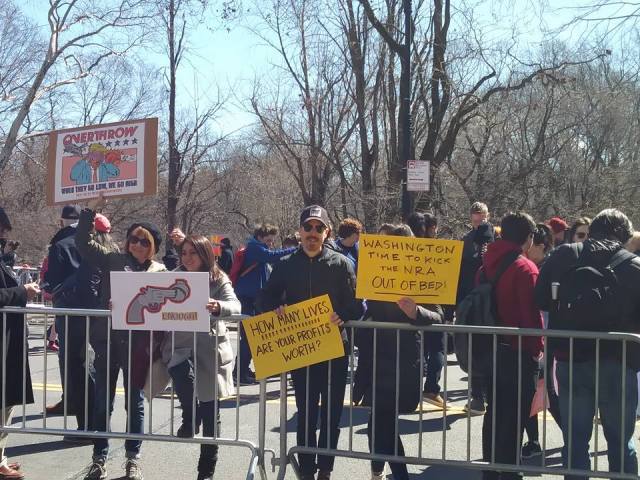

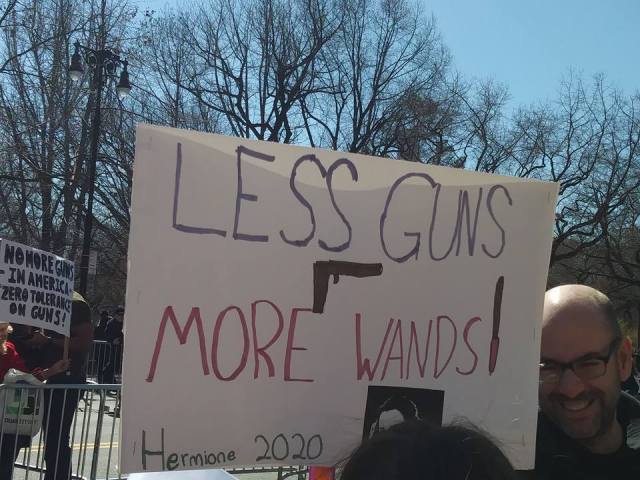
This picture made quite an impression on Twitter, and reminded me of the heartbreakingly apt Nick Cave song featured in “Harry Potter and the Deathly Hallows”:
O Children – Nick Cave and the Bad Seeds
My Entry in the Carl Orff Competition

I composed a chamber work, a song in the tradition of the “Lieder” of the salon, called “Orpheus. Eurydike. Hermes”.
It describes the moment in Greek mythology when Orpheus, leading his wife Eurydice out of the world of the dead, turns back to look at her, despite having been warned not to, thus losing her forever. The lyrics are excerpted from a poem by Rainer Maria Rilke. You can listen to it here (and follow the score further below):
Orpheus. Eurydike. Hermes – Danny Ashkenasi – Baritone: Peter Clark
I composed this piece for the Carl Orff Competition. So this is the moment I ask you to please go to their website and show my entry some support. Because in addition to a select jury, the public vote determines whether an entry is chosen as a finalist. You will find my entry listed either in the middle or near the bottom of the page (or maybe elsewhere yet, they seem to keep randomizing the order, but those have been the two consistent locations), or simply go directly to my designated entry page. There you can give my piece a rating; you can even leave a review. (And do listen to and rate other compositions too; it’s fun and the competition will then value your input more highly.) You have until April 30. Tell your friends and family. 🙂
Thank you.
The Carl Orff Competition included the following parameters for the composition:
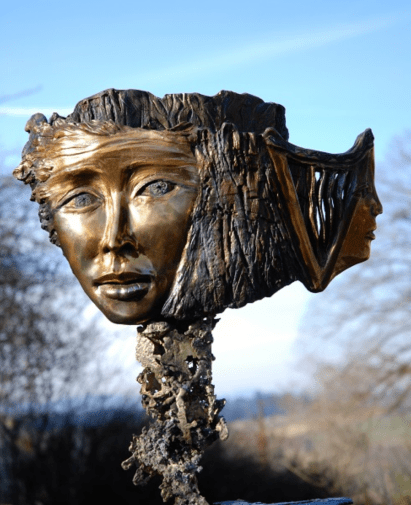
Additionally, “the sculptures by Antje Tesche-Mentzen should serve as a source of inspiration”. (Pictures of the sculptures are included in this post.)
Here is the excerpt of the poem “Orpheus. Eurydike. Hermes” by Rainer Maria Rilke the Carl Orff Competition designated, first in German:
Sie war schon nicht mehr diese blonde Frau,
die in des Dichters Liedern manchmal anklang,
nicht mehr des breiten Bettes Duft und Eiland
und jenes Mannes Eigentum nicht mehr.
Sie war schon aufgelöst wie langes Haar
und hingegeben wie gefallner Regen
und ausgeteilt wie hundertfacher Vorrat.
Sie war schon Wurzel.
Und als plötzlich jäh
der Gott sie anhielt und mit Schmerz im Ausruf
die Worte sprach: Er hat sich umgewendet -,
begriff sie nichts und sagte leise: Wer?
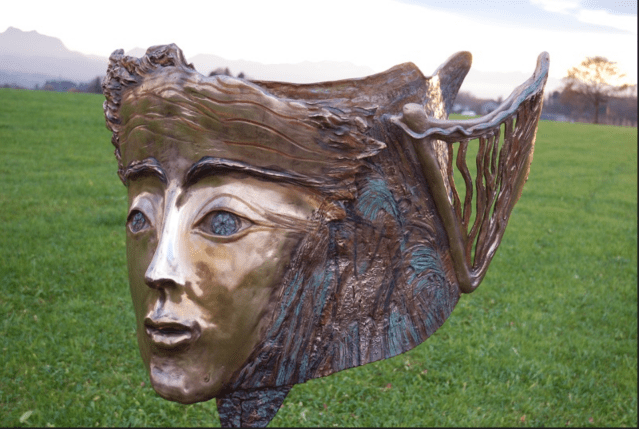
And in English:
She was no longer that woman with blue eyes
who once had echoed through the poet’s songs,
no longer the wide couch’s scent and island,
and that man’s property no longer.
She was already loosened like long hair,
poured out like fallen rain,
shared like a limitless supply.
She was already root.
And when, abruptly,
the god put out his hand to stop her,
saying, with sorrow in his voice: He has turned around–,
she could not understand,
and softly answered
Who?
Finally there was one more request, if not quite requirement, for the competition:
“It should also be noted that Monteverdi in his opera ”Orfeo” used a rhythm during the song ”Nehmt mich auf Ihren stillen Wälder” which corresponds to the initials of Carl Orff ”CO” in Morse code.

On the occasion of the renaming of the competition this is a fact which could be taken into account but is not obligatory.”
As you can see, the Monteverdi / Carl Orff morse code rhythm made it into the playing of the frame drum in my version, starting at measure 9:
 | Ann Hilton Fisher on Ecclesiastes of my own persona… |
 | dannyashkenasi on A Dulcimer, A Fountain, and a… |
| Ann Hilton Fisher on A Dulcimer, A Fountain, and a… |
| Ann Hilton Fisher on I Take the Colbert Questi… |
| Ann Hilton Fisher on Happy Birthday, Ed – Evo… |
| dannyashkenasi on BRAZIL – Pernambuco… |
 | ebnesr9aabfafe63 on BRAZIL – Pernambuco… |
 | 1826sdf913 on Genesis of my own personal NEW… |
 | Weng on Speak Low, Phoenix, Speak… |
 | Tony Ananiadis on Speak Low, Phoenix, Speak… |
 | Brent on HOOVER DAM, MEMORIAL BRIDGE an… |
 | Steven on CANNES IMPRESSIONS Part 2 |
 | Rudi v on Catherine Gayer on the Ra… |
| Rudi on Catherine Gayer on the Ra… |
 | Erin Carere on Love and Hope in Barcelon… |

 Notes from a Composer