Remember the good old days of daily nightmares of nuclear armageddon?
They’re back! Yippee!
So let’s replay some golden oldies of the atomic age!
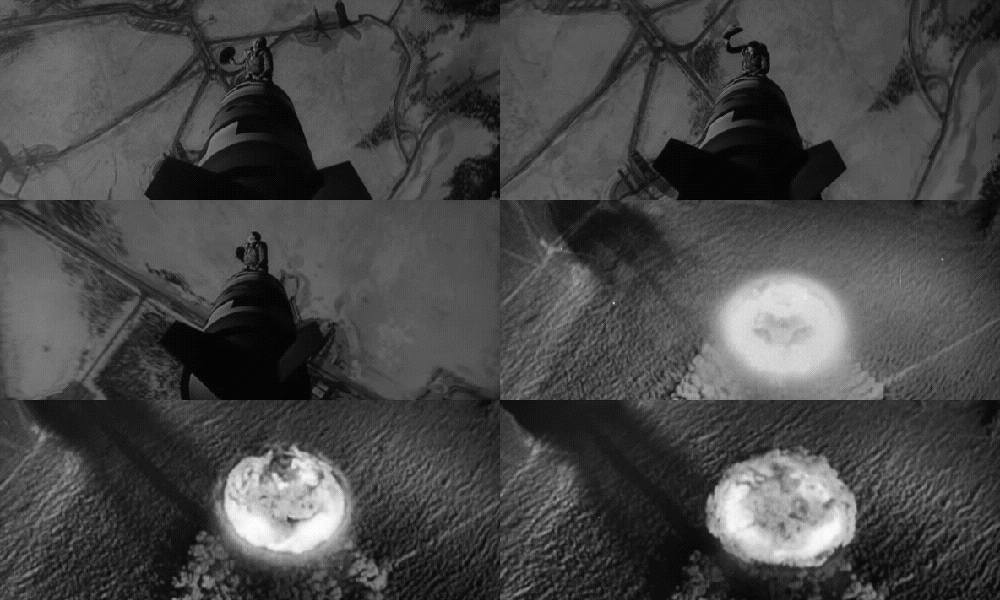
Stanley Kubrick’s Cold War satire “Dr. Strangelove or How I learned to Stop Worrying and Love the Bomb” famously ends with nuclear armageddon being rung in to the strains of “We’ll meet again, don’t know where, don’t know when”. Ever since the movie’s release that warm World War Two era chestnut has taken on an additional tinge of Cold War cool.
But what of songs that dealt with nuclear war directly, from their inception? Now that the narcissistic blustering of two Dear Leaders with the impulse control of toddlers (minus toddlers’ instincts for empathy) have quickly resurrected the specter of imminent nuclear confrontation that we all thought had faded since 1989, perhaps it would be fun (fun???) to revisit some of the pop music classics of nuclear annihilation.
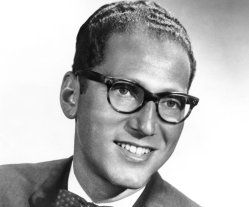
Tom Lehrer
I must start with two classics of comedy songs, both from Tom Lehrer, who twinklingly skewered 1950’s and 1960’s society as America’s premiere lounge singer court jester. “So Long, Mom” perfectly transplants the “Over There” jingoism and “Send a salami to your boy in the army” boosterism of WW1 and WW2 into the era of WW3 (an era which will last only 90 minutes). Its musical sibling is the even blacker humored “survival revival hymn”: “We Will All Go Together When We Go”:
So Long, Mom (A Song for World War III) – Tom Lehrer
We Will All Go Together When We Go – Tom Lehrer
Kate Bush in the “Breathing” video
For some reason, the 1970’s produced almost no songs about nuclear war. But moving into the 1980s we find many popular songs that treat nuclear war in all earnestness. The perhaps lyrically and musically most successful, and devastating, is Kate Bush’s epic “Breathing”, which evokes an apocalyptic landscape of doomed survivors, including a fetus inside its mother’s womb, breathing in the fall-out of a nuclear winter.
Breathing – Kate Bush
Clip from the “Dancing…” video
Also deadly earnest, but set to a bopping beat, Ultravox’s “Dancing with Tears in My Eyes” recounts the melodramatic tale of a man hearing on the car radio that nuclear war is imminent and racing home to make love to his wife one last time. Yep, we danced to this in the 1980’s. Fun times at the disco!
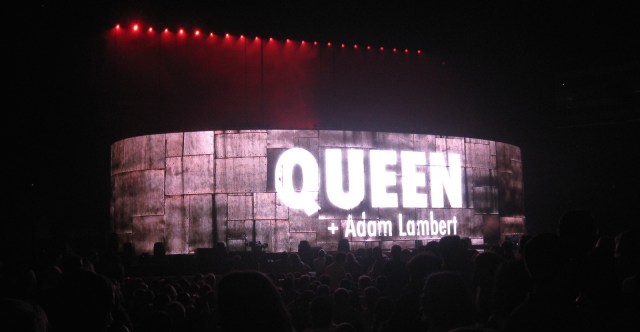
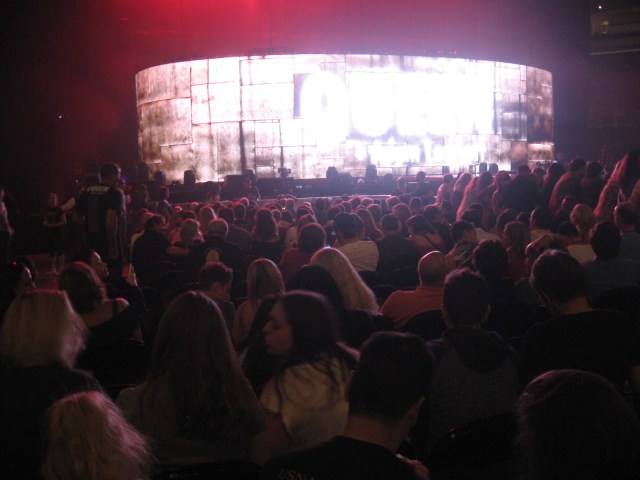
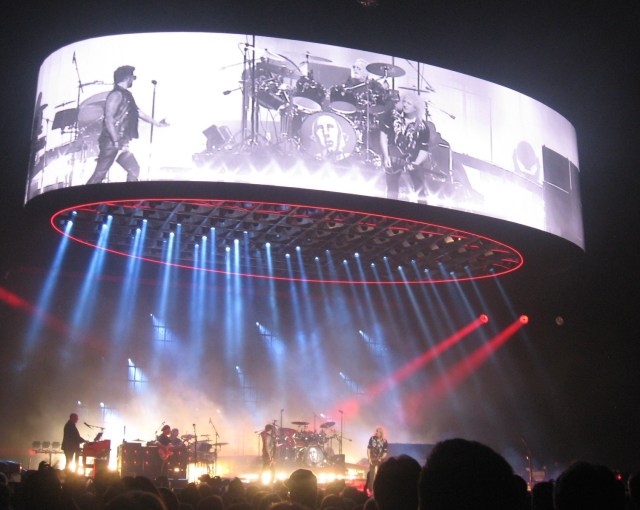
Wednesday I treated myself to the Queen & Adam Lambert concert. Today (Friday) I could have seen them up the street in Brooklyn’s Barclay Center, but I have family visiting, so instead I trekked out to New Jersey’s Prudential Center (only twenty minutes on NJ Transit from Manhattan’s Penn Station, a thirty minute subway ride away from home, no biggie, but when it could have been a simple ten minute walk in total…).
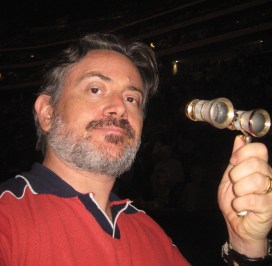
Yes, I’m the guy who brings opera glasses to a rock concert. Didn’t need them this time, though.
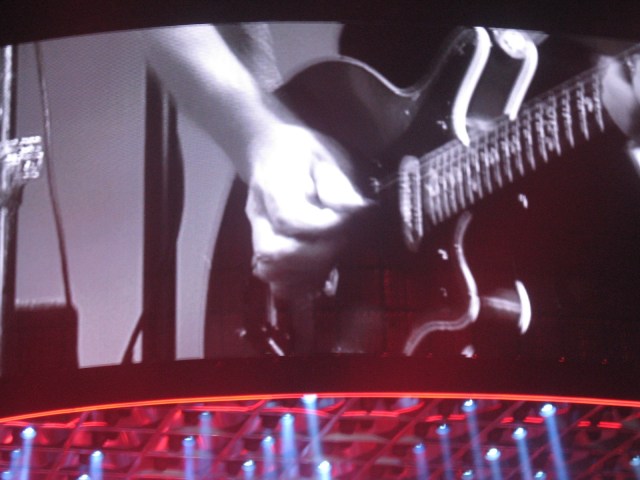
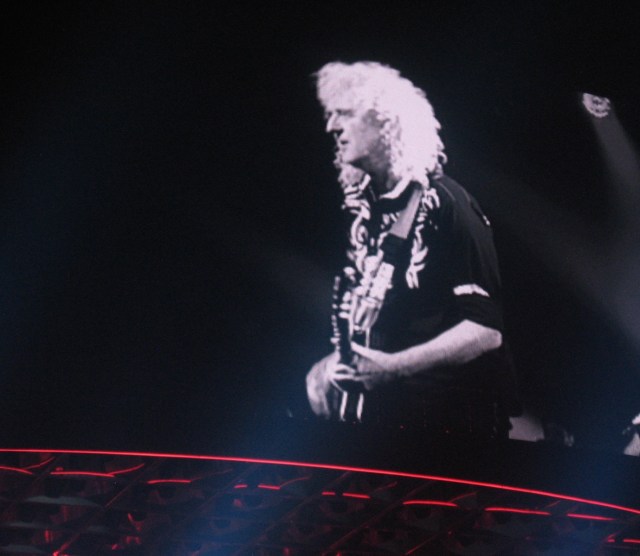
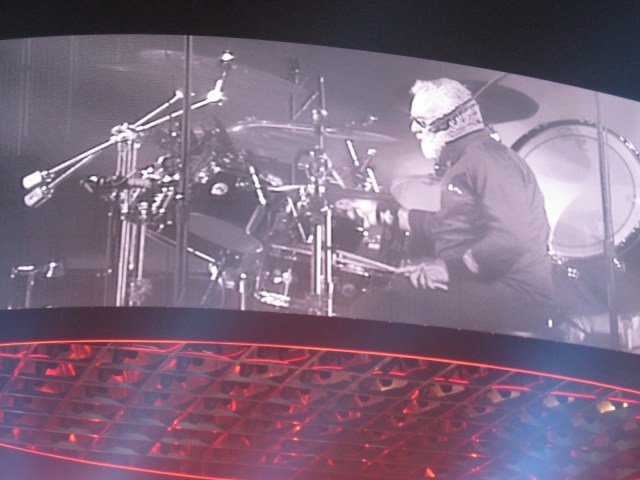
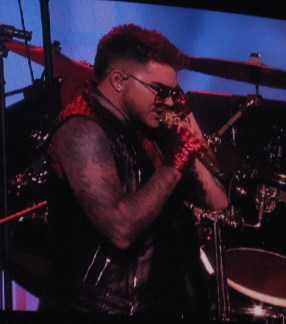
Anyhow, original Queen band members, guitarist Brian May and drummer Roger Taylor have invited openly Gay American Idol alum (and solo star in his own right) Adam Lambert to do the vocal honors. Stepping into the legendary Freddie Mercury’s footsteps is a daunting task, yet Lambert takes on the responsibility with a light touch, never presuming to replace what is irreplaceable, and serving the songs beautifully with his own impressive vocal chops and friendly insouciance.
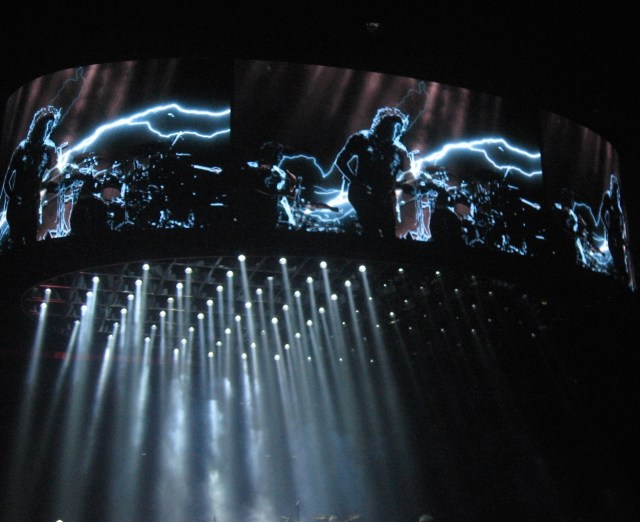
Unlike in the Madonna concert I only sorta saw because the video screens were invisible from my high offsides seat, the Queen screens were, in addition to the back-screen, a wrap-around strip above the stage, bending towards the sides as well as the front. If I had been sitting in those same Madonna nose bleed seats, these would have given me more to see. As it is, I managed to snag a pretty good floor seat without paying through the nose.
“War for the Planet of the Apes” has opened to universal acclaim and a renewed call to give an Oscar to Andy Serkis, the actor who pioneered and perfected motion capture acting as lead ape Caesar in the Planet of the Apes trilogy, as well as King Kong and Smeagol/Gollum in Peter Jackson’s sojourns to Skull Island and Middle Earth).
This push to award Serkis an acting Oscar (now for Caesar and earlier for Gollum) or a Special Achievement Academy Award has come up many times over the years, yet so far yielded no nominations and no special consideration. Conventional wisdom is that many actors feel threatened by motion capture, fearing that its special effects creations will eliminate acting work, rather than recognizing it as a vehicle for greater acting opportunities and adding to the art of acting. However the tide may be turning this year, because a champion of Andy Serkis’, none other than Whoopi Goldberg, has just been elected governor of the actors branch of the Academy of Motion Picture Arts and Sciences’ Board of Governors. And within less than two weeks after joining the Board, Goldberg made this public endorsement of Andy Serkis on The View:
“I saw “War for the Planet of the Apes”. It was so good. It was so good on so many levels. There are a lot of folks in the film, but it’s really a two person character piece. And it’s Woody Harrelson and this marvelous man who you’ve seen in other films like “Lord of the Rings”, he played Gollum. His name is Andy Serkis. … Andy is able to do things in this film that other actors would love to be able to elicit from people. …
I do think it is [a new frontier for actors]. It is a whole other genre of acting. When you look at him as Gollum … What you see on that creature’s face, all of that that you’re seeing is not made up. That’s the actor. The CGI, the dots that he’s wearing so that they can paint in the creature he’s being – it’s kind of spectacular when you can see what he can do, because it’s him doing it.
[Can he get an award?] I’ve been working on this since he did the very first Gollum. The first time I saw him and found out it was an actor doing it, I was out of my mind. Then I saw Planet of the Apes, and I was like ‘Somebody needs to give this man an award from the academy saying: for forwarding the actor’s ability.’ Because he is now taken us to a different level where actors can actually play anything. They can now play anything. It’s amazing.”
It’s Ed’s birthday today. Happy Birthday, Love. And as is tradition now in our relationship, I will gift Ed another viola/piano duet I compose for the occasion, each one called “Evocation”. This year my husband will receive Evocation XXIV.
It has been a year of grieving. My father’s death last spring was followed a half year later by a series of deaths of close relatives and friends. In the course of four weeks alone Ed and I attended three memorial services. Including the one that, strangely, gave rise to Evocation XXIV.
Ernie and Vince Buscemi, center, surrounded by more lovely Quakers, 2004
Vince Buscemi was a Quaker in Ed’s meeting. He and his wife Ernie were part of Ed and my Clearness Committee, a group that is formed to meet with a couple that requests their marriage be taken under the care of a Quaker meeting. Vince was very excited about the prospect of Ed and me marrying. Morningside Meeting was the first Quaker meeting in New York City, let alone religious congregation of any kind, to welcome same-sex marriages. They married their first male/male couple back in 1980. And yet in 1998 Ed and I would be only the second. It’s a small congregation.
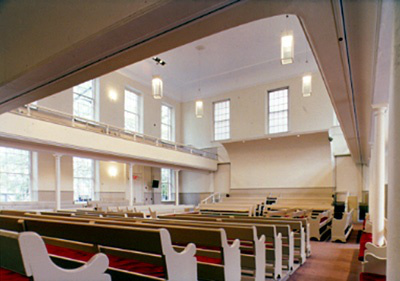
15th Street Meeting House interior
Vince was our greatest champion, and openly hoped I would become a full fledged Quaker like Ed (but I have been content to keep my spiritually unaffiliated status as a “Friend of Friend”, as spouses are designated in Quaker nomenclature). This happy, lovely, sweetest of men died in his early 90s, his final years marked by Alzheimers; a history which painfully mirrored the recent passing of my 94 year old cousin Monroe, for whose care I had been primarily responsible the previous seven years.
Vince, Monroe, the cascade of recent deaths close to me, all were not far from thought as Ed and I found our seats in the pews of 15th Meeting House where Vince’s memorial service took place. Quaker memorial services are structured like Quaker meetings for worship. There is no minister conducting a service, there is only the full congregation, seated in silence. If anyone feels moved to speak, they rise, and give a short message. Which is followed by an appropriate amount of silence while the congregation absorbs the message; then another congregant may feel moved to rise and speak. Or silence prevails. A regular Quaker service for worship may have few messages, even be 60 minutes of complete silence, depending on how the Spirit moves the assembled. Quaker memorial services, like Quaker weddings, however, tend to encourage a lot of messages.
I don’t often attend Quaker meetings for worship. And when I do, I don’t rise to give a message. I stay silent. And in that silence, what comes to my mind is usually music. Not words, or dreams, or memories. It is music that fills my mind in the silence of a Quaker meeting. Which is why I believe, if pressed for an answer on denominational affiliation, I would say my religion is Music.
Panorama view of 15th Street interior
That day, during Vince’s Quaker memorial service, a rather odd musical idea popped into my head. Not music I knew, which I would have expected, but a melodic line, by a string instrument. A willfully odd melody. Not even sure if it could be called a melody. Maybe more a motif. Which would leap up over one octave and jump back down multiple octaves. Which makes it the kind of motif one can not easily hum to oneself. It just felt weird and awkward trying to silently hear it inside my head. Not something for the human voice. But it made sense for the viola.
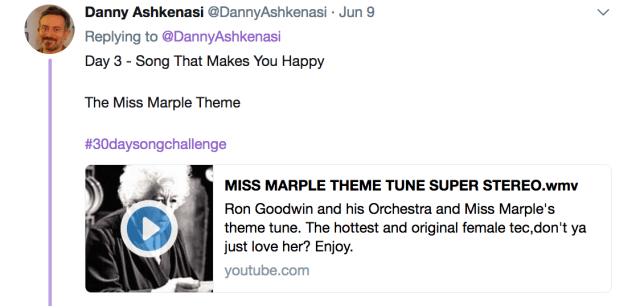
Maybe it’s because Margaret Rutherford’s Miss Marple reminds me of our housekeeper/babysitter/Grandma-substitute, Frau Borbonus, AKA Tatu, with whom I would happily watch all the 1960 Miss Marple movies on TV when I was a kid. That certainly ups the nostalgia levels. But listen to this music. How can it not at least put a goofy smile on your face. It makes me want to dance like a Peanuts cartoon. On a musical side note, I love the way the strings and the harpsichord share the melody and obligato parts. And those chirping flutes. (This will someday get expanded to its own blog post.)
Theme from Miss Marple – Ron Goodwin and his Orchestra
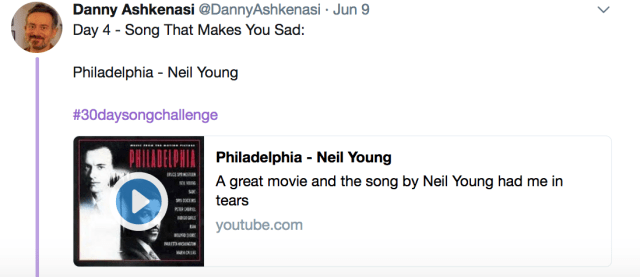
Philadelphia – Neil Young
I believe I once read somewhere that Kate Bush herself was not sure what the lyrics of “Love and Anger” meant. If she did say that I wonder whether she was merely being coy. I understood and related to every word. At the time the song came out, its lyrics spoke spookily specifically to feelings and circumstances painfully specific to one very special relationship. And that’s already more than I really care to say on that subject.
Love and Anger – Kate Bush
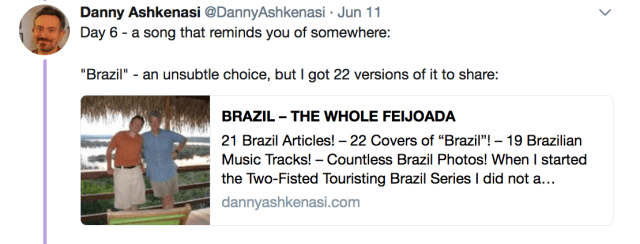
Not kidding. 22 versions from Clooney to Sinatra, Pink Martini to Lee Press-On, electronica to big band, high gloss to high camp:
Maybe it’s just a dream. Maybe it’s real. Maybe it doesn’t matter either way. For the shame and the betrayal are felt just as acutely.
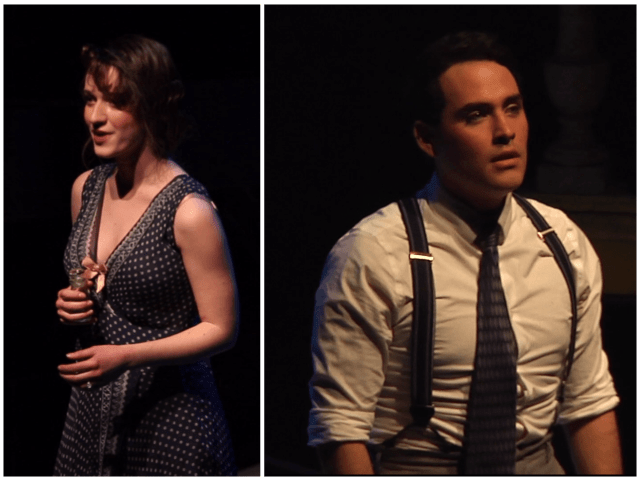
In the musical Speakeasy, an Alice in Wonderland take on Prohibition era New York, young newlyweds John and Jane have each spent a night of passion with lovers in separate parts of the city. In a nasty twist of space and time, their beds are magically united, and John and Jane discover and are discovered in same sex adultery.
And so John and Jane sing “A Fawn in the Wood”, a fraught song of a couple clinging and pushing away, desperately afraid, of themselves and the other. For an act and a half John and Jane sang lovely duets that only sounded like they were in harmony together (see previous post), but in actuality had them physically separate and unaware, directing their shared feelings away from the other. Now finally John and Jane sing a proper duet, to each other, full of love and longing in the classical sense, but also full of fear, and self-loathing, a fervor to forgive and be forgiven, yet also an unspoken desire to forget, a fear of looking too closely at the truths about themselves.
The title and central metaphor of “A Fawn in the Wood” comes from Lewis Carroll’s “Through the Looking Glass” and Alice’s encounter with a fawn. Alice, after much Wonderland strangeness, is so confused that she can’t even remember her name, let alone figure where to go. She meets a fawn in a dark wood, that also can’t seem to remember its name. They both walk together through the wood, Alice’s “arms clasped lovingly around the soft neck of the fawn”. But when they come to the light of an open field, the fawn recognizes Alice as a human and itself as a fawn and flees in alarm. Alice knows who she is again, but is left alone and lost.
And so are now Jane and John, afraid and lost together, and clinging to another for comfort, even though the other is as much a cause for dismay as comfort.
A Fawn in the Wood
Duchess and Julian exit.
Long pause. John and Jane remain thunderstruck on the bed.
JANE:
You…
JOHN:
You…
JANE:
And Julian?
JOHN:
Duchess!
JANE:
You slept with a man.
JOHN:
He was dressed in women’s clothes.
JANE:
Is that supposed to make me feel better?
JOHN:
What was Duchess wearing when you made love to her?
Curious Colorful Night – It’s a Dream – Momentary Bliss
Three lovers’ duets that are not what they seem to the ear
Ah, young lovers’ duets. A hallmark of musicals, especially those of the 1920s and 1930s, and so of course also of the musical “Speakeasy – John and Jane’s Adventures in the Wonderland”, set in Prohibition era New York, and influenced by the magical realism of Lewis Carroll’s Alice books.
The story of Speakeasy opens with young ingenues, newlyweds John and Jane Allison, who are very much in love, but who, after individual moments of erotic indiscretion find themselves thrust down a rabbit hole or through a looking glass into a dream-like, disorienting world of New York City’s queer speakeasy subculture.
John and Jane, exploring this world separately, quickly discover that the rules of time and space don’t quite apply anymore. They also discover that in this world they can sing to express their feelings (why, we must be in a musical!), and after Jane encounters her friend Roberta White preparing to go slumming in Harlem, and John encounters a gaggle of gay florists preparing for the drag ball, the newlyweds sing about this curious night they are experiencing. (The use of the word curious in the title phrase, and its exaggerated amplification in the lyric “I’m drawn to follow you, curious, then even curiouser, to the curioust sight” is obviously a conscious nod to Lewis Carroll’s “cuiouser and curiouser”, just like everything that happens to John and Jane is rooted in the Carroll books as well as Roaring Twenties queer subculture.)
Curious Colorful Night
CURIOUS COLORFUL NIGHT
JANE:
WHAT IS THIS WORLD THAT I FELL INTO
WHERE THERE’S NO TELLING WHO
WHAT WHEN AND HOW
WHAT ARE THESE PLACES THAT AWE ME
WITH FACES THAT DRAW ME
TO FOLLOW THEM NOW
CURIOUS COLORFUL NIGHT
SHININGLY CLEVERLY BRIGHT
I’M DRAWN TO FOLLOW YOU
CURIOUS, THEN EVEN CURIOUSER TO THE CURIOUST SIGHT
JOHN:
WHAT IS THIS PLACE I HAVE LANDED IN
STRANGE WORLD I’M STRANDED IN
WHERE DO I GO
WHO ARE THOSE CREATURES COMPELLING ME
ODD FLOWERS TELLING ME
WHAT I DON’T KNOW
CURIOUS COLORFUL NIGHT
FUNNY FANTASTICAL SIGHT
I GROW DELERIOUS
SWEETLY UNSERIOUS
FOLLOWING CURIOUS GLITTERING LIGHT
JOHN AND JANE:
CURIOUS COLORFUL SIGHT
MAKE ME A SEEKER TONIGHT
I’LL GO ALONG
BE IT RIGHT, BE IT WRONG
YOU HAVE TAUGHT ME THE SONG
OF YOUR WONDEROUS LIGHT
It sounds like a sweet duet for our ingenues, one in which their voices come together in the final chorus for mutual affirmation of purpose. Almost, but not quite. The formatting in the lyrics echoes what would also be clear in the staging if not clear through merely listening to the song. Jane and John are in separate parts of the magical world they have entered. They are not (yet) aware that their spouse, too, has been weirdly thrust into a strange new world they find odd yet also oddly compelling, and one they choose to continue exploring. The audience alone gets to see them both, together but not together, separately and simultaneously compelled and confounded by the adventures that follow.
Jane and John Allison (in last year’s Speakeasy workshop)
This musical irony of Jane and John singing harmonious duets unaware of each other is carried through much of “Speakeasy”. Several numbers also involving many other characters include John and Jane duetting their reactions, musically congruent, yet unsettlingly unaware of another, as their actions take them further down paths exploring non-heteronormative environments and activities (i.e. the queer subculture) always experienced separately, but witnessed simultaneously by the audience.
And as the couple further explores “this world [they] fell into” (and the audience starts to wonder how all this will inevitably effect their relationship) they get physically and emotionally entangled in the affairs of brash lesbian night club singer Duchess Bentley and famed female impersonator Julian Carnation. Act One nearly ends with Jane dancing with Duchess and John dancing with Julian in the Wonderland nightclub, blissfully unaware their spouse is in the same nightclub also dancing with someone of the same sex. John and Jane realize they are crossing dangerous emotional lines here, but they allow themselves to indulge this bliss because they reckon it’s all only a dream they are dreaming, not really real:
Two songs from “Speakeasy” explore two sides of a closeted 1920’s lesbian
For many years I hoped to write a musical about the queer subculture of Roaring Twenties New York, but didn’t find my “in” until I came upon the idea of adapting Lewis Carroll’s two “Alice” books as a magical realist template for exploring that world. Alice became a young newlywed couple, John and Jane Allison, with “Wonderland” inspiring Jane’s trip down the queer rabbit hole, and “Through the Looking Glass” pointing the way for John.
And so I began work on the musical I would eventually call Speakeasy (with various reworkings of the subtitle, currently settled on “John and Jane’s Adventures in the Wonderland”). Yet before I made any decisions on story, characters, songs, I needed to immerse myself in the little known history of LGBTQ life in the 1920’s and 1930’s. I spent a year just doing research, and learned an awful lot about the social and sexual mores of the era as well as its (in)famous queer cultural provocateurs. Much of this research made its way through a magical realist Carrollesque lens into the musical (and muchof whichhas alreadybeendiscussed in this blog).
Sometimes this research took me into even earlier times, for need of greater context. Which is how I learned about the “female friendships” of the 19th century. These would be intense relationships between two women, in school or college, that could be as deeply bonded as any traditionally romantic or familial bond. Publicly these “female friendships” could exhibit all the hallmarks of romance: physical affection, love letters, lavishing gifts on another, intense jealousies, sharing beds, displays of devastating heartbreak when relationships dissolved. Society approved and encouraged these “female friendships” as a way for young women to exercise romantic proclivities within the safety of sorority, away from male temptation. That these friendships could become sexual was not imagined. That doesn’t mean however that some of these female friendships didn’t become sexual.
Times were different in the 1800’s. Men sharing beds with men and women sharing beds with women was common. The terms heterosexual and homosexual weren’t even coined until the end of the 19th century. But once coined, their usage and the greater awareness of homosexual identity and activity seeped into society by the early 20th century. Intense “female friendships”, as practiced and encouraged in middle class society in the 19th century, now became tainted and suspect. Suspicion and fear of lesbianism made something once deemed a normal rite of passage for young women now appear unhealthy and dangerous.
So by the 1920’s the practice of these intensely bonded “female friendships” was long in the past. But I imagined a society lady old enough to have experienced it in her youth; a conservative, closeted middle age woman, so frightened of her own lesbianism that she remains consciously wholly unaware of it. She would look back on her girlhood friendship as an ideal she could cling to while the cultural and sexual revolutions of the Roaring Twenties rage around her, confusing her with possibilities she has denied herself, while idealizing a past relationship she refuses to examine close enough to see it for all it truly is.
Alice and the Caterpillar
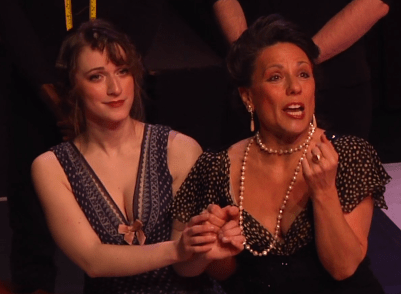
For the historical aspects of “Speakeasy” she would stand in for both the influential high society ladies that helped usher in Prohibition and also later helped dismantle it when it became clear that the social ills of Prohibition were overwhelming any social good originally intended by its enacting (Prohibition and its end had profound effects on the rise and fall of 1920s/1930s queer culture, a reality I felt I needed to thread into “Speakeasy’s” narrative). As regards to “Alice in Wonderland”, the character of the society lady would easily intersect with the Queen of Hearts in the dramatic end of the story (personifying the reactionary forces that clamped down on the free-wheeling Speakeasy culture or the Roaring Twenties). But when Jane Allison first meets her, the society lady will intersect with the Caterpillar (who book Alice encounters in the chapter “Advice from a Caterpillar”). And so I named the her Caroline Chrysalides.
Chrysalides is an obvious reference to the butterfly that Caroline would become if only she burst through that massive cocoon she built around her soul, and came out as the fabulous lesbian butterfly she could be. I liked that the Caterpillar in “Alice in Wonderland” imperiously insists that Alice explain who she is, just at a time when Alice has gone through so many disorienting changes she is unsure that she can “explain herself”. There is delicious irony to transposing that conversation to Caroline Chrysalides chastising Jane on her equally currently unsteady sense of identity, when Caroline’s own true self is so woefully closeted.
Jane and Caroline in last year’s “Speakeasy” workshop
Jane reminds Caroline of the “steady, simple girls” of her youth, so unlike the contemporary “jazzers” and “flappers” that scandalize her with their loose morals. Which leads Caroline to sing “Once I Had a Friend”, decrying the girls of today and extolling the female friendships of her youth. In song she is supported by her three attendants: a hairdresser, a tailor and a secretary (played by the same performers who we previously saw as the gay florists), who likely have a greater appreciation of the Jazz Age and the hidden, true extent of Caroline Chrysalides feelings about her girlhood friend than the protesting lady would ever consciously admit).
The White House in Rainbow Colors. That happened. Specifically that happened in June 2015, after the Supreme Court affirmed Marriage Equality for the United States.
But that was the previous administration. This administration won’t even make mention of June being LGBTQ Pride month anywhere, on its website or otherwise. This administration is most definitely not “better for the Gays“, as the Orange Menace in Chief once claimed he’d be. Only a fool, homophobic, self-loathing, or otherwise pathetic, would believe that.
LGBTQ life and concerns are a big part of “Notes from a Composer”, not just because I am bisexual, not just because my most recent musical project, also much discussed on this blog, is the queer themed “Speakeasy“. The LGBTQ category in the blog archives has over 50 entries, the this blog has been around just slightly over two years.
So, to celebrate Pride Month on “Notes from a Composer”, following are the intros to a handful of the more significant LGBTQ Pride related articles from the past two years. To read the full piece, simply click on its title.
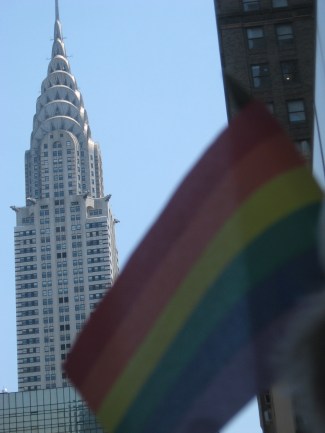
Sunday, June 26, was Pride Day in New York City. Close to 2 million people watched hundreds of thousands of marchers within about 485 contingents (groups and floats) make their way down 5th avenue, 8th Street and Christopher street, from Midtown to Greenwich Village.
Some years Ed and I watch the parade go by, some years Ed and I join the Quaker contingent (Ed is a Capital Q Quaker, to the manor born, and I as his husband am called a Friend of a Friend, as in I’m the significant other of a member of the Religious Society of Friends).
The Quakers are considered the first religious community to support the modern Gay Rights movement, having offered sanctuary and refreshments during the Stonewall Riots of 1969 and having marched in the very first Gay Pride Parade the following year.
When you march in the parade, you only get to see a small fraction of all the other groups marching. However you do get to celebrate with all the many colorful, diverse, happy people up and down Fifth avenue and over to Christopher Street. This photo diary shares that experience.
The director of “Speakeasy”, Lissa Moira, and I were conducting another one of our weekly meetings pouring over the script and discussing staging and production issues, when I mused aloud that in many ways “Speakeasy” is an expression of my bisexuality.
“You are bisexual?” Lissa asked.
“I thought you knew”, I responded, dumbfounded.
How could Lissa, who has known me for years, not be aware of that fact about myself? It is not something I try to keep secret. And she’s known me for decades. But that is the problem with bisexuality. It is so easy to keep hidden, even if there is no intention to hide it. Society may not assume someone is heterosexual as categorically as society used to, but monosexuality – hetero or homosexuality – is nowadays still the default assumption.
Or is it? Just these past weeks have seen a slew of studies showing that the upcoming generation of young adults are much more comfortable with sexual fluidity and placing themselves on the bisexual spectrum than older generations (see here and here and here). Charles Blow has written profound editorials about bisexuality in the New York Times. Entertainment websites keep posting lists of celebrity bisexuals (like this one or this one).
Except, those lists of celebrity bisexuals usually feature three women for every one male or must resort to listing men long deceased to beef up the ratio. Out bisexual males are still very rare in our culture. Even Alan Cumming, who so deliciously professed erotic desire for men and women not once but three times while hosting the Tony Awards this year has not embraced the “bisexual” label (as far as I can tell) but is more likely to use the word “pansexual” if he allows any label to define him. And that is his prerogative. Labels are limiting. But the bisexual label seems particularly maligned and avoided, especially for men, at least until now. Perhaps with the millennial generation apparently showing so much more acceptance of sexual fluidity and bisexuality than their elders, this might finally change.
Ed and I got married in 1998. And again in 2011. Then our marriage got federally augmented in 2013. And now finally in 2015 the state of our union will be fully recognized in every state of the Union. It’s been a long time coming but our day has come.
Let’s start the celebration with the original recording of “Our Day Will Come” by Ruby and the Romantics.
Today, June 26, 2015, in fact just minutes before I posted this piece, the Supreme Court ruled that the United States Constitution guarantees a nationwide right to Same-Sex Marriage.
This Sunday’s Gay Pride marches will be especially festive. It has been a long time coming, for the LGBTQ community and for the nation as a whole. It has been a long day coming for Ed and me too. During our now 22 years together the nature of our relationship has grown and changed, but not nearly as much as the legal nature of our marriage.
Ed and I met April 25, 1993 in the back of a greyhound bus returning to New York from the large March for Gay Rights that had just taken place in Washington D.C. It was my first LGBT march, after having just attended the First National Bisexual Convention. The greyhound bus only had one seat left in the back when I got on, the seat next to Ed. Neither Ed nor I are the gregarious type likely to chat up strangers on a bus, but today we both made a conscious exception, each thinking it might be nice to meet someone. For the next 4½ hours we sat side by side getting to know each other. It was only after we got off the bus that I got a good look at Ed’s face from the front (rather than a ¾ profile) and noticed his height (six foot one) and broad shoulders.
After a year of dating Ed and I came to the mutual understanding that the anxiety of losing the other was now equal to the anxiety of facing a whole life time together, and that with every following day the former would grow and the latter would fade. In other words we were in love! After four years of toggling between a Chelsea and an Upper West Side studio apartment (our two bedroom unit connected by a 50 block hallway and the C subway line) we finally moved in together in Brooklyn and set the date for our marriage ceremony: April 25, 1998, the fifth anniversary of our meeting on that greyhound bus.
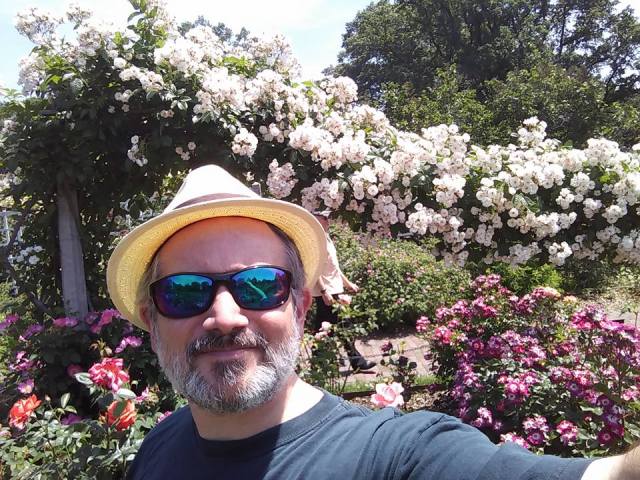
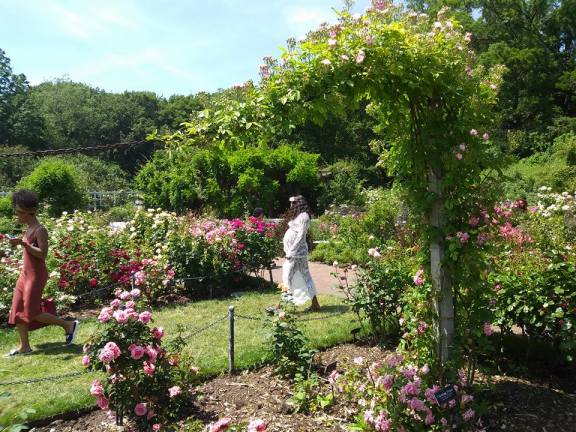
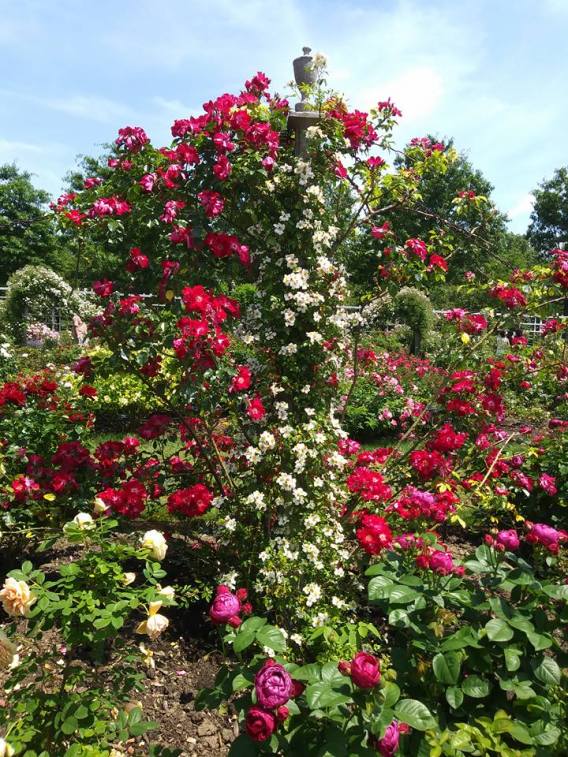
I beg your pardon. I never promised you a rose garden. But we can visit one together just up the road. And June is the time it bursts in massive, colorful bloom every year.
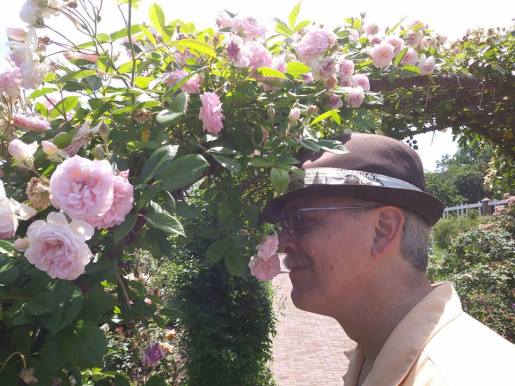
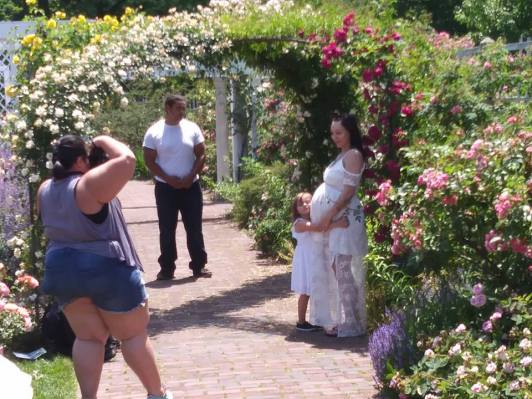
Last year’s visit to the Brooklyn Botanical Garden Rose Garden resulted in a post all about “Rose” songs illustrated with rose pictures. This year’s return visit to the rose garden at peak bloom yielded even more spectacular flower pics. So I will post these wrapped around a repost of “A Rose By Any Other Song Would Sound As Sweet”.
It wouldn’t be a visit to the botanic garden without the obligatory “Ed sniffs a flower” picture, as my Facebook Friends have already learned to expect from us with seasonal regularly.
The Brooklyn Botanic Garden in general and its Rose Garden especially are popular with brides-to-be taking their pre-wedding photos. Channelling his best inner Edwardian, Ed wryly noted that the weddings were coming none too soon for these particular brides-to-be:
After the break, last year’s “A Rose By Any Other Song Would Sound As Sweet”, followed by even more splendiforous pictures from this year.
The Unlikely Occurrence of Kindergartners Composing
Two Soaring Love Songs
(and Their Perfectly Rockin’ Antidote)
Usually five year olds consider overt declarations of love yucky. So when kindergartners create their own original fairy tales operas, these don’t tend to end with romantic knot-tying, even if so many traditional fairy tales do. Yes, Happily Ever Afters are really important to Kindergartners. In the sense that all turns out alright and everybody gets along as friends in the end of any story, so much so that even the most dastardly villains will invariably be magically turned good and join in friendship with the heroes of the story (as in this year’s previously posted K-2 fairy tale opera at the Brooklyn Children’s School). Friendship for ever for all. That is what five year olds want. Not mushy love stuff. That makes them cackle and hoot in embarrassment.
So it came as a bit of a surprise to me that K-3’s opera this year included not just one but two soaring romantic anthems, which the children wrote and sang with lusty enthusiasm, nary a wince or giggle or grimace to be evinced. Even more surprising that these love ballads landed in a story that started off as an adventure quest narrative with no hint of romantic implications, the set up being a town in environmental peril and a knight sent off on a quest to retrieve the one thing that will save them all:
The Air is So Bad
THE AIR IS SO BAD
IF WE DON’T CLEAN THE AIR
WE WON’T SURVIVE
THE AIR IS SO BAD
WE MUST HAVE FLOWERS
TO MAKE THE AIR HEALTHY
THE AIR IS SO BAD
THEY MUST GROW QUICKER
SO WE DON’T CHOKE
THE AIR IS SO BAD
TO MAKE THEM GROW QUICKER
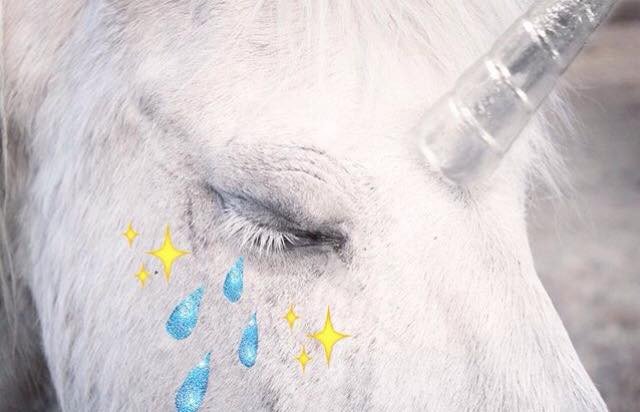
WE NEED UNICORN TEARS
THE AIR IS SO BAD
THE UNICORN TEARS
WILL MAKE THEM GROW FASTER
THE AIR IS SO BAD
So, to recap: the town is choking in bad air. Flowers must be grown fast to make the air better. To make the flowers grow fast enough, unicorn tears are needed. A bucket of unicorn tears, to be precise.
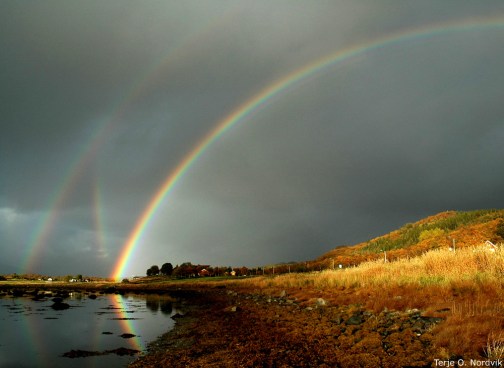
To get to the unicorn one must find the meadow in the sky. A wizard helps the knight get to the meadow in the sky by magically creating a rainbow up to the clouds. The knight climbs up the rainbow. So far so complicated (and unromantic). But we are not there yet.
You see, once in the sky, the knight discovers a large ocean separating him from the unicorn’s meadow. A mermaid appears in the ocean and takes a liking to the knight. Quite a liking! And thus we are suddenly treated to an imploring love song, much in the vein of a Celine Dion power ballad:
I am in Love With You
I AM IN LOVE WITH YOU
YOU ARE SO BEAUTIFUL
I WISH I WAS LIKE YOU
I THINK YOU’RE PRETTY
(Remember, this is the mermaid singing to the knight…)
I LOVE YOU
I LOVE YOU YOU YOU
I LOVE YOU VERY MUCH
WHY WON’T YOU LOVE ME TOO
(Why won’t you love me too?… Maybe this is more an Adele than a Celine song…)
I WANT YOU HERE WITH ME
STAY IN THE OCEAN
STAY IN THE SEA WITH ME
WHY WON’T YOU STAY WITH ME
I LOVE YOU
I LOVE YOU YOU YOU
I LOVE YOU VERY MUCH
WHY WON’T YOU MARRY ME?
So much unabashed longing. So much “I love you you you!” The Kindergartners laughed a little at the musically and lyrically soaring declarations they were writing, but mostly in appreciation. Considering the massive disruptive giggling I am used to from Kindergartners at previous years’ occasional, much milder marriage related fairy tale finales, K-3’s dedication to this naked crooning was quite admirable and sophisticated.
The Kindergarten K-2 class of the Brooklyn’s Children’s School just presented their original fairy tale opera, for which the children created the story, the lyrics and the melodies:
Once upon a time there was a king, a princess and a wizard. They all lived together in the castle.
The wizard had awful manners and wasn’t following the rules and directions of the king. This made the king very upset.
He decided to banish the wizard from the castle and sent him into the forest as punishment for being bad.
The wizard was unhappy and wanted revenge.
Ten years had passed and the wizard was ready to take on his revenge.
The Wizard’s Revenge
ONCE UPON A TIME
THERE WAS A WIZARD
WHO DECIDED TO HAVE REVENGE
THE KING SENT THE WIZARD
INTO THE FOREST
BECAUSE HE WAS BAD
FOR TEN YEARS THE WIZARD
WAS IN THE FOREST
MAKING A CURSE
HE MADE THE CURSE
TO SEND TO THE PRINCESS
TO MAKE HER BAD
ONCE UPON A TIME
THERE WAS A WIZARD
WHO DECIDED TO HAVE REVENGE
The wizard says a spell: Alakazam, abracadabra, I punish you to be bad.
The princess then turns bad. She starts stealing toys from people in the town.
Then she starts taking gold and books from the king.
She even starts dumping garbage all over the castle.
The princess goes to the town to turn the people bad. Each time she touches someone, they go bad.
They start stealing and dumping trash also. When they touch people, they go bad too.
Soon the whole village is robbing and dumping trash all over.
The princess touches the king who also becomes bad.
The wizard watches all this bad stuff from the top of the castle. He loves that everyone has turned bad.
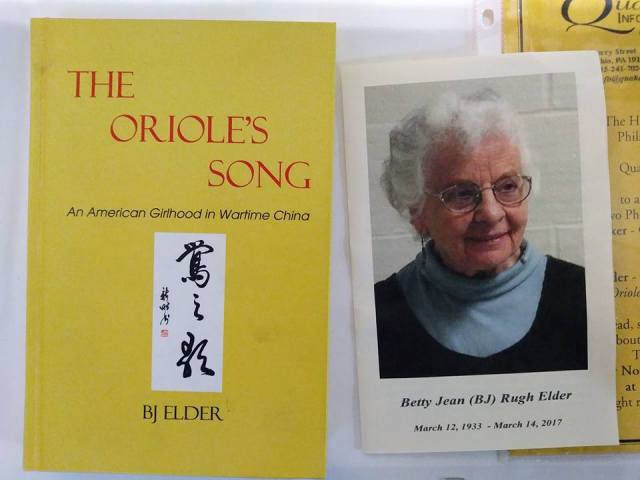
Last Saturday Ed and I drove in a rental car through two hours of sheets of rain to Kendal at Longwood, PA, just south of Philadelphia, to attend the memorial service for Aunt BJ. We slipped into Kendal Hall just in time to join her widower, Uncle Dave, Dave’s brother and Ed’s father Joe, their siblings Mim, Alice, Louise, Dave and BJ’s daughters Renee and Jenny, grandsons, many more nephews and nieces and cousins, plus a large contingent of friends from Germantown Friends (Quakers) and Kendal Retirement Community to commemorate BJ Elder’s life in a Quaker service. The testimonials given, the pictures, mementos, and decorations (including BJ’s favorite teddy bear and preferred candies, Peppermint Patties) celebrated a wonderful woman who was pint sized in stature but great in character, humor, decency, honesty and love. Herself a much admired woman, the admiration held for her beautifully written memoir “The Oriole’s Song” also embroidered many testimonials and memories.
I was introduced to BJ and her writings that would eventually become “The Oriole’s Song” during a weekend visit to Philadelphia over 23 years ago. While Ed, Dave, BJ and other family members were leaving the house to attend Quaker Meeting, BJ handed me sheets of paper containing two short stories she had written for her writing group. She insisted I read them and tell her what I thought, as I was “an artist”. I felt a little trepidation. Ed and I had been dating for only half a year and I was meeting many of his relatives, including BJ, for the first time that weekend, and now I was being asked to read and judge her writing? What if I didn’t care for it? Already imagining devising diplomatic responses, I sat down to read in the empty house. By the time the family returned from Meeting, I was flush with the excitement of having encountered a thing of beauty.
The first short story I read dealt with BJ’s childhood in 1930’s China. Her parents worked in the Yale in China program, which relocated from the capital of Hunan province Changsha to the small hill country town of Yuanling when Japan invaded China, a war that preceded and would continue on to the end of World War II. I was struck by the clarity of BJ’s writing. How her words, like the elegant economical brushstrokes of a Chinese watercolor painting, created indelible images with precise eloquence. Her evocation of a Japanese bombing raid on Yuanling made such a strong impression on me that morning that the mental picture her words inspired has never left me. I’ll quote just a few lines from that paragraph:
“Then I heard humming, faintly at first, like the summer sound of bees around a hive. Gradually it became more sure, a droning song sustained on one note. … The drone song grew louder rapidly until it filled the whole sky and the air between the hills with malignant ecstasy. … Through the opening in the wall, I saw tiny airplanes turning in the sky over the far end of the city. Raindrops glinted under them. … Only when I was pushed down onto my stomach did I realize that those raindrops were bombs.”
BJ and I spent much of the rest of the day talking about her short stories, and how she planned writing more, vignettes that would eventually form the chapters of her memoir. She told me about her girlhood in China, her experiences of the war, of being one of the only Caucasian children in Yuanling, and feeling even more like a stranger as a teenager in the United States. She told me about returning to China in the 1970’s during the height of the Cultural Revolution with Dave and the two China born daughters they’d adopted in the 1960’s. She told me about returning again in the 1990’s, and floating high over Yuanling in a boat, now that the city of her childhood was drowned by the raised waters of the Yuan River Dam. She told me how her father was one of the last Americans left in China when the Communists took over in 1948, how he was denounced and put on trial and convicted as a spy, marked for execution.
























 Sometimes this research took me into even earlier times, for need of greater context. Which is how I learned about the “female friendships” of the 19th century. These would be intense relationships between two women, in school or college, that could be as deeply bonded as any traditionally romantic or familial bond. Publicly these “female friendships” could exhibit all the hallmarks of romance: physical affection, love letters, lavishing gifts on another, intense jealousies, sharing beds, displays of devastating heartbreak when relationships dissolved. Society approved and encouraged these “female friendships” as a way for young women to exercise romantic proclivities within the safety of sorority, away from male temptation. That these friendships could become sexual was not imagined. That doesn’t mean however that some of these female friendships didn’t become sexual.
 Times were different in the 1800’s. Men sharing beds with men and women sharing beds with women was common. The terms heterosexual and homosexual weren’t even coined until the end of the 19th century. But once coined, their usage and the greater awareness of homosexual identity and activity seeped into society by the early 20th century. Intense “female friendships”, as practiced and encouraged in middle class society in the 19th century, now became tainted and suspect. Suspicion and fear of lesbianism made something once deemed a normal rite of passage for young women now appear unhealthy and dangerous.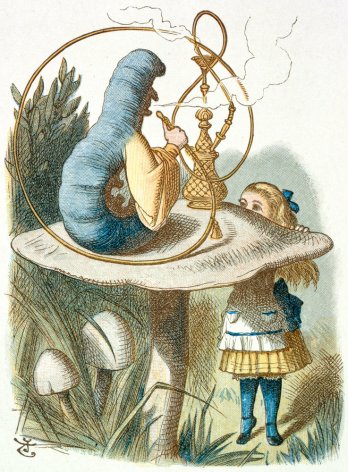








 It wouldn’t be a visit to the botanic garden without the obligatory “Ed sniffs a flower” picture, as my Facebook Friends have already learned to expect from us with seasonal regularly.
 To get to the unicorn one must find the meadow in the sky. A wizard helps the knight get to the meadow in the sky by magically creating a rainbow up to the clouds. The knight climbs up the rainbow. So far so complicated (and unromantic). But we are not there yet.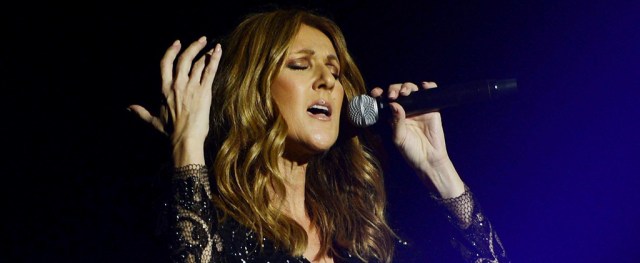









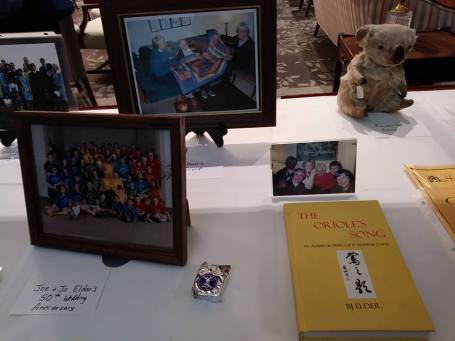 I was introduced to BJ and her writings that would eventually become “The Oriole’s Song” during a weekend visit to Philadelphia over 23 years ago. While Ed, Dave, BJ and other family members were leaving the house to attend Quaker Meeting, BJ handed me sheets of paper containing two short stories she had written for her writing group. She insisted I read them and tell her what I thought, as I was “an artist”. I felt a little trepidation. Ed and I had been dating for only half a year and I was meeting many of his relatives, including BJ, for the first time that weekend, and now I was being asked to read and judge her writing? What if I didn’t care for it? Already imagining devising diplomatic responses, I sat down to read in the empty house. By the time the family returned from Meeting, I was flush with the excitement of having encountered a thing of beauty.
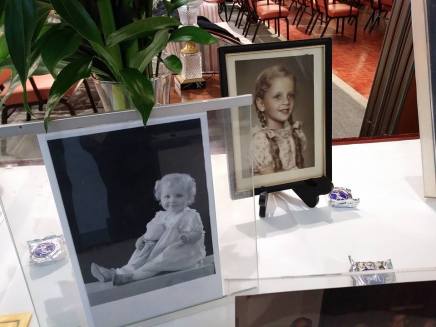 BJ and I spent much of the rest of the day talking about her short stories, and how she planned writing more, vignettes that would eventually form the chapters of her memoir. She told me about her girlhood in China, her experiences of the war, of being one of the only Caucasian children in Yuanling, and feeling even more like a stranger as a teenager in the United States. She told me about returning to China in the 1970’s during the height of the Cultural Revolution with Dave and the two China born daughters they’d adopted in the 1960’s. She told me about returning again in the 1990’s, and floating high over Yuanling in a boat, now that the city of her childhood was drowned by the raised waters of the Yuan River Dam. She told me how her father was one of the last Americans left in China when the Communists took over in 1948, how he was denounced and put on trial and convicted as a spy, marked for execution.


 Notes from a Composer