NewFest 2017 Feature Length Dramas:
After Louie – God’s Own Country – Against the Law – My Son is Gay – Discreet – The City of the Future – Professor Marston and the Wonder Women
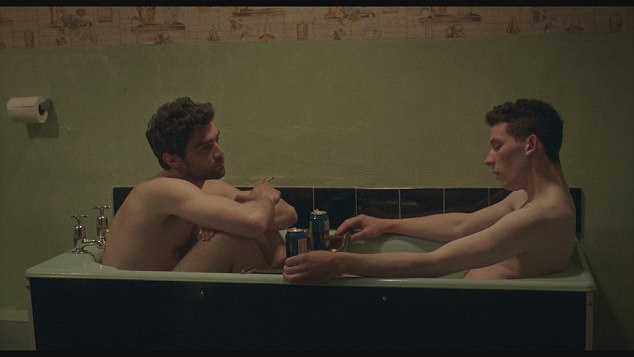
God’s Own Country
Last year I saw only feature length dramas at the NewFest LGBT film festival, 13 specifically, while including in my blog posts two more LGBT themed instant classics (“Moonlight” and “The Handmaiden”) then concurrently playing in regular theaters. 15 movies. Only feature length narrative dramas. That’s usually what I gravitate towards at the festival. So I surprised myself when this year’s personal NewFest itinerary ended up with six short film compilation screenings plus several documentaries and a panel discussion, leaving “merely” five screenings for narrative features. Luckily two films I didn’t find time for in the festival (“God’s Own Country” and “Professor Marston and the Wonder Women”) are now playing in theaters. I quickly caught up with them this past weekend and can add them to this look at lucky seven queerific NewFest screen gems.
So although too many of this year’s NewFest feature length dramas are missing from this round-up, I still provide a diverse and potent selection of the high profile and the unheralded, American and foreign. Taking us from New York to Texas to the UK, India and Brazil. From the 1920s to the 1950s to today. From ecstasy to violence, anger to love, repression to redemption.
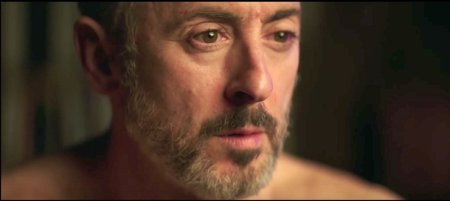 The NewFest 2017 New York Centerpiece screening was After Louie, a cinematic gift to all who feel it’s about time Alan Cumming, ubiquitous on stage, TV and film that he is, finally is given the central sole lead role in a movie (if it has happened before, I am unaware of it; surely it should happen more often). And he is very good as Sam, an artist at the crossroads, a veteran of the early AIDS years and ACT UP dealing with survivor’s guilt, whose psychological cages are rattled by a tricky relationship with a younger gay man, Braeden (Zachary Booth from “Keep the Lights On”). Director Vincent Gagliostro (“How to Survive a Plague”) co-wrote the richly layered screenplay with Anthony Johnston (who also plays Braeden’s lover); many themes and contentious issues engaging and dividing older and younger generations of gay men, as well as the yawning absence of a generation of men erased by AIDS, are smartly woven into an entertaining and provocative narrative.

Men in bath tubs – or a curious bit of synergy in current gay themed movie publicity shots 😉
Incisive supporting roles for ally Sarita Choudhury, veteran out actors like Wilson Cruz and Patrick Breen, and a trio of Queer Icons, Everett Quinton, David Drake and Justin Vivian Bond, enrich the ensemble and storytelling. But if nothing else, as Bond quipped during the Q & A, “After Louie” should be famous for giving us the future meme of Alan Cumming telling Justin Vivian Bond to “choke to death on a bag of dicks”. Or was it bag of cocks? Just one more reason (out of many) to see “After Louie” again. This film deserves to make a big cinematic splash when it is released next year.
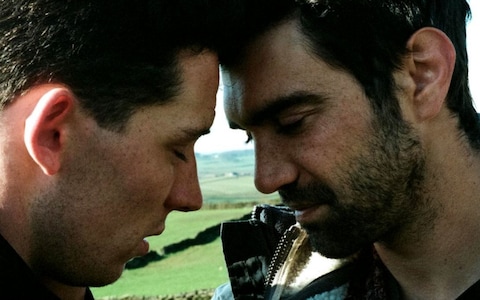 Already having made a splash at Sundance, where it won the World Cinema Directing Award, and over many weeks in the U.K. box office, God’s Own Country is starting off strongly in limited release stateside. It also just received 11 BIFA – British Independent Film Award – nominations, incl. for picture, director and both lead actors. It might be a bit glib if understandable to refer to this love story between young Yorkshire farmer Johnny (Josh O’Connor) and Rumanian migrant Gheorghe (Alec Secareanu) as Northern England’s answer to “Brokeback Mountain”. Except the expected societal obstacles to homosexuality turn out not to be the problem and instead Johnny’s own emotional barriers and arrested maturity are the main antagonists to love. Writer/director Francis Lee was able to shoot the film’s stark yet meticulous scenes in chronological order, adding greatly to a sense of realism and subtle dramatic shifts. The lead actors each both lived and worked on farms for a month before filming commenced, leading to a movie that captures farm life and animal husbandry with startling grittiness and brutal beauty, an aesthetic that also informs the depiction of the two men’s sexual and emotional relationship. Both leads play their roles excellently. (Is it shallow of me to add that Alec Secareanu is absolutely dreamy?)
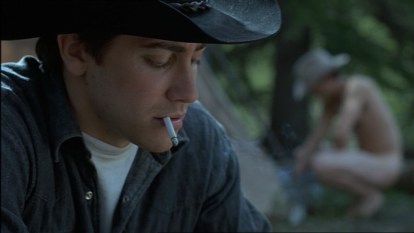
Brokeback Mountain
On a side note, as much as “God’s Own Country” really is its own starkly beautiful movie, I can’t help but detect one or two small, perhaps unwitting, loving nods to “Brokeback Mountain”, including a scene where Johnny assiduously avoids glancing over at Gheorghe when he washes himself naked, framed almost exactly like a similar scene between Gyllenhaal and Ledger; plus there’s the mournful fetishizing of a missed partner’s article of clothing, though here it is a sweater instead of a shirt. (Don’t let that last sentence steer you wrong though; “God’s Own Country”, unlike “Brokeback Mountain”, is not a tragedy.) And on a really silly side note: Professor Quirrell and Madam Pomfrey from Hogwarts happen to play Johnny’s father and grandmother respectively. (And that’s what makes me a blogger, an enthusiast, and not a critic. Really don’t want to be mistaken for a critic…)
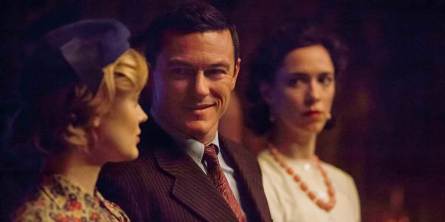 Based on box office receipts in the USA sadly only a mere 1/3 of 1% of the the audience that flocked to the wonderful “Wonder Woman” have turned up to check out the marvelous Professor Marston and the Wonder Women, the true story of a man, his wife, the lie detector machine they invented, the female student they bedded, bonded and everything but officially wedded, and how all this ecstatic entanglement inspired that most famous female cartoon superhero: Wonder Woman. I have a sneaking suspicion this film will find many eventual devotees on dvd, as the whole history is just too incredibly delicious, the performers too appealing, and the movie itself just too damn good.
  It is too easy to highlight apparently sensational details: Bisexuality! Threesomes! Polyamory! Bondage and Dominance! Sexual Role Play! Comic Book Superheroes! Feminism! Non-traditional Family Structures! Love! Devotion! (O.K. maybe the last four are less sensationalistic but they’re important too.) But more pertinent to point out is how without slick sensationalism but rather with what intelligent sensuality, compassion, and feeling director/writer Angela Robinson dramatizes her themes and the lives of William and Elizabeth Marston and Olivia Byrne. And as played by Luke Evans, Rebecca Hall and Bella Heathcote… well, boy, to paraphrase Professor Marston’s own theories on emotions, they dominate the screen, induce great enjoyment in the viewer, inviting submission to all three and total compliance with the movie’s enthralling points of view.
Continue reading →
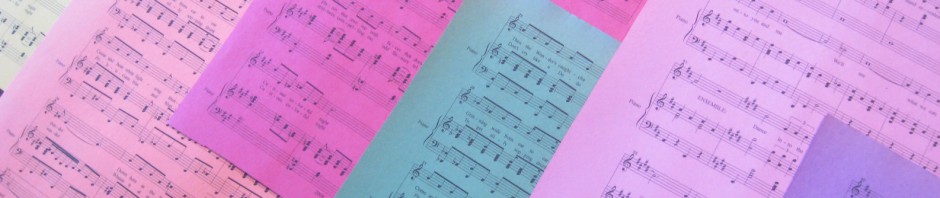

 Ed may just have been thinking about something fun for the family to do together in the holiday spirit, in addition to the traditional caroling sing-a-longs and 1000 piece puzzles. Or he may have also been thinking about the fact that the last piece I composed was the viola piano duet for his birthday, and the last piece before that was the previous year’s piano viola duet. It might not be such a bad idea to compose something, anything, again.
 Ed and I were at a play when he raised the question. Before we were back in the subway on the way home I had scribbled some notes for a seasonally angelic, perhaps corny, but still pretty vocal theme for sopranos. There they are in the page from that day’s NYTimes, because I always take along the Saturday crossword puzzle for Ed and me to do together on the subway.
 A simple tune with plenty of internal repetition for easy instant sight singing (chord modulations in the accompaniment will add extra variety). In traditionally kitschy but still pretty parallel thirds; what the Germans like to call “Schweineterzen” – pig’s thirds – not sure why exactly “pig” but I like the comical way the phrase denotes harmonies that are generically fatty and juicy and common and popular and, let’s face it, just plain good. And relatively easy to sing instantly.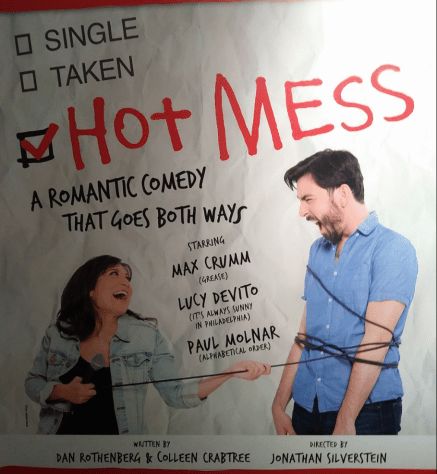
 The playwrights’ bios already clued me into the strong likelihood that a message of love and acceptance and inclusivity would conclude this charming play very much designed for a mainstream audience. But the original title also telegraphed ambivalence or worse about the lead character Max’s homosexual history. And so it was. I experienced much of the first 3/4 of the play feeling mildly aggrieved while the hero keeps postponing telling his girlfriend about his gay experiences, revealing a conflicted uncomfortableness with his sexual past. This culminates in a brutal freezing out of a friend and former fuck buddy when he accidentally runs into him while on a date with the girlfriend. The worst stereotypes about bisexual male secrecy, inconstancy, and untrustworthiness were looking to be fully justified, thank you very much.
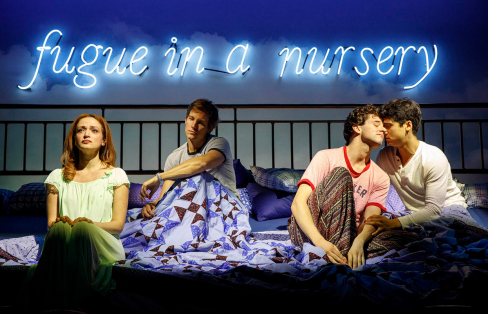 Ed may be somewhat more forthcoming about his sexual history with both Arnold and his future wife Laurel than Max is during most of “Hot Mess”, but that doesn’t make Ed’s true feelings easy to pin down since he seems so slippery about them even to himself. And then the play stacks the sexual deck against Ed’s heterosexuality so much – Ed comes to orgasm with Laurel only when he kisses her neck and thinks of Arnold; Ed almost acts on fantasies of suicide because he is so fearful of coming out; Ed ‘s desire for a family and pleasing his parents are more forcefully stated reasons to marry Laurel than his love for her – that he comes across more like a deeply conflicted, self-deluding homosexual than a true bisexual. But then again, wasn’t (or isn’t that still?) the belief of most gay men of that era (and still?) – there is no such thing as truly bisexual men? Just gay men not being honest with themselves?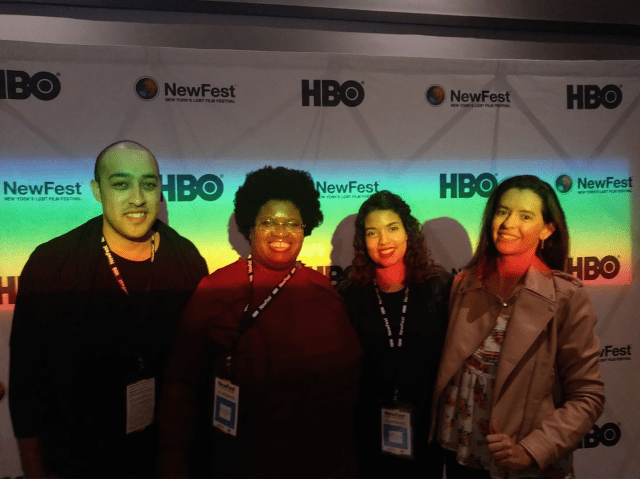

 Eliel Cruz raised the question if there is even a need for labels: “I find that people who are monosexuals push for a world where labels aren’t necessary.” Which had David reminiscing about another festival where “everybody identified as queer or fluid or pansexual or ominisexual…” but apparently not bisexual (
 Regarding the necessity of labels, Alexandra said “short answer: yes. Long answer: sometimes. The needs of the bi community can’t be met if we aren’t counted.” Taylor added “I accept the decision not to use any label – but they are helpful. It’s a pretty common experience within the biplus community that it takes a while for people to figure themselves out.”
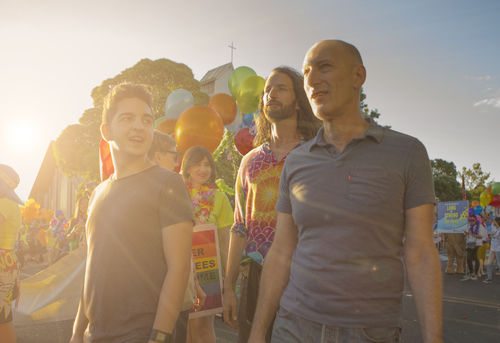 Three very different docs successfully blended the Gay Micro with the Gay Macro, by which I mean (get your head out of the gutter) that deeply personal, specific slice of life details were illuminatingly integrated into narratives that comprehensively spanned decades of gay history. In 100 Men director Paul Oremland lists and tracks down a hundred men he had sex with over the last 40 years of his adult life. Everything from random hook ups to longterm relationships. This is initially as cheekily irreverent and titillatingly provocative as one might expect, but through Oremland’s journeys through New Zealand, The United States, England and Poland, interviews with and remembrances of a variety of people and experiences, covering decades of gay sexual, social, and political revolutions and struggles, “100 Men” becomes an invaluable document of modern gay male experience. As well as a stealth love story.
 Similarly, Jochen Hick’s My Wonderful West Berlin covers 40 years of gay history in the historically uniquely situated city of West-Berlin, the liberal Western oasis that was surrounded by the walls of the Iron Curtain; a place like no other in its time (and my childhood home during much of the time Hick’s covers). Many individuals’ personal narratives regularly enrich the complex broader picture of the quiet 1950s, the clandestine 1960s, the revolutionary 1970s, and the devastating 1980s that marked gay life in the divided city, which before German Unification was like a unicorn among the cities of the world: a geopolitical all-time original, a beacon, an outlier, a refuge, a renegade, a subsidized experiment; an unusual condition that contributed greatly to its uniquely evolving queer culture. I was too young at the time to take part in any significant way in any of the varied gay history Hick’s excavates. Still I was deeply drawn by nostalgia to the movie’s depiction of my childhood hometown, brought back in such vivid detail. And many of the film’s featured seminal LGBTQ personalities and locations and events – the Pariser Bar, queer film director Rosa von Praunheim, the Deutsche Oper, intersex Drag Star Romy Haag, gay movie classic “Taxi zum Klo”, the squatters movement, to name a few – made an impression on me too even as just a child mostly consciously unaware of his own burgeoning bisexuality.
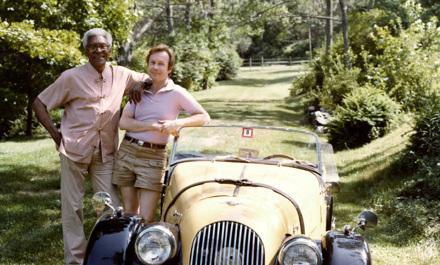 The third example of the gay micro/macro history doc I saw is the short Bayard & Me, which lovingly recounts Walter Naegle’s love story with the civil rights leader Bayard Rustin. Personal touches are threaded with illuminating historical details, like how Rustin’s Quaker background helped inform the non-violent civil disobedience tactics espoused by Martin Luther King, or how the couple pioneered gay adult adoption as a way to ensure the younger Naegle would be able to inherit and continue to live in Rustin’s apartment in a time long before gay marriage was considered even a distant possibility. When the short concluded during the middle of the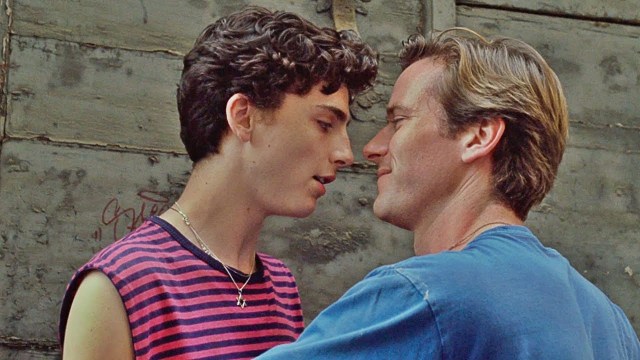
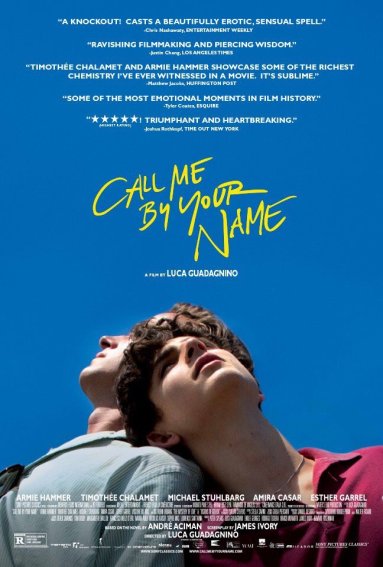 I first heard about the Gay Romance “Call Me By Your Name” when the film version premiered at Sundance last January. The early rapturous reviews of the movie (starring Timothée Chalomet and Armie Hammer, directed by Italian sensualist Luca Guadagnino, screenplay by “Room with a View” / “Maurice” / “Howard’s End” legend James Ivory) poured into the Internet movie sites I habitually read. I looked up from my laptop to my husband Ed and said “Guess what we will be seeing at the movies in about 11 months…”. A romantic, sexually frank gay love story with that cast and that pedigree in writing and directing? Even without the glowing advance word, it would be a must see. But 11 long months, that is how long I would have to wait until I could expect to see “Call Me By Your Name” released in the local theaters.
 I wished to read it all from start to finish, with no interruptions, just as one would engage with a movie. But that would not be practical, as reading the book would take me many many more hours than watching the movie. Still, experiencing it parceled out over three days, with interruptions like social engagements and spending time with my husband, and sleeping, was more concentrated and quicker than the relatively slow reader I am usually can manage.

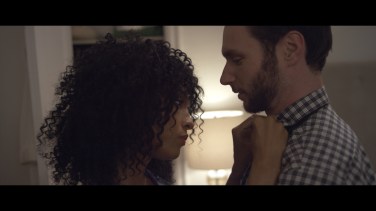 If you have HBO, you will be able to catch Gema in February, 2018. It’s an affecting 13 minute modern riff on “Guess Who’s Coming to Dinner”, which director/writer Kendrick Prince hopes to make the basis of an ongoing web series. “Gema” is full of intriguing layers that unpeel themselves gradually, but whether you sense them all from the start or are surprised by the reveals, the complex, sensitive portrayal of a couple nervously anticipating the arrival of one partner’s parents engages throughout.
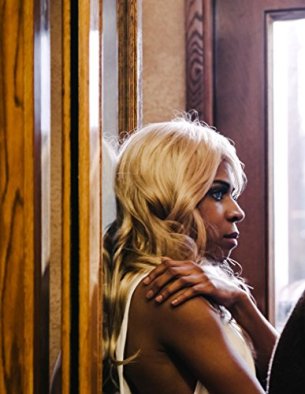 Walk For Me is Elegance Bratton’s clear-eyed and loving tribute to the Ballroom Scene, which Bratton likens to “a miniature Hollywood”. When Elegance was 16, his/her mother kicked him/her out of the house, and Elegance found family and mothering in this still flourishing subculture (popularized decades ago by “Paris is Burning” and Madonna’s “Vogue”), an experience that is echoed in “Walk For Me” with a hopeful open-ended ending for the young lead and their biological mother. In addition to international distribution “Walk For Me” is being prepared to be made available to schools with dedicated lesson plans.


 Dare and Truth‘s pithy blurb “an afterschool game of Truth and Dare quickly spirals out of control” captures the events of this handsomely shot black and white short, but not how richly complicated the interactions are between the seven teenagers in this taut, fraught morality play. Writer/director Thomas Rivera Montes developed the dialog in part through extensive improvisations with the cast, and the result is utterly believable conversations and naturalistic performances from the young actors. The scenario is full of little surprises and reveals, including an only gradual understanding who the two “leads” of this story actually are.
 Ace opens up a potential tinder box of mysterious possibilities between two teenage girls, when the “popular blond rich girl” invites a black “baby butch” into her house. The film ends on a surprise reveal that puts everything we just saw into fresh perspective, a perfectly satisfying ending that still opens up a whole new world of possibilities of what happens next. Several audience members in the Q & A were full of desire to be told, and the director Morgan Kahn Nichols volunteered that he was as curious as the rest of us. “Ace” would go on to win the NewFest Jury Award for Best New York Short.



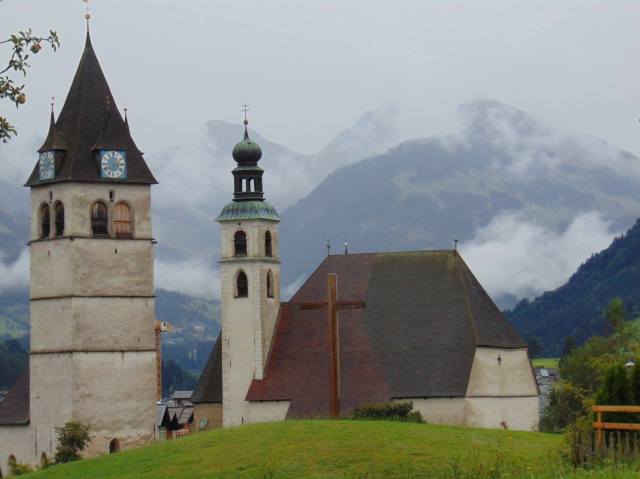
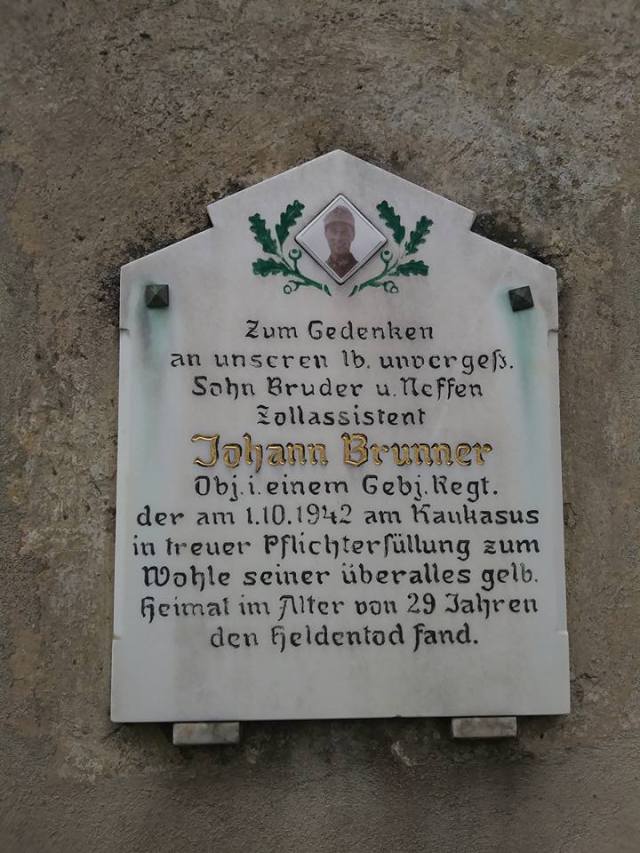
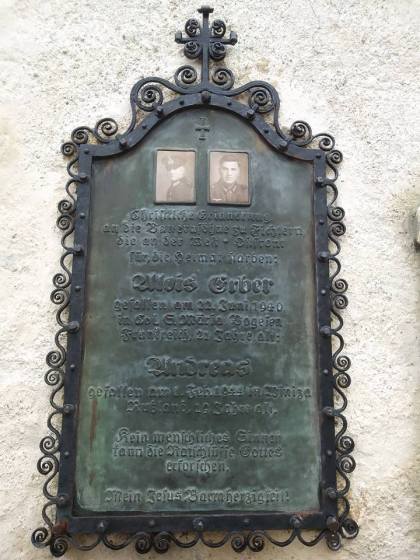 I looked about the cemetery to see if there were other examples of graves or plaques commemorating local sons fallen in World War II. I found the “farmer’s sons Alois and Andreas Erber” (right) who “died for the Homeland on the Western and Eastern Front”, a turn of phrase somewhat uncomfortably tied to the poisonous propaganda of its time, but followed by neutral specifics of location and age, and finally a bible quote and a plea for Jesus’ mercy.
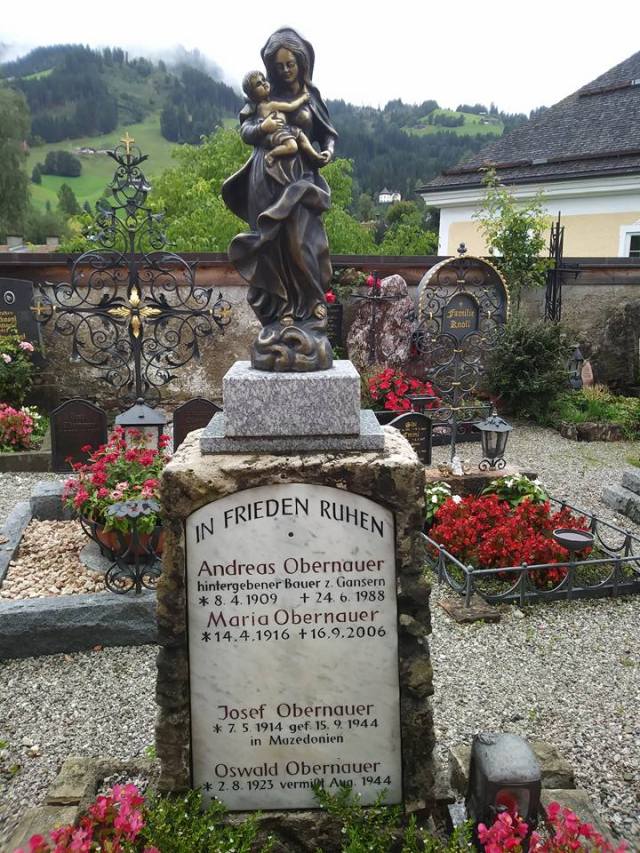
 So, families can revise grave stones in the cemetery as time moves on, and as future burials add to family plots. Maybe the questionable aspects of grave markers with Nazi propaganda can be explained by them being plaques on church walls. Some of these plaques go back even further in time, like this one on the right, a World War I plaque for the “brave warrior” who went missing as a prisoner of war in Serbia. Perhaps I am wrong to assume families still pay for the preservation of the plaques. Does the church choose to keep them affixed to its walls for their historical significance regardless of descendants’ involvement? Is the language on these plaques considered for what it represents? At what point have we crossed from historical curiosity to something much more problematic, unconscionable even.





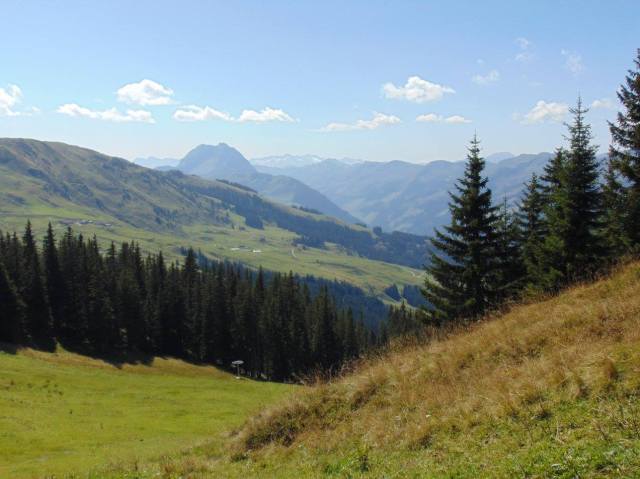
 Encountered some musical cows on the slopes of the mountains of Kitzbühel, Austria. And so, with the help of three short video clips, the first just above, I present the Cow Bell Cantata, the first dramatic movement featuring a shockingly loud outburst in the brass section.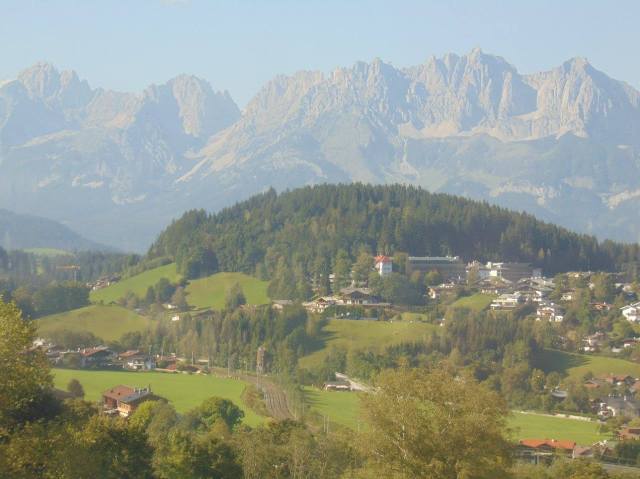
























 Notes from a Composer