HERE BE GALLOWS’ HUMOR – Retreat ye who don’t care for that sort of thing

IMG_7389

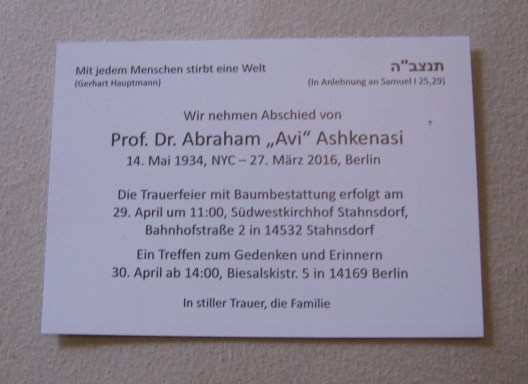
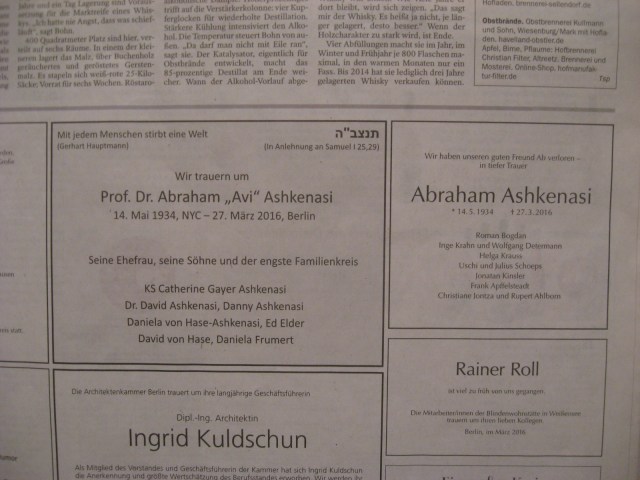
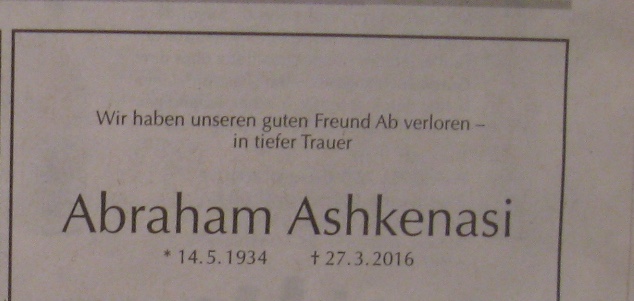
Sunday April 3 my father’s memorial announcement was posted in the “Familienanzeige” section of the Tagesspiegel newspaper in Berlin.  Actually there were two announcements, the one my family arranged, and another purchased by close Berlin friends of Dad’s.  It was awfully touching of them to have added their own special “Traueranzeige” from friends to be placed next to the traditional family announcement.

These German friends of my fathers, who in most cases had known him since the 1960’s, knew my father as Ah-brah-hamm, the German pronunciation of Abraham, but most usually called him by the American shortening of Abraham, “Abe”.

So while the family announcement referenced Dad’s childhood Yiddish/Hebrew nickname of “Avi”, the friends’ announcement referenced “Abe”.

Well, not quite.

Version 2

A closer look quickly revealed to me that my father’s German friends never discovered the correct spelling of Abe.  And so in the announcement they call him “Ab”.

Ab.

Which is unfortunate, since in neither English nor German would one look at “Ab” and pronounce it “Abe”.

Had my father become a stomach muscle?

Germans don’t use “silent e”.  To write out “Abe” in a way that would make a German pronounce the name correctly, you would have to spell it “Eyb”.  That would have looked very odd in the announcement.

“Ab” in German is pronounced “op” or “app”, to spell it out for an English reader.

Black Ops.  Special Funeral Forces.  The Funeral App.  For smart phone internment.

Yet my first thoughts upon seeing this were not how this would look to an American, but how it comes across in German.

Because, you see, “ab” in German means “off”.  And is used commonly as a preposition.

As in “abgehoben”.  Which was the first word that entered my mind when I saw my father referred to as “Ab”.

Ab – gehoben.  Literally lifted off, floating off.  But generally used colloquially as far out, as in wild and crazy.

Continue reading

Posted in Beginnings, Notes in the News | Tagged , , , , , , , , , , , | 1 Comment

STAHNSDORF – An American Red Oak for my Father

b-5

My plane was delayed by two and a half hours.  Needing only hand luggage for a five day stay I breezed past the baggage carousel at Berlin-Tegel, but the taxi ride added to the delay due to traffic jams on the AVUS highway.  The taxi drove through the city streets instead, which allowed me to take in all that familiar Berlin architecture looking homely inviting in the unseasonably bright and warm sunshine.  It had been gray and rainy all week, but now skies were clear blue, the taxi driver informed me.

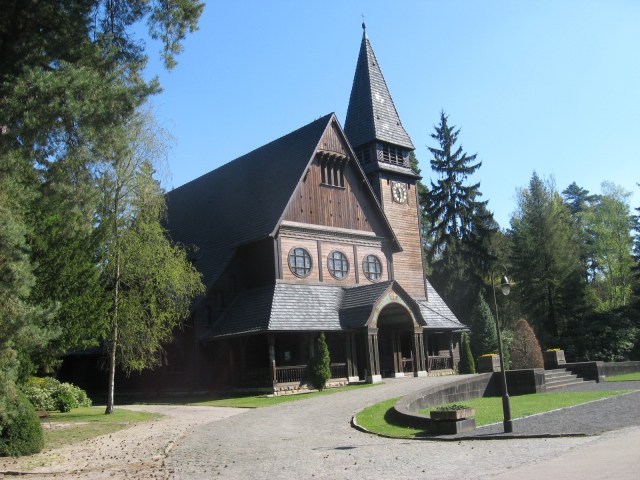
Arriving so much later than expected I had only a few minutes in my childhood home before Mom and I had to get into her car and drive down south to Stahnsdorf to make our appointment.  We were supposed to be there at 11am, and it was 11:45am already.  Mom had called ahead to give notice of our delay, but she was worried, because under regular circumstances they don’t schedule these appointments past noon.

b-2 murnau

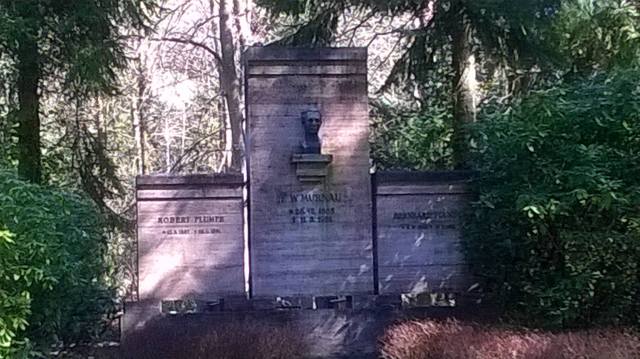
The Stahnsdorf grave site of F. W. Murnau, the director of silent movie classics like “Nosferatu” and “Sunrise”

Ruhestätte Stahnsdorf is a fifteen minute drive from our home, south of Berlin just a stone’s throw away on the “other” side of where the Wall used to be.  When I was growing up, Zehlendorf and Wannsee were on “our” side, the “Western” side of the Wall, and just south were Teltow and Stahnsdorf, on the “Eastern” side.  Unreachable.  I knew of Teltow, because the avenue Teltower Damm, as its name indicated, went south past my school towards Teltow, but was thwarted from reaching the town by those infamous Cold War concrete barriers, with sand strip, barbed wire and heavily armed border patrols just behind.

b-18

The grave of illustrator Heinrich Zille

There was no Stahnsdorfer Straße I knew about, so the town of Stahnsdorf remained out of my consciousness for most of my childhood.  Until the early 1980’s that is, when a bus route was extended to reach into those two city blocks within Stahnsdorf that somehow managed to have been incorporated into the Berlin city limits in the 1920’s, and thus wound up in the American District after the fall of the Third Reich, becoming part of West Berlin when Germany divided into two.  These two narrow city blocks reached like an amoeba’s branchlike offshoot into DDR territory, surrounded on three sides by the Wall and at one point as narrow as a single street.  The few inhabitants there felt cut off and neglected by the city.  So in the 1980s, perhaps more for reasons of politics than infrastructure, it was decided to extend the busline that serviced Wannsee into that sliver of “free” Stahnsdorf. Which is how I learned the name of the town; when one of the buslines that passed our local stop announced their new “Endstation”: Stahnsdorf.

Endstation Stahnsdorf.  Terminal Stahnsdorf.

b-11

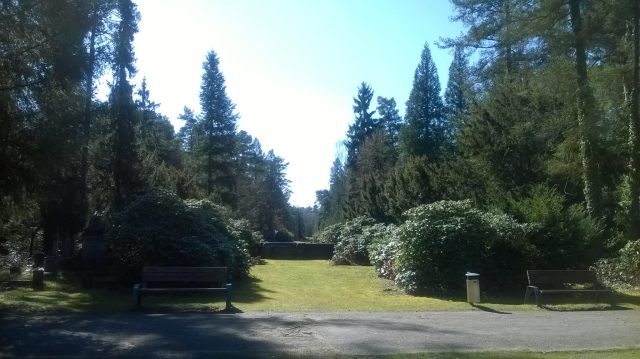
“Graveyardsection for Internment under Trees”

Continue reading

Posted in Beginnings, Two-fisted Touristing | Tagged , , , , , , , , , , , , , , , , , , , , , , | 4 Comments

NfaC Repost: THE DAY I BECAME A COMPOSER

I have not yet written much about my parents on this blog so far, but this piece from last June includes one of my favorite anecdotes about my father:

“My parents were always supportive of all my creative endeavors, but that weekend my father reacted differently.  He didn’t just praise and support my work, he very seriously declared that I was a real composer.  I practically laughed at him.  I said I am just a kid messing about, I’m not a real composer.  My father rather heatedly insisted that no, this stuff is really good, and I am a real composer.  I rather noisily asserted my amateur teenager status.  Traditionally these kinds of arguments between parents and children go the other way around.  The child expresses his need to be an artist while the parent tells him to stop dreaming and pursue a sensible vocation.  It amuses me greatly to remember this conversation as my father yelling ”You are a composer” and me responding ”No, Dad, I’m just a kid messing about.” ”

THE DAY I BECAME A COMPOSER

IMG_4635 - Version 2

It was Friday, April 23, 1982.  I was fourteen, one month shy of my fifteenth birthday.  I remember the day and the events that sealed my fate very clearly (although admittedly I had to dig up the old journal I’d kept then to look up the exact date).  Whether it was an epiphany, or a choice, or simply one turn of events that set others into motion, what happened that day would mark me as a composer for life.  I would not fully acknowledge that fact, undeniably embrace my fate so to speak, for another three years.  But it is clear that from April 23, 1982 on, whether I wished to or not, I was a composer.

Up until then if you asked me “what I would be when I grow up” I would have said “actor” (and maybe occasionally added “director”).  From as long as I could remember I loved performing and would do so unselfconsciously at any occasion that presented itself or just freely about the house (to my brother’s annoyance).  It is probably in my genes.  My mother is an opera singer and her mother was a singer and actress during her youth in Finland in the 1920’s.  My mother has told me that the way I express myself on stage reminds her forcefully of old stage photos of my Finnish grandmother.  So I was likely created a performer, Born That Way to misquote Lady Gaga (although I guess I am also Born That Way in the other sense).  Except for one strange inexplicable lapse in Kindergarten when I told my teacher I wanted to be a doctor (still can’t fathom why after all these years) I always knew I wanted to be an actor.

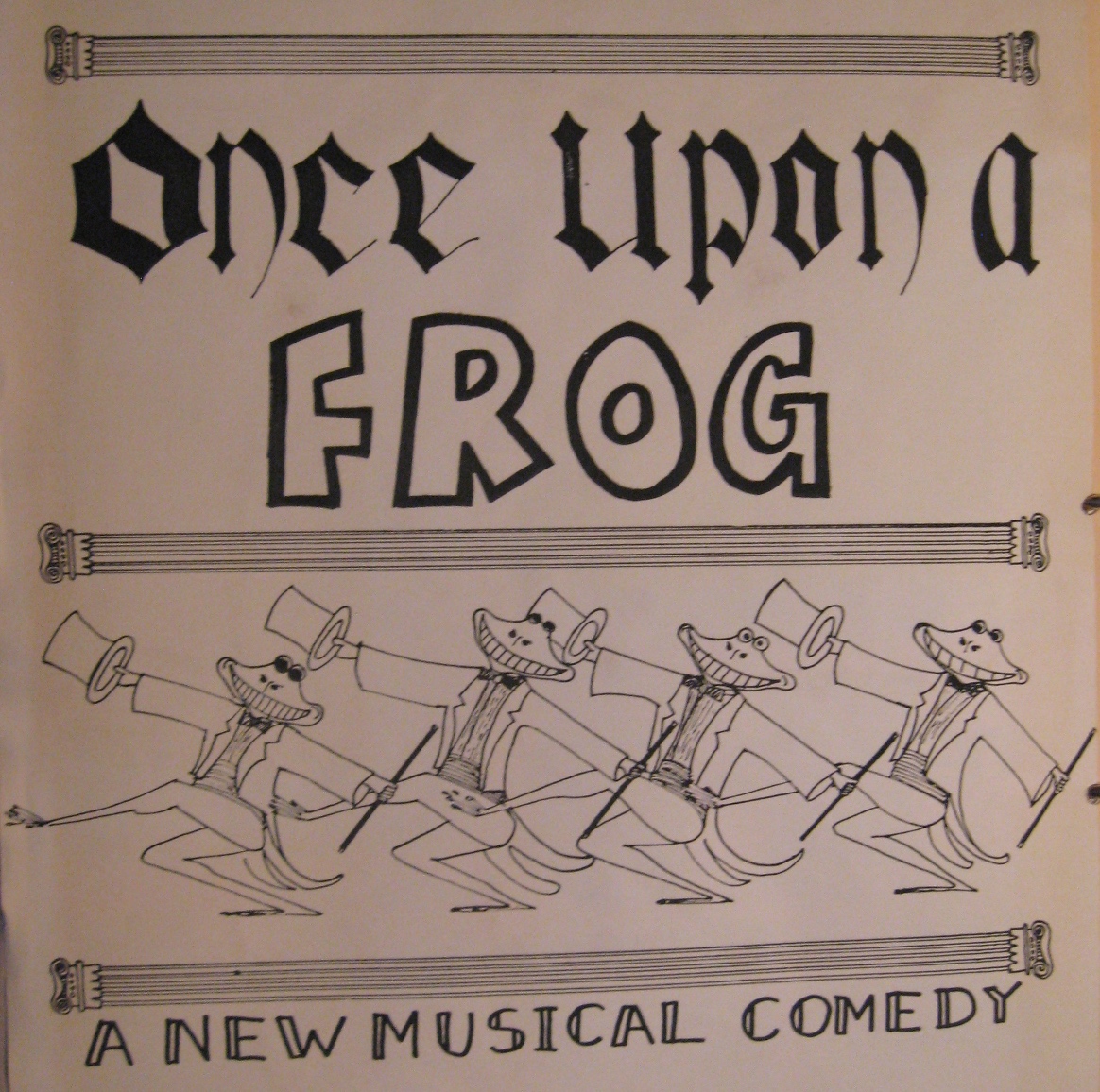
Being a composer was not a particular ambition.  I loved all the arts.  As a kid I would engage in all varieties of creative pursuits, and although I did compose a couple of tunes for a make-believe musical version of Robin Hood when I was eleven, I spent many more childhood playtime hours building hand puppets and marionettes or drawing cartoons or writing short stories.  If I had any serious artistic ambitions outside of performing it was for writing children’s stories, some of which I unsuccessfully tried to get published.  The children’s book publisher who rejected my children’s book “Das Goldene Ei” – The Golden Egg – (with illustrations by my Mom) asserted in her rejection letter that books had to be at least a hundred pages long to be published (a ridiculous assertion, considering there is a whole class of children’s picture books that are much shorter).  After I received that rejection I took it upon myself to write a children’s book of at least one hundred pages.  This book, “Es war einmal ein Frosch”, begun when I was eleven, would turn me into a composer three years later.

When I was in 9th grade, my music teacher Steven Hepner ran a composing lunch club.  I was a kid who just in general loved to be creative no matter the medium, and I had had nine years of piano lessons, so I composed something for the piano.  Over many months I would bring Mr. Hepner a piano piece to which I added a couple measures every week.  Eventually I found a way to give the piece an ending.  But then I needed to bring in something else to the lunch club.

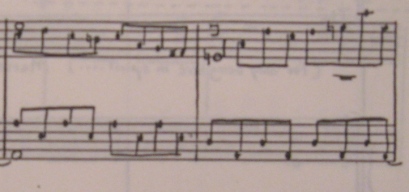
There was this snaky little melody I had come up with on the piano while my left hand was picking a simple pattern on some black keys.  A phrase that first snaked down to hit an unexpected minor note and repeated to land on the major note one had first expected.  Then the tune did a little more soaring, finding one more unexpected, almost dissonant harmony before ending on a major third.  A little more playing around with the tune yielded a counter melody and a solemn fanfare of a coda. (Of course at the time I didn’t have the wherewithal to describe what I’d created in these terms.)

Two measures from

Two measures from “Love Theme – The Comet”

I wrote down the notes as best I could (in those days I hadn’t yet quite grasped the rule about note stems going down left of the note and going up right of the note and where on the staff one made the switch).  I played the piece for Mr. Hepner at the next lunch club meeting.  I also sang a set of lyrics I had written to go with the tune:

WHEN THE COMET SPRAYS ITS LIGHT ABOVE

WHEN ITS SPARKLE FILLS US WITH LOVE

THEN I’LL COME FROM DOWN THE MILKY WAY

HERE TO STAY

WITH YOU

Mr. Hepner found the nature of the lyrics rather curious.  What is this about a comet and coming down from the Milky Way?   I explained that I had been writing a children’s book in German called “Es war einmal ein Frosch”, which was a riff on the Frog Prince fairy tale, but in my story Prince Charming is really an extra-terrestrial who is accidentally transformed into a frog when he is beamed down onto the planet.  He manages to make contact with Princess Marianne, who is desperate not to be forced into a marriage with the neighboring kingdom’s Prince Waldemar, a union negotiated as part of a peace treaty.  She ends up kissing one frog after another to find and elope with the extra-terrestrial whom she sees as her Prince Charming.  This tune would be his love song to her.  His space man persona explains the nature of the lyrics.

Mr. Hepner asked me “Why the Frog Prince”?  I told him when I was younger I’d think about what fairy tales Walt Disney hadn’t yet turned into animated musicals (remember this was decades before “The Princess and the Frog”) and I came up with the Frog Prince, and decided to write the story as a children’s book.  Then Mr. Hepner said four fateful words: “So write a musical.”

“What?”

“You just said you first thought of the story as a musical.  Well, now you wrote a song for that story.  So turn it into a musical.”

I thought it was a crazy suggestion.  It was one thing to write one little song – not even a full song with verses and chorus, just a short tune with a simple set of lyrics – it was a whole other thing to write a musical.  I couldn’t do that!

Continue reading

Posted in Beginnings, Musicabilia | Tagged , , , , , , , , , , , , , | 1 Comment

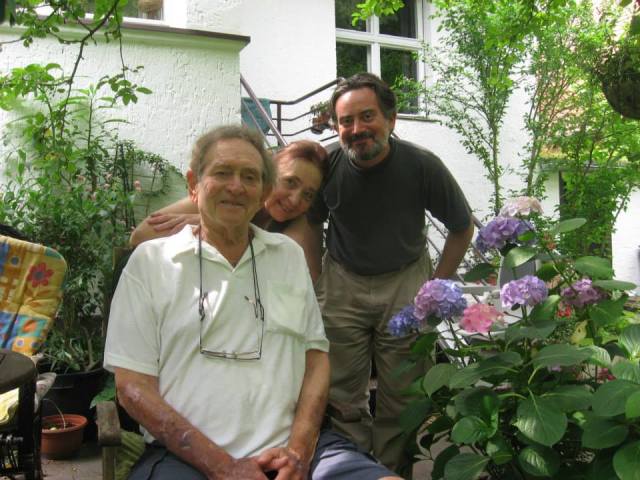
Abraham Ashkenasi

Dad 4

Abraham Ashkenasi

May 14, 1934 – March 27, 2016

Dad 5

Continue reading

Posted in Beginnings | Tagged | 2 Comments

KICKSTARTER REWARDS MAILING

Version 2

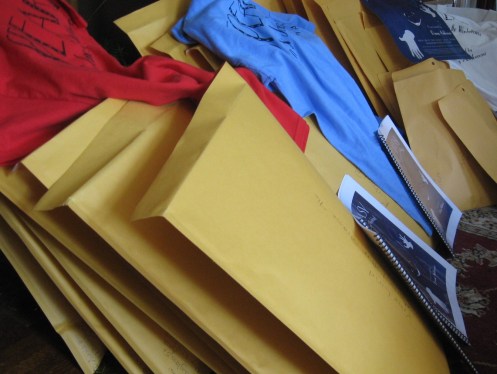
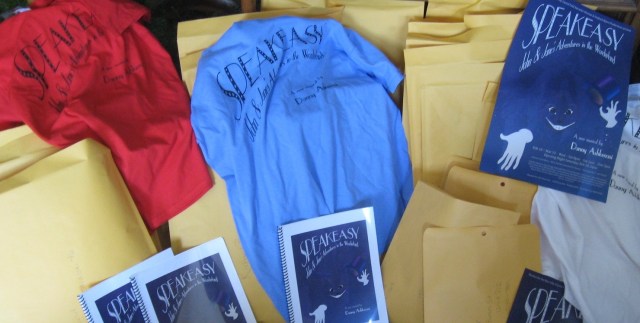
Yesterday Kelly Aliano and I got together to put together the mailing of Speakeasy Reward gifts (T-Shirts and Booklets and Posters, oh my!) to those Kickstarter contributors to the showcase production of Speakeasy who weren’t able to pick up their rewards at a performance during our run at the Theater for the New City.  The massive mailing included packages addressed to locations as close as Manhattan and as far as Australia.

Thank you again to all who contributed to making the showcase production of Speakeasy a reality!

IMG_7255

Kelly addressing envelopes

IMG_7256

Danny stuffing envelopes


Version 2

Continue reading

Posted in Notes in the News, The Speakeasy Chronicles | Tagged , , , , , | Leave a comment

NfaC Double Repost: BREAKING INTO SONG IN MUSICALS

Time for another Notes from a Composer rerun, or repost, this time a double feature from last April on the convention of breaking into song in musicals, and how cleverly the movie version of Cabaret subverted that convention.  This post will be followed by another on how I address this convention in my musical Speakeasy.

How Cabaret circumvented the “characters breaking into song” musical trope

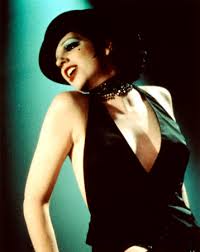
Liza Minnelli as Sally Bowles in Cabaret

When people who say they hate musicals explain why they hate musicals they usually fall back on this well-worn reason: it is unrealistic that characters just break into song and dance; this doesn’t happen in “real life”.  I find this a rather eye-rollingly lazy reason to reject musicals as an art form.  Do we reject comedies because in real life people generally don’t engage in hilarious dialog and pratfalls?  Do we reject action films because in real life all those extreme stunts just don’t keep occurring like that?  Do we reject horror films because there is just no such thing as zombies and mummies and vampires (never mind that they are a reflection of our subconscious desires just as much as a song is in a musical).  If you hate jokes, fine, reject comedies.  If you don’t want to watch violence, fine, reject action films (like my mother-in-law does).  If you hate being scared, for heaven’s sake, avoid horror movies.  And if you don’t like music, avoid musicals.  But if you do like music (and really, most everybody does), it doesn’t make sense to reject all musicals just because people sing in them.  People breaking into song in musicals is as much a suspend-your-disbelief integral element as all the other suspend-your-disbelief elements we accept to enjoy genres of art, or even the basic tools of the language of cinema, like editing, lighting or musical scoring.  Or as one blog post I found that goes into great detail defining various musical tropes puts it: “Musicals have songs in them – just go with it.”

That said (or vented), there is at least one musical that most stringently circumvents the “characters breaking in to song” trope.  Cabaret is chock-full of brilliantly realized musical numbers, but all of them are performed “realistically” within the context of a performance actually happening as naturally as any other interaction between characters in the real world.  If you absolutely must avoid suspending your disbelief at seeing “characters break into song” when “in real life” they wouldn’t, couldn’t ever do that, then I invite you to watch the movie adaptation of Cabaret.  It also just happens to be one of the greatest musicals (or movies) ever made.

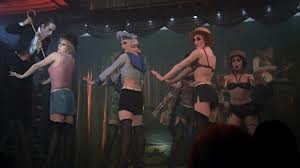
Joel Grey as the M.C. with the Kit Kat Girls

The stage version of Cabaret, a big hit on Broadway in 1966, was a traditional musical where characters would burst into song.  It also included scenes in the Kit Kat Club, a seedy Weimar Berlin cabaret, where the creepy Master of Ceremonies (played by Joel Grey on stage as well as on screen), the Kit Kat Girls and Sally Bowles (played by Liza Minnelli in the movie) would perform numbers that would comment on the musical’s narrative.  These numbers were therefore not suspend-your-disbelief moments of characters breaking into song unrealistically, but real life performances at the Kit Kat Club, which was as much a real setting of the musical as the boarding house where Sally resided.

When Cabaret was adapted for the screen in 1972, the producer Cy Feuer, the director Bob Fosse and the screen writer Jay Presson Allen agreed to cut all the “character breaking into song” numbers.  Every musical number would almost exclusively be performed in the Kit Kat Club, as an actual performance that could be witnessed by the cabaret’s audience.  Some popular melodies from the stage version would be either cut or heard through other realistic means, as when Sally puts on the phonograph to play an instrumental version of “It Couldn’t Please Me More” to dance seductively for Brian, or when “Married” is heard sung in German as “Heirat”, also on the phonograph, while Sally and Brian are planning their future life together.

Sally and Brian (Michael York) listening to

Additional songs not heard on Broadway were introduced to the movie version, like “Mein Herr”, “Money Money”, and “Maybe This Time”, all of them now so popular that the recent stage revivals of Cabaret are a hybrid of both the original stage version and the movie, incorporating these songs.
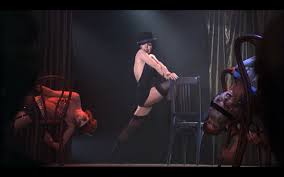
With almost every musical number being a performance at the Kit Kat Club, the notion of these numbers acting as sly commentary on the narrative, pioneered in the stage version of Cabaret, became even more pronounced. “Willkommen” not only introduces you to the denizens of the Kit Kat Club, but also shows Brian (Michael York) arriving in Berlin. While the introduction of Sally Bowles and her sexual history is deftly handled with the cynical “Mein Herr” number, when she and Brian transition from friends to lovers Sally is shown sensually back-lit singing “Maybe This Time” at the club, intercut with moments of romantic bliss between the couple.  When Sally meets the filthy rich Maximilian, the movie segues to her and The M.C. performing the famous “Money, Money” number.

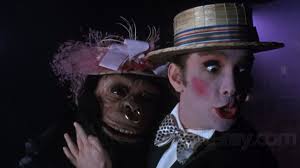
Sally and Brian’s evolving relationship with Maximilian occasions the M.C. touting the advantages of threesomes in “Two Ladies”.  Fritz confessing his love for the Jewish heiress Natalia, as well as his own secret Jewish identity results in the M.C. soft-shoeing with a Gorilla in a tutu, singing “If You Could See Her Through My Eyes”.

The one musical number sung in full not at the Kit Kat Club (and not playing on the phonograph) would be the masterfully chilling “Tomorrow Belongs to Me”, sung live at a beer garden in the German countryside, as realistically as any performance on an outdoor stage might be.
Continue reading

Posted in Cinema Scope, Melodies Linger On, The Speakeasy Chronicles | Tagged , , , , , , , , , , , , , , , , , , | Leave a comment

Cast Picture


SP - Company 2

Jonathan Fox Powers (music director), Anne Bragg, Allie Radice, Amanda Thomas, Zachary Martin, Kristen Quinn, Rita McCann, Larry Johnson, Rebecca Marquardt, Brendan Mellette, Camille Atkinson, Tim Connell, Matias Polar, Darcy Dunn, Kayleigh Shuler, Brian Henry, Bri Molloy, Sebastian McCracken, Torian Brackett, Dan Kelley, Cody Keown, Bevin Bell-Hall, Desi Waters, Nick DeFrancesco

Continue reading

Posted in Live! On Stage, The Speakeasy Chronicles | Tagged , , , , , , | 1 Comment

Contemplation before the show

10247320_10207571656523170_7655944632887362038_n


My husband Ed took this pic of me in the lobby of Theater for the New City sitting at our concession stand by the entrance into the Johnson Theater.  Speakeasy would be performing in about 40 minutes that Saturday night.  So this was long before the audience arrived.  Ed posted the pic on Facebook with the heading “Contemplation before the show.”


Posted in Live! On Stage, The Speakeasy Chronicles | Tagged , , , , , | Leave a comment

FINAL SPEAKEASY PERFORMANCES – Dance into the Light tonight, let Love have her way

SpeakeasyFINAL_Poster-Dance

SpeakeasyFINAL_Poster-Dolly

Tonight and tomorrow, 8pm

Final Performance Sunday, March 13, 3pm

Theater for the New City, 155 1st Avenue

Thank you to all, contributors, performers, production team, audiences, who have helped make this workshop production of Speakeasy possible.  May we all dance into the light:
Dance into the Light (demo recording)

_DSC2559

DANCE INTO THE LIGHT


CHET:

THE DANCEHALL IS BUSY

WITH LAUGHTER AND REPARTEE

ALL TABLES A TIZZY

SURROUNDING THE SMOOTH PARQUET

THEN WARM LIGHT BATHES THE OPEN ROUND

AND NO ONE MAKES A SOUND

 –

THE MUSIC STARTS PLAYING

A SWEET TUNE, A SUBTLE BEAT

THE PATRONS START SWAYING

AND SMILING AND TAPPING FEET

THEN DANCERS RISE TO TAKE THE FLOOR

WITH SOMEONE THEY ADORE

 –

One by one, couples start taking to the dance floor to dance.  Mostly opposite sex, but some same gender couples too.  They’re joined by John and Duchess as well as Jane and Julian.
 –

DANCE INTO THE LIGHT TONIGHT

LET LOVE HAVE HER WAY

FOR LOVE SHOWS YOUR HEART WHAT TO DO

JOIN IN THE ROMANCE AND DANCE

OF LOVERS AT PLAY

THE MUSIC IS CALLING TO YOU

 _DSC2571 Continue reading

Posted in Live! On Stage, Notes in the News, The Speakeasy Chronicles | Tagged , , , , , , , | Leave a comment

“SPARKLING MOMENTS OF MUSICAL THEATER” – OffOffOnline’s Speakeasy Review

OffOffOnline posted their Speakeasy review.  Here a few highlights:

“Kayleigh Shuler as Jane and Matias Polar as John are the heartbeat of the show; they are the flawless young lovers, never missing a note or a cue.”

_DSC2575

“As Jane’s best friend, hooch-maker, and possible extramarital love interest, the fiery Bevin Bell-Hall charms the room as Roberta White.”

_DSC2607

“The characters of Duchess Bentley (Camille Atkinson) and Julian Carnation (Tim Connell) represent the struggles of Julian Eltinge and Gladys Bentley, queer denizens of Prohibition-era New York City.  Atkinson and Connell portray their gender-bending historical characters with sensitivity and humor.”

_DSC2703

“Absolutely knocking the Ziegfeld-girl aesthetic out of the park are Alice Radice and Anne Bragg as Dora and DeeDee Tweedle.  Just try to keep from smiling as Radice and Bragg shuffle around the stage in their blonde bobs and lobster-claw hands.  With their stellar comic, dance and musical skills, this vaudeville duo steals the show.”

_DSC2726

Continue reading

Posted in Live! On Stage, Notes in the News, The Speakeasy Chronicles | Tagged , , , , , , , , , , , , , , , , , , , , , | Leave a comment

6 SPEAKEASY PERFORMANCES LEFT! – (plus James Rado from Hair drops by) (and a personal recommendation)

_DSC2679

3pm Matinee today!

Wed 8pm!   Thur 8pm!   Fri 8pm!   Sat 8pm!

Final performance Sunday March 13 3pm!

Get your SPEAKEASY tickets here!

Also…

Last night the legendary James Rado, co-writer of the musical Hair, attended the performance.  Afterwards he shook my hand and told me how much he liked the show.

He even purchased a Speakeasy T-shirt.

🙂

So, in honor of Mr. Rado’s gracious visit, here’s a mash up of Speakeasy‘s “Cinderella” and Hair‘s “Hair” lyrics:

POOF YOUR HAIR LIKE PERCY SHELLEY

OR MARCEL IT HARD AS STEEL

LET IT FLY IN THE BREEZE AND GET CAUGHT IN THE TREES

GIVE A HOME TO THE FLEES IN MY HAIR

IMG_7254

Also, the singer Michael Hanko, whom we befriended when he was cast in the reading of Feedstore Quartet (which I wrote with Jack Hilton Cunningham), saw Speakeasy too on Saturday, and has since posted this lovely account on Facebook, which he has allowed me to share in full:

Continue reading

Posted in Live! On Stage, Melodies Linger On, Notes in the News, The Speakeasy Chronicles | Tagged , , , , , , , , , | 1 Comment

The Inspiration for SPEAKEASY’S DUCHESS BENTLEY – Part 2 of The Terrific, Transgressive and Tragic Tale of Gladys Bentley

Galdys 1a

Gladys Bentley, in the Ebony article, showing off clippings from her career heyday.

Gladys Bentley, the model for the character Duchess Bentley in Speakeasy, enjoyed a terrific career as deliberately outrageous Lesbian nightclub singer during the Roaring Twenties, but saw her prospects plummet during the far less permissive Great Depression.  Almost all homosexual entertainers saw the work dry up for them in the 1930s unless they adopted a public heterosexual front.  Gladys Bentley however had been so outspoken about her Lesbianism, it was such a big part of her early success, that there was no escaping that public image which now became the main reason for her career downturn.

By the late 1940s Gladys Bentley’s performing career was practically non-existent.  Meanwhile Red Scare paranoia not only raised fears against suspected Communists but was also the catalyst for a far greater witch hunt against homosexuals in Government jobs.  It was during this time of particularly vicious public homophobia that Gladys Bentley published an article in Ebony magazine titled “I am a Woman Again” wherein she renounced Lesbianism, claiming she had taken hormone treatment to cure herself of this “strange affliction”.  She was now married to a man and posed for numerous pictures showing her doing typical housework.

ebony1

Continue reading

Posted in LGBTQ Alphabet Soup, Notes in the News, The Speakeasy Chronicles | Tagged , , , , , , , , , , , , , , | 2 Comments

The Inspiration for SPEAKEASY’S DUCHESS BENTLEY – The Terrific, Trangressive and Tragic Tale of Gladys Bentley – Part 1

Gladys 2a

Gladys Bentley

In the musical Speakeasy – John and Jane’s Adventures in the Wonderland, Jane Allison first meets Duchess Bentley, Harlem nightclub singer and unabashed lesbian, when she finds herself outside a door being angrily knocked upon by Minister Fish, who implores Duchess Bentley to let him in so he may persuade her to amend her wicked ways.  Meanwhile, inside, Duchess is dodging the temper tantrum and flung food and dishes hurled by Jane’s neighbor Roberta White, who is livid to have learned she is not alone in being the recipient of Duchess’ amorous attentions.

pig and pepper 3

Pig and Pepper

The scene parallels the “Pig and Pepper” chapter in Lewis Carroll’s Alice’ Adventures in Wonderland, only there Alice comes upon a Fish footman outside the door of the Duchess, who is dodging saucepans and dishes flung by an irate cook.  (The Cheshire Cat makes his first appearance in this chapter too, and on stage this is also where Jane Allison meets Chet Cheshire in person for the first time.)

Minister Fish, in addition to Carroll’s Fish Footman, is also based on Reverend Adam Clayton Powell, a prominent Harlem pastor who in the 1920’s railed against “moral degenerates”, claiming that sexual perversion among women had “grown to one of the most horrible, debasing, alarming and damning vices of present day civilization”.  Roberta White, who is taking the Cook’s place in dish throwing outrage, is based on the White Rabbit, as well as the many flappers and jazzers of the Roaring Twenties who perhaps partook in more than they could handle socially and sexually.  (Chet Cheshire is based in part on Pansy Craze entertainer Gene Malin).

Duchess Bentley takes her Carrollesque cues from Alice ‘s Adventures in Wonderland’s Duchess and Through the Looking Glass’ Humpty Dumpty for the most part.  More importantly the character derives her historical inspiration from notorious, fabulous, and ultimately doomed Harlem nightclub singer Gladys Bentley.

“Get a whiff” of her daring, as channeled through Duchess’ verse and chorus in Speakeasy’s song “Swell”, the second part of which is included here (she shares the song with Julian Carnation and Chet Cheshire):

Swell Part 2 (demo recording)

_DSC2703

Julian Carnation, Chet Cheshire, Duchess Bentley (Tim Connell, Bri Molloy, Camille Atkinson) and Ensemble singing “Swell”

Continue reading

Posted in LGBTQ Alphabet Soup, Notes in the News, The Speakeasy Chronicles | Tagged , , , , , , , , , , , , , , , , , , | 1 Comment

Speakeasy inspired ART by PETER BONNER

Bonner - the lobster dance a symbols of sexual liberation

The Lobster Dance – a Symbol of Sexual Liberation

Peter Bonner is a New York based artist originally from Australia.  We met as members of the choir singing the Ode to Joy in Carnegie Hall with the World Community Orchestra.  He has been reading the libretto and listening to the music of Speakeasy for over a year now, and was inspired to create a series of artworks based on the musical and its themes.  Here are pictures of much of Peter’s Speakeasy Art.  You can see the artwork exhibited live in the lobby outside the Johnson theater at Theater for the New City while Speakeasy is in performance.


Bonner - The tweedle Sisters

The Tweedle Sisters


Bonner - Janes Kiss

Jane’s Kiss


Bonner - magical realist Gay love

Magical Realist Gay Love

Continue reading

Posted in Arts-a-Poppin', Literary Lyricism, The Speakeasy Chronicles | Tagged , , , , , , , , , , , , , , , , , , , , , , , , | 2 Comments

SPEAKEASY PRODUCTION PHOTOS #2

_DSC2744

“Shadow and Light”


_DSC2754

“Sweet Suspicion” – Allie Radice, Anne Bragg, Matias Polar, Tim Connell


“An offbeat, mind-blowing fantasia on identity, taboo romance, and queer culture circa 1930.”

  • Gay City News


_DSC2772

Amanda Thomas, Nick DeFranceso, Kristen Quinn, Torian Brackett, Brandon Mellette


_DSC2797

Matias Polar and Tim Connell


“The lyrics, melodies, and orchestrations are surprisingly rich and sophisticated.”

  • Gay City News


_DSC2803

Allie Radice & Anne Bragg foreground, Bevin Bell-Hall & Brian Michael Henry & Darcy Dunn behind, Tim Connell & Matias Polar right.

Continue reading

Posted in Live! On Stage, The Speakeasy Chronicles | Tagged , , , , , , , , , , , , , , | Leave a comment

SPEAKEASY PRODUCTION PHOTOS #1

_DSC2559

Bri Molly as Chet Cheshire


“One of the most wildly ambitious, inspired theatrical endeavors I’ve seen on an Off Off Broadway stage. Bursting with an excess of ideas and passion”

  • Gay City News


_DSC2571

“Speakeasy”


_DSC2575

Kayleigh Shuler and Matias Polar as Jane and John Allison


“Director Lissa Moira, choreographer J. Alan Hanna, and the large cast do an amazing job keeping everything rolling along in this theatrical equivalent of a three-ring circus.”

  • Talkin’ Broadway


_DSC2586

John and Jane with Dean Kitteridge (Brian Michael Henry) and Roberta White (Bevin Bell-Hall)


_DSC2597

At the Automat


“The score is an appealing mix of period jazz, swing, cabaret, Tin Pan Alley, and operetta. The lyrics, melodies, and orchestrations are surprisingly rich and sophisticated.”

  • Gay City News


_DSC2607

Rita McCann, Allie Radice, Cody Keown, Bevin Bell-Hall, Zachary Martin, Amanda Thomas, Kristen Quinn

Continue reading

Posted in Live! On Stage, The Speakeasy Chronicles | Tagged , , , , , , , , , , , , , , , , , , , , , , , , , | 1 Comment