SNOW WHITE and the SEVEN HOS: an SCA Benefit Performance

Dwarves

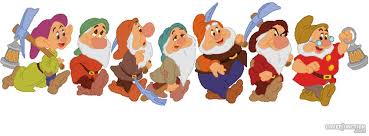
Be warned.  This will not be the Disney Musical Fairy Tale of your or anyone else’s childhood.  For one, Snow White is a recovering sex addict, and the seven dwarfs she meets all struggle with sex addiction and a variety of accompanying conditions: Dopey abuses marijuana; Happy is a loud drunk; Sneezy is a coke head; Sleepy is up all night trolling for sex on the internet; Doc is constantly catching STDs; Grumpy has anger management issues; and Bashful is a “sexual anorexic”, he has a porn addiction but can’t relate to actual people.

“Girlfriend!”

I quickly realized I was going to learn a lot of new things (and I know things now, many wonderful things, that I never knew before… wait, no, that’s a very different fairy tale musical) at this benefit performance of “Snow White and the Seven Hos”, a fundraiser for S.C.A. – Sexual Compulsives Anonymous, a support group that primarily serves Gay Men with Sex Addiction issues.  Ed and I were invited to attend by a friend who knows the amateur performers, all of whom are listed only by their first name and an initial in the program.  Evidently this fundraiser is an annual affair.  Previous musical appropriations included a legendarily hilarious “Sunset Boulevard” as well as “The Sound of Music” (with the Van Tramps).

Snow White & dwarvesIt was a fun, clever and bawdy affair.  The level of bawdiness reportedly did cause a bit of controversy within the group.  Although the musical parody’s message was clearly about overcoming sexual addiction and destructive behavior, the very ribald nature of some of the dialog and rewriting of classic Disney tunes caused some SCA members to question whether or not some of show would not actually act as “triggers” for some in the audience.  As the program preemptively stated: “In future show planning meetings, we will take group conscience on the use of graphic language in our shows”.

I however in good conscience had a grand old time with the spirited performances, the very clever rewriting of the Disney Songbook, and I learned some things too!

Continue reading

Posted in LGBTQ Alphabet Soup, Melodies Linger On, Notes in the News | Tagged , , , , , , , , , , , , , , | 2 Comments

Like me, really like me, on FACEBOOK! :-)

There is now a Facebook page for “Notes from a Composer”.

All new blog posts will also be listed on the “Notes from a Composer – Danny Ashkenasi” Facebook page:

Notes from a Composer – Danny Ashkenasi FACEBOOK PAGE

So please go there and “like” the heck out of it if that is your preferred method of receiving blog post updates!

And invite your Facebook friends to like the heck out of it too!  Thank you!  🙂

music fanned

Posted in Notes in the News | Tagged , , , | 2 Comments

Lisa Kron’s acceptance speech must be heard and shared!

Lisa Kron won a Tony for writing the book of the musical Fun Home.

She gave a wonderful speech with a fantastic extended metaphor that just needs to be heard and shared.

No one saw this on CBS.  They aired commercials instead…

Posted in Live! On Stage, Notes in the News | Tagged , , , , , , | Leave a comment

TONY! TONY! TONY! Just Live-Blogging it is Reward Enough!

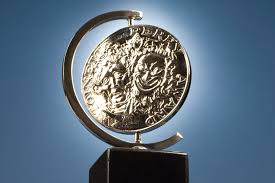
Tonight are the Tony Awards!  Woo-hoo!  The Second Gay High Holy Day!  (Well, let’s face it, the Oscars are indisputably the #1 Gay High Holy Day, Gay Christmas!  But the Tonys are a close second, right?  Gay New Year!  Day of A-Tony-ment!)  Join me here for the fun starting around 8pm Eastern Standard Time, or come by later for the recap!

Tony

Tonight’s hosts are our favorite diminutive diva dynamo Kristin Chenoweth and our favorite prolific pansexual Pan Alan Cumming.  Both are previous Tony winners.  Kristen won for her performance as Sally in the revival of “You’re a Good Man, Charlie Brown” (the producers liked her so much they created the role of Sally for her in the Peanuts musical that originally hadn’t included that character), was nominated again for playing Glinda in “Wicked”, and is nominated again tonight for her performance in the musical revival “On the Twentieth Century” (which I am desperate to see.  If only I had the budget to see every show on Broadway I wish to at any price…)  Alan Cumming previously won a Tony Award for his take on the M.C. in the revival of “Cabaret”, successfully creating his own legendary performance of the role, quite an achievement considering the very long shadow cast by Joel Grey’s performance.  Alan Cumming returned to the role in last year’s revival of the revival of “Cabaret”.  By all accounts his dressing room was party central for the best and brightest of Broadway after every show.

Tony Hosts

At the bottom of this post is a list of all the Tony nominees.  I will update it with the wins as quickly in real time as I can from my command center on the couch in front of my television.  Which means I may be slow on the uptake regarding those less sexy awards (according to CBS) given out before the live telecast (actually I will end up posting those stats long before the telecast finally announces what happened three commercial breaks earlier, so there!  😉  ).
An American in ParisMy biggest focus when it comes to the Tonys would be the new musicals, of course.  I am a composer of musicals, so naturally the state of original musicals with new scores on Broadway is of particular interest to me.  This year appears to be a good one, at least statistically.  By my count there were ten eligible musicals vying for the Best New Musical slots, with eight of them boasting original scores, which is a lot more than I remember there being in previous years for a long time.  There were years in the past where there were hardly enough shows to choose from in either category (remember the annus horribilus 1995 when only 2 musicals were nominated, and only one had an original score…?).

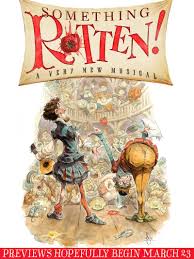
Fun HomeThis year’s four Best Musical nominees could hardy be more different in character and tone.  You have the elegant Gershwin dance musical “An American in Paris”, the poignant family drama “Fun Home”, the over-the-top musical spoof “Something Rotten” and the dark revenge romance “The Visit”.  All four are also nominated for Best Book of a Musical.  All three nominees with original scores are also nominated in the Best Score category.  Taking the fourth Best Score slot is “The Last Ship”, which is a testament to how well respected Sting’s score must be, since this show sadly closed in January and Tony nominators usually (but not always) will favor shows still running over shows that have closed in Something Rottennearly all categories and there were four other scores to choose from, three from shows still open when nominations were cast.  In fact eight of the 10 new musicals were still running the day nominations were announced (“Doctor Zhivago” closed soon after).  The two that had closed, “The Last Ship” and “Honeymoon in Vegas” had been well-respected and even raved about by critics, and yet they unhappily couldn’t attract enough audience support to keep going.  I saw both shows and feel they deserved longer runs.
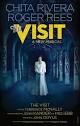
The VisitI have managed to see three of the four Best Musical nominees before the Tony telecast, which is extremely unusual for me, since, as I have already mentioned, I don’t really have the budget to see everything I would wish to see on Broadway, and especially not immediately.  But I am lucky this year to have seen “Fun Home” when it played last year Off-Broadway at the Public, and to have managed to procure discounted tickets for both “Something Rotten” and “The Visit” in previews, while they were still relatively unknown quantities.  Not so with “An American in Paris”, which I would love to see, but who knows where or when I will be able to afford to now, it’s such a hot ticket.  (And maybe I shouldn’t quote Rodgers and Hart’s “Where or When” when referencing a Gershwin musical…)

Alright.  I’ll be back before 8pm EST to “be your host, und sage Willkommen, bien venue, welcome to the 2015 Tony Awards telecast!”

7:55 – Five minutes to showtime! OK.  Got my chips (with hint of lime), got my chunky medium salsa, got my hard cider.  So bring it on Tonys!  Looking forward to the big opening.  Neil Patrick Harris and Hugh Jackman have spoiled me with years of greatly entertaining openings.  I have high hopes for Alan and Kristin!

8pm – And we’re off!

Kristin is in a mini-skirted suit, and Alan is in puce shorts.

K: Tonight is so big it’s begging to be handled by both a man and a woman.

A: I can relate.

So can I.

Continue reading

Posted in LGBTQ Alphabet Soup, Live! On Stage, Notes in the News | Tagged , , , , , , , , , , , | Leave a comment

THE DAY I BECAME A COMPOSER

IMG_4635 - Version 2

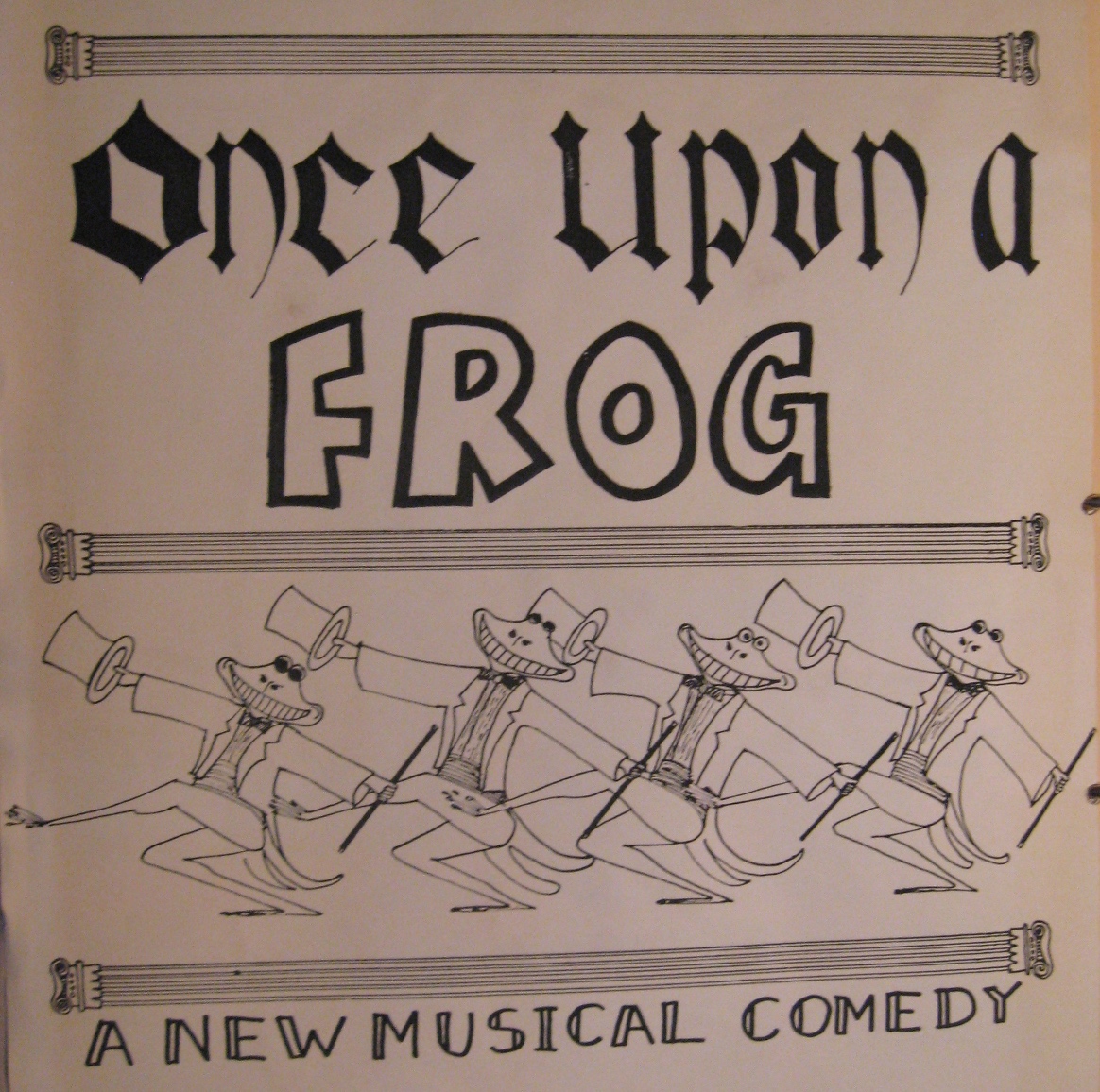
detail from 1985 poster for “Once Upon a Frog” – artwork by Derk Scholtz

It was Friday, April 23, 1982.  I was fourteen, one month shy of my fifteenth birthday.  I remember the day and the events that sealed my fate very clearly (although admittedly I had to dig up the old journal I’d kept then to look up the exact date).  Whether it was an epiphany, or a choice, or simply one turn of events that set others into motion, what happened that day would mark me as a composer for life.  I would not fully acknowledge that fact, undeniably embrace my fate so to speak, for another three years.  But it is clear that from April 23, 1982 on, whether I wished to or not, I was a composer.

Up until then if you asked me “what I would be when I grow up” I would have said “actor” (and maybe occasionally added “director”).  From as long as I could remember I loved performing and would do so unselfconsciously at any occasion that presented itself or just freely about the house (to my brother’s annoyance).  It is probably in my genes.  My mother is an opera singer and her mother was a singer and actress during her youth in Finland in the 1920’s.  My mother has told me that the way I express myself on stage reminds her forcefully of old stage photos of my Finnish grandmother.  So I was likely created a performer, Born That Way to misquote Lady Gaga (although I guess I am also Born That Way in the other sense).  Except for one strange inexplicable lapse in Kindergarten when I told my teacher I wanted to be a doctor (still can’t fathom why after all these years) I always knew I wanted to be an actor.

Being a composer was not a particular ambition.  I loved all the arts.  As a kid I would engage in all varieties of creative pursuits, and although I did compose a couple of tunes for a make-believe musical version of Robin Hood when I was eleven, I spent many more childhood playtime hours building hand puppets and marionettes or drawing cartoons or writing short stories.  If I had any serious artistic ambitions outside of performing it was for writing children’s stories, some of which I unsuccessfully tried to get published.  The children’s book publisher who rejected my children’s book “Das Goldene Ei” – The Golden Egg – (with illustrations by my Mom) asserted in her rejection letter that books had to be at least a hundred pages long to be published (a ridiculous assertion, considering there is a whole class of children’s picture books that are much shorter).  After I received that rejection I took it upon myself to write a children’s book of at least one hundred pages.  This book, “Es war einmal ein Frosch”, begun when I was eleven, would turn me into a composer three years later.

When I was in 9th grade, my music teacher Steven Hepner ran a composing lunch club.  I was a kid who just in general loved to be creative no matter the medium, and I had had nine years of piano lessons, so I composed something for the piano.  Over many months I would bring Mr. Hepner a piano piece to which I added a couple measures every week.  Eventually I found a way to give the piece an ending.  But then I needed to bring in something else to the lunch club.

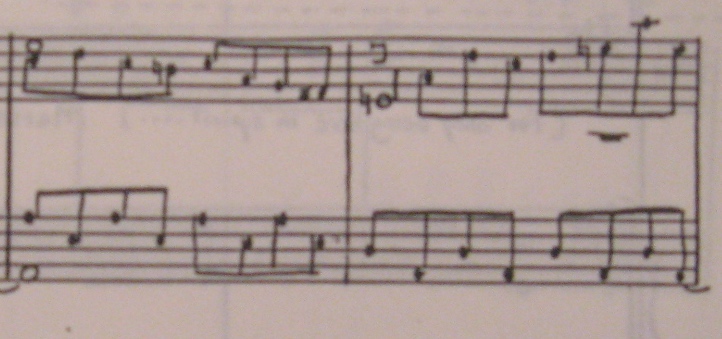
There was this snaky little melody I had come up with on the piano while my left hand was picking a simple pattern on some black keys.  A phrase that first snaked down to hit an unexpected minor note and repeated to land on the major note one had first expected.  Then the tune did a little more soaring, finding one more unexpected, almost dissonant harmony before ending on a major third.  A little more playing around with the tune yielded a counter melody and a solemn fanfare of a coda. (Of course at the time I didn’t have the wherewithal to describe what I’d created in these terms.)

Two measures from

Two measures from “Love Theme – The Comet”

Continue reading

Posted in Beginnings, Musicabilia | Tagged , , , , , , , , , , , , | 4 Comments

5 X FUN with LUDWIG’S 5th

“YOU DAMN KIDS, GET OFF MY SYMPHONY!”

“YOU DAMN KIDS, GET OFF MY SYMPHONY!”

Let’s have some fun with Beethoven!   Specifically the 1st movement of Beethoven’s 5th Symphony, easily the most famous piece of classical music in the world.  The indelible Duh Duh Duh DAH motif that opens and shapes the movement may or may not be “Fate Knocking on the Door” (according to Wikipedia attribution of that metaphor to the Maestro himself is dubious), but it is surely one of the most widely recognized musical themes in existence, likely only rivaled by that other super famous Beethoven tune, the Ode to Joy.

Before we have our fun, and take a gander at how contemporary artists have joyfully appropriated this classic, let’s play Ludwig some respect and give the original a look and listen:

The main theme of the first movement of Beethoven's Fifth

The main theme of the first movement of Beethoven’s Fifth

Premiered in 1808, Beethoven’s Fifth was soon recognized as a masterpiece and has been one of the most widely played orchestral pieces ever since.  But after about 150 years of exalted safety, pop music attacks and appropriations ensued with the Rock Era.  Chuck Berry famously sang “Roll Over Beethoven” (not Roll Over Mozart or Roll Over Tchaikovsky) and when ELO covered that song they included a 30 second intro quoting the famous beginning of Beethoven’s Fifth.  The Japanese rock band Takeshi Terauchi & the Bunnys recorded a “surf’s up” style electric guitar instrumental of the Fifth in 1967.   If Beethoven could hear it, he probably would be rolling over repeatedly in his grave.

a fifth of BeethovenThe most famous and successful pop instrumental adaptation would be Walter Murphy’s Disco hit “A Fifth of Beethoven”, which hit #1 on the Hot 100 in the fall of 1976.   Murphy lays a sizable sample of the first movement over a very groovy beat, boldly adding some harmonic modifications into the mix among other instrumental flourishes.  The middle section abandons Beethoven for some generic disco riffing before capping things off with a repeat of the first section and a coda lifted directly from the symphony yet given another 1970’s harmonic tweak.  “A Fifth of Beethoven” is cheekily sophisticated disco.  The fly beat would have probably accelerated Ludwig’s decomposition process, but for us mere mortals it was hard to resist the dance floor when the DJ laid this vinyl down back in the day:

Continue reading

Posted in Melodies Linger On, The Teaching Artist | Tagged , , , , , , , , , , , , , | 3 Comments

CHET CHESHIRE, the WONDERLAND M.C. and his feline and real-life inspirations

smile

The musical “Speakeasy” begins in darkness.  The overture has concluded, all lights have dimmed, we can’t see anything and all we hear is a chime like tone (on an octave of G). Then a tiny spotlight reveals a debonair smile.  The light broadens to frame the top-hatted head of Chet Cheshire, the Master of Ceremonies of the Wonderland nightclub.  He sings the musical’s opening number, also called ”Speakeasy”:

Chet Cheshire serves a special function in the musical “Speakeasy – the Adventures of John and Jane Allison in the Wonderland”.  As the M.C. of the Wonderland nightclub in New York during the Roaring Twenties he is perfectly situated to sing those songs that establish the themes and moods of the speakeasy and the musical itself, as well as slyly comment on the action enfolding in and about the Wonderland.  And as “Speakeasy”, inspired by Lewis Carroll’s Alice books, is a decidedly magical realist affair, Chet Cheshire also has the power to bend time and space to his whims and flit in and out of scenes at will, playfully complicating and manipulating the actions of our hero and heroine, John and Jane Allison.

As such the character Chet Cheshire lives in a musical theater tradition that includes such famous characters like the M.C. from Cabaret, the Leading Player from Pippin or El Gallo from The Fantasticks, to name a few.  These are characters that act as narrators of or commentators on the action, that help set the world and feel of the musical and guide the audience inside.  Although they may get involved in the plot, they mostly tend to stand separate or above the rest of the characters.  They also are more likely to break the “fourth wall” and share a special relationship with the audience that the rest of the cast doesn’t.

Gene Malin

Gene Malin

When Chet Cheshire sings the opening number “Speakeasy”, we recognize him to be the impresario in a nightclub we will eventually learn is called the Wonderland.  It may not be clear at this moment whether Chet is singing only to the imaginary patrons of the Wonderland in 1929/1930 or whether the actual contemporary audience is included.  But eventually the audience will recognize that Chet is speaking to all who can hear and see him.  More quickly the audience will note that Chet’s name evokes the Cheshire Cat from Alice in Wonderland.  What most will not know (at least not without looking at the program notes) is that Chet is also inspired by the real life performer Gene Malin.

Continue reading

Posted in LGBTQ Alphabet Soup, The Speakeasy Chronicles | Tagged , , , , , , , , , , , , , | Leave a comment

Last Night at the Festival

We performed “Two Songs from Speakeasy” at the LES (Lower East Side) Festival at the Theater for the New City last night (The festival continues through Sunday at the TNC).  Big crowd, big ovation, it was fun and sweet and short.  Here are some pictures, links to the songs that were sung, and an approximation of what was said:

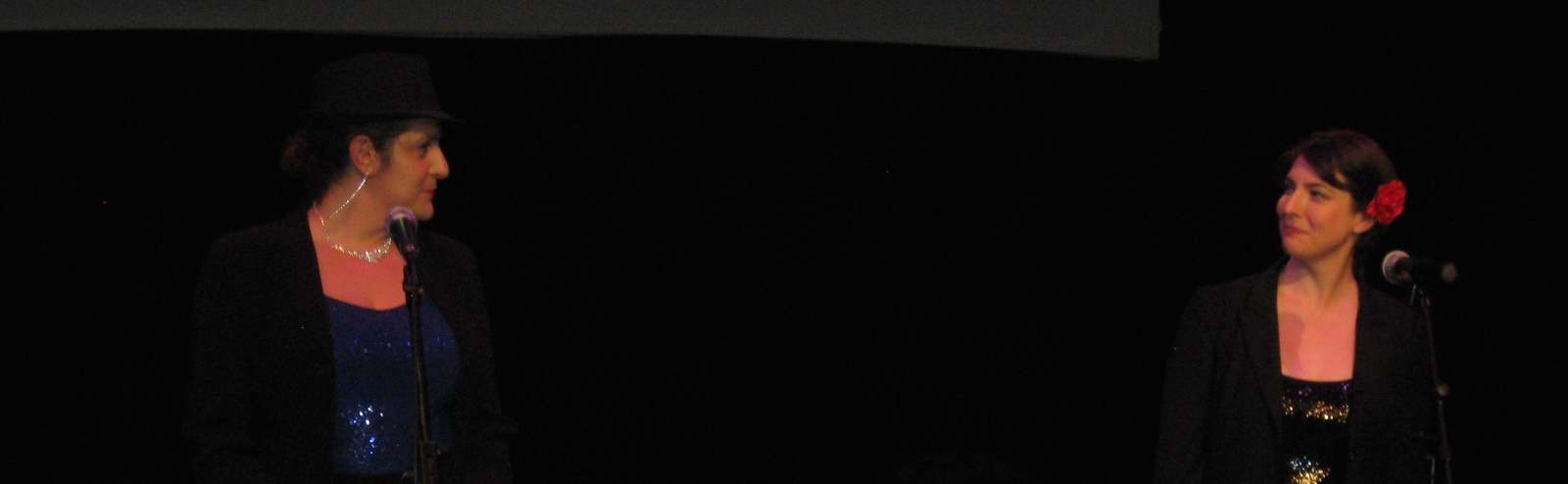
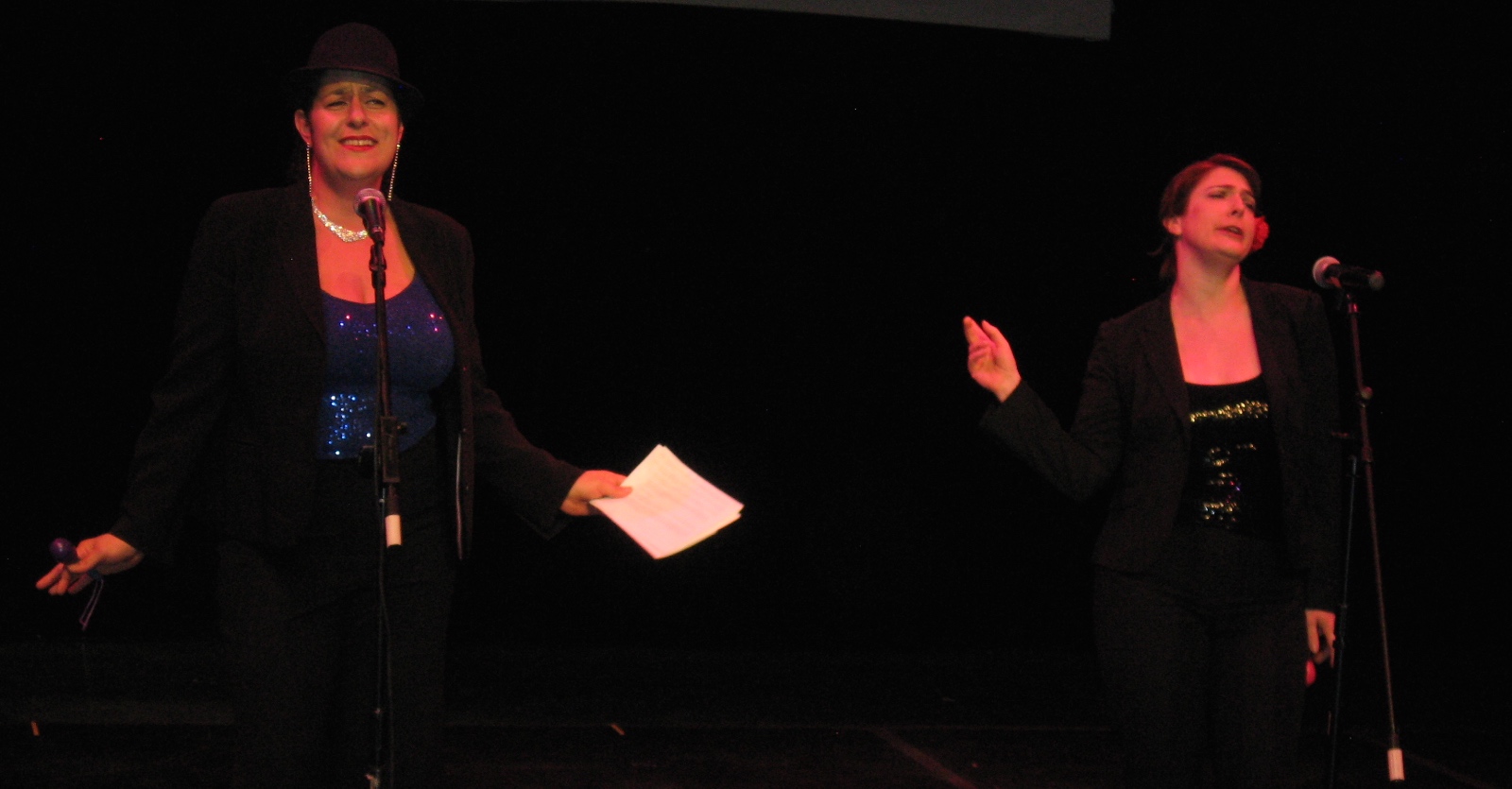
Rachel Green and Andrea Pinyan

Rachel Green and Andrea Pinyan

ANDREA: Hello, I’m Andrea Pinyan.

RACHEL:  I’m Rachel Green, and we will be singing two songs from the new musical “Speakeasy” by Danny Ashkenasi, who’s at the piano.

(Danny waves to the audience)

ANDREA: “Speakeasy” reimagines Lewis Carroll’s “Alice in Wonderland” and “Through the Looking Glass” as the adventures of newlyweds John and Jane Allison in a fantastical version of Jazz Age New York, a time of defying Prohibition and exploding sexual boundaries.

RACHEL: First we will sing “Wonderland”, sung by Speakeasy’s version of Tweedledum and Tweedledee, The Tweedle Sisters, performers at the Wonderland nightclub.

(Wonderland, as performed by Rachel and Andrea on the Speakeasy demo recordings:)

 (Although I should note that we sang the corrected lyrics last night.)

LES 3

Continue reading

Posted in Live! On Stage, Notes in the News, The Speakeasy Chronicles | Tagged , , , , , , , , | Leave a comment

FIRST GRADE OPERA #3: Mermaids and Blue Sharks and Red Sharks, Oh My!

“And when a mermaid bumps

Into a blue shark

They kiss”

Class 1-3’s opera this year opens with a rather prettily moody song* (for first grade) about the Mermaid Castle and the Mermaids and Blue Sharks who cavort merrily within (for more on the other First Grade Operas and how they are created, read this and this).

1-3 Song 1

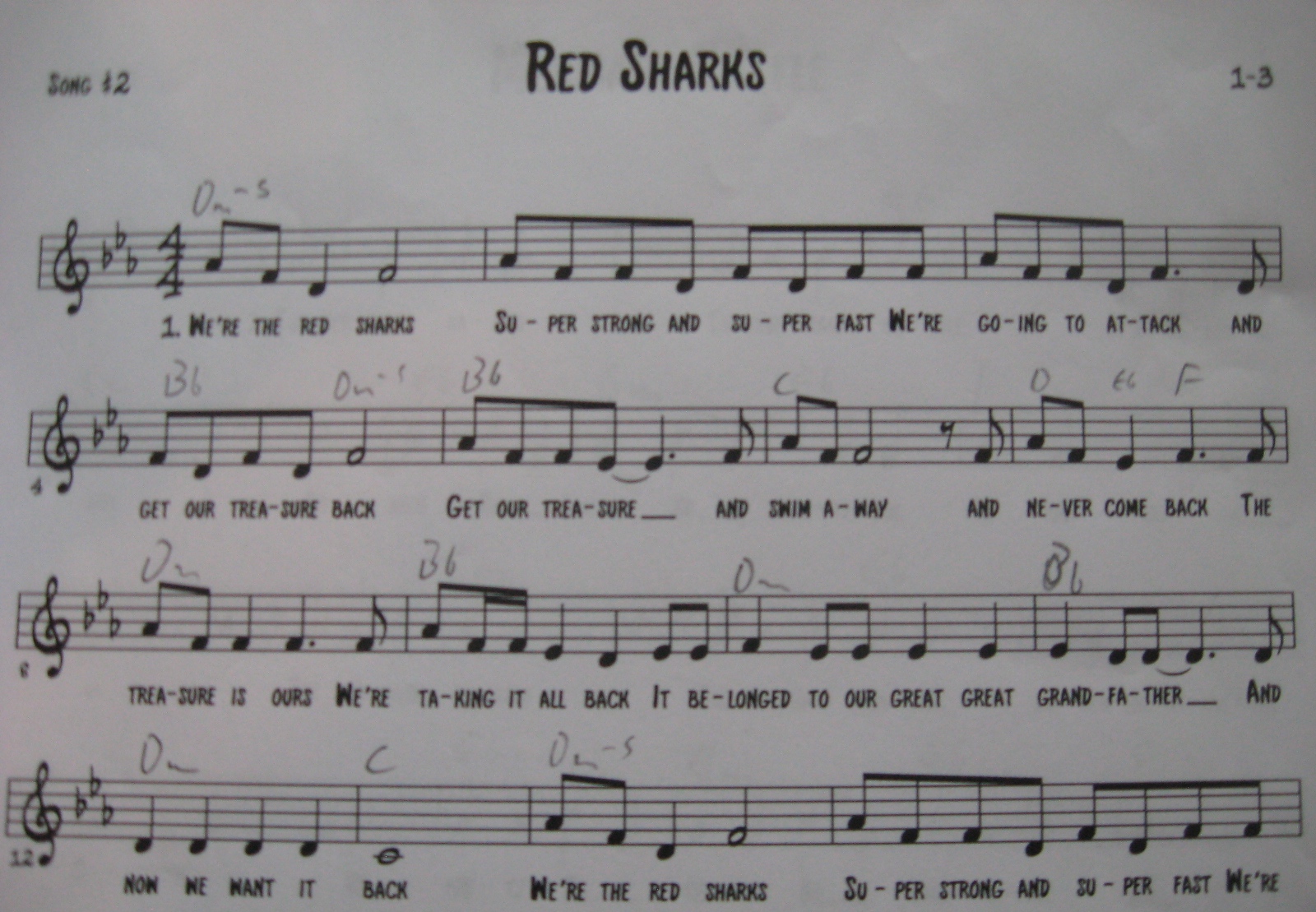
But their idyll is threatened.  The Red Sharks are planning an attack, eager to take the Mermaid treasure that the Red Sharks claim is really their great great grandfathers’.

1-3 Song 2 Continue reading

Posted in The Teaching Artist | Tagged , , , , , | Leave a comment

SPEAKEASY songs to be performed this Friday at the LES Festival

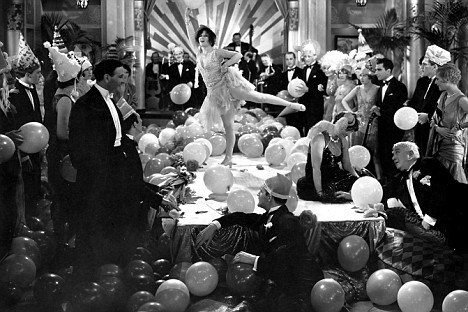
THE GOLD DIGGERS OF BROADWAY (US 1929) WARNER BROS Picture from the Ronald Grant Archive

Two songs from my musical “Speakeasy – the Adventures of John and Jane Allison” will be performed at the Lower East Side Festival at the Theater for the New City.

Andrea Pinyan and Rachel Green will perform the songs “Wonderland” and “My Passion” at around 8:15pm this Friday, May 22.

Entrance is FREE(!) Friday as it is for every day of the three day festival.

Continue reading

Posted in Live! On Stage, Notes in the News, The Speakeasy Chronicles | Tagged , , , , , , , , , | Leave a comment

Forbidden Movies, Forbidden Music

I walked out of the Film Forum mind abuzz and guts churning.   I was chewing on a whole lot of food for thought as well as the ice cream melt I bought to soothe my emotion roiled innards. I’d just seen “Forbidden Films”, the documentary about Nazi propaganda movies that are still deemed too toxic to release unrestricted to general audiences. The Film Forum in Manhattan is showing it this week, and most unusually you can see it free of charge.  However, like me, you may purchase comfort food at their in-house bakery afterward.

forbidden filmsI don’t know what is more awful, the horrific Nazi propaganda – anti-semitic, anti-Polish, anti-English etc. – writ large in the scenes I saw, or the artistry with which they were made.  Truly awful in both senses at times.  I will not soon forget the beautifully lit, beautifully acted scene of the tear-stained girl giving a heartfelt plea for living in a German village surrounded only by Germans, not having to listen to Yiddish or Polish anymore.  Awful.  But cinematically as beautifully made as Ingrid Bergman crying in Casablanca.

I should not describe more.  It gets worse, much worse.  And these scenes are best viewed in the context of this documentary, which delves deeply into the debate of why these movies remain forbidden, only occasionally allowed to be seen within the context of a curated screening.  Experts and audiences and ex-Neo-Nazis (who had engaged in an underground market of these films) in Germany, France and Israel react to and debate the wisdom of keeping these films restricted or allowing them to be more widely seen and discussed.  People on all sides of the issue make compelling arguments.  If you don’t see “Forbidden Films”, I recommend reading the New York Times article on the subject and its review of the documentary.

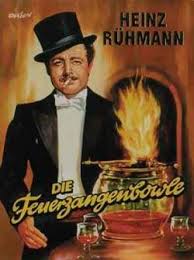
Feuerzangenbowle1200 movies were made under the Nazi regime.  Only 40 are still “forbidden”.  I remember growing up in Berlin seeing several German movies made between 1933-1945.  For example “Der Mann, der Sherlock Holmes war” (The Man who was Sherlock Holmes) and “Die Feuerzangenbowle” (The Fire Tongs Bowl), two hugely popular Heinz Rühman comedies that don’t appear to have any objectionable propaganda content (in fact “Die Feuerzangenbowle” was almost forbidden by the Nazis because an official thought all the tomfoolery the schoolboys engage in was too disrespectful of authority).  Yet my strongest memory of “Der Mann, der Sherlock Holmes war” is the moment a German boy’s stamp expertise is what allows the movie’s (fake) Sherlock Holmes to solve the case.  Why was that plot twist added in a film that otherwise had nothing to do with Germany?  And I still remember with discomfort the moment when the “cool” teacher, the only adult in “Die Feuerzangenbowle” who is sympathetic, gives a speech at the end of the movie about how best to mold the minds and character of young men, a moment that raised mental alarm bells when I saw this film at sixteen with my friends at a sold out screening at the Waldbühne Amphitheater.  Even in movies designed as non-political escapism, the tenor and prejudice of the time and place of their making would creep in.

Continue reading

Posted in Beginnings, Cinema Scope, Notes in the News, The Teaching Artist | Tagged , , , , , , , , , , , | Leave a comment

Five Reasons to be GLEE-ful!

Ed and I watched every episode of Glee.  We remained loyal throughout its wild upswings and downturns in popularity and storytelling.  Being of a generation that grew up with few television shows of a musical nature to turn to, and even fewer or none that regularly explored LGBT themes, we greatly appreciated how Glee tilled new territory on both fronts.   Glee may have wrong-footed itself more than once as a soap opera, yet nothing bothered me as much as Mrs. Shue’s fake pregnancy early in the first season, so every plot twist after that I would take with the requisite grains of salt; and by the last season Glee basically directly and cheekily told its audience to do the same.

So even if the storyline could be a hot mess, Glee succeeded by getting so much so wonderfully, movingly right when it came to diversity and music.  Glee picked up the LGBT TV baton from Ellen and Will and Grace and ran with it, dealing with stories of coming out, sexuality, gay marriage and transgender characters in ways that kept pushing the envelope, and ultimately mainstreamed those stories for the rest of the TV landscape (that 200 strong transgender chorus singing “I Know Where I’ve Been” during one of the last episodes was a testament to how Glee remained on the vanguard of LGBT issues on TV for its time).

Glee cast 3

And Glee was also consistently strong in its musical performances, featuring a diverse cast of powerhouse talents performing a diverse program of popular music.  Glee’s musical selections would reach back to the golden age of musicals through to today’s most recent pop hits.  Tin Pan Alley, Broadway, Jazz, Pop, Hip-Hop, Rock, all were created equally according to Glee, perhaps homogenized a bit by dint of being arranged and performed by the same general group of people, but mostly celebrated as a wide field of musical expression.  In doing so Glee helped unify and democratize the landscape of pop music that had recently become more balkanized in media outlets.  “The young kids” would be introduced to some of the classics or songs in genres they normally avoided, while “old fogies” like me would get their first introduction to some of the latest pop culture hits, sometimes within not just the same episode but within the same musical number.  Occasionally Glee managed to cover a new song even before it reached its greatest popularity, perhaps contributing to its assent up the pop charts through the exposure.

So to show my appreciation of Glee I thought it would be fun to highlight five musical numbers from the show that I not only personally enjoyed but also are representative as a group of what made Glee such an enjoyable place to tune into.  I quickly realized that limiting the number to five would force me to leave out many tracks I would sorely wish to include.  So a sequel (or two) to this post is probably likely in my future…

But here goes, Five Reasons to be Glee-ful:

Continue reading

Posted in LGBTQ Alphabet Soup, Melodies Linger On | Tagged , , , , , , , , , , , , , | Leave a comment

THE SOUND OF MUSIC: Embracing the “Sugarcoated Lie”

Die_Trapp_Familie_PosterEd and I were in Berlin* a couple years ago visiting my folks when we stumbled upon a German movie from the 1950s being shown on TV.   We missed the first seconds of the credit sequence and so didn’t catch the title, but something about the opening shots of Austrian mountains and buildings felt familiar.  Then the story introduced us to a novice named Maria.  She doesn’t fit in well in the convent with the other nuns, and so the Mother Superior forces her to take a position as a governess to the seven children of a retired Austrian naval officer.

Ed and I started thinking, my does this look familiar, could it be…?  Maria gets on well with the kids and teaches them to sing Austrian folk songs, but she clashes with their father who eventually sends her back to the convent. Then he realizes he’s in love with Maria and they marry.  But then the Nazis take over Austria… By now it was undeniable, this is The Sound of Music, except of course it wasn’t.   After the movie ended Ed and I looked up the German TV guide: turns out this film is Die Trapp-Familie, the first film to be made about the famous van Trapp family, and a big success in German cinemas in 1956, so big in fact they filmed a sequel: Die Trapp-Familie in Amerika.

And without Die Trapp-Familie there would be no The Sound of Music.   It was the German movie that attracted the attention of the original producers of the musical who brought the project to Rodgers and Hammerstein.   It was astounding to Ed and me to see how much the plot of The Sound of Music resembles Die Trapp-Familie.  Except in the German original the van Trapp house is a fine mansion but not the palatial estate of the musical, and the van Trapp children’s names and ages are truer to history.  Both movies end with the van Trapp family fleeing Nazi occupied Austria after the Germans try to force van Trapp (Baron van Trapp in the original, Captain van Trapp in the musical) to join the German military, but in Die Trapp-Familie we see the family get stranded on Ellis Island in danger of being deported.  They are only allowed to enter the United States after they sing for a New York talent agent who puts them under contract.

When The Sound of Music was released it broke the all time box office record Gone with the Wind had held onto for 25 years.  Critics were mixed on the movie – Pauline Kael famously branded it a “sugarcoated lie” – but audiences all over the world embraced it.  Well, almost all over the world.  Germany and Austria never much cared for The Sound of Music, preferring the original Die Trapp-Familie.

Which explains why I, growing up in Germany in the 1970s, was a stranger to The Sound of Music.   I avidly watched every musical German TV aired, but The Sound of Music wasn’t one of them.  (I also have no memory of Die Trapp-Famile airing on TV, but I was less likely to watch a German “Heimat-Film” from the 1950s than I was to turn on the TV for a Hollywood product.)

sound of music 4 Continue reading

Posted in Cinema Scope, Melodies Linger On, The Teaching Artist | Tagged , , , , , , , , , , , | Leave a comment

More fun with FIRST GRADE OPERAS: the King, the Queen and the Wacky Witch

KING COFFERN (looking through his special magnifying glass):

“I want to find a queen who is beautiful and kind.  Let’s see what Queens I can find with my magnifying glass.  All right let’s see … here’s a Queen … hmmm, knows too much … how about this Queen? She cheats in cards – no thanks! Let’s try this Queen … looks like she never showers!  Pee-ew!  I’ll try again.  At last! There she is! That Queen is perfect!”

1-2-1a

And so begins the second First Grade Opera performed this year (read more about how the first graders create their operas here), with King Coffern finding Queen Rose with his special magnifying glass and then singing “Love is Magical”, an unusually romantic tune for First Grade Operas.  Before I continue with the story, I should explain that when the child acting the King sings his song the whole class sings along with him.  When we perform First Grade Operas every song is sung collectively, with the “soloists” acting out the song.  The roles are also shared, with several children tag team performing each character during the course of the show.  This way every child in the class gets a solo moment even though there are on average only 4 – 6 different characters in any First Grade Opera.

But back to this opera: before King Coffern can present himself to Queen Rose, her land is rattled by a massive earthquake:

1-2-2

After this disaster Queen Rose can’t find her parents.  King Coffern uses his magnifying glass to locate Queen Rose’s parents:

QUEEN ROSE: There’s a worm wearing a cardboard box!  But where are my parents?

KING COFFERN: There’s an elephant with a tutu!  But where are your parents?

QUEEN COFFERN: There they are! My father is stuck in an earthquake crack and my mother is trying to pull him out!

Continue reading

Posted in The Teaching Artist | Tagged , , , , , , , , , | Leave a comment

SPEAKEASY and the “breaking into song with music out of nowhere” musical trope

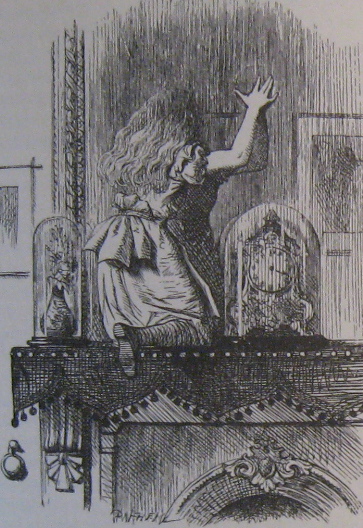
Alice goes through... Alice goes through the looking glass                            Alice goes through the Looking Glass

JANE (puts the Drink Me bottle back onto the little table):

How much hooch will I have to down before I get to the Wonderland?

(singing) WHAT ARE THESE DRINKS THAT I’M DRINKING

THESE THOUGHTS I AM THINKING

WHAT WHERE AM I NOW?

Oh. I’m singing! Fun!


Elsewhere John is wandering alone in the maze.


JOHN:

I wonder if I’ve changed somehow?

(singing) WAS I THE SAME WHEN I GOT UP THIS MORNING

BUT IF I’M NOT WHO AM I NOW?

I can’t be the same.  I’m actually singing.  I don’t do that, do I?

The above is an excerpt from the musical Speakeasy – the Adventures of John and Jane Allison in the Wonderland, a Roaring Twenties adaptation of Lewis Carroll’s Alice books featuring two Alices, the newlyweds John and Jane Allison.  Jane has just “gone through the rabbit hole” at the same time John has slipped “through the looking glass”, and they find themselves in a magical dream world where time and space and identity don’t follow regular rules (to read more about Speakeasy, you can access additional posts about the musical by selecting “the Speakeasy Chronicles” in the category sidebar).

In addition to the mind bending shifts of time and space as well as the shifting understanding of who they are that John and Jane experience while in the Wonderland dream, they also experience the actuality of music accompanying their activities and the seeming normalness of they themselves and the people they meet easily breaking into accompanied song.  Which of course is rather convenient for the drama, as Speakeasy is a musical.

During the excerpt above, John and Jane, in separate areas of the magical world they slipped into, for the first time experience themselves unexpectedly warbling snatches of song, and remark upon it.  Jane finds this amusing, but John is a little more alarmed.

Eventually Jane will meet up with Roberta White (Speakeasy’s version of Alice in Wonderland’s White Rabbit), who will consciously start up a jazzy song by snapping her fingers and calling out “Hit it!” to an invisible but responsive orchestra. John will meet Julian Carnation and three gay florists (Speakeasy’s version of Through the Looking Glass’ Red Queen and Flowers).  Before they regale John with a song of their own, Julian will remark upon the orchestra playing the introductory measures: “And there’s the cue.  We’ll make our point musically.”

After that John and Jane will be deeply enough immersed in the strange rules of time, space, and music of this world to turn their initial snatches of melody into a questing song of their own, Curious Colorful Night:


Continue reading

Posted in Cinema Scope, The Speakeasy Chronicles | Tagged , , , , , , , | 1 Comment