THE NEARLY INVISIBLE BISEXUAL MALE

bi 1

The director of “Speakeasy”, Lissa Moira, and I were conducting another one of our weekly meetings pouring over the script and discussing staging and production issues, when I mused aloud that in many ways “Speakeasy” is an expression of my bisexuality.

“You are bisexual?” Lissa asked.

“I thought you knew”, I responded, dumbfounded.

How could Lissa, who has known me for years, not be aware of that fact about myself?  It is not something I try to keep secret.  And she’s known me for decades.  But that is the problem with bisexuality.  It is so easy to keep hidden, even if there is no intention to hide it.  Society may not assume someone is heterosexual as categorically as society used to, but monosexuality – hetero or homosexuality – is nowadays still the default assumption.

bi 2Or is it?  Just these past weeks have seen a slew of studies showing that the upcoming generation of young adults are much more comfortable with sexual fluidity and placing themselves on the bisexual spectrum than older generations (see here and here and here).  Charles Blow has written profound editorials about bisexuality in the New York Times.  Entertainment websites keep posting lists of celebrity bisexuals (like this one or this one).
images-33

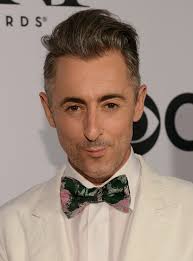
Alan Cumming

Except, those lists of celebrity bisexuals usually feature three women for every one male or must resort to listing men long deceased to beef up the ratio.  Out bisexual males are still very rare in our culture.  Even Alan Cumming, who so deliciously professed erotic desire for men and women not once but three times while hosting the Tony Awards this year has not embraced the “bisexual” label (as far as I can tell) but is more likely to use the word “pansexual” if he allows any label to define him.  And that is his prerogative.  Labels are limiting.  But the bisexual label seems particularly maligned and avoided, especially for men, at least until now.  Perhaps with the millennial generation apparently showing so much more acceptance of sexual fluidity and bisexuality than their elders, this might finally change.

cabaretBut there is still so far to go.  There are still so few works of art about bisexuals, especially bisexual men.  I applaud the recent explosion of movies and TV shows centering on or featuring transgender stories.  And gay and lesbian characters have been incorporated into mainstream entertainment for some time now (not that we have arrived yet anywhere near full narrative integration).  But bisexual characters?  Especially bisexual male characters?  I have to go back to the 1970s and Sunday Bloody Sunday and Cabaret to find well drawn bisexual male characters.  Torch Song Trilogy had one too but also gave sympathetic voice to a lot of biphobic prejudices.  Yet that is over 30 years ago.  What about in film, TV and Theater nowadays?  Crickets.

Well, maybe not as much for bi women (Piper, the lead in Orange is the New Black, is surely bisexual, even though in the first two seasons no one appears to have used that term in reference to her).  But what about bi men in movies, TV or theater?  Where are they?  Plenty of gay men to be found, and of course straight men still dominate our culture like nobody’s business.  But bisexual men?  Nada.  Invisible.  Don’t mention it.

Sense8

Sense8

There may be hope.  That pansexual orgy scene in episode six of the first season of Sense8 surely had me shouting “Hallelujah”!  But the fact remains that the characters’ sexual fluidity was achieved through involuntary mind-melding – in their own space each character individually still seems to identify as hetero- or homosexual (at least by the end of Season 1).

Continue reading

Posted in Beginnings, Cinema Scope, LGBTQ Alphabet Soup, Live! On Stage, The Speakeasy Chronicles | Tagged , , , , , , , , , , , , , , , , , , , , , , , , | 3 Comments

SPEAKEASY CASTING NOTICE

F flapper

My director Lissa Moira and I posted a casting notice for SPEAKEASY on Backstage.com.  You can find it here.

“SPEAKEASY – the Adventures of John and Jane Allison in the Wonderland”  will perform February 18 – March 13, 2016 at the Theater for the New City.  A reading of the musical is scheduled for December 7.  Learn more about Speakeasy here.

Below find the complete casting notice.  Go to Backstage to send your electronic application or email your headshot and resume directly to admin@ashkenasi.net, subject heading “Speakeasy”.

Continue reading

Posted in The Speakeasy Chronicles | Tagged , , , , , , , , , | Leave a comment

ORFEO – Richard Powers composes beautiful music with his words

orfeo

I just finished reading Orfeo by Richard Powers.  I have never before read literature that so beautifully and evocatively captures music, describing actual works of music, conjuring imaginary works, evoking the process of composing, with such detailed brilliance and clarity and often near religious ecstasy.

Richard Powers

Richard Powers

My brother-in-law gifted me the book last Christmas.  And I’m sure he merely thought of this book for me because he’d heard that Orfeo was about music and highly acclaimed to boot.

Surely he didn’t know that for most of its pages it describes the unhappy career of what would commonly be described as a failed composer.  My brother-in-law wasn’t trying to send me a hard message, was he?  He couldn’t have known that there were many passages in Orfeo that threatened to open a yawning crevice of mid-life-crisis in this middle aged composer’s psyche?

Nah!  I’m being silly.  Peter Els, the hero of Orfeo, is very different from me.  We may both be composers, but he is of a different generation, part of the classical avant-garde of 20th century music, with a personal and professional trajectory quite unlike my own.

And then there is the bio-terrorism subplot.  Nope, no identification there!

music and dna

Continue reading

Posted in Literary Lyricism | Tagged , , , , , , , , , , , , , | Leave a comment

THE SONG OF JOB 9:11 – 14 year anniversary of 9/11/2001

The Song of Job 9:11 – Chapter Ten: HOPE – concert video, Sep 9, 2011

The Song of Job 9:11 – Chapter Ten: HOPE – concert audio, Sep 11, 2011

Above are recordings of the finale of the tenth anniversary concert performances of “The Song of Job 9:11”, which were performed free for audiences throughout New York City in 2011, 10 years after 9/11/2001. “The Song of Job 9:11” grapples with the events and immediate aftermath of 9/11/2001 through the Old Testament story of Job.  The whole concert, in video (and separate audio tracks that may have better audio quality on your computer) can be followed on “The Song of Job 9:11” page, added today on this site.

I open this post with the conclusion of the piece, “Hope”, because of its uplifting nature.  I understand how daunting and forbidding it is to attend a 60 minute concert about 9/11, and “Chapter Ten: Hope” is the light at the end of the tunnel after the Sturm und Drang of the preceding nine chapters.  It is a way to telegraph that the concert is not all darkness. Those who have attended The Song of Job 9:11, whether as a concert or theatrically staged, have always responded very positively to the experience.  But getting people to bring themselves to attend the “9/11 oratorio” has been forbidding.  I understand.  I don’t wish to relive 9/11 either, in musical form or otherwise, and I wrote this piece.

Continue reading

Posted in Musicabilia, Notes in the News | Tagged , , , , , , , , , , , , , , | Leave a comment

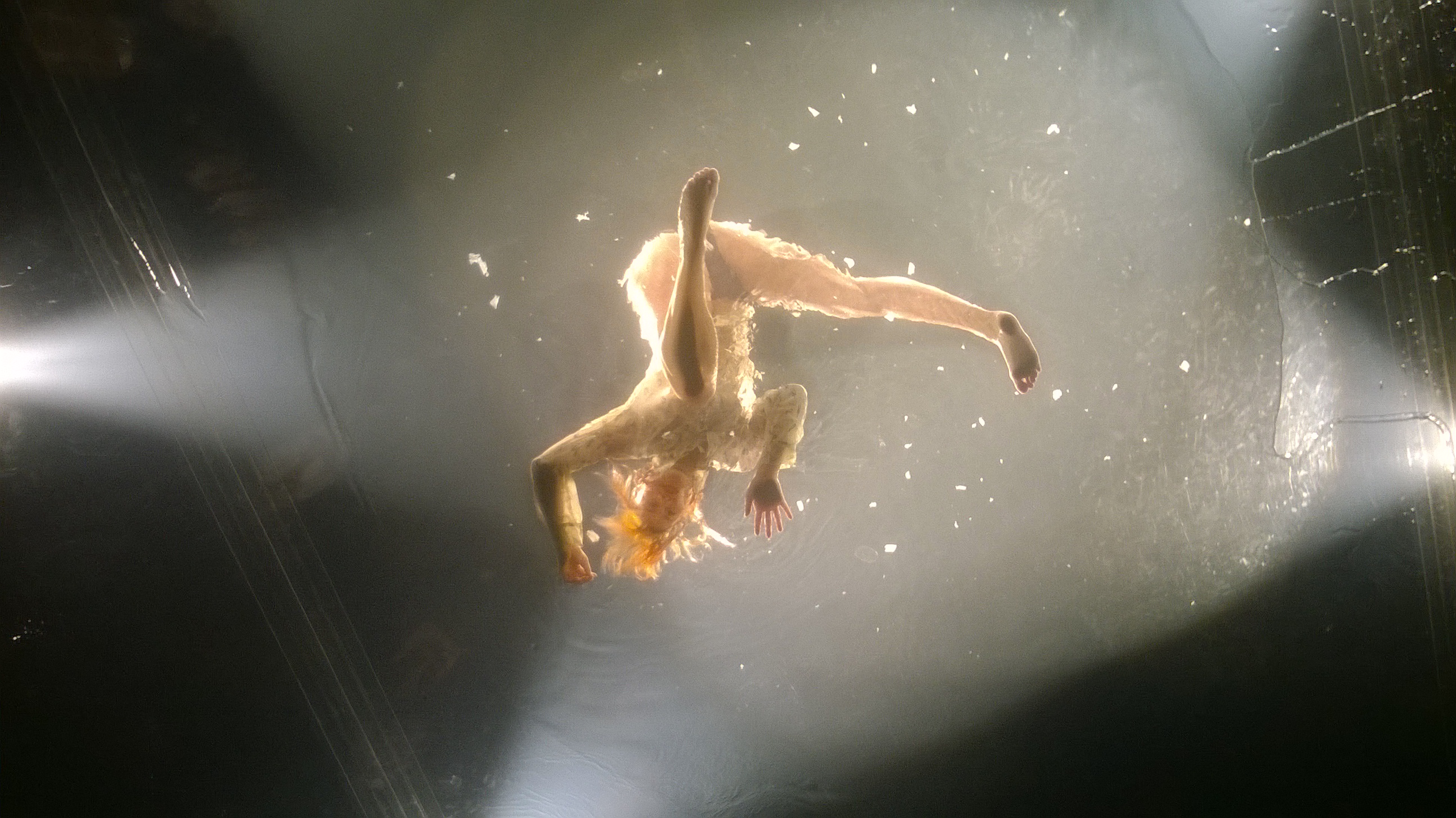
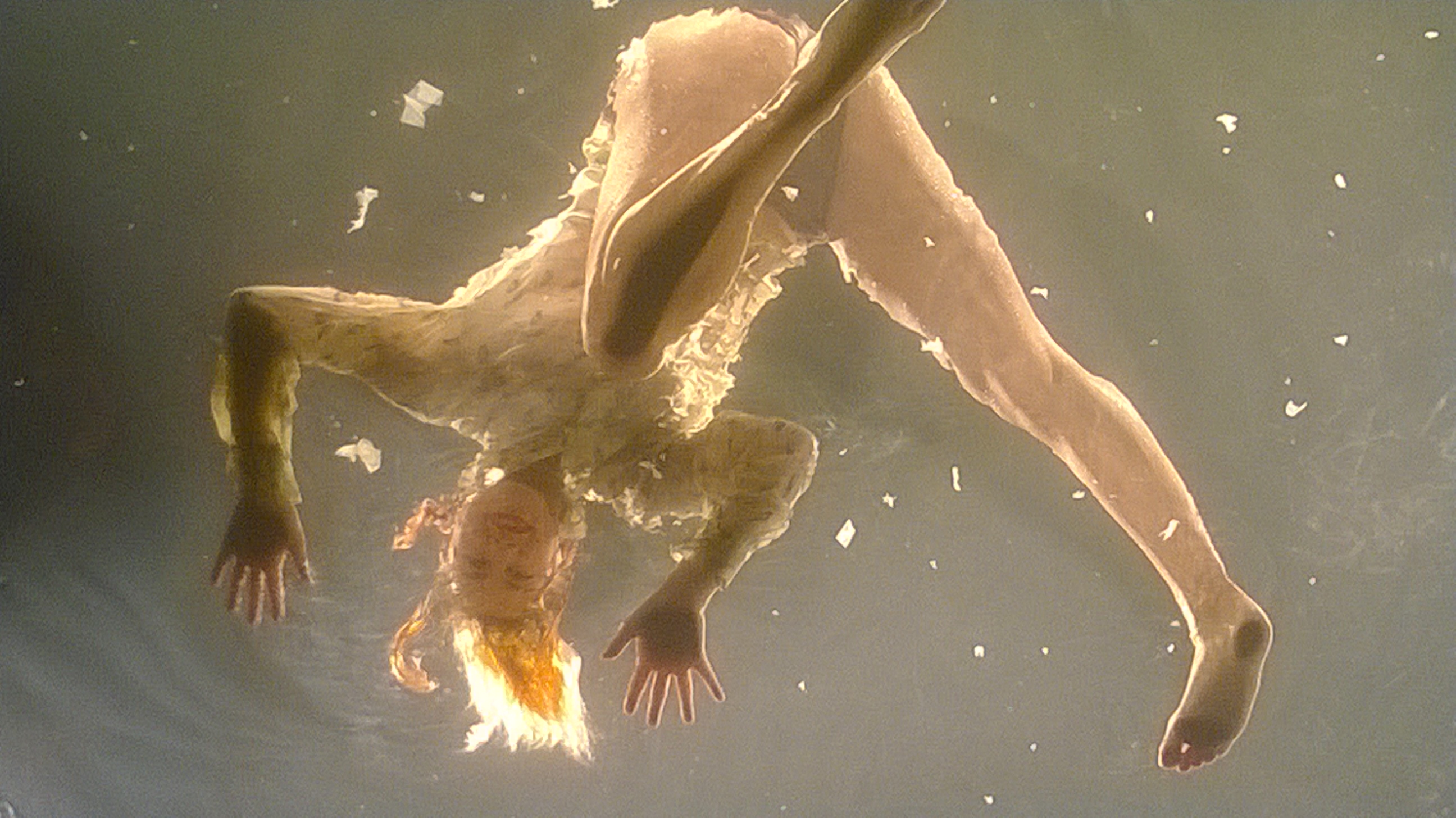
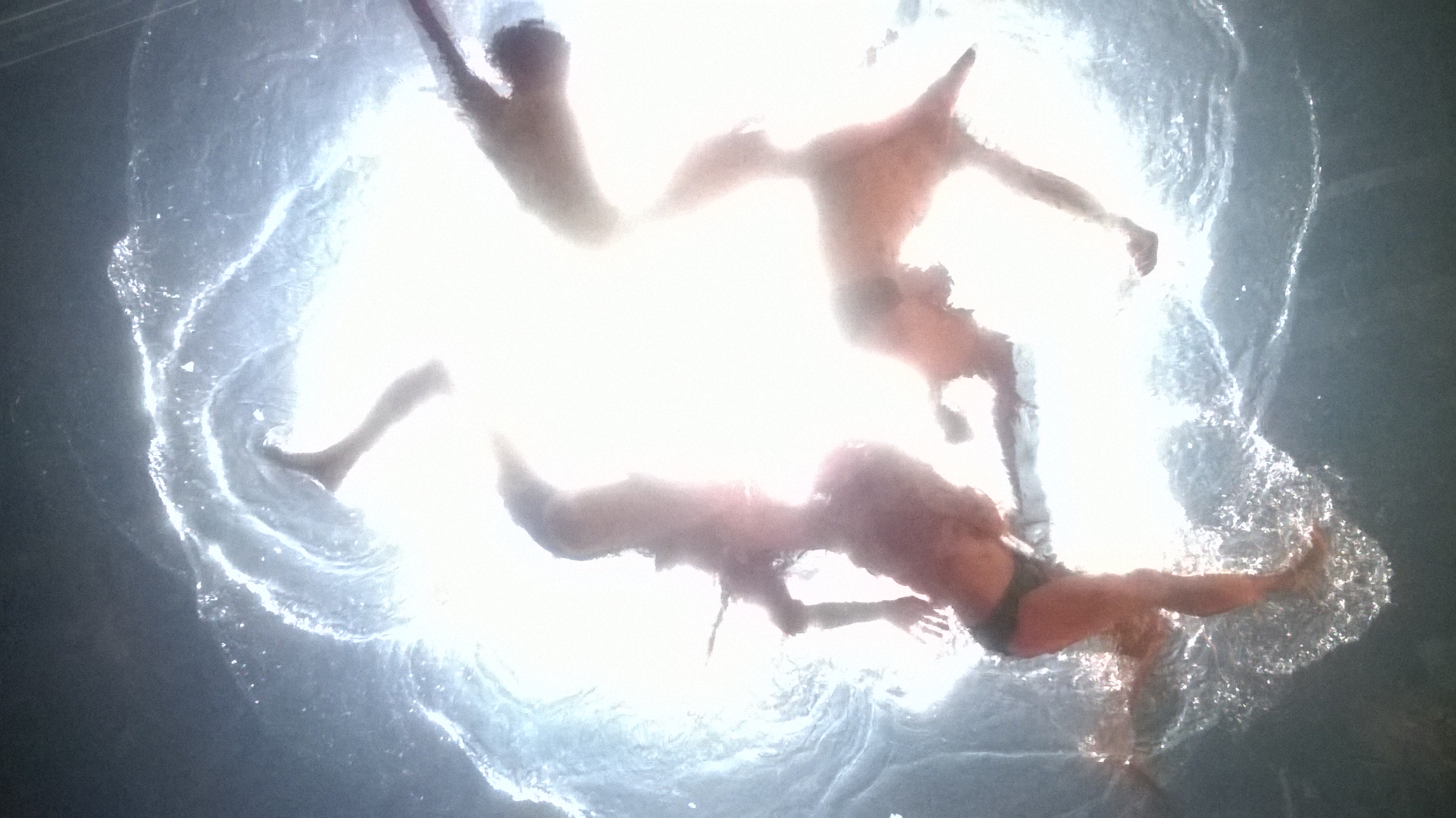
The Slip-Sliding WATER NYMPHS and Vertical WIND TUNNEL MAN of FUERZABRUTA

FB 1FB 2

I felt like a toddler about to have a melt down.  This intense feeling that I was this close to bawling uncontrollably and reaching out my hand high for my Mommy to clasp.  When did I last feel this way?  When I was two, three, four?  No, I remember, it was 2007, the last time I had attended Fuerzabruta, when I had experienced this very same overwhelmed sensation.  And here I was back for seconds, having forgotten…

FB 3
I was standing with my arms crossed, pelted by loud music and extremely kinetic visuals, overwhelmed by the noise and sensation and the nightmarish implications of what I was witnessing.  A man in a white suit running faster and faster on a treadmill, running through walls that explode in a cloud of Styrofoam, running past business attired pedestrians falling off the treadmill into the void, futilely attempting to keep tables and chairs from cascading over the cliff, and finally collapsing after a gun shot leaves his white suit bloodstained.

FB 4

And my arms were crossing, my face muscles quaking, my eyes wide and considering tears, as my body even more so than my intellect became convinced it had been dropped inside a nightmare come to life, designed and stage managed by the fun house demon spawn of Kafka and Magritte.

FB 5 Continue reading

Posted in Live! On Stage, Two-fisted Touristing | Tagged , , , , , , , , , , , , , , , , | Leave a comment

ANTHONY TOMMASINI RATTLES ME – On the Importance of Music in a Musical

Today the New York Times published an excellent dialog between its classical music critic and avowed musical theater enthusiast Anthony Tommasini and its pop music critic Joe Caramanica about the musical Hamilton.

The exchange included this from Tommasini, which has rattled me:

“At its core, musical theater is about the smart, elegant and playful combination of words and music.  But the mix is not 50-50: Words drive the form.  And in a great musical, every element of the music supports and lifts the words.  That’s what I revere about Stephen Sondheim.  Every detail of his ingenious and beautiful music calls your attention to his great lyrics.  Miranda’s music is very different from Sondheim’s, but I had a Sondheimesque experience at “Hamilton.”  Every musical moment in that score swept me into the smart and dazzling rapping.”

Words and music are not equal players in musical theater?  Words drive the form, take greater weight?  This is news to me.  I’ve been at several workshops and been part of many discussions comparing opera with musicals and other music theater forms.  My takeaway has always been that in opera music carries the greater weight, while in musical theater words and music carry equal weight.  50/50.

But now none other than the classical music critic for the New York Times is proclaiming music subservient to words?  Not an equal partner in creation but one whose place is to support and lift the words.  Mind you, he doesn’t necessarily denigrate melody; in the example he gives, he praises Sondheim’s “ingenious and beautiful music”, but still puts it in service to Sondheim’s “great lyrics”.

Could it not be said that Sondheim’s great lyrics are supporting his ingenious and beautiful music?

Continue reading

Posted in Live! On Stage, Notes in the News | Tagged , , , , , , , , , , , , , | Leave a comment

CHASING WATERFALLS – The Flabbergasting Force of Foz do Iguacu

Fall 1Time for another bout of Two-fisted Touristing with musical accompaniment.  Today the amazing Foz do Iguacu waterfalls, which cascade partly in Brazil, where Ed and I first encountered them three years ago, and partly in Argentina, where we saw more of them on a day trip visa the next day.  This collection of enormous waterfalls covering several square kilometers requires at least two days to be fully explored (regardless of border crossing issues).  They are astounding in person.  I hope these pictures give at least some indication of their awesome power and beauty.

Fall 2We’ll start on the Brazilian side of the falls.

And of course must play “water” music, and so we’ll start with the most famous cut (Hornpipe) from the most famous water music, Handel’s Water Music:

Fall 2

It may be called Water Music and it’s very pretty, but does it sound watery?  Or even flowing?  A little near the end, I suppose, but certainly not cascading…

How about Saint – Saens’ Aquarium from Carnival of the Animals:

Speaking of Animals, do you see the bird flying INTO the waterfall? These birds have their nests on the inside and could be seen diving in and out of the falls all evening.

Speaking of Animals, do you see the bird flying INTO the waterfall? These birds, Great Dusky Swifts, have their nests on the inside and could be seen diving in and out of the falls all evening.

Fall 5I first heard Saint-Saens’ magical piece of twinkling, flowing, cascading music when it was used quite effectively as the main theme for the documentary on cinematography “Visions of Light”, whose smorgasbord of visual splendors I dined on often, always lamenting that the credits never listed what beautiful music the documentary was featuring as its main theme.  Finally some moderately intense internet sleuthing led me to Aquarium by Saint-Saens.

I love the Saint-Saens, but it is perhaps a little too twinkling for such massive waterfalls?

Fall 9

Fall 5This is just the beginning.  And was a taste of the view from Brazil.  Next stop is the next day in Argentina.  Also, Beethoven produces the ultimate in cascading awesomeness.  And, of course, TLC…

Continue reading

Posted in Melodies Linger On, Two-fisted Touristing | Tagged , , , , , , , , , , , , , , , , , | 1 Comment

THE SPEAKEASY GLOSSARY – Queer Slang of the Prohibition Era

Pansy Craze

Part of the fun of researching 1920’s and 1930’s Queer subculture in New York City was coming across a wide variety of specialized slang and coded terms that flourished among homosexual men and women of the time.  Some of these terms are solely of their time, some have survived into the modern era, albeit often with modified meanings.

Not surprisingly, for a social group that for the most part did not conduct themselves openly in society, a lot of these terms constitute a kind of secret language available only to those “in the club”.  They describe sexual preferences and types, as well as particular places and activities important to homosexuals of the time.

Folding these terms into the libretto of “Speakeasy – The Adventures of John and Jane Allison in the Wonderland” was a lot of fun.  For the most part the meaning of the words should be clear in context.  However a little confusion can be fun too, as in this moment, when John Allison eavesdrops on a trio of Gay Florists and Julian Carnation:

FLORIST 1:

You can keep 42nd Street.  Give me the Brooklyn Navy Yard.


FLORIST 2:

You and your seafood, Violet!


FLORIST 1:

That’s my crowd, Lily.  When I promenade there, no flag’s at half mast!


JOHN:

Excuse me, fellas.

They still don’t see or hear him.


FLORIST 2:

I prefer Central Park.  The Fruited Plain.  Vaseline Alley.  Always good for a holiday.


FLORIST 3:

Delicious.  All those Muzzlers and Jockers milling about in nature.  Smack in the middle of Manhattan.


FLORIST 1:

Rose, please! Only punks and gonsils there!  You want a true Jocker, pick a sailor!


JULIAN:

Violet, I’m afraid you’re mixing metaphors now. Or at least, professions.

They all laugh.


JOHN:

It sounds like English, but it’s all Greek to me…


So, to continue the fun, below find a Glossary of the slang terms of the Prohibition era that (so far) have found their way into Speakeasy:


GLOSSARY of slang in SPEAKEASY, as used in 1920’s/1930’s New York City


Basketeering – visually appraising men’s crotches (like eggs in a basket).

Belle – young man

Continue reading

Posted in LGBTQ Alphabet Soup, The Speakeasy Chronicles | Tagged , , , , , , , , , , , , , , , , , | 1 Comment

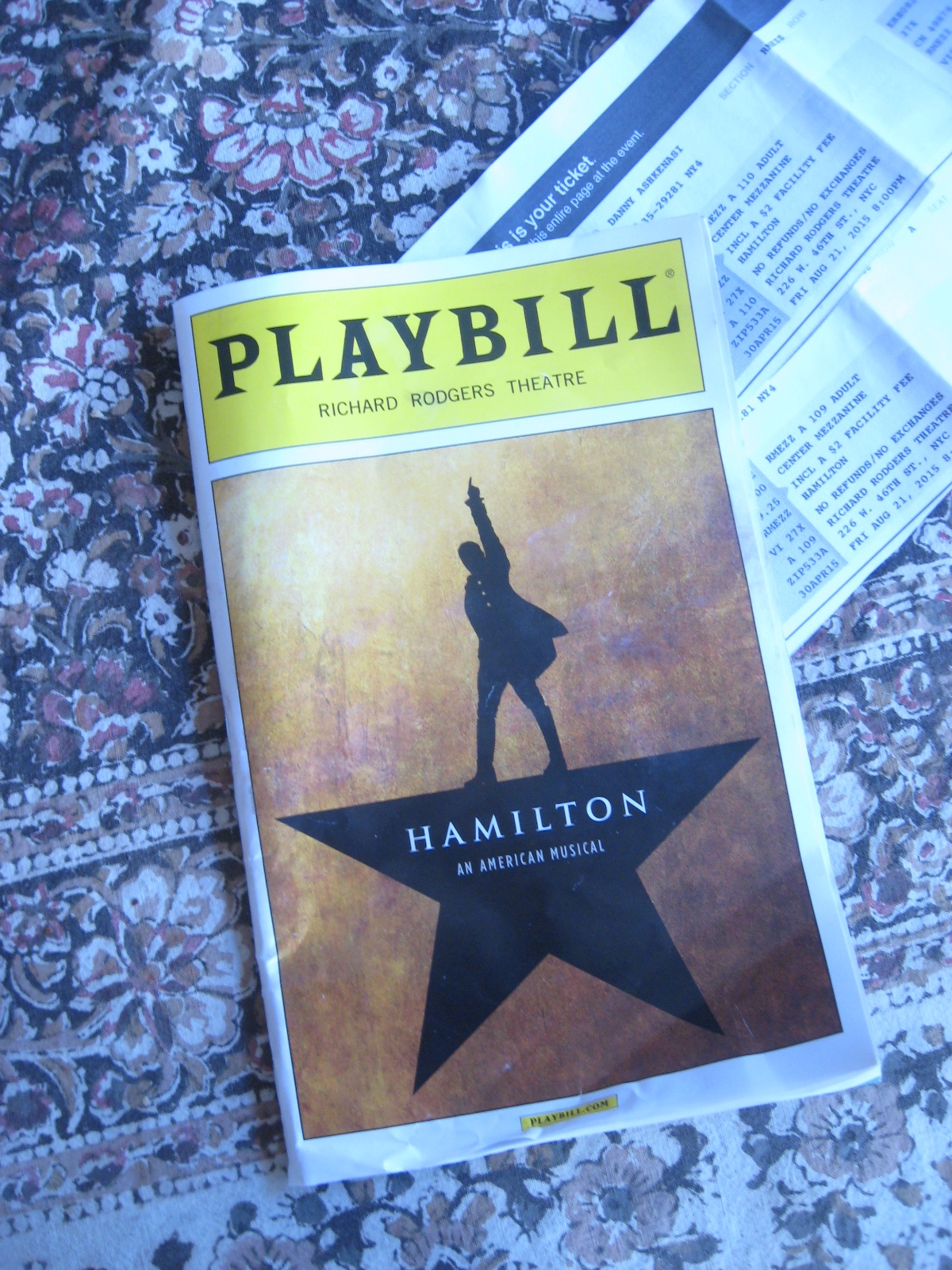
H A M I L T ON – Friday, August 21, 8pm, Rear Mezzanine, A 109

Hamilton

I cried twice during the second act

Tears steaming down my face, shoulders quaking


First, when tragedy strikes Alexander and Eliza Hamilton

Their marriage already strained by scandal, estranged

And now the death by duel of their eldest son


Other hands might have reached for the power ballad

A full throttle howl of vocal calisthenics

But not here, hear:

The accompaniment tentative and soothing

The grieving parents barely able to sing

It is to others, family and friends to describe their pain

In melodic lines of deceptive and poignant simplicity

And repeated sung statements of the word

Unimaginable

Unimaginable……


The mourning parents are described

taking long silent walks together

And finally Eliza’s hand quietly reaches over

And takes hold of Alexander’s while they walk

And the ensemble sings the word

Forgiveness


And then again at the end

Hamilton has been killed

Shot by Burr in that infamous duel

His last song not a song

But spoken words, no music

The only time there is speech without music


But what brought on the tears for me came after:

“Who lives, who dies, who tells your story”

Washington, Jefferson, Madison, Burr,

the Founding Fathers

Keep intoning

“Who lives, who dies, who tells your story”


Continue reading

Posted in Live! On Stage, Melodies Linger On | Tagged , , , , , , , , , , , , , , , , , , , , | 1 Comment

WHAT DOES THE FOX SAY when he makes his Kindergarten debut? – The Fairy Tale Opera 3

fox

I’ve discussed how certain characters are most likely to make the cut when the Kindergartners vote on their three chosen Fairy Tale Opera protagonists/antagonists.  Dragons are extremely popular, being regularly featured, and populating two of the three Fairy Tale Operas last year, both as protagonist and antagonist (not terms, by the way, I use with kindergartners, in case you were wondering).  Princesses are popular too; the third opera this year features a princess, as well as the King, her father.

But for the first time in all the years I have done Fairy Tale Opera with Kindergartners, a fox was chosen to be one of the three characters.  It was a happy surprise for me.  Only much later did it occur to me that the great success of a certain song, especially amongst the Kindergarten set who exercise to the tune as part of their classroom morning meetings, might have had something to do with the Fox’s election success.

Anyway, off to tell the story and play the songs the kids wrote:

THE PRINCESS AND THE SPELL

The Fox

THE FOX IS SNEAKY

THE FOX IS SLY

THE FOX IS A ROBBER

THE FOX LIKES GOLD

——

THE FOX WANTS TO STEAL GOLD FROM THE CASTLE

THE FOX WANTS TO KEEP GOLD IN HIS BURROW

THE FOX HAS AN ORANGE JACKET ON

THE FOX HAS A RED HAT ON HIS HEAD

THE FOX HAS GREEN BOOTS ON HIS PAWS

THE FOX HAS A WHITE TIP ON HIS TAIL

——

THE FOX IS SNEAKY

THE FOX IS SLY

THE FOX IS A ROBBER

THE FOX LIKES GOLD

——

Once upon a time, in a far off land, a king and his daughter the Princess lived in a beautiful castle.  They had a lot of gold and were the richest in the land.

princess and foxThe Fox wants to steal the King’s gold and sneaks into the castle’s gold room one night.  The Princess hears noise coming from the room and catches the Fox inside.  The Fox does some quick thinking and offers the Princess a potion that, once she drinks it, will make it her birthday every day.

The Princess falls for the trick and drinks the potion.  It is a magic potion, but not one that will make it her birthday every day, but one that puts her under the Fox’s spell.  She is now forced to bring the Fox gold from the castle every night until it is all gone.

——

Continue reading

Posted in The Teaching Artist | Tagged , , , , , , , , , , , , | Leave a comment

Speak Low, Phoenix, Speak Low…

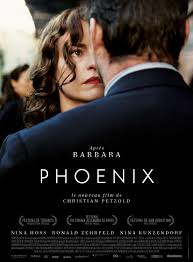
Phoenix 1I attended a matinee screening of the German movie “Phoenix”.  As the movie began and the screen was still black, I heard a lone upright bass picking out two notes a major sixth apart, followed by four more notes bounding down and back up to the sixth.  A piano added isolated chords as a spare accompaniment.  I recognized this melody.  This was “Speak Low”, in a film noir-esque bass/piano version.  I was quietly thrilled.  “Speak Low” is the song I would name if I was ever forced to answer – gun to my head or not – the impossible question of what is the best song ever written.  And in this movie it is being used as the main theme, the melody that will define and haunt this story set in post-war Germany as much as “As Time Goes By” haunts “Casablanca”.

Speak low when you speak, love

Our summer day withers away too soon, too soon

Speak low when you speak, love

Our moment is swift

Like ships adrift we’re swept apart too soon

Early on in “Phoenix”, the lead character, Nelly, a concentration camp survivor returned to Berlin after the war, listens to this recording of “Speak Low” on a phonograph:

Phoenix 2I wondered how likely it was that Germans would have heard “Speak Low” after the war.  The song was written in 1943 for the musical “One Touch of Venus” (music by Kurt Weill; lyrics by Ogden Nash), and was a hit in the USA.  But Germans didn’t really start to discover Weill’s “Musik im Exil”, the French chansons and Broadway scores he composed after fleeing Nazi Germany, until the 1980s (my mother, the opera singer Catherine Gayer, was one of the first to introduce Weill’s American songs to German audiences in a cabaret program at the Berliner Festwochen in 1980).

Still, the theme of lovers having been separated by the horrors of war was already revealing itself in “Phoenix’s” narrative, so the use of “Speak Low” made sense, and it was possible a vinyl record could have made it’s way to Nelly’s friend’s possession.  But why a mere piano vocal recording?  And who was this awkward singer warbling with a thick German accent?

Kurt Weill - TryoutTurns out it is none other than Kurt Weill himself, from a recording never intended for public consumption, but a demo recording he made to help attract financial backing for “One Touch of Venus”.  The recording wasn’t pressed on vinyl for public sale until 1953 (three years after his death).

So it is impossible that Nelly would have been listening to that recording in 1945.  But it doesn’t matter.  The choice of song is perfect for the movie, and that it is none other than Kurt Weill himself singing on the record, as if he were some aging German cabaret singer recording the latest American hit for post-war German audiences, casts a particularly haunting spell.  I can see why the director Christian Petzold couldn’t resist using this particular recording of “Speak Low” to anchor “Phoenix”.

Various versions of “Speak Low”, the bass/piano rumination, a solo violin nightclub serenade, the Kurt Weill solo, will accompany the strange tale of “Phoenix”.  But it will finally be heard in an incredibly dramatic fashion at the climax of the movie.  The lyrics, the way the song is performed, and the reaction to the performance are as revelatory and devastating as any climactic movie confrontation you could imagine.  There are not many non-musical movies that use the singing of a song so effectively, for whom the climax or turning point of the drama hinges on the performance of a song.  One example that springs to mind is Doris Day singing “Che Sera Sera” to rescue her kidnapped child in Alfred Hitchcock’s “The Man Who Knew Too Much”.  The comparison with Hitchcock is also apt because “Phoenix” bears a strong kinship with another Hitchcock masterpiece: “Vertigo”.

Roland Zehrfeld & Nina Hoss in

Roland Zehrfeld & Nina Hoss in “Phoenix”

Nelly (Nina Hoss) had survived the camps, but not without grievous wounds requiring facial reconstruction surgery.  She seeks out her husband Johnny (Ronald Zehrfeld), who may or may not have betrayed her to the Nazi’s during the war.  He does not recognize her; but he does offer this stranger who looks a lot like his (presumed dead) wife a deal: she will pose as Nelly, and as the imposter she will claim a large inheritance waiting to be claimed by the real Nelly, and they will share the money.  Shell-shocked by her camp experiences, still desperately in love with Johnny, and uncertain whether he did betray her or not, Nelly goes along with the plan to become her own imposter…

Continue reading

Posted in Cinema Scope, Melodies Linger On | Tagged , , , , , , , , , , , , , , , , , , , , | 46 Comments

DANNY and KELLY go see ALICE at THE MORGAN

Alice and me

Alice and me

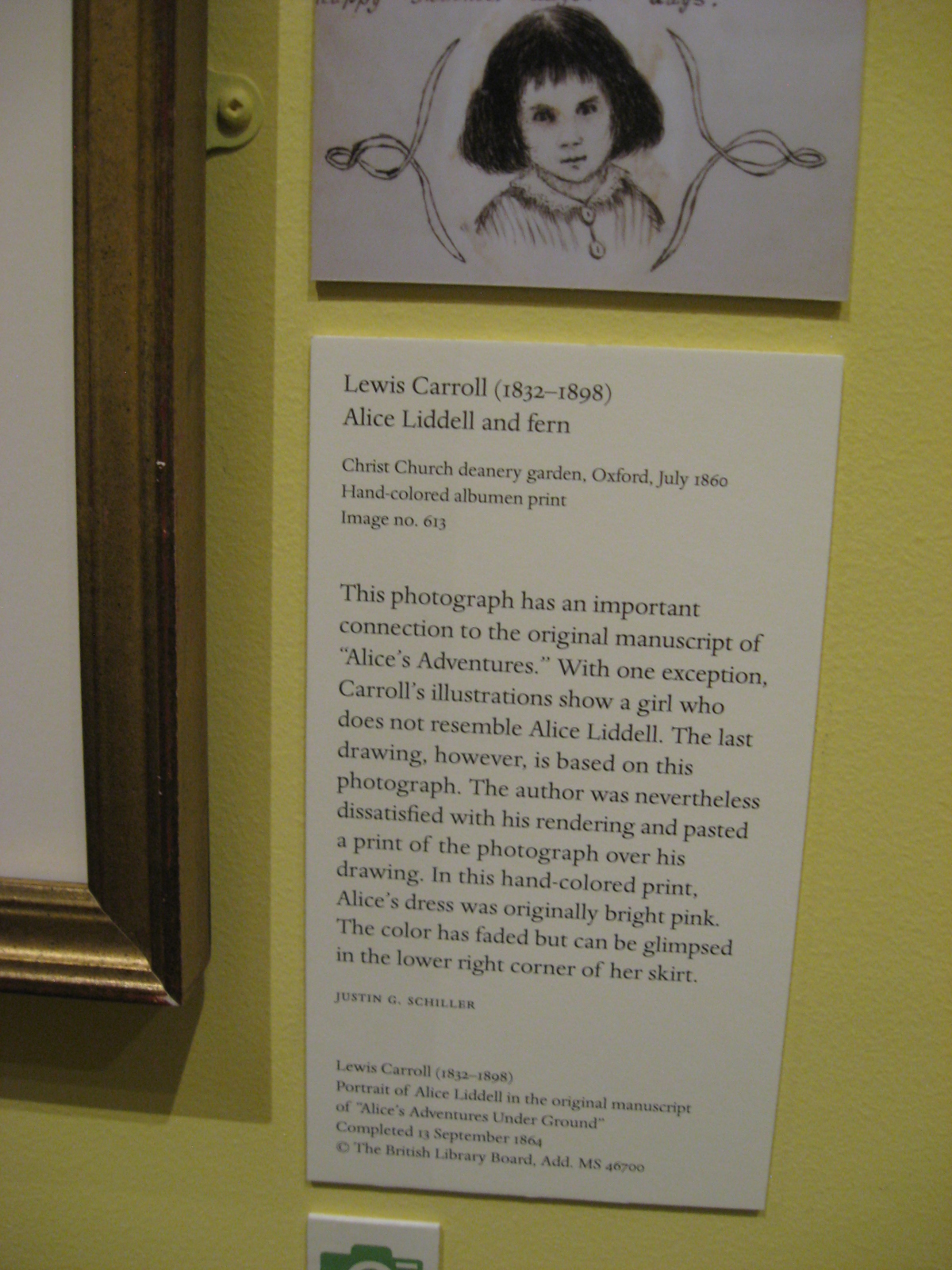
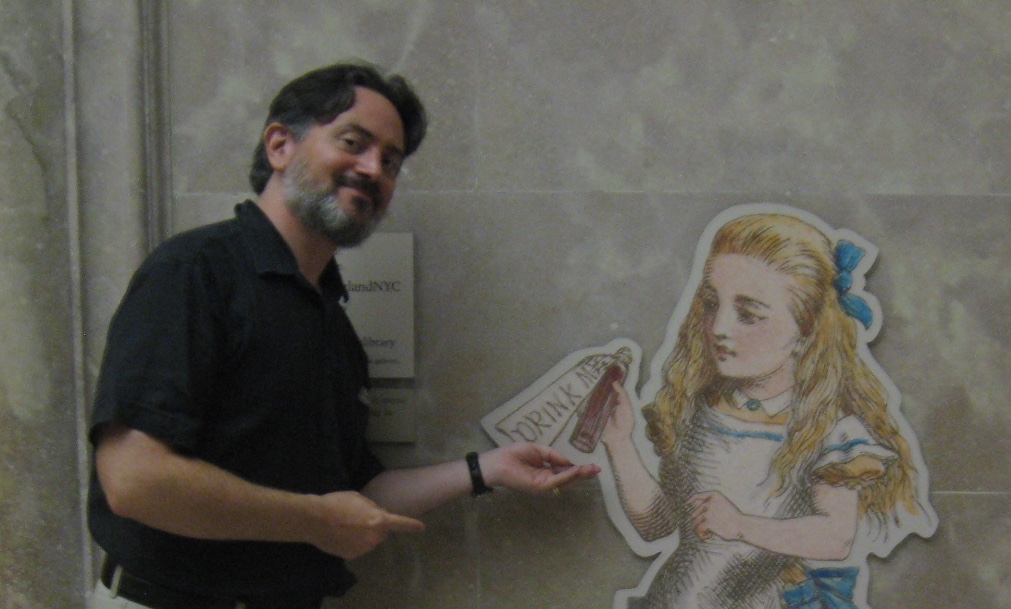
Alice exhibit 1Yesterday my Speakeasy co-producer Kelly Aliano and I went to The Morgan museum to take in their Alice – 150 Years of Wonderland exhibit, and tour the ground floor of the magnate’s palatial home and library too.  As Lewis Carroll’s Alice books are such a big part of my musical Speakeasy – the Adventures of John and Jane Allison in the Wonderland, it seemed very apropos to check out this exhibit and share some impressions on this blog.  Photography was allowed but limited only to those items that are part of the Morgan collection and not on loan.

We joined a tour in progress.  The volunteer guide regaled us with the story of how Carroll, who initially independently financed the publishing of his books, considered the first press run not up to his exacting standards.  So a new edition was produced at great expense.  The “spoiled” books were not scrapped, however, but were shipped out for sale in the US market.  I guess what wasn’t good enough for home consumption was just fine for the uncouth Yankees.

Alice exhibit 4Alice exhibit 5

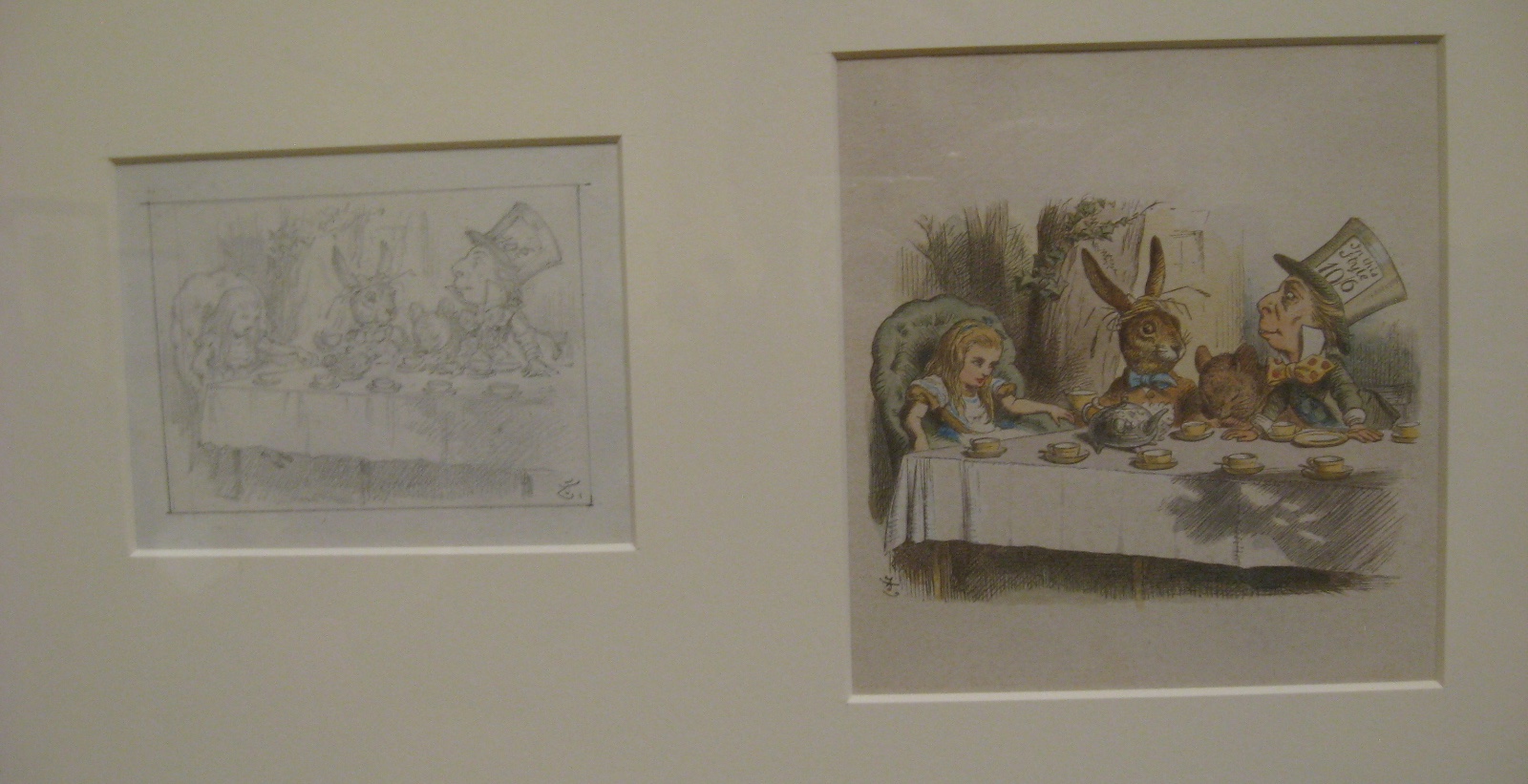
Alice exhibit 2The exhibit focuses heavily on John Tenniel’s original illustrations, which in the guide’s (and my humble) opinion are the standard against which all future illustrations are (usually unfavorably) measured.  John Tenniel, who lived to be 94(!), drew only in pencil, so any ink or colored in version of his work would be a copy, not necessarily a forgery but often mistakenly attributed to Tenniel.  For “Alice’s Adventures in Wonderland” Carroll meticulously pre-planned subject and lay-out of all illustrations, and drew many himself.  He was unsatisfied with the quality of his own work, and thus turned to Tenniel.  When Carroll hired Tenniel to illustrate the second Alice book “Through the Looking Glass”, Carroll had so much confidence in Tenniel’s work that he gave the artist free reign to choose and design the illustrations.  Carroll even excised a chapter called “The Wasp in the Wig”, when Tenniel insisted it was not possible to illustrate such a thing.

Alice exhibit 3

Left: Tenniel hand-colored proof of the climactic attack of the cards. Right: an unknown artist’s copy

A highlight of the exhibit was the screening of a surviving print of a 1903 silent movie short of Alice in Wonderland.  Very few movies of that era survive, so this is something special, especially considering that it shows that certain camera tricks and special effects were already in use so early in film making history (the screen picture in The Morgan is brighter than this YouTube embed.  The shot where Alice “shrinks” or “grows” shows the background against which she is changing size more clearly, for example):

For shame, Danny, plying a minor with dubious potent portables!

For shame, Danny, plying a minor with dubious potent portables!

Continue reading

Posted in Literary Lyricism, The Speakeasy Chronicles, Two-fisted Touristing | Tagged , , , , , , , , , , , , , , , | 1 Comment

SPEAKEASY – The WHITE RABBIT goes slumming in HARLEM

Duke Ellington Cotton Club orchestra

The Duke Ellington Orchestra at the Cotton Club

Harlem

HARLEM

IT’S SO BECOMING

LET’S ALL GO SLUMMING

IN THE WILD UPTOWN

“Going slumming in Harlem”.  This is what rich and middle class swells and flappers, socialites and the elite, white folks from downtown Manhattan, called going uptown to enjoy the “Negro Vogue” flourishing in nightclubs all over Harlem during the late 20’s / early 30’s.

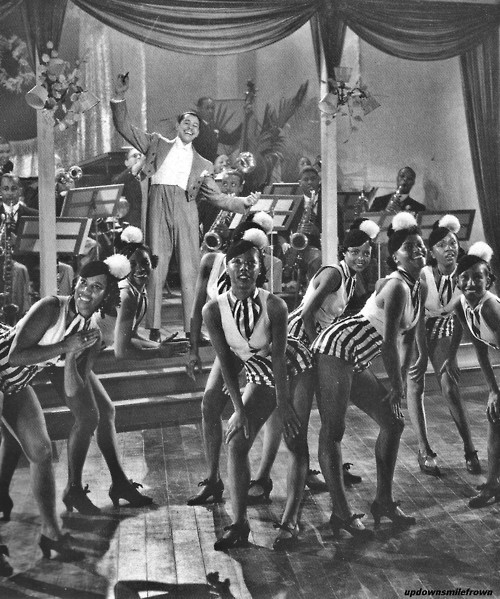
Cab-Calloway-Cotton-Club-dancers-striped-NYC-New-York-Untapped-CitiesIn the song “Harlem”, featured above, the character Roberta White and her entourage of beaux and flappers meet her neighbor Jane Allison in an automat*.  They are on their way to the Wonderland club in Harlem and are fortifying themselves with an assortment of “Eat Me” cakes and “Drink Me” juices laced with illegal alcohol from their personal flasks.  Jane has been following Roberta to try to make amends after giving her an unexpected kiss.  Roberta doesn’t appear to recognize Jane, but still encourages her to join the fun uptown.

This scene and song is from the musical “Speakeasy – The Adventures of John and Jane Allison in the Wonderland”, a Roaring Twenties riff on Lewis Carroll, with Jane as one of two newlywed Alices and Roberta standing in for the White Rabbit, now a flapper carrying flasks of bathtub gin and obsessed with the “Negro Vogue”.

The Apollo Dancer sat the Cotton Club Revue in 1938. still from BEEN RICH ALL MY LIFE, a film by Heather MacDonald, a First Run Features release.Arguably a product of the Harlem Renaissance, the “Negro Vogue” was a nightclub craze that brought black performers to “mainstream” white audiences.  Sometimes this meant Time Square area nightclubs “imported” black acts downtown.  To a great extent though the audiences flocked uptown to big new Harlem nightclubs like the famous Cotton Club, where black performers entertained a whites only crowd.

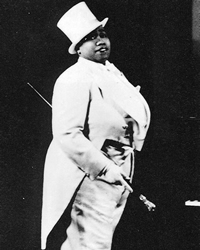
Gladys Bentley

Gladys Bentley

Yet there were also Harlem nightclubs like the Ubangi Club that permitted a mixed audience.  Gladys Bentley, an infamously openly lesbian singer, performed at the Ubangi Club.  Her Speakeasy counterpart Duchess Bentley will cross paths with both Roberta White and Jane Allison, with dramatic consequences, but that is grist for another post.

1920s-harlem-gay

There were also smaller, for-those-in-the-know Harlem speakeasies where interracial couples could safely mix, including same sex interracial couples.  Downtown these kind of interactions were just not possible.  An interracial couple (of any gender configuration) simply dining together might not have gotten served in a midtown restaurant in those days.

Continue reading

Posted in LGBTQ Alphabet Soup, The Speakeasy Chronicles | Tagged , , , , , , , , , , , , , , , , , , | Leave a comment

MERYL STREEP SINGS! and sings again! and again!

images-11

That Meryl Streep is one of the great actors of our time is common knowledge.  But what should now be considered obvious is how she is also the great movie musical performer of the modern age.  That statement may be countered with the assertion that she’s only been in two labeled-as-such movie musicals, Mamma Mia and Into the Woods (and Mamma Mia is arguably a jokey juke box musical which flaunts the casting of non-musical performers), but look closely at Streep’s film catalog and you will find her give a wealth of great and diverse musical performances, especially recently.  And just like classic Streep is famous for each new accent she would employ in movie after movie, musical Streep employs a new voice, with distinctive performance qualities, for each singing role.

Her current musical offering is Ricki and the Flash, opening this Friday.  The movie is being marketed as a family comedy-drama about a mother (Meryl as Ricki), who abandoned her family to pursue her rock star dreams.  I haven’t yet seen the film (yet most definitely will this weekend), but I have read that Streep sings at least a dozen songs with her band, including Lady Gaga’s Bad Romance (that kinda blows my mind).  In this clip she sings an original tune, accompanying herself on the guitar.  Listen to her “rock singer” vocals on this ballad.  There’s a touch of Bonnie Raitt there:

Ricki and the Flash – “Cold One”

Since we are starting with Streep’s current musical performance, let’s explore the others going back in time.  Which brings us to her performance as the Witch in Into the Woods, the only strictly-speeking-if-you-are going-to-be-a-total-anal-stickler-about-it traditional musical movie on the list (as well as the vehicle for Streep’s 19th Academy Award nomination).  A lot of people reacted with surprise at how well Streep sings in Into the Woods.  No one who has been paying any attention (see the rest of this list) should have doubted her technical and expressive range and power.  She does however raise the bar for herself from a purely singing perspective, performing with even richer vocal quality and resonance than heretofore heard, both in her head voice (see “Stay With Me”) and her belt (see “Last Midnight”).

Into the Woods – Stay with Me

Into the Woods – Last Midnight

As far as I’m concerned Mamma Mia is a movie musical as much as any other.  Many sniff their noses at this juke box musical with its goofy storyline and purposefully karaoke style singing.  But to me Mamma Mia was a very welcome happy pill when it opened the fall of 2001 in post-9/11 New York, and the movie captures its knowingly ridiculous appeal perfectly.  Besides, those ABBA songs are great.  Even the lyrics are great, except of course for those occasional phrases of questionable syntax.

Meryl Streep throws herself into the proceedings with loony abandon.  Her vocals are fun and determinedly unpolished.  Yet when she lets loose in “The Winner Takes It All”, the emotional power of her performance is stunning, and her singing chops clear for anyone to hear.  She even gives a linguistically lethal line like “A big thing or a small” her all.

Continue reading

Posted in Cinema Scope, Melodies Linger On | Tagged , , , , , , , , , , , , , , , , , , , , | 2 Comments

Scissor Sisters’ Jake Shears sings “Streets of Berlin” in Bent

Martin Sherman’s classic play “Bent”, about homosexual persecution in Nazi Germany concentration camps, has received a highly acclaimed major revival directed by Moises Kaufman at the Mark Taper Forum in LA.

“Bent” is credited with bringing the barely discussed subject of Nazi persecution and mass murder of homosexuals to mainstream consciousness when the play premiered 1979 in London starring Ian McKellen.  The 1980 Broadway production starred Richard Gere.  The criminally little seen movie adaptation from 1997 starred Clive Owen as well as no other than Mick Jagger in the role of the drag singer Greta.

In the Mark Taper Forum production Greta is played by no other than Jake Shears, the lead singer from my favorite Queertastic Pop/Rock band Scissor Sisters.  Shears was also commissioned to compose new music for the song “Streets of Berlin”, which Greta sings in the play.

Jake Shears as Greta sings “Streets in Berlin” from Bent:

The obvious and appropriate influences of late Weimar era composers like Kurt Weill and Hanns Eisler are unmistakeable.  I am also forcibly reminded of Mark Blitzstein’s music for his 1930’s Agitprop musical “The Cradle Will Rock”, due to the particular spikiness of the arrangements (and not merely the English language).  I also find it interesting that Jake Shears sounds a bit like Rufus Wainwright to me here, not something I would generally say about Shear’s vocal stylings as a Scissor Sister.  The style of the song may have something to do with that.

Continue reading

Posted in LGBTQ Alphabet Soup, Live! On Stage, Melodies Linger On, Notes in the News | Tagged , , , , , , , , , , , , , , , , , , , , | Leave a comment

An ORPHAN MELODY is remembered in POMPEII

images-3

Mark Twain.  Pompeii.  An orphan melody.  What connects these three disparate things?

Wait, what do I mean by an orphan melody?

A week ago Ed plunked the latest Smithsonian magazine next to my breakfast dishes and pointed to its front page article: “The Fall and Rise and Fall of Pompeii”, a richly detailed and illustrated piece about the history of Pompeii’s destruction, its discovery hundreds of years ago, and the new destructive peril it faces because of mismanagement and corruption by the Berlusconi government, plus recent efforts to reverse the second falling of the ancient Roman city.   Ed said: “You could write about this article and your song ‘Remember Me’ from the Mark Twain musical.”

“Remember Me”, the ruins and long lost inhabitants of Pompeii seem to be calling out yet again as their long lost glory and horrible fate, once unearthed to great acclaim, now appears fated again to suffer destruction not due to a massive volcanic eruption but to garden variety human neglect and incompetence.

So let me explain “Remember Me” and how this orphan melody became part of a Mark Twain musical, and why a Mark Twain musical describes the fall of Pompeii.

images-10“Orphan Melodies” are what I call tunes I’ve composed, usually idly humming to myself, which stay with me, haunting me.  Again and again I will think of those unfinished melodies.  Some have been with me for over thirty years even, knocking on my consciousness every now and then so I may sing them again to myself, perhaps with a word or phrase of lyrics attached.  Eventually some find a home in some musical project.  They become complete songs with lyrics; they are performed.  Once that happens, these melodies stop haunting me.  They’ve found completion.

The melody I would later call “Remember Me” came to me on holiday in Israel in 1993.  I was celebrating Passover with my parents and my cousins at a Kibbutz on the Mediterranean.  While I took a walk by the sea, this wistful, romantic melody came to my head.  Unusually for me, it sounded not like a sung melody, but a tune played on the piano.  Even more unusual was that I didn’t hear just the melody line, I also heard accompaniment figures that seemed inextricably tied to the melody.  I imagined this was the love theme of a Gay romantic movie (ironically I would meet Ed and embark on my first full fledged Gay romance myself only a month later).  I located a piano and quickly found the melody and the accompaniment figures on the keyboard.

Remember Me piano theme

I didn’t think this piece would be a song.  It sounded like a piano piece to me.  For years I would play its themes whenever I found time to play for pleasure, “noodle about”, on any given piano, but the music would never evolve beyond the main theme and the secondary theme you hear in the above track.  I would play the A theme, the B theme, then repeat, but never found satisfying ways to develop the ideas as a complete solo piano piece.  I toyed with the idea of turning it into an Evocation, a viola piano duet for Ed, but that didn’t seem right either (although now that “Remember Me” is a song, Ed and I have played it for fun, substituting the vocal line with the viola).

beTWAINIn 2006 the Metropolitan Playhouse announced that its second annual Literary Theater Festival would focus on Mark Twain.  I already had had a good experience composing and performing “The Tell-Tale Heart – a musicabre” for their Poe Festival the previous year.  What might I attempt with Mark Twain?  My first thought was this title: “beTwixt, beTween & beTWAIN” (and its spell-check defying lettering).  What kind of Mark Twain musical would have that title?  How about one that adapted not his famous novels, but many of his lesser known short stories into a revue style musical?  I started reading a whole lot of Twain short stories and finding those I liked which either sparked new song ideas or attached themselves winningly to existing orphan melodies for further development.   Eventually Act One of “beTwixt, beTween & beTWAIN” would focus on stories from Twain’s frontier experience in the American West, and Act Two would adapt “The Innocents Abroad”, Twain’s episodic account of the first American cruise ship journey all around the Mediterranean.

Continue reading

Posted in Beginnings, Literary Lyricism, Musicabilia, Two-fisted Touristing | Tagged , , , , , , , , , , , | 2 Comments