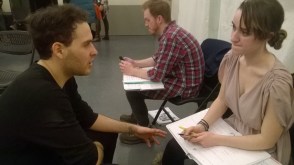
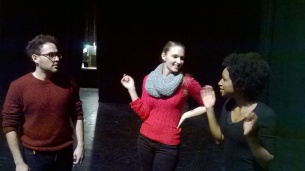
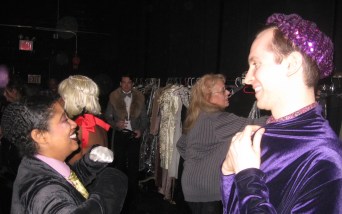
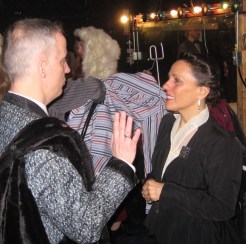
Bri Molloy, Camille Atkinson, Tim Connell


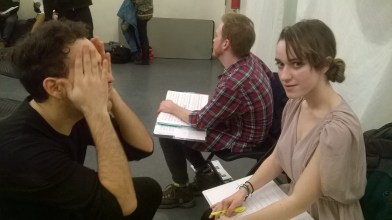
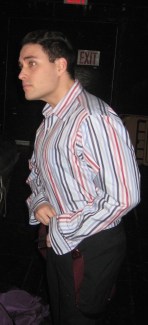
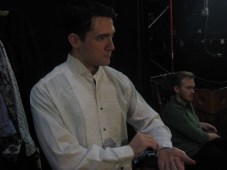
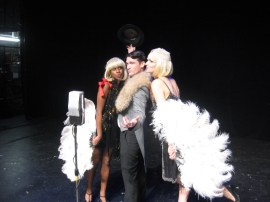
Matias Polar, Allie Radice, Anne Bragg

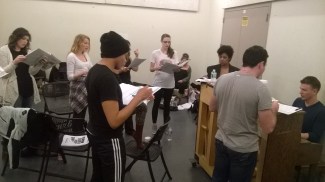
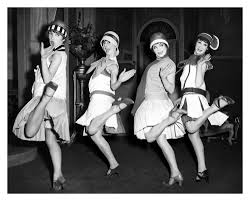
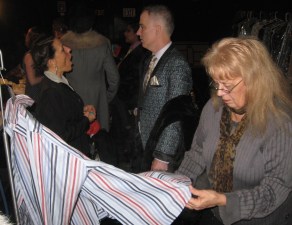
Setting up the “Harlem Conga” line

Bri Molloy, Camille Atkinson, Tim Connell


Matias Polar, Allie Radice, Anne Bragg

Setting up the “Harlem Conga” line

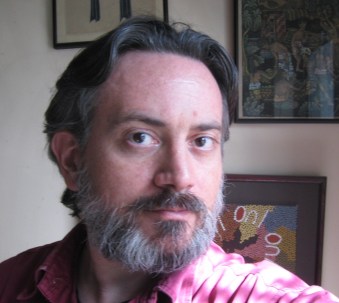
Adam Szymkowicz
So there are two last names with lots of letters and lots of Eastern European heritage…
Adam Szymkovicz posted his interview with me yesterday on his site. You can go to it here or read the excerpt below.
Those looking for completely untouched tidbits may enjoy the 4th grade “Santa Claus is Sick” anecdote…
Q: Tell me about Speakeasy.
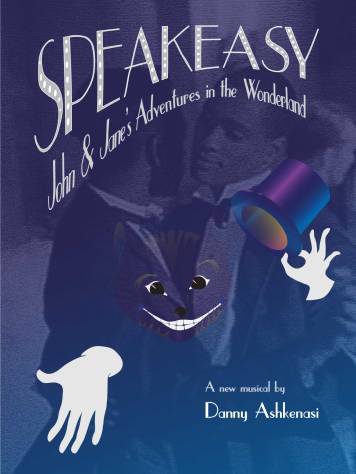
A: “Speakeasy – John and Jane’s Adventures in the Wonderland” is a Roaring Twenties fantasy blending Lewis Carroll’s Alice stories with the real life Queer subculture and characters that flourished in the illicit world of speakeasies during Prohibition. John and Jane Allison are loving newlyweds, who are initially not consciously aware of their own homoerotic capabilities. But then Jane Allison kisses her neighbor Roberta White and goes down the rabbit hole of a basement speakeasy entrance. And John Allison slides through the looking glass of a public bathroom mirror after accepting an illicit sexual favor. Both will experience fantastical Carrollesque adventures within the nightclubs, buffet flat parties and drag balls that flourished before the end of Prohibition as well as the social conservatism of the 1930’s that put an end to that world. Both John and Jane also will encounter the Wonderland nightclub’s master of ceremonies Chet Cheshire and make love to lesbian nightclub singer Duchess Bentley and famed female impersonator Julian Carnation. Will John and Jane’s relationship survive the revelations of their unspoken sexual desires and mutual infidelities?
Q: What else are you working on now?
A: Producing the showcase performances of “Speakeasy” at the Theater for the New City; collaborating with Jack Hilton Cunningham on the 1950’s Mississippi musical “Feedstore Quartet” and with the Jazz singer Jacqui Sutton on the song cycle “American Anthem”.
Q: Tell me, if you will, a story from your childhood that explains who you are as a writer or as a person.

The on-line magazine AXS has published an interview with yours truly. The questions delve into the evolution of Speakeasy as well as musical influences in my childhood and advice to aspiring playwrights and composers.
The article is excerpted below:
By: Meagan Meehan – AXS Contributor – Feb 2, 2016
Danny Ashkenasi is a composer, playwright, performer, producer and teaching artist. He has been acting professionally since the age of ten and composing musical works that have been publicly produced since the age of fourteen. In recent years he has focused on creating and performing musical works that highlight the American experience, by adapting American literary masters and focusing on pertinent American historical and social themes. His current musical writing projects include “Feedstore Quartet” (Book and co-lyricist: Jack Hilton Cunningham) set in 1950’s Mississippi, and the song cycle “American Anthem” with the jazz singer Jacqui Sutton.
—–
“Speakeasy: John and Jane’s Adventures in the Wonderland” shares the sexual freedoms explored in the 1920s and 30s, and how those freedoms were ruined with the end of Prohibition. It is a love song to queer life in NYC and to forgotten entertainers such as Gene (Jean) Malin, the openly homosexual headline act of New York’s short-lived Pansy Craze of 1929; Vaudeville’s famous Dolly Sisters; the larger than life black lesbian singer Gladys Bentley of Harlem’s “Negro Vogue” fame; and the popular female impersonator Julian Eltinge, to name a few. The music in Speakeasy is based on various styles of the era, but with a modern twist, including Tin Pan Alley, showtunes, jazz, swing, cabaret, operetta as well as classical and agitprop strains of the time. According to the official synopsis:
1929 – New York City. John and Jane Allison are newlyweds. Although they love each other, they have desires they haven’t even acknowledged to themselves, let alone explored. But after giving her neighbor Roberta White a kiss, Jane goes “down the rabbit hole,” entering the strange world of a Speakeasy, where time and space and identity don’t appear to follow conventional rules. On accepting a sexual proposition in a public men’s room, John mysteriously slides “through the looking glass,” and in one fantastical magical realist dream night, they explore their sexuality through the course of two simultaneous and intertwining magical adventures. Lewis Carroll’s literary characters and events from “Alice’s Adventures in Wonderland” and “Through the Looking Glass” are transformed into real-life historically-significant entertainers and events from NYC’s Prohibition-era queer culture, with whom Jane and John enjoy friendships and love affairs. After a night of speakeasies, buffet flat parties, police raids, drag balls, and a bizarre trial, will they reveal their “dreams” to each other and “speak easy” about their truths?
Recently, Danny spoke to AXS about his experiences working in the theater industry and his hopes for the future:
AXS: What inspired you to become a composer and writer?
Danny Ashkenasi (D.A.): As a child I loved the arts, loved performing, loved being creative. I was writing stories and little plays in elementary school, and started writing a children’s novel that would later become the basis for my first musical when I was eleven. Music always was a big part of my life. My mother was an opera singer and I started taking piano lessons before I turned five–still, most of my childhood I was more drawn to performing or writing stories and only once or twice made up songs. I did love musicals though, and habitually watched them on TV. By watching so many classic Hollywood musicals I soaked up the fundamentals of the form.
AXS: How did you get into writing musicals yourself?
D.A.: When I was 14 I showed my music teacher a short song which had lyrics inspired by the children’s novel I had been writing. He encouraged me to turn that story into a musical, with that melody becoming the first song. I first thought the idea was crazy, but then I was inspired to write several more songs, and before I knew it I was on my way to writing and composing my first musical, which would end up being performed at my high school three years later. After that I realized I was a composer.
AXS: Growing up, what kinds of shows–plays, TV shows, movies, etc.–had the biggest impact on you? Why?
D.A.: I already mentioned the classic musicals I watched on TV. But (then) contemporary movie musicals like “Cabaret”, “Bugsy Malone”, “Jesus Christ Superstar”, “Hair” and “Fame” also made a big impression.My mother being an opera singer, who also performed in musicals and cabaret, I was exposed to all forms of music theatre, which was very influential, as was performing in high school musical productions of “Bye Bye Birdie,” “Guys and Dolls,” “Oklahoma,” “Hello Dolly” and others. And then I discovered Sondheim via a community theatre production of “Company”…
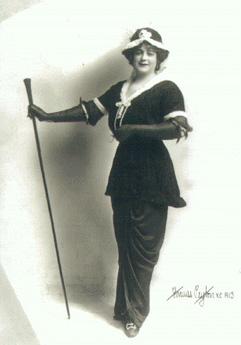
One of the musical Speakeasy‘s lead characters, Julian Carnation, is based in part on the real life female impersonator Julian Eltinge (as well as the red Queen and the Mad Hatter from Lewis Carroll’s Alice books).
I want to share a fascinating article about Julian Eltinge, posted by Richard Metzger on Dangerous Minds, that discusses the fascinating career and contradictions of Julian Eltinge, much in the same way an article I posted earlier on Notes from a Composer did, but that has the added attraction of including a rare 1929 talkie movie clip of Julian Eltinge performing and then talking in full drag. This was just before the time his career spiraled downward during the more repressive, homophobic 1930s.
See the article and video below:

Introducing the latest dance craze from the Roaring Twenties: The Lobster Charleston!
The Lobster Charleston
Yes, it’s a novelty dance, like the Turkey Trot, or the Chicken Dance, or the Macarena, the Mashed Potato and Gangnam Style.
But it’s imaginary, existing as a popular pastime in the fictional Wonderland nightclub in the musical “Speakeasy“. Imaginary, so far. I just witnessed our choreographer Alan Hanna teach it to the cast of Speakeasy. This could catch on!
It is during this goofy novelty number that our heroes, John and Jane Allison let down their guards a bit and agree to dance with Julian Carnation and Duchess Bentley. That is, John dances with Julian, and Jane dances with Duchess.
The Lobster Charleston is directly inspired by a chapter in Alice’s Adventures in Wonderland called “The Lobster Quadrille”, wherein the Mock Turtle and the Gryphon show Alice a strange dance called the Lobster Quadrille while reciting a slow mournful song.
The Lobster Charleston is a more happy tune of nonsense, befitting the happy-go-lucky ethos of Roaring Twenties Speakeasy culture. It is also the one song in “Speakeasy” most closely aligned lyrically with Lewis Carroll’s original writing. There are many poems and pieces of verse in the Alice books, including “Jabberwocky” and “The Walrus and the Carpenter”. I hoped at least one song in “Speakeasy” would include lyrics that directly referenced Lewis Carroll’s verse. Thus The Lobster Quadrille inspired The Lobster Charleston, the silly novelty tune and dance craze that becomes the unlikely catalyst for John and Jane to separately and simultaneously take a few crucial dance steps closer to homosexual infidelity.
Compare The Lobster Charleston and The Lobster Quadrille below:
The Lobster Charleston lyrics:
WILL YOU WON’T YOU WILL YOU WON’T YOU
WILL YOU JOIN THE DANCE
WILL YOU WON’T YOU WILL YOU WON’T YOU
WON’T YOU JOIN THE DANCE
BIB AND BOB AND HOB AND NOB
WITH LOBSTERS IN THE SWELLS
CLICK YOUR CLAWS AND GIVE APPLAUSE
TO TURTLES IN BAND SHELLS
WOULD NOT COULD NOT WOULD NOT COULD NOT
WOULD NOT JOIN THE DANCE
WOULD NOT COULD NOT WOULD NOT COULD NOT
COULD NOT JOIN THE DANCE
NO SHE CRIED OUT
WOE BETIDE THE CRAB WHO DOESN’T SEE
JUST HOW WET A SOUL CAN GET
WHEN TOSSED INTO THE SEA
This article was one of the first ever published on “Notes from a Composer” and quickly became one of the more popular during the first months of the blog’s existence. I thought I would repost it so newcomers to the site can catch what in terms of internet blogging time lines is already a “golden oldie”. Hey, if television and radio shows can air reruns, so can I…
Ed and I were in Berlin* a couple years ago visiting my folks when we stumbled upon a German movie from the 1950s being shown on TV. We missed the first seconds of the credit sequence and so didn’t catch the title, but something about the opening shots of Austrian mountains and buildings felt familiar. Then the story introduced us to a novice named Maria. She doesn’t fit in well in the convent with the other nuns, and so the Mother Superior forces her to take a position as a governess to the seven children of a retired Austrian naval officer.
Ed and I started thinking, my does this look familiar, could it be…? Maria gets on well with the kids and teaches them to sing Austrian folk songs, but she clashes with their father who eventually sends her back to the convent. Then he realizes he’s in love with Maria and they marry. But then the Nazis take over Austria… By now it was undeniable, this is The Sound of Music, except of course it wasn’t. After the movie ended Ed and I looked up the German TV guide: turns out this film is Die Trapp-Familie, the first film to be made about the famous van Trapp family, and a big success in German cinemas in 1956, so big in fact they filmed a sequel: Die Trapp-Familie in Amerika.
And without Die Trapp-Familie there would be no The Sound of Music. It was the German movie that attracted the attention of the original producers of the musical who brought the project to Rodgers and Hammerstein. It was astounding to Ed and me to see how much the plot of The Sound of Music resembles Die Trapp-Familie. Except in the German original the van Trapp house is a fine mansion but not the palatial estate of the musical, and the van Trapp children’s names and ages are truer to history. Both movies end with the van Trapp family fleeing Nazi occupied Austria after the Germans try to force van Trapp (Baron van Trapp in the original, Captain van Trapp in the musical) to join the German military, but in Die Trapp-Familie we see the family get stranded on Ellis Island in danger of being deported. They are only allowed to enter the United States after they sing for a New York talent agent who puts them under contract.
When The Sound of Music was released it broke the all time box office record Gone with the Wind had held onto for 25 years. Critics were mixed on the movie – Pauline Kael famously branded it a “sugarcoated lie” – but audiences all over the world embraced it. Well, almost all over the world. Germany and Austria never much cared for The Sound of Music, preferring the original Die Trapp-Familie.
Which explains why I, growing up in Germany in the 1970s, was a stranger to The Sound of Music. I avidly watched every musical German TV aired, but The Sound of Music wasn’t one of them. (I also have no memory of Die Trapp-Famile airing on TV, but I was less likely to watch a German “Heimat-Film” from the 1950s than I was to turn on the TV for a Hollywood product.)
The Sound of Music is probably best first experienced as a child, just like Mary Poppins or The Wizard of Oz is best first experienced as a child. Adult appreciation of the artistry of the movie can then later remain informed by those wonderful childhood feelings of awe and joy the movie engendered. The Sound of Music is probably best not first encountered as a teenager. Which is the age I was when I first watched it. Even worse, I watched it on US television in the 1980s, which means the original widescreen image of the movie was cropped by half, destroying all visual integrity. And commercials constantly interrupted the flow of the experience. But even worse, again and again sections of the movie were edited out to make room for more commercials, mutilating any dramatic through-line if not rendering the whole plot nearly unintelligible. I loathed what I saw and would have whole-heartedly agreed with Ms. Kael’s damning assessment, had I heard about it at the time.

Chet Cheshire with the Tweedle Sisters (Anne Bragg, Bri Molloy, Allie Radice)

Duchess Bentley, Jane Allison, John Allison & Julian Carnation
(Camille Atkinson, Rosalie Graziano, Matias Polar & Tim Connell)

The “dip”.

John surrounded by Julian and the Florists
Cory Tarallo, Matias Polar, Tim Connell, Zach Wachter & Torian Brackett (kneeling)

Jane and John getting … inspired.

So the Academy Award nominations were announced this morning, and as every year I had the TV on, munching my breakfast, and followed along as they were read out (see the full list of nominees at the bottom of this post).
And as every year, the greatest noise will probably be made about what got “snubbed” and I suppose my post will be no different. But let me first point out that I saw 6 of the 8 best picture nominees and count those 6 as among the best films I saw this year (and The Big Short and The Revenant were already on top of my “movies-I-gotta-see” list before today’s announcements). I’m particularly happy to see Brooklyn and Room, two “small” movies I absolutely loved and whose Oscar fortunes were very much in doubt, make it. “The Martian” and “Mad Max: Fury Road” are two of the most exciting and fun movie going experiences I had this year (and how cool is it two see two big science fiction films do so well at the Oscars, and two others, “Ex Machina” and some little sci-fi flic about some kind of force awakening, which I also loved no matter my cheek, do pretty well too!) “Spotlight” is an excellent film that expertly infuriated me, and “Bridge of Spies” moved me to not one but two blog posts about my Cold War Berlin Wall experiences.
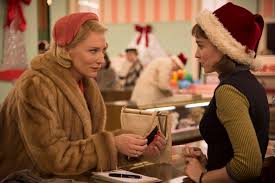
So no complaints about what made the list. But a big sigh about at least one that didn’t: Carol. Carol is “imho” one of the best pictures of the year. And for it to miss Best Picture and Best Director seems really unfortunate (Todd Haynes really can’t catch a break with the Academy, can he…). What makes this circumstance truly head-scratching is that Carol got 6 nominations. It isn’t unprecedented but still highly unusual for a film to get so many nominations but no picture and director noms. Especially in these years of an expanded Best Picture field that allows for up to 10 films to be nominated, it seems strange that a film that has so much support for its acting (2 noms), writing, cinematography, music and costumes couldn’t find enough support to make it into best picture. Even without a best picture nomination, it equals or betters the nomination tally of most of the best picture nominees, with only three films receiving more nominations in all categories.
Ah well.
There will be other gripes. No black actors nominated, again? No nomination for Ridley Scott? No best picture nomination for Inside Out? And what about…
And then the happy surprises. Best Director for the very deserving but unexpected Lenny Abrahamson for “Room”. Screenplay and visual effects nominations for the superb “Ex Machina”. A German language film in the live action short category (not in Best Foreign Film though, although Germany’s “Labyrinth of Lies” had made the short list). And who would have guessed back in May, no matter how good the reviews, that a sci-fi dystopian action film like “Mad Max: Fury Road” would get the second most nominations of all at the supposedly staid Oscars, including nods for picture and director. It’s pretty cool.
Another happy left-field surprise was the inclusion of the wonderful Brazilian independent animated feature “Boy and the World”. I saw it when it played briefly in theaters and hoped it might make the cut as it is a very visually bold and idiosyncratic film, movingly accessible as well as formally bizarre.
OK. But how about my bragging rights? Remember a few weeks ago I made an out there guess about a potential best song surprise nominee.
How did I do?

Or perhaps I should say, the off-the-charts adorableness of Rosalie Graziano and Matias Polar as Jane and John Allison?
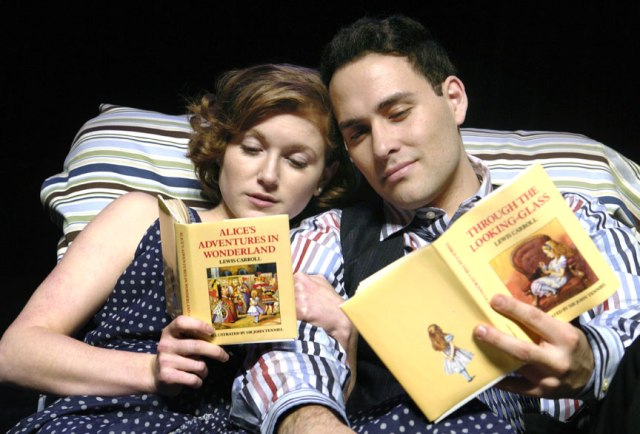
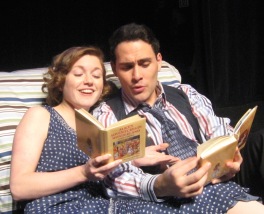
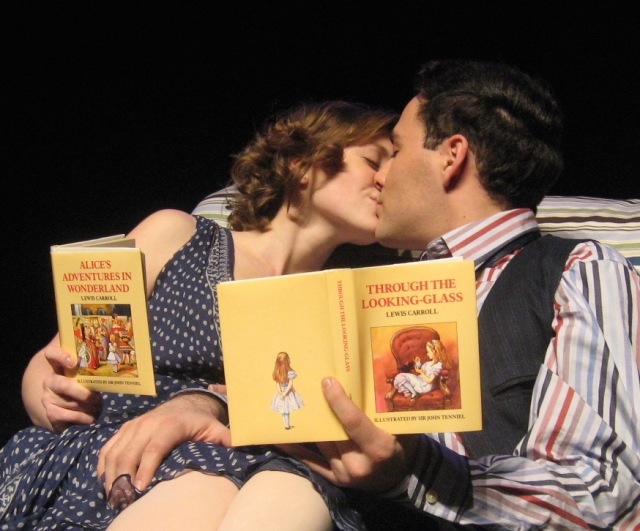
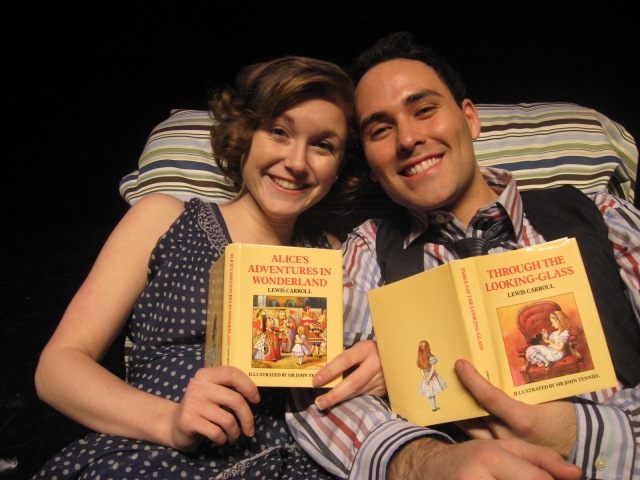
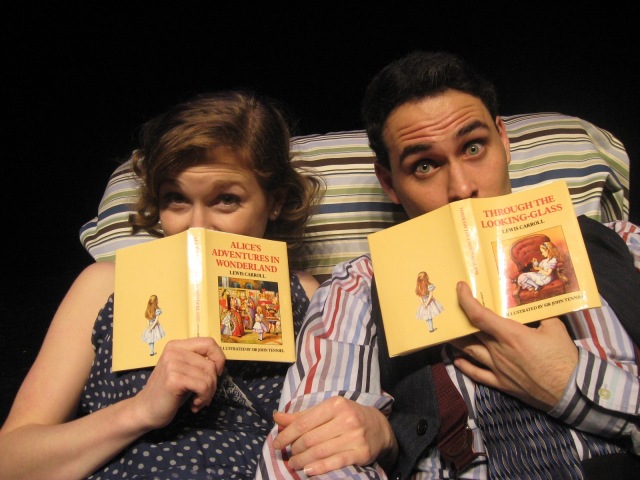
The last shot of the day we did at the press photo shoot was a shot of Jane and John reading “Alice’s Adventures in Wonderland” and “Through the Looking-Glass”, the two books that respectively serve as the template for each of the newlywed’s through-lines in “Speakeasy“.


The kiss was the last shot Lissa Moira, our director, called for. It had been a long evening’s shoot, and Peter Welch, our photographer, was already packing up, but Rosalie and Matias were game enough to pose a little longer just for me. I felt like I was shooting two 1930’s Hollywood musical comedy actors. They really do look like they hail from that era in these pictures, don’t you think?


It is an odd reality of our production of Speakeasy that our Public Relations officer required press photos before we even launched into rehearsals. So we had to “create” moments from the show before we had yet gotten around to staging anything.
Luckily most of the cast members on call for the photo shoot had been involved in the December reading and thus already had a strong acquaintance with the story and their roles in it. Still, two performers at the shoot were completely new to the company, and a third was “promoted” to playing a different character.
So there was a bit of “Hi, we just met, let’s create a moment we’ve not yet ever rehearsed, and hold still.” But that’s the nature of most photo shoots for theatrical productions.

Company members getting ready for the shoot in the dressing area

Camille Atkinson, Bri Molloy & Rosalie Graziano
Lissa Moira, our director, and I came up with a list of set-ups for the shoot. I also helped her lug numerous big bags and suitcases of clothes and props to the theater. Our costume designer Jennifer Anderson brought a large cache of costumes too. Just for the photo shoot. None of these were likely to be the costumes characters will be wearing during the actual performances.
Except there was one costume piece that Lissa and Jennifer thought worked so well for the character it probably will end up being the one you will see on stage in February and March. I’ll keep it a secret for now which costume piece. Maybe we can turn this into a bit of a game of “I spy with my eagle eye” for when you see the show.


Brian Michael Henry & Cory Tarallo Bri Molloy & Lissa Moira

Camille Atkinson and Zach Wachter. Right: Matias Polar.


Me being a menace with the camera. Darcy Dunn.

Bri Molloy and Brian Henry


Anne Bragg, Zach Wachter, Camille Atkinson and Torian Brackett


Darcy Dunn, Tim Connell and Jennifer Anderson


The pro photog: Peter Welch Anne, Bri & Allie Radice


Tickets for the showcase production of
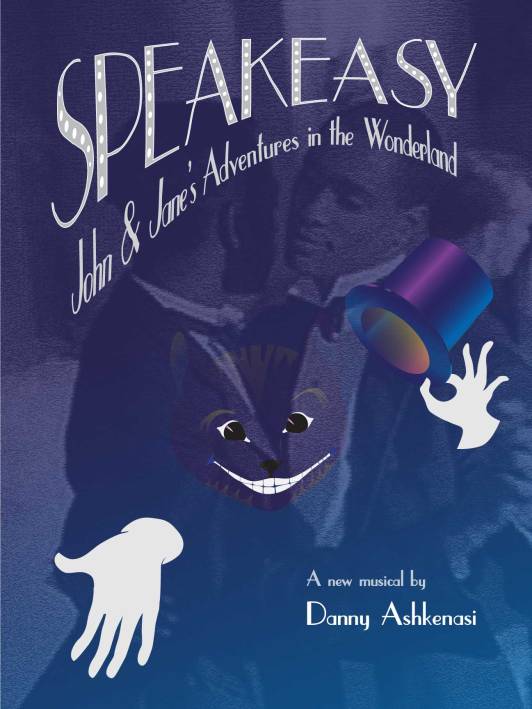
SPEAKEASY – John and Jane’s Adventures in the Wonderland
are now on sale.
Check out the Theater for the New City Speakeasy webpage here!
Check out the Smarttix Speakeasy ticket purchase page here!

Plus, Speakeasy has been featured again in another BroadwayWorld.com article! Read it here!
Or check out a copy below:

I believe in the good of mankind
I believe in the end truth prevails
It resides in our hearts and our minds
Should we seek it we’d find love unveiled
HOPE

Happy New Year. Let’s hope for a 2016 that brings more light into this world than 2015 seemed to, at least when it comes to most of the events that screamed loudest (sometimes literally) for our attention.
The song “Hope” feels very apropos as a New Years song; hymn even, if I may be so bold. It is the finale of “The Song of Job 9:11“. I write about the creation of that piece elsewhere, as well as the need to conclude it with an expression of hope. Today I merely want to share this song again, with its full set of lyrics.
The melodies for “Hope” were with me for many years before I completed the music for “The Song of Job 9:11”. I conceived of the song when I was 18 or 19. The four lines quoted at the top were lyrics that came to me pretty much in that form at the time. But although the main melodies were conceived then, for decades I was stumped when thinking up additional lyrics for the piece.
Only after 9/11 and when I realized this music would conclude the piece I was writing about that horrible event, did I finally work out the rest of the words, aided in part by imagery from The Book of Job, and commentary I had read about the Old Testament text.
Anyway, below is the complete text. Happy New Year, or as they say in Germany: Guten Rutsch ins Neue Jahr!

chapter ten: HOPE
JOB: I believe in the good of mankind
I believe in the end truth prevails
It resides in our hearts and our minds
Should we seek it we’d find love unveiled
I have heard of a light strange and strong
It embraces the seas and the skies
Touching all, high or low, right or wrong
And in time it may blaze in my eyes

The ensemble for the showcase production of “Speakeasy” has been assembled. Doubled in size from the group that performed in the December 7 reading, it is a wonderfully talented and diverse ensemble. A “swell gang”, in the parlance of the Roaring Twenties.
In fact, let’s be introduced to their names and faces while listening to “Swell”, a song from “Speakeasy”, wherein Chet Cheshire, Julian Carnation and Duchess Bentley illuminate the various and often unexpected ways sensual longing overtakes the body, often in spite of ourselves.
Swell
The Swell Speakeasy Cast – (in alphabetical order)


Camille Atkinson Bevin Bell-Hall


Torian Brackett Anne Bragg

Tim Connell Nick DeFrancesco
‘TIS THE SEASON TO BE GRATEFUL!
Thank you to all who gave to help make Speakeasy’s February/March showcase run a reality!

In alphabetical order:
Ilse & Hanns Ahrens
Michael Ahrens
Kelly Aliano
Claudia Arlo
Abraham & Catherine Ashkenasi
David Ashkenasi
David Bailey
Ira Barouch
Boris Baltes
Janet Baumann
Tita Theodora Beal
Richard Beck
Astrid Begehr
Amie Bermowitz
Megan Blake
Peter Bonner
Bethea Brice
Phyllis Buchalter
Gregor Büchner
Jon Bunge
James Burnside
Linda Hill Brainard
Sonja Bruzauskas
James Dean Jay Byrd