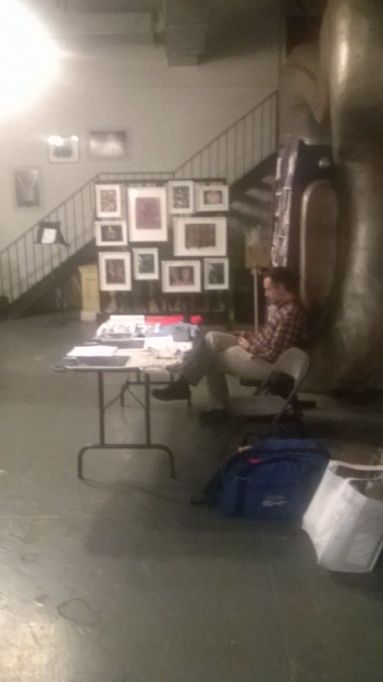
My husband Ed took this pic of me in the lobby of Theater for the New City sitting at our concession stand by the entrance into the Johnson Theater. Speakeasy would be performing in about 40 minutes that Saturday night. So this was long before the audience arrived. Ed posted the pic on Facebook with the heading “Contemplation before the show.”
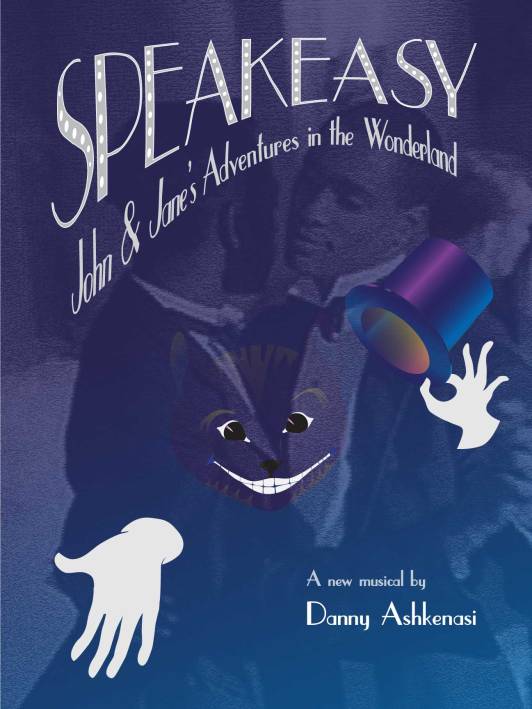
Thank you to all, contributors, performers, production team, audiences, who have helped make this workshop production of Speakeasy possible. May we all dance into the light:
Dance into the Light (demo recording)
DANCE INTO THE LIGHT
CHET:
THE DANCEHALL IS BUSY
WITH LAUGHTER AND REPARTEE
ALL TABLES A TIZZY
SURROUNDING THE SMOOTH PARQUET
THEN WARM LIGHT BATHES THE OPEN ROUND
AND NO ONE MAKES A SOUND
–
THE MUSIC STARTS PLAYING
A SWEET TUNE, A SUBTLE BEAT
THE PATRONS START SWAYING
AND SMILING AND TAPPING FEET
THEN DANCERS RISE TO TAKE THE FLOOR
WITH SOMEONE THEY ADORE
–
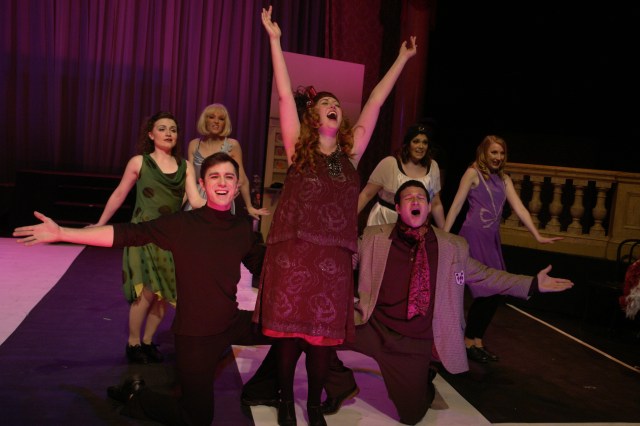
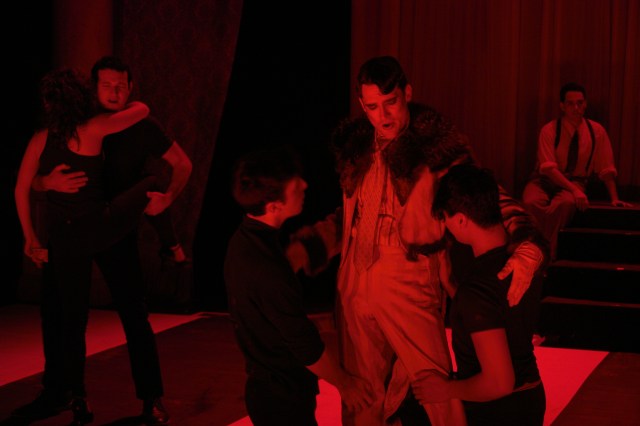
One by one, couples start taking to the dance floor to dance. Mostly opposite sex, but some same gender couples too. They’re joined by John and Duchess as well as Jane and Julian.
OffOffOnline posted their Speakeasy review. Here a few highlights:
“Kayleigh Shuler as Jane and Matias Polar as John are the heartbeat of the show; they are the flawless young lovers, never missing a note or a cue.”
“As Jane’s best friend, hooch-maker, and possible extramarital love interest, the fiery Bevin Bell-Hall charms the room as Roberta White.”
“The characters of Duchess Bentley (Camille Atkinson) and Julian Carnation (Tim Connell) represent the struggles of Julian Eltinge and Gladys Bentley, queer denizens of Prohibition-era New York City. Atkinson and Connell portray their gender-bending historical characters with sensitivity and humor.”
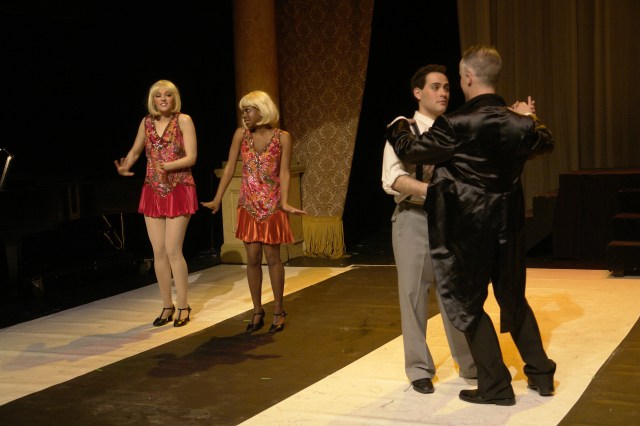
“Absolutely knocking the Ziegfeld-girl aesthetic out of the park are Alice Radice and Anne Bragg as Dora and DeeDee Tweedle. Just try to keep from smiling as Radice and Bragg shuffle around the stage in their blonde bobs and lobster-claw hands. With their stellar comic, dance and musical skills, this vaudeville duo steals the show.”
Last night the legendary James Rado, co-writer of the musical Hair, attended the performance. Afterwards he shook my hand and told me how much he liked the show.
He even purchased a Speakeasy T-shirt.
🙂
So, in honor of Mr. Rado’s gracious visit, here’s a mash up of Speakeasy‘s “Cinderella” and Hair‘s “Hair” lyrics:
POOF YOUR HAIR LIKE PERCY SHELLEY
OR MARCEL IT HARD AS STEEL
LET IT FLY IN THE BREEZE AND GET CAUGHT IN THE TREES
GIVE A HOME TO THE FLEES IN MY HAIR
Also, the singer Michael Hanko, whom we befriended when he was cast in the reading of Feedstore Quartet (which I wrote with Jack Hilton Cunningham), saw Speakeasy too on Saturday, and has since posted this lovely account on Facebook, which he has allowed me to share in full:
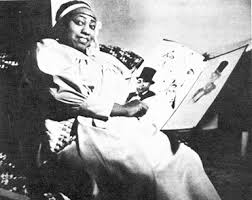
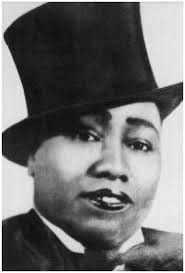
Gladys Bentley, in the Ebony article, showing off clippings from her career heyday.
Gladys Bentley, the model for the character Duchess Bentley in Speakeasy, enjoyed a terrific career as deliberately outrageous Lesbian nightclub singer during the Roaring Twenties, but saw her prospects plummet during the far less permissive Great Depression. Almost all homosexual entertainers saw the work dry up for them in the 1930s unless they adopted a public heterosexual front. Gladys Bentley however had been so outspoken about her Lesbianism, it was such a big part of her early success, that there was no escaping that public image which now became the main reason for her career downturn.
By the late 1940s Gladys Bentley’s performing career was practically non-existent. Meanwhile Red Scare paranoia not only raised fears against suspected Communists but was also the catalyst for a far greater witch hunt against homosexuals in Government jobs. It was during this time of particularly vicious public homophobia that Gladys Bentley published an article in Ebony magazine titled “I am a Woman Again” wherein she renounced Lesbianism, claiming she had taken hormone treatment to cure herself of this “strange affliction”. She was now married to a man and posed for numerous pictures showing her doing typical housework.
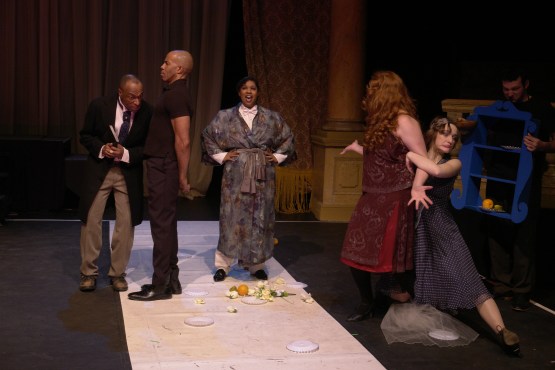
In the musical Speakeasy – John and Jane’s Adventures in the Wonderland, Jane Allison first meets Duchess Bentley, Harlem nightclub singer and unabashed lesbian, when she finds herself outside a door being angrily knocked upon by Minister Fish, who implores Duchess Bentley to let him in so he may persuade her to amend her wicked ways. Meanwhile, inside, Duchess is dodging the temper tantrum and flung food and dishes hurled by Jane’s neighbor Roberta White, who is livid to have learned she is not alone in being the recipient of Duchess’ amorous attentions.
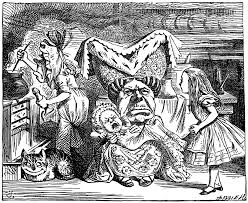
Pig and Pepper
The scene parallels the “Pig and Pepper” chapter in Lewis Carroll’s Alice’ Adventures in Wonderland, only there Alice comes upon a Fish footman outside the door of the Duchess, who is dodging saucepans and dishes flung by an irate cook. (The Cheshire Cat makes his first appearance in this chapter too, and on stage this is also where Jane Allison meets Chet Cheshire in person for the first time.)
Minister Fish, in addition to Carroll’s Fish Footman, is also based on Reverend Adam Clayton Powell, a prominent Harlem pastor who in the 1920’s railed against “moral degenerates”, claiming that sexual perversion among women had “grown to one of the most horrible, debasing, alarming and damning vices of present day civilization”. Roberta White, who is taking the Cook’s place in dish throwing outrage, is based on the White Rabbit, as well as the many flappers and jazzers of the Roaring Twenties who perhaps partook in more than they could handle socially and sexually. (Chet Cheshire is based in part on Pansy Craze entertainer Gene Malin).
Duchess Bentley takes her Carrollesque cues from Alice ‘s Adventures in Wonderland’s Duchess and Through the Looking Glass’ Humpty Dumpty for the most part. More importantly the character derives her historical inspiration from notorious, fabulous, and ultimately doomed Harlem nightclub singer Gladys Bentley.
“Get a whiff” of her daring, as channeled through Duchess’ verse and chorus in Speakeasy’s song “Swell”, the second part of which is included here (she shares the song with Julian Carnation and Chet Cheshire):
Swell Part 2 (demo recording)
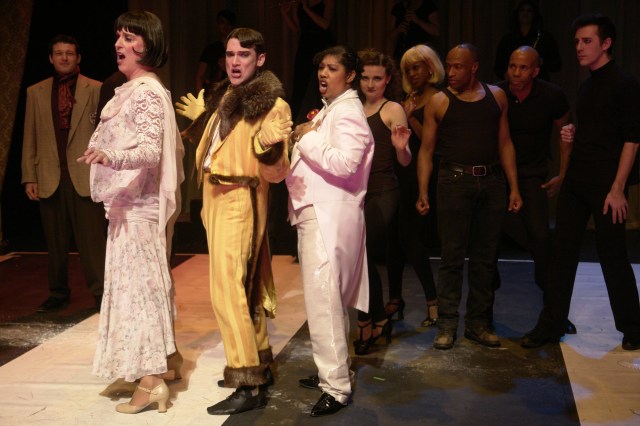
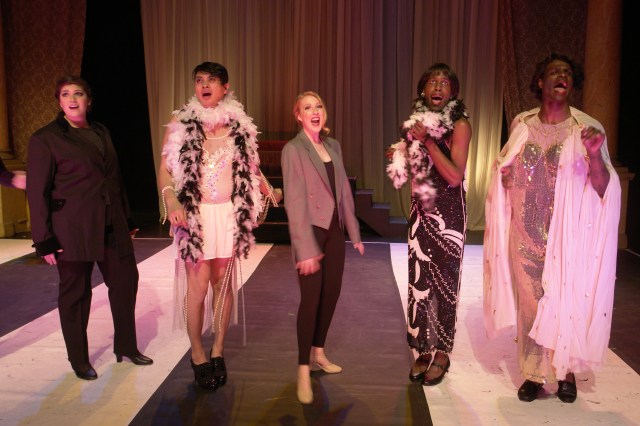
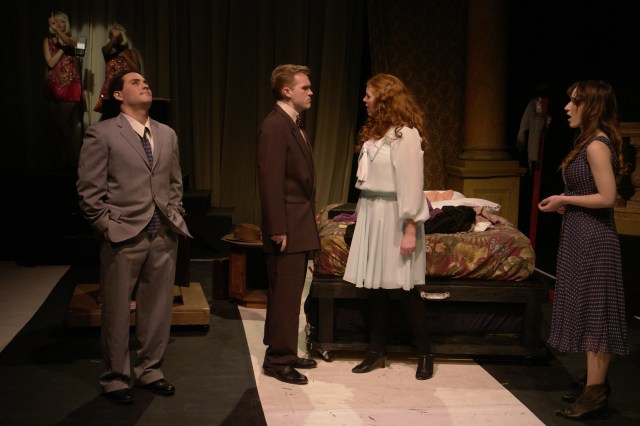
Julian Carnation, Chet Cheshire, Duchess Bentley (Tim Connell, Bri Molloy, Camille Atkinson) and Ensemble singing “Swell”
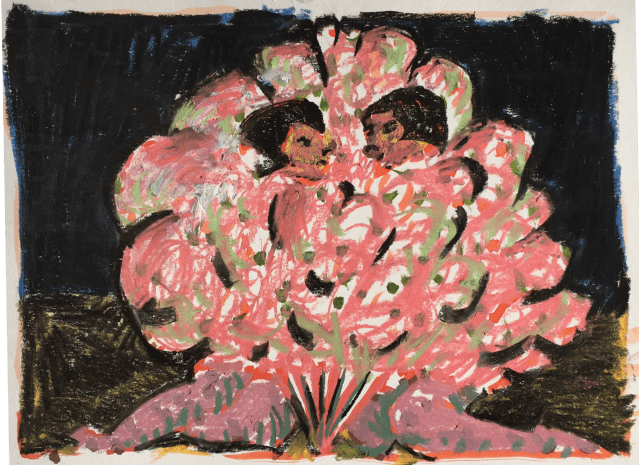
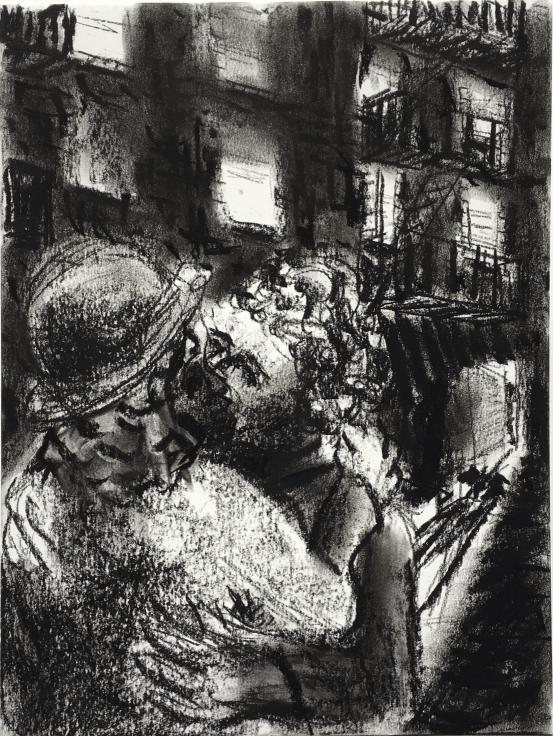
Peter Bonner is a New York based artist originally from Australia. We met as members of the choir singing the Ode to Joy in Carnegie Hall with the World Community Orchestra. He has been reading the libretto and listening to the music of Speakeasy for over a year now, and was inspired to create a series of artworks based on the musical and its themes. Here are pictures of much of Peter’s Speakeasy Art. You can see the artwork exhibited live in the lobby outside the Johnson theater at Theater for the New City while Speakeasy is in performance.
“One of the most wildly ambitious, inspired theatrical endeavors I’ve seen on an Off Off Broadway stage. Bursting with an excess of ideas and passion”
Gay City News
“Speakeasy”
Kayleigh Shuler and Matias Polar as Jane and John Allison
“Director Lissa Moira, choreographer J. Alan Hanna, and the large cast do an amazing job keeping everything rolling along in this theatrical equivalent of a three-ring circus.”
Talkin’ Broadway
John and Jane with Dean Kitteridge (Brian Michael Henry) and Roberta White (Bevin Bell-Hall)
At the Automat
“The score is an appealing mix of period jazz, swing, cabaret, Tin Pan Alley, and operetta. The lyrics, melodies, and orchestrations are surprisingly rich and sophisticated.”
“An offbeat, mind-blowing fantasia on identity, taboo romance, and queer culture circa 1930.”
“One of the most wildly ambitious, inspired theatrical endeavors I’ve seen on an Off Off Broadway stage. Bursting with an excess of ideas and passion.”
“The score is an appealing mix of period jazz, swing, cabaret, Tin Pan Alley, and operetta. The lyrics, melodies, and orchestrations are surprisingly rich and sophisticated.”
“No less compelling is the attention to historical detail. Dialogue is meticulously sprinkled with colorful period queer slang, like “dropping pins” (hinting about one’s homosexuality), “Vaseline Alley” (the Southeast corner of Central Park where the fairies gathered), “basketeering” (ogling a guy’s crotch), and “browning” (I’ll let you figure that one out).”
Gay City News is first out the gate with its review of Speakeasy. David Kennerley came to our first preview, which was rather rough after a difficult tech (things have come together much much better in the ensuing performances) and even so, he gives Speakeasy a pretty positive and constructive review.
I think Cole Porter had something to say about this:
Another Op’nin, Another Show
Another op’nin, another show
In Philly, Boston, or Baltimo’e
A chance for stage folks to say ‘Hello!’
Another op’nin of another show.
Another job that you hope will last
Will make your future forget your past
Another pain where the ulcers grow
Another op’nin of another show.
Four weeks, you rehearse and rehearse
Three weeks, and it couldn’t be worse
One week, will it ever be right?
Then out of the hat it’s that big first night
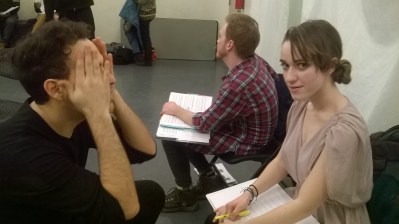
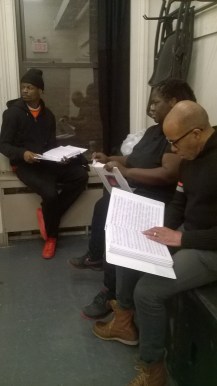
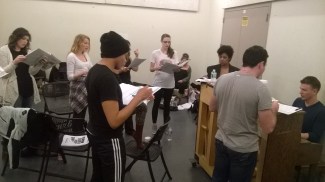
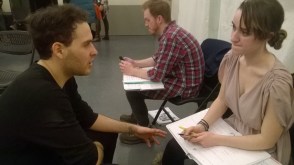
Camille Atkinson, who plays Duchess Bentley, based on Lesbian Harlem nightclub singer Gladys Bentley, joined us for the workshop and then added an impromptu post-workshop seminar for us, drawing on her years of experience in the contemporary Burlesque scene. (Read more on Duchess/Gladys here and here. A major two part article on Duchess/Gladys Bentley is in the works.)





















 Notes from a Composer