 “Girls Just Want to Have Fun” is the song that put Cyndi Lauper on the scene and to this day is the song she is most identified with, even though she has had many other hit songs since, recorded dance albums, standards albums and blues albums and recently became the first woman to win a Tony for writing both music and lyrics for the hit Broadway show “Kinky Boots”.
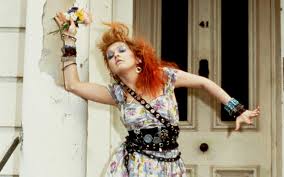
Yet “Girls…”, her first hit song, is the anthem that may always define her the most, a fact she herself tacitly acknowledged by recording not one but two distinctive cover versions. Naturally other artists have recorded their own cover versions, and they can be heard in all styles and moods. Interesting though is not only how many cover versions are sung by men, but that these versions are almost all more popular on Itunes than any cover versions recorded by women. Maybe it is just more fun to hear men sing “Girls Just Want to Have Fun” without change of pronoun or first person narrative.

So today, a few days before Thanksgiving, let’s give thanks to Cyndi Lauper’s many “Girls Just Want to Have Fun”, and the many guys having a variety of fun in her wake.
We’ll start with the original:
 And follow that up with Cyndi Lauper’s cover version featuring Puffy AmiYumi and lots of brass and Latin party flavor, retitled “Girls Just Wanna Have Fun”:

Lauper also recorded a second cover version, now titled “Hey Now (Girls Just Want to Have Fun)”, slowed down and groovy, with a strong Caribbean flavor. In more recent concert appearances, this or something like this is the version of the song she would perform when the time came during the encores to give “Girls” its expected due.

Recordings of Cyndi Lauper several early demo versions of “Girls Just Want to Have Fun” are circulating as well. This “Early Guitar Demo” is the most distinctive, and punky, and might be giving us an idea how the song was originally conceived. It includes several lyrics that didn’t make it into the pop version that would become a world wide hit.
 Let’s move on to the cover versions by other artists, and of the many cover versions of “Girls Just Want to Have Fun”, this somber piano ballad take on the song by Gary Laswell is definitely the most popular. It is listed as a “demo” and appears to have been considered but not included in his “covers” EP. Nonetheless it has become one of his most successful recordings. He sings it in first person narrative, just like Cyndi, which would make him the girl that wants to have fun.
 When I was researching Gay Culture of the 1920’s and 1930’s in preparation for writing “
 Except I discovered, a year later after a lot more research into pre-WW2 Queer history and slowly consolidating the various characters and story lines of “Speakeasy”, that I couldn’t remember where I had read that inspirational tidbit about Julian Eltinge. For a couple panicked hours I poured through my notes and various history books, frightening myself that I may have imagined the incident and erroneously built a whole character and plot development around a fiction I only believed was history.
 Maybe that is because his sexuality is in question and thus so is his place in Queer history. Julian Eltinge was by all accounts incredibly good at portraying women on stage. Believable. Entertaining. He performed in Vaudeville, Broadway, London’s West End and in Silent Movies and became very wealthy. However, unlike Julian Carnation in “Speakeasy”, Julian Eltinge, officially was straight. Although believed to be homosexual by many of his peers in the theater, Eltinge aggressively asserted his heterosexuality with extended engagements to women (he would ultimately never marry) and (likely staged) bar fights (methinks the lady maybe doth protest too much?). His personal life is shrouded in innuendo and speculation.
 The bestselling Author Rebecca Cantrell has posted an interview with me about Speakeasy on her blog. In it I reveal some tidbits about Speakeasy and a song demo that had not yet found their way to Notes from a Composer.

















 Notes from a Composer