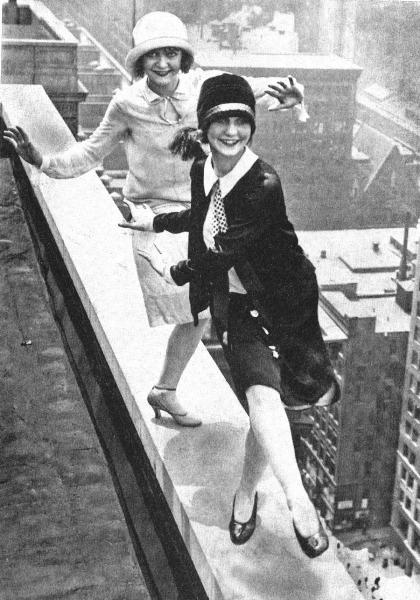
Part of the fun of researching 1920’s and 1930’s Queer subculture in New York City was coming across a wide variety of specialized slang and coded terms that flourished among homosexual men and women of the time. Some of these terms are solely of their time, some have survived into the modern era, albeit often with modified meanings.
Not surprisingly, for a social group that for the most part did not conduct themselves openly in society, a lot of these terms constitute a kind of secret language available only to those “in the club”. They describe sexual preferences and types, as well as particular places and activities important to homosexuals of the time.
Folding these terms into the libretto of “Speakeasy – The Adventures of John and Jane Allison in the Wonderland” was a lot of fun. For the most part the meaning of the words should be clear in context. However a little confusion can be fun too, as in this moment, when John Allison eavesdrops on a trio of Gay Florists and Julian Carnation:
FLORIST 1:
You can keep 42nd Street. Give me the Brooklyn Navy Yard.
FLORIST 2:
You and your seafood, Violet!
FLORIST 1:
That’s my crowd, Lily. When I promenade there, no flag’s at half mast!
JOHN:
Excuse me, fellas.
They still don’t see or hear him.
FLORIST 2:
I prefer Central Park. The Fruited Plain. Vaseline Alley. Always good for a holiday.
FLORIST 3:
Delicious. All those Muzzlers and Jockers milling about in nature. Smack in the middle of Manhattan.
FLORIST 1:
Rose, please! Only punks and gonsils there! You want a true Jocker, pick a sailor!
JULIAN:
Violet, I’m afraid you’re mixing metaphors now. Or at least, professions.
They all laugh.
JOHN:
It sounds like English, but it’s all Greek to me…
So, to continue the fun, below find a Glossary of the slang terms of the Prohibition era that (so far) have found their way into Speakeasy:
GLOSSARYof slang in SPEAKEASY, as used in 1920’s/1930’s New York City
Basketeering – visually appraising men’s crotches (like eggs in a basket).
I’ve discussed how certain characters are most likely to make the cut when the Kindergartners vote on their three chosen Fairy Tale Opera protagonists/antagonists. Dragons are extremely popular, being regularly featured, and populating two of the three Fairy Tale Operas last year, both as protagonist and antagonist (not terms, by the way, I use with kindergartners, in case you were wondering). Princesses are popular too; the third opera this year features a princess, as well as the King, her father.
But for the first time in all the years I have done Fairy Tale Opera with Kindergartners, a fox was chosen to be one of the three characters. It was a happy surprise for me. Only much later did it occur to me that the great success of a certain song, especially amongst the Kindergarten set who exercise to the tune as part of their classroom morning meetings, might have had something to do with the Fox’s election success.
Anyway, off to tell the story and play the songs the kids wrote:
THE PRINCESS AND THE SPELL
The Fox
THE FOX IS SNEAKY
THE FOX IS SLY
THE FOX IS A ROBBER
THE FOX LIKES GOLD
——
THE FOX WANTS TO STEAL GOLD FROM THE CASTLE
THE FOX WANTS TO KEEP GOLD IN HIS BURROW
THE FOX HAS AN ORANGE JACKET ON
THE FOX HAS A RED HAT ON HIS HEAD
THE FOX HAS GREEN BOOTS ON HIS PAWS
THE FOX HAS A WHITE TIP ON HIS TAIL
——
THE FOX IS SNEAKY
THE FOX IS SLY
THE FOX IS A ROBBER
THE FOX LIKES GOLD
——
Once upon a time, in a far off land, a king and his daughter the Princess lived in a beautiful castle. They had a lot of gold and were the richest in the land.
The Fox wants to steal the King’s gold and sneaks into the castle’s gold room one night. The Princess hears noise coming from the room and catches the Fox inside. The Fox does some quick thinking and offers the Princess a potion that, once she drinks it, will make it her birthday every day.
The Princess falls for the trick and drinks the potion. It is a magic potion, but not one that will make it her birthday every day, but one that puts her under the Fox’s spell. She is now forced to bring the Fox gold from the castle every night until it is all gone.
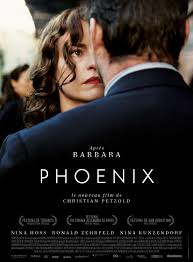
I attended a matinee screening of the German movie “Phoenix”. As the movie began and the screen was still black, I heard a lone upright bass picking out two notes a major sixth apart, followed by four more notes bounding down and back up to the sixth. A piano added isolated chords as a spare accompaniment. I recognized this melody. This was “Speak Low”, in a film noir-esque bass/piano version. I was quietly thrilled. “Speak Low” is the song I would name if I was ever forced to answer – gun to my head or not – the impossible question of what is the best song ever written. And in this movie it is being used as the main theme, the melody that will define and haunt this story set in post-war Germany as much as “As Time Goes By” haunts “Casablanca”.
Speak low when you speak, love
Our summer day withers away too soon, too soon
Speak low when you speak, love
Our moment is swift
Like ships adrift we’re swept apart too soon
Early on in “Phoenix”, the lead character, Nelly, a concentration camp survivor returned to Berlin after the war, listens to this recording of “Speak Low” on a phonograph:
I wondered how likely it was that Germans would have heard “Speak Low” after the war. The song was written in 1943 for the musical “One Touch of Venus” (music by Kurt Weill; lyrics by Ogden Nash), and was a hit in the USA. But Germans didn’t really start to discover Weill’s “Musik im Exil”, the French chansons and Broadway scores he composed after fleeing Nazi Germany, until the 1980s (my mother, the opera singer Catherine Gayer, was one of the first to introduce Weill’s American songs to German audiences in a cabaret program at the Berliner Festwochen in 1980).
Still, the theme of lovers having been separated by the horrors of war was already revealing itself in “Phoenix’s” narrative, so the use of “Speak Low” made sense, and it was possible a vinyl record could have made it’s way to Nelly’s friend’s possession. But why a mere piano vocal recording? And who was this awkward singer warbling with a thick German accent?
Turns out it is none other than Kurt Weill himself, from a recording never intended for public consumption, but a demo recording he made to help attract financial backing for “One Touch of Venus”. The recording wasn’t pressed on vinyl for public sale until 1953 (three years after his death).
So it is impossible that Nelly would have been listening to that recording in 1945. But it doesn’t matter. The choice of song is perfect for the movie, and that it is none other than Kurt Weill himself singing on the record, as if he were some aging German cabaret singer recording the latest American hit for post-war German audiences, casts a particularly haunting spell. I can see why the director Christian Petzold couldn’t resist using this particular recording of “Speak Low” to anchor “Phoenix”.
Various versions of “Speak Low”, the bass/piano rumination, a solo violin nightclub serenade, the Kurt Weill solo, will accompany the strange tale of “Phoenix”. But it will finally be heard in an incredibly dramatic fashion at the climax of the movie. The lyrics, the way the song is performed, and the reaction to the performance are as revelatory and devastating as any climactic movie confrontation you could imagine. There are not many non-musical movies that use the singing of a song so effectively, for whom the climax or turning point of the drama hinges on the performance of a song. One example that springs to mind is Doris Day singing “Che Sera Sera” to rescue her kidnapped child in Alfred Hitchcock’s “The Man Who Knew Too Much”. The comparison with Hitchcock is also apt because “Phoenix” bears a strong kinship with another Hitchcock masterpiece: “Vertigo”.
Roland Zehrfeld & Nina Hoss in “Phoenix”
Nelly (Nina Hoss) had survived the camps, but not without grievous wounds requiring facial reconstruction surgery. She seeks out her husband Johnny (Ronald Zehrfeld), who may or may not have betrayed her to the Nazi’s during the war. He does not recognize her; but he does offer this stranger who looks a lot like his (presumed dead) wife a deal: she will pose as Nelly, and as the imposter she will claim a large inheritance waiting to be claimed by the real Nelly, and they will share the money. Shell-shocked by her camp experiences, still desperately in love with Johnny, and uncertain whether he did betray her or not, Nelly goes along with the plan to become her own imposter…
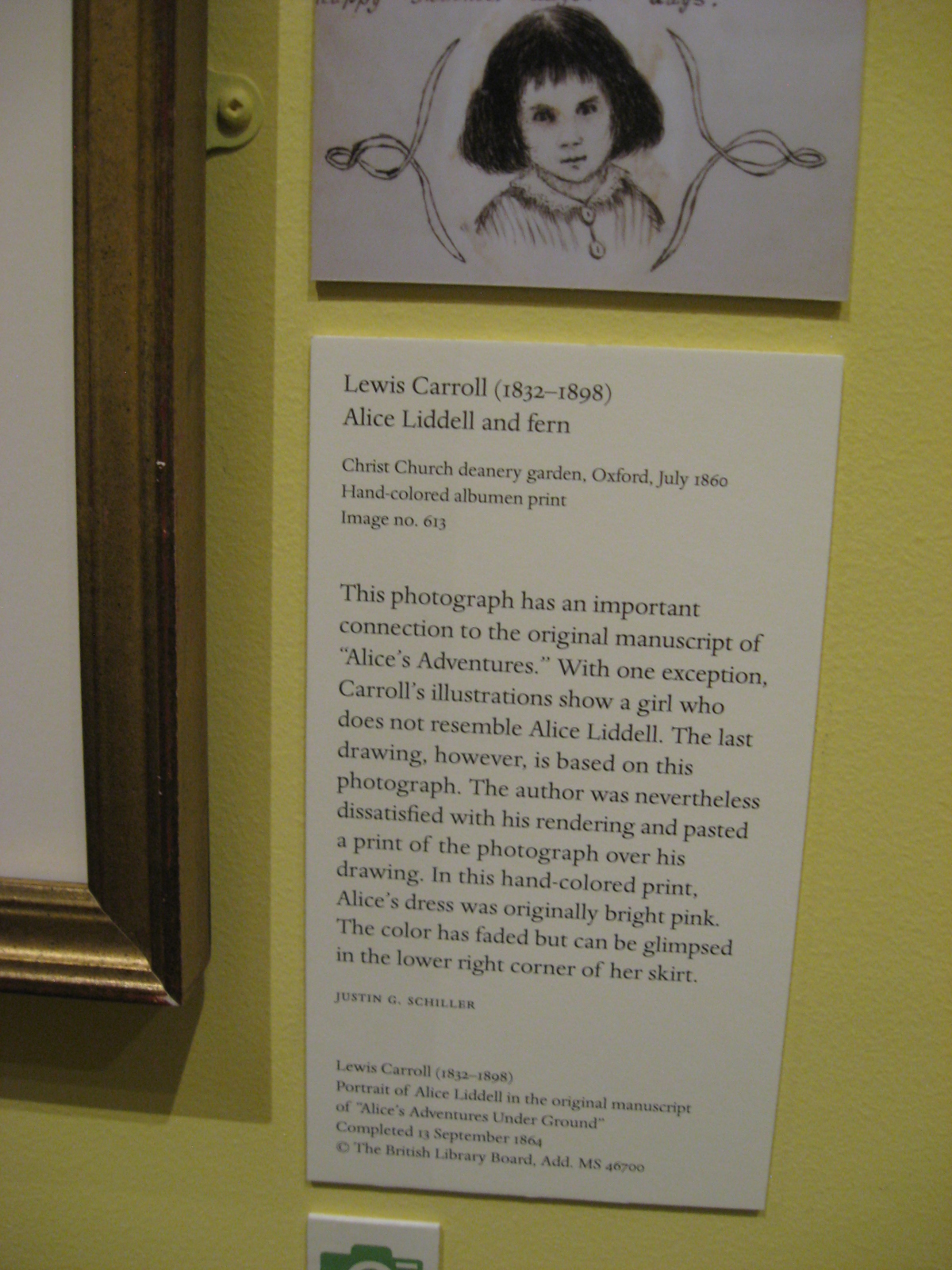
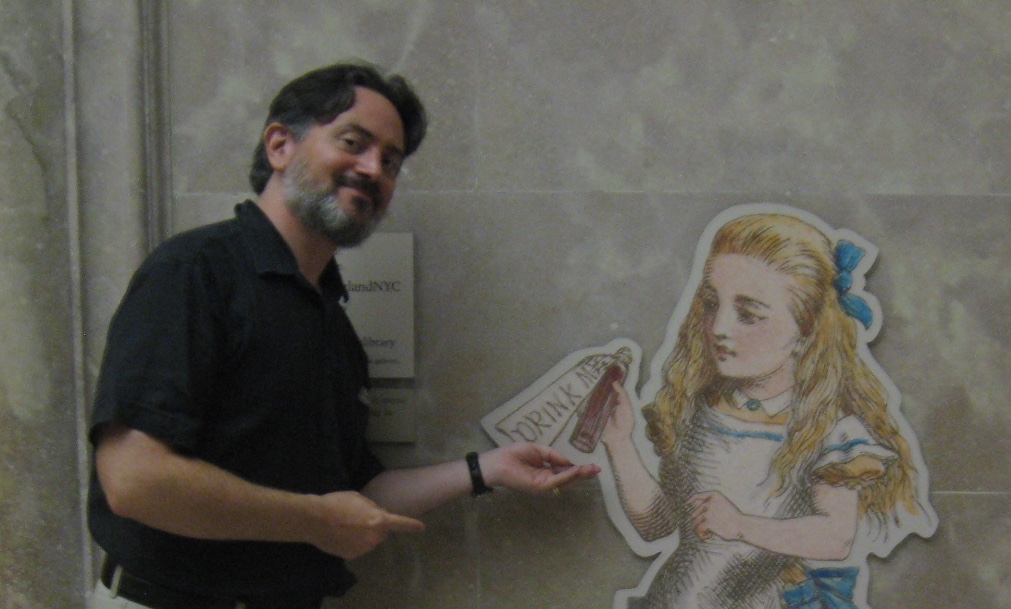
Yesterday my Speakeasy co-producer Kelly Aliano and I went to The Morgan museum to take in their Alice – 150 Years of Wonderland exhibit, and tour the ground floor of the magnate’s palatial home and library too. As Lewis Carroll’s Alice books are such a big part of my musical Speakeasy – the Adventures of John and Jane Allison in the Wonderland, it seemed very apropos to check out this exhibit and share some impressions on this blog. Photography was allowed but limited only to those items that are part of the Morgan collection and not on loan.
We joined a tour in progress. The volunteer guide regaled us with the story of how Carroll, who initially independently financed the publishing of his books, considered the first press run not up to his exacting standards. So a new edition was produced at great expense. The “spoiled” books were not scrapped, however, but were shipped out for sale in the US market. I guess what wasn’t good enough for home consumption was just fine for the uncouth Yankees.
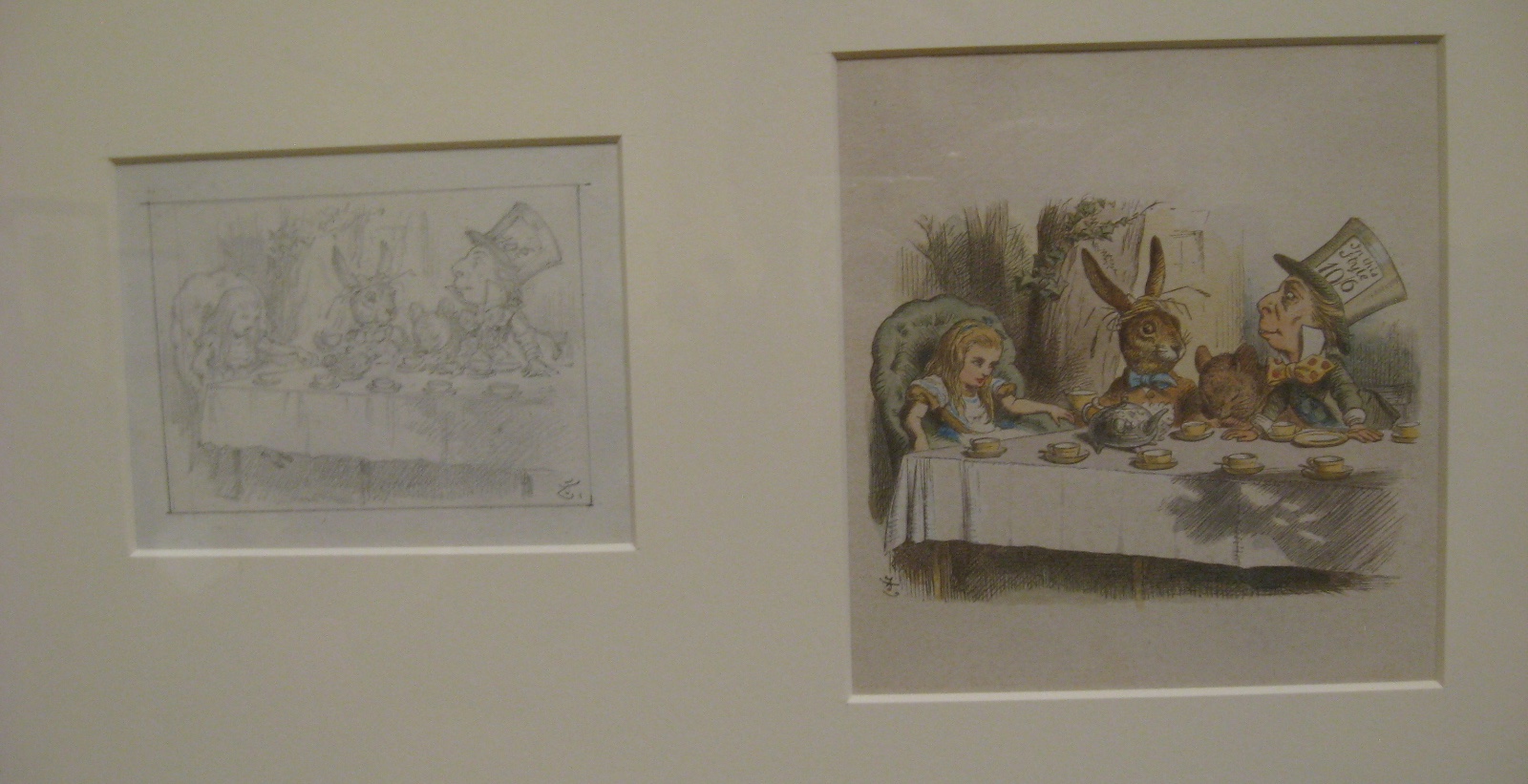
The exhibit focuses heavily on John Tenniel’s original illustrations, which in the guide’s (and my humble) opinion are the standard against which all future illustrations are (usually unfavorably) measured. John Tenniel, who lived to be 94(!), drew only in pencil, so any ink or colored in version of his work would be a copy, not necessarily a forgery but often mistakenly attributed to Tenniel. For “Alice’s Adventures in Wonderland” Carroll meticulously pre-planned subject and lay-out of all illustrations, and drew many himself. He was unsatisfied with the quality of his own work, and thus turned to Tenniel. When Carroll hired Tenniel to illustrate the second Alice book “Through the Looking Glass”, Carroll had so much confidence in Tenniel’s work that he gave the artist free reign to choose and design the illustrations. Carroll even excised a chapter called “The Wasp in the Wig”, when Tenniel insisted it was not possible to illustrate such a thing.
Left: Tenniel hand-colored proof of the climactic attack of the cards. Right: an unknown artist’s copy
A highlight of the exhibit was the screening of a surviving print of a 1903 silent movie short of Alice in Wonderland. Very few movies of that era survive, so this is something special, especially considering that it shows that certain camera tricks and special effects were already in use so early in film making history (the screen picture in The Morgan is brighter than this YouTube embed. The shot where Alice “shrinks” or “grows” shows the background against which she is changing size more clearly, for example):
For shame, Danny, plying a minor with dubious potent portables!
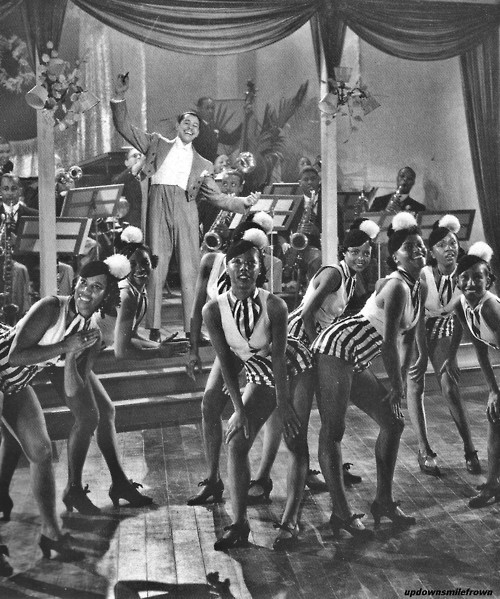
“Going slumming in Harlem”. This is what rich and middle class swells and flappers, socialites and the elite, white folks from downtown Manhattan, called going uptown to enjoy the “Negro Vogue” flourishing in nightclubs all over Harlem during the late 20’s / early 30’s.
In the song “Harlem”, featured above, the character Roberta White and her entourage of beaux and flappers meet her neighbor Jane Allison in an automat*. They are on their way to the Wonderland club in Harlem and are fortifying themselves with an assortment of “Eat Me” cakes and “Drink Me” juices laced with illegal alcohol from their personal flasks. Jane has been following Roberta to try to make amends after giving her an unexpected kiss. Roberta doesn’t appear to recognize Jane, but still encourages her to join the fun uptown.
This scene and song is from the musical “Speakeasy – The Adventures of John and Jane Allison in the Wonderland”, a Roaring Twenties riff on Lewis Carroll, with Jane as one of two newlywed Alices and Roberta standing in for the White Rabbit, now a flapper carrying flasks of bathtub gin and obsessed with the “Negro Vogue”.
Arguably a product of the Harlem Renaissance, the “Negro Vogue” was a nightclub craze that brought black performers to “mainstream” white audiences. Sometimes this meant Time Square area nightclubs “imported” black acts downtown. To a great extent though the audiences flocked uptown to big new Harlem nightclubs like the famous Cotton Club, where black performers entertained a whites only crowd.
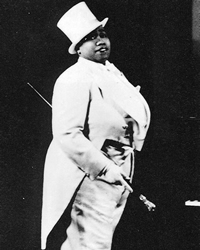
Gladys Bentley
Yet there were also Harlem nightclubs like the Ubangi Club that permitted a mixed audience. Gladys Bentley, an infamously openly lesbian singer, performed at the Ubangi Club. Her Speakeasy counterpart Duchess Bentley will cross paths with both Roberta White and Jane Allison, with dramatic consequences, but that is grist for another post.
There were also smaller, for-those-in-the-know Harlem speakeasies where interracial couples could safely mix, including same sex interracial couples. Downtown these kind of interactions were just not possible. An interracial couple (of any gender configuration) simply dining together might not have gotten served in a midtown restaurant in those days.
That Meryl Streep is one of the great actors of our time is common knowledge. But what should now be considered obvious is how she is also the great movie musical performer of the modern age. That statement may be countered with the assertion that she’s only been in two labeled-as-such movie musicals, Mamma Mia and Into the Woods (and Mamma Mia is arguably a jokey juke box musical which flaunts the casting of non-musical performers), but look closely at Streep’s film catalog and you will find her give a wealth of great and diverse musical performances, especially recently. And just like classic Streep is famous for each new accent she would employ in movie after movie, musical Streep employs a new voice, with distinctive performance qualities, for each singing role.
Her current musical offering is Ricki and the Flash, opening this Friday. The movie is being marketed as a family comedy-drama about a mother (Meryl as Ricki), who abandoned her family to pursue her rock star dreams. I haven’t yet seen the film (yet most definitely will this weekend), but I have read that Streep sings at least a dozen songs with her band, including Lady Gaga’s Bad Romance (that kinda blows my mind). In this clip she sings an original tune, accompanying herself on the guitar. Listen to her “rock singer” vocals on this ballad. There’s a touch of Bonnie Raitt there:
Ricki and the Flash – “Cold One”
Since we are starting with Streep’s current musical performance, let’s explore the others going back in time. Which brings us to her performance as the Witch in Into the Woods, the only strictly-speeking-if-you-are going-to-be-a-total-anal-stickler-about-it traditional musical movie on the list (as well as the vehicle for Streep’s 19th Academy Award nomination). A lot of people reacted with surprise at how well Streep sings in Into the Woods. No one who has been paying any attention (see the rest of this list) should have doubted her technical and expressive range and power. She does however raise the bar for herself from a purely singing perspective, performing with even richer vocal quality and resonance than heretofore heard, both in her head voice (see “Stay With Me”) and her belt (see “Last Midnight”).
Into the Woods – Stay with Me
Into the Woods – Last Midnight
As far as I’m concerned Mamma Mia is a movie musical as much as any other. Many sniff their noses at this juke box musical with its goofy storyline and purposefully karaoke style singing. But to me Mamma Mia was a very welcome happy pill when it opened the fall of 2001 in post-9/11 New York, and the movie captures its knowingly ridiculous appeal perfectly. Besides, those ABBA songs are great. Even the lyrics are great, except of course for those occasional phrases of questionable syntax.
Meryl Streep throws herself into the proceedings with loony abandon. Her vocals are fun and determinedly unpolished. Yet when she lets loose in “The Winner Takes It All”, the emotional power of her performance is stunning, and her singing chops clear for anyone to hear. She even gives a linguistically lethal line like “A big thing or a small” her all.
Martin Sherman’s classic play “Bent”, about homosexual persecution in Nazi Germany concentration camps, has received a highlyacclaimed major revival directed by Moises Kaufman at the Mark Taper Forum in LA.
“Bent” is credited with bringing the barely discussed subject of Nazi persecution and mass murder of homosexuals to mainstream consciousness when the play premiered 1979 in London starring Ian McKellen. The 1980 Broadway production starred Richard Gere. The criminally little seen movie adaptation from 1997 starred Clive Owen as well as no other than Mick Jagger in the role of the drag singer Greta.
In the Mark Taper Forum production Greta is played by no other than Jake Shears, the lead singer from my favorite Queertastic Pop/Rock band Scissor Sisters. Shears was also commissioned to compose new music for the song “Streets of Berlin”, which Greta sings in the play.
Jake Shears as Greta sings “Streets in Berlin” from Bent:
The obvious and appropriate influences of late Weimar era composers like Kurt Weill and Hanns Eisler are unmistakeable. I am also forcibly reminded of Mark Blitzstein’s music for his 1930’s Agitprop musical “The Cradle Will Rock”, due to the particular spikiness of the arrangements (and not merely the English language). I also find it interesting that Jake Shears sounds a bit like Rufus Wainwright to me here, not something I would generally say about Shear’s vocal stylings as a Scissor Sister. The style of the song may have something to do with that.
Mark Twain. Pompeii. An orphan melody. What connects these three disparate things?
Wait, what do I mean by an orphan melody?
A week ago Ed plunked the latest Smithsonian magazine next to my breakfast dishes and pointed to its front page article: “The Fall and Rise and Fall of Pompeii”, a richly detailed and illustrated piece about the history of Pompeii’s destruction, its discovery hundreds of years ago, and the new destructive peril it faces because of mismanagement and corruption by the Berlusconi government, plus recent efforts to reverse the second falling of the ancient Roman city. Ed said: “You could write about this article and your song ‘Remember Me’ from the Mark Twain musical.”
“Remember Me”, the ruins and long lost inhabitants of Pompeii seem to be calling out yet again as their long lost glory and horrible fate, once unearthed to great acclaim, now appears fated again to suffer destruction not due to a massive volcanic eruption but to garden variety human neglect and incompetence.
So let me explain “Remember Me” and how this orphan melody became part of a Mark Twain musical, and why a Mark Twain musical describes the fall of Pompeii.
“Orphan Melodies” are what I call tunes I’ve composed, usually idly humming to myself, which stay with me, haunting me. Again and again I will think of those unfinished melodies. Some have been with me for over thirty years even, knocking on my consciousness every now and then so I may sing them again to myself, perhaps with a word or phrase of lyrics attached. Eventually some find a home in some musical project. They become complete songs with lyrics; they are performed. Once that happens, these melodies stop haunting me. They’ve found completion.
The melody I would later call “Remember Me” came to me on holiday in Israel in 1993. I was celebrating Passover with my parents and my cousins at a Kibbutz on the Mediterranean. While I took a walk by the sea, this wistful, romantic melody came to my head. Unusually for me, it sounded not like a sung melody, but a tune played on the piano. Even more unusual was that I didn’t hear just the melody line, I also heard accompaniment figures that seemed inextricably tied to the melody. I imagined this was the love theme of a Gay romantic movie (ironically I would meet Ed and embark on my first full fledged Gay romance myself only a month later). I located a piano and quickly found the melody and the accompaniment figures on the keyboard.
Remember Me piano theme
I didn’t think this piece would be a song. It sounded like a piano piece to me. For years I would play its themes whenever I found time to play for pleasure, “noodle about”, on any given piano, but the music would never evolve beyond the main theme and the secondary theme you hear in the above track. I would play the A theme, the B theme, then repeat, but never found satisfying ways to develop the ideas as a complete solo piano piece. I toyed with the idea of turning it into an Evocation, a viola piano duet for Ed, but that didn’t seem right either (although now that “Remember Me” is a song, Ed and I have played it for fun, substituting the vocal line with the viola).
In 2006 the Metropolitan Playhouse announced that its second annual Literary Theater Festival would focus on Mark Twain. I already had had a good experience composing and performing “The Tell-Tale Heart – a musicabre” for their Poe Festival the previous year. What might I attempt with Mark Twain? My first thought was this title: “beTwixt, beTween & beTWAIN” (and its spell-check defying lettering). What kind of Mark Twain musical would have that title? How about one that adapted not his famous novels, but many of his lesser known short stories into a revue style musical? I started reading a whole lot of Twain short stories and finding those I liked which either sparked new song ideas or attached themselves winningly to existing orphan melodies for further development. Eventually Act One of “beTwixt, beTween & beTWAIN” would focus on stories from Twain’s frontier experience in the American West, and Act Two would adapt “The Innocents Abroad”, Twain’s episodic account of the first American cruise ship journey all around the Mediterranean.
The summer of ’84 I stayed home alone in Berlin while my parents left on vacation. It was my choice to spend the six week break between my junior and senior high school year spending 8-14 hours every day working on writing the arrangements for a 15 piece orchestra for my musical Once Upon a Frog. I had been told that without these orchestrations Once Upon a Frog would not be considered as the John F. Kennedy School’s next English language musical production. I might as well have been told if I managed to pick all the lentils out the ashes I would be allowed to go to the ball. The promise was an empty one, but I didn’t think about that and sacrificed my summer to write orchestrations that would never be played.
I have already written about growing up in West-Berlin, Germany, loving musicals and participating in the musical productions at the German-American school I attended. Shortly before my 15th birthday I started writing a musical of my own, Once Upon a Frog. Within a few months I’d invited our school’s drama director Mr. Bishop and the current music director for school musicals Mr. Poland to my home and, with the help of my opera singer mother, performed some of the songs from Once Upon a Frog for them, in hopes of winning them over to the idea of it being performed on John F. Kennedy School’s main stage, much the same way the high school had put on Bye Bye Birdie, Guys and Dolls or Oklahoma previously.
I was writing a show suitable for our school stage, with lots of leading solo singing parts (ten, I recall) and a big chorus, to provide students with as many performing opportunities as possible, just as previous musical productions had done. There tended to be a total of about 35 cast members on stage each time JFKS put on a musical. High School musical productions were my whole world. I lived for them, performed in them, made my friends in them. It was my highest aspiration at the time that a musical I created would be produced at the John F. Kennedy School.
Mr. Bishop offered to meet with me regularly to help work on the script of Once Upon a Frog. By the time I had completed a piano/vocal score and libretto I was in 11th grade, and a new teacher had been hired to act as music director for JFK S’ musical productions. This was Mr. M– . I would rather not give his full name.
Mr. Bishop told me we would need Mr. M– to agree to put on Once Upon a Frog as the school’s next musical in my senior year. So I told Mr. M– about my show and offered to play or give him the score. Mr. M– told me he could not consider doing Once Upon a Frog unless it could be done with the same kind of full orchestra we had just used for our most recent musical production South Pacific. That had been a 15 piece orchestra: flute, three clarinets, alto saxophone, two trumpets, trombone, percussion, piano, two violins, viola, cello and double bass. Mr. M– told me I would have to provide him with a fully orchestrated score before he could even consider whether to agree to music direct Once Upon a Frog.
Now, can we just sit back and raise our eyebrows at the unreasonableness of this demand? No Broadway producer, or theatrical professional of any stripe, demands to see a fully orchestrated score to evaluate a musical’s viability. They look at the script. They look at a piano/vocal score. Heck, most Broadway musicals are not even orchestrated by the composers themselves. Even granting the importance Mr. M– placed on leading a 15 piece orchestra during the high school musical performances, the ethical thing to do would have been to evaluate Once Upon a Frog’s script and songs, make a preliminary yes or no decision and, if it’s a yes, then deal with the issue of orchestrations.
It is now obvious to me that Mr. M– had no intention of music directing a student written musical regardless of its quality. But he also didn’t want to be the one to say no. He figured it was highly unlikely a 17 year old would write out orchestrations for a 15 piece orchestra for a full length musical with nearly 20 songs, all by himself. As unlikely as picking a bowl’s worth of lentils out of a heap of ashes. I would fail on my own and the question would be moot. He wouldn’t need to say no.
E. L. Doctorow, one of the giants of contemporary literature has passed. I have read nine of his twelve books, a ratio and record I have equaled in passion and loyalty with only two other contemporary authors, John Irving and J. K. Rowling. I intend to catch up with those three as of yet unread Doctorow books (I love books but I am not a voracious reader and my “want-to-read” list only keeps growing…).
E. L. Doctorow’s most famous work, “Ragtime”, was the first “grown-up” book I read. I was either ten or eleven years old when I picked up my parents’ already well-worn paperback edition. I was enthralled by the sprawling historical fiction that mixed historical and imagined characters and events in a glorious literary melting pot. The prose was intelligent and the storytelling complex, yet the language was not only deceptively easy to read, it practically pulled me along. I wasn’t following the text, it was taking me along on a ride. And what a ride! Such a sprawling epic of the beginning of the American 20th Century, full of colorful, diverse characters and incidents! As such Ragtime made an excellent introduction to sophisticated adult literature for a boy who was a casual book reader at best.
I quickly moved on to Doctorow’s debut novel, the wry western “Welcome to Hard Times”, and then hit a wall when I attempted “The Book of Daniel”. Here Doctorow’s prose changed completely. It was too dense and difficult for me at that age. I learned that Doctorow was a writer who would change literary styles and voices for each novel, sometimes quite dramatically. His most popular historical novels like Ragtime or The March or World’s Fair are written in beautiful prose that effortlessly draws you in to a richly told tale. Loon Lake’s prose, like The Book of Daniel, was tougher and dense. City of God made heavy intellectual demands, changing literary styles again and again within itself.
My most sensually delightful experience with E. L. Doctorow was reading Billy Bathgate. Billy Bathgate has sentences that stretch out over half a page; but instead of losing the thread of the thought as I might with other writers’ over-long constructions, reading Doctorow’s Billy Bathgate sentences was like swimming along in a delicious stream of thick and smooth honey mead. I’m not kidding, it really felt that visceral to me.
But Ragtime will probably always remain my favorite E. L. Doctorow novel, understandable considering the impact it had on me at a young age. I actually haven’t reread it yet since then (perhaps I should or perhaps I should not mess with the childhood memory). I did see the movie version and the musical adaptation. I remember my parents and me being disappointed with the movie Ragtime. Perhaps unconnected to the novel it would be a fine movie, but I remember how jarring it felt to see whole lead characters and story lines from the book excised while minor characters and incidents from the book took up huge amounts of screen time. The movie Ragtime took elements from the book but didn’t capture its scope or point of view.
Granting how difficult it may be to adapt a sprawling historical novel for the screen successfully, it is probably even harder to do so for the musical stage. But the musical Ragtime succeeds where the movie doesn’t, translating the stories and the scope and the ideas of the novel brilliantly for the stage.
Prologue – Ragtime
From Ragtime’s opening number, not the original Broadway production, but representative
The opening number of the musical Ragtime musically and dramatically brilliantly sets up the dynamics of the story, introducing the three major population groups – upper class, African-American and Immigrant – that will define the narrative, all the lead characters who will dominate the plot as well as real-life historical characters who will influence events. After the seven minute mark all the various ethnic and social groups have been mixed up by Graciela Daniele’s brilliant musical staging; but they then recoil at this “melting” together back into their constituent groups, which then engage in a kind of trio dance off between three antagonistic mass organisms. This was a masterful moment of staging in the original Broadway production of Ragtime, a musical that is, as far as I can tell, only one of two artistically successful Broadway musical adaptations of sprawling historical epics (that world-wide phenomenon with the French title, you know the one, is the other).
Ian McKellen just quoted Shakespeare to make a strong point about Immigration.
Marc Maron interviewed Ian McKellen on the WTF podcast. Maron confessed he had trouble understanding Shakespeare, and McKellen suggested Moran may have not yet heard Shakespeare spoken by someone who knew what they are doing. And so McKellen made sure to recite a Shakespeare speech for Maron, winning him over to the fact that yes, Shakespeare can be understood when you listen to a great actor.
The section of “Sir Thomas More” in Shakespeare’s hand.
Maron would later describe the performance, in fact the whole interview, as “wonderful”. But it was also rather sly. Of all the Shakespeare speeches McKellen could have recited, he chose a speech from the play “Thomas More” on which at least a half dozen different playwrights are believed to have had a hand in writing. The section McKellen quotes from is almost certainly in Shakespeare’s hand, since it is one of the few Shakespeare selections from which we still have a copy in his original handwriting.
But why quote a speech from Shakespeare that isn’t even from one of his (completely) own plays? Perhaps because in addition to being beautifully written, it is also a speech about Immigration, specifically addressing those in the native population who would want to get rid of “those immigrants”. As such it carries a powerful message.
And so Ian McKellen (who just happens to share a birth date with me, quite incidentally, and not to the point, but I can’t help it, that tidbit tickles me!) managed to make a strong moral point, important to the current social and political situation in the USA and Great Britain, and indeed most of the world today, merely by doing what he is most famous for, reciting Shakespeare beautifully. He didn’t actually make any incidental remark about current affairs on immigration, but it wasn’t necessary. He let Shakespeare carry the message, underlining it by his choice of text and his peerless delivery.
Here is the pertinent part of the interview, including McKellen’s recitation; and below selections from the text (you’ll note that McKellen skips over a few lines in the middle):
———
MORE: Grant them removed, and grant that this your noise
Hath chid down all the majesty of England;
Imagine that you see the wretched strangers,
Their babies at their backs and their poor luggage,
Plodding tooth ports and costs for transportation,
Every year when I start the Fairy Tale Opera project in Kindergarten (at the Brooklyn Children’s School), I ask the class to make a long list of characters that appear in fairy tales. Then the kindergartners choose three characters around which to build their original fairy tale (They also choose two places and one type of magic). Two out of three classes will invariably choose Dragon as one of their three characters (the second most popular character is Princess). This year is no different. Two of this year’s three Fairy Tale Operas feature dragons. As well as wizards. But where one class chose a mermaid as their third main character, the other chose a knight. And the stories as well as the characterizations of both wizard and dragon could not have been more different between the two classes. I already shared the first class’ mermaid’s tale of woe, bothered and besieged by a covetous wizard and hungry dragon. Let’s now tell the Tale of the Dragon and the Wizard Who Save the Village:
THE WIZARD AND THE DRAGON
THE WIZARD AND THE DRAGON (4 tongue clicks)
THE DRAGON AND THE WIZARD (4 tongue clicks…)
——
THE DRAGON DRAGON IS HELPING THE WIZARD
THANK YOU THANK YOU FOR HELPING ME
THE WIZARD WIZARD IS FEEDING THE DRAGON
THANK YOU THANK YOU FOR FEEDING ME
——
THE WIZARD AND THE DRAGON
THE DRAGON AND THE WIZARD
——
THE DRAGON HELPS THE WIZARD MAKE POTIONS
THE WIZARD HELPS THE PEOPLE WITH POTIONS
THE POTIONS HELP THE PEOPLE WITH PROBLEMS
THE WIZARD HELPS THE PEOPLE WITH MAGIC
——
THE WIZARD AND THE DRAGON
THE DRAGON AND THE WIZARD
——
THE DRAGON DRAGON IS HELPING THE WIZARD
THANK YOU THANK YOU FOR HELPING ME
THE WIZARD WIZARD IS FEEDING THE DRAGON
THANK YOU THANK YOU FOR FEEDING ME
——
THE WIZARD AND THE DRAGON
THE DRAGON AND THE WIZARD
The wizard lives in a cave with his friend the dragon. The dragon’s fire helps the wizard make potions which help the villagers get better when they are sick.
The nearby knights of the castle however are scared of dragons and when they realize there is one living in the cave they want to get rid of it.
The knights attempt to force the wizard to give up the dragon. The wizard tries to convince the knights that this is a good dragon, but they don’t believe it.
Then suddenly there is a cry: the bad knights are coming!
Jane Allison goes down the rabbit hole. John Allison slips through the looking glass. Or rather a Prohibition era version of rabbit hole and looking glass, as employed in the musical “Speakeasy”, a roaring twenties riff on Lewis Carroll’s Alice books. Carroll’s Alice makes these trips into Wonderland out of boredom and curiosity. For Jane and John Allison there is what scriptwriters often call an “inciting event” which helps propel Jane towards her rabbit hole and John through his looking glass. Jane kisses her neighbor Roberta White. John has sex in a public restroom.
Before these erotically inciting events we have been introduced to John and Jane Allison as a reasonably happy and perhaps sexually naïve newlywed couple. They had already experienced what I jokingly called their first “Twilight Zone” moment, hinting at the Wonderland magical realist fantasy to come, when the crooner Chet Cheshire (“Speakeasy’s” version of the Cheshire Cat) is heard singing the song “Keep Me Warm” on the radio, while the audience is treated to a quick theatrical montage of John’s day at work and Jane’s day alone at home.
“Keep Me Warm” is a song that I had rattling around in my imagination for many years, one of the “Orphan Tunes” that helped inspire the writing of “Speakeasy”. It very much sounds like a song from the 1920’s employing language in the lyrics typical of that era. But these lyrics are rather more explicit about cruising for one night stands than even Cole Porter would have dared to detail in those days (although Porter’s sly lyrical evocations of alternative sexual behavior is certainly an inspiration to me; all hail Cole Porter!).
Keep Me Warm
Lyric excerpt from “Keep Me Warm”:
I FOUND MYSELF WAND’RING ALONE IN THE DARK
UNTIL I WAS SUDDENLY STRUCK BY THE SPARK IN YOUR EYES
Today is my husband Edward Elder’s birthday. He is the mustachioed fellow in the picture above. One of my birthday gifts for him is a new viola/piano duet. He plays the viola, I play the piano. It has become a tradition in our relationship that I compose a new viola piano duet for him every year for his birthday. I call these pieces “Evocations”. Today Ed will receive Evocation XXII.
Evocation I was composed in 1994, a little over a year after we had started dating. At the time I still wrote my scores by hand with special pencils that were darker than your standard #2 pencil (I liked #5 pencils). By 1998 my then employer for teaching artist work insisted I start writing out scores on the computer, and I learned how to use the Finale ’98 music scoring program. I didn’t upgrade from Finale ‘98 until last year (which gives you an idea of how resistant to technological change I can be before finally making the leap forward… and then probably getting all resistant yet again). I now work with Finale 2014 and decided to write out computer printed versions of the first several handwritten Evocation scores.
The original handwritten Evocation I
One positive feature of the upgrade is the vastly improved sound in the playback function. The string instrument actually sounds much like a real string instrument, not some screechy synthesizer alien. Even on my recently purchased sophisticated keyboard I find the string sounds, especially the solo string sounds, less than desirable (which is why I don’t use them as much as I wish I could on the Speakeasy demo recordings). But the Finale 2014 viola almost convinces me it is the real thing. Now, it is far from perfect, you can probably still tell that it is a machine playing, not a human. There is no such thing as great subtlety or feeling or give and take on timing (the crescendo and diminuendos in the first two and last two measures leave much to be desired, as does the computer’s apparent disregard of the direction “Largo” – ah, well). But I think it is OK enough to share the track with you here. Someday I would like to record these babies with professional musicians in the studio. Someday when I have the resources…
And we are back for the final installment of our musical and photographic excursion into the Spreewald(lieder) – Spree Forest (Suite).
(Head here and here and here for the first three parts.)
The Duo Elysée performed Spreewaldlieder in concert on numerous occasions in Germany. My parents and many friends in Germany attended some of these concerts, but I was not in the country for any of them.
My niece Linden happens to play the harp and decided to do a concert of the Spree Forest Suite as her senior harp project with another college senior who played the flute. An army of my in-laws attended that concert at Linden’s college graduation, but I was unable to leave New York because of performance commitments of my own.
So Spreewaldlieder has been performed many times but I myself have never heard it live. To finally hear what I have composed I have relied on the studio recording of the suite Duo Elysée included on their cd “Reisen in Fantasie und Gegenwart” (“Journeys in Fantasy and Present Time” – email CDRoloff@gmx.de to order a cd).
Meanwhile Ed and I have visited the Spreewald at least three times already.
SPREEWALDLIEDER – SPREE FOREST SUITE (conclusion)
X Wiesenblüten – Wild Flowers
This piece gave me the opportunity to employ a harp effect that has one of the coolest names in music, the bisbigliando. The bisbigliando (I just had to type that again) is a rapid tremolo between two or more strings played quietly in the middle or upper registers of the harp. I of course asked the harpist to play the bisbigliando (weee!) with both hands on all seven pitches of the set scale, while the flute plays a low floating tune. Then I found a way to employ harp harmonics again.