This lovely glass trophy came in the mail last week. I almost didn’t expect it even though I’d been notified of the win. But the Vienna Script Awards operated differently from most awards bodies and film festivals I know by inviting me to submit for free – somehow they had heard of me and my script through the grapevine – and then promptly awarding me their top prize and offering to send me their trophy for free, from Austria nonetheless (some awards bodies will send you a certificate of winning but make the trophy an optional item you pay for yourself, or at least ask you to pay for the shipping yourself.)
So to achieve recognition with absolutely no monetary strings attached from submission to statuette, that is something to note. Thank you, Vienna Script Awards!

But what is “Prelude to a Death”, the script that won the award? This is the first time I mention this project on my blog. But I have been working on this original feature length script – a gothic ghost story unlike anything you have heard before – for a while, and am now ready to shop it around, as they say.
Which has included submitting the work to a handful of festivals / awards groups that accept unproduced screenplays. The response so far has been pretty good. Here is a handful of additional award certificates (if not tangible trophies) “Prelude to a Death” has received:
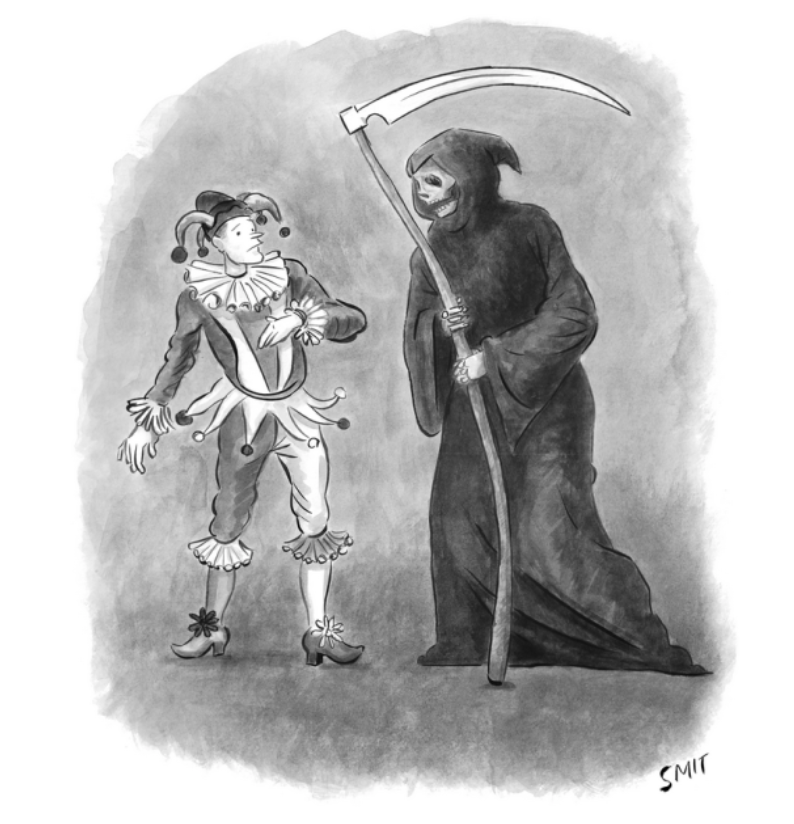
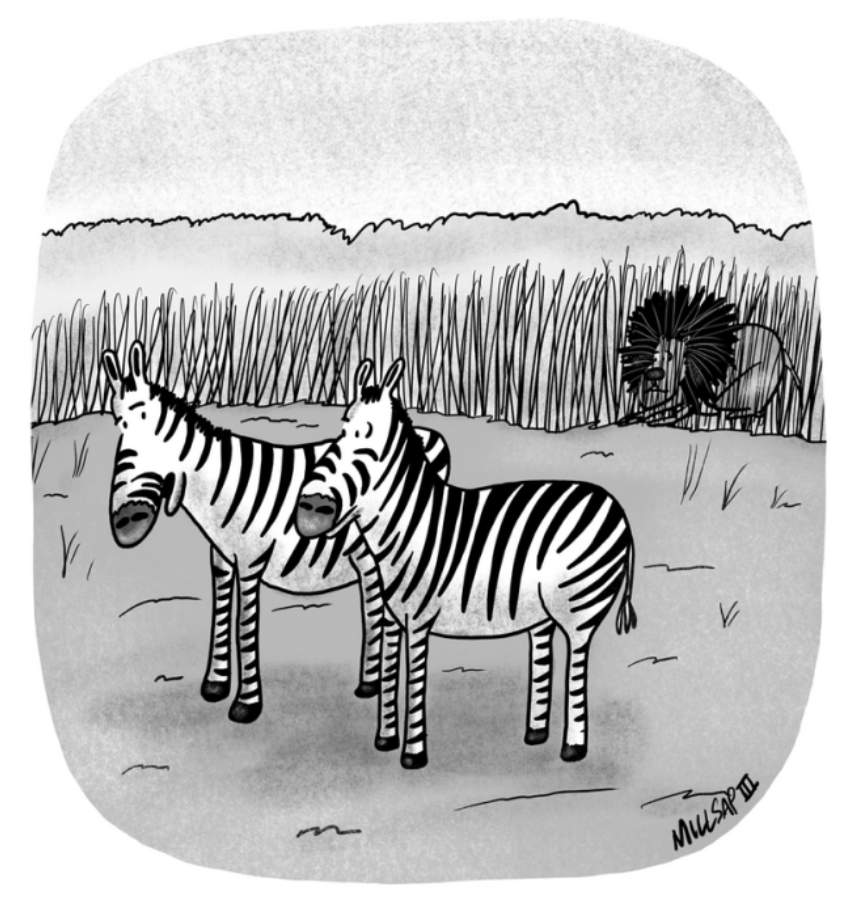
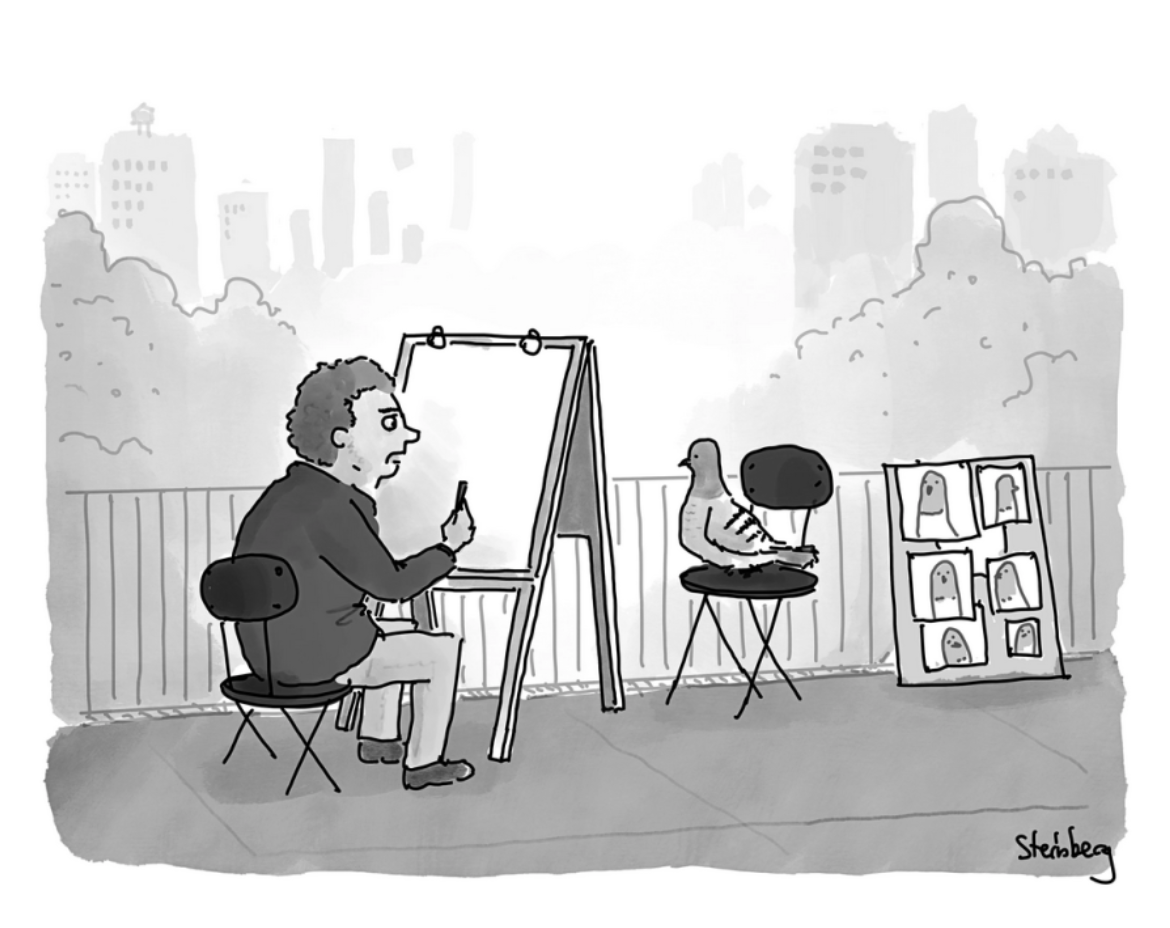
(What was I thinking? Something about the stripes the lion is hiding behind not fooling the striped zebras. But if it needs to be explained… yeah, I’ve done better.)
That feeling when you go out to take photos of the first buds of Spring but then stumble upon the scene of a murder.
The Remains of the Bird. Pigeon most likely.
Most likely devoured by a hawk or falcon. These raptors have adapted rather well to the canyons of the New York Cityscape, feasting on the abundant supply of pigeons.
This wouldn’t be the first time one of them chose our backyard for their dining room. We once woke up to a Cooper’s hawk perched atop our fence just outside our bedroom window, tearing apart his pigeon breakfast.
“The Tell-Tale Heart – a musicabre” at the Beloit Film Festival
The official festival run of my first Edgar Allan Poe musical short film adaptation “The Tell-Tale Heart – a musicabre” ended years ago, but lately there have been invitations to screen it again, as in last month at The North Film Festival in NYC and now again at the Beloit Film Festival in Southern Wisconsin, a short drive from Chicago.
The film will screen March 30 at 12pm and April 3 at 5pm. I’ll do a Q&A after the April 3 screening.
Earlier on April 3rd I will be part of a panel discussing horror in film.
My film festival friends John Vamvas and Olga Montes told me they had a great time screening their noir feature Scarpedicimente in Beloit. They also recommended me to the festival, which led to the invitation to screen Tell-Tale there this year.
So if you’re in the area, come join me April 3 in Beloit.
Friday night Ed and I attended the Met Opera performance of Beethoven’s one and only opera “Fidelio”, and it was glorious. I generally don’t cry at operas, but I did so twice this time, uncontrollably sobbing at the soul piercing beauty of music marvelously performed in crucial dramatic moments.
But I am not here to give a review of the production (look here for that). I am here to muse on a more trivial matter that amused my train of thought on the subway ride home.
Is Fidelio the original honeypot?
As in the “honeypot” employed by spies: “a sexual or romantic relationship created by a covert agent to compromise a target”.
We’ve seen the trope in real life, as in the Prufomo affair or Willy Brandt’s personal assistant / GDR spy (though that wasn’t a romantic relationship, it was a close personal one between West Germany’s unwitting leader and an Eastern Bloc spy). And we’ve seen it in countless spy movies, including the James Bond series of course – every second “Bond girl” is secretly in cahoots with the villain, at least initially, or Bond himself is honey-potting her to get to the villain.
The most devastating honeypot story lines unfolded on the brilliant spy series “The Americans”, where our anti-heroes Keri Russel or Mathew Rhys form romantic relationships with unwitting innocents to gain access important to their secret agent missions. The psychological damage this ultimately wreaks on their victims as well as themselves is brilliantly rendered over several seasons.
Am I seriously comparing Fidelio to the cunning Soviet spies of “The Americans”? Isn’t that a bit much, a bit silly? Well, yes, yes and yes, but it’s also true. One can make a good case that Fidelio is the original Honeypot in fictional drama.
You see, in case you don’t know the opera’s plot, Fidelio is not the young man he is believed to be by the prison warden Rocco and his daughter Marzelline, but actually Leonore, the wife of political prisoner Florestan. At the opera’s start Leonore has infiltrated the prison grounds to work as an apprentice to Rocco in the guise of young Fidelio. Moreover Leonore has taken advantage of Marzelline’s affection for Fidelio – in spite of her being wooed by the callow Jacquino – to win Rocco’s trust, going so far as to agreeing to an engagement with Marzelline.
If you didn’t know Fidelio’s true identity going into the opera, the libretto would have kept you in the dark until late into Act One, when Fidelio/Leonore sings about her intentions to find her husband languishing in a secret dungeon cell in the depths of the prison only Rocco has access to. After all, Fidelio being sung by a woman would not have been any clue that Fidelio really is a woman in disguise, since operas in Beethoven’s time regularly employed “pants roles”, young male characters performed by female singers.
Before Leonore’s big act one aria, you might think you are attending a light comic opera about a love triangle. Jacquino adores Marzelline, but she pines for Fidelio, who reciprocates. The only hint, at first, that something is off is during a famously stirring quartet shared by Fidelio, Marzelline, Rocco and Jacquino: after Marzelline sings (I’m paraphrasing) “oh what joy”, Fidelio sings “oh what danger” on the same melodic line. Danger? Why? Only in small moments and phrases is the truth about Fidelio’s subterfuge hinted at before the late-in-the-act bravura aria, when Leonore unburdens her soul and reveals her intentions.
Lise Davidson as Fidelio/Leonore; René Pape as Rocco; Ying Fang as Marzelline
With that the opera moves into heavier themes and drama, leaving the romantic comedy plot behind. In the end, the despot is overthrown and Florestan and all other prisoners released. Leonore and Florestan are united, and – at least as far as the libretto seems concerned – Marzelline is left to be content with Jacquino. In previous productions I’ve seen of “Fidelio” that turn of events is played lightly and conveniently.
But in this production at the Met, Marzelline’s realization of Fidelio’s true identity is staged for full effect, as she approaches him/her with a bouquet of red roses, half of which she then open-mouthedly drops in shocked recognition. That gets a laugh in the moment. But as the (musically ecstatic) celebration of freedom and justice by the townsfolk and released prisoners continues, Marzelline is left singing along but still clearly shell-shocked and distraught, continually dropping rose stems while embraced from behind by the jubilant Jaquino, who seems cognizant only of his romantic triumph, not his beloved’s despair.
Similarly Leonore appears to pay Marzelline little heed, engrossed as she and Florestan are with each other and her heroism. There is still an element of humor in the pitiful display of Marzelline’s shock and anguish during this celebratory climax, as rousing as the “Ode to Joy” is in Beethoven’s Ninth, but by committing to Marzelline’s despair throughout both the production and performer add a sting to the proceedings, reminding us of the emotional and personal collateral damage of Leonore’s heroism.
And in doing so highlights the psychological gamesmanship Leonore had been engaged in while she infiltrated the prison and Rocco’s family. Just like the most crafty spy out of any secret agent thriller. The original Honeypot.
The text on the scrim reads “Wahre Liebe fürchtet nicht.” – “True Love fears not.”
Clips from the live performance of “In the Aftermath of Mercy”
March 1st the Virtual Arts production of the new play “In the Aftermath of Mercy” was broadcast live over the internet. I played the lead role of Nathan Leopold, the infamous killer paroled after 33 years in prison. (Read more about it in this blog post).
I thought the performance would still be available for viewing during the month of March, yet that doesn’t seem to be the case. But I will share some annotated excerpts from the performance below for those of you who missed it.
Below, the cast and director of “In the Aftermath of Mercy”. We had three Zoom rehearsals and one rehearsal in person together in the space that would contain all scenes for the play, with director Joe Leone capturing and broadcasting the performance via his Iphone.
So, very much fly by the seat of your pants theater. The dance music and loud conversations that bled through the walls from nearby rooms in the building were an unexpected factor – but fortunately not audible to the on-line audience even if very much heard by us actors…
The play opens in prison. Nathan Leopold is preparing for his release on parole. Seen and heard only by him, the “ghost” of Richard Loeb, taunts him.
Leopold, out on parole, arrives in his assigned apartment in Puerto Rico. He is told he needs to continue at least six months of therapy with Dr. Clancy.
Leopold meets the widow Gertrude Feldman.
Dr. Hamilton, a therapist newly arrived in Puerto Rico questions whether Leopold has been truly rehabiltated.
Dr. Clancy brings up these concerns during their next session.
Dr. Hamilton replaces Dr. Clancy as Leopold’s assigned therapist. Hamilton is brusk and asks invasive questions. In response Leopold at first clams up. Before Leopold can give any answer, Hamilton simply cuts off the session and walks out.
The other day I was happy to “succumb to the darkness” yet again for a revisit to Robert Eggers’ “Nosferatu”, this time with members of the “Nosferatu” gang, fellow actors in a stage production of “Nosferatu” in which I played the demented Renfield almost twenty years ago.
Tatiana Grey (second from right) organized the reunion. Emily Hartford and Ned Massey joined us.
Here we are in a photo taken in the way back when during our “Nosferatu” stage run. At right is Matt Cody, who was going to join us for the movie reunion, but had to cancel at last minute.
Which meant we were missing our own erstwhile Nosferatu.
Eggers’ movie (and Werner Herzog’s 1979 remake) and our stage adaptation were closely inspired by F. W. Murnau’s 1922 classic silent horror “Nosferatu”, itself a famously copyright flaunting version of Bram Stoker’s “Dracula”. However there are elements in Murnau’s “Nosferatu” classic that distinguish it greatly from Stoker’s “Dracula” – most importantly the elevation of the heroine’s importance to the story. These carried over to the current movie as well as our stage version of “Nosferatu”.
Another Murnau specific element is use of shadow as an extension of the vampire, employed to famous effect in this still. Evocative shadow play is also beautifully employed in Eggers’ film, with Oscar nominated cinematography by Jarin Blashke. Light and shadow, black and white, were important elements of our stage version too.
Or should I say stage versions, as there were several, with the play evolving over several productions. We first performed in Brooklyn’s Grand Army Plaza arch. Yes, you read that right. There is a long vertical room up in the top part of the arch – a windowless space that assisted rather evocatively in setting the mood for a bare bones but imaginative staging of the transcribed original screenplay of Murnau’s silent. Intertitles and scenario descriptions became our play text.
March 1 Live On-line Performance of “In the Aftermath of Mercy”
I’ve been cast as Nathan Leopold, the lead character in the new play “In the Aftermath of Mercy”, which Virtual Arts will be broadcasting as a live on-stage* performance on-line on March 1, 2025 via its New Play Festival.
*The actors will be performing in a studio space together; the performance will be caught on camera and broadcast live over the internet. Much like those old live Playhouse 90 theater performances in the early days of television.
You need to purchase only one ticket for any date that’s listed to get access to all the festival’s shows on Zoom plus recordings for one month after to view any show in case you missed the live performance.
Nathan Leopold is half of the famous murderous duo “Leopold and Loeb”, one of several “Crimes of the Century” that thrilled the nation. This one occurred in 1924 – Leopold and Loeb were wealthy, high society friends – and lovers – who killed 14 year old Bobby Franks for kicks? to prove their intellectual superiority? a folie a deux? Read the Wikipedia entry for an entry into the bizarre details.
The murder and trial fascinated the country and has permeated pop culture ever since (many works of fiction, including the Hitchcock classic “Rope” and the Indie classic “Swoon” are inspired by the Leopold and Loeb case.) The celebrated lawyer Clarence Darrow convinced the jury to spare Leopold and Loeb’s life and sentence them to life in prison.
Loeb was murdered in prison in 1936. Leopold was paroled in 1958 and worked as a medial technician in Puerto Rico.
The play “In the Aftermath of Mercy” is set during the time of Leopold’s parole. It begins on his last day in prison, then moves to Puerto Rico, where Leopold is assigned a psychiatrist who acts more like an adversary. The question of whether Leopold is truly repentant and rehabilitated hovers over every scene. Lingering by Leopold’s side, and visible and audible only to him, is Loeb. Is it Loeb’s ghost, or a reflection of Leopold’s psyche? Two battles of wills are fought, between Leopold and the psychiatrist and between Leopold and Loeb.
Nathan Leopold 1924 mugshot
Nathan Leopold 1958
Virtual Arts asked me to provide them with a short video introduction, which they have been sharing on their Instagram account:
UPDATE: The performance has aired. Watch excerpts HERE.
Last weekend we heard on the radio that an amorphophallus gigas, a “corpse flower”, was blooming in the Brooklyn Botanic Garden.
The BBG acquired the plant in 2018 and this was the first time it was blooming, a flowering that was only going to last two or three days at most.
These plants produce flowers extremely rarely. One can wait between three and twenty years. This one took almost seven years since arriving at the BBG. Its cousin the titan arum last bloomed in 2006, and we are still waiting for a repeat performance.
So yes, it was worth making a special trip to the garden for this unique sight. As you will see, Ed and I were not the only ones who thought so.
Oh, and why is it called the “corpse flower”. We’ll sniff out that sensation too.
But first, for landscape beauty and to build anticipation, some pics of the BBG in winter.
The line of people come to see the corpse flower.
We would be waiting outside in the cold for an hour.
Finally we were let into the green houses, where we waited on line another 10 minutes.
You’re now in the very contemporary art section of the museum…
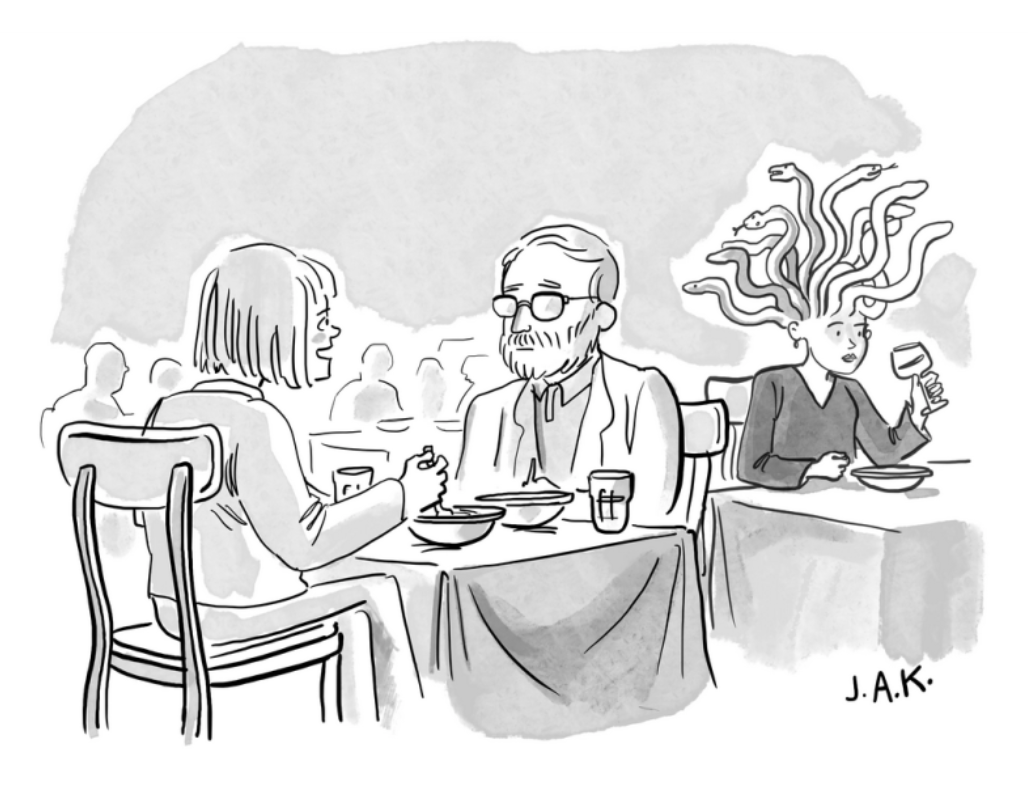
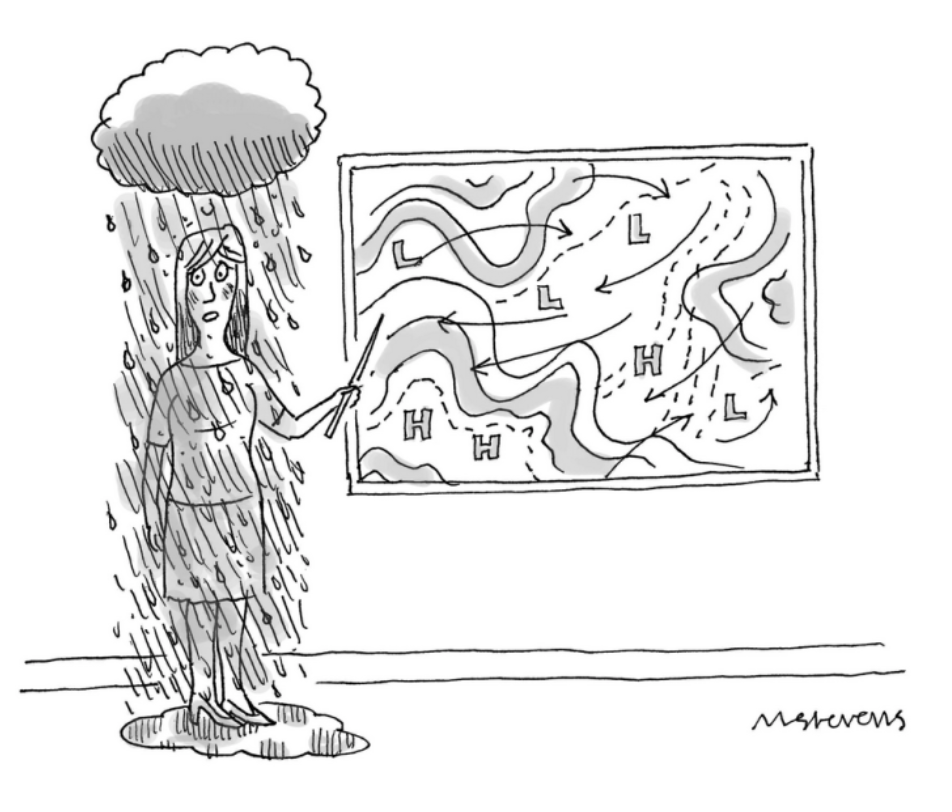
And we’re back with another installment of my un-winning entries for the New Yorker cartoon caption entries. Well, un-winning according to the contest, but my husband chuckles at them. So that’s a win.
With “Battle for” I have exhausted the Planet of the Apes movie series old and new as a source of title references. I’ll have to think of something else for the next one…
Someone should tell him making jokes about vegetables is punching down.
When we moved to Brooklyn in 1997, the Williamsburg Bank Tower (now officially One Hanson Place, but no one calls it that) was the one tall building, the skyscraper of Brooklyn, a landmark to orient oneself by. It had been for decades, since the late 1920s.
This view of the Williamsburg Bank Tower (taken on Atlantic Ave between Nevins and 3rd Aves) seems to represent its new, less exalted condition, no longer so singular in height, peeking around the sleek shiny surface of one of the neighboring upstarts disrespectfully muscling itself into the bank tower’s once pristine sightlines.
As George’s mother says in that classic musical*: “I miss the old view.”
NYC Repeat Screening of “The Tell-Tale Heart – a musicabre” 2/25
My first short film Edgar Allan Poe musical adaptation “The Tell-Tale Heart – a musicabre“, recipient of over 60 IMDb.com recognized awards, has long concluded its official festival run, but still gets invitations to screen here or there now and again.
And so again, here in New York City, February 25th at 3:30pm, the North Film Festival has scheduled “The Tell-Tale Heart – a musicabre” for an encore screening. I’ll be there for a Q&A.