It occurs to me that the title of this post may suggest we will be looking at particularly dramatic graffiti in public bathrooms, but no, sorry to disappoint on that account.
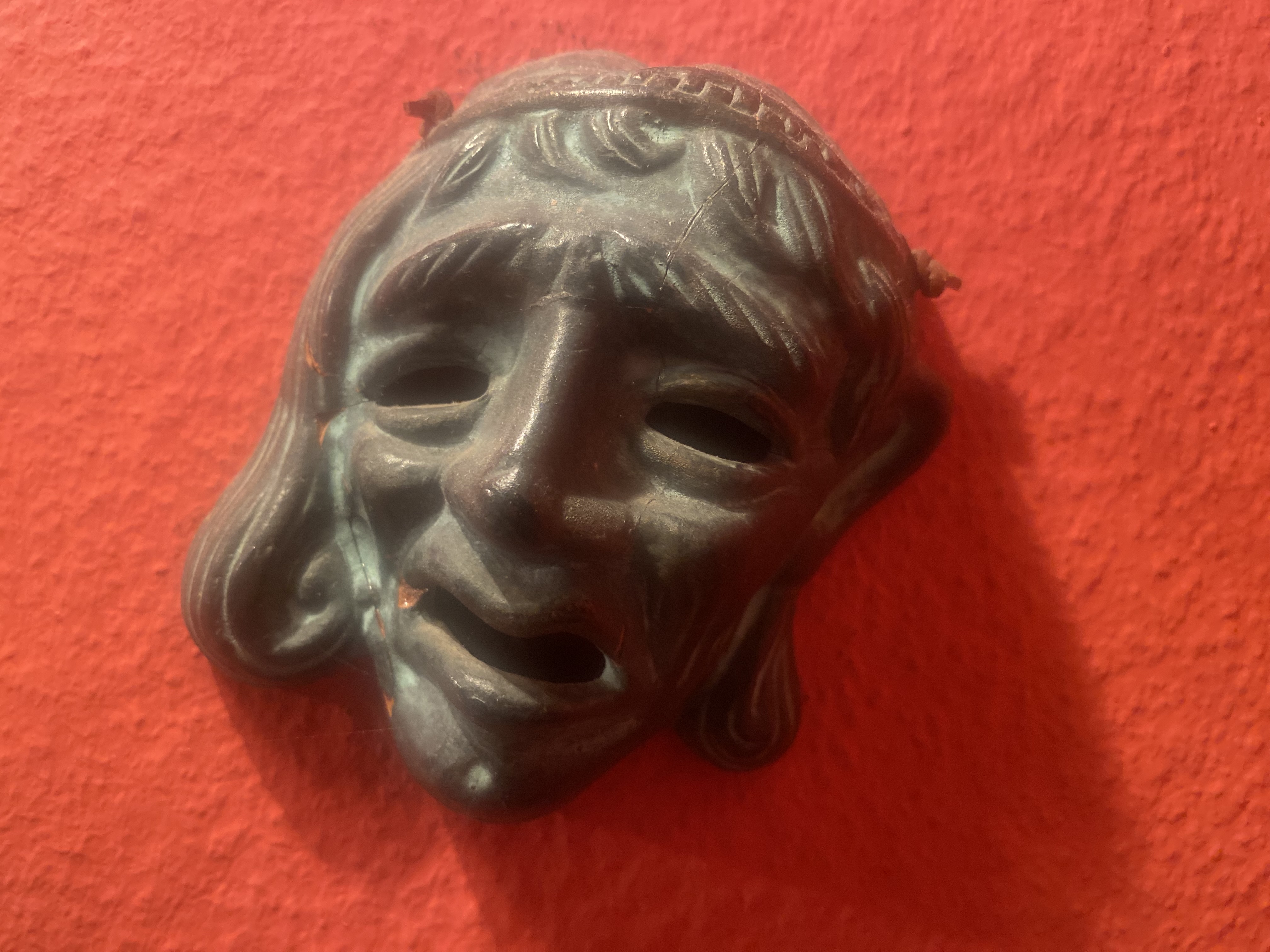
I am sharing pictures of small tragedy and comedy masks that have been hanging on the red wall of the guest bathroom on the ground floor of my family home in Berlin for as long as I can remember. I’ve always enjoyed them but, after a long adulthood of taking them for granted, today I was taken with them anew, enjoying their expressions and how they looked in the light on the red wall; so I decided to take some beauty shots of them.
My parents acquired the masks in a souvenir shop in Delphi, Greece, before I was born. They have been with us since the 1960s. One of them particularly looks a little worse for wear. I suspect rough play via my brother or myself. My mother suspects a certain cleaning lady she once employed who “cleaned too aggressively and was always breaking things and then not telling me about it”.
I remember being enchanted by the two masks as a child long before I understood they represented Comedy and Tragedy in Ancient Greek theater. I mused on their expressions and relationship to another. They became characters in stories of my young imagination. No surprise perhaps I would become an actor and theater maker.
There is no one shot of them both together because on the bathroom wall they share there is a large mirror separating them. There are also many other curious pieces of art and framed images in this little cozy guest bathroom, but on this occasion I want to focus on just these two.
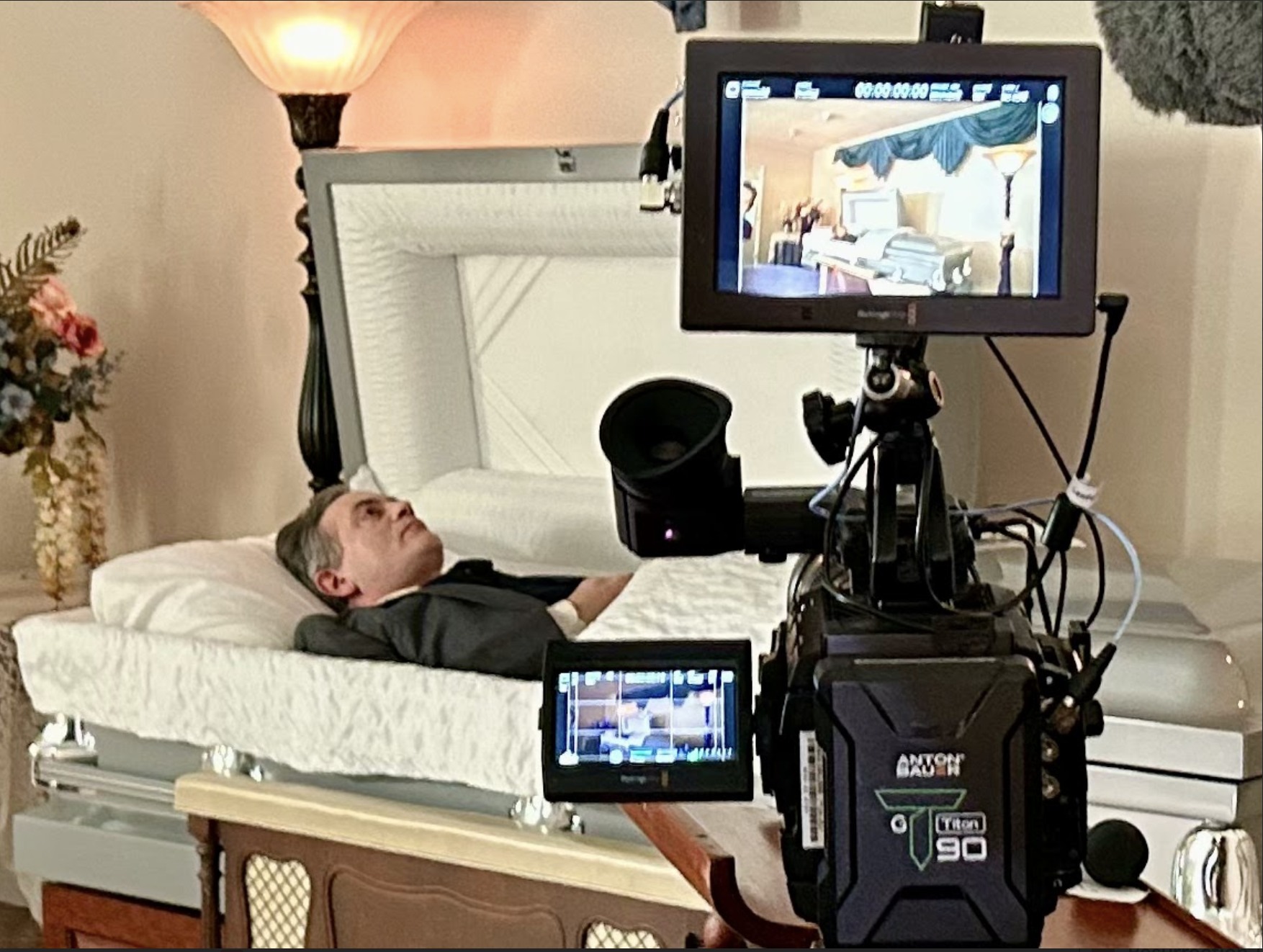
As previously stated I have been cast in a number of short films lately. One of the more fun and “bloggable” shoots was for “Resurrection”, which filmed in Ithaca.
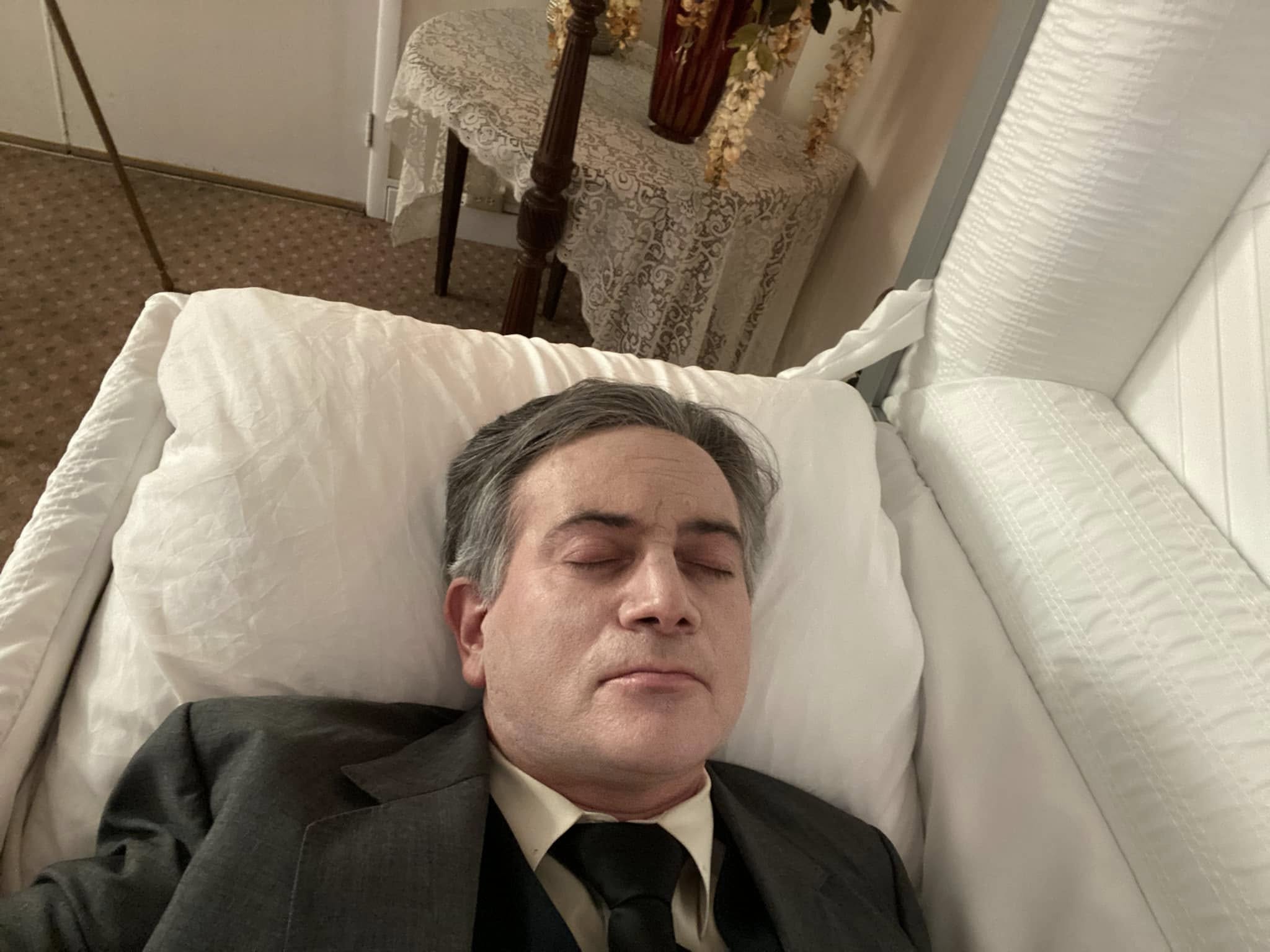
I play a recently deceased man, Randall, who through some proprietary means known only to a mercenary funeral director is resurrected at his funeral to give his own eulogy. His widow Agnes paid through the nose for this privilege.
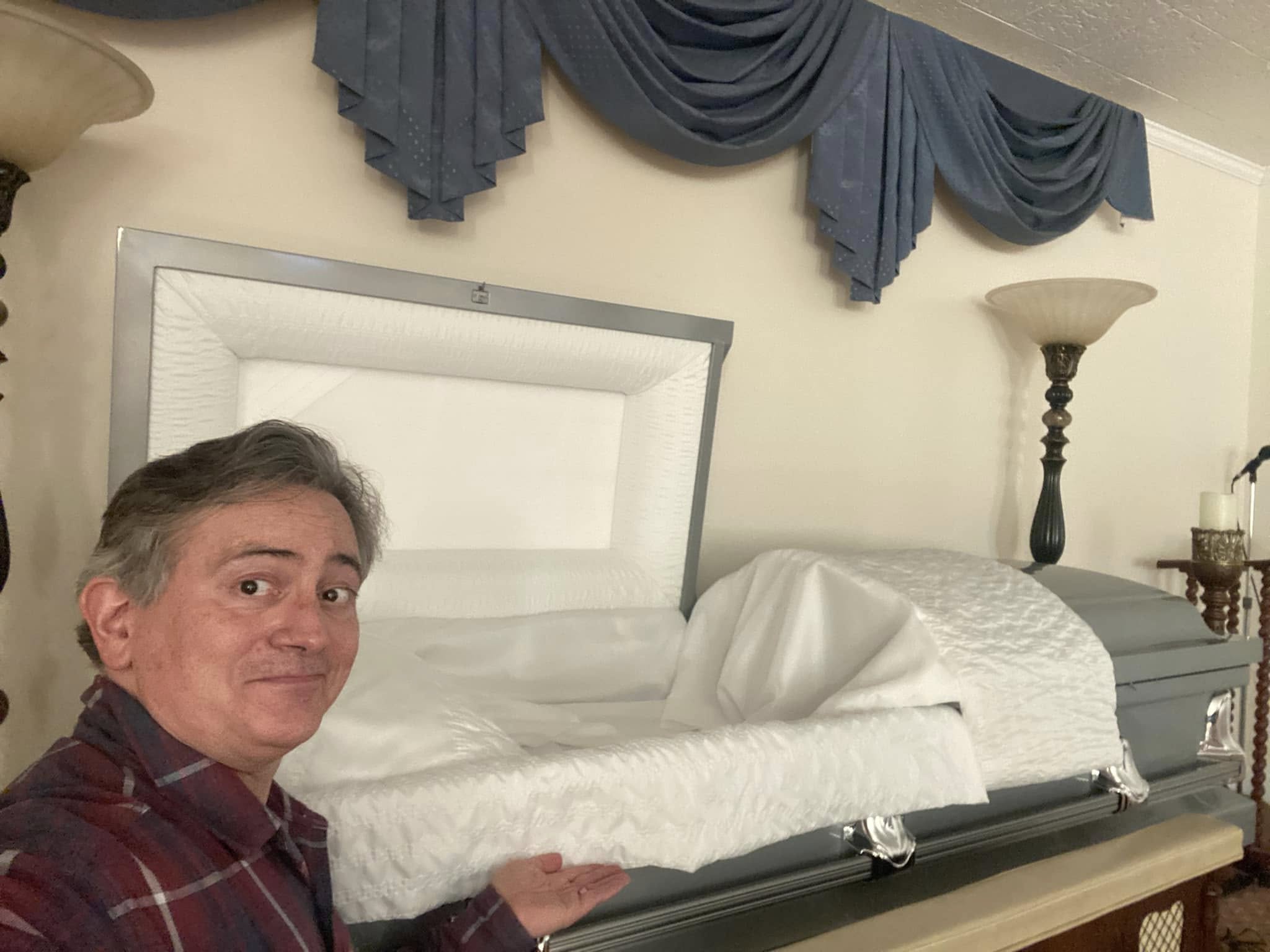
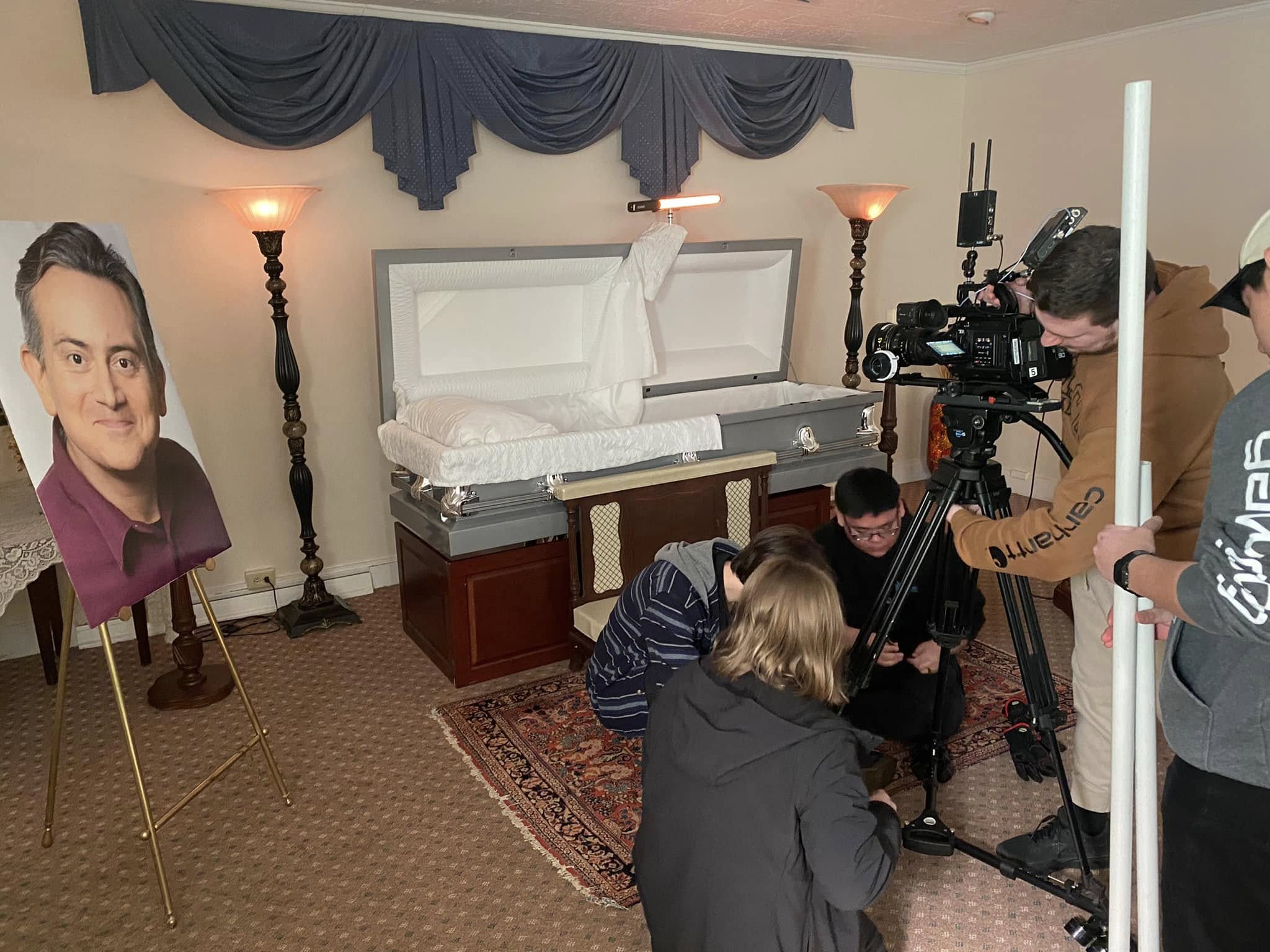
Here I am, on set, in an actual funeral home, viewing Randall’s casket.
The film was a senior project for the Ithaca College film school.
Here I am in make-up and costume, getting ready for my close-up.
The funeral director insisted that I be carried into the casket by several people like an actual body would, rather than climb in on my own; for safety reasons, I presume, since the casket stand is not designed to accommodate shifting weight well.
However, for the moment when Randall is resurrected, thanks to the twilight-zone-ish machinations of the film’s funeral director, I did have to climb out of the casket on my own… but the real life funeral director didn’t witness that…
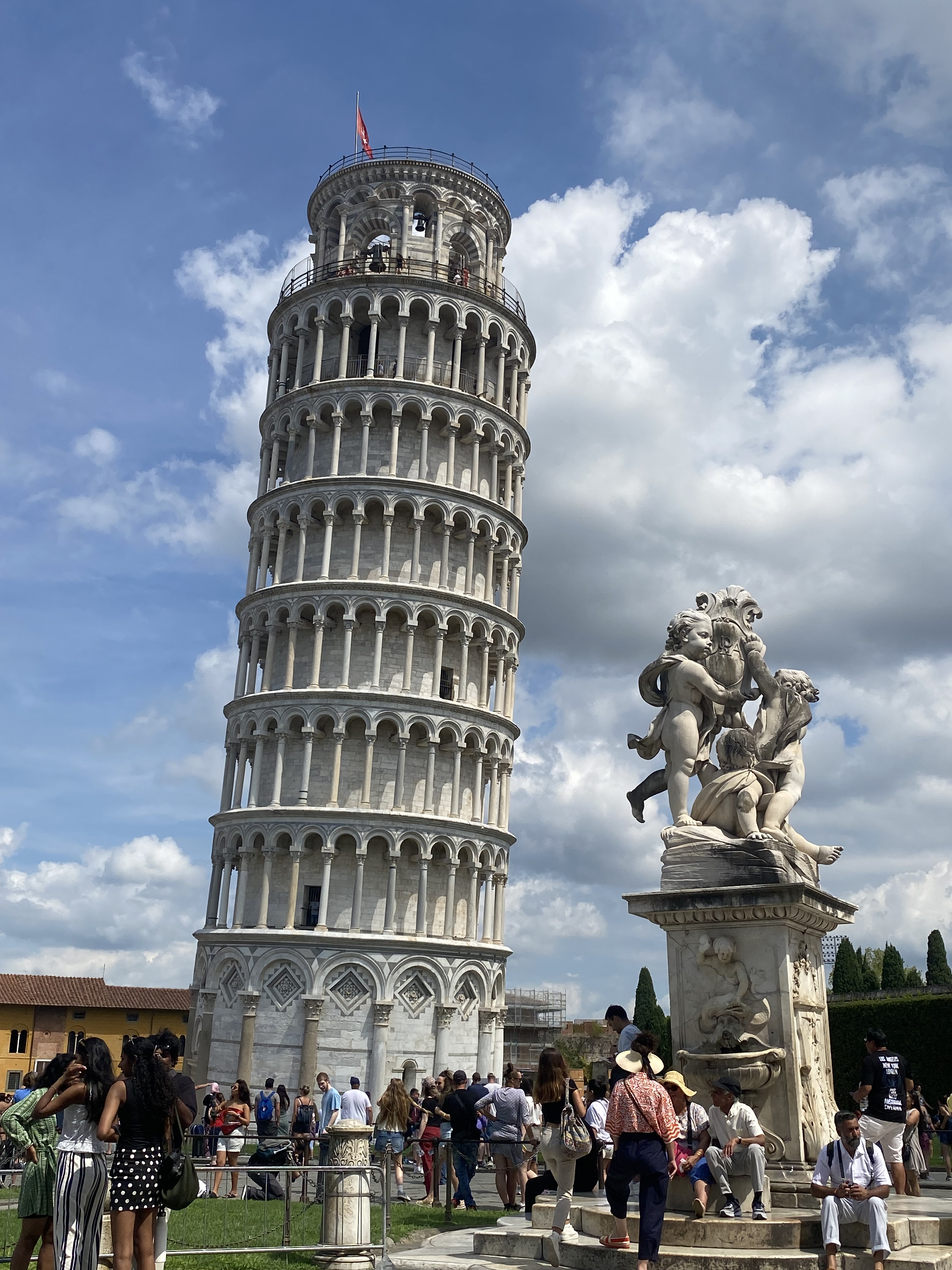
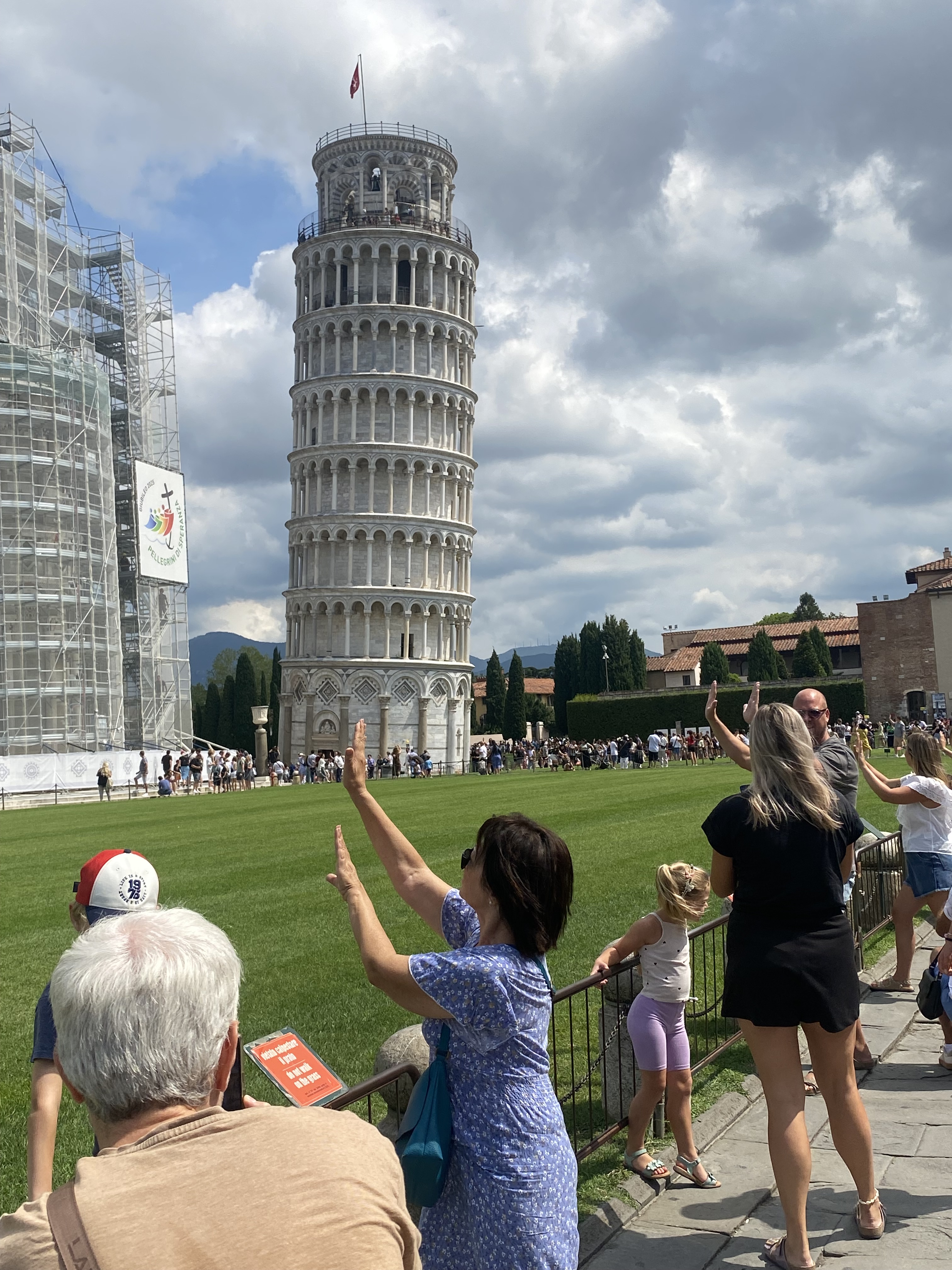
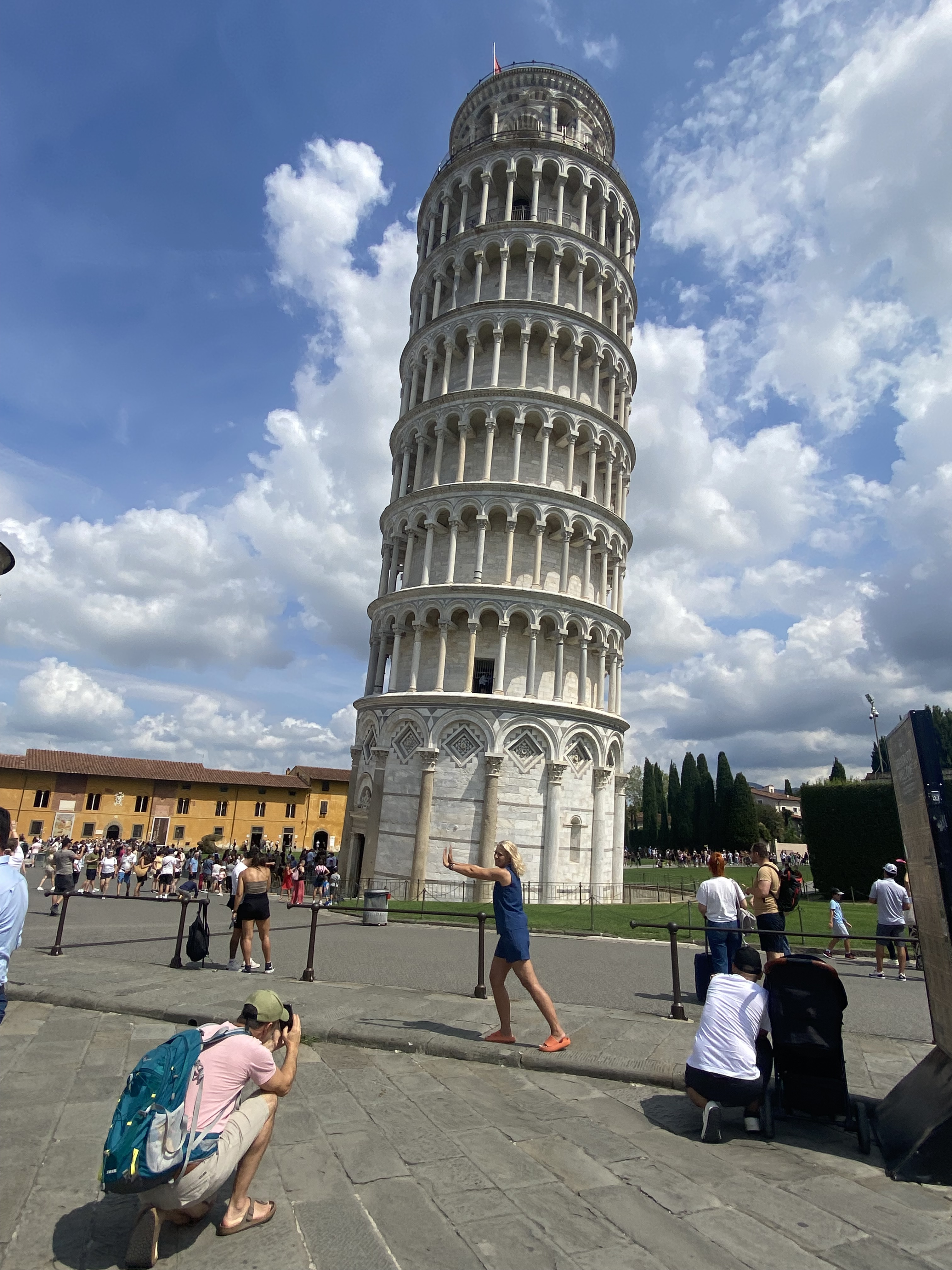
We took a day trip to Pisa, to see the famous tower in person and climb it.
These three videos really give you the experience, starting with this vertical view:
This video takes you up every step of the winding way up to the main platform, with all the panoramic views through the windows on the way:
What the video can not fully depict is the weirdness of the tilt one feels going up the winding staircase, especially when one passes the side of the tilt.
The previous video circled the high viewing platform. But you can go even further up, to the bells:
I’m sorta kidding, but also sorta not, in this pic. One really feels the tilt of the tower, particularly on the lower leaning side at the top. Like there is no way this precariously construction won’t fall over and come crashing down any second…
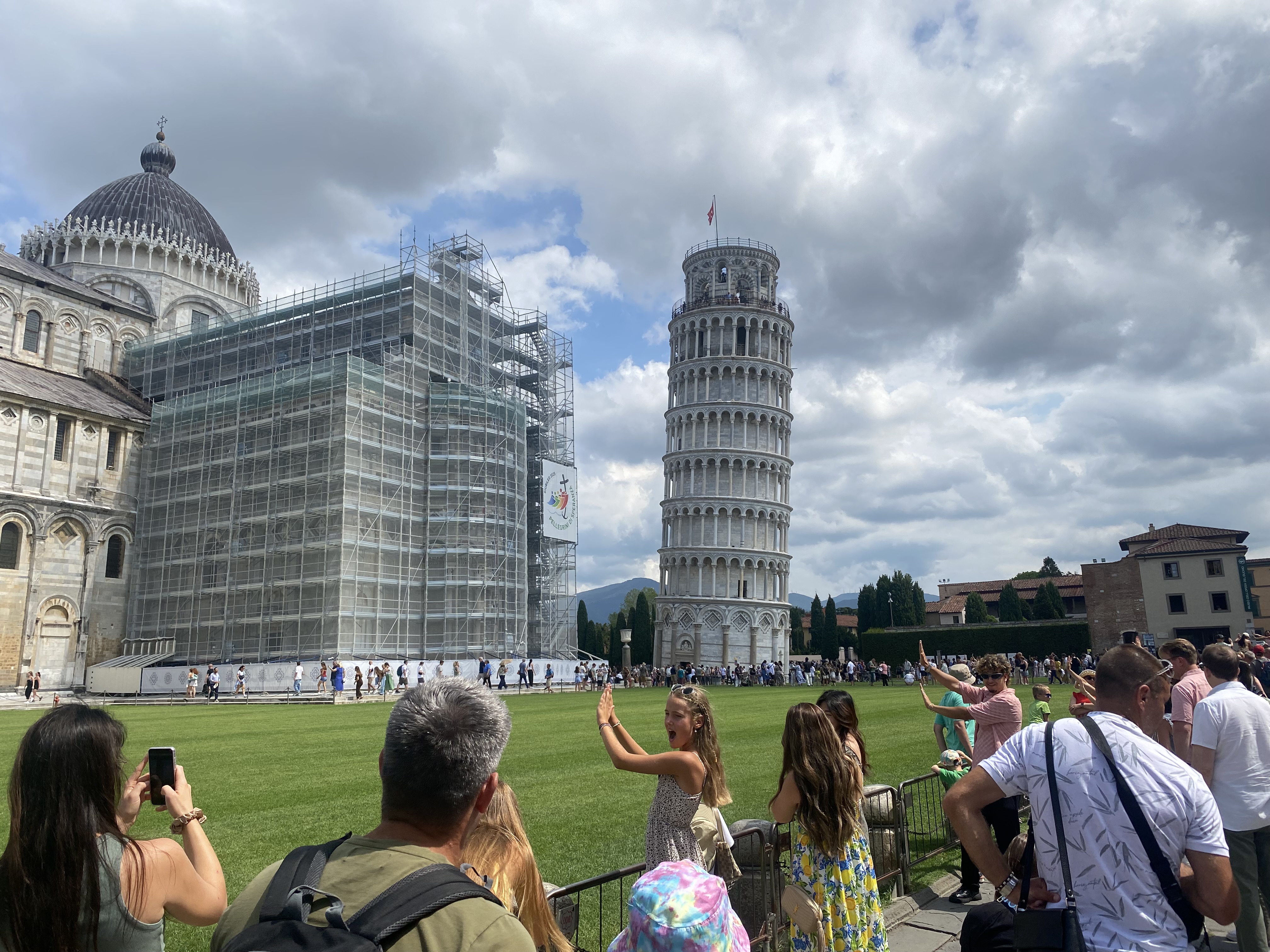
Of course, the Tower of Pisa is not only known for its tilt…
It’s also famous for a strange effect it has on so many of its visitors…
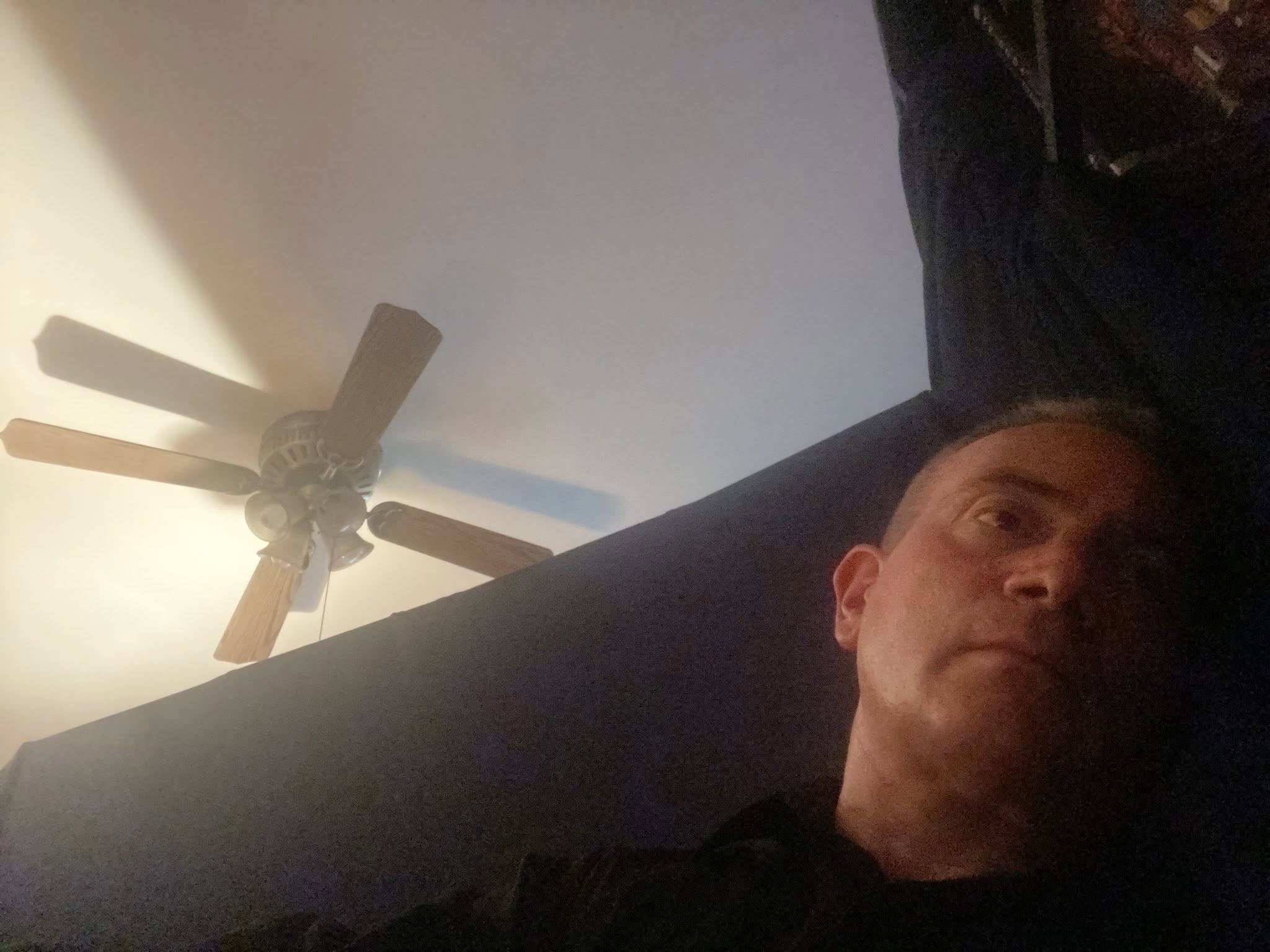
Taking a break in shooting takes for my new short film Poe musicabre, I picked up my phone and took some selfies, taken by the stark look and angles created by the blacks I had set up behind myself in my living room.
The lighting set-up was a bit darker than the selfie-camera of my phone is comfortable with, which shows in the slightly fuzzy focus apparent when you enlarge the pics; but one might also claim it gives the pics a dreamy, hazy look.
Anyway, after 5 minutes of this fooling about, I got back to work on my musicabre.
I’m touristing most two-fistedly in Rome at the moment (next stop Florence), which leaves me near to no time to blog, but will give me much material for future Two-fisted Touristing blog posts.
I’ll give you a little taste with an “epic” video I took at the Piazza Navona (well it is longer and covers more territory than the typical tourist video). I didn’t quite know where I was going and how I’d end up when I started filming, nor that the video would begin and also end with the dulcet tones of the dulcimer.
But for a taste of Rome and a bit of sweet insouciance, it is worth the full view.
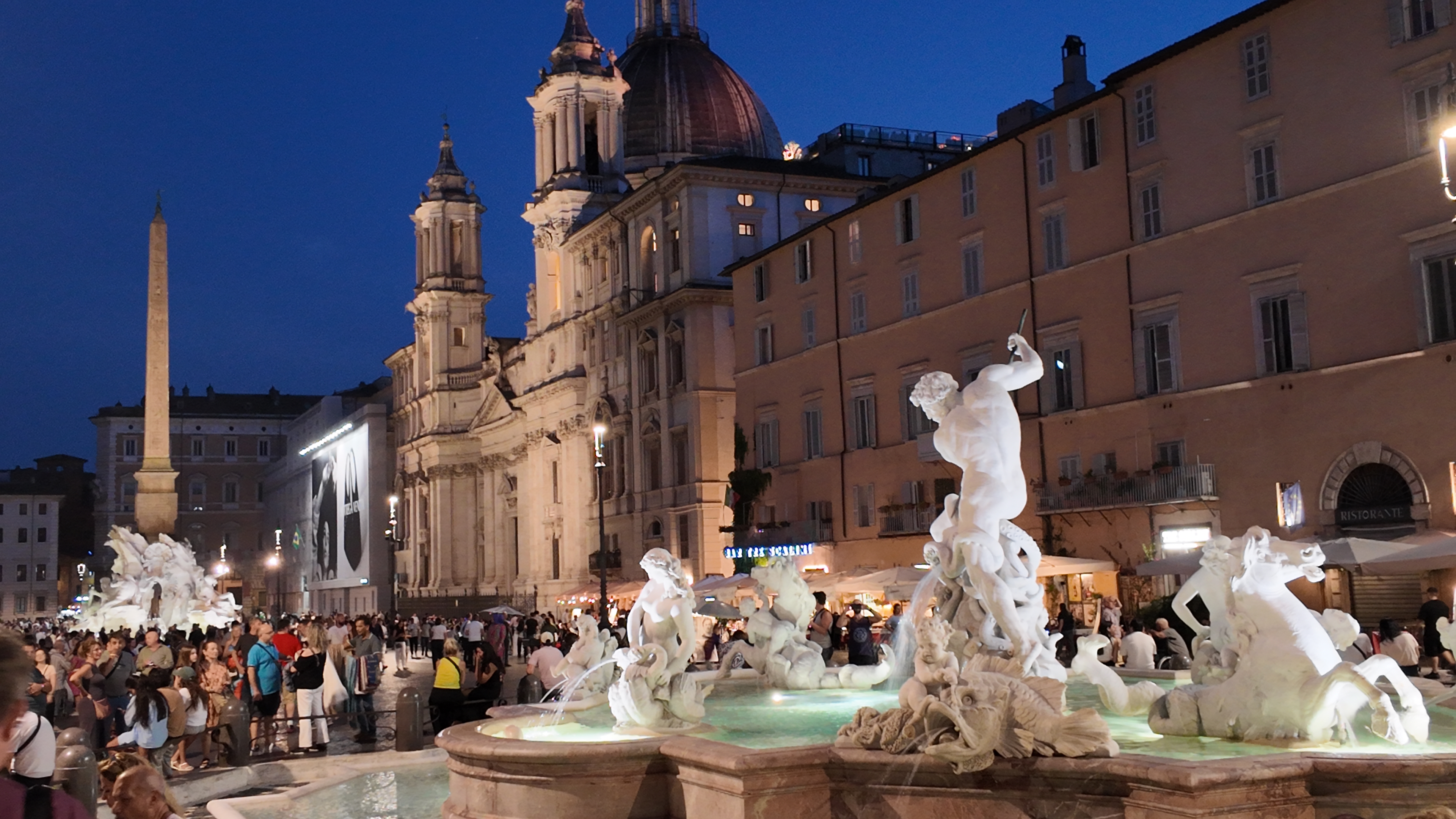
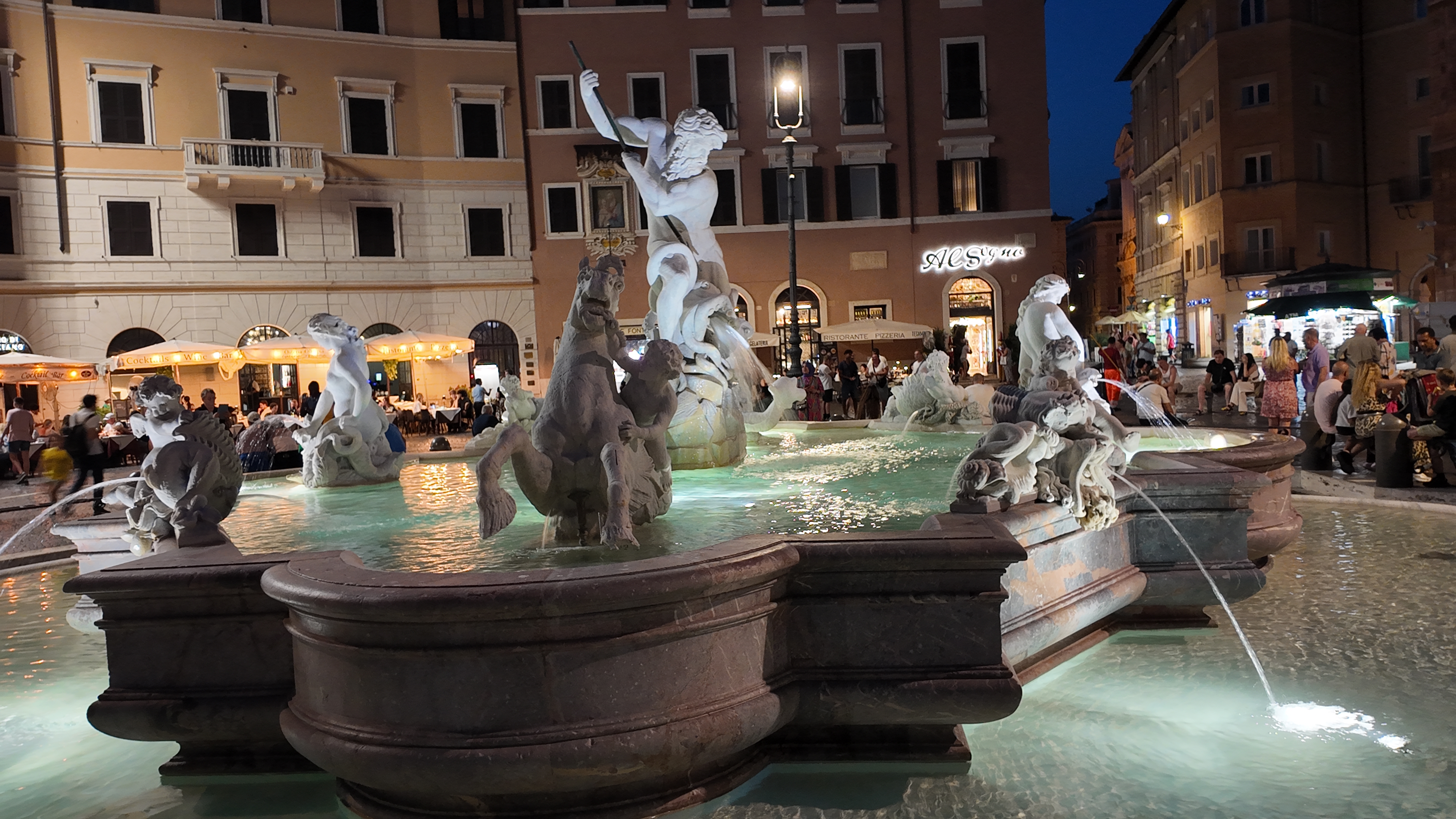
The photo above and at bottom is of the Fountain of Neptune at the north end of the Piazza Navona. The video will show it only in the background, more concerned with the grander Fountain of the Four Rivers in the center of the piazza.
But first we start with “O Solo Mio” (or “It’s Now or Never”, if you’re an Elvis fan) on the hammered dulcimer, before wandering to the Fountain of the Four Rivers in front of the Church of Saint Agnes in Agony.
The personification of the river Nile can be discerned by the shroud covering the statue’s head (at the time of the fountain’s carving, the Nile’s source was unknown). The other statues depict the rivers Danube, Ganges and de la Plata (but it’s not clear who is supposed to be which).
We (or I) return to the dulcimer playing “My Way”. Ed certainly was wondering where I had wandered off to on my way.
The length it had before had been uncomfortable in the summer heat. But I couldn’t cut it earlier because I needed my hair long for my latest project. I even grew a mustache – not a beard, just a mustache, for the first time, expecting to find it hideous, but then actually rather enjoying it.
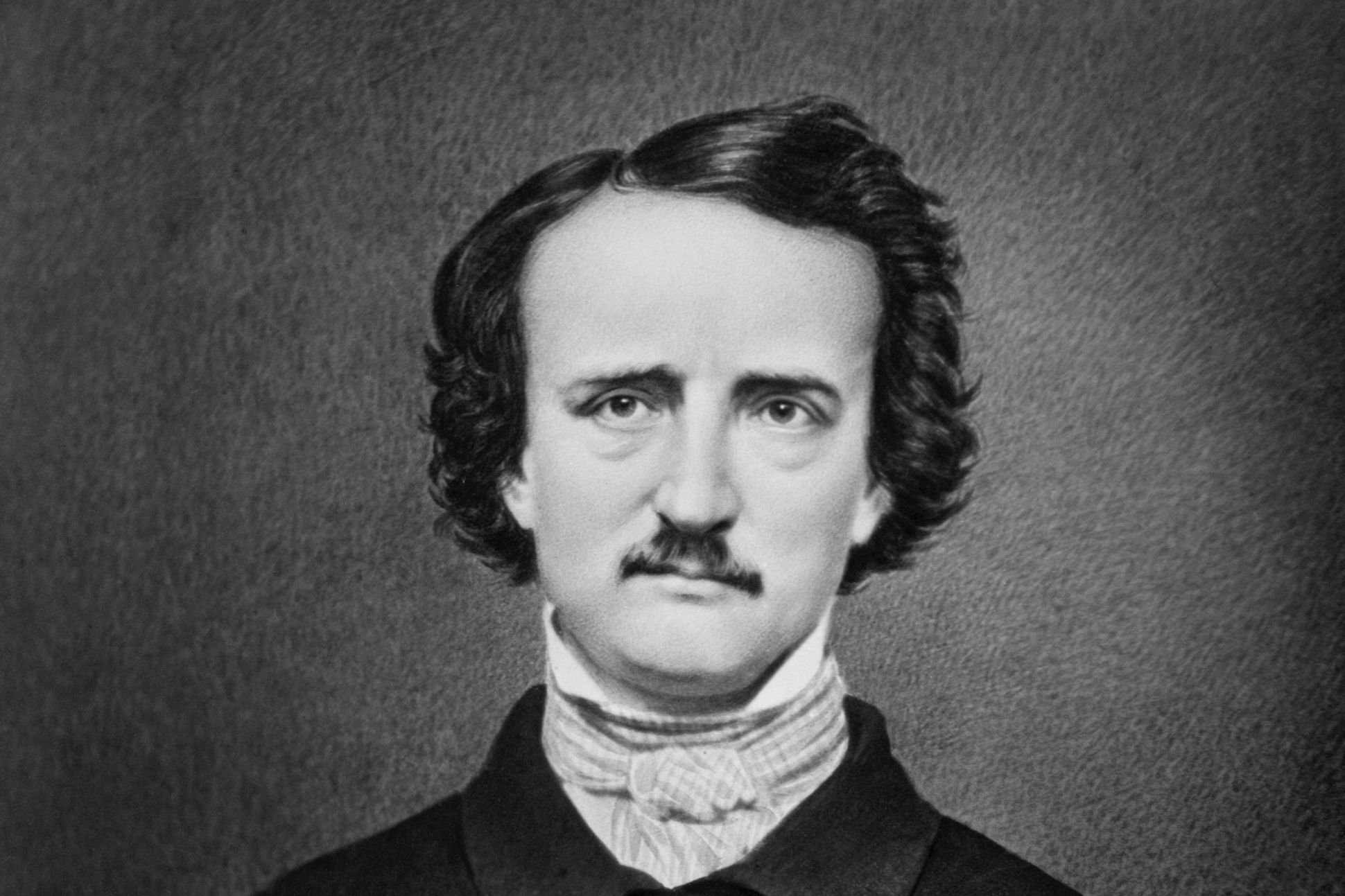
And for this one I needed to look like Edgar Allan himself. Or at least as close as I could manage without a wig or a perm. Below is the look after I combed my hair just so and put on a black shirt and tie.
It’s alright if I don’t look exactly like Poe. As long as I resemble him nearly enough.
It’s not so much that I am playing the historical Poe but that I am evoking him, dreamlike. It’s me as Poe, or Poe as me.
Why? Well, not to ruffle any feathers, but I will keep more details about this Poe musicabre, including its title, and by extension what piece of Poe is being adapted, unpublicized, for now.
I’ve already composed and recorded the music, and finished shooting all the “Danny as Poe” scenes. But this project’s trajectory is very different from the first two, and I expect it’ll take at least the rest of the calendar year to finish it.
Which leaves me plenty of time to tease out more details about it on the blog as we go along.
Now that the Cowardly Broadcasting Service has caved to “economic” AKA political pressures and cancelled the Late Show with Stephen Colbert, the chances of me ever taking the Colbert Questionert on the air are close to nil (they never were that high to begin with, I’m afraid).
I watched Colbert give many celebrities “15 questions to cover the full spectrum of human experience” designed to “probe deeply into their soul”, daring the subject “to be fully known”, and as enjoyable as each segment is, I kept distracting myself while watching by mulling over what my answers might be. I’ve gotten a little obsessed. Some answers come easily to me, some I am still unsure of even as I type up this blog post. But here goes, today I take the Colbert Questionert.
Because surely, enquiring minds want to know my answers…
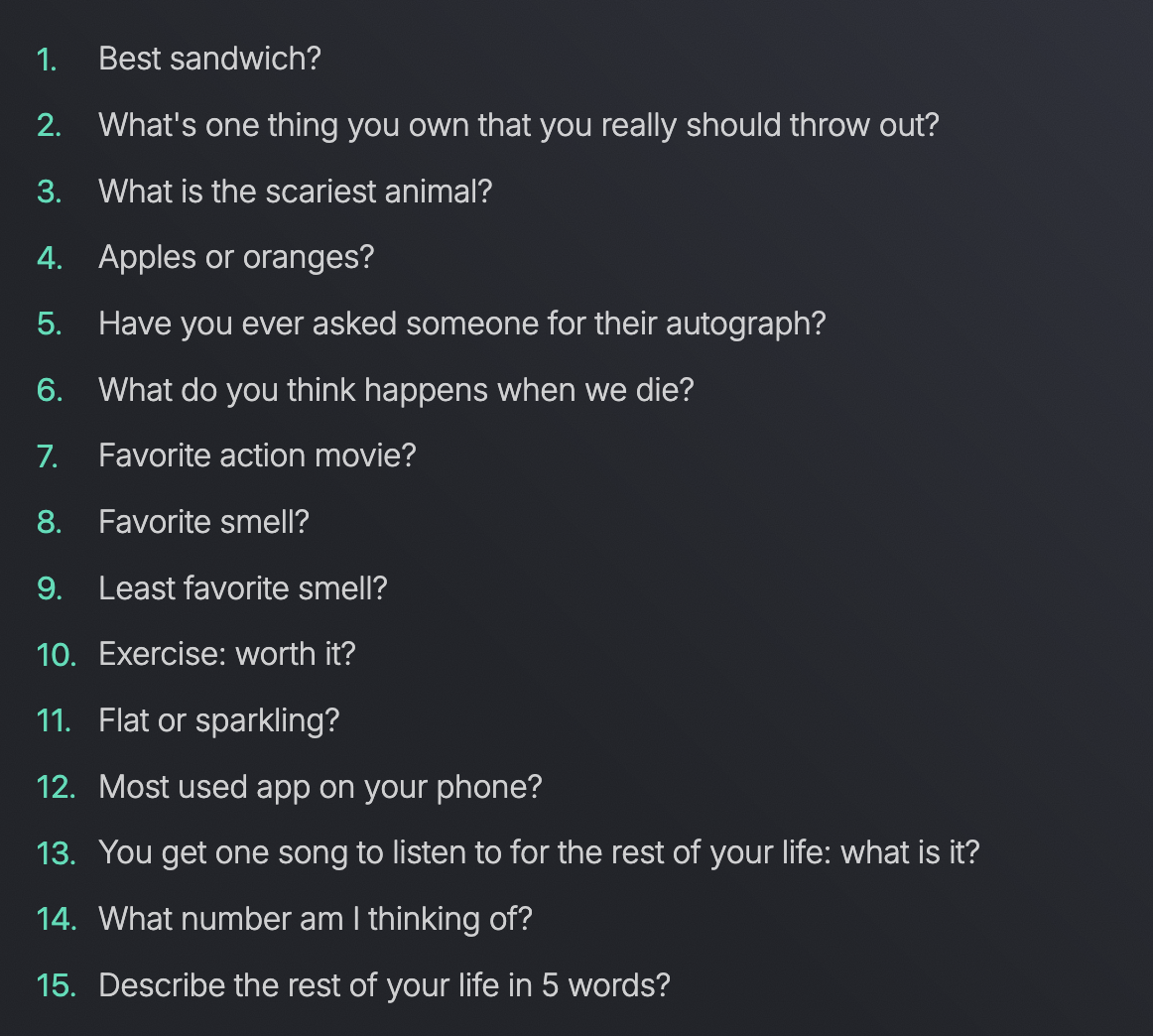
Above are the 15 questions. Well, those are the original 15 questions, but over time four of these (numbers 2, 10, 11 and 12) got replaced with new and improved questions.
I will answer the old queries and their replacements. Which means I’ll be giving 19 responses.
Here we go:
1. What is the best sandwich?
Depends on whether it’s breakfast or lunch.
Either way start with a toasted sesame seed bagel.
For breakfast, top it with crunchy peanut butter, sliced banana, and raspberry preserves.
For lunch, top it with cream cheese, sliced vidalia onions, sliced tomato and lox (salmon).
2. What’s one thing you own that you should really throw out?
My dresser drawers and closet used to be overstuffed with a lot of old clothes Ed would urge me to just throw out. Especially the mass of old t-shirts I would never wear again. But then our apartment got flooded and a lot of our clothes got soaked and that did act as a catalyst for me to finally throw out a lot of stuff, especially those old t-shirts.
That said there are probably still plenty of odd items of clothing in my closet I will never wear but that I keep on the off chance I may use them as a costume piece some day.
Unlikely I ever will though.
This question is one of the three that got retired. So I will insert here one of the alternates:
2. (alt) What was your first concert?
Any kind of concert? Or specifically rock/pop concert?
If any kind probably a concert my mother (opera singer Catherine Gayer) sang; I attended many as a child, as she sang in concert halls as well as opera stages. A concert where she sang music from Shakespeare’s time or set to Shakespeare’s text, or both, comes to mind as a vague early memory.
But if we are talking rock/pop concerts, I think the first I attended was when I was 16. It was an open air concert in the legendary Berlin Waldbühne. Supertramp played. A whole bunch of my classmates and I went together with exchange students from Pennsylvania we were hosting. It was a great concert, the band was at its best, not only performing much of the “Breakfast in America” album but 7 of the 8 songs from “Crime of the Century”. (The then just released album “Famous Last Words” got only 4 tracks played – the band knew what their audience really wanted to hear.)
(Clearly if I were on Colbert, most of that answer would get heavily edited before the show airs. But hey, it’s my blog, I can go on as long as I want.
But I promise not all of my answers will be this … discursive..)
And surely having any apex predator like a lion or bear come at me in the wild would be horrifying, but being underwater and seeing a massive great white come for me would be the most terrifying.
Colbert would likely sneer at me, because he clearly prefers apples as “you can eat them with peanut butter”.
And that is tasty, and I do like apples, but I like citrus even better, and also find them more consistently tasty. Too many times that I have bitten into a flavorless, mealy apple.
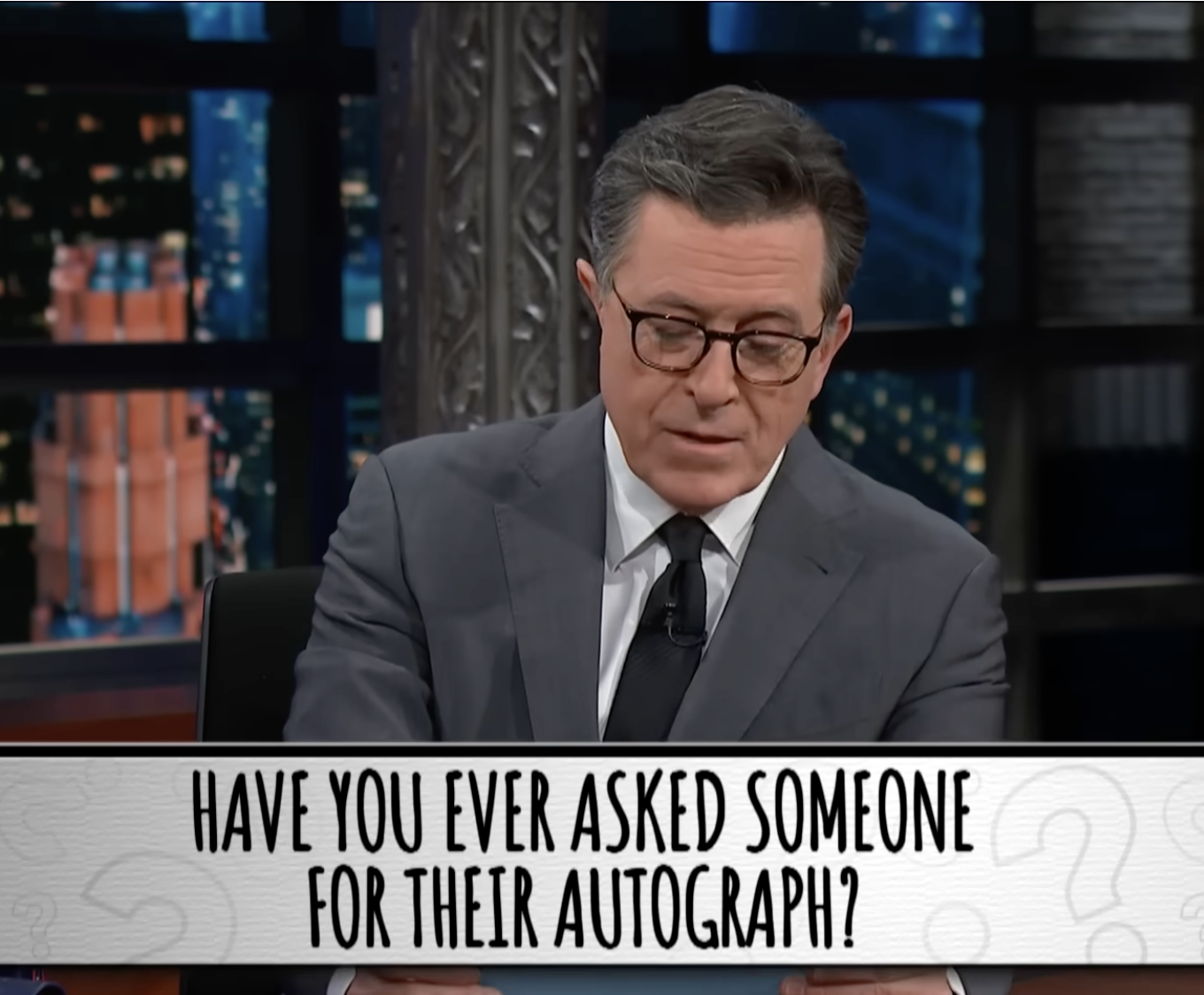
5. Have you ever asked someone for their autograph?
Once. Just once.
It was at a special advance screening of “The Lord of the Rings: The Return of the King”. It was an all day affair. They screened the first two LOTR films in the morning and afternoon, and then before the evening screening of ROTK, three of the Hobbit actors (Elijah Wood, Sean Astin and Dominic Moynihan – not sure why Billy Boyd was absent) and Gollum himself, Andy Serkis, showed up to talk to the audience, and even mingle with us for a more informal meet and greet.
I just happened to be reading Andy Serkis’ behind-the-scenes memoir “Gollum – How We Made Movie Magic”, and since I’d brought it along to read on the subway and between screenings, I showed him my copy. Serkis was happily surprised and, black magic marker at hand, autographed my copy.
Actually he offered to autograph it before I voiced the request – I was more intent on showing him I was reading his book than anything else – but I was quick to say yes.
I own one or two other copies of books signed by the author, but that is the only one I received with the author affixing the autograph in my presence.
But strictly speaking, maybe I never actually asked someone for their autograph. Huh.
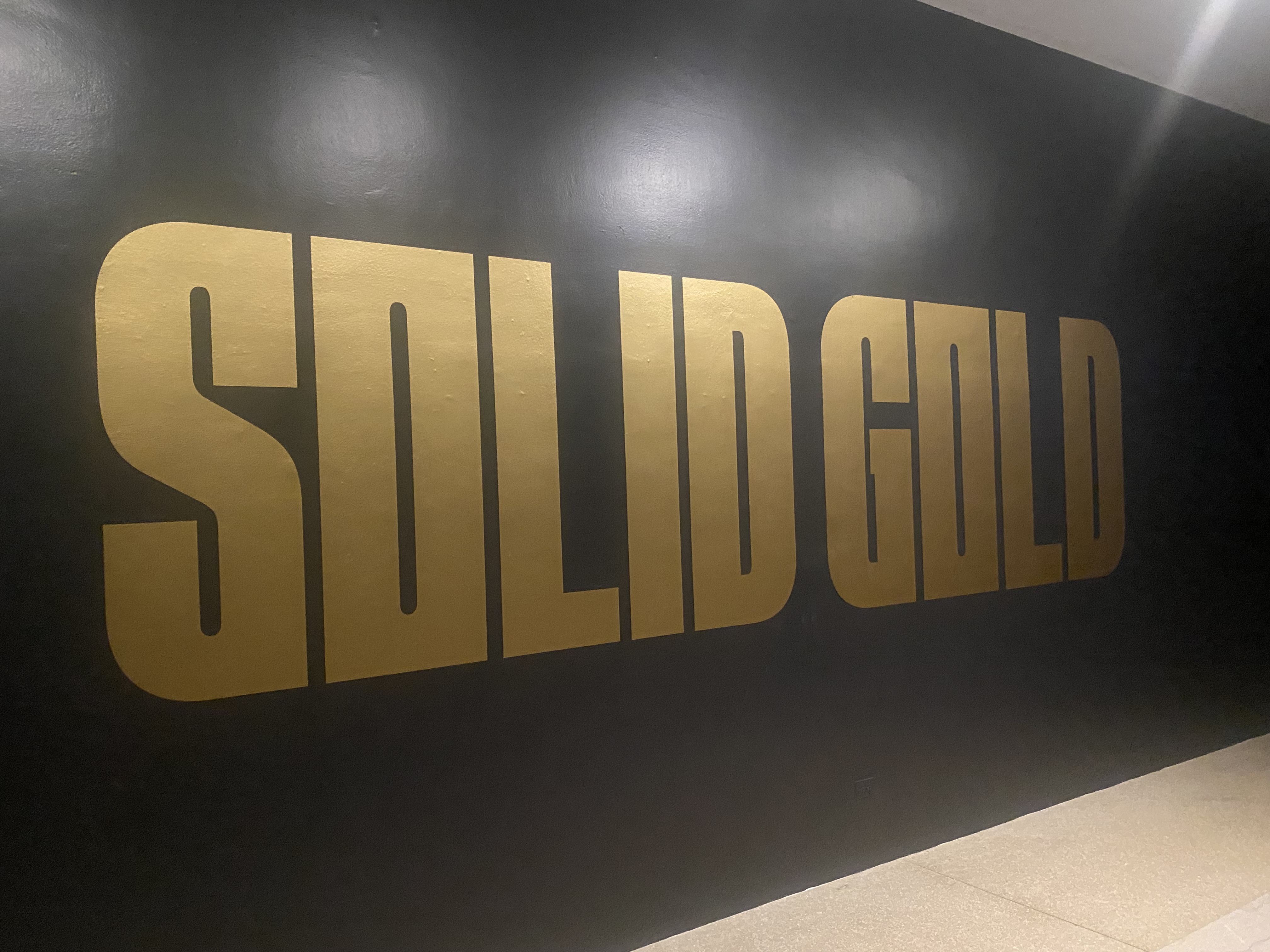
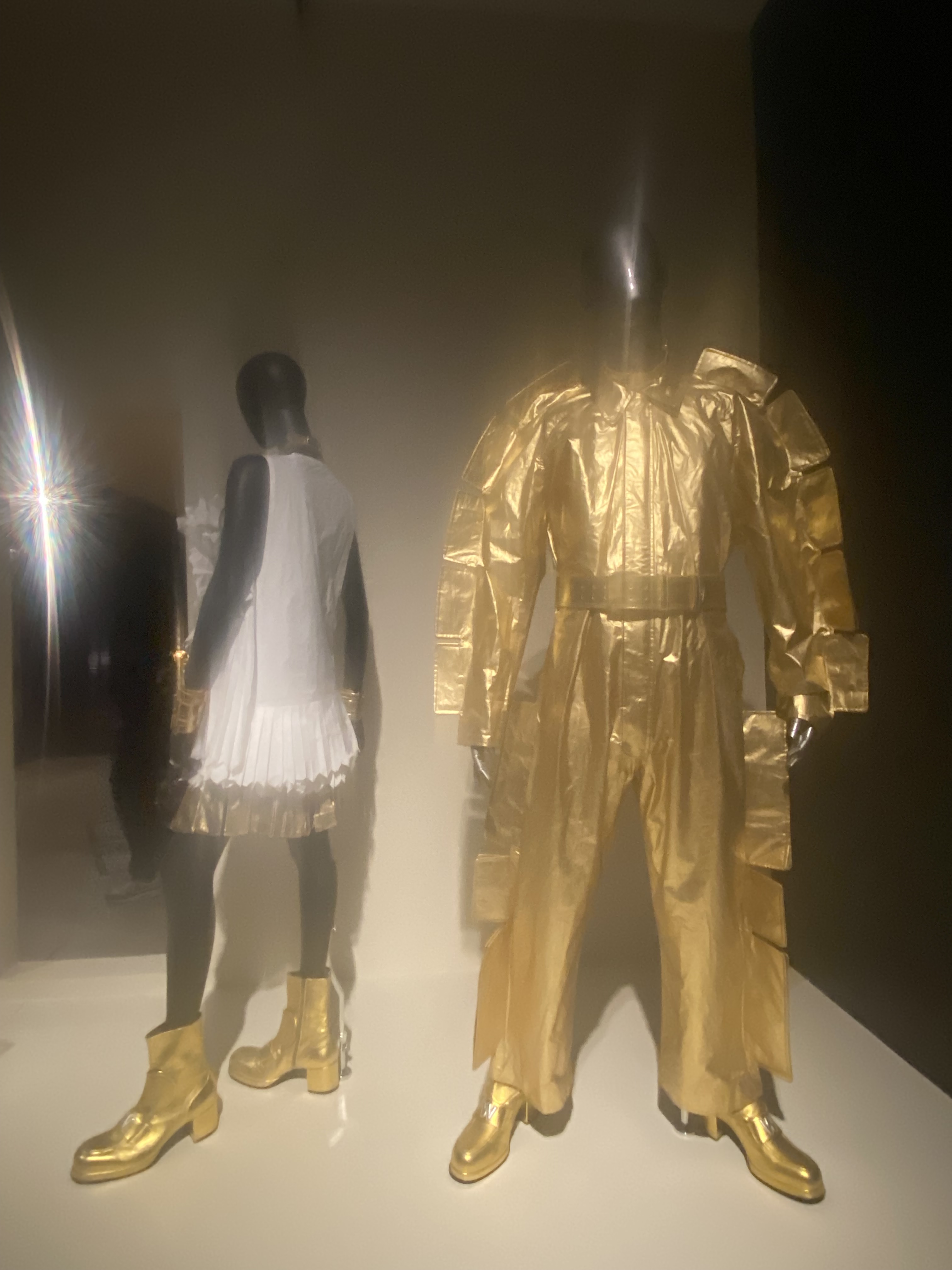
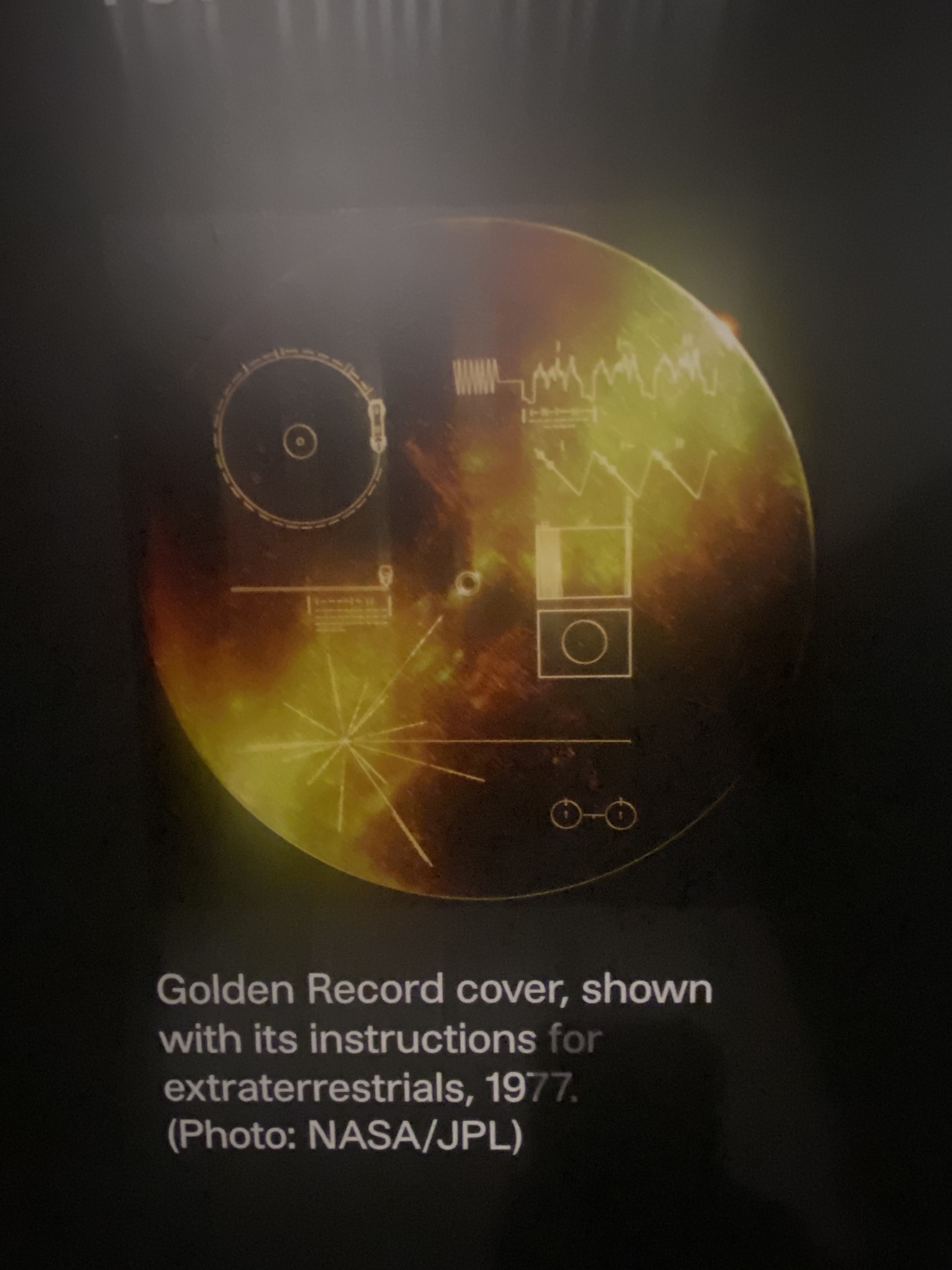
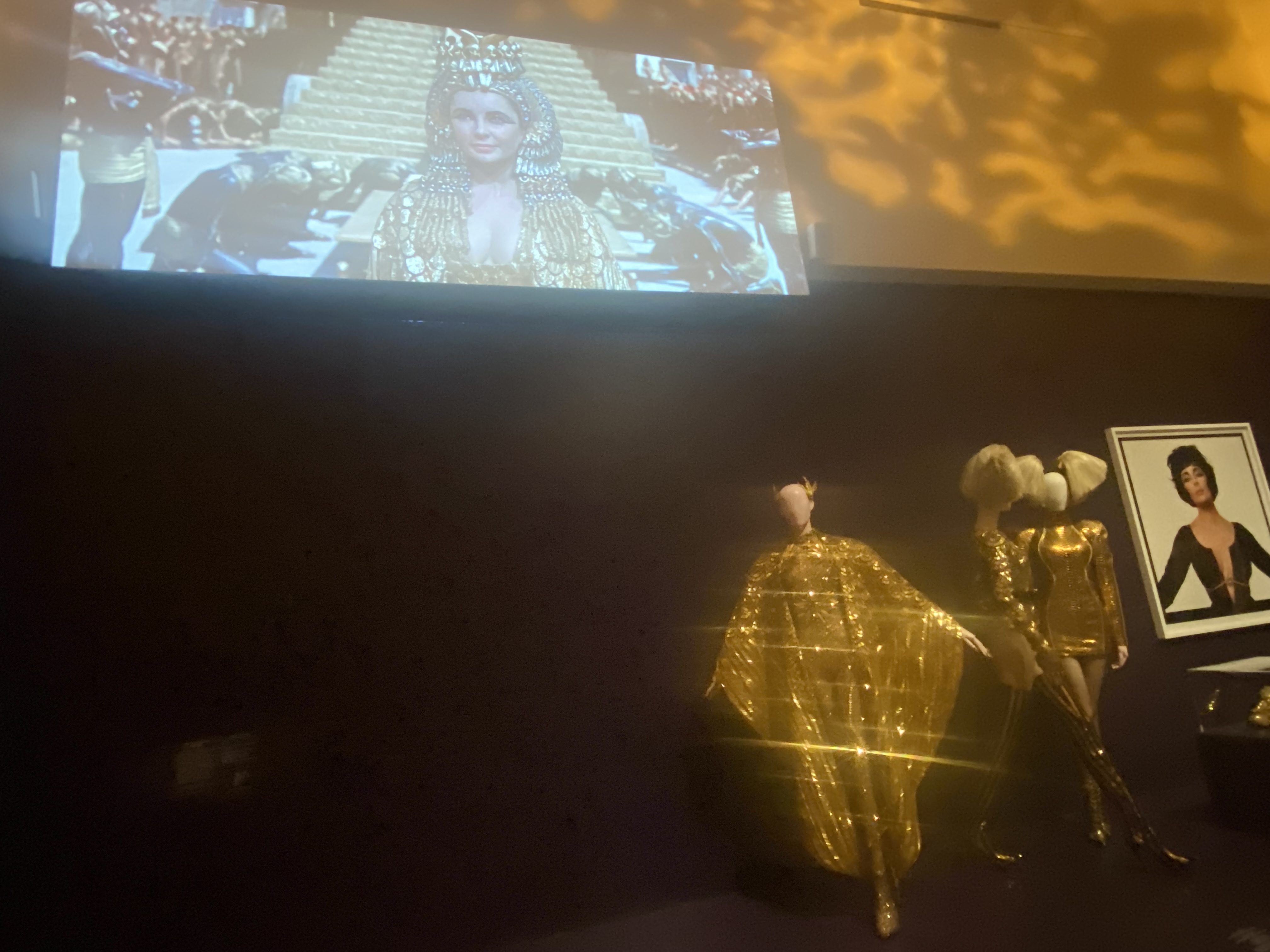
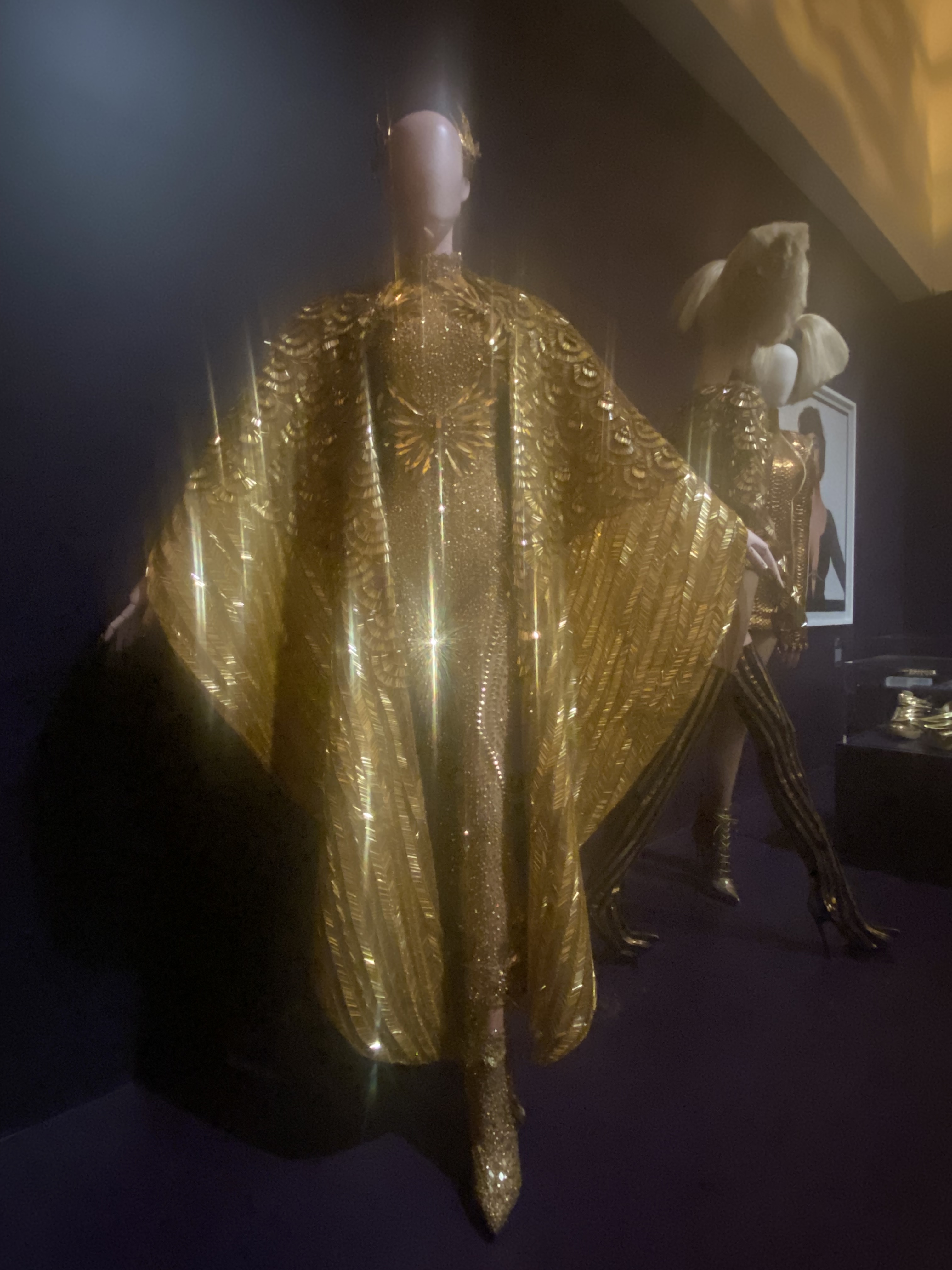
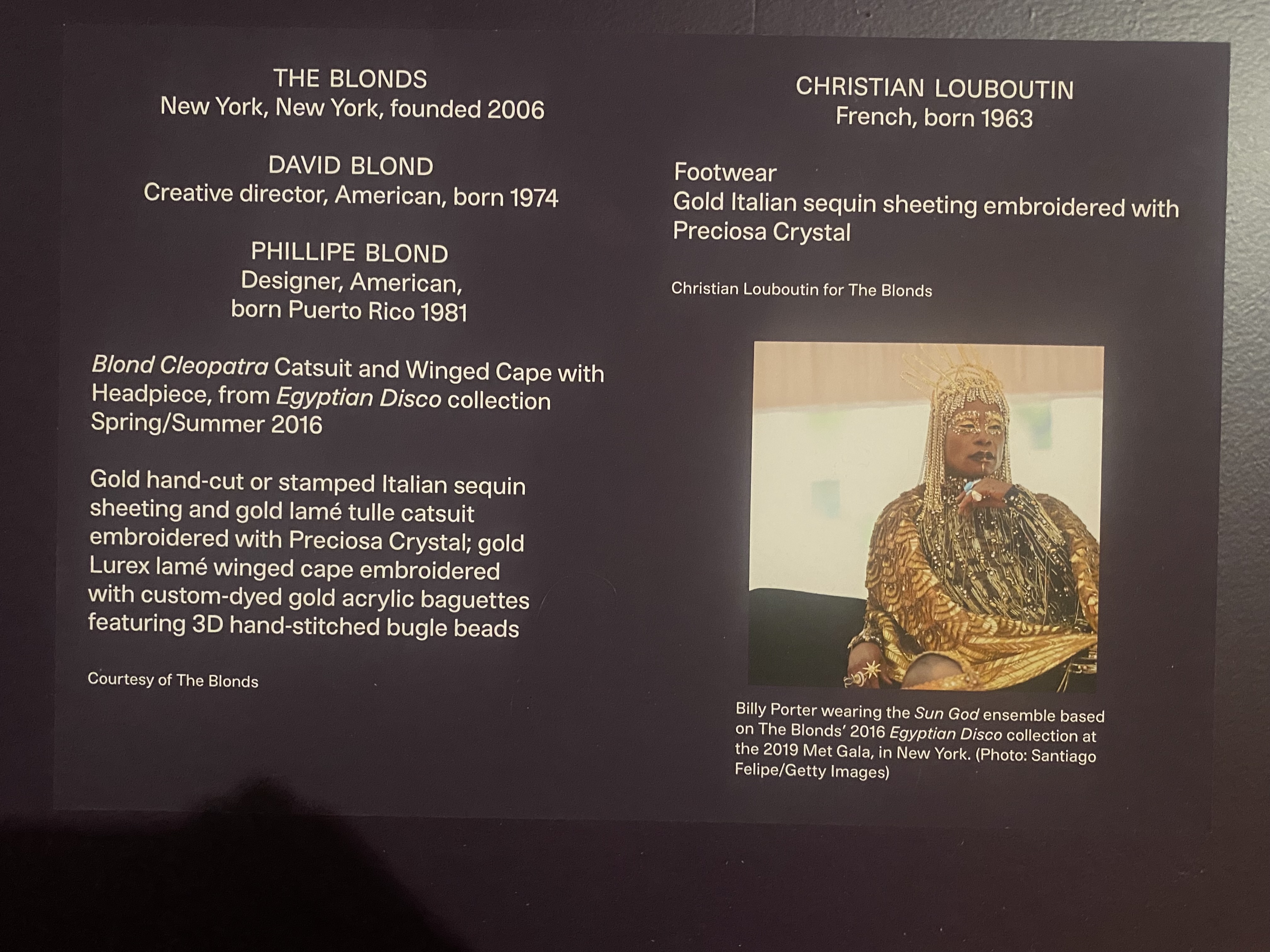
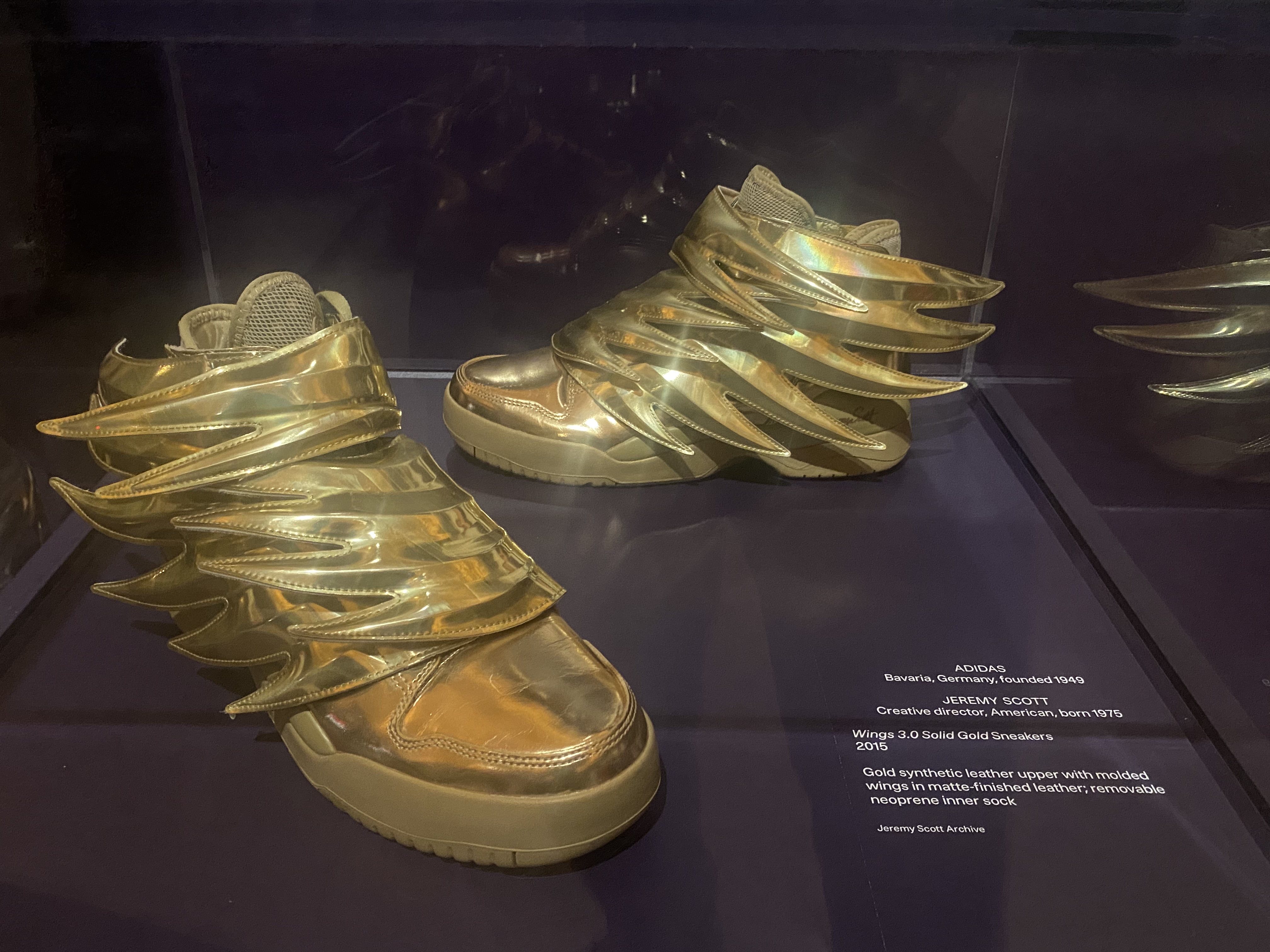
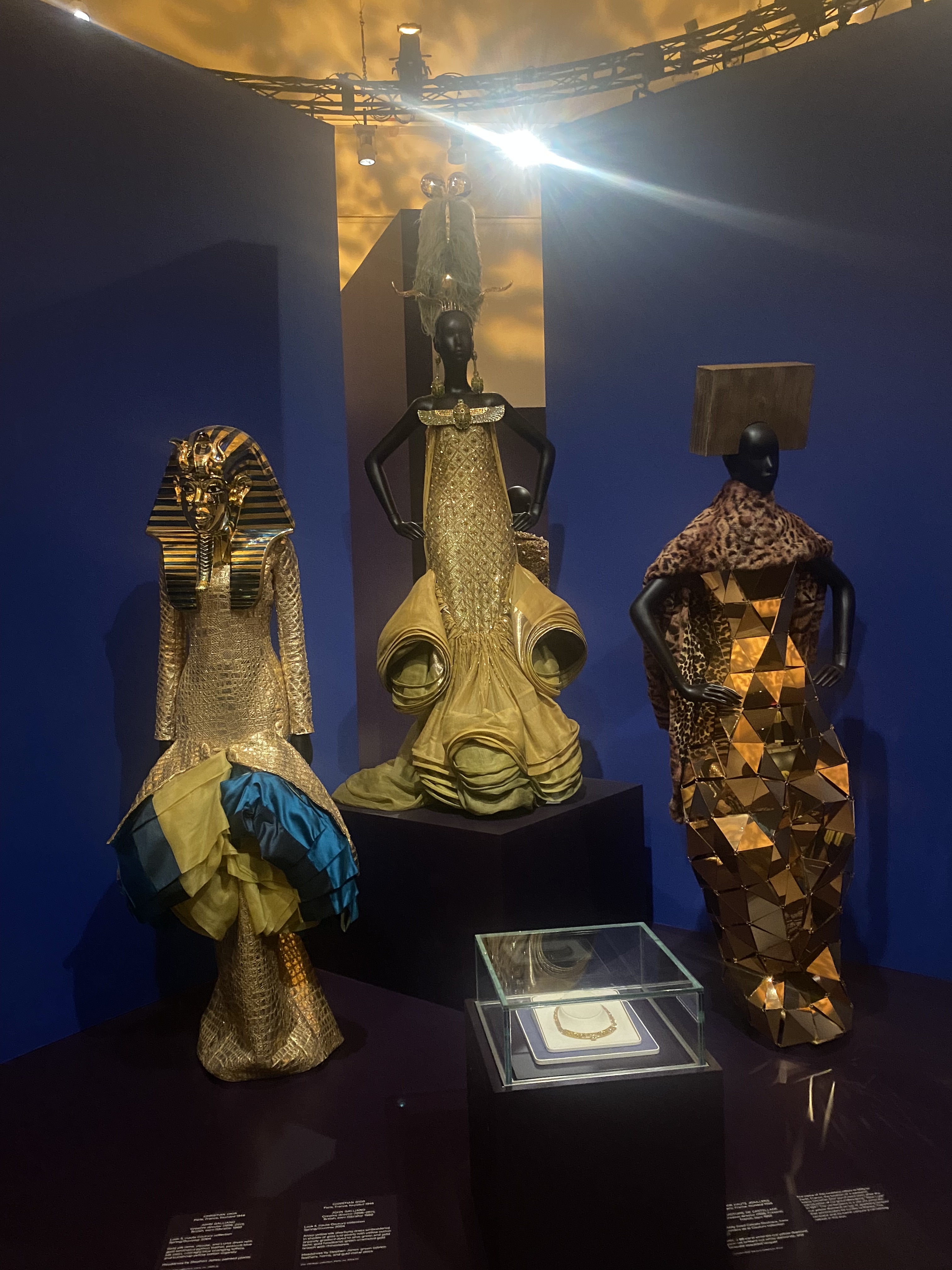
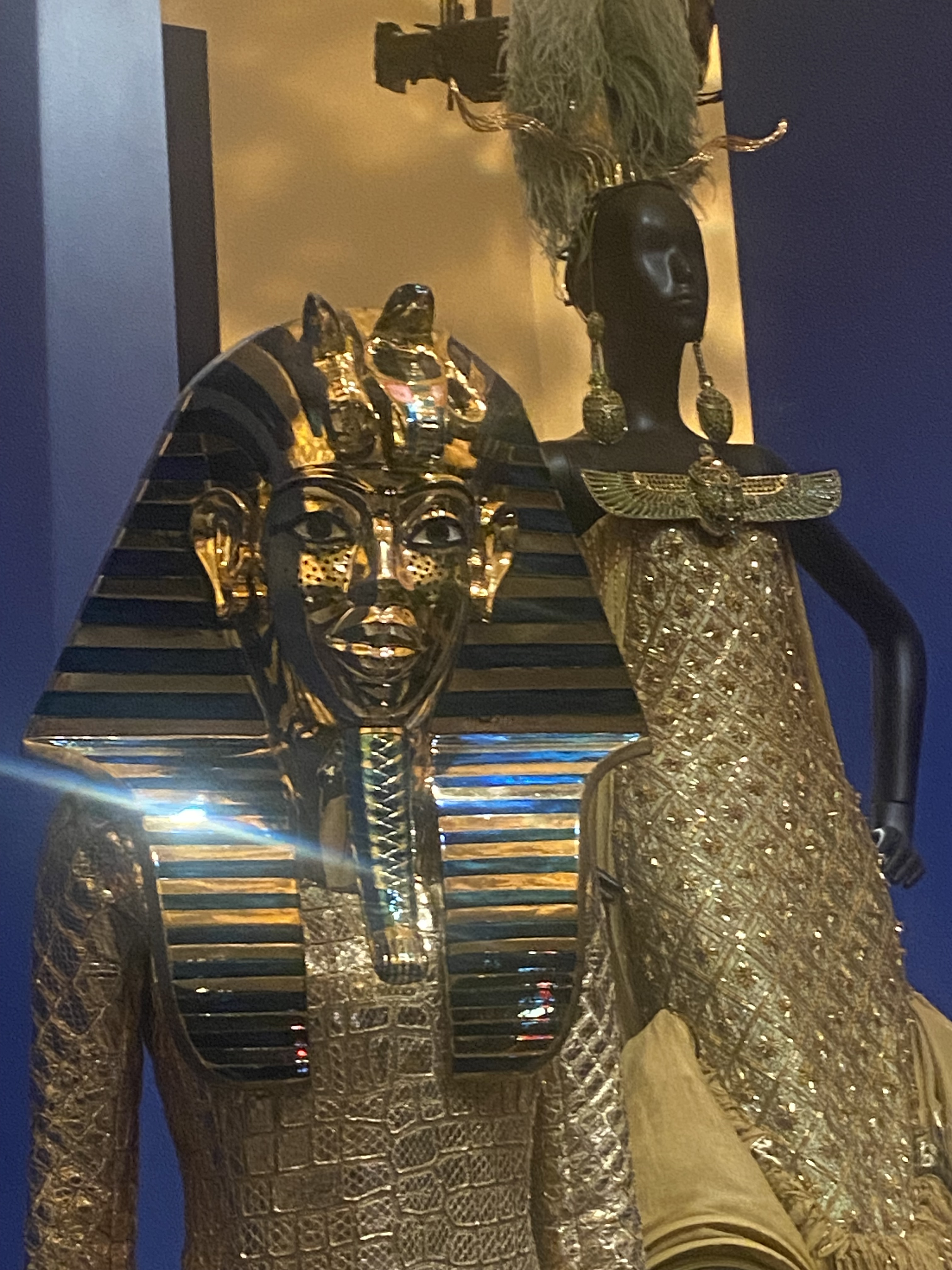
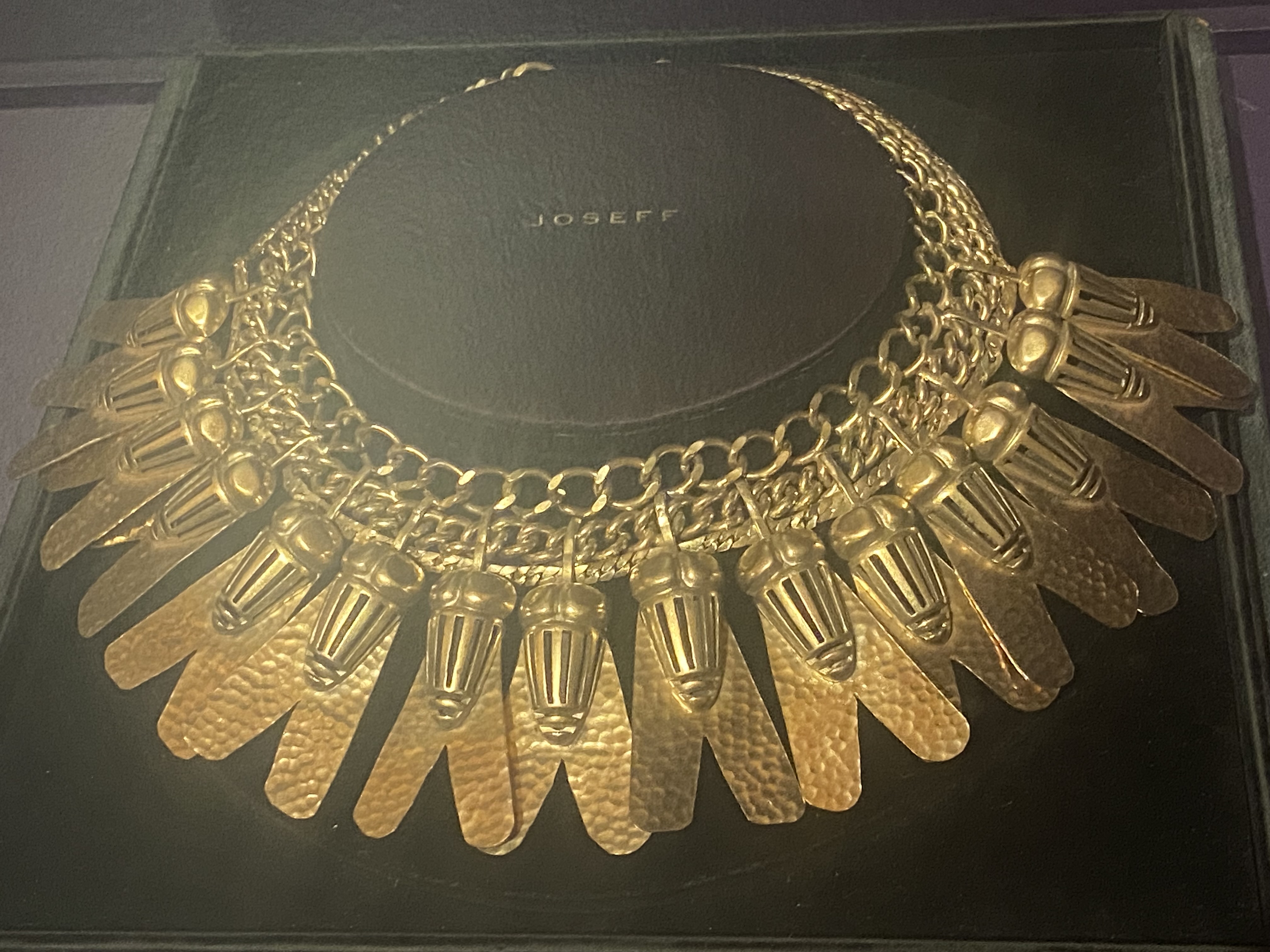
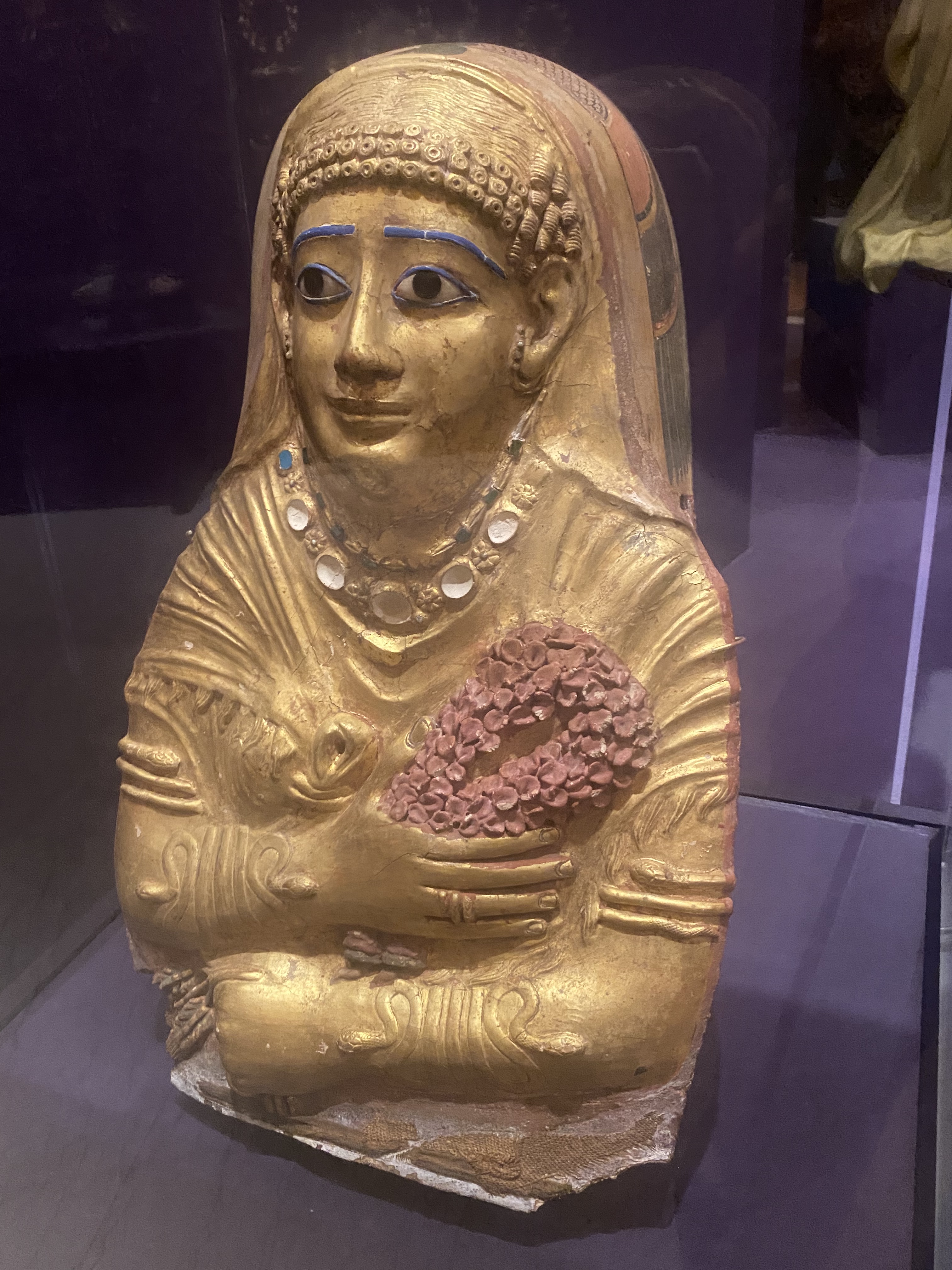
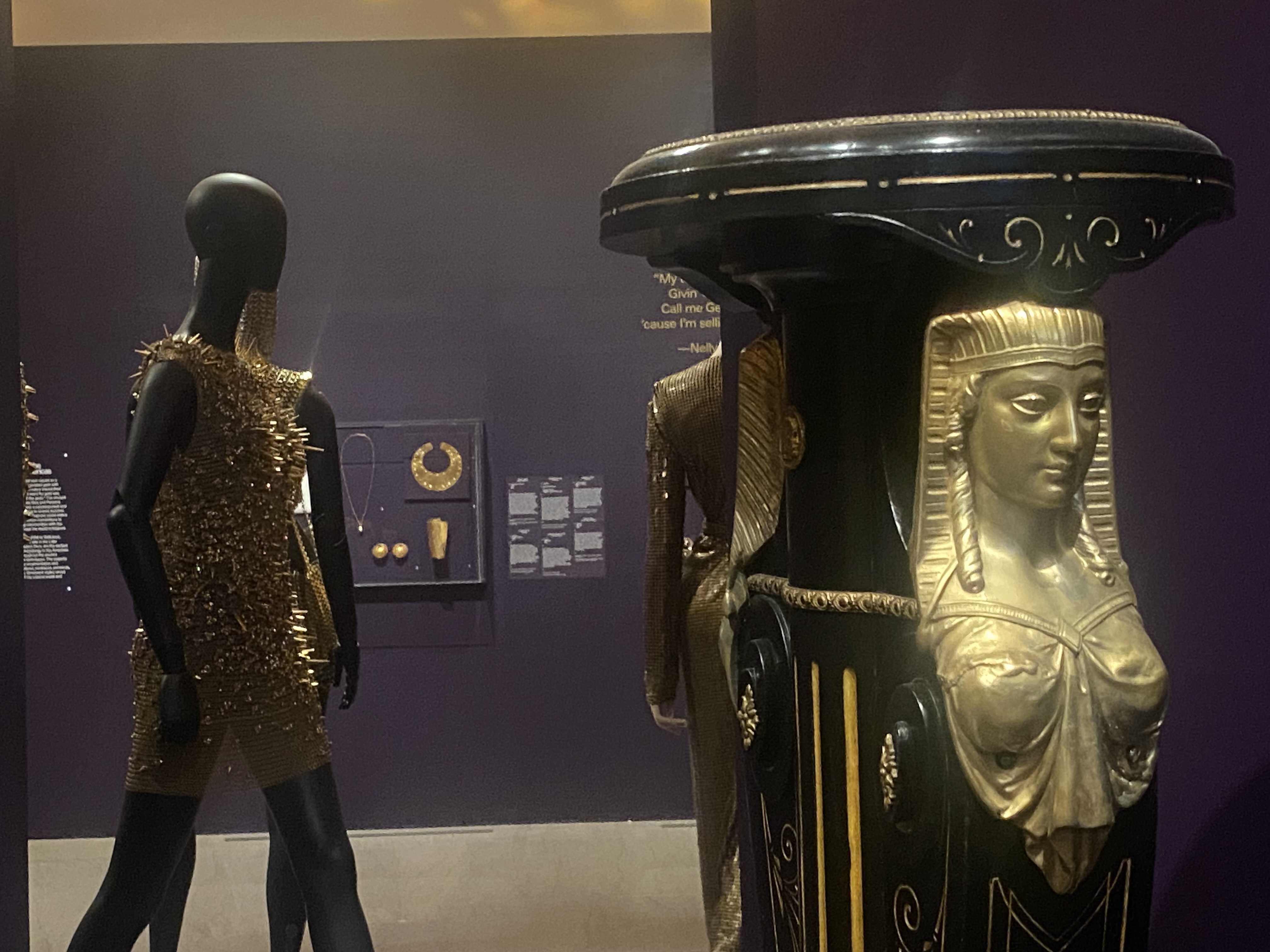
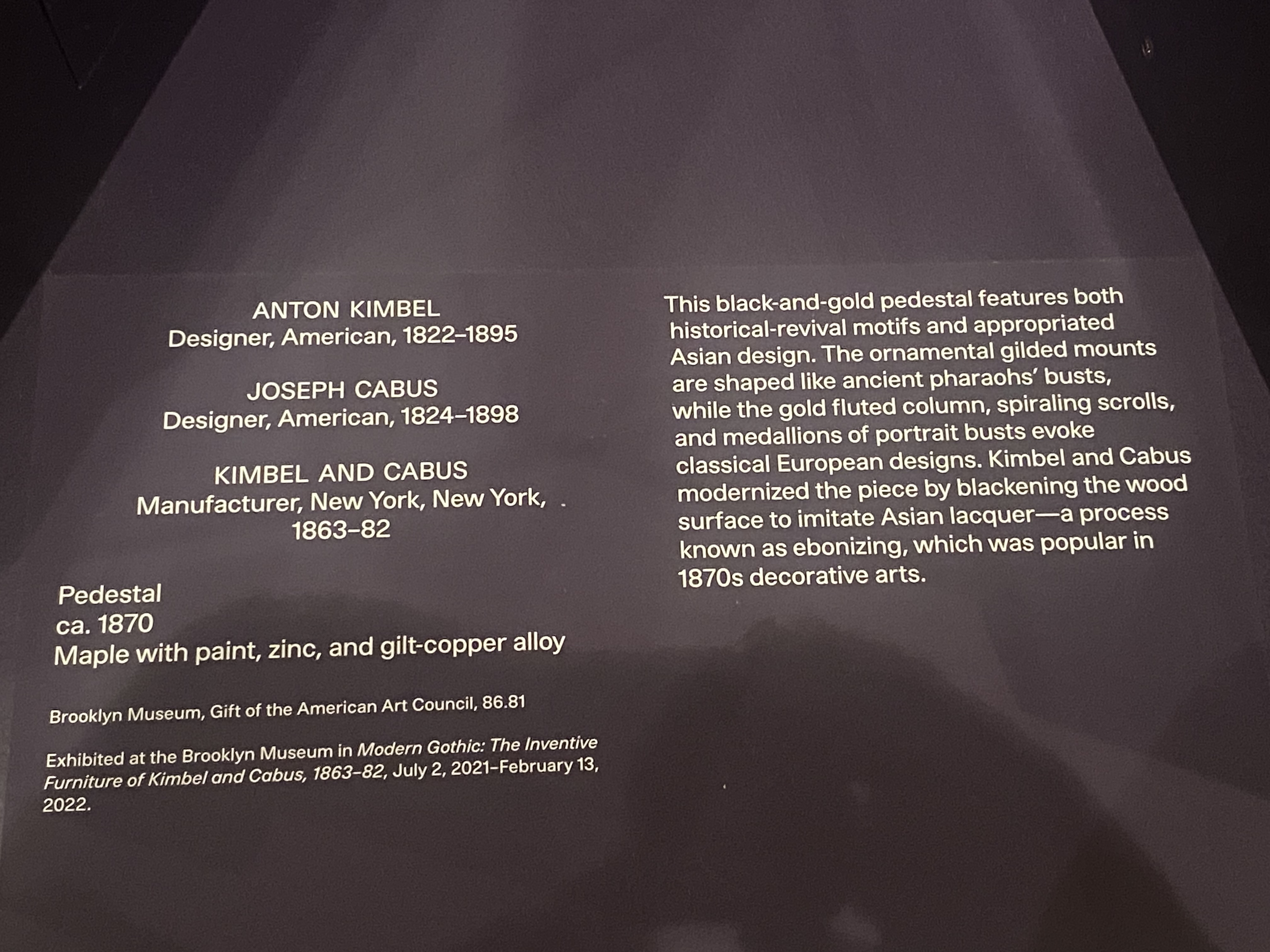
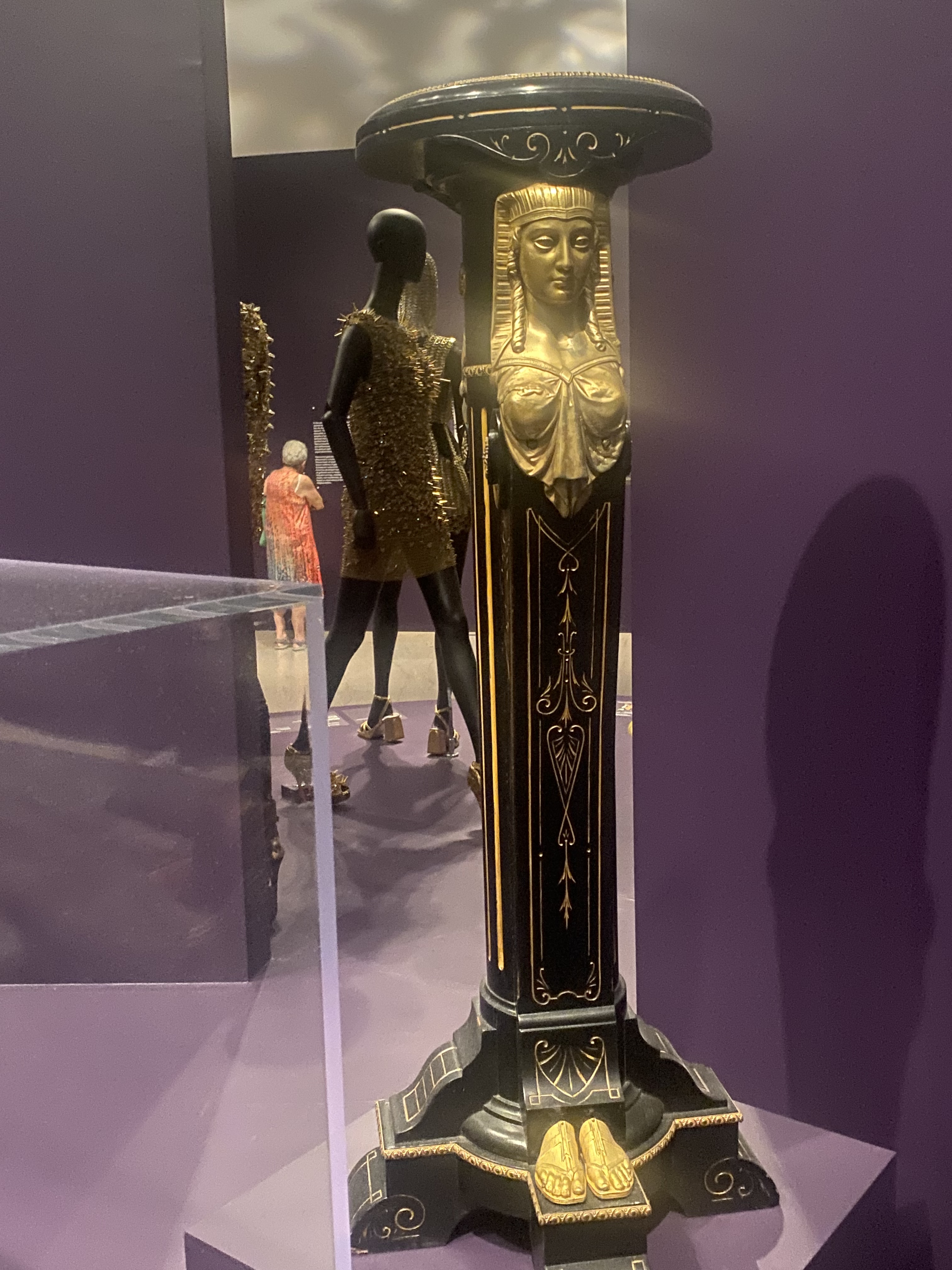
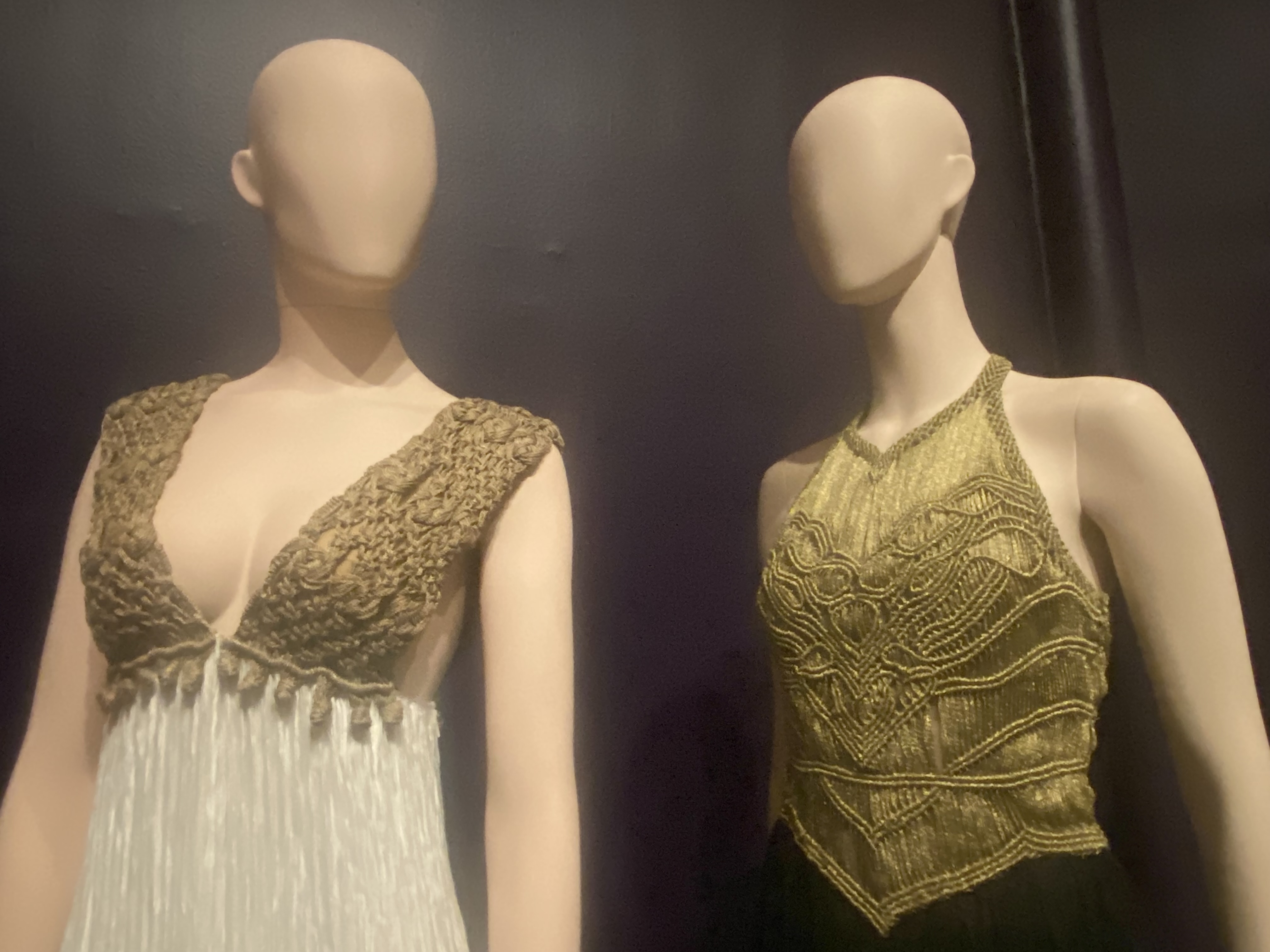
Ed and I caught the elaborate Solid Gold exhibit at the Brooklyn Museum before it closed a few weeks ago. I took lots of pics to share; not all there was to see (because it was a lot!), but still a fare amount of the sprawling, sparkling exhibition.
Outfits by John Galliano for Christian Dior, head pieces by Stephen Jones
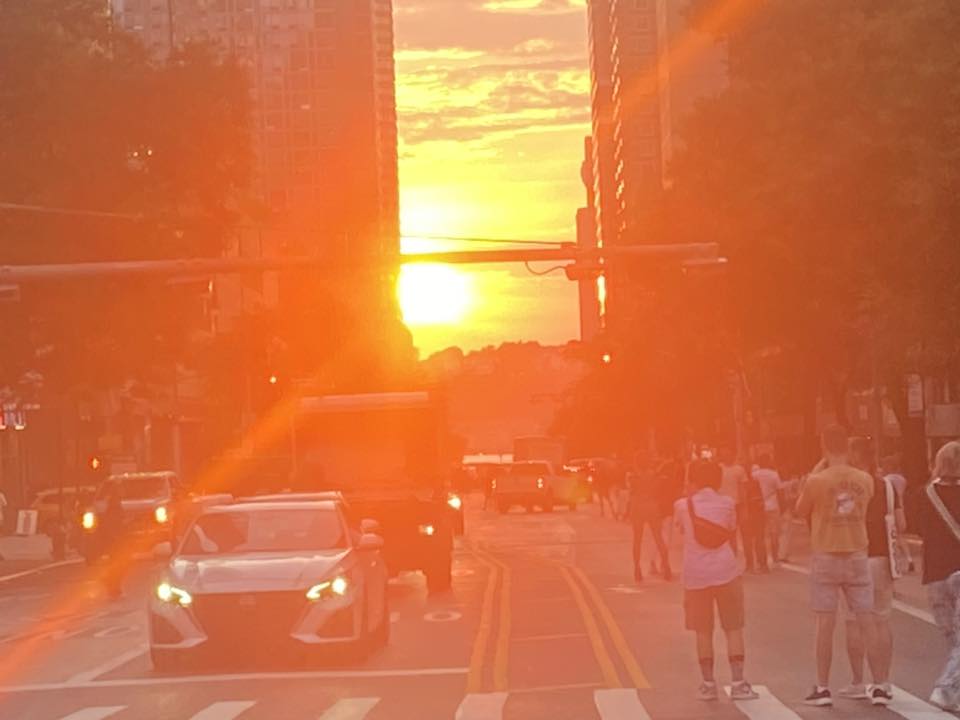
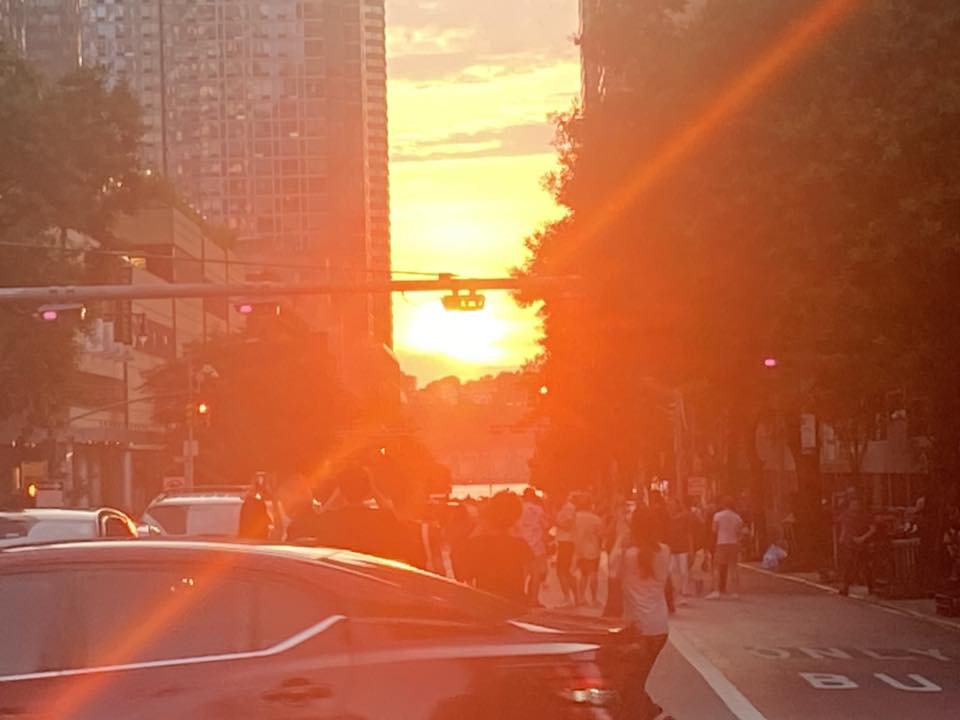
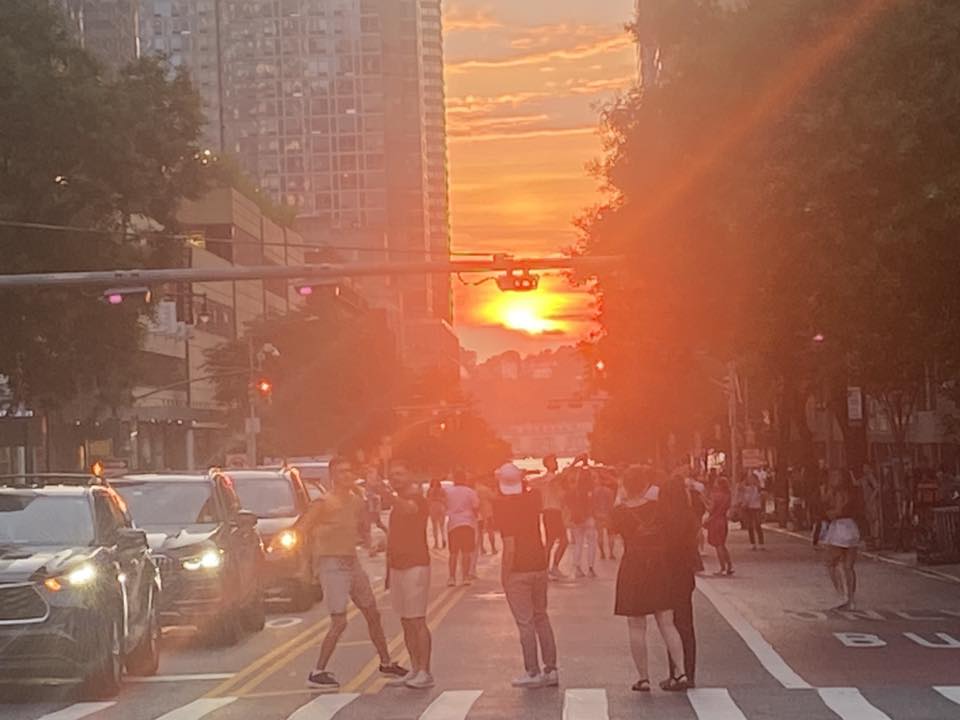
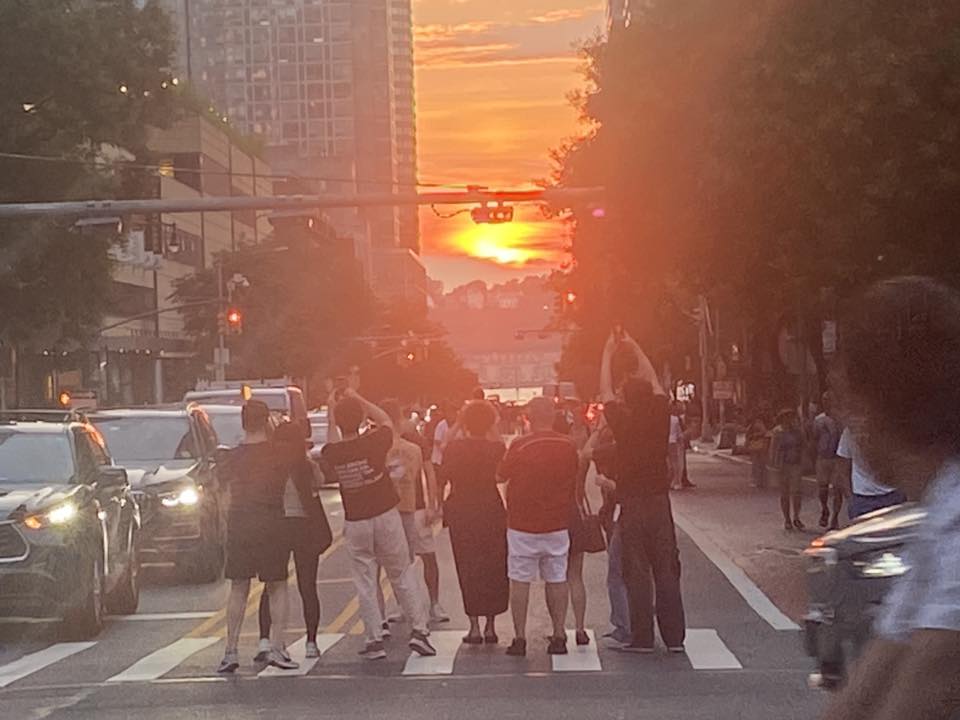
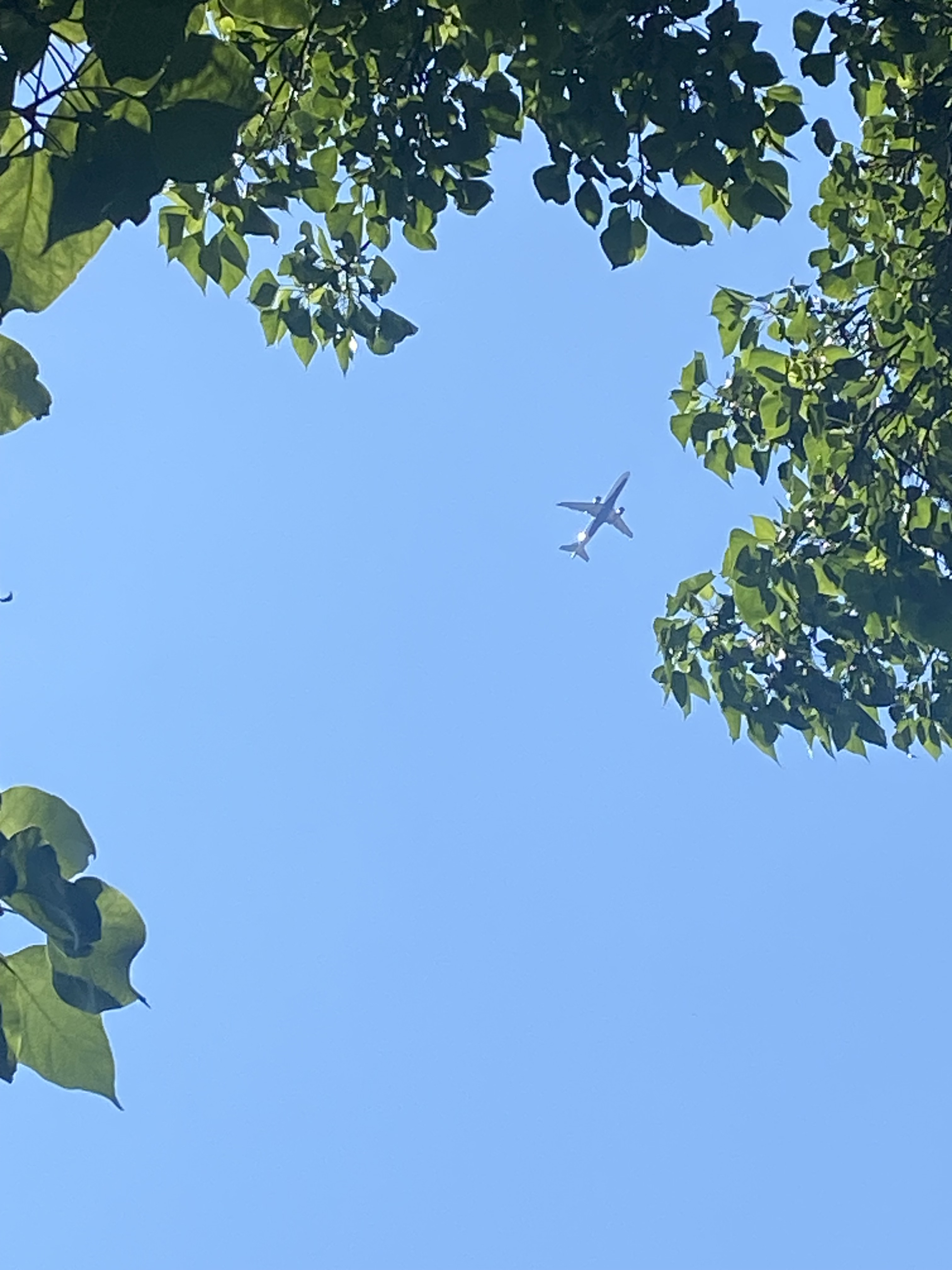
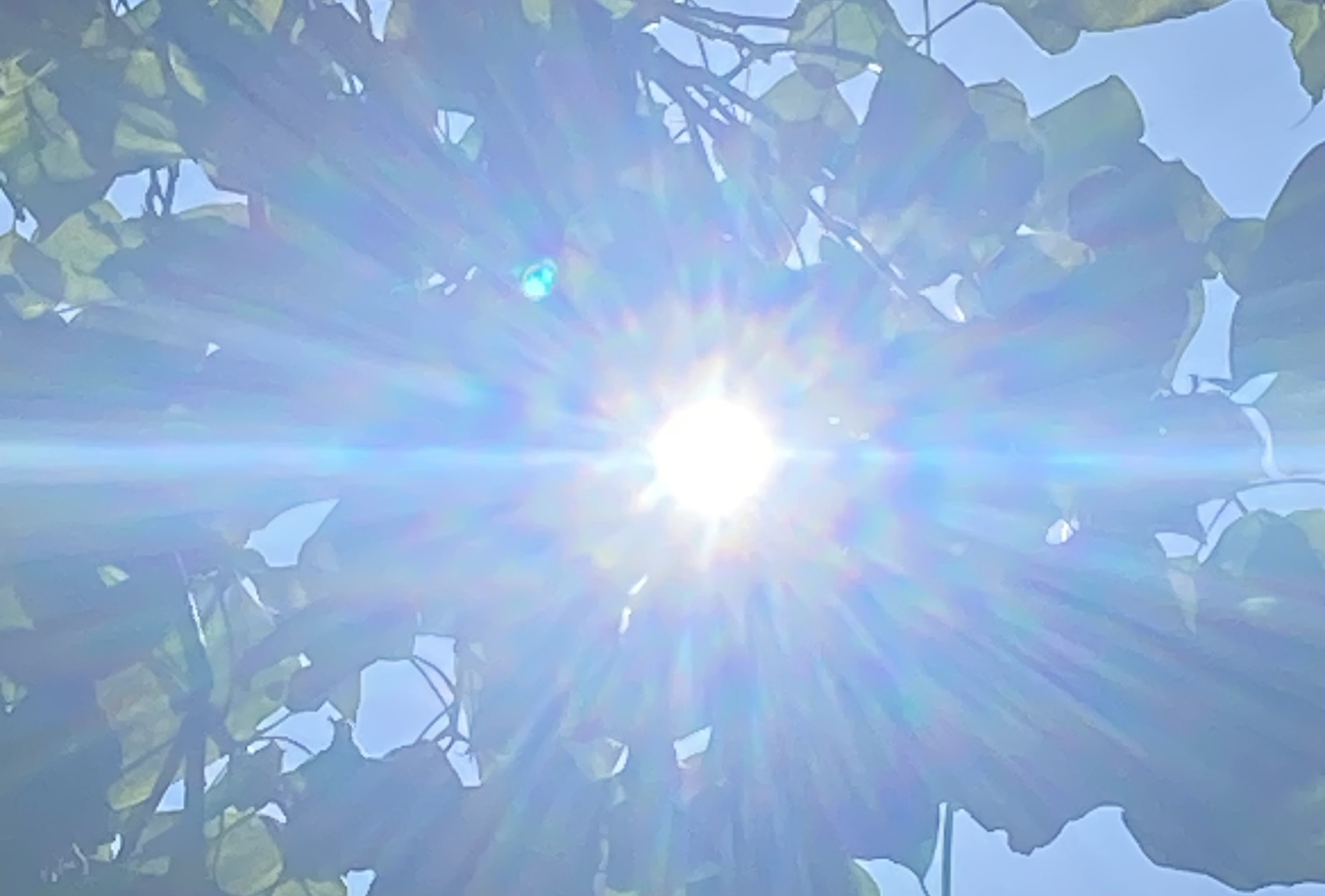
This last Friday and Saturday was Manhattanhenge. Ed and I each took some pictures on 42nd Street while it happened around 8:20pm on Friday.
Manhattanhenge is what we call those days when the sunset aligns perfectly with Manhattan’s street grid. As the American Museum of Natural History website explains “had Manhattan’s grid been perfectly aligned with the geographic north-south line, then the days of Manhattanhenge would coincide with the equinoxes. But Manhattan’s street grid is rotated 30 degrees east from geographic north, shifting the days of alignment elsewhere into the calendar.” May 28 and 29, and July 11 and 12, for example, this year.
Manhattan’s straight street canyons lined by tall buildings plus a clear horizon over the Hudson River to New Jersey create a photographic opportunity unique to the world “if not the universe“. The city even temporarily closes off parts of Manhattan’s main West/East throughfares at the crucial time to assist (and protect) the many Manhattanhenge enthusiasts wielding their cameras in the middle of the road. At least I think that’s what happened, because at first – between 8 and 8:15pm or so – everybody was rushing out onto the middle of 42nd Street by 8th Avenue each time the walk/don’t walk light was in their favor, took pictures, and then rushed back to the sidewalk. But at one point right at peak henge time the westbound lanes of 42nd street were completely devoid of all traffic for 5-10 minutes – making our viewing efforts that much safer to prolong uninterrupted.
Anyway, here are some of the pics Ed and I took with our phones. We have different brands, with cameras that function differently, which makes for some nice contrast. You will probably easily sort out which pics belong to which phone.
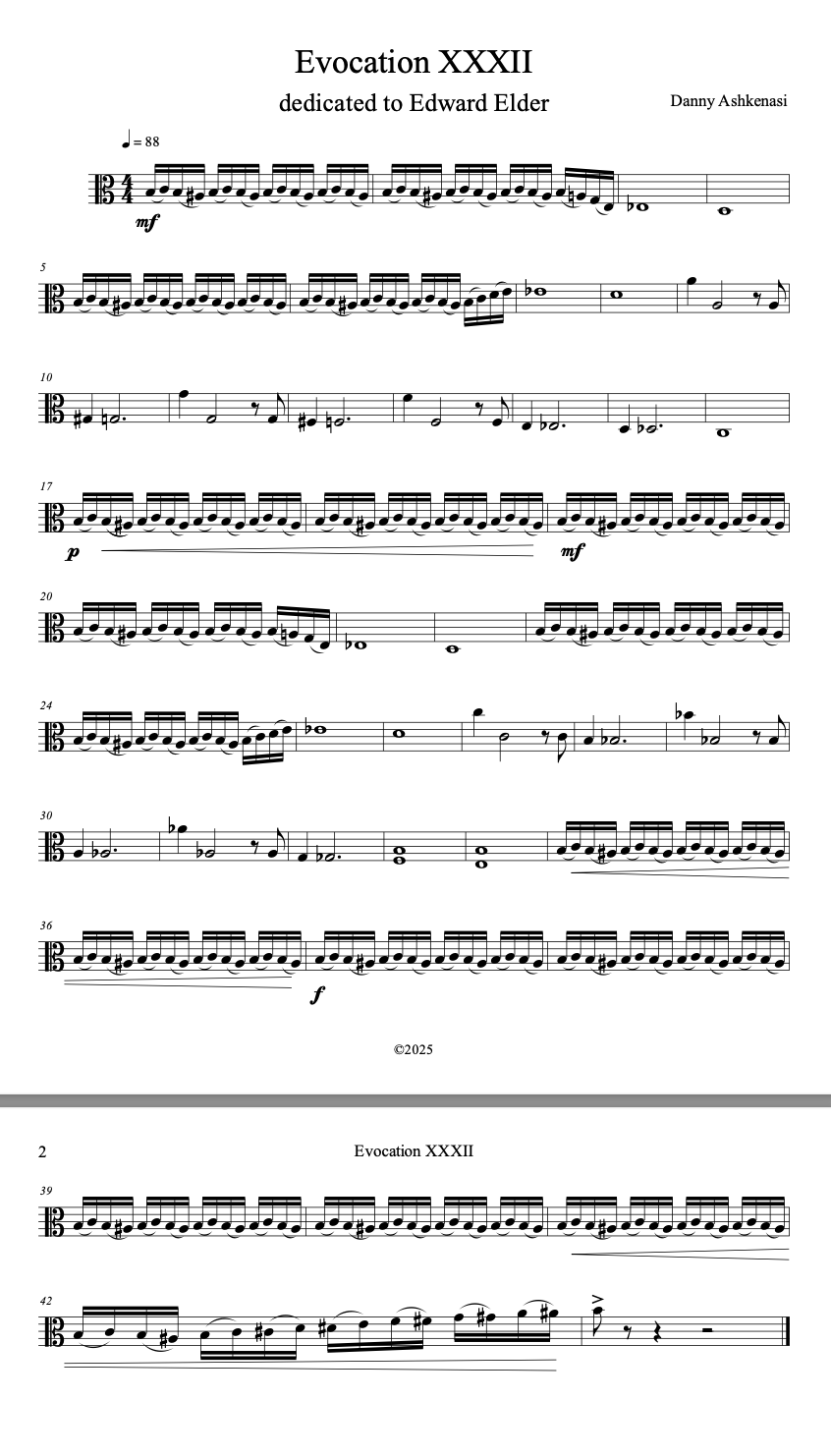
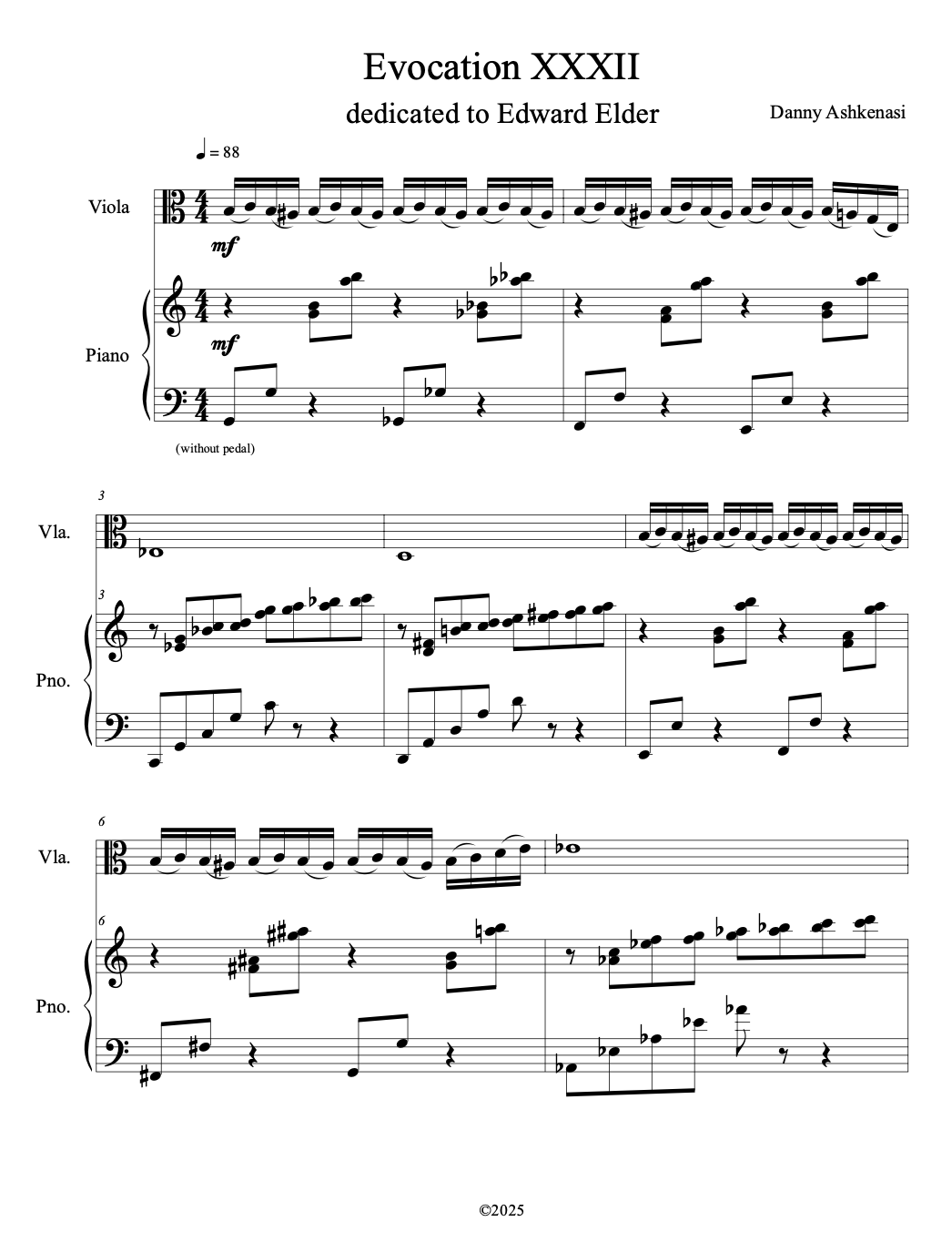
It is Ed’s birthday today. And for the 32nd time in 32 years I have composed a viola/piano duet for my husband, a tradition that will continue until we reach the morbid part of the generally expressed marriage vow (Although I am reminded by our wedding certificate that Ed and I used the differently worded “as long as they both shall live” when we were betrothed). Ed plays the viola and I the piano, but generally we only perform together only for ourselves or family.
Each one of these duets are called “Evocation”. I shall share the score of “Evocation XXXII” in this post. In previous posts (which may be found here in the archives) I have shared a handful of others, with my music scoring program providing a computer synthesized rendition of viola and piano playing the piece.
This year I can only provide the score, without sound. The company that made the music scoring program I have used for almost 30 years (Finale) has closed shop, and the version on my old desk top computer in our office has suddenly degraded, losing many of its capabilities, including the ability to reproduce the sound of what has been scored. With no company left to give tech support or upgrades or repairs, this will be the last time I can use Finale to write out my music. This old dog has got to learn new tricks.
But as this breakdown of the old trick I knew happened just two weeks before Ed’s birthday, I found it easier for this old dog to write out Evocation XXXII on a handicapped program than test my nerves with learning how to use the new one I will now need to switch over to in the short time I had for this score to be completed.
Not that my nerves weren’t tested anyway. It wasn’t just the sound reproducing capability that was hamstrung. The “Speedy Entry” function would not recognize pitches, only rests, so I had to switch to the far slower and fiddly “Simple Entry” function. The “mass mover” function simply disappeared from the menu option, so there was no way to “copy and paste”, among other functions. All this made what would normally may have taken me an hour at most to write out take a day and a half. (I don’t mean the composition process, simply the writing out of the score itself.)
For example look just at this section in the viola:
In Speedy Entry I would have produced this in 20 seconds. In Simple Entry it took me took several minutes the first time. And note how often this phrase is repeated in the score – 12 times. Copying and pasting it would take a matter of seconds. Instead I had to painstakingly write it out again and again and again … I did get faster with practice though, probably only taking a minute the twelfth time.
Anyway, ultimately it wasn’t too horrible, just an annoyance. And I’m annoyed I have to learn to use a whole new music scoring program after doing just fine thank you very much with the one I had been using all these years.
But mostly I’m sorry I can’t share audio of Evocation XXXII with you today. Those of you who are comfortable sight reading music may note that it is mostly a jaunty, playful piece. There’s a touch a mystery, a smattering of spiky chords, but mostly it’s a playful ditty.
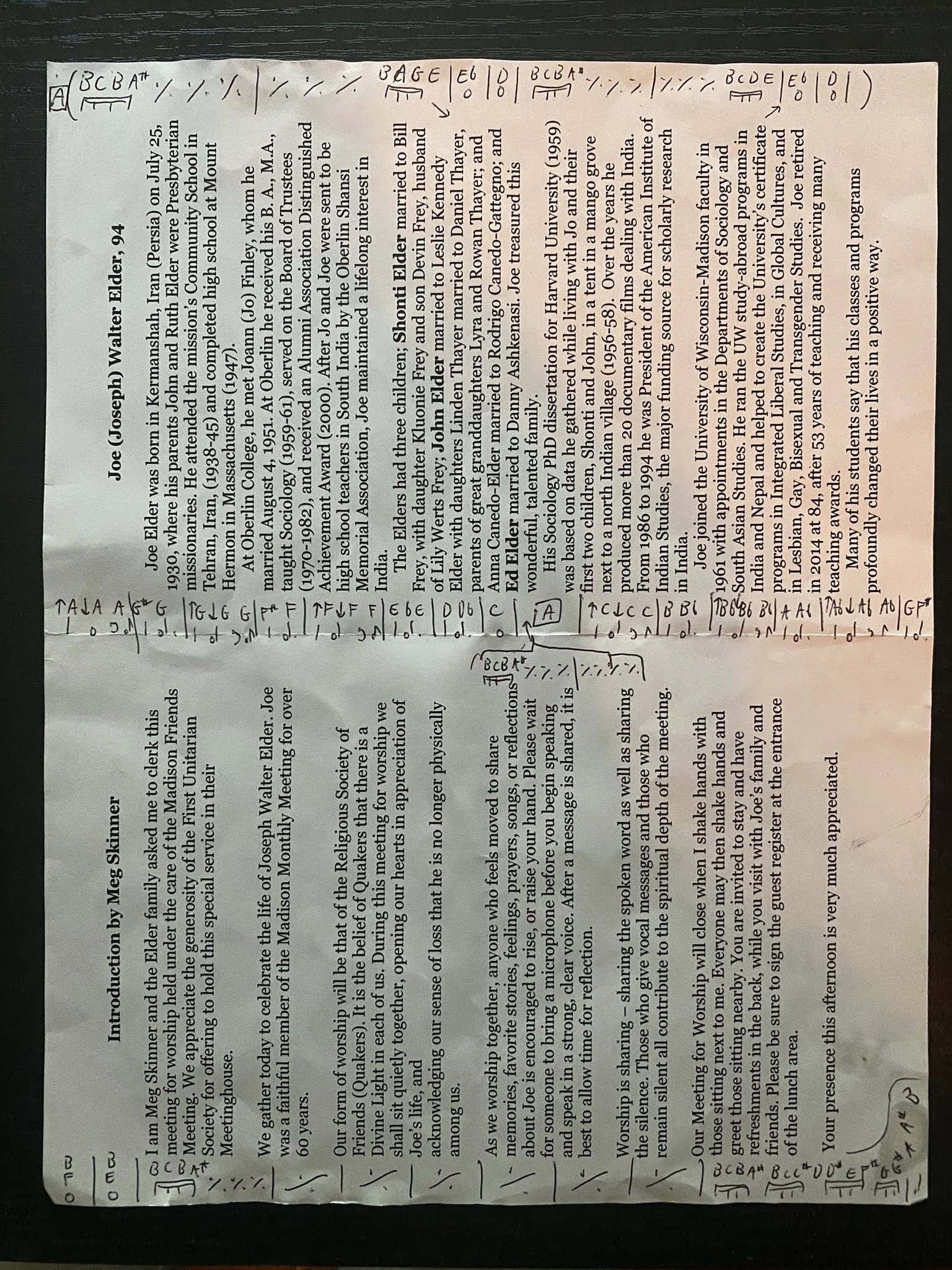
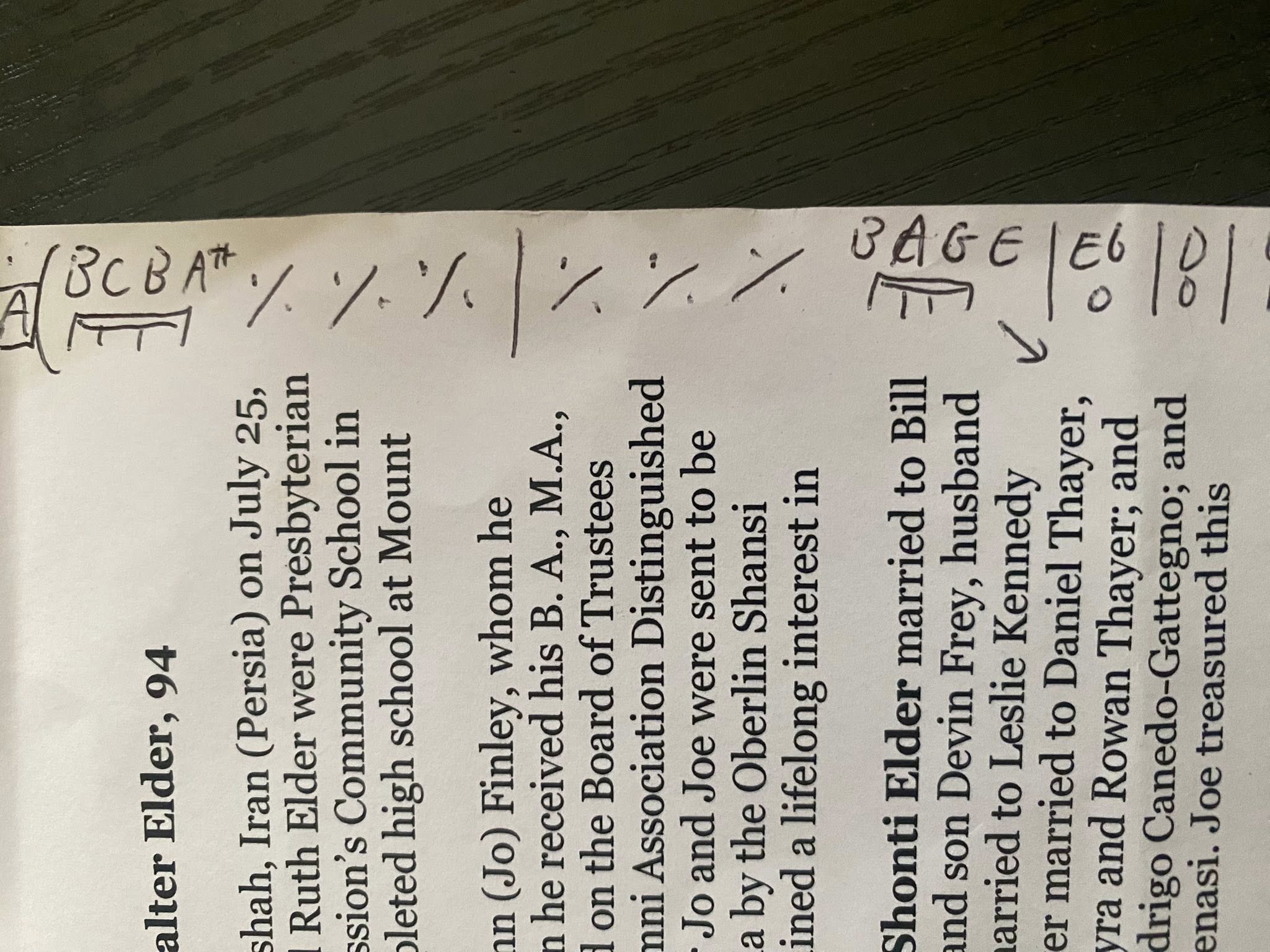
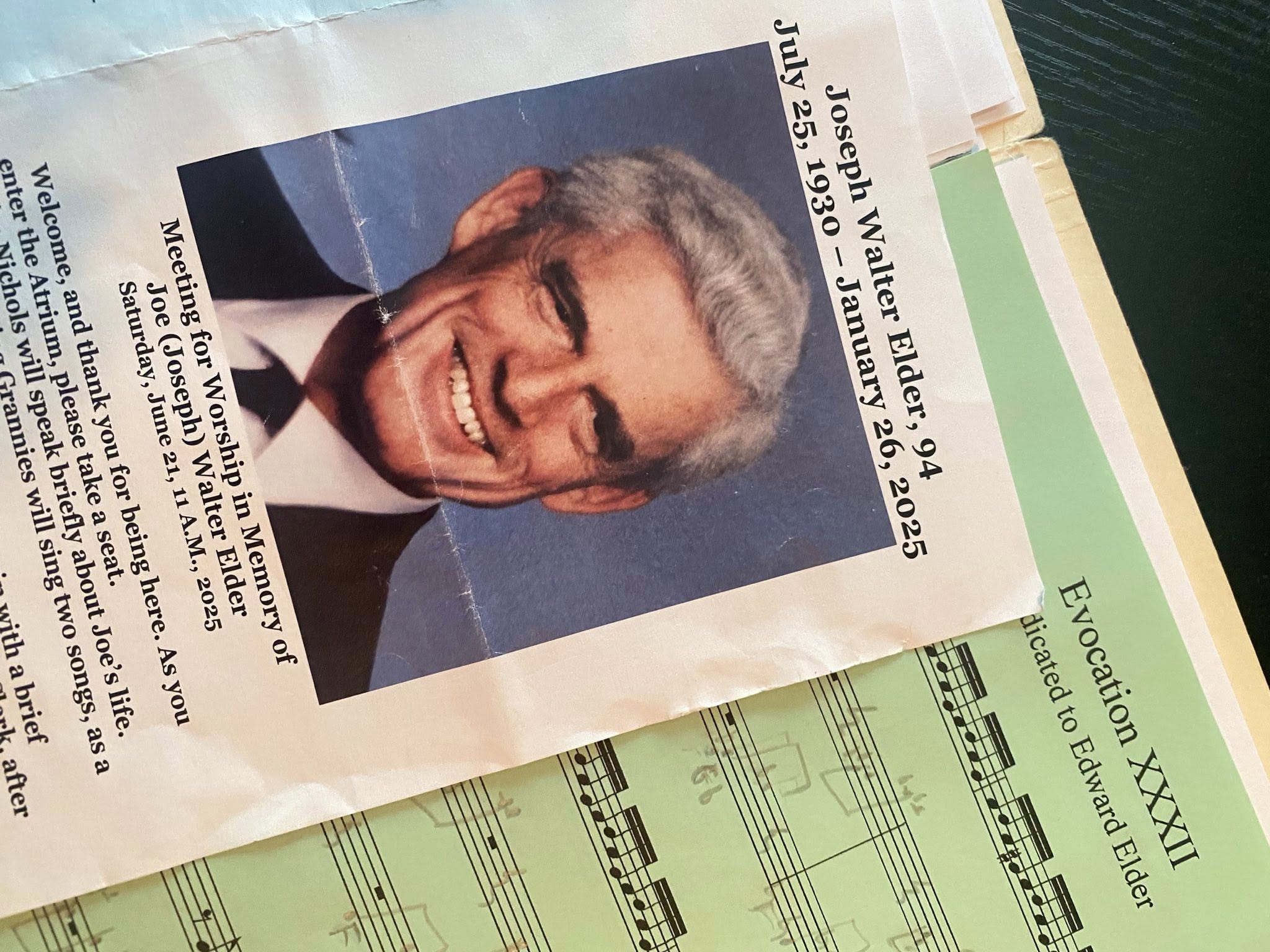
Which may seem unusual, not only because my Evocations tend towards the dark and moody, but also because I came up with the melody during a memorial service. For Ed’s father no less. But Ed says his dad was a jaunty fellow, so maybe this was appropriate. The melody line for the viola just kept developing in my head during the service, and I kept quietly replaying it in my mind until I was sure I had memorized it. Because I would not have a chance to write it down until hours later back in the hotel. I didn’t have music paper with me in Madison, Wisconsin, or any kind of blank paper; so it just made sense to me to write down my notes in the margins of the memorial program:
Here’s what that viola melody segment I excerpted above (plus three more measures) looks like in the margins of the program:
The memorial program and scrap paper with an in-progress version of the piece, pencil markings indicating the working out of the piano parts:
We watched much of the parade at a perch on 5th Avenue, north of 8th Street, then walked up to 27th Street to gather and then march with the Quakers.
Here is a video diary of a lot of all that!
Got a close up of comptroller and mayoral candidate Brad Lander. I love how he and Zohran Mamdani cross-endorsed each other in the ranked voting primary.
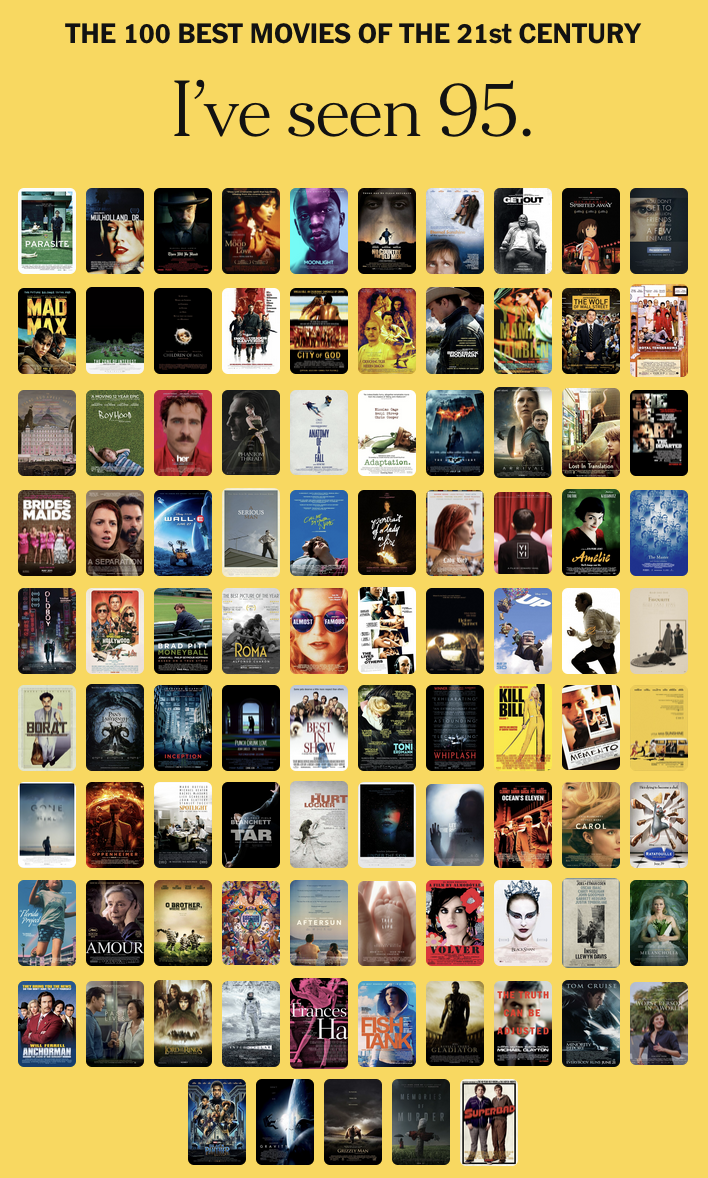
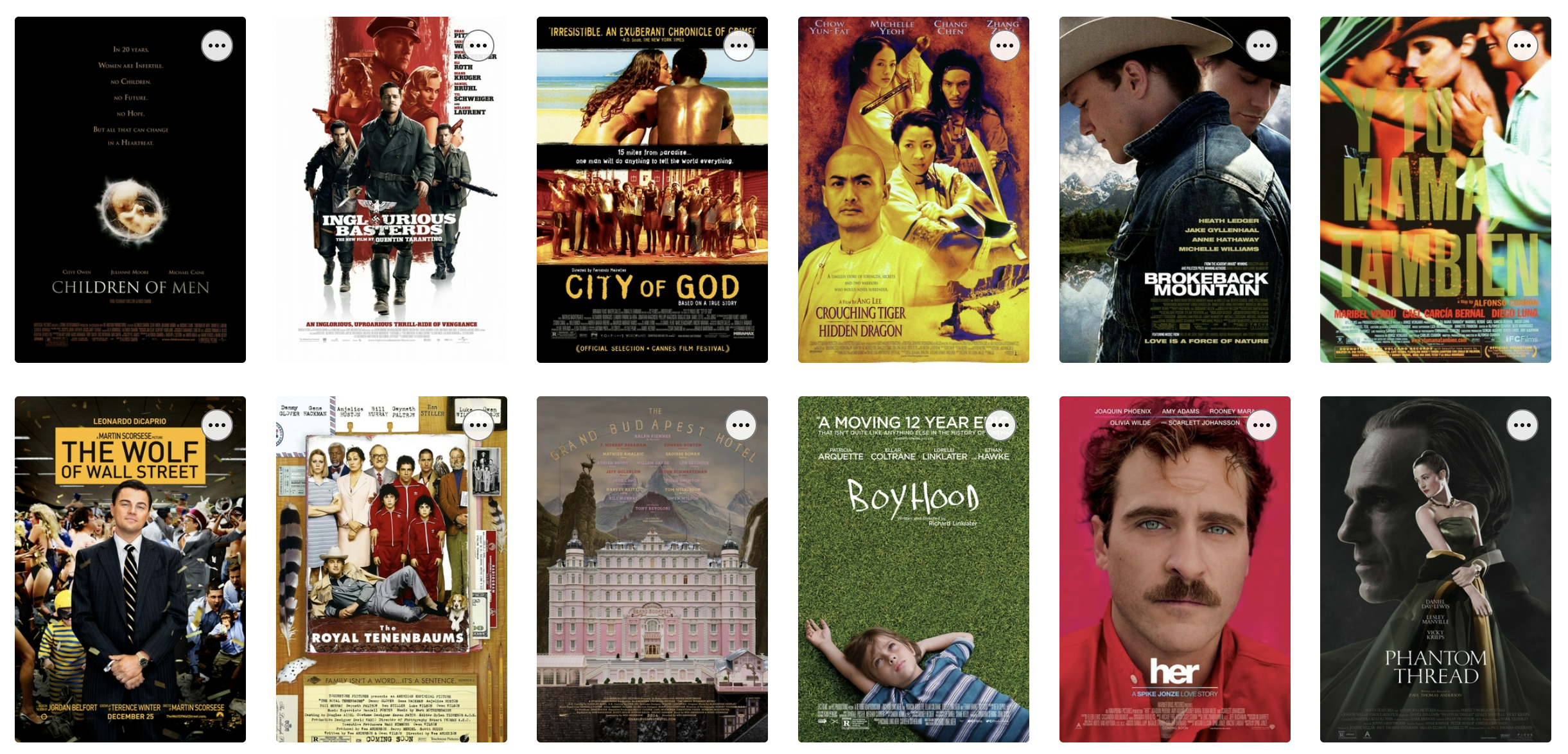
The New York Times compiled a list of the 100 greatest movies of the 21st century. More than 500 filmmakers, stars and influential film fans were asked to vote for the 10 best movies (however they chose to define that) released since Jan. 1, 2000. Perusing some of the individual ballots reveals a wide variety of choices and tastes and often precious little overlap. Still, from all that data a ranked list of 100 was compiled.
And I am pleased to note I have seen 95 of the chosen 100 (and am pleased with most of those being singled out this way).
At the bottom of this post you can find all 95 of those films listed in a more legible fashion than in the above screenshot.
The five films below are the ones on the list I have yet to see but now especially feel I should. Four of them are films I am wary or even scared to watch… but I will get to them … sometime.
Readers can also create their own ballot of 10 (in no ranking order). With only 10 slots it was wrenching to leave certain films off, but I will refrain from saying which or go into any further rationalizations and explanations.
For what it’s worth, six of my top ten are also in the NYT top 100.
I think being part of the 100 is more important than what exact ranking a film received. Still this list of the 95 I’ve seen does indicate the ranking order, except for missing the five films I have not seen …