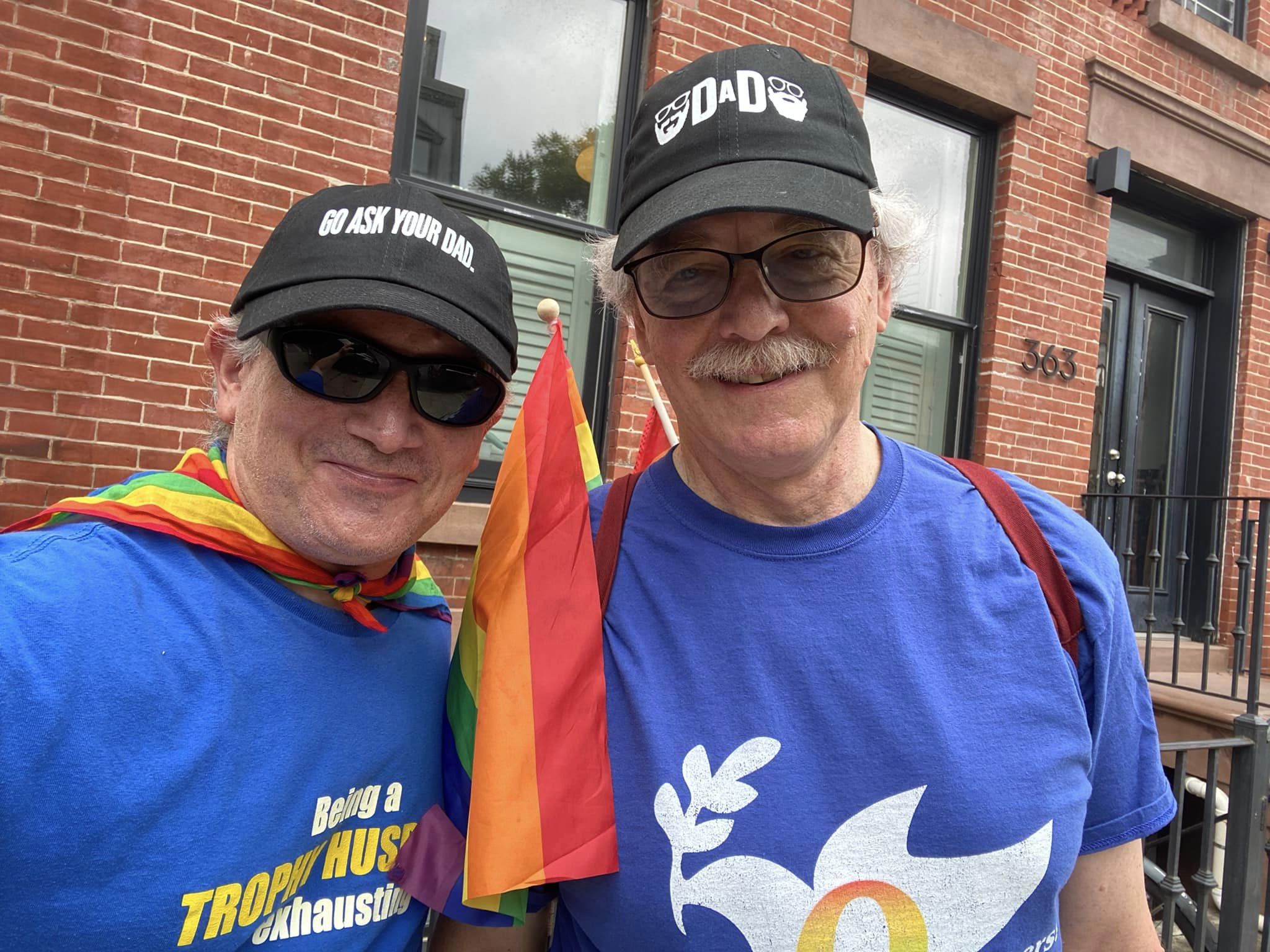
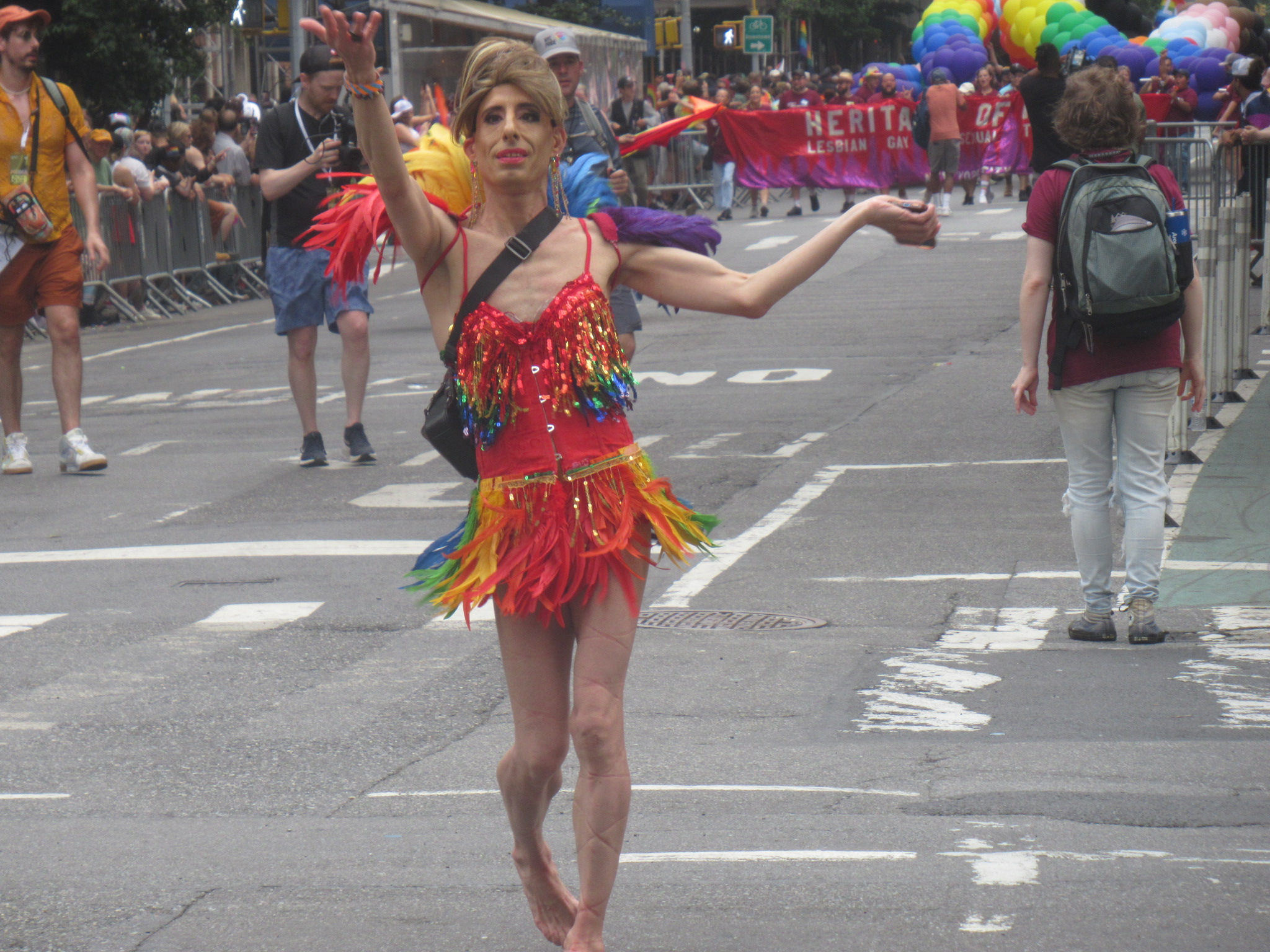
Ed and I made our wasy from Brooklyn to the Village to watch much of the Pride festivities and parade before joining the Quakers* at their late afternoon slot in the march down Fifth Avenue.
What follows are a couple handfuls of photo and video impressions.
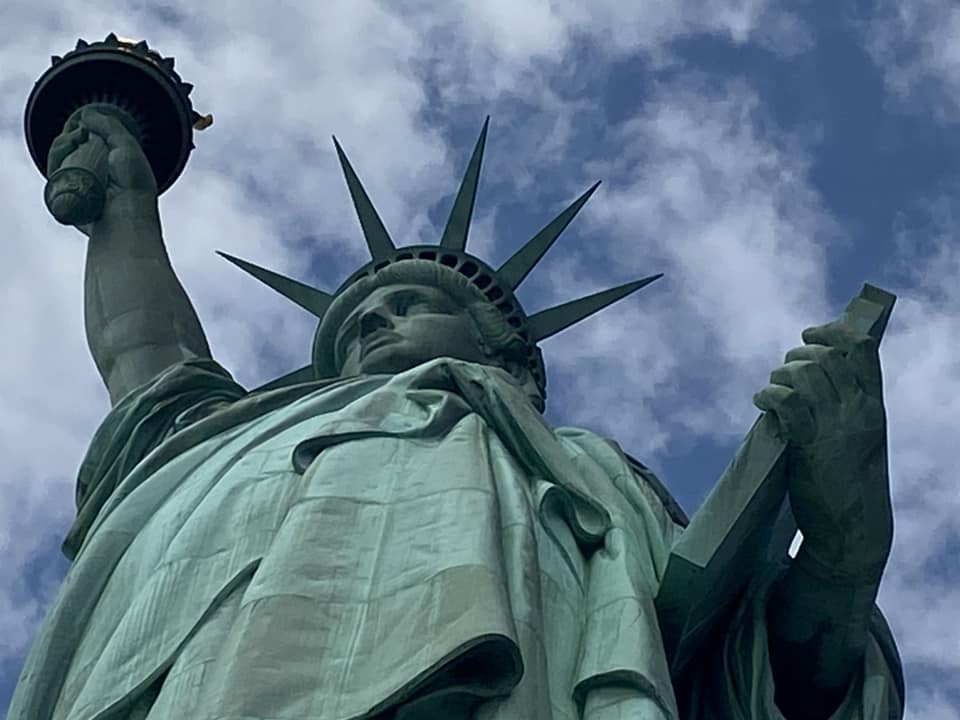
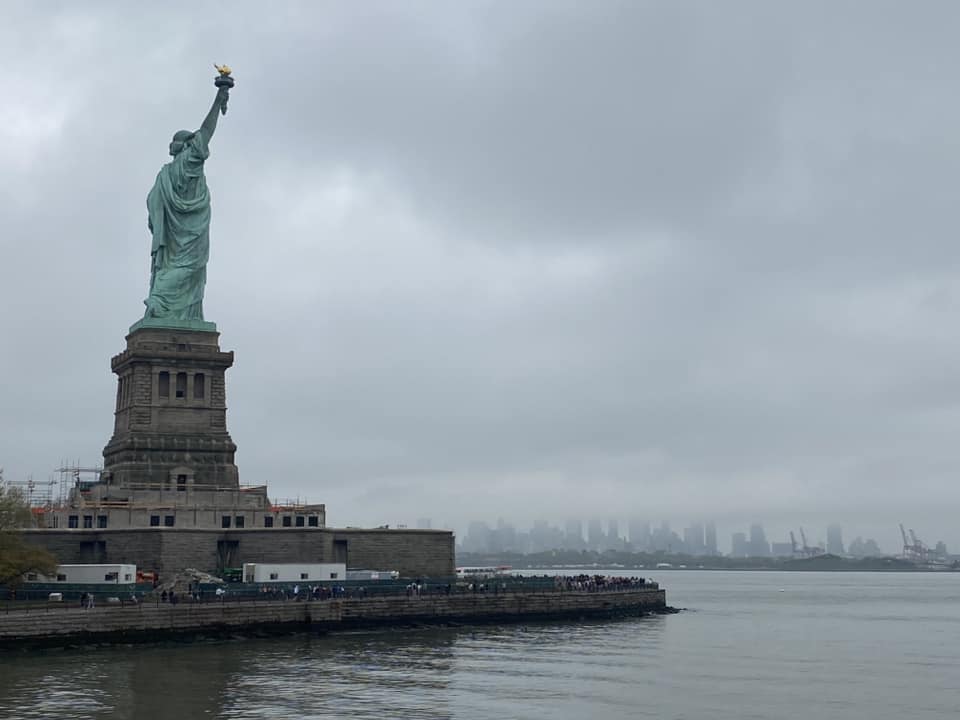
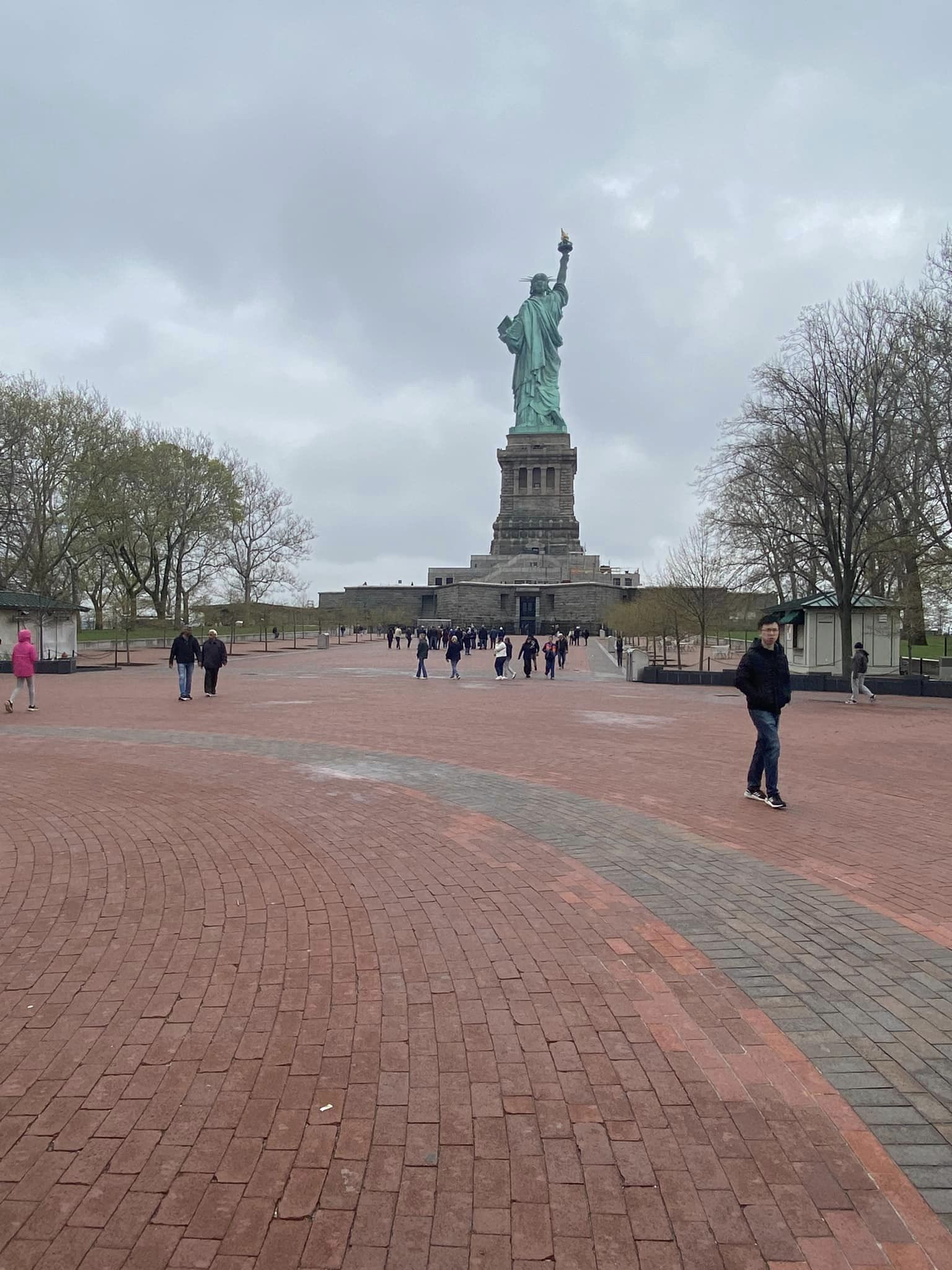
Mid April Ed and I escorted visiting family to Liberty Island for a trip to, and up, the Statue of Liberty.
The morning started grey and rainy but turned sunny and blue around the time we reached the viewing gallery in Lady Liberty’s crown, allowing for some contrasting views in approach and retreat.
Yes, some pics here will be much like the typical, classic shots of the statue you have seen elsewhere. But I promise, many others will be far more unusual.
So among the expected, also expect some rather unexpected pics.
We have come to the final episode of the Beyond / Jenseits blog posts, at least as far as recounting the little night opera’s libretto and music in German and English. (Catch up with all of the opera and the previous episodes on the Jenseits/Beyond homepage.)
The Woman’s return back to her body and back to living commences in Section XXII. But before that in Section XXII we are diverted to some riffs on the indignities of aging, especially and unfairly for the female sex. The Angels briefly take on new personas as an ageist artistic director and an eager plastic surgeon.
The Woman reacts in a manner and with music that recalls the earlier sections on her girlhood, evoking grim(m) fairy tales and declaring “Snow White has the smoothest face lifting in all the world”.
Then the finale begins in earnest. The Woman watches her Husband and Son sit vigil by her hospital bed. After all she has now experienced in the Beyond, she muses “I am dead and was never more alive.”
However the horror of operating table is reprised, and the Woman feels herself drawn back into the terror of witnessing her body being cut into. This time she conquers her fear.
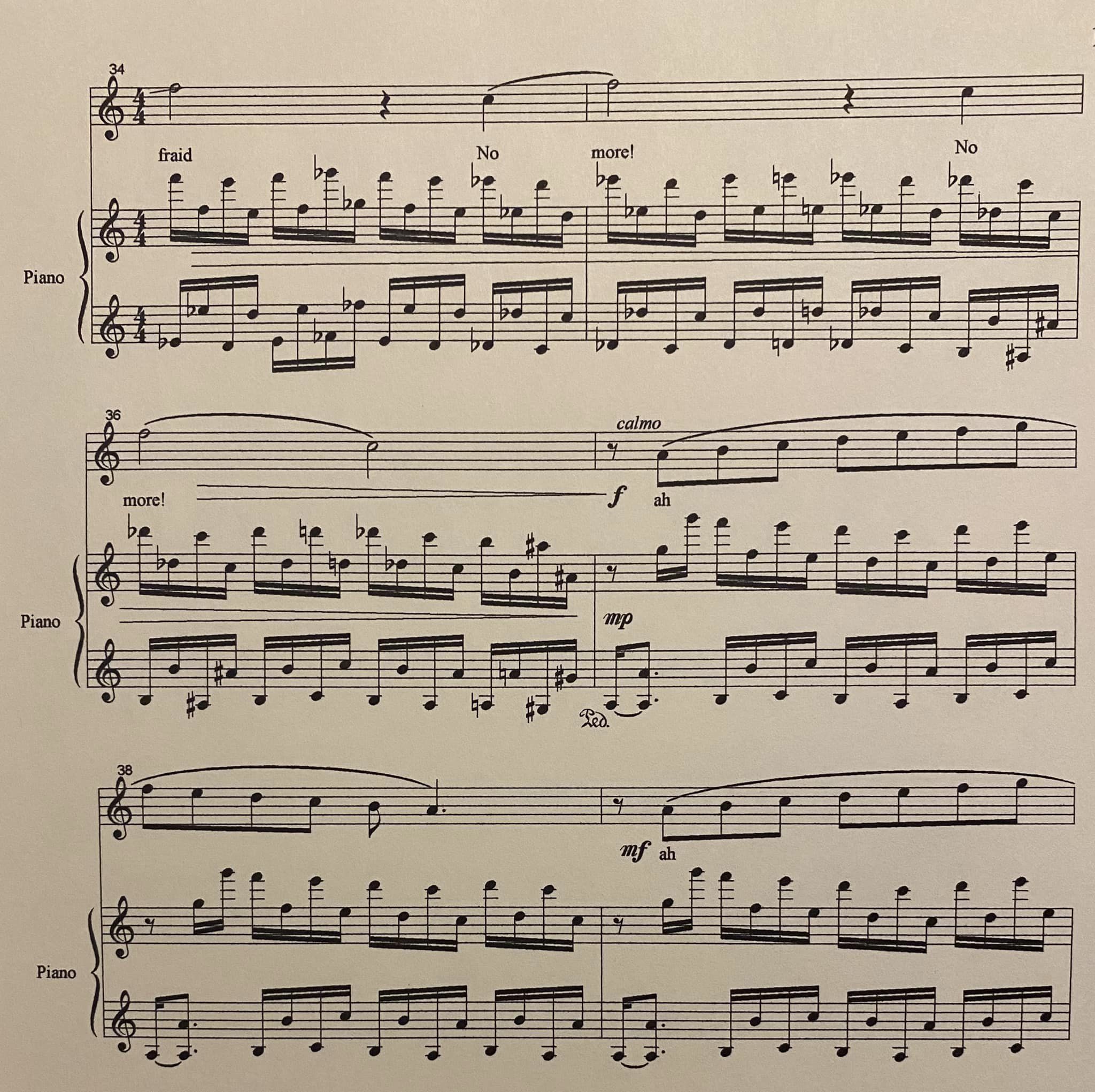
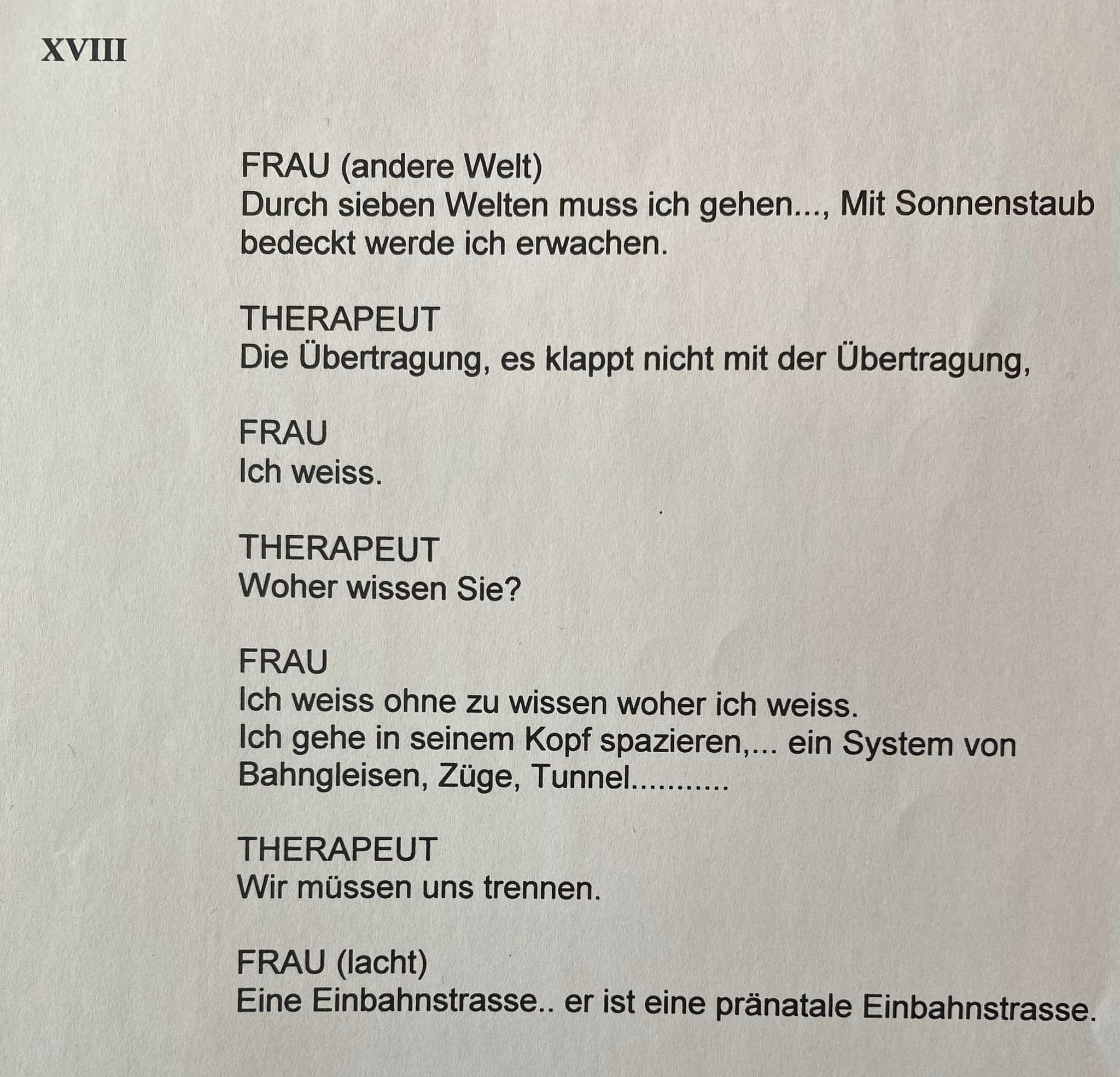
In fact, you can tell from this part of the German libretto that text was added for the Woman to sing. I realized in composing this section that I needed additional words to draw out and better transition into what was ultimately a musical transformation of the fear theme from something chromatically gnarled into a soaring celebration. A long distance phone call between me and Helga led to her dictating me those extra words you can now see in ink in this copy of the original German libretto.
The 1st Angel also gets a phone call. The Woman may return back to her body. She will live on.
But does the Woman still want to go back?
After all, life is hard. But it’s also a gift.
And did all this really happen? Or was it some sort of dream?
Between the Woman and the Angels the answers to those questions are more cryptic than clear.
In the grand musical finale the Woman states: “I am that which always was, which always is and always will be. I am all and not at all.”
And in a hushed epilog, after the final piano chord ushers her back from the Beyond, she muses:
“Do I live and only have dreamed that I died? Or am I dead and only have dreamed that I’m living?”
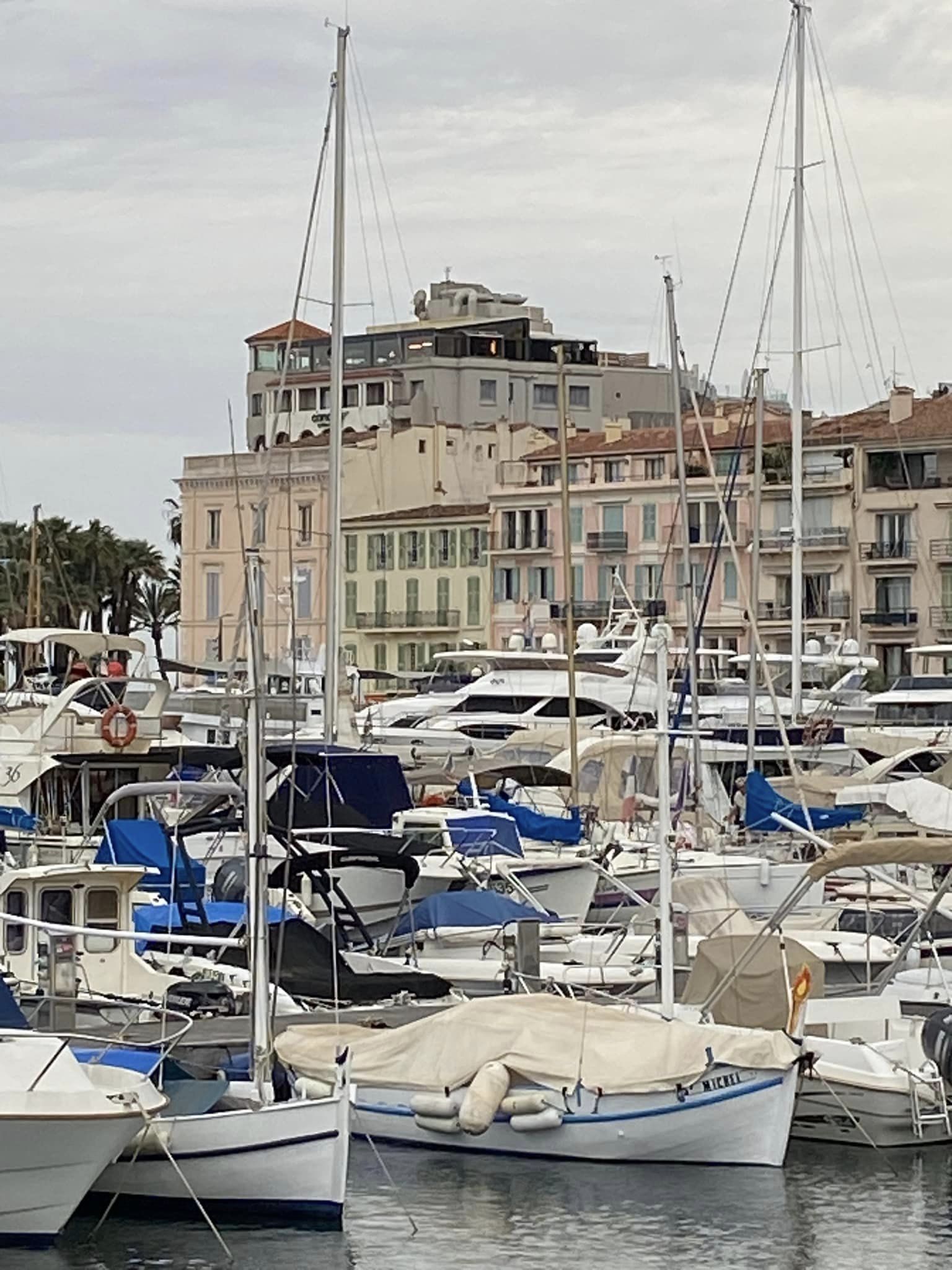
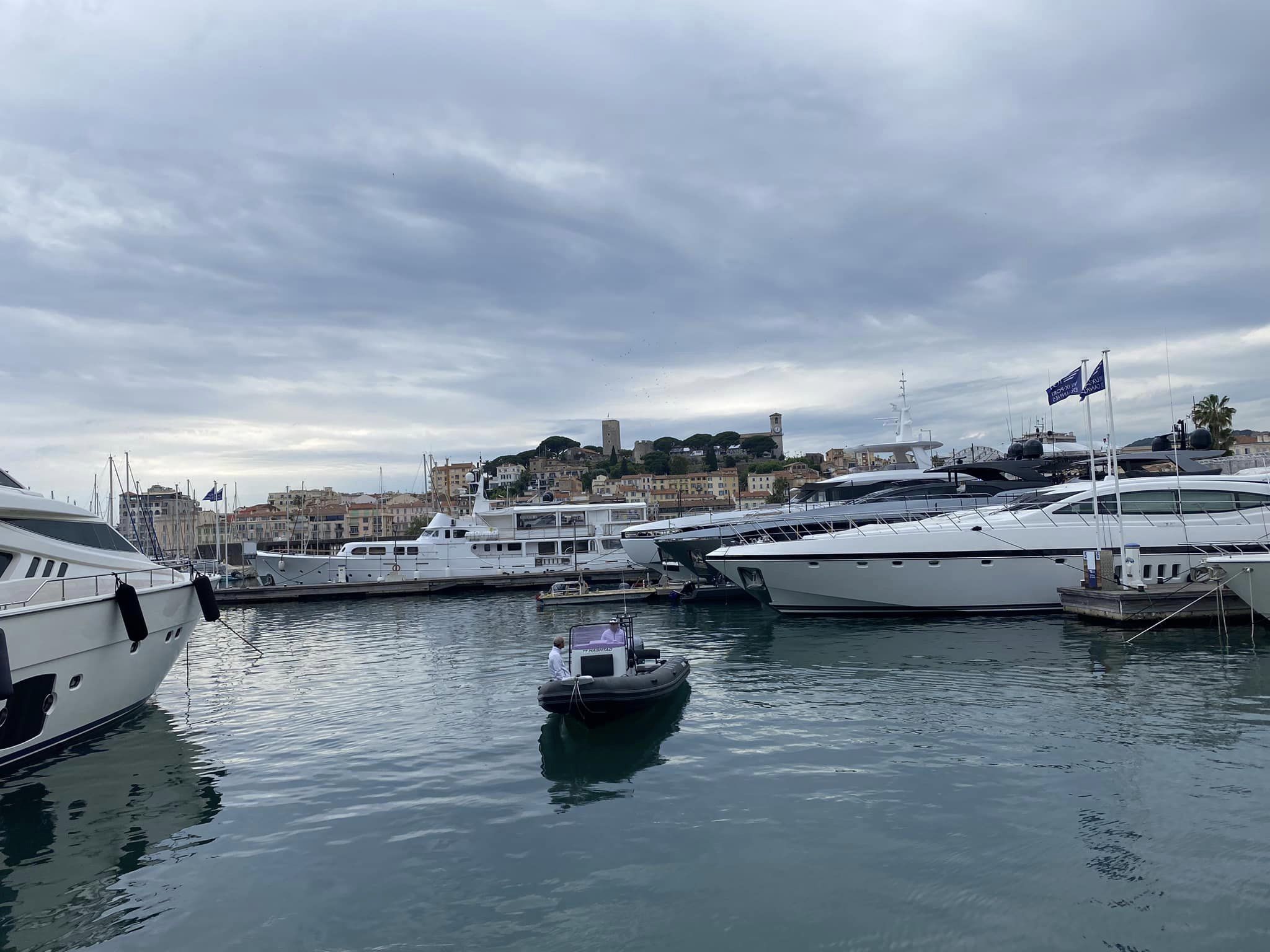
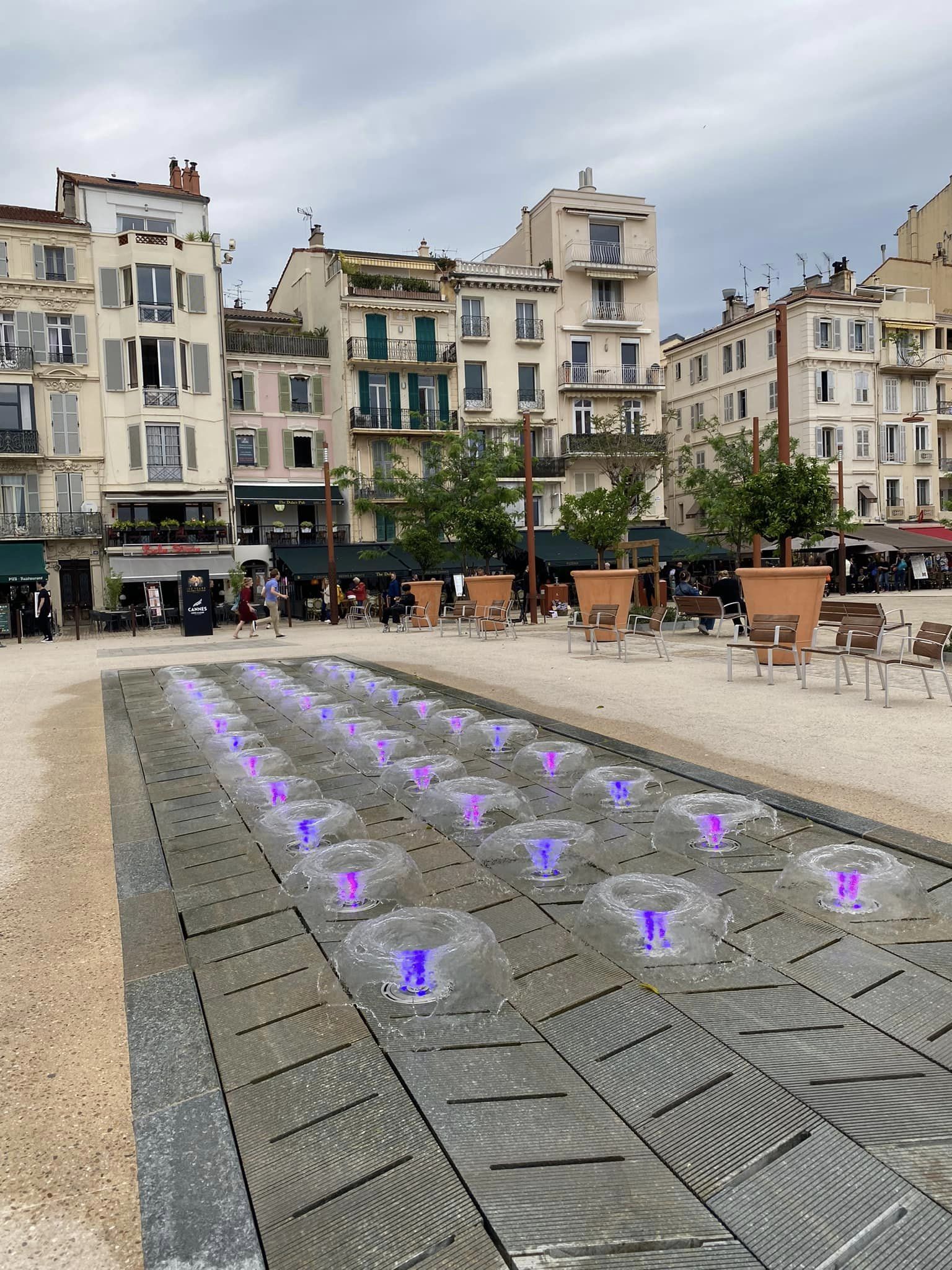
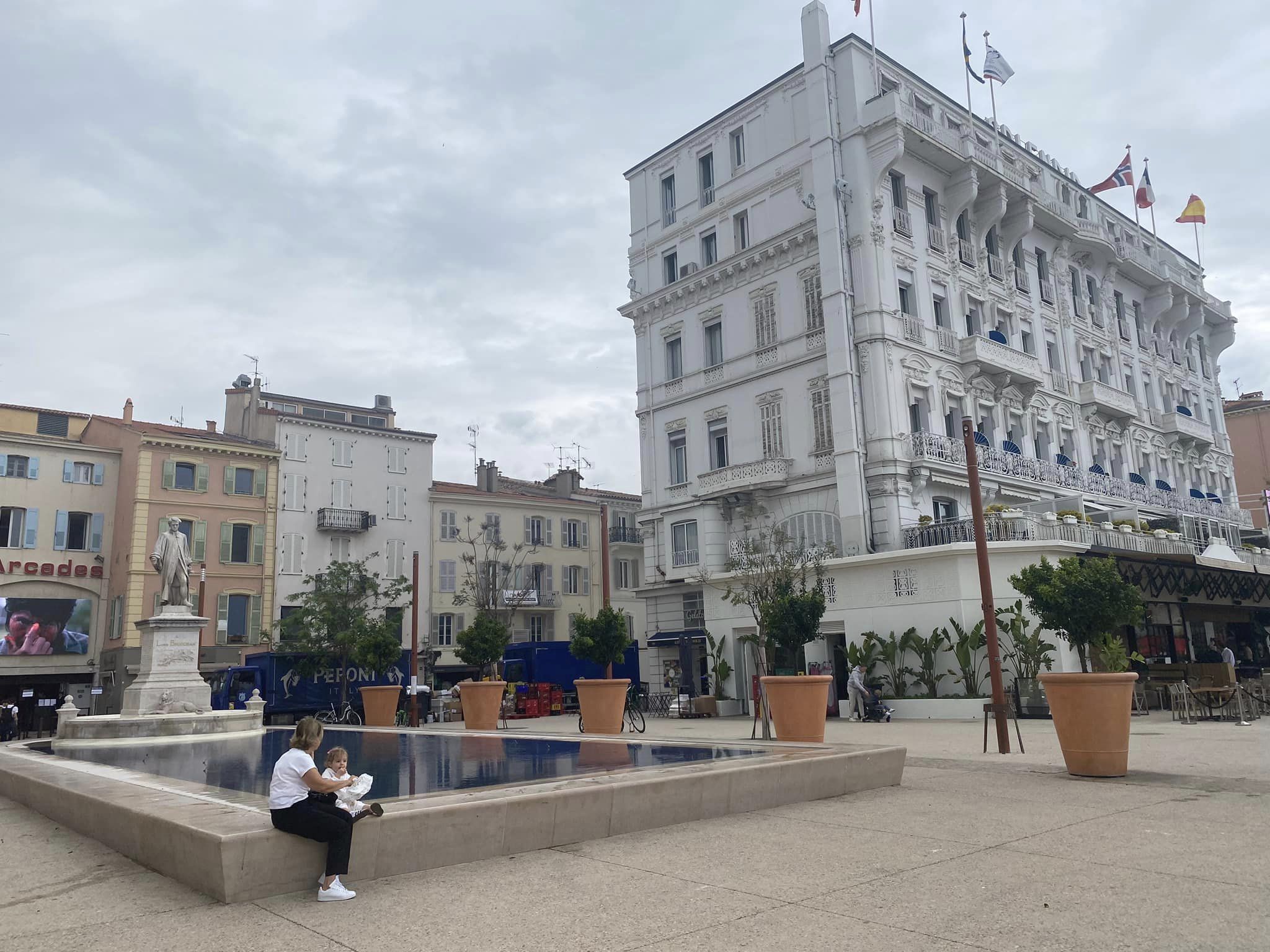
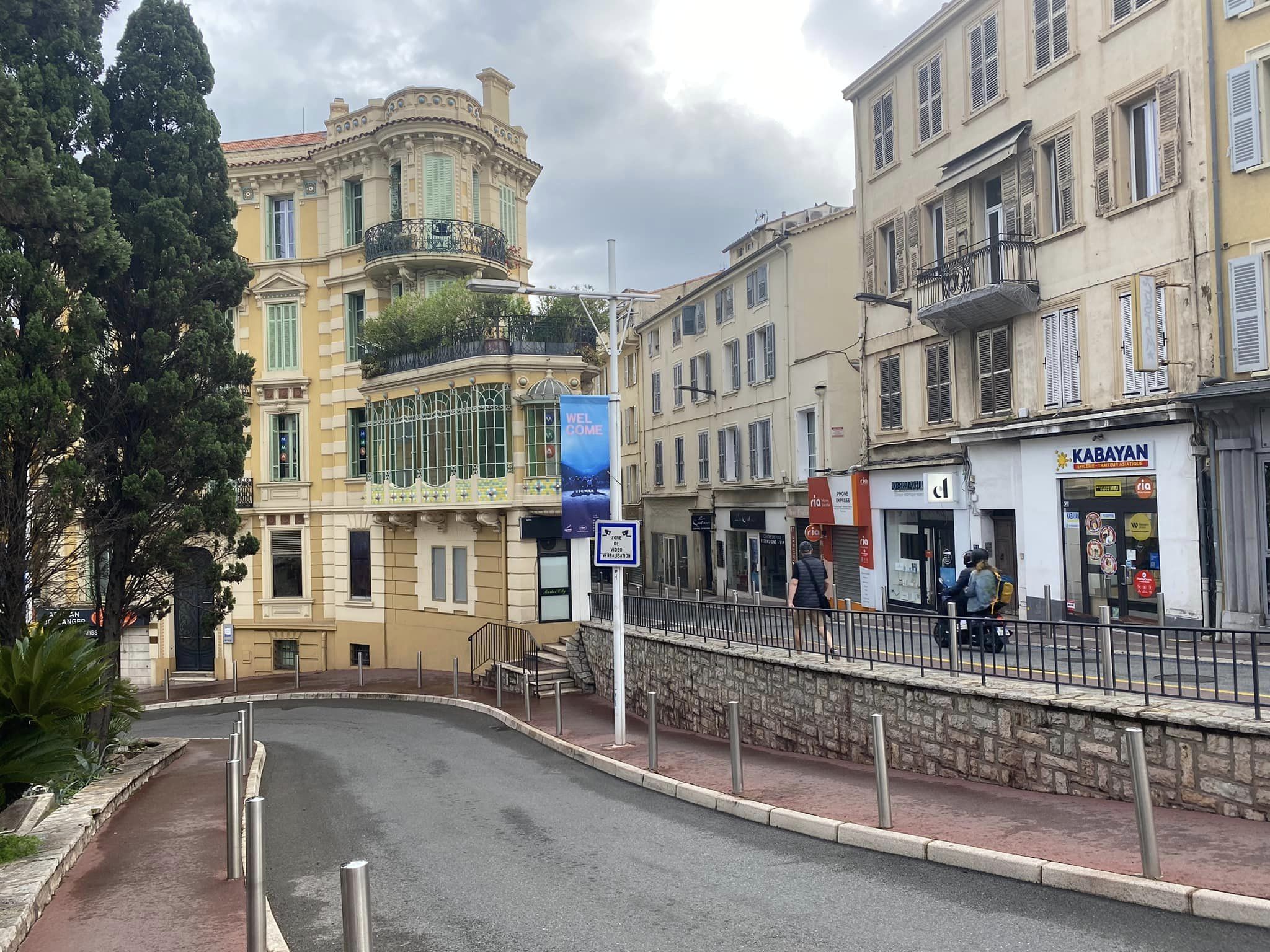
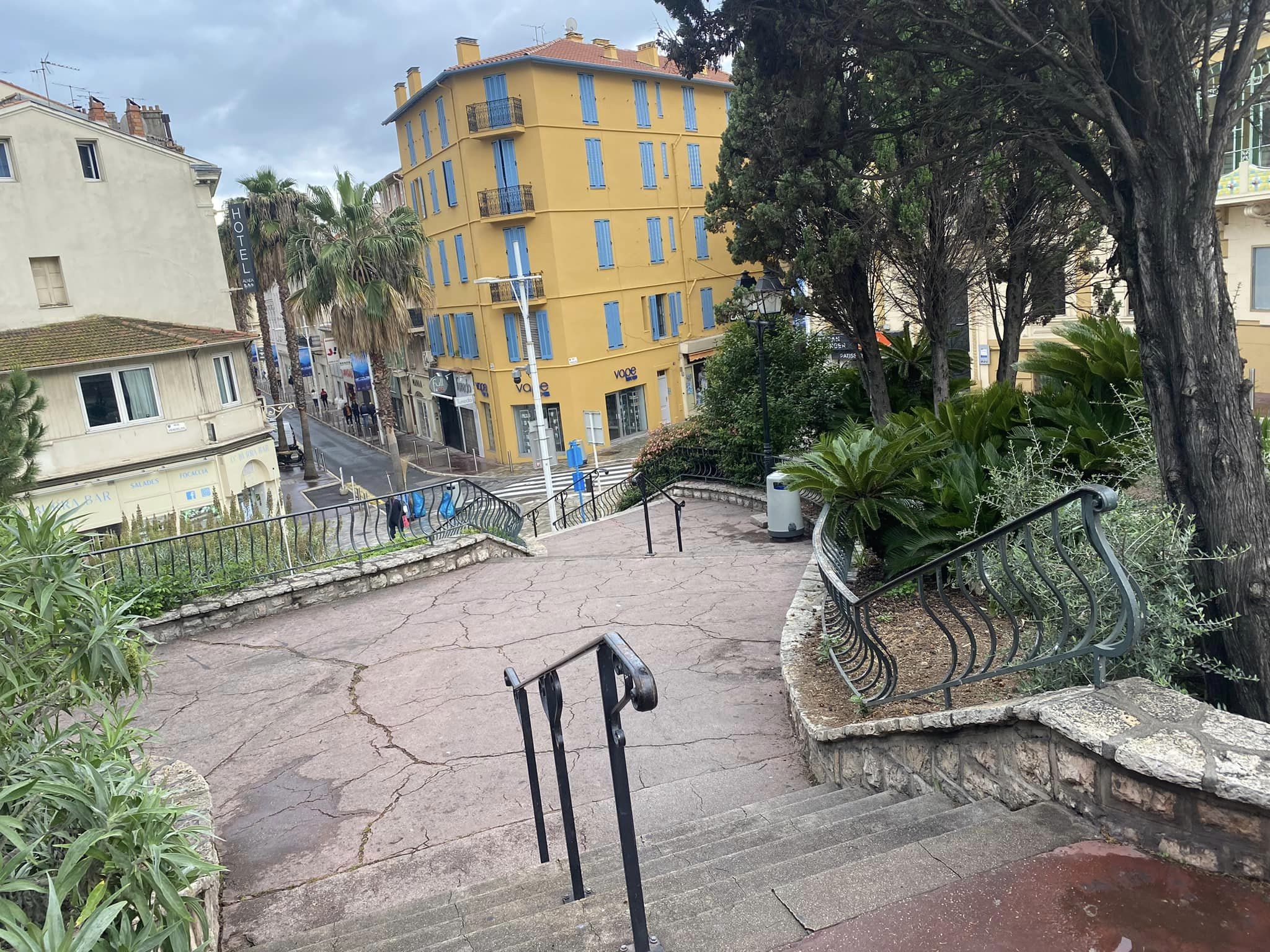
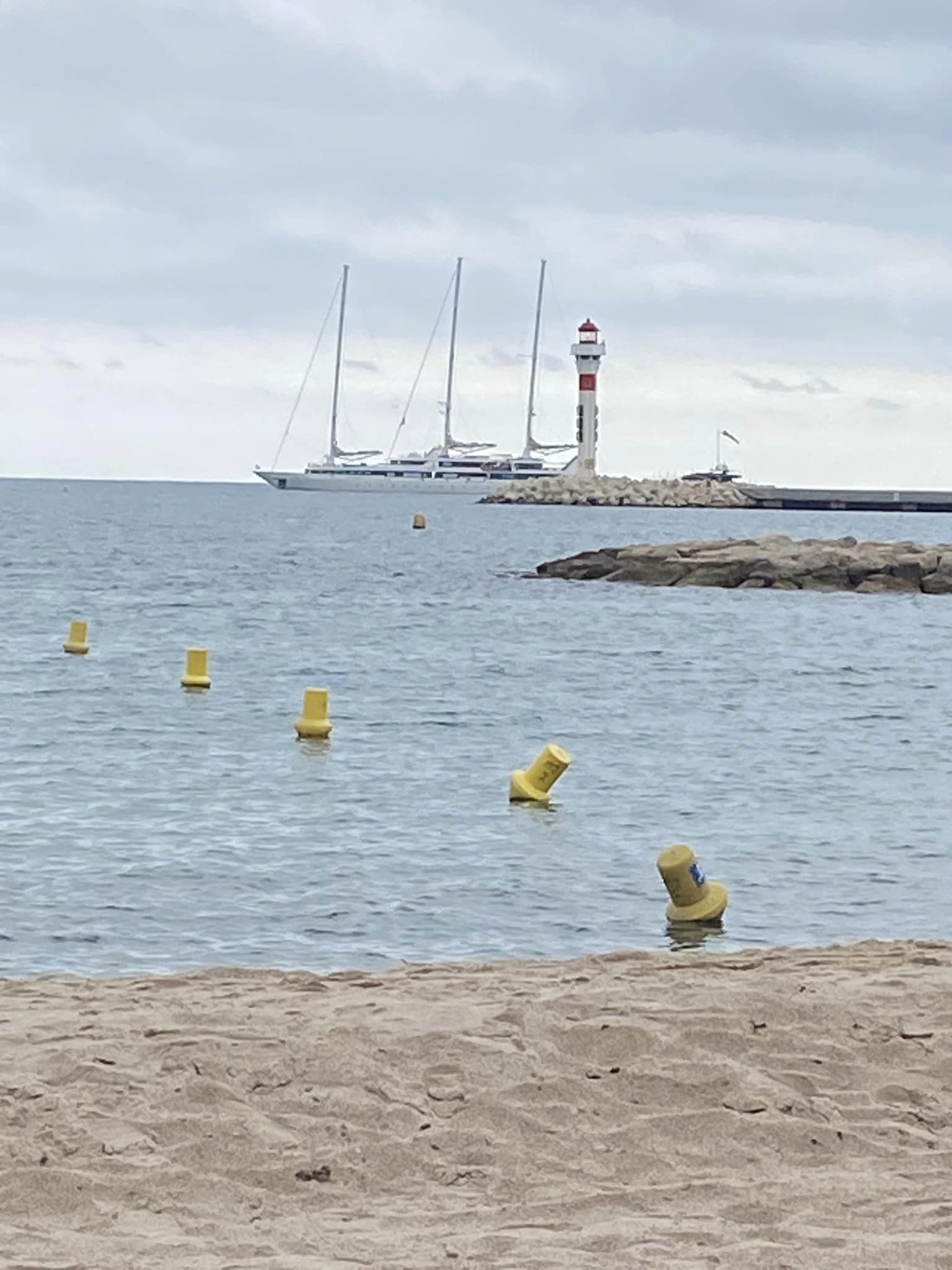
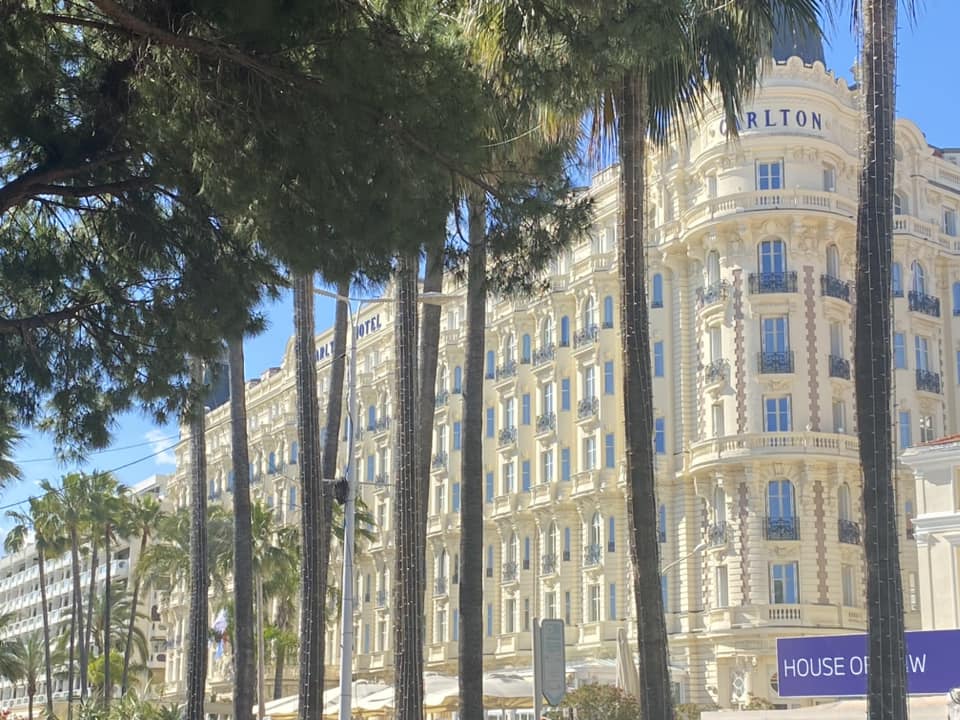
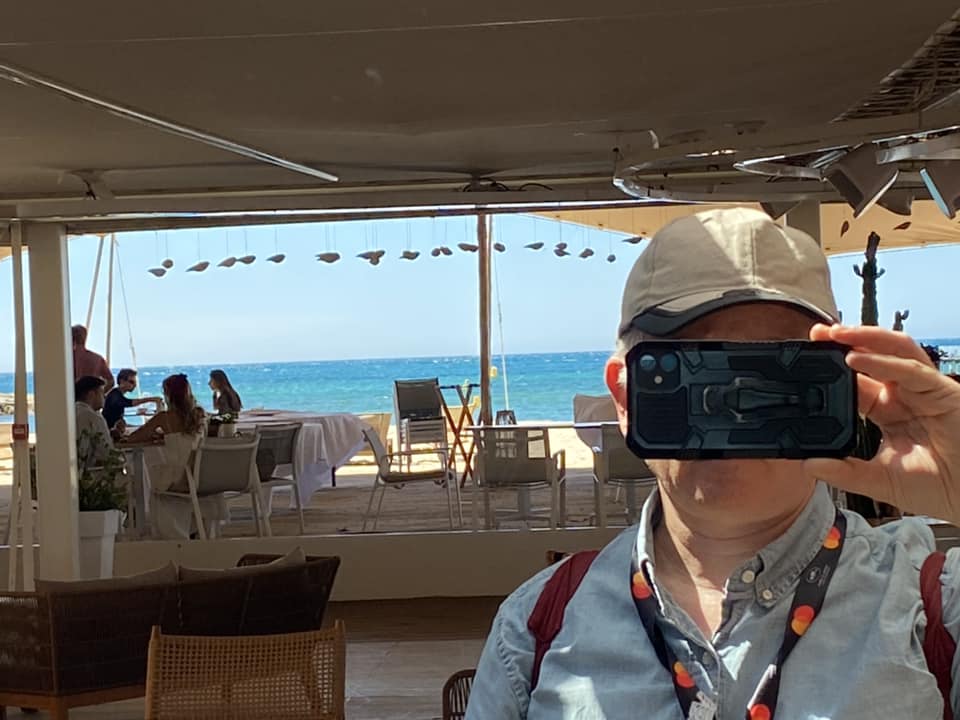
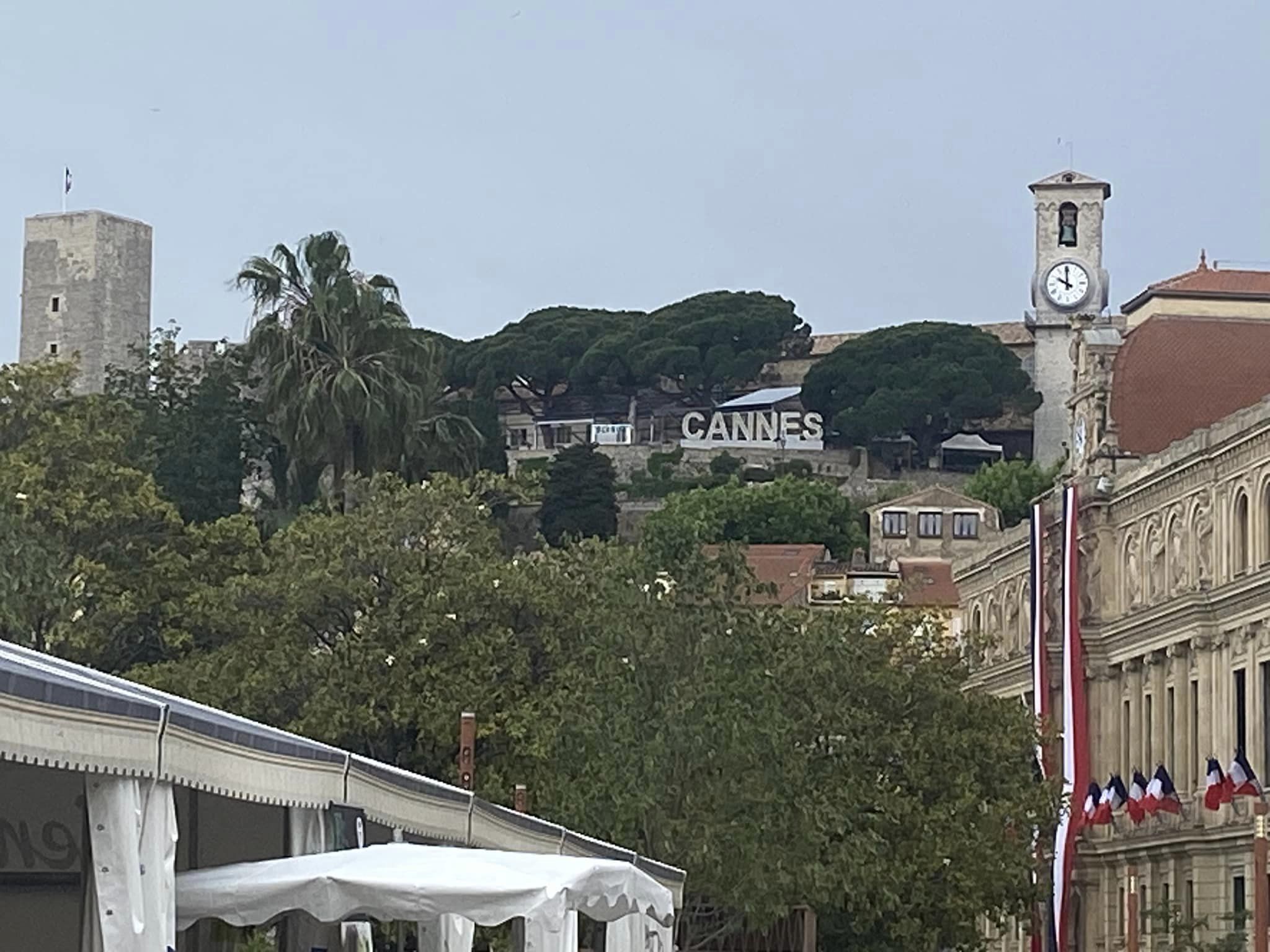
The final installment of my Cannes Impressions focuses on the town of Cannes itself, the plazas and old town around the Palais, the marina, the Croisette (the avenue along the beach), and some views in the town periphery.
More Premieres and the Virtual Reality / Immersive Competition
I saw 27 movies in Cannes, plus 6 of the programs/installations in the Virtual Reality / Immersive competition (more on that at the end of this post).
I saw a lot I loved or liked, a few that disappointed and one or two I loathed.
Three films enthralled/excited me so much I want to shout it from the roof tops:
Andrea Arnold’s “Bird”
Jacques Audiard’s “Emilia Perez”
Sean Baker’s “Anora”
So I’m pleased to see “Anora” win the Grand Palme and “Emilia Perez” awarded with the Jury Prize plus a Best Actress prize for all four of its female leads.
The Cannes festival screens countless films – not just the official selections in and out of competition that get premiered in the Grand Lumiére – but many more that screen through “Un Certain Regard” or the Director’s Fortnight or other rubrics, not to mention many more being screened by or for sales and distribution companies in the marché du film. It is far more than any one person can keep full tabs on.
If you have the proper accreditation, you can have access to the on-line ticket sales, which make tickets for screenings available four days earlier at 7am sharp. So every morning at 7am it is a mad on-line dash to get tickets for something, anything, four days into the festival; and then the next morning you do it again.
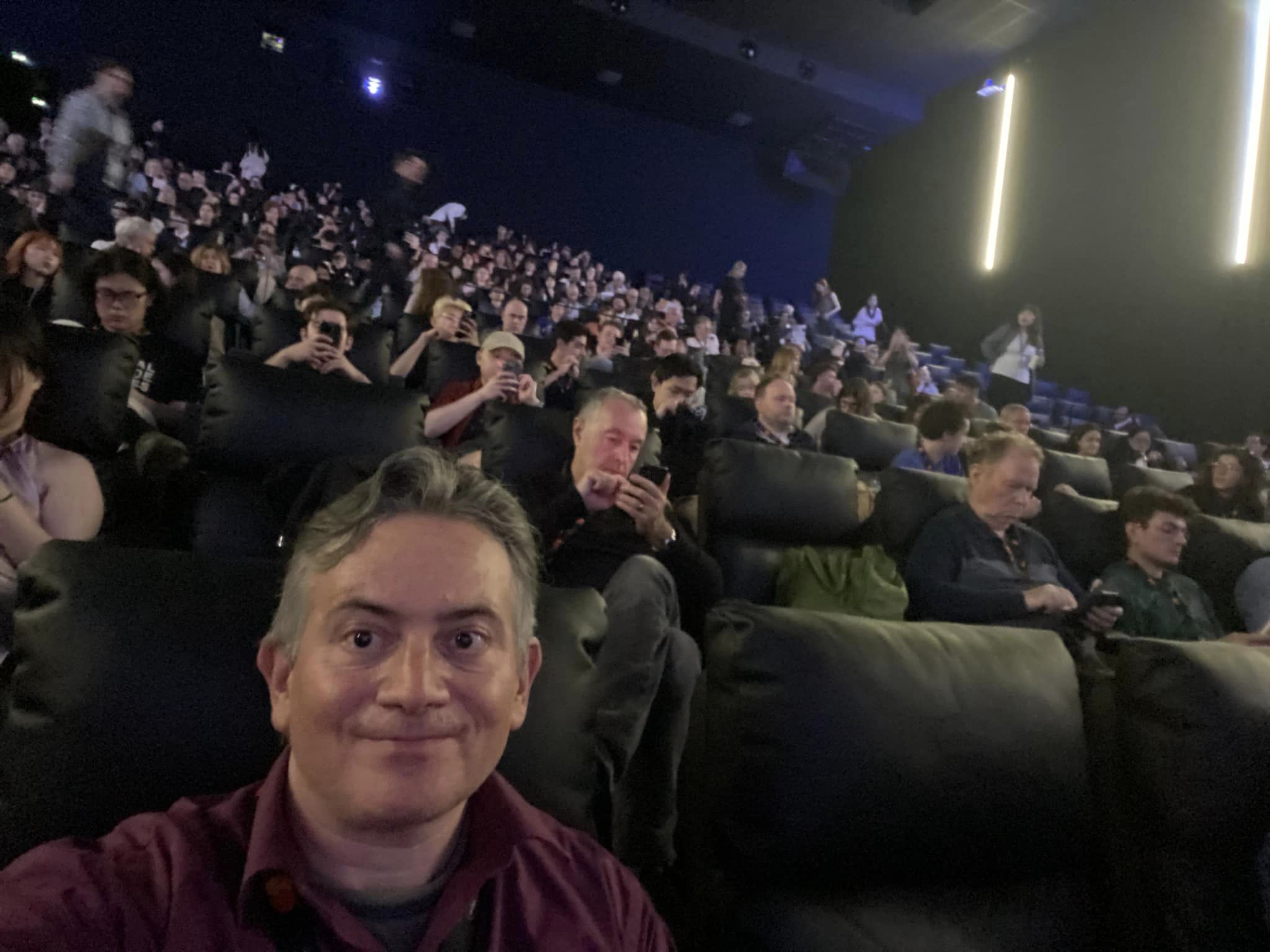
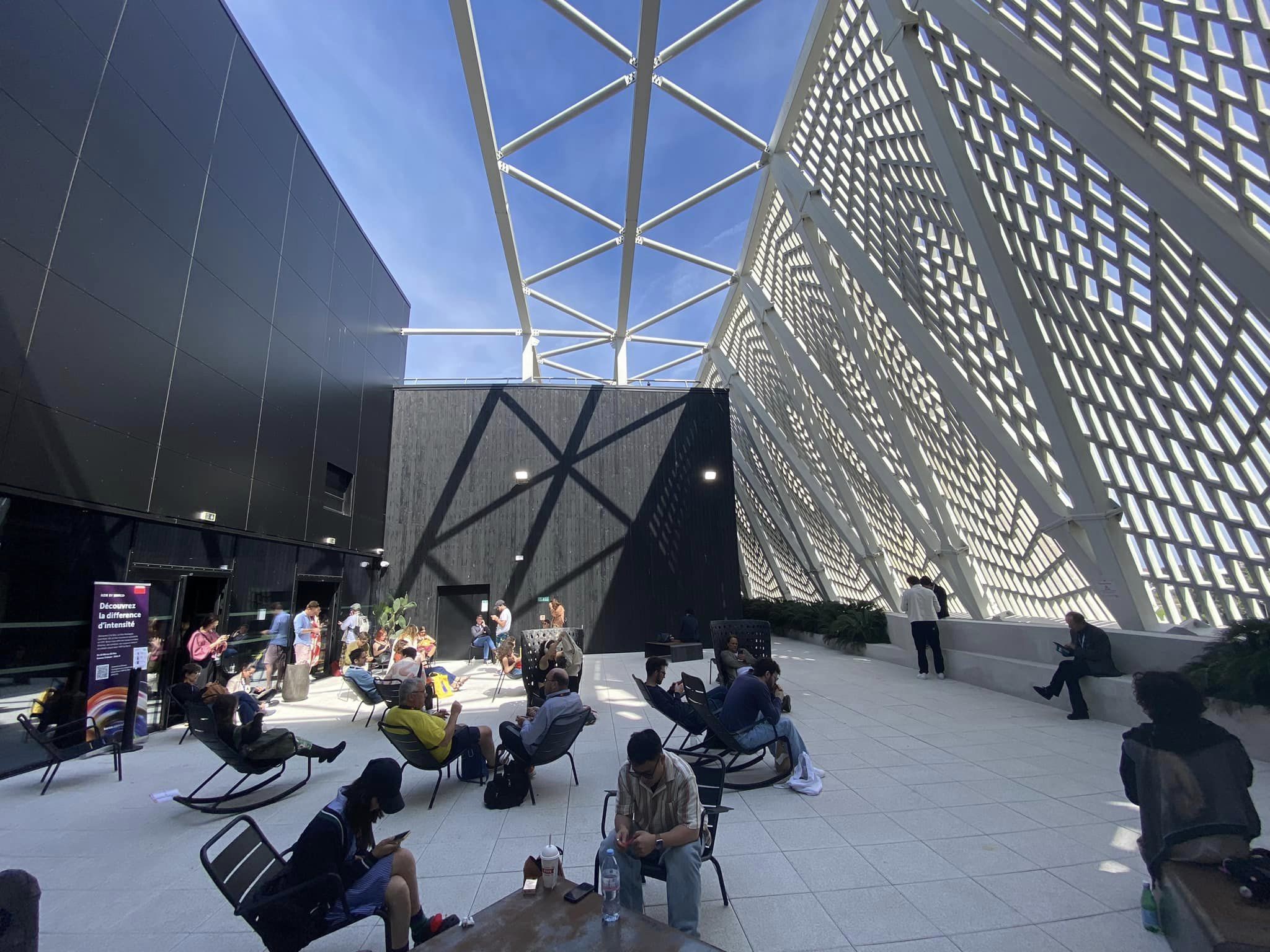
Movies screen at the Grand Lumiére as well as several other screening venues in the Palais, and also several theaters on the Croisette and in the main town as well as in the outskirts of Cannes; like the Cineum, a twenty minute bus ride to the West. Four screening venues, including the very fine Imax, were used there for repeat screenings of festival titles. Above is a pic of me sitting in the Cineum Imax. Right before I saw the stunning “Girl with the Needle”. That is a film one best knows nothing about before seeing it to not spoil any of the surprises. Just be forewarned it goes to some very dark places…
Below a video of the trippy hallway into and out of the Cineum Imax.
The roof garden of the Cineum.
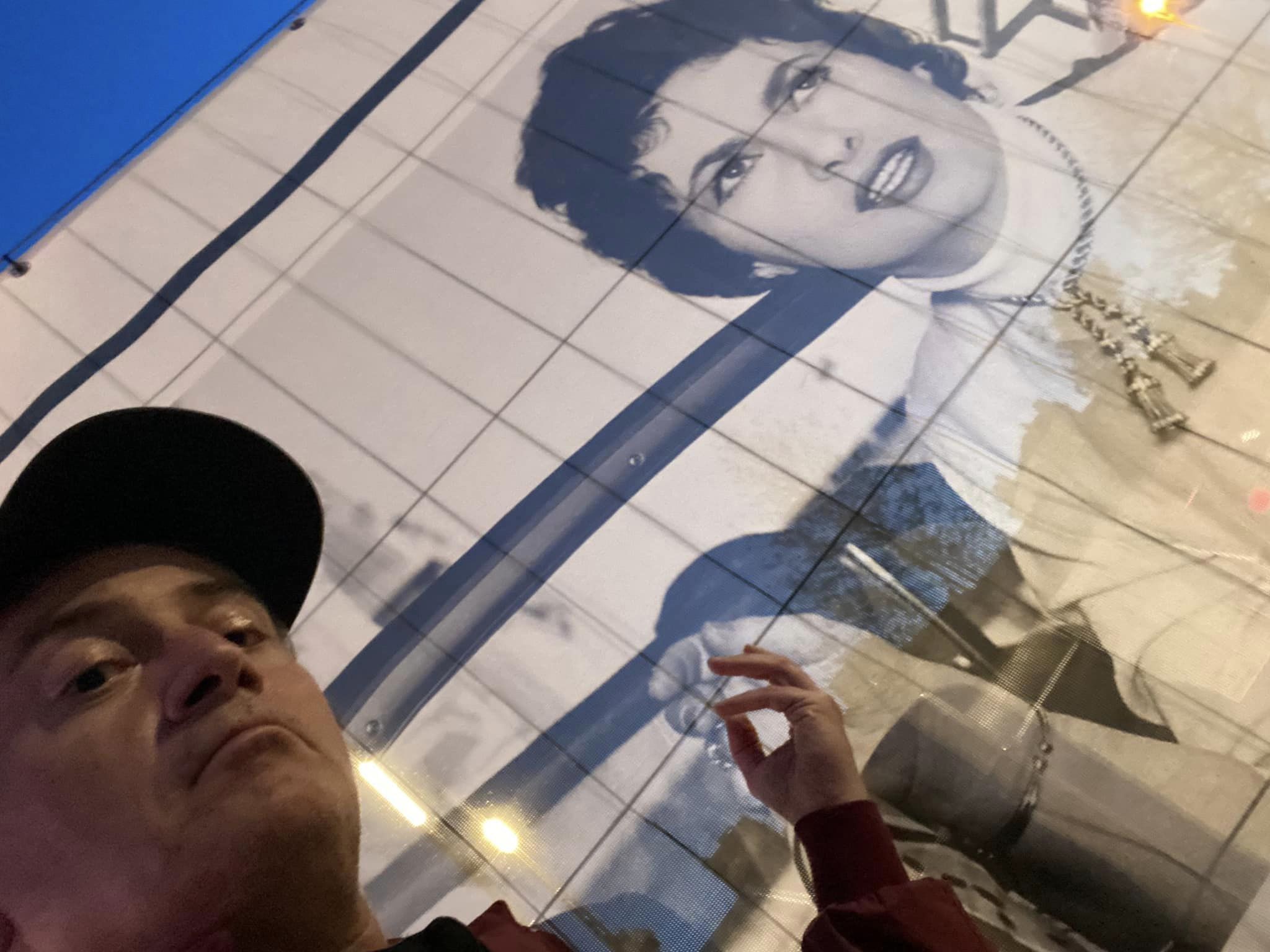
Back near the Palais, tarp hiding some road construction is festooned with large photographs of stars of yore during their Cannes festivals.
I couldn’t help but do a goofy selfie series with some of those celebrities.
I spent 10 days in Cannes, attending the famous film festival on the Croisette. It’s my first Cannes. This will be the first in a series of blog posts of Cannes impressions, of the festival, the movies, the town.
Below the Cannes logo presentation that plays this year before every screening (the music is “Aquarium” from Camille Saint-Saëns’ Carneval of the Animals). No 25 minutes of previews and commercials, just this 30 second amuse bouche and then right into the movie. Oh, and rest assured I turned off my phone and put it away right after filming this:
Here’s one selfie with a good sampling of our group, many of us stayed in a villa together during our collective Cannes experience.
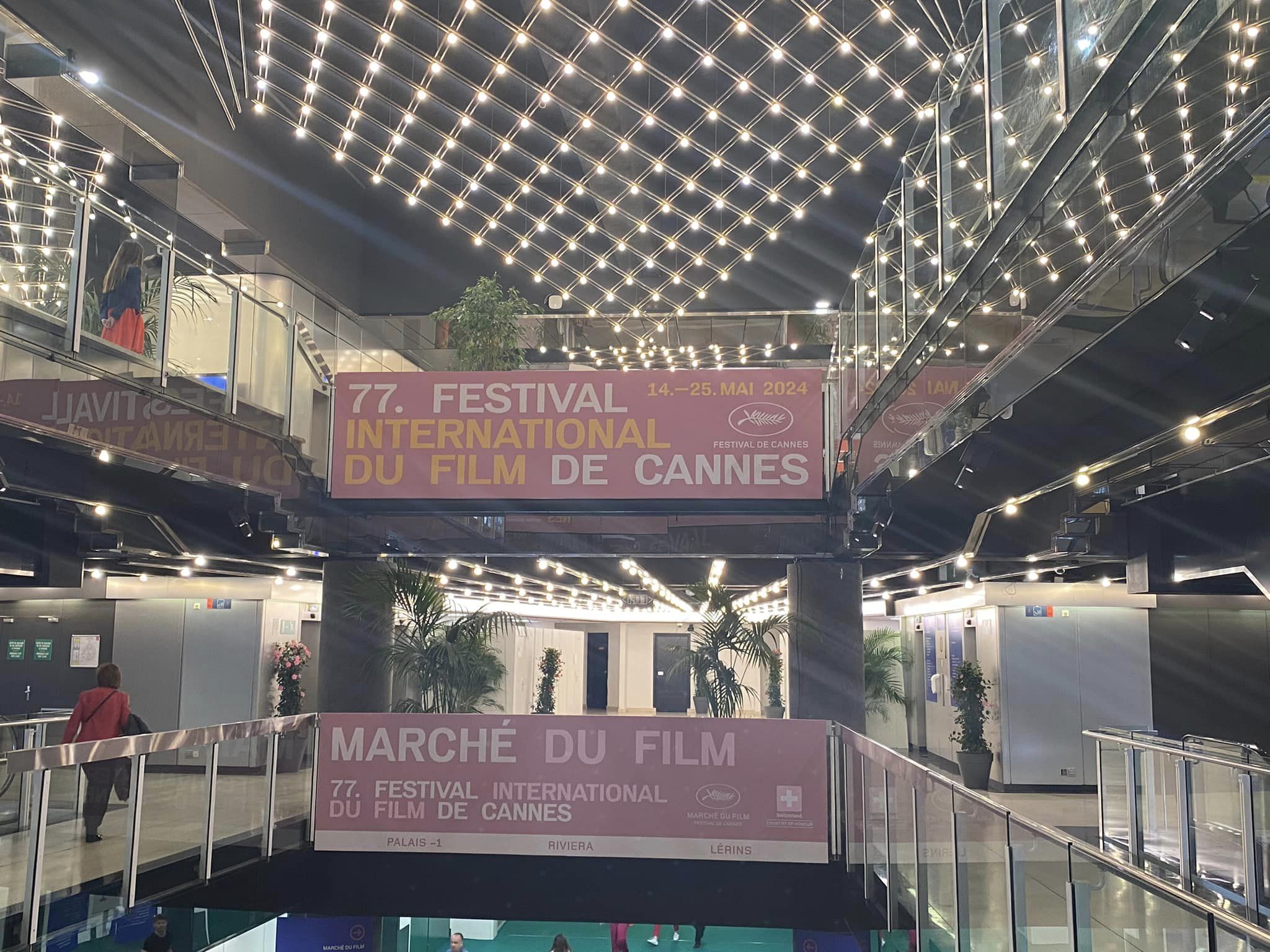
Here is the red carpet leading up the the Grand Lumière, Cannes’ main theater in the Palais. This is a rare moment of quiet on the carpet, in the morning, before premiere madness ensues. I’ll get to that later.
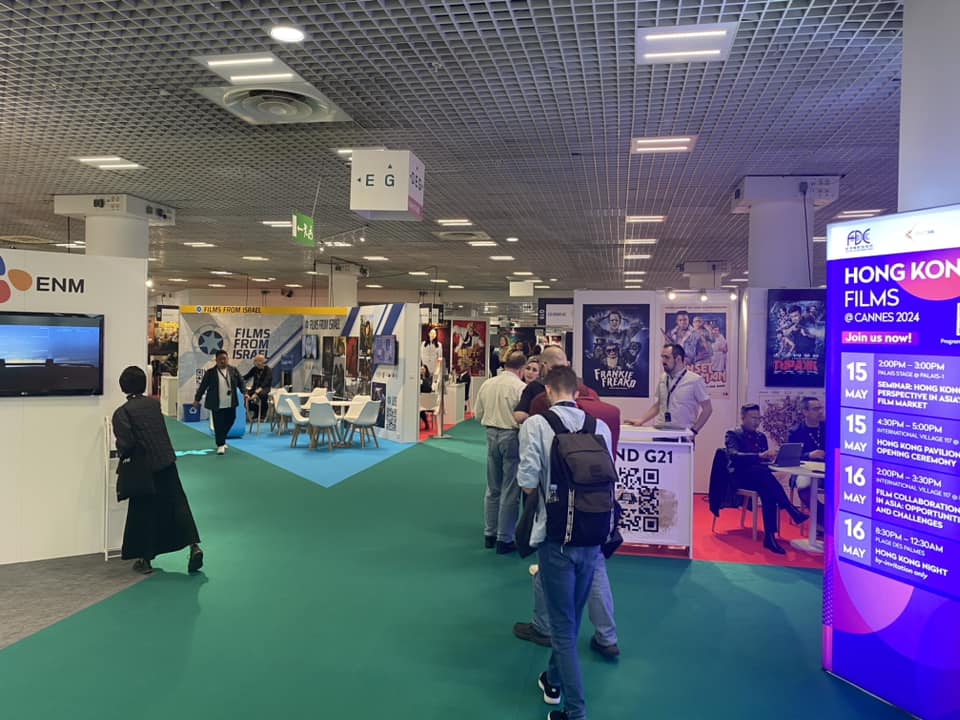
Inside the Palais are many more theaters, as well as the film market, the Marché du Film.
Some impressions of the film market, early on the first day, before things got more hectic.
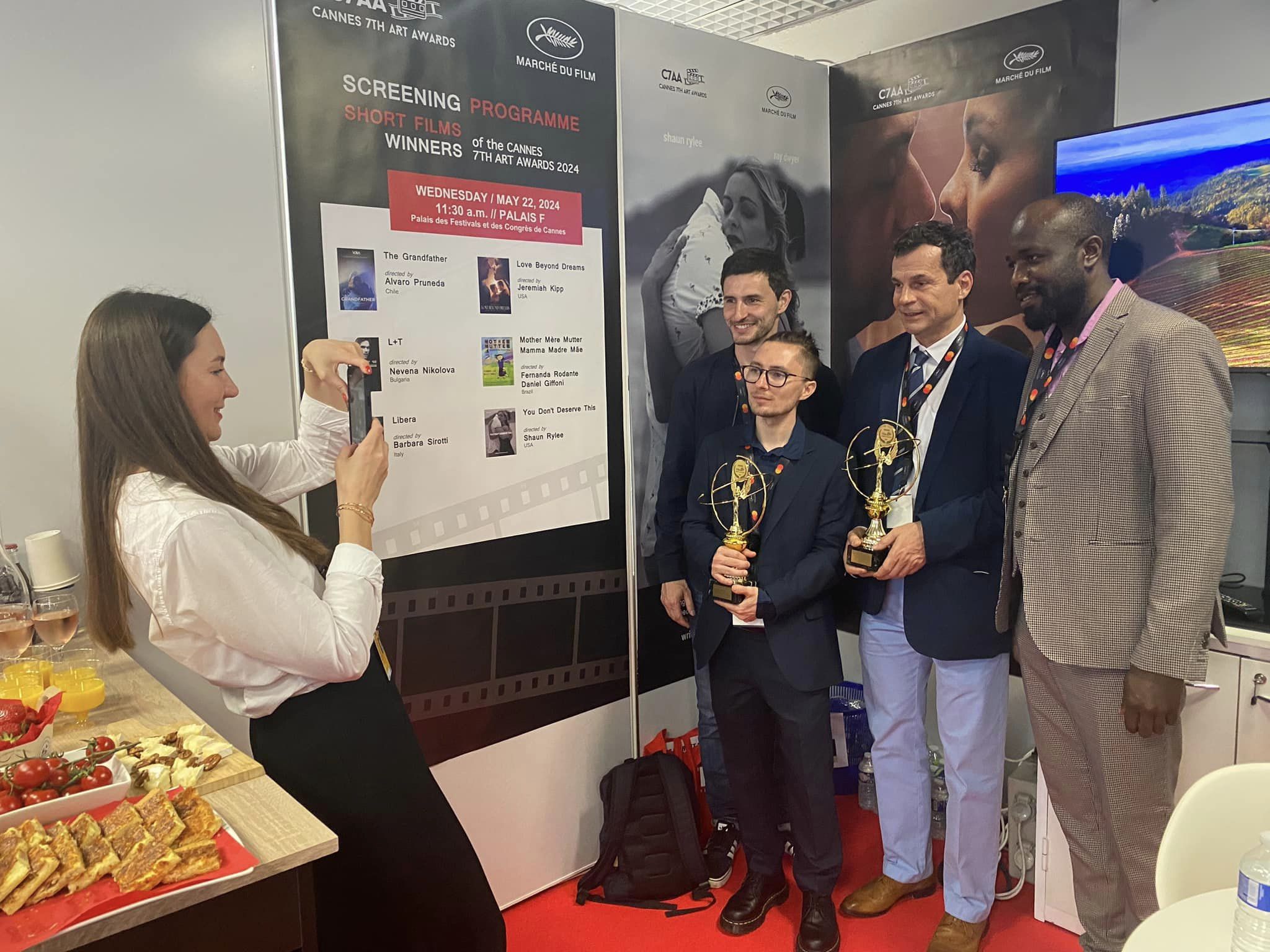
Cannes’ main prizes are handed out at the end of the festival, but one film prize had a booth in the marché and handed out their prizes to different honorees each day during the festival,
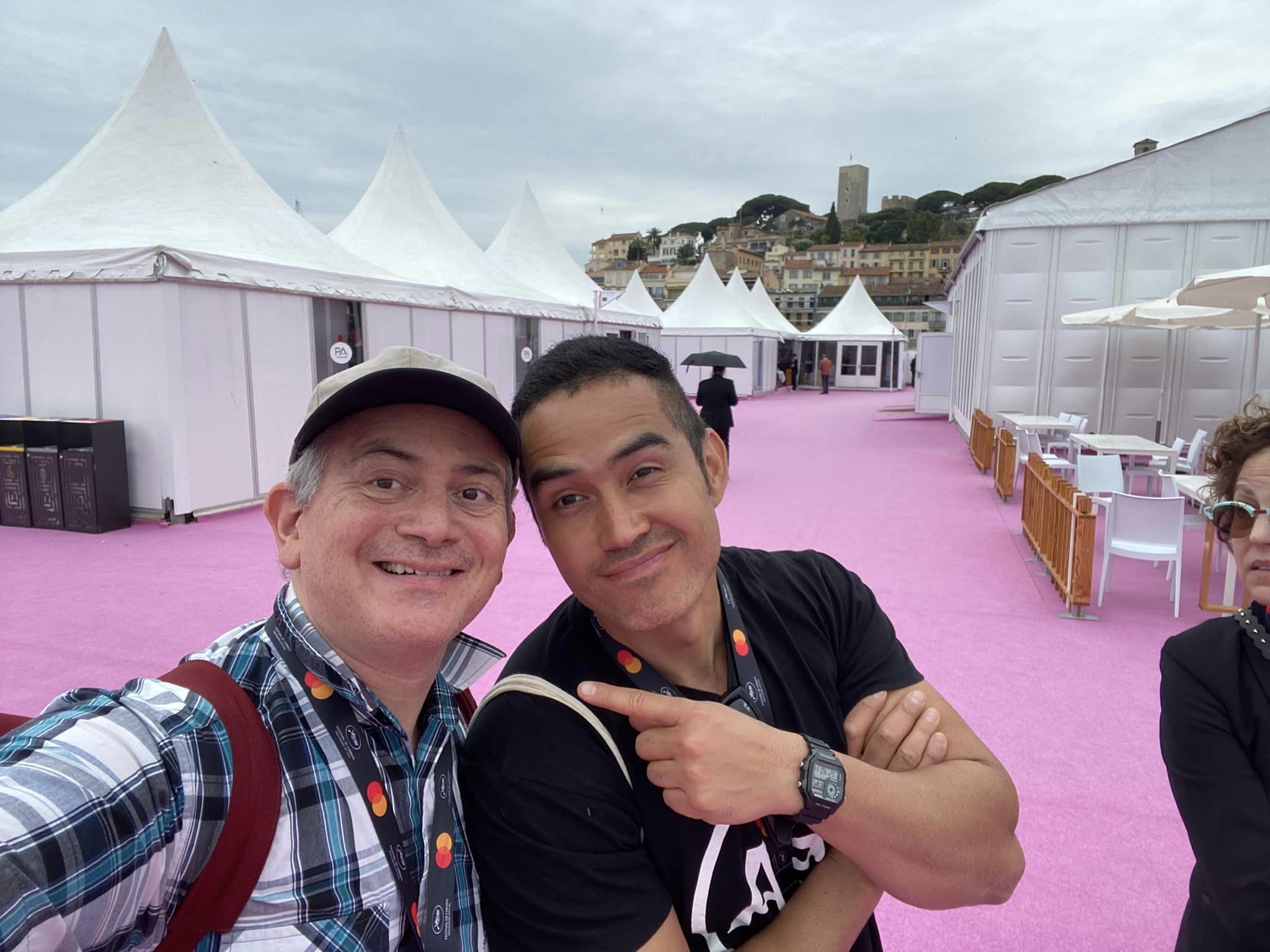
Another group selfie. A lot of these are taken all the time by tons of people everywhere all the time…
Me posing for a distinguished (?) selfie with the Cannes ’24 poster and red carpet looming behind .
Another favorite selfie taking location…
My first Cannes movie was an 8:30am post-premiere morning screening of “Furiosa”. Turns out the whole tux get up is only required for the evening premieres in the Grand Lumiére – but since it was my first time walking that carpet, I got all dolled up for this one too.
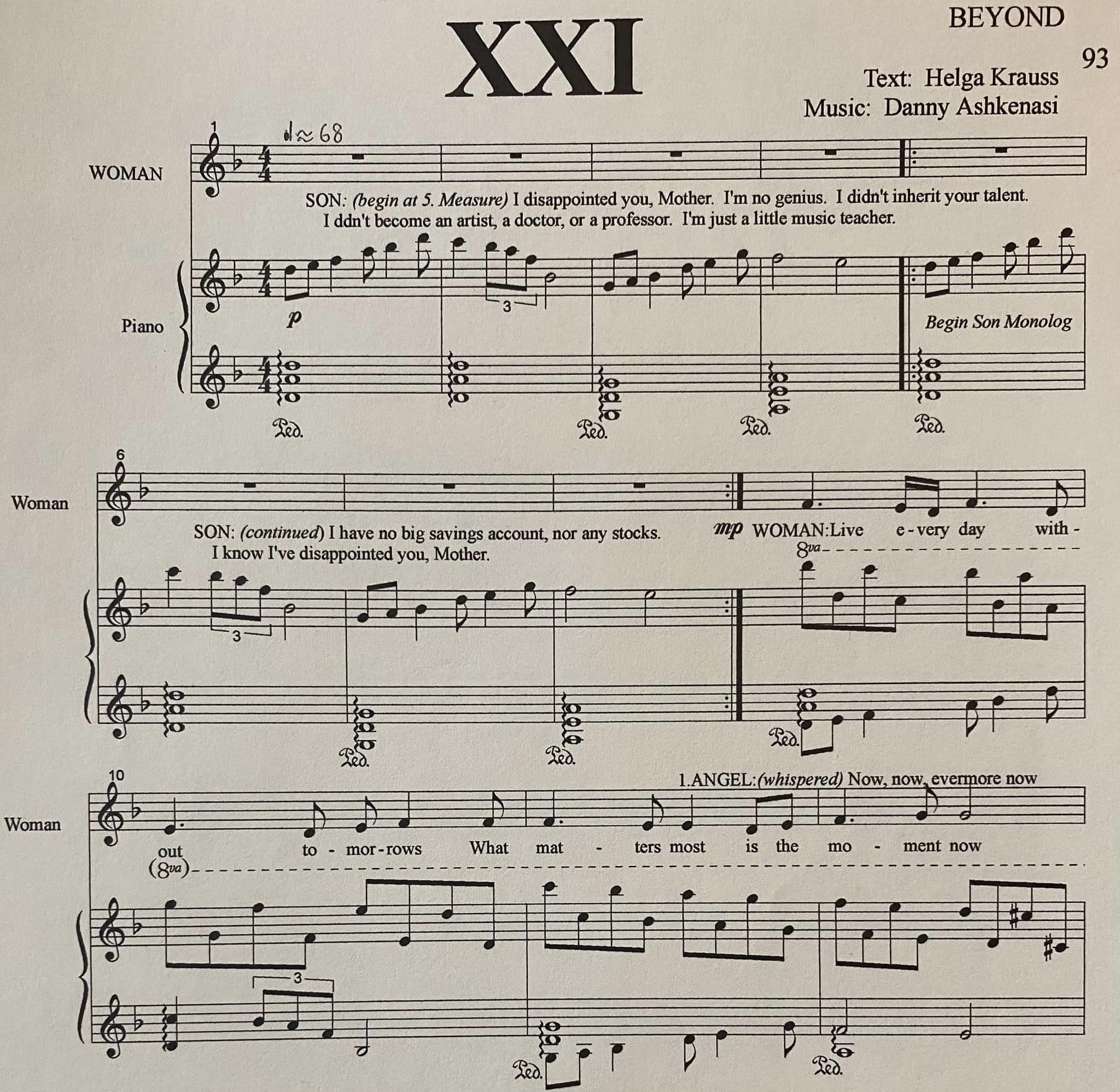
Section XXI of Beyond / Jenseits begins with the piano playing a mournful rendition of the lullaby, while the Woman’s Son, as played by the 2nd Angel, lists the many ways he feels he has disappointed her.
The Woman responds with love and advice to live every day as if it were one’s last. (This advice may be what she has really needed to tell herself more than anything.) She affirms that her love for her Son can not die.
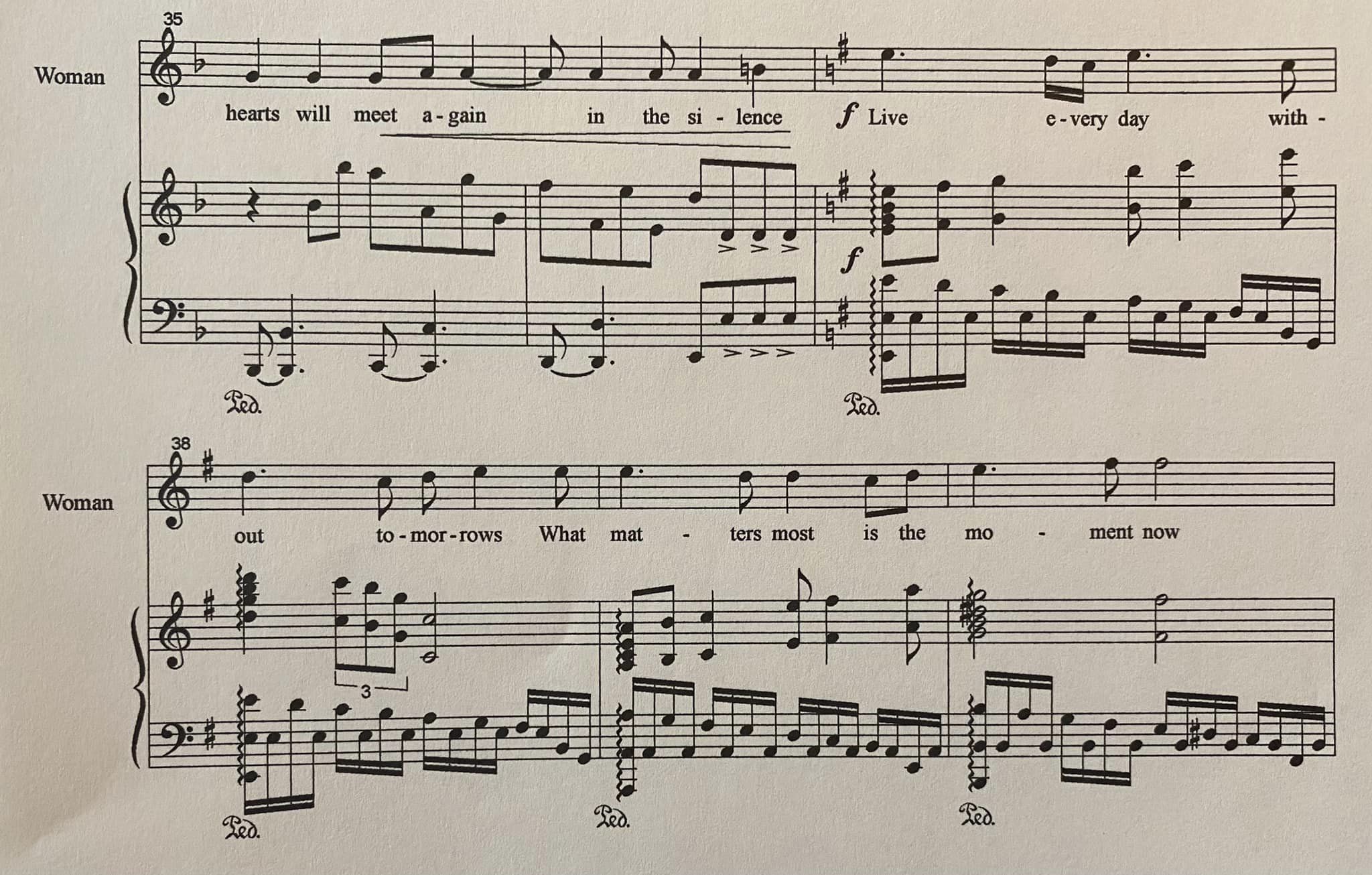
As the Woman contemplates her son, she can “taste the sorrow over all that we could never tell each other. Still I know our hearts will meet again in the silence.”
Which leads to a dramatic reprise of the before stated advice, now sung an octave higher over a majestic reiteration of the lullaby in the piano played over wildly cascading accompaniment. Technically one of the most difficult passages for singer and pianist alike in this opera.
Leading to the Angels showing the Woman the operating room again. Her body is being reanimated.
XXI
German Language Studio Recording
English Language Live Concert Recording
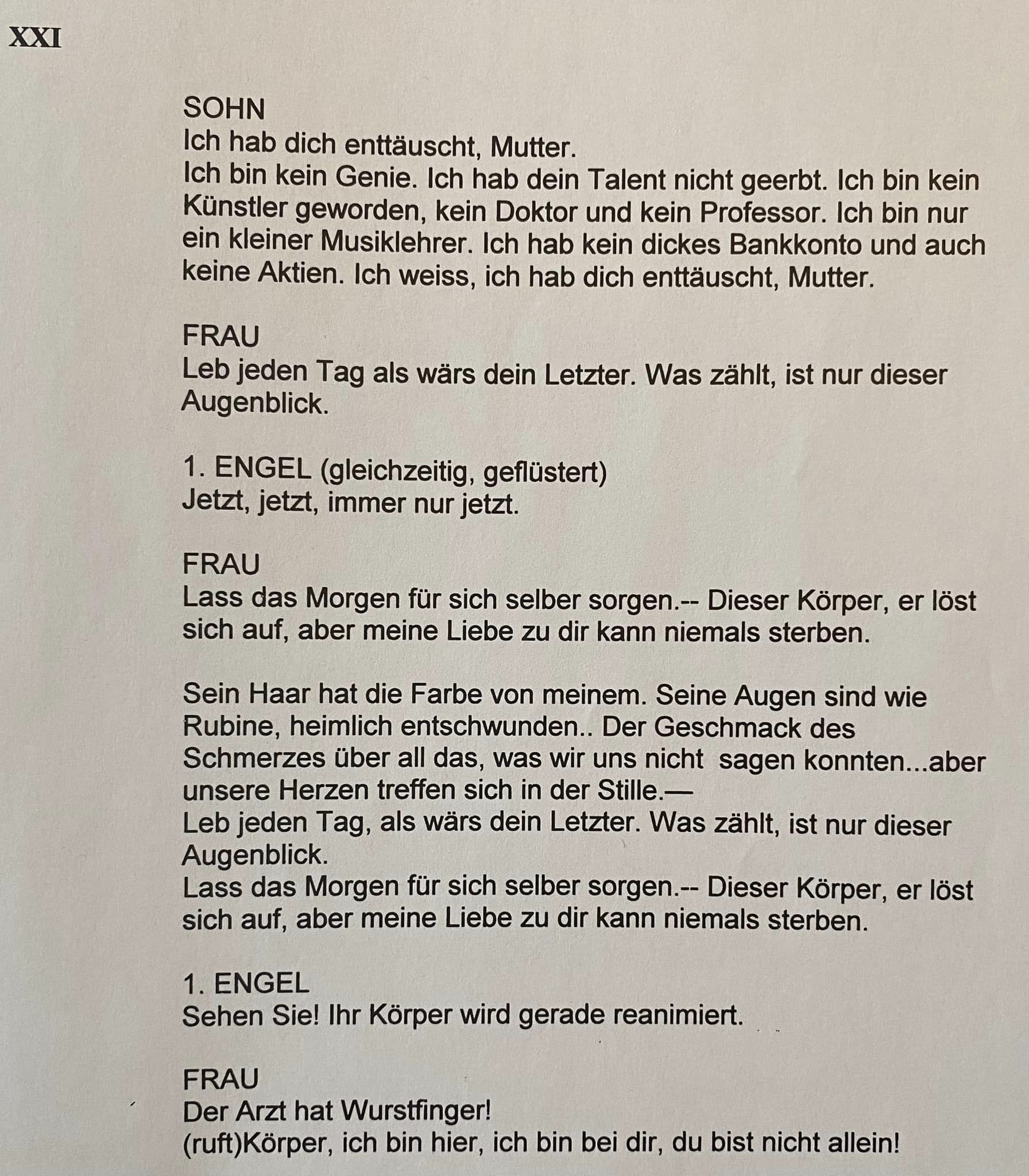
SON I disappointed you, Mother. I’m no genius. I didn’t inherit your talent. I didn’t become an artist, a doctor, or a professor. I’m just a little music teacher. I have no big savings account, nor any stocks. I know I’ve disappointed you, Mother.
WOMAN Live every day without tomorrows
What matters most is the moment now
1. ANGEL (whispered concurrently) Now, now evermore now
WOMAN Leave tomorrow, it’ll be tomorrow
For the body will turn to dust
But all of my love born for you shall live forever
His hair has the color of my hair And his eyes shine like treasured rubies Hidden in secret I can taste the sorrow Over all that we could never tell each other Still I know our hearts will meet again in the silence
Live every day without tomorrows What matters most is the moment now Leave tomorrow, it’ll be tomorrow For the body will turn to dust But all of my love born for you shall live forever
1. ANGEL Look! Your body is being reanimated.
WOMAN That doctor is hamfisted! (calls) Body! I am here, I am with you, you are not alone!
You can find out more about the FFTG Awards here, including who all my fellow jury members are. We will be watching many films over the next six months, with the festival scheduled for Nov 30 – Dec 13, 2024.
FFTG Awards asked all jury members to send them a short video introduction for their social media (hence the vertical phone friendly aspect ratio). This is what I sent in:
Welcome back to the next episode of our little night opera, Beyond (catch up on previous installments here). This is the section where our favorite opera diva’s dilemmas with the men in her cosmic life-in-review come to a head.
I can’t help but think – perhaps to my detriment in your eyes – of that famous 1976 pop-corn “Torn Between Two Lovers”. Mary MacGregor’s situation has much in common with our diva’s, torn as she is between staid Husband and passionate Conductor. I’ll concede MacGregor’s expresses her dilemma more sweetly musically…
But first we must dispense with the Therapist, who has proven less than helpful to the Woman, and in self defense simply fires her as his patient.
The Woman dismisses the Therapist as “a prenatal one-way street”. I particularly enjoy librettist Helga Krauss’ wicked turn of phrase there… (but I swear I have never found reason nor occasion to wield it against my husband the therapist. 😉 )
Then we transition quickly into a theatrical push-me-pull-you with the Woman caught between her Husband and the Conductor – quite literally caught between them in this metaphysical way station as their personas are taken up by the two Angels.
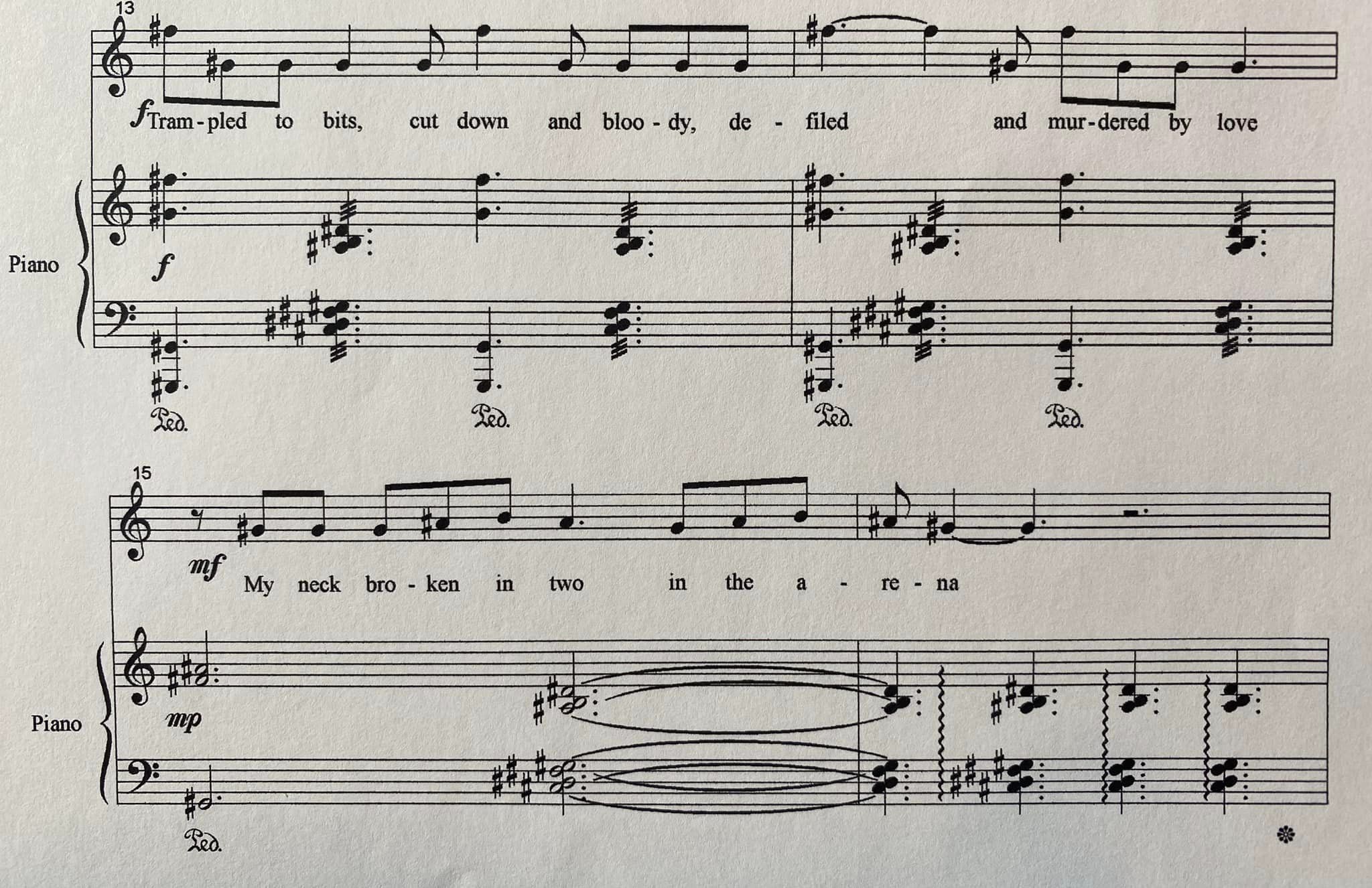
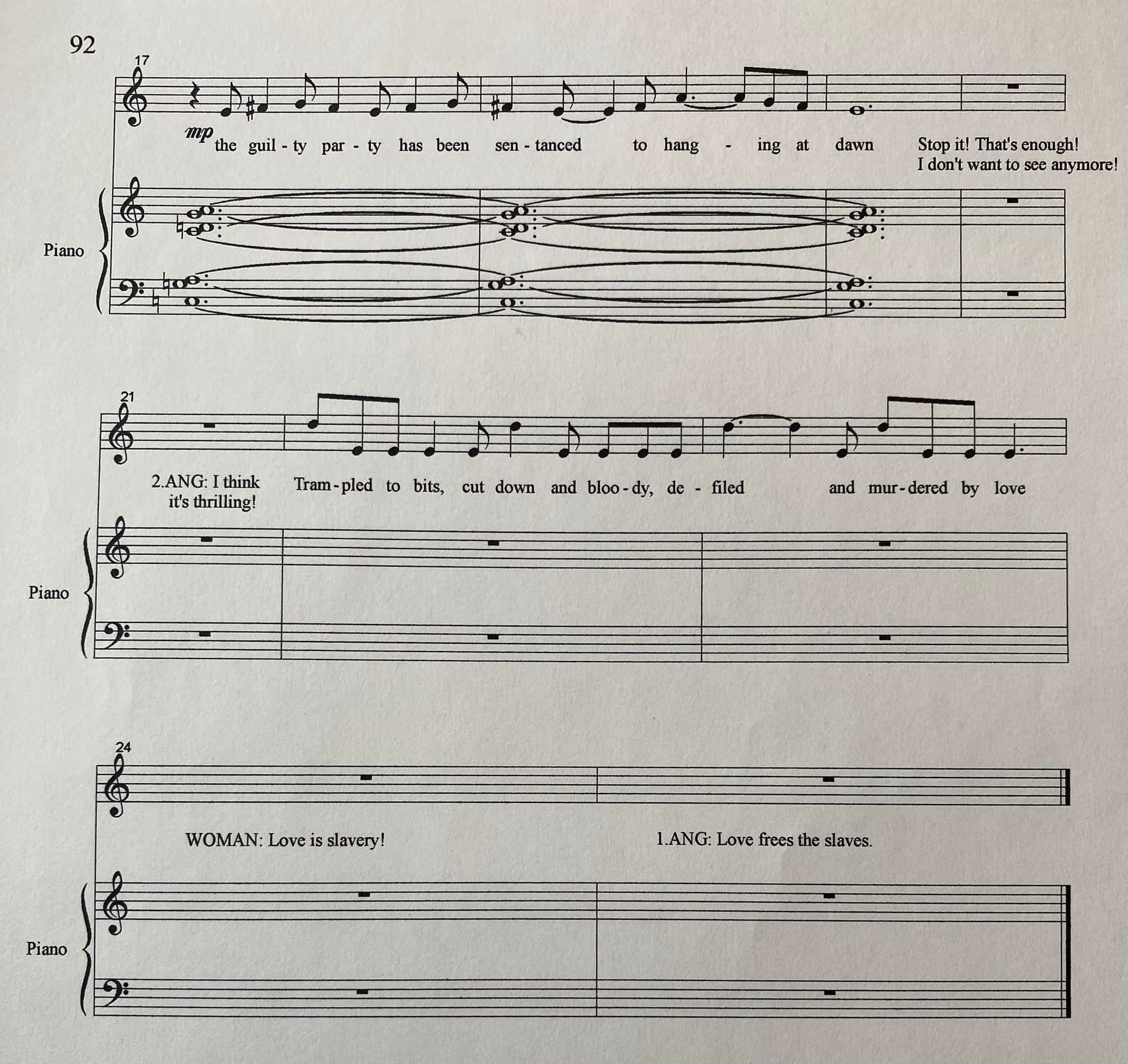
Both men represent forces that both attract and repel her. A choice not made in life is one she also seemingly cannot make in the Afterlife. The Woman brings this exercise to a dramatic halt, exclaiming “Love is slavery!”
To which the 1. Angel counters: “Love frees the slaves”.
(The 2. Angel is having a little too much fun with the dramatics, don’t you think?)
These three sections, XVIII – XX, flow together without interruption in the English language concert version, but are individually playable in the German studio version.
XVIII – XX
English Language Live Concert Recording
XVIII
German Language Studio Recording
WOMAN Through seven havens must I travel Bedewed in sundust I will awake from slumber
THERAPIST The transference, something’s not working with the transference.
WOMAN I know.
THERAPIST How do you know?
WOMAN I know even though I don’t know why I know
I enter his little head and wander It’s a maze of train traffic, railroads, tunnels
THERAPIST We must call it quits.
WOMAN A one-way street…he is a prenatal one-way street.
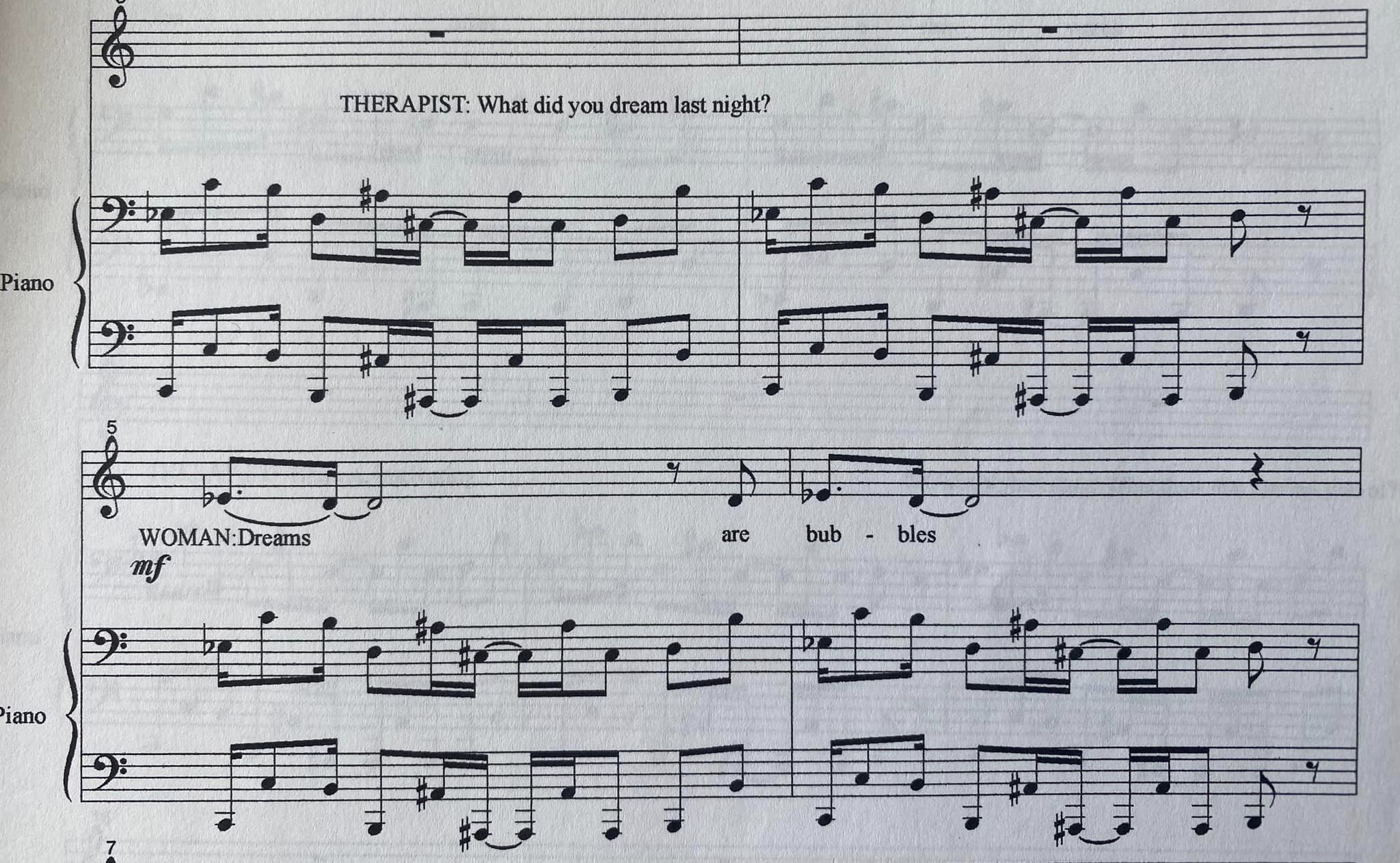
Section XVI of the little night opera I composed for my mother Catherine Gayer with librettist and family friend Helga Krauss (catch up with all previous episodes via the opera’s homepage) takes the Woman back into therapy analyzing dreams.
When the Therapist, embodied by the 1st Angel, once again asks that well worn therapy question “What does that remind you of?” (second in line only to “How does that make you feel?”), the Woman turns the tables on him. In a moment of fantastical comedy, the Therapist becomes a little boy imploring “Lulu” to show him her “woo woo”. The German rhyme is “Uschi” paired with the equally childlike genital classifier “Muschi”. After this bit of therapeutic infantilization, the Woman leaves therapy for metaphysical landscapes of the Beyond. She declares herself caught inside a net of her own spinning pictures.
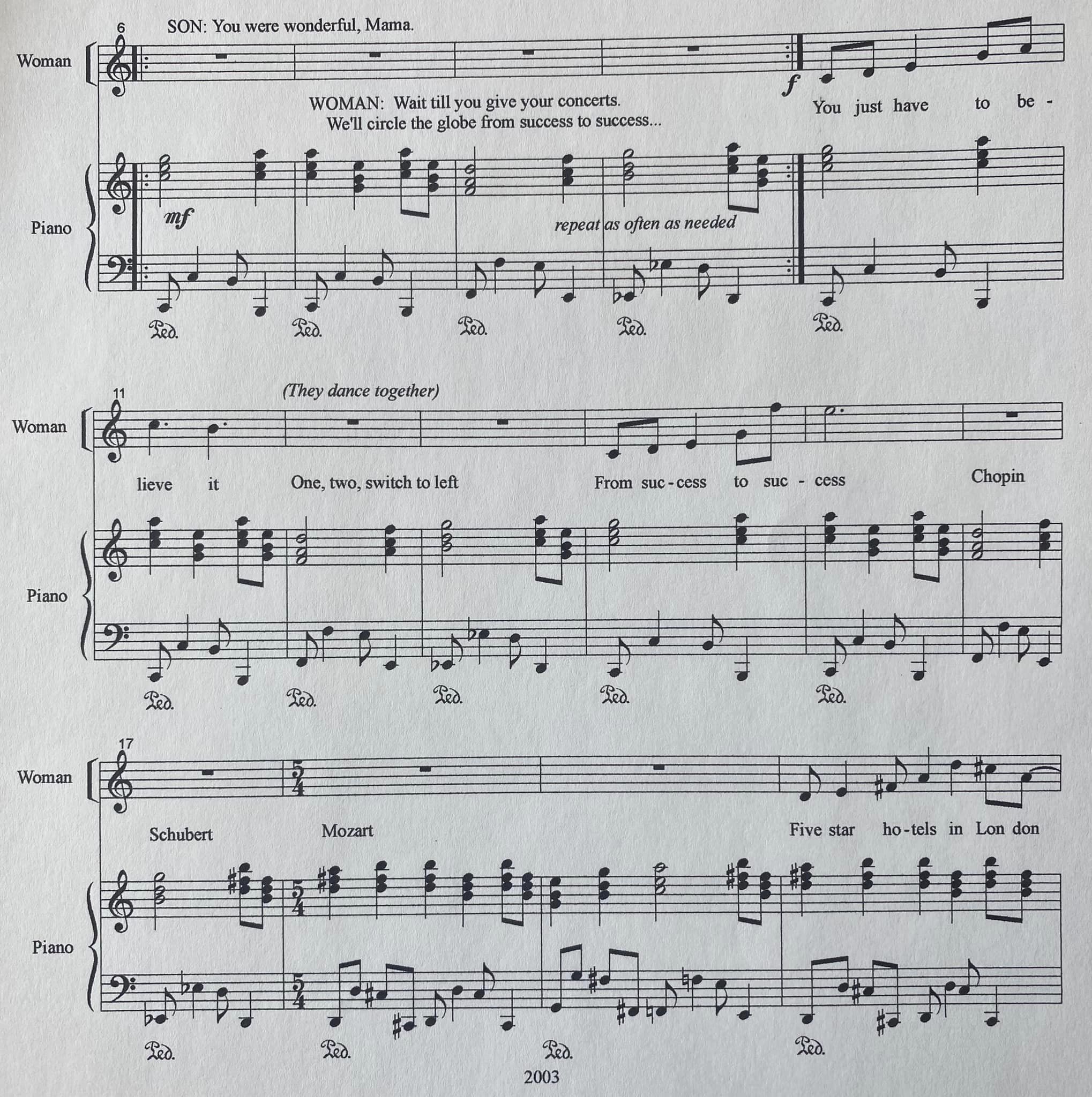
Which leads into Section XVII, where the Woman envisions the glittering life of a famous piano virtuoso for her Son.
He however bursts that bubble with a definitive “I must live my own life”.
The Woman sings a mournful variation of the lullaby, joined in complimentary minor harmonies by the Angels. Just as this version spills over into ludicrous melodrama, the Woman cuts it off and declares “That’s not me! A total cliche! A fake!” To which the 1st Angel responds “Better a good fake than a bad original.”
Which raises the question – if not already assumed in the audiences’ mind – is the metaphysical ‘life in revue’ the Woman experiences with the two Angels a faithful recreation, or dreamlike interpretation, or total fabrication? Or some fanciful mix of all three?
XVI
German Language Studio Recording
English Language Live Concert Recording
THERAPIST What did you dream last night?
WOMAN Dreams are bubbles.
THERAPIST Hmmm, what does that remind you of?
WOMAN Sea, storm, waves foaming, a shipwreck…
THERAPIST Hmmm, interesting…
The Woman turns the tables on the Therapist.
WOMAN (mocking) What does that remind you of?
THERAPIST Summer, green fields, bees buzzing… (whining like a child) Lulu… Lulu, lemme see your woowoo… Lulu, lemme see your woowoo…
WOMAN Dick, let me see your prick!
THERAPIST
Like a pink violet…
WOMAN Like a purple tulip head
(another world) Coldness transforms itself into shining fire
This is the seventh installment. I’m beginning to run out of obvious sequel titles. Time to go the Planet of the Apes route. That should do me for the next four or five…
Contest #892
Yes, it’s called Thesaurus. But you’re not related.
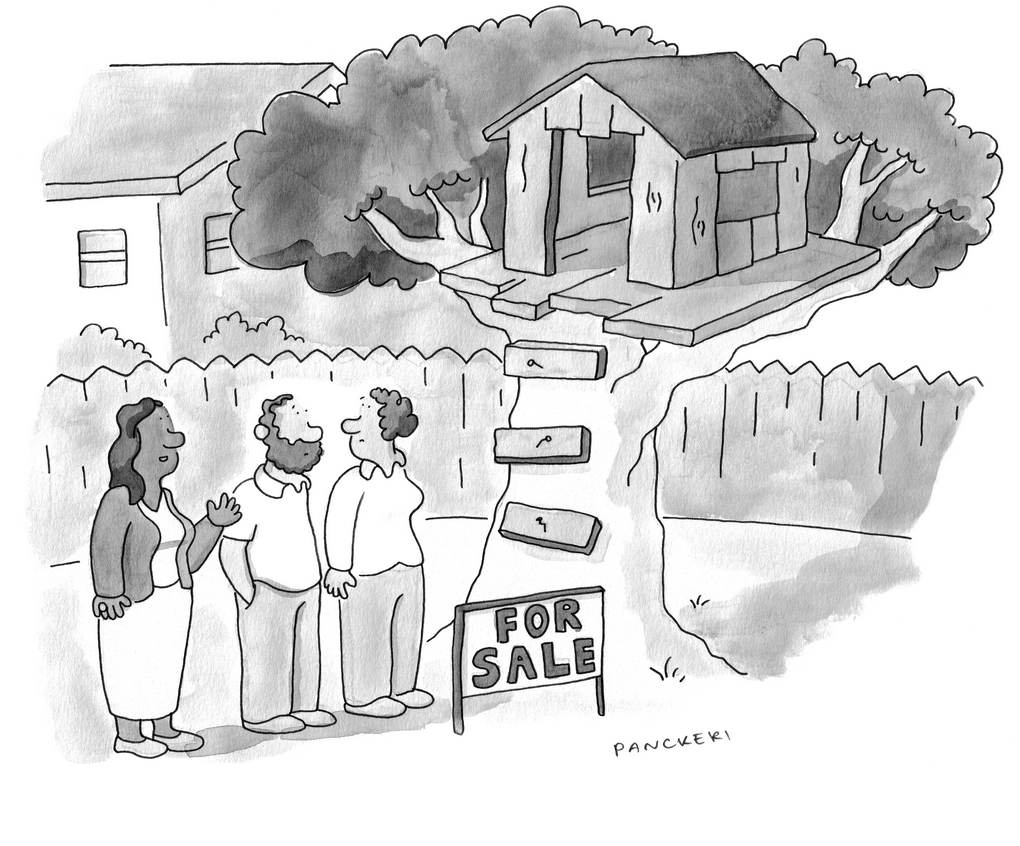
Contest #893
And in just a few years it’ll appreciate from 3rd story to 4th story penthouse.
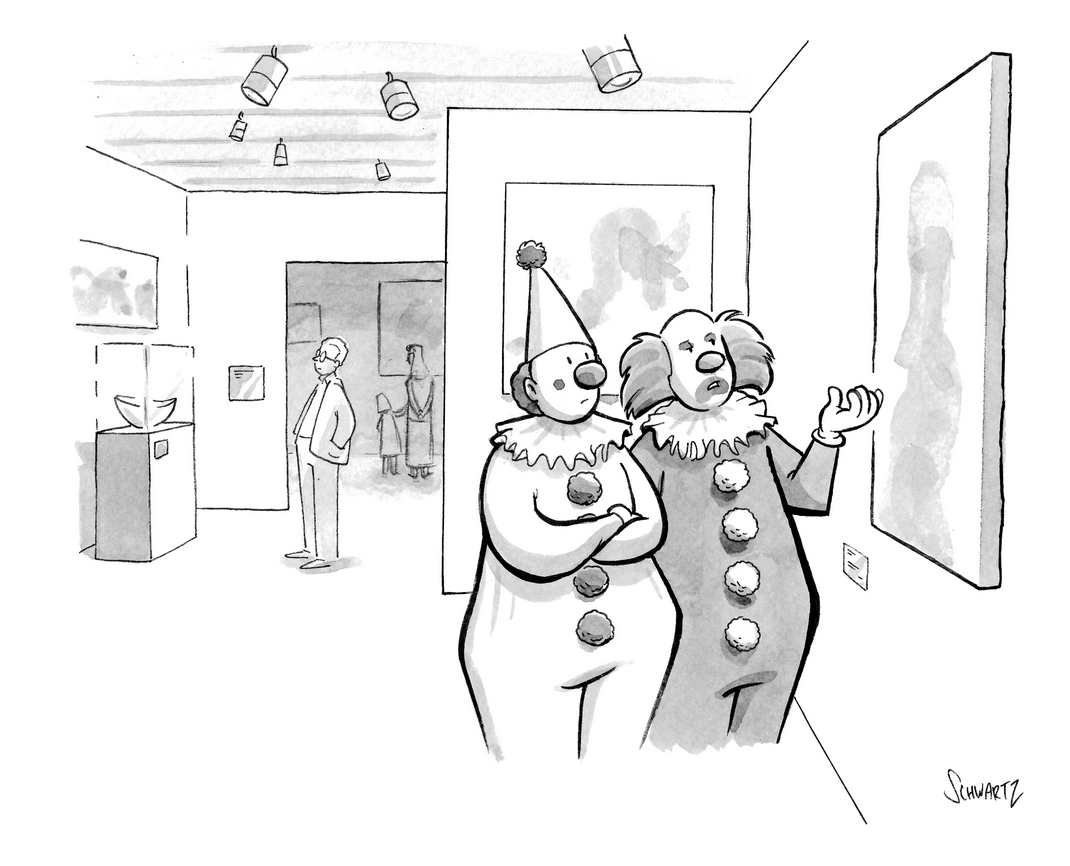
Contest #894
Acrylic and watercolor have their uses. But whipped cream is more my medium.
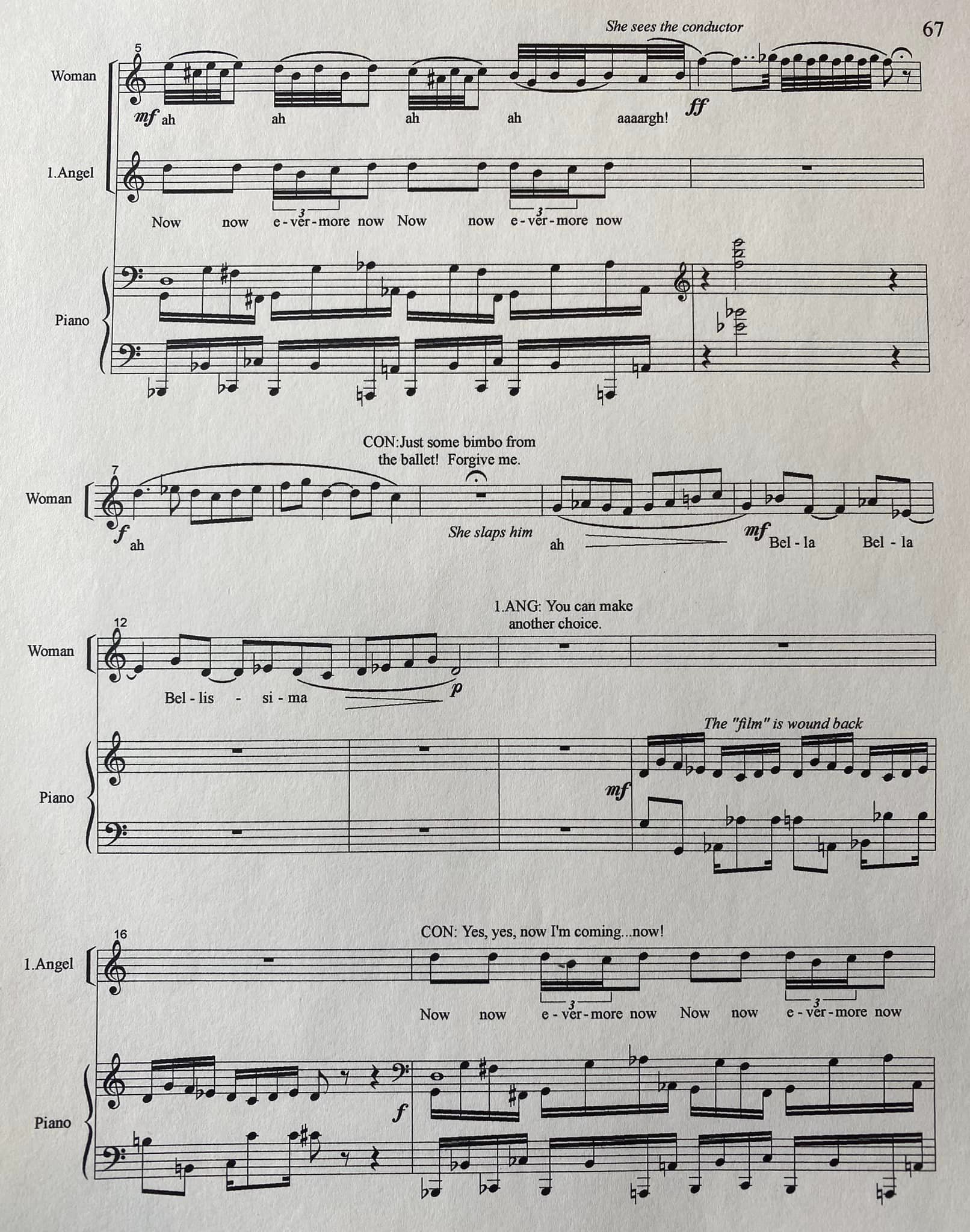
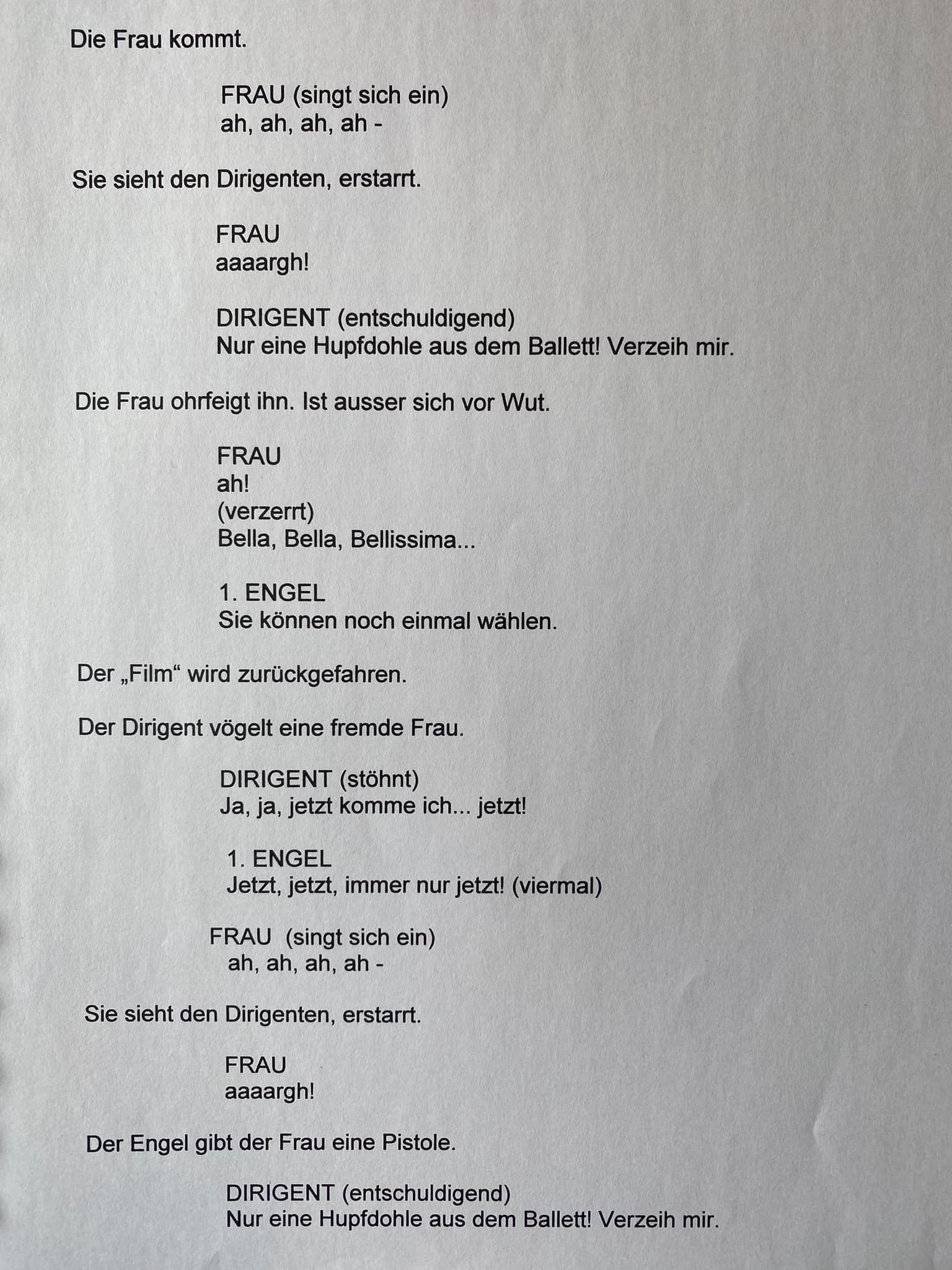
The Conductor rather slimily attempts to minimize the betrayal by calling the other woman “just some bimbo from the ballet”, referring to the opera house’s in-house ballet corps.
The 1st Angel offers the Woman a chance to replay that scene differently.
The “film” is musically wound back. (On stage the performers moved backwards to the starting point of the scene.)
This time the Angel gives the Woman a gun, which she points at the Conductor while intoning the baroque theme in a more accusatory fashion. She falters however in her musical murderous courage, lowering the gun.
But then shoots the Conductor after all.
A third version is attempted after yet another rewind (in the German studio recording this rewind is mistakenly played twice).
This time the Woman brings the gun to her own head. The Conductor tries to stop the suicide, crying out “Just some bimbo”, but the action is repeated over and over like a broken record:
By the way, “Just some bimbo from the ballet” was the best I could come up with translating the far more piquantly silly “Nur eine Hupfdohle aus dem Ballet” from the original German. Hupfdohle is earthy slang for dancer, historically referring to a dancehall performer, not a ballet dancer. Hupf, not really a proper German word by itself, appears to be a bastardization of hüpf(en), (to) jump (yet google translate suggests it may also mean “whoop”, which would also be fitting for a dancehall); and Dohle is German for jackdaw, a small black bird that is able to move about and contort its body with greater agility than its black bird cousins like crows.
But even if one doesn’t know the word roots, just the sound “Hupfdohle” is so wonderfully vivid and demeaning and comical. With “bimbo from the ballet” I hoped alliteration would add some of that piquancy to the sexist slur.
Jackdaw
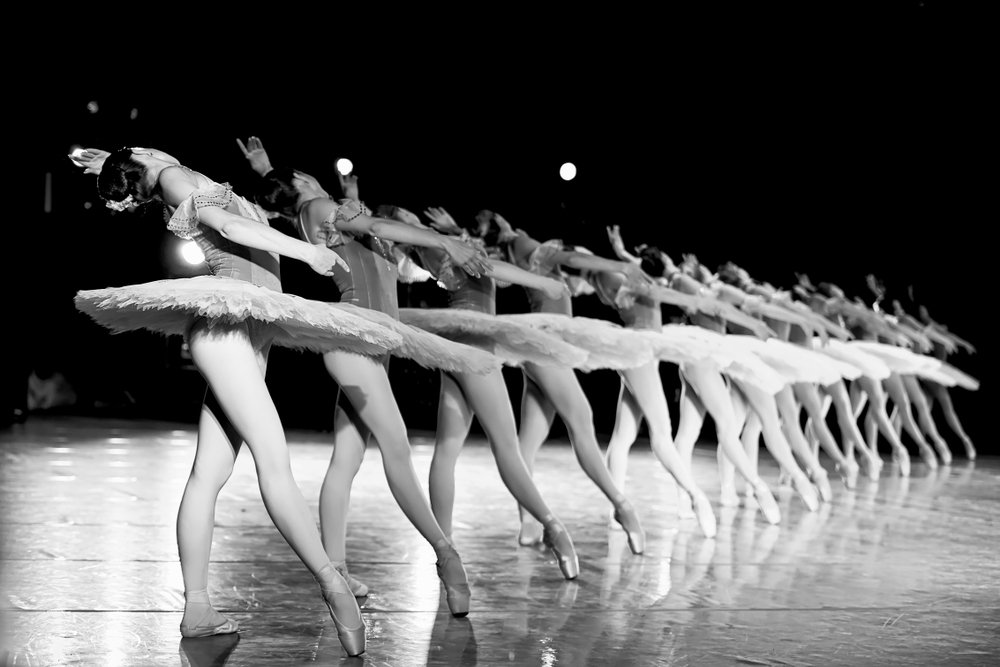
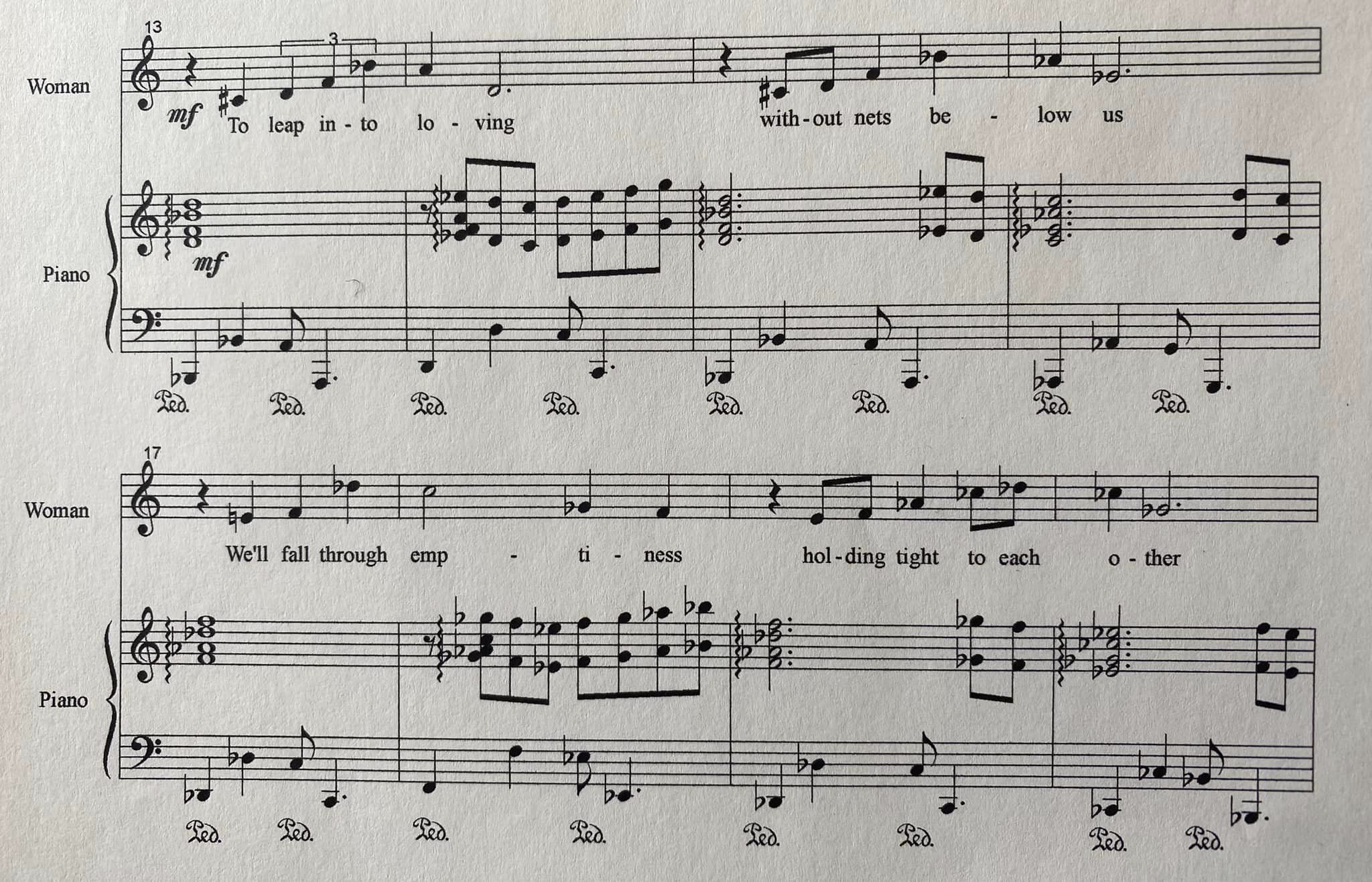
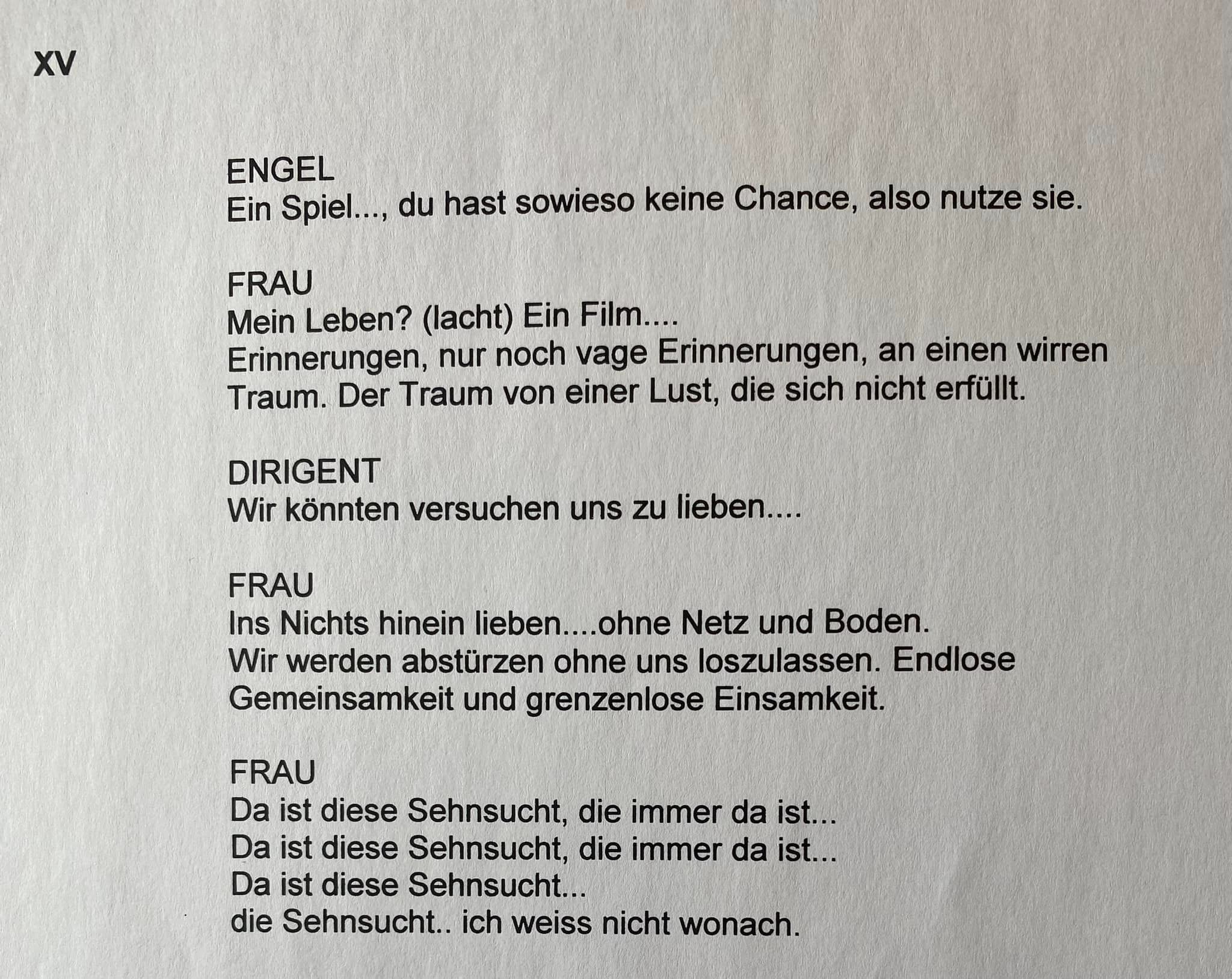
In the next section the Woman tries to imagine life if she had run off with the Conductor. She sees it as a lovers’ leap into the abyss. And the longing, “die Sehnsucht”, persists…
The baroque theme of their rehearsals is now played by the piano as an overtly romantic accompaniment. Somewhere between Rachmaninoff and Richard Clayderman, depending on how generous you are feeling…
XIV
German Language Studio Recording
English Language Live Concert Recording
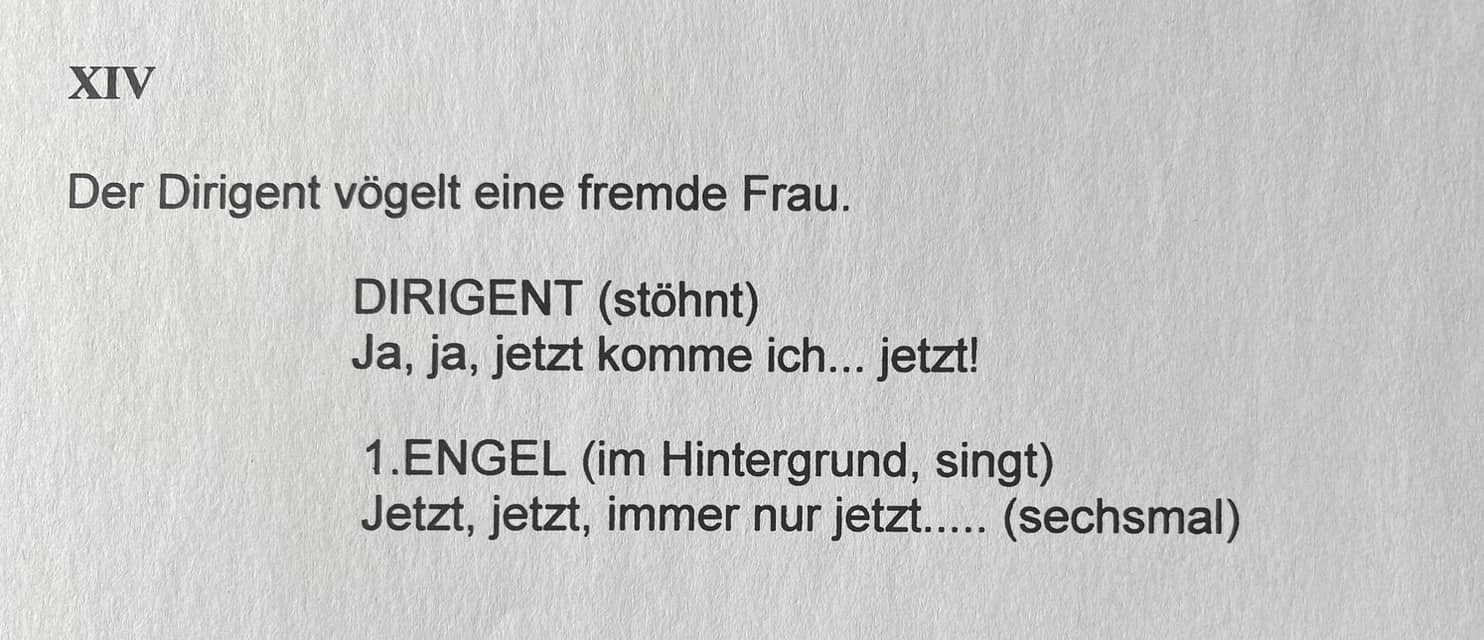
The Conductor is screwing another woman.
CONDUCTOR Yes, yes, now I’m coming…Now!
1. ANGEL Now, now, evermore now, now, now, evermore now Now, now, evermore now, now, now, evermore now Now, now, evermore now, now, now, evermore now
The Woman enters the space, warming up her voice.
She slaps him.
WOMAN Ah, ah, ah, ah, aaaargh! (she sees the Conductor) Ah…
CONDUCTOR Just some bimbo from the ballet. Forgive me.
WOMAN Ah…Bella, Bella, Bellissima
1. ANGEL You can make another choice
The “film” is wound back. All return to “places”. The Conductor is screwing another woman.
CONDUCTOR Yes, yes, now I’m coming…Now!
1. ANGEL Now, now, evermore now, now, now, evermore now Now, now, evermore now, now, now, evermore now
Ah, ah, ah, ah, aaaargh!
1. Angel gives her gun.
Oh ho ho ho ho ho ho ho ho-
CONDUCTOR Just some bimbo from the ballet. Forgive me.
WOMAN Bella! Bella! Bellissima ha ha –
she lets the gun drop
Ah- ah- ah Bang! (she shoots him nevertheless)
The “film” is wound back. All return to “places”. Conductor screws around again.
CONDUCTOR Yes, yes, now I’m coming…Now!
1. ANGEL Now, now, evermore now, now, now, evermore now
WOMAN Ah, ah, ah, ah, aaaargh!
She holds the gun to her head.
The following is like a record that keeps skipping, both in sound and action:
WOMAN Ah-
CONDUCTOR Just some bimbo-
WOMAN Ah-
CONDUCTOR Just some bimbo-
WOMAN Ah-
CONDUCTOR Just some bimbo-
WOMAN Ah-
CONDUCTOR Just some bimbo-
WOMAN Ah-
CONDUCTOR Just some bimbo-
The Woman laughs. She throws away the gun.
WOMAN Dead. Like a doornail. Death is the best thing that ever happened to me.
Ah-
XV
German Language Studio Recording
English Language Live Concert Recording
1. ANGEL A game…either way you have no chance, so take it.
WOMAN My life? (laughs)
A film remembering me Faded memories playing for me
As in a foggy dream The dream of a desire That is not fulfilled


















































 Notes from a Composer