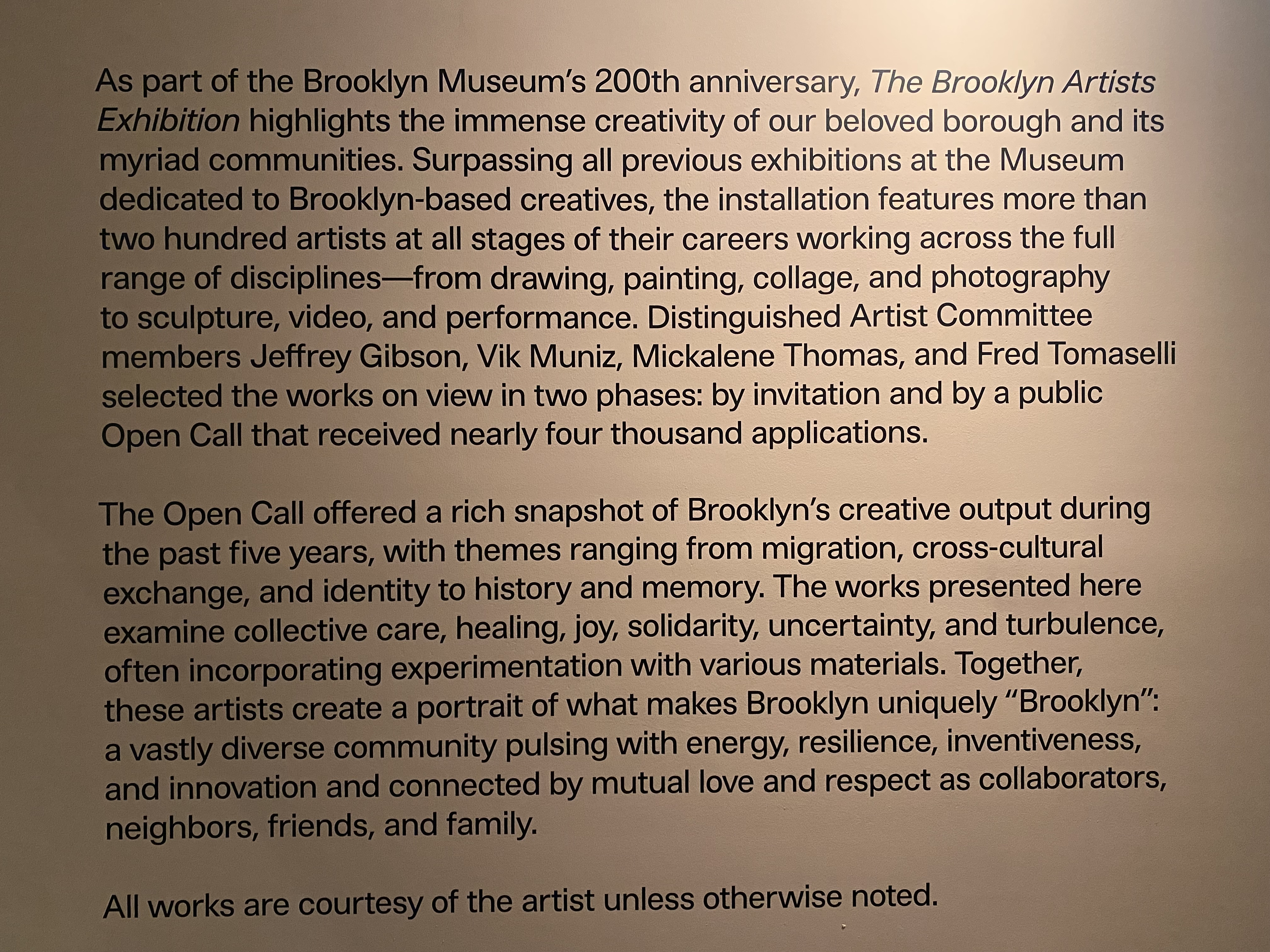
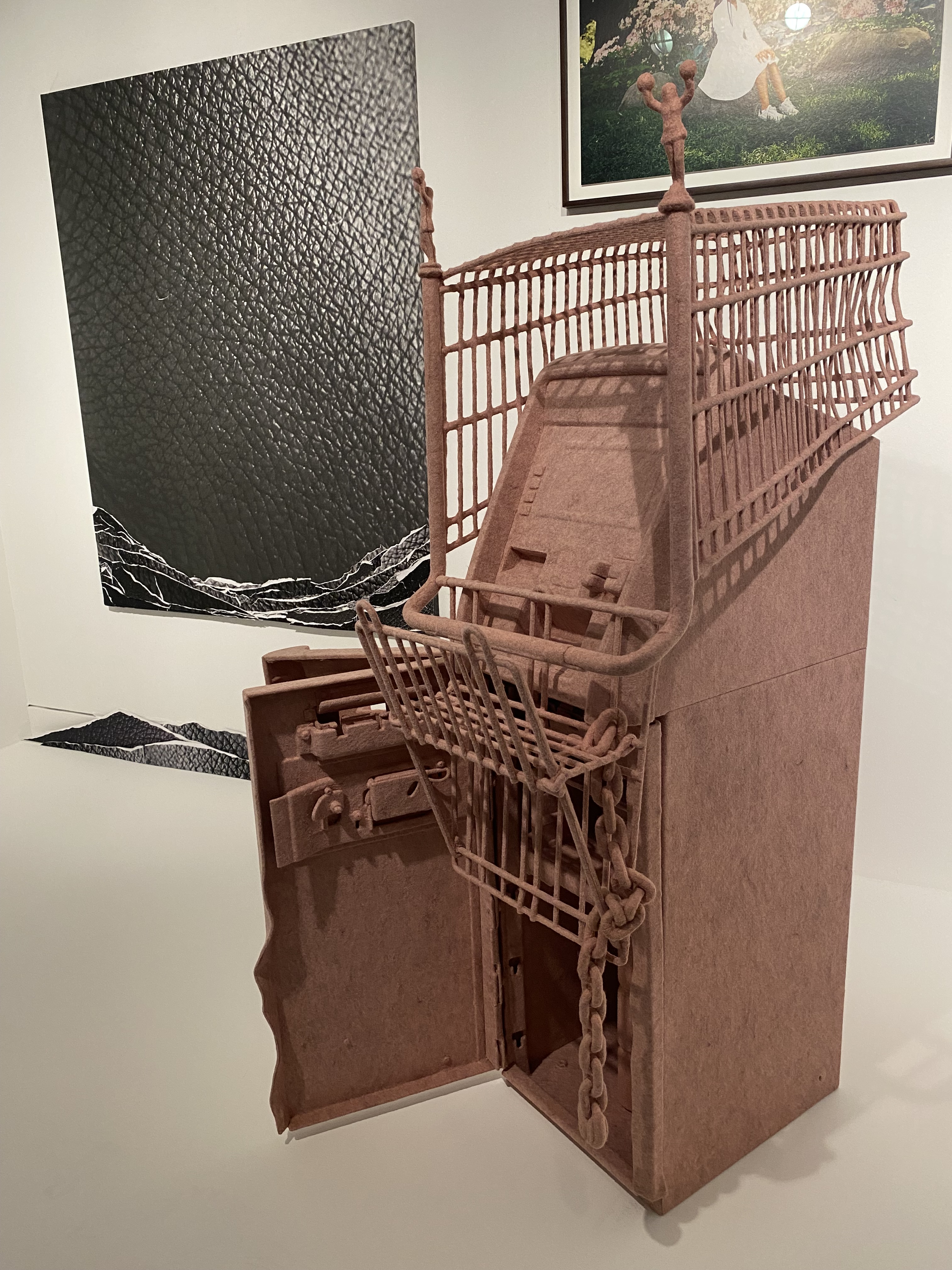
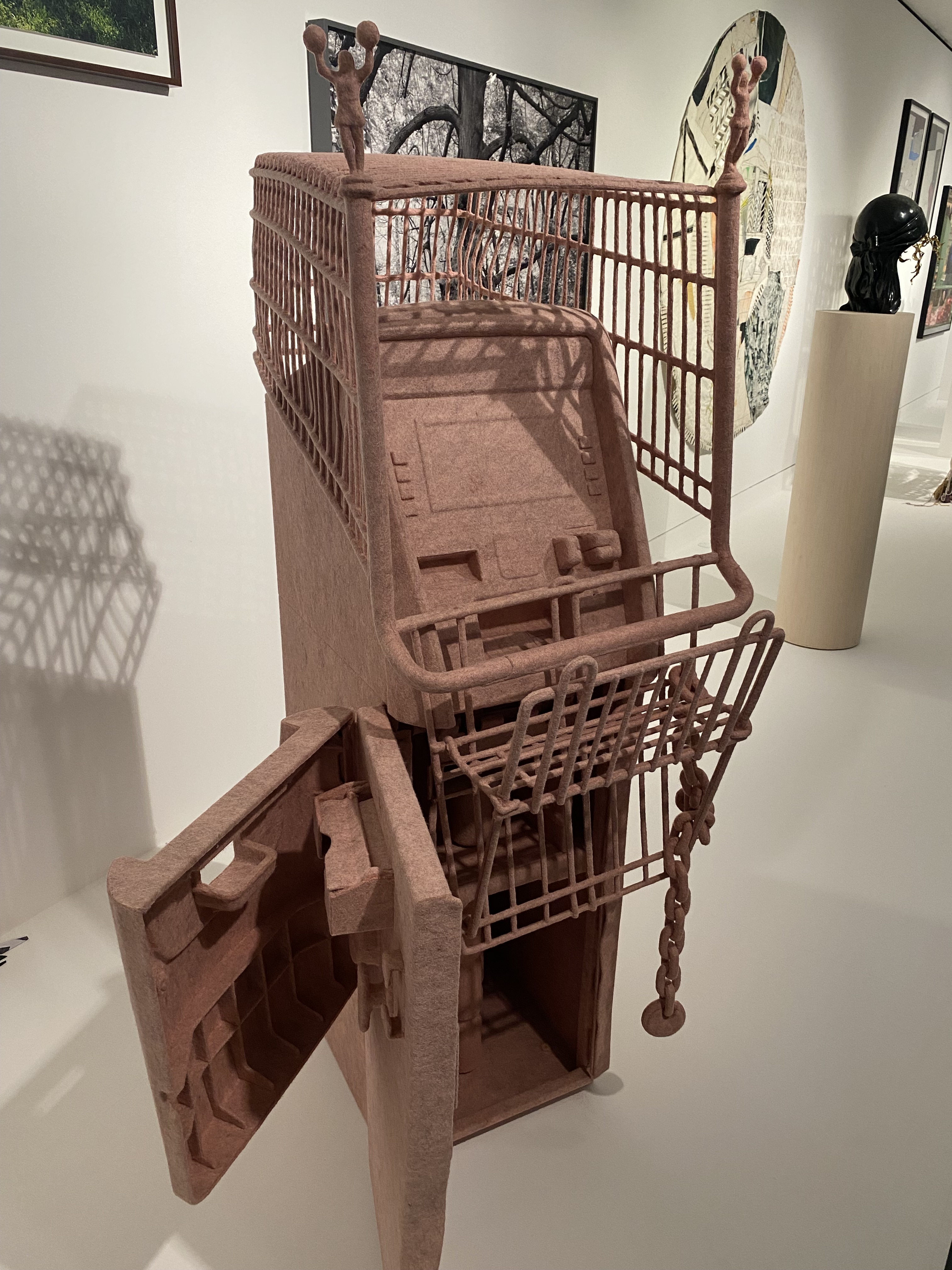
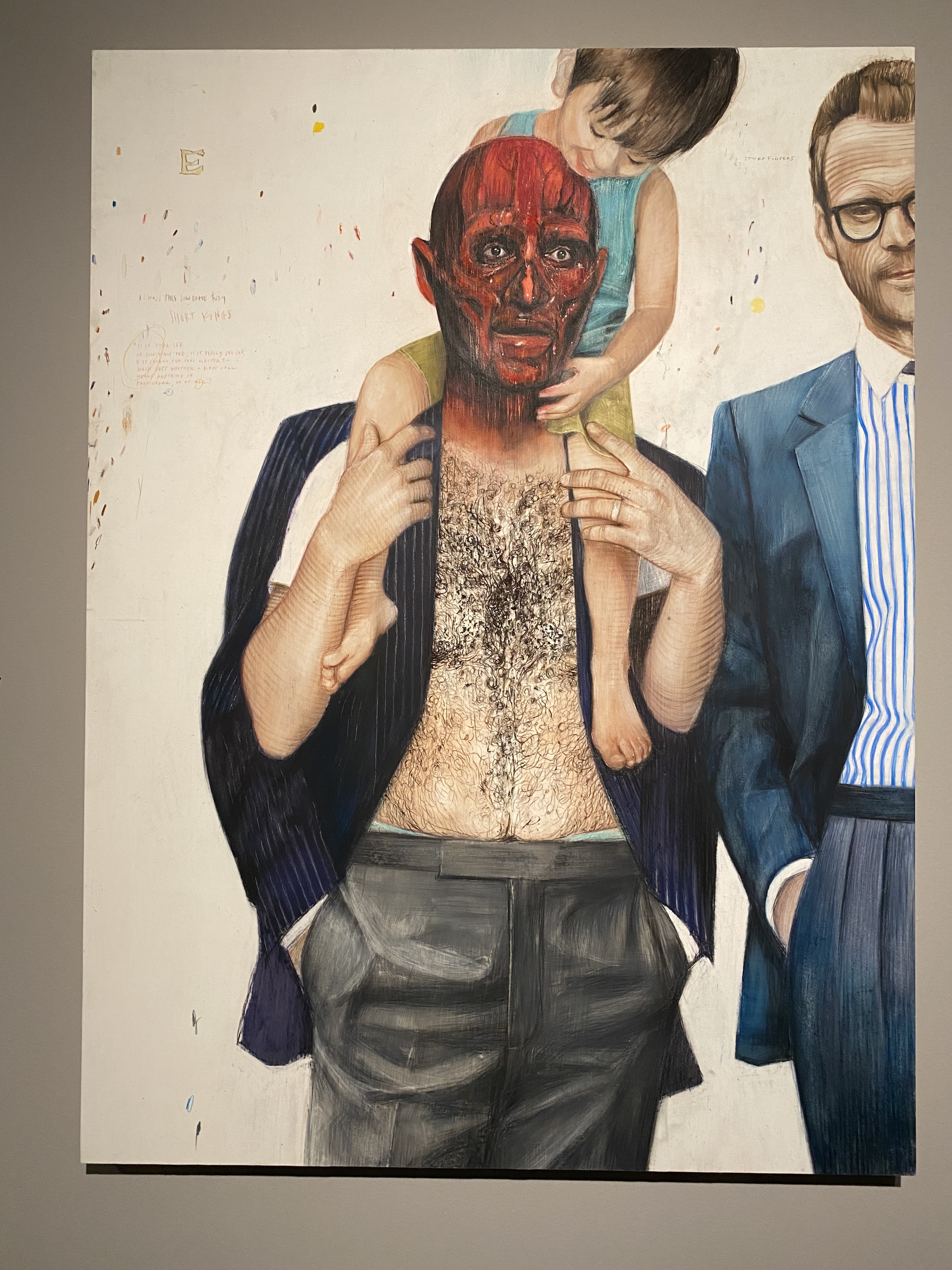
The exhibit of contemporary Brooklyn artists currently showing at the Brooklyn Museum is resplendent with imagination and diversity, technically and aesthetically. Here is a sample of the highlights.
“Mother Sky” – David Shaw
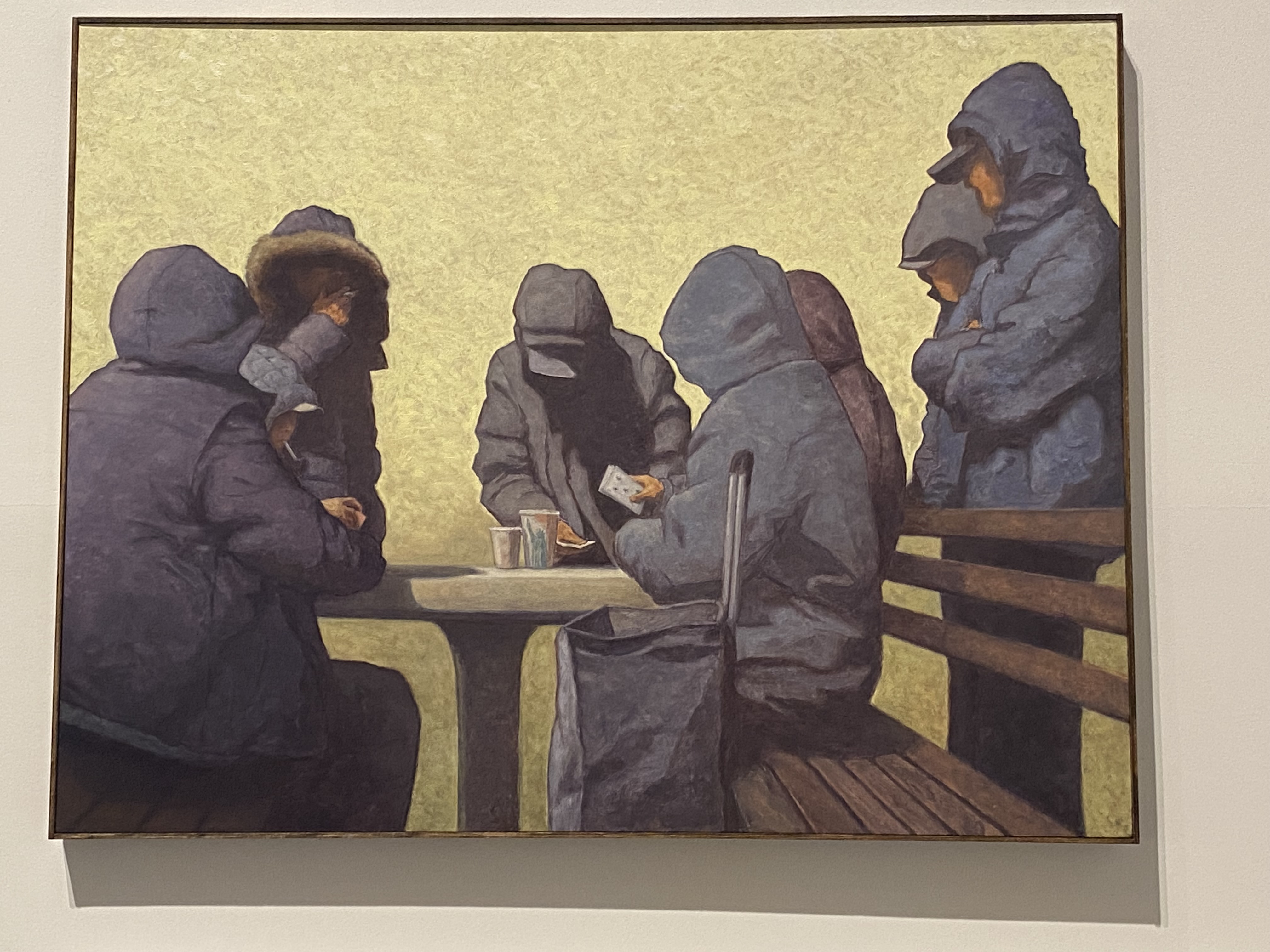
“Game of Crazy Eights” – Rick Secen
“Pacific” – Timothy Paul Myers / Behind at left:”Ubuntu” – Haoua Habré
“Corona Shelter, Prospect Park” – Stanley Greenberg
“THHT THHT: Block Scientist / Namespell Du U” – Soull Ogun
“Suite 2412” – Josh Sucher
“fin boy flay” – Geoffrey Chadsey
“Table-Top Arrangement” – Anthony Goicolea
“Every dotted Goodbye every distant hello” – Aisha Tandiwe Bell
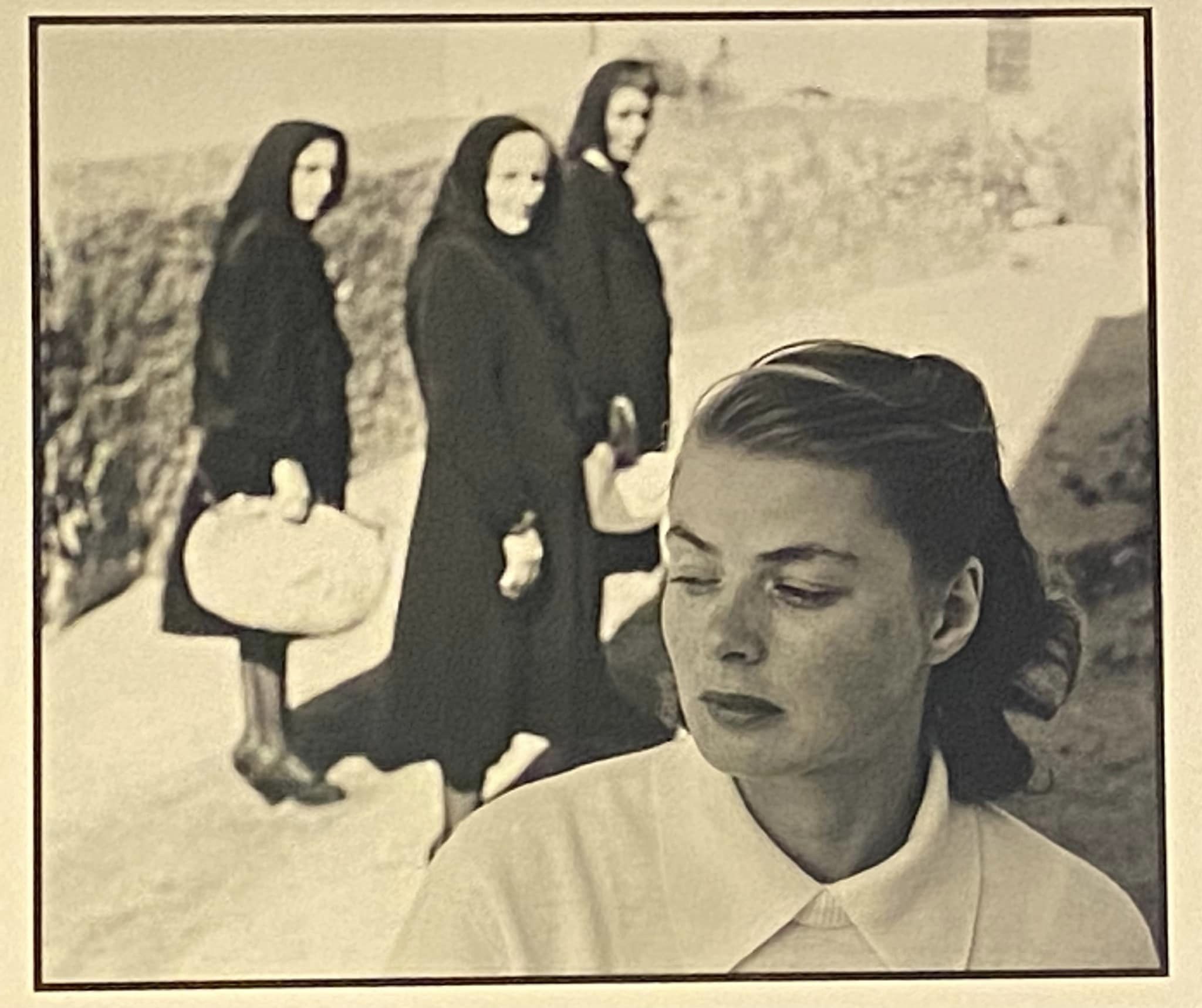
This Spring I was enjoying a sprawling exhibit at the Brooklyn Museum featuring select works of many African and African-American artists, when I came upon this photo of Ingrid Bergman. A photo that by itself vibrates with meaning and emotion. But learning when and where it was taken the picture takes on even greater resonance, speaking eloquently in one image to the most fraught time in the classic Hollywood movie star’s life.
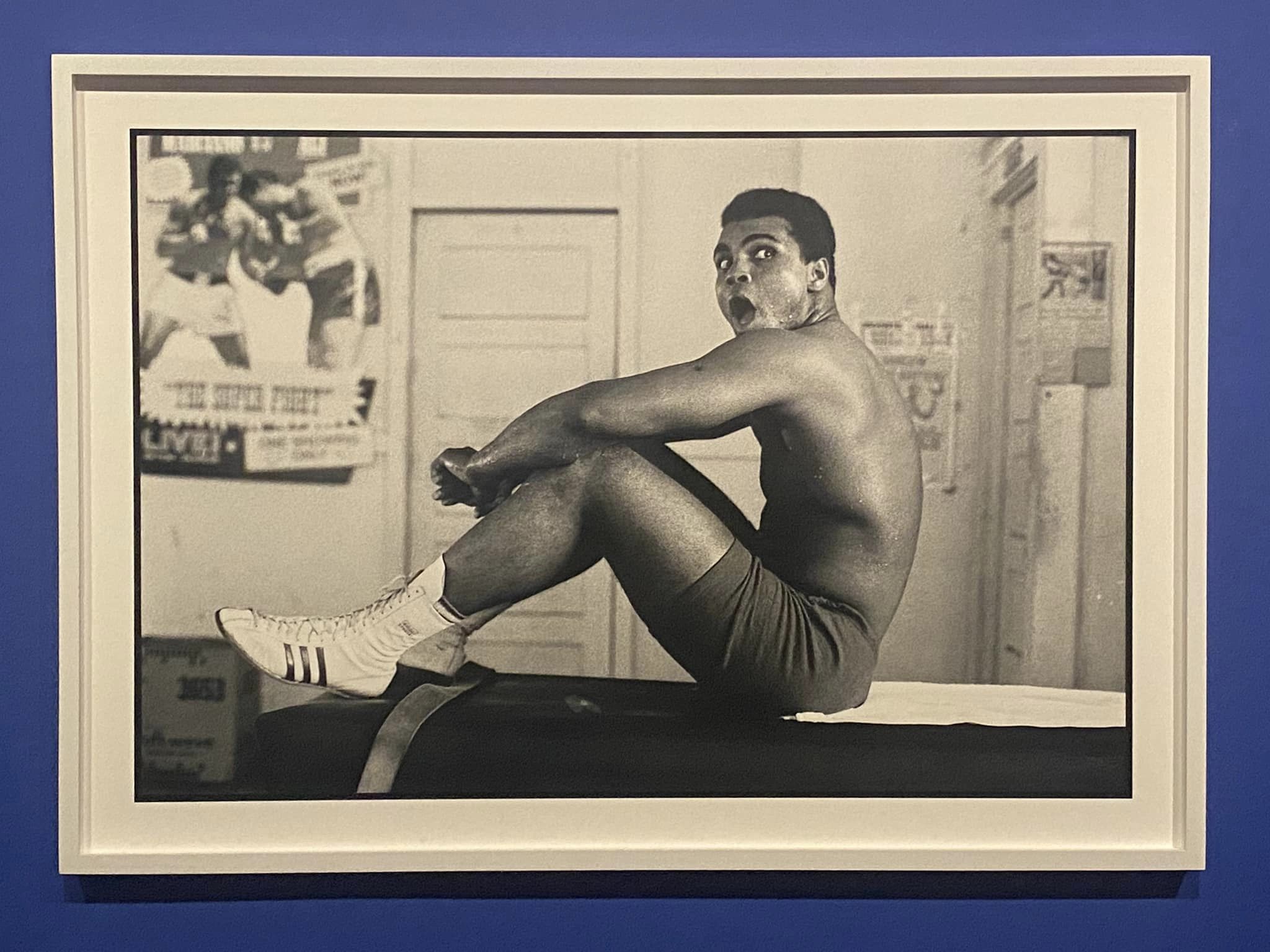
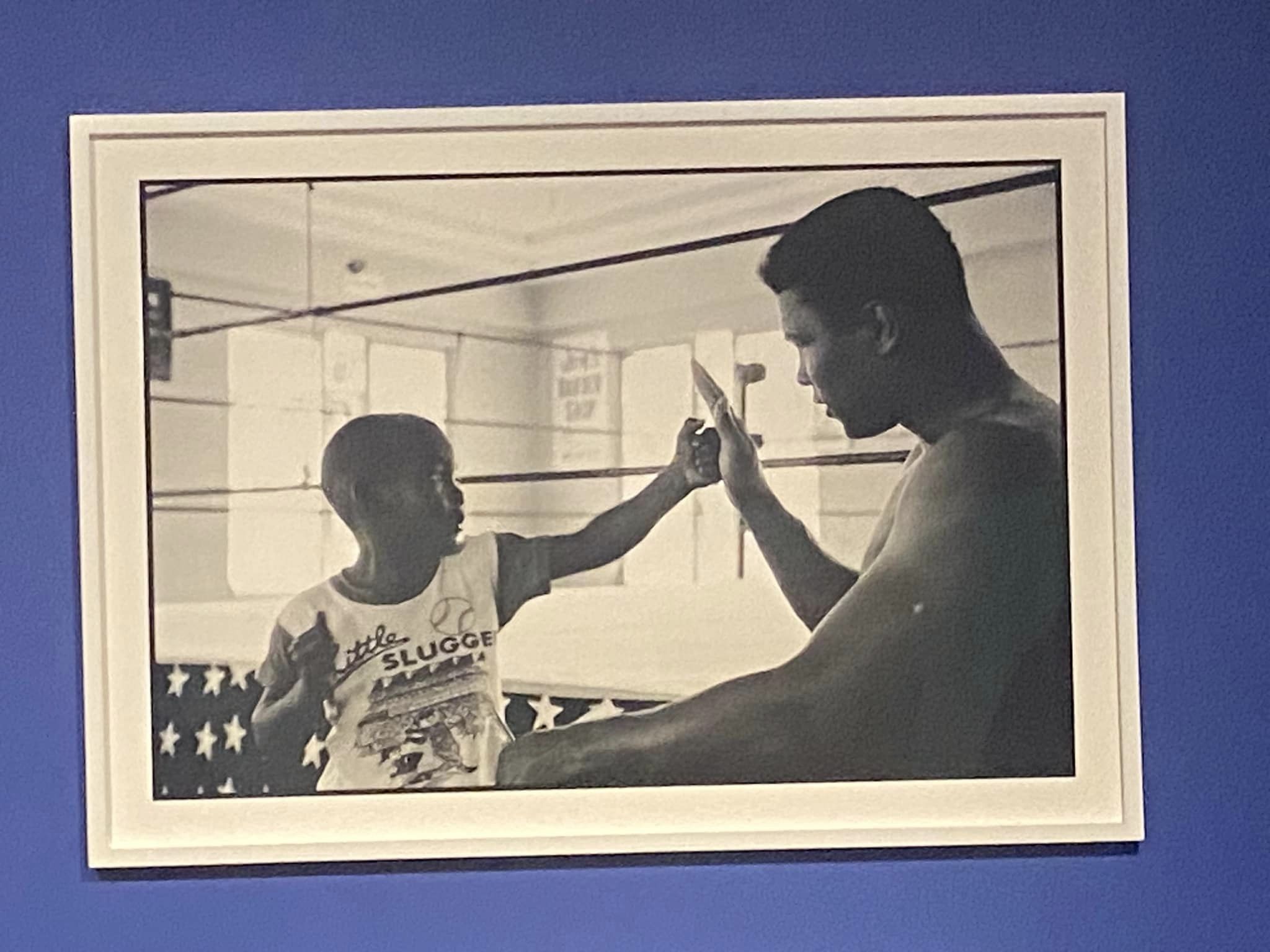
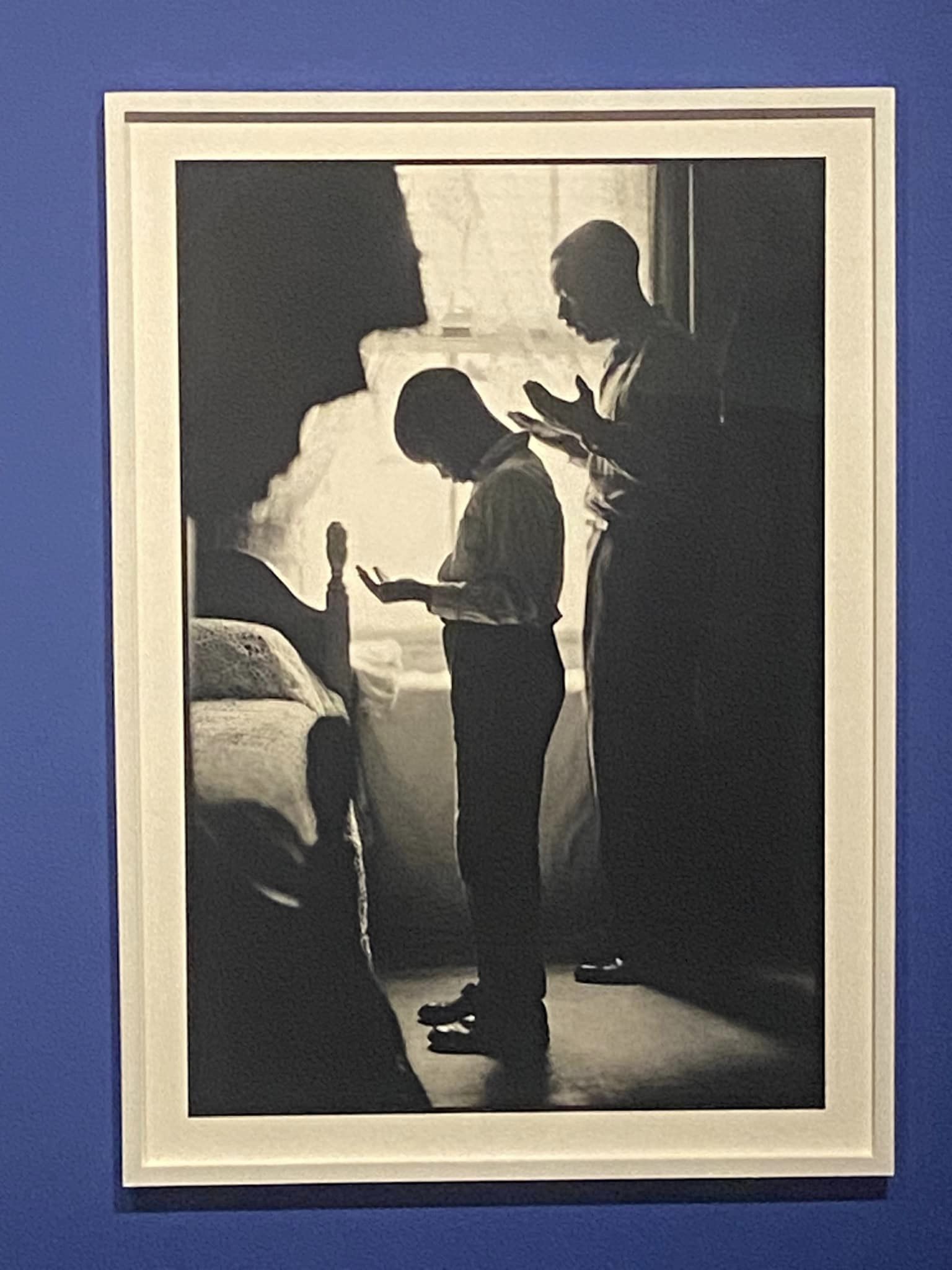
The photo was taken by Gordon Parks, famous African-American photo-journalist, known in part for his glamorous shots of celebrities, but most celebrated for his photojournalism chronicling civil rights, poverty and African Americans from 1940 – 1970. I will share more of his great work below.
Yes, I am aware of the irony or indelicacy that in an exhibit full of African-(American) art mostly illustrating African-(American) experience, the item that so struck me I choose to post a blog piece about it is the photo of the blonde Swedish Hollywood Golden Age actress.
But for me this one photo in one candid image brilliantly encapsulates one of the most dramatic scandals in Hollywood history, a scandal that resonated for so long that when I was told about it as a child by my matronly babysitter 25 years later, the thrill of the scandal and emotions of it all still seemed fresh.
You see, Gordon Parks took this photo of Ingrid Bergman 1950 on the set of Roberto Rossellini’s movie “Stromboli” in Italy. It was the movie that brought Ingrid and Roberto together, they had an affair and she became pregnant. She was married at the time, her husband Petter Lindström and child (the future NY TV journalist Pia Lindström) awaiting her return in America.
The scandal was enormous. Ingrid Bergman was denounced on the floor of the United States Senate. She was exiled from Hollywood for several years. Petter Lindström sued her for desertion and custody of their daughter (Pia would not see her mother for seven years).
Ingrid Bergman would end up staying in Italy, marrying Rossellini and having three children with him (including the actress Isabella Rossellini). She made several movies with him and other European directors. She would not act in an American film production for seven years. When she finally did return to the US, there were fans at the airport with placards proclaiming “We forgive you, Ingrid”.
Which is just one indication of how fraught the whole affair was for the public during the repressive 1950s.
Which take me back to this photo, taken on the set of “Stromboli”. I don’t know if it was taken before or after Ingrid Bergman and Roberto Rossellini started their affair. Or if after, if the affair had already been made public.
But if the photo doesn’t fully fit the timeline of “The Bergman Affair” and the massive world-wide condemnation from moral scolds that ensued, it certainly evokes that history.
Ingrid, beautiful but wary, head tilted defensively back to a trio of conservatively attired Italian women, all staring at her, the lack of lens focus on their faces making them appear like haunting masks of quiet condemnation.
Ingrid Bergman on the set of “Stromboli”. A photo that speaks volumes about what she was and would be experiencing at this time – far more so than what might even have been possible to know when the picture was actually taken. A moment of photojournalistic serendipity.
And now more of Gordon Parks work from the exhibition:
Above is a bowl of paw paws, the only North American tropical fruit. You won’t find it the grocery store, because it so easily bruises it is considered unmarketable. It also only ripens on the tree, and then must be eaten or frozen within a few days.
When we moved into our home in Brooklyn, Ed and I had a back yard garden to cultivate. Ed is the green thumb between us two, but I was given the gardening catalog and told to choose at least one plant. I read about the paw paw, and that it tasted like banana custard. And that it is not sold at market. The only way to enjoy the exquisite paw paw is to plant the trees yourself.
I really wanted to taste the elusive paw paw, so we planted two trees. You need two so they can cross pollinate.
This is what the ripe paw paw looks like when you cut it open. Rich yellow flesh, with a consistency somewhere between a mango and a banana. It’s chock full of vitamins and minerals. And yes, it tastes like banana custard.
The green skin is thin and leathery. The seeds are hard and brown and shaped like buttons. You eat neither, only the abundant yellow flesh. Best to cut the fruit in quarters, bite in and work the pits off the flesh in your mouth, spitting them out while enjoying the banana custard flavored richness.
In addition to eating paw paw, you can turn it into many delectable treats. Ed makes paw paw juice. It’s a rich pulpy nectar.
Ed also makes paw paw smoothies. Those are my favorite. Ed usually adds vanilla yoghurt. And sometimes rum or tequila (yum!). Or fresh mint, like in this case. It’s often so thick you need a spoon.
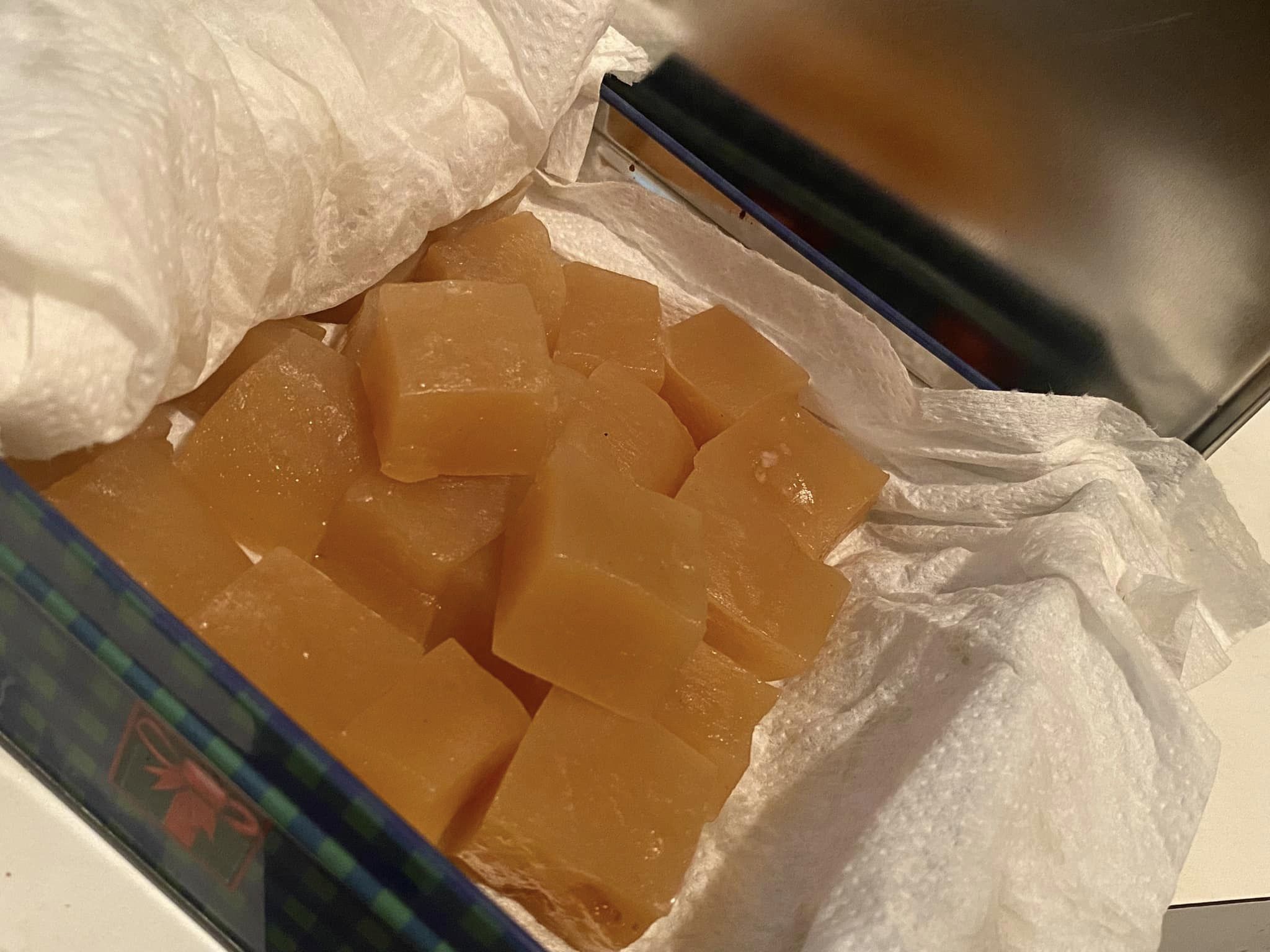
Other treats are paw paw ice cream (very popular with the family at Thanksgiving), paw paw cookies, and – pictured here – paw paw pâte de fruit. Ed modified a raspberry pâte de fruit recipe to concoct these tasty treats.
September is harvest time. That bowl represents a daily haul on the heavy days, although we also had one day where we collected two such bowlfuls.
Here you can see where we planted the two paw paw trees in our backyard. They are in the back left and back right corners. These trees are about 30 years old now. When they arrived for planting, we received three year old plants. We didn’t learn until after planting that paw paw trees don’t bear fruit until they are 10 years old.
So we had to wait a while before we could finally taste the elusive paw paw.
An Underwater Exploration with Musical Accompaniment
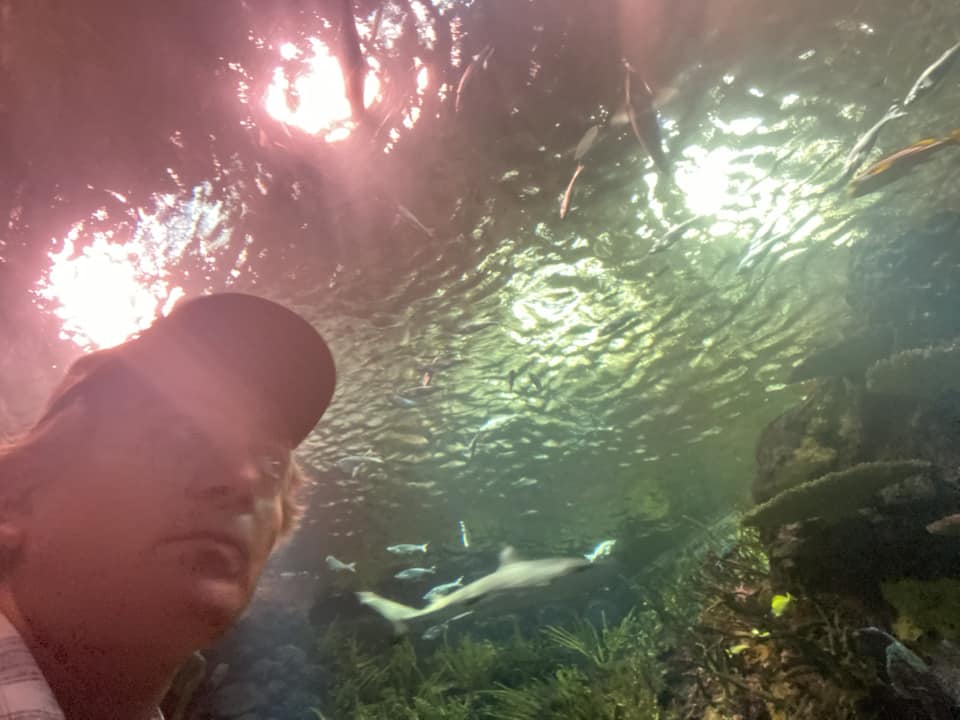
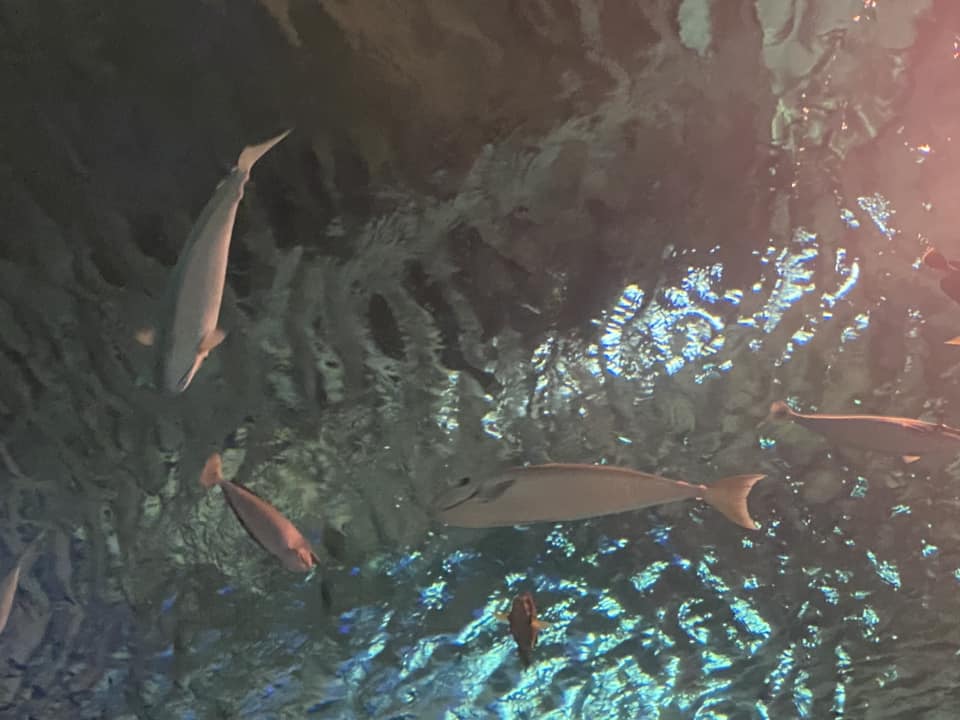
The other day Ed and I went to Coney Island in the south of Brooklyn, and spent many hours enjoying the wonders of the aquarium.
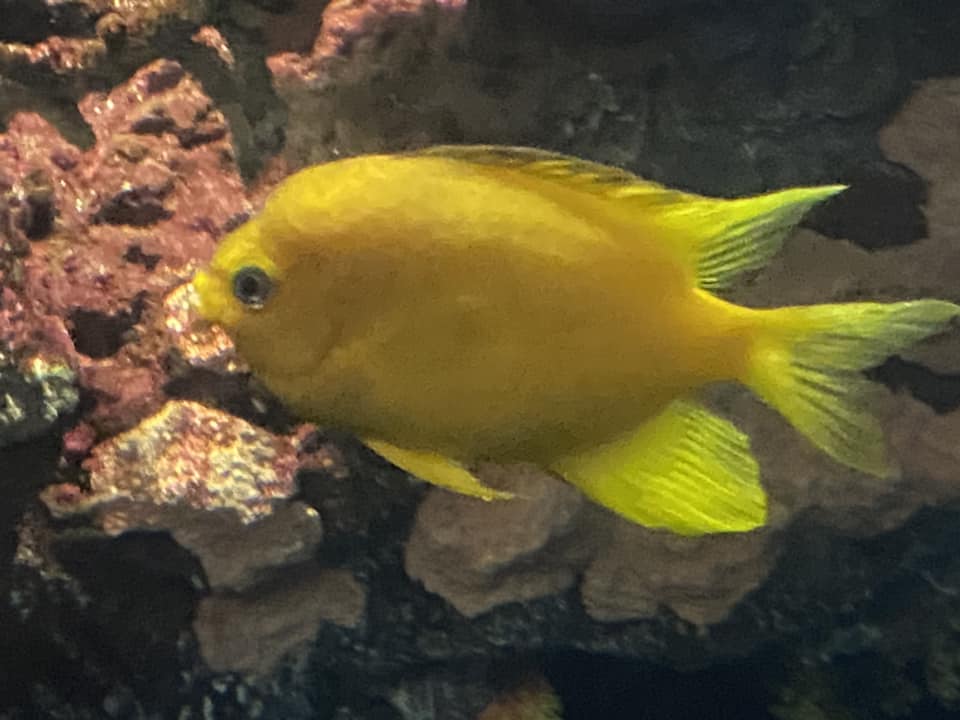
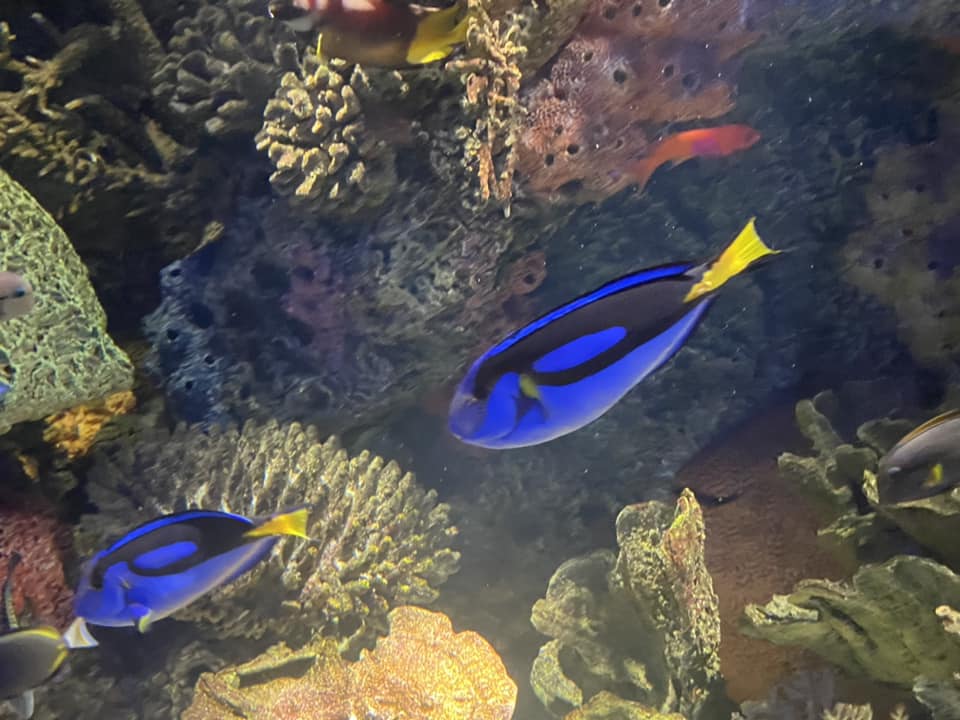
Underwater worlds from coral reefs to canyon gorges, multitudes of sharks, seals, octopi, penguins, jelly fish, sea ray, piranha … what follows is a colorful assemblage of pics and vids of the New York Aquarium’s many attractions, annotated as much as this tourist-not-marine biologist can muster.
Oh, and it’s been a while since I included musical “accompaniment” in these kind of blog posts, but I really should bring back this distinctive feature; so for extra fun I’ll throw in a variety of apropos song/music choices, like this one, the most apropos, I would venture:
We’ll start in the tunnel walk below the shark exhibit.
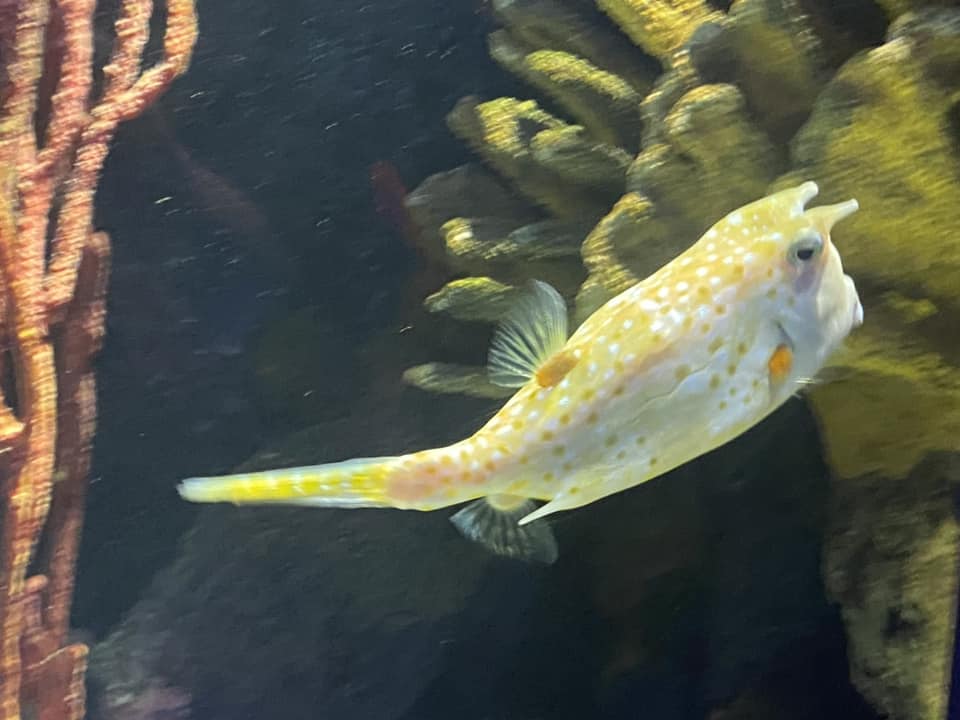
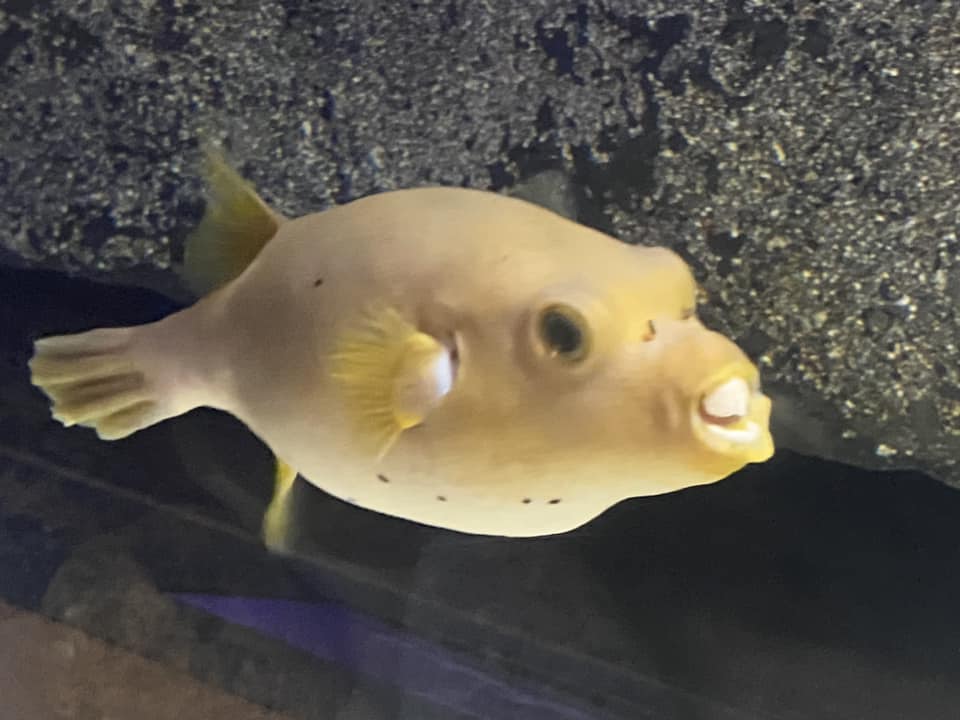
Blacktip Reef SharkZebra SharkBrownbanded Bamboo SharkAdult zebra sharks can lose their pigment, appearing white.Yellow TangBignose Unicorn Tang (most likely)Spotted WobbegongYellowhead Butterflyfish & Whitecheek SurgeonfishHippo TangLonghorn CowfishSea GoldieNever did find out the name of this looker…
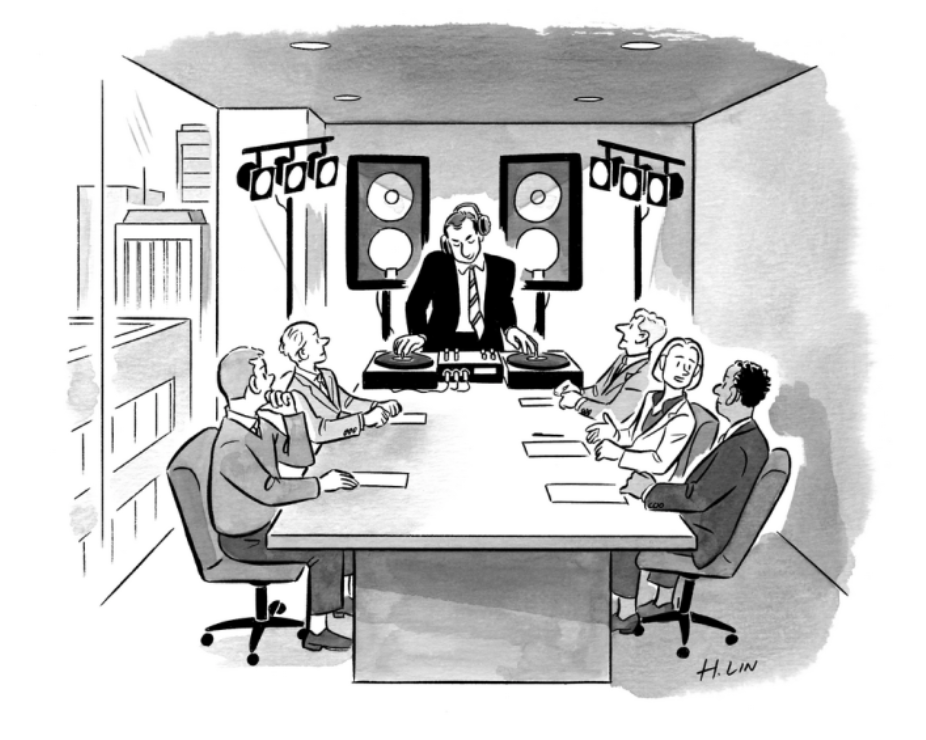
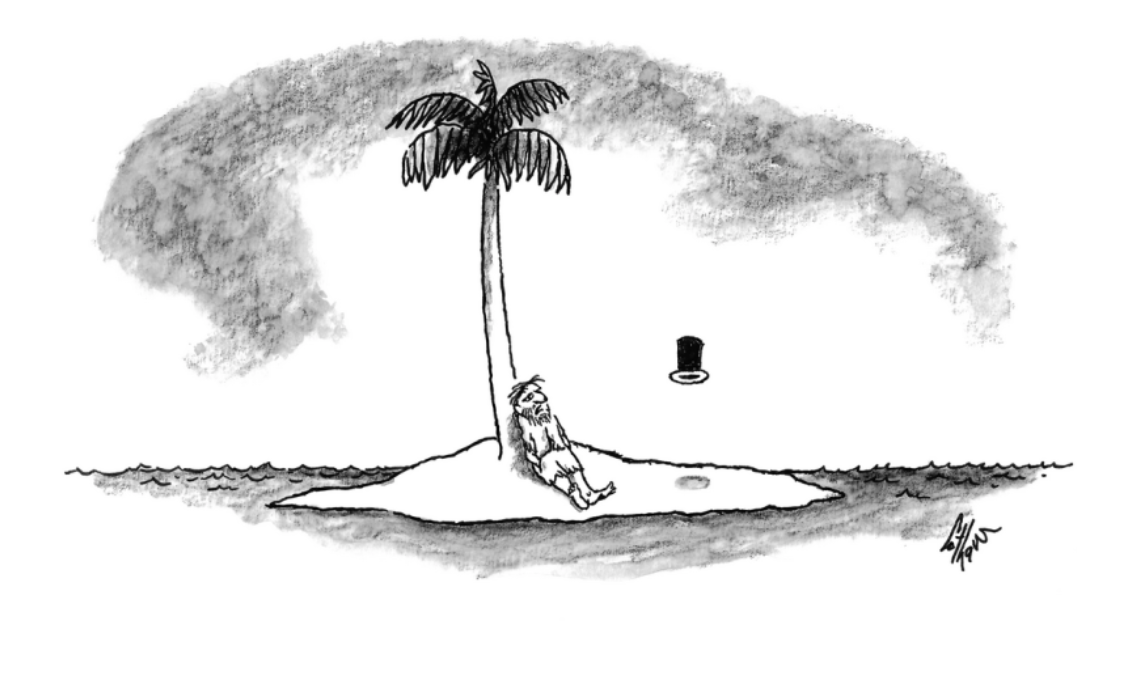
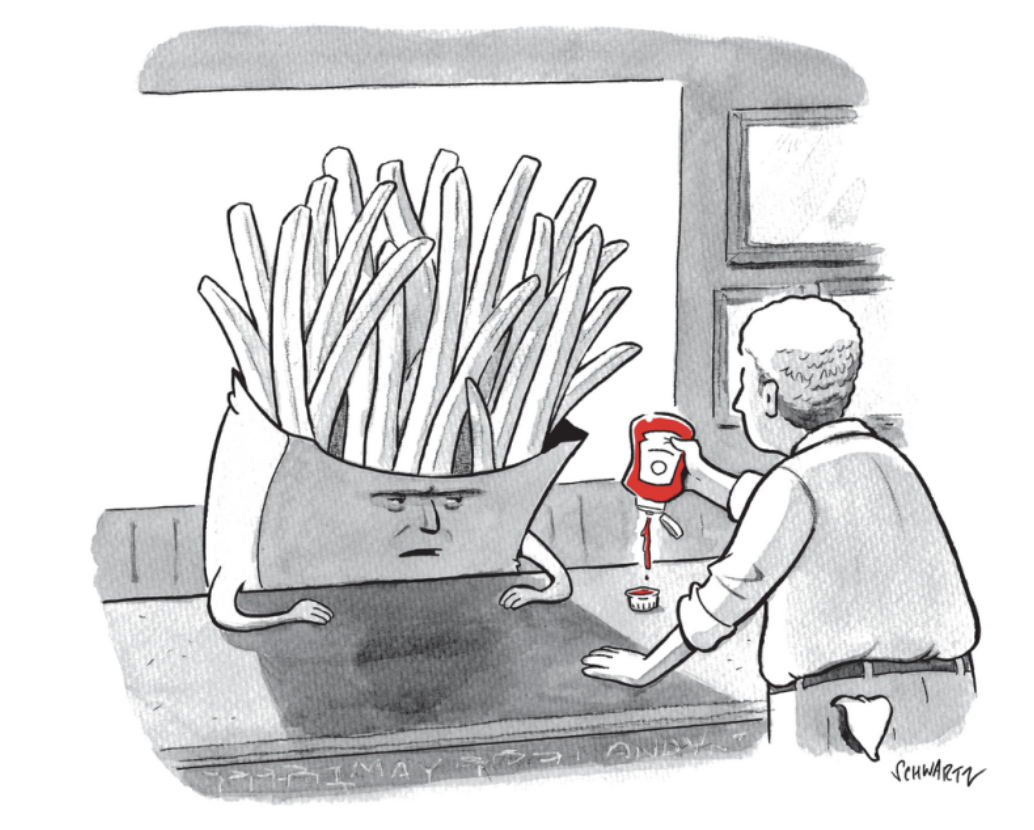
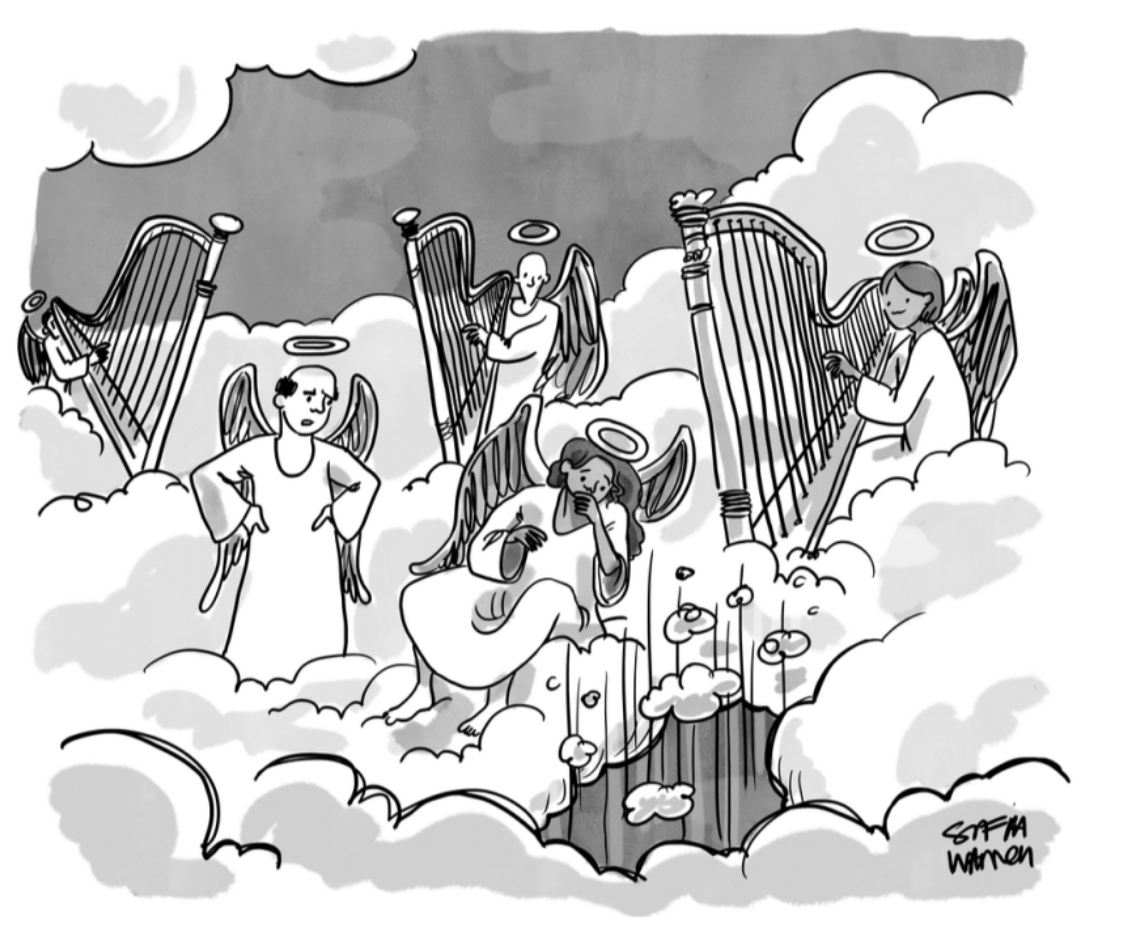
This is the 10th installment of my own personal New Yorker Cartoon captions (easiest way to find all the others is to click on the Literary Lyricism category). It’s also the fourth to reference the Planet of the Apes movies in its title. One may think I’ll have to move on from that theme now that I have worked my way to the most recent installment in that cinematic universe; ah, but there are still a few more titles from the original 60 year old film series to mine – come to think of it, the previous use of the more general “Return” sequel signifier arguably suggests I have referenced the Planet of the Apes movies five times so far.
Which may be more amusing than any of my captions this round? I hope not. True to form none of my writings have yet reached the final three in the New Yorker captions competition.
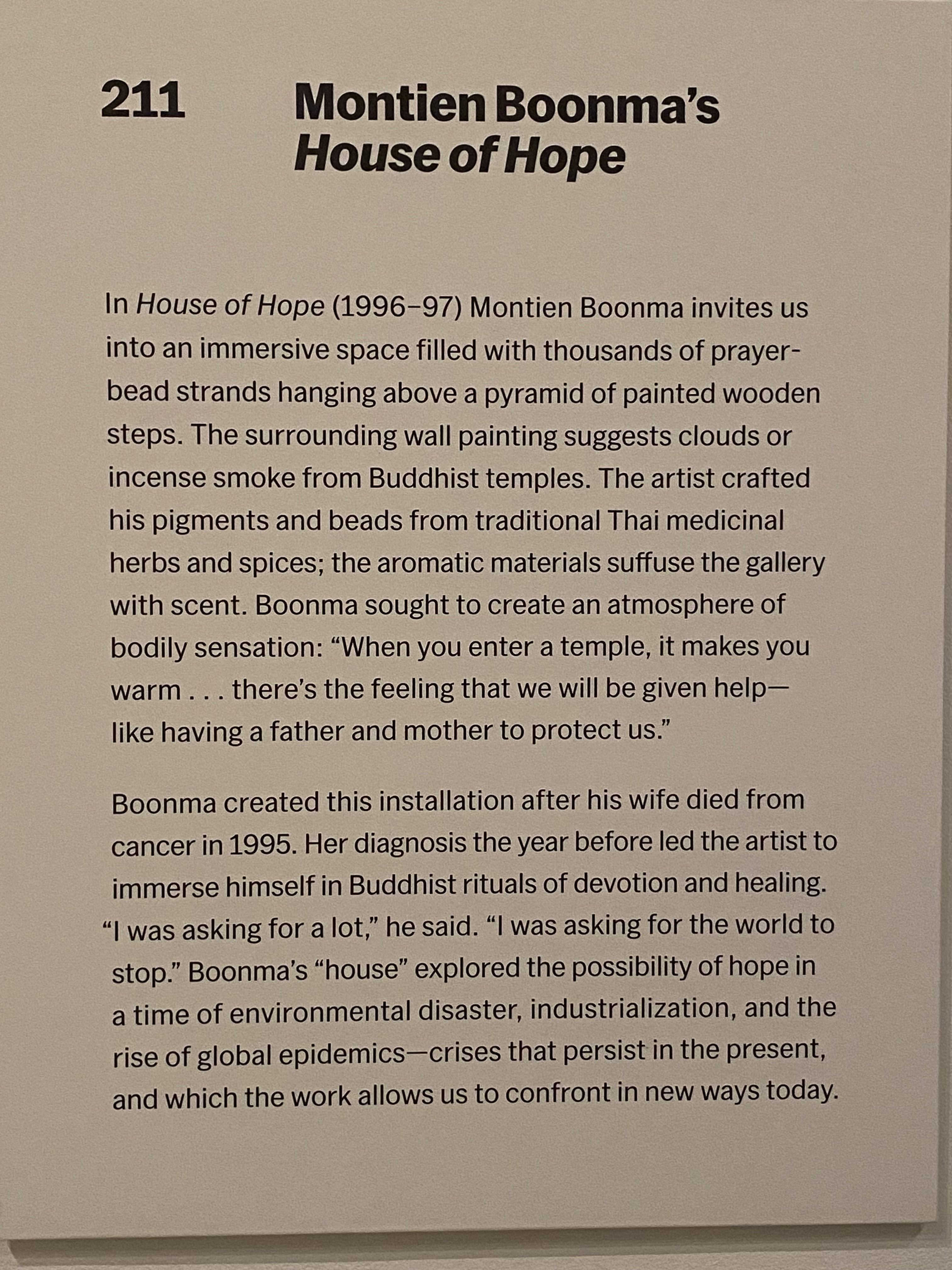
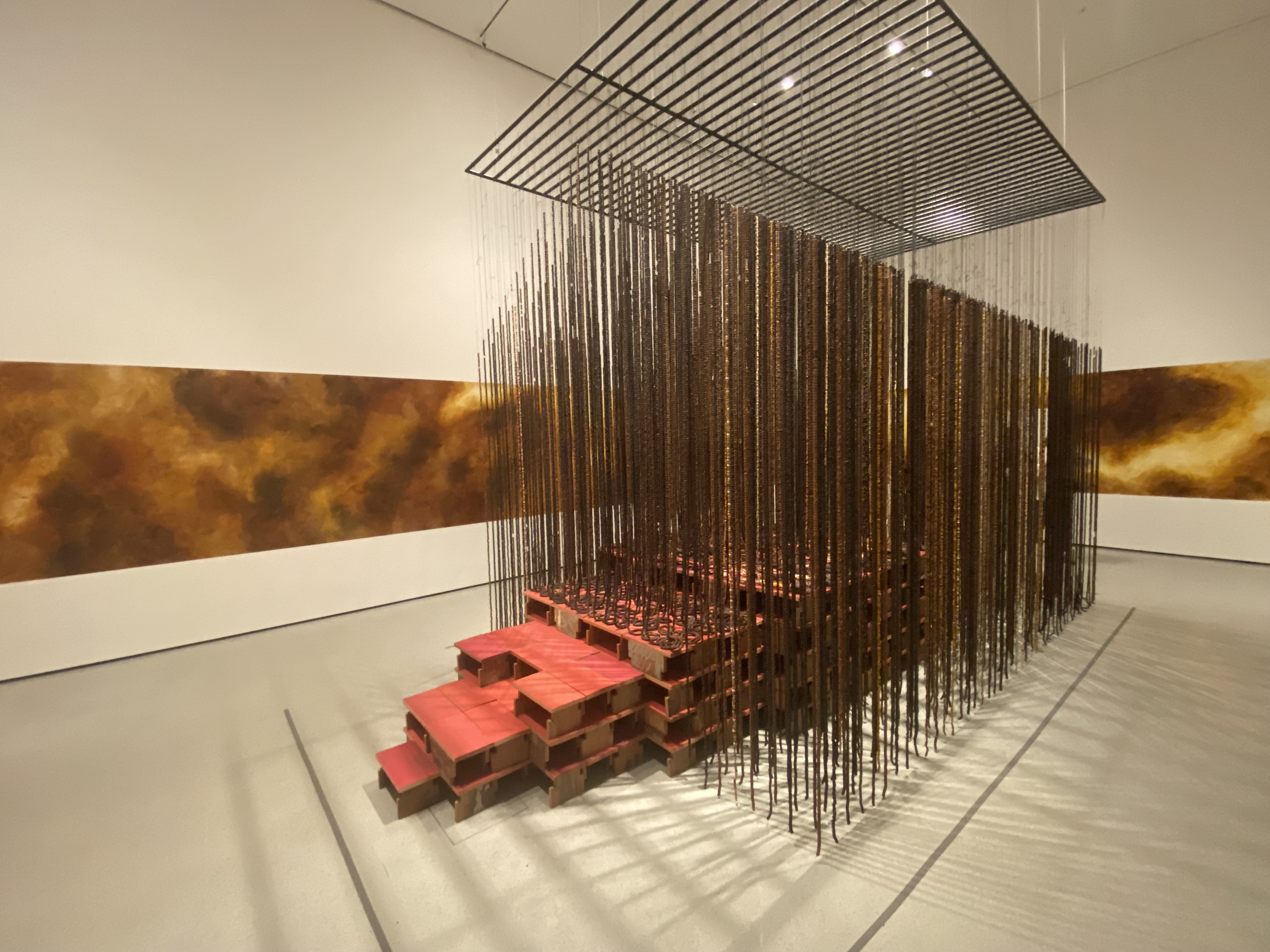
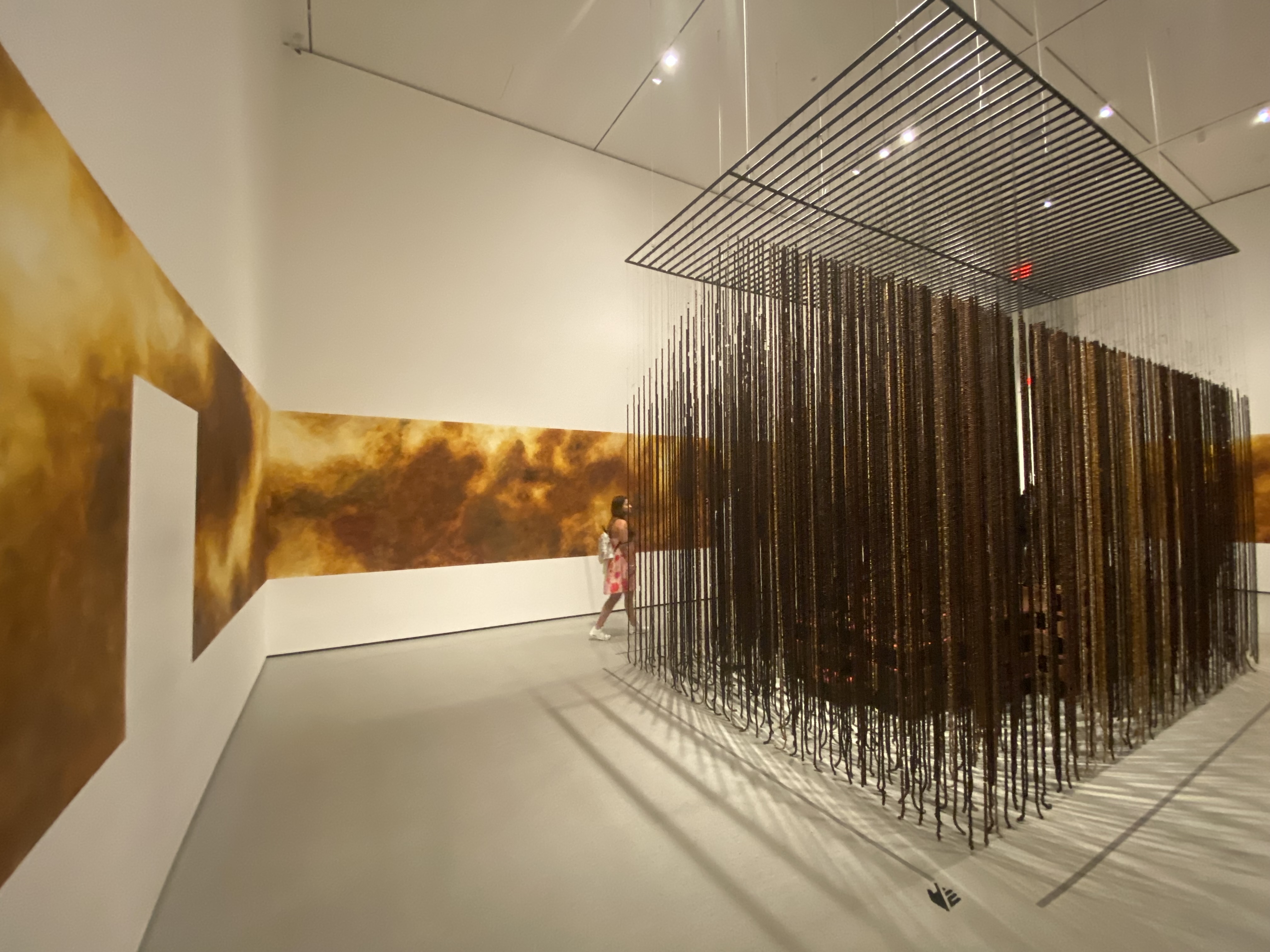
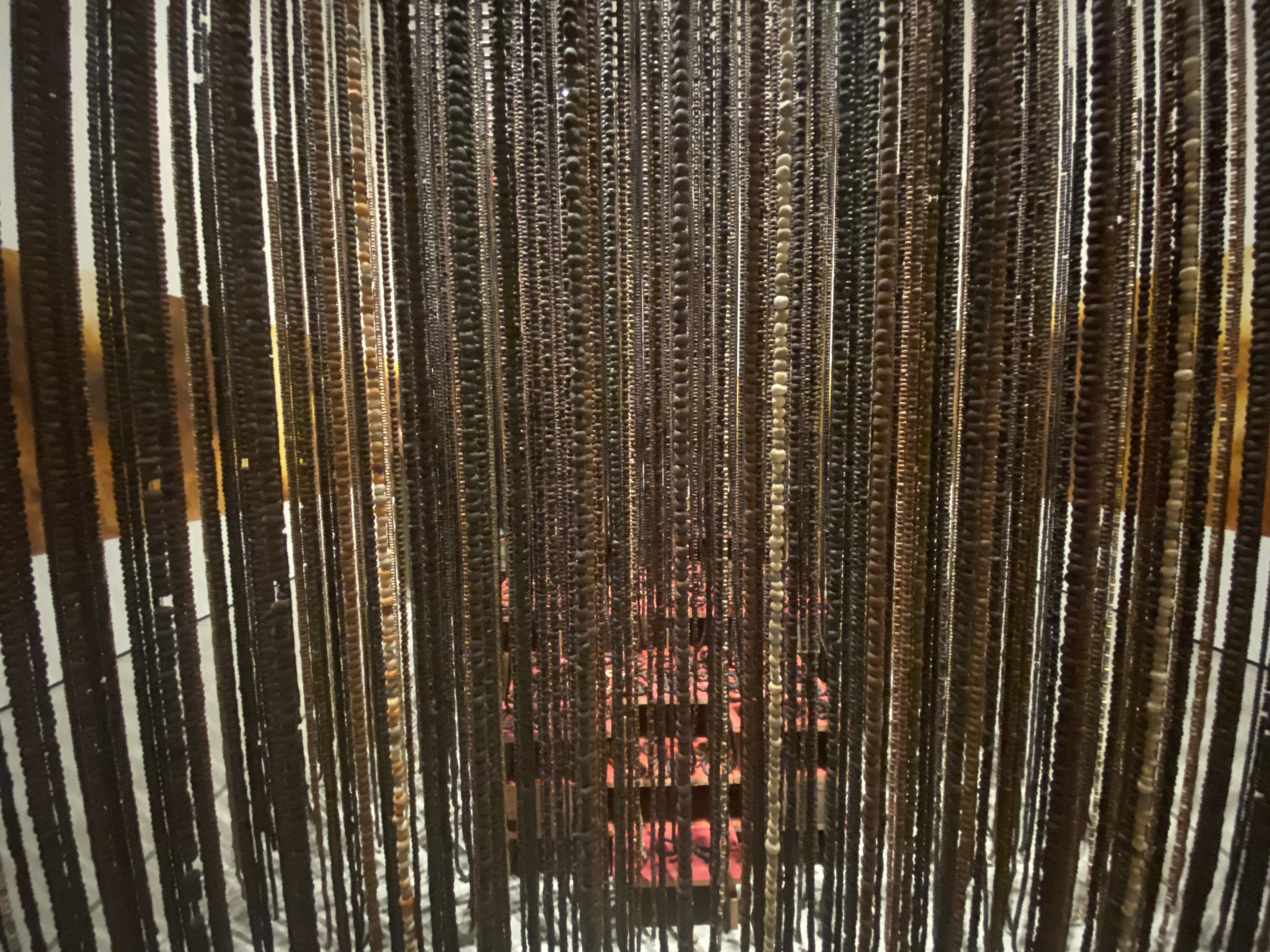
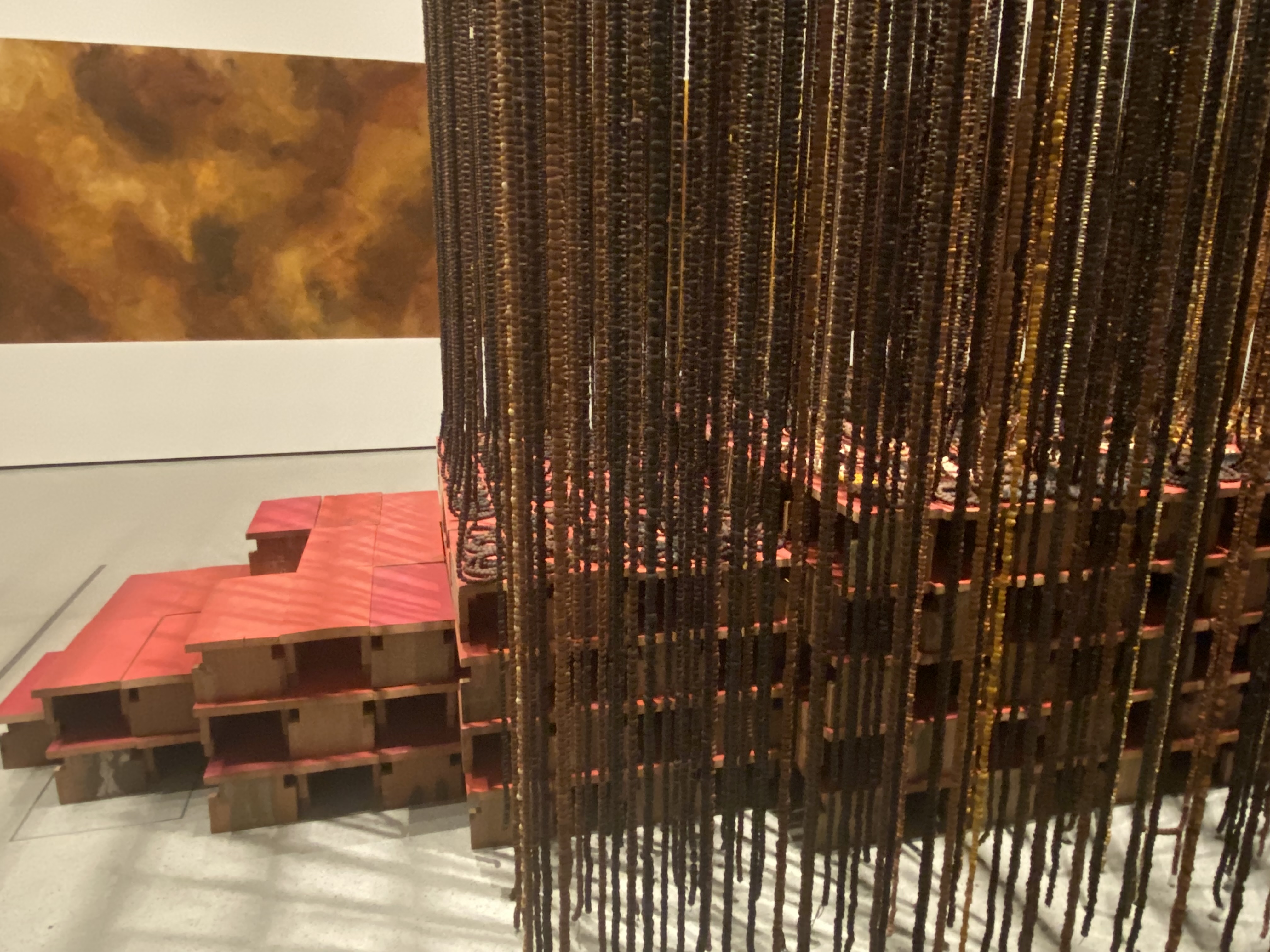
There is much to discover and delight in at NYC’s Museum of Modern Art, MOMA. I was especially taken by Montien Boonma’s House of Hope. A work of art that invites to be explored from many angles, perspectives and pathways.
I can’t transmit the rich, soothing sense of smell that pervades the installation. Still I hope that these photos and videos will convey much of the visual and experiential richness of this work.
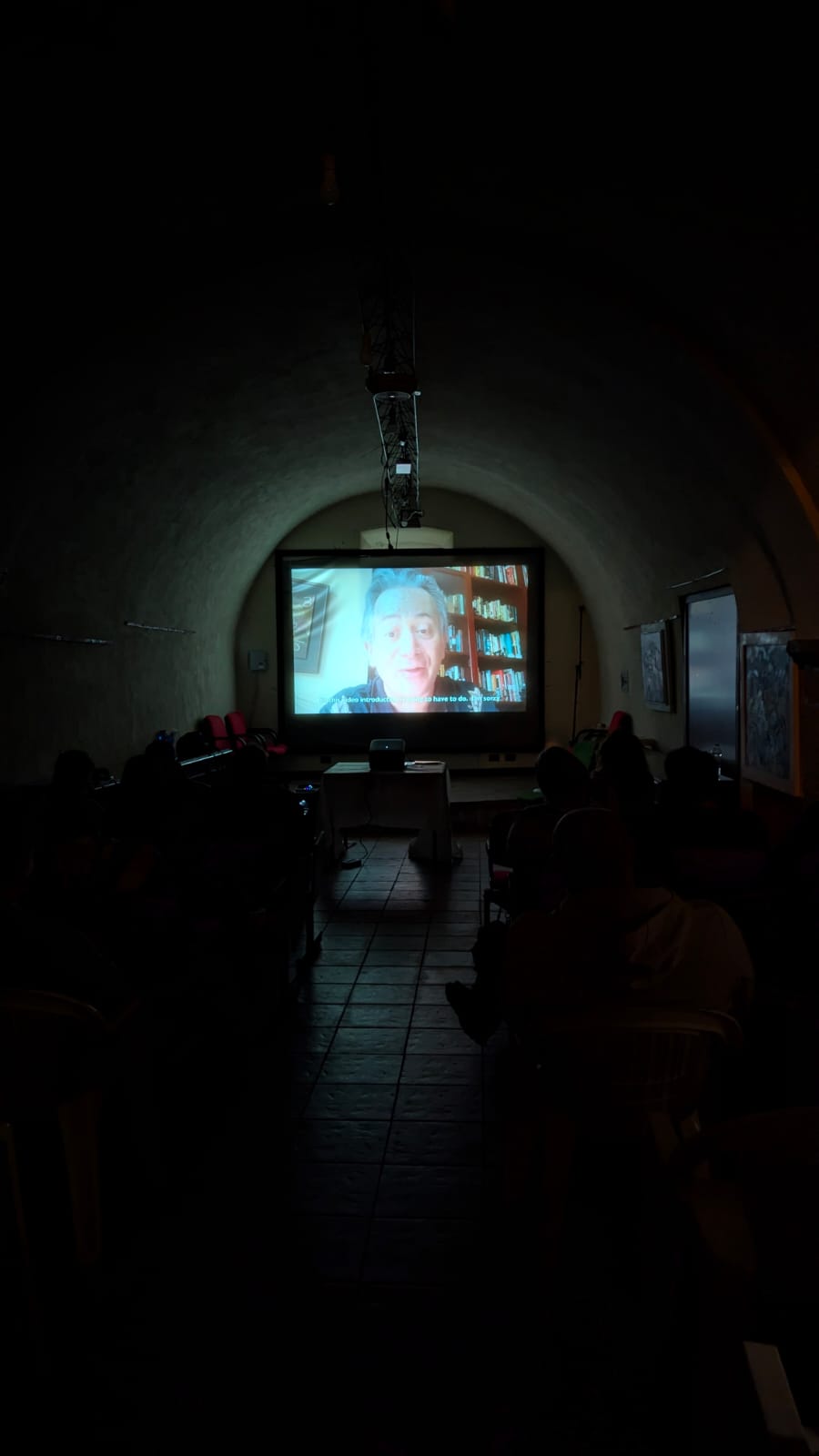
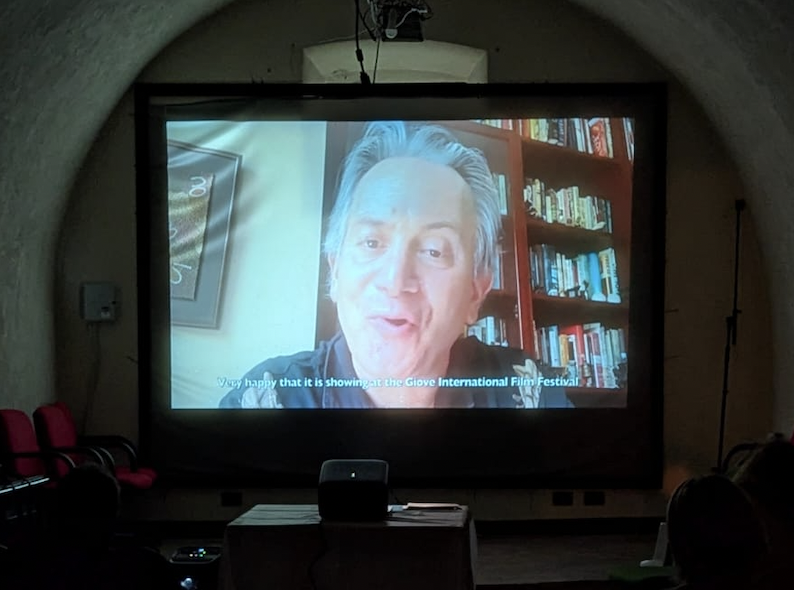
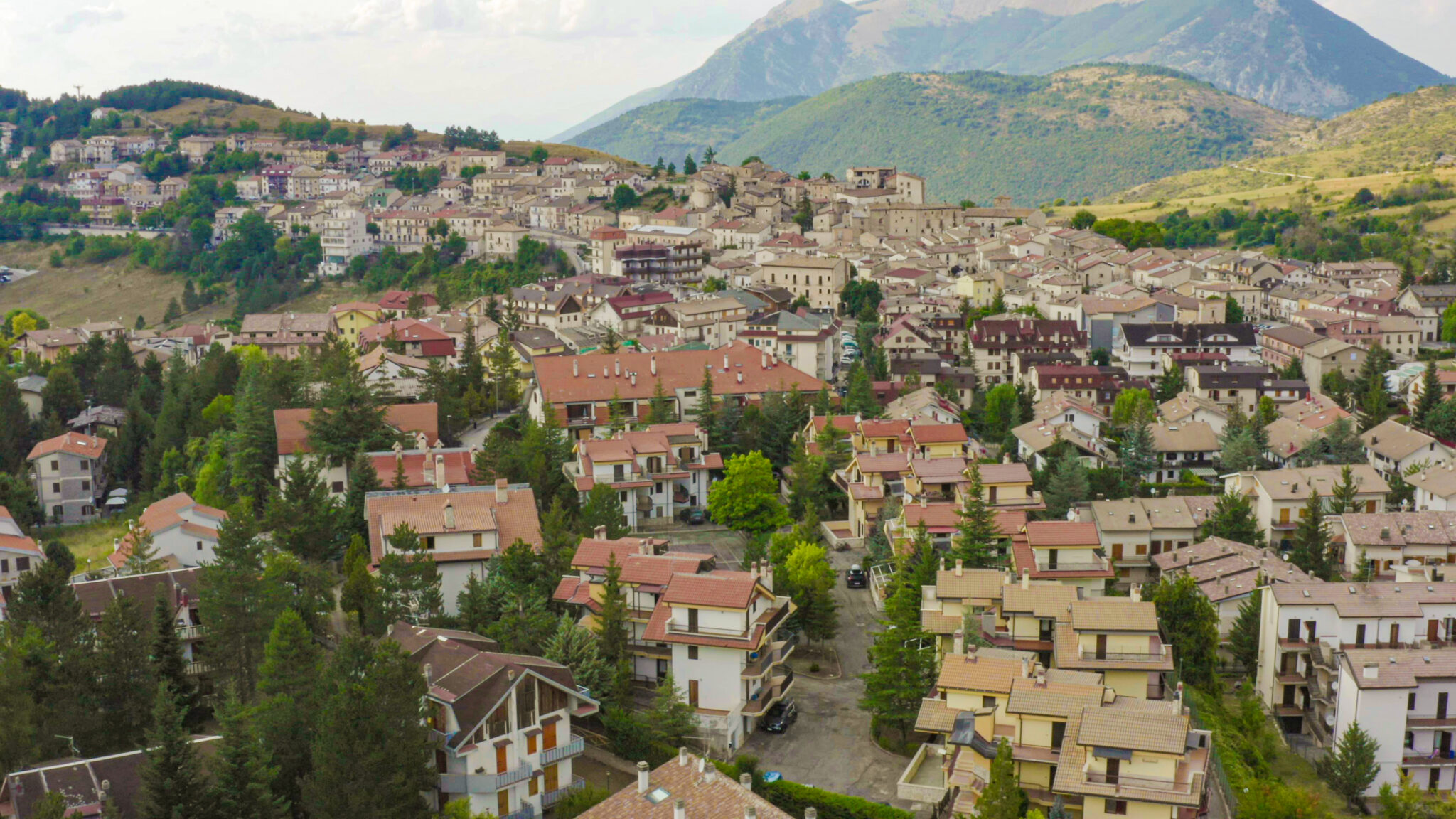
In a handsomely arched hall turned screening room in a stately old building filled with history, my Edgar Allan Poe musical adaptation “The Pit and the Pendulum – a musicabre”, was shown last night at the Giove International Film Festival (which I previously wrote about here) in Campo di Giove, Italy.
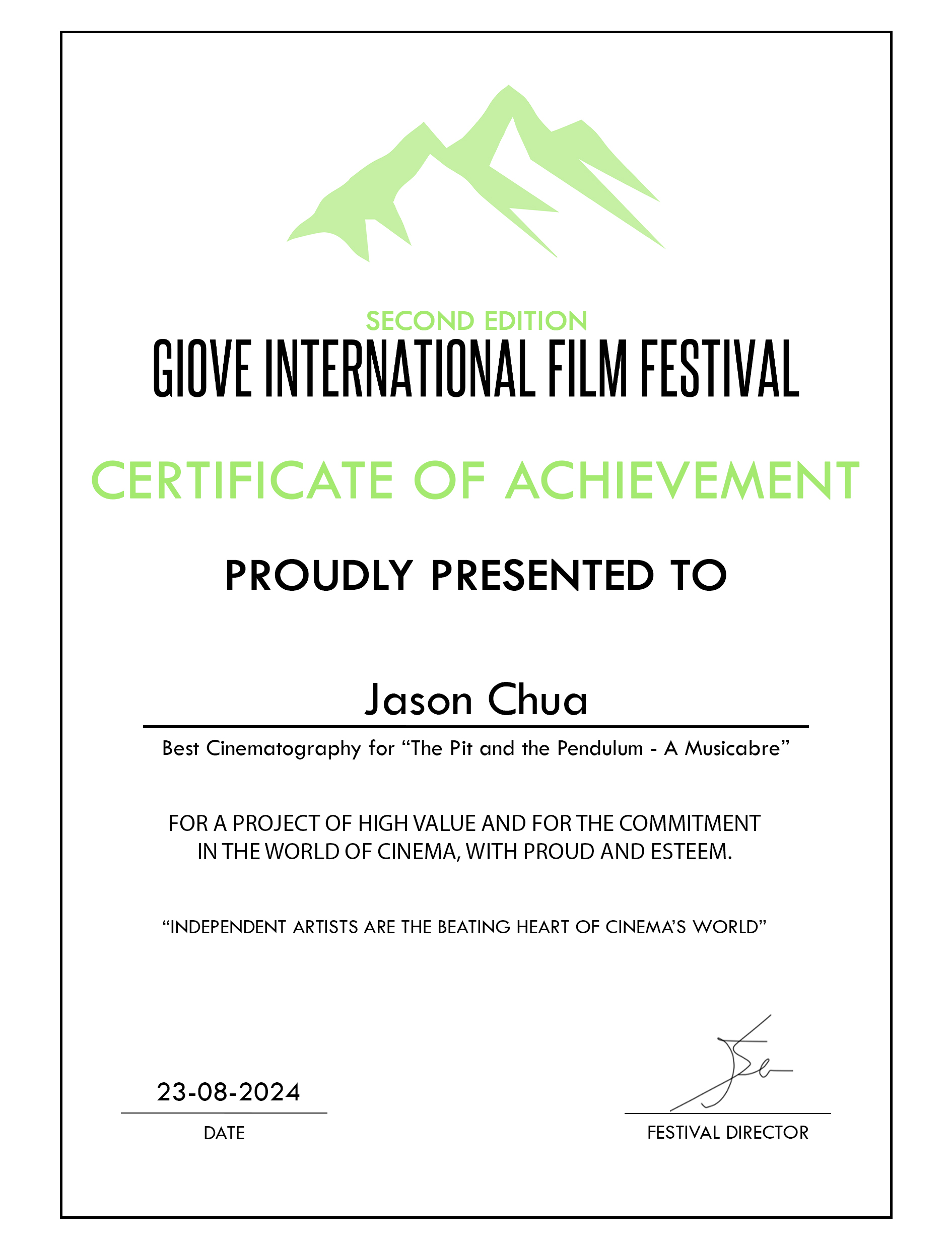
It also won two awards. For Best Actor (that would be me) and Best Cinematography (Jason Chua).
Jean-Luc Servino, the festival director, was so good as to send me some photos and a really cool video from the screening, which I am sharing here now.
That’s from the introductory video I sent to screen before the film (you can watch it here).
And below is a fun walk into the building and screening room as the film was in progress.
This Friday, August 23, my short film musical Edgar Allan Poe adaptation “The Pit and the Pendulum – a musicabre” (click here for trailer and much more) will screen again in Italy, specifically at the Giove International Film Festival in Campo di Giove, nestled in the mountains of the Abruzzo region in central Italy.
“The Pit and the Pendulum – a musicabre” officially concluded its one and a half year festival run last November in New York City; but Jean-Luc Servino, who has followed the film’s progress across several festivals, and also screened it at the Robinson Film Festival in Naples last year, organized a special additional screening at GIFF this summer.
Initially I had planned to be in Abruzzo for the screening, but unfortunately that didn’t work out. So Jean-Luc asked me to provide him with an introduction to show before the screening, also asking me to include English subtitles for the intro as well as providing a version of the film that includes English subtitles throughout (not just when the Judges of the Inquisition sing in Latin).
Below is the intro that will screen Friday before the film:
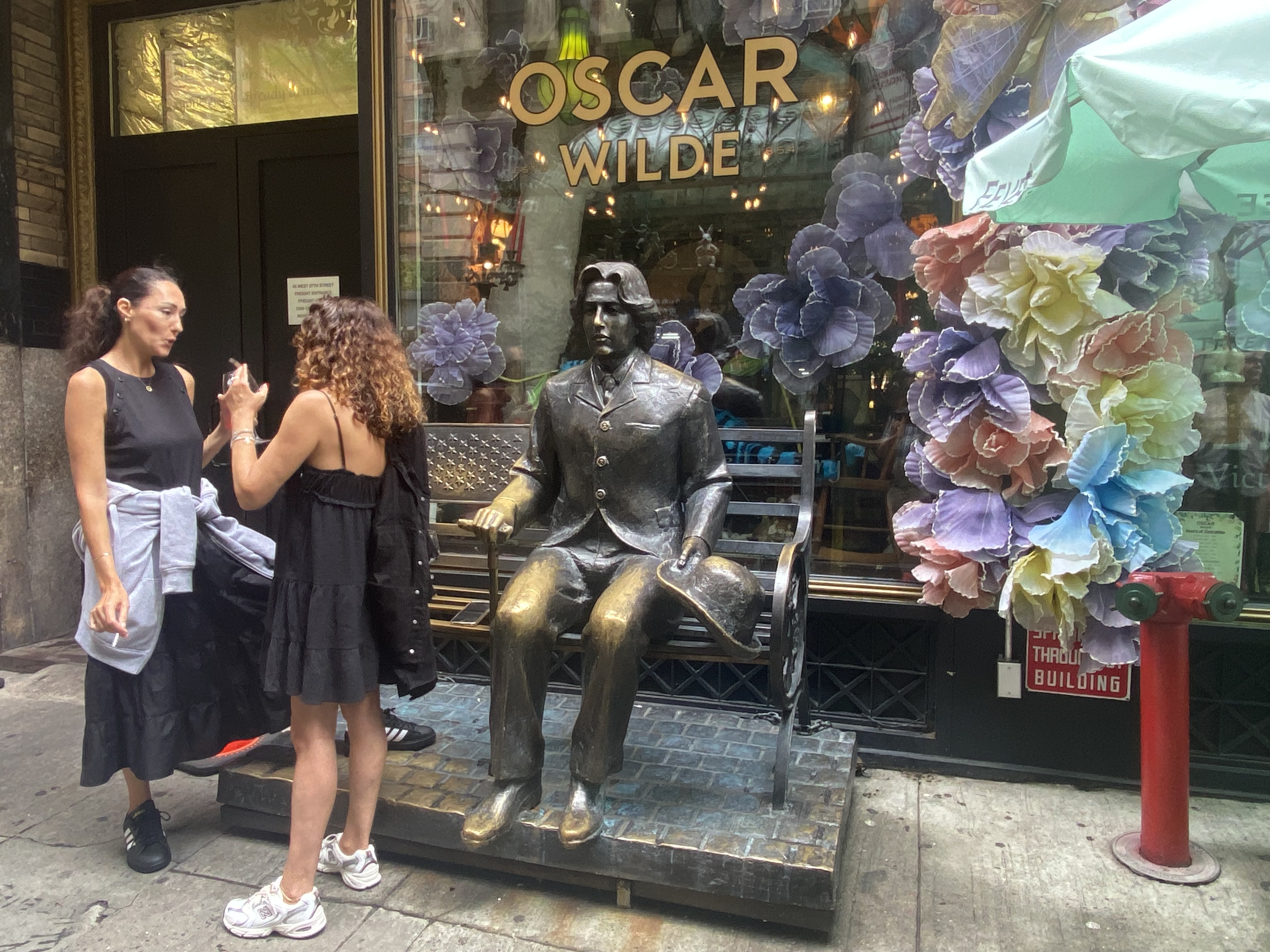
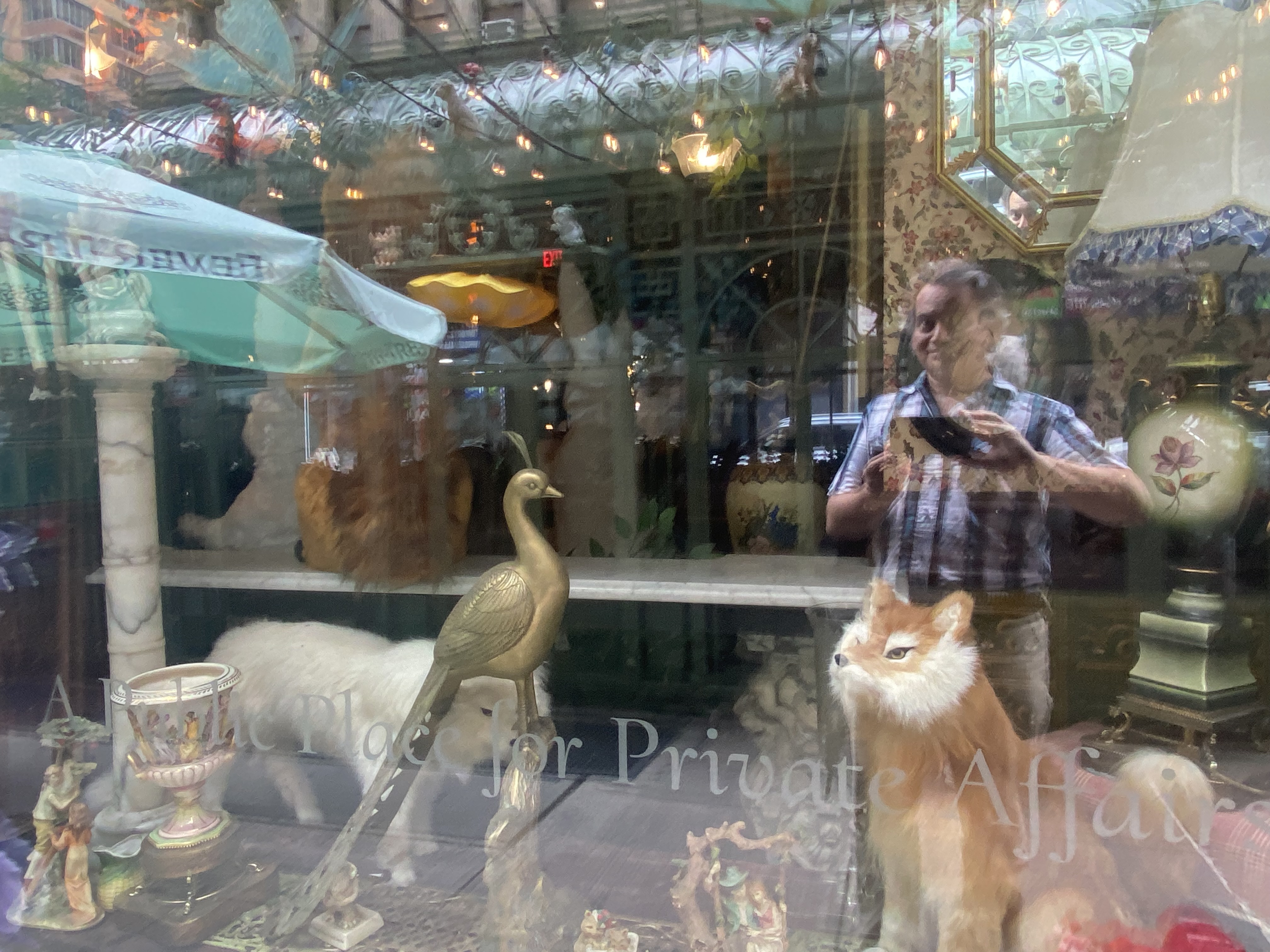
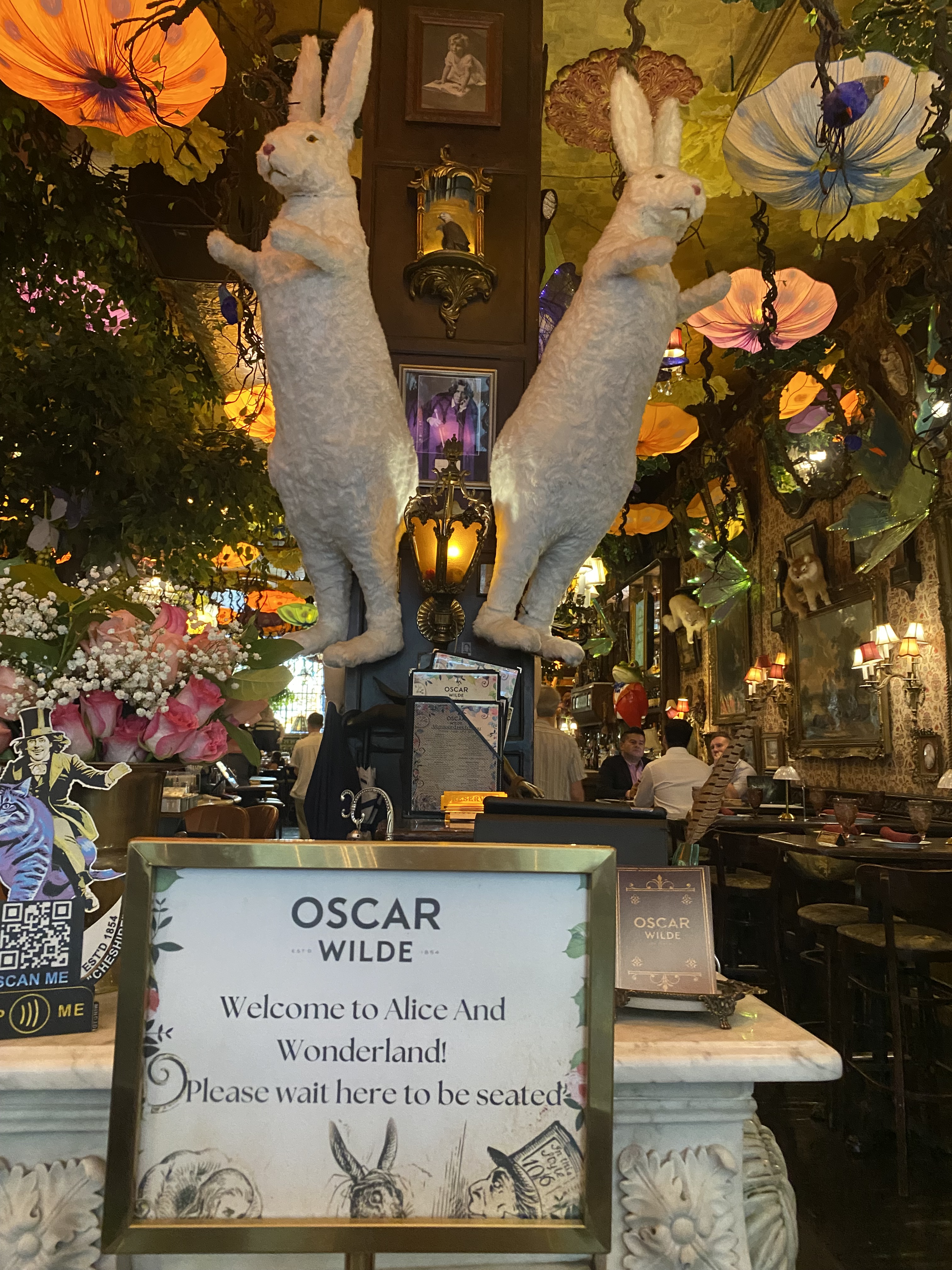
Ed and I treated ourselves to a tasty meal in the even tastier restaurant, the Oscar Wilde, on 45 West 27th Street in Manhattan.
“A Public Place for Private Affairs”.
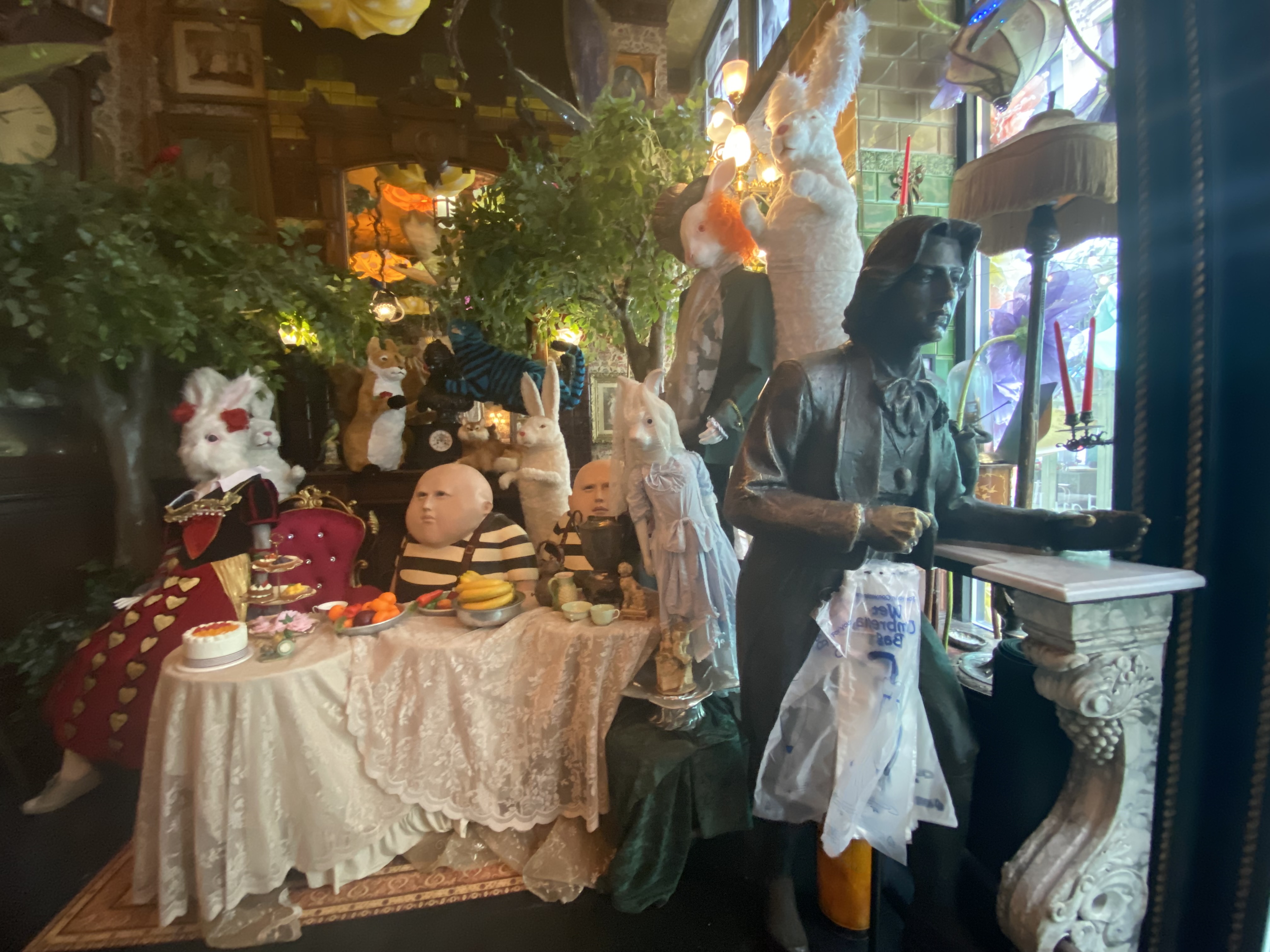
The name of the restaurant may be Oscar Wilde, but the decor is largely influenced by Lewis Carroll. (Having written an Alice in Wonderland inspired musical, I had extra incentive to explore this place.)
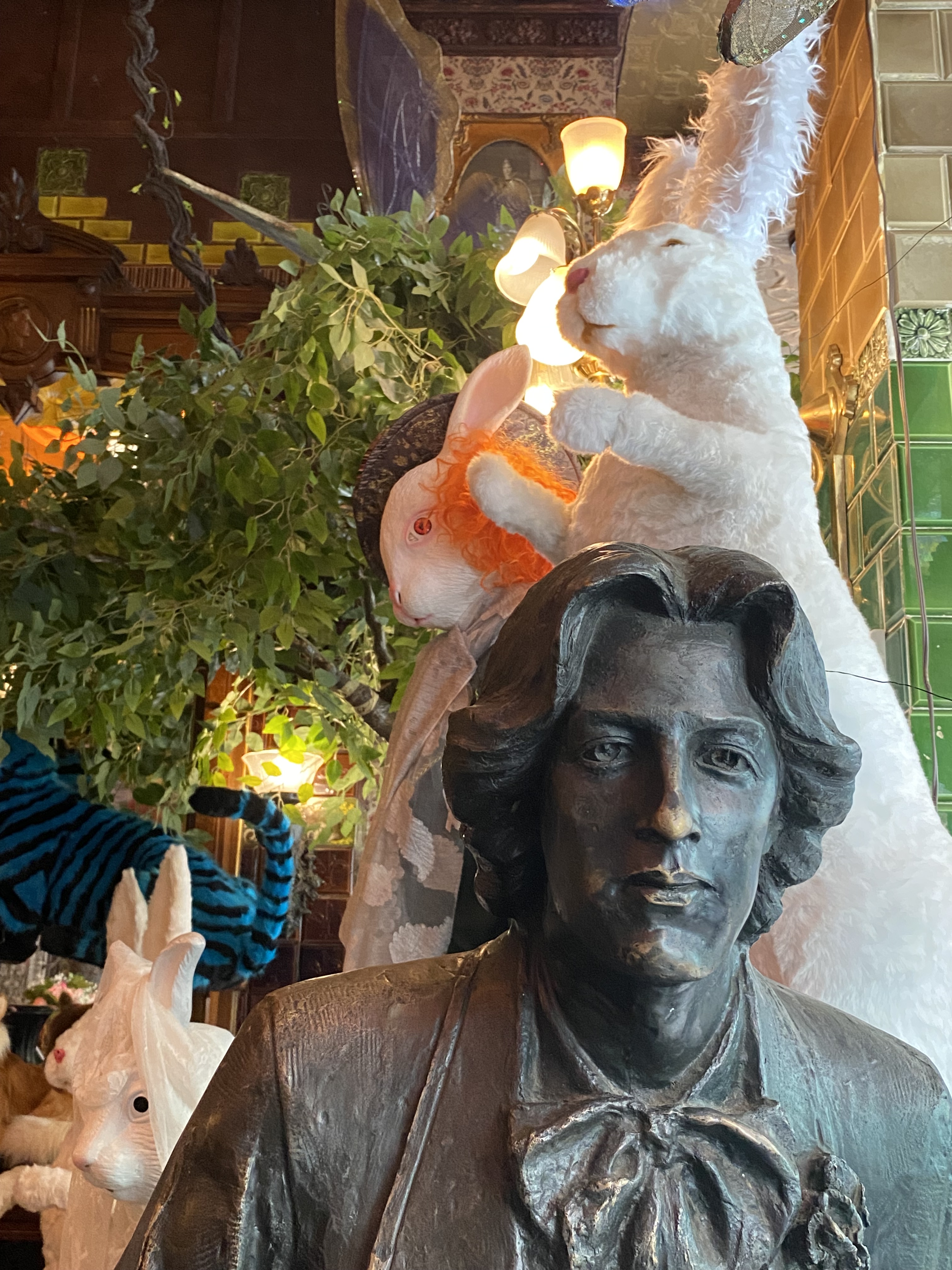
As you wait to be seated, a statue of Oscar Wilde hands you plastic baggies for your wet umbrellas, while an array of Carrollesque characters enjoy a tea party.
I dare say the statue refines Wilde’s cheekbones and nose in a manner than makes him resemble Hugh Grant in “Maurice” a little more than the original article?
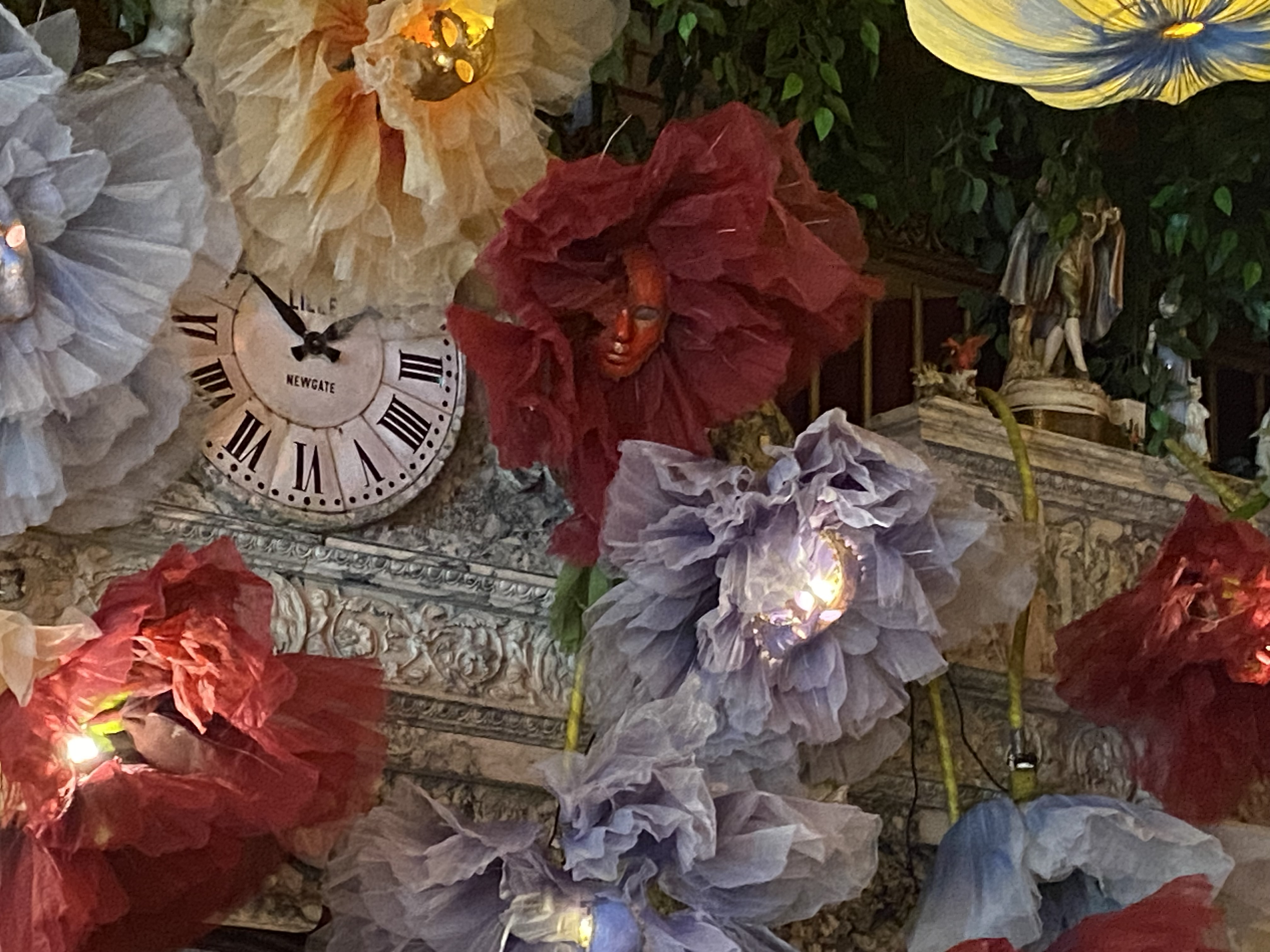
The bar area at front is teaming with visual treats.
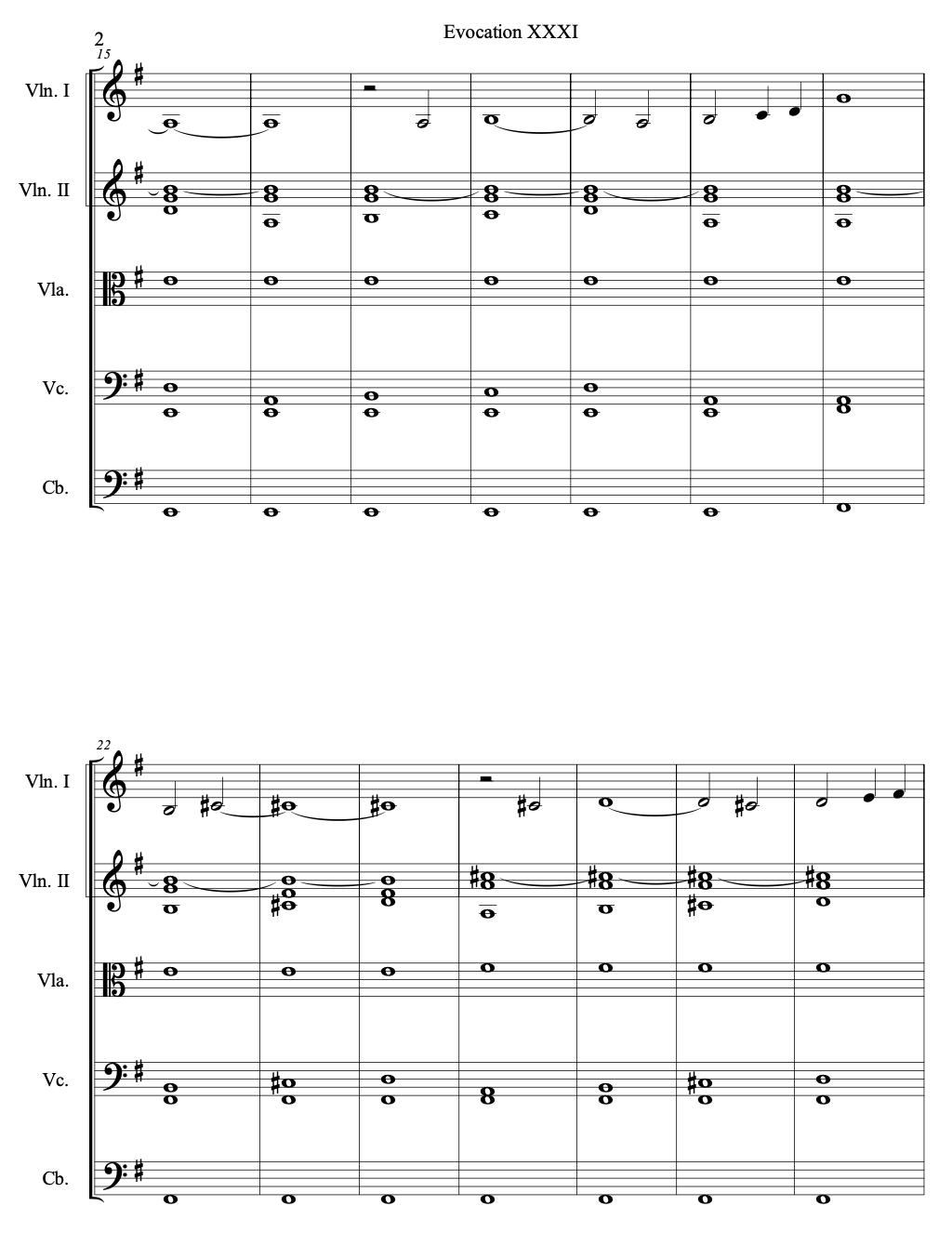
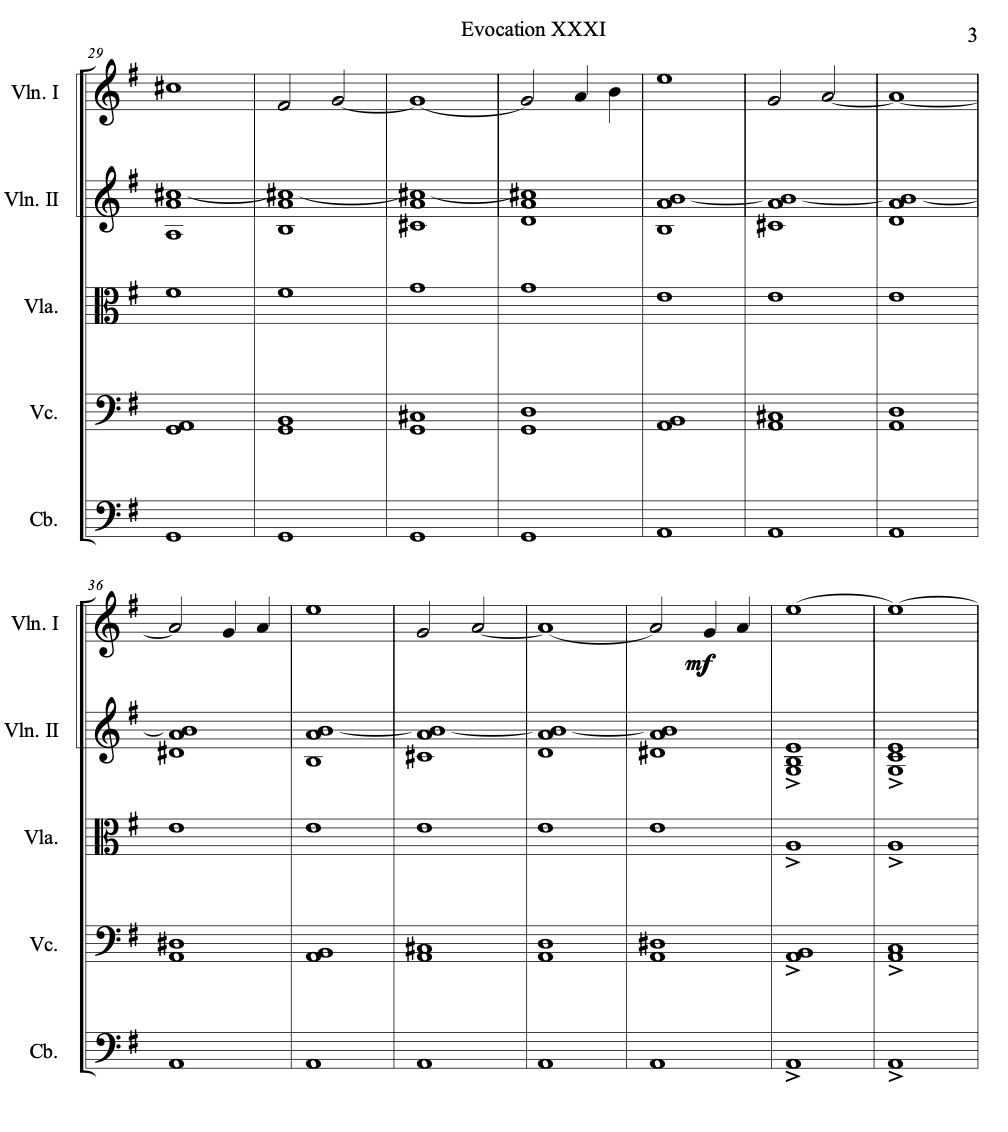
While I composed it, I already knew that I would also be arranging the piece for string orchestra. Todd Maki, the conductor and sound engineer who has worked on both of my short film musical Edgar Allan Poe adaptations, “The Tell-Tale Heart – a musicabre” and “The Pit and the Pendulum – a musicabre“, asked me to provide a piece for the Contemporary Integrational Orchestra Project. In an upcoming concert they will perform Evocation XXXI along with 10 other pieces composers created especially for them.
I will post about that at the time. In the mean time, you can listen to the computer do its (relatively) best imitation of a string orchestra here (and compare it to the piano/viola version):
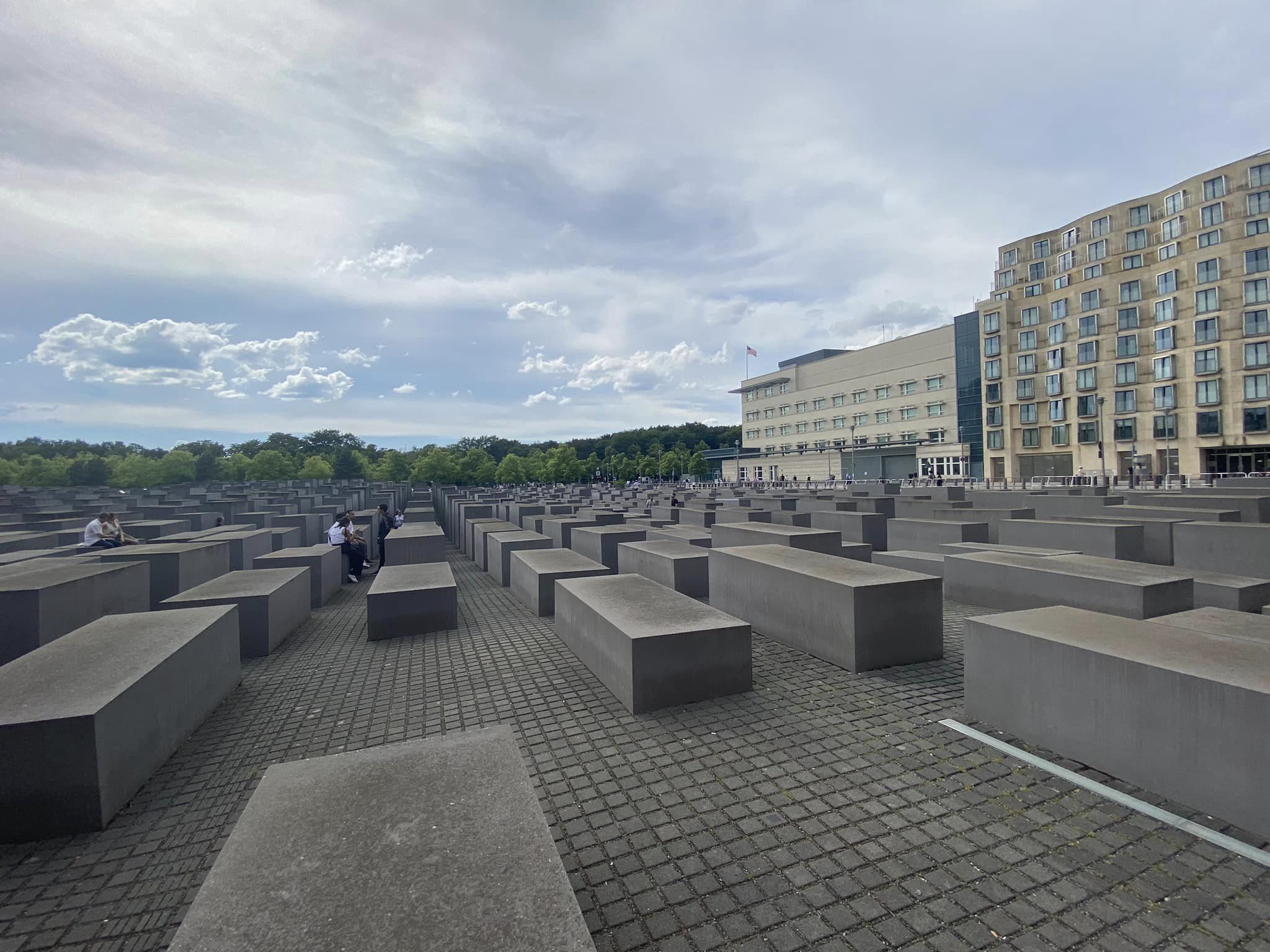
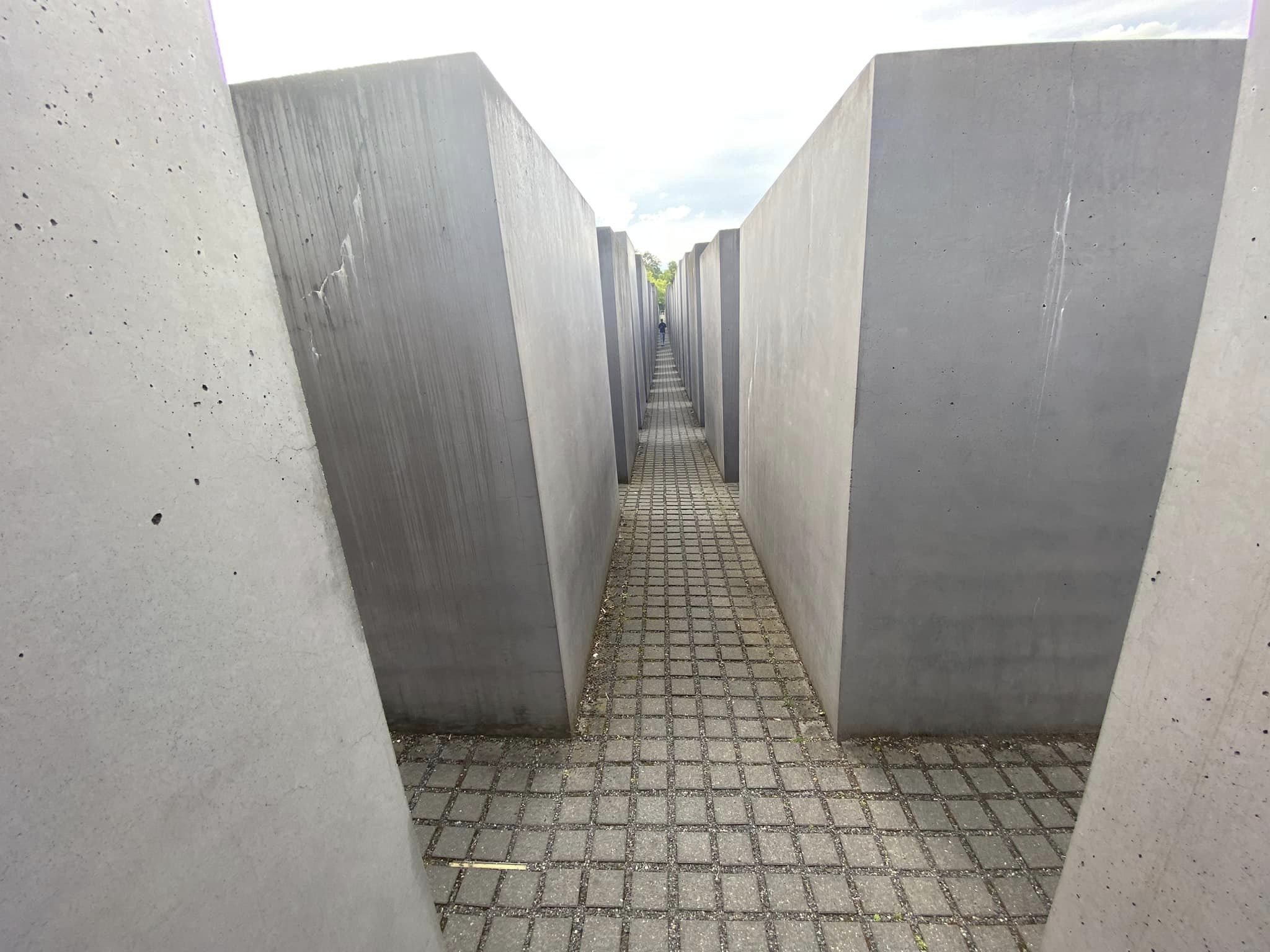
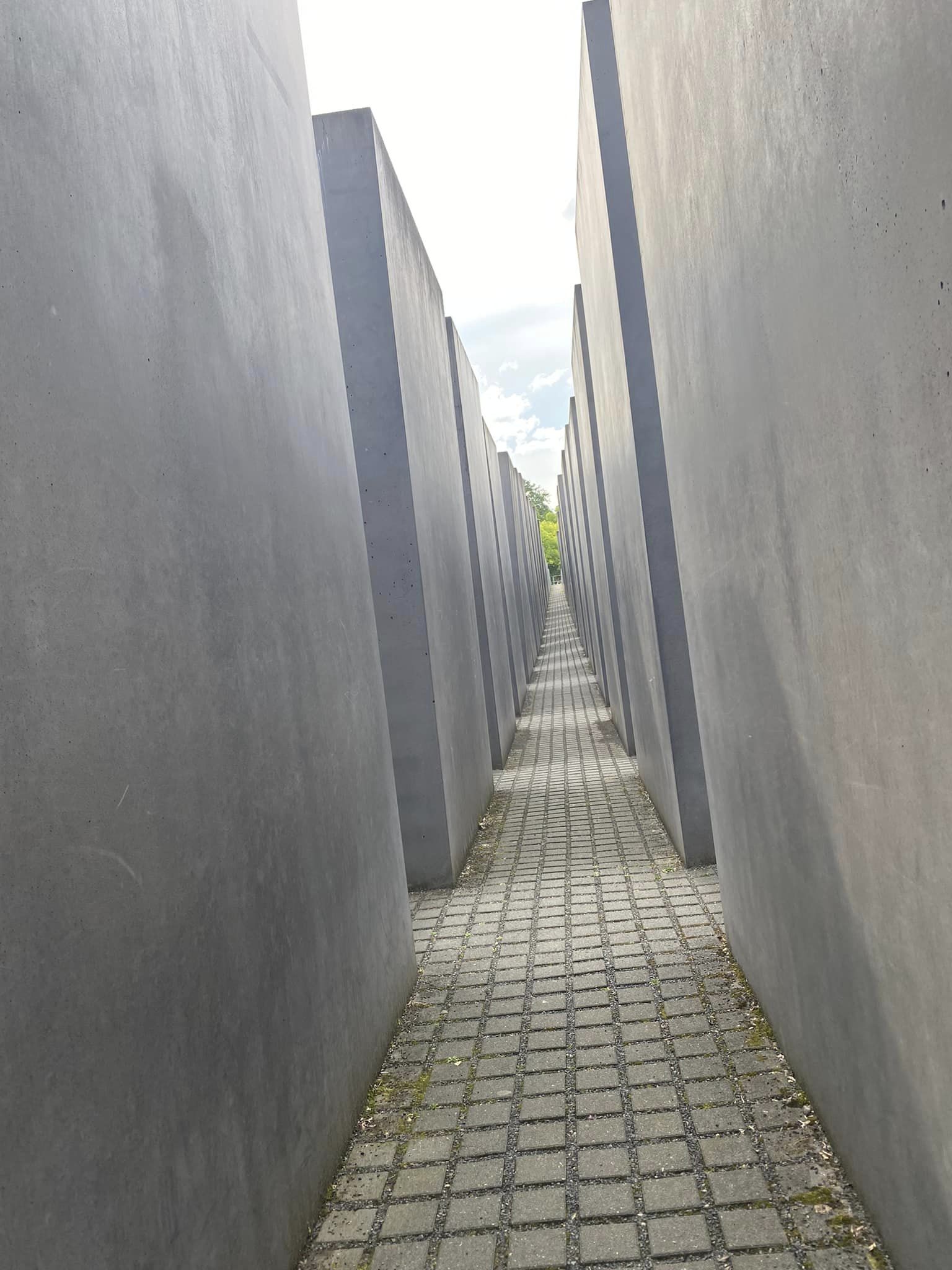
In Berlin, Germany, just south of the Brandenburg Gate, across the street from the eastern edge of the Tiergarten park, lies the Memorial to the Murdered Jews of Europe, A K A the Holocaust Memorial, and also referred to colloquially as the Stelenfeld, the Field of Stelae, in reference to the 2711 concrete slabs (or stelae) that comprise the memorial.
The stelae vary in perceived height from low to monumental as the viewer walks along the wavily sloping paths along a grid of stelae, 54 of them going north–south, and 87 heading east–west, in a field spanning 4.7 acres.
It is a powerful memorial that is most effectively viewed and walked in person. I hope these photos will give some sense of the experience.
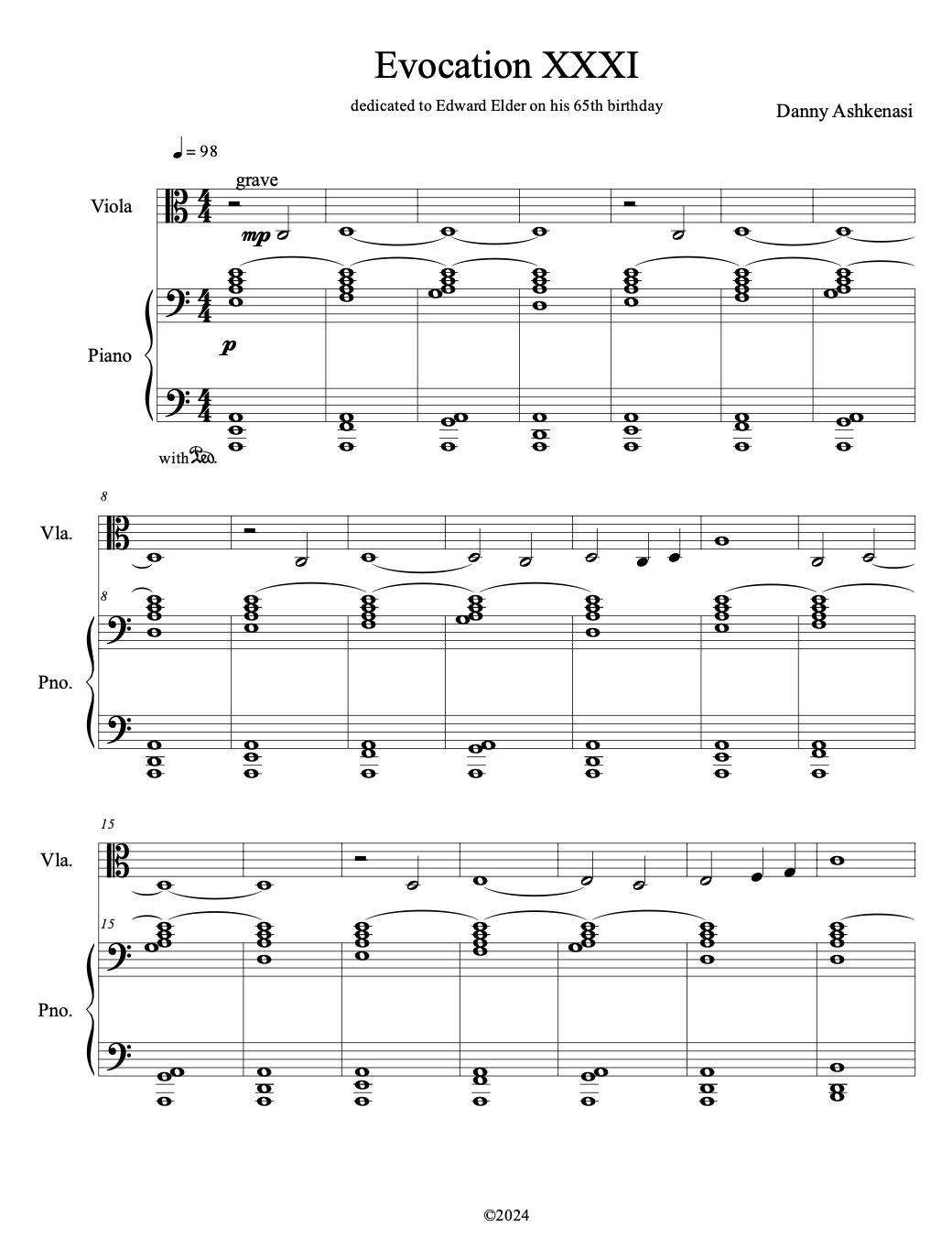
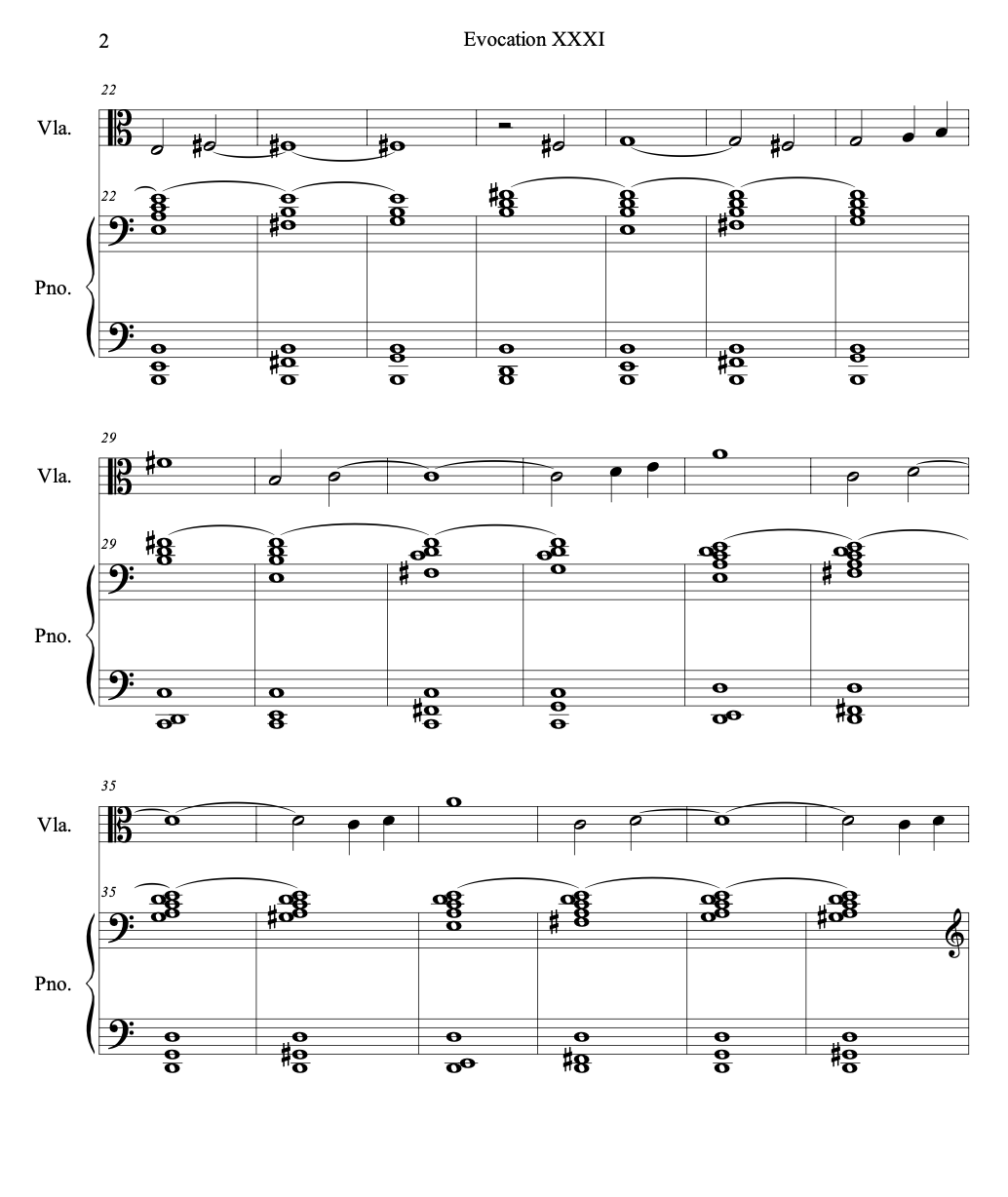
Today is Ed’s birthday. And I have presented him, as I have for the past 31 years, with another viola piano duet for us to play.
Below is the score you may follow along while you listen to the computer program play back the music in its inimitable, algorithmic flair…
Sigh … one of these days we may splurge on hiring two classically trained musicians to record all the Evocations… already it would be quite the box set (do they still produce those?).
I am thoroughly disgusted with the New York Times. It has lost all journalistic integrity with the pile-on of articles and op-eds pushing an agenda to force President Biden to drop out of the race, while barely giving voice to / downplaying other views on the matter as well as news on Trump and Project 2025 – or ignoring that news altogether. Where is the article on Trump denying knowledge of support of Project 2025? Or on the recent release of Epstein files? To name just two underreported or unreported news items while the current front page top three articles (and four op-eds) are all pushing the same anti-Biden narrative, a pattern that has been consistent now since the debate.
Where was the Times Editorial Board calling on the Republican candidate for President to drop out of the race after he was convicted of 34 felonies?
Shame on you. The agenda pushing has become too blatant. You have lost journalistic integrity. Whatever your motives, whatever your intentions, you are doing harm. You are becoming a handmaiden to the destruction of American democracy.























































 Notes from a Composer