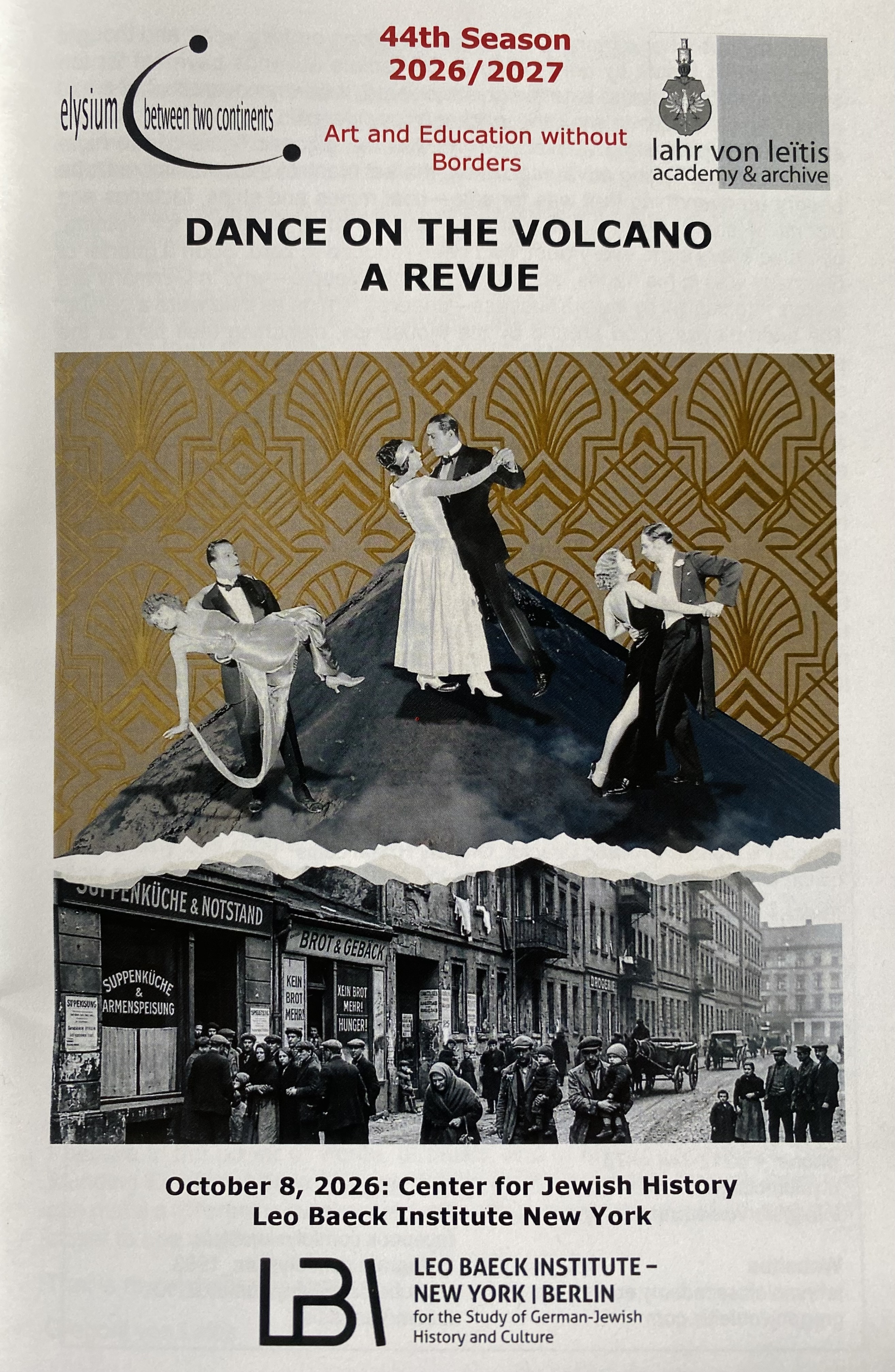
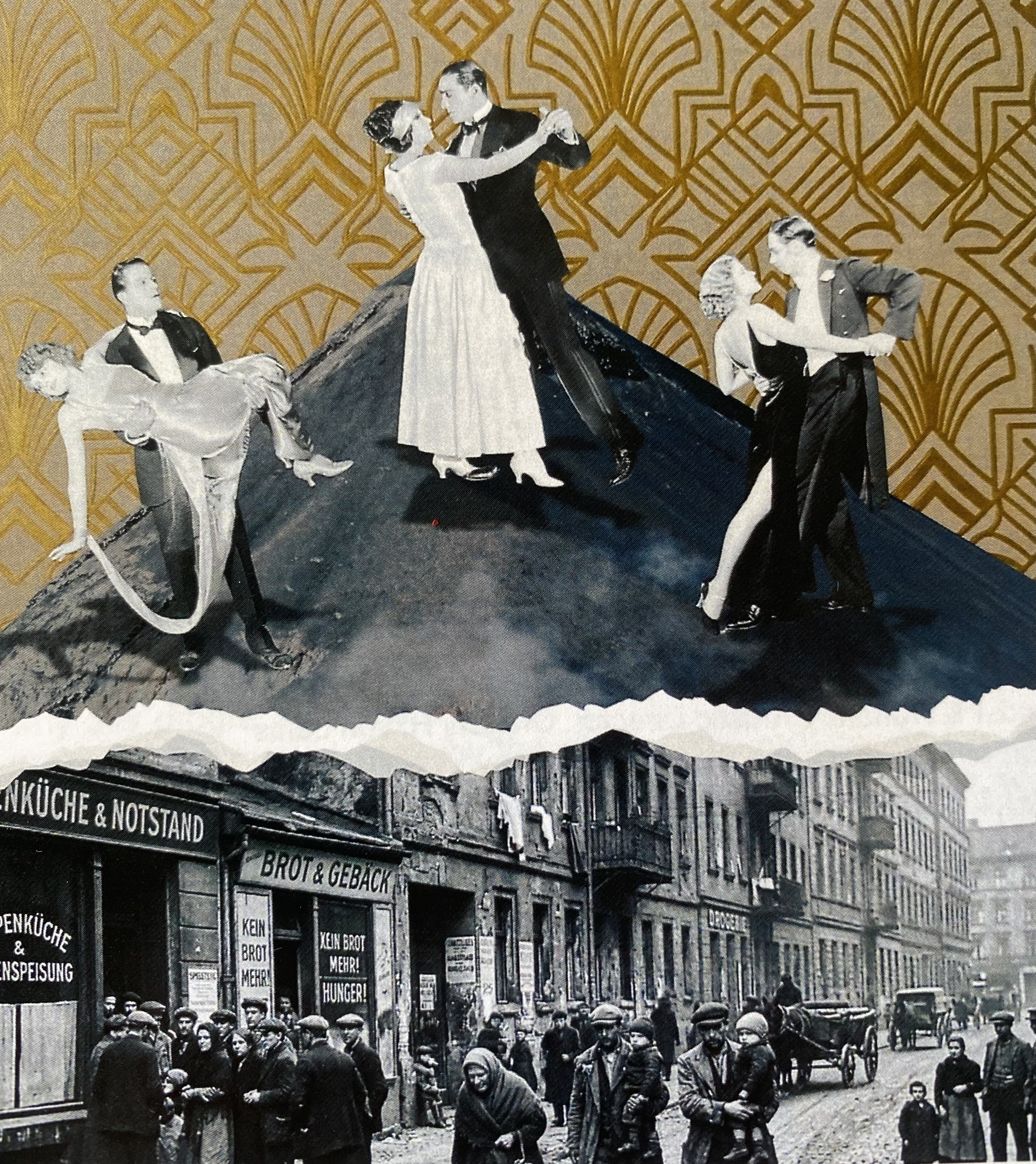
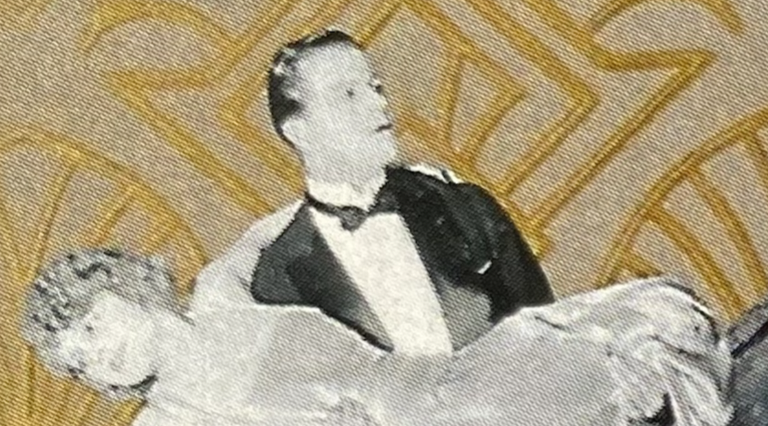
Last Thursday I had the privilege and pleasure to perform in “Dance on the Volcano“, a revue covering the tumultuous years of the Weimar Republic, the short time of democracy in Germany between the end of World War One and the rise of the Third Reich. Presented by Elysium – Between Two Continents and the Leo Baeck Institute – New York / Berlin at the Center for Jewish History, the revue featured soprano Jeannie Im, tenor Michael Protacio, pianist Samuel Kardos and myself as the Narrator.
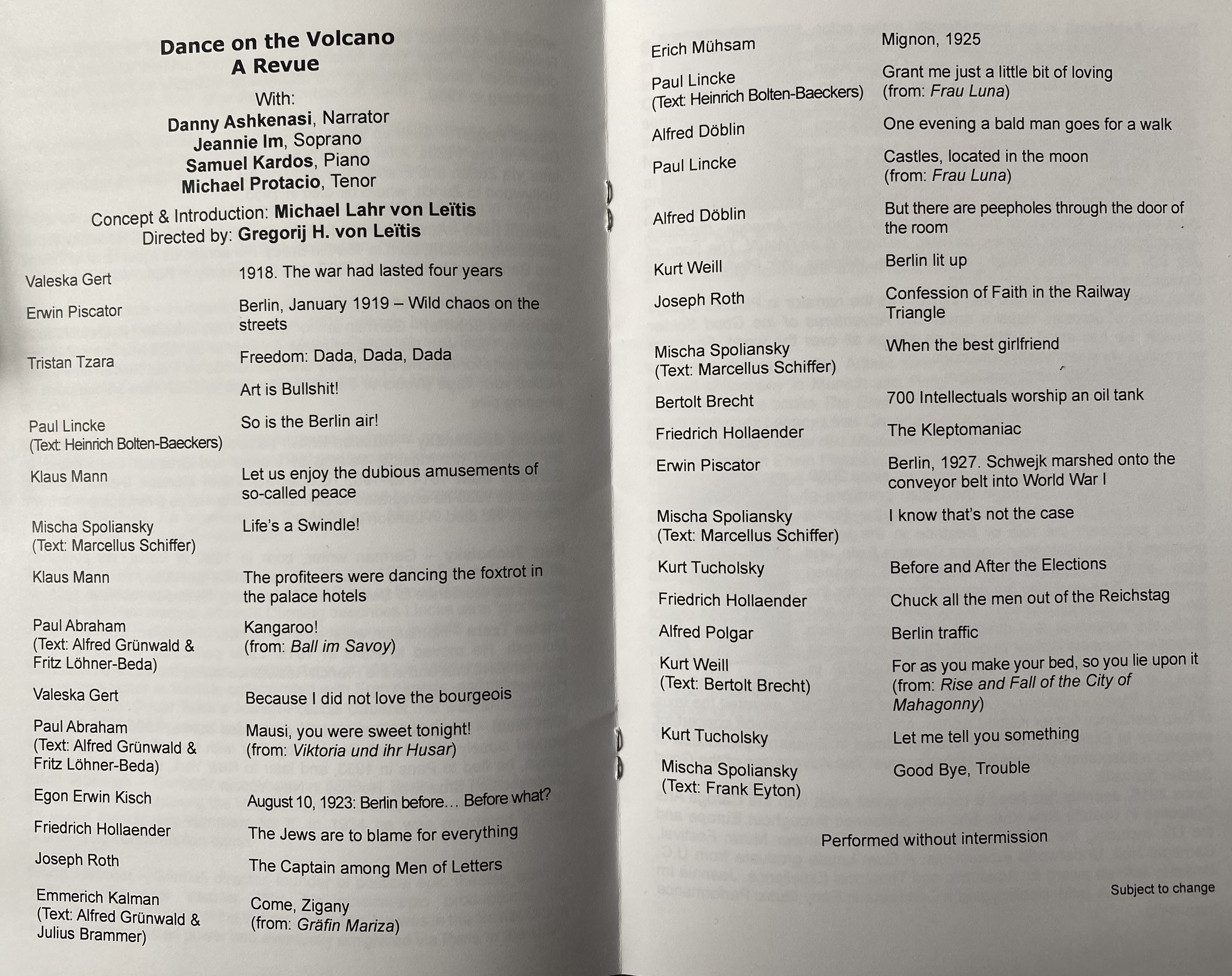
Almost all the songs sung by Jeannie and Michael were from the Weimar era and sung in German (with English translations projected on a large screen). In between musical numbers, I as Narrator recited (in English translations) diverse texts – poems, journal entries, newspaper columns, satirical and polemical commentary – by a wide collection of luminaries of the time. I also joined in the singing in the opening and closing numbers as well as a campy duet “Wenn die Beste Freundin” (once made famous by Marlene Dietrich) in which Jeannie and I play Besties who both sleep with Jeannie’s “cute little husband”, Michael, who makes it a trio for the final chorus.
That number followed hard upon a (deceptively) high-minded appraisal of the industrial railway system. But emotional whiplash from harsh to humorous was part of the esthetic of the revue, befitting the era it described.
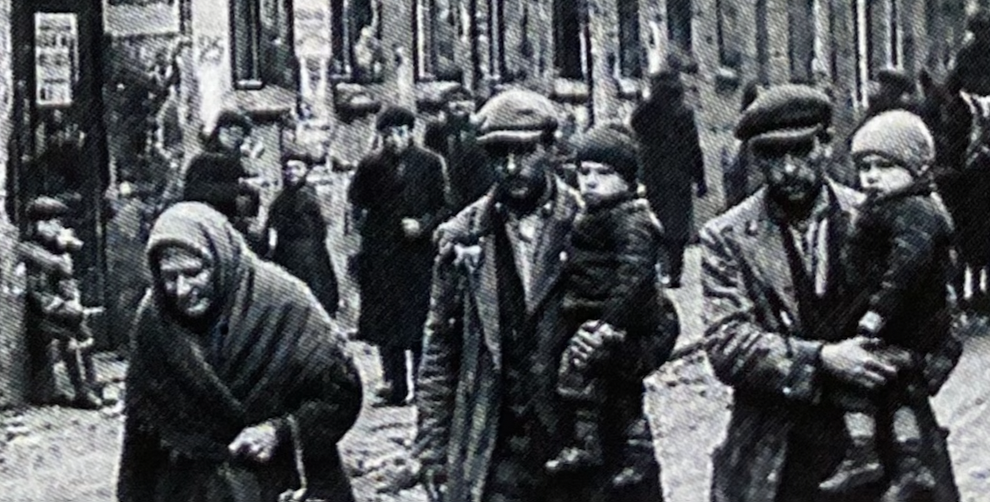
I’ll quote some lines from a few of the texts, to give you a sense:
Klaus Mann on the hyperinflation that bedeviled Germany after WW1:
Had lonely thinkers once dreamed of of a “reevaluation of all values”? Instead we now experienced the total devaluation of the one value that a godless epoch had truly believed in: money.
and Mann again, evoking the title metaphor of the revue:
The dollar is rising: let’s let ourselves fall! Why should we be more stable than our currency?
Among many others, I also took on the persona of avant-garde dancer Valeska Gert:
Because I did not love the bourgeois, I danced those he despised … Until now, prostitutes had never been depicted on the dance stage … I danced the coitus.
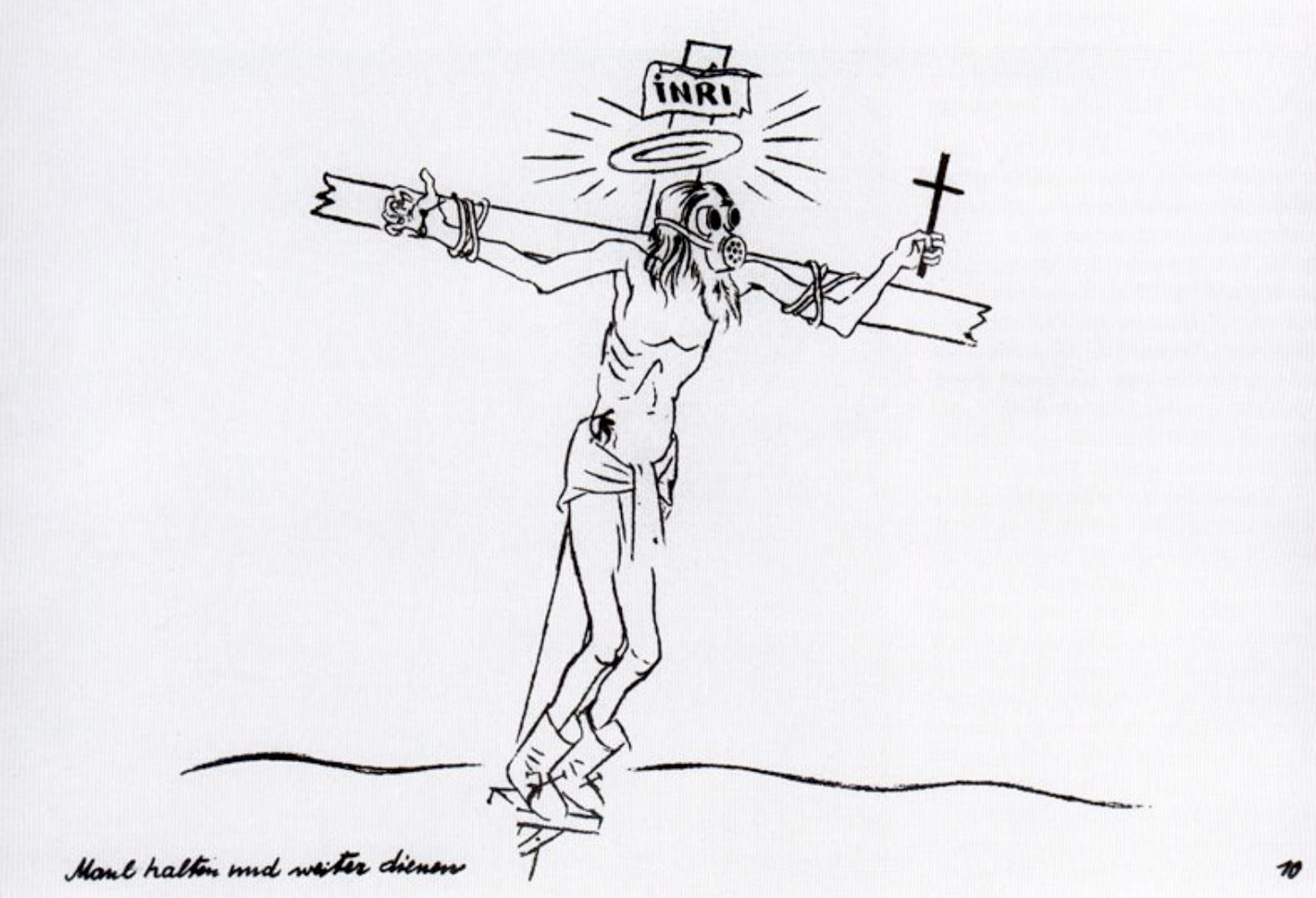
More examples: Erich Mühsam reconceives Goethe’s poem about Italy “Do you know the land where the lemon tree blooms” as “Do you know the land where the fascists bloom?” In Bertolt Brecht’s satirical poetic sermon “700 Intellectuals Worship an Oil Tank” and Erwin Piscator evokes George Grosz’s “Christ with a Gas Mask”:
A new Christ. All the more shattering because it corresponded to the facts. For had he not been condemned to silence for four years?
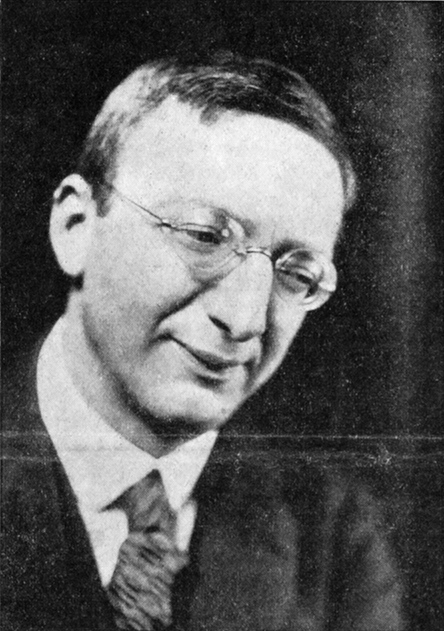
There were several spiky texts that spoke of a society in turmoil, of the brutality of industry, or the twin specters of fascism and anti-semitism. However, my personal favorite to perform was a gentle story by Alfred Döblin (best known for writing “Berlin Alexanderplatz”) of a bald married man and his tender encounter with a good-looking young fellow whom he takes to a hotel for an encounter that is no less wonderful (“That such a thing exists – That’s the most beautiful thing of all”) for involving exchange of money. The hotel proprietor watches the encounter through a peephole and the bald man receives a court summons (“Everyone around him is weeping, his wife, his two grown daughters”). Tearfully the bald man in his fur coat asks the judge “So what did I do? Did I steal something? Did I commit a burglary? I only broke into the heart of a dear person. I told him: my sunshine. And that’s what he was.”
It gave me great pleasure to quietly pronounce the final line of the tale: “He is acquitted.”
Most of these texts were laced with humor or irony, if often dark and political, as were many of the songs, having originated on the Berlin Cabaret stage, although Jeannie and Michael also sang more lighthearted popular operetta numbers, which in this context took on grayer shading.
Take for instance “Berliner Luft”, the revue’s opening number, which I sang with Jeannie and Michael – it’s an anthem to the city now known to every Berliner just like every baseball fan knows (and can sing along to) “Take Me Out to the Ball Game”. I have happy memories of growing up in Berlin and belting the refrain as a young tyke marching up and down our house. Singing it in the revue right after describing the revolutionary fervor that gripped the city after the end of WW1 certainly created a different context than composer Paul Lincke originally intended for the song in his comic operetta “Frau Luna”:
Stylistically “Berliner Luft” stands in contrast to the far spikier but no less celebratory “Berlin im Licht”, written by Kurt Weill, and sung by Jeannie near the end of the program:
Both those songs – and several others – bring up many memories for me. I not only sung “Berliner Luft” for fun as a child but also as the lead in my high school production of “Frau Luna”. I saw my mother (opera singer Catherine Gayer) sing “Berlin im Licht” and many other songs of the Weimar era (including a few more also incorporated in “Dance on the Volcano”) when she performed her Cabaret programs in Berlin in the 1970s and 1980s. And much of this material and material like it found its way to earlier collaborations I’ve enjoyed with Michael Lahr and Gregorij von Leitis of Elysium – Between Two Continents, as our association goes back several decades.
And although I was born many decades after the Weimar era, I still grew up in Berlin where the scars of all of 20th century history could be (and still can be) found all over the city. So being part of a program of this nature is especially resonating for me. Moreover, we now live in a time and a place where the themes of “Dance on the Volcano” no longer appear as a mere distant curiosity but as a mirror and warning for us today.
This seemed to resonate with the audience too. We had a full house and their response at our curtain call was very enthusiastic.