
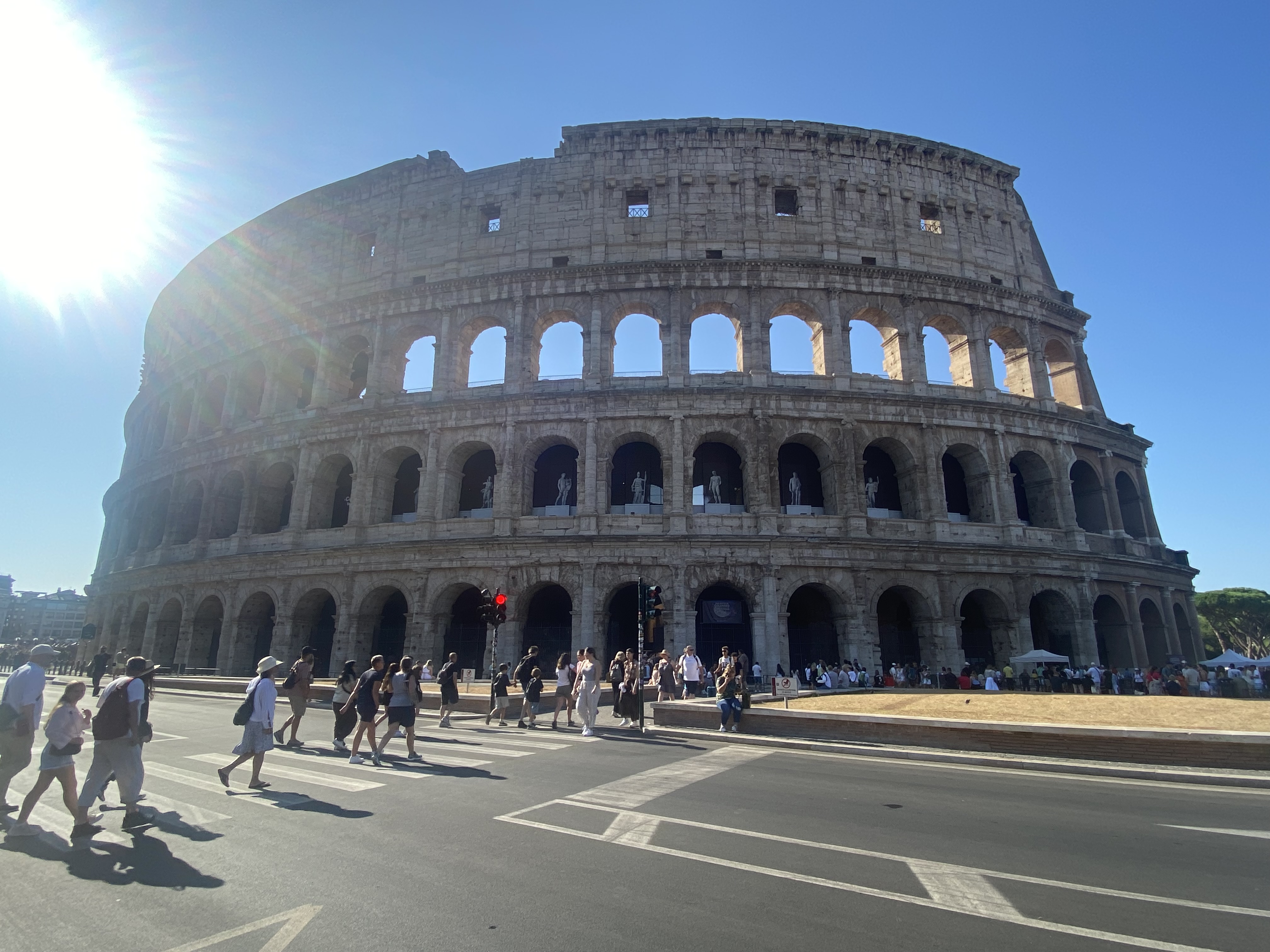
A Tour of the Famous Ancient Roman Amphitheatre

In the center of Rome just east of the Roman Forum stands the Colosseum, the largest ancient amphitheatre ever built, and still the largest standing amphitheatre in the world.
It was built in just eight years, 72-80AD in an area where the disgraced and reviled Emporer Nero had erected his massive golden palace, torn down after his downfall.
The loot Roman armies carried home after their victory in the Judean War financed the building of the Colosseum. So one may say the destruction of the Temple of Jerusalem led to the building of the Colosseum.
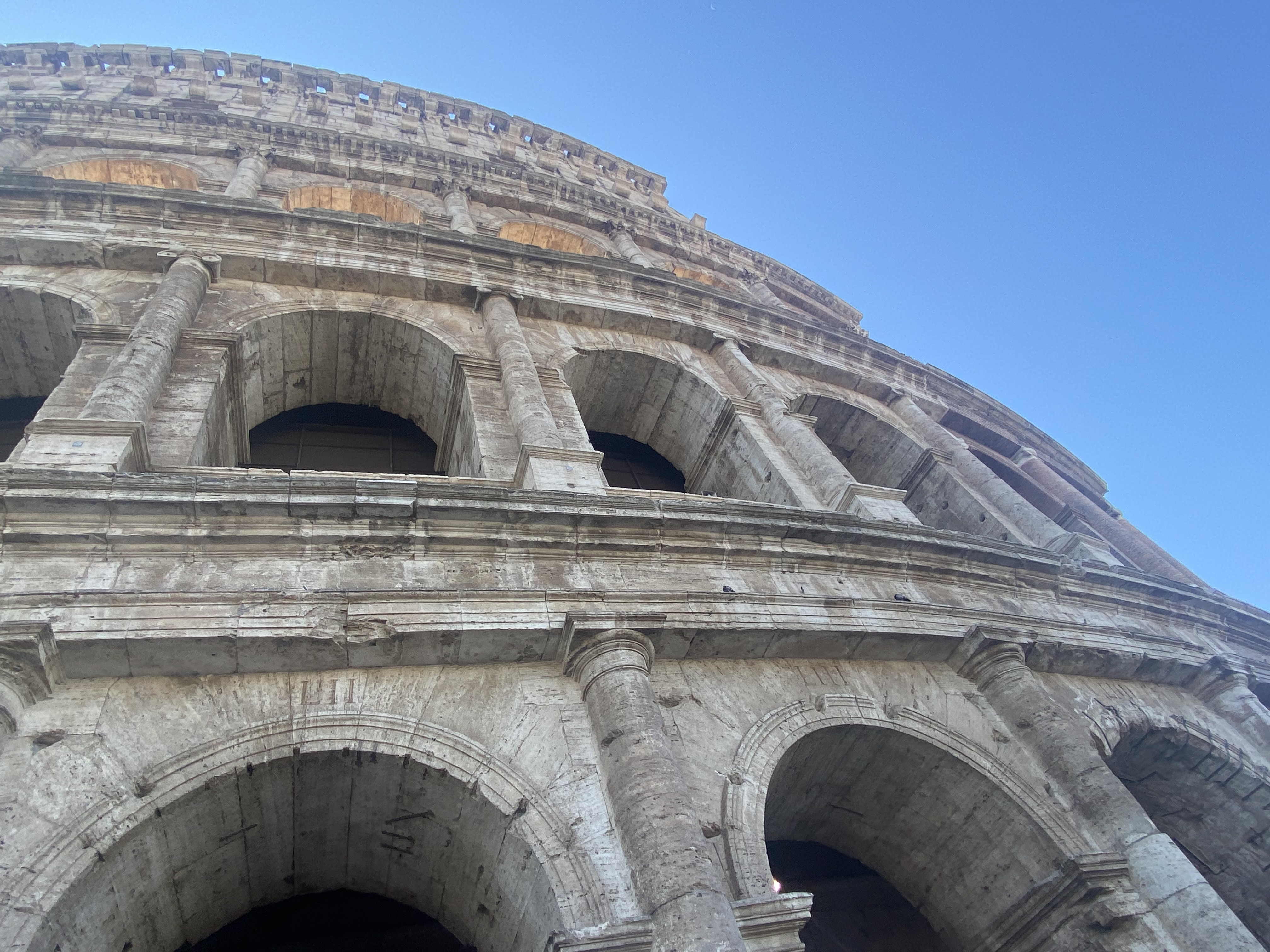
Everything outside and inside the Colosseum was covered by marble. Marble that long since has been plundered aka “recycled “.

Originally named Amphitheatrum Flavium, after the Flavian dynasty of Emporers, Roman citizens started calling the arena the Colosseum because of the colossal gold statue of Apollo that stood nearby. This was a repurposed statue, originally erected by Nero depicting himself; but unlike Nero’s palace it wasn’t destroyed, just cosmetically altered to depict the far more popular Apollo instead.

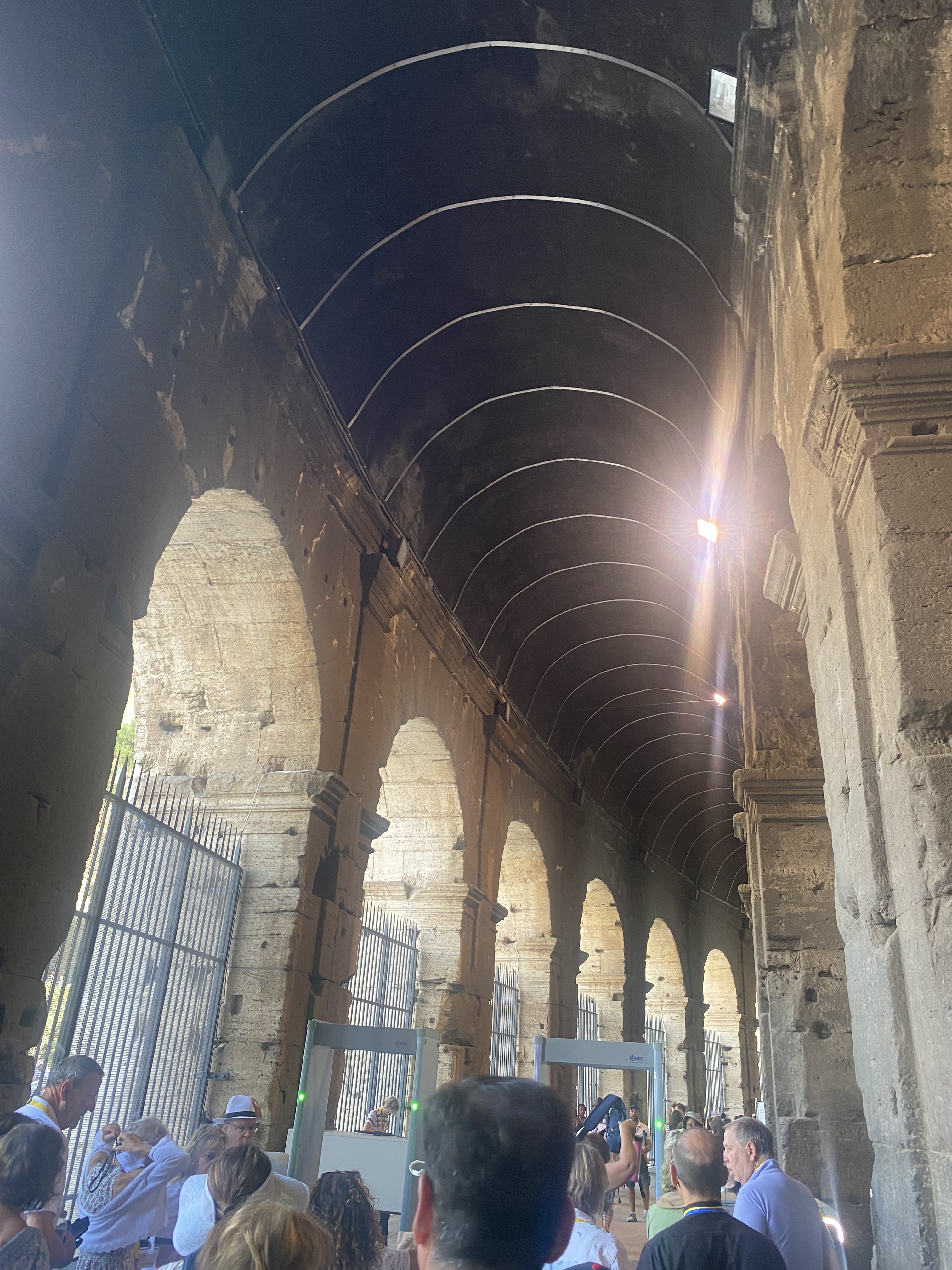
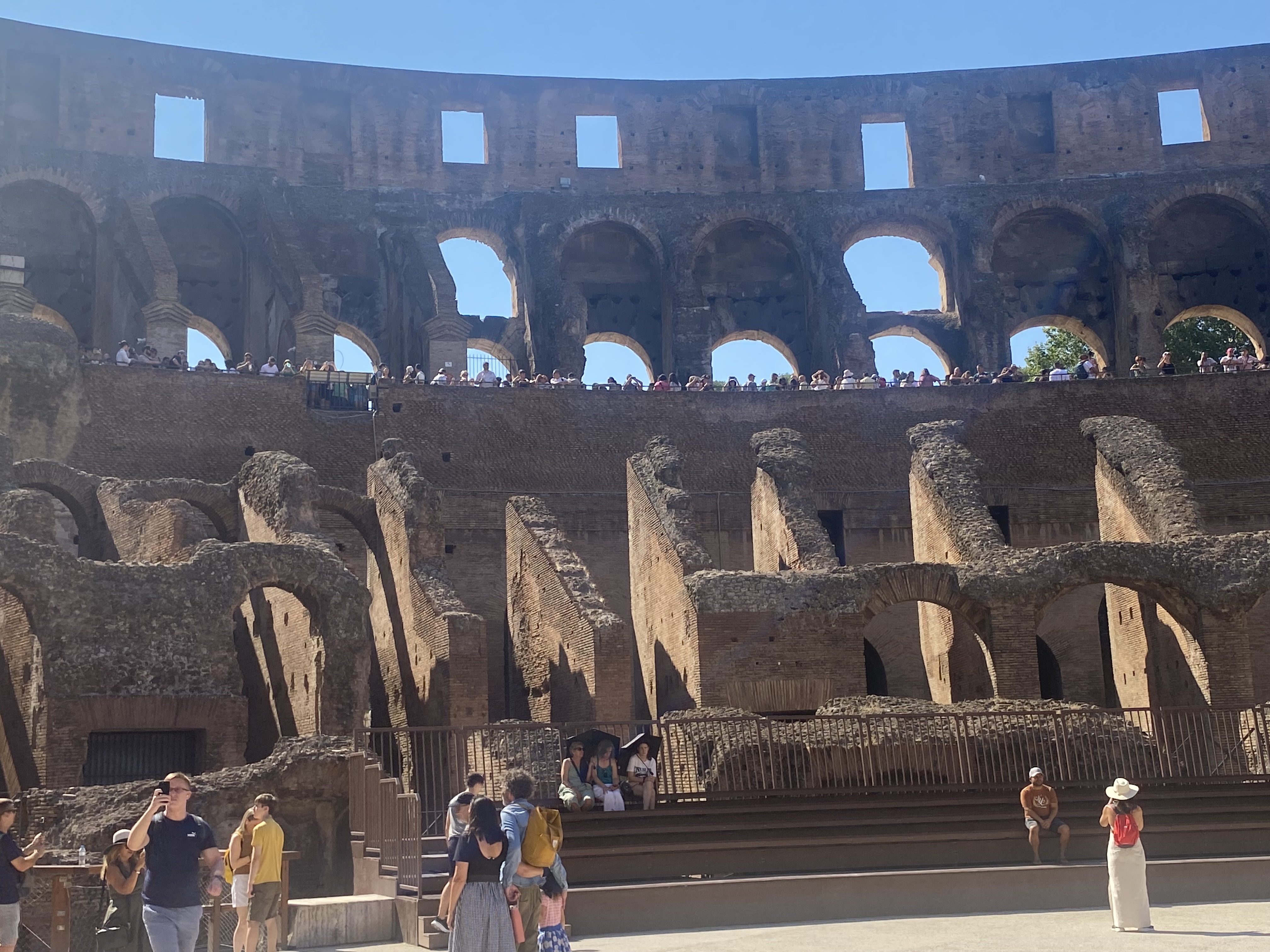
Roman citizens (well, male citizens) had free entry to the Colosseum but sat in specific sections depending on their status.
Three kinds of games were presented in the Colosseum: gladiator fights, wild animals being slaughtered, and executions – some rather imaginative, like one poor soul being flung from great heights into the arena in a staging of the Icarus myth.
Below, the “Loser’s Exit”, where vanquished Gladiators exited the Colosseum and – if still alive – were brought to the sanitarium to be doctored up to fight another day. (Most Gladiators didn’t make it past 25.)
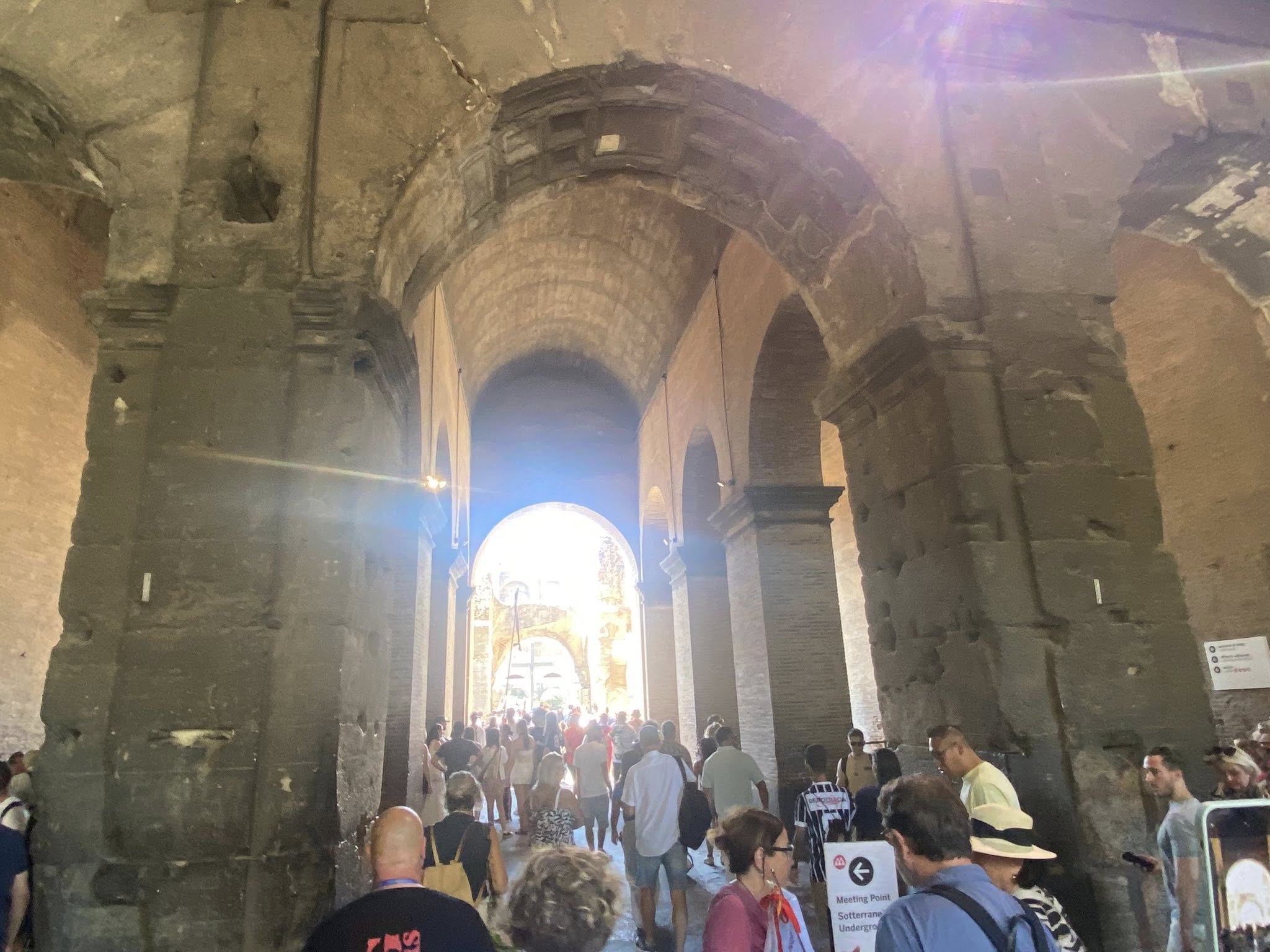
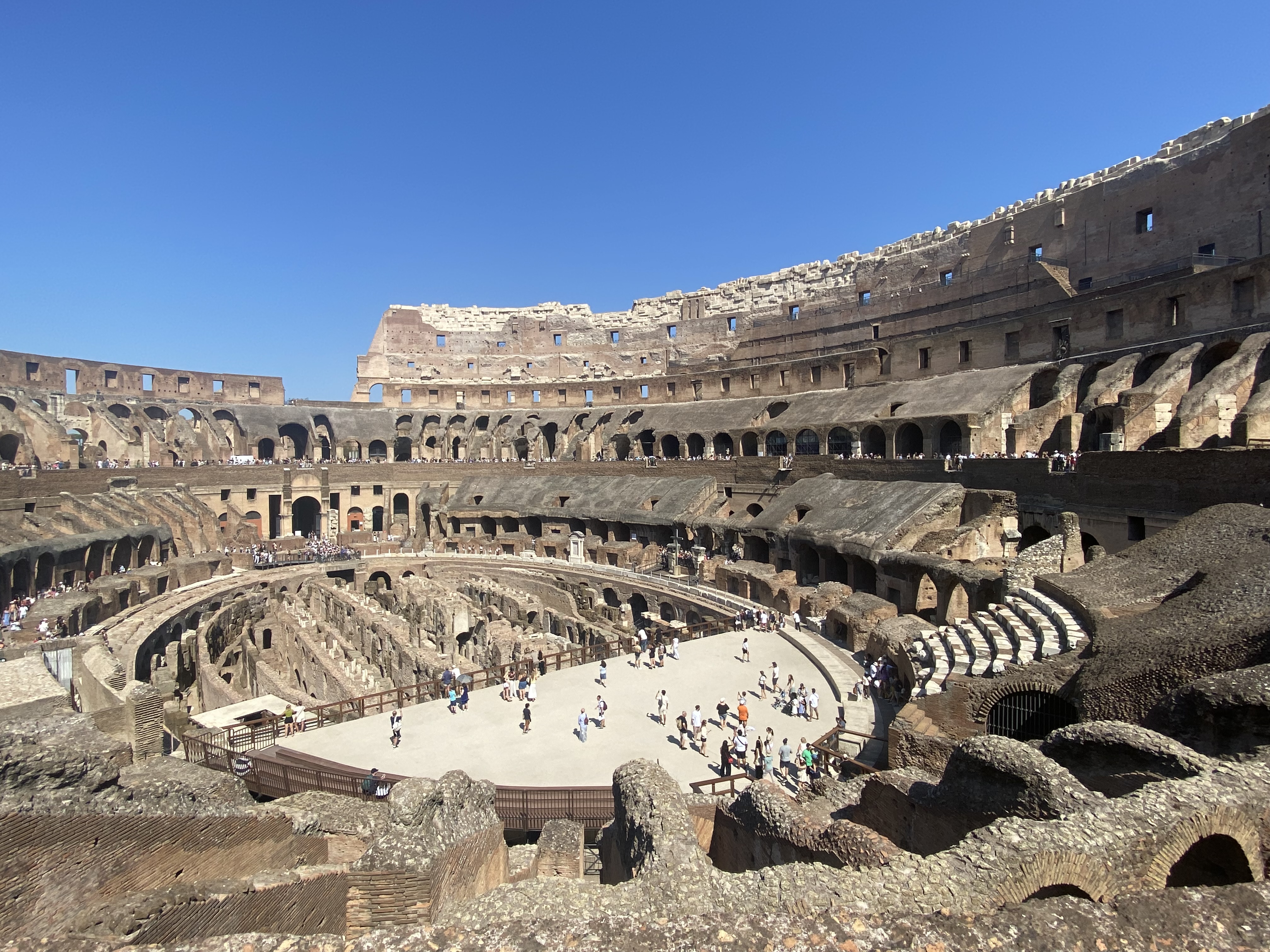
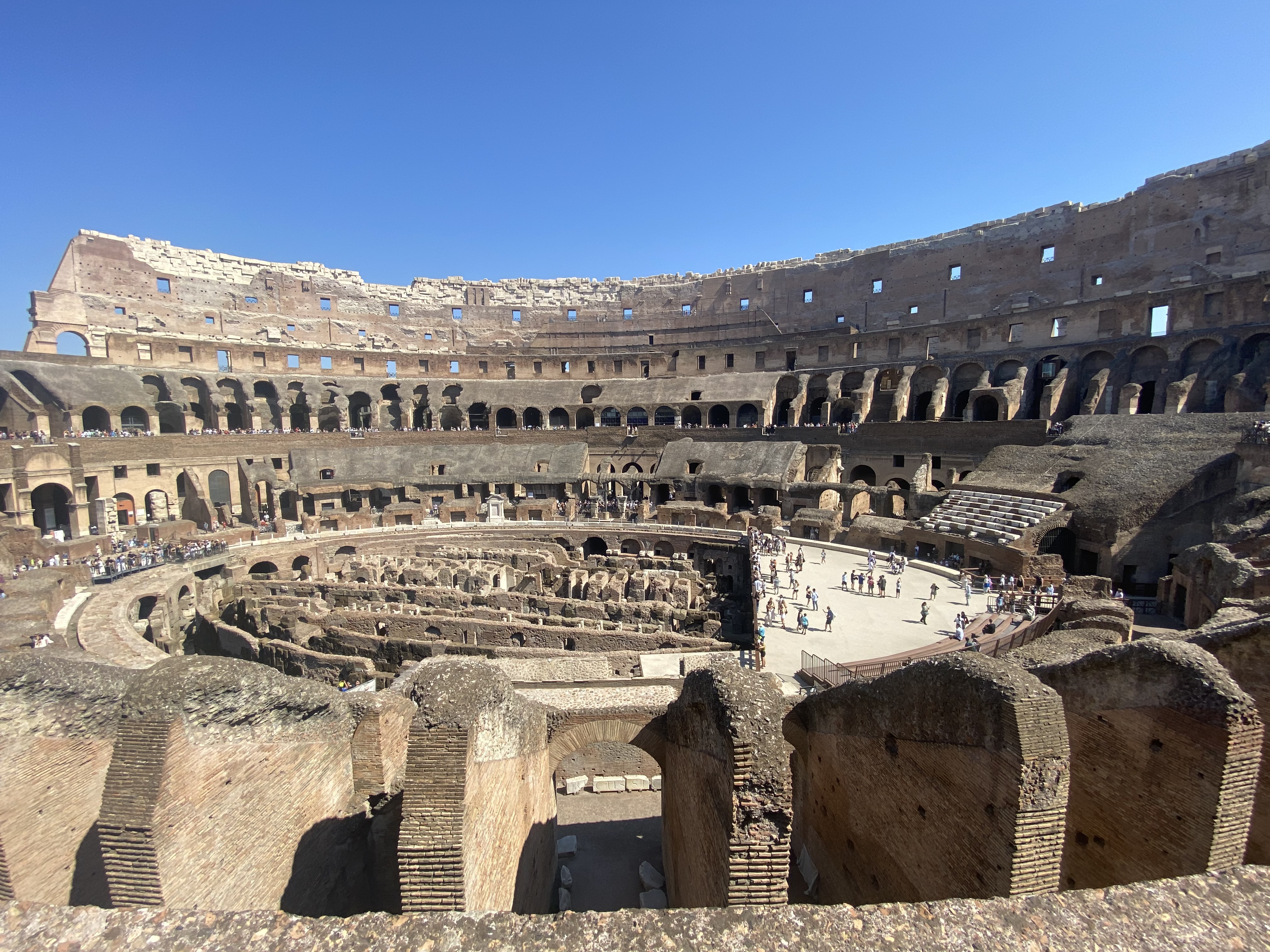
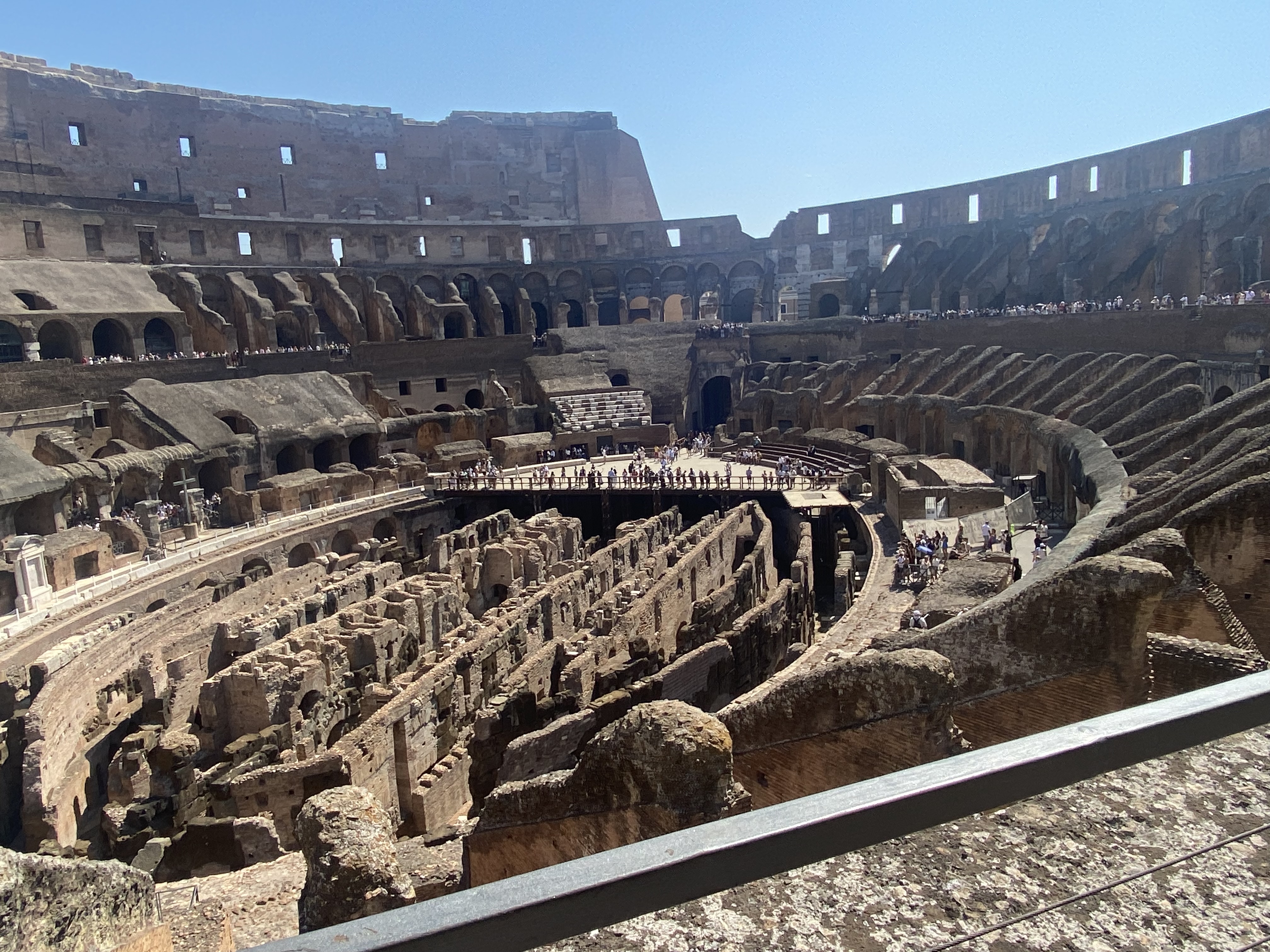
Views from an mid-level gallery.


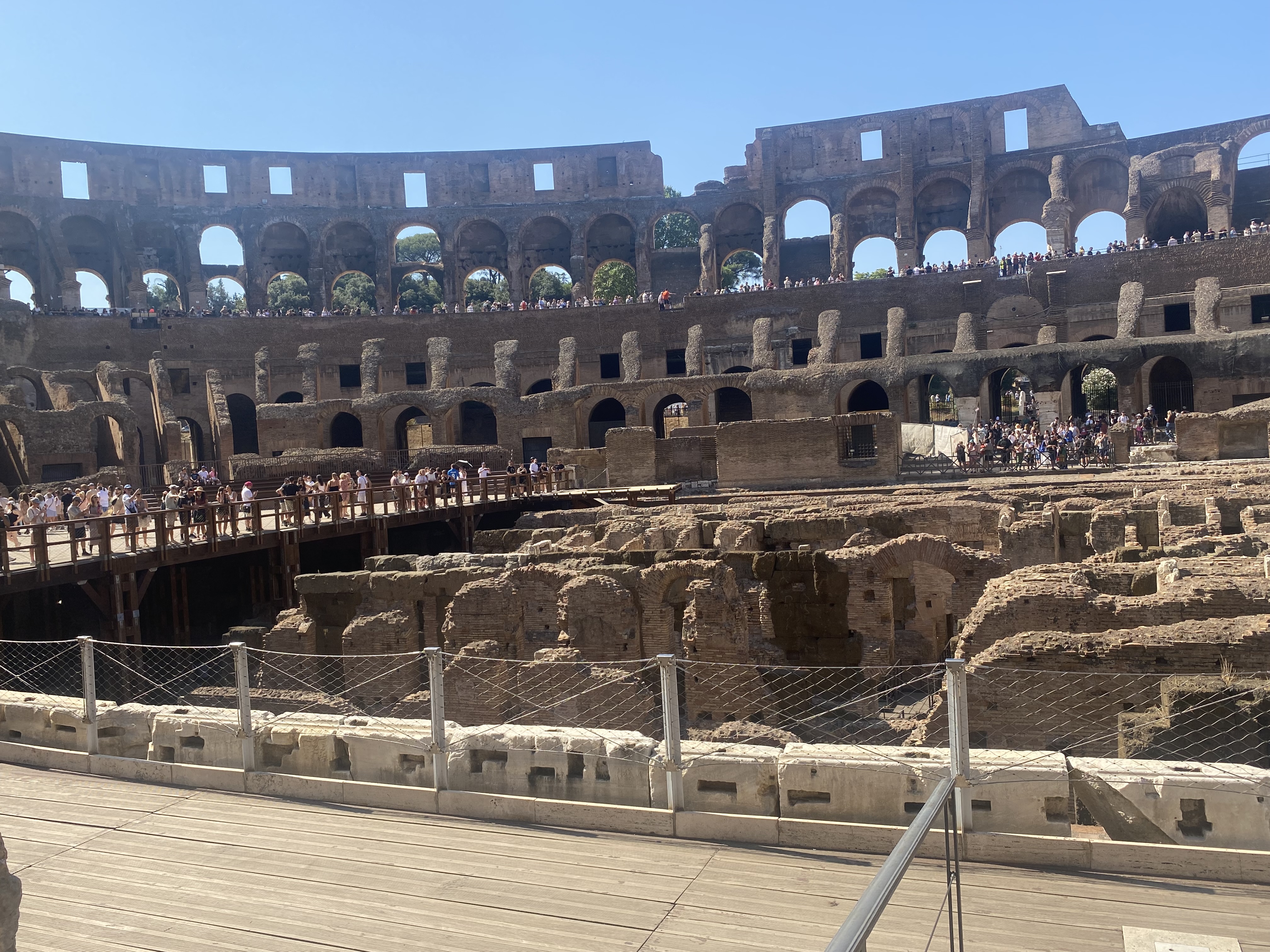
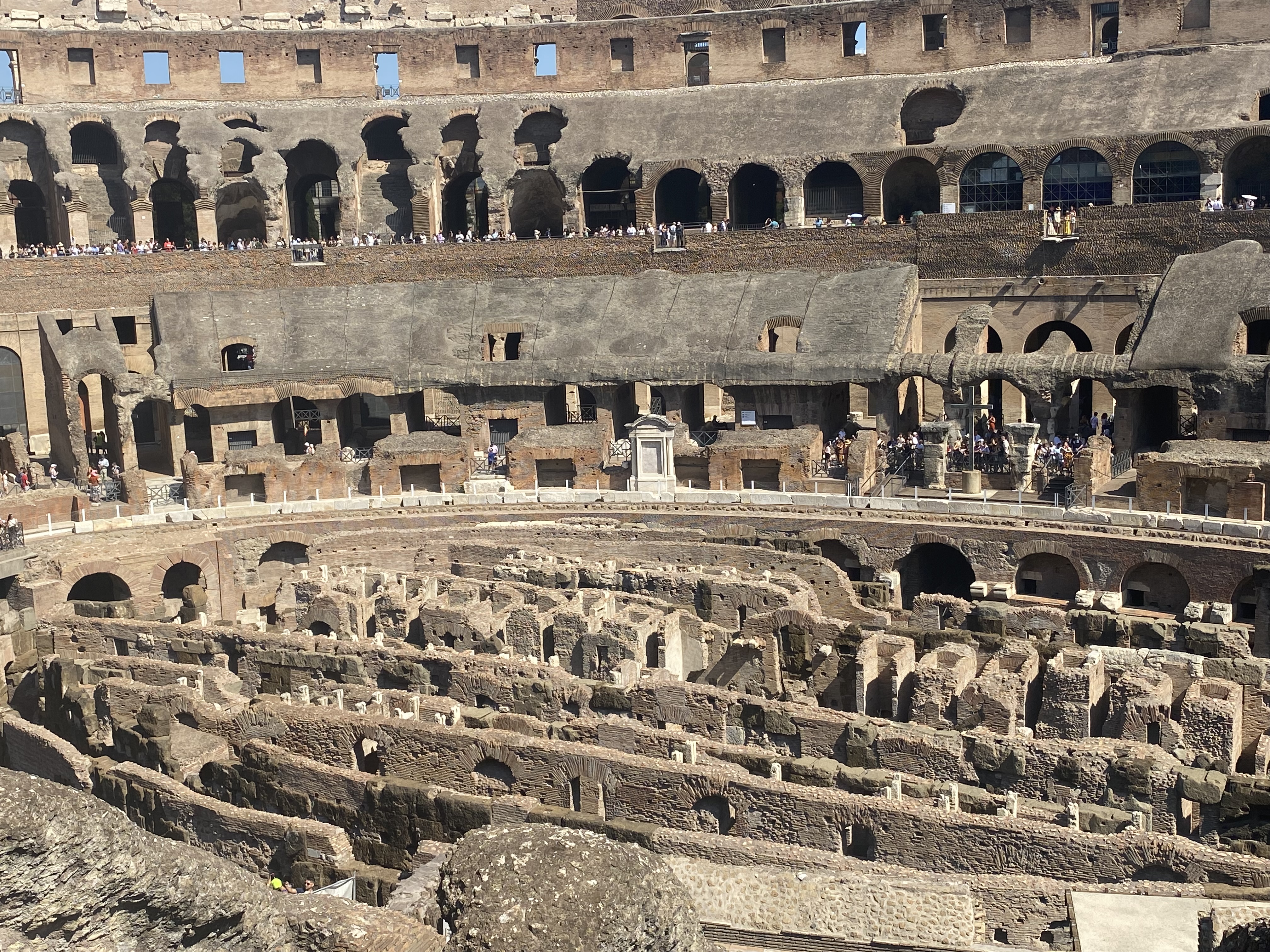
Below the arena lay an underground complex – three stories high – where wild animals and gladiators took their place before being raised into the arena via 18 separate elevators.

Experienced sailors managed the complicated “awning” system that gave shade on hot sunny days.
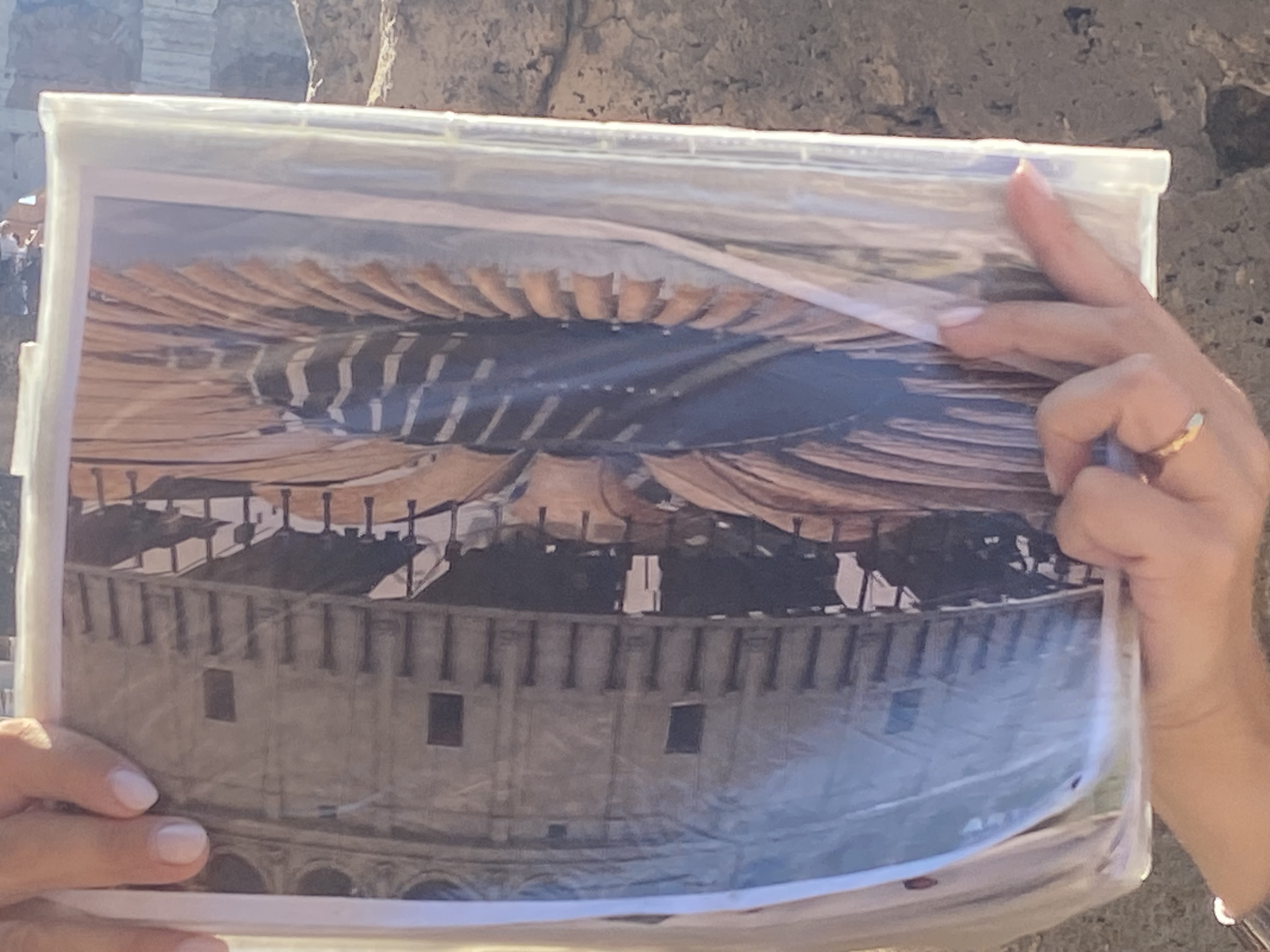
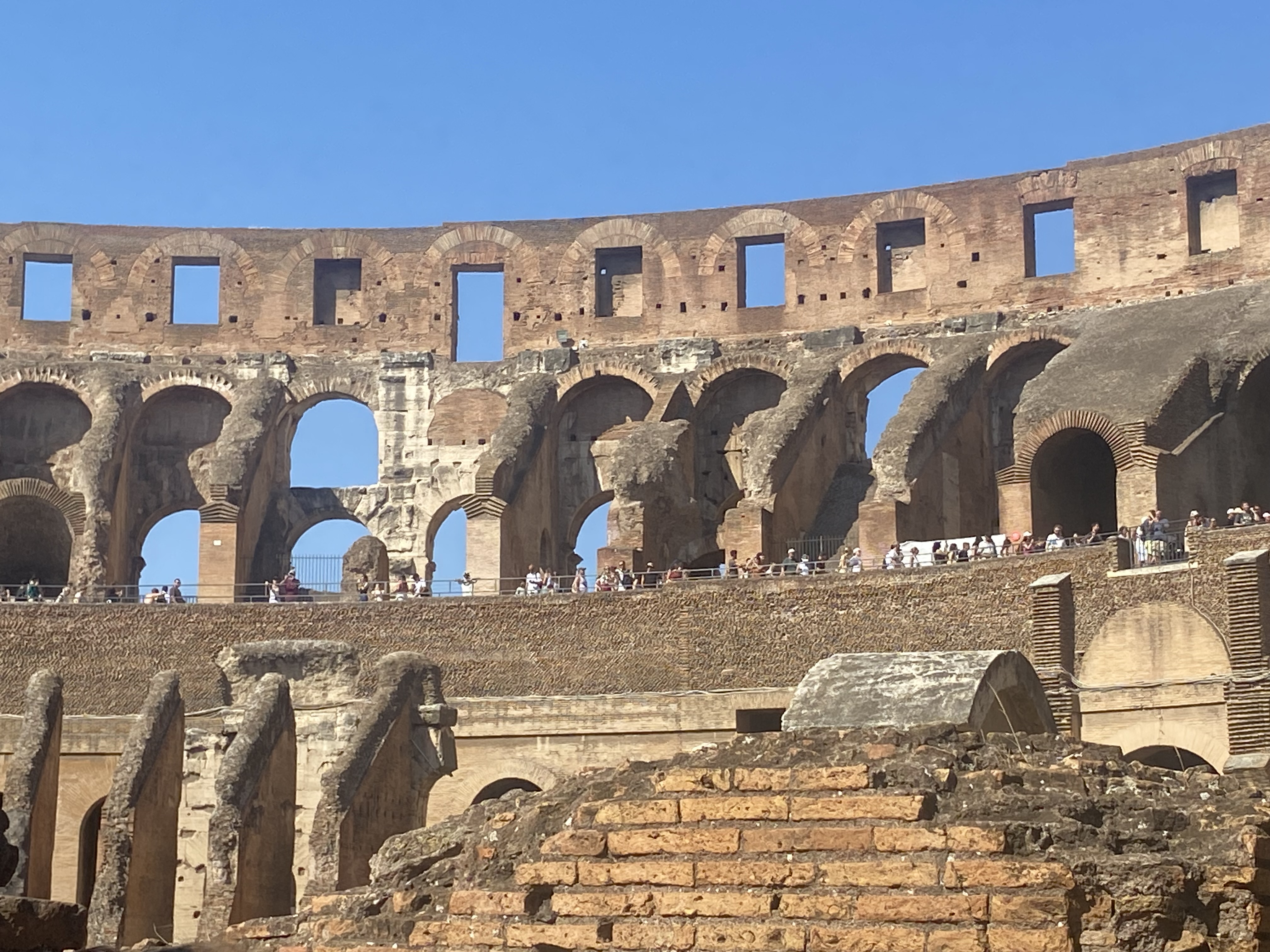
Below our guide shows an illustration of the Colosseum and the nearby gymnasium where the gladiators lived and trained, and the hospital where they were patched up when wounded. An underground pathway took the gladiators from their gymnasium into the colosseum. Only in the arena were they given real weapons. They practiced with dummy weapons, a precaution ever since the Spartacus rebellion.

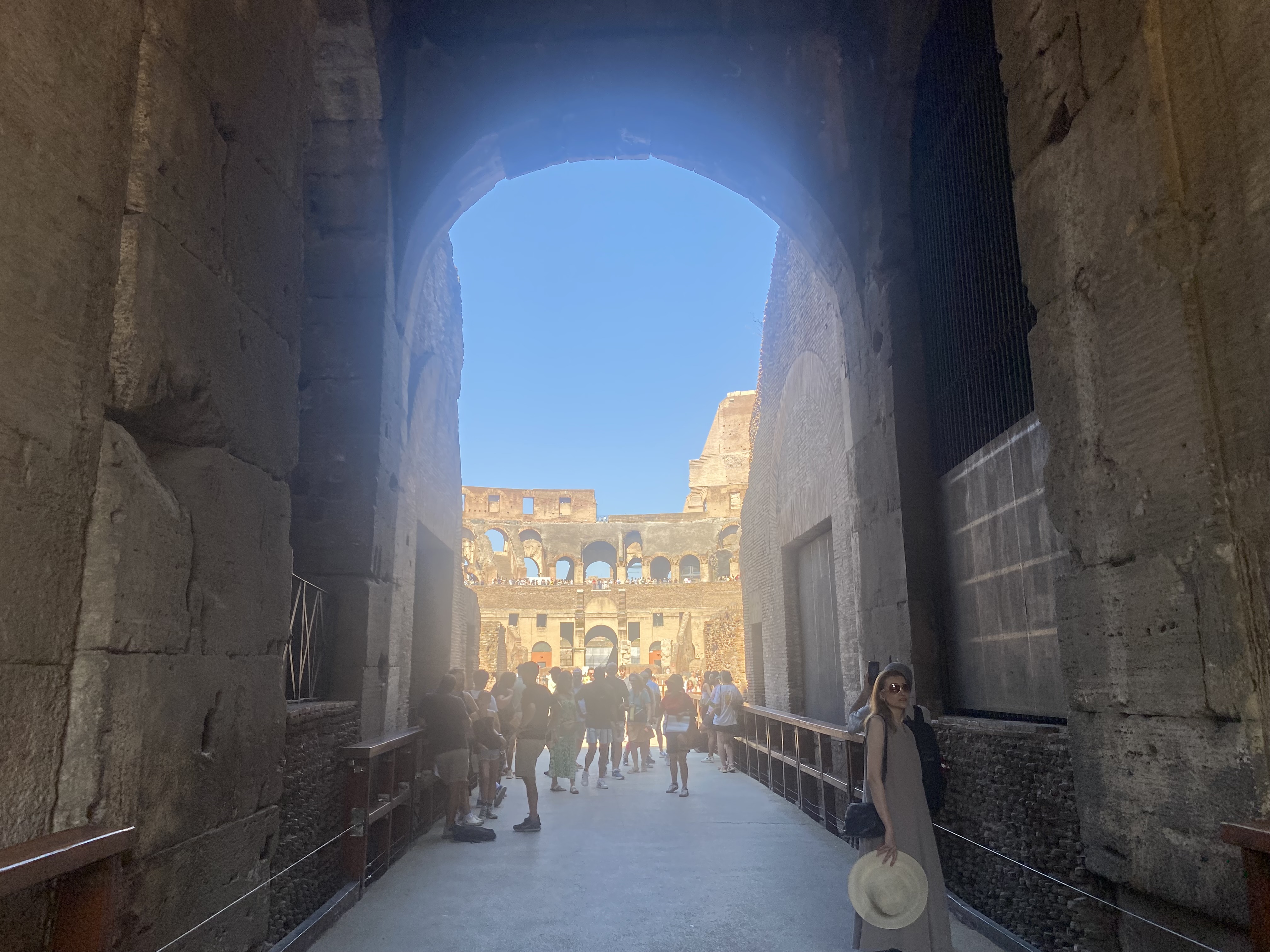
Across the arena, on the other side of the Loser’s Gate, which we are now walking through, and through which the vanquished Gladiators were taken, is the Winner’s Gate, through which – you guessed it – the winning gladiators exited.

The crowd didn’t flash the emperor thumbs up or thumbs down, as popularly believed, to guide his decision regarding a vanquished gladiator’s fate. Those gestures would have been too subtle to differentiate looking over a crowd of up to 80 000 spectators. A raised fist indicated a positive vote, a thumb “sliced” across one’s neck indicated a negative vote.
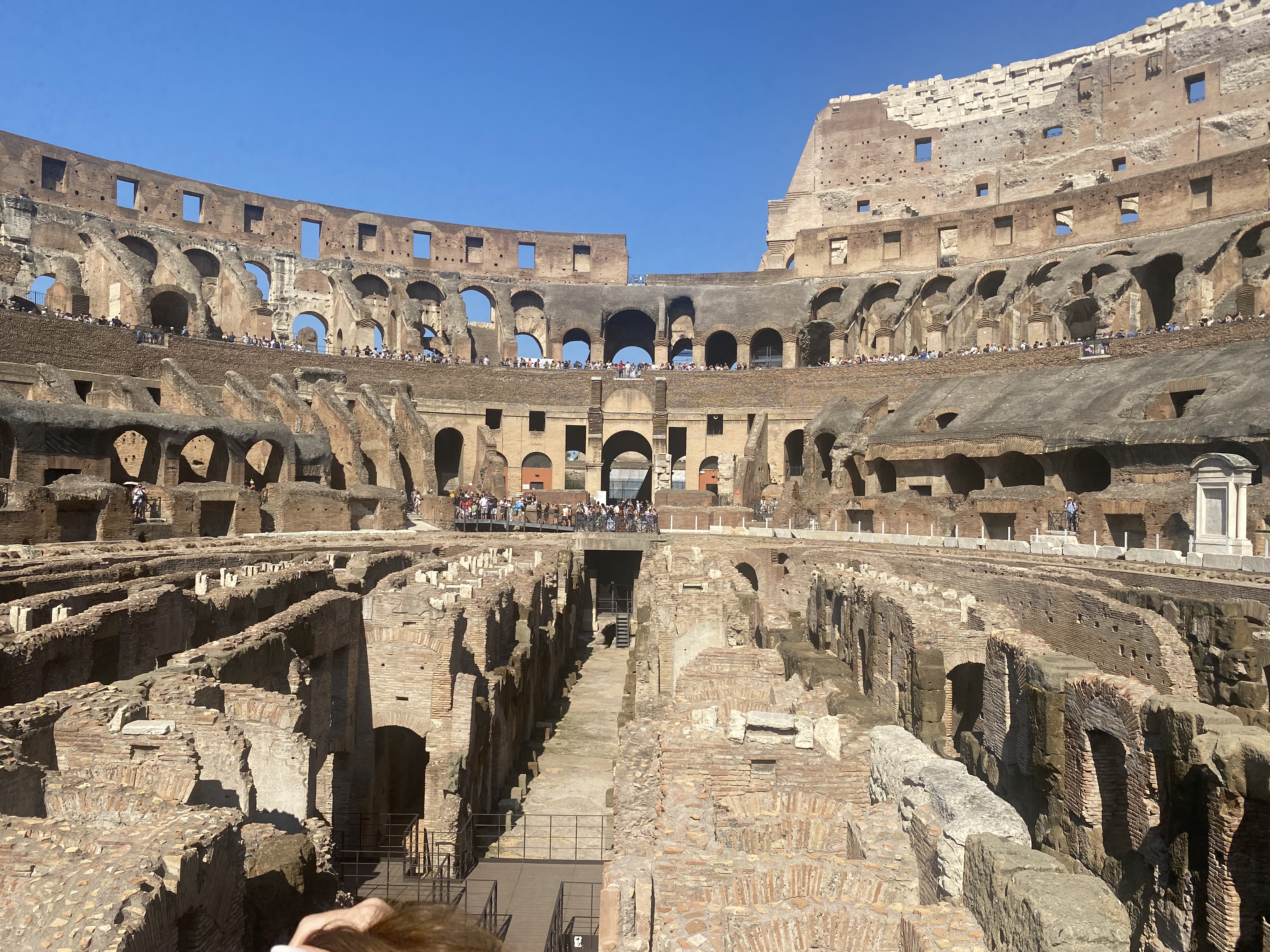

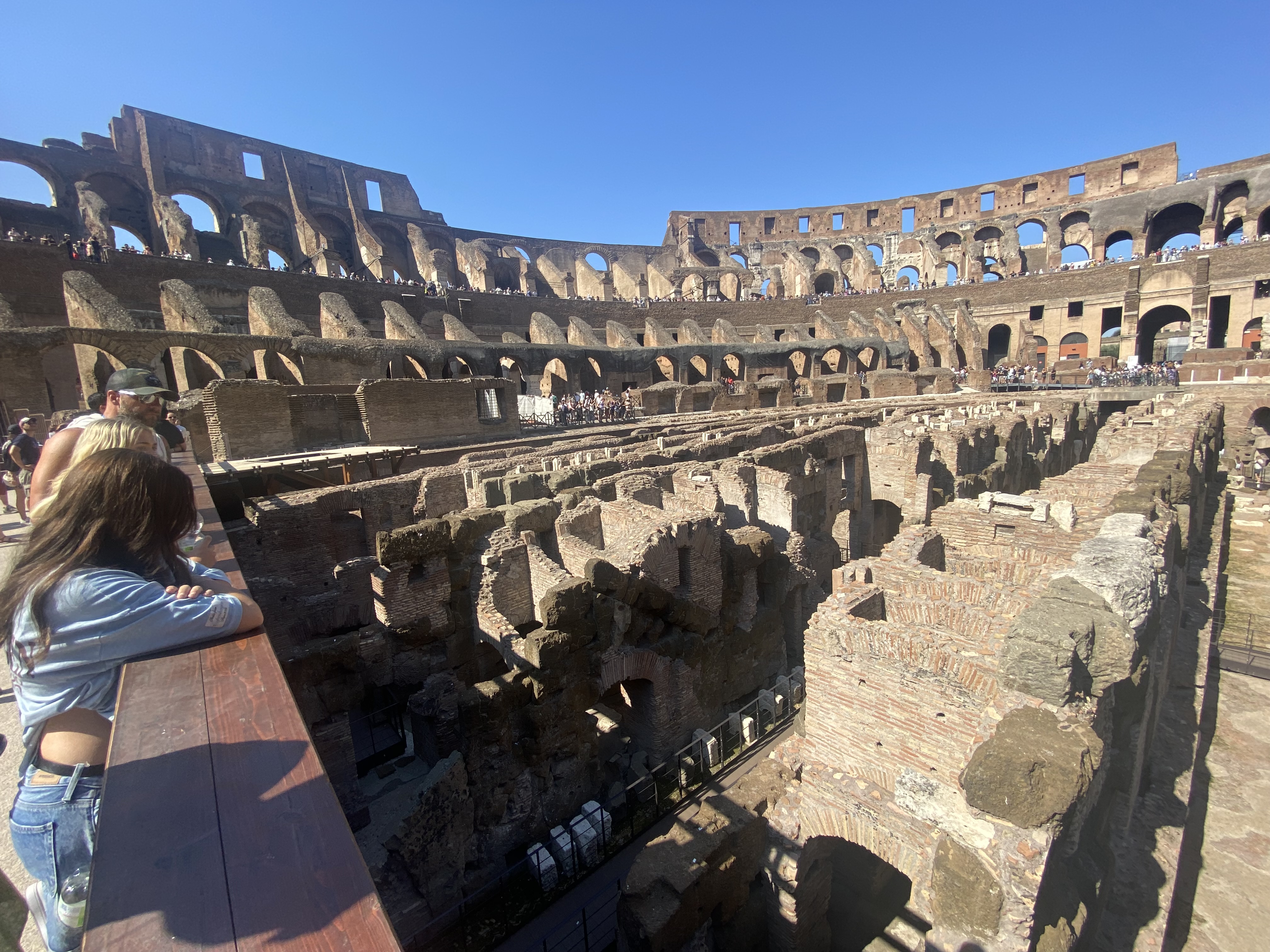
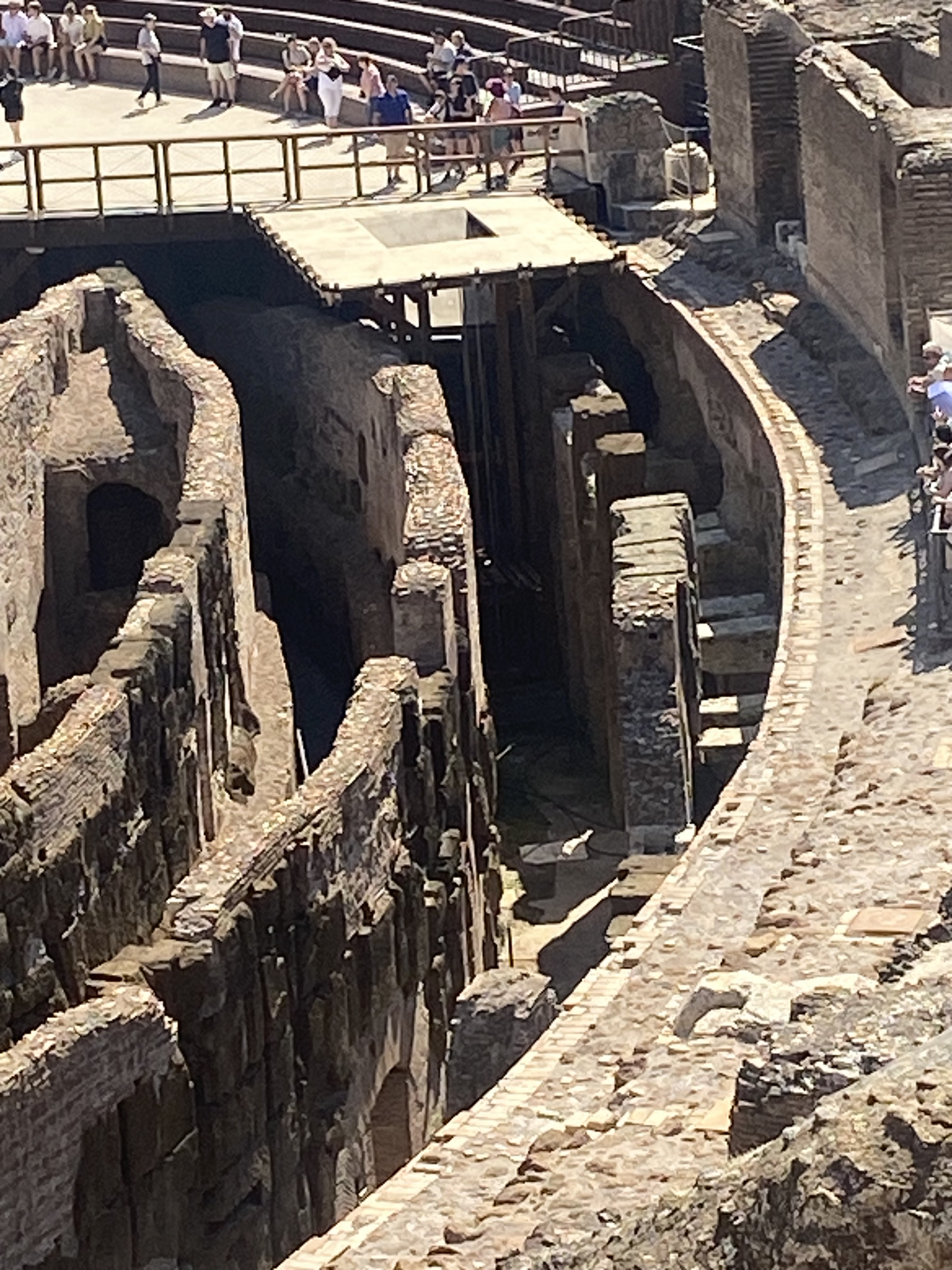
A replica of one of the 18 elevators that would bring the wild animals or gladiators up into the arena.

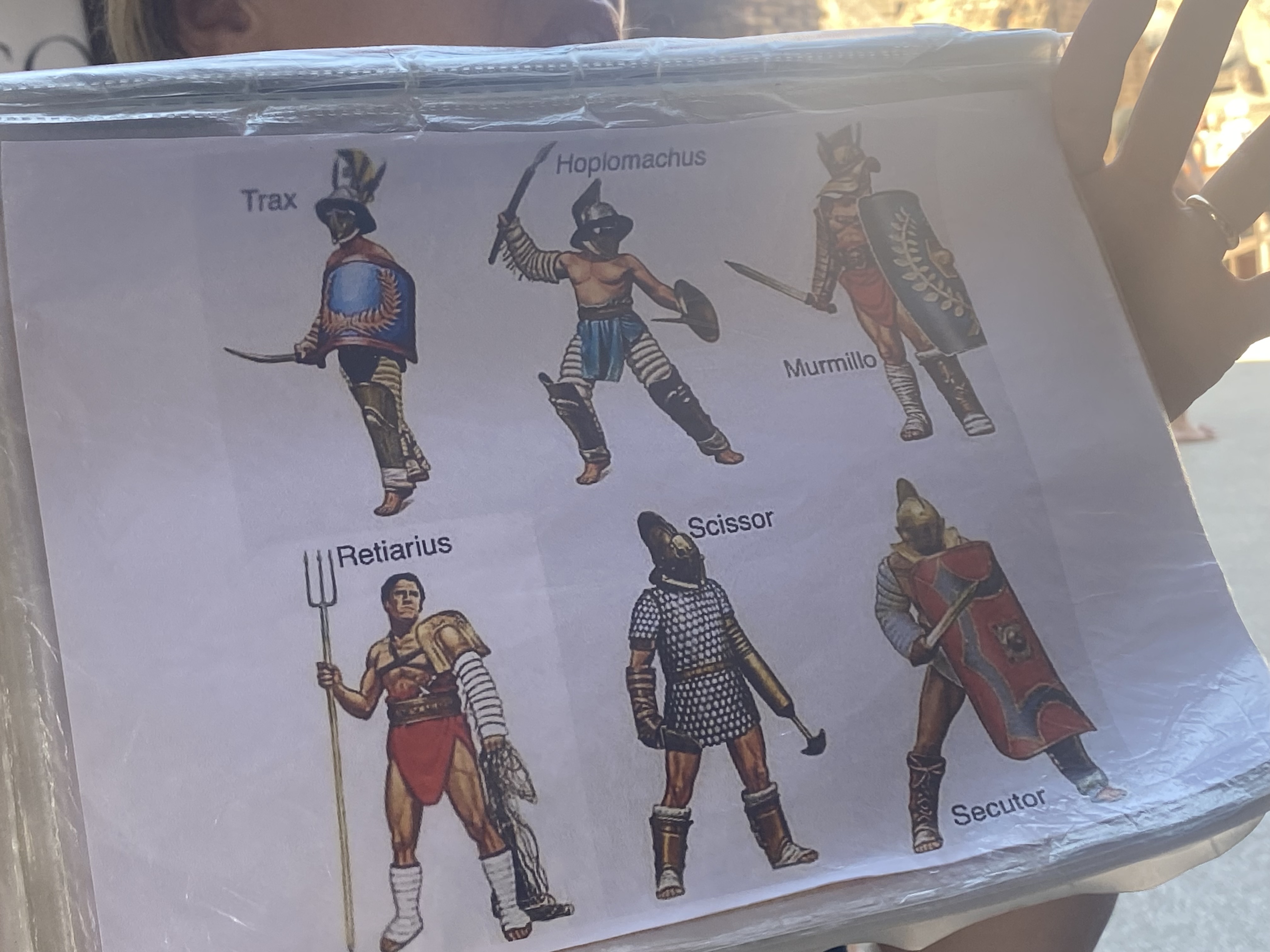
The most common gladiator types.
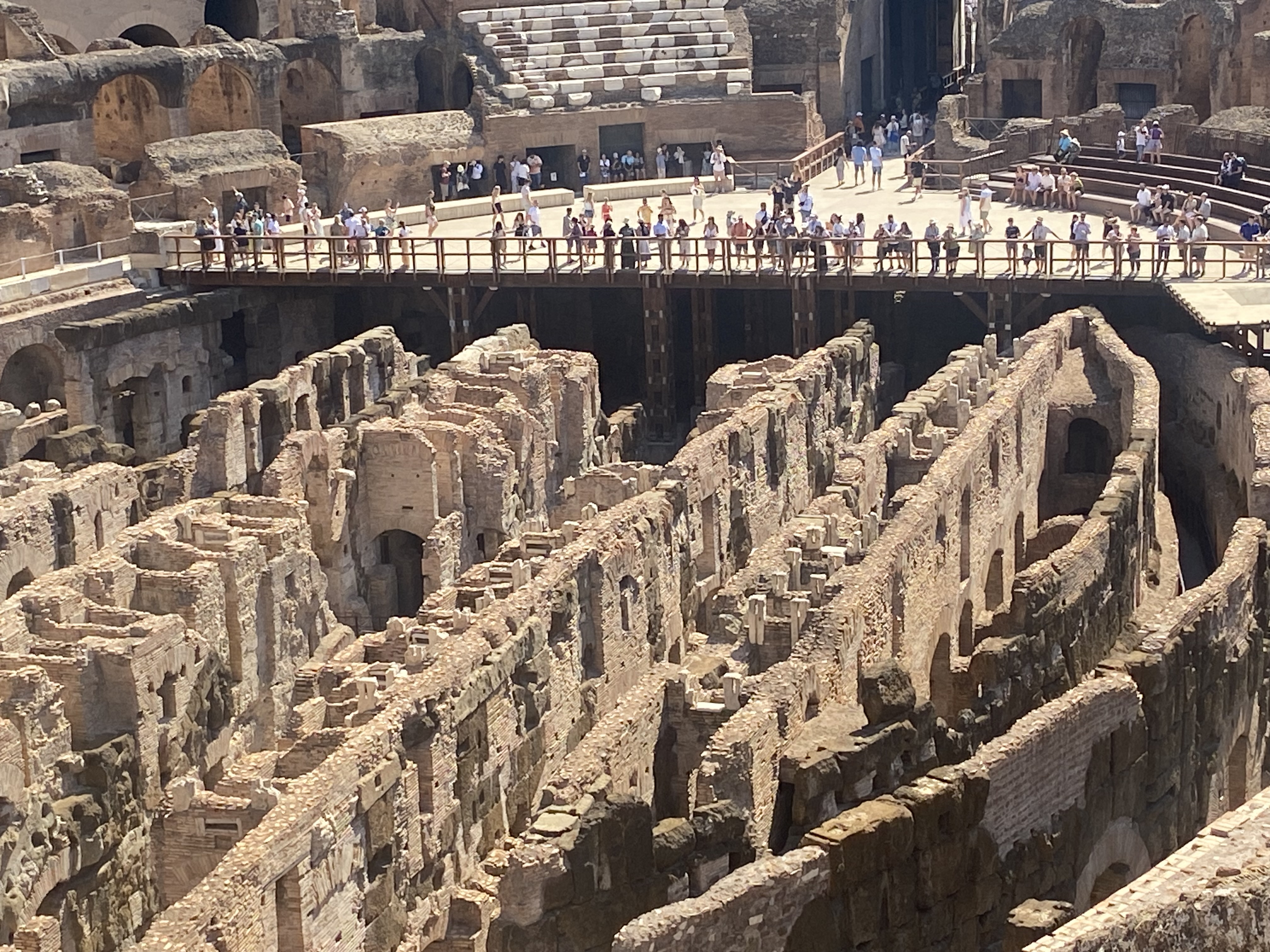
Another view of the elevator.
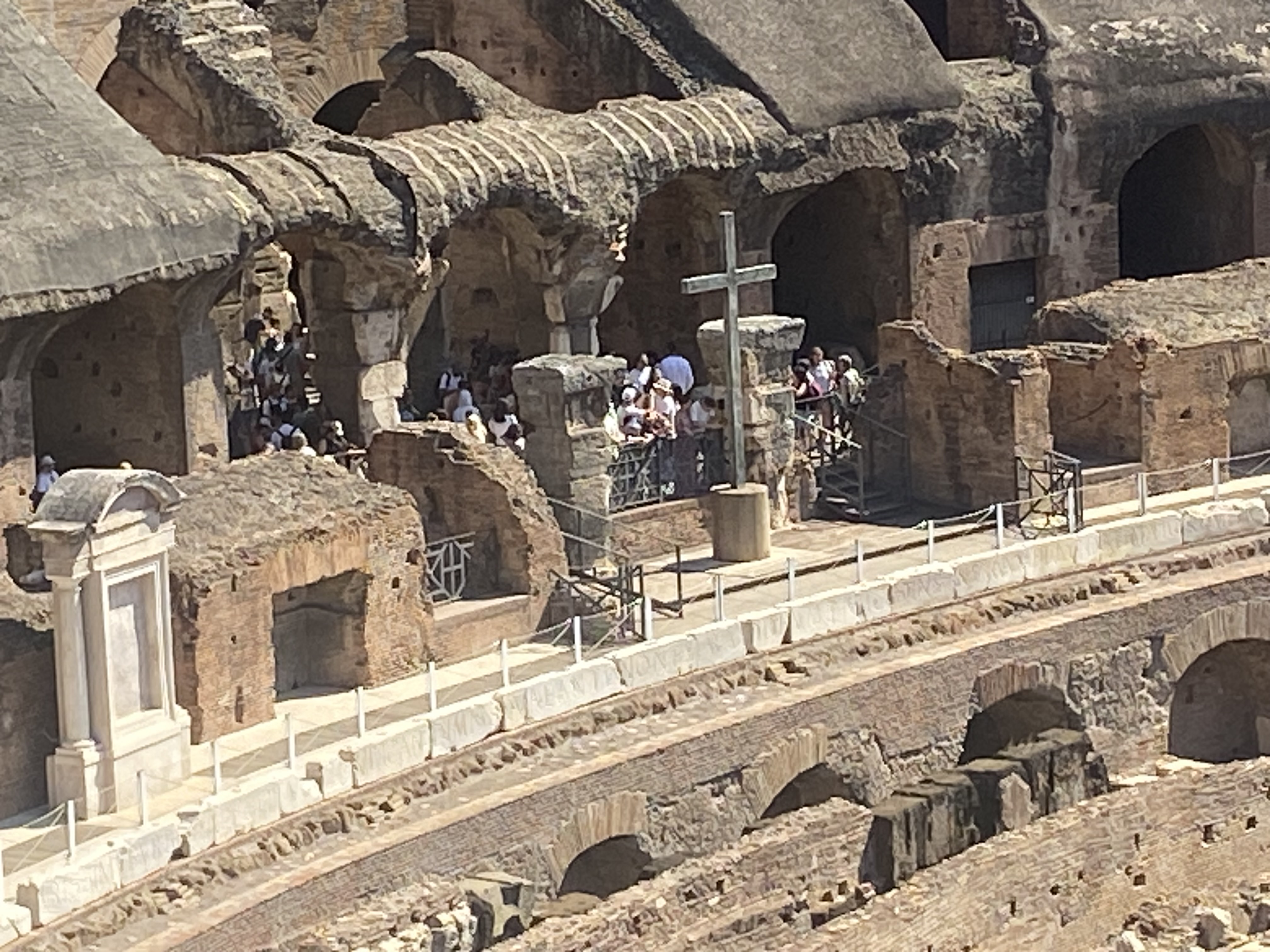
Mussolini had the metal cross installed at a time when people still believed Christians were thrown to the lions or otherwise martyred for being Christian here. But that actually never happened in the Colosseum, it turns out.
Imagine that, a fascist being wrong about history, or the facts…


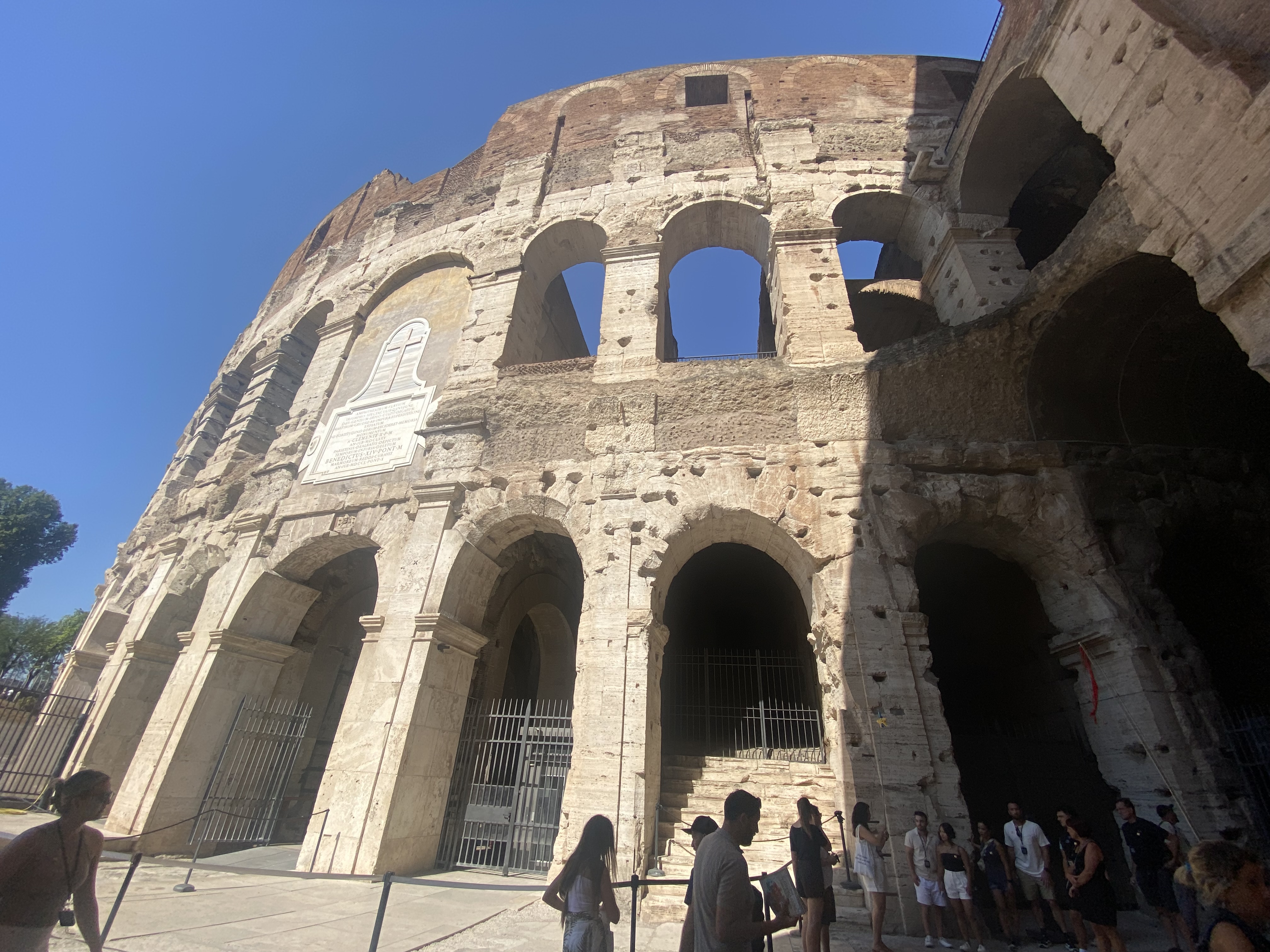
More views of the Colosseum passing by on Roman streets.


 Notes from a Composer