
Clips from the live performance of “In the Aftermath of Mercy”
March 1st the Virtual Arts production of the new play “In the Aftermath of Mercy” was broadcast live over the internet. I played the lead role of Nathan Leopold, the infamous killer paroled after 33 years in prison. (Read more about it in this blog post).
I thought the performance would still be available for viewing during the month of March, yet that doesn’t seem to be the case. But I will share some annotated excerpts from the performance below for those of you who missed it.
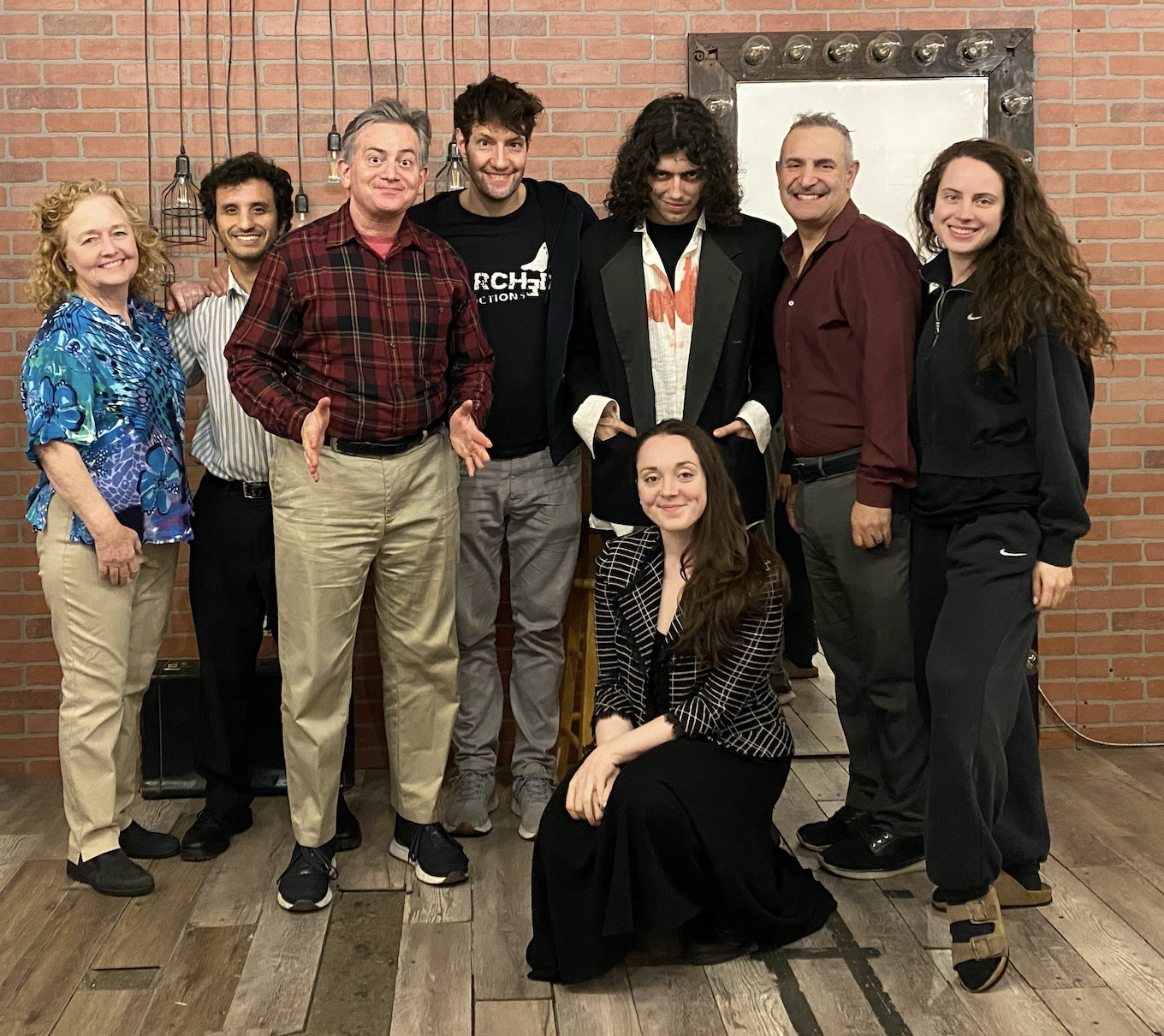
Below, the cast and director of “In the Aftermath of Mercy”. We had three Zoom rehearsals and one rehearsal in person together in the space that would contain all scenes for the play, with director Joe Leone capturing and broadcasting the performance via his Iphone.
So, very much fly by the seat of your pants theater. The dance music and loud conversations that bled through the walls from nearby rooms in the building were an unexpected factor – but fortunately not audible to the on-line audience even if very much heard by us actors…

The play opens in prison. Nathan Leopold is preparing for his release on parole. Seen and heard only by him, the “ghost” of Richard Loeb, taunts him.
Leopold, out on parole, arrives in his assigned apartment in Puerto Rico. He is told he needs to continue at least six months of therapy with Dr. Clancy.
Leopold meets the widow Gertrude Feldman.
Dr. Hamilton, a therapist newly arrived in Puerto Rico questions whether Leopold has been truly rehabiltated.
Dr. Clancy brings up these concerns during their next session.
Dr. Hamilton replaces Dr. Clancy as Leopold’s assigned therapist. Hamilton is brusk and asks invasive questions. In response Leopold at first clams up. Before Leopold can give any answer, Hamilton simply cuts off the session and walks out.
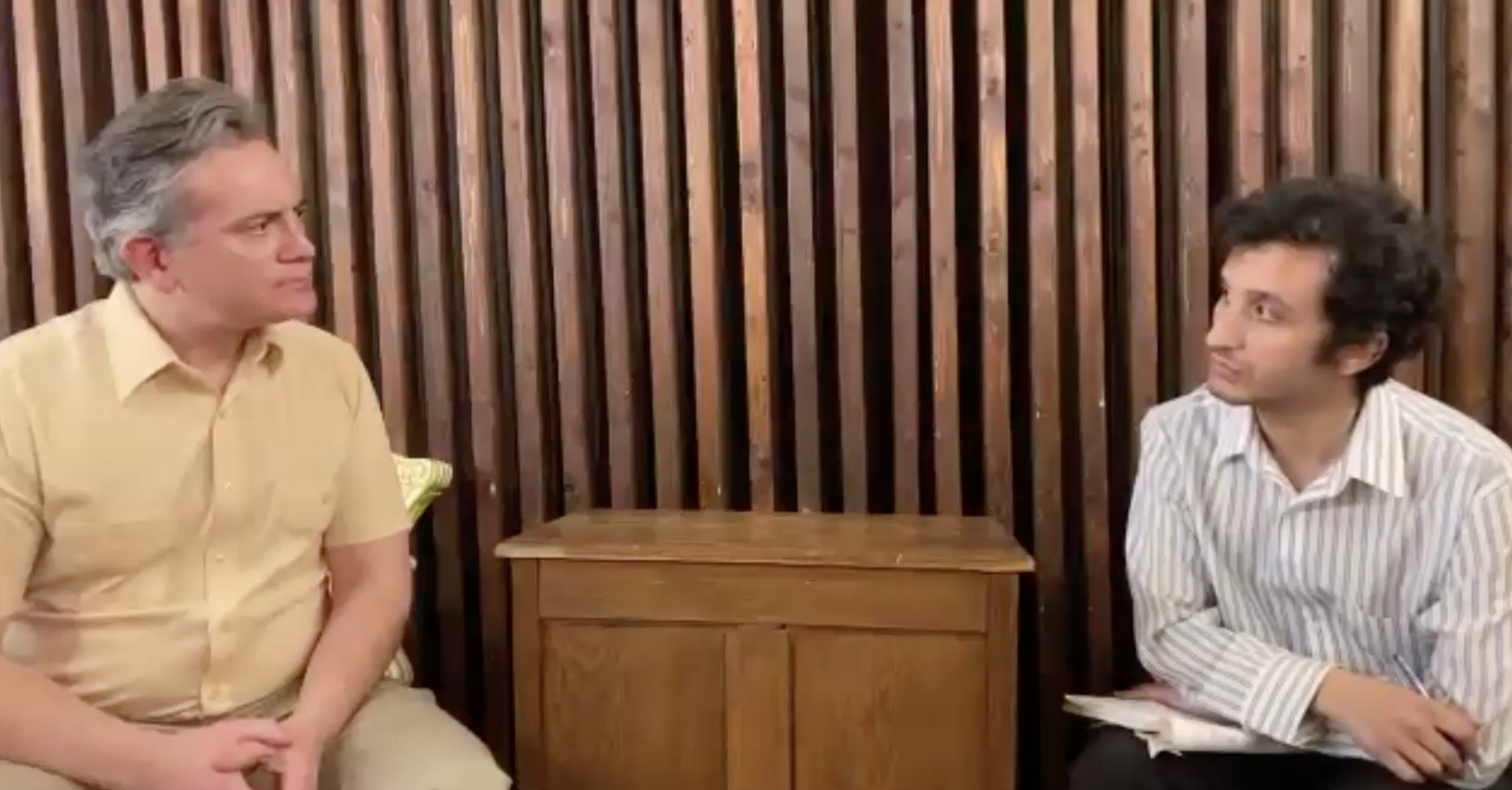
Loeb and Leopold discuss how to deal with the Hamilton problem.
Meanwhile Nathan and Gertrude become better acquainted.
The next session with Hamilton goes even worse.
The final session with Hamilton is a battle of wills and wits that takes up the whole second half of the play.
Leopold toys with Hamilton’s expectations before turning the tables on him.
Leopold prosecutes his case against Hamilton.
Leopold explains how famed defense attorney Darrow saved Loeb and him from the death penalty.
And the title of the play is explained too,
“Whenever they say my name, it’s always with … his. Leopold and Loeb.”
“He was my first true friend. The only one who understood me.”
All this time Leopold has been playing mental chess while Hamilton has been playing checkers.
Now Leopold is ready to go for the jugular.
Leopold successfully provokes Hamilton to lose his cool and attack him.
Check mate.
Hamilton’s disgrace threatens the practice assigned to monitor Leopold. Leopold takes advantage of the threat of scandal to negotiate more freedoms for himself.
“Wouldn’t that be something. Just Leopold”
(Historically, Nathan Leopold did marry Gertrude Feldman. Yet he also continued to have gay relationships.)
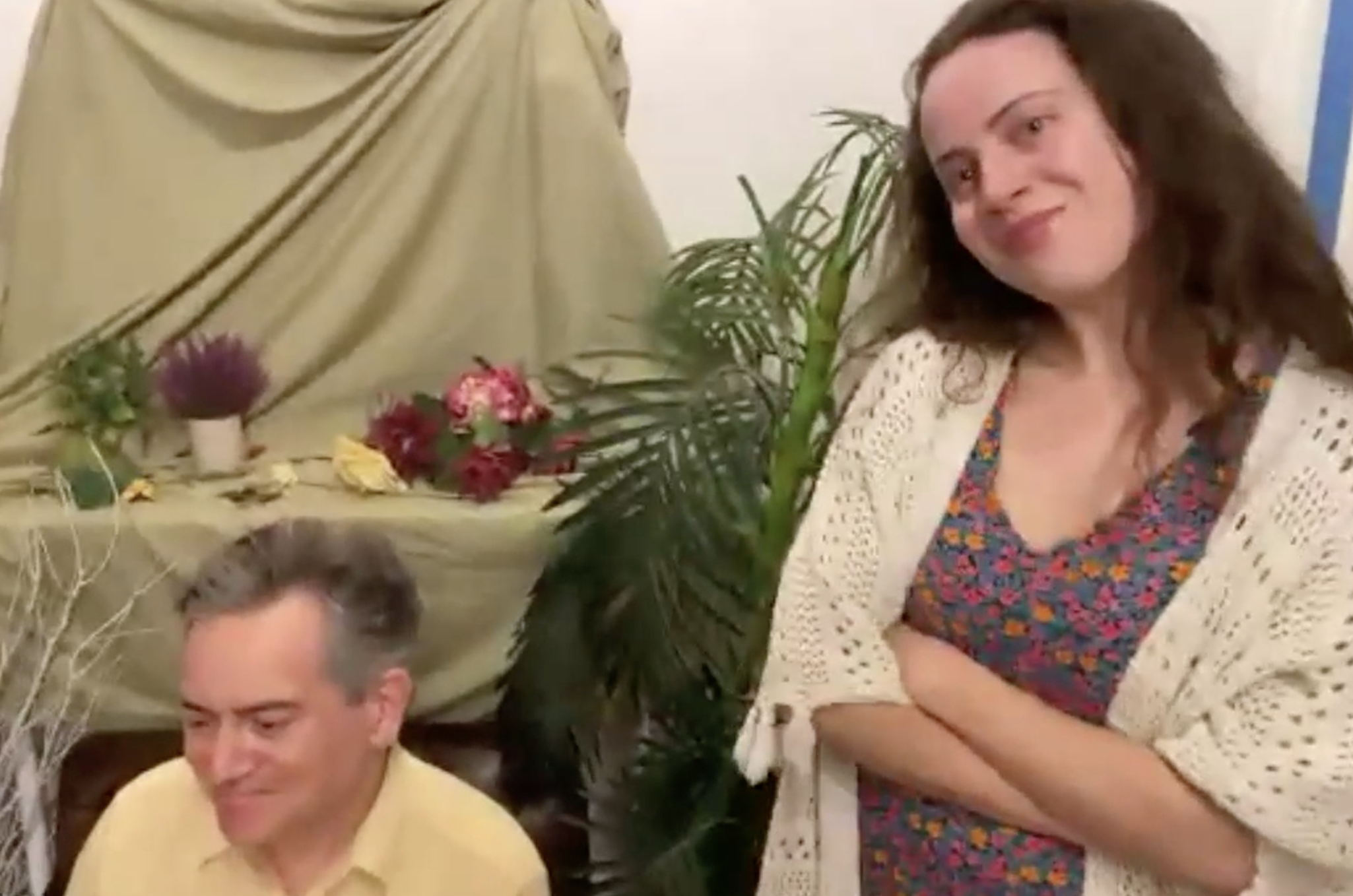
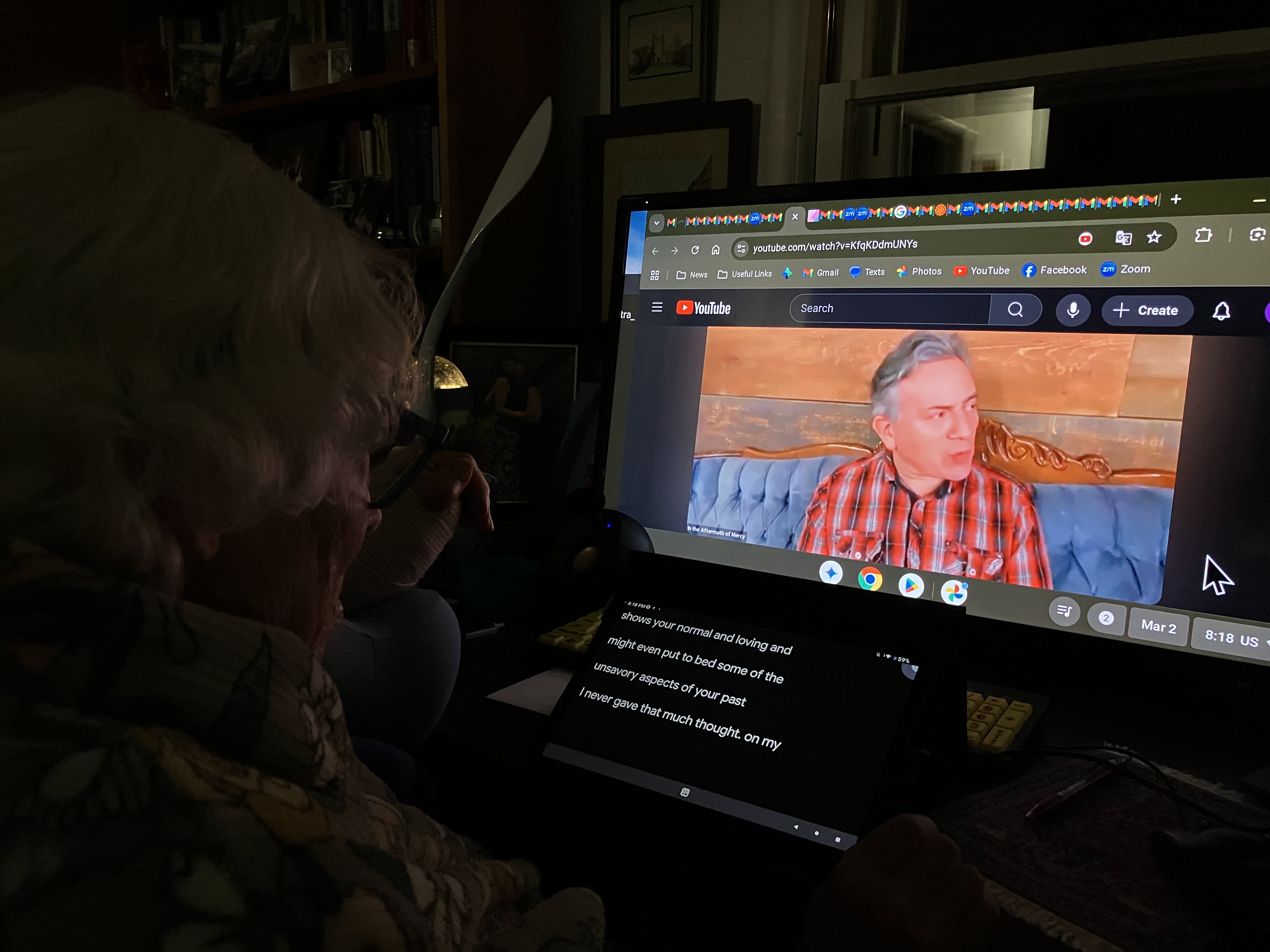
For a little bonus, or encore, here are two pics of my Aunt watching the performance in the comfort of her home.

Addendum
“Hello Mr. Ashkenasi,
I watched the play you starred in, In the Aftermath of Mercy, and really enjoyed it, and appreciated the extra context given in your blog posts. I’ve been researching fictional adaptations of the Leopold-Loeb case and would love to hear more about how you approached your character and the play’s themes.
All the best,
Erik Rebain”
Erik,
Thank you for enjoying the performance and my blog posts.
As to my approach to the character, in general I take my cues first and foremost of what is written on the page of the play script. What is said and how it is said, by my character or other characters, is what gives context and suggests subtext, motivation and emotion, and even (depending on the writing) a sense of texture and style. A lot of that work is creatively subconscious and intuitive as well as consciously, intellectually parsing meaning and intention. I prefer (and feel I’m doing my best work) when I start with instinct and follow up with intellect. But in a project like this it all starts with the words on the page.
I did read up on the Leopold and Loeb history, only so much to get a sense of what parts of the play were based on verifiable fact, and mostly out of general curiosity, not so much to get additional insight into the character of Leopold, as the author’s interpretation was clear enough to me from the script, and that is the Leopold I was to play after all, not necessarily the “actual, historical” Leopold.
best,
Danny
“Hey Danny,
That makes sense about the approach to your character: to be honest to the material and not tied to facts. It seems like you had an excellent character to play, with so many complicated struggles: trying to forge an identity outside of prison and away from his association with Loeb, to navigate a system that consistently believed he would fail, and seemed designed to push him towards that outcome.
Did you have a favorite scene to play? I thought the triumph over Dr. Hamilton must have been a lot of fun for an actor!
Best,
Erik”
Erik,
Yes, the final Hamilton scene is a total tour de force that definitely was the biggest challenge with the biggest rewards.
best,
Danny


 Notes from a Composer