Part 3 of the Pompeii Series
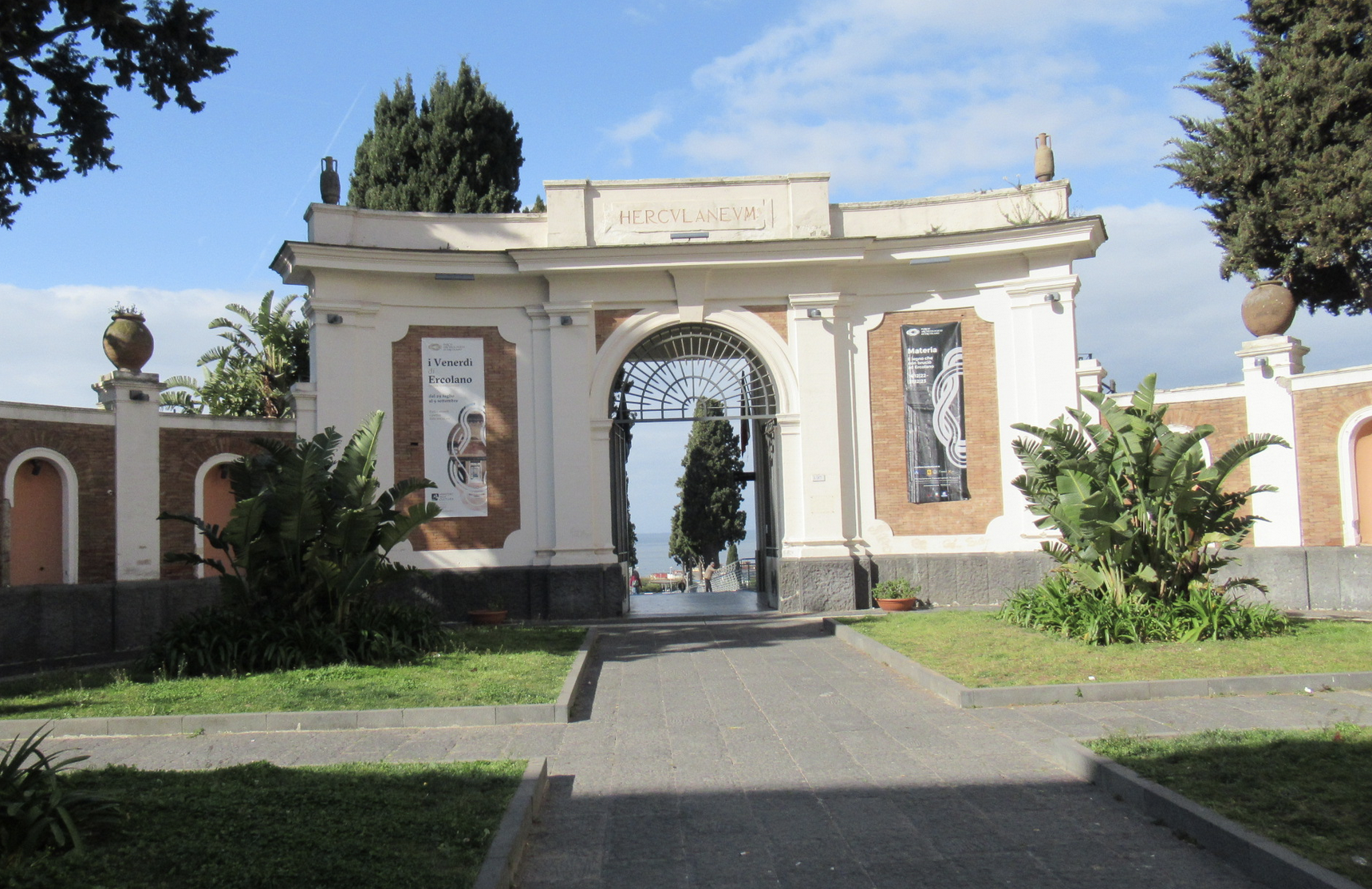
Above is the entrance gate into the Herculaneum museum/park, and below is the first view one gets of the ruins walking down the path to the official museum entrance.
Herculaneum, like its more famous neighbor Pompeii, was an ancient Roman city destroyed by the volcanic eruption of Mount Vesuvius in October, 79AD. Situated on the western slope of the volcano, it is actually a lot closer to the crater than Pompeii. However the prevailing winds during the first day of the eruption sent the ashes Vesuvius was spewing to Pompeii. The accumulated weight of those ashes destroyed most roofs and upper stories in Pompeii, while Herculaneum for the time being escaped that particular catastrophe.
However the massive pyroclastic flow (a fast-moving current of hot gas and matter) that followed enveloped both cities in seconds, killing all who still remained, and then quickly enveloping both cities completely in ash.
Herculaneum ended being covered in 60 meters of volcanic dirt.

A suburb of Naples, Ercolano, has grown all around the exposed ruins of Herculaneum. But it is certain that much more of Herculaneum still lies underneath the modern city that now sits atop the volcanic dirt that overwhelmed the ancient city.
That said, much has been exposed, with up to three stories still standing of some buildings, unlike in Pompeii. In its time, Herculaneum was a different kind of city than Pompeii, its fate during in October, 79AD, while ultimately as deadly, proceeded differently than Pompeii’s, and thus the museum offers the visitor a notably different experience than in Pompeii.
That said, we spent a whole day in Pompeii, and only just took in all we could. Half a day sufficed to cover all that is currently available to see in Herculaneum.


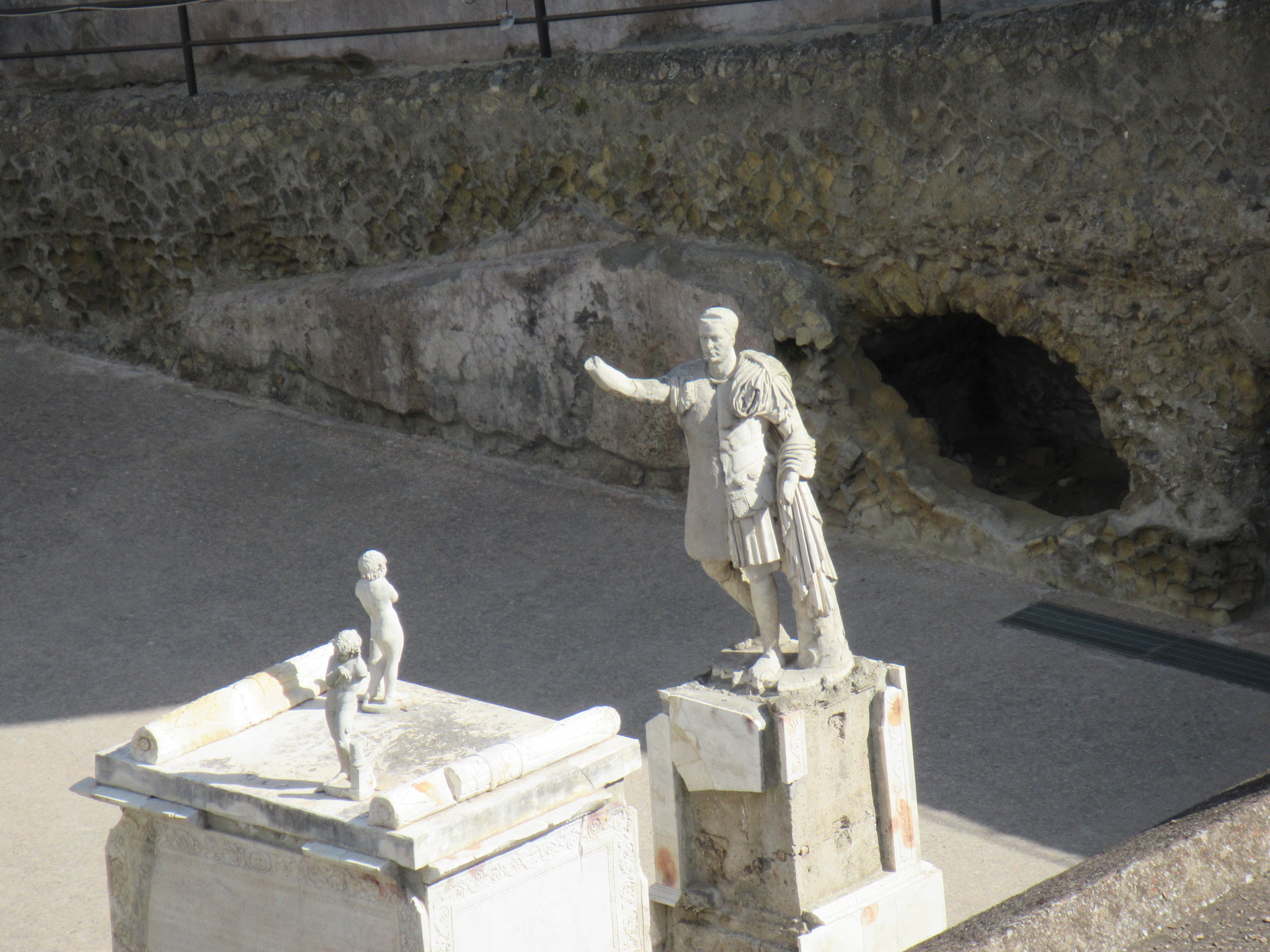
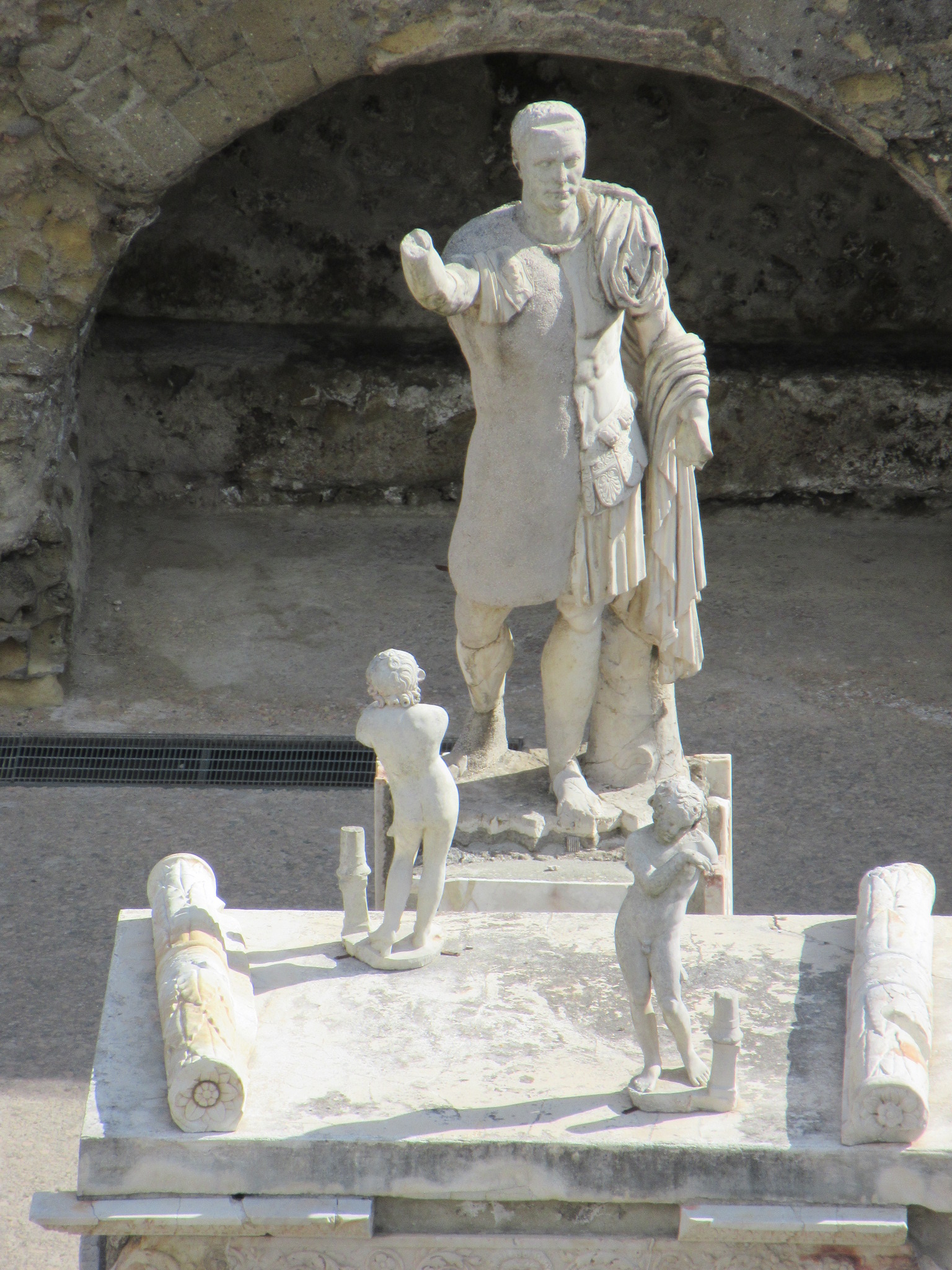
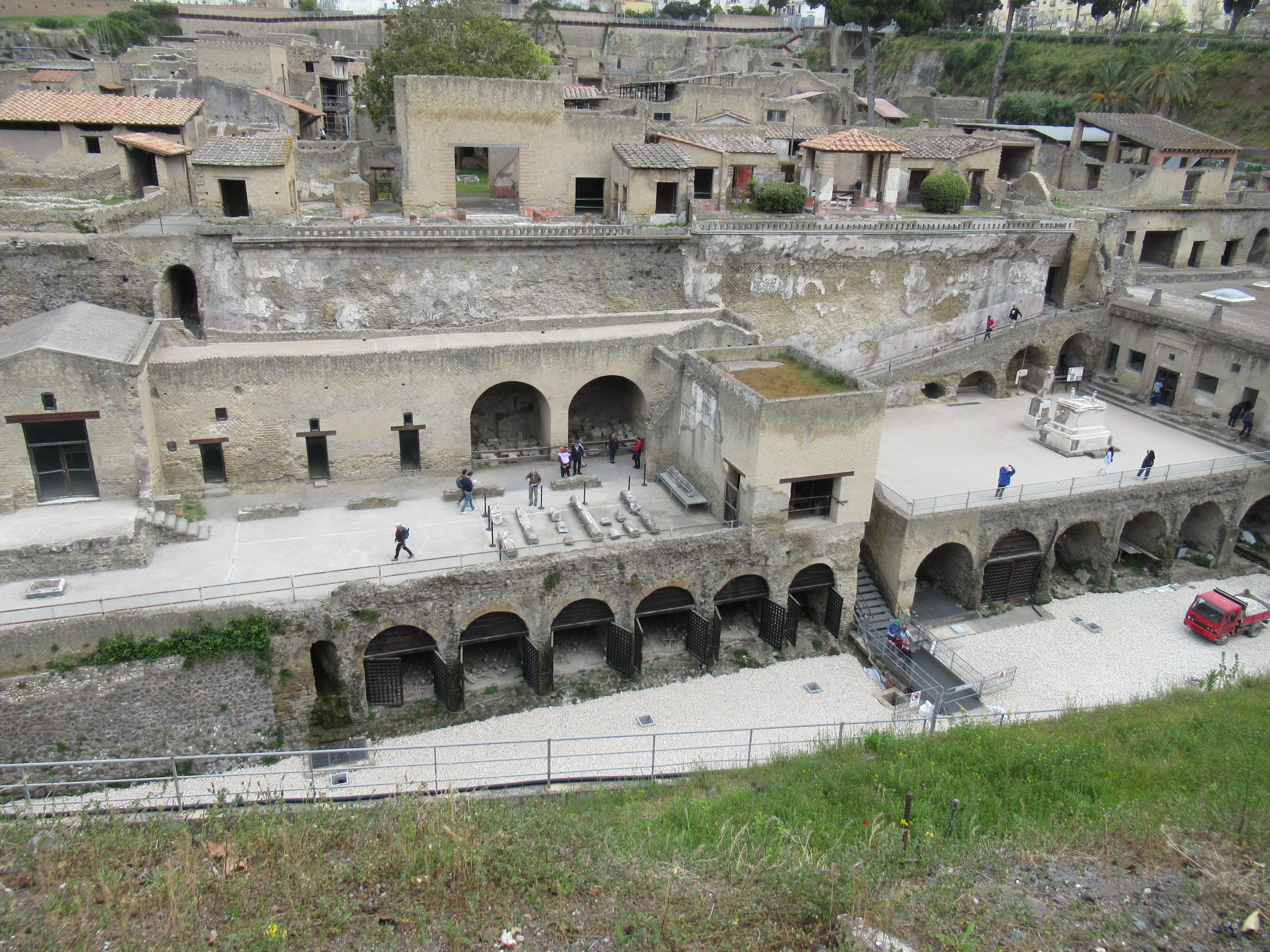
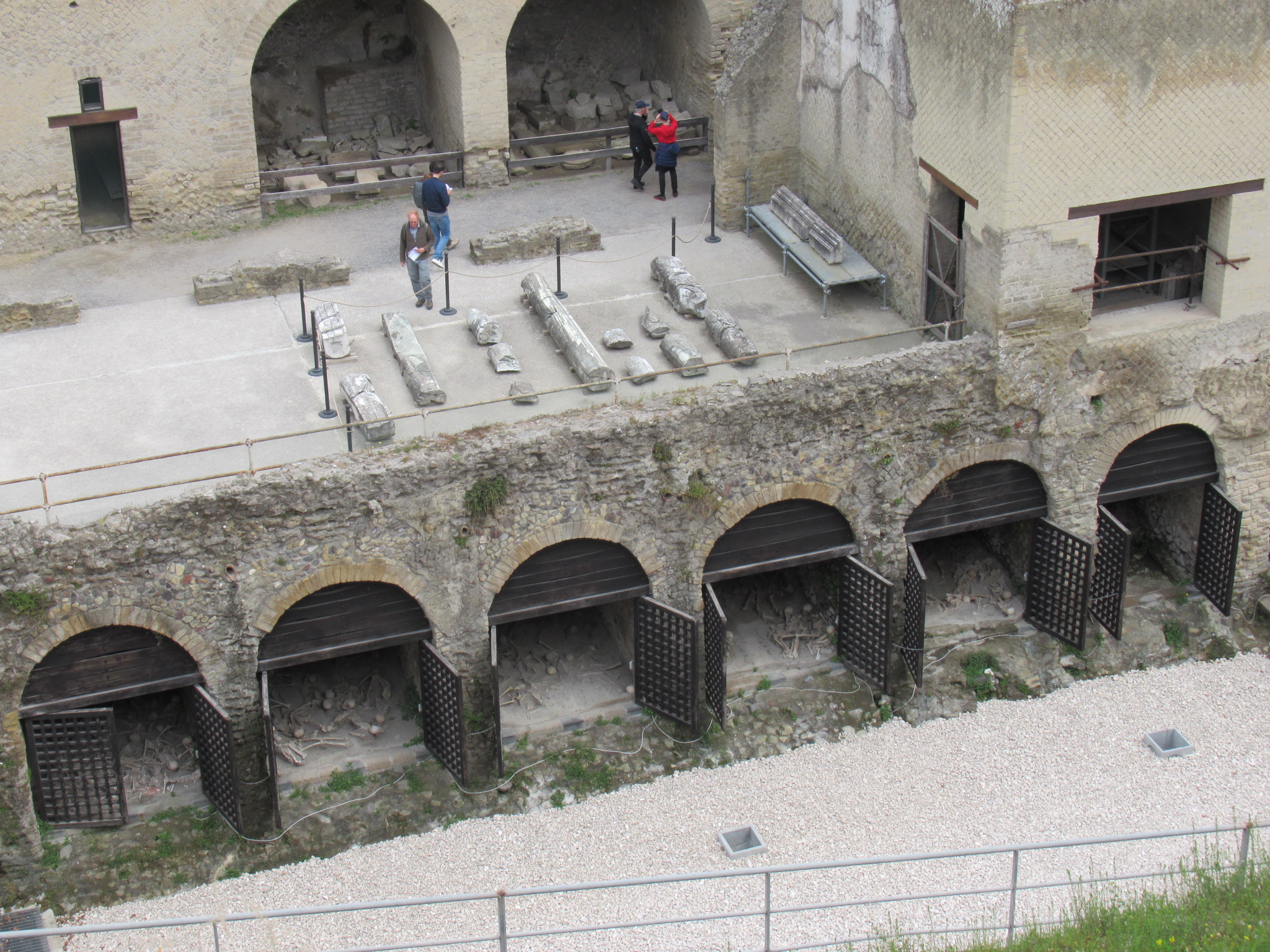
The statue pictured above stands by what then was Herculaneum’s harbor. All the lower arches used to lead directly into the ocean. In the 1980s a startling discovery was made in these lower levels of the harbor. We’ll get to these at the end of the post…

(We’ll find out a little more about this guy later in the post too…)
As your path to enter Herculaneum starts to arc about…

… you get a stark illustration of just how high the mass of volcanic ash was that entombed the city. The ocean is now on the other side of that 60 meter wall.

And now we are in Herculaneum.

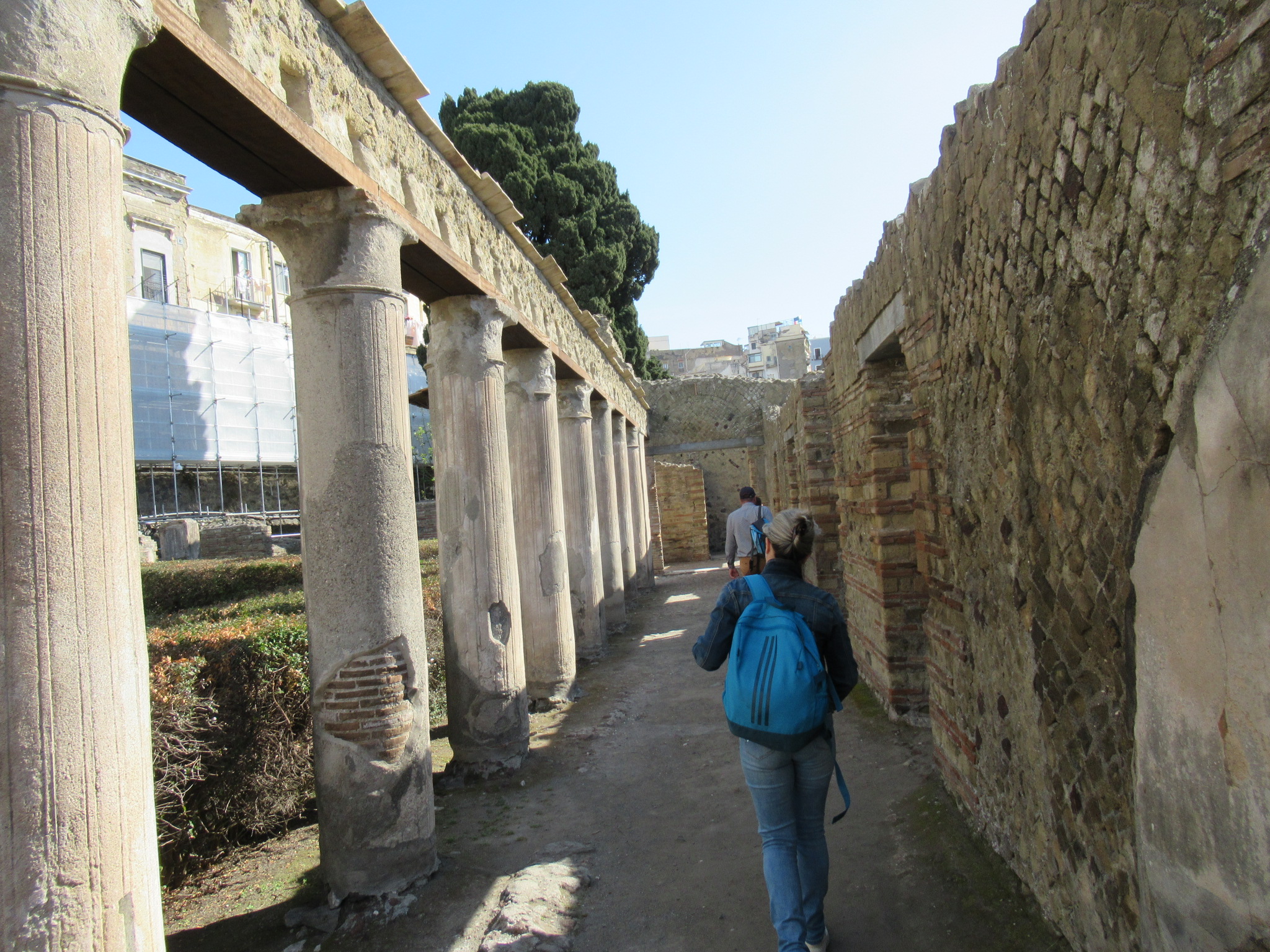
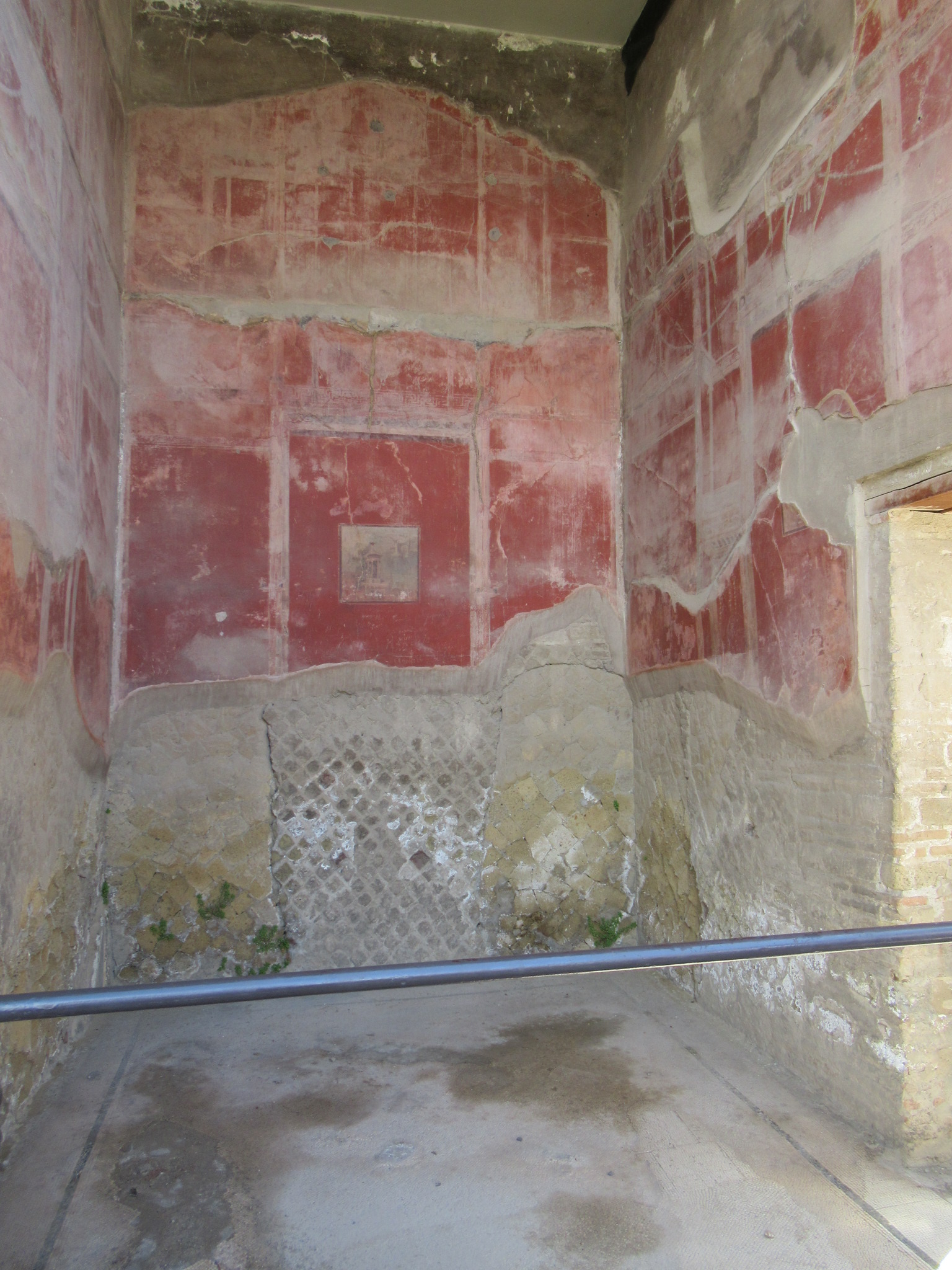

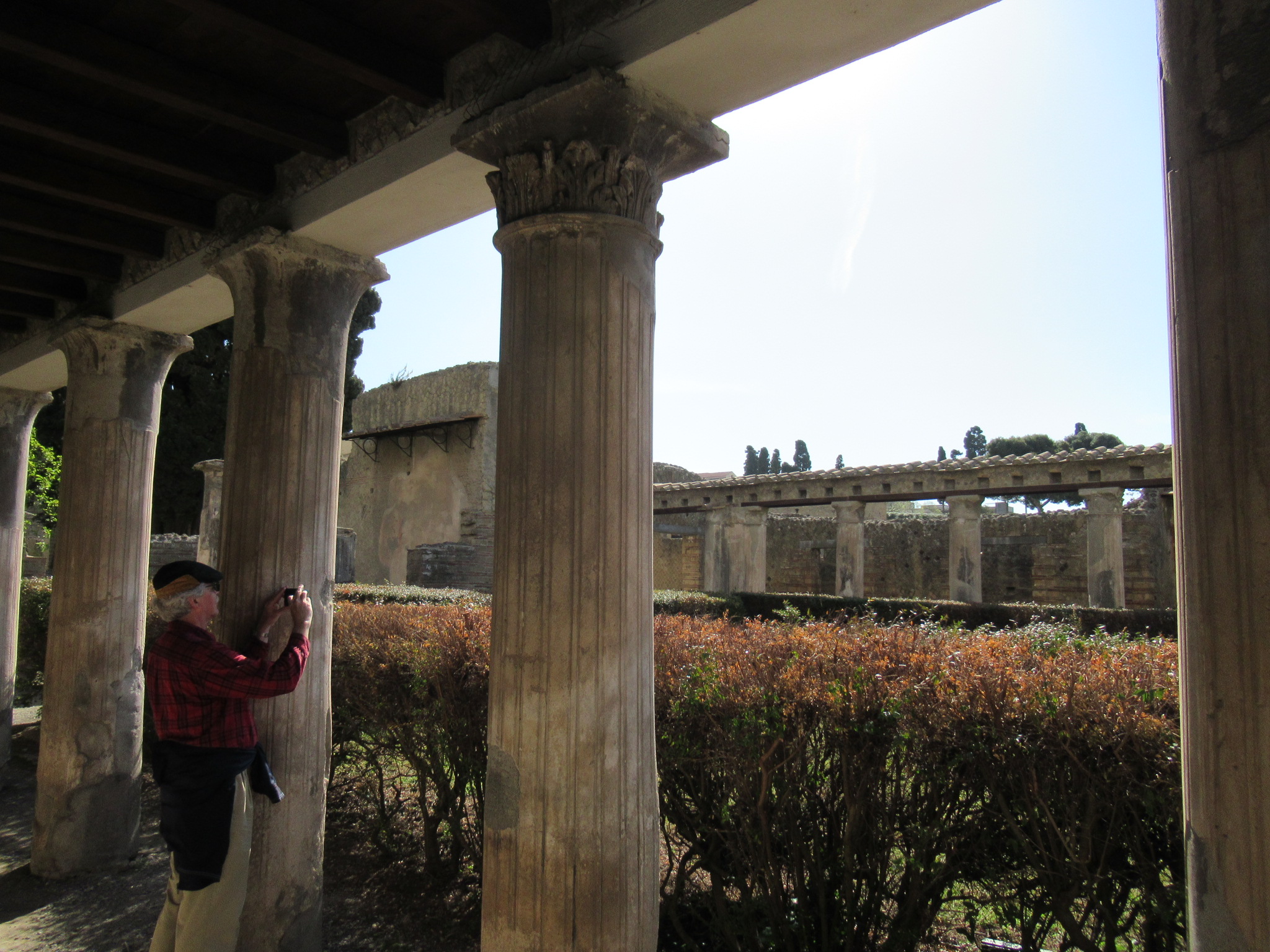
Whereas Pompeii’s inhabitants occupied all social strata living side by side, Herculaneum was a smaller city catering mostly to the very wealthy. Its inhabitants were aristocratic families and the wealthiest freedman, catered to by a middle class managing small businesses and shops.

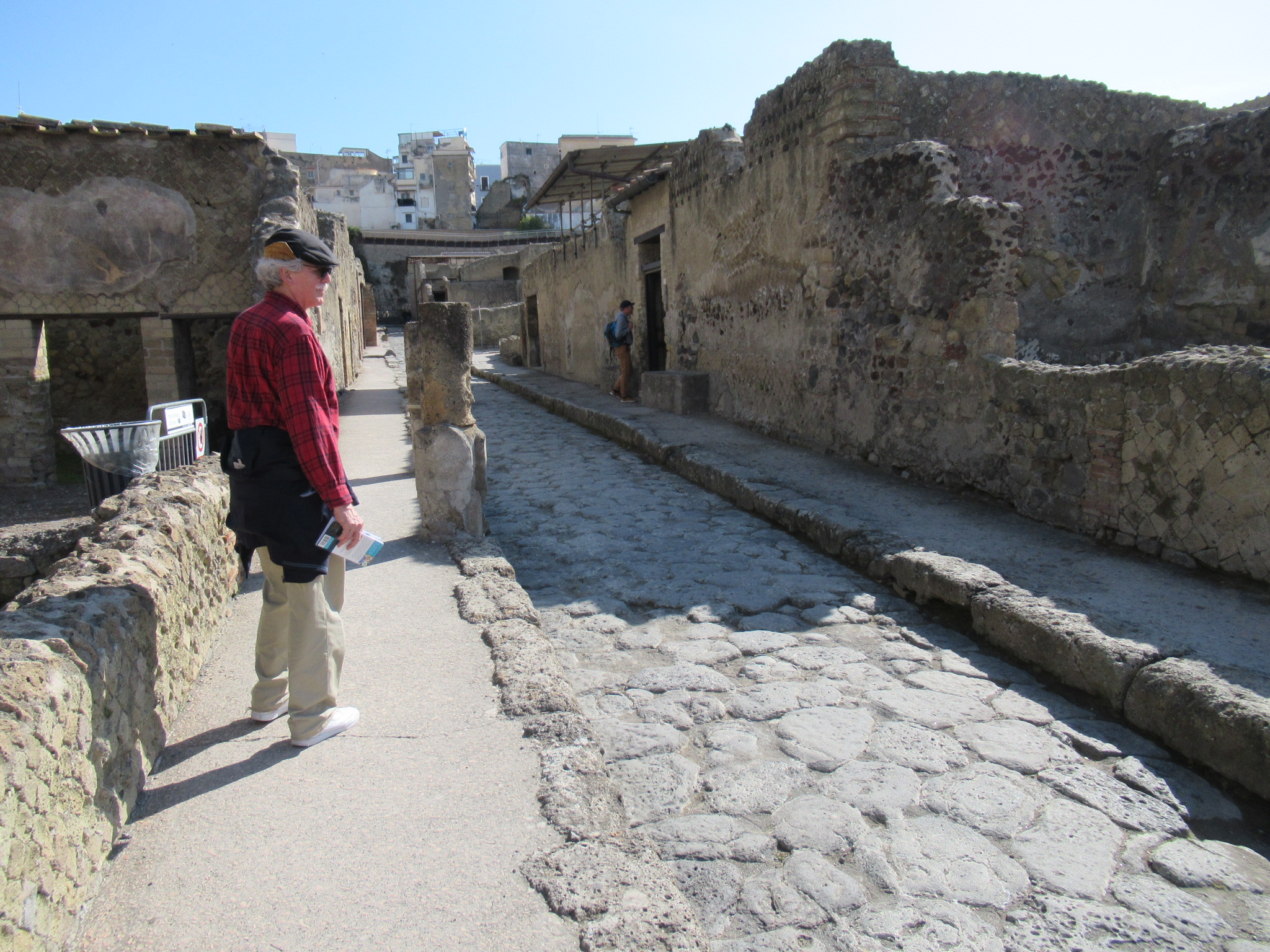
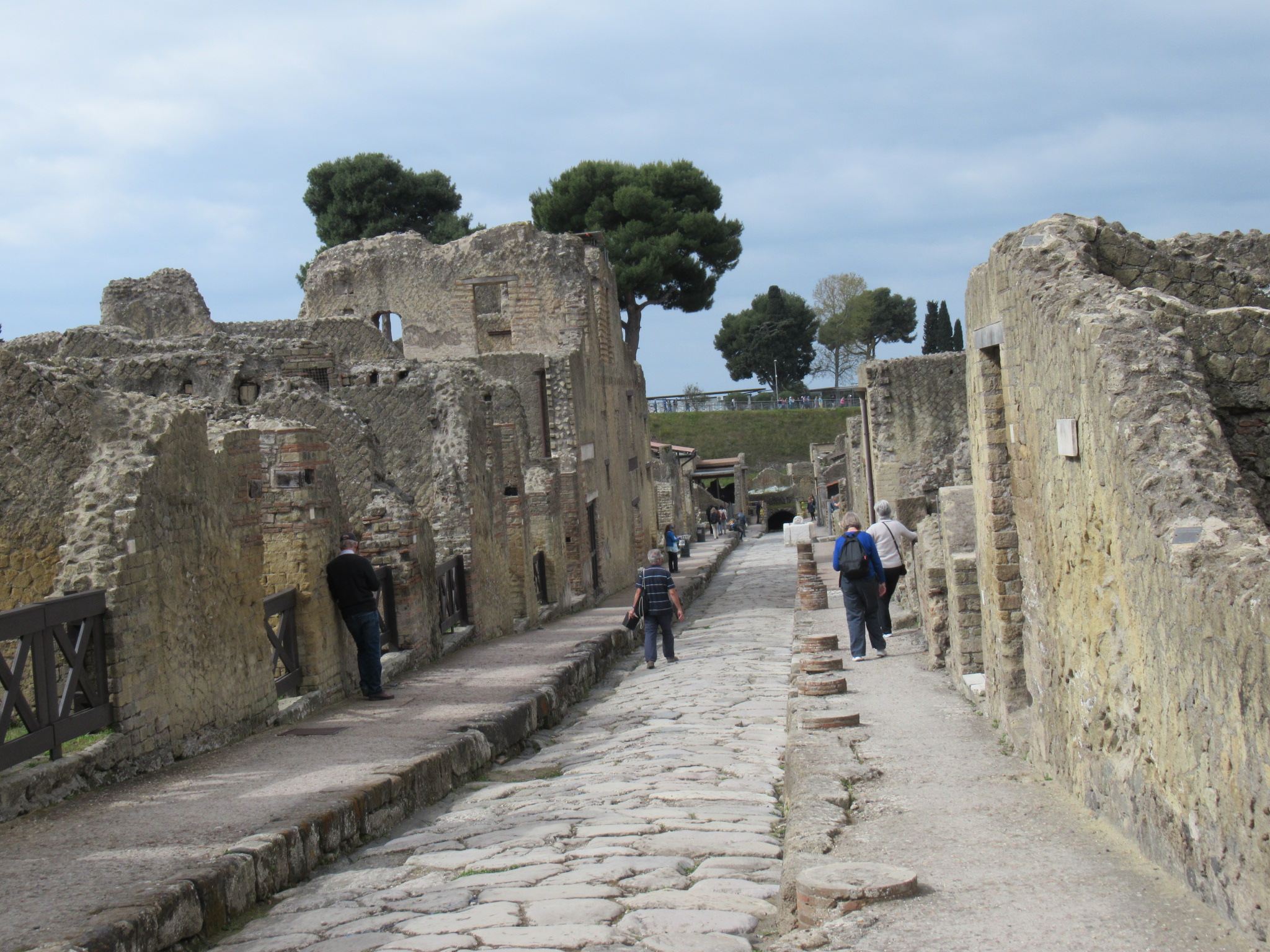
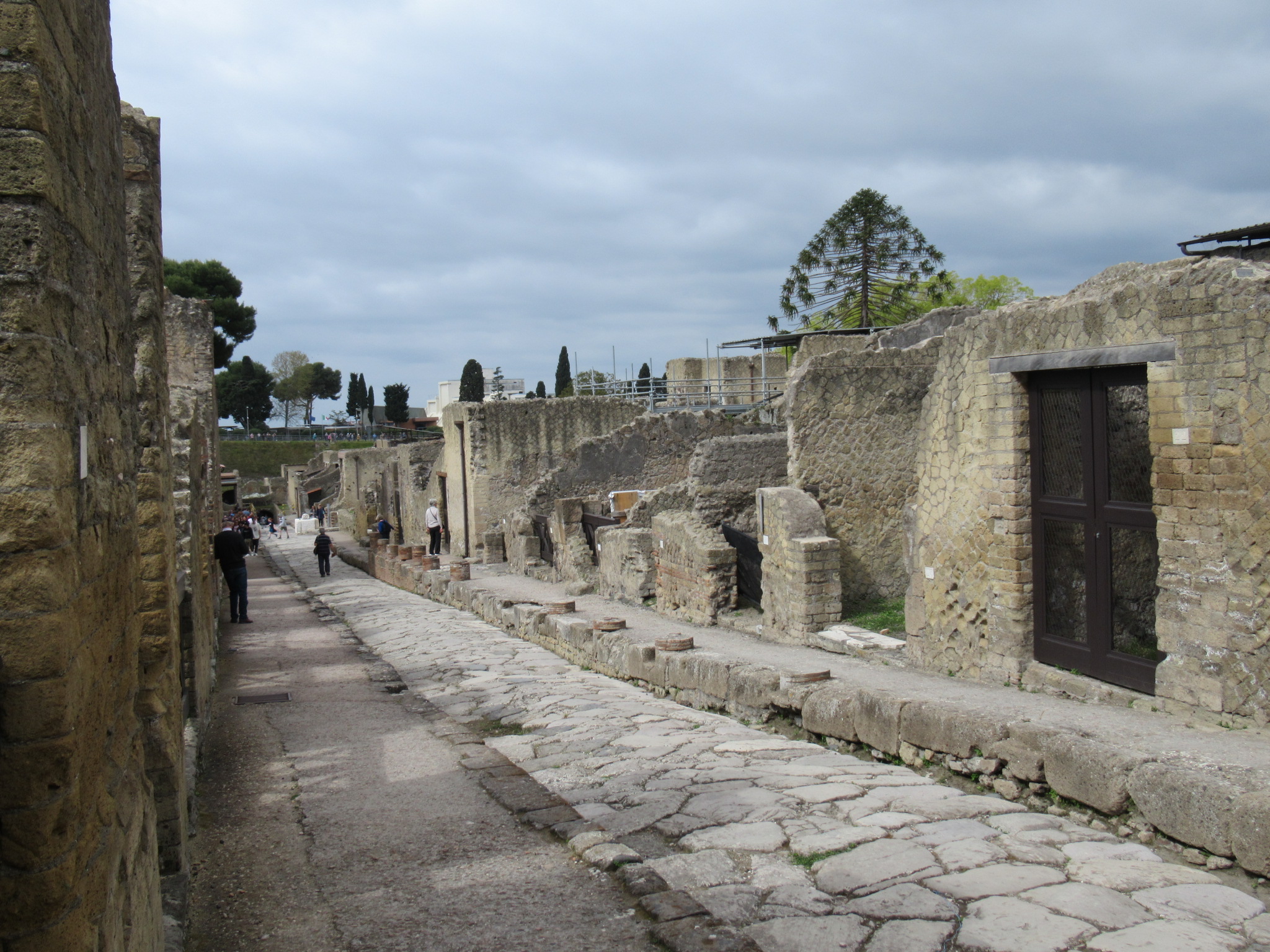
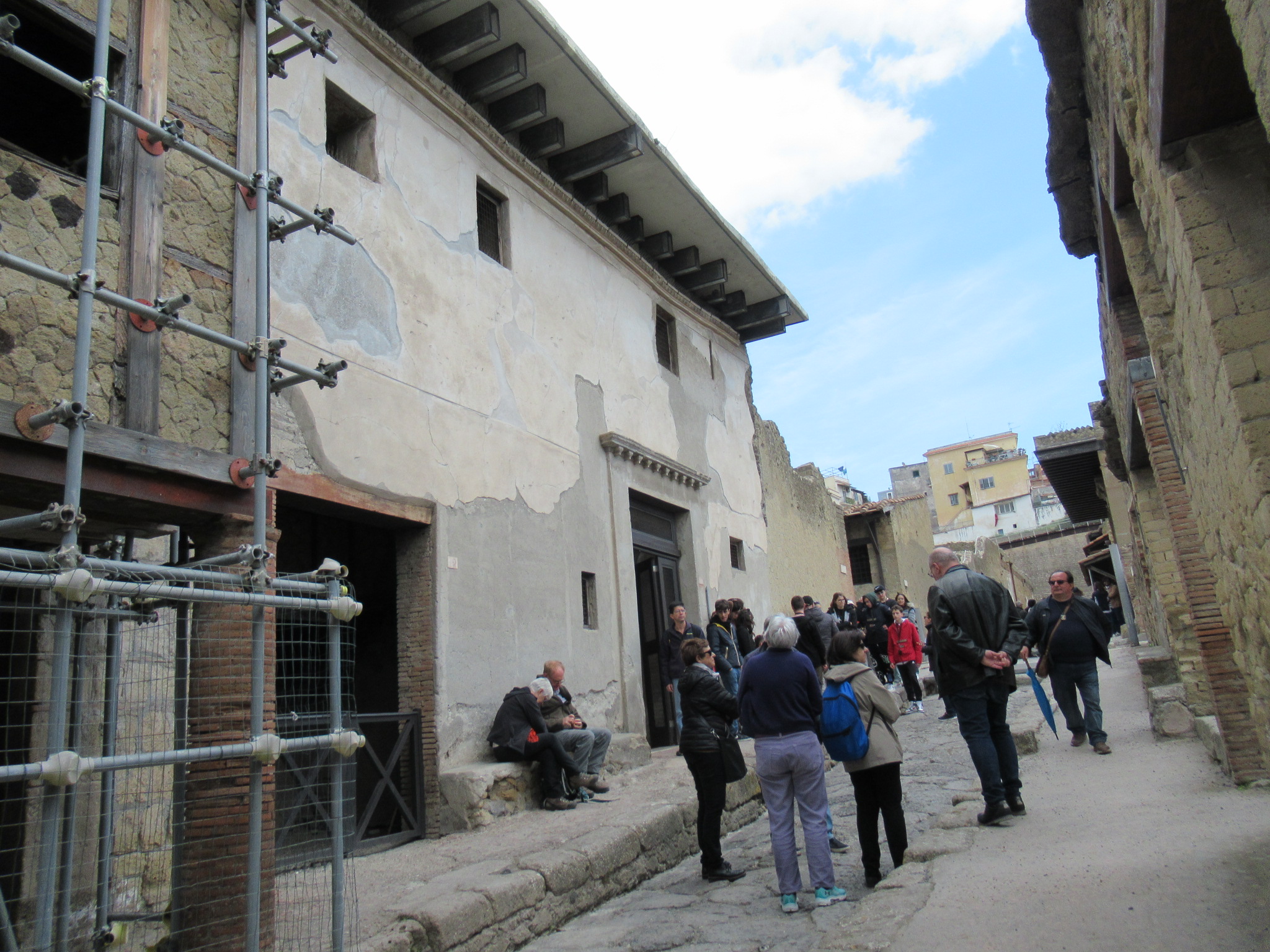
Just like in Pompeii the streets were washed clean daily with water. However chariots were not allowed in Herculaneum, hence no chariot wheel grooves in the cobble stones.

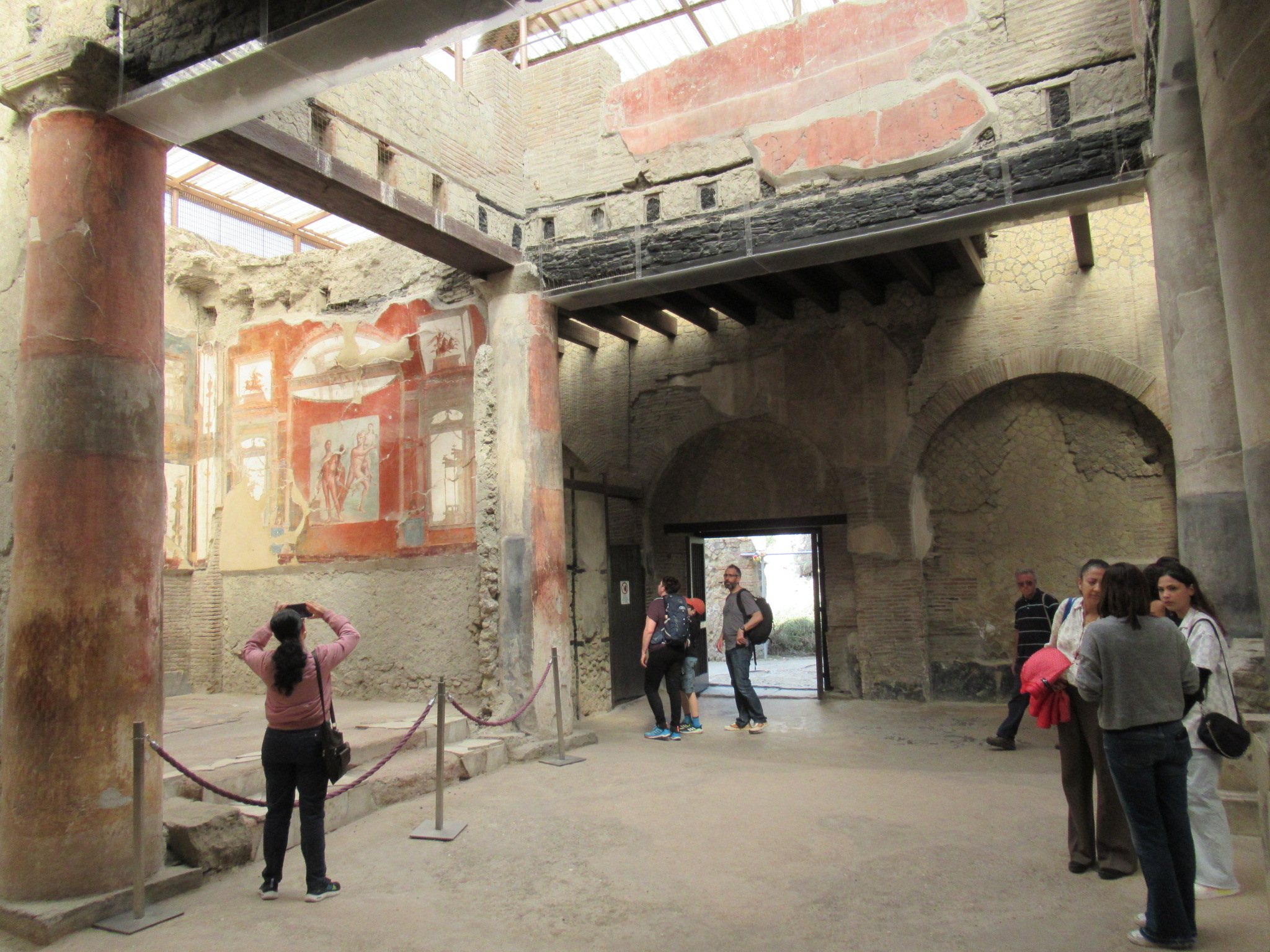
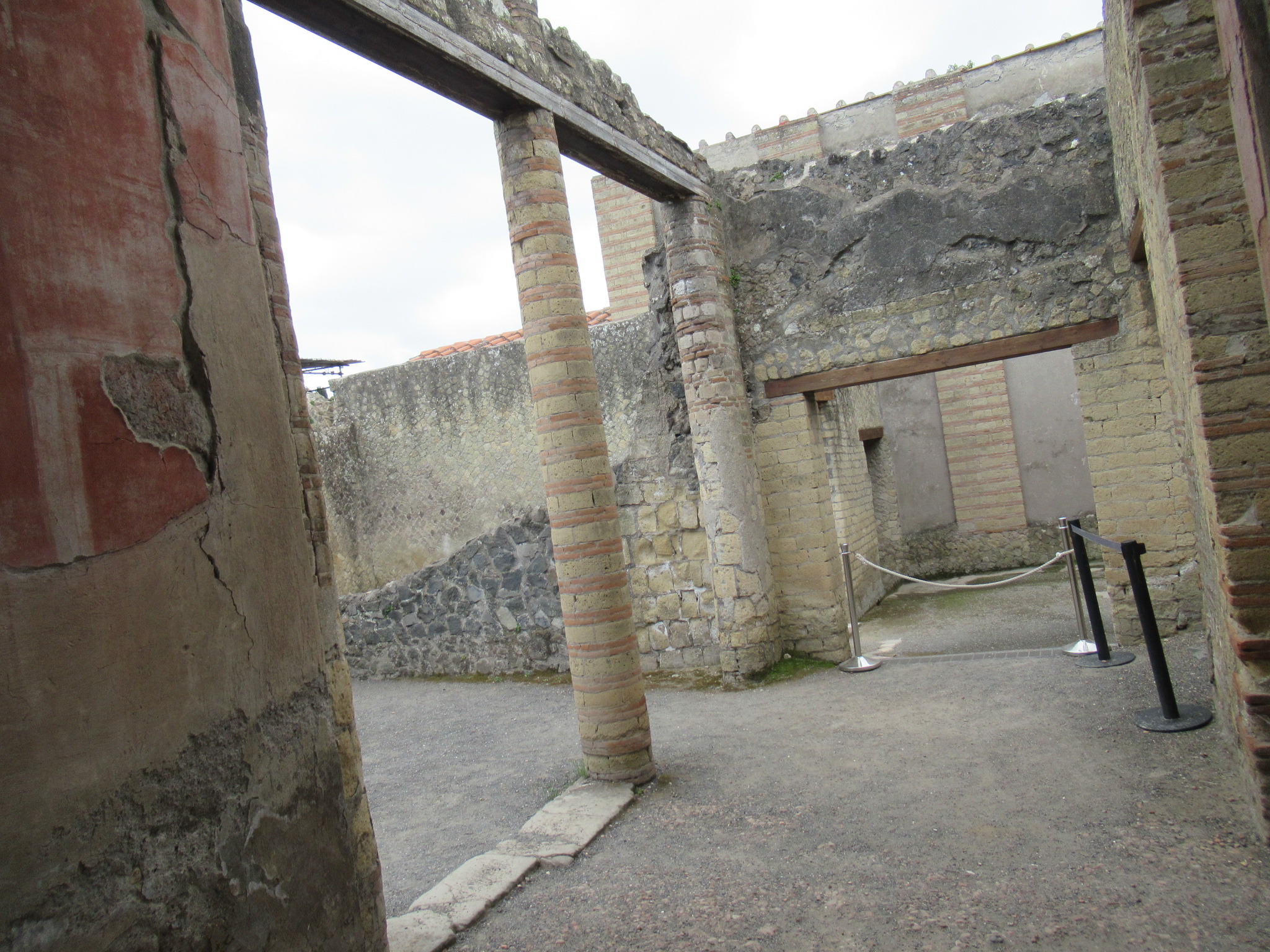
This door and frame are modern (of course). For many years neglect had made many structures in Herculaneum too dangerous to allow entry, but restoration efforts since 2000 have opened these ancient homes up again for visitors.





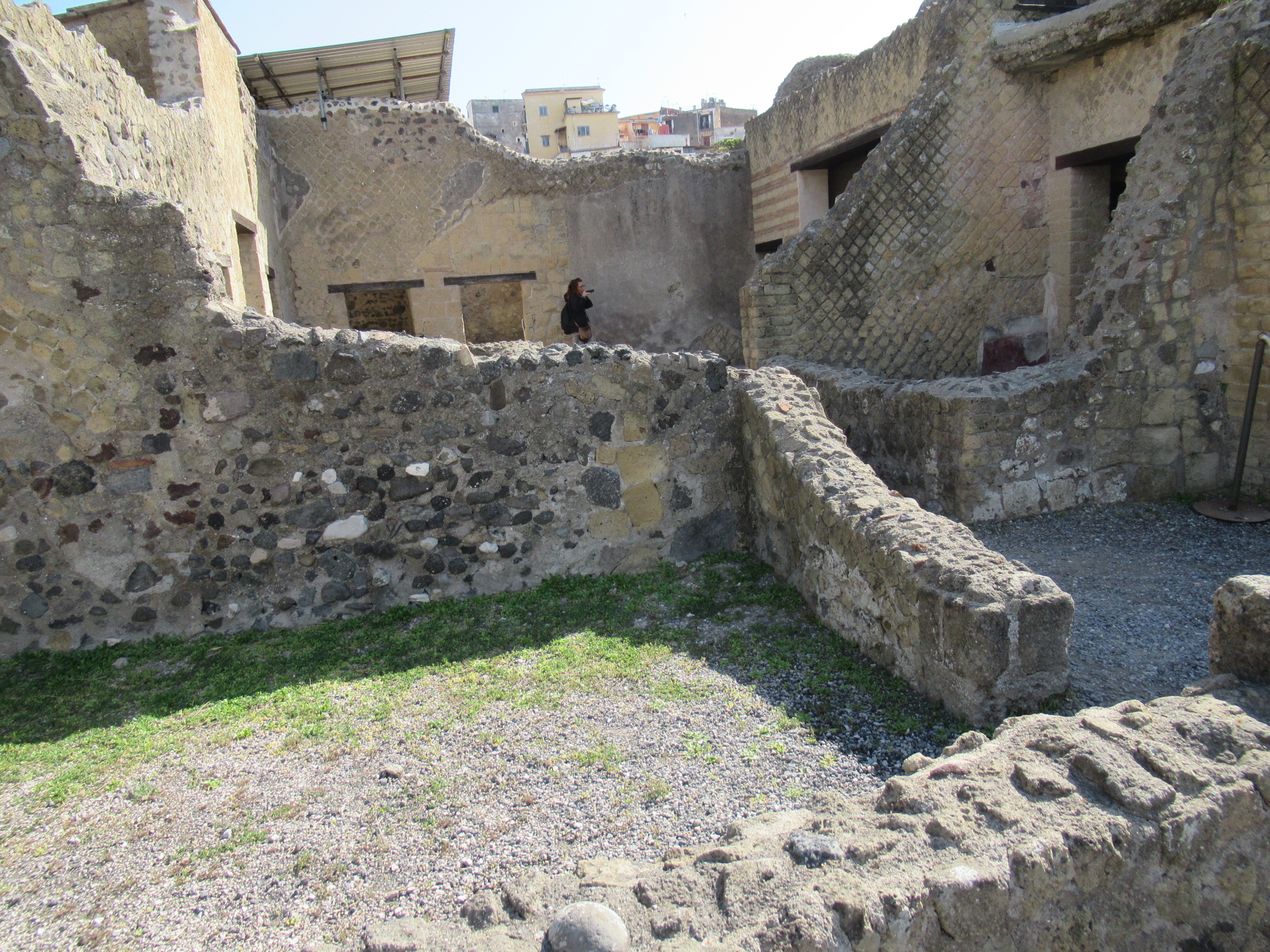


The courtyard/gymnasium beside a bathhouse.

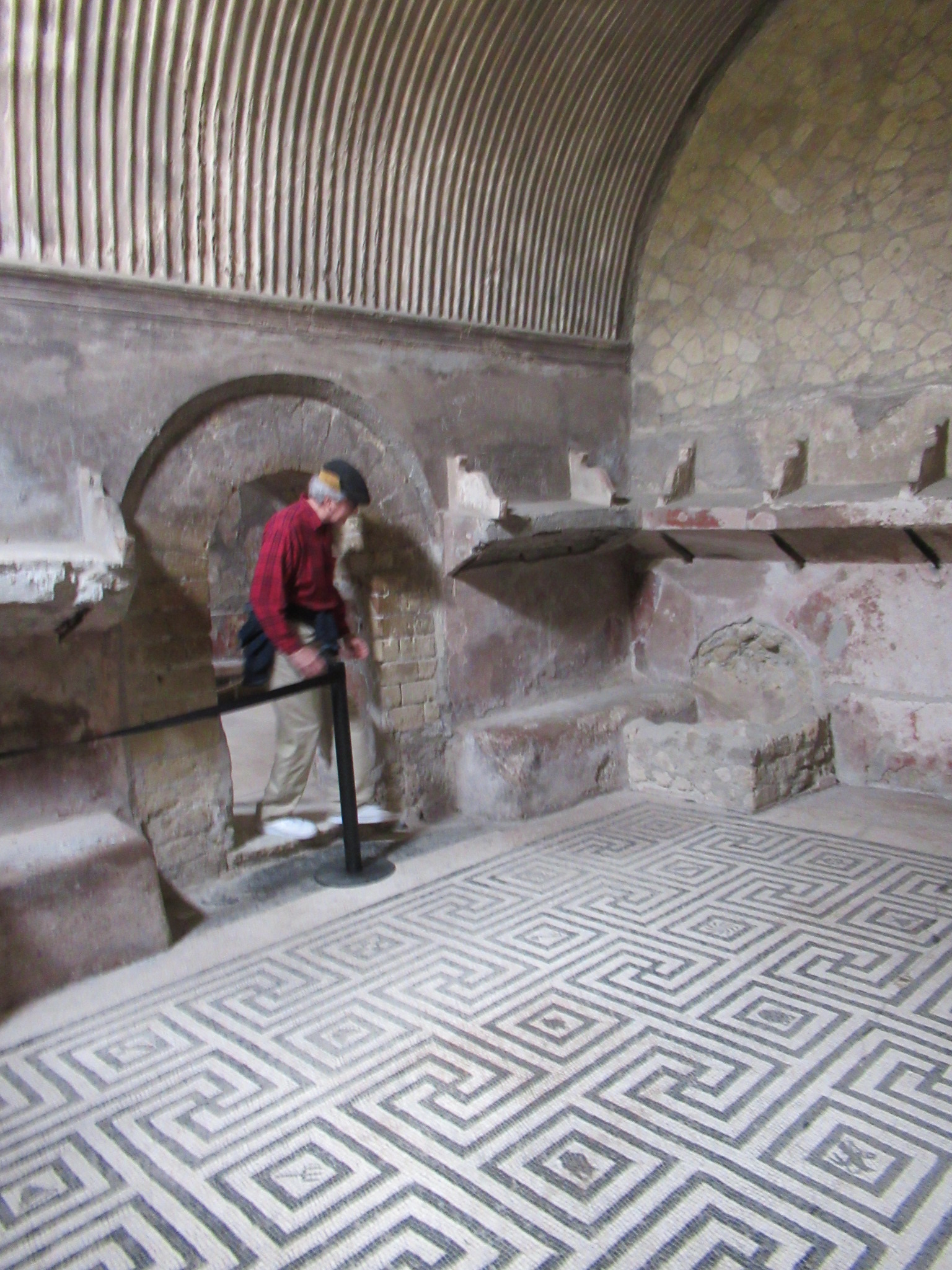
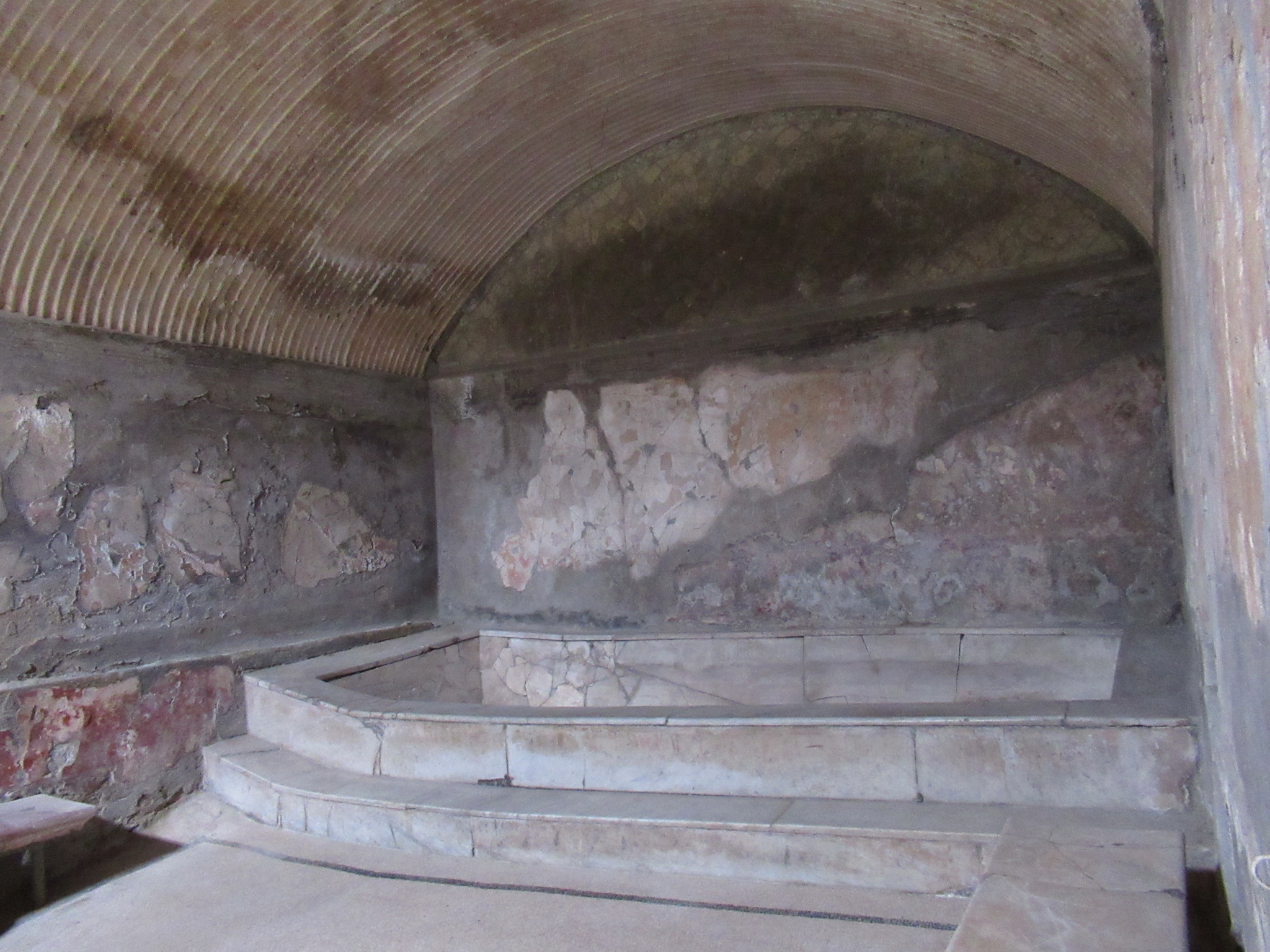
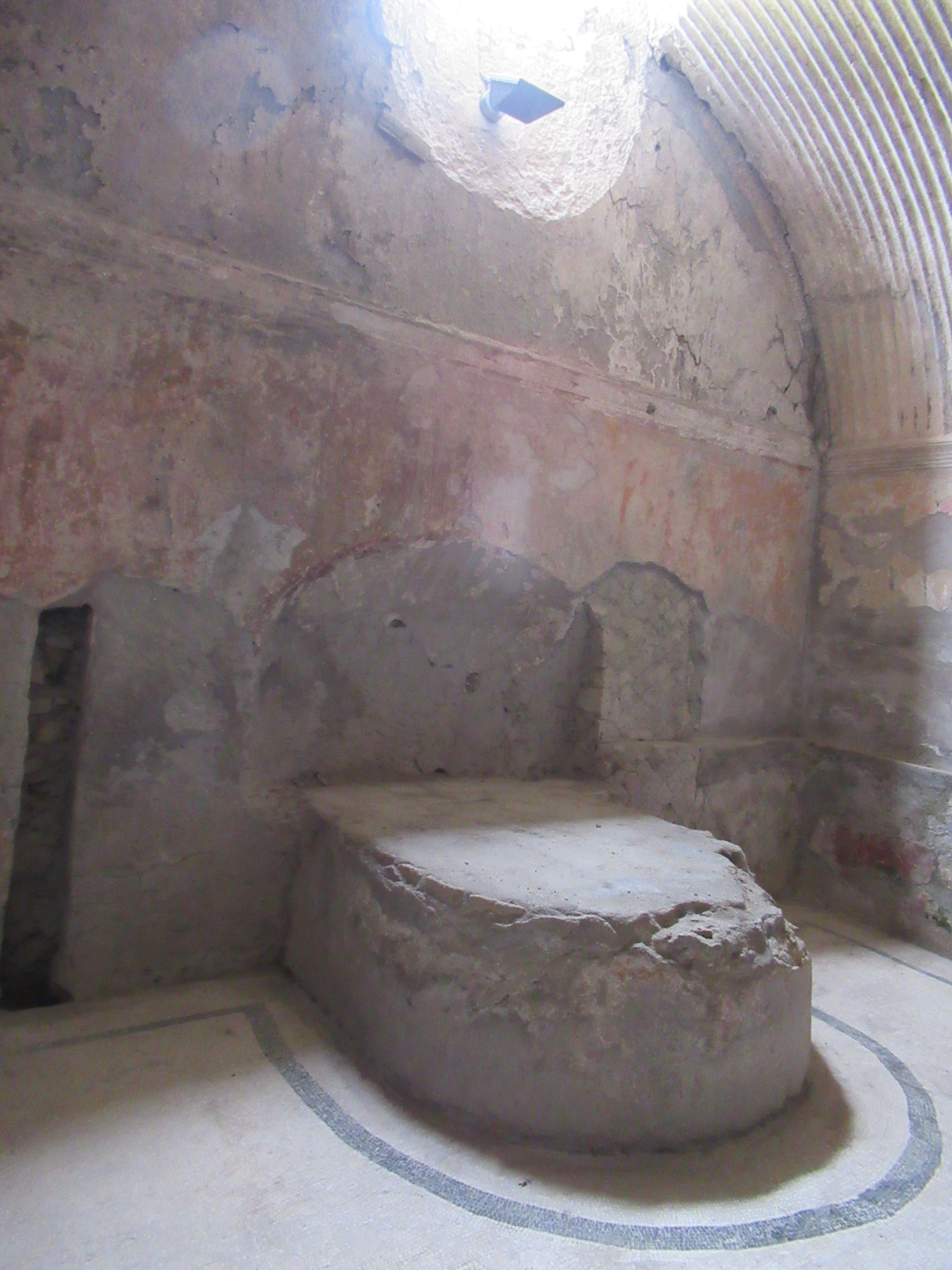
The bathhouse. Again, as in Pompeii, note the grooves along the arched ceiling and walls whereupon water droplets from the steam would form and peal off to the sides so as not to rain down on the patrons.
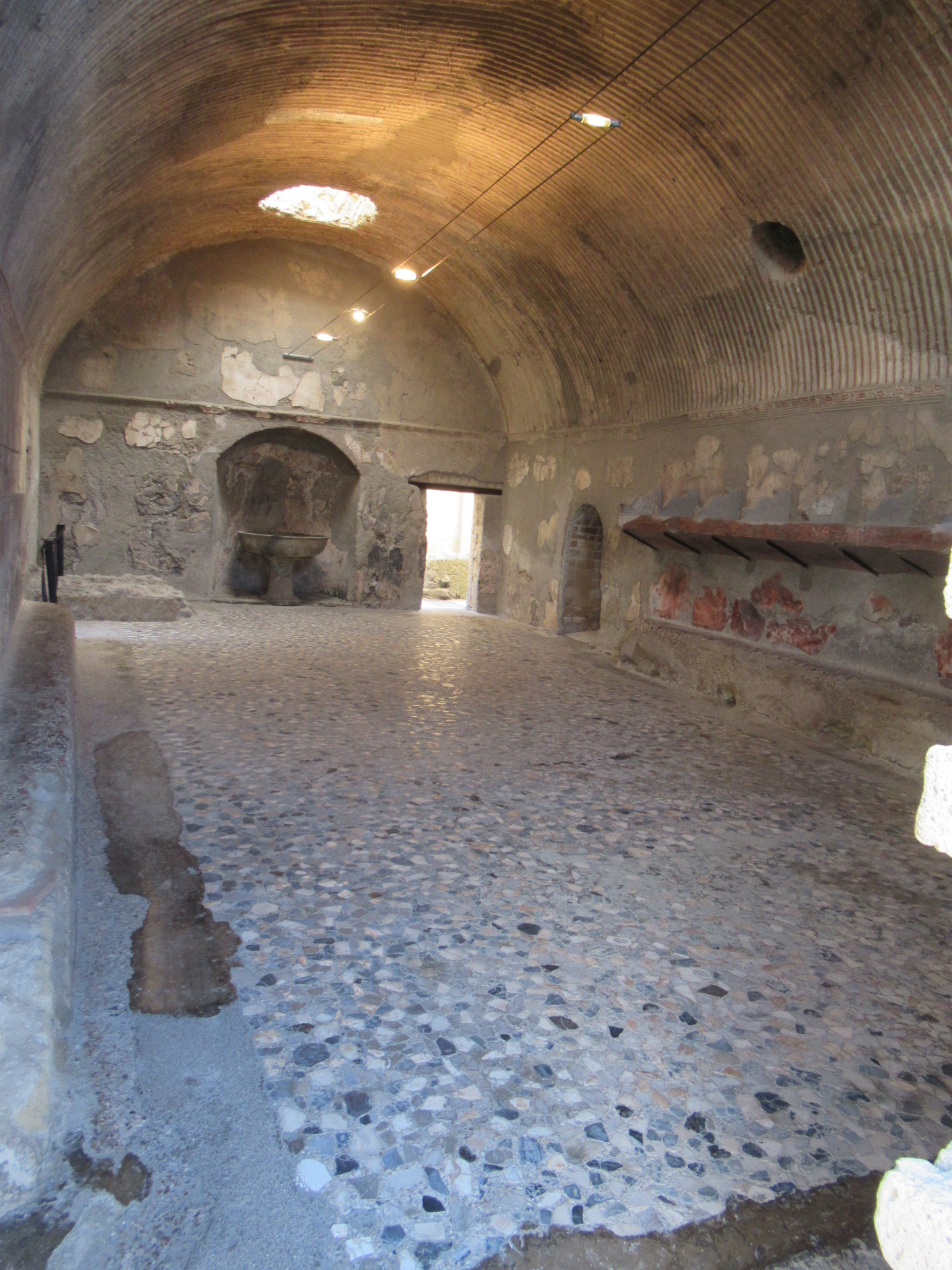
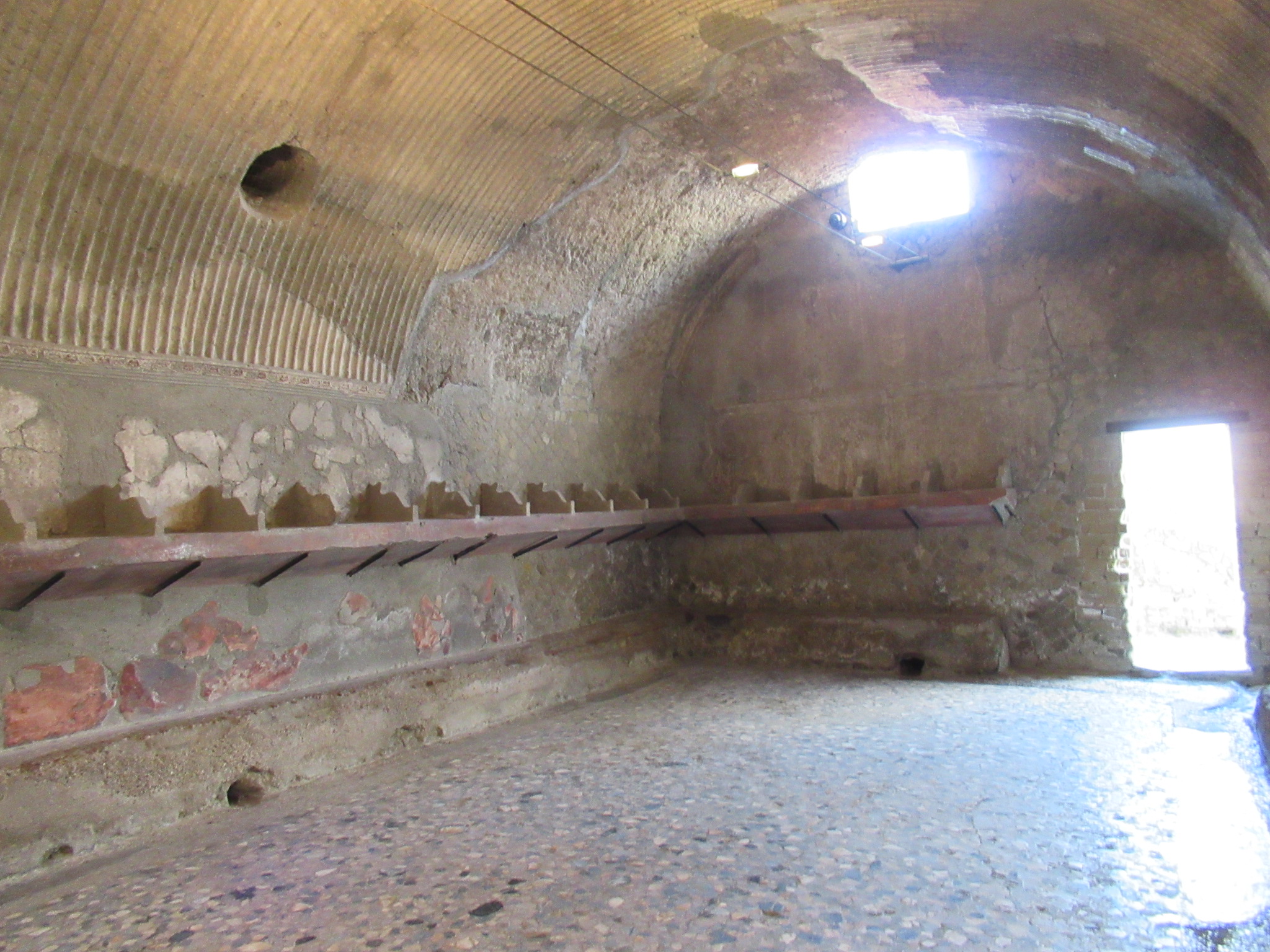
That mosaic was on the floor, not ceiling, I just flipped the photo so the image could be viewed right side up.


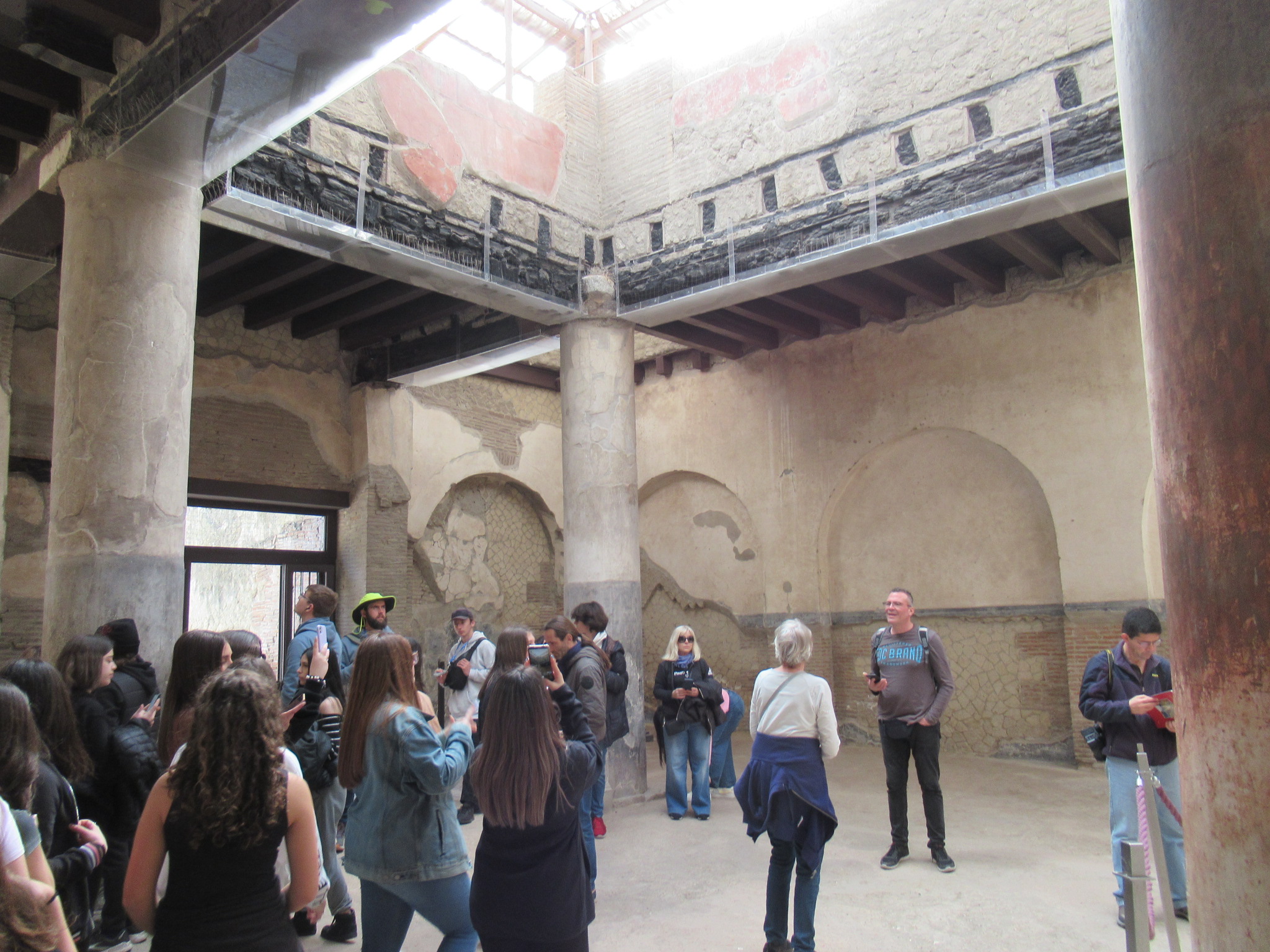


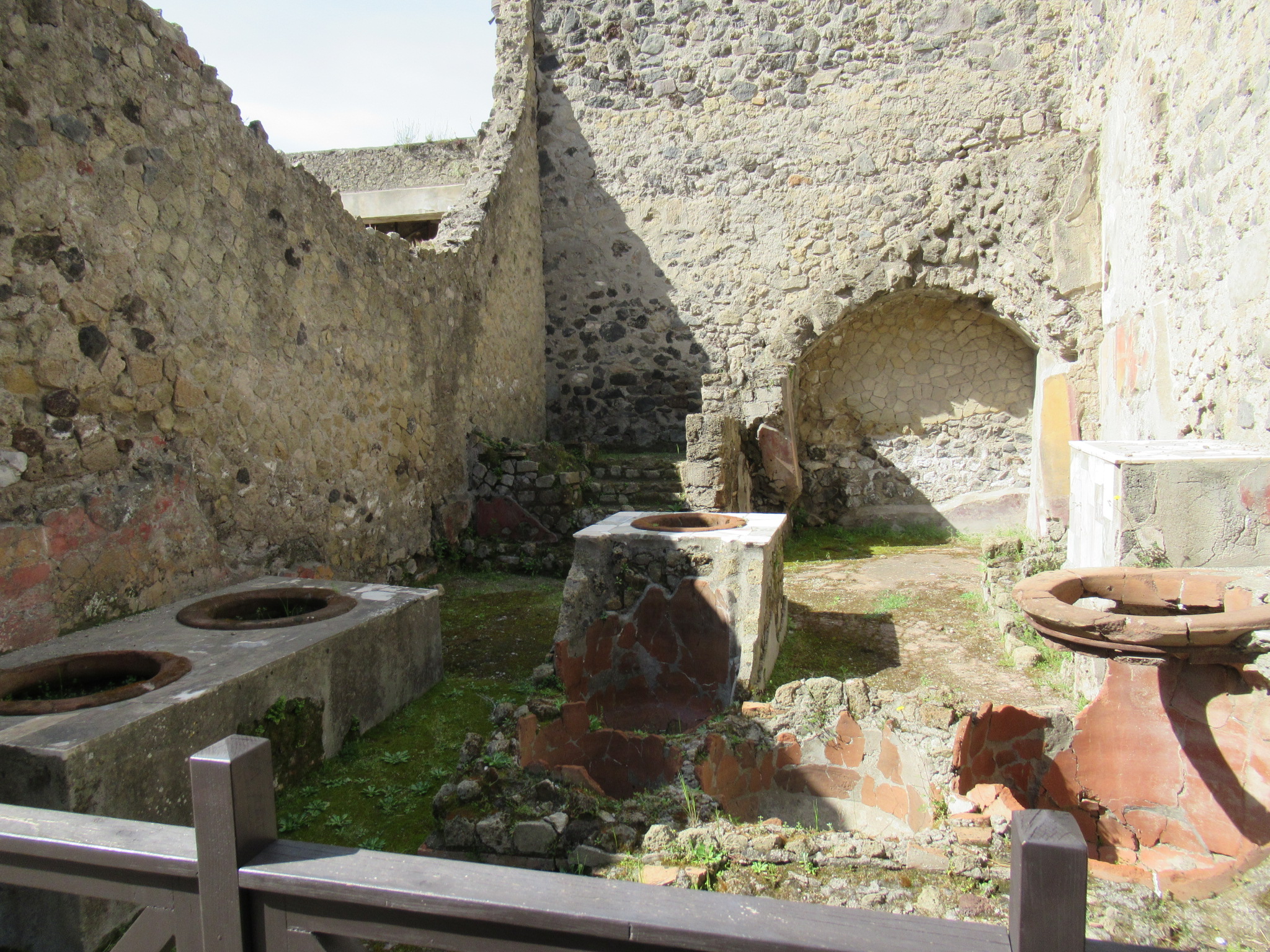
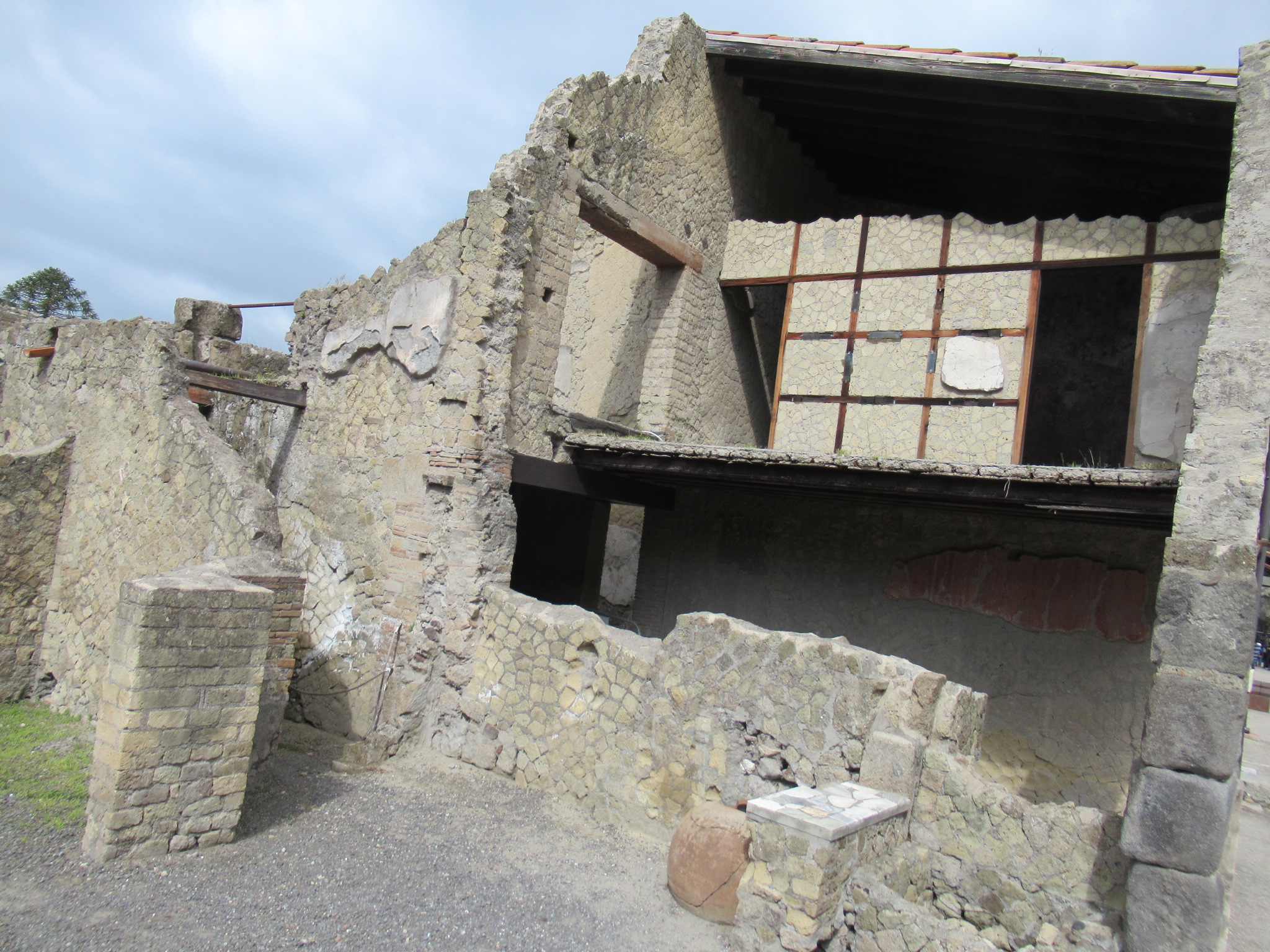
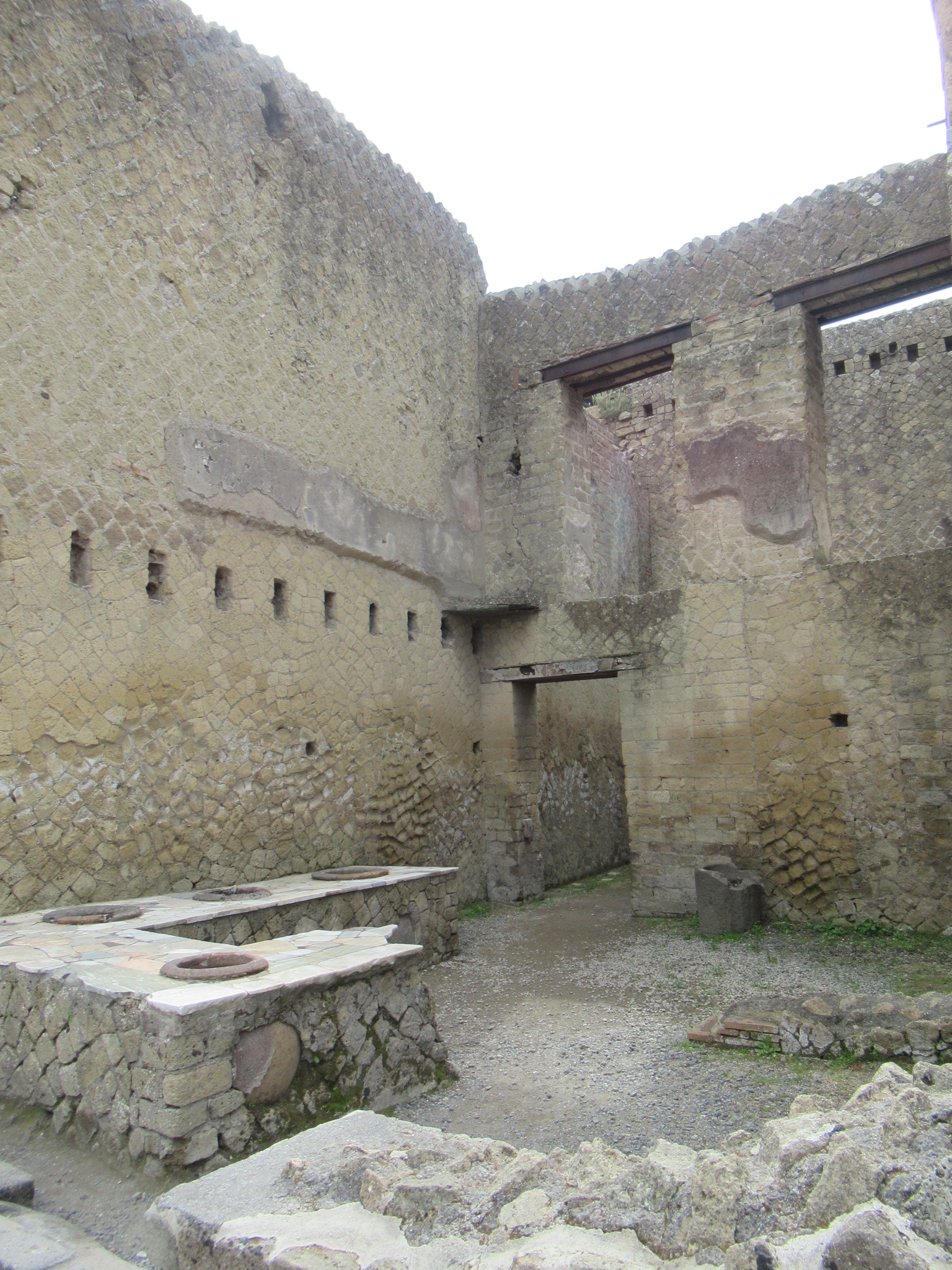
Thermopolium – where hot food was held in large vats for sale. Pompeii offered this “fast food” option all over the city. Herculaneum perhaps had fewer per capita, but instead also boasted a two-story restaurant.
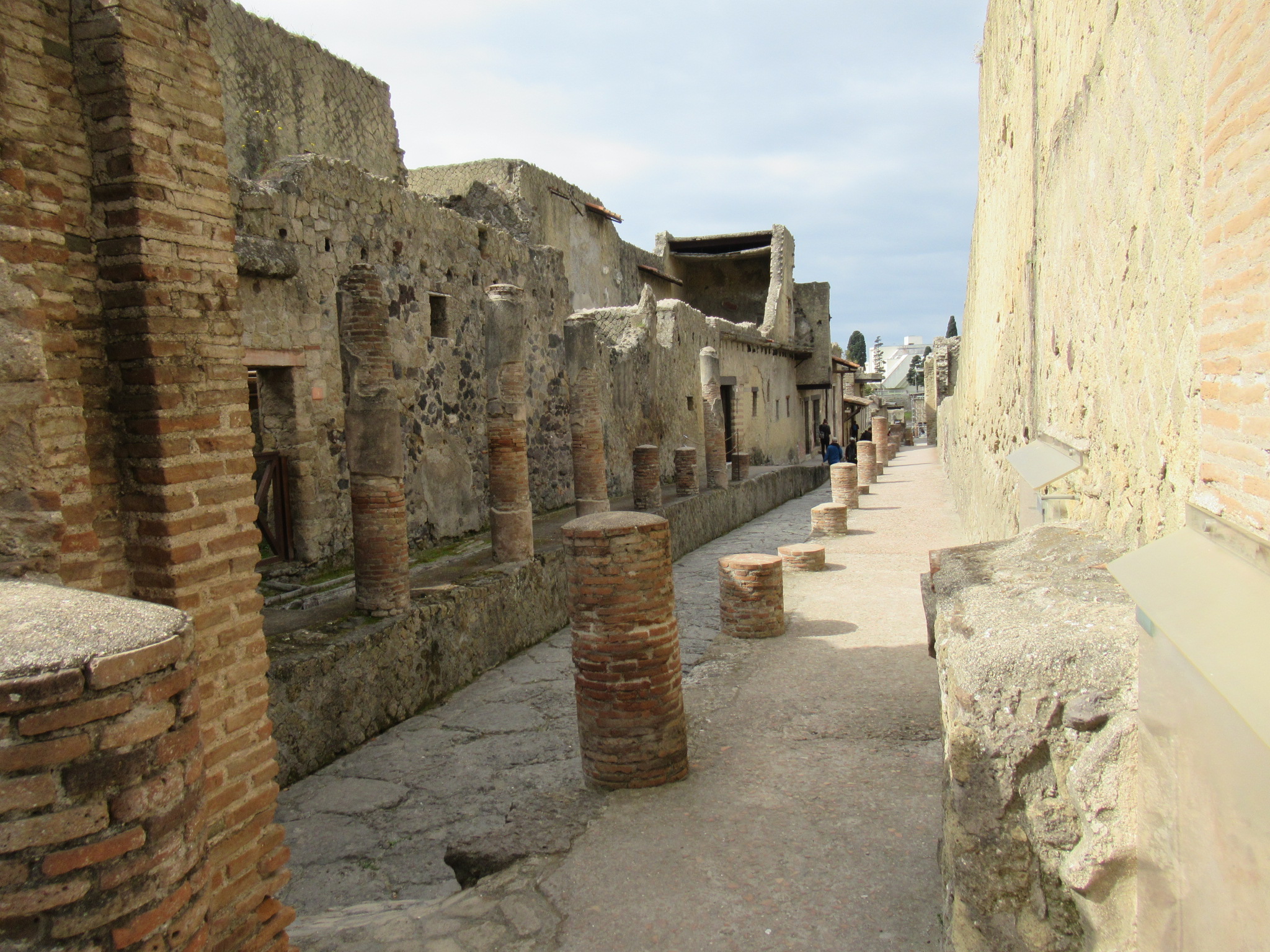
This is part of the main road of Herculaneum, at least of the part that has been excavated. It is also the upper edge of what has been excavated, with a wall of dirt right behind me taking this photo and modern Ercolano above. But it can be assumed the road originally stood not at the edge of town but (at most) at its halfway point.
Inaccessible (for tourists) caves had been dug and more ancient structures revealed and much ancient treasures removed from them, but it is unlikely modern Ercolano will give way for more of Herculaneum to be exposed to sunlight in this part of town.

Ancient advertisement for the wine being sold here.




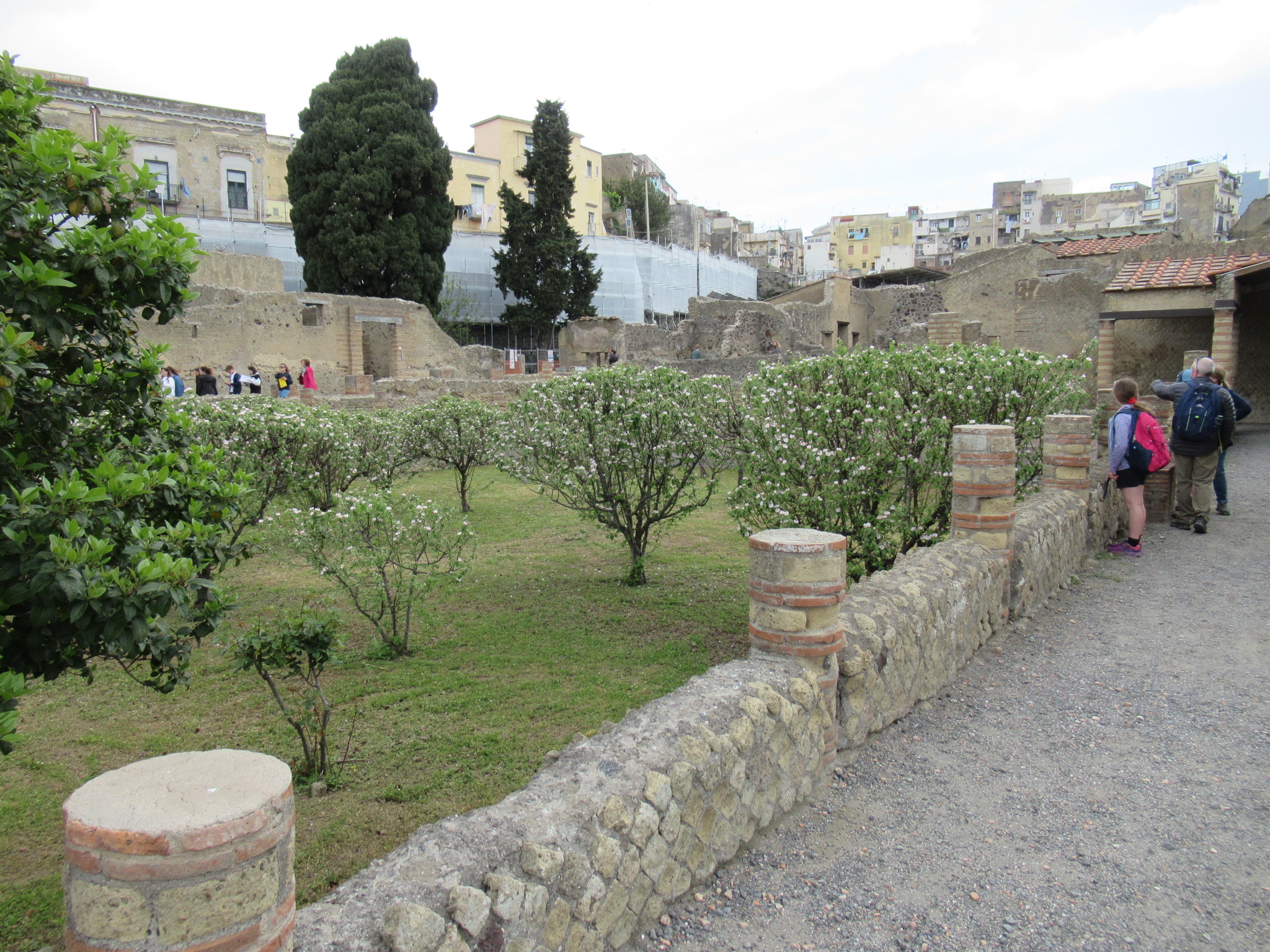
This picture shows how Ercolano sits above what is still buried of Herculaneum. But to the right, where just a park rests atop 60 meters of volcanic dirt, possibly more Herculaneum may be more easily unearthed in years to come.


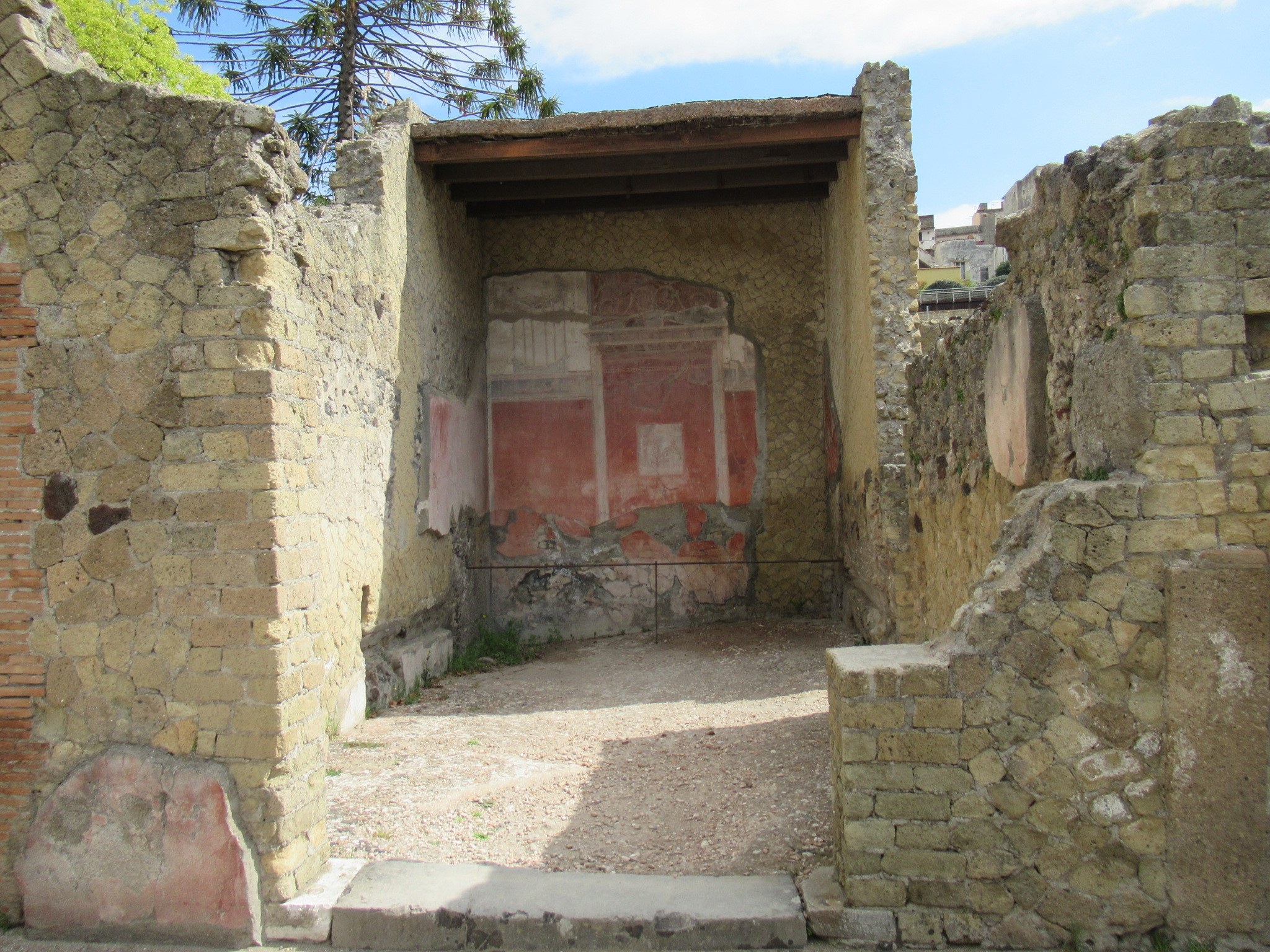

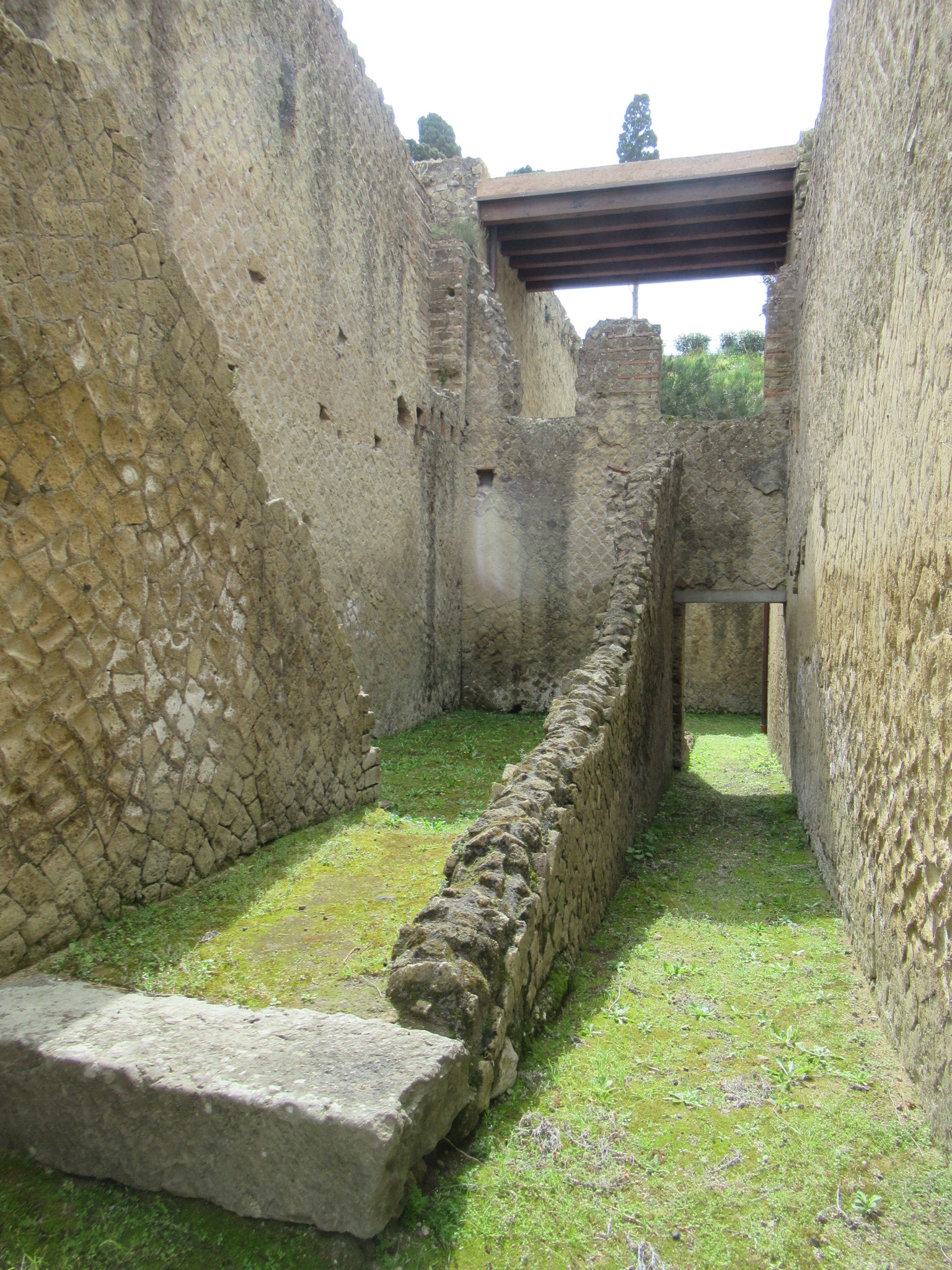
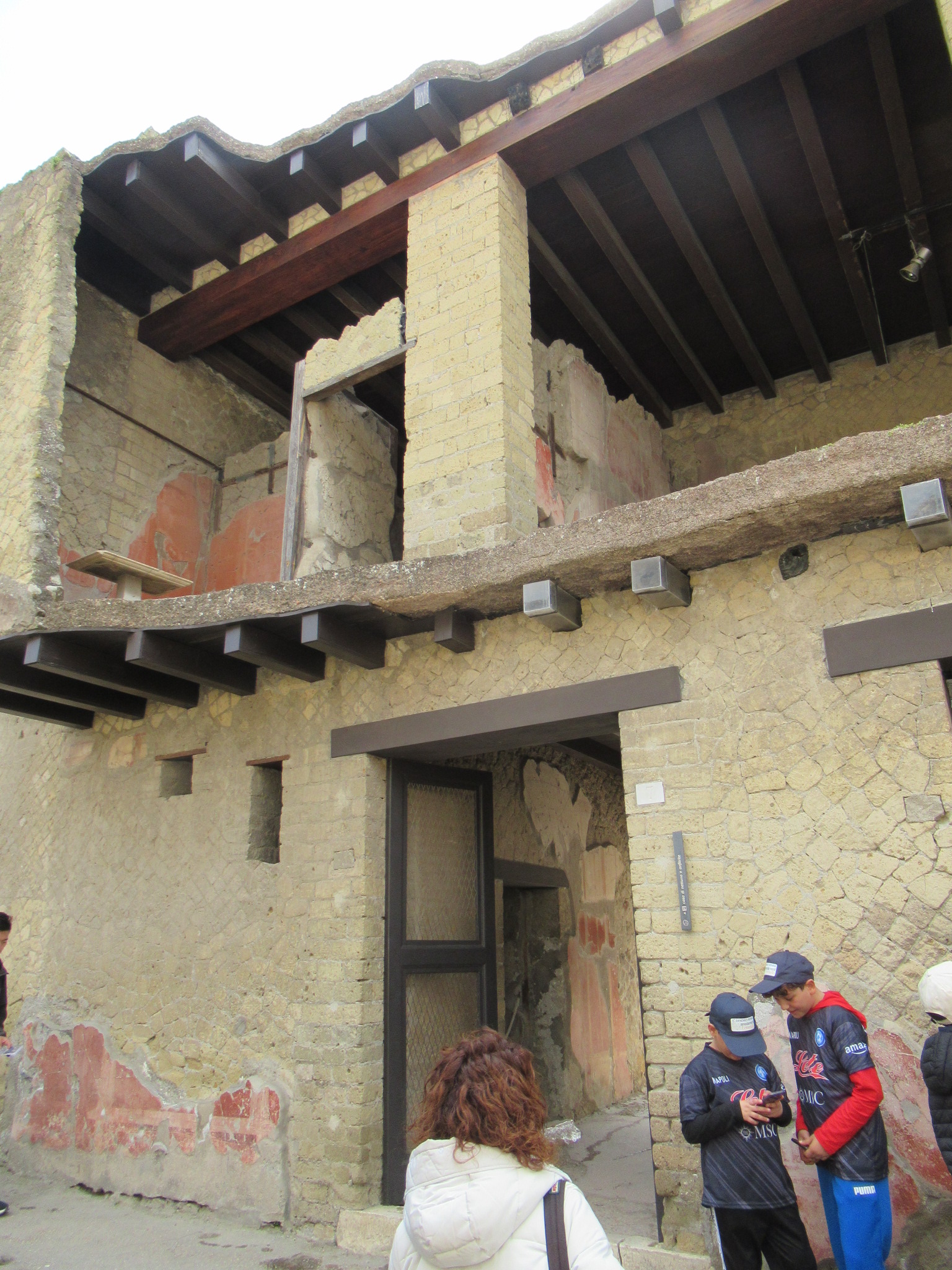
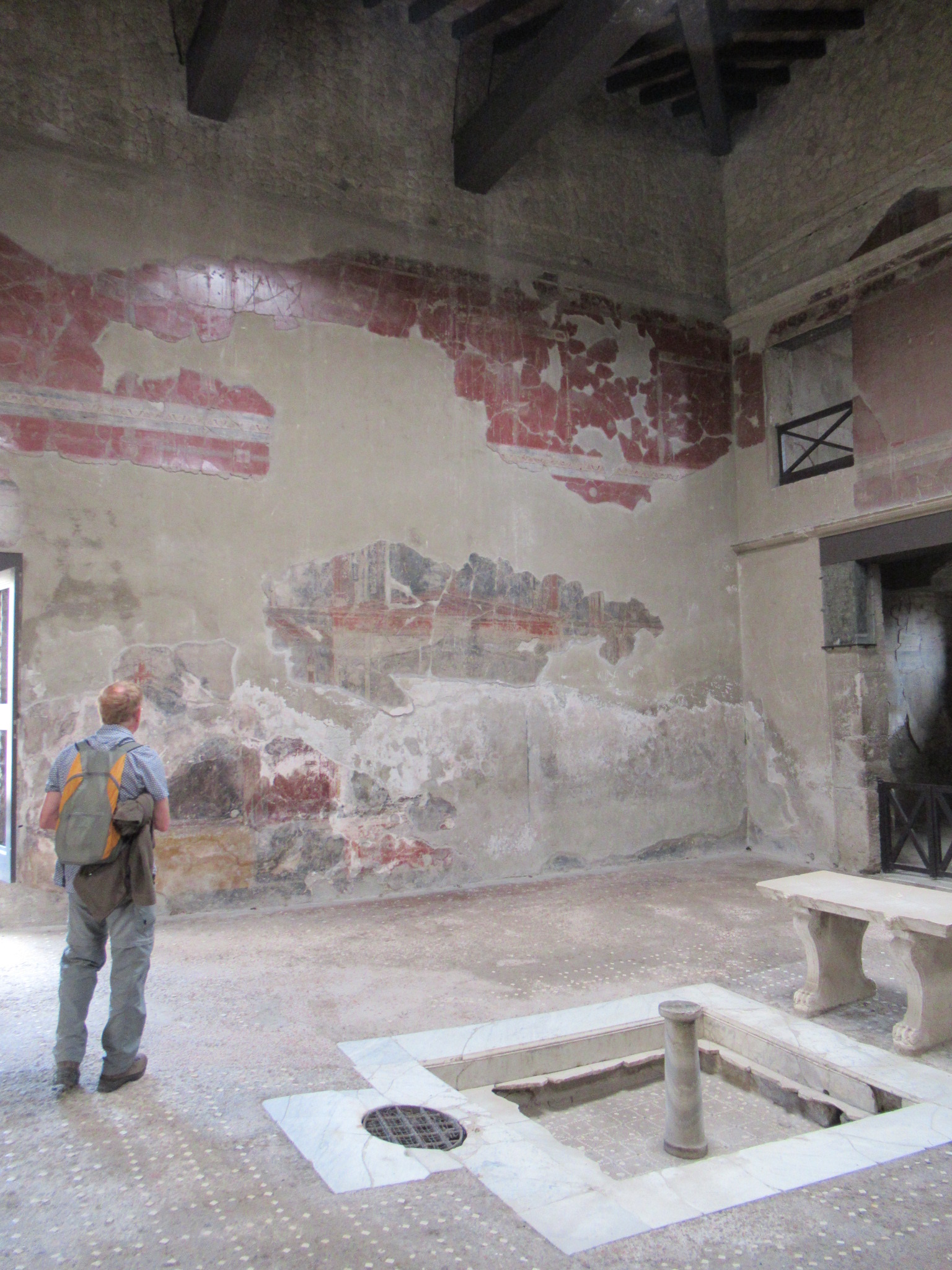
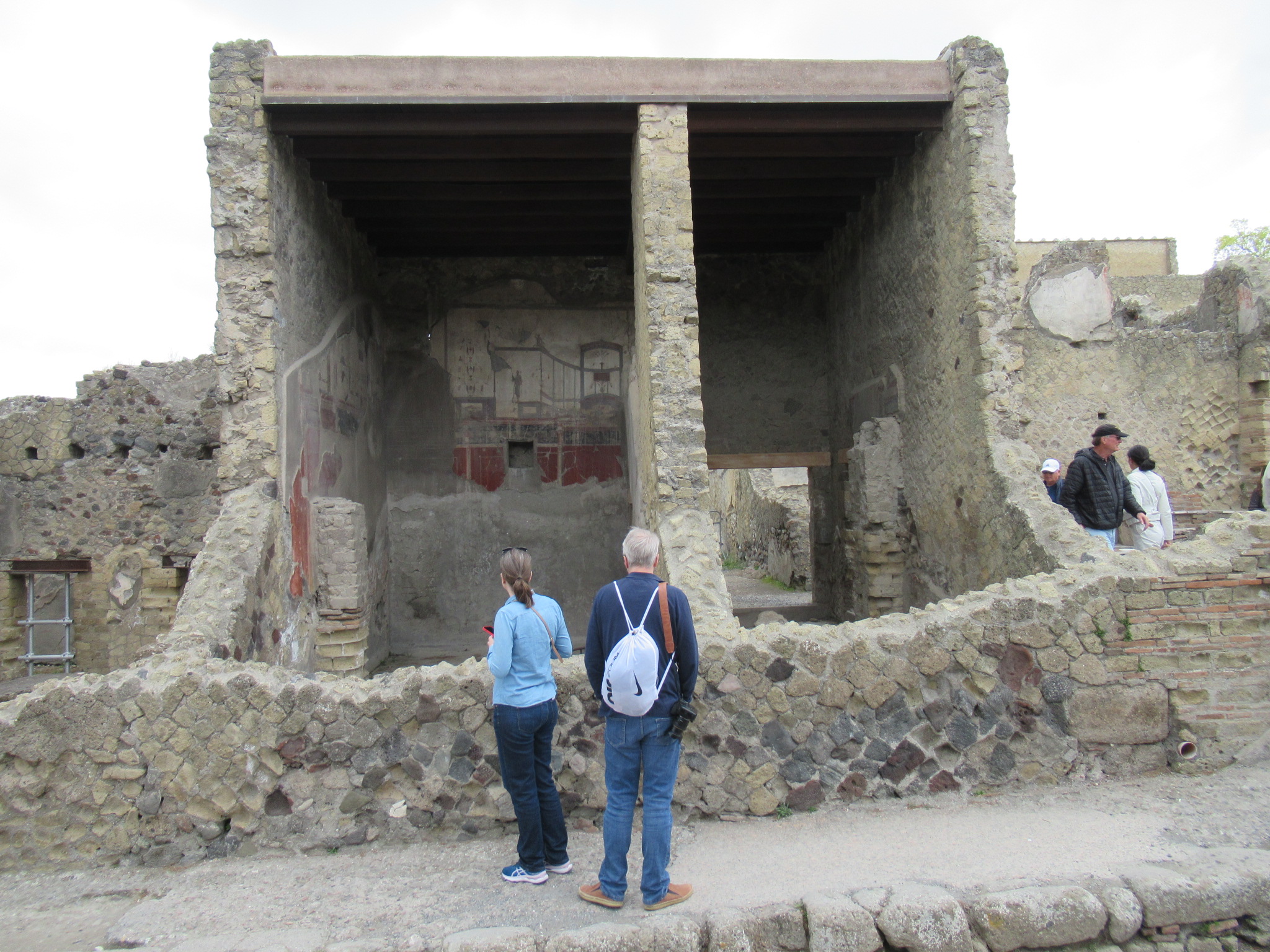
Because Hercolaneum was spared the 16+ hours of ash rain that collapsed Pompeii’s roofs, the upper stories of many structures remain preserved.

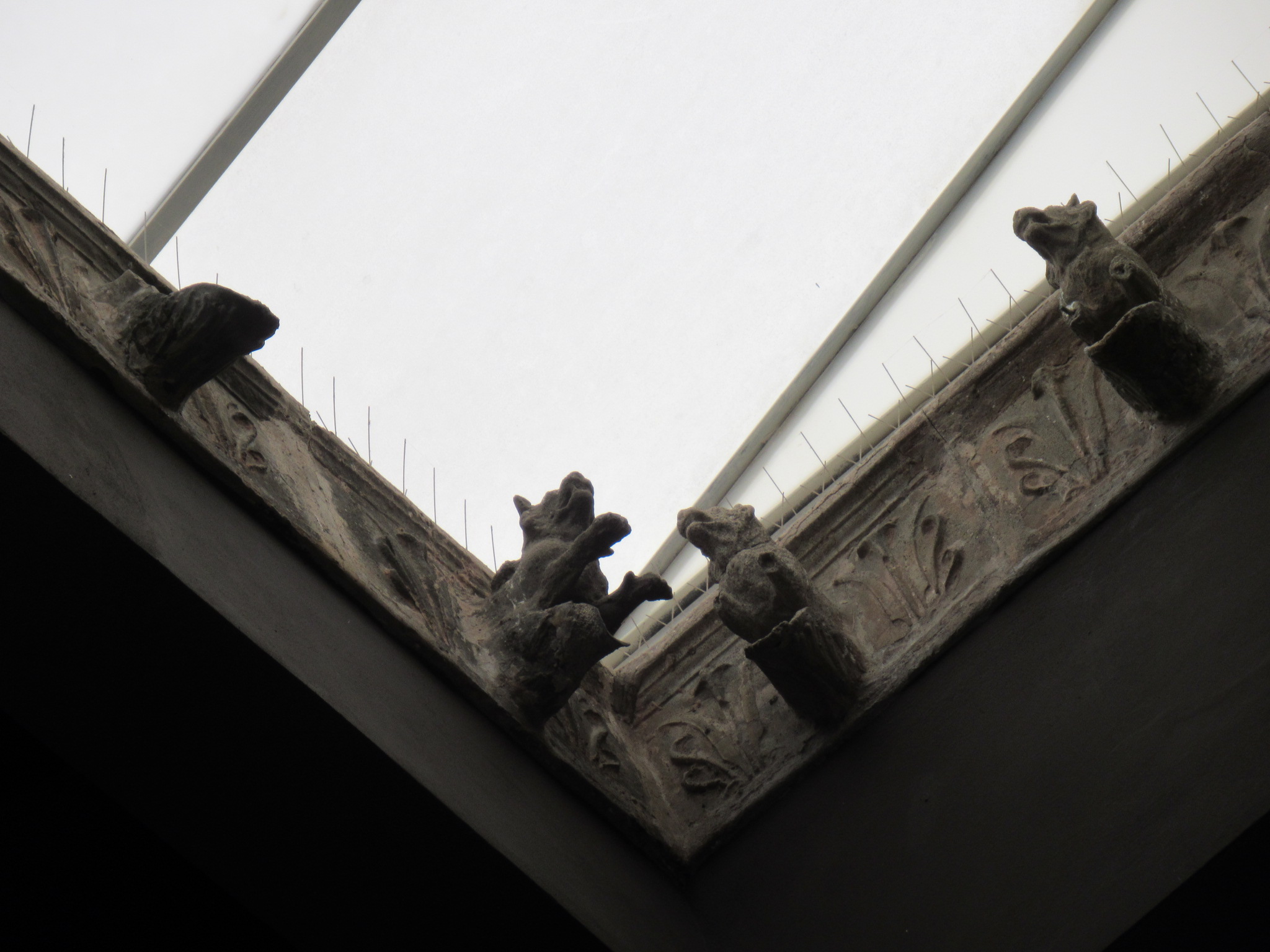
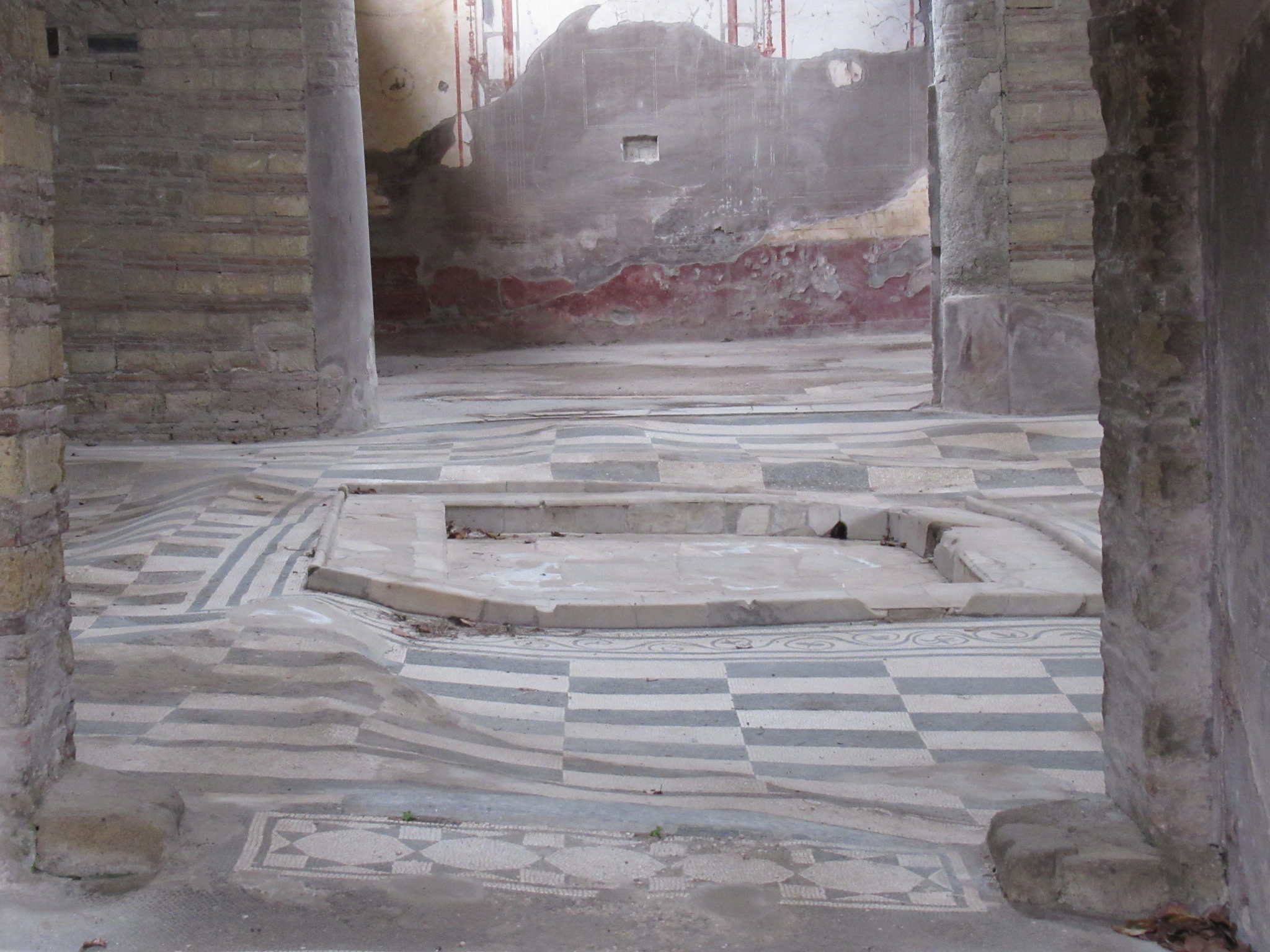
The opening in the roof through which rainwater would pour to be collected in pools and cisterns beneath.
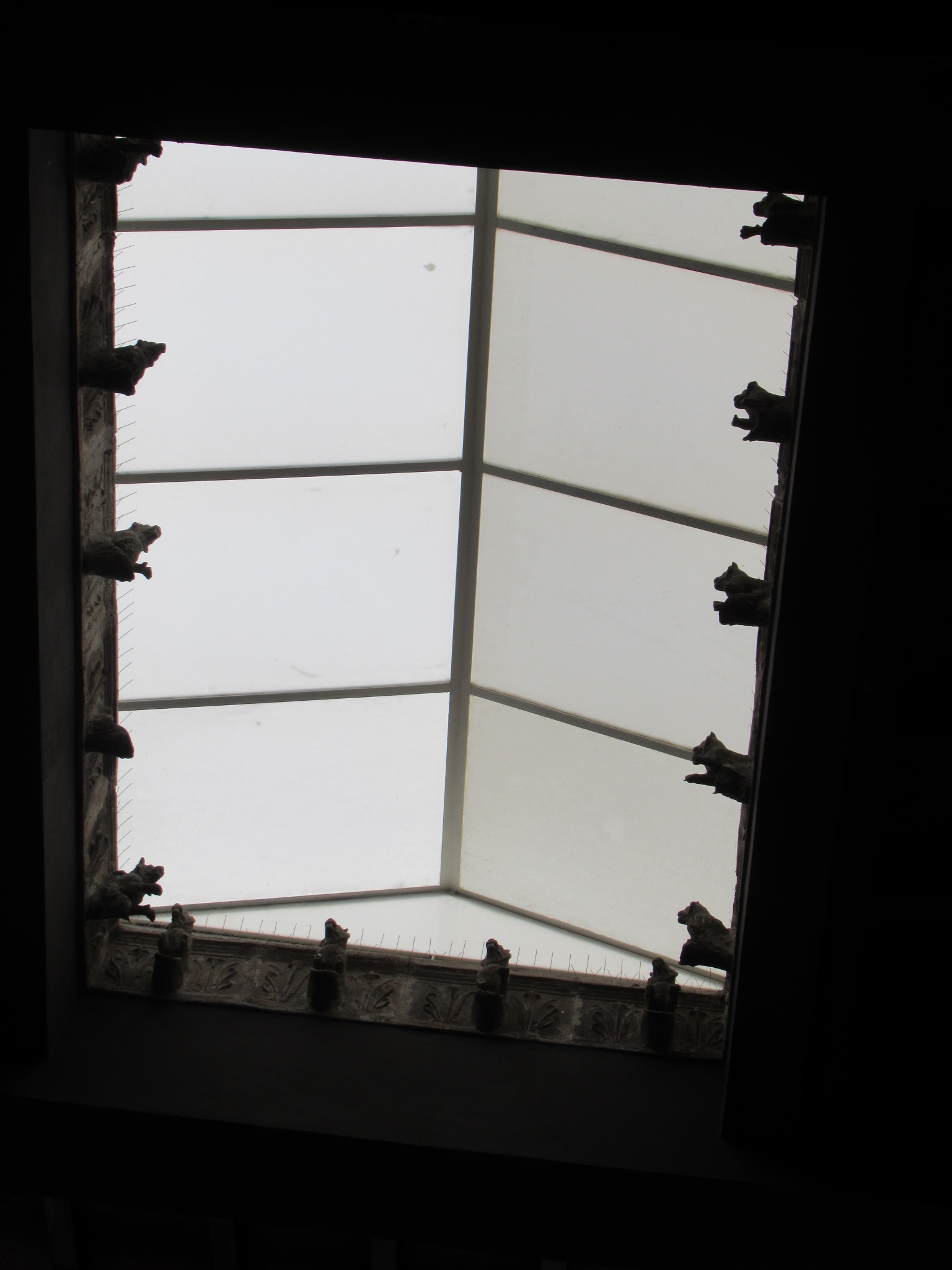
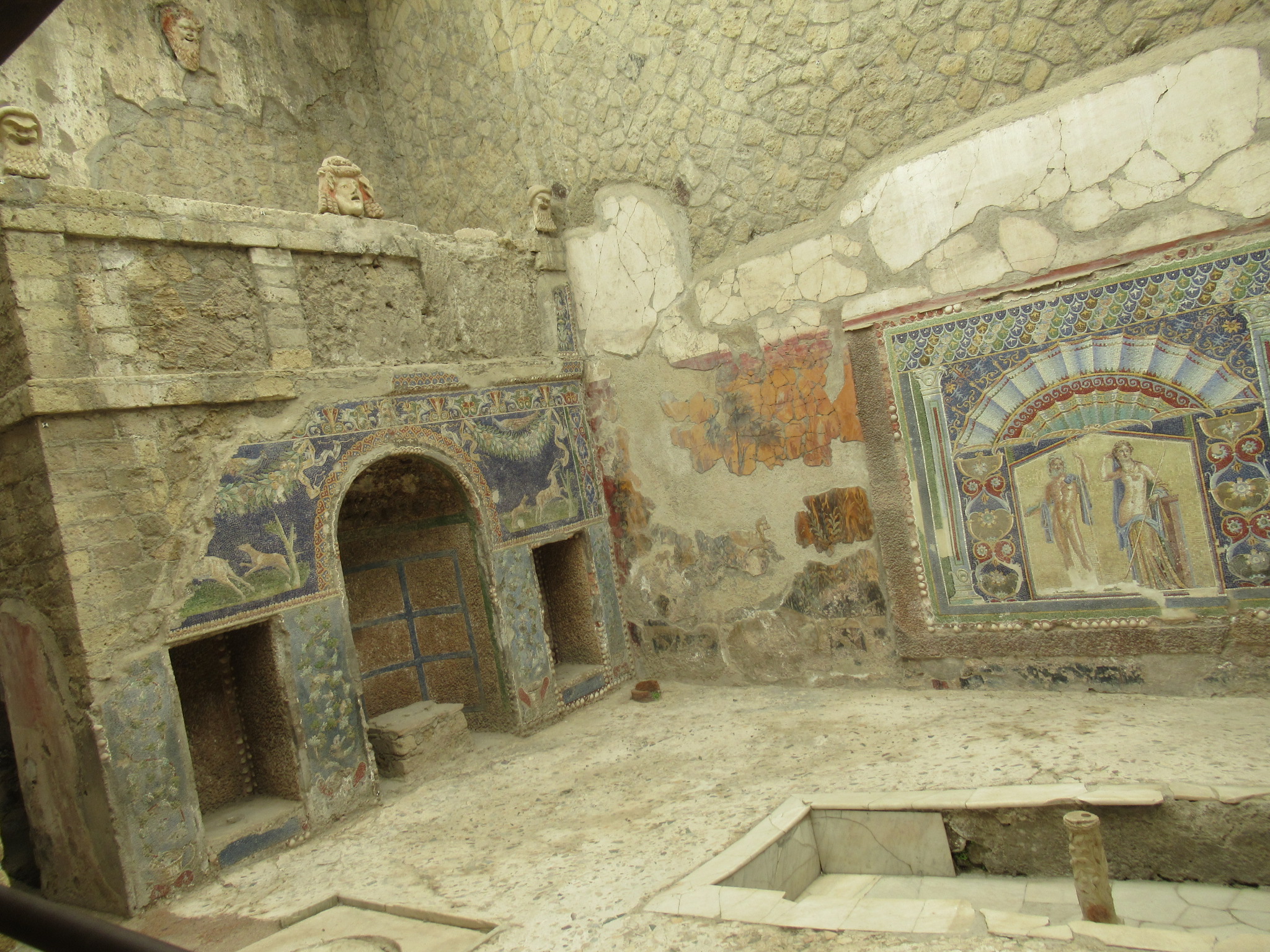
Highly decorated roof openings.
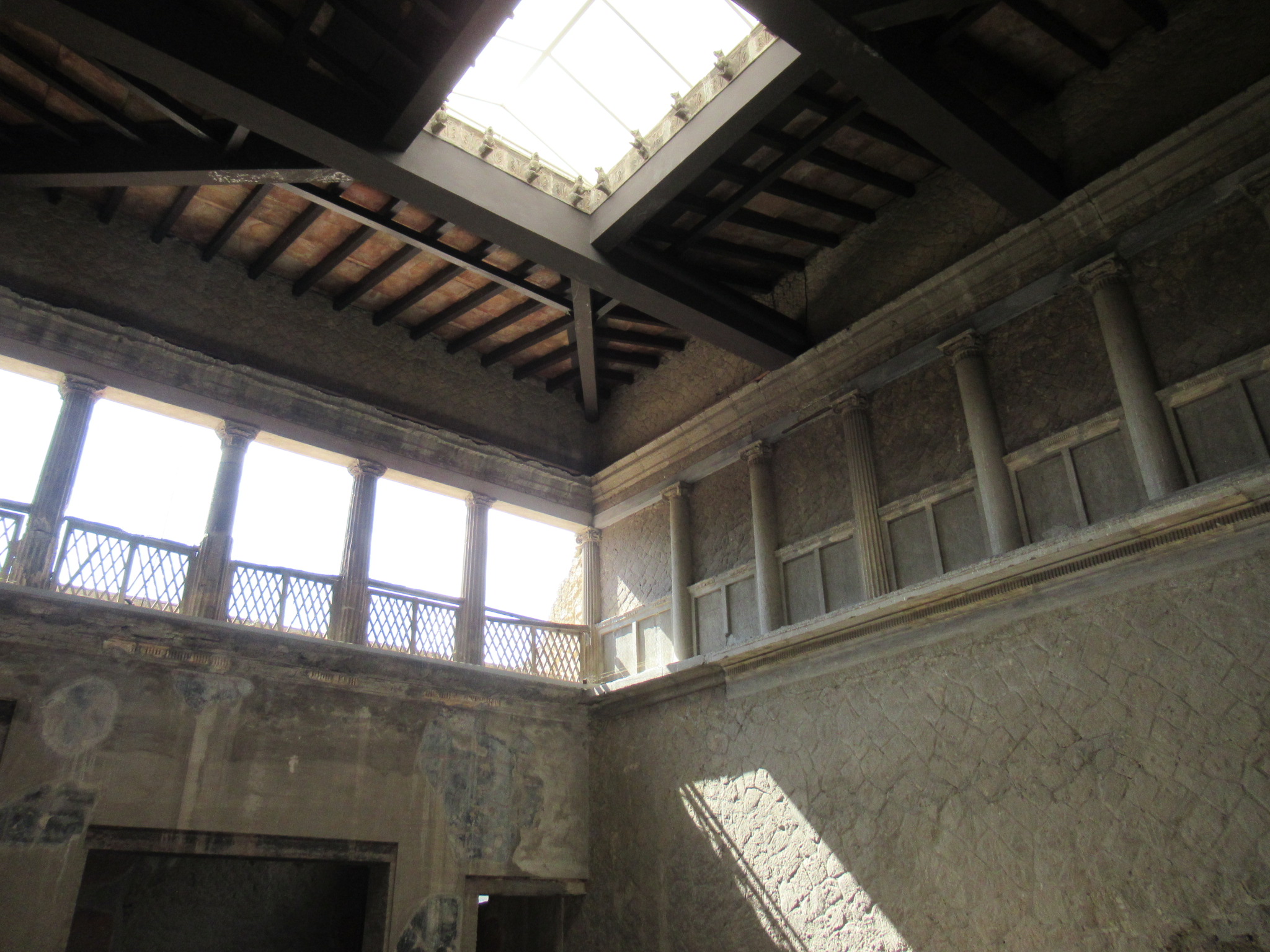

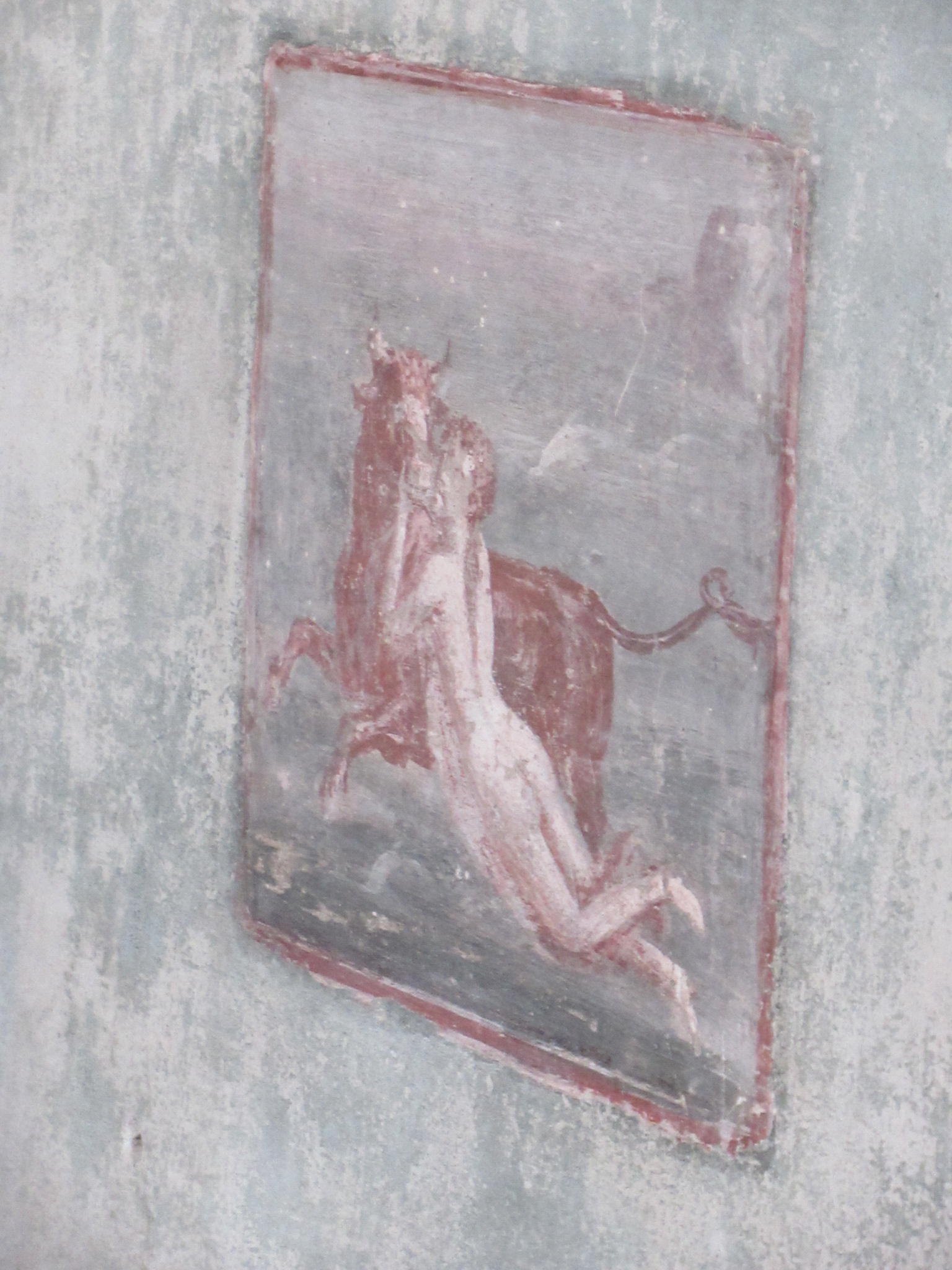
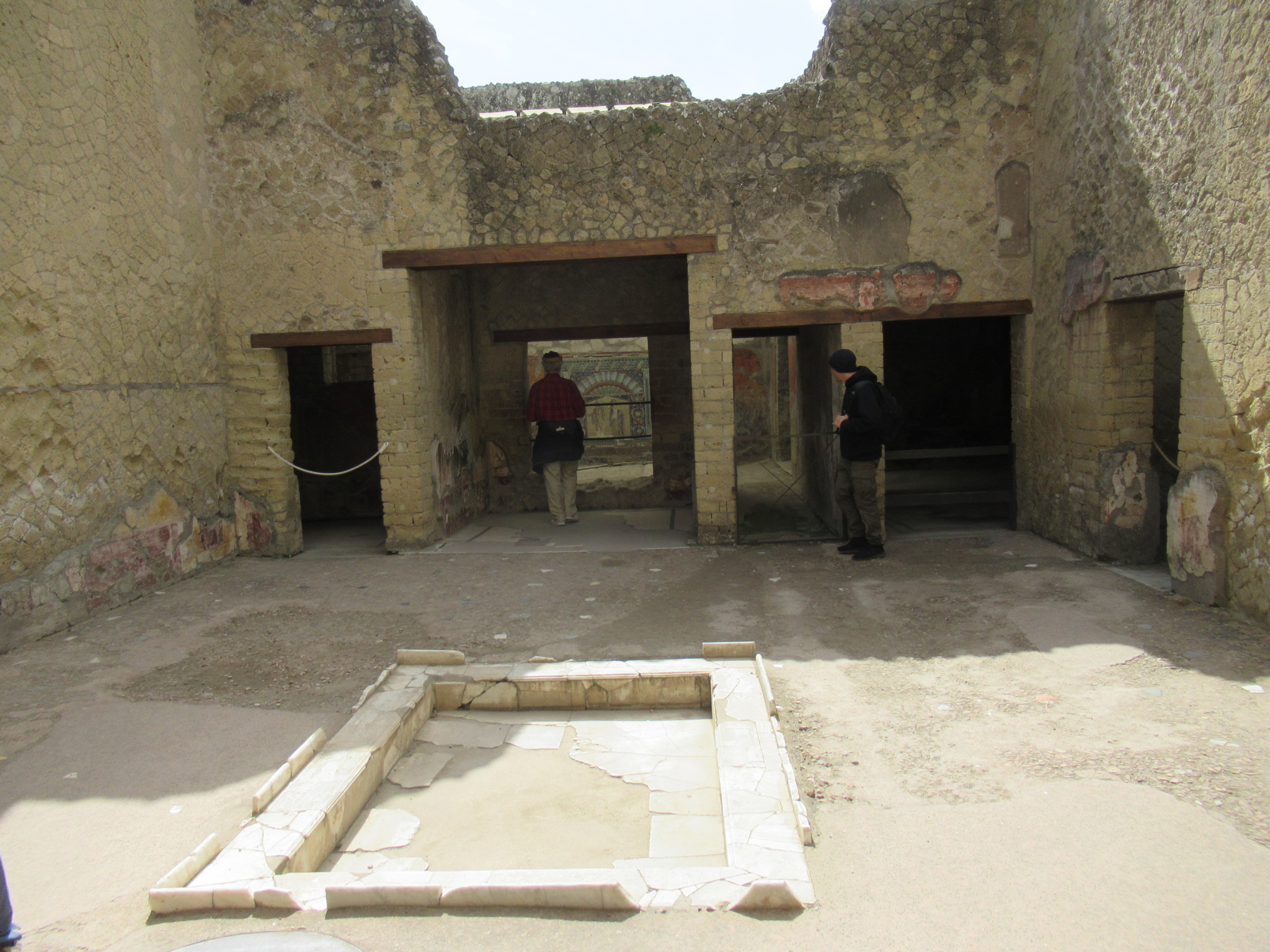

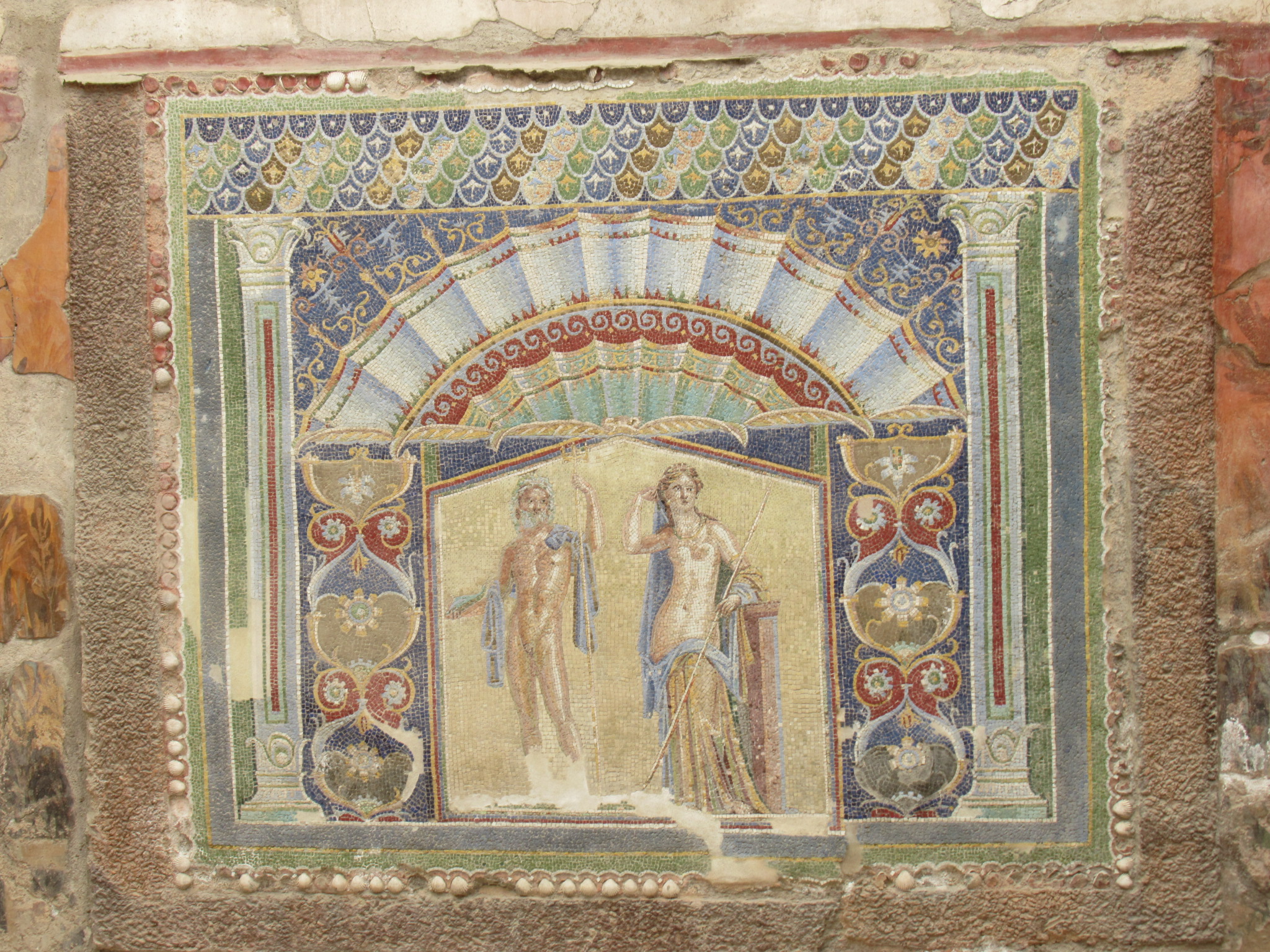




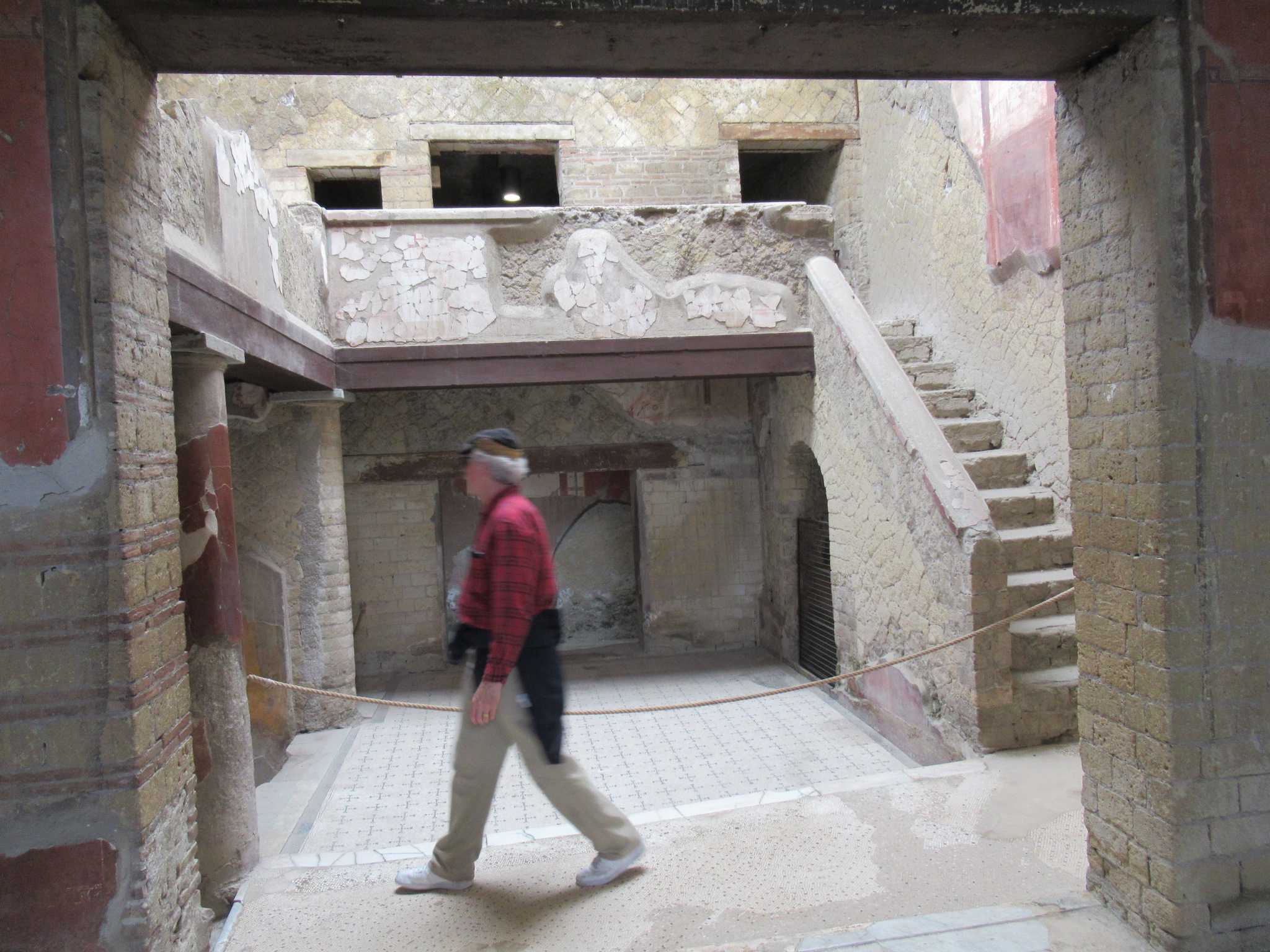

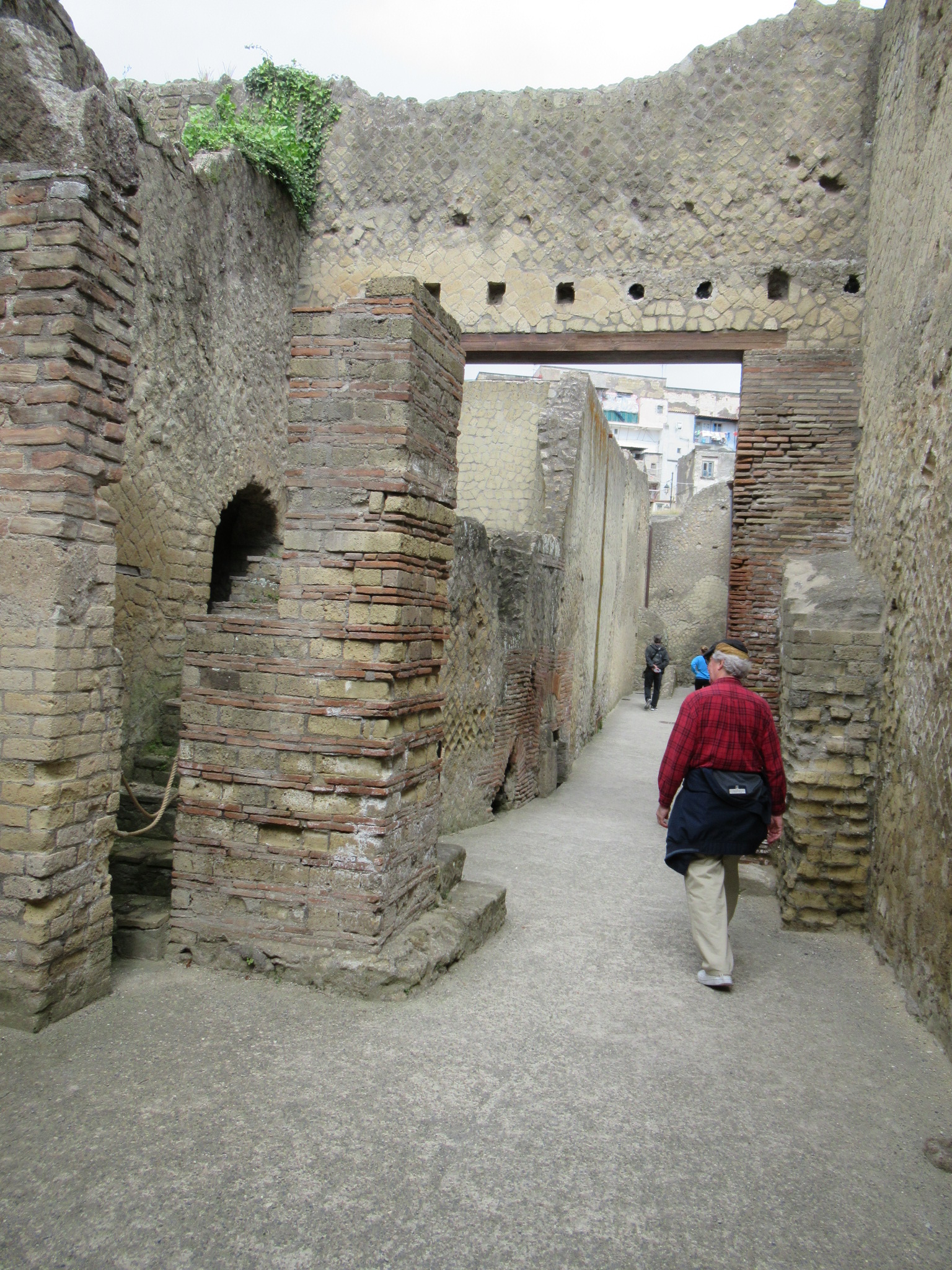
That gent in the red plaid shirt is my hubby Ed, nimirum!

Another bathhouse.



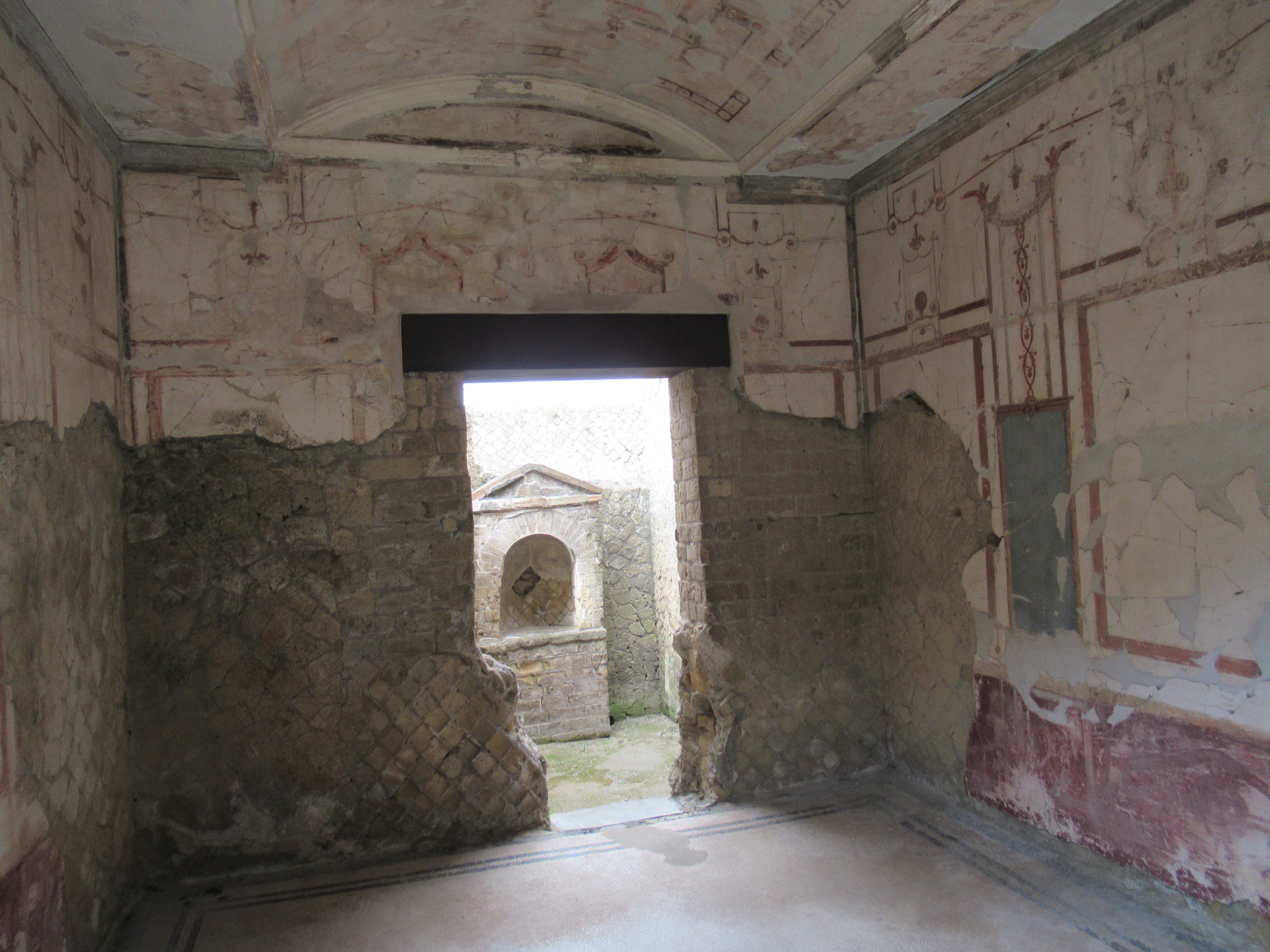
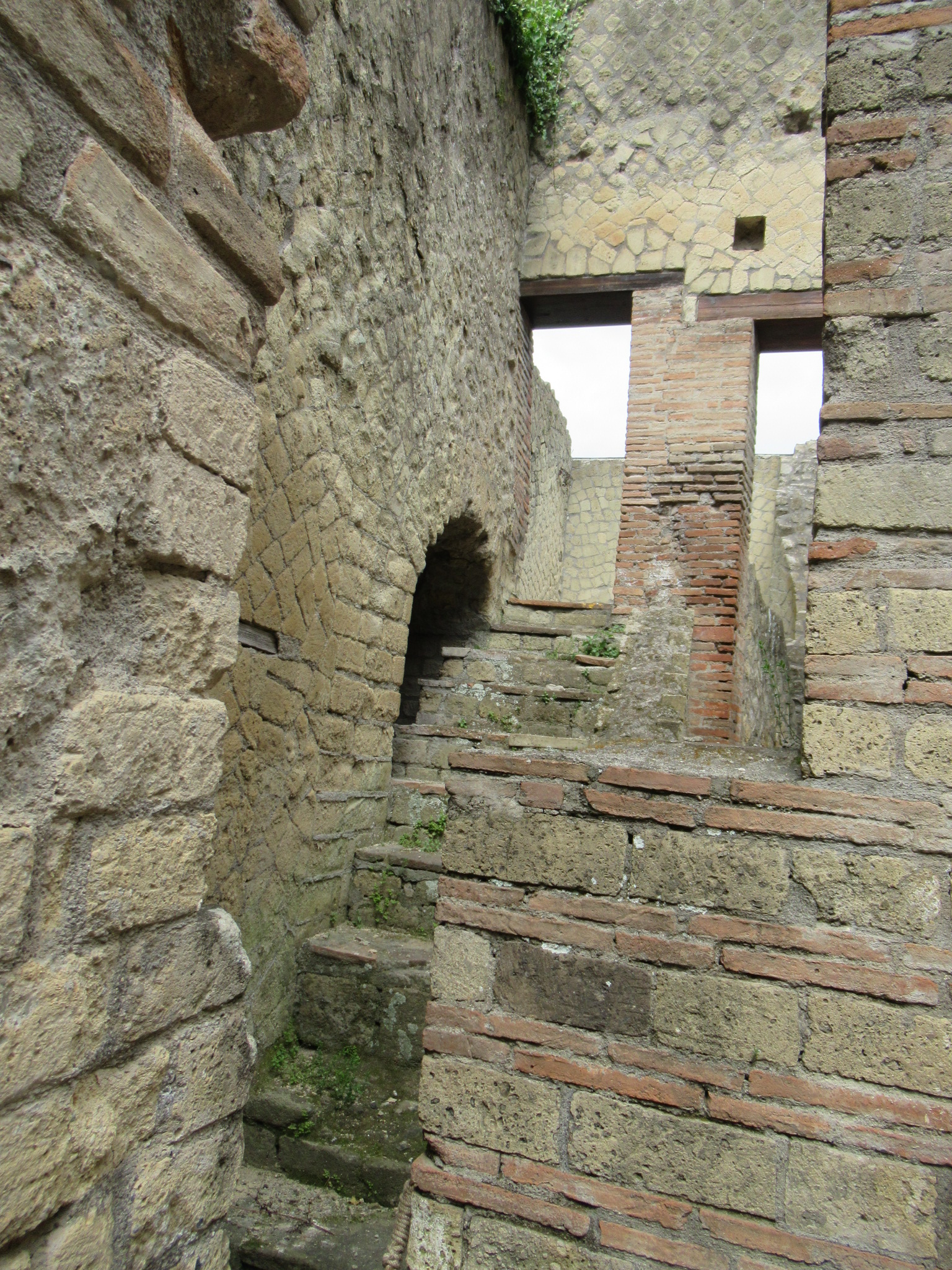
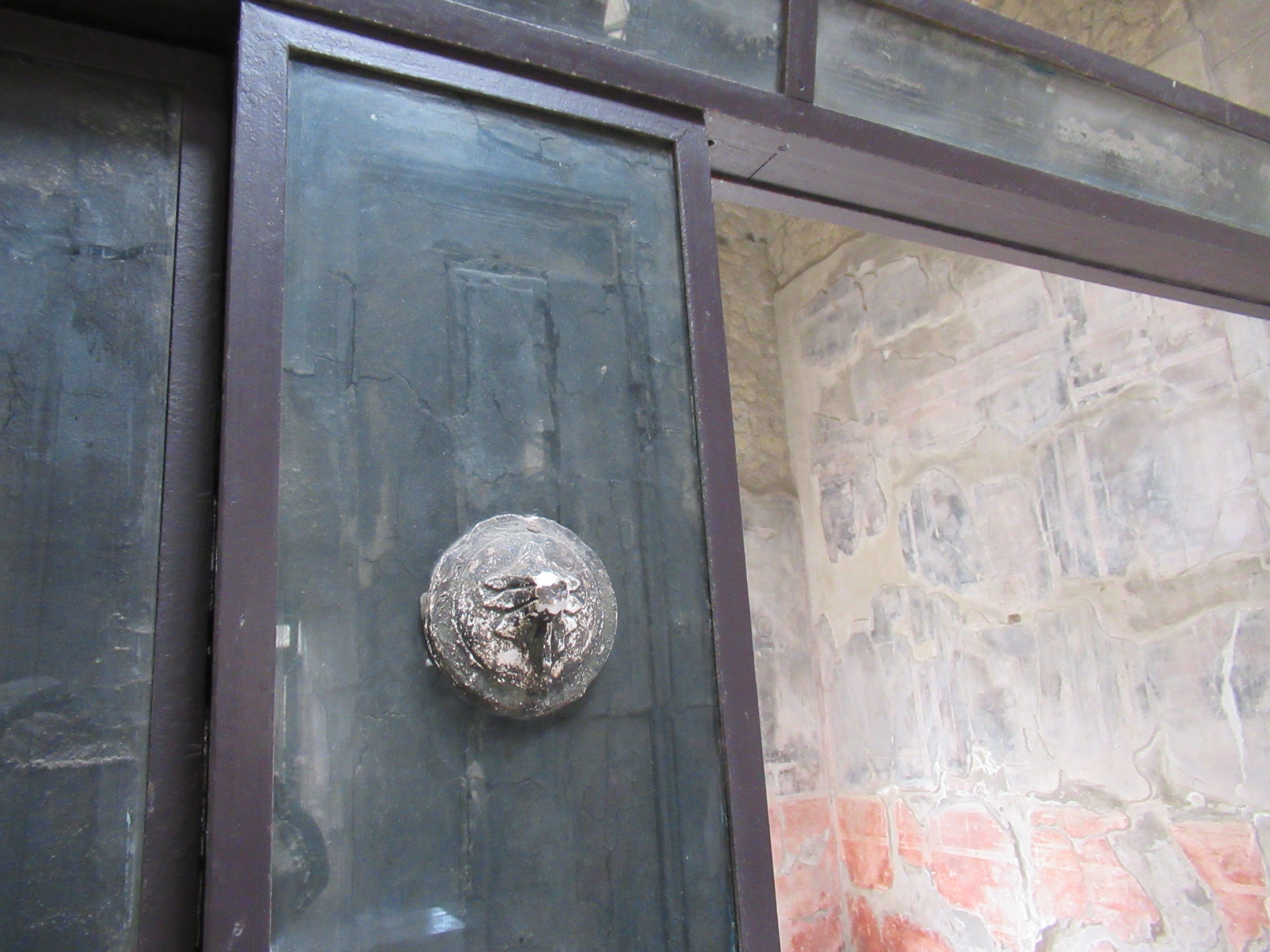
Below actual wood of an ancient door (with its metal knob). The pyroclastic flow and following massive ash cloud were so quick and enveloping, even organic materials like wood were preserved throughout time.





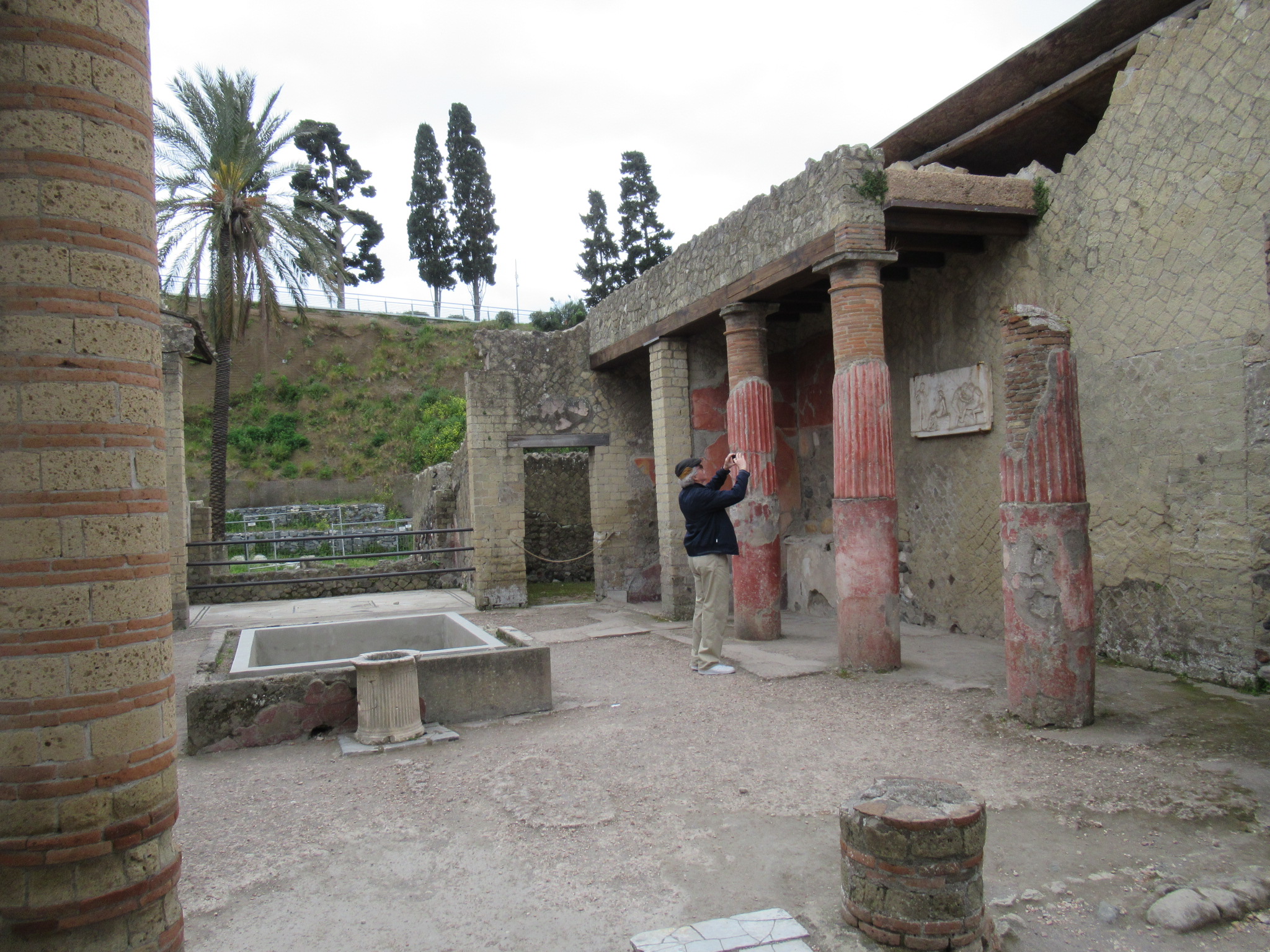

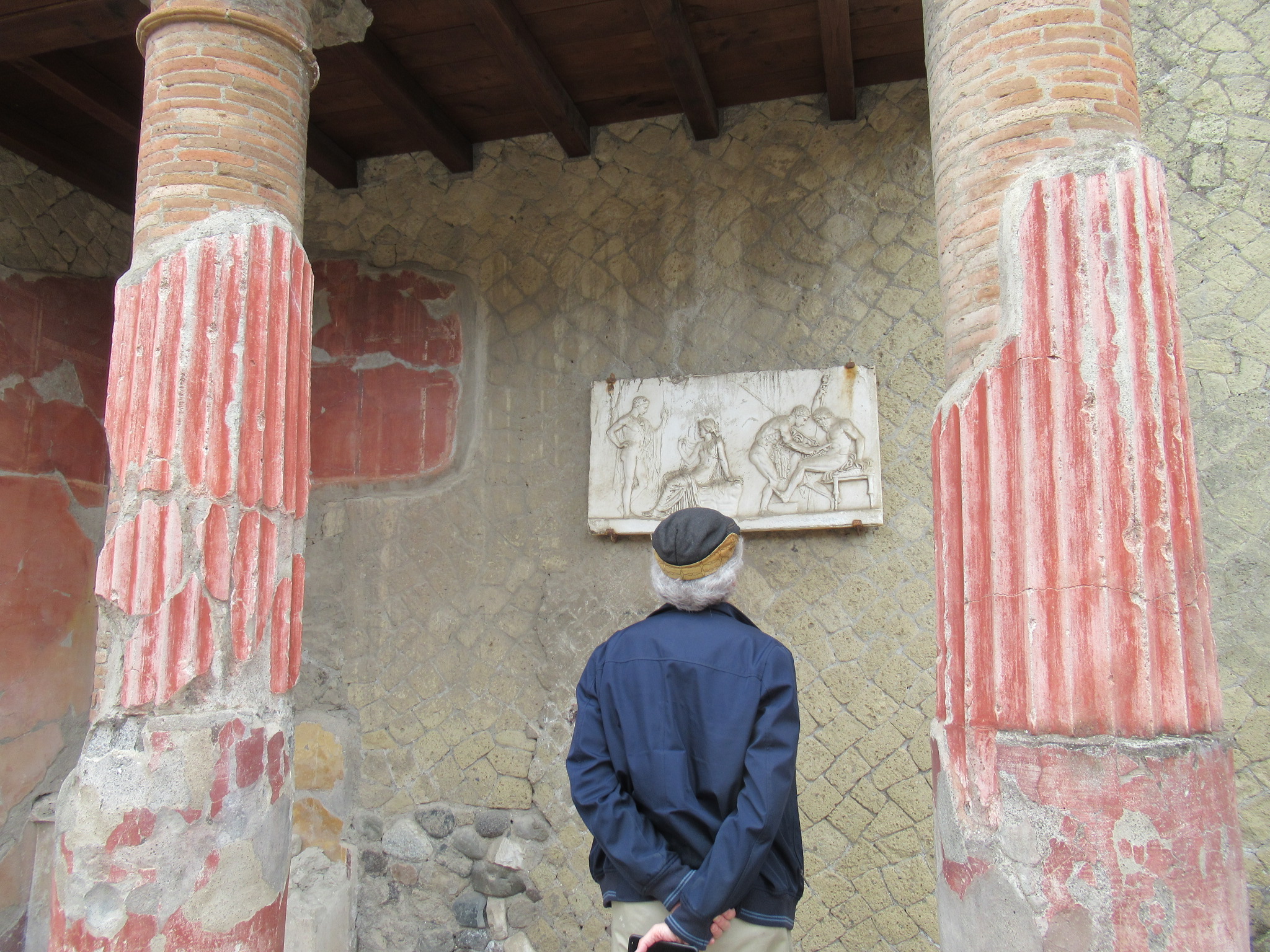

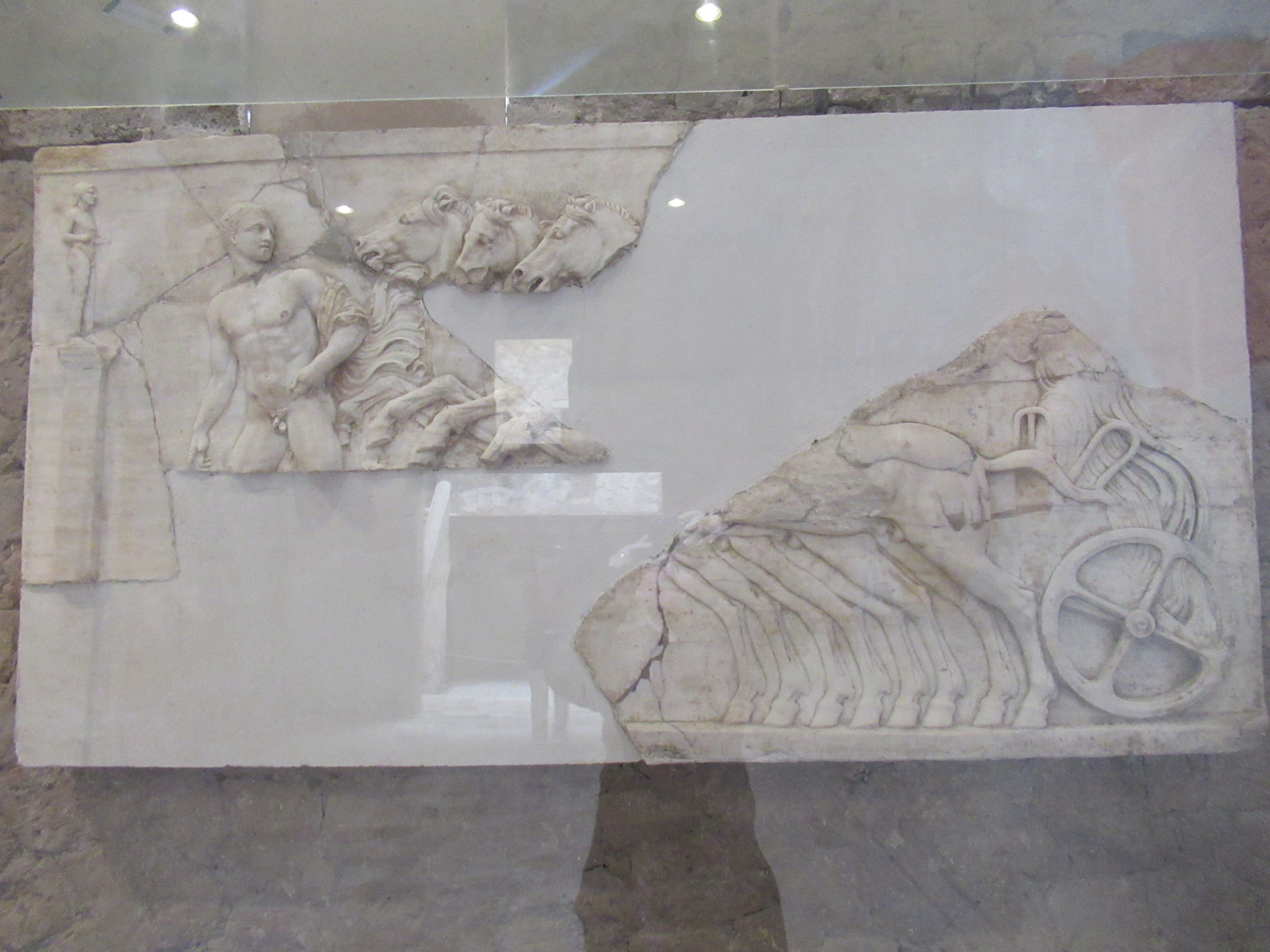
From the myth of Telephus: Achilles (right) scrapes rust from his spear on the wound of the seated Telephus. The scene at left I believe is Achilles with Clytemestra. This, like most sculptures in Pompeii and Herculaneum, is a copy. We’ll see the original, which hangs in the Naples Museum, in the next post
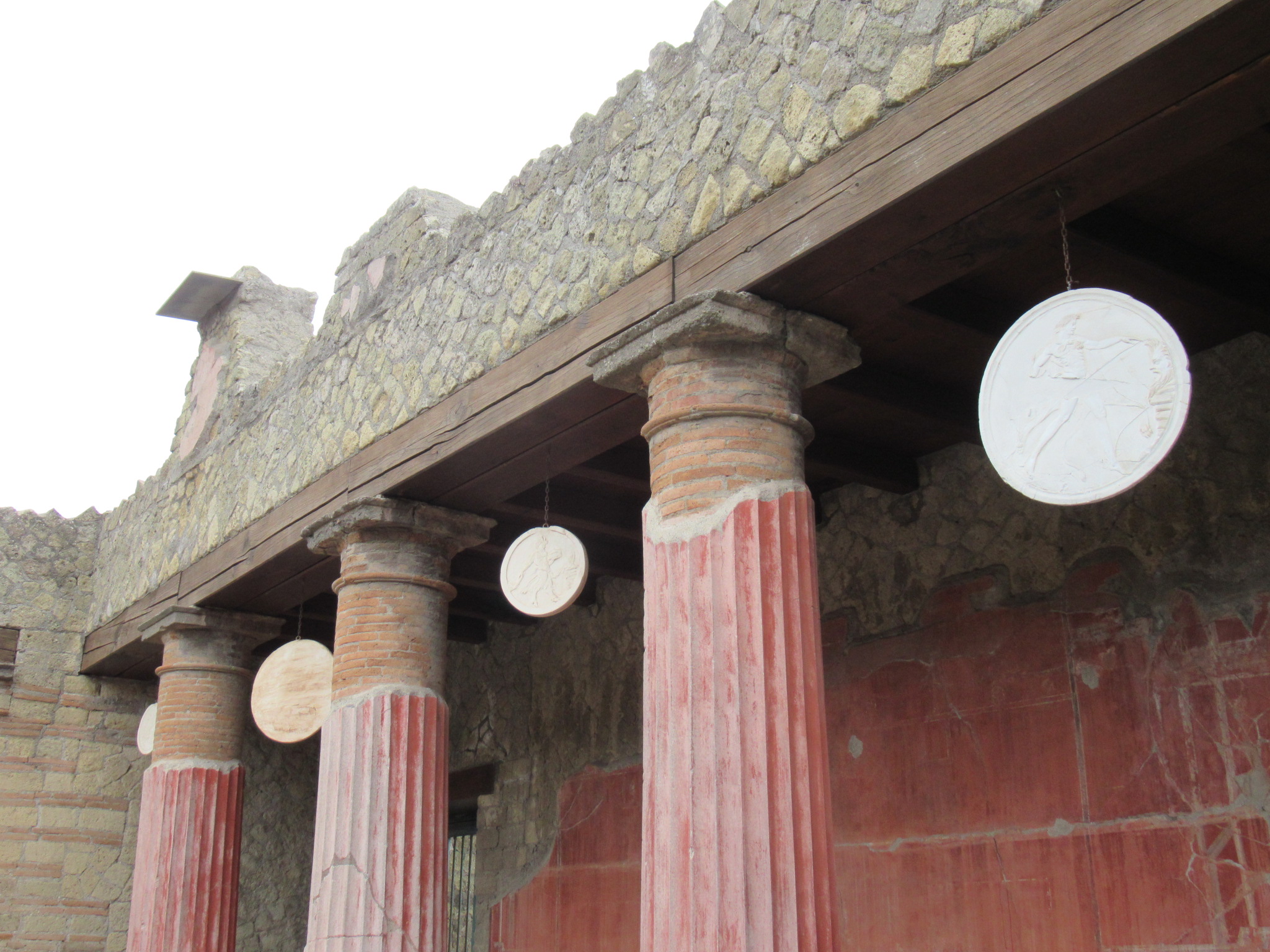
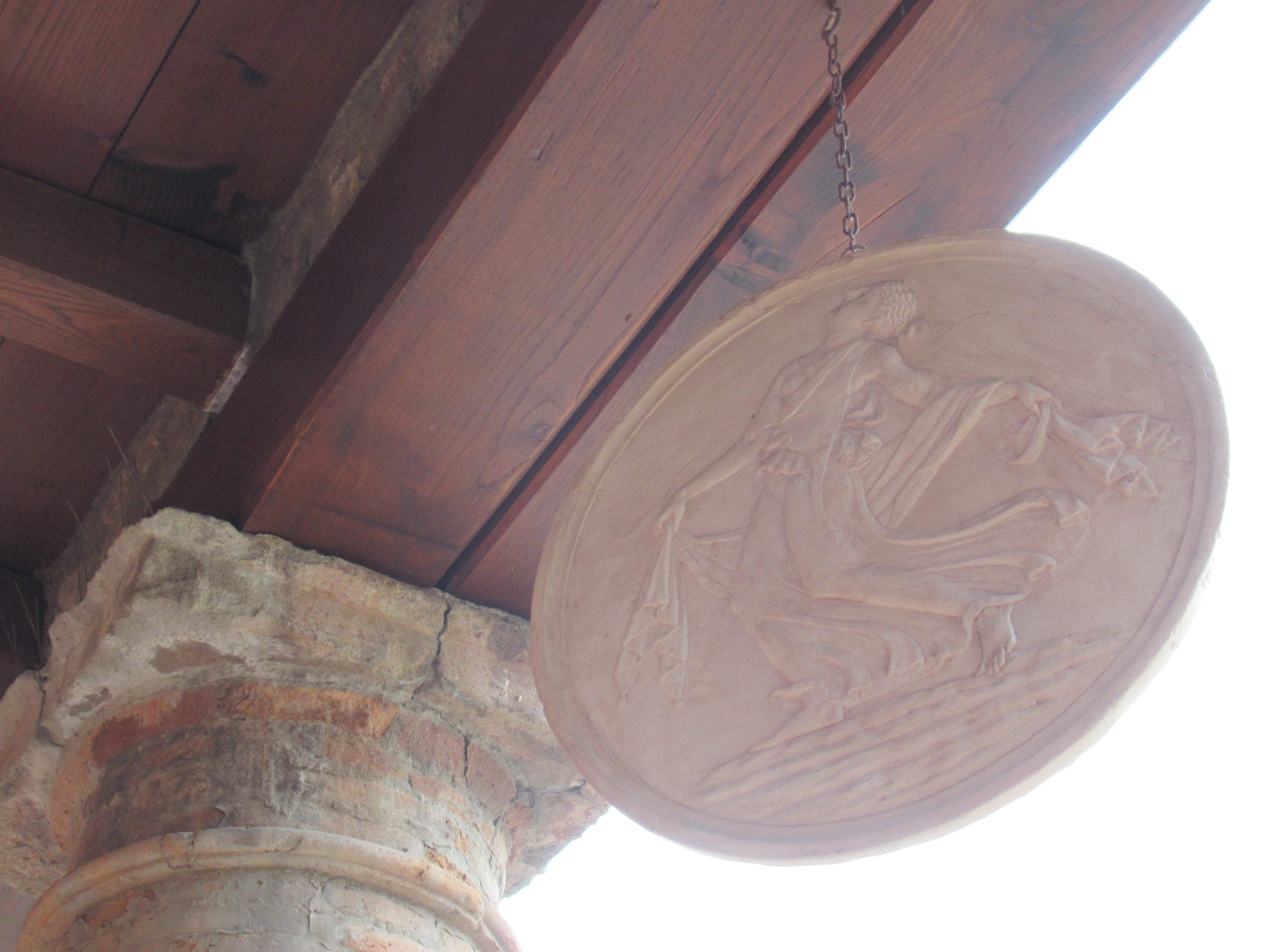

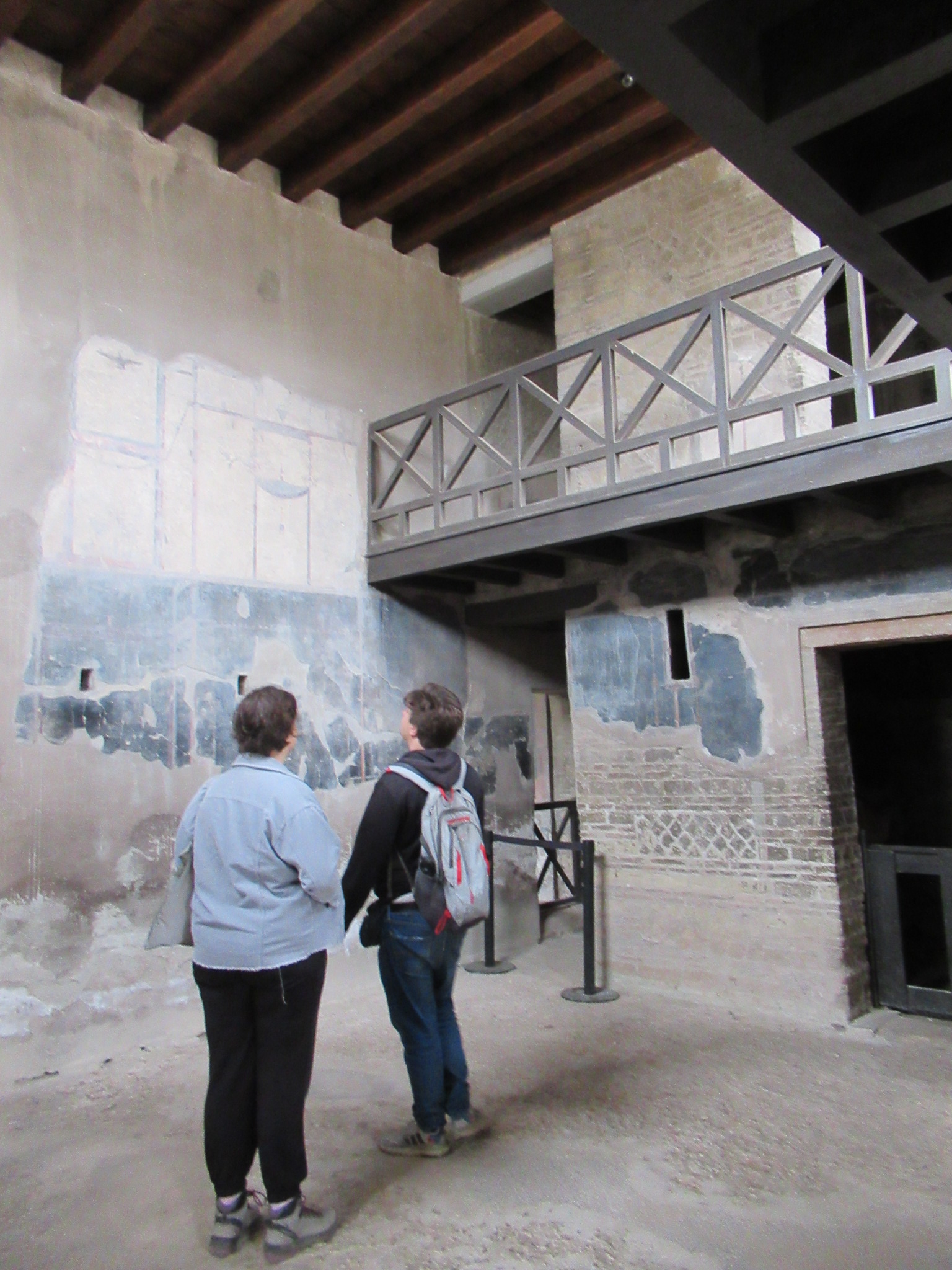
Now entering the largest home we found in Herculaneum…
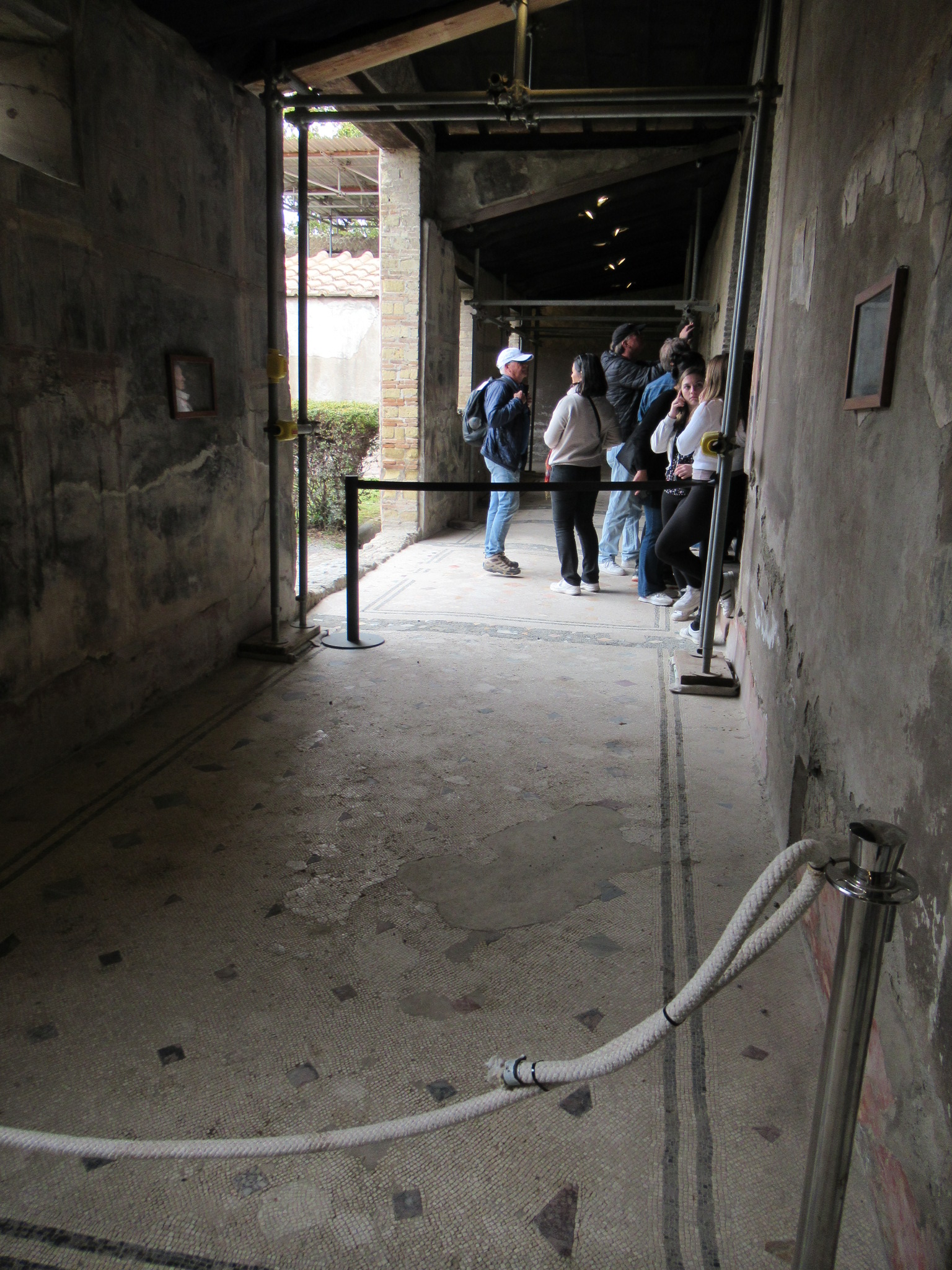
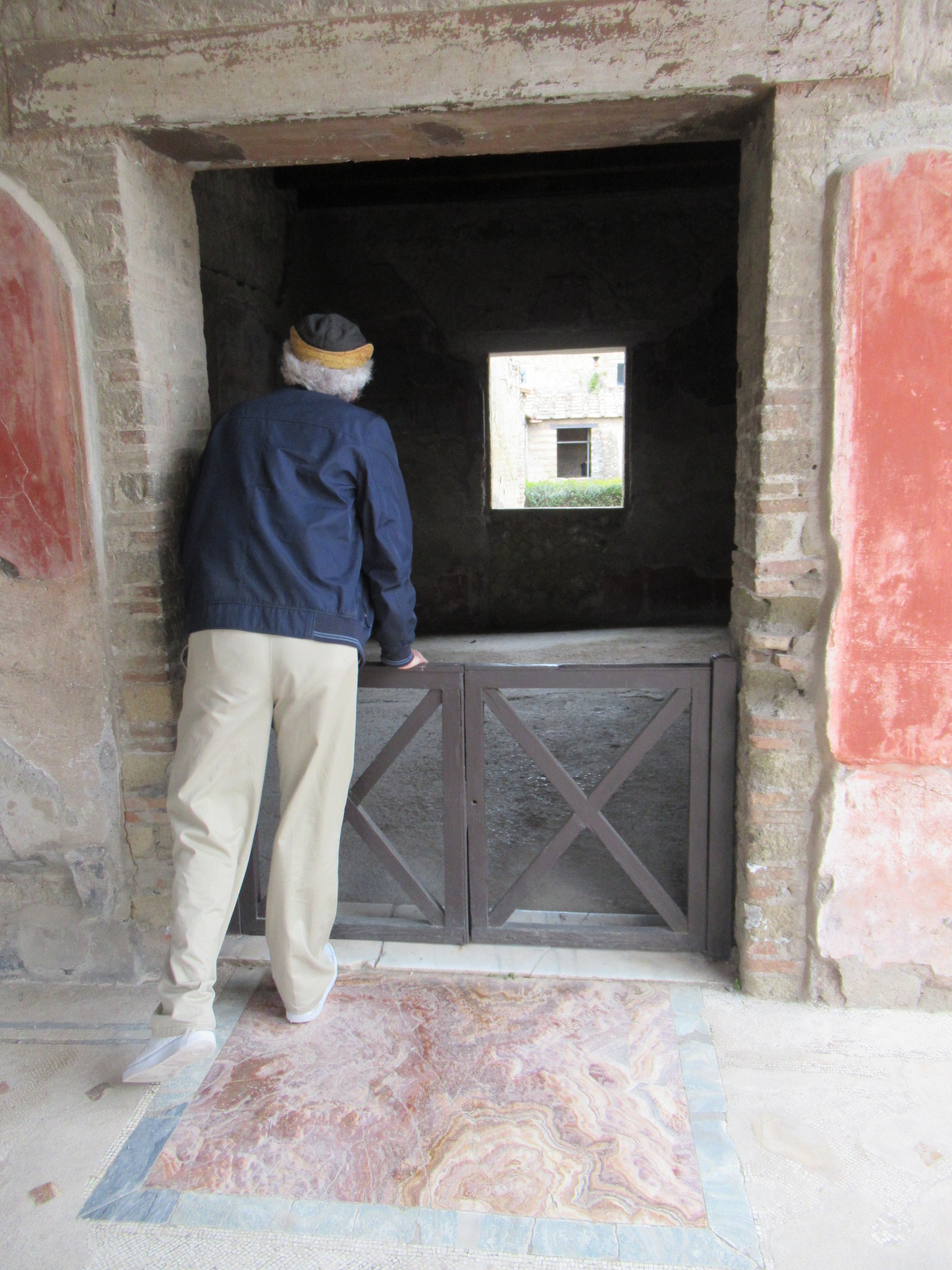

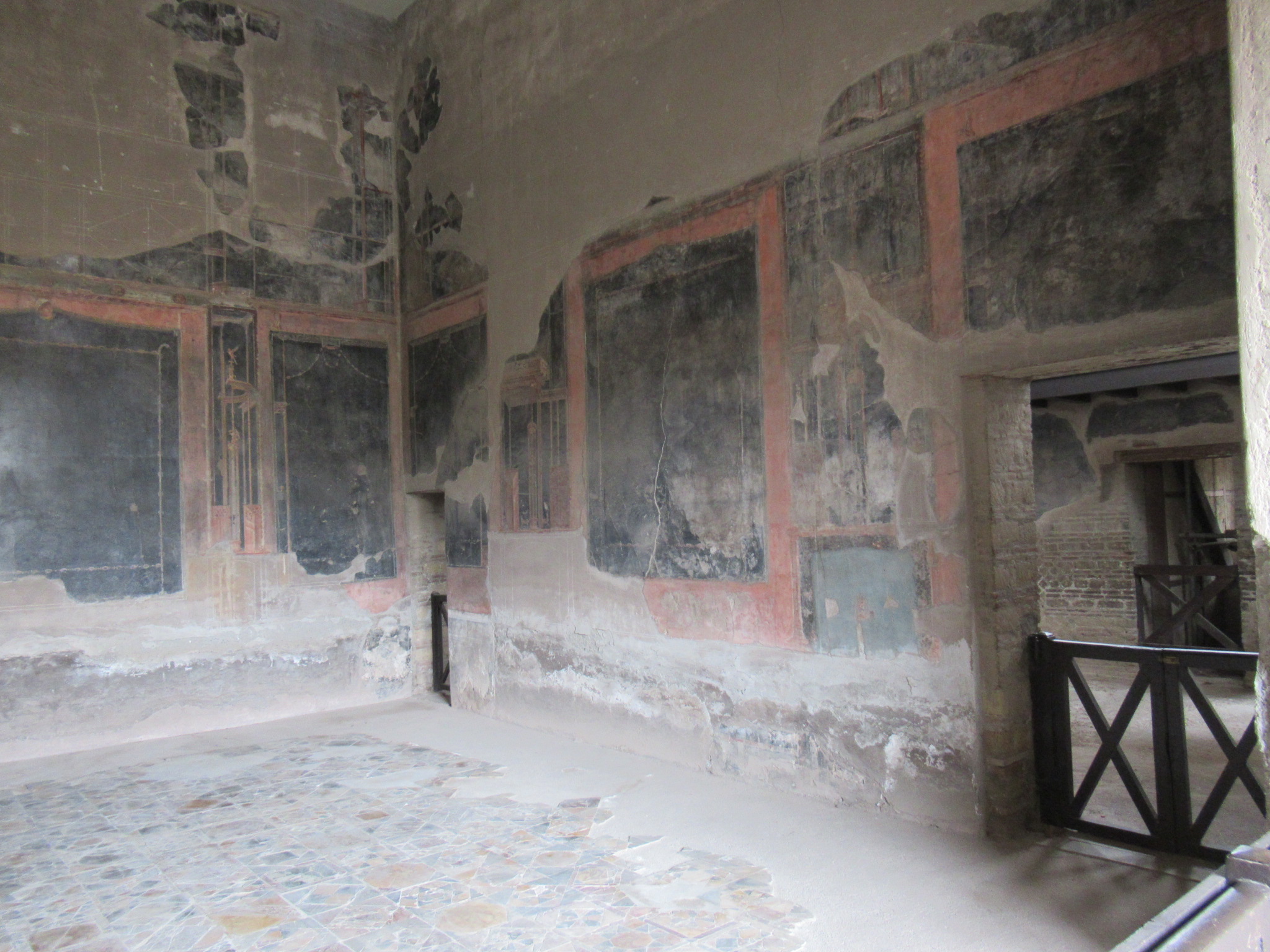
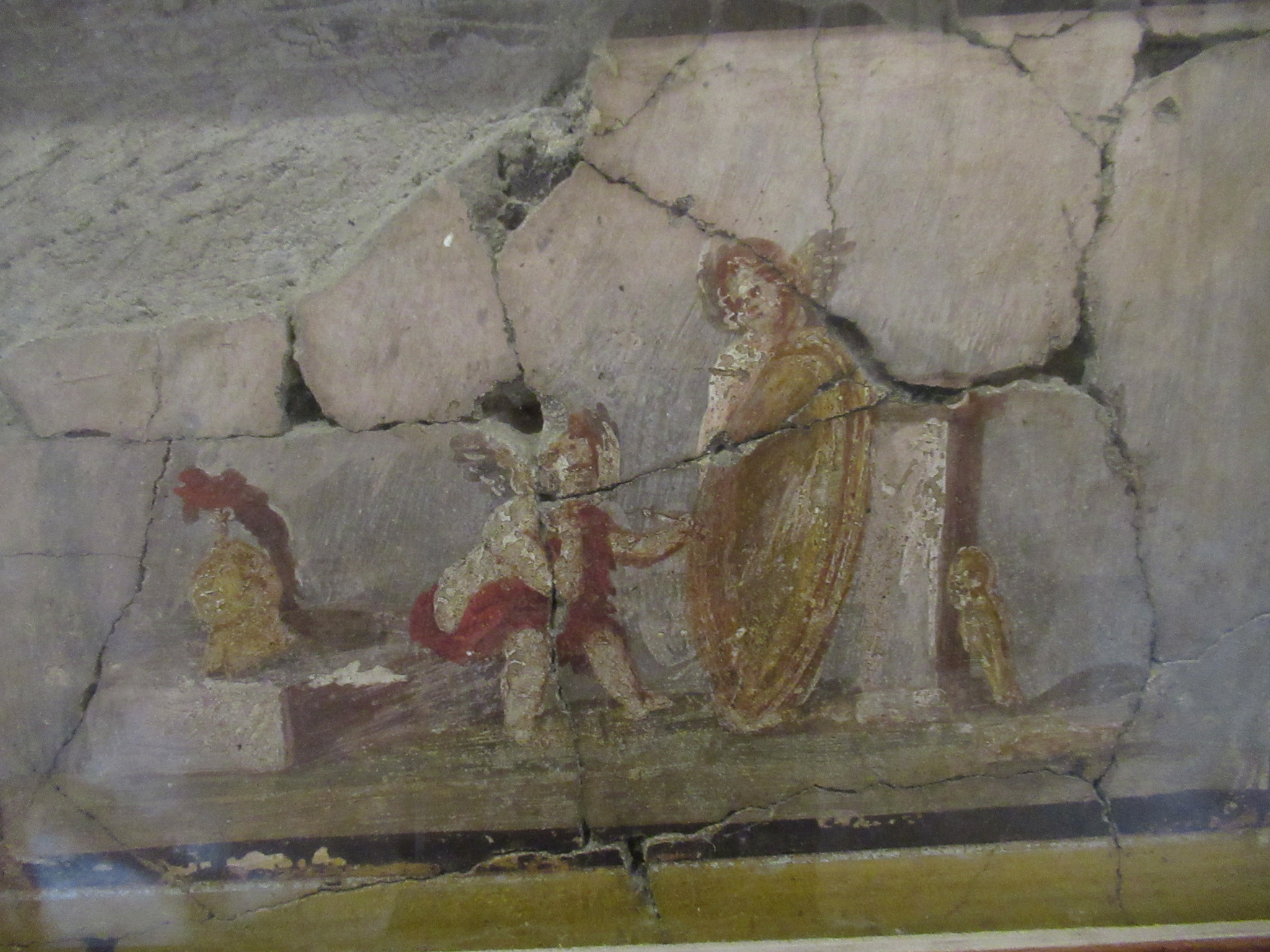
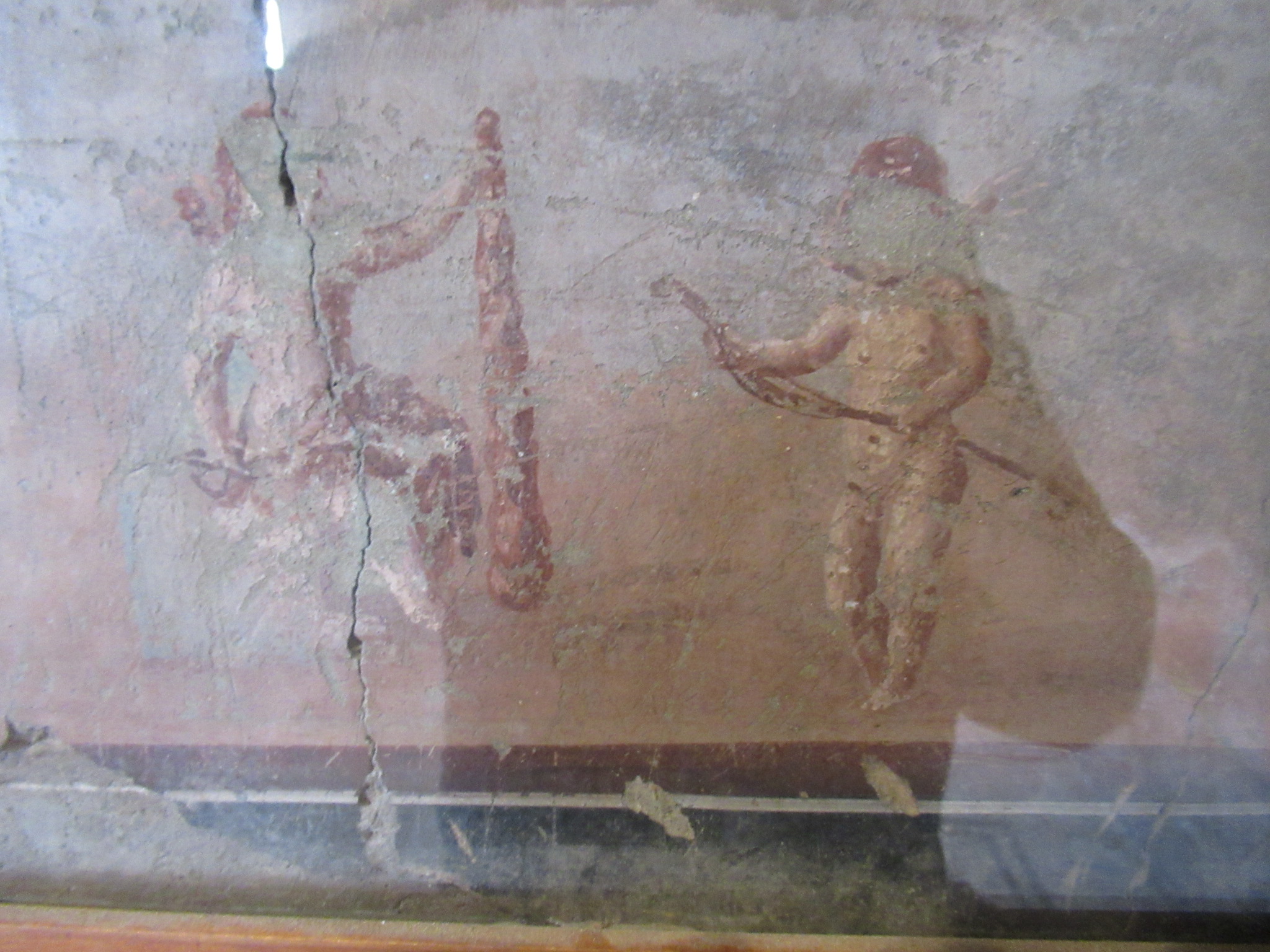
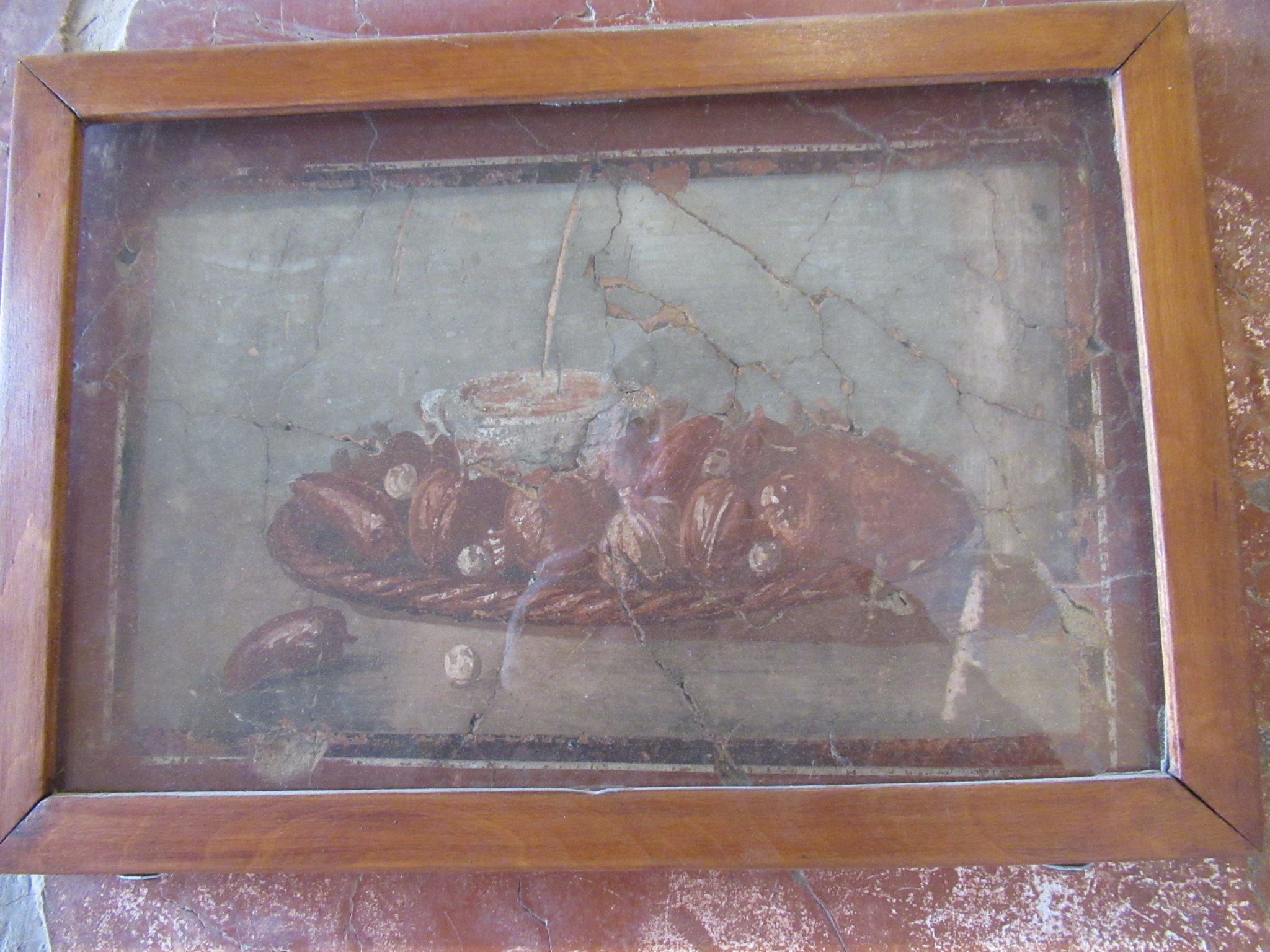

This home had a large courtyard…

…which back in the day had a view of the harbor and ocean below.
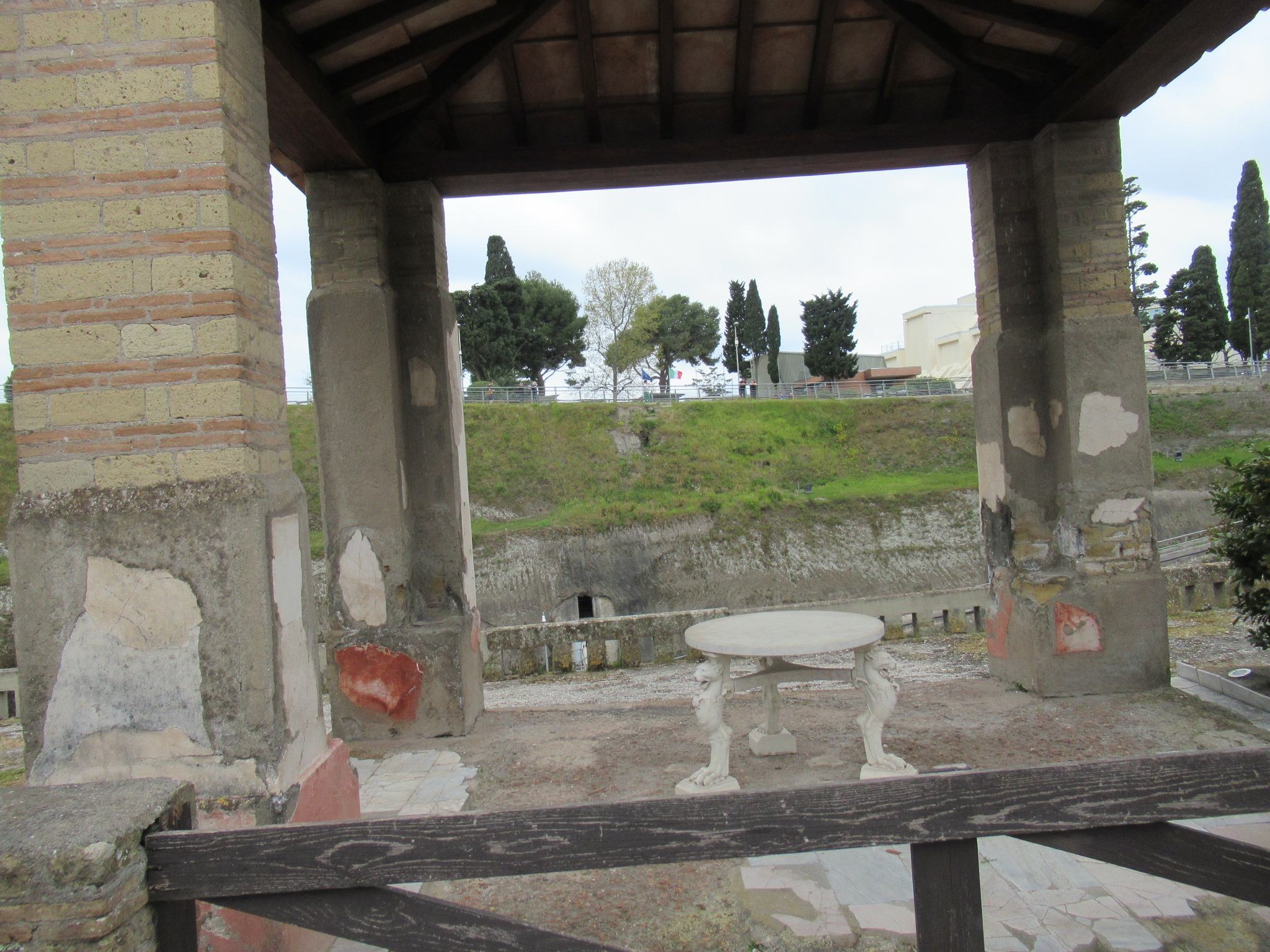

Another example of art depicting the myth of the hunter turned stag torn by his own dogs.

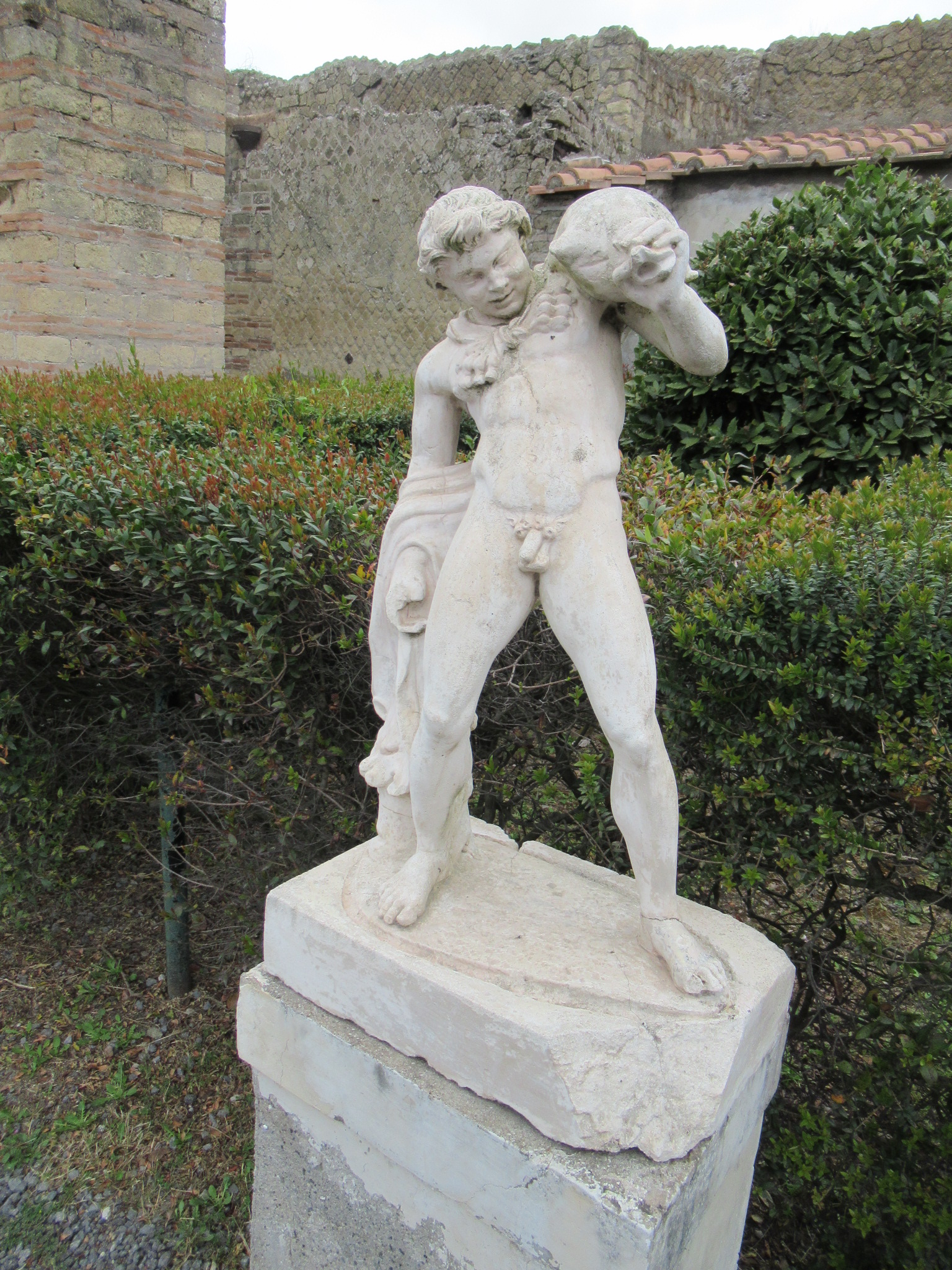

The way down to the harbor.


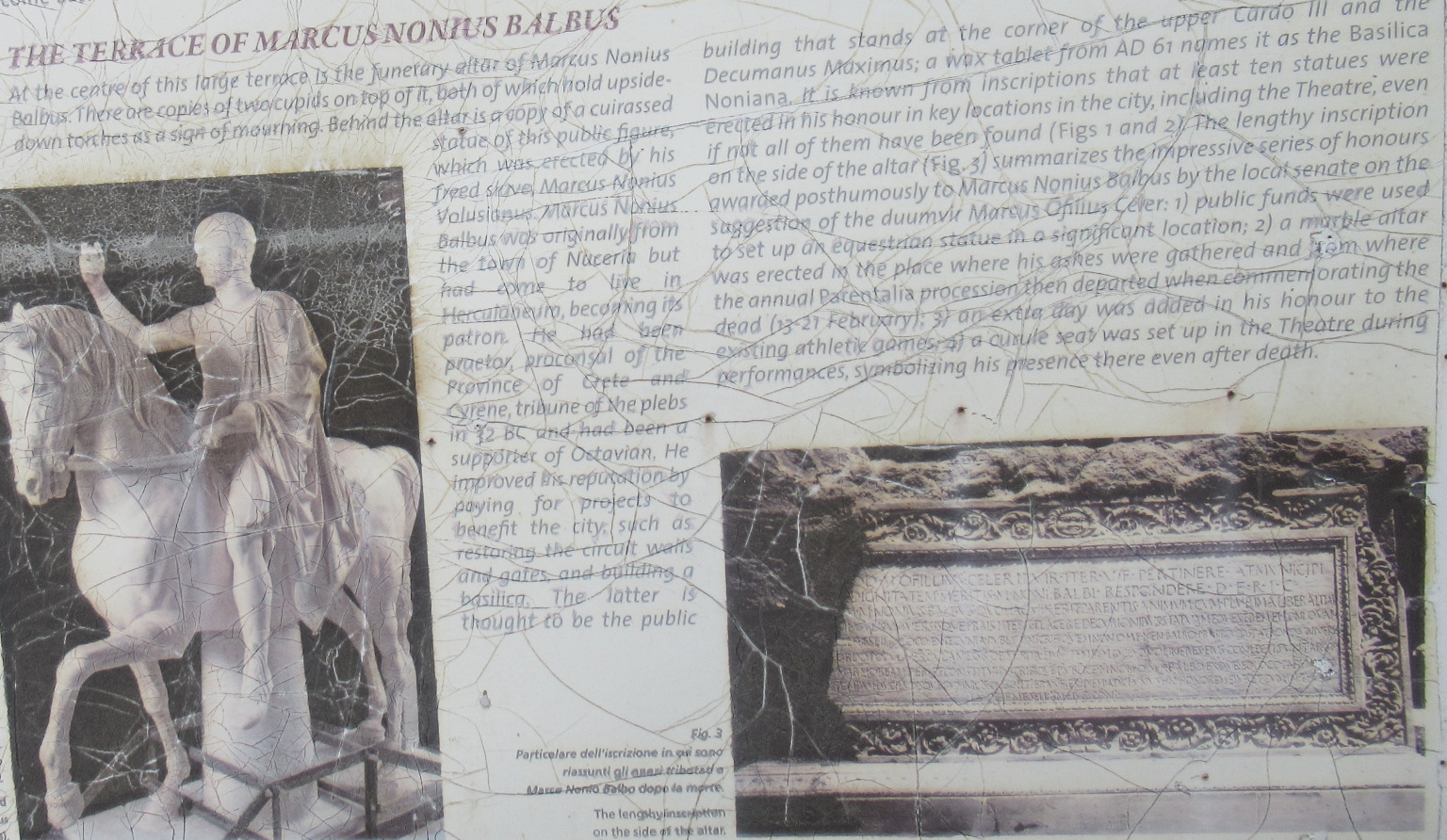
But first one passes the terrace of Marcus Nonius Balbus.
In short he was a man of power and wealth who did a lot for the city, so the city chose to honor him a lot:


Storage spaces at the ancient beach and harbor of Herculaneum.

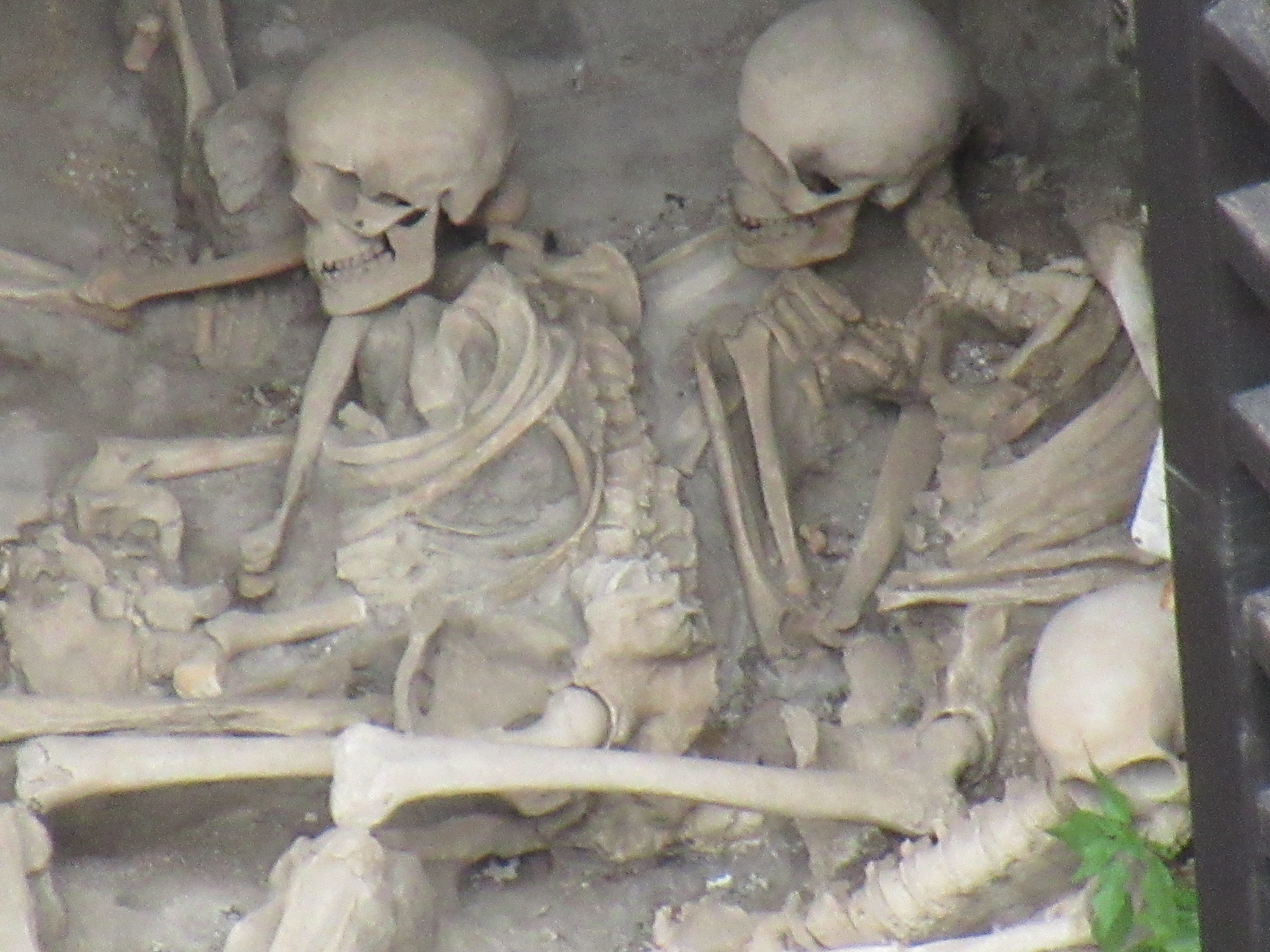
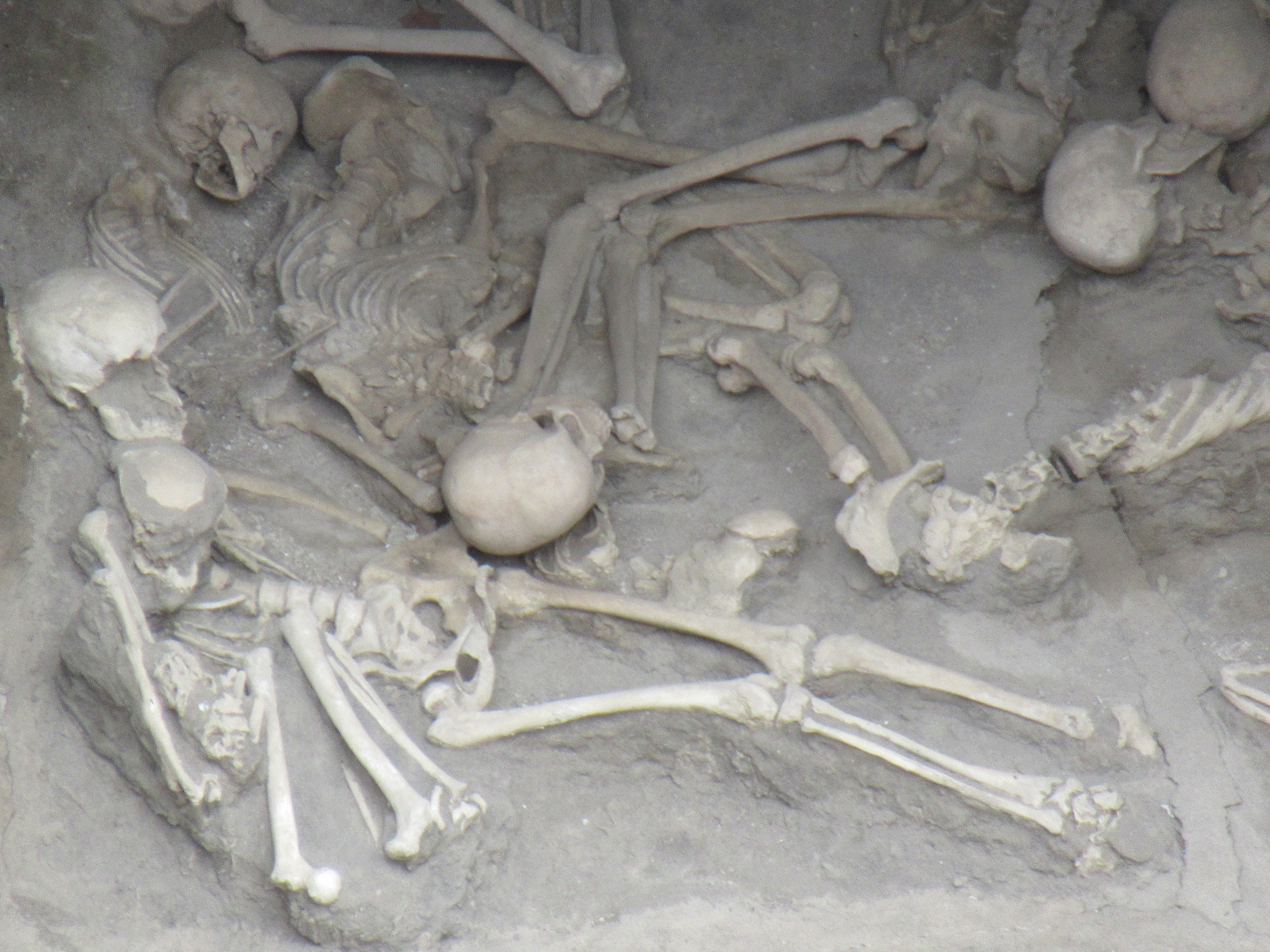
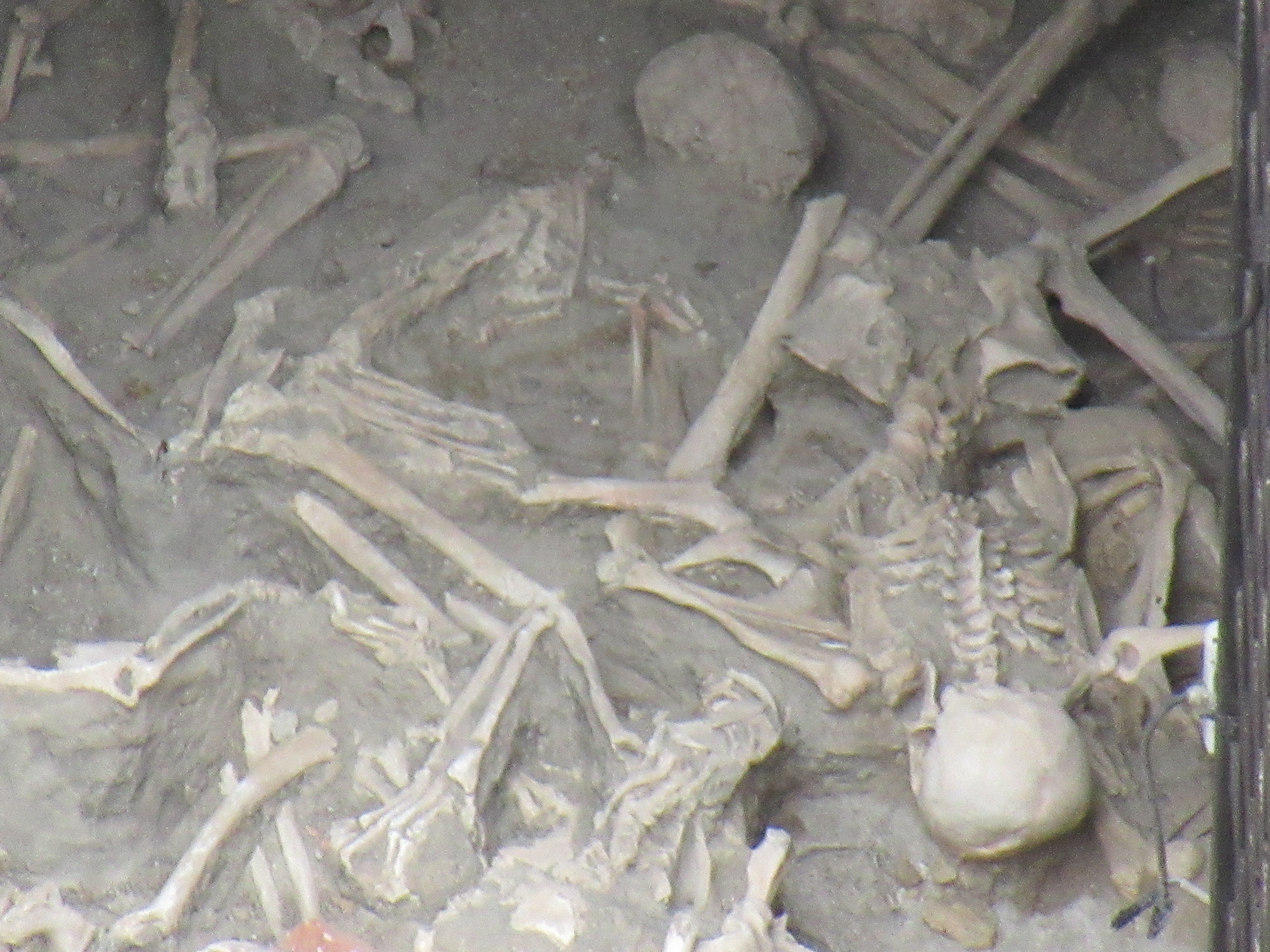
Before 1980 only two victims were discovered in the ruins of Herculaneum. But then, as they dug down to the level of the ancient harbor and beach… well, I’ll let the museum explain:





 Notes from a Composer