
Post 2 of the Pompeii Series
In the first post we explored the streets of Pompeii, with the temples, the Forum, the amphitheatres, bathhouses and the Coliseum.
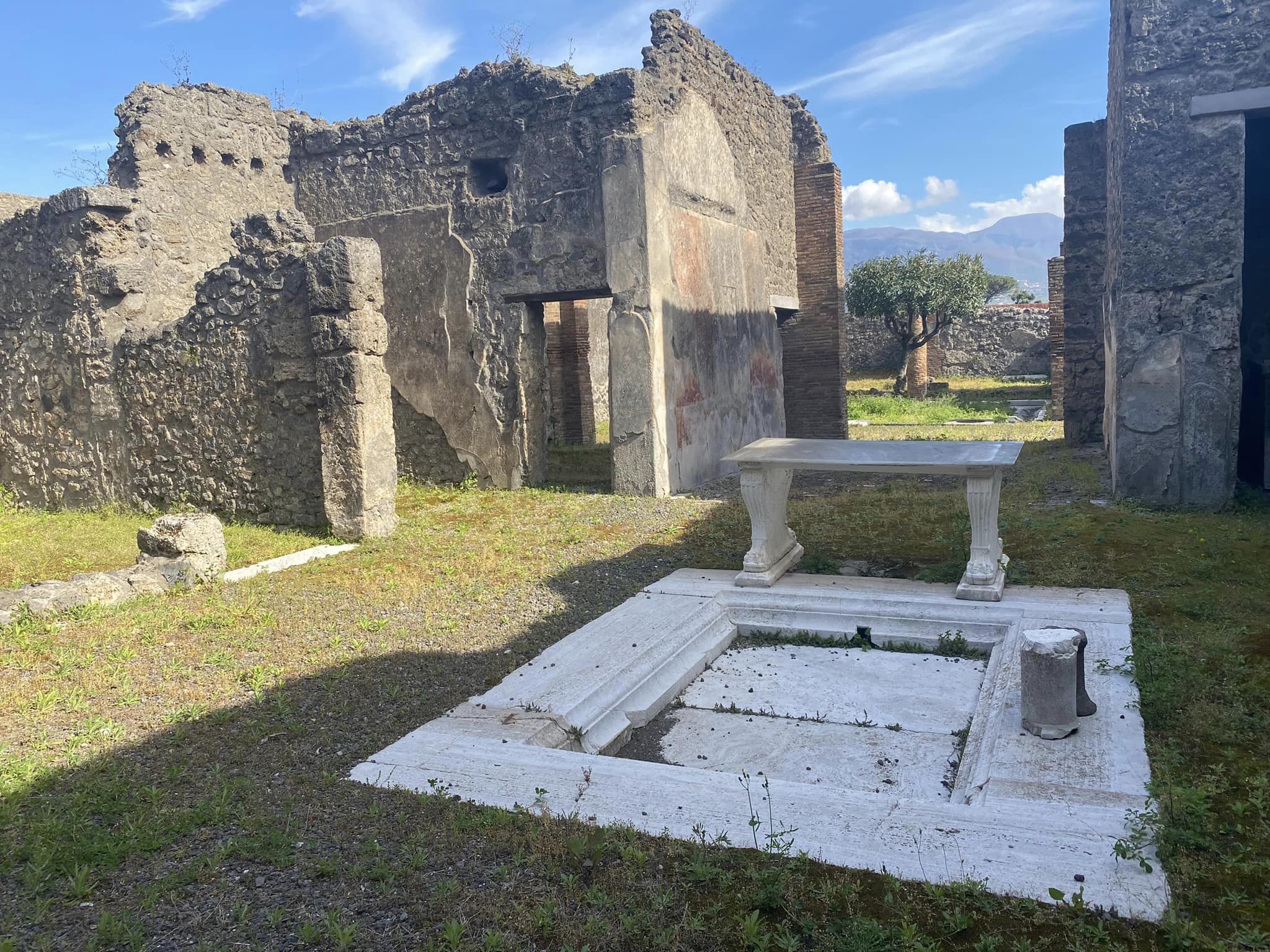
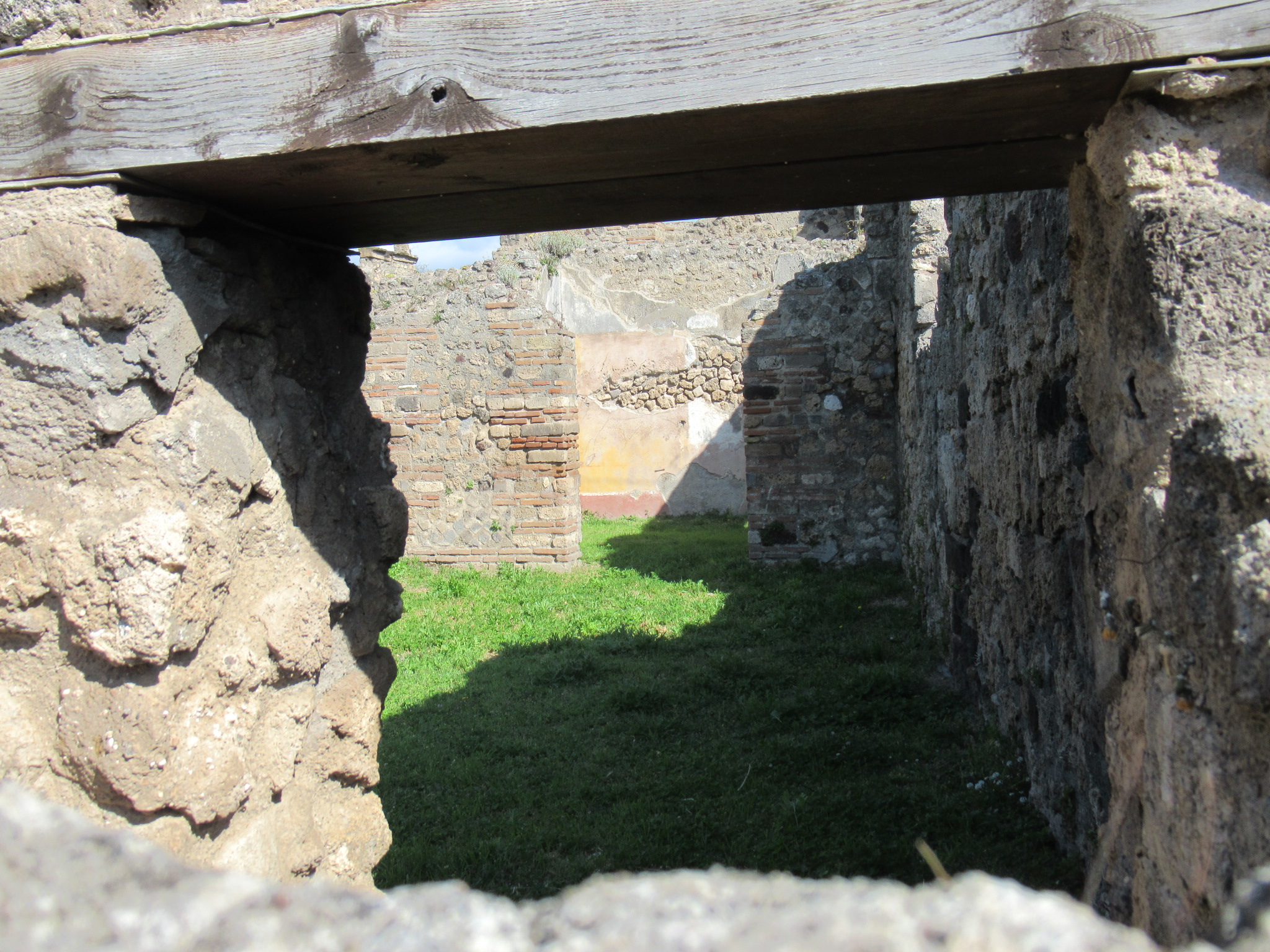
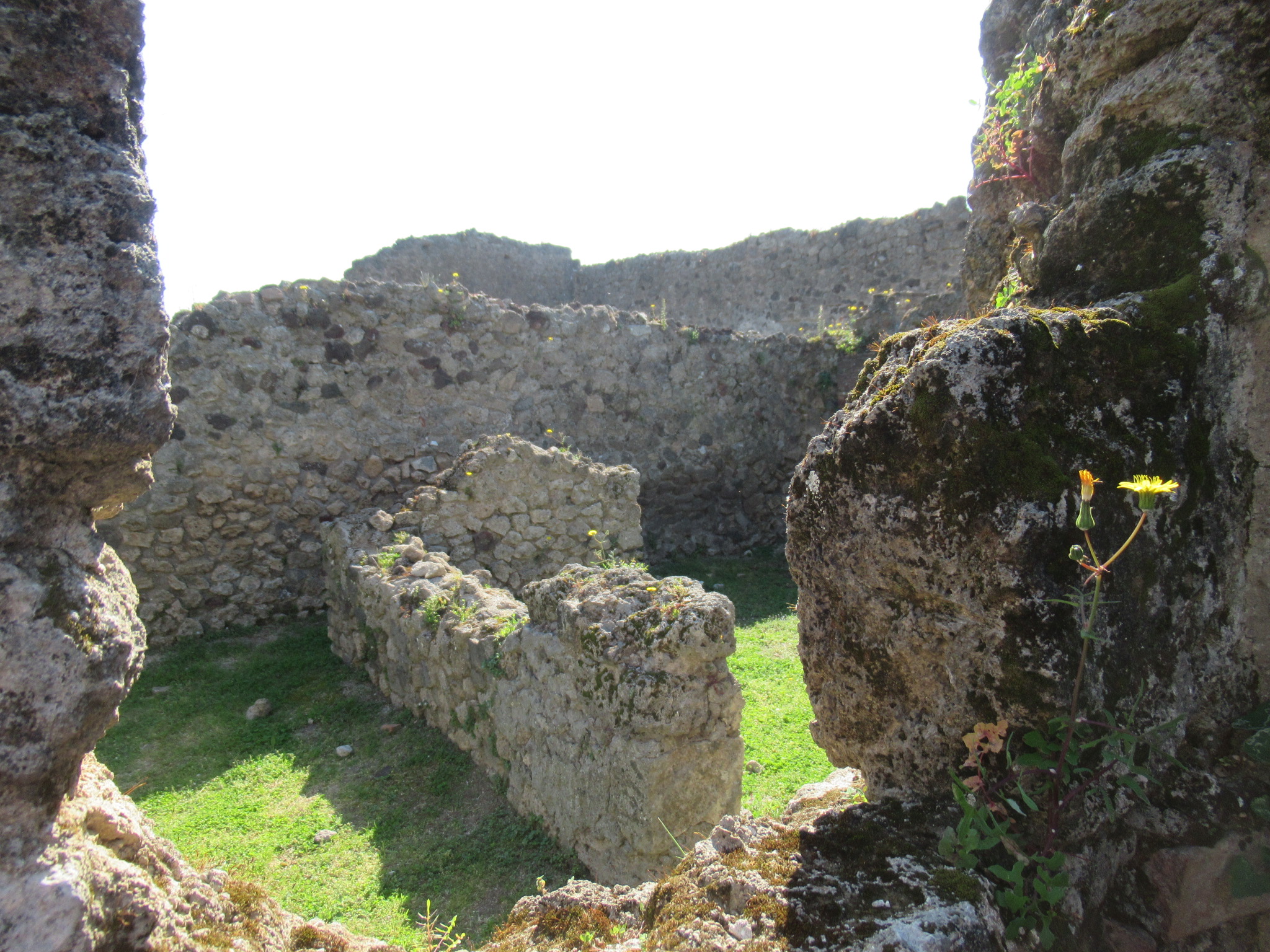
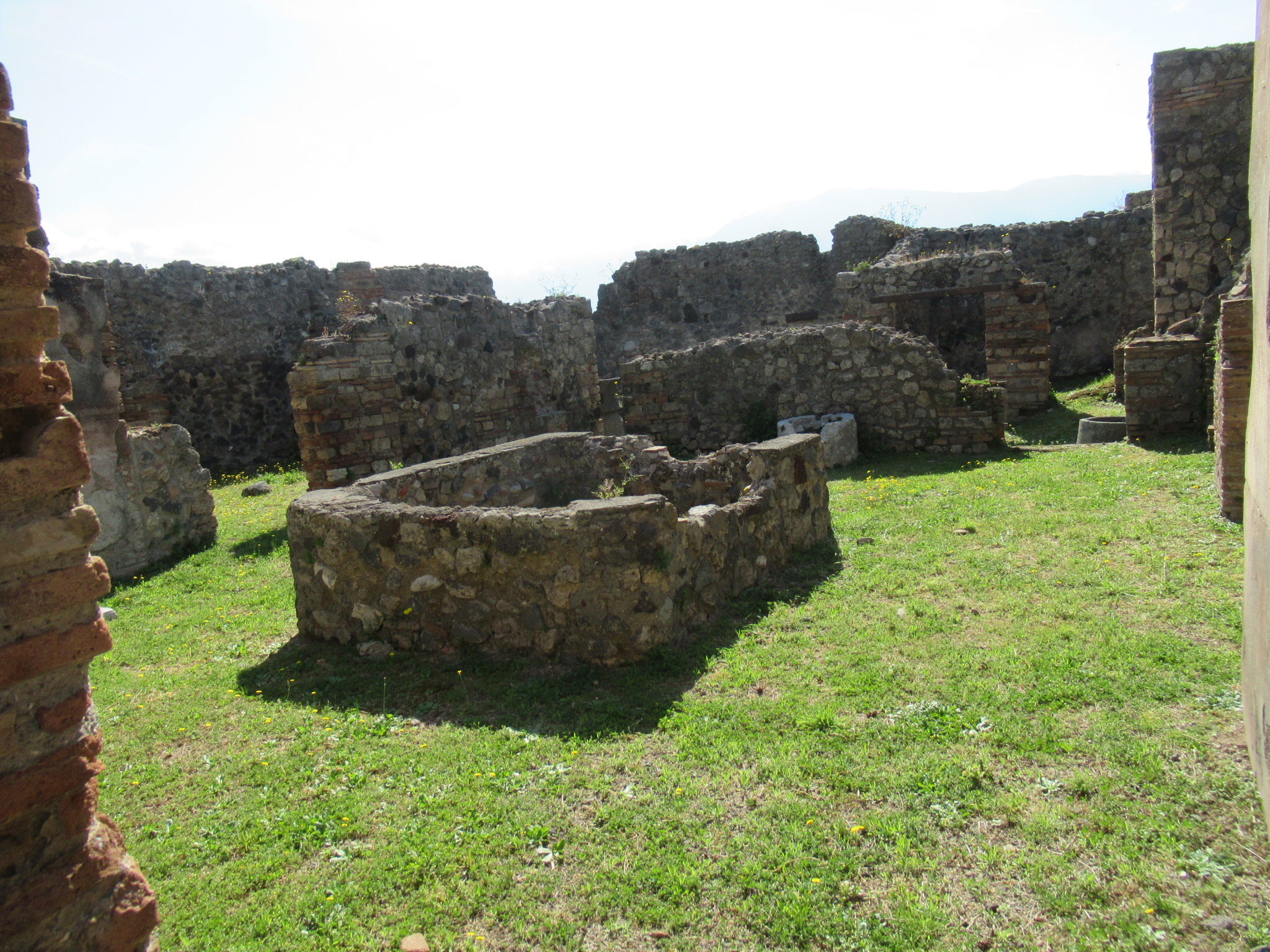
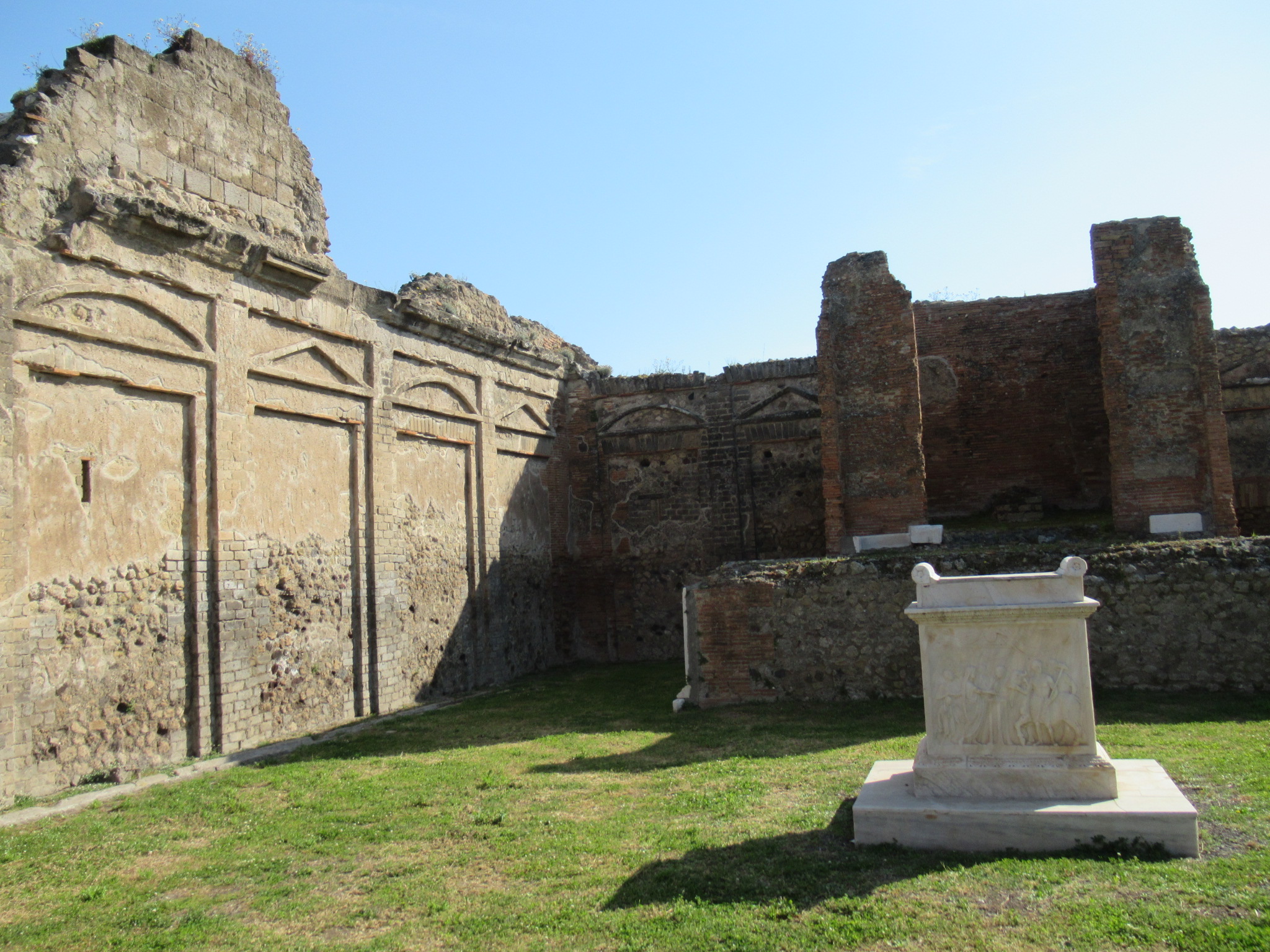
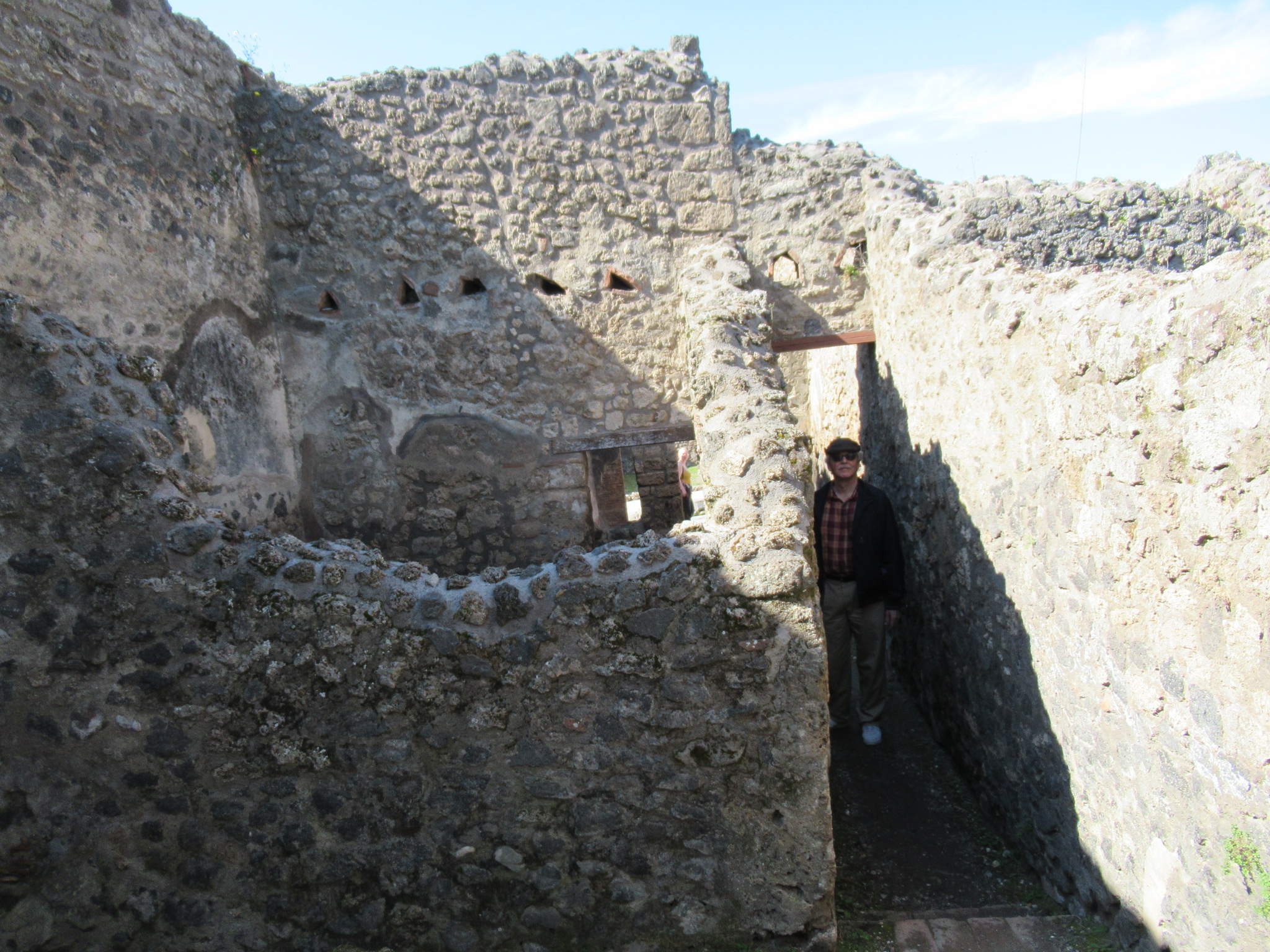
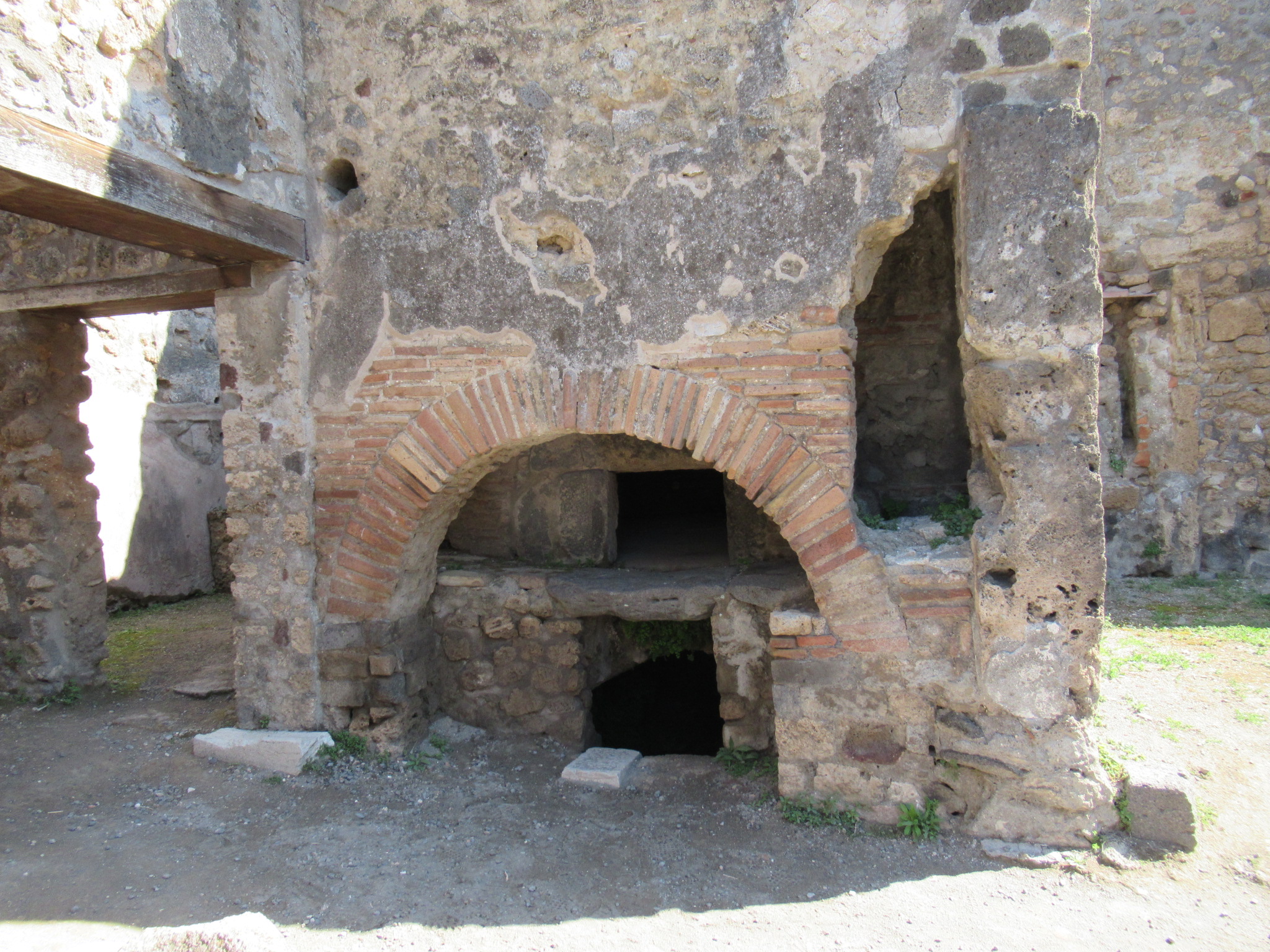
This time we will look at the homes of the inhabitants of Pompeii. The homes of the wealthy and the less well off stand generally side by side all districts of the city (with some very grand estates situated in the suburban area to the West). Unfortunately the more humble homes are mostly only preserved in the bare outlines of what is left of their walls. However in many grand homes much resplendent detail has been preserved for later centuries to uncover under the volcanic ash.
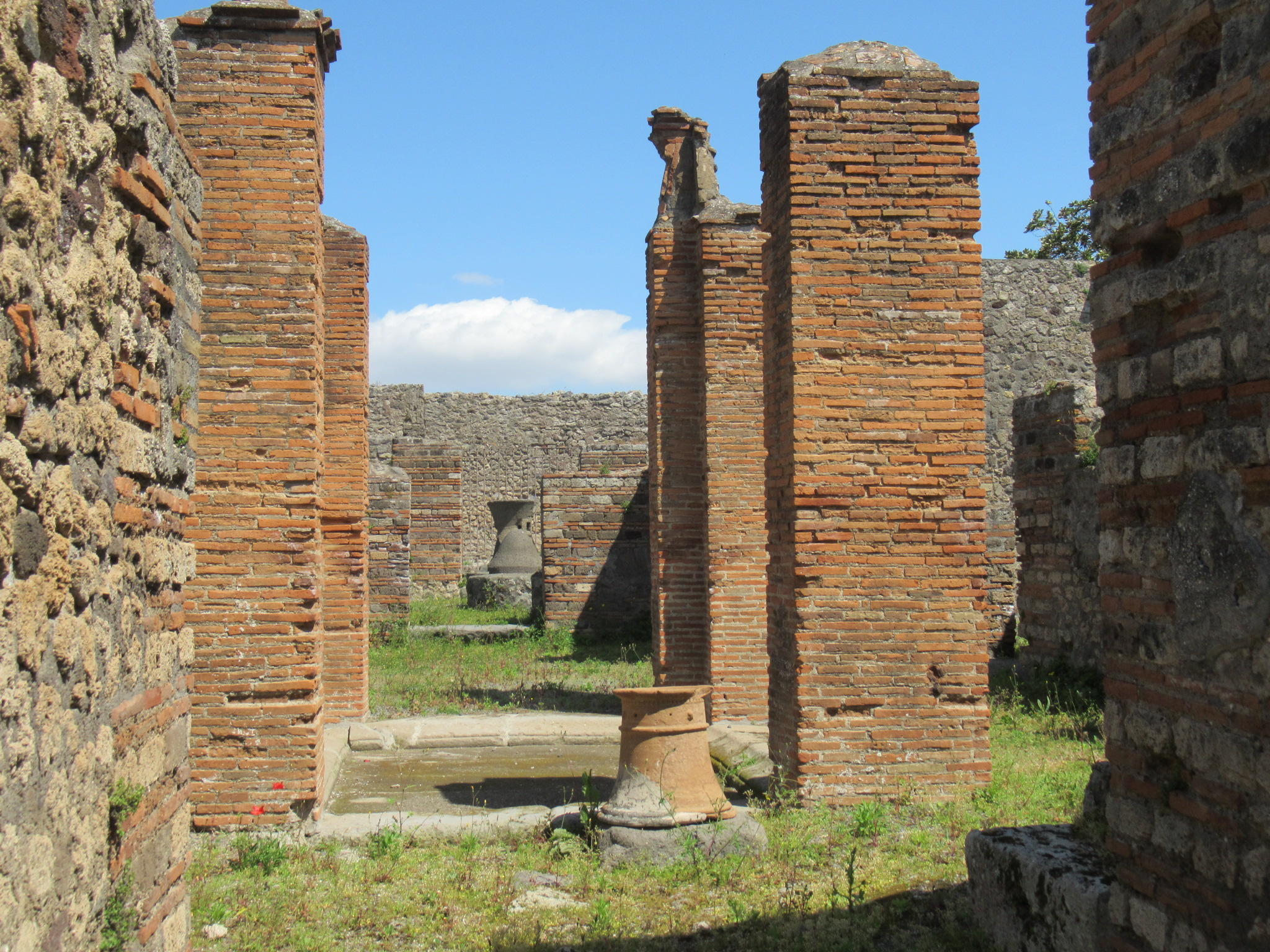
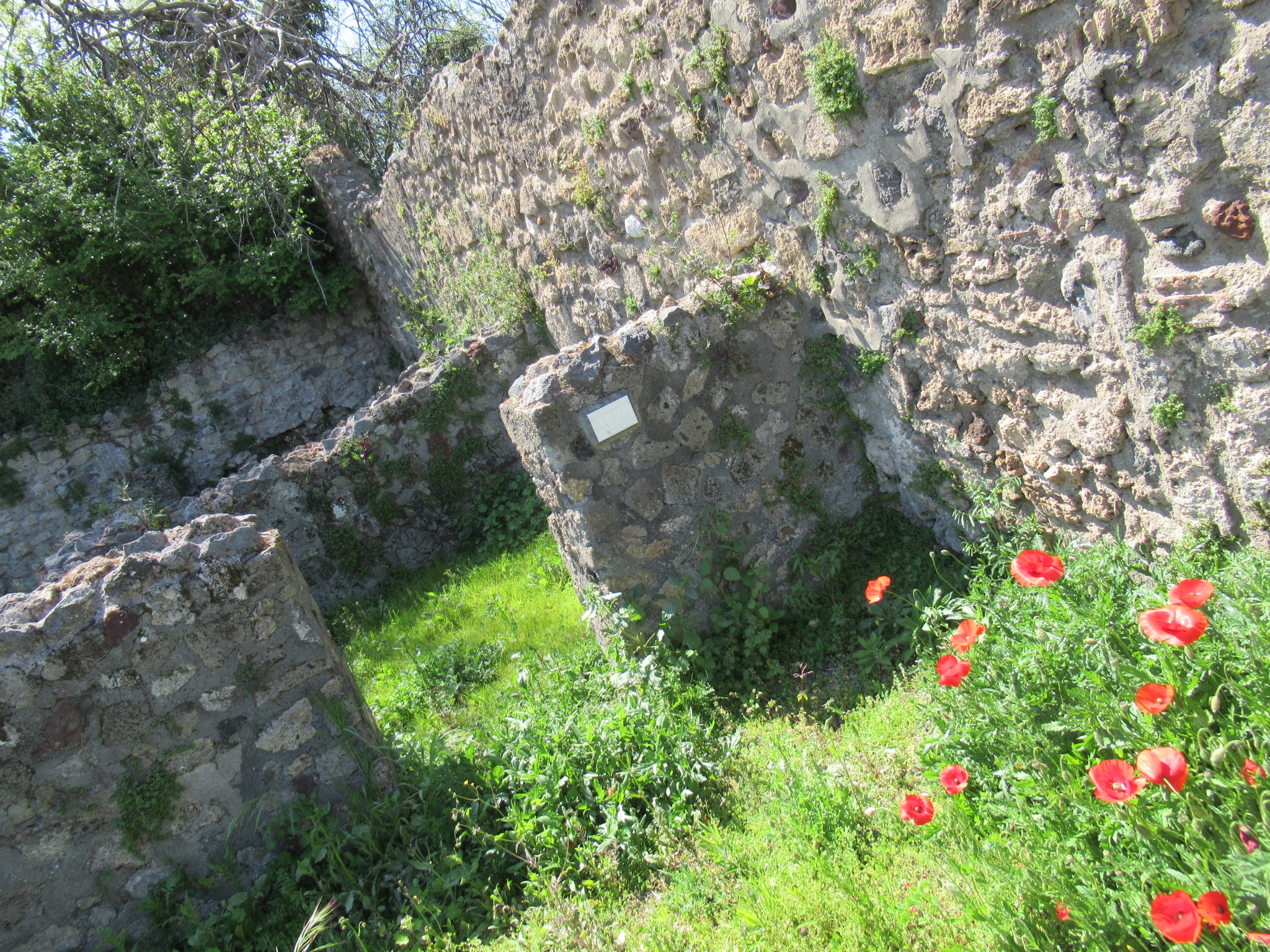
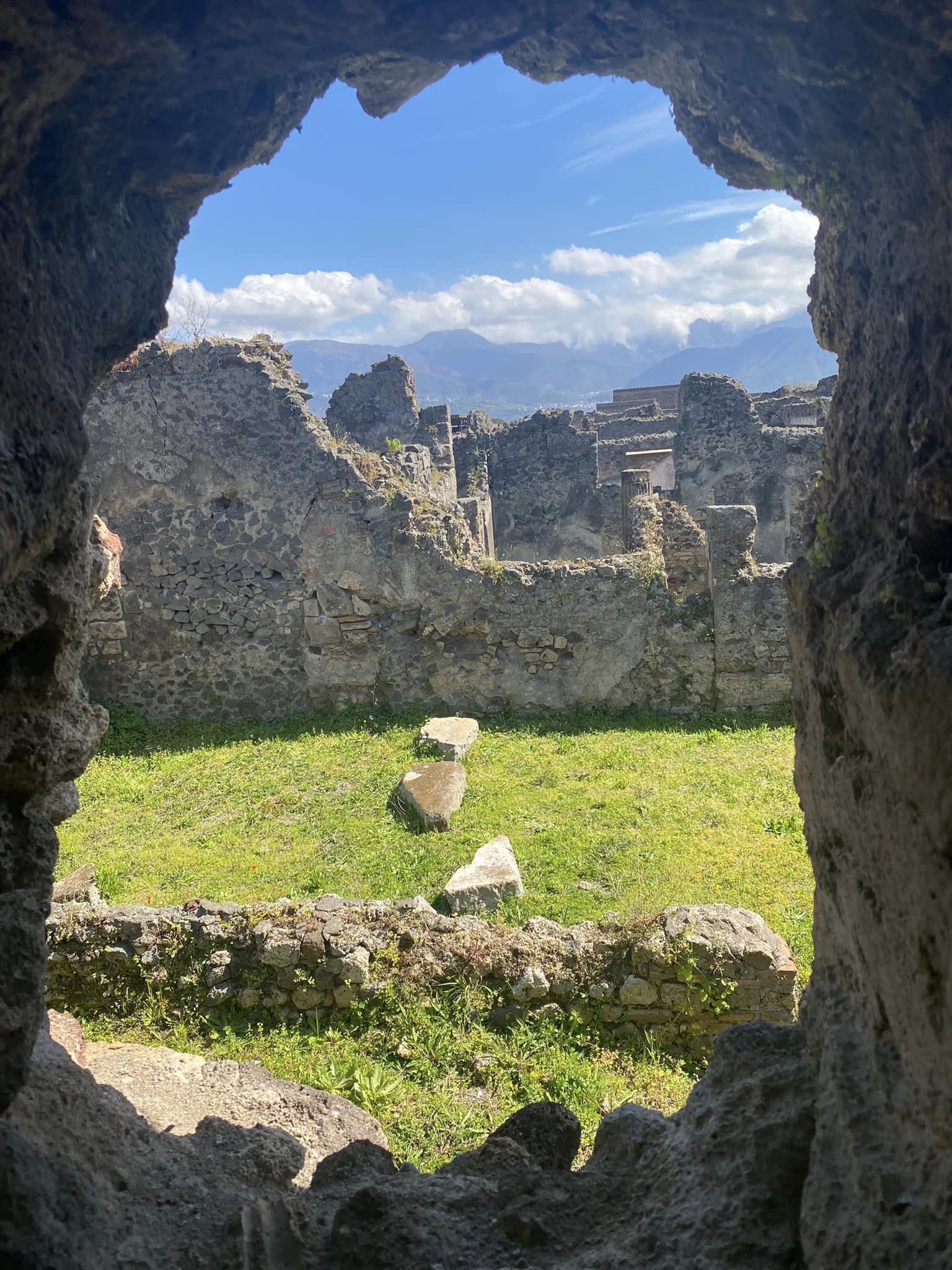
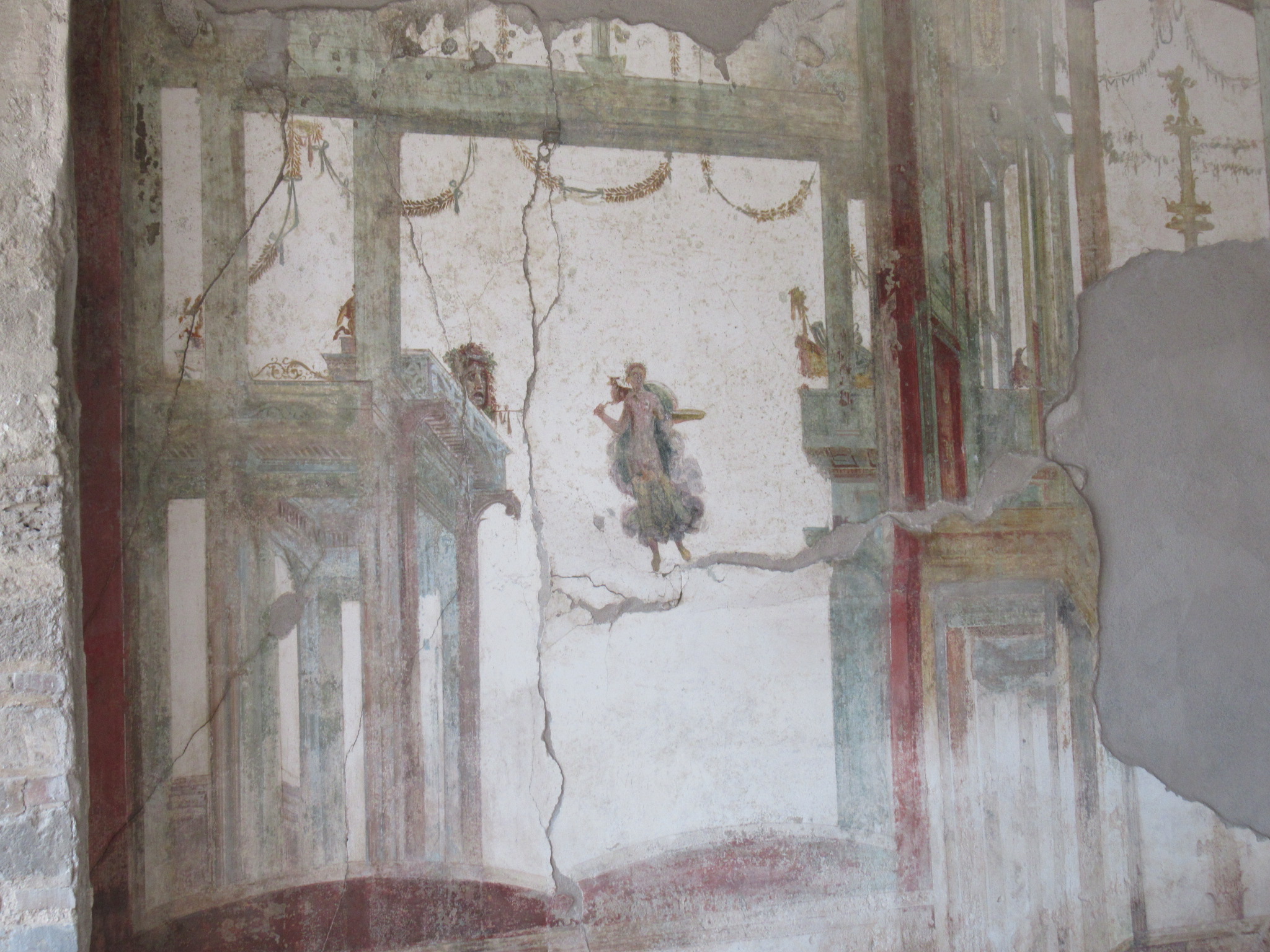
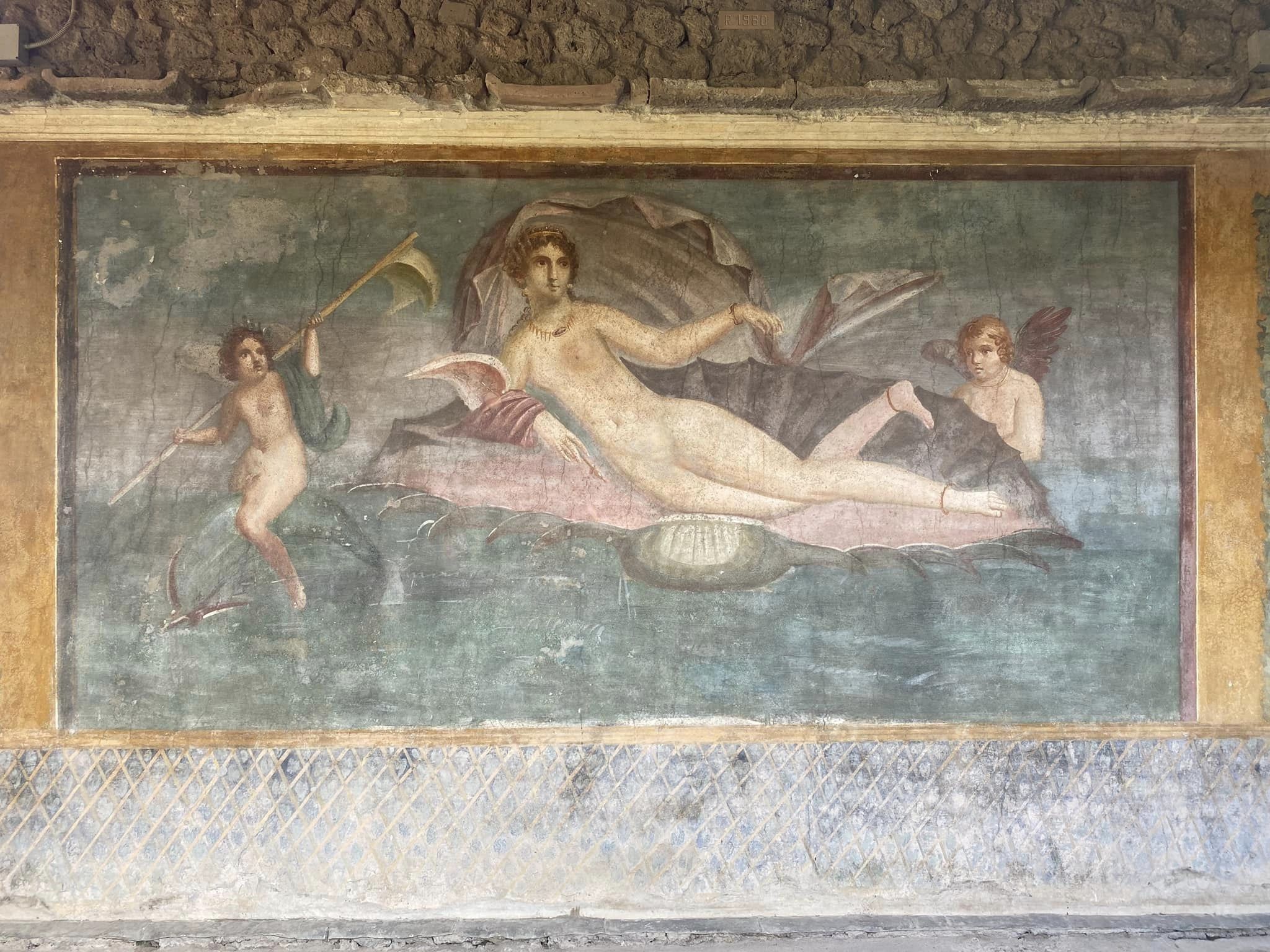
These pictures will start with the humbler ruins, starker examples of indoor spaces, then move up the socioeconomic ladder to the better preserved, more elegant homes and gardens of Pompeii’s upper class. We’ll then take a more detailed look at the many wall paintings that covered every inch of the homes of the wealthy.
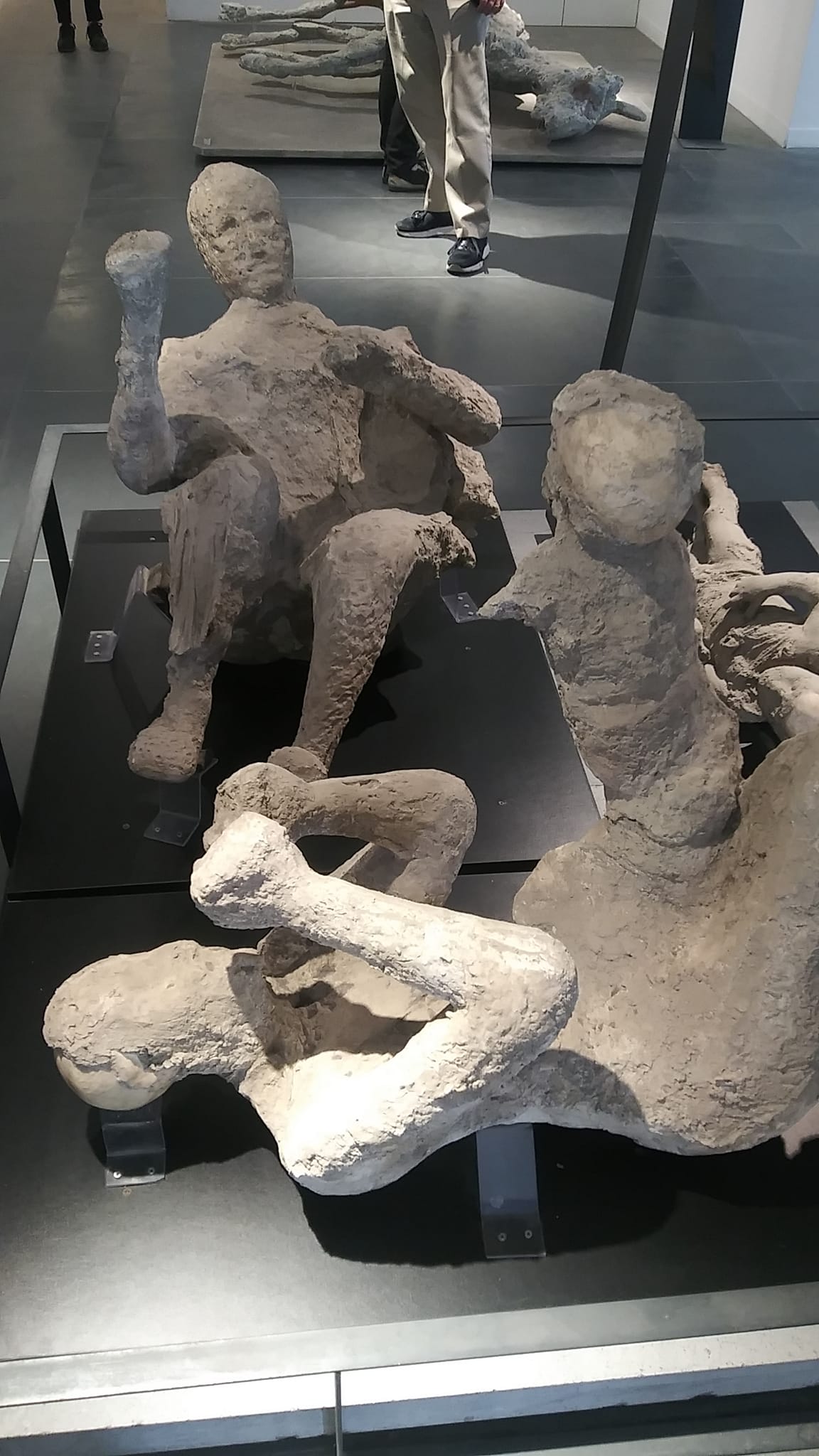
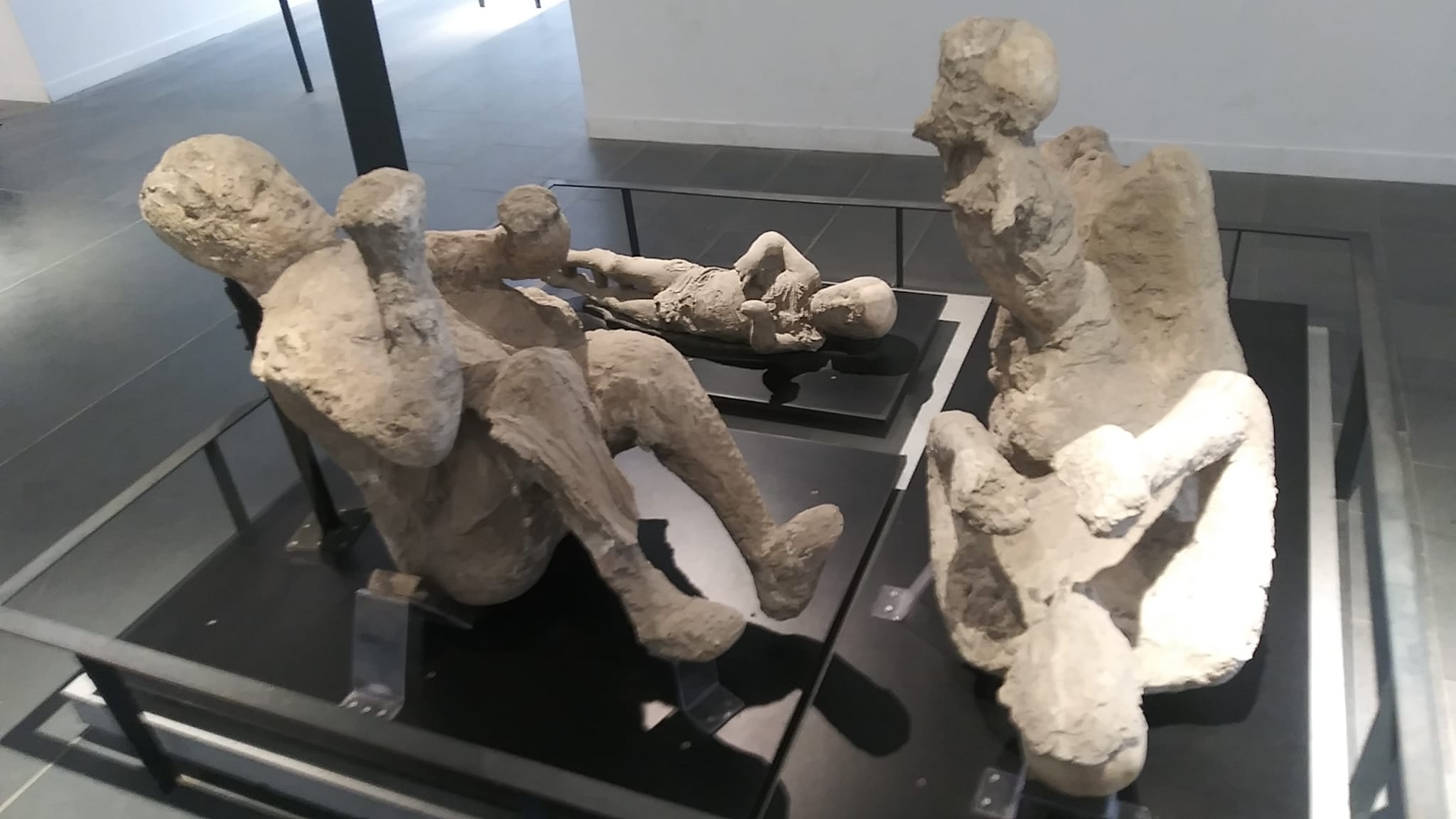
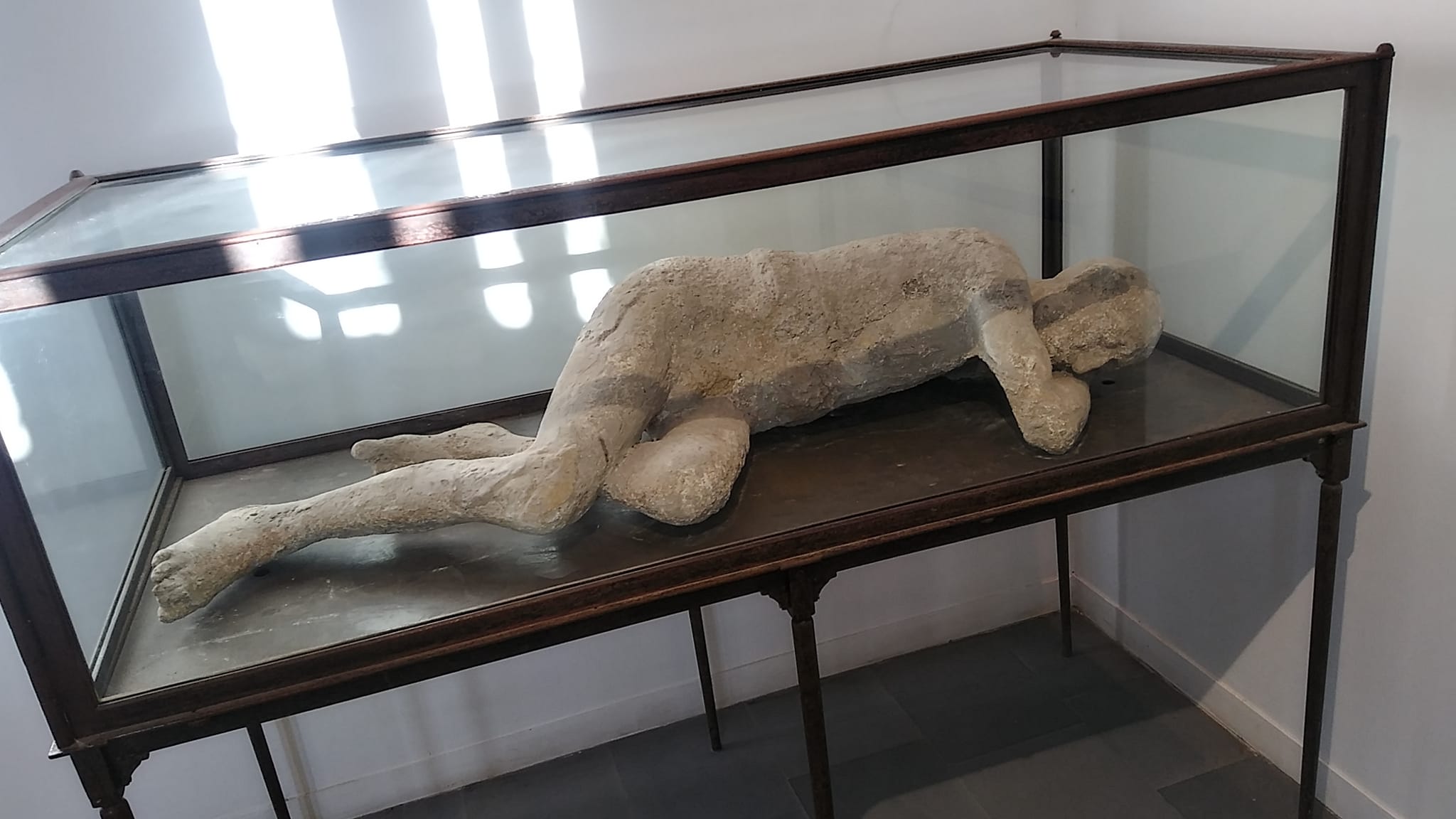
In some homes plaster casts of Vesuvius’ victims were displayed in the very spots where they originally fell. Again, these are not the actual bodies of the dead, but the hollows they left behind after decomposing in the volcanic ash that covered them. However some actual skeletons are also displayed.

The mosaic equivalent of the front door welcome mat.
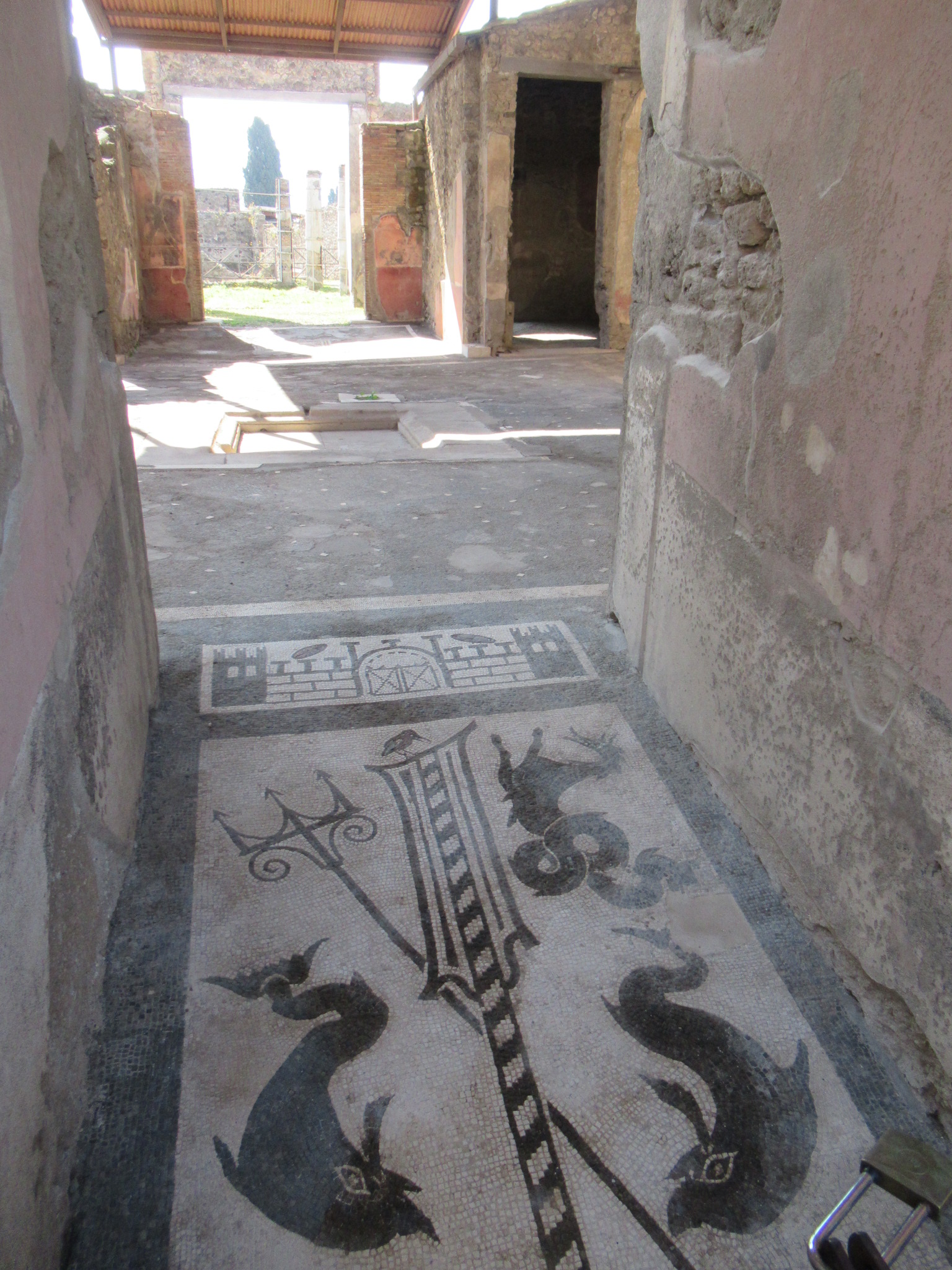
The entrance mosaic into the home of someone whose wealth was likely made via the sea.
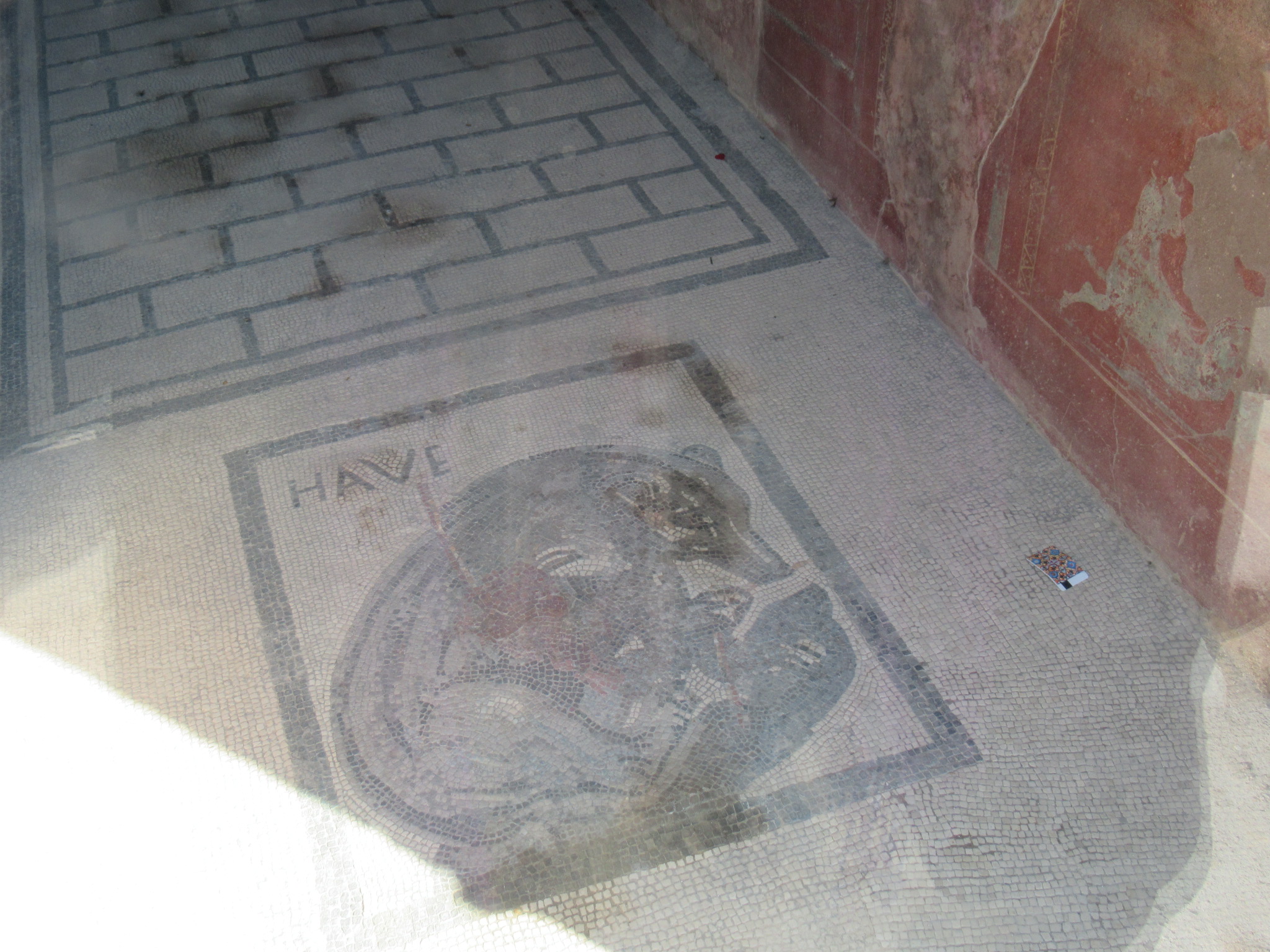
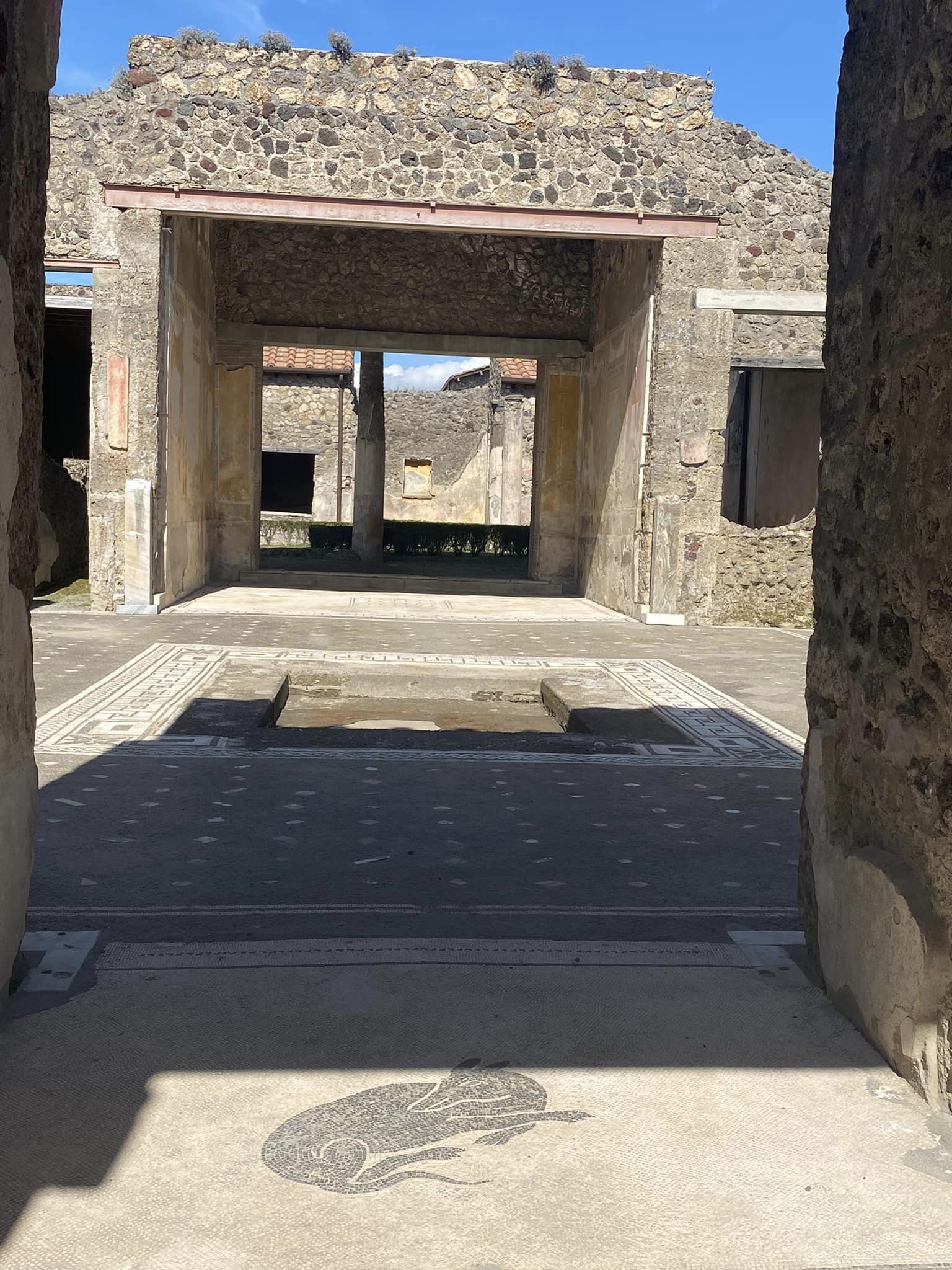
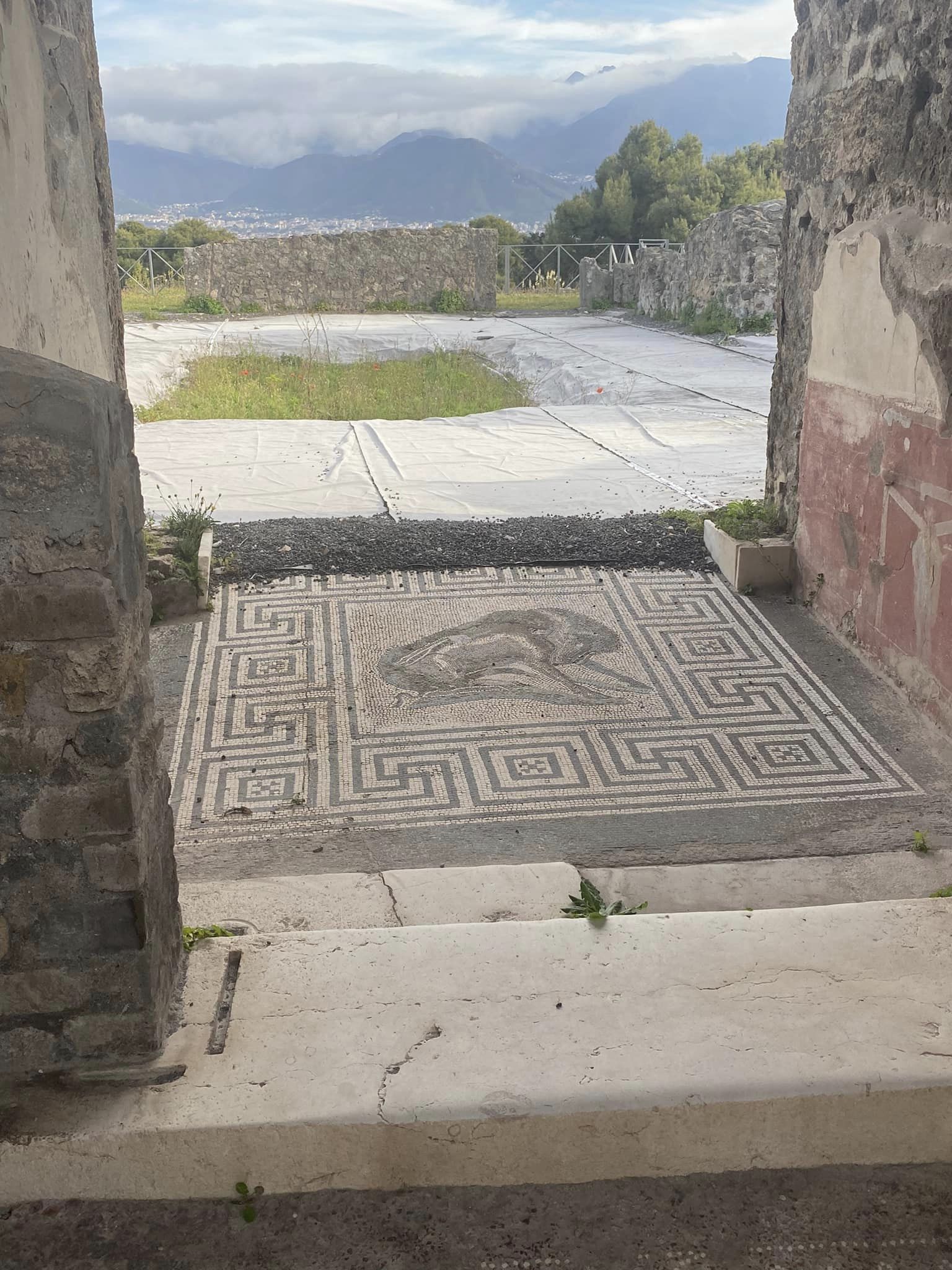
Many front entrance mosaics feature guard dogs. “Have” is the Oscan version of “ave”, meaning hello/goodbye.
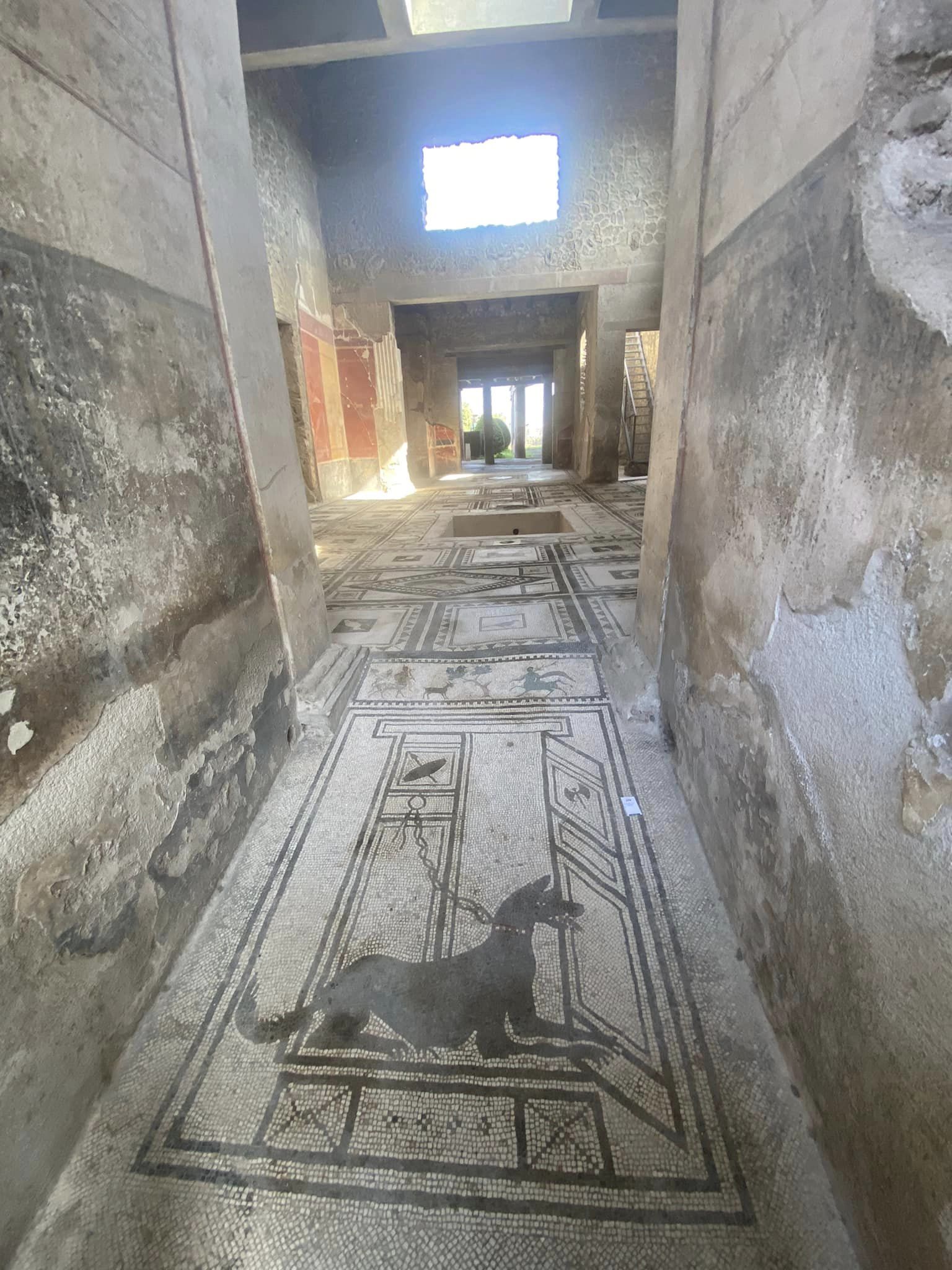
The guard dogs (and museum barriers) kept us from entering these particular homes, but the camera’s zoom does allow for closer inspection of the spectacular floors of this home with the more alert and chained mosaic guard dog.
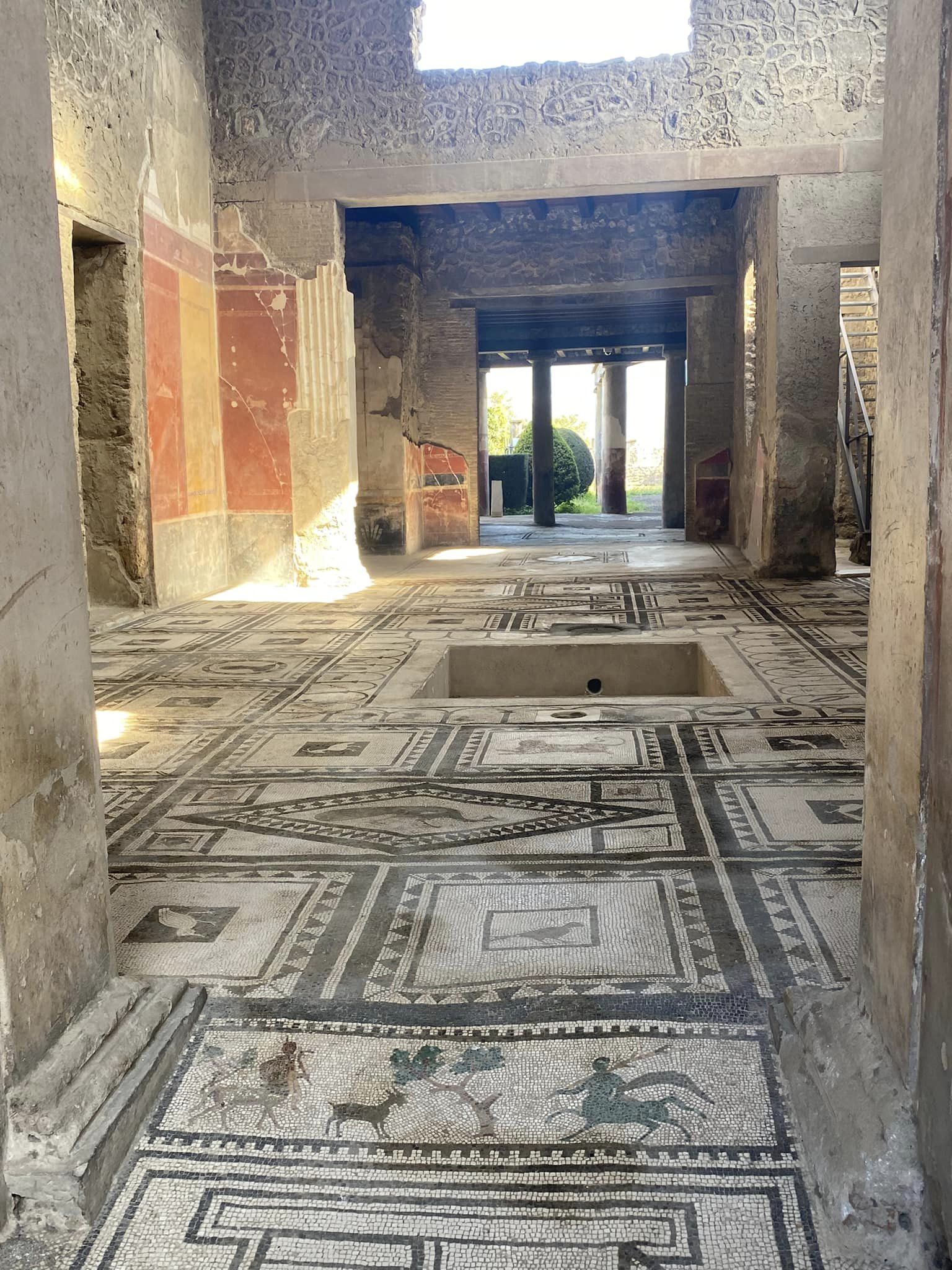

And then there are those grander homes we were allowed to enter…
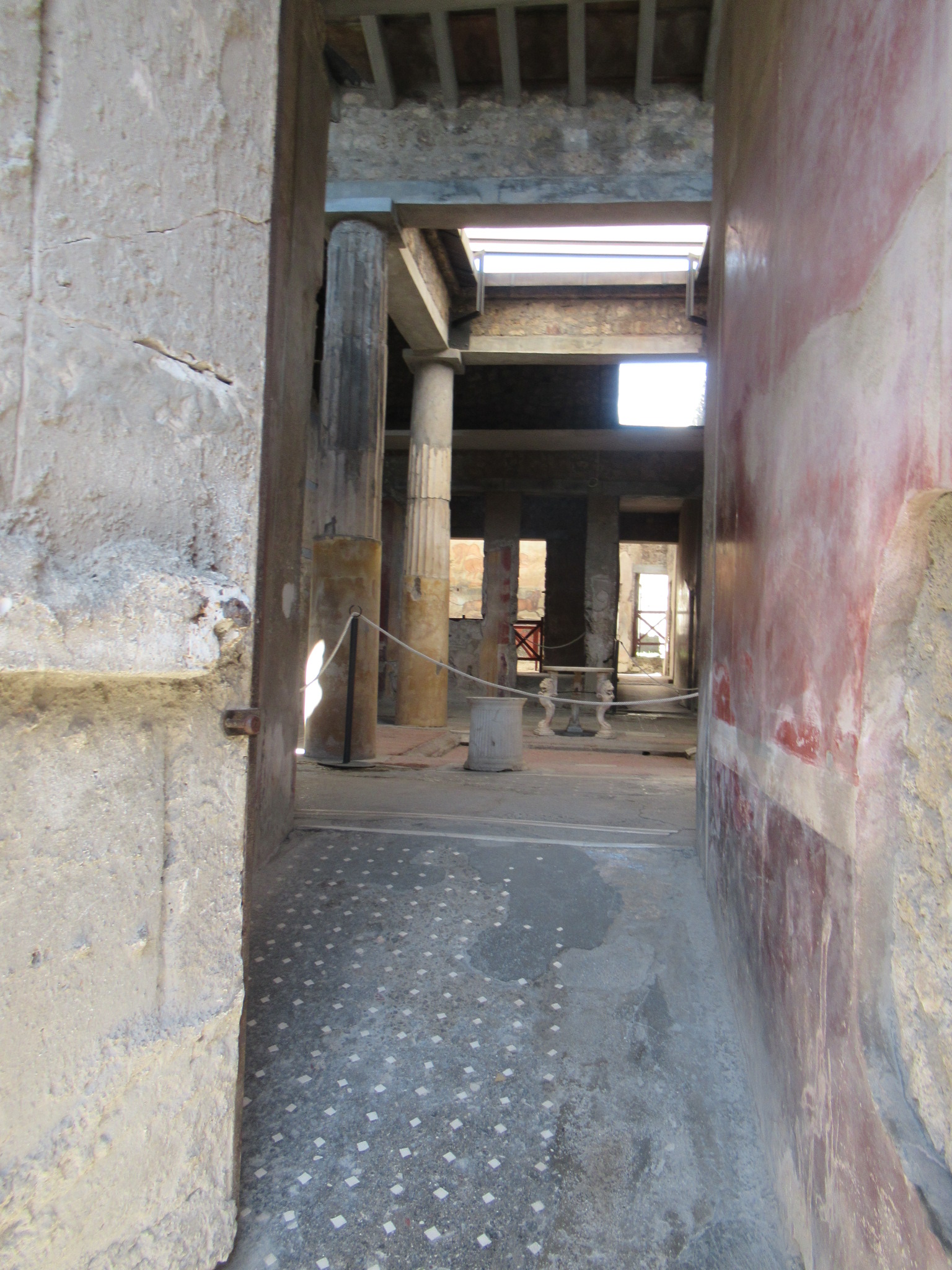
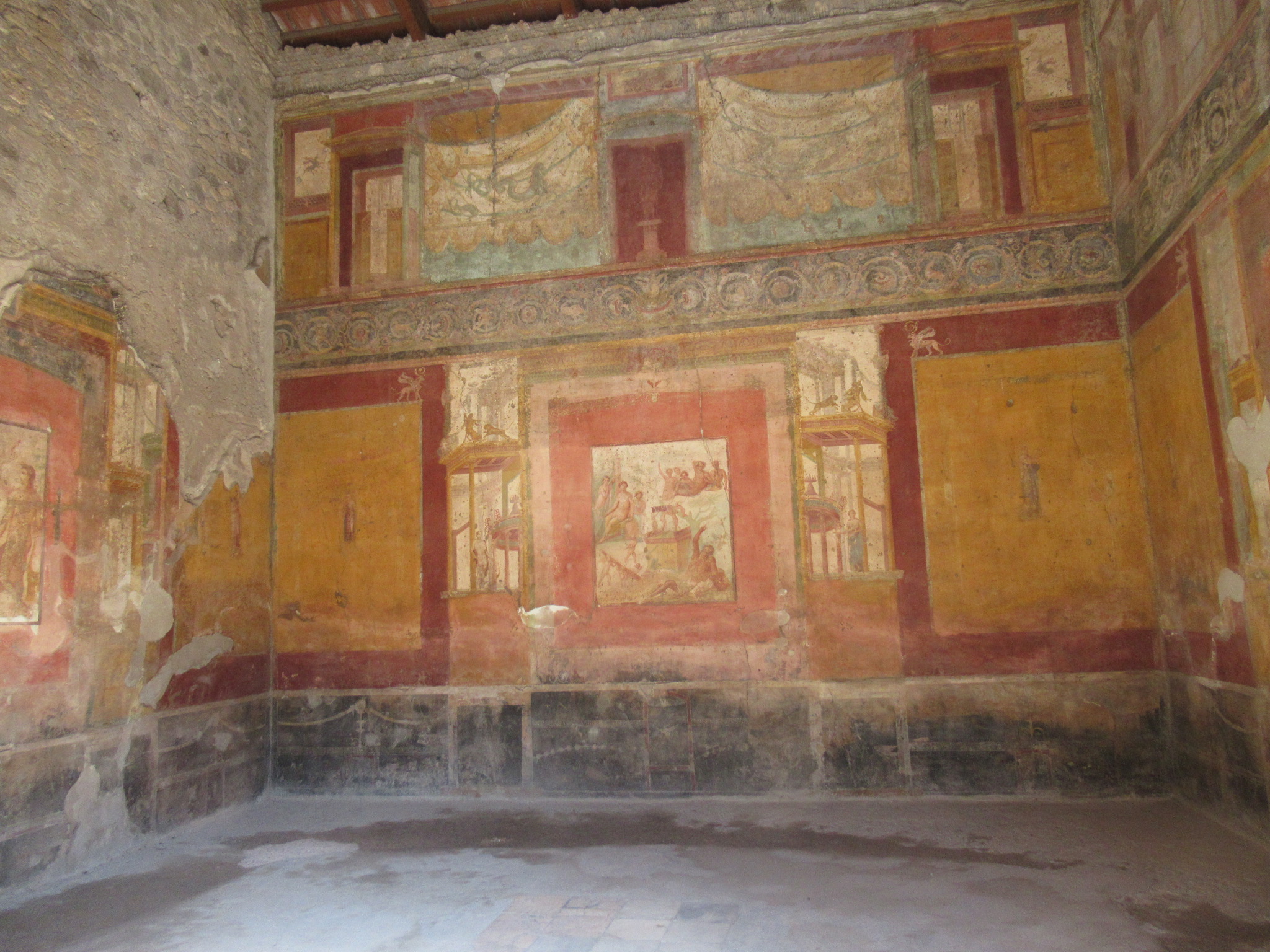
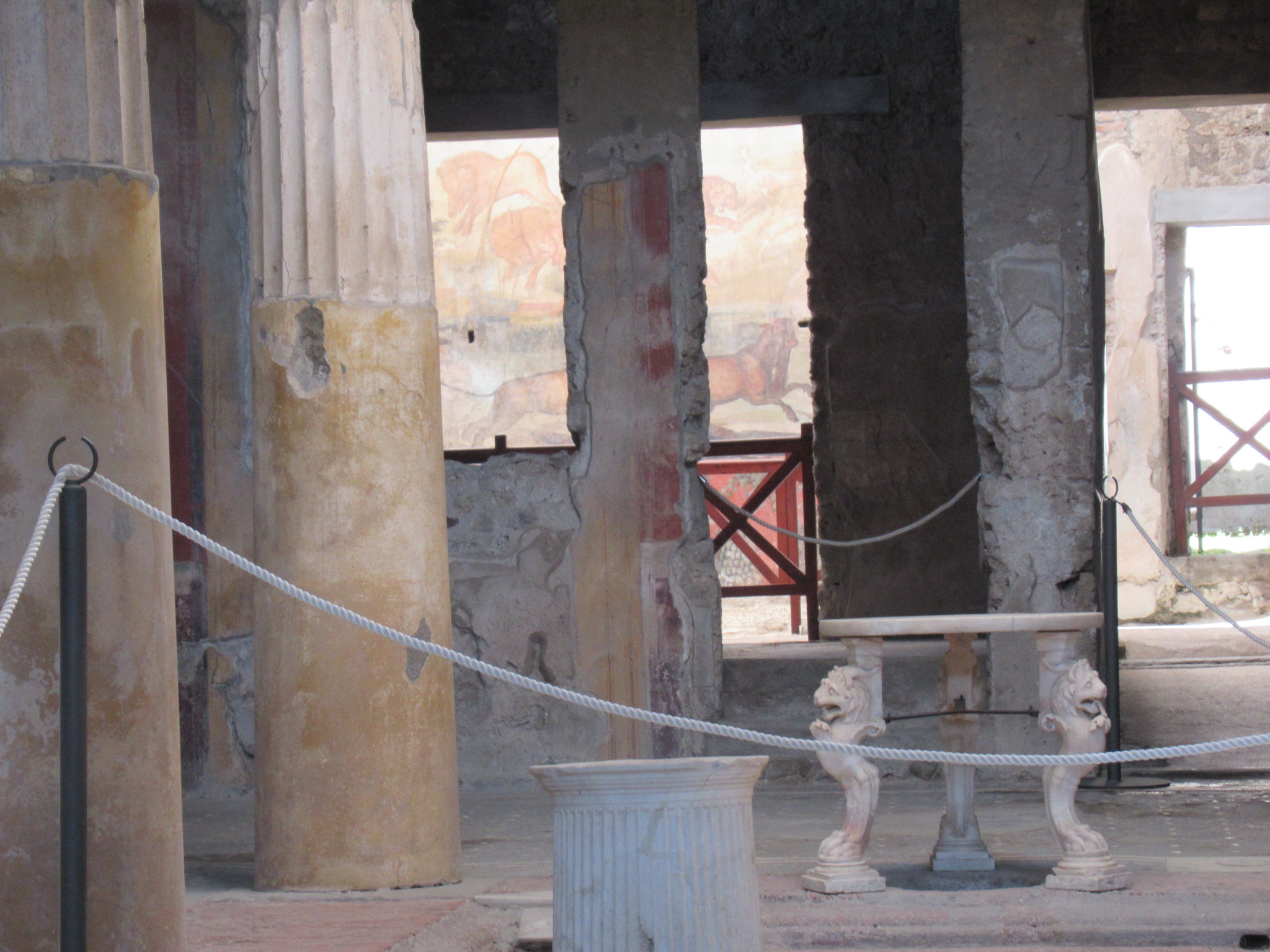
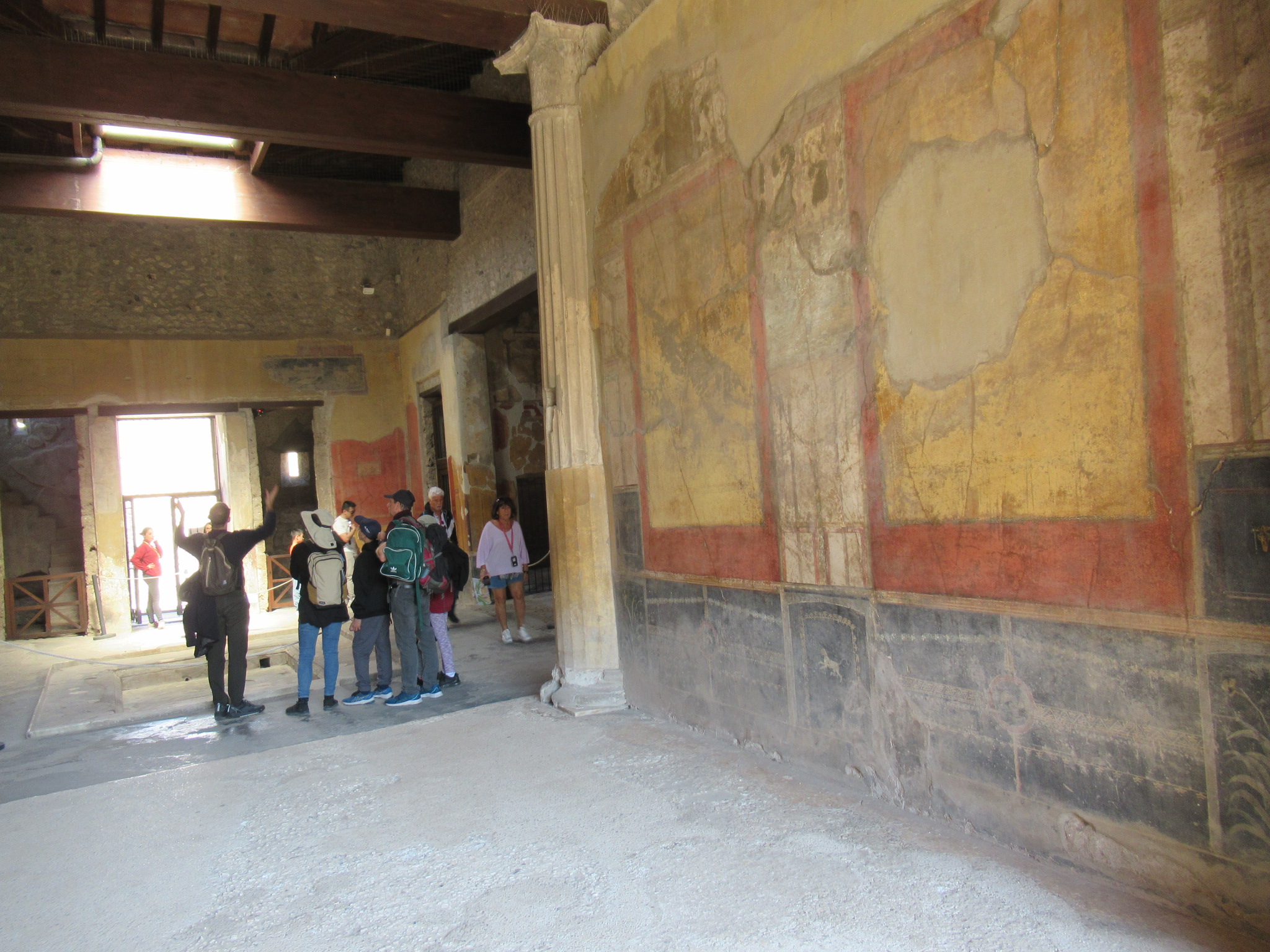
The very wealthy would direct heated water below the floors to warm the rooms in cold days.

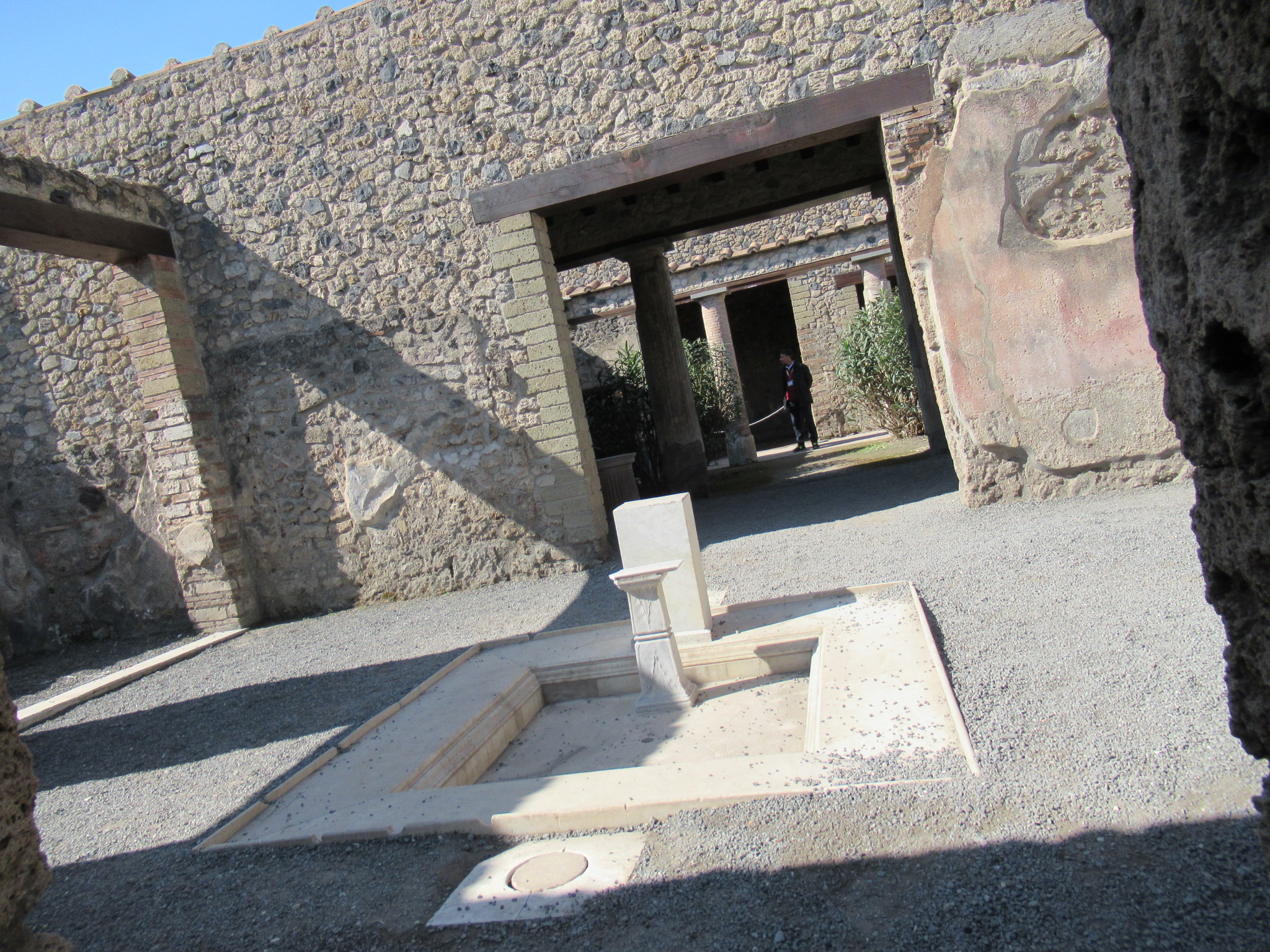
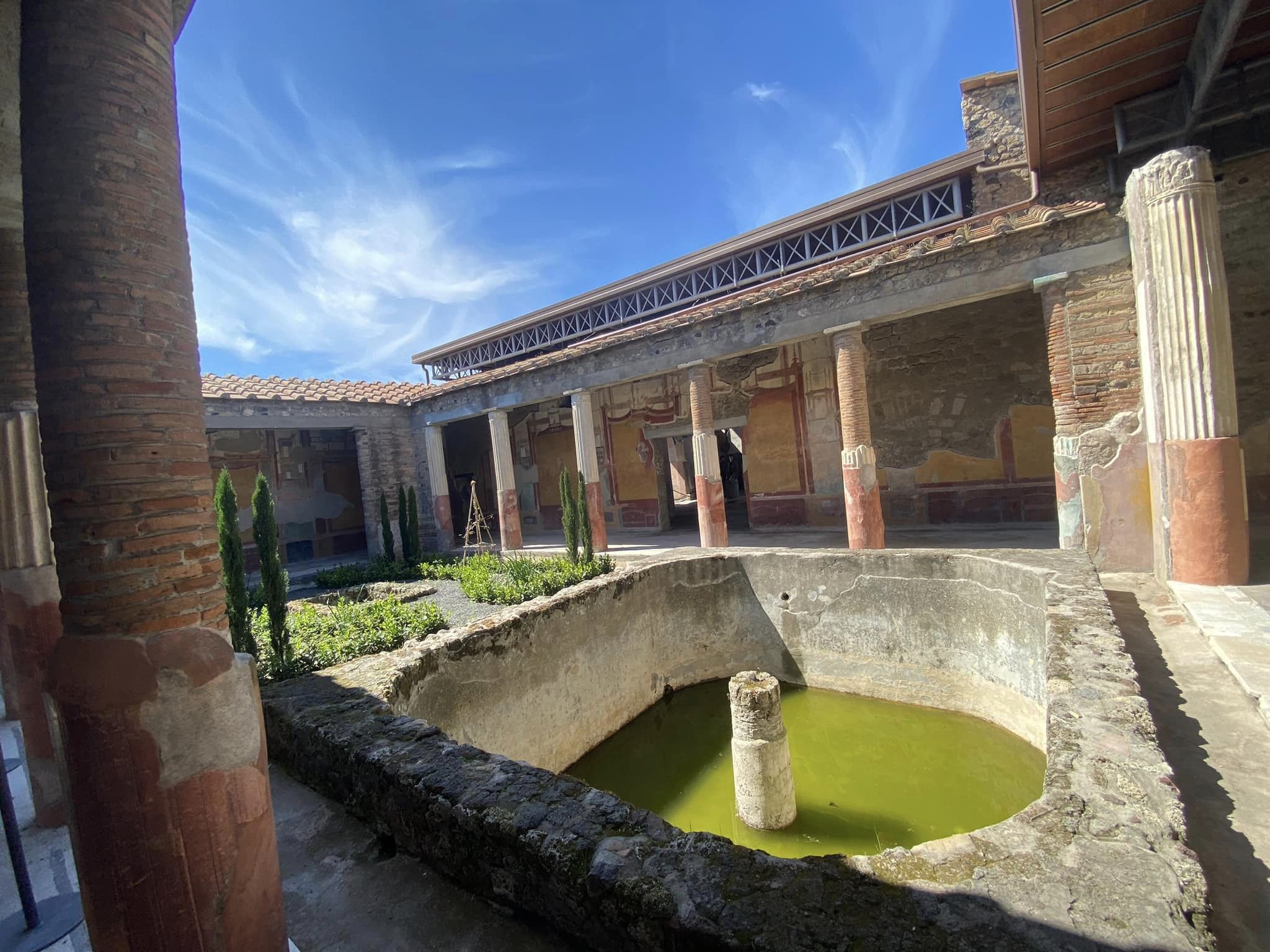
A pool in the inner courtyard.
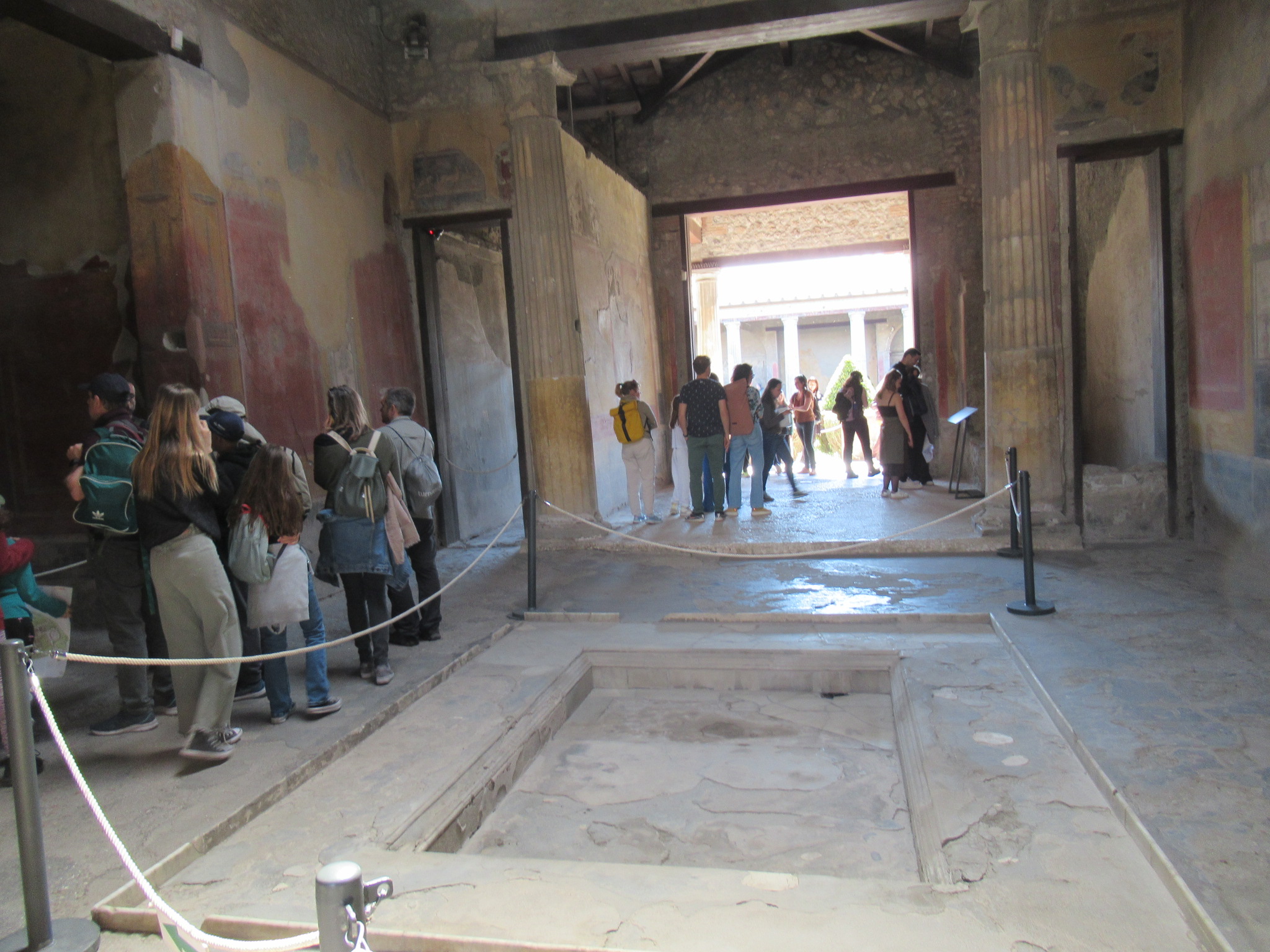
The opening in the roof above the pool…

Another example of this system:
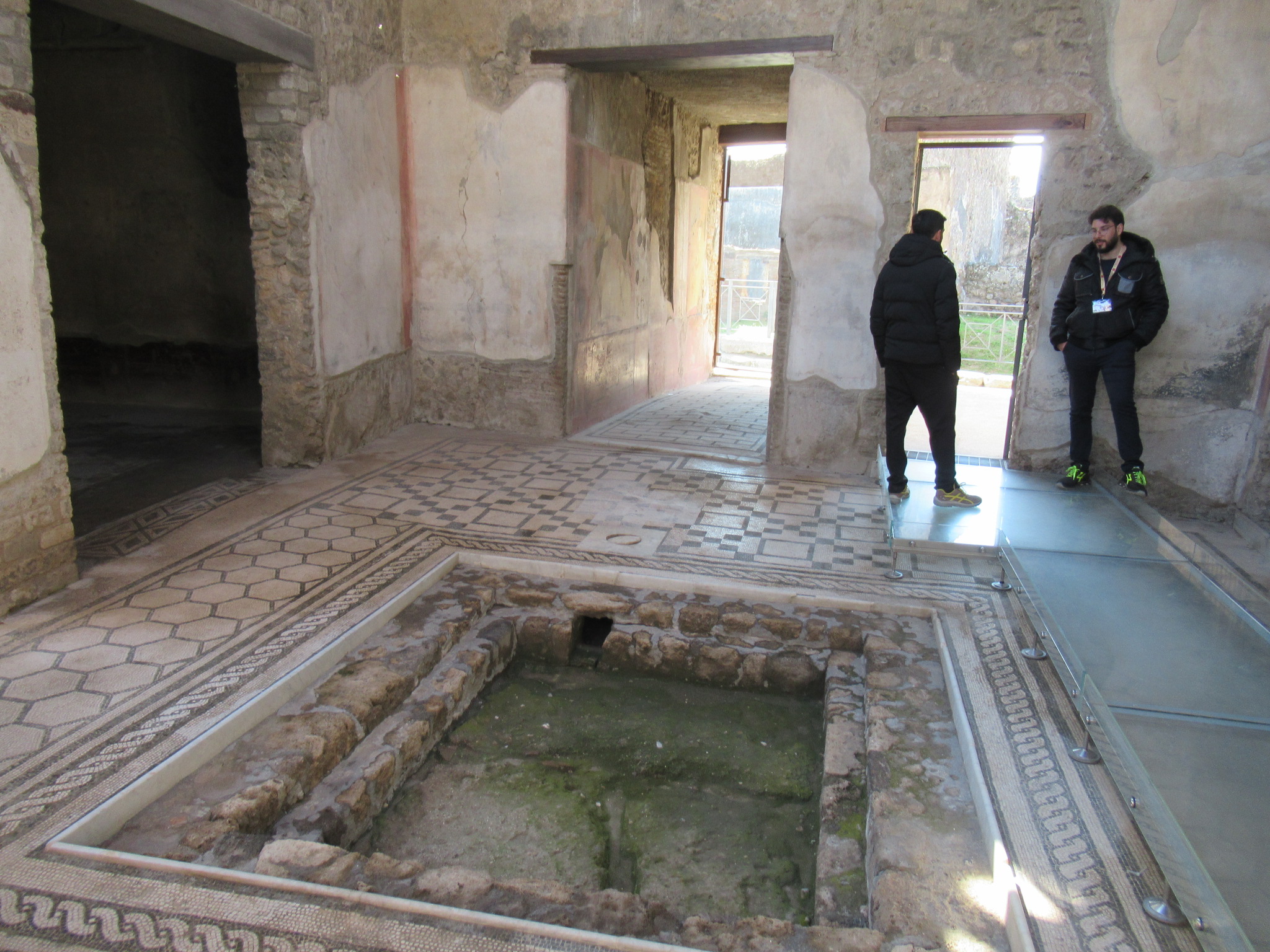
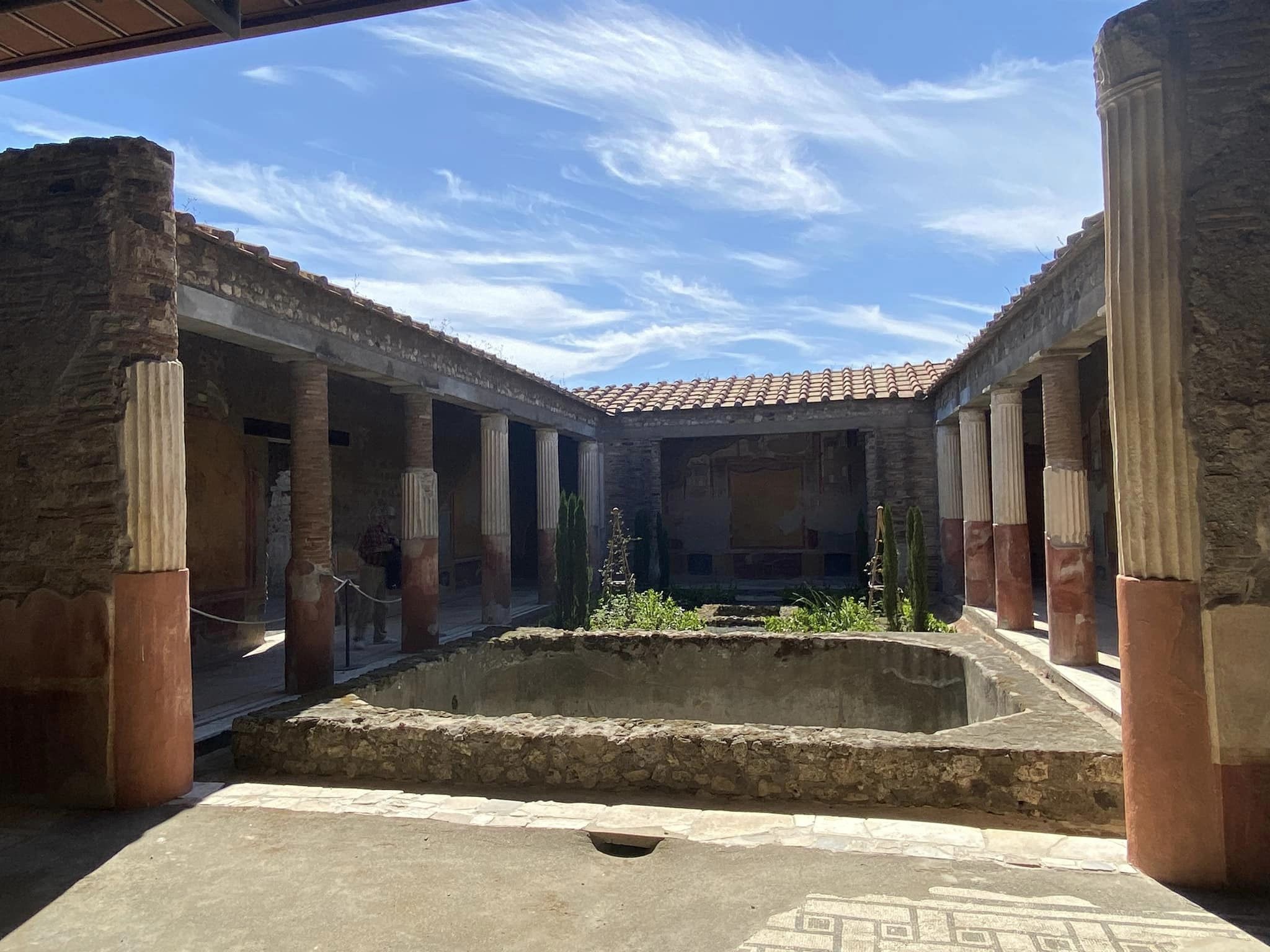
Every larger home had inner courtyards with a pool central to catch and direct rainwater to a cistern underneath.
In the protective covering the museum erected is recreated the opening in the roof a Pompeii home would have had above the middle of the courtyard to direct rainwater to fall into the pool and cistern.

Plaster casts of some victims are displayed in the homes they died.
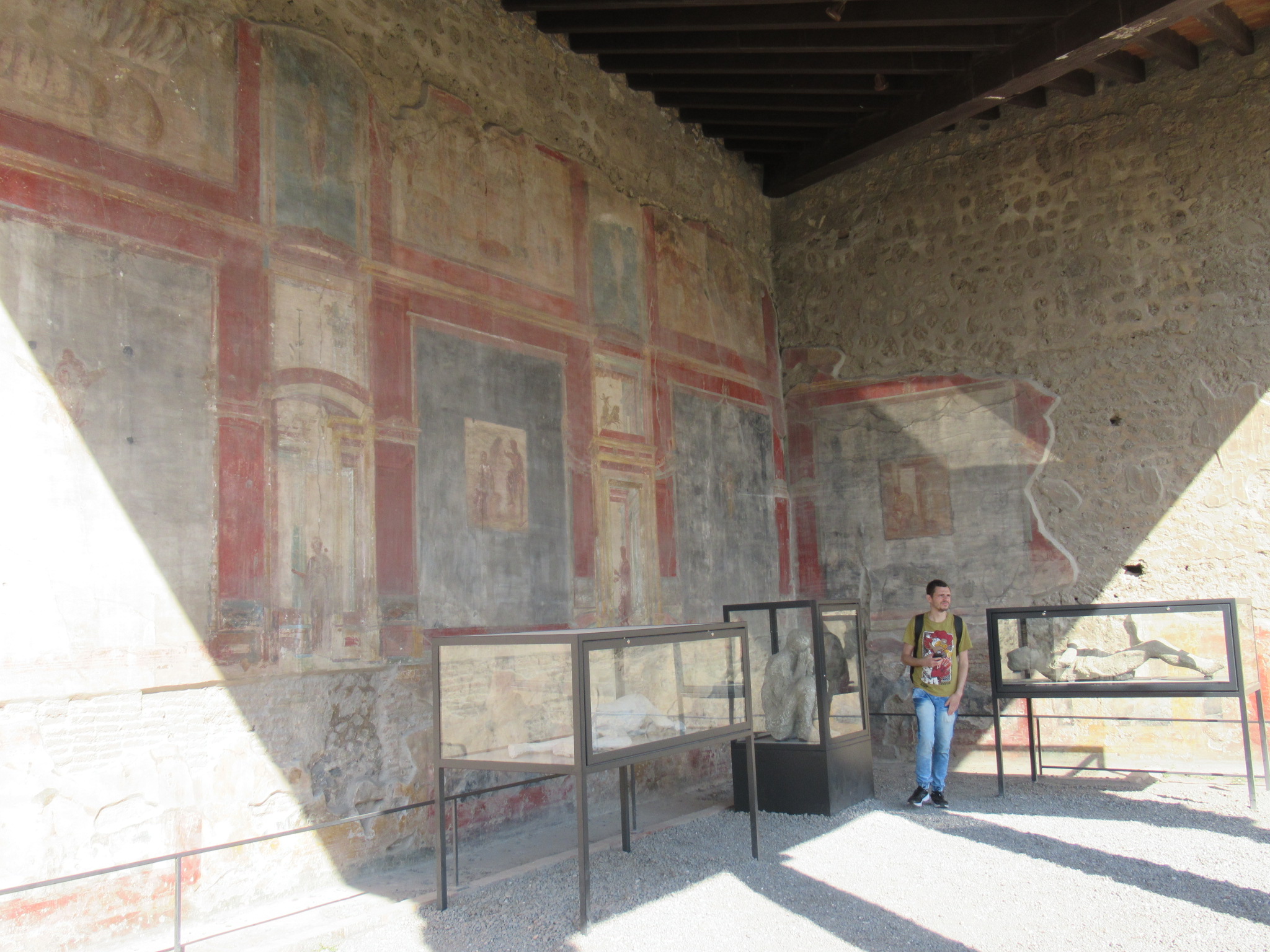

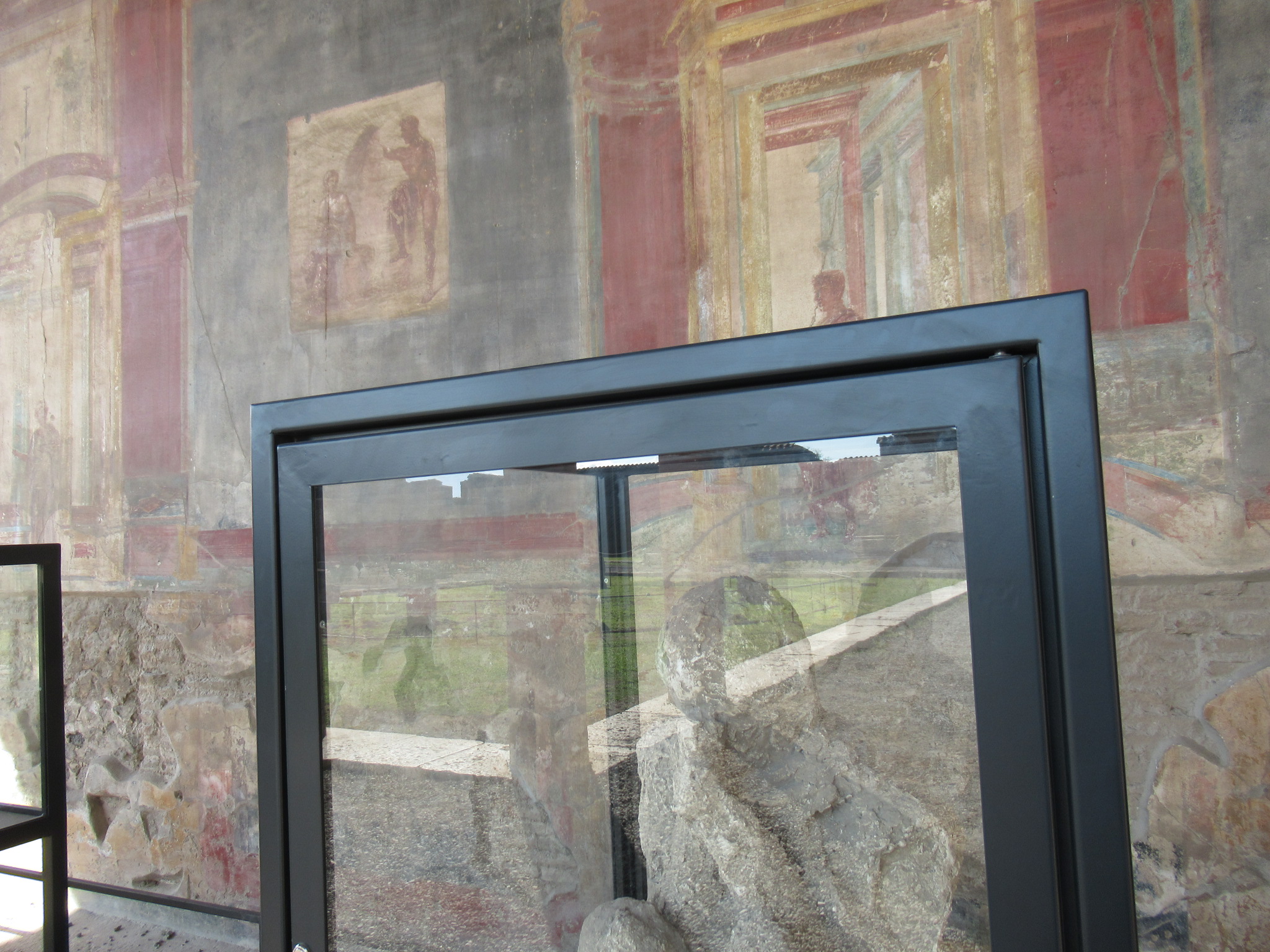
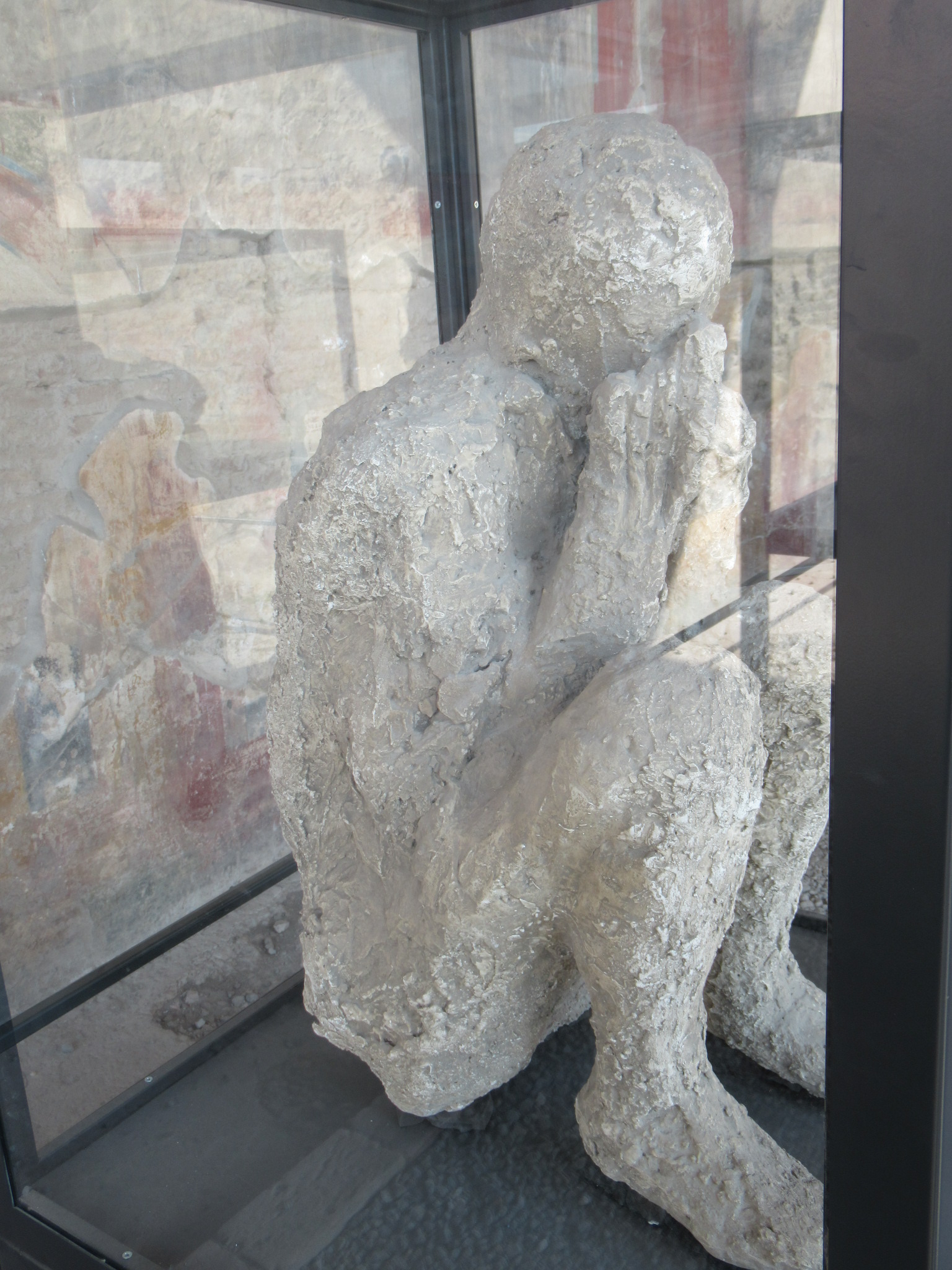

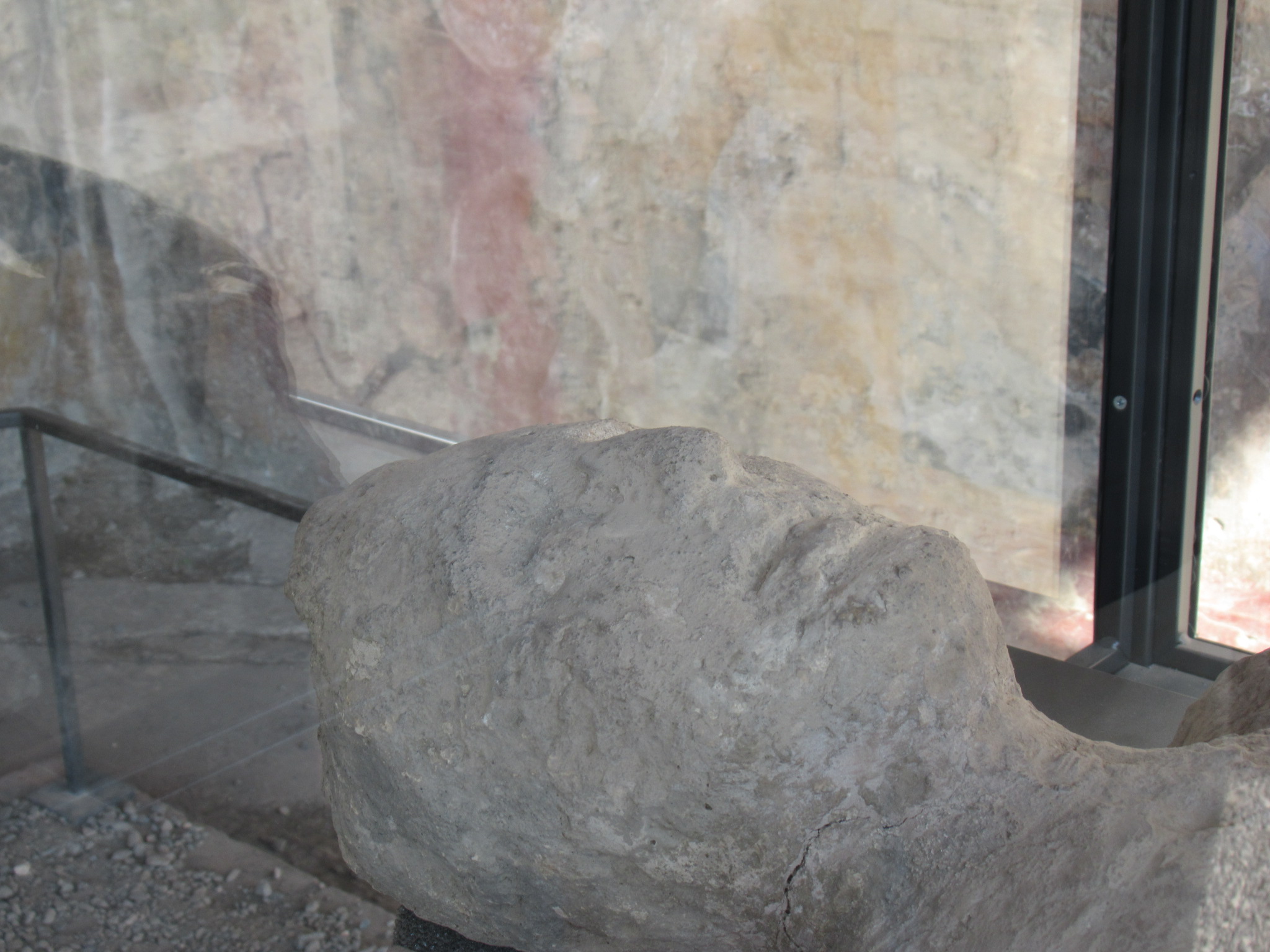
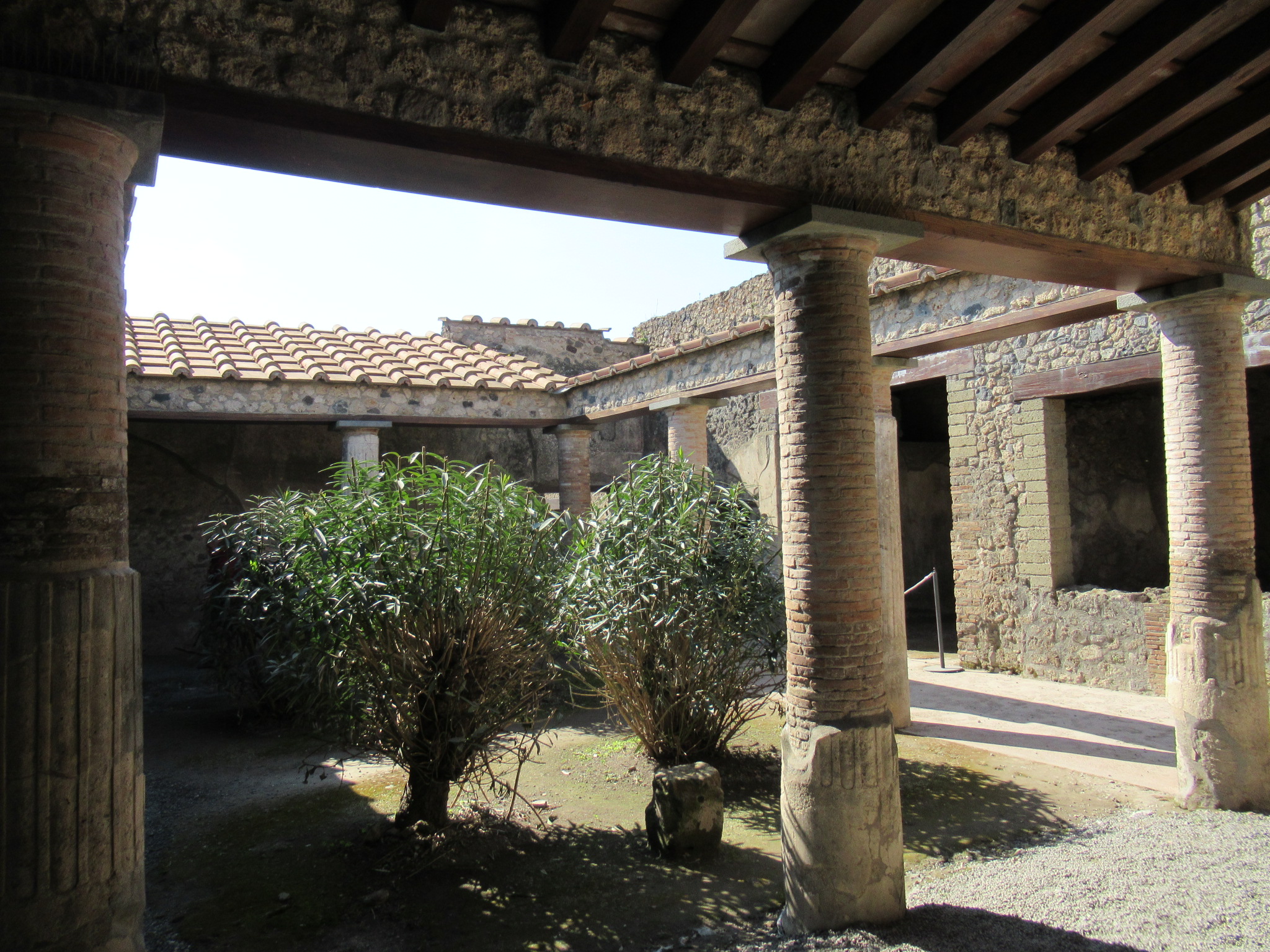
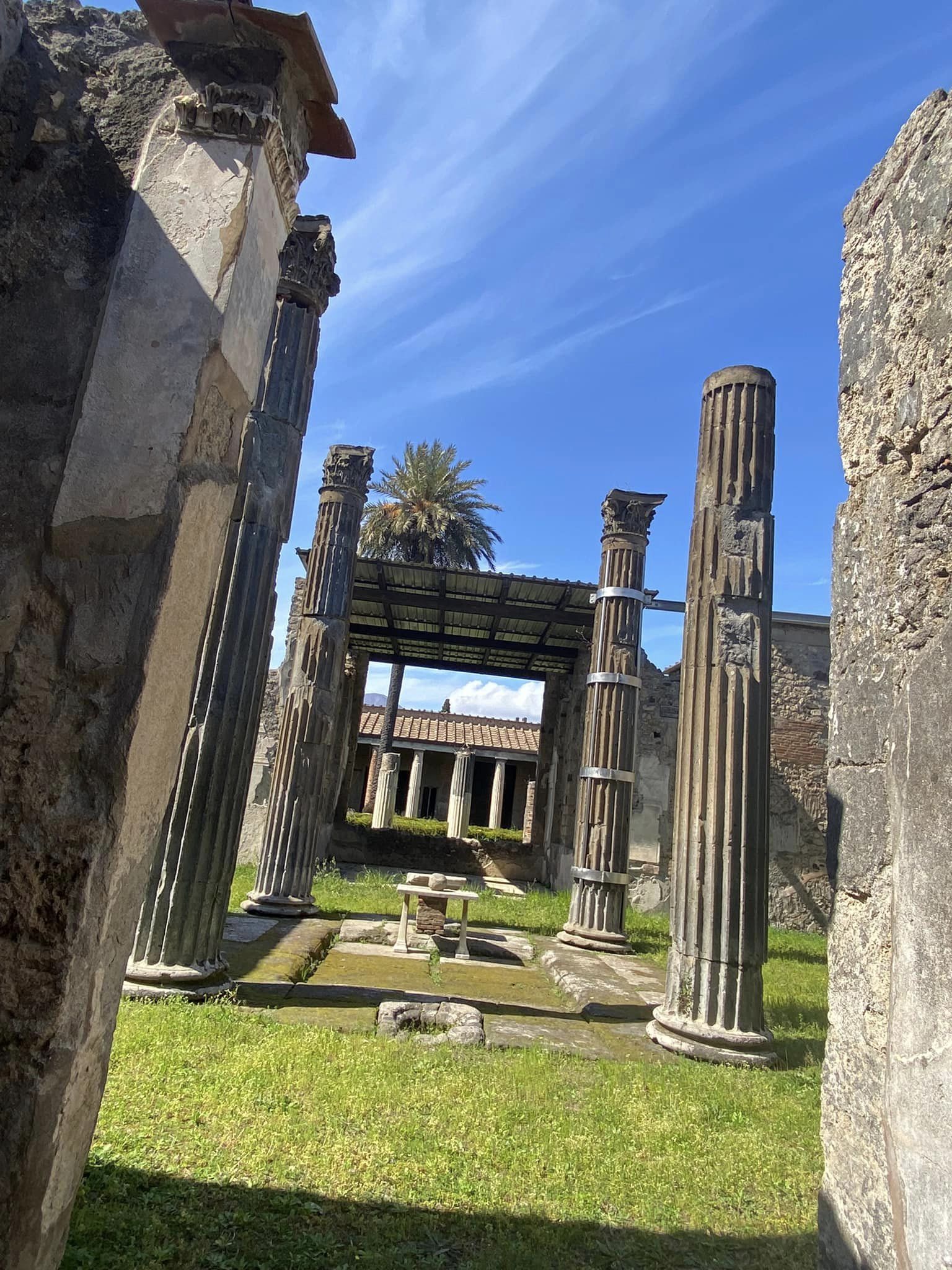
Some homes had inner courtyards large enough for gardens…
… which are recreated by the museum.
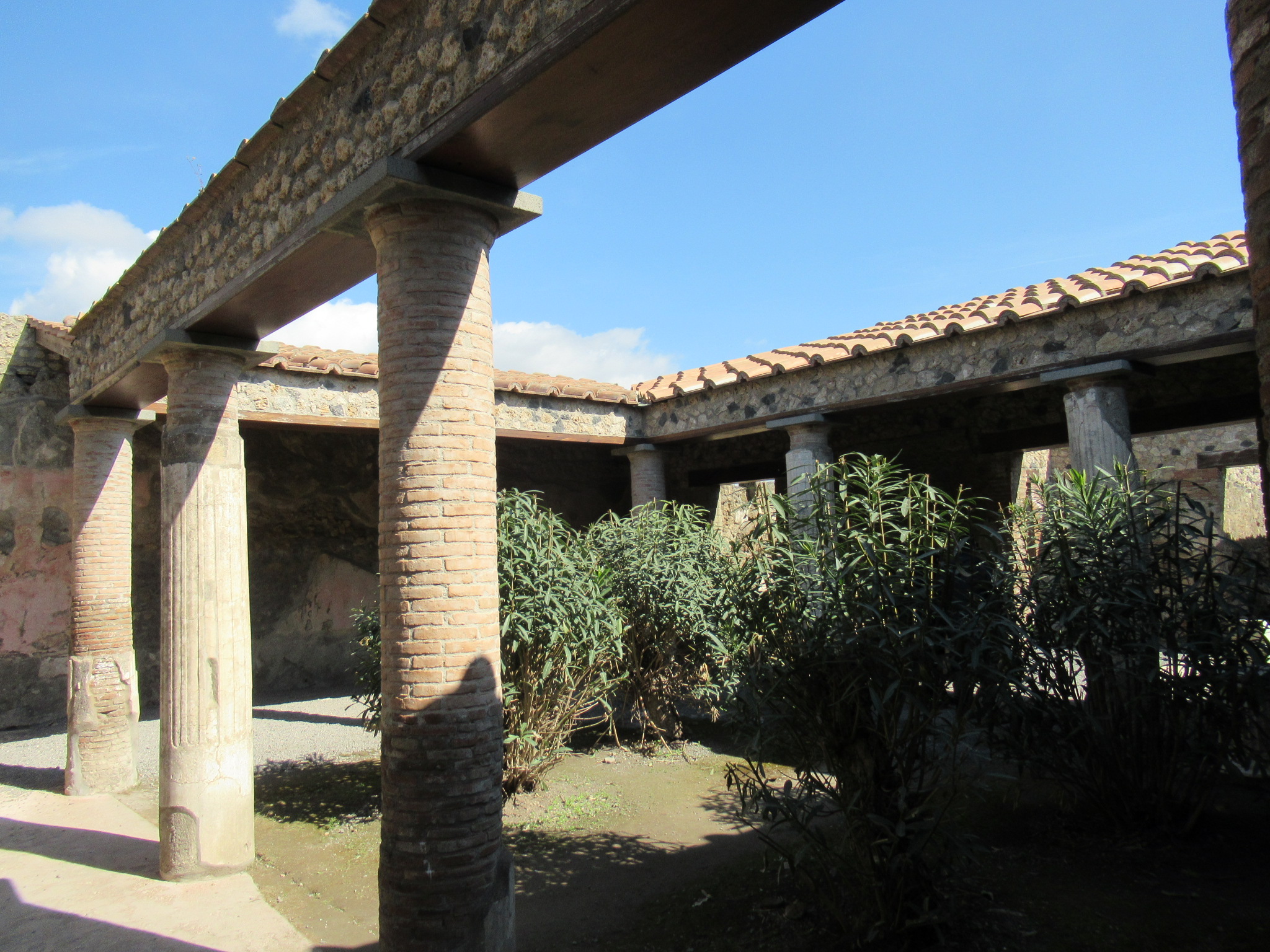


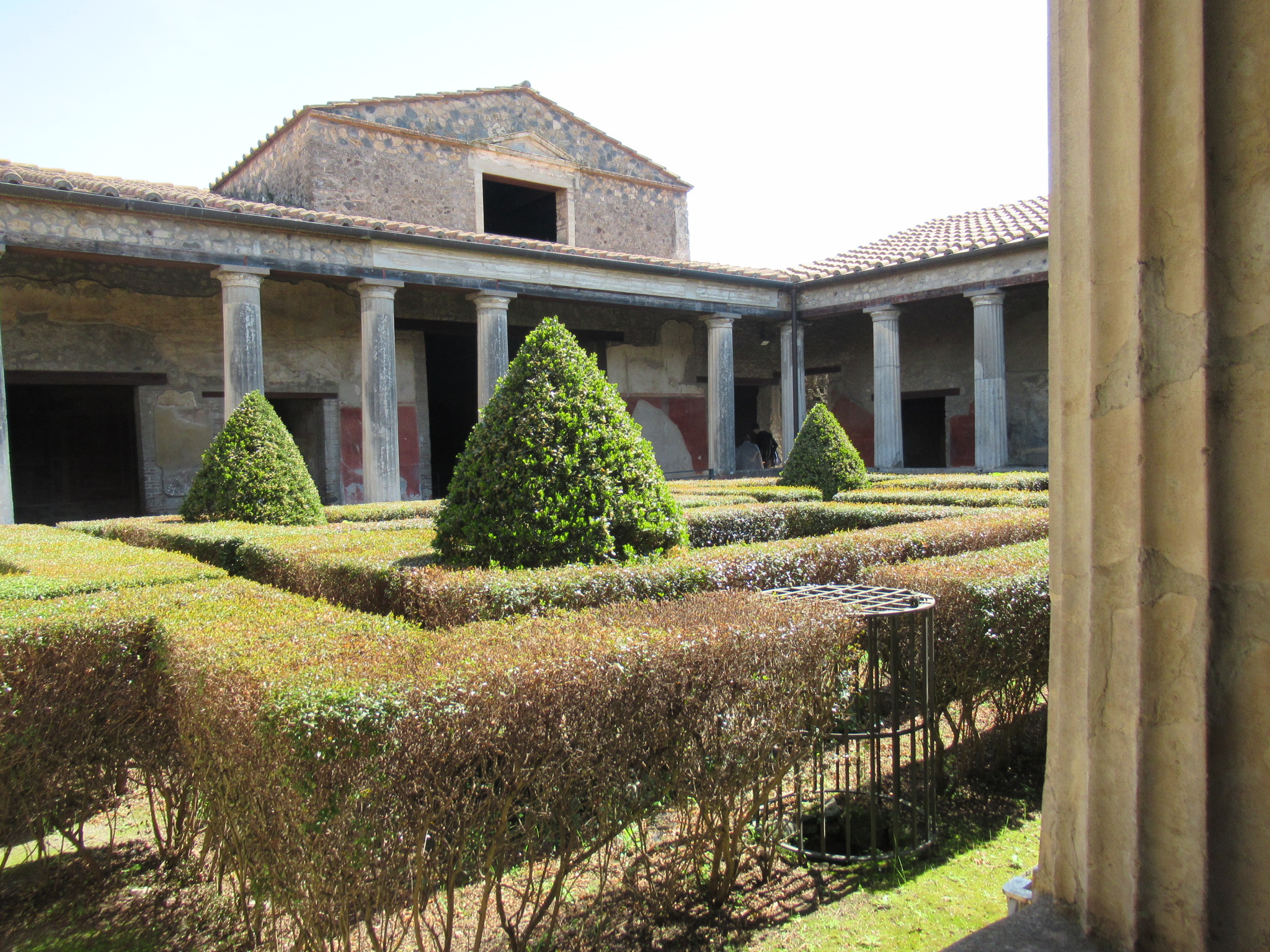
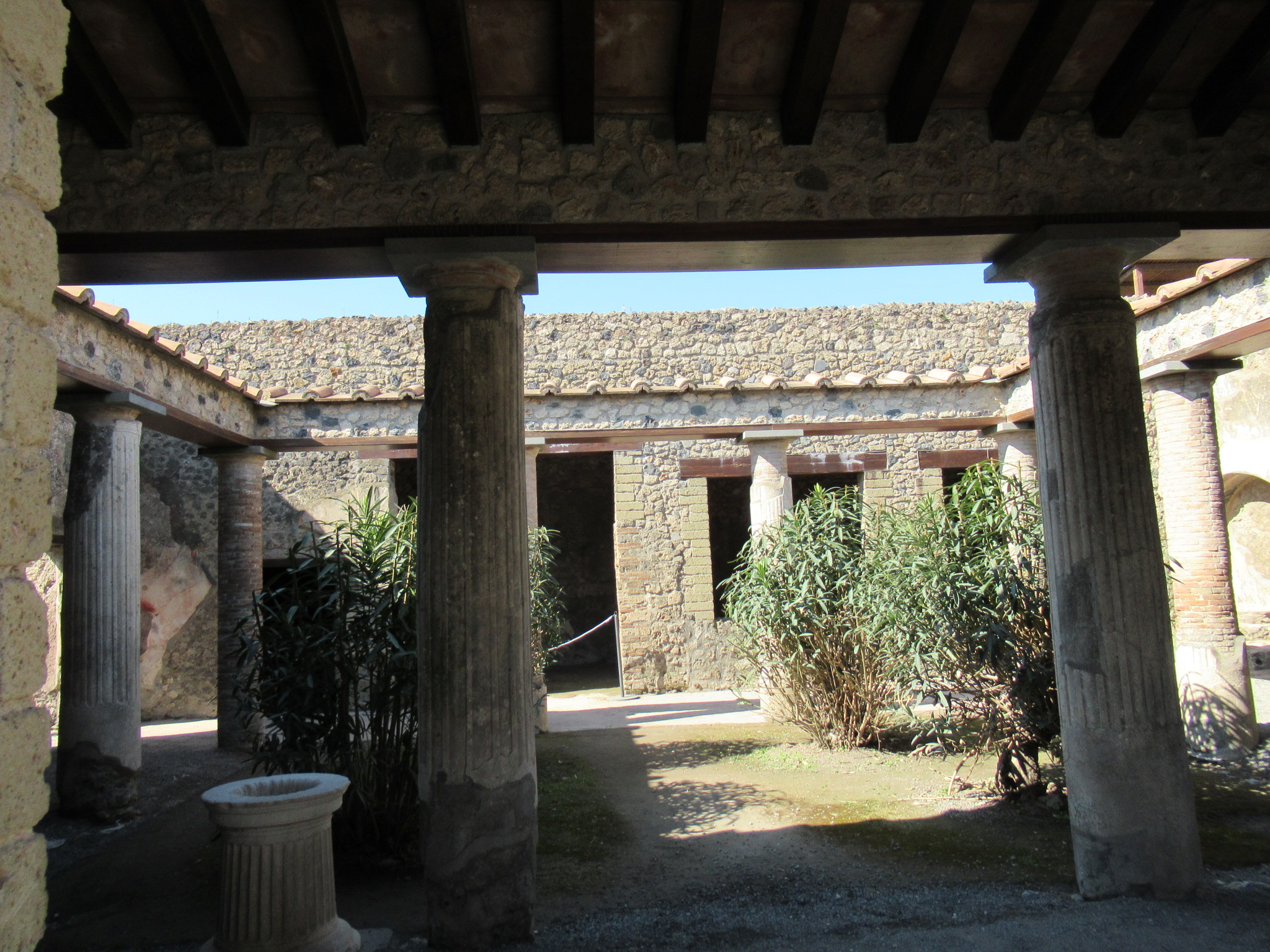
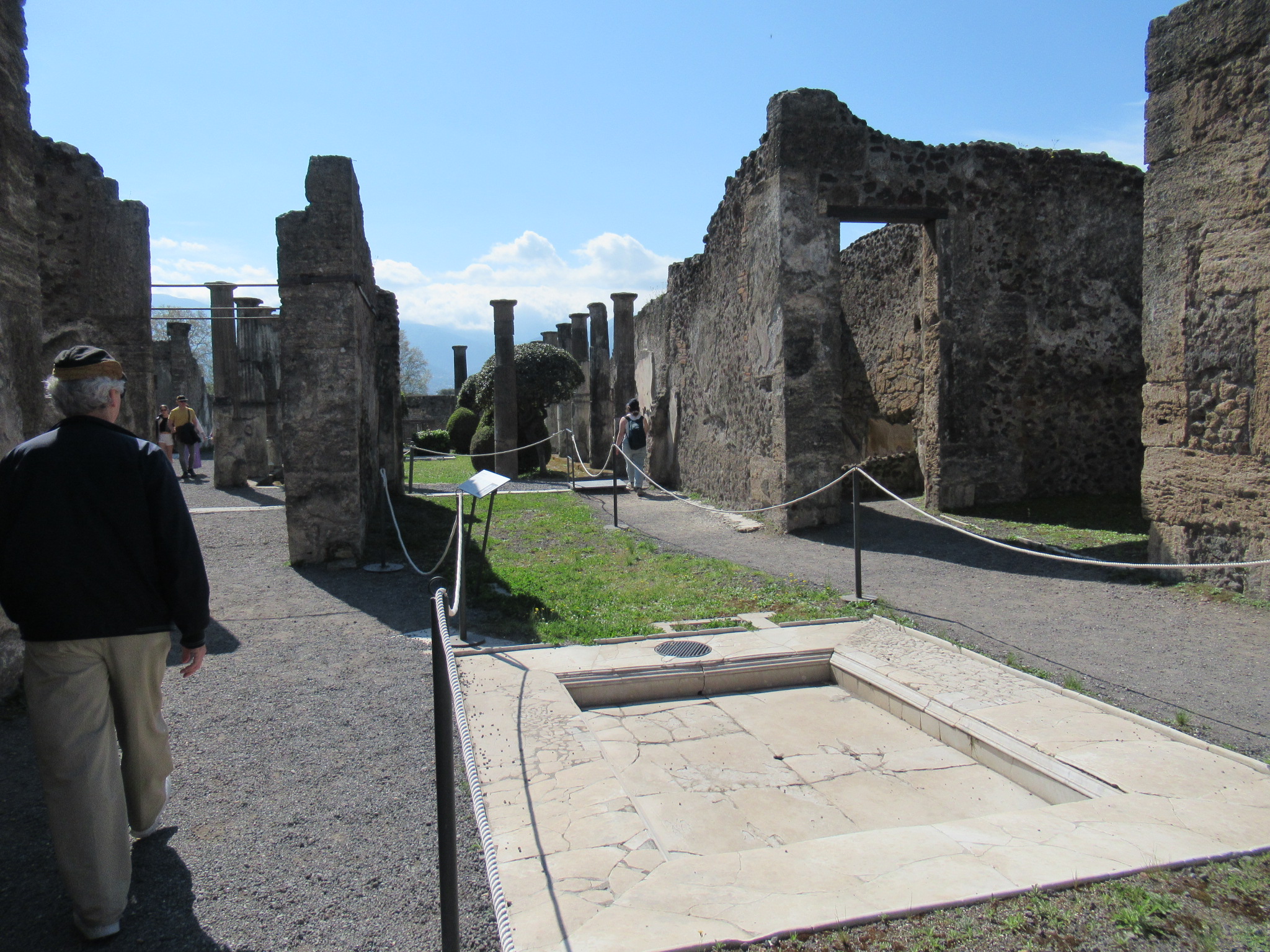
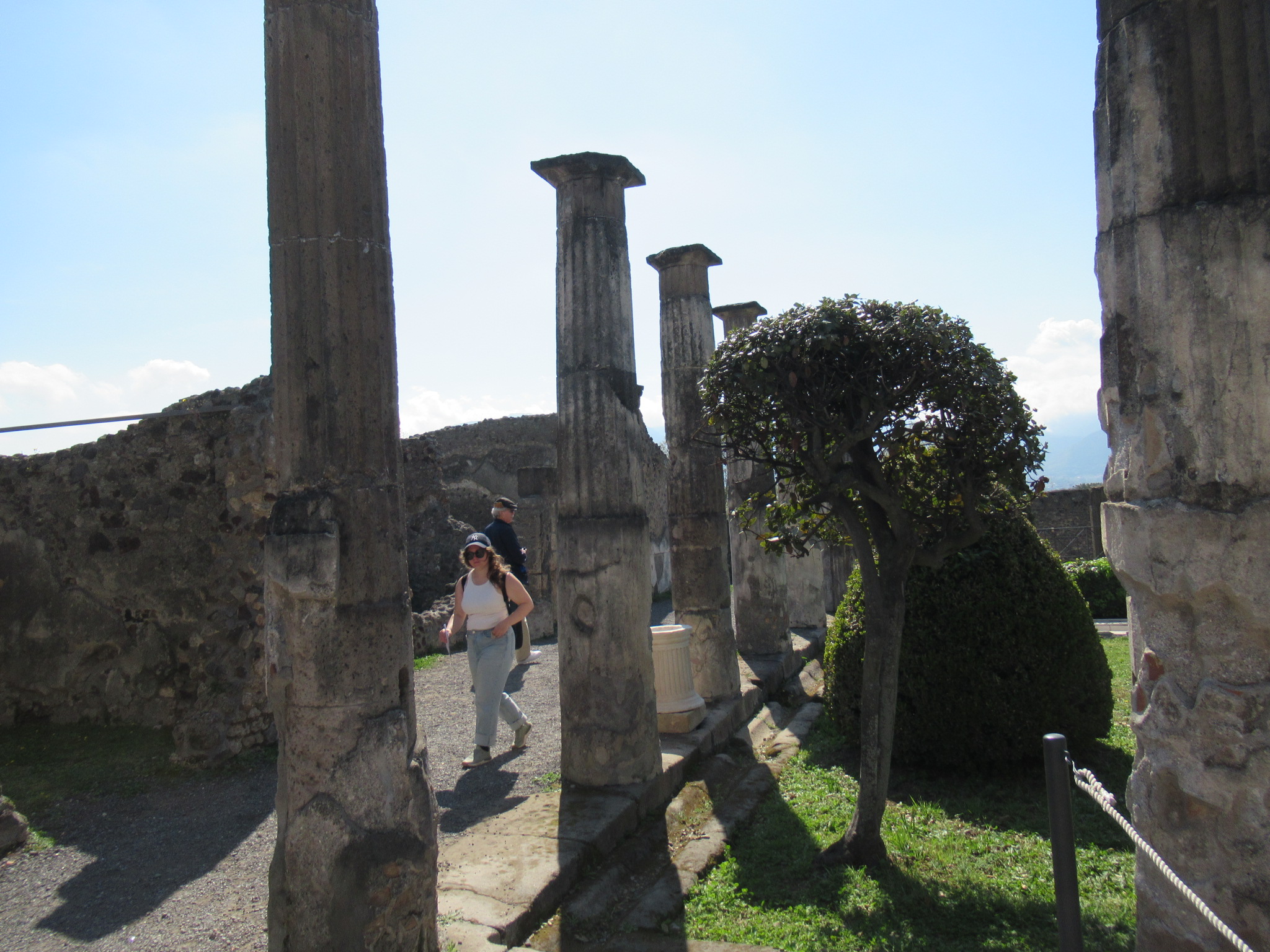
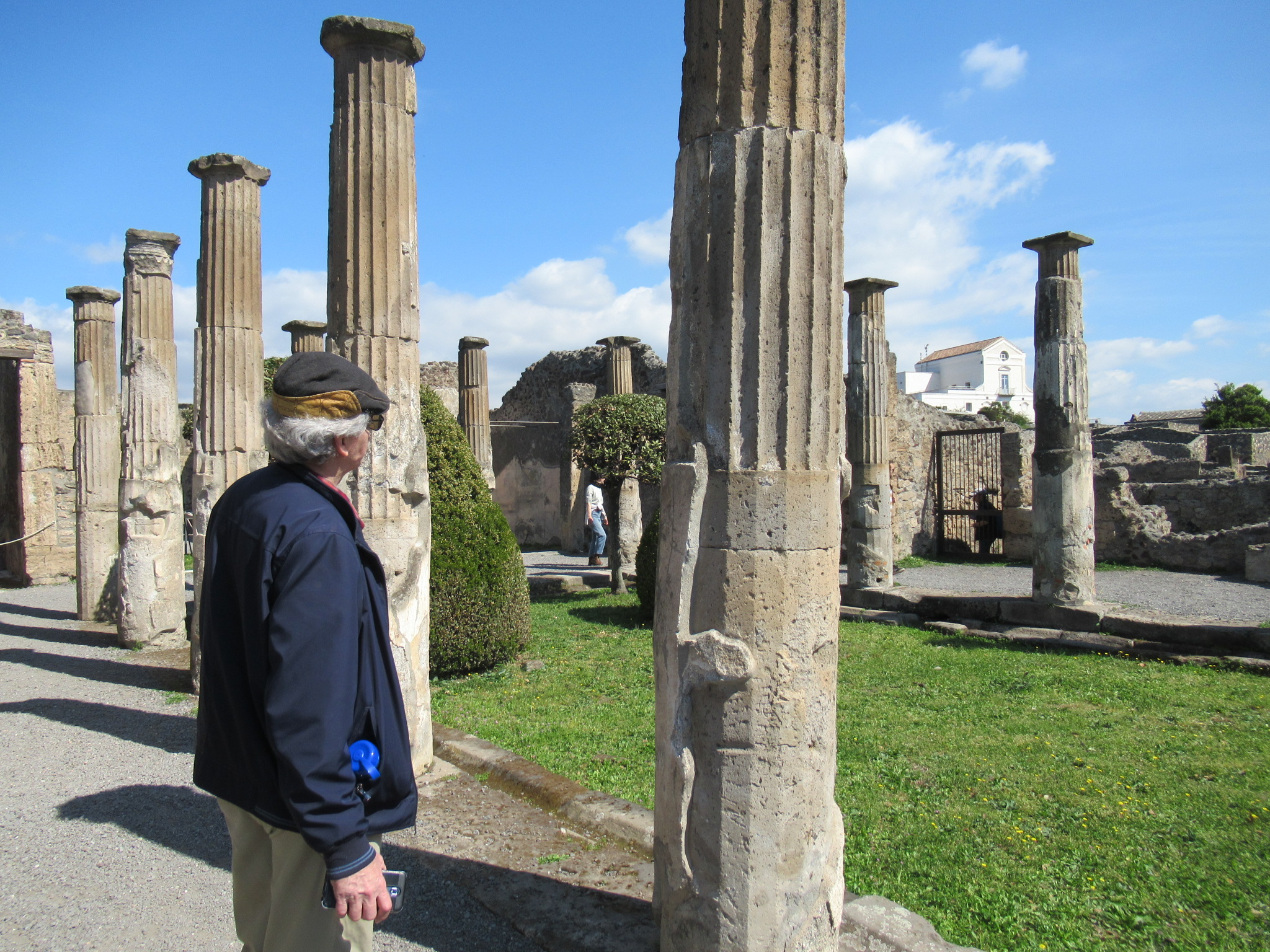
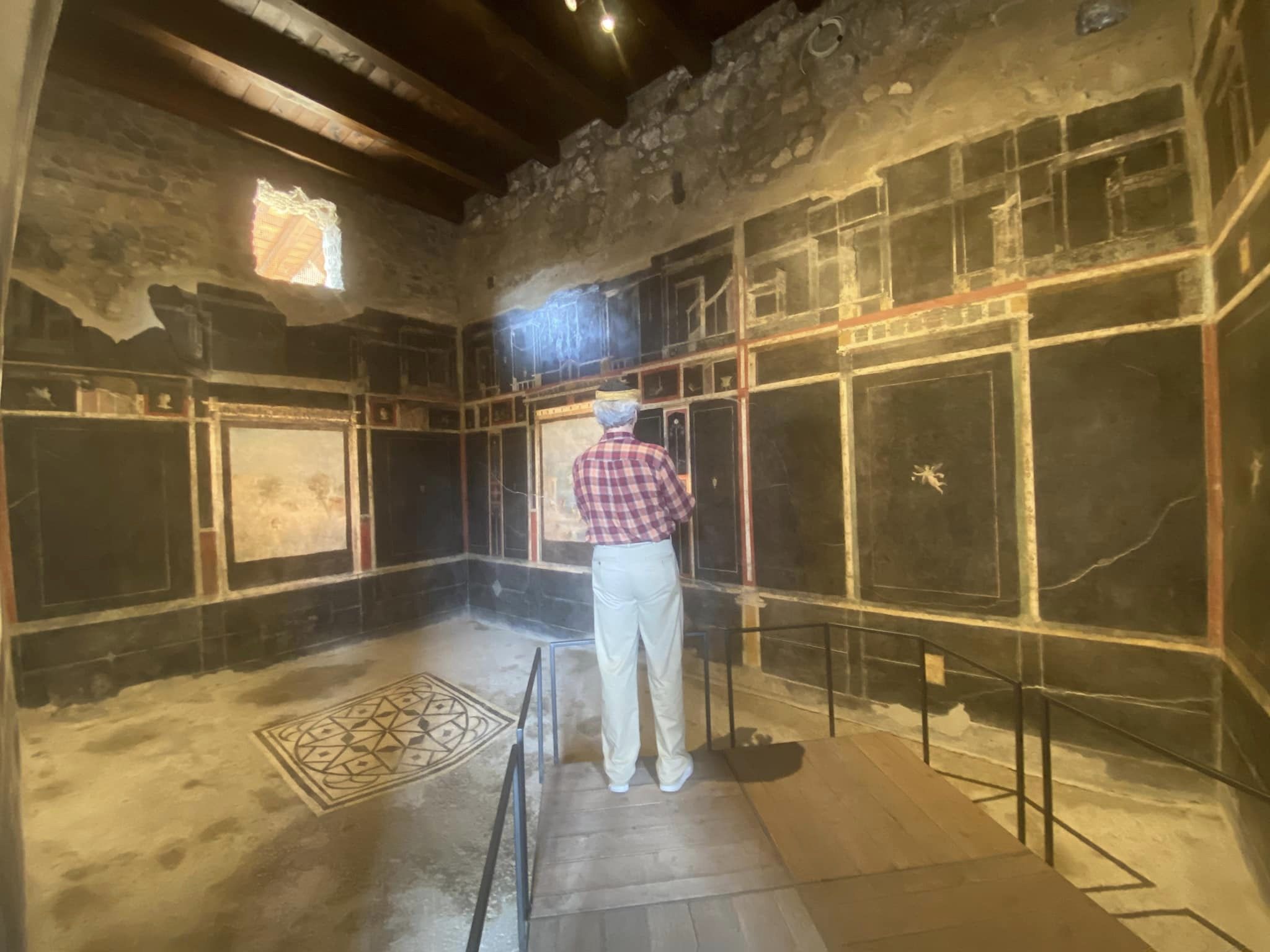
(Again, that silver fox in the blue coat who keeps showing up in my photos, that’s my husband Ed.)

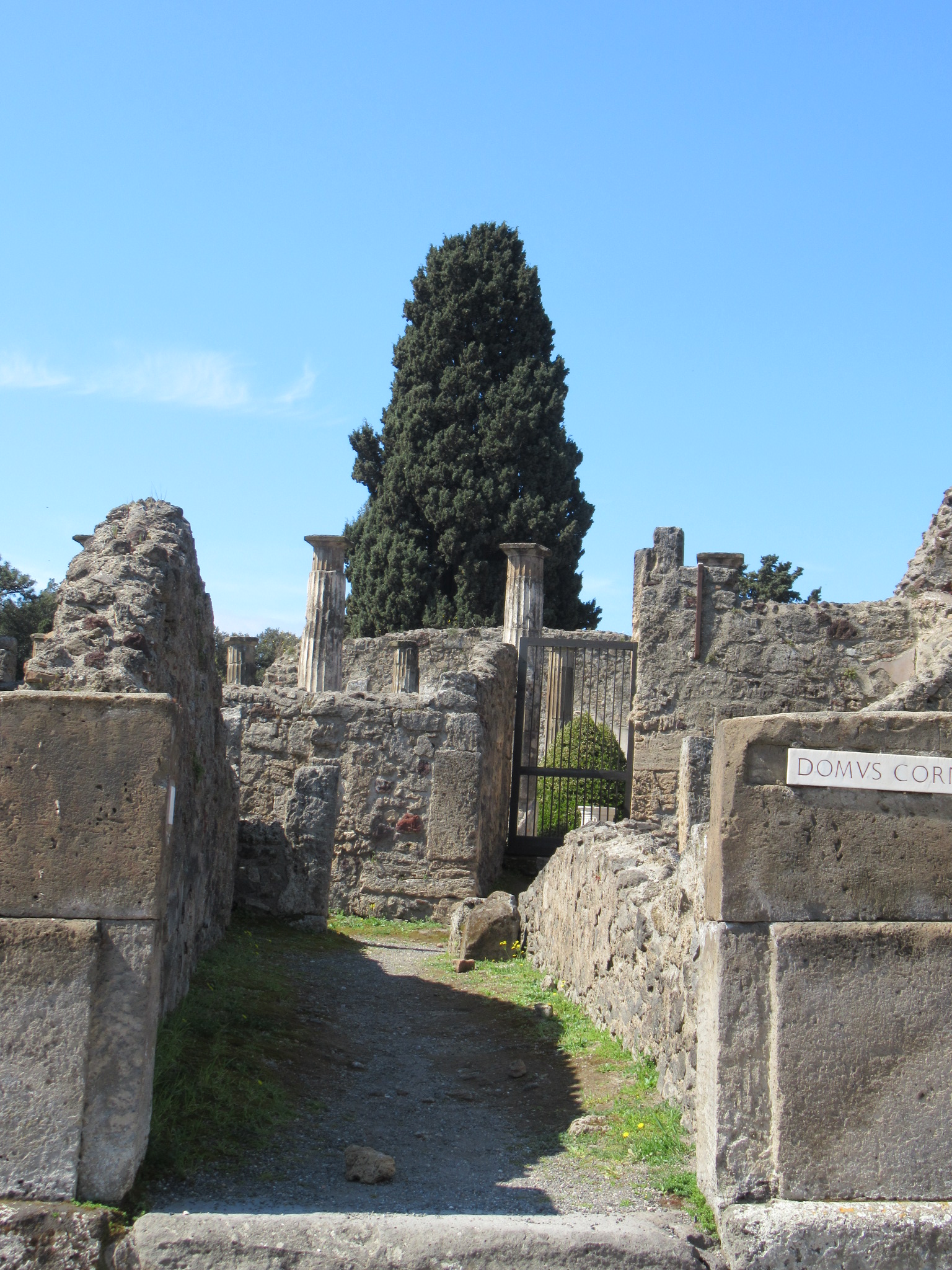


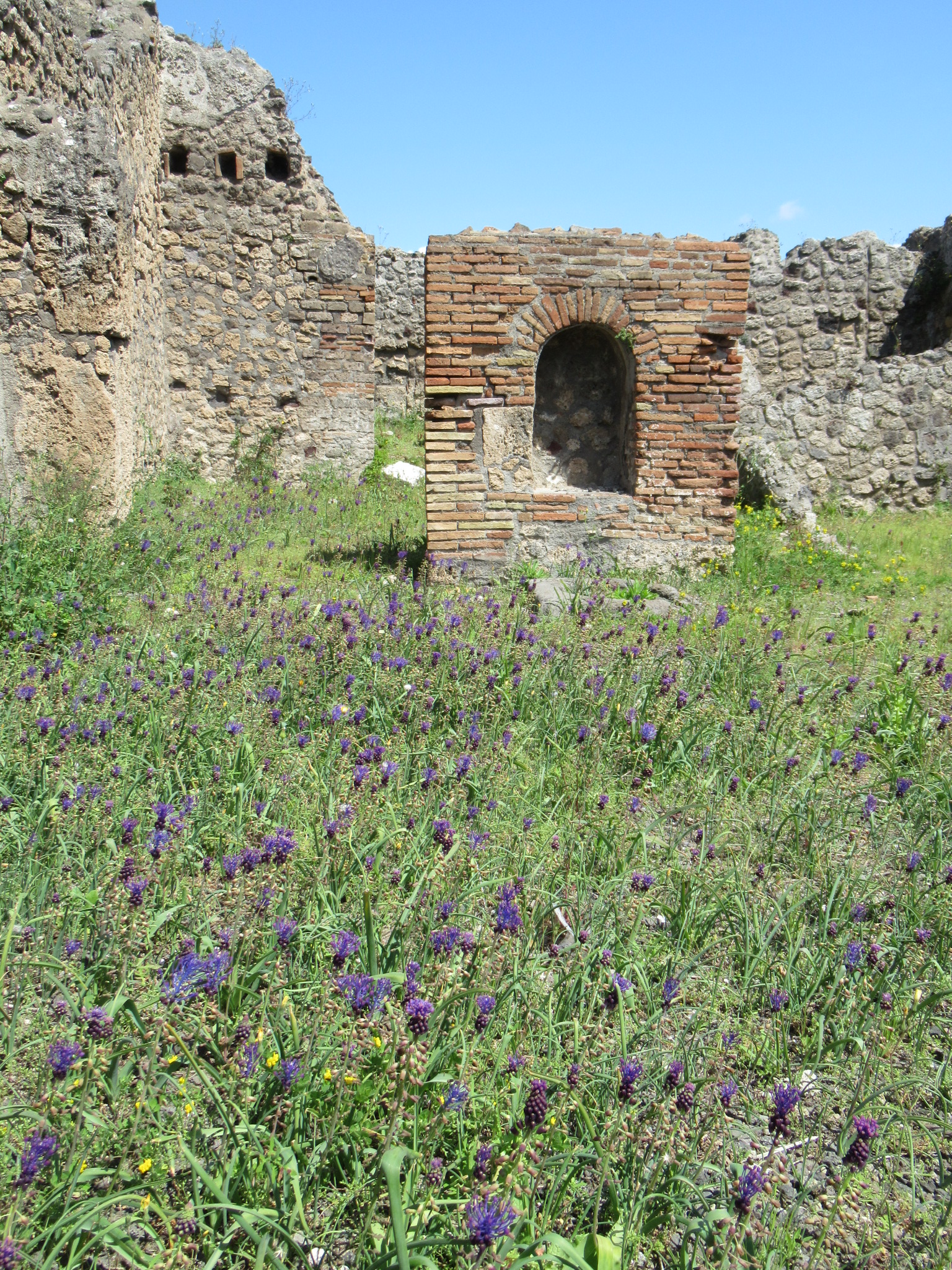
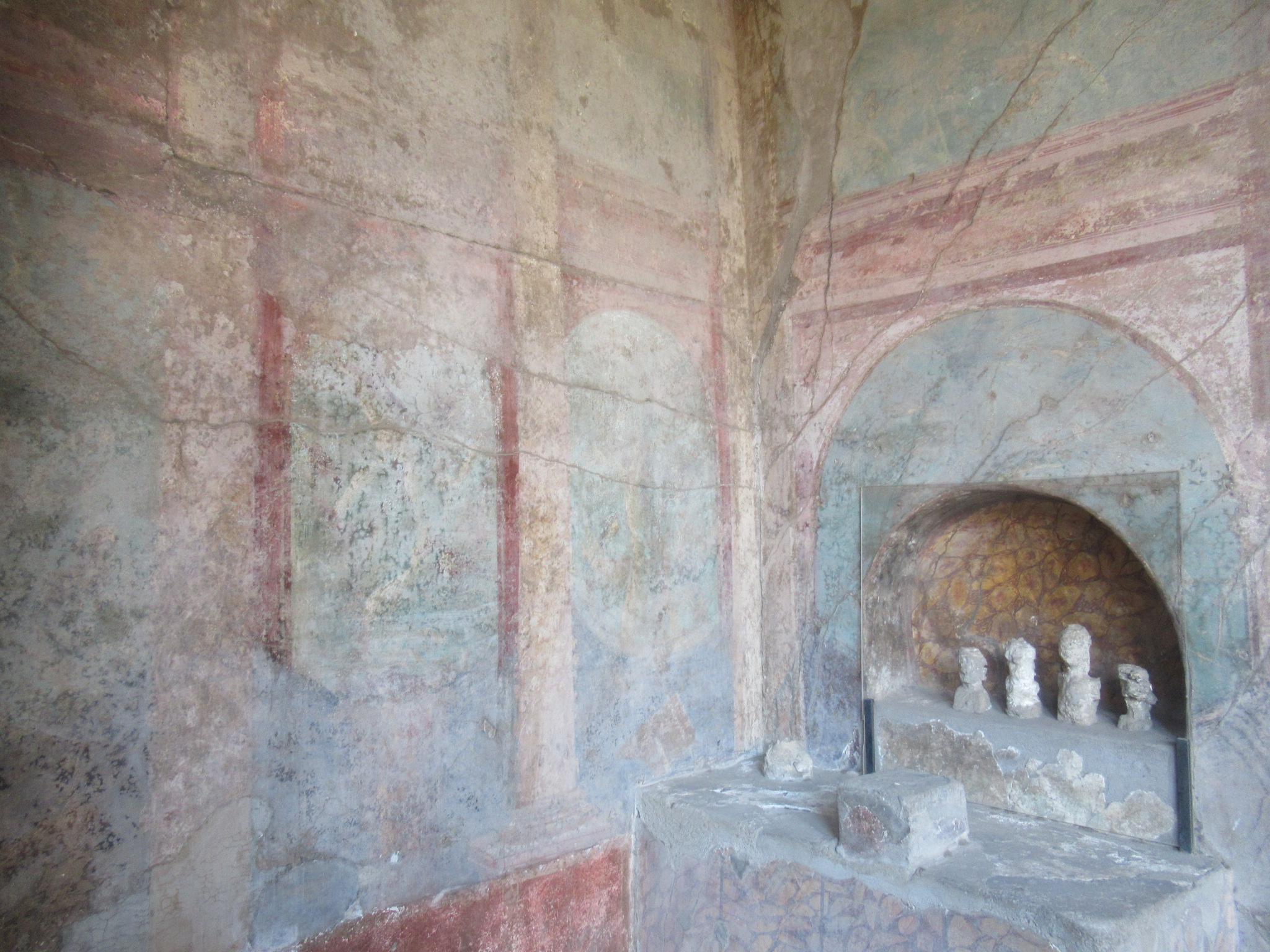
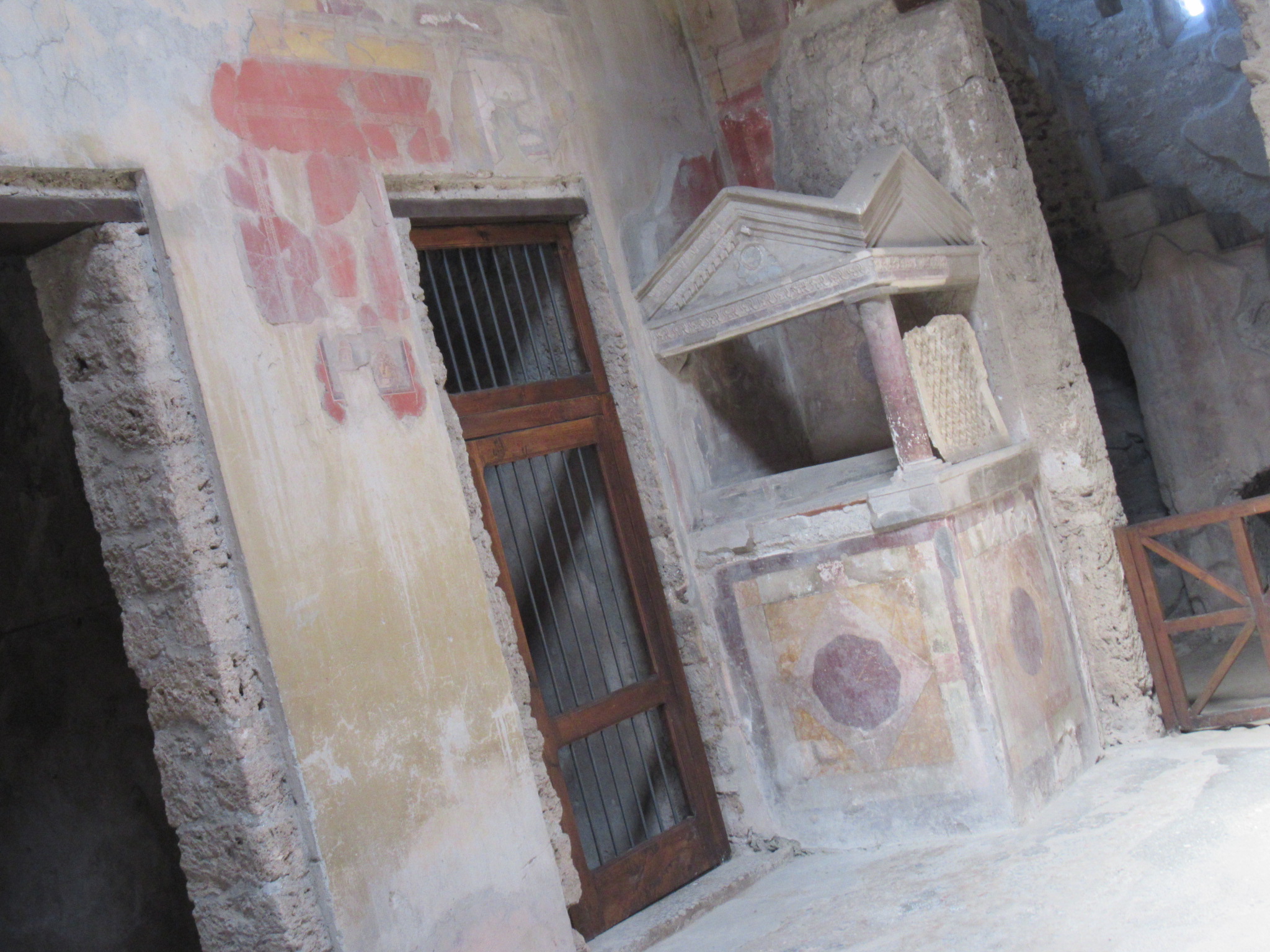
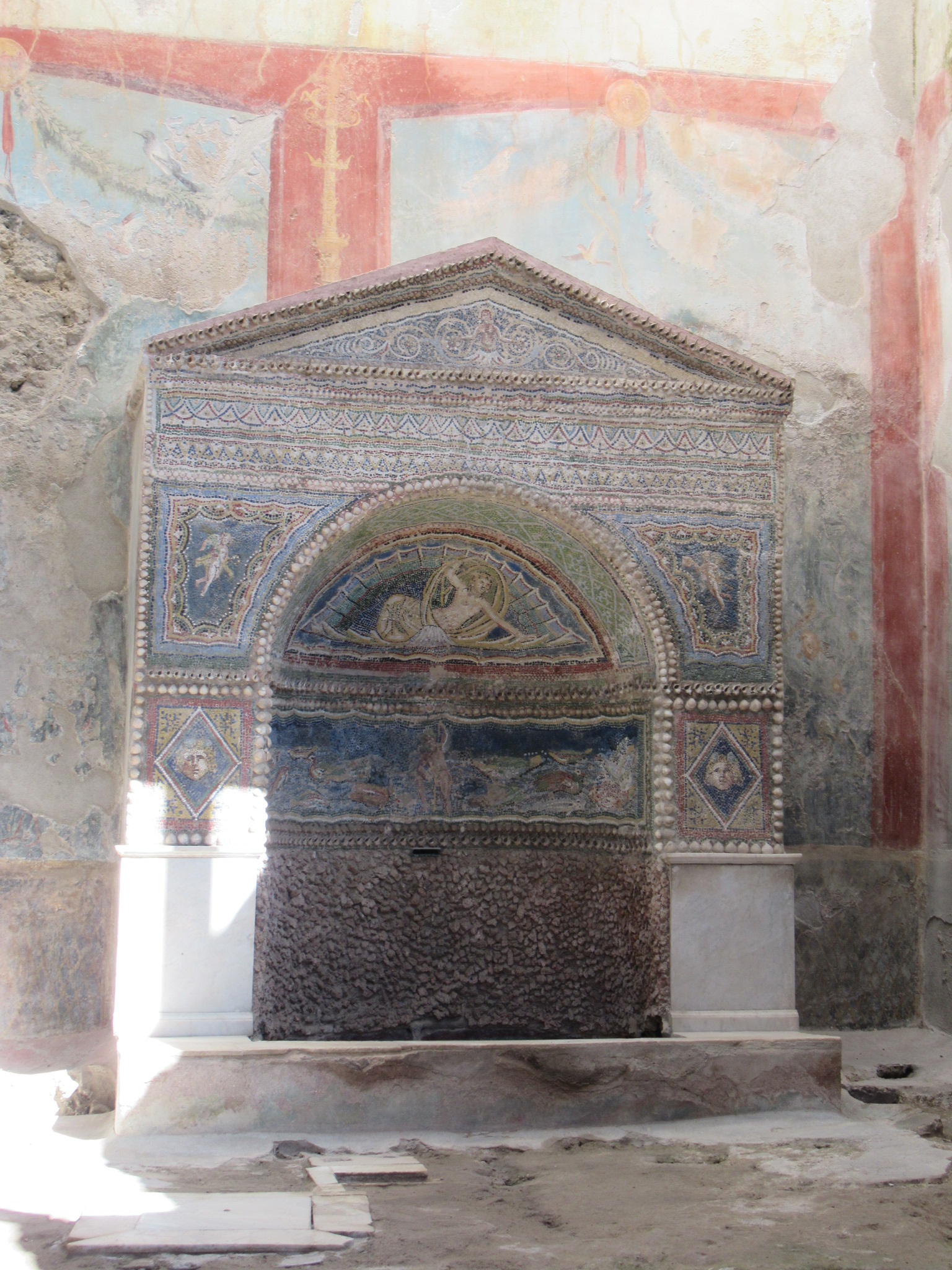
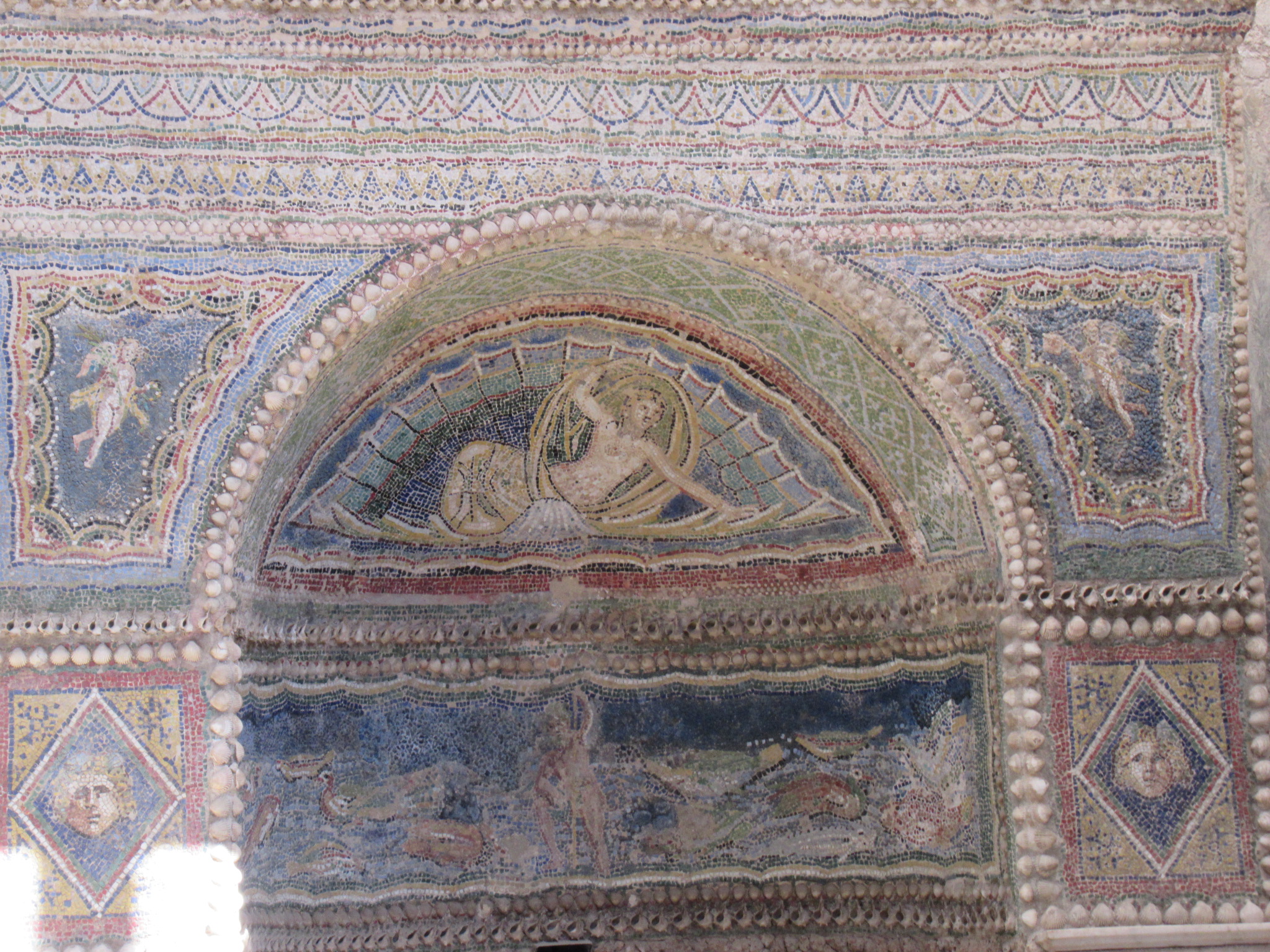
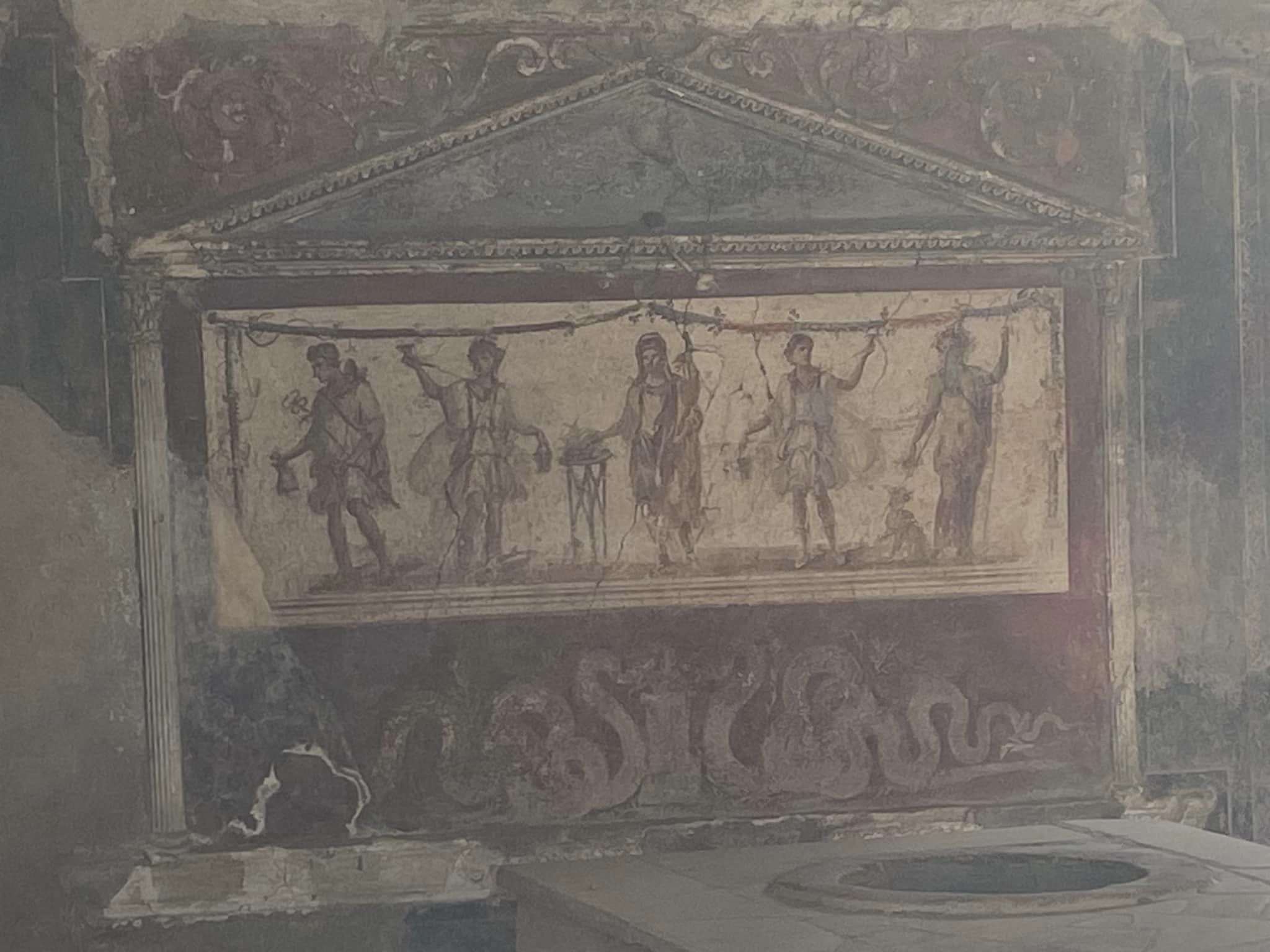
Many if not all homes had their own shrines for private worship.
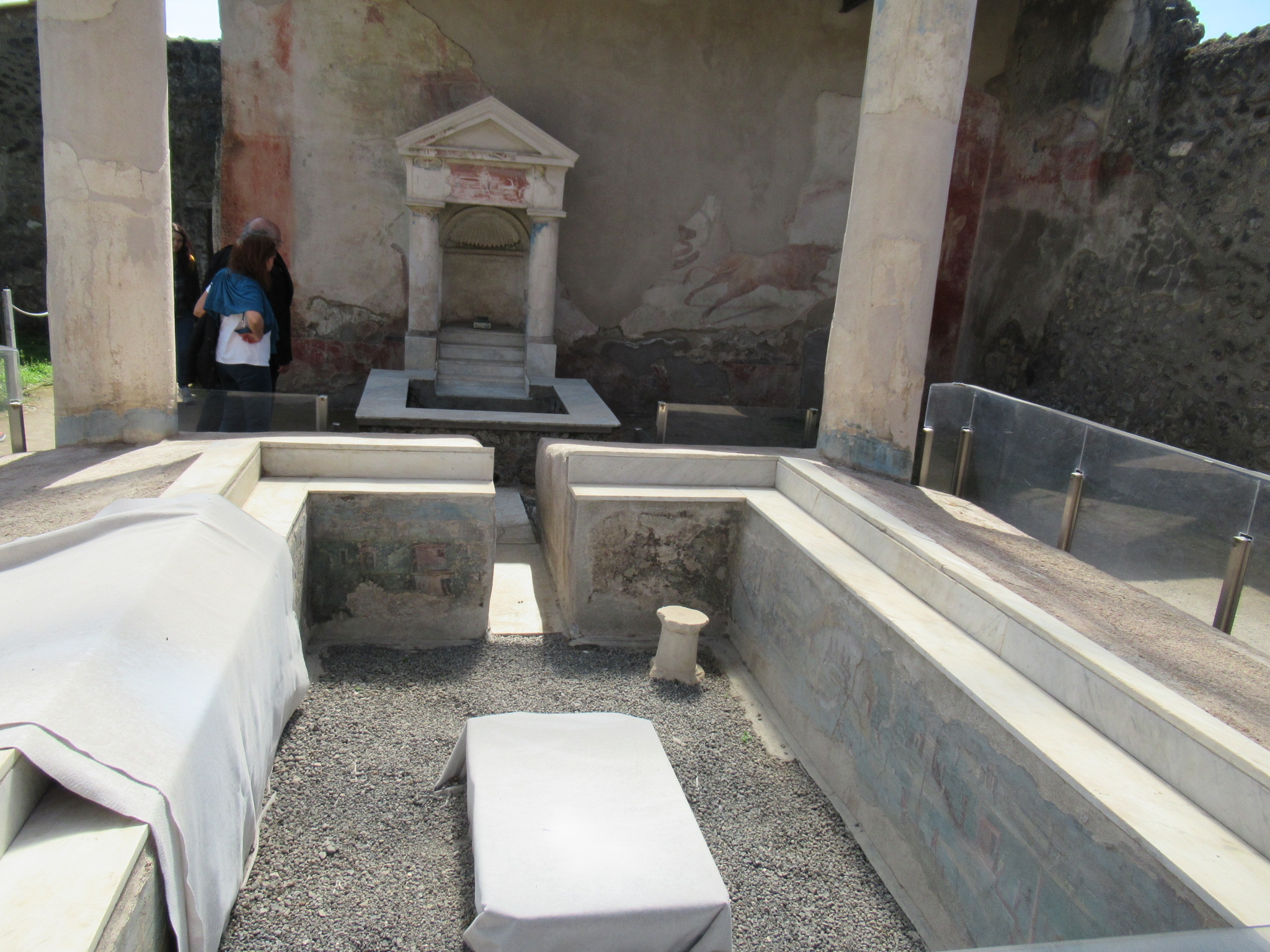
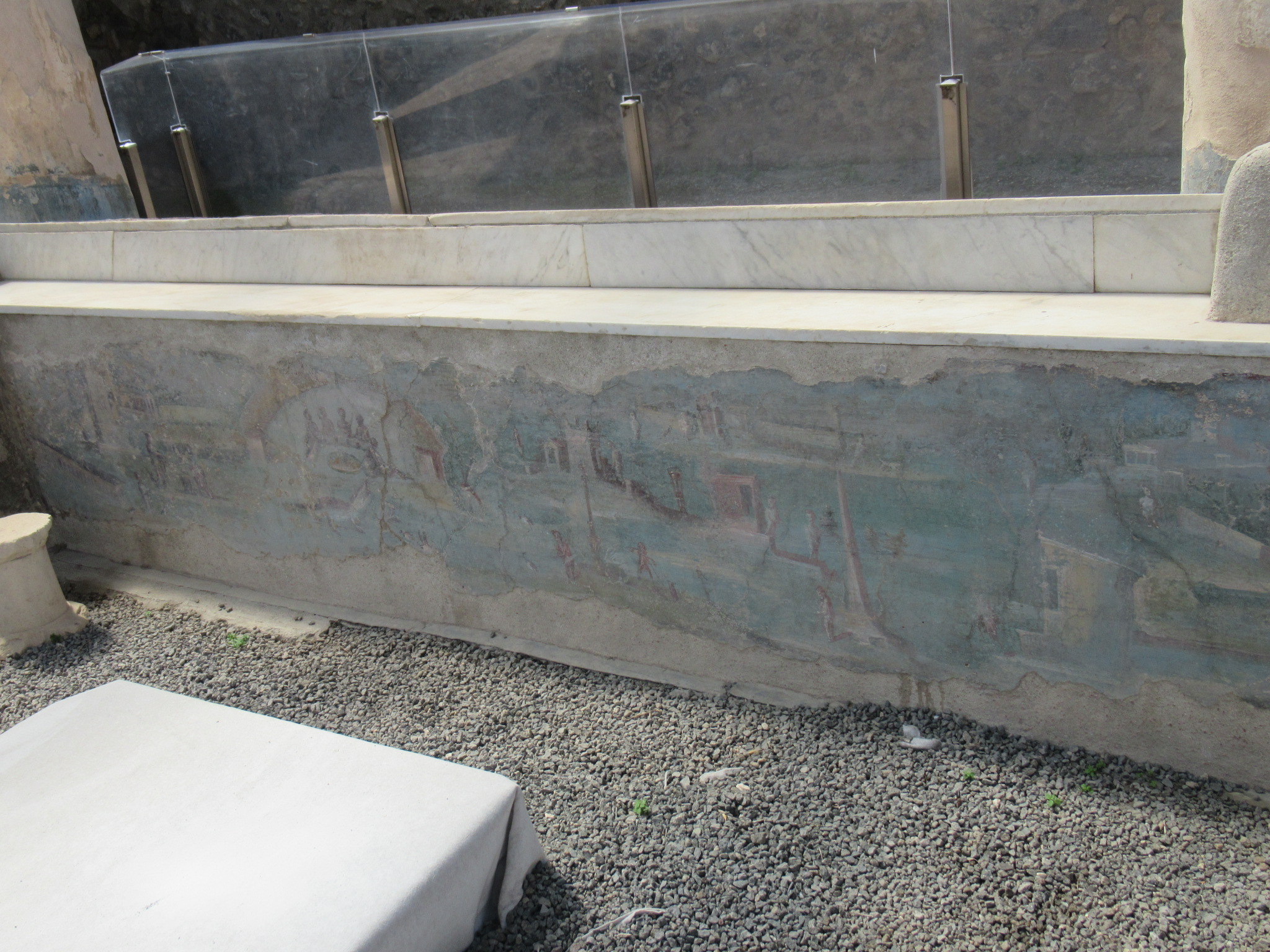
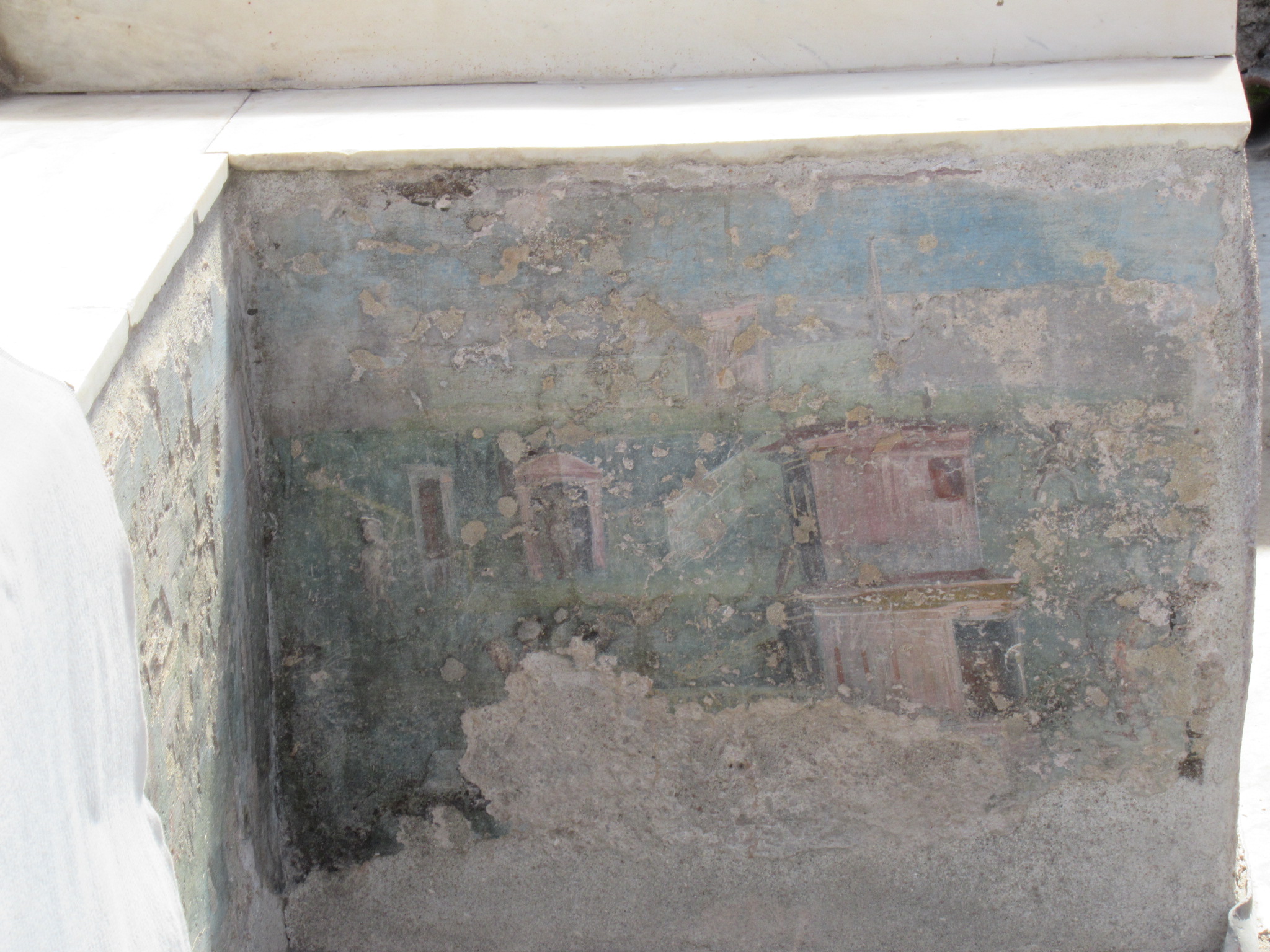
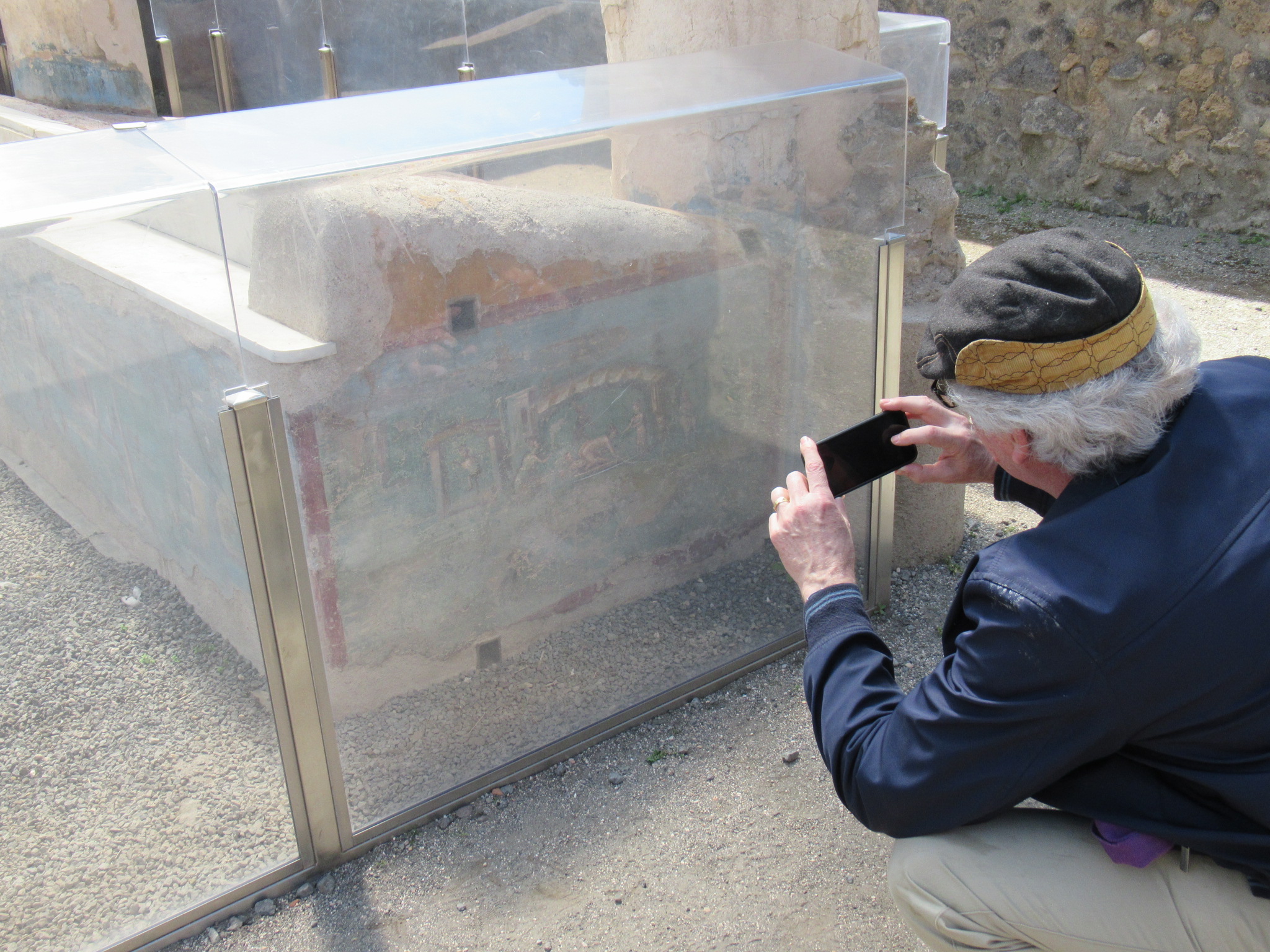
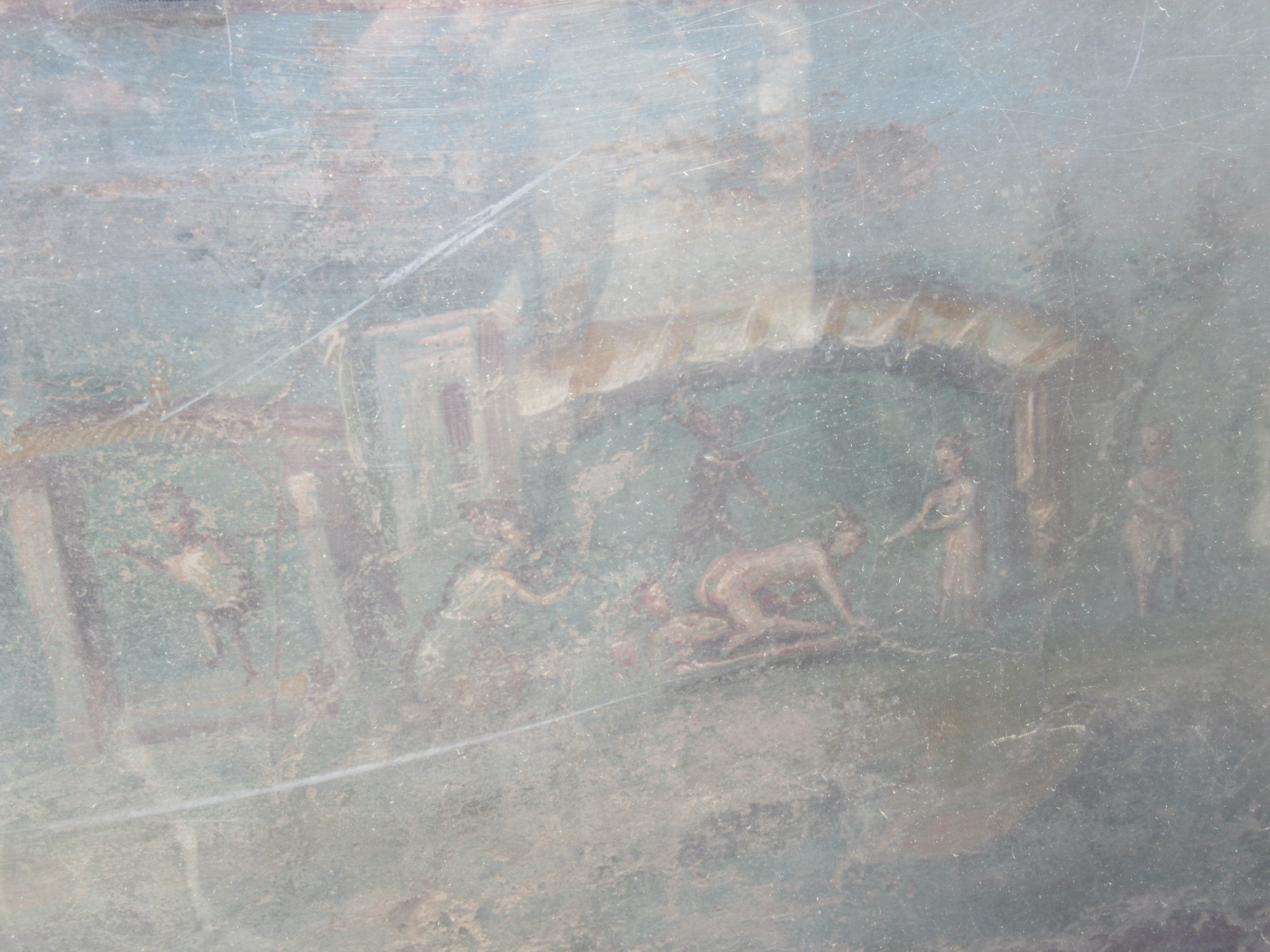
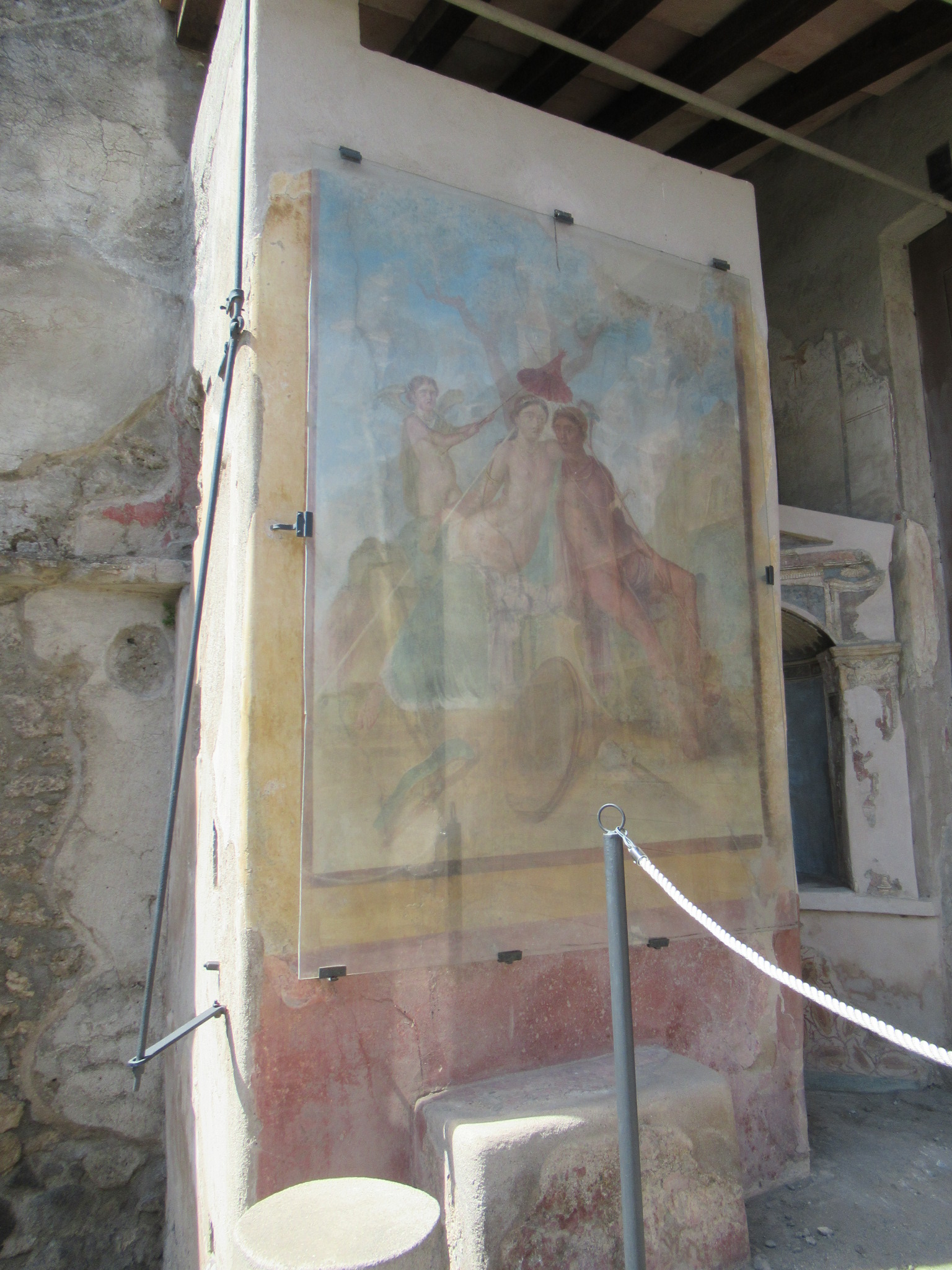
Let’s look a little closer here…
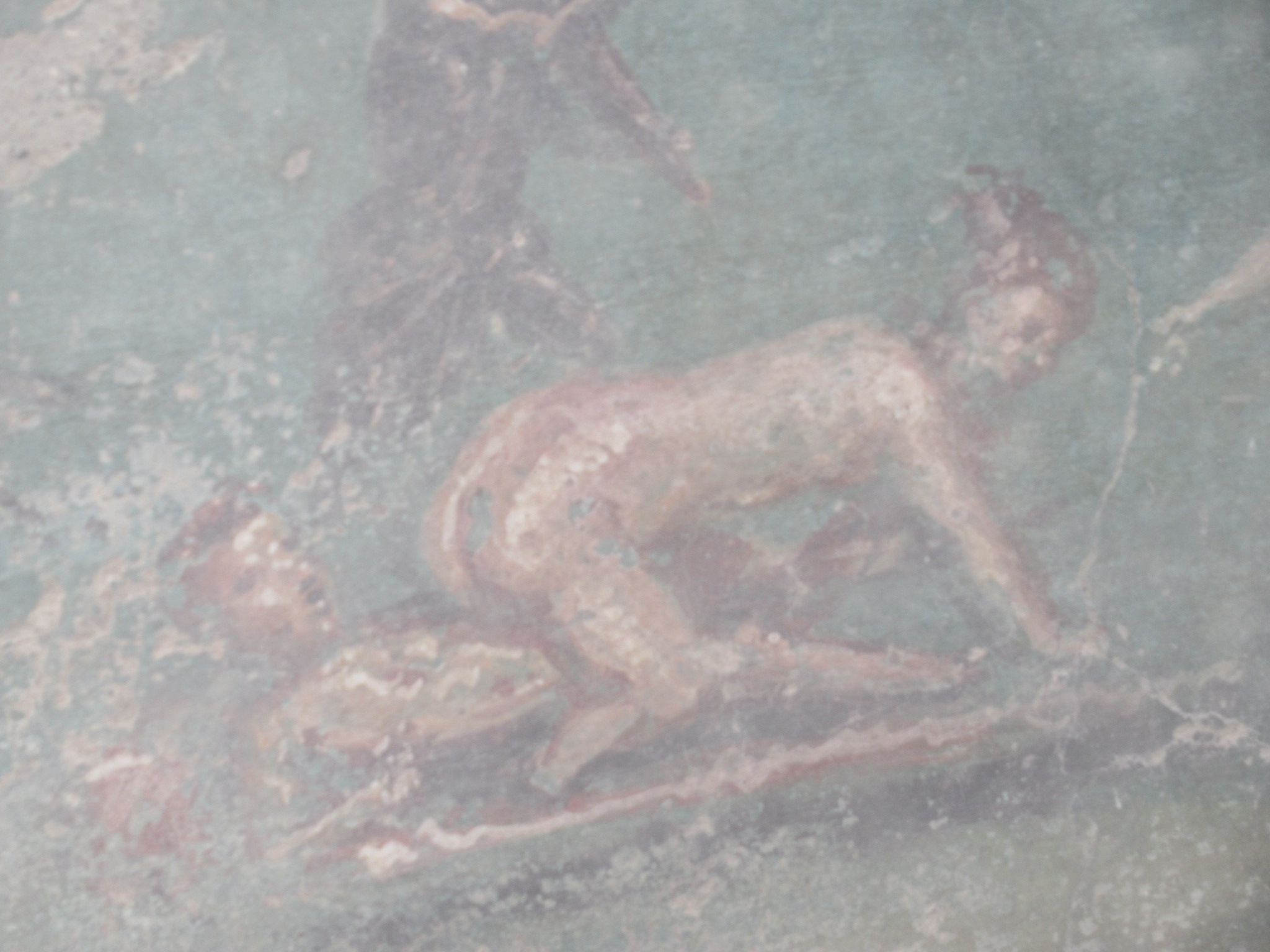
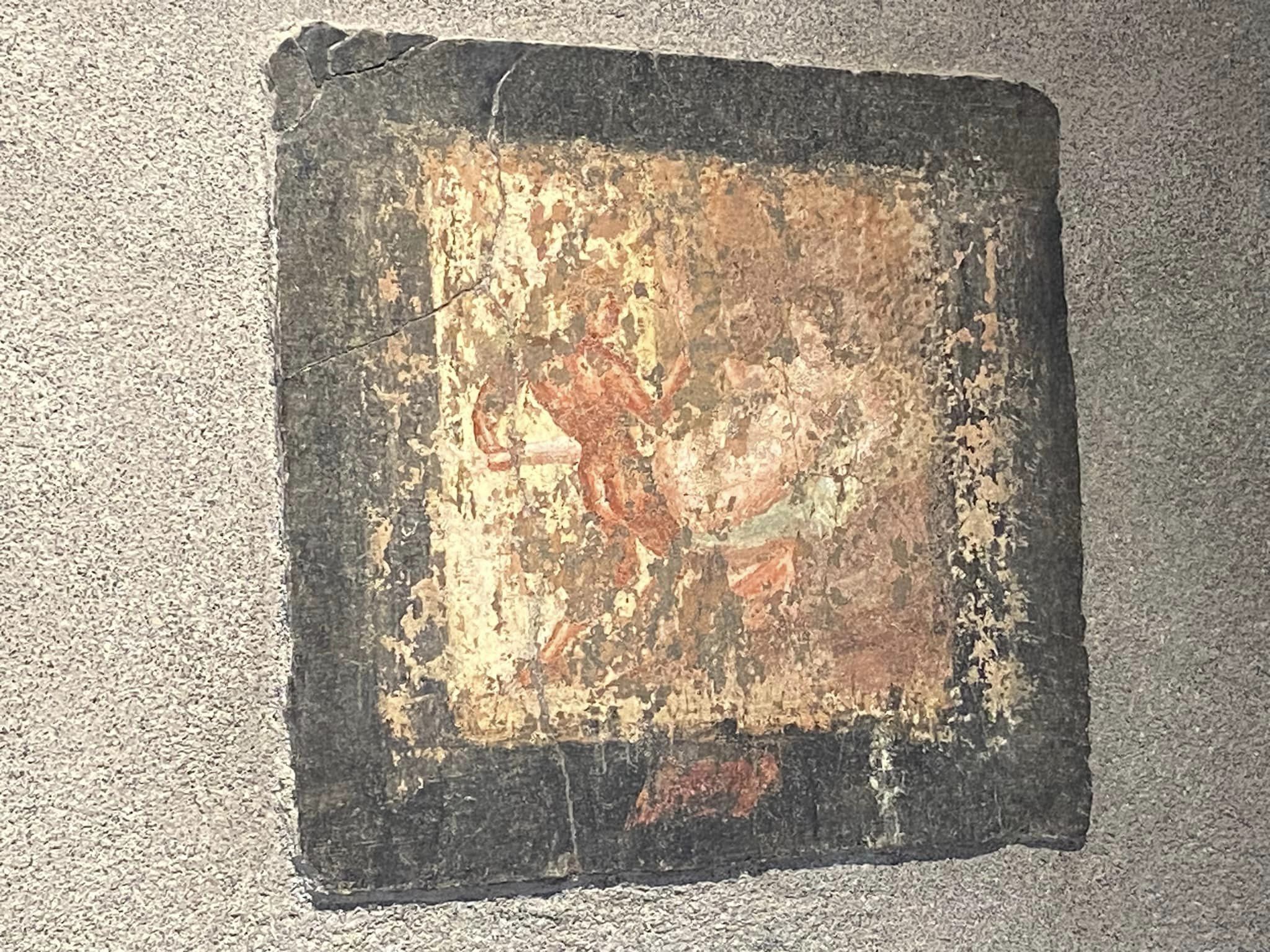
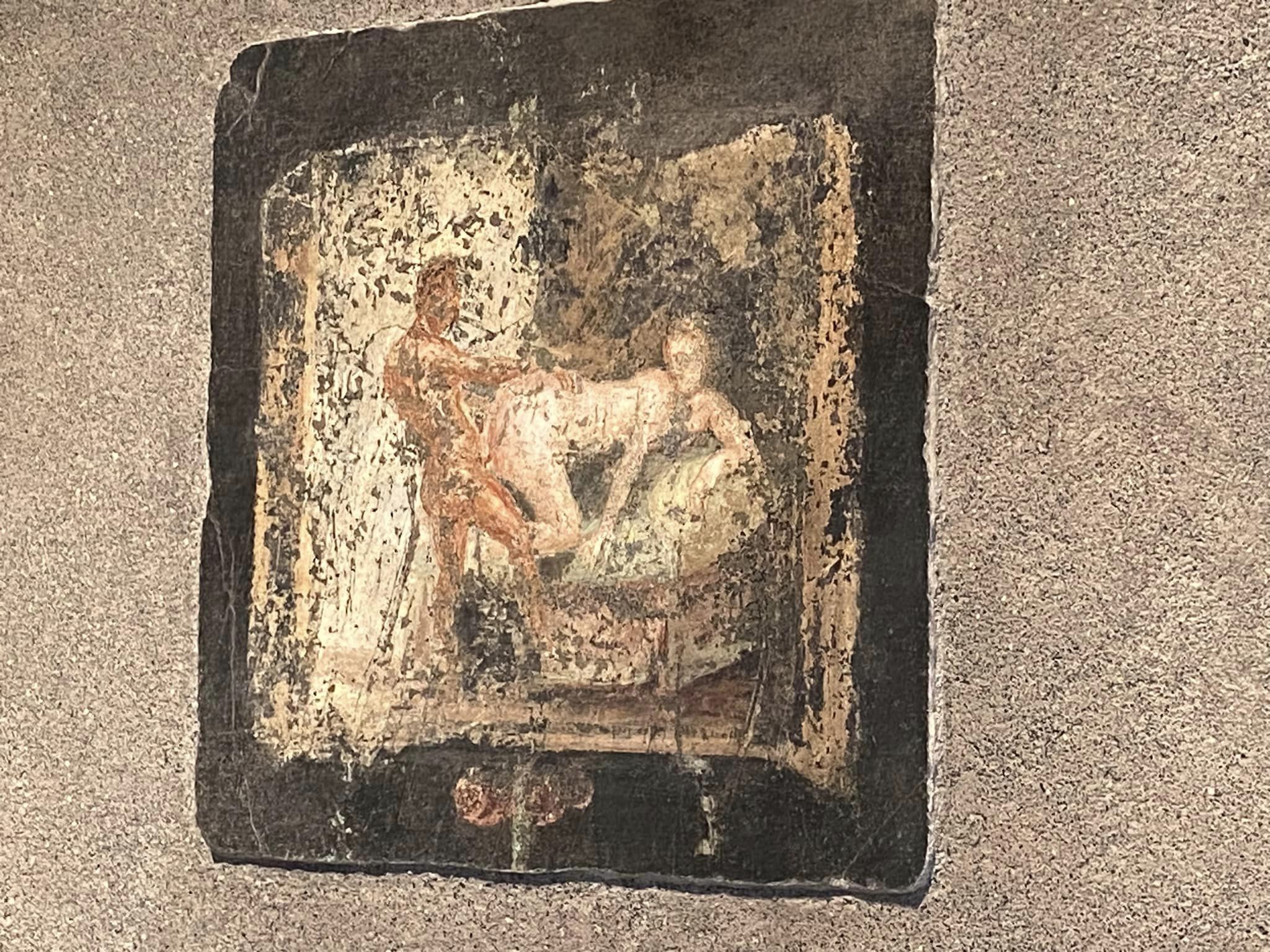
This is one a of the few explicitly erotic paintings one can see in the city of Pompeii. The others have been removed and are displayed in the museum in Naples – and I will generously share those pics in a future blog post.
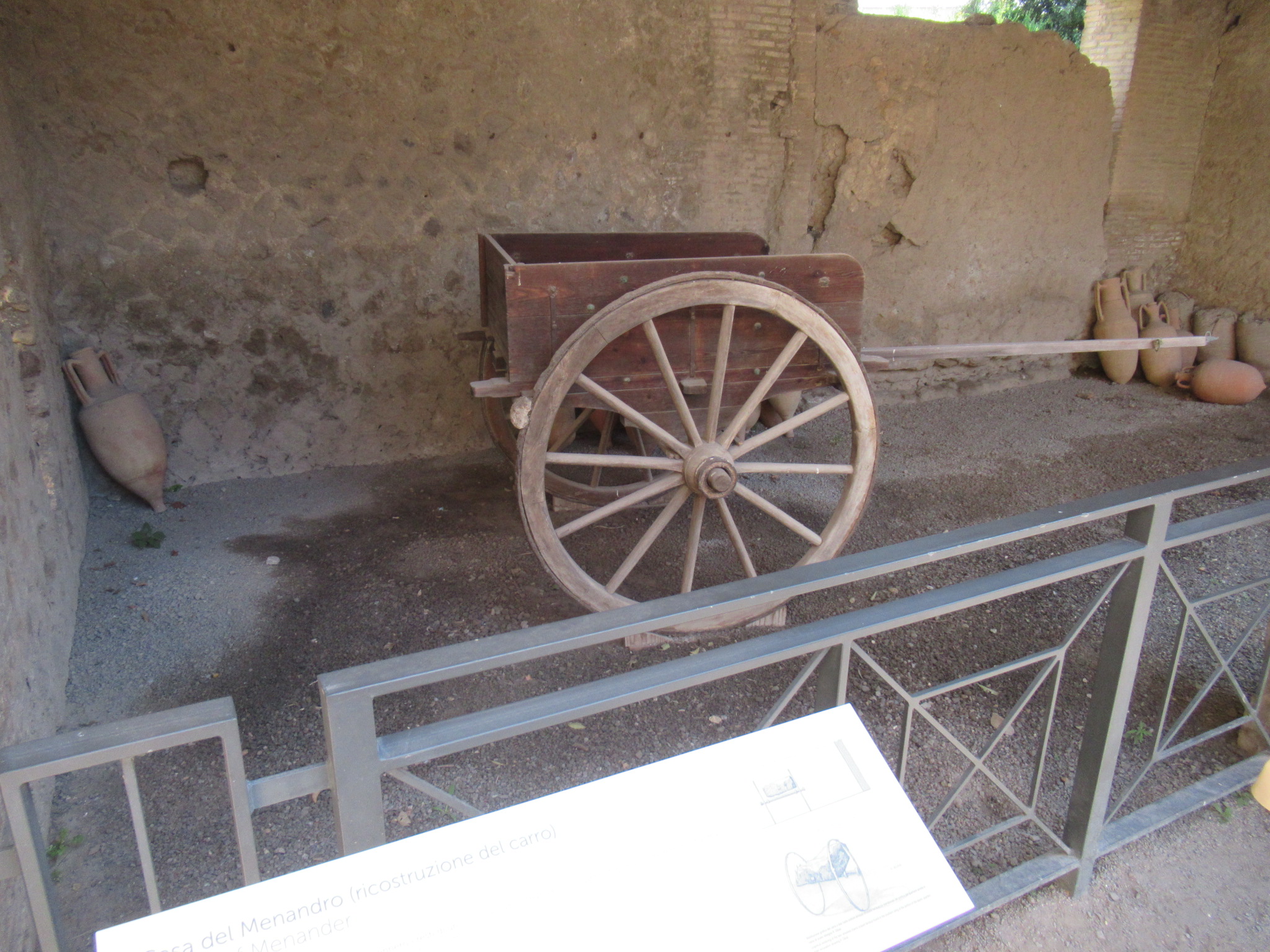
This home was one of the few that gave insight into the lives of servants – slaves most likely – living in humble rooms at the outer edge of the compound connected to narrow alleys. This compound also included this reconstructed cart one person would be able to pull down the streets of the city transporting deliveries.

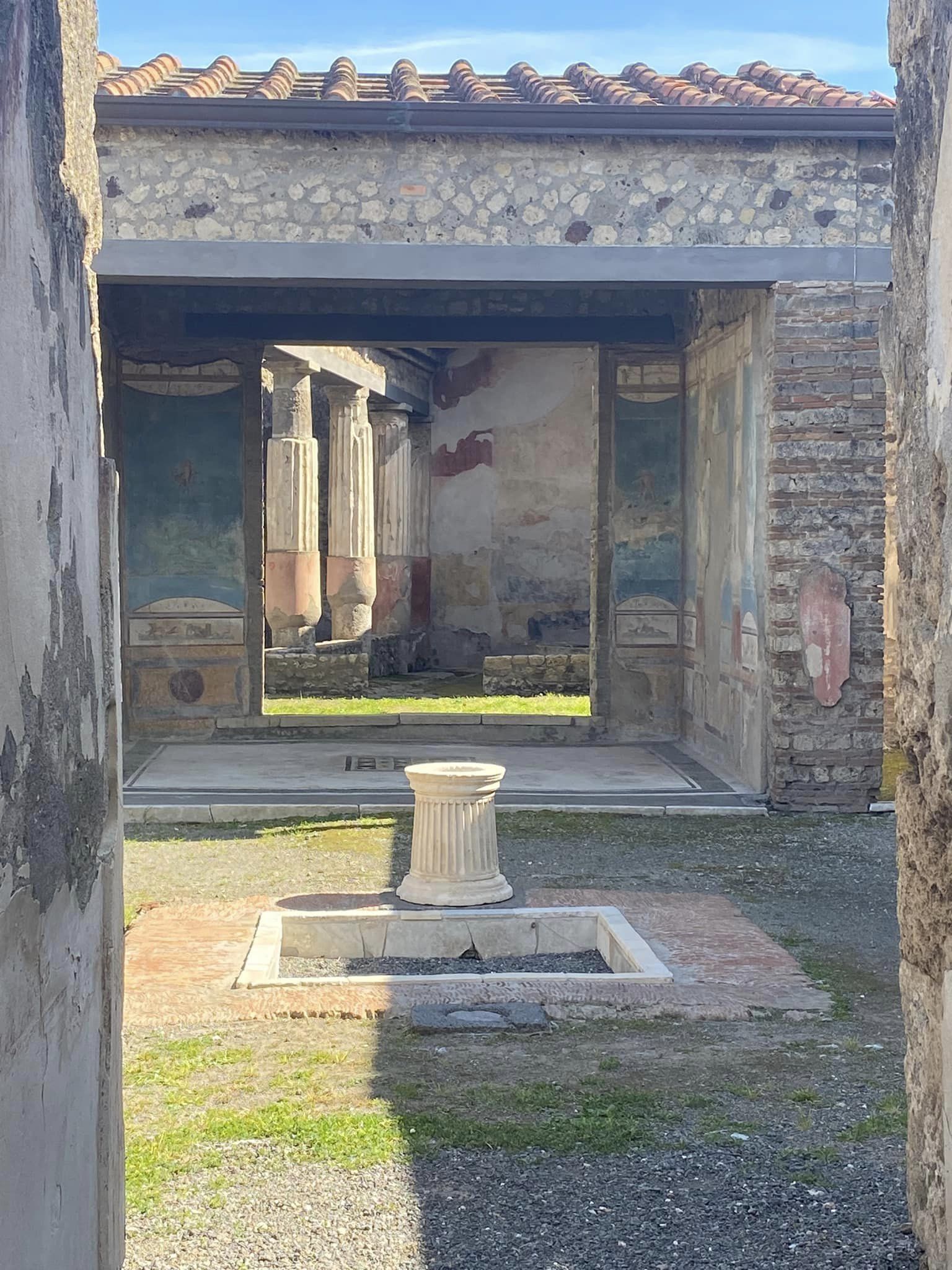
Another indoor pool that would collect rainwater from the opening in the roof.
Note the little hole that would direct the water into the cistern below.
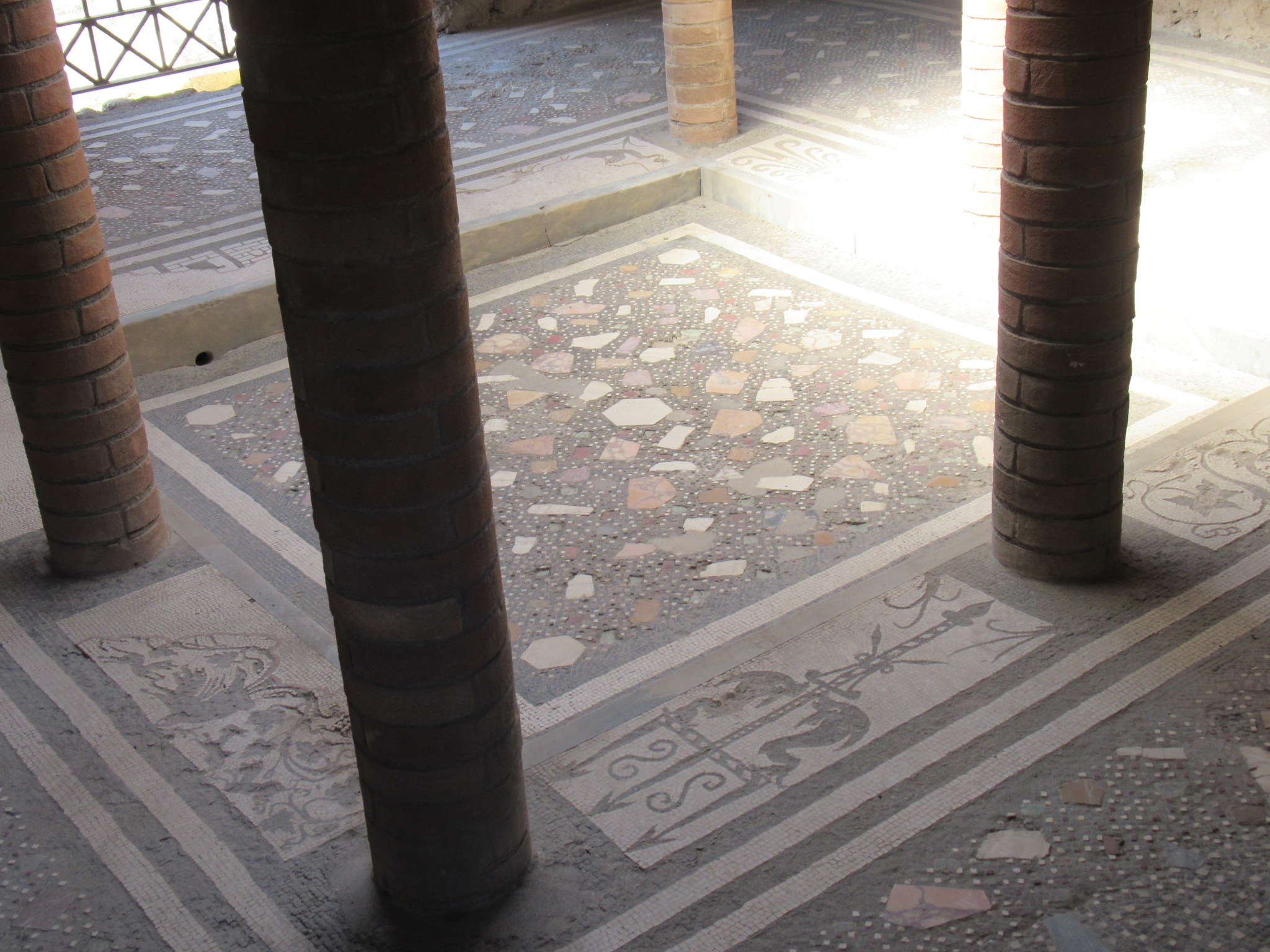
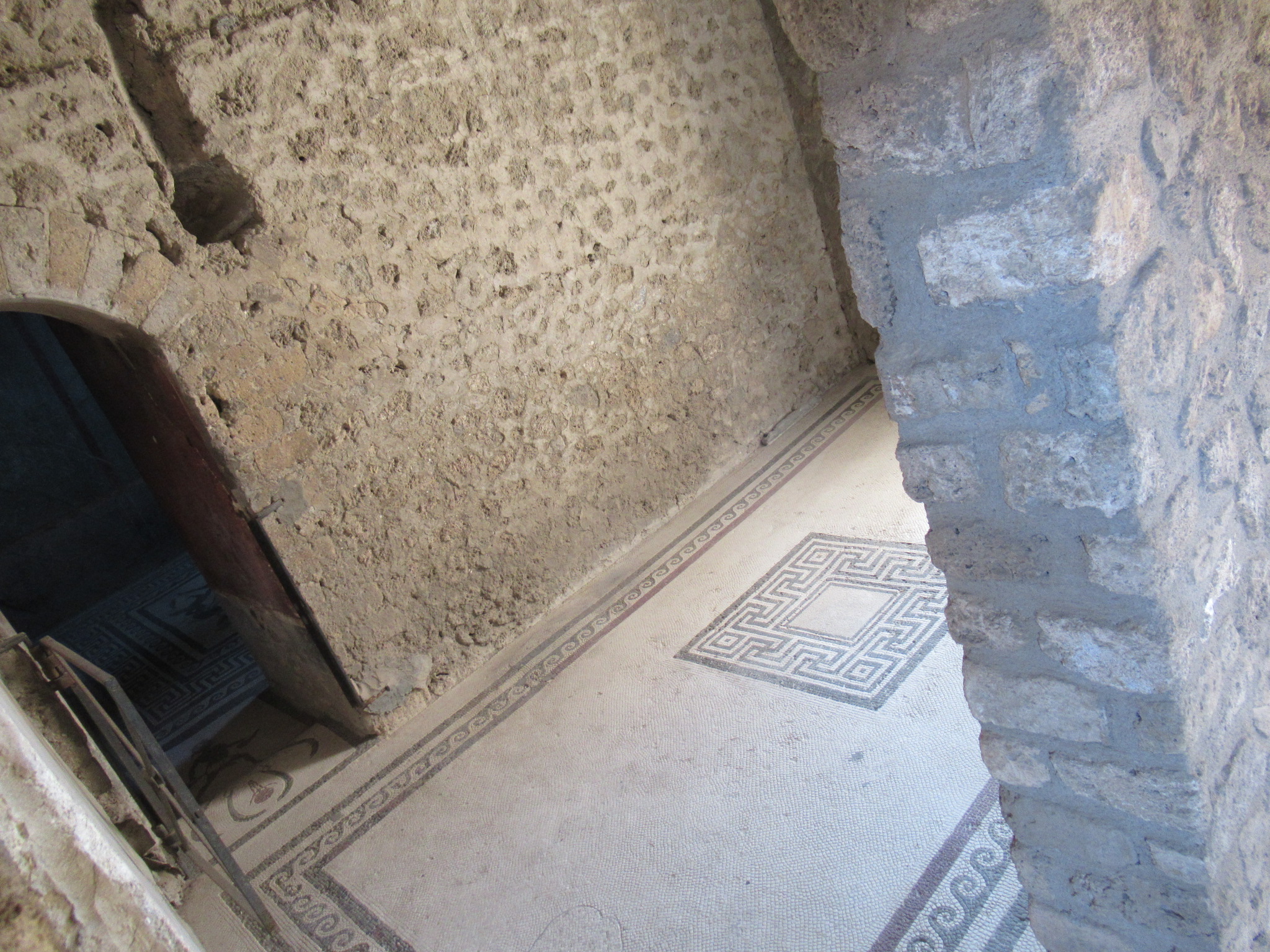

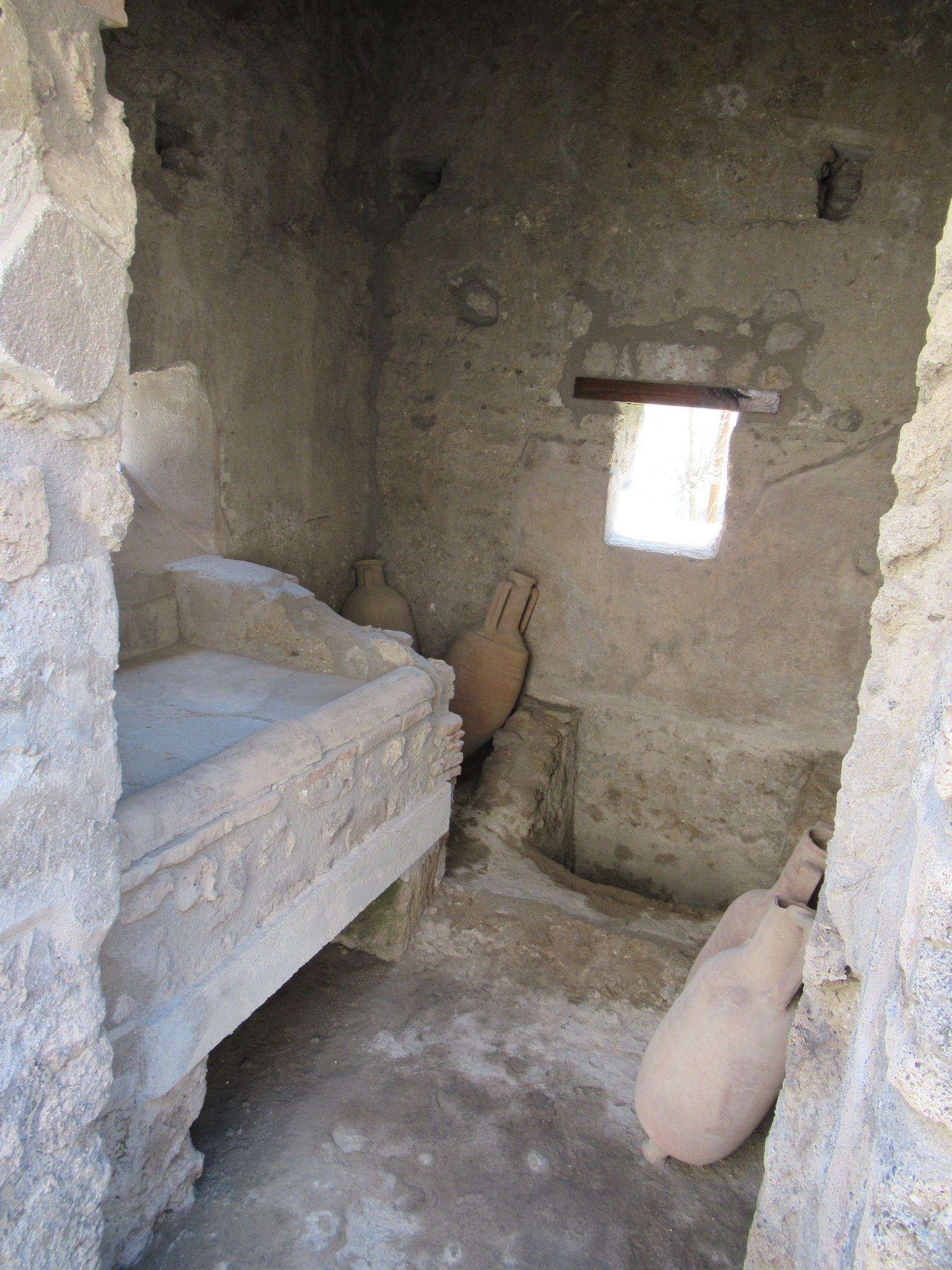
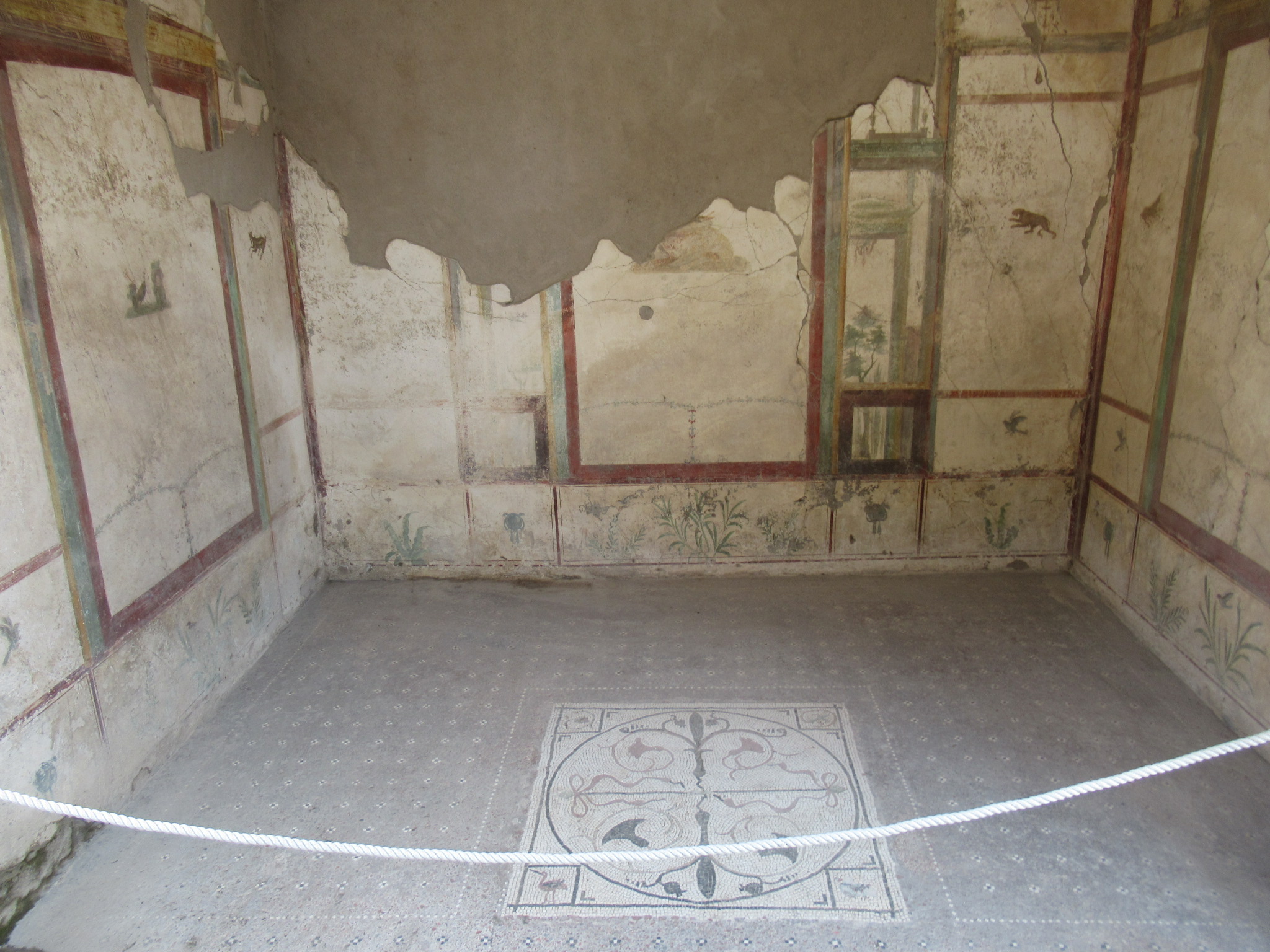

Kitchens tended to have food items painted on their walls.
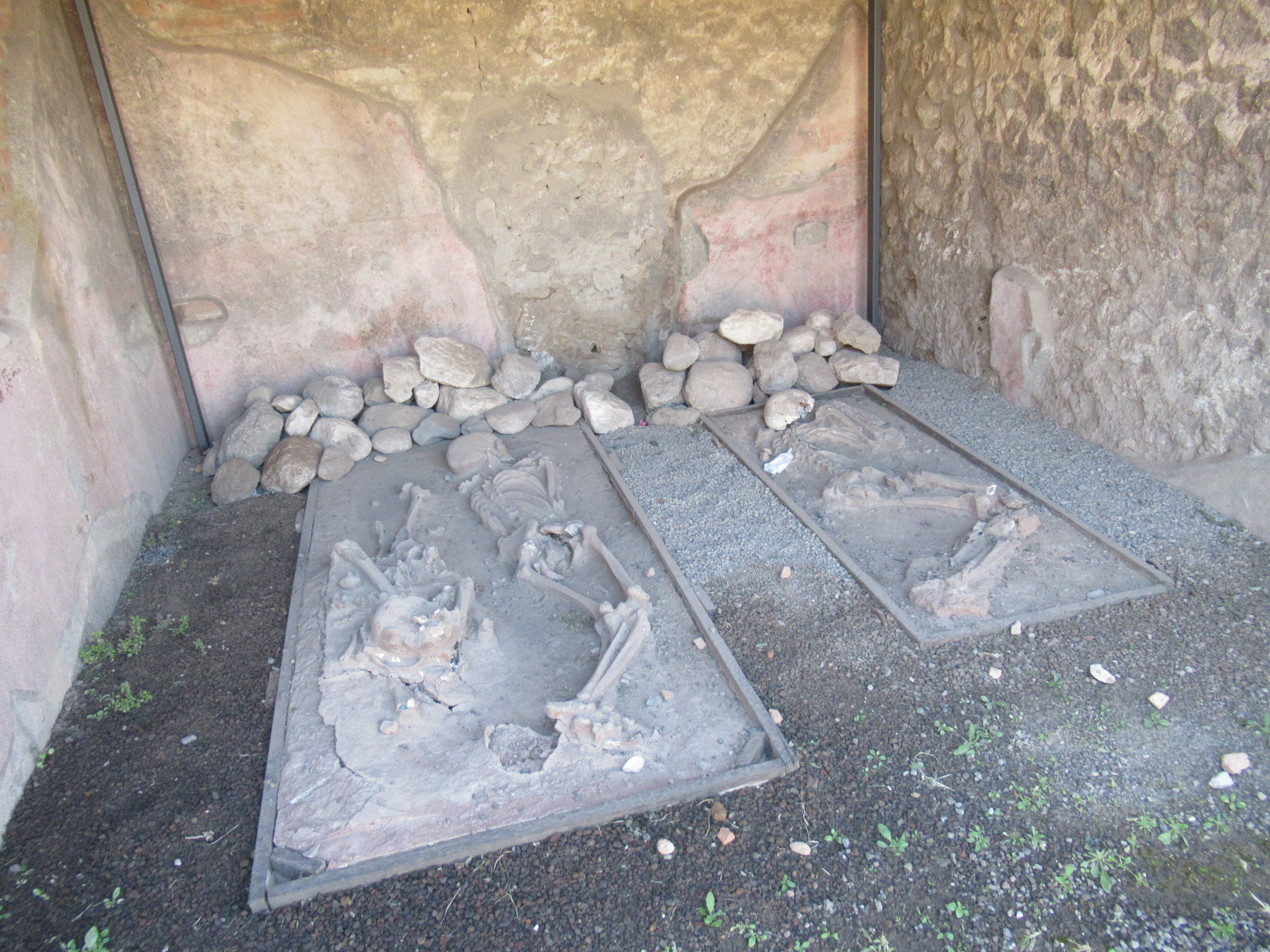
In only one location in Pompeii actual skeletal remains are uncovered.
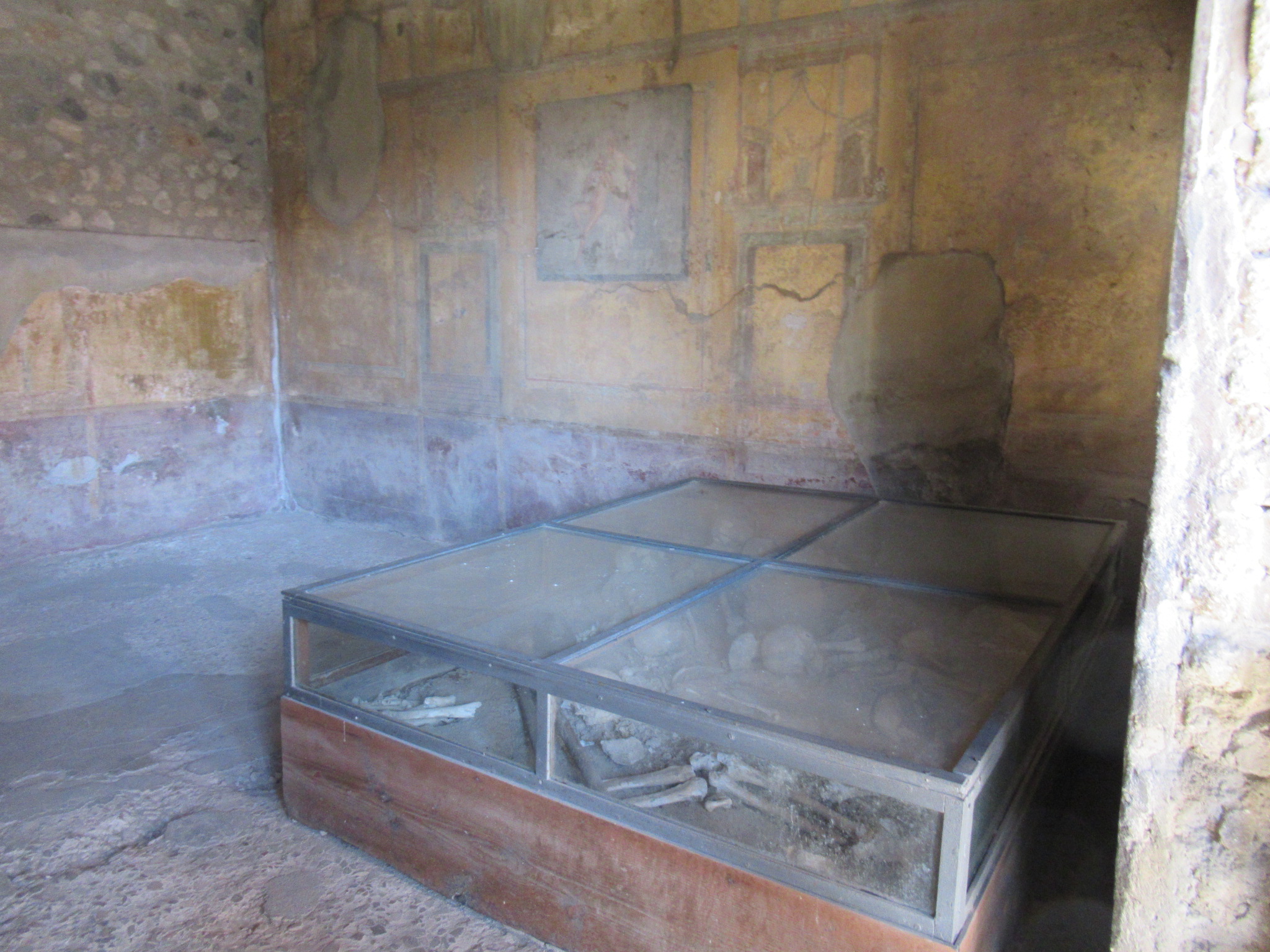
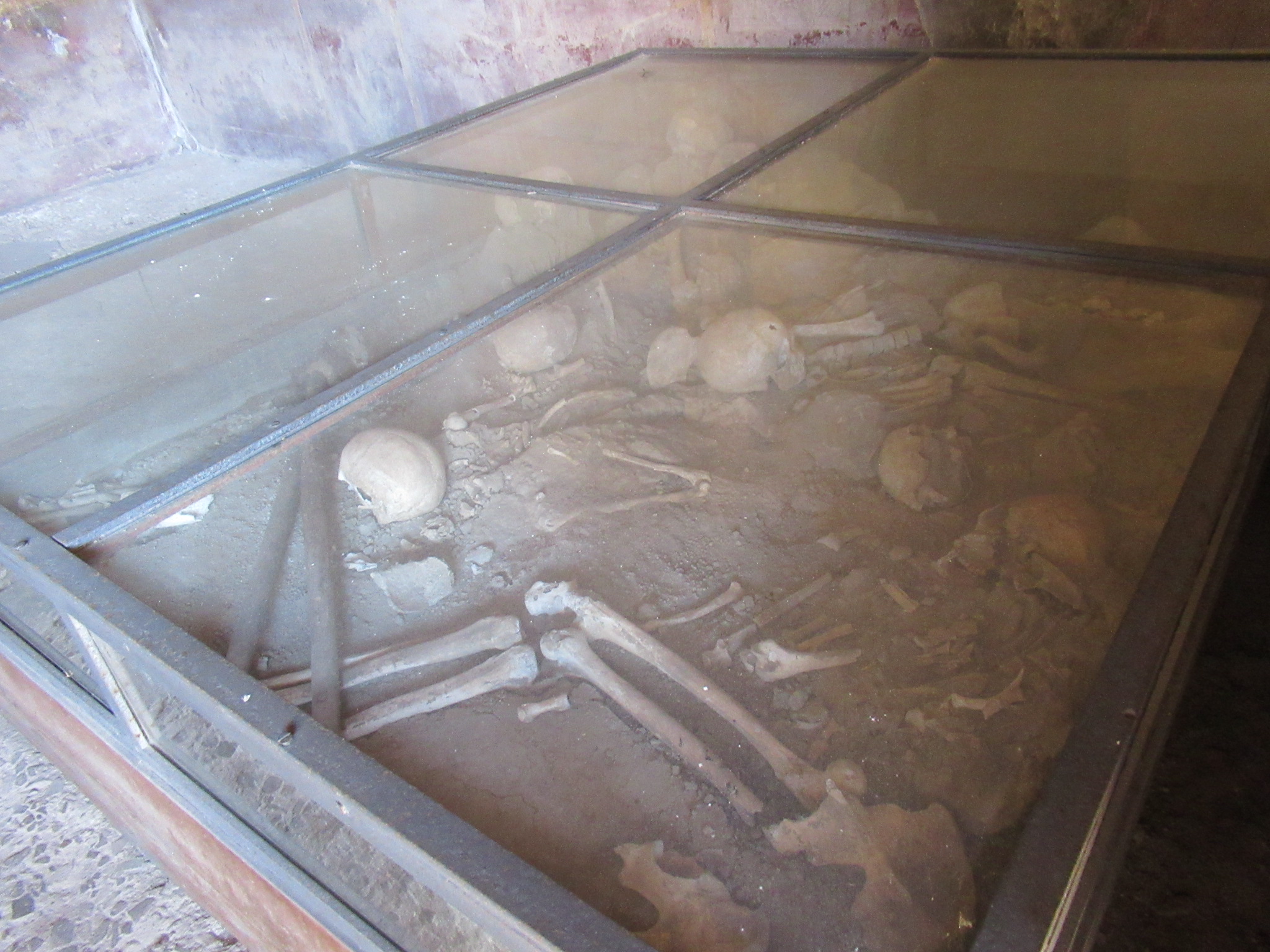
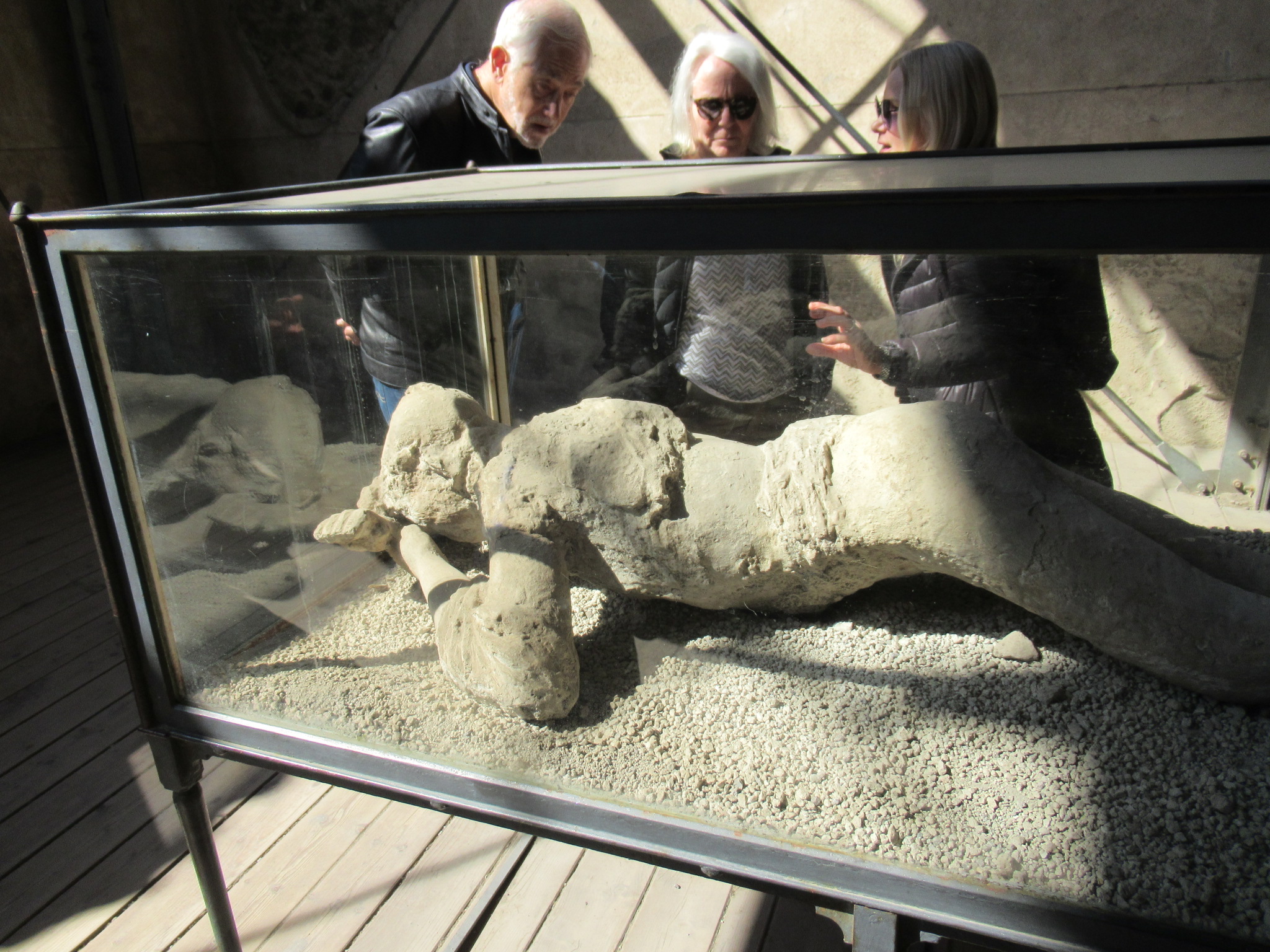
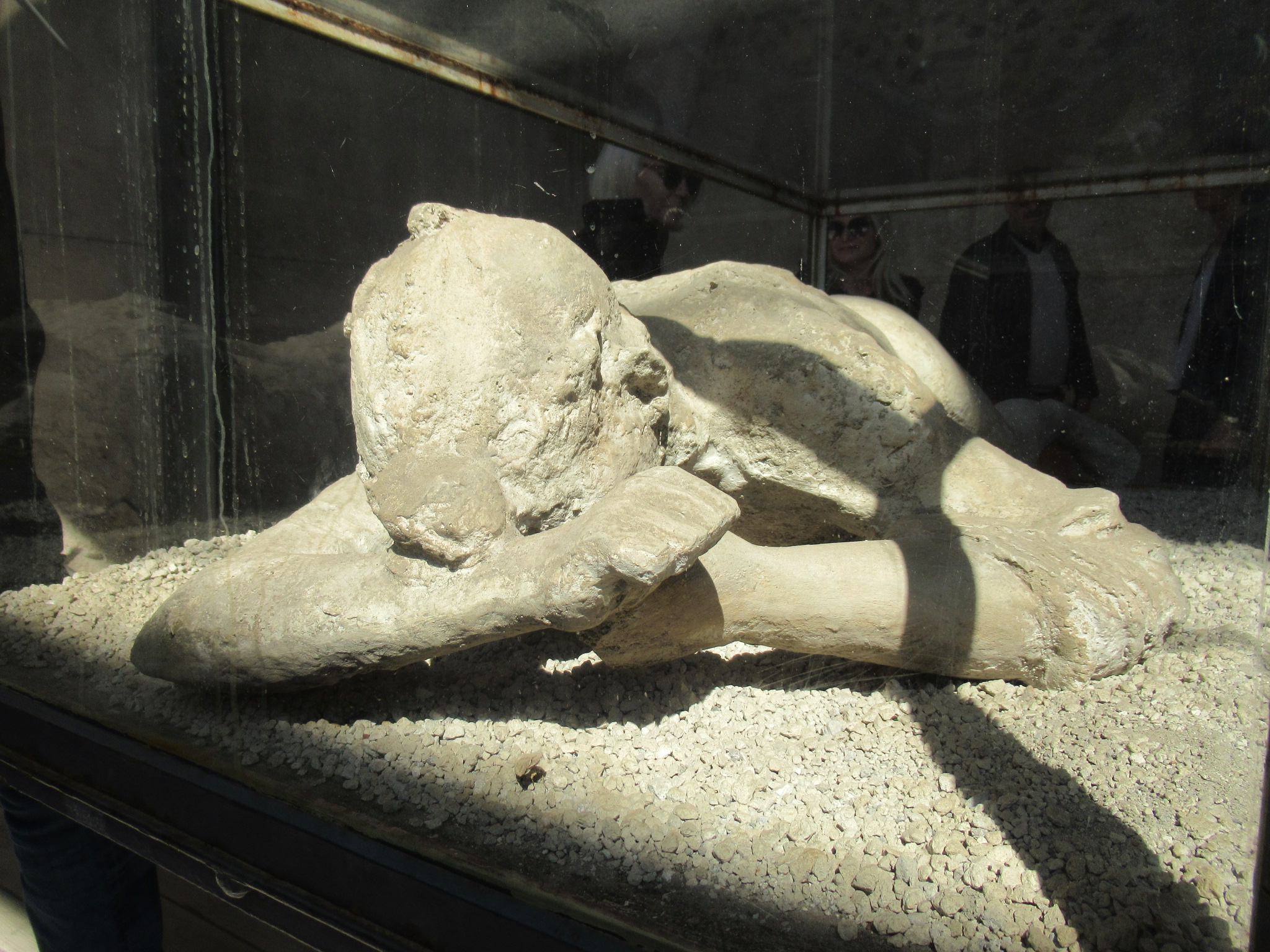
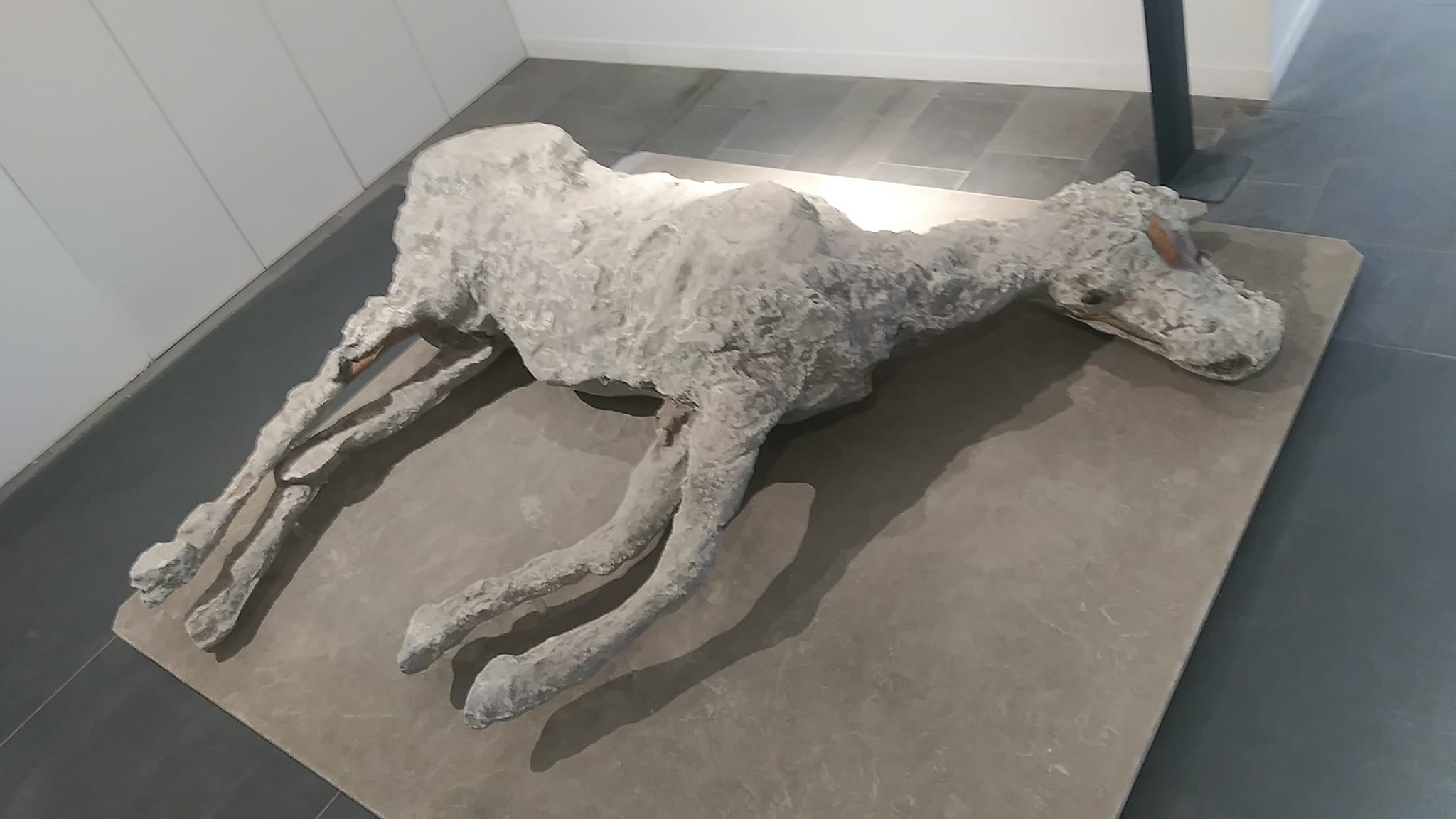
But mostly it is plaster casts of the victim’s last moment that are displayed in the locations the hollows the bodies left behind in the volcanic ash were discovered.
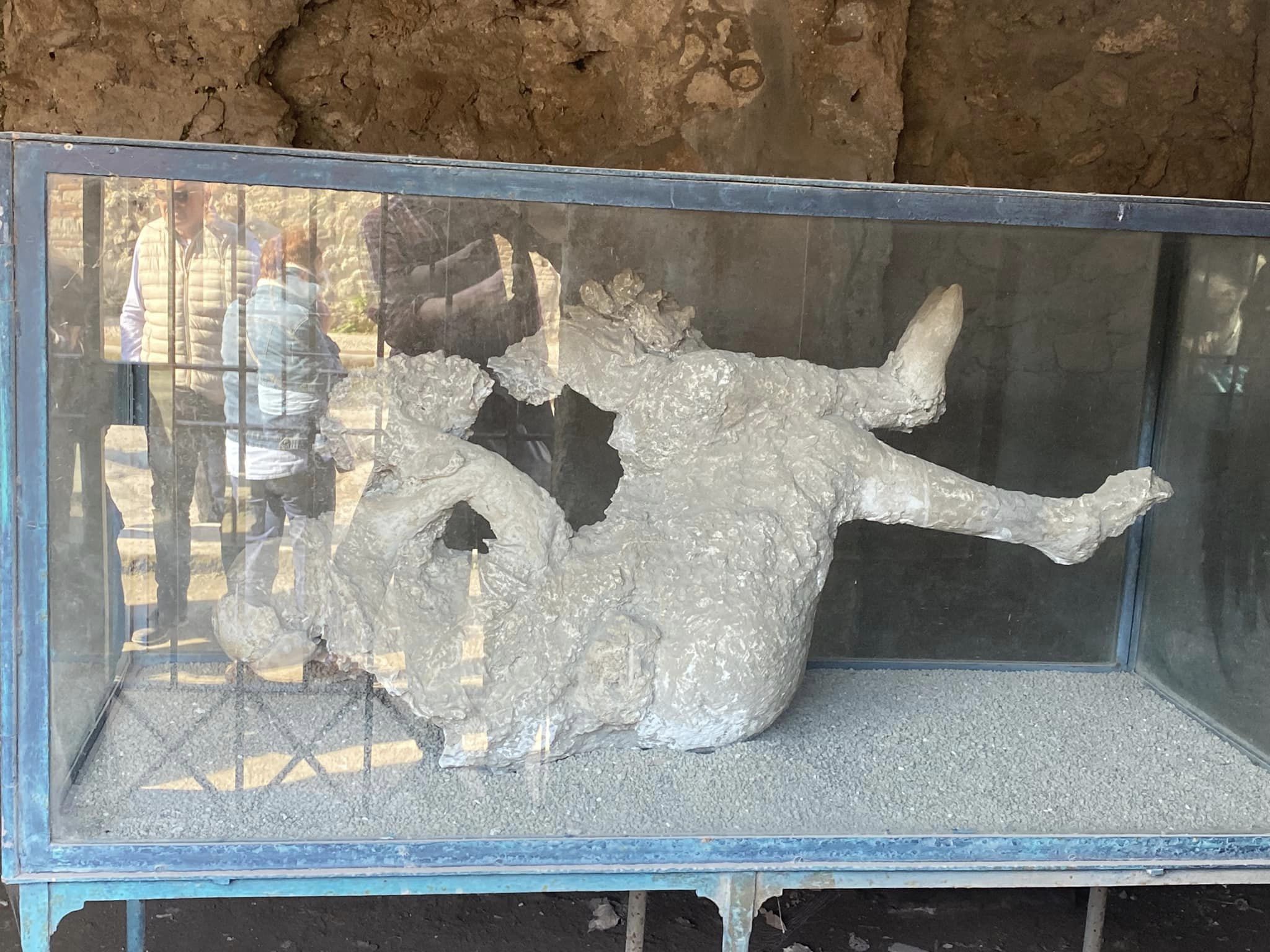
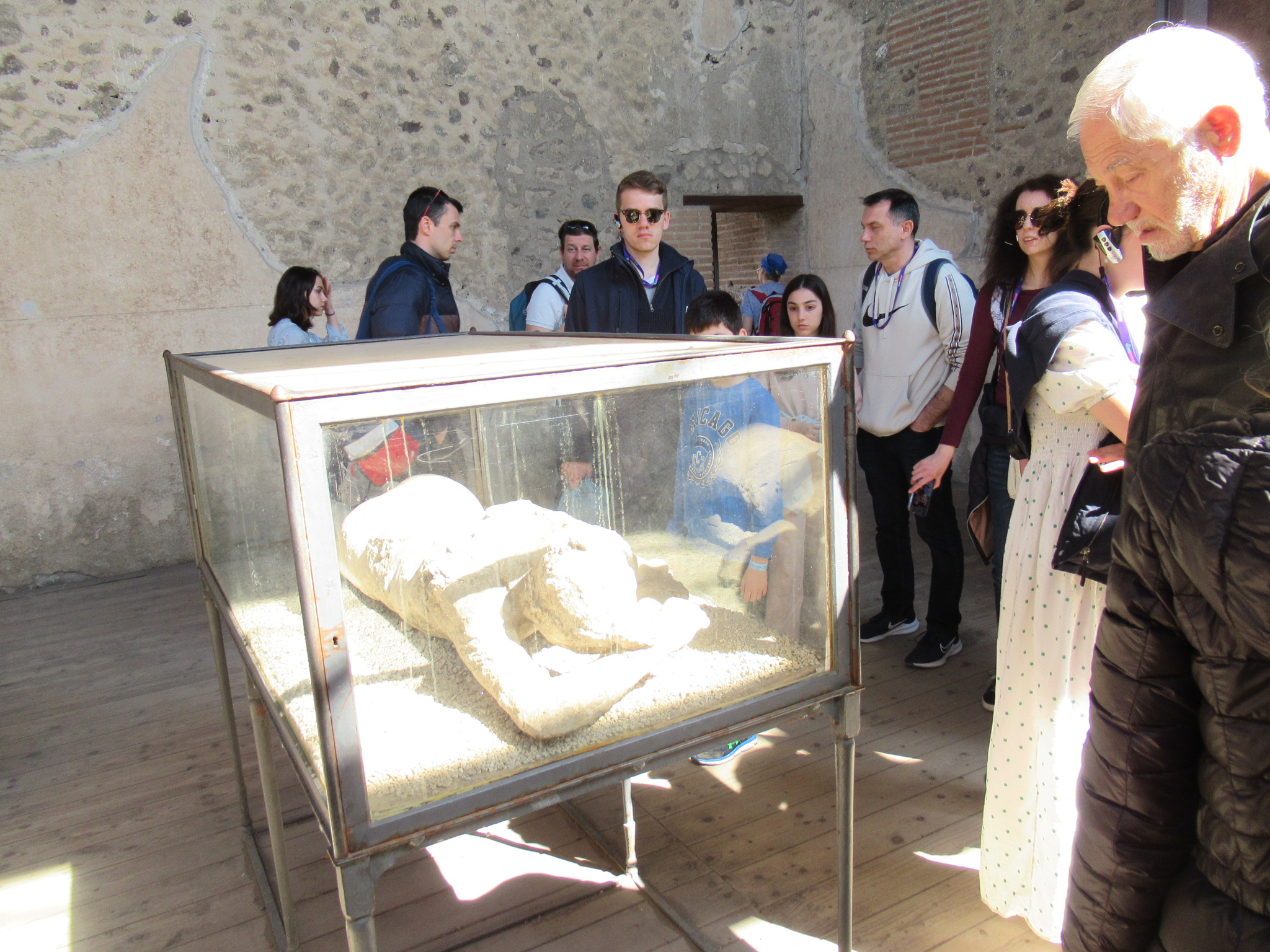
The plaster cast of this victim reveals that they wore a leather band or belt around their waste, indicating they were an enslaved person. The band would have had markings that showed who “owned” this slave, and would only have been removable by the “owner”.
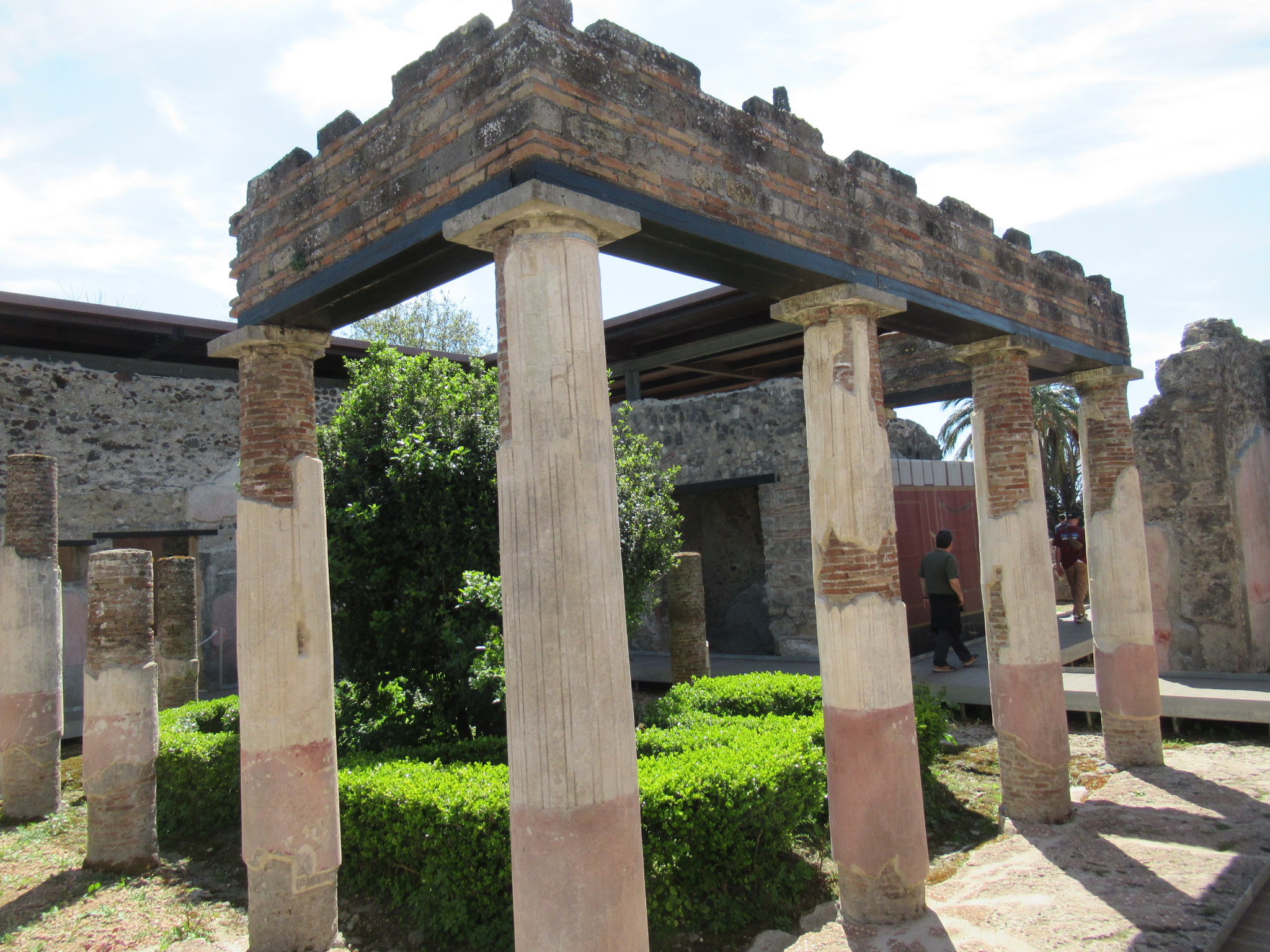
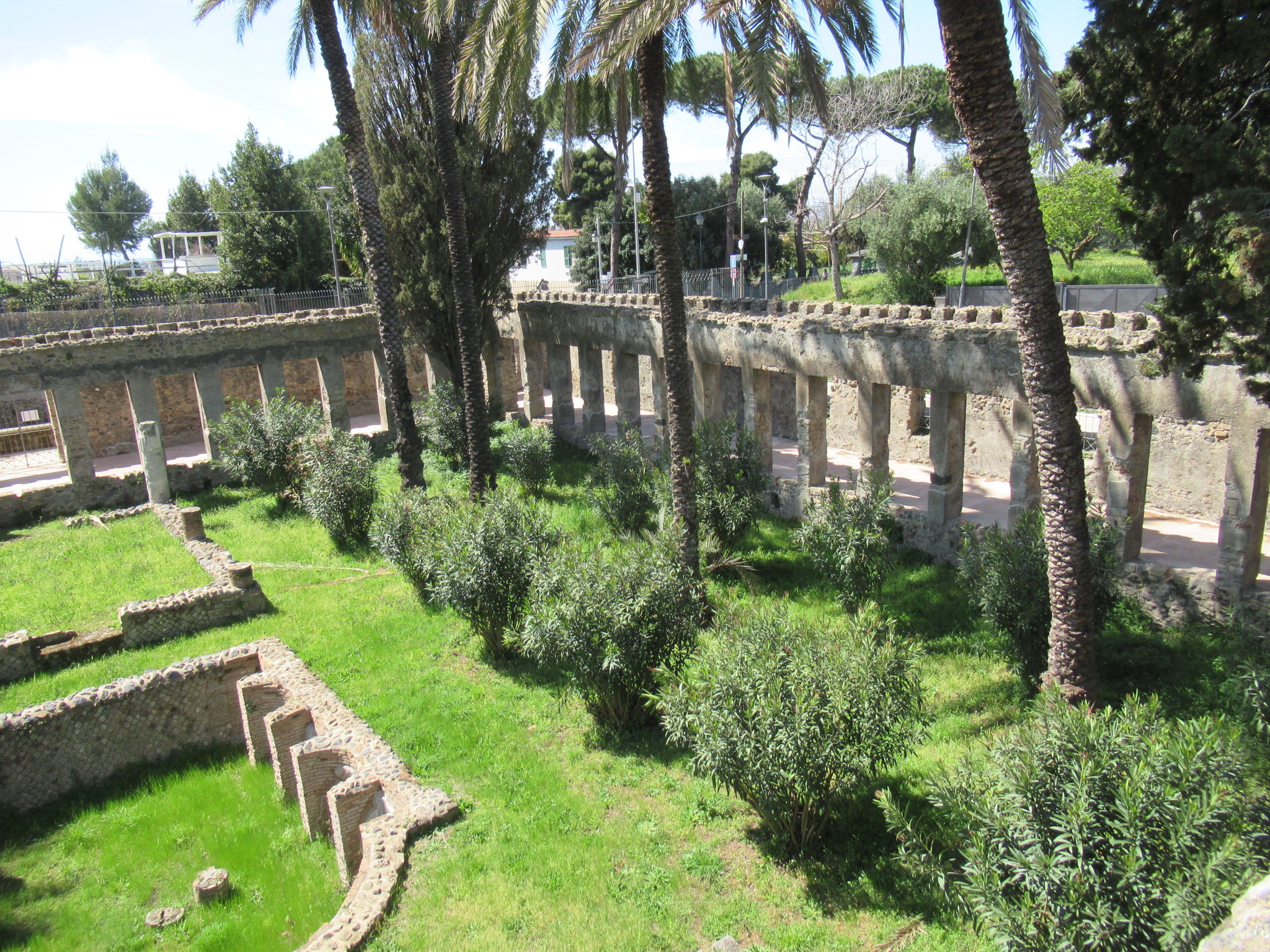
On the suburban road past the Western gate are found some of the largest, most lavish estates.
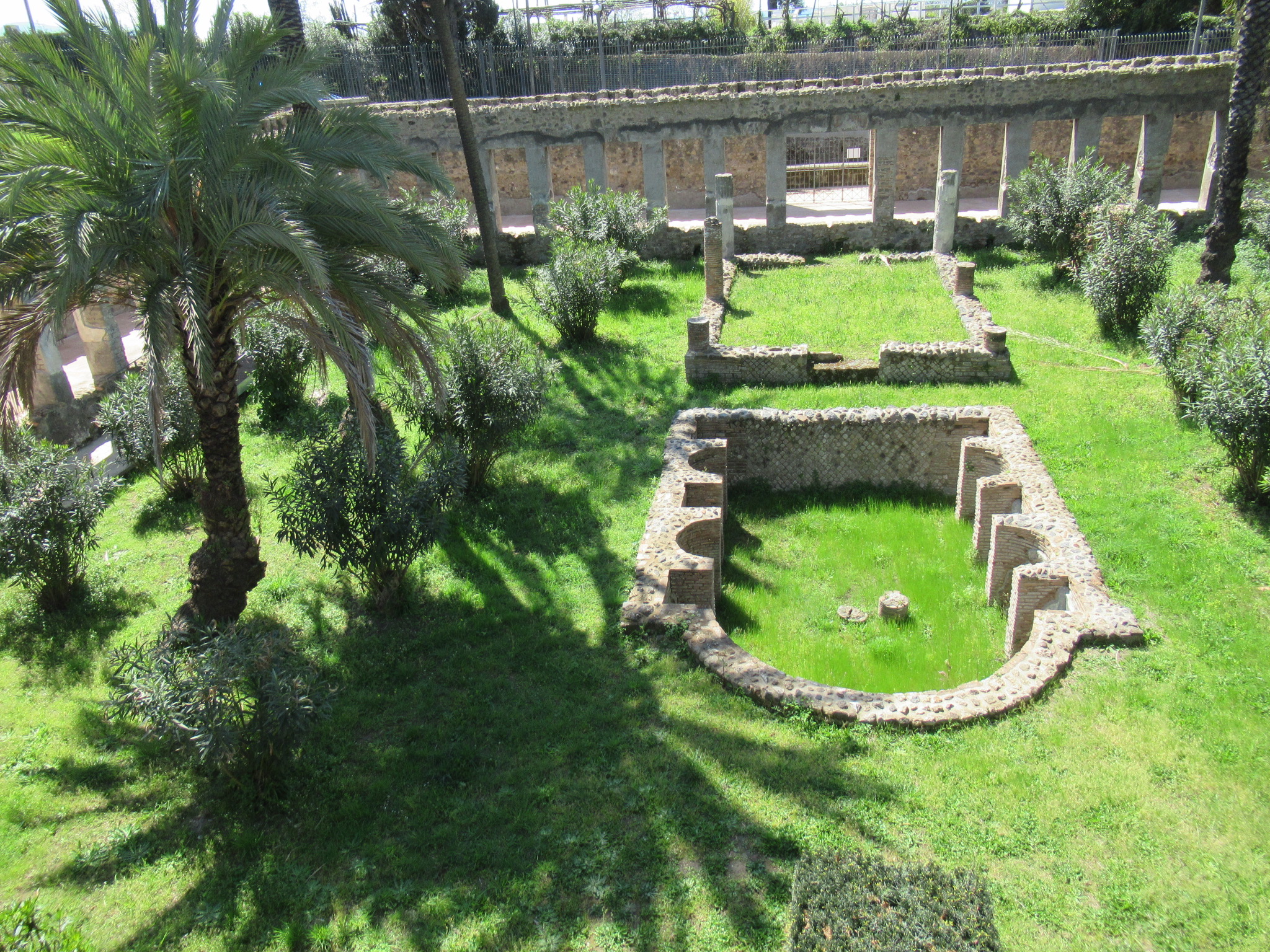
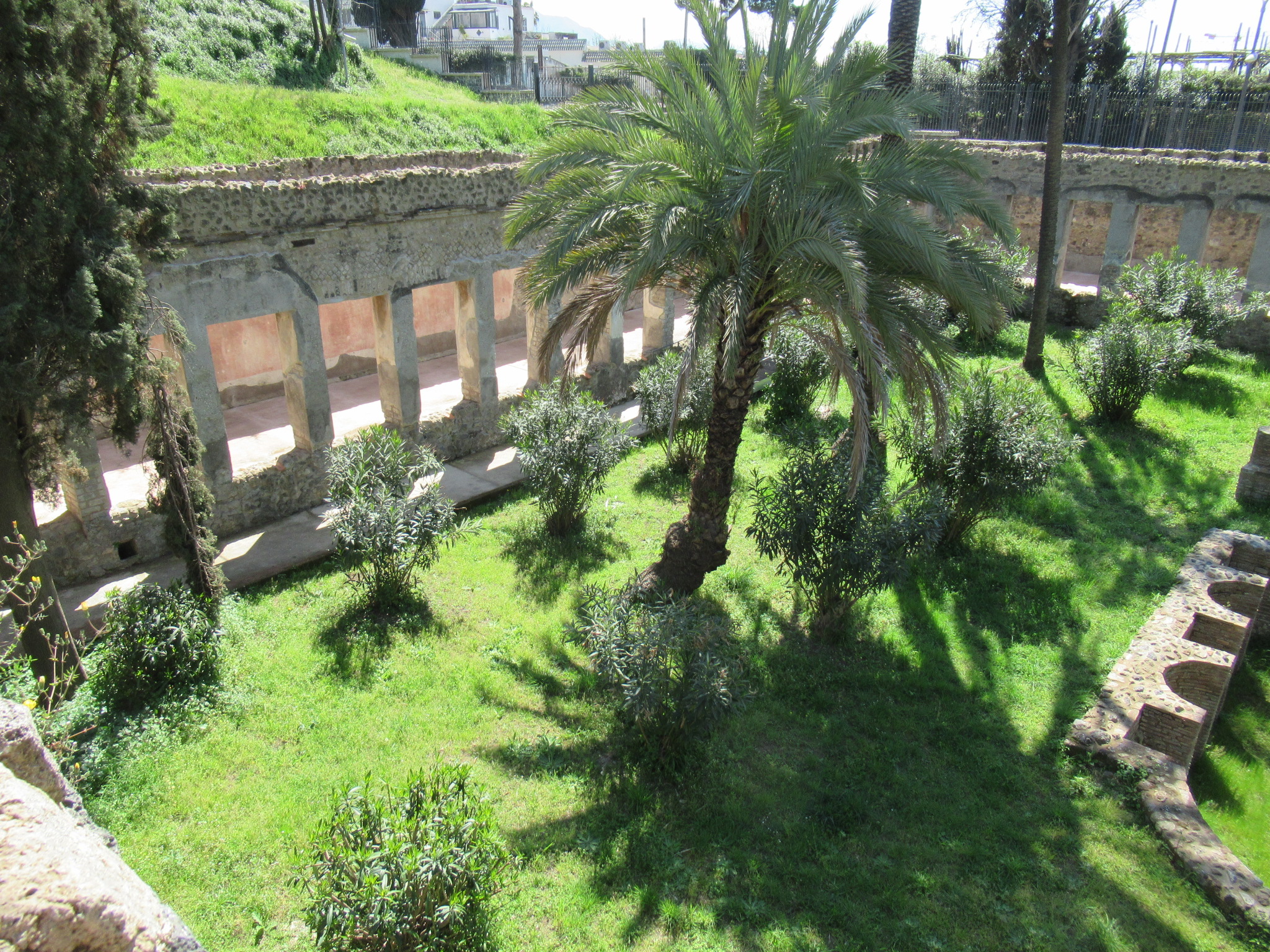
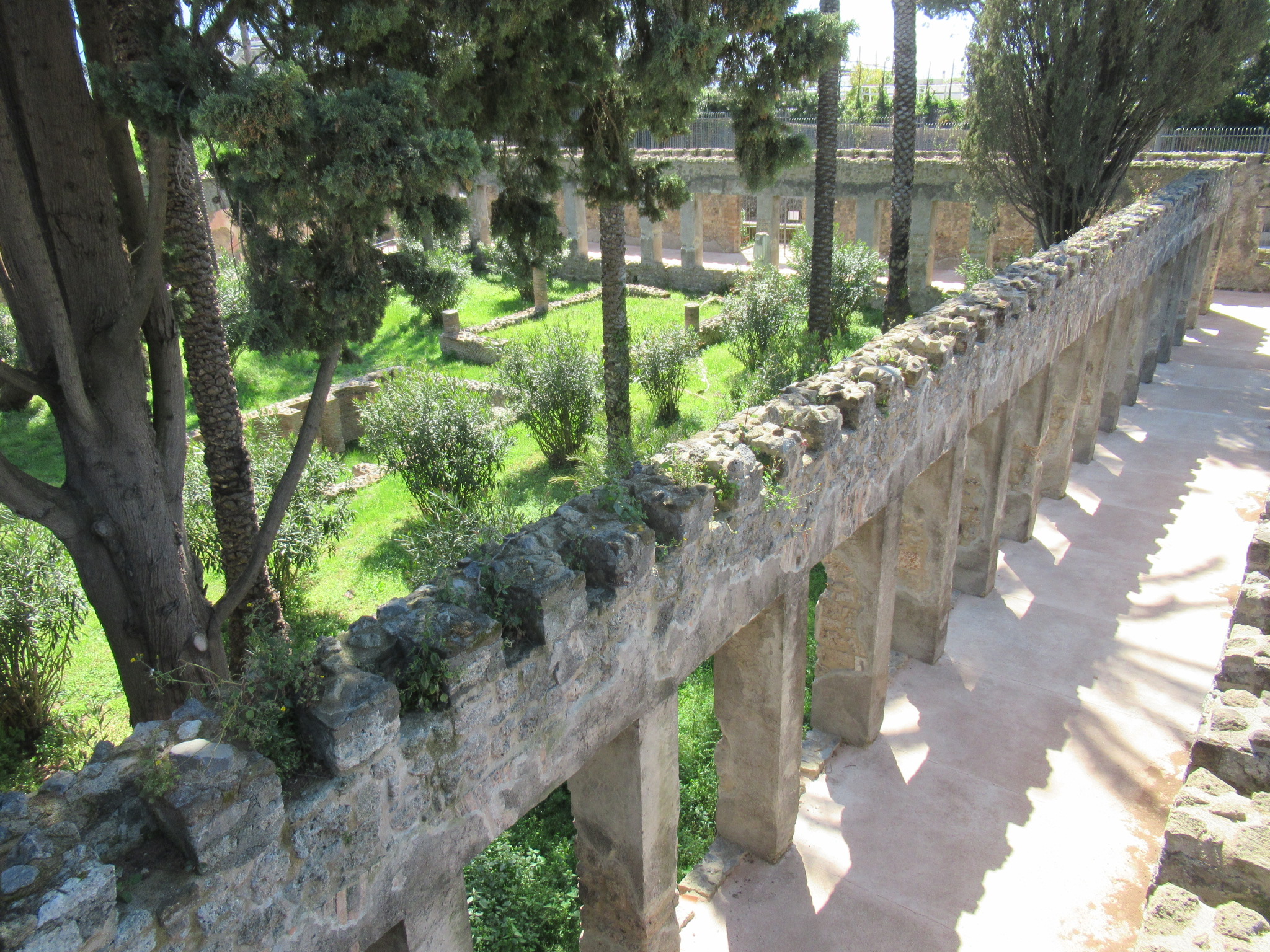
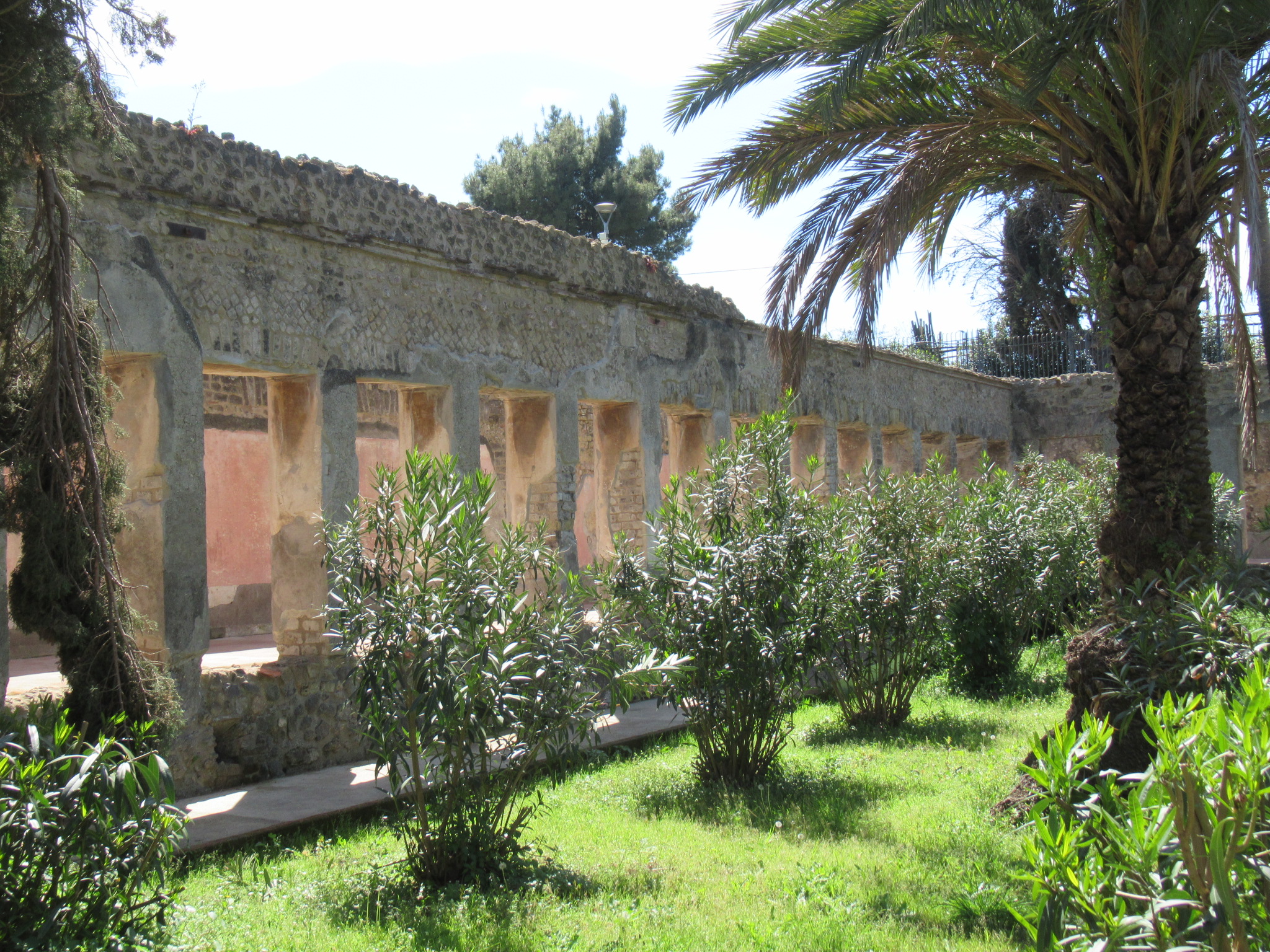


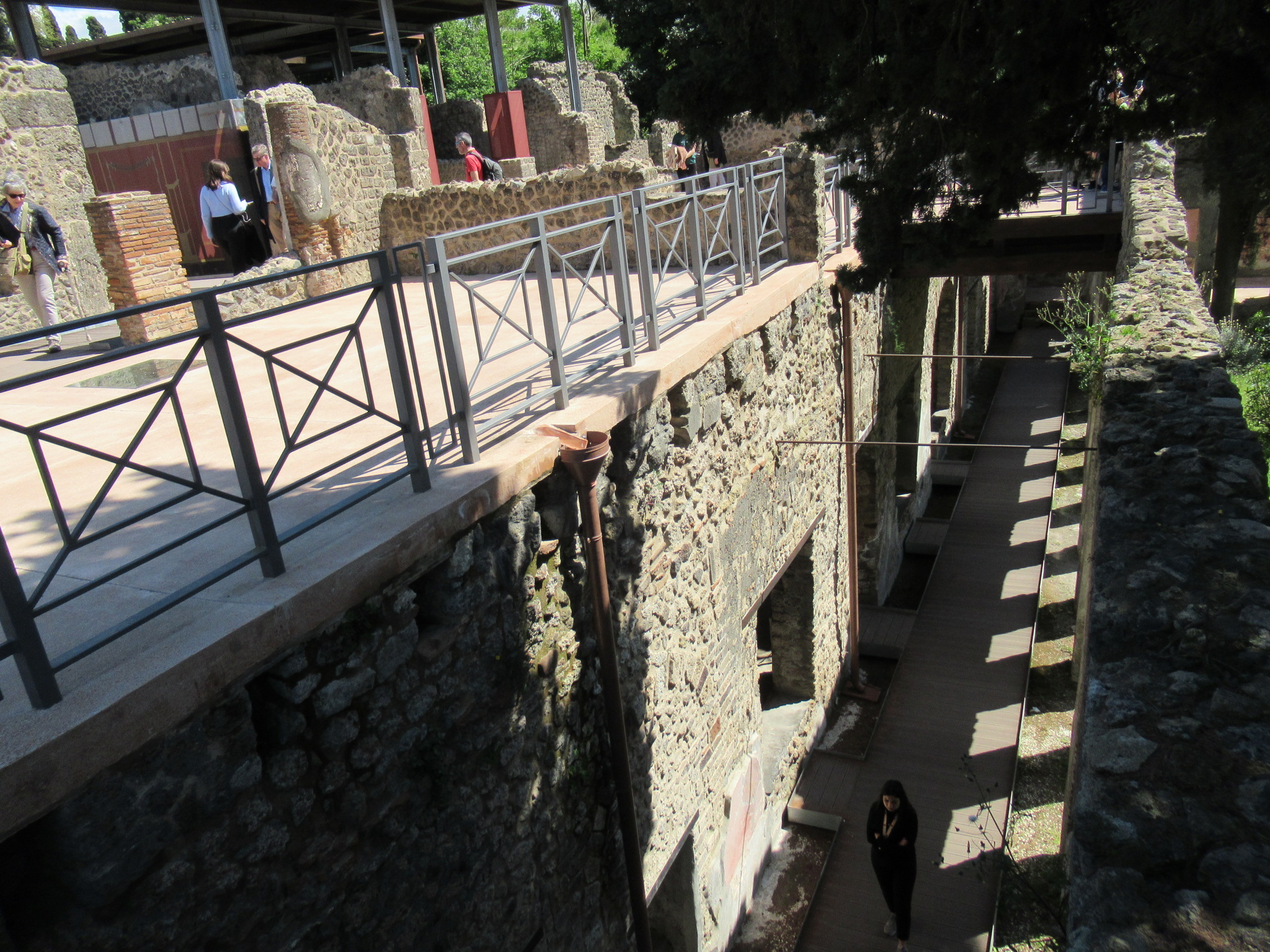
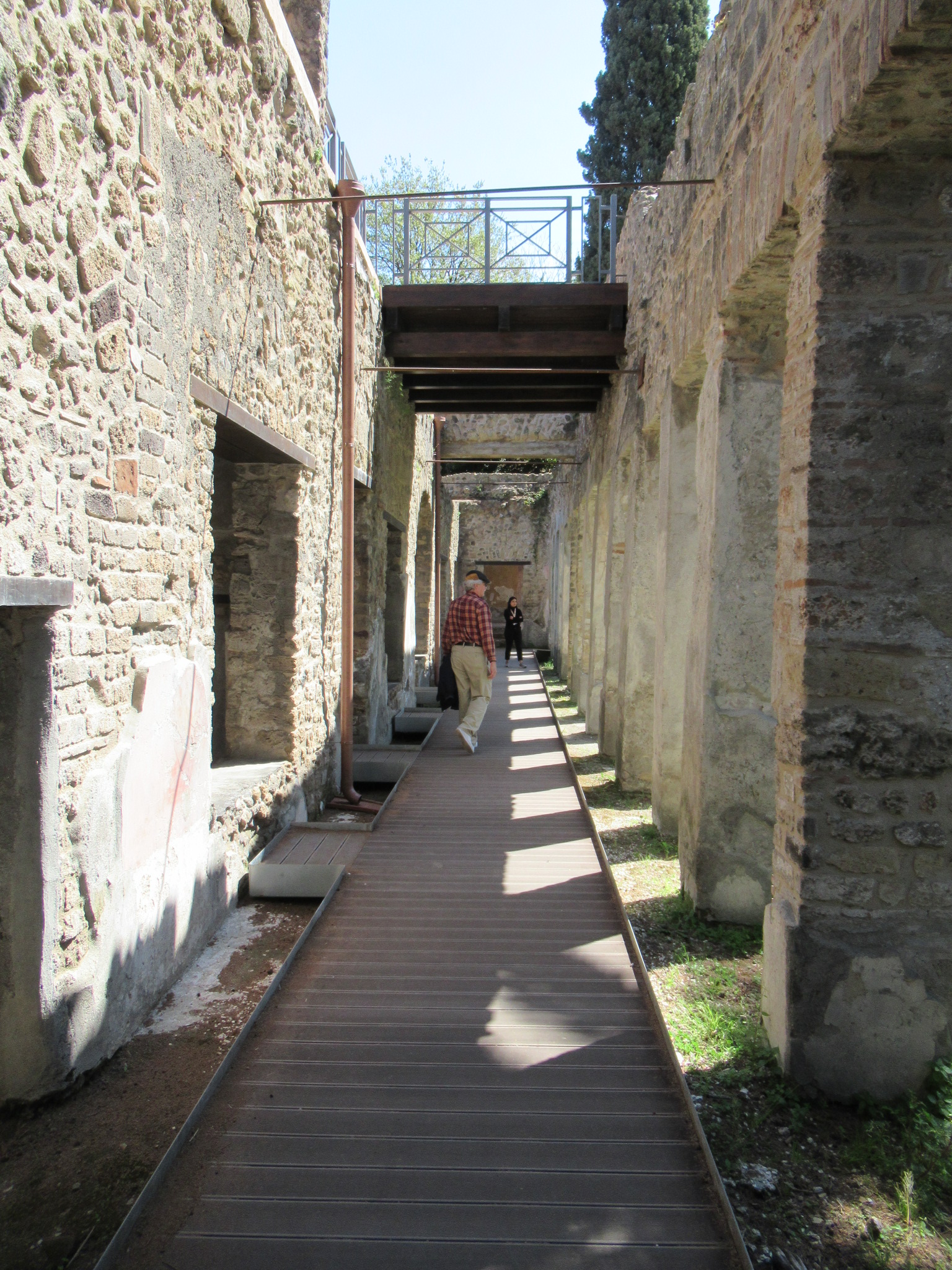

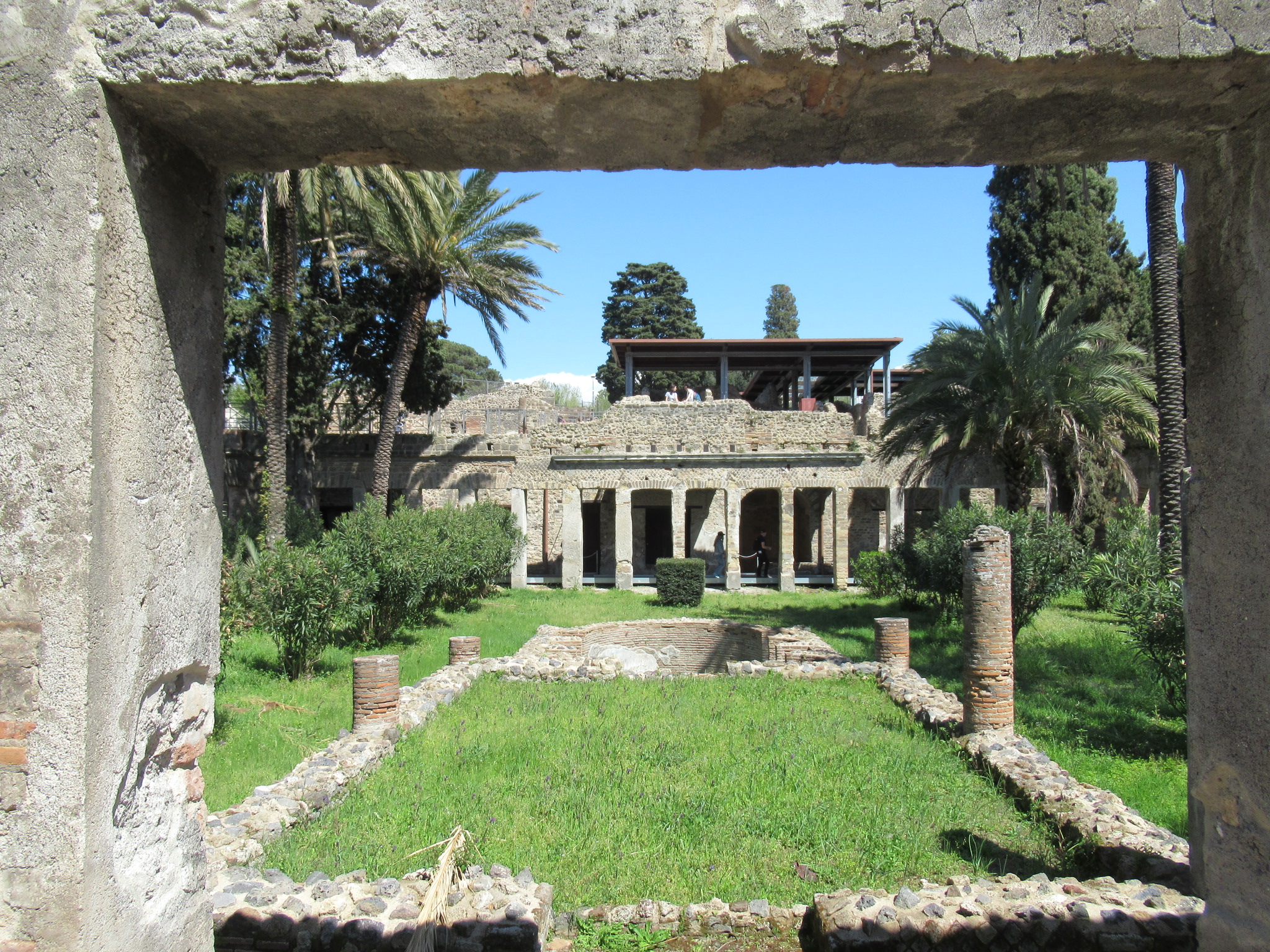

West outside the city is the largest and possibly richest preserved estate.
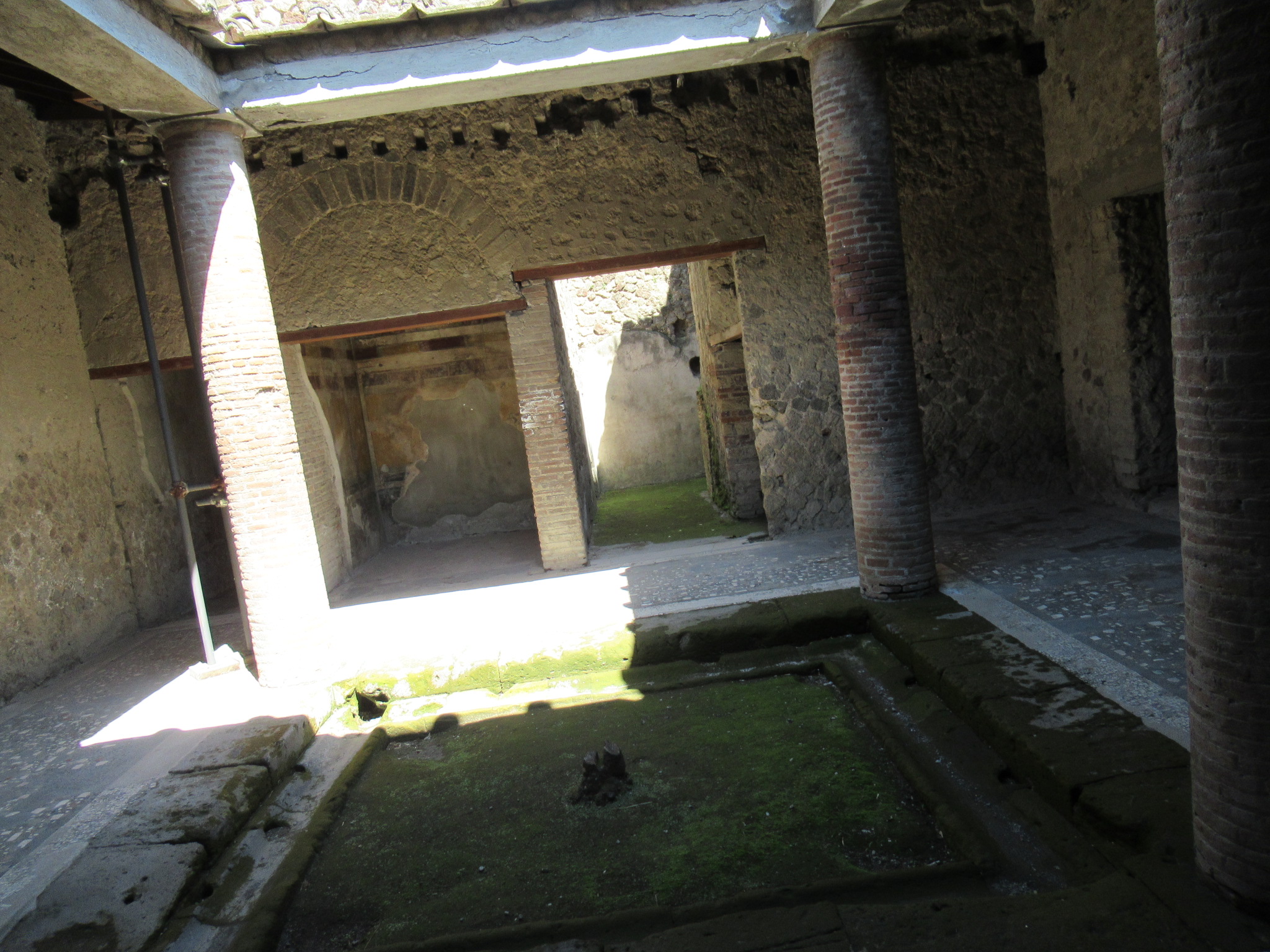
It boasts some of the most extensive and best preserved wall paintings that you can see in Pompeii…
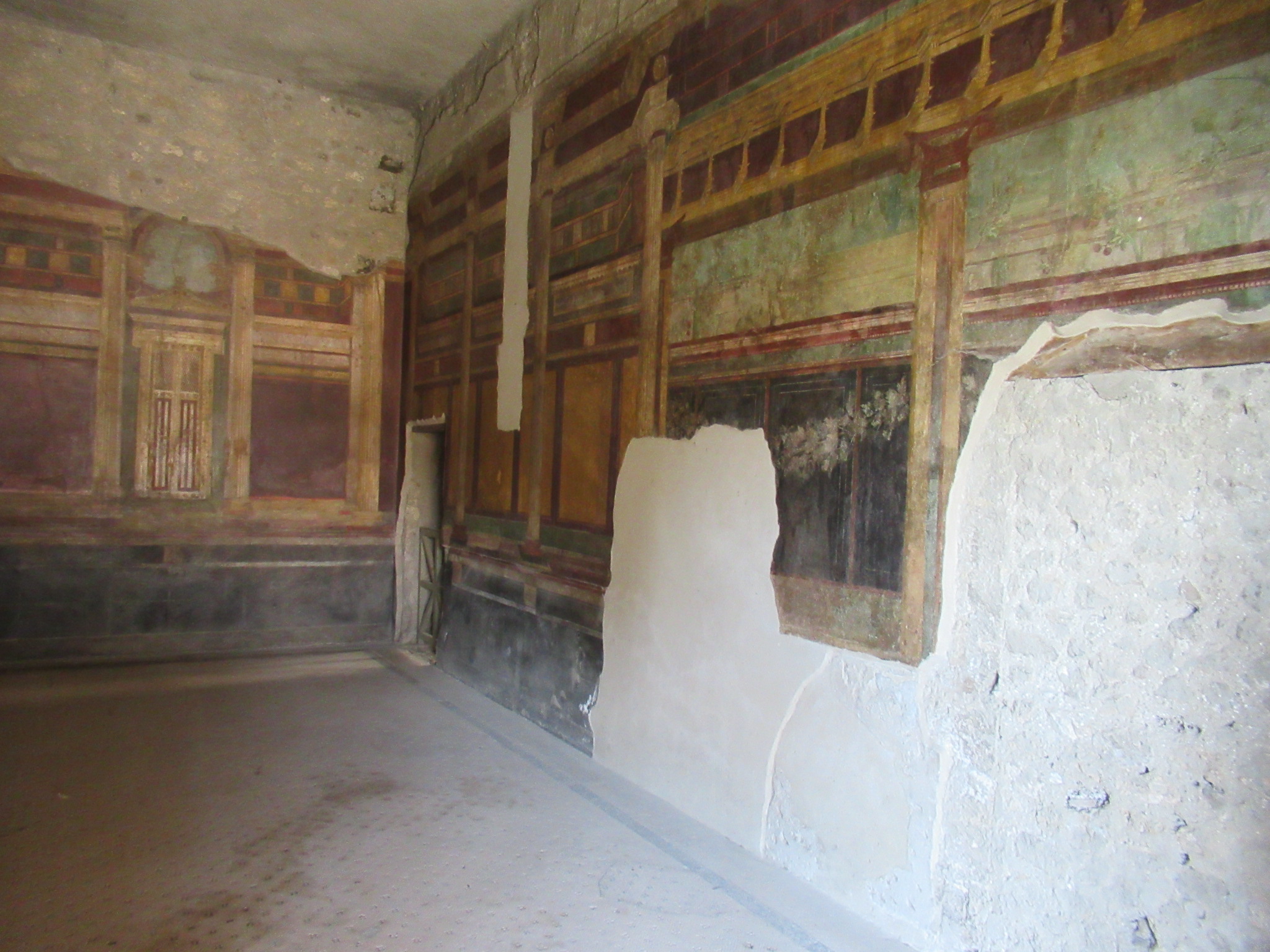
…the most amazing being this mural depicting religious rituals also known as mysteries; which gives this estate the name “Villa dei Misteri”, or “Villa of the Mysteries”.
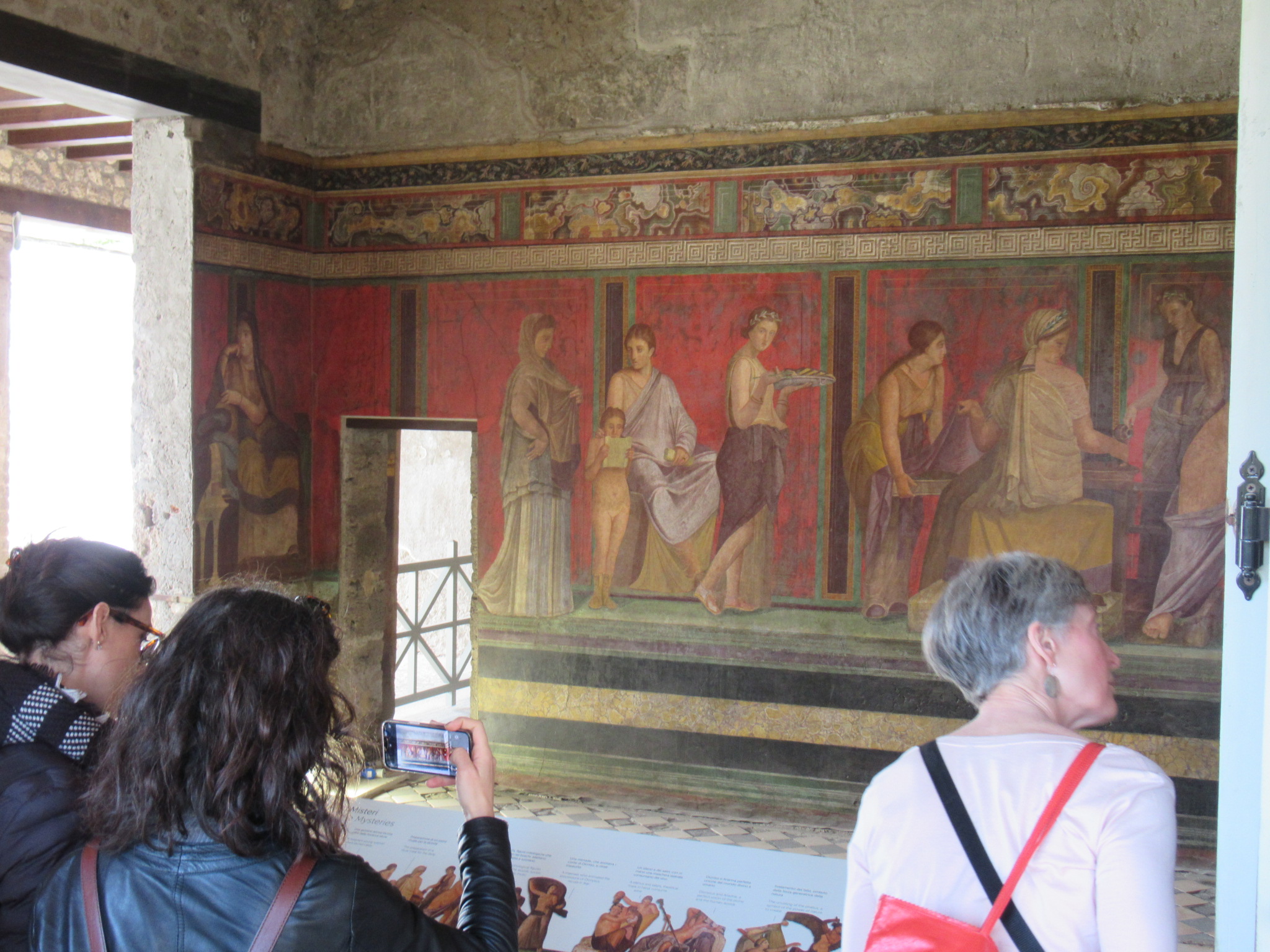
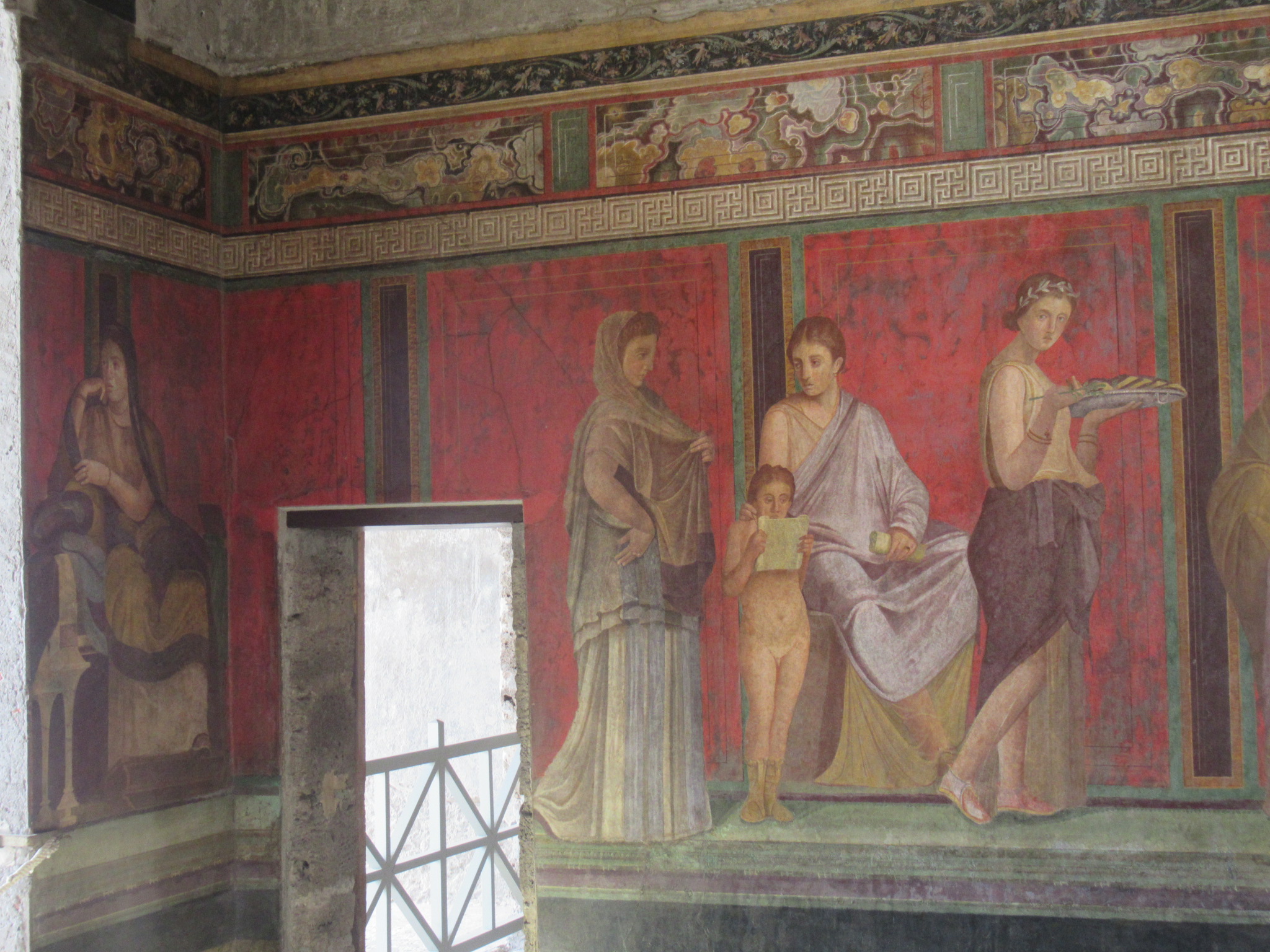
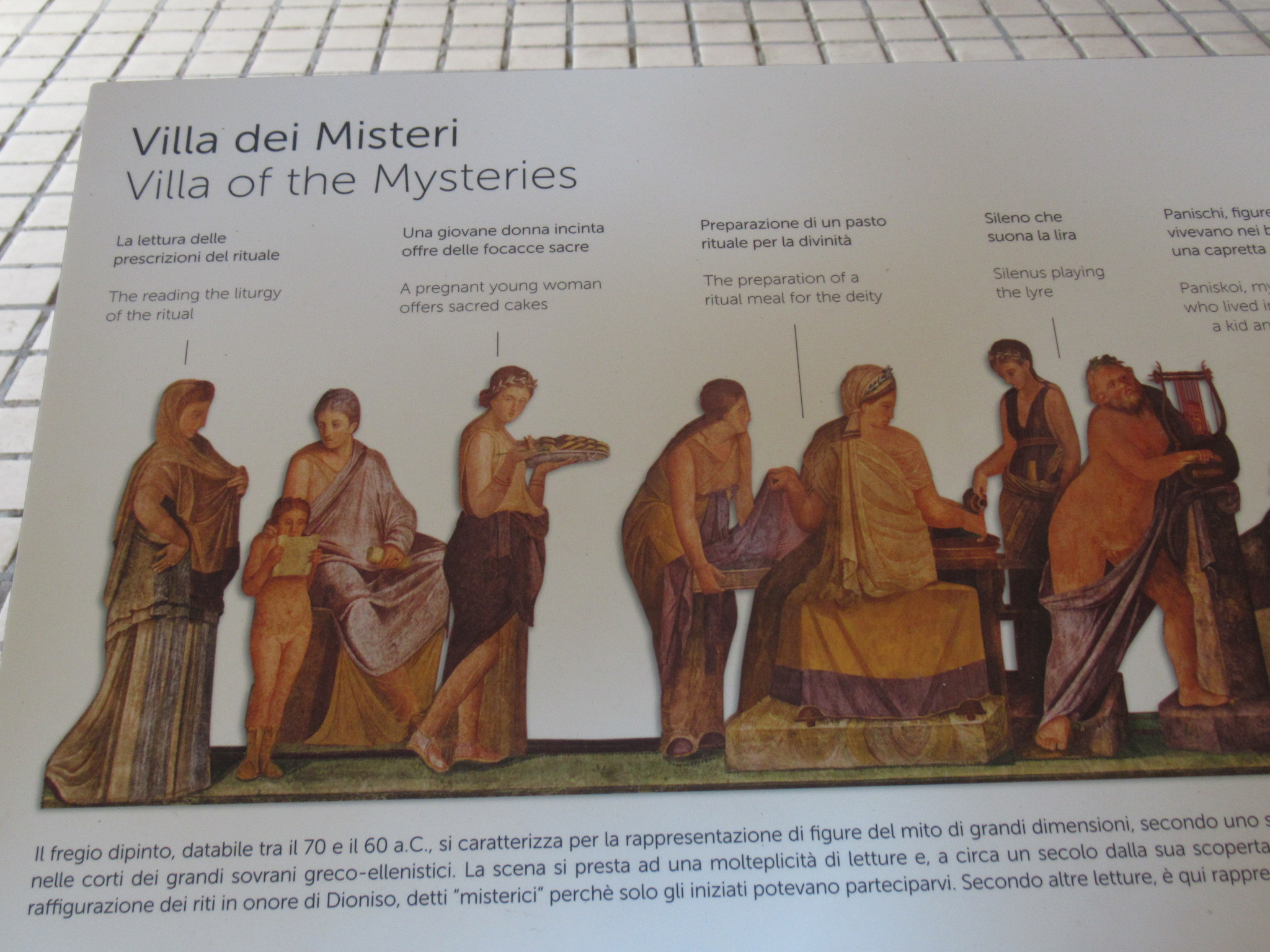
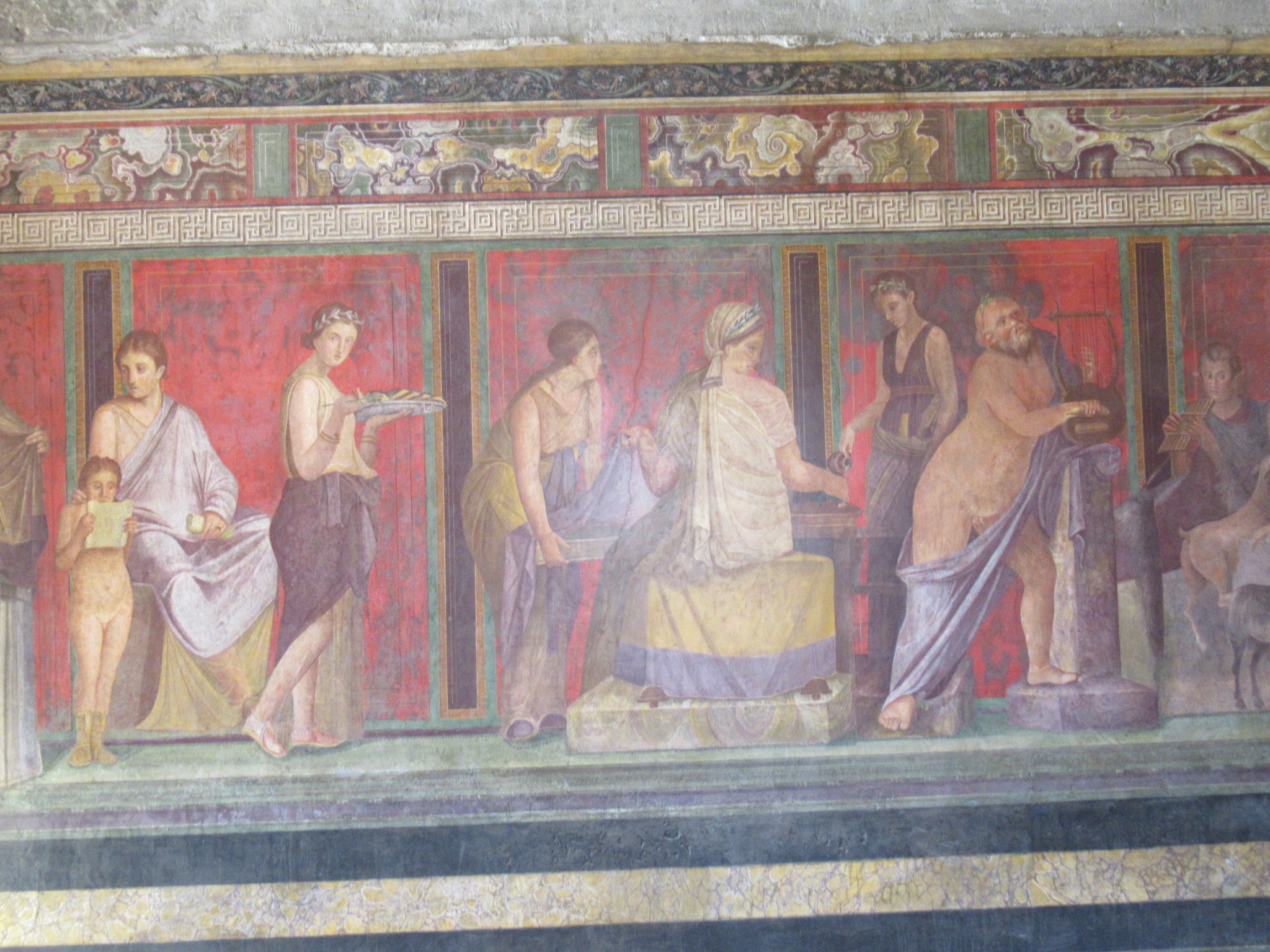
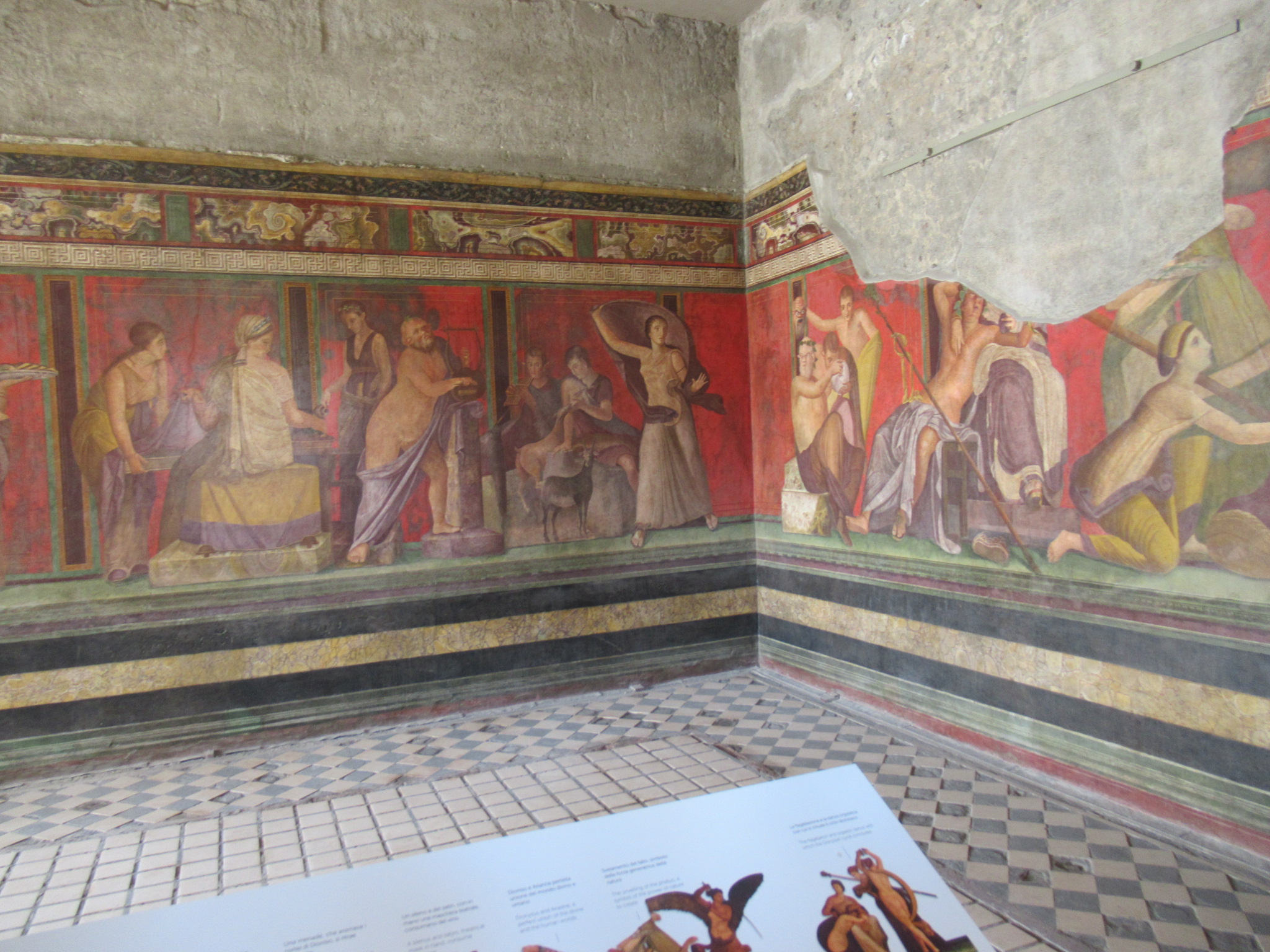
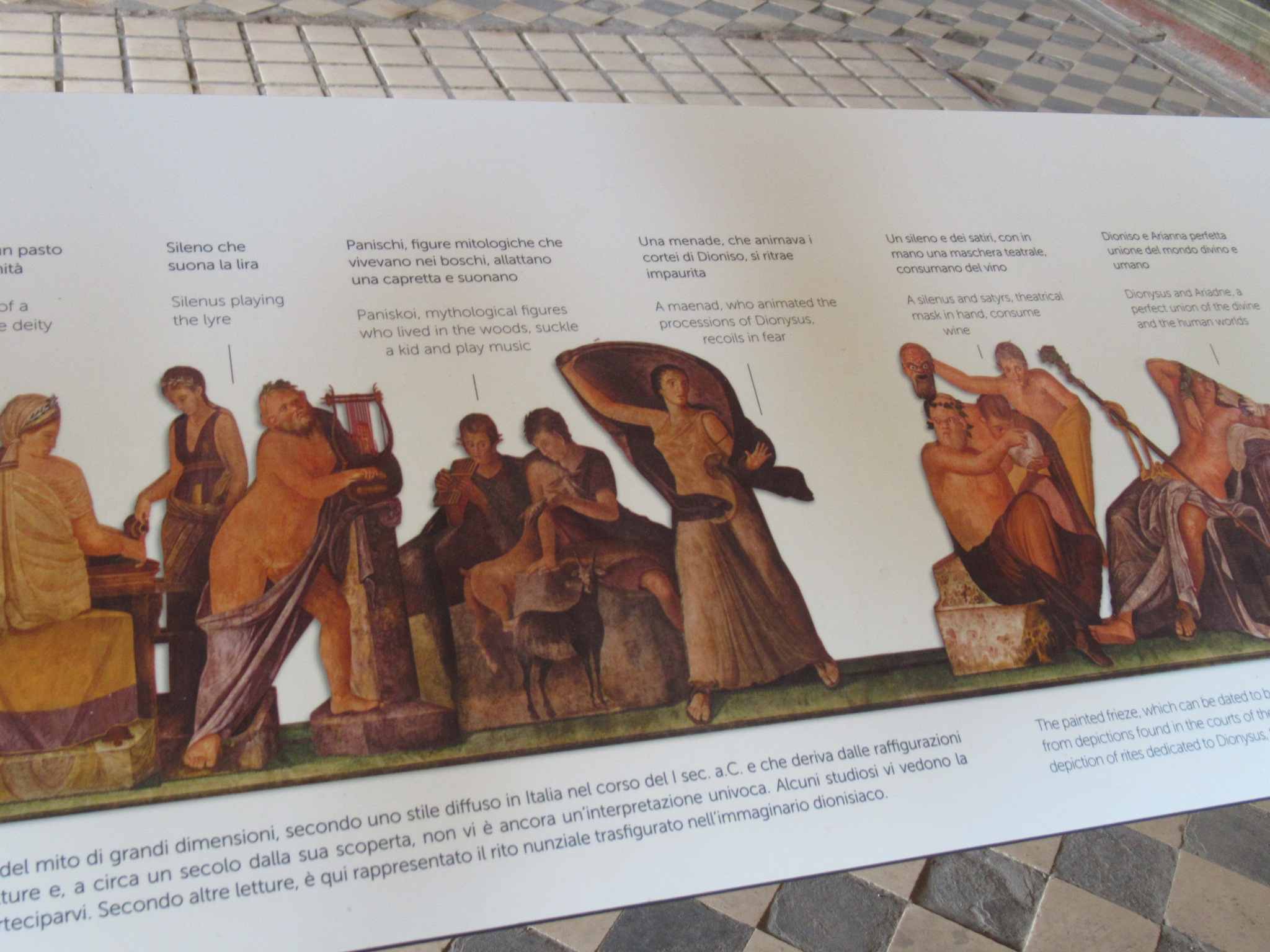
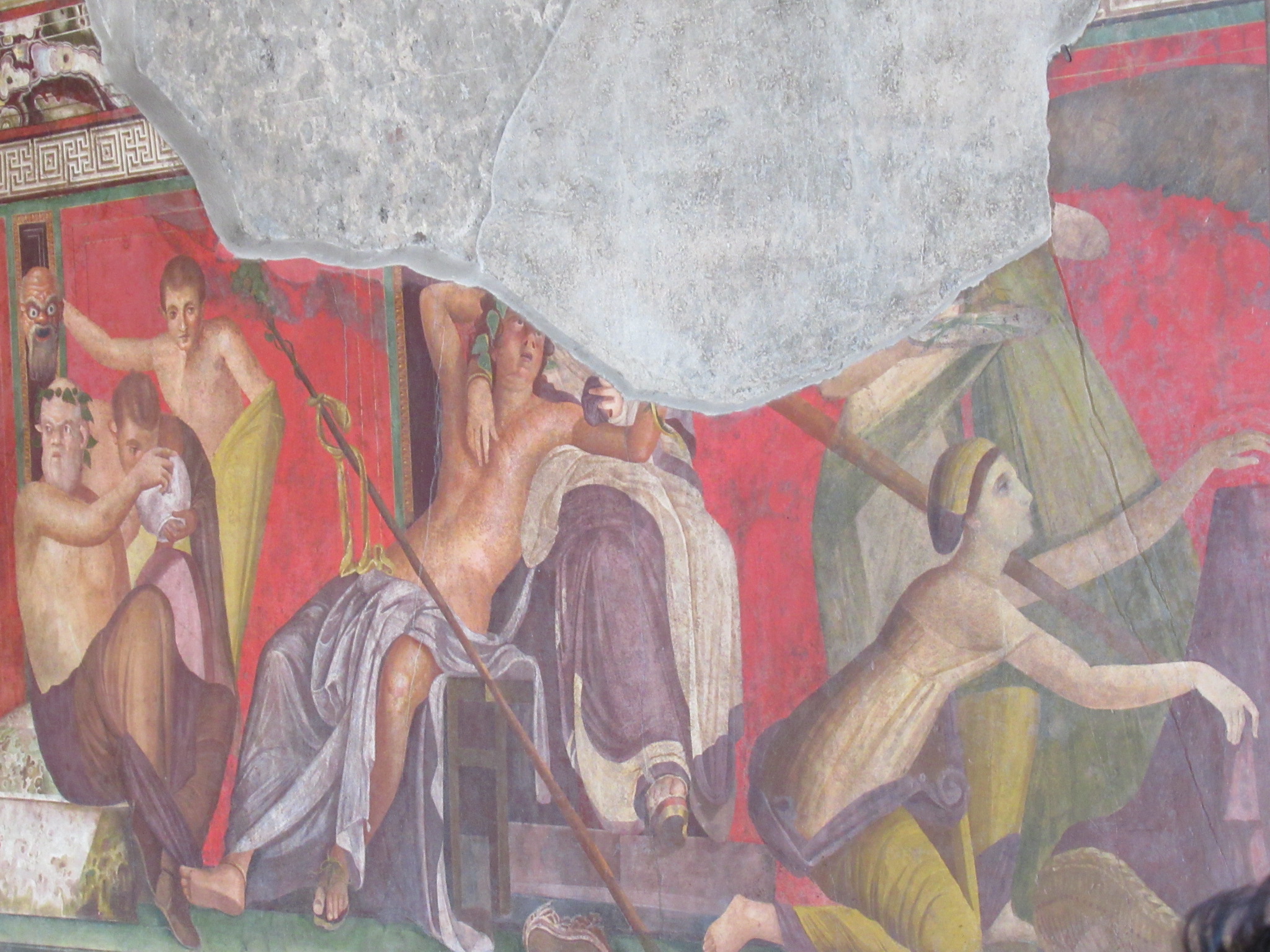

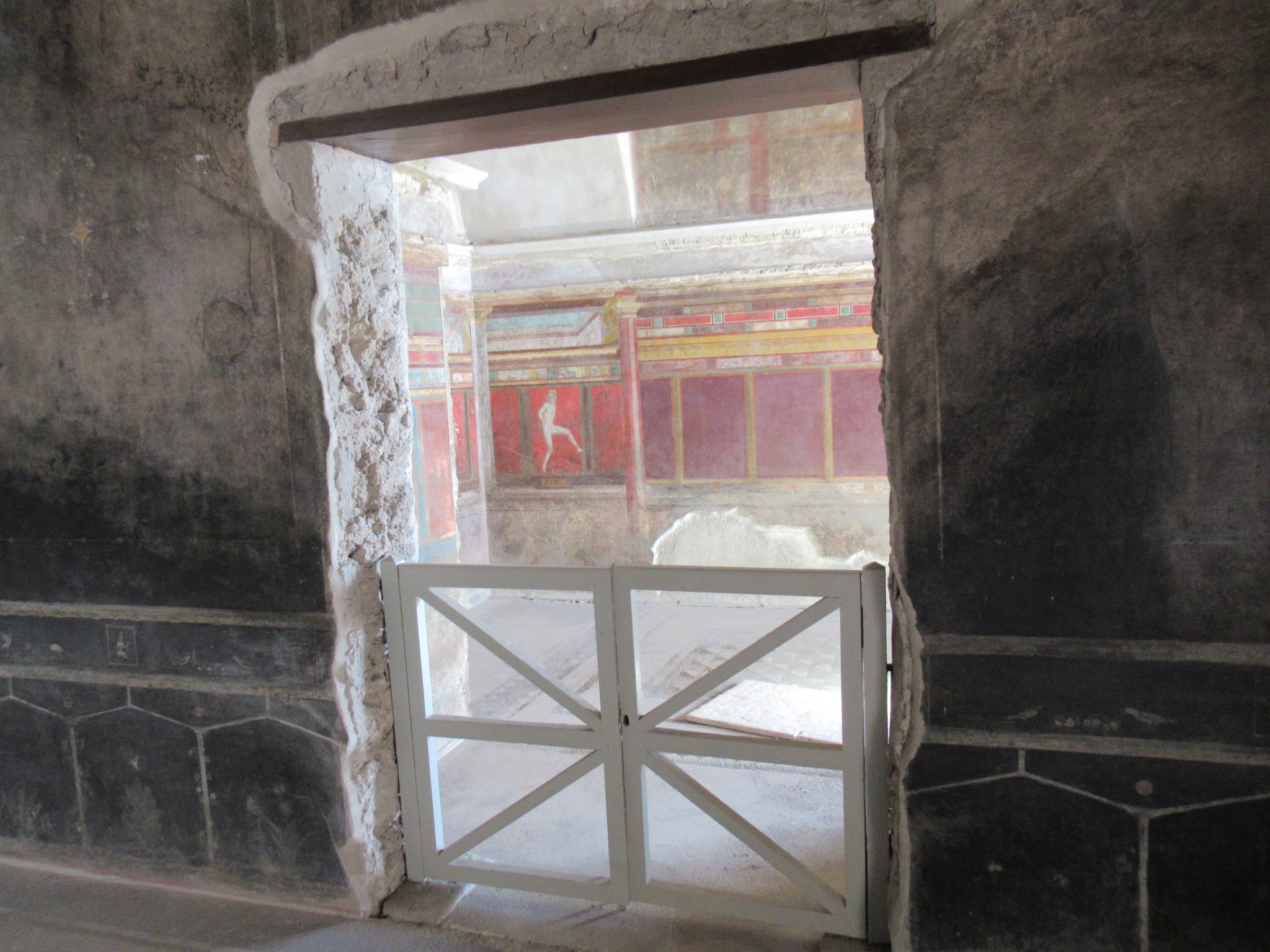
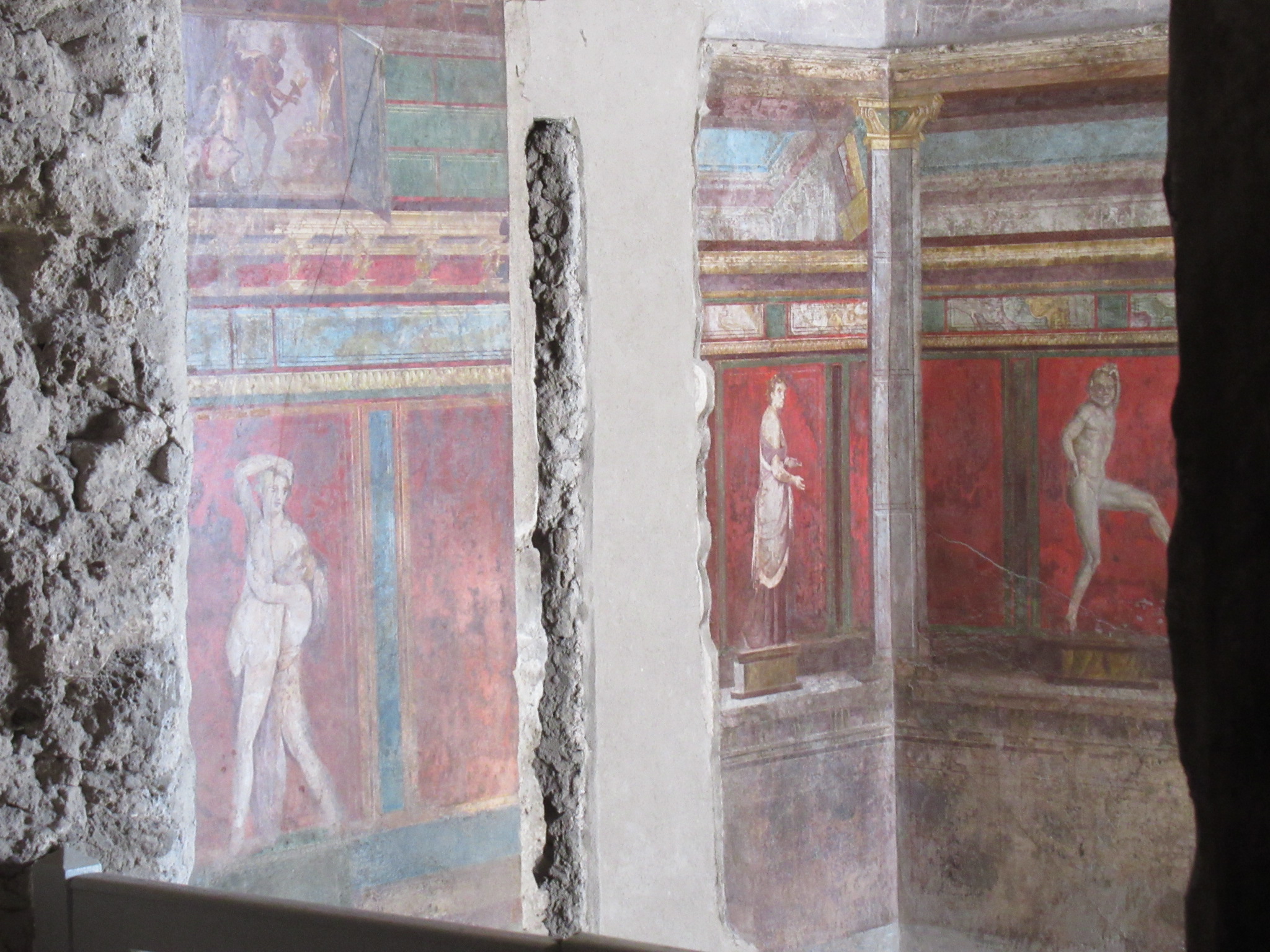
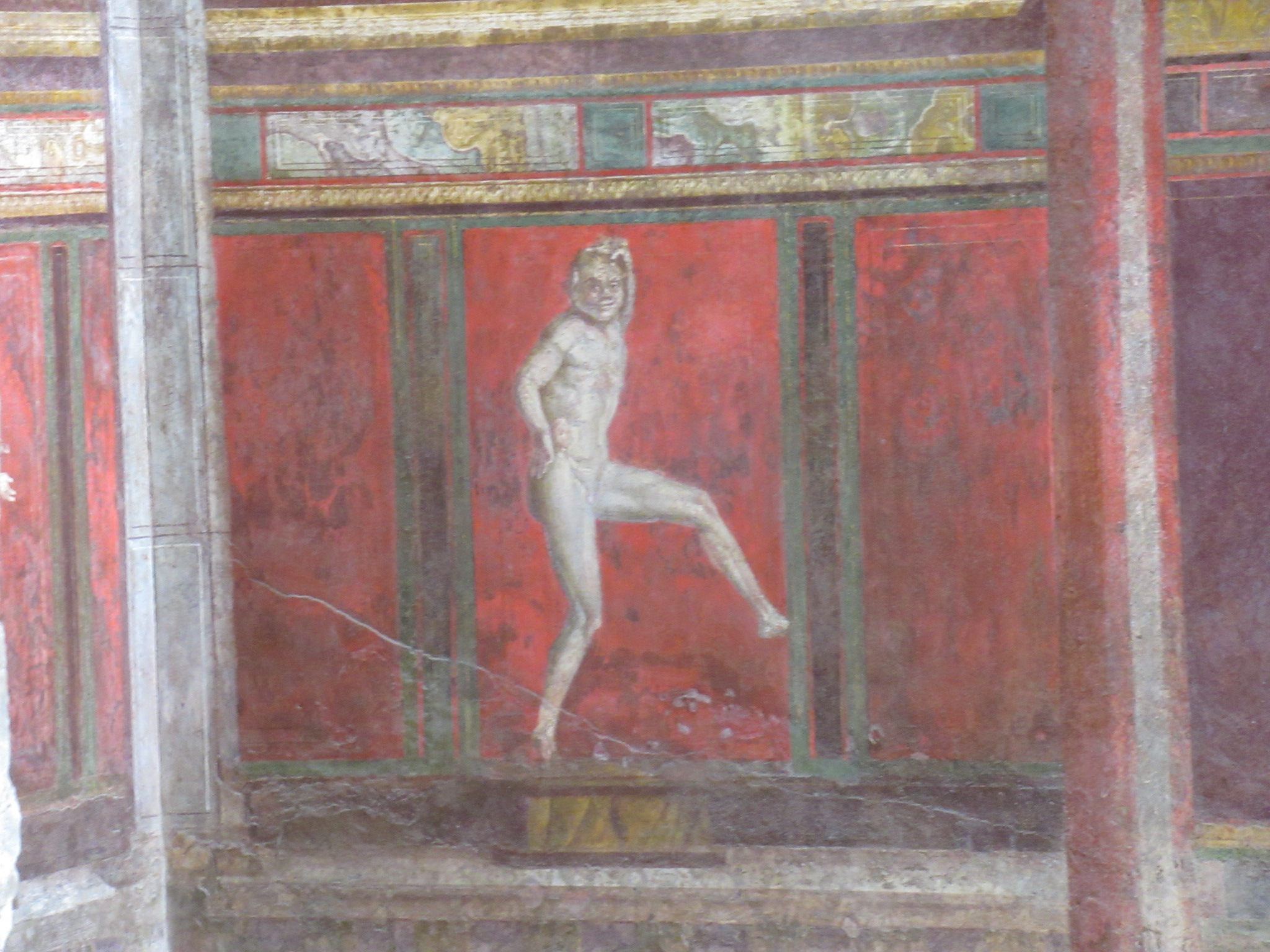
Two plaster bodies are also on display in the “Villa of Mysteries”.
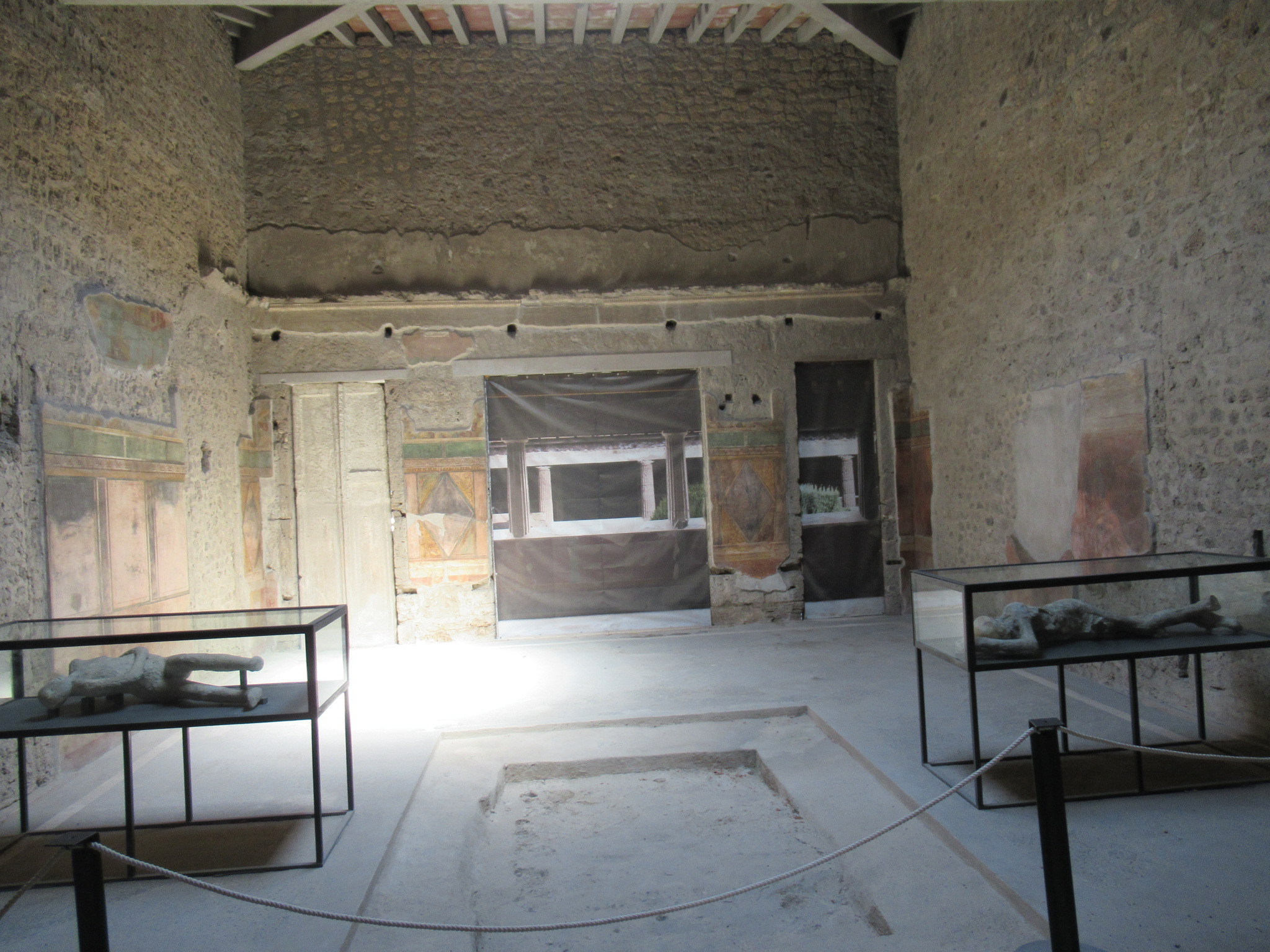


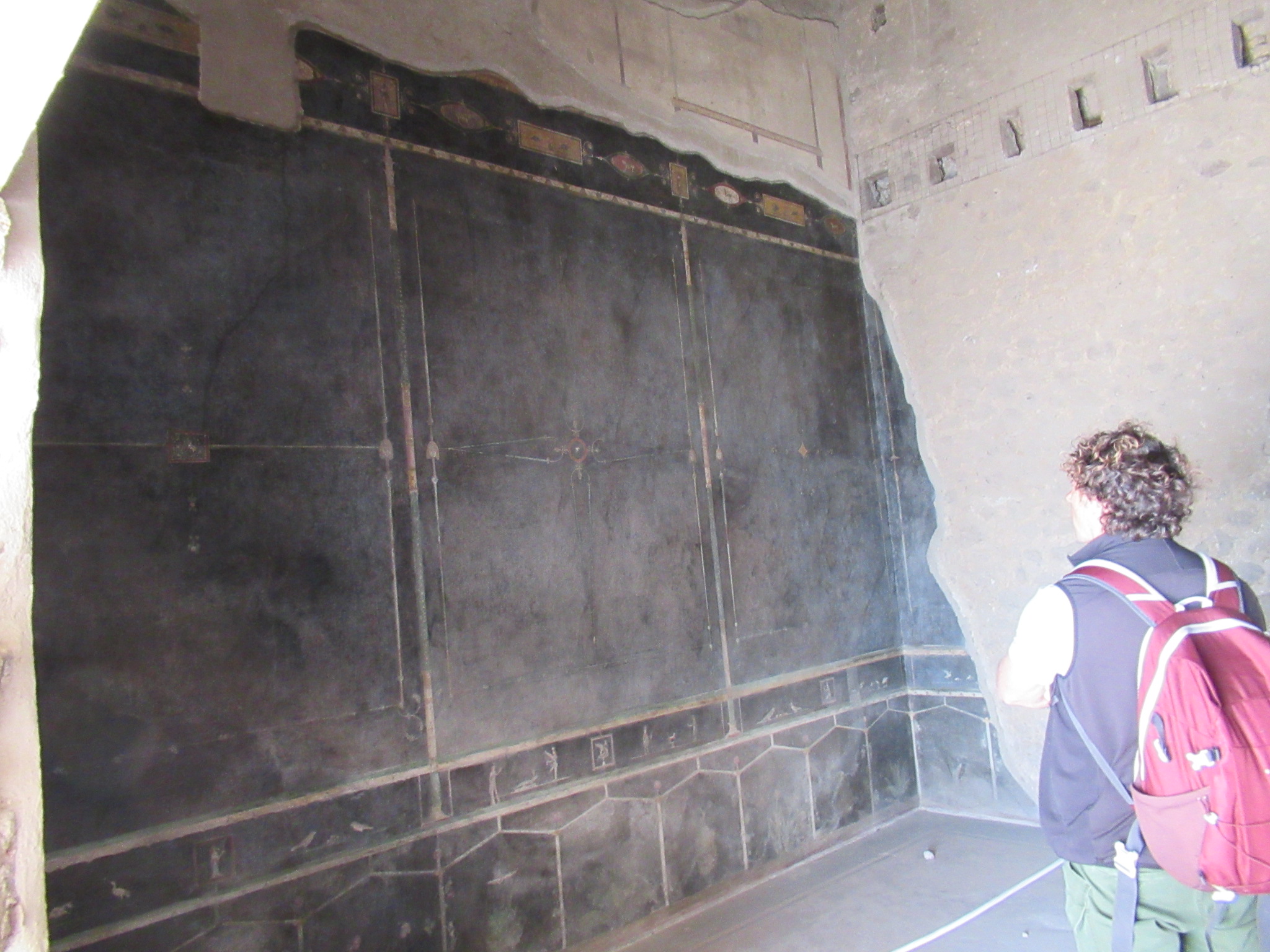
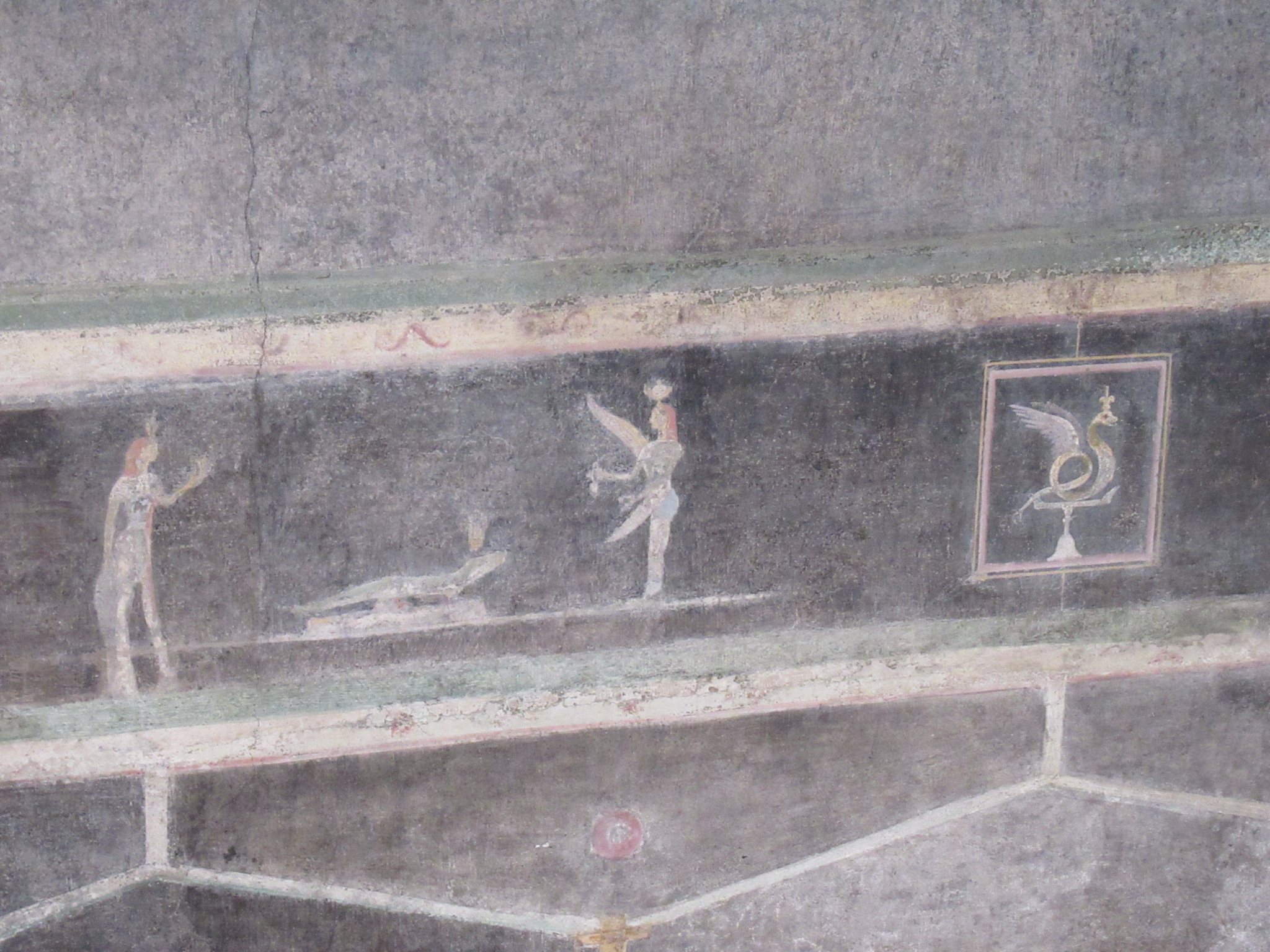
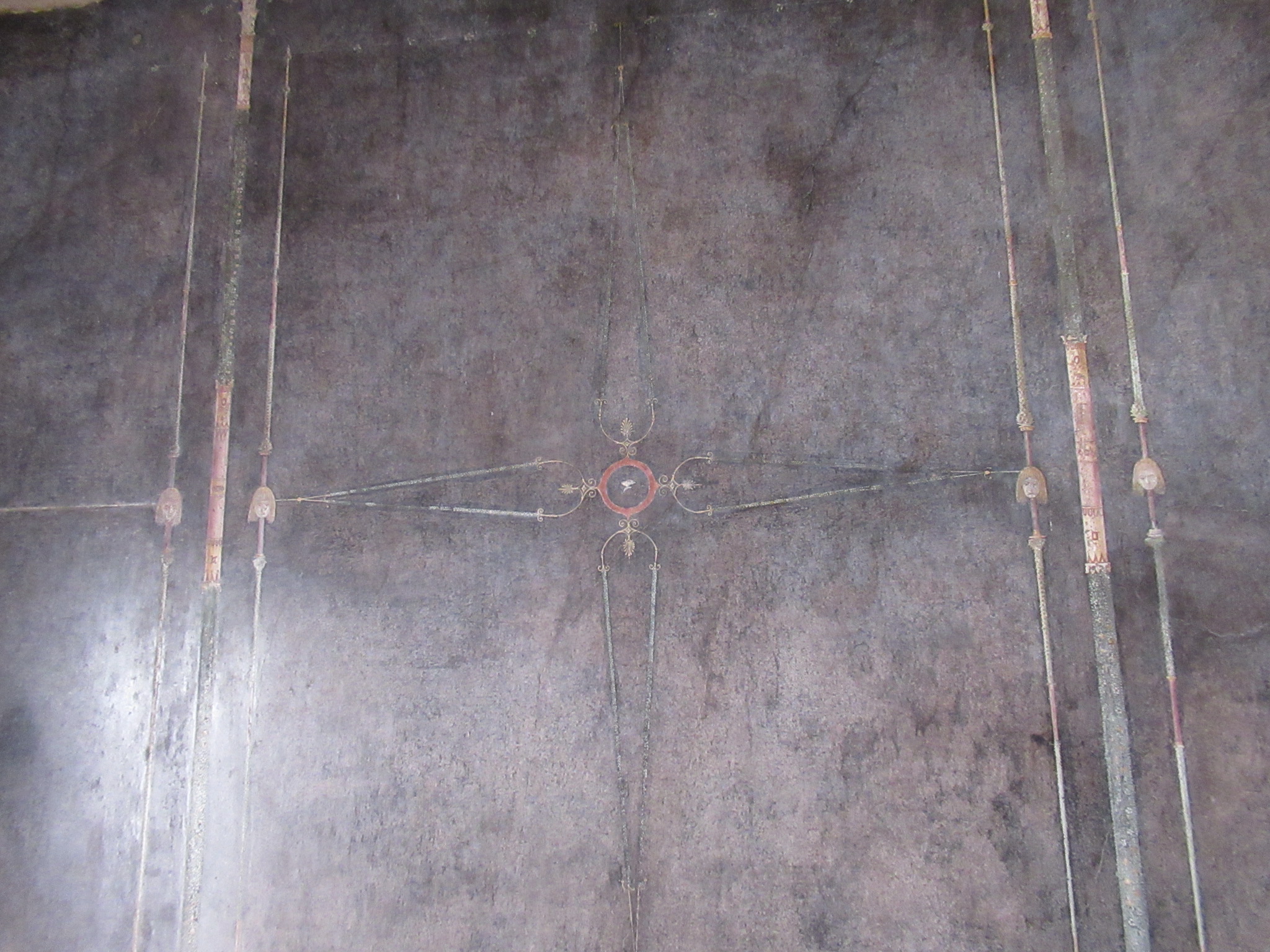
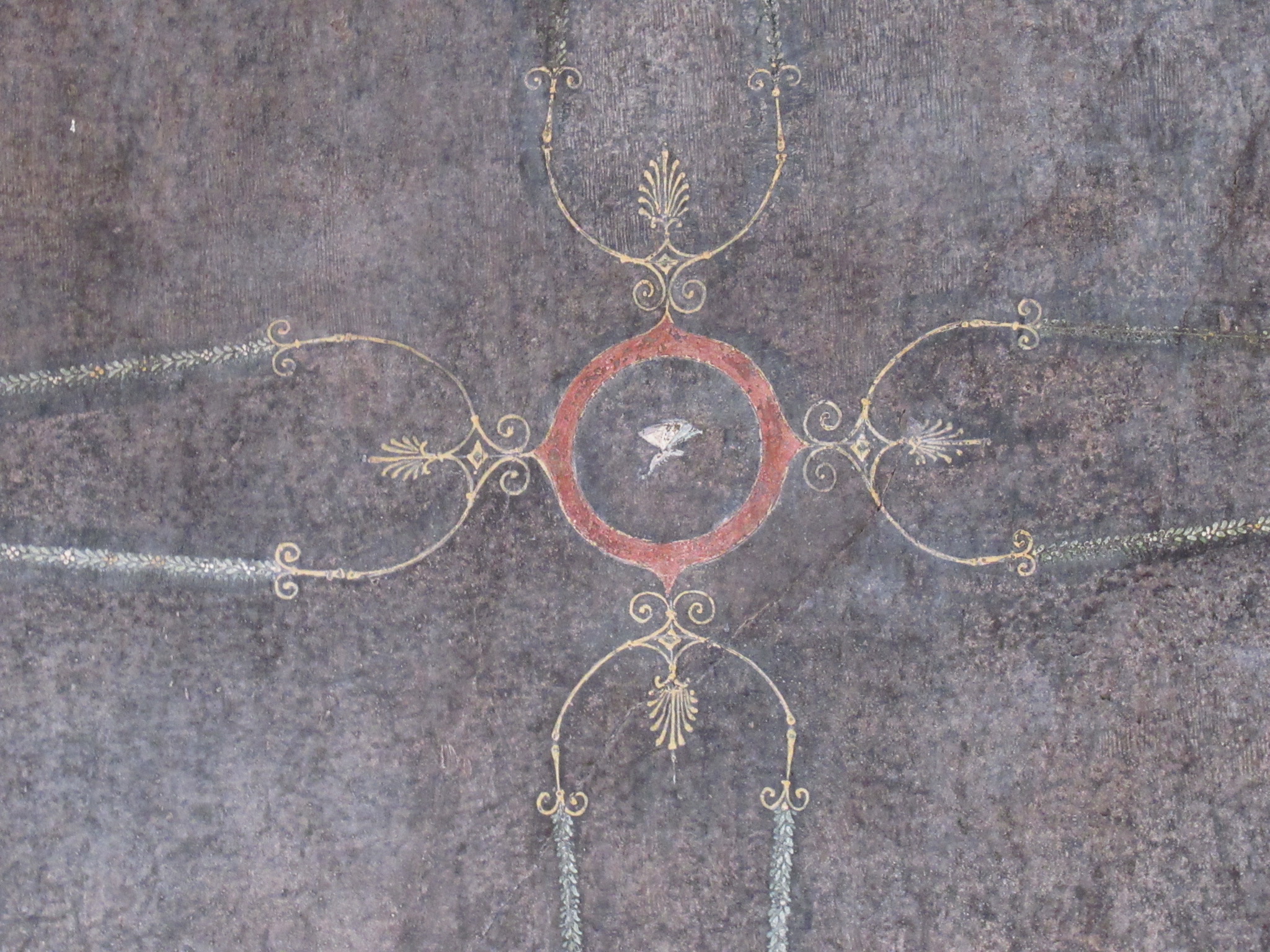
Making our way back to within the city limits…


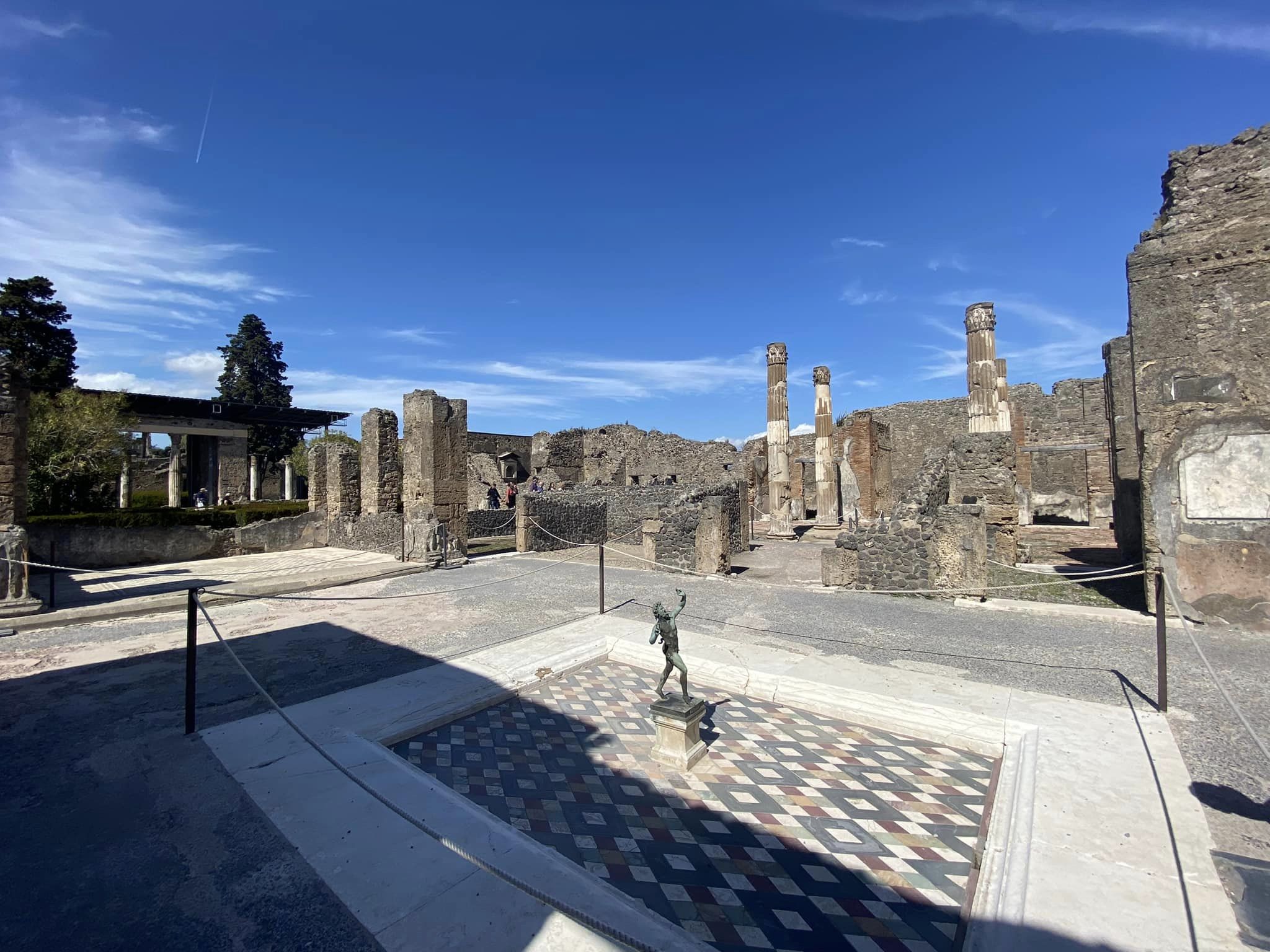
Like most statues displayed in Pompeii today, this is a copy. The original is in the museum in Naples.

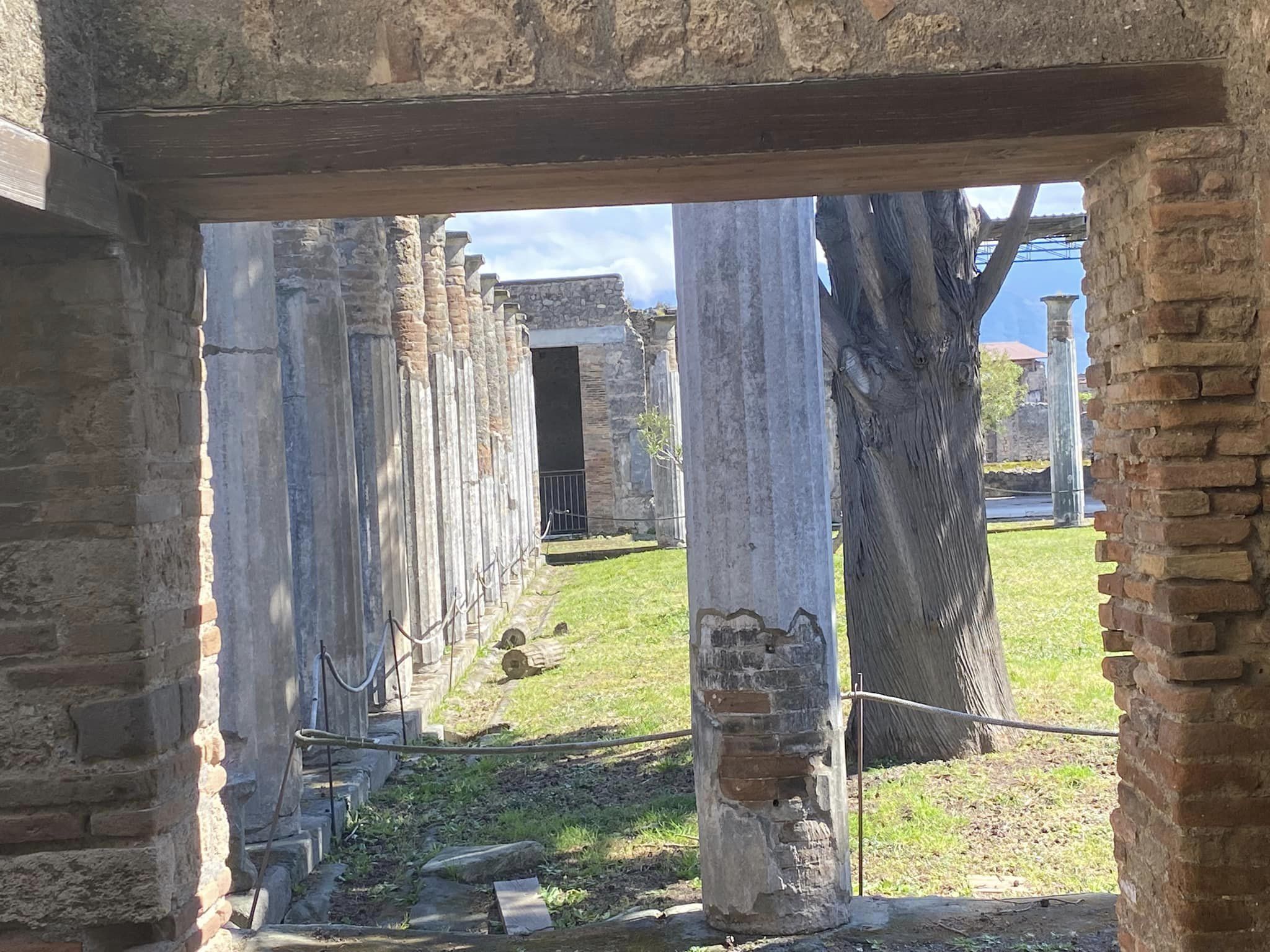
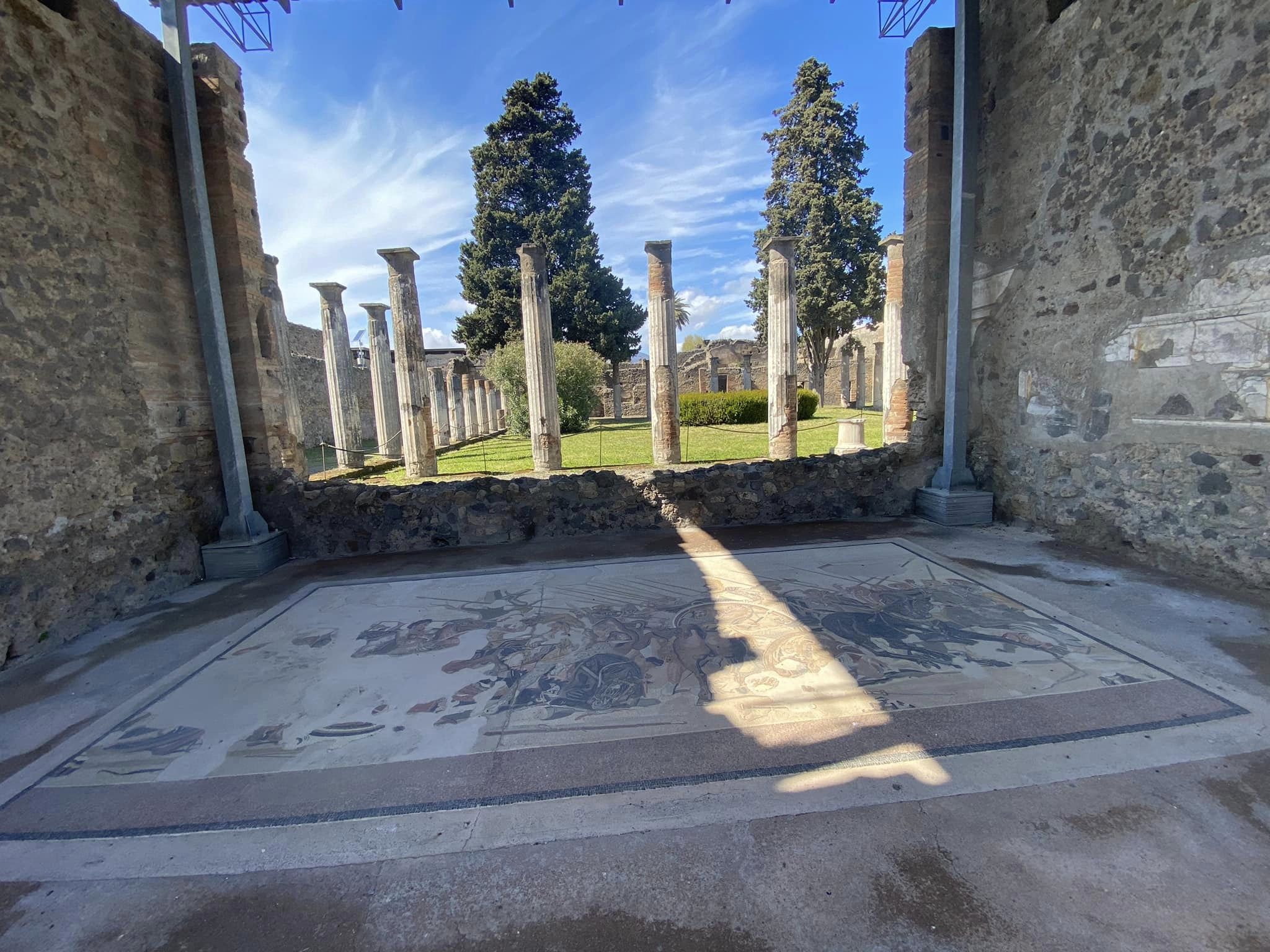
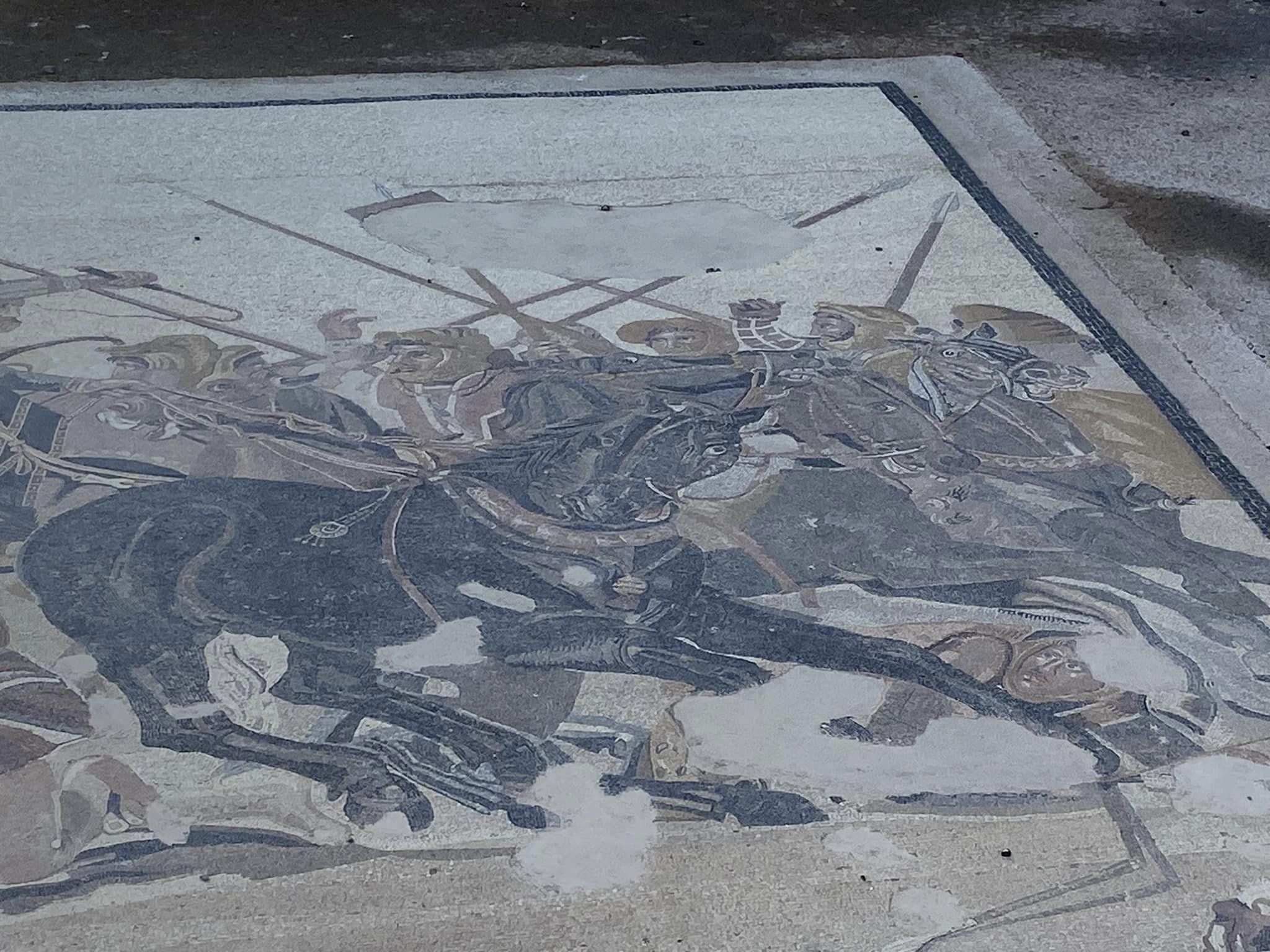
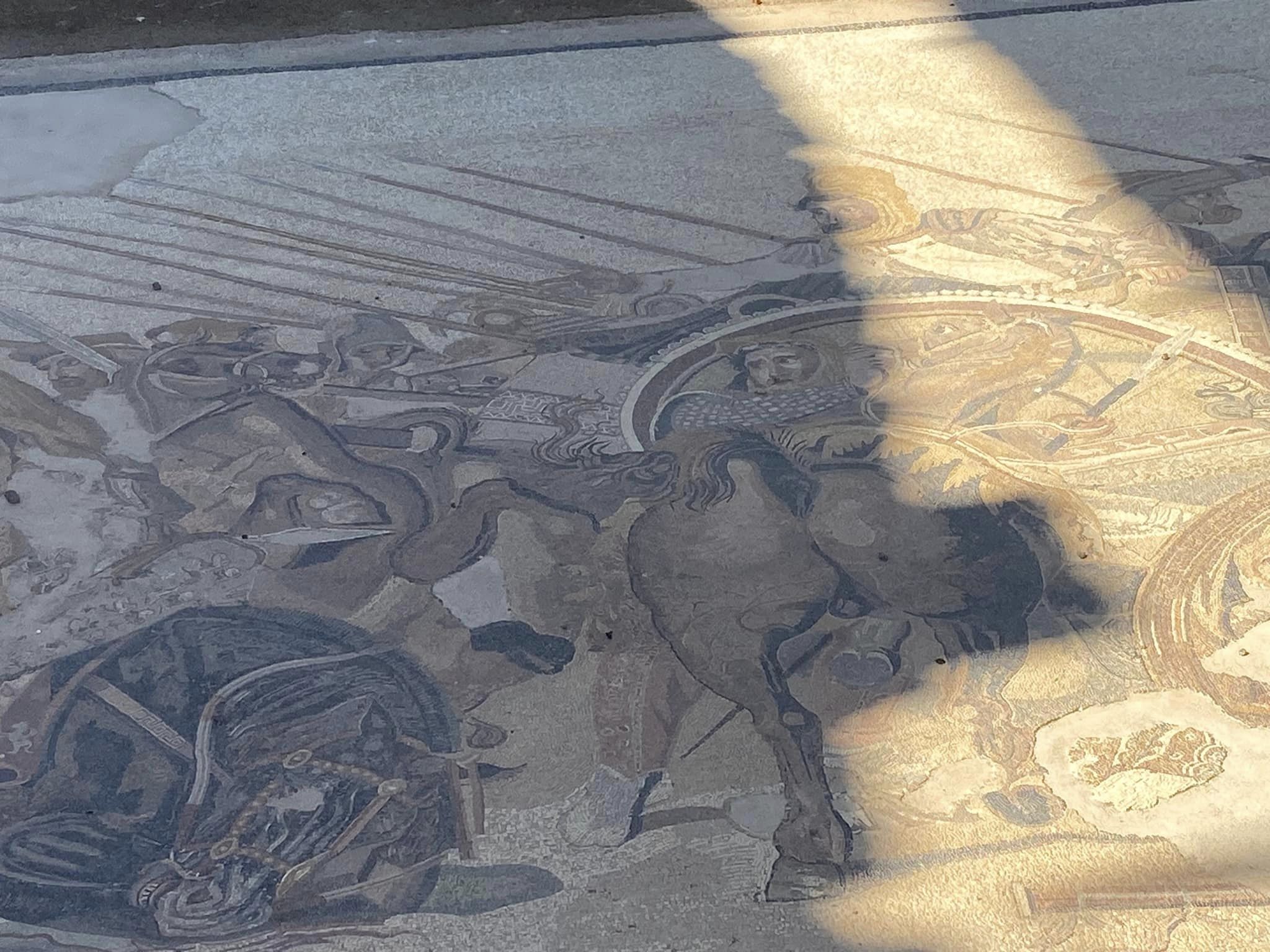
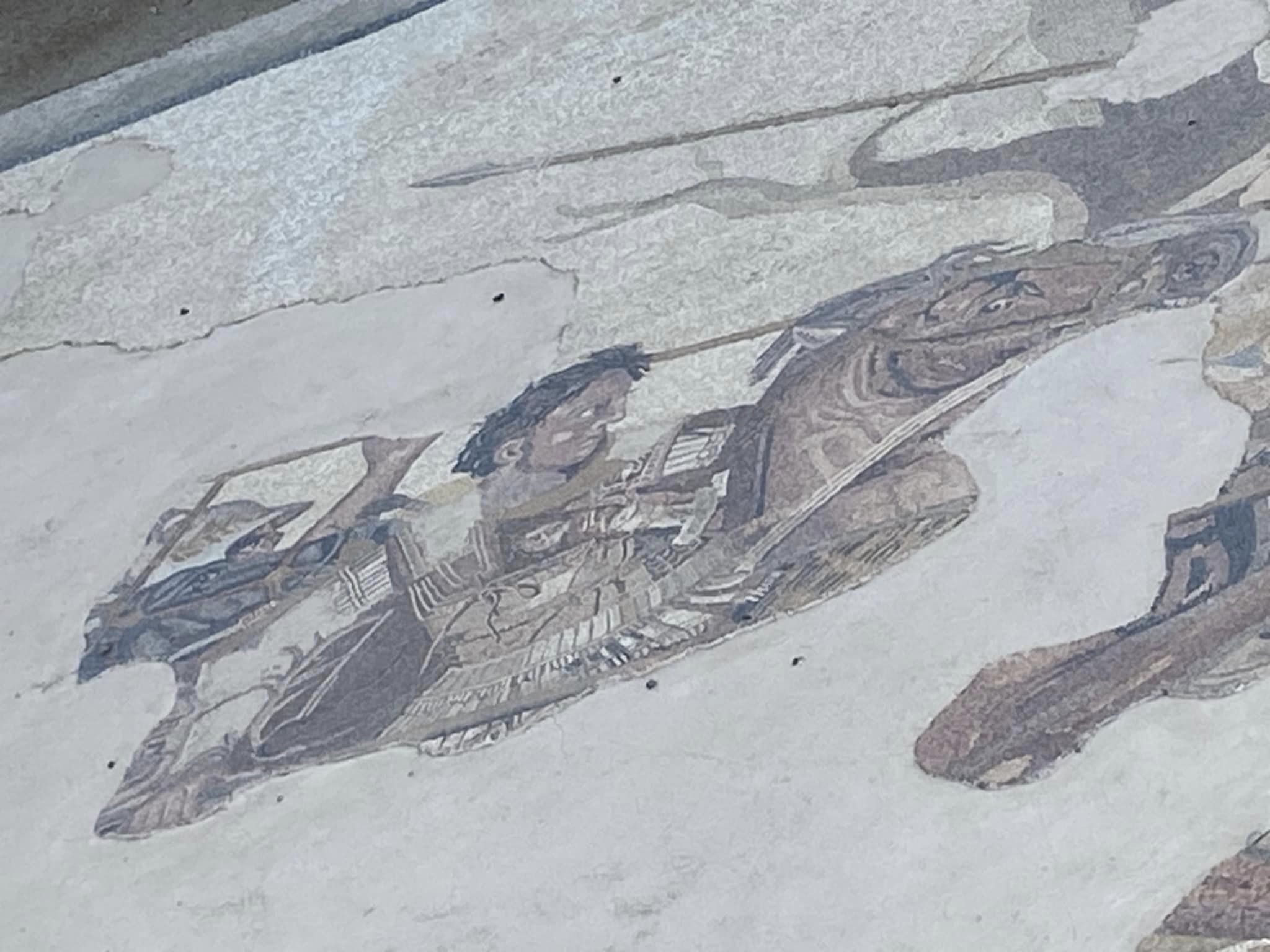


More guard dog welcome mosaics.


I shared this pic of thermopolium already in “The Streets of Pompeii” with the pics of the other streetside food vendors. This thermopolium is indoors of course, and at the end of the counter…

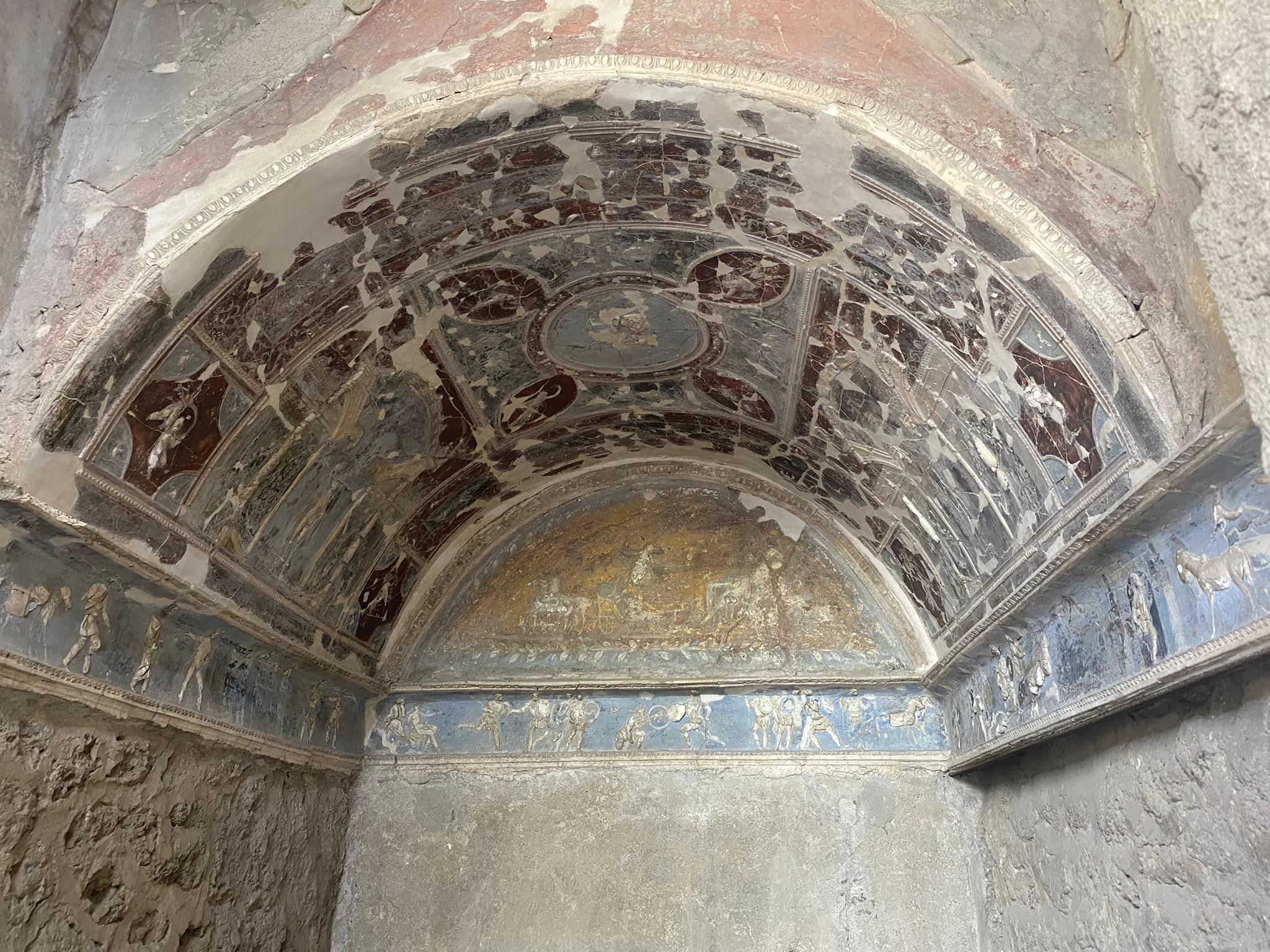
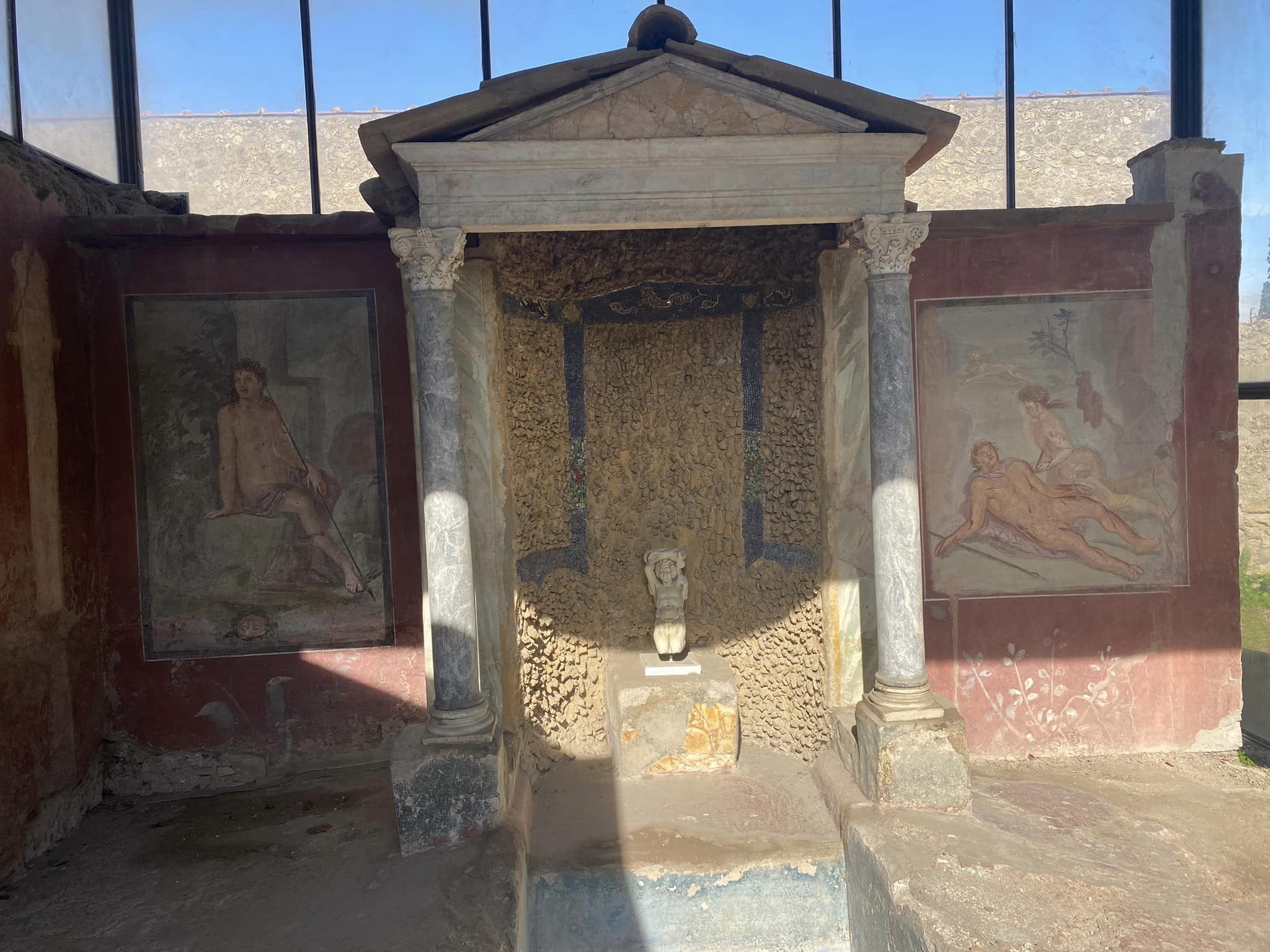

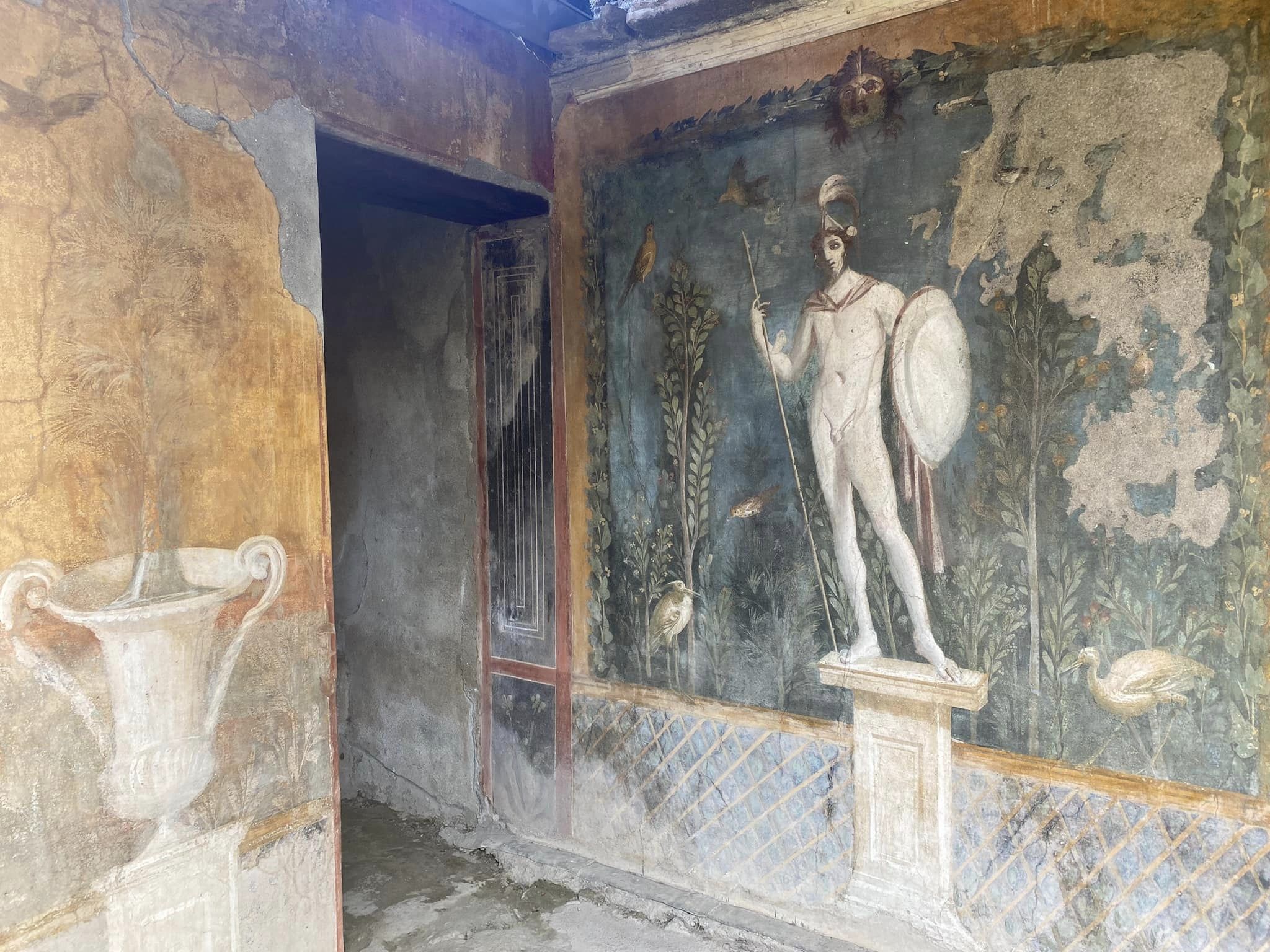
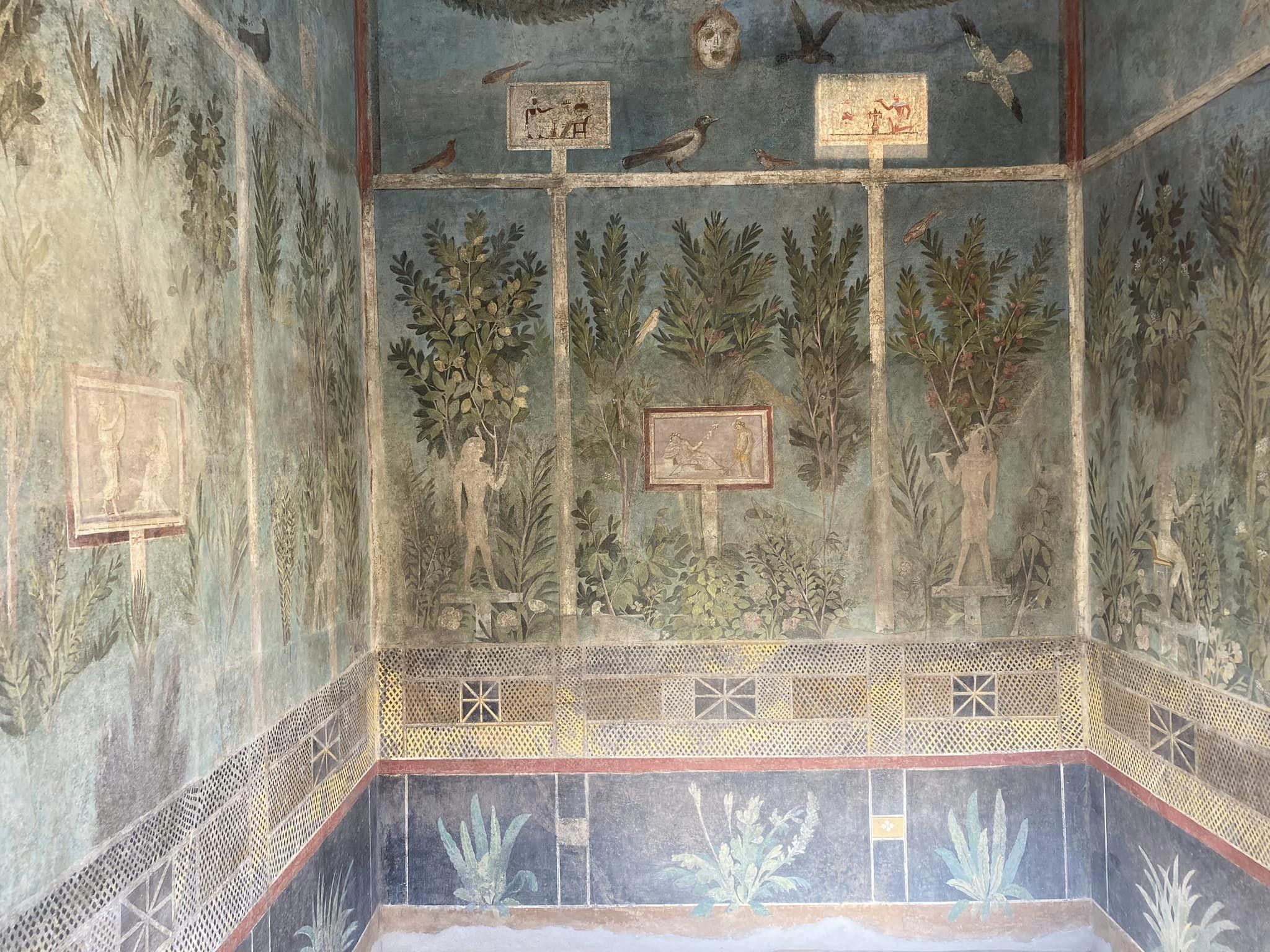
This next building was evidently a school or sports club for boys and/or young men.
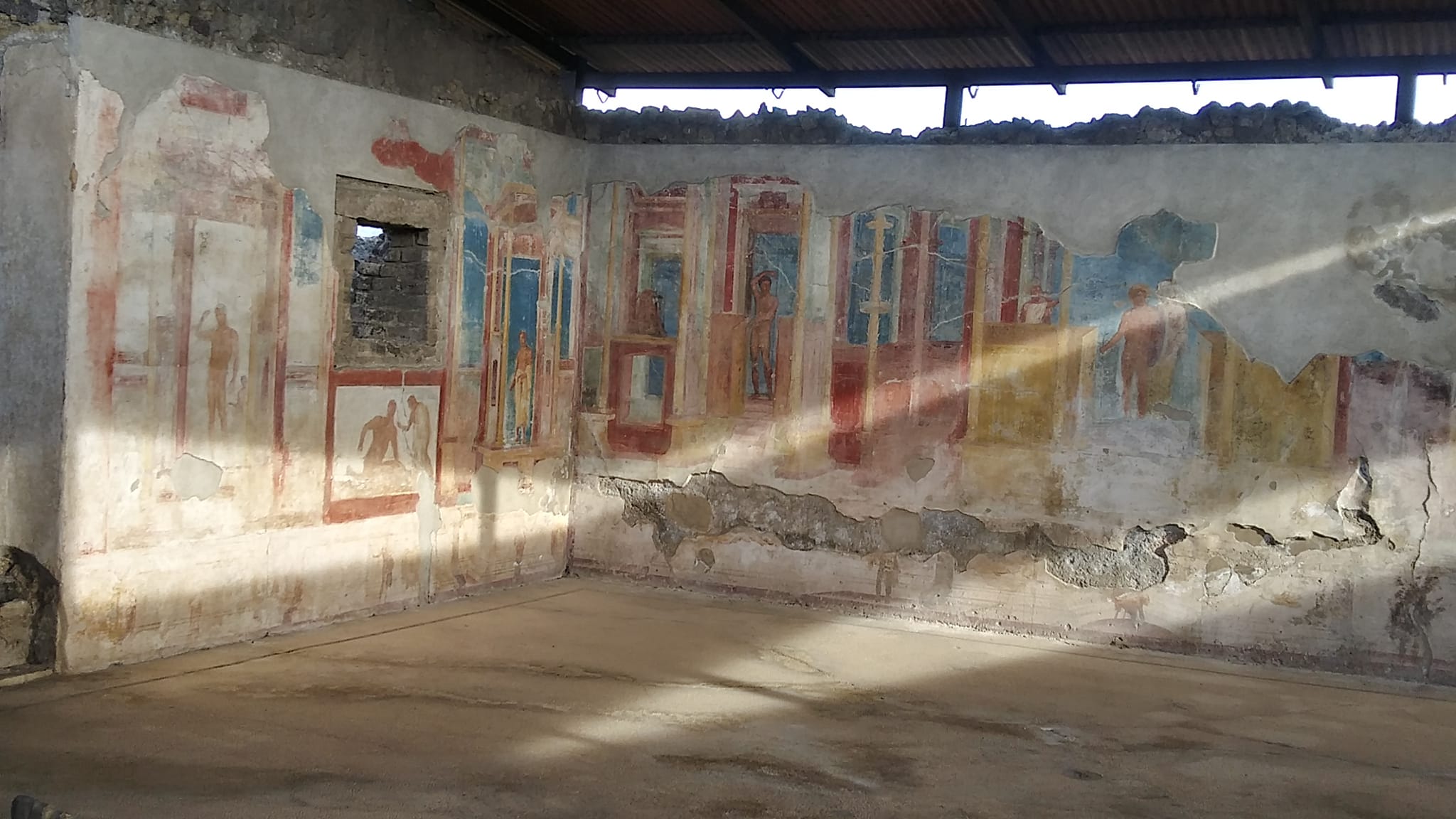
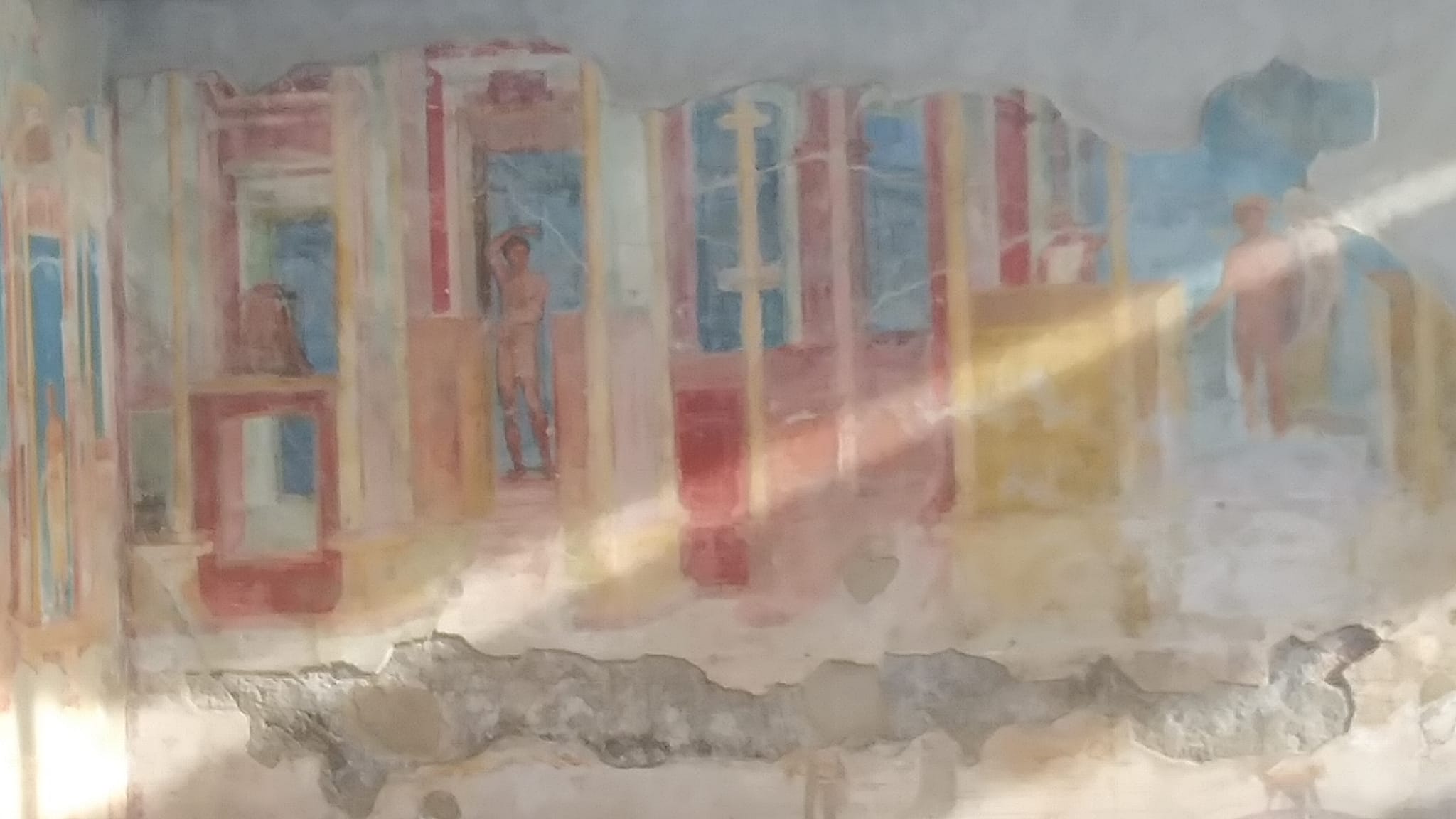
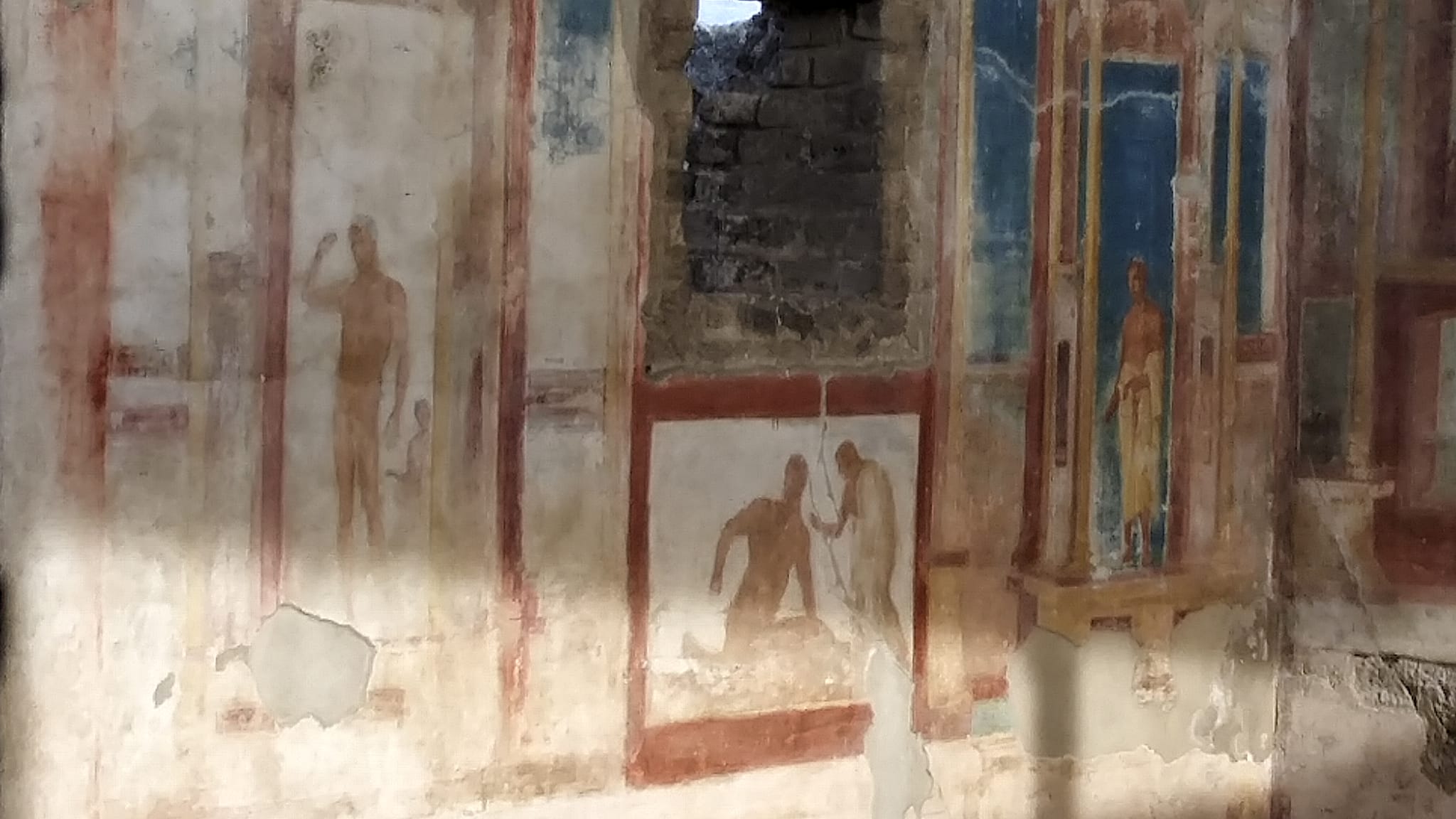

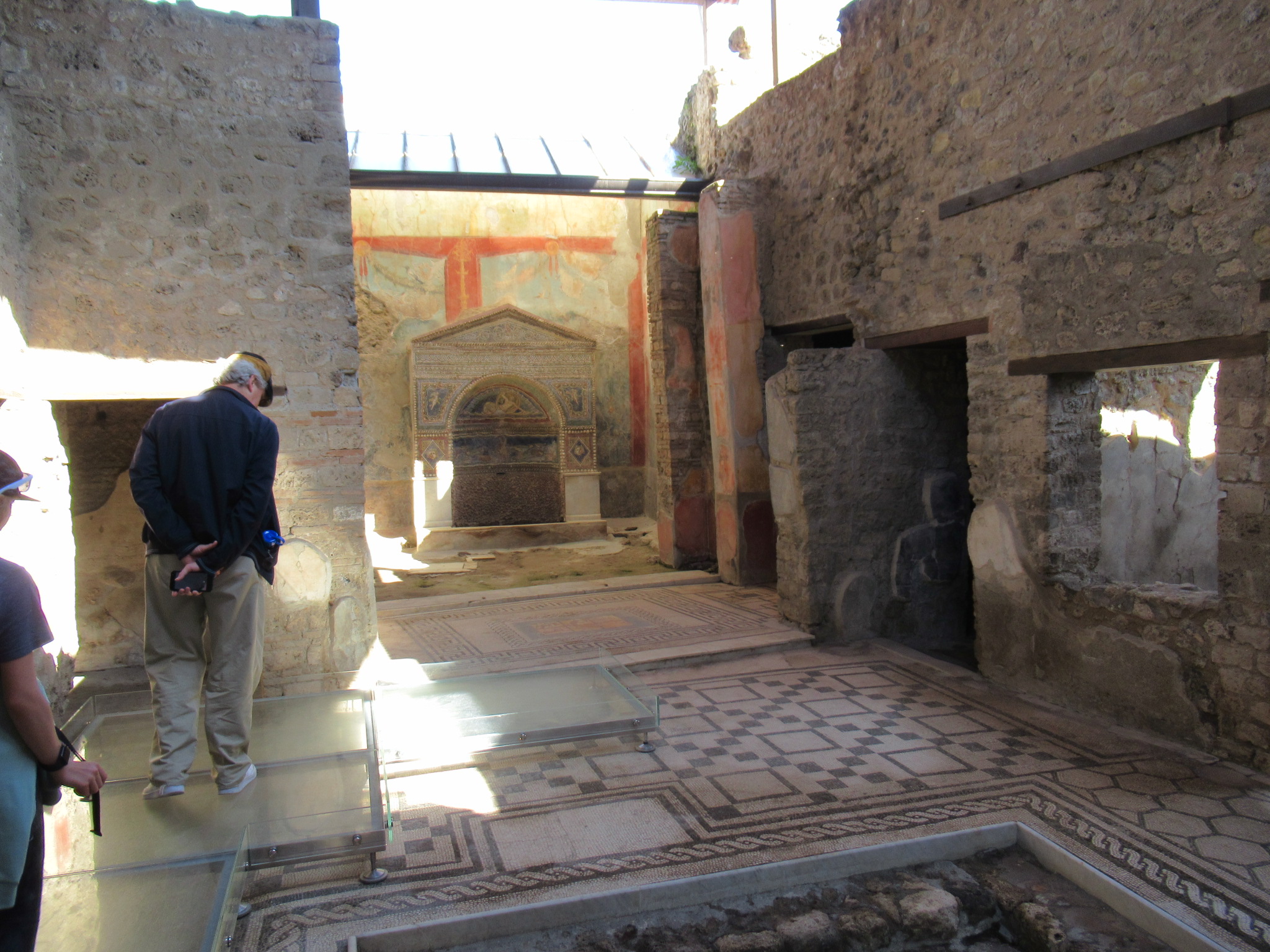
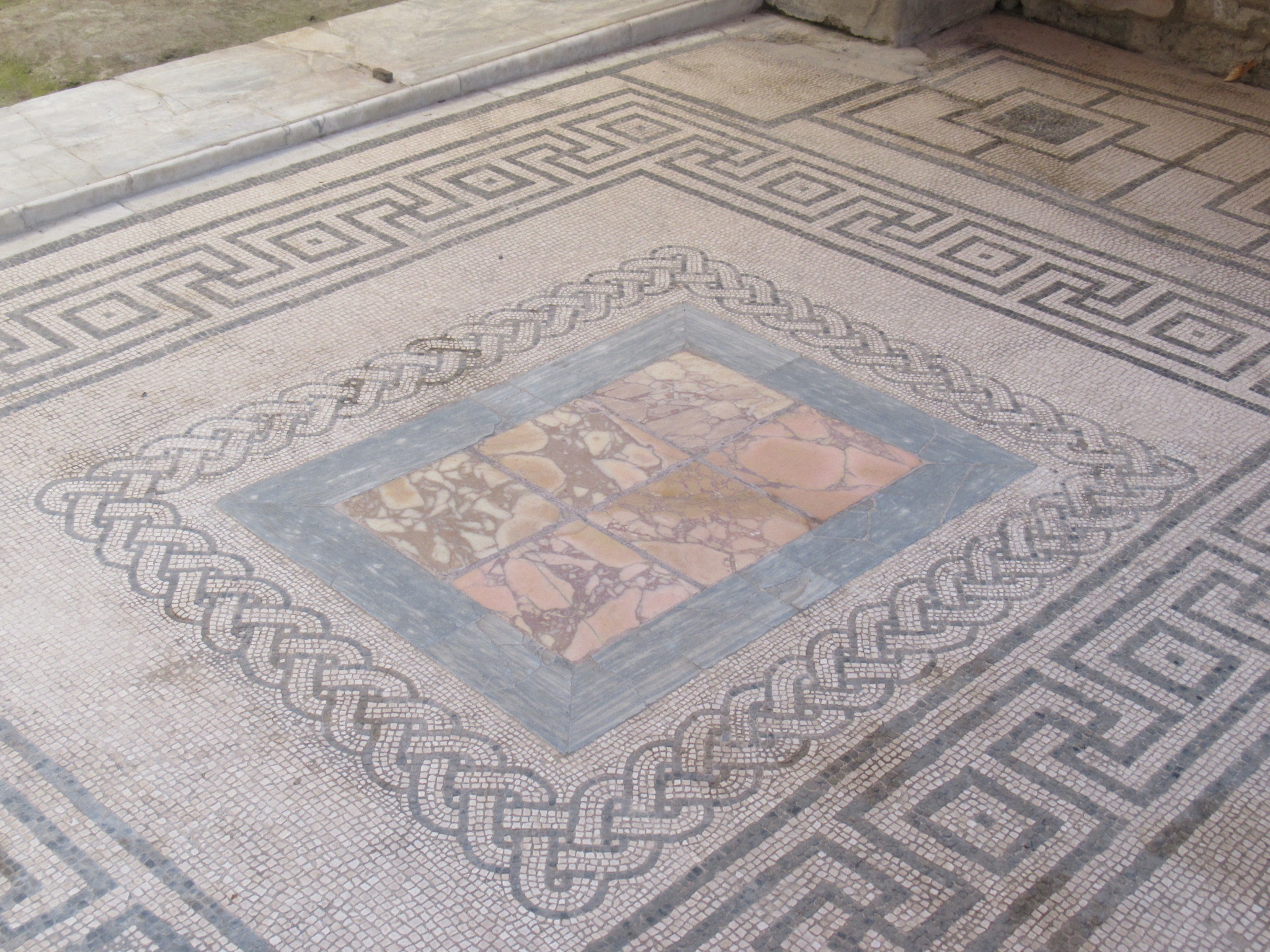
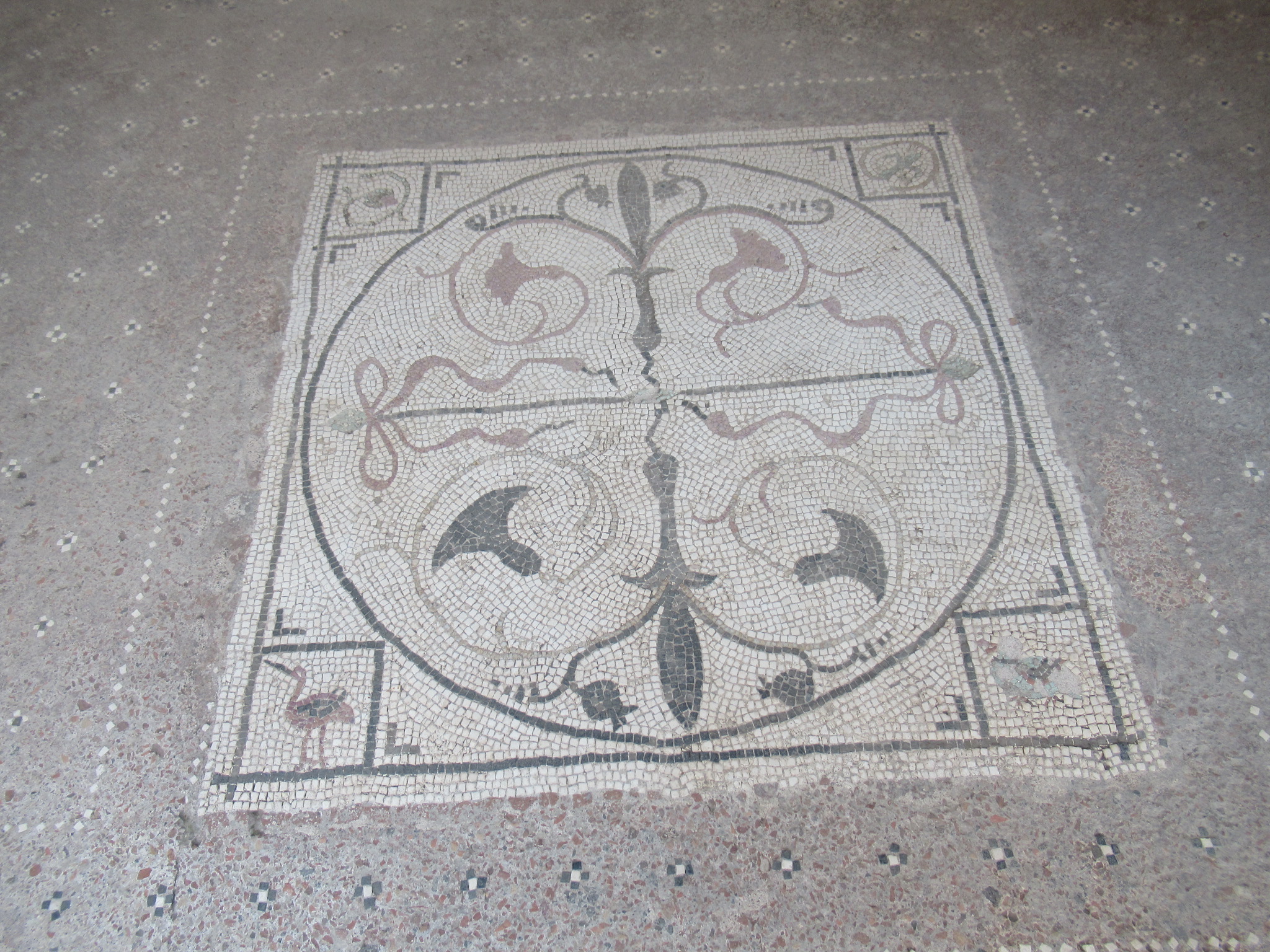
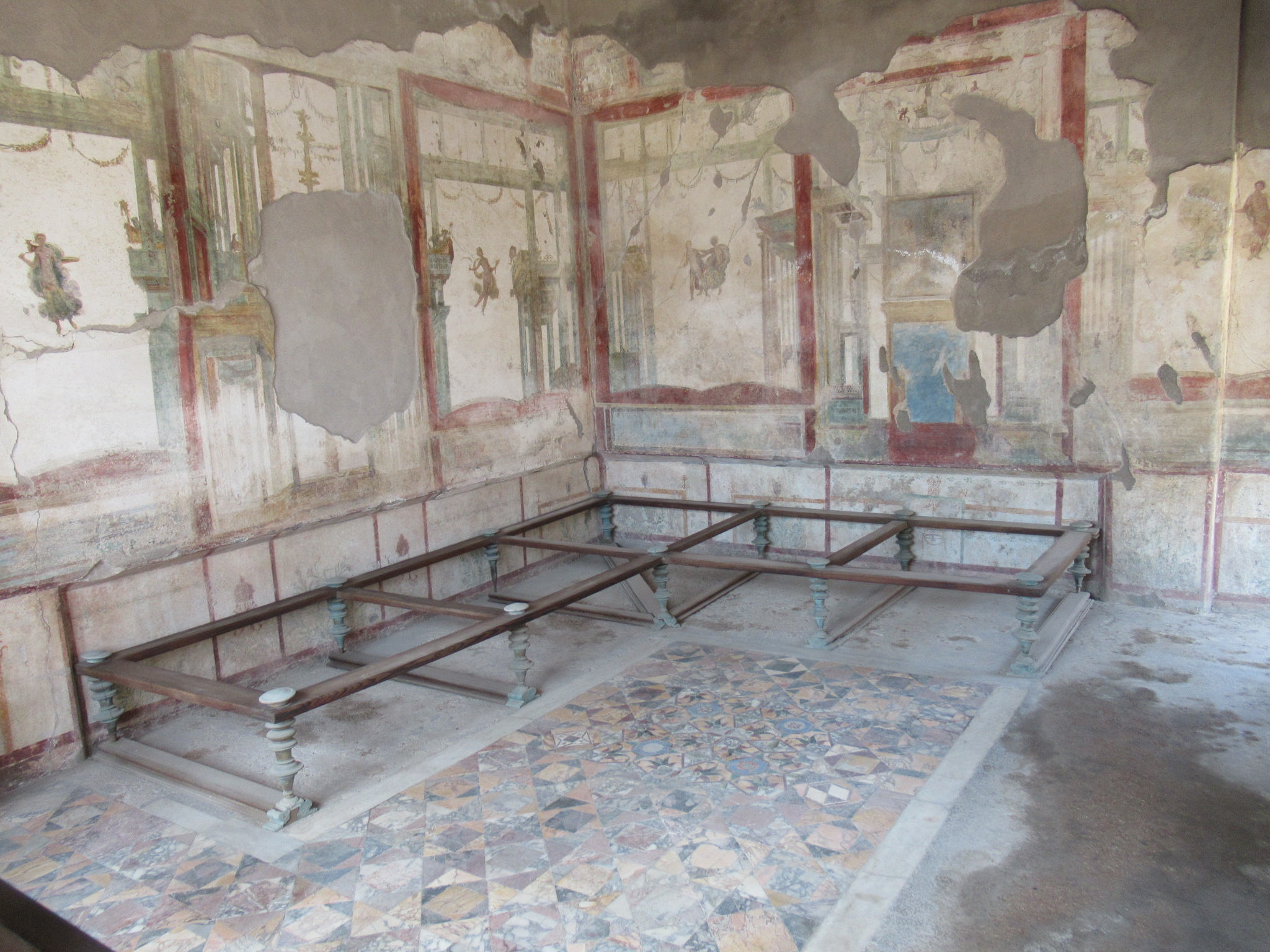
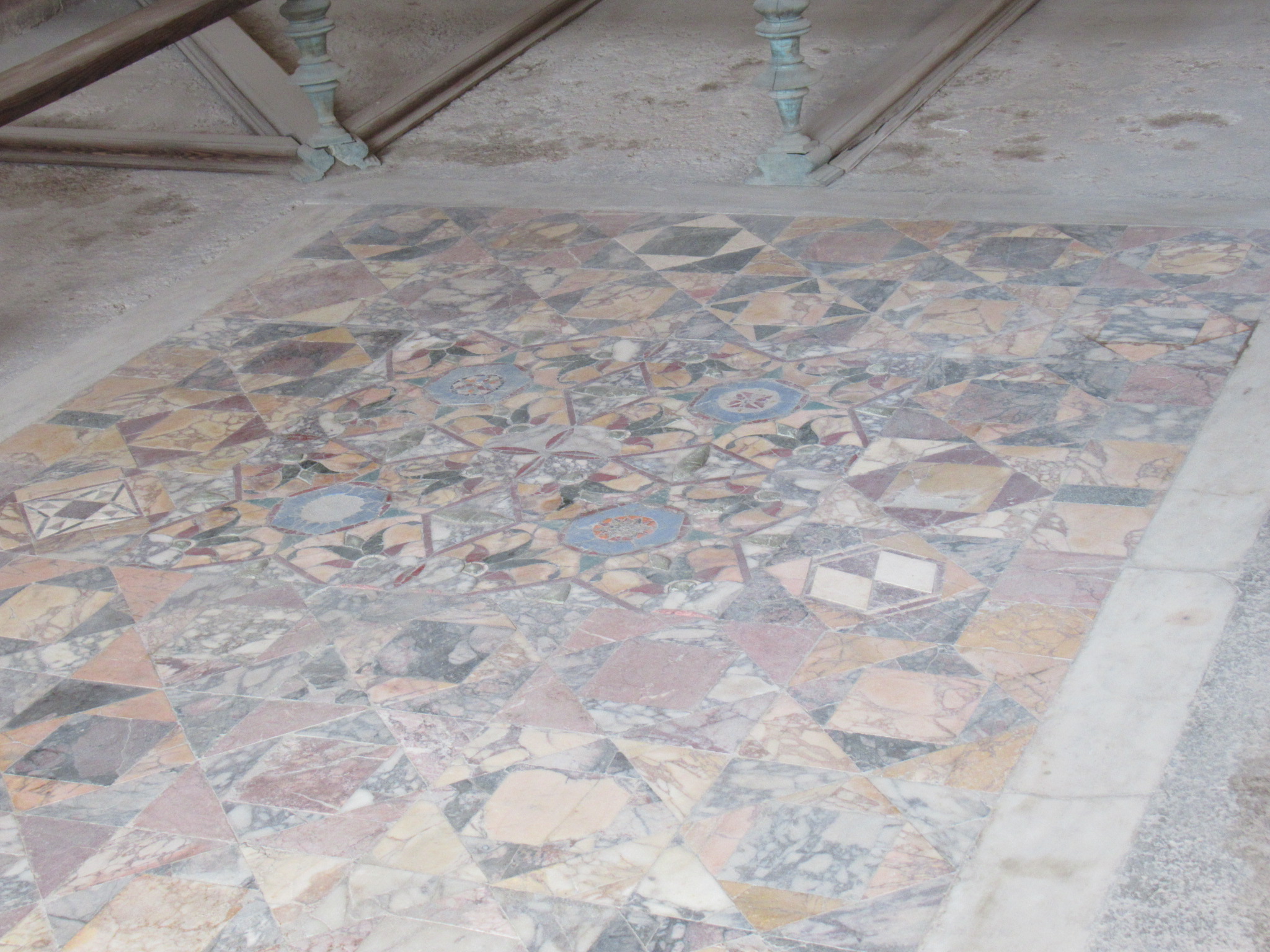
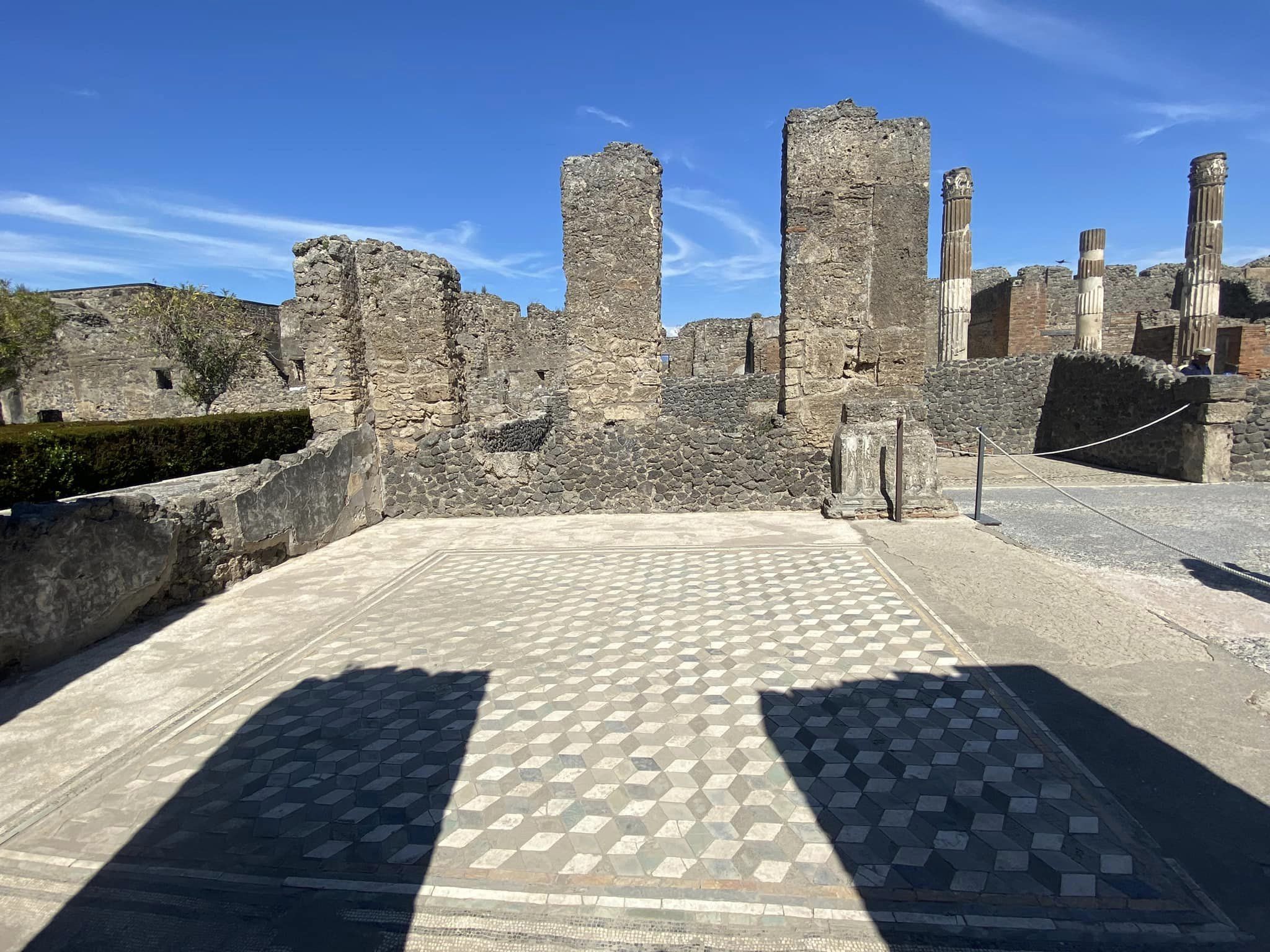
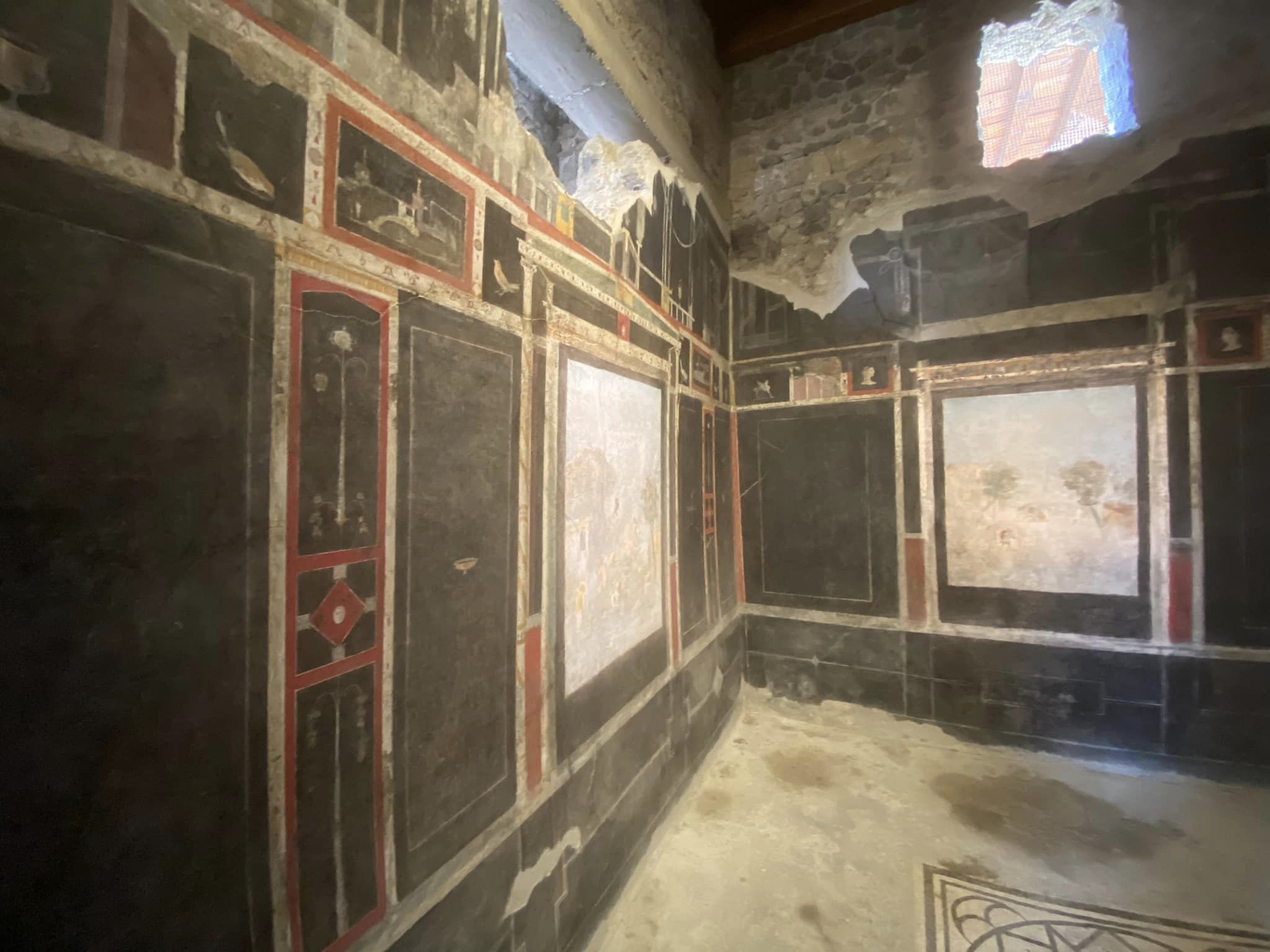
The next five pictures all come from the same building, which the museum calls the house of the geometric mosaics.

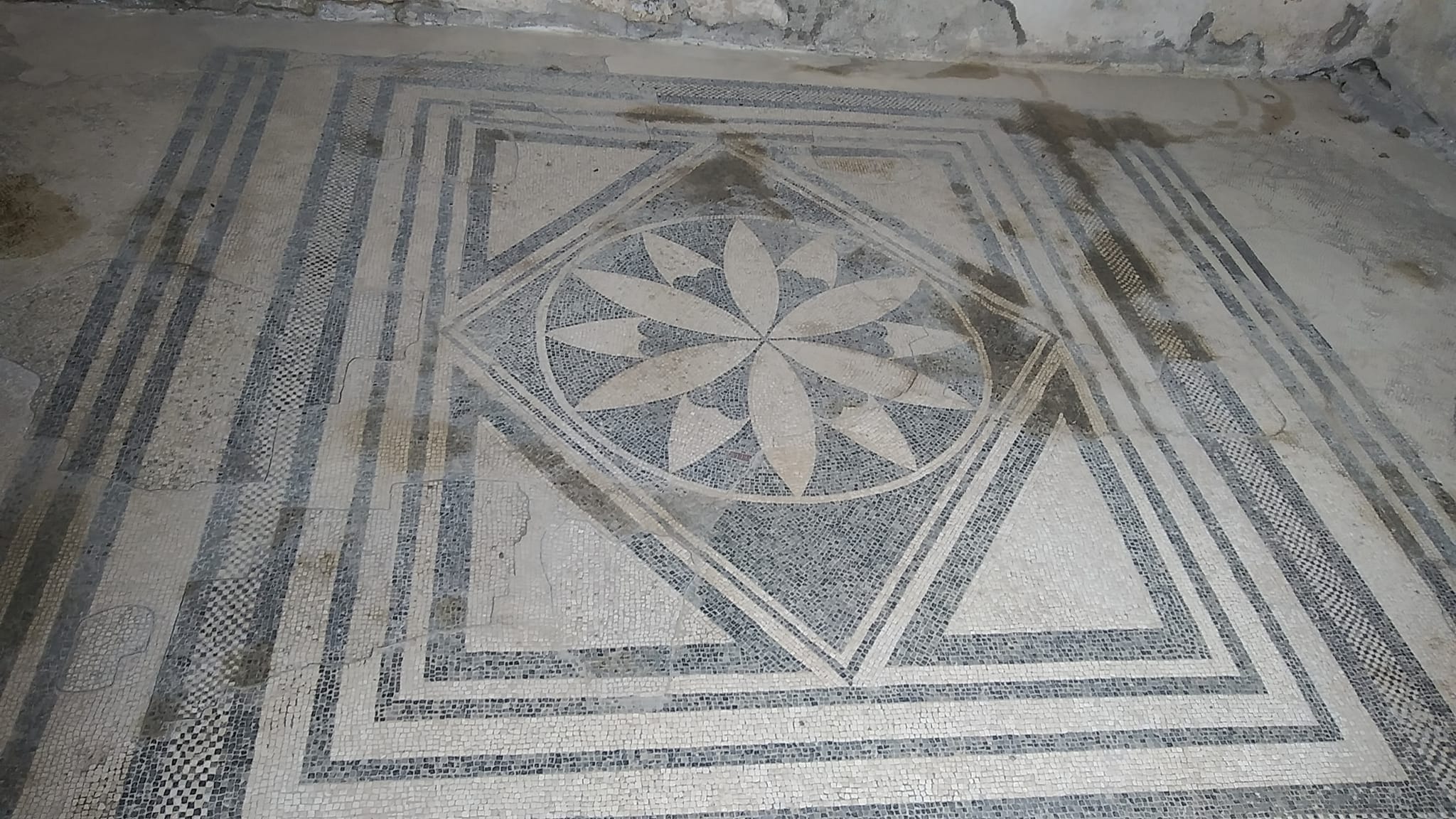
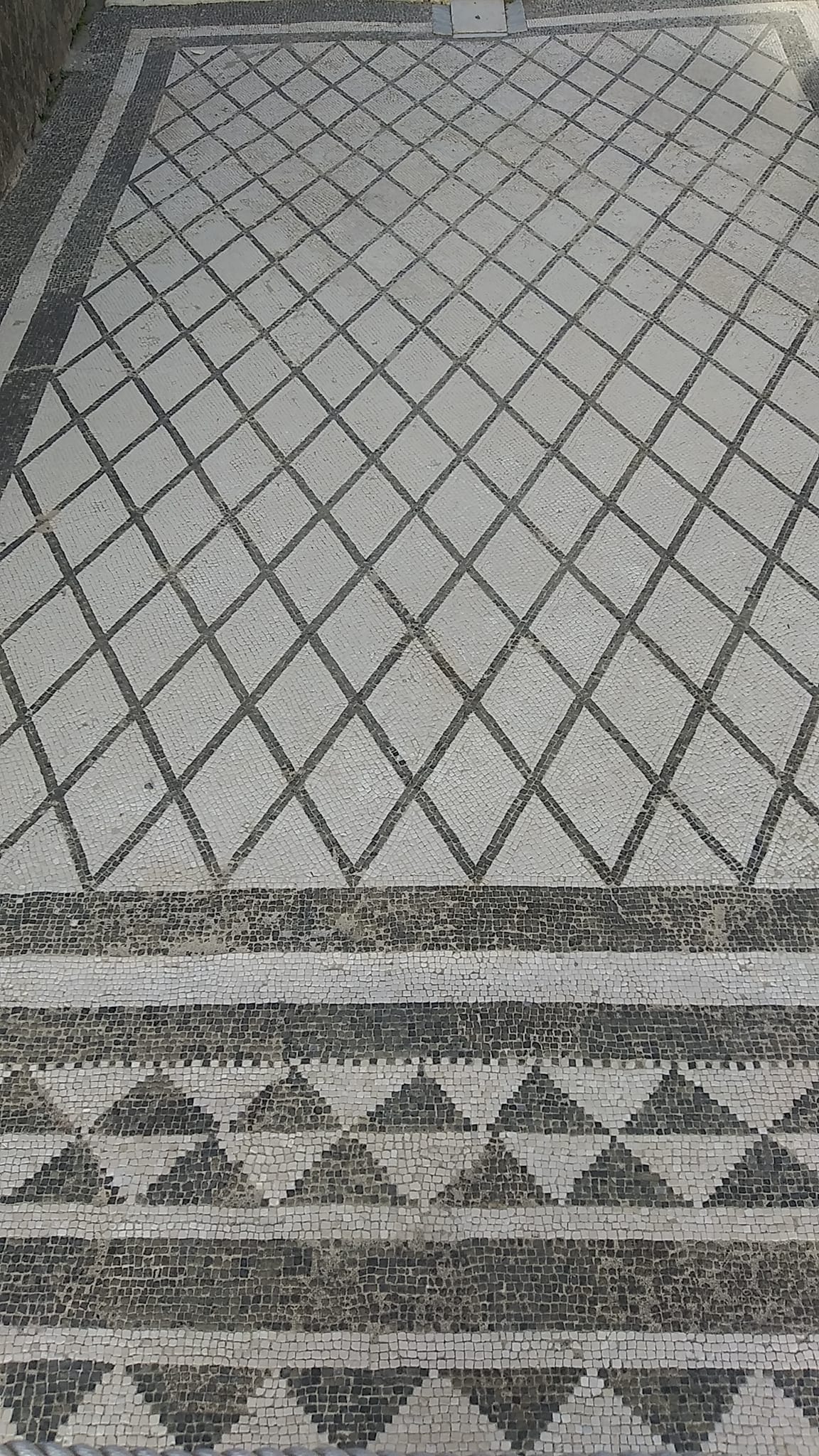


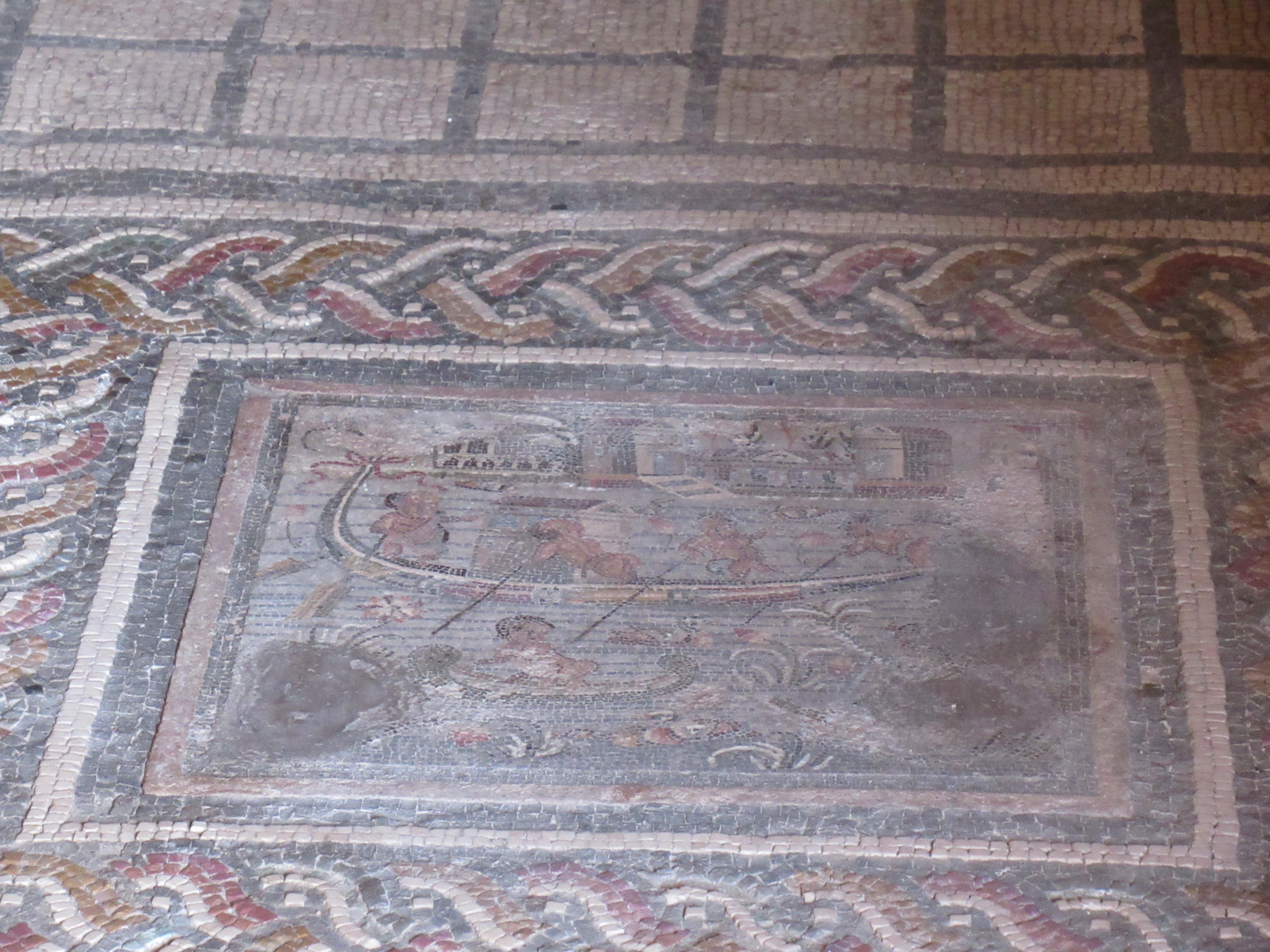
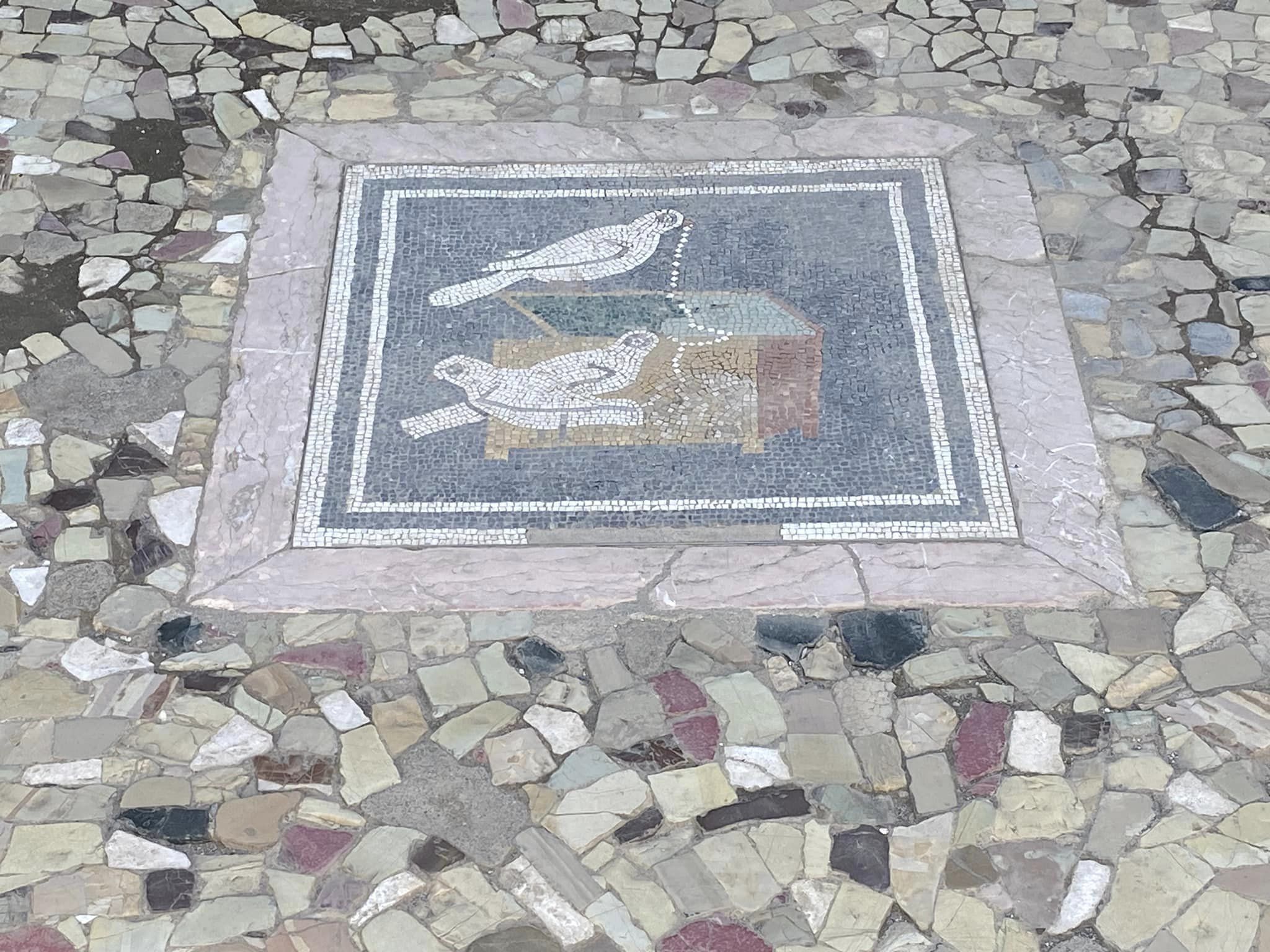
Some more mosaics…
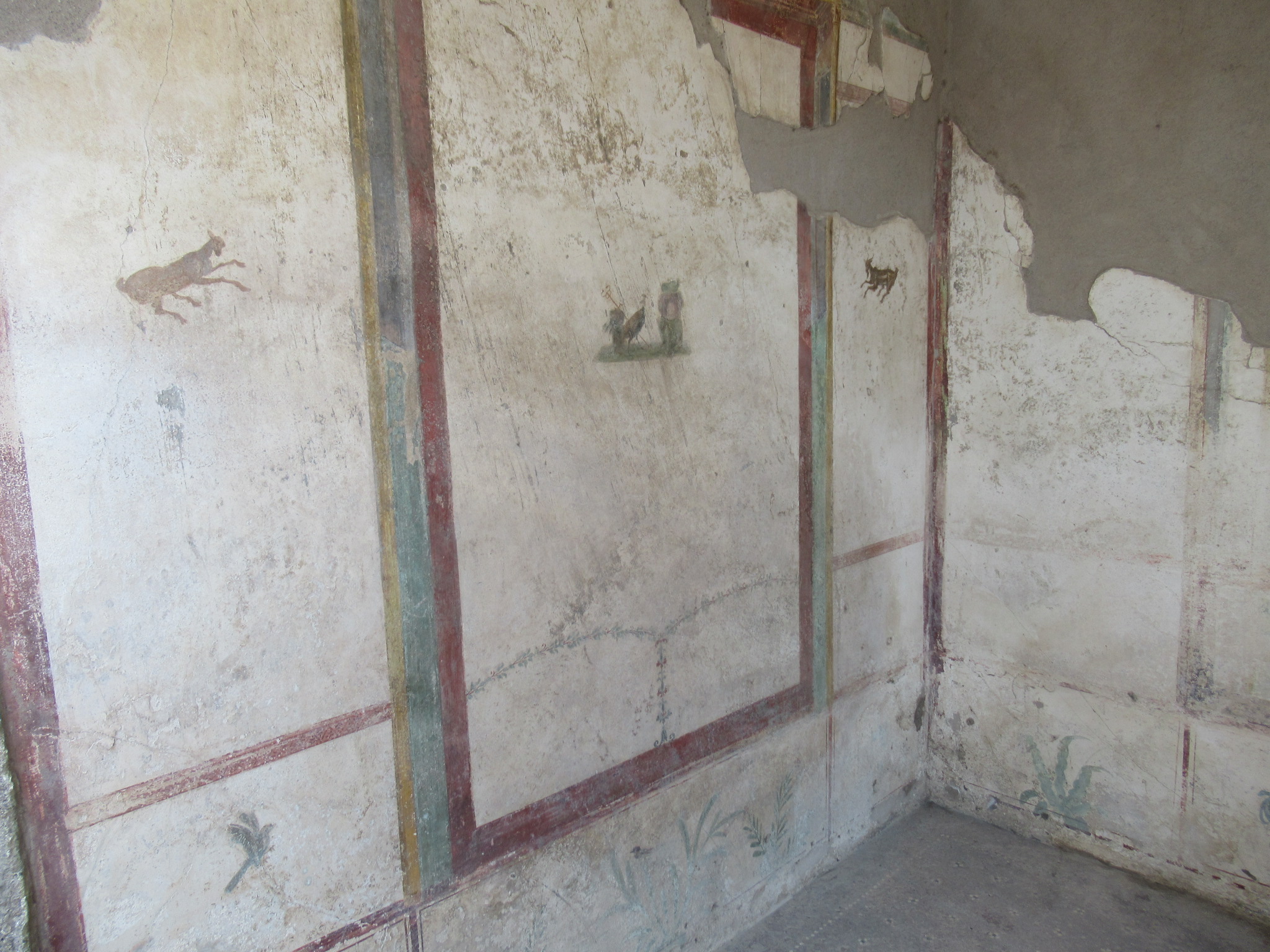
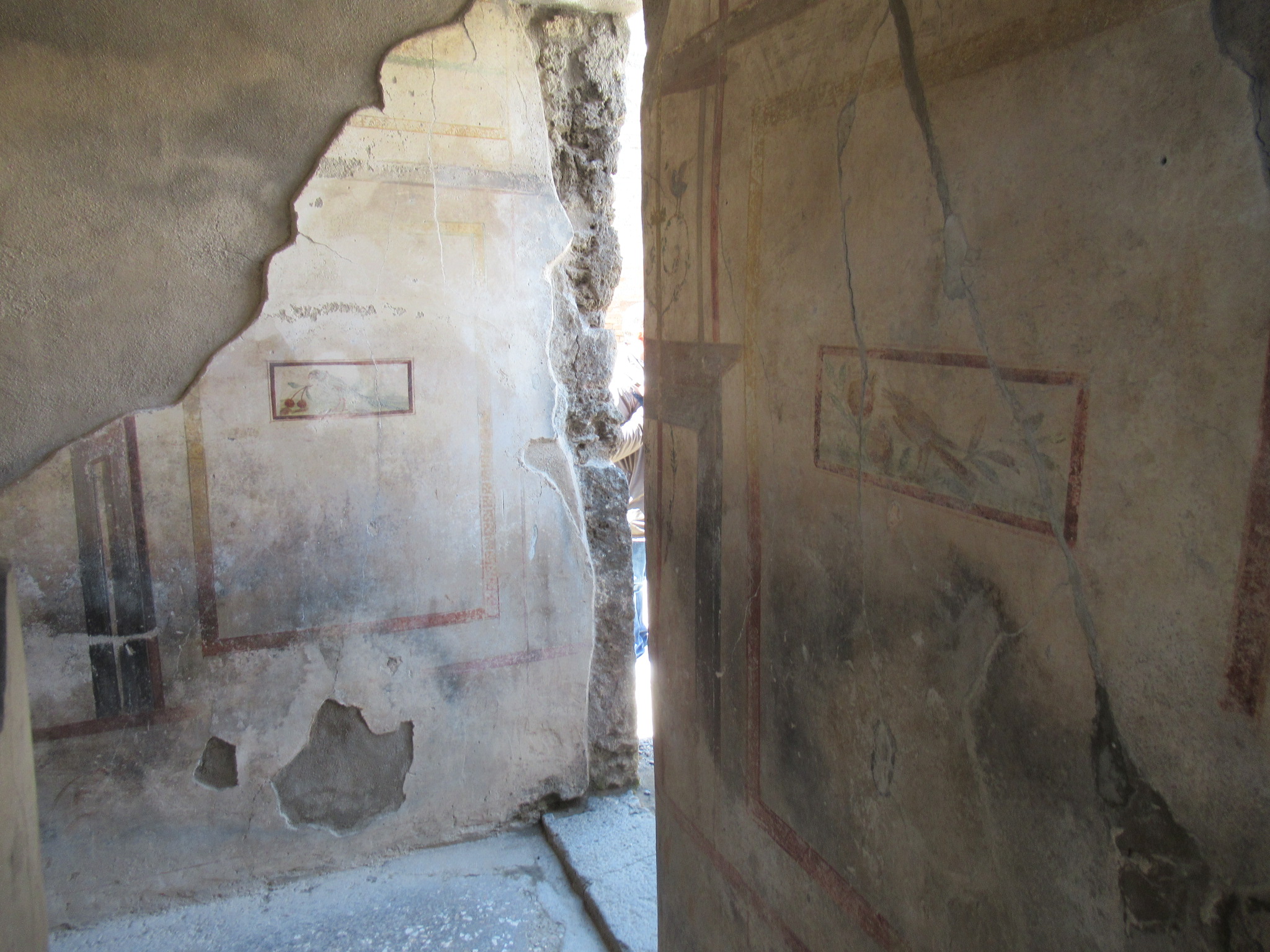
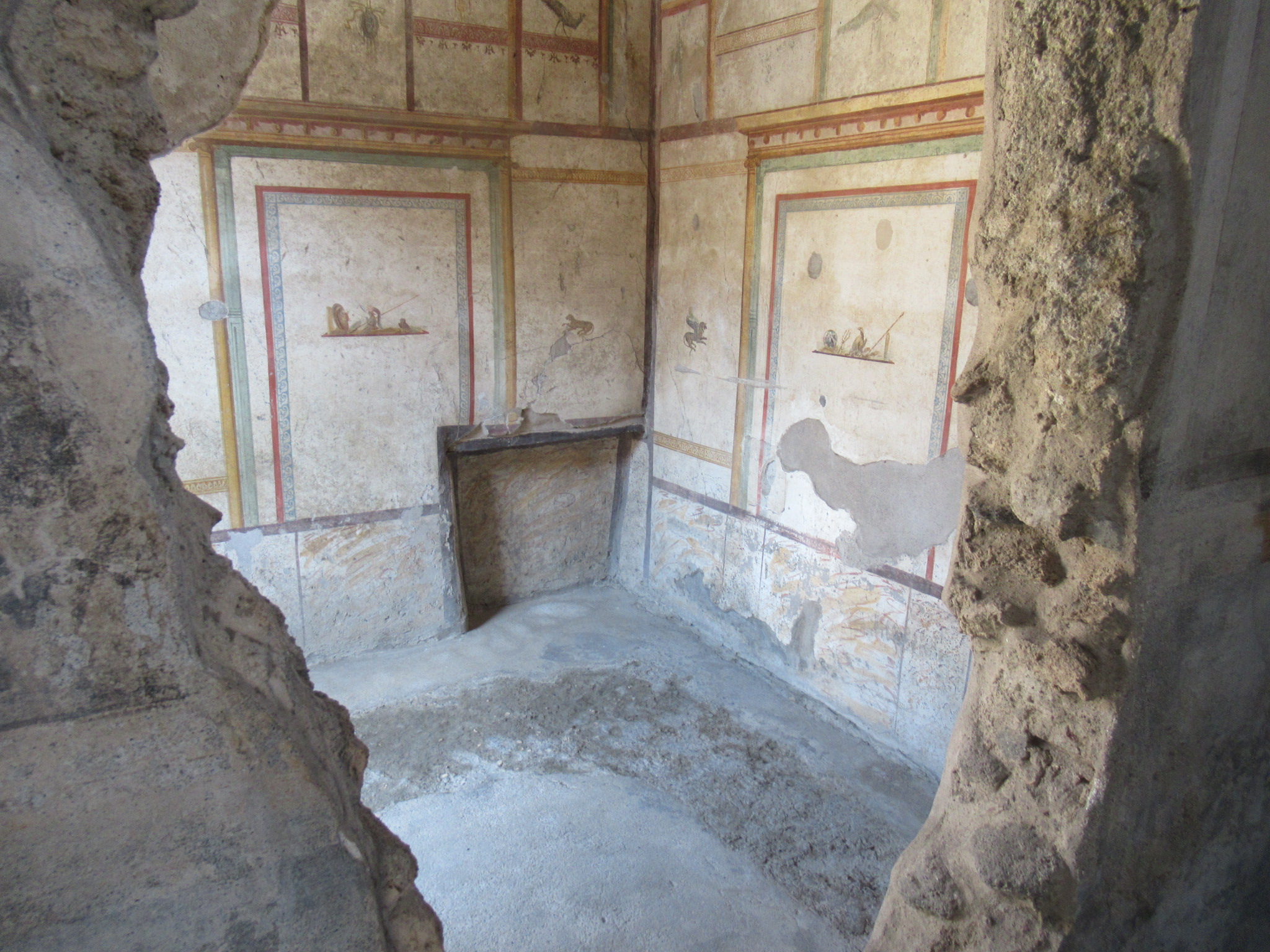
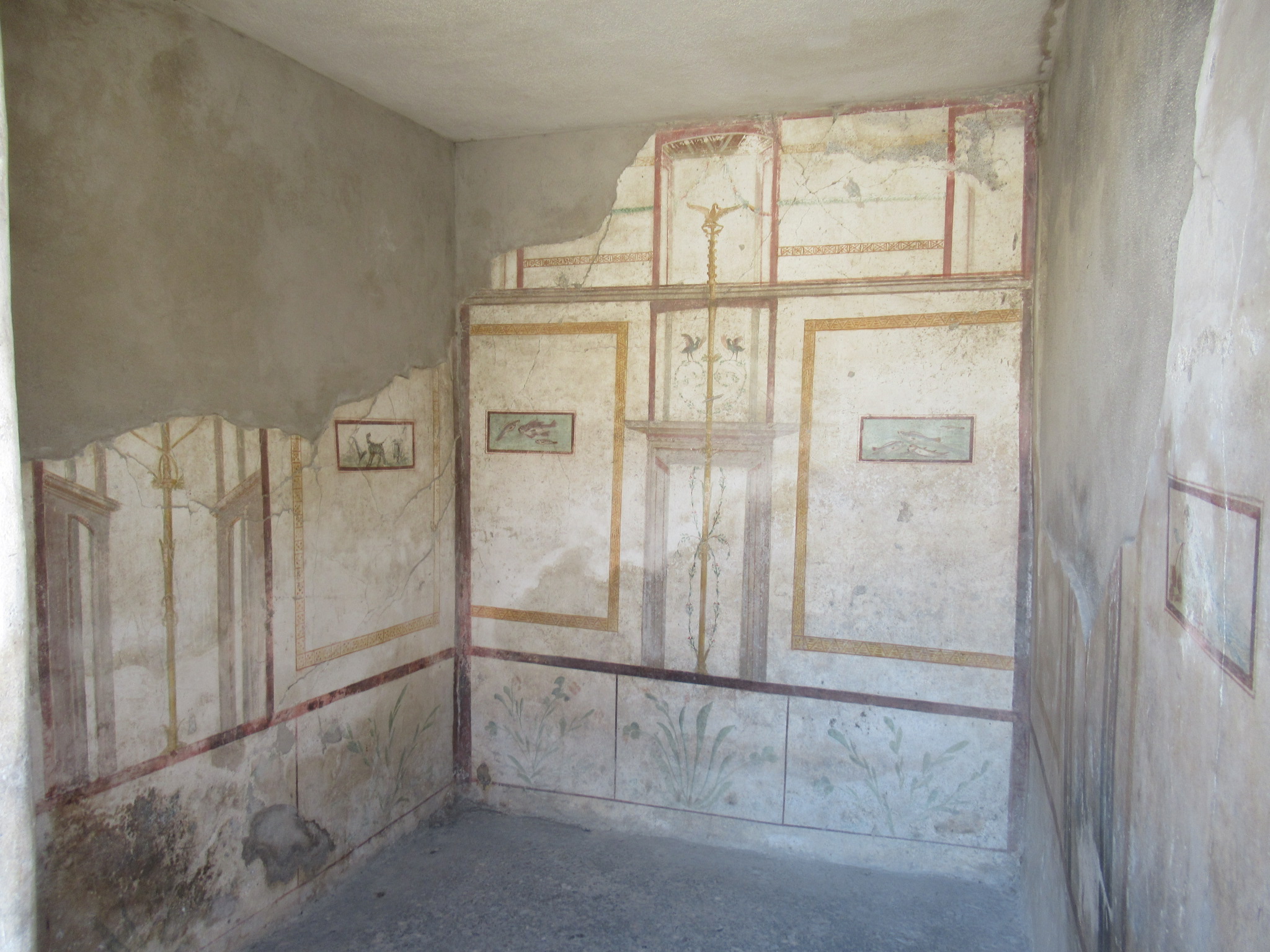
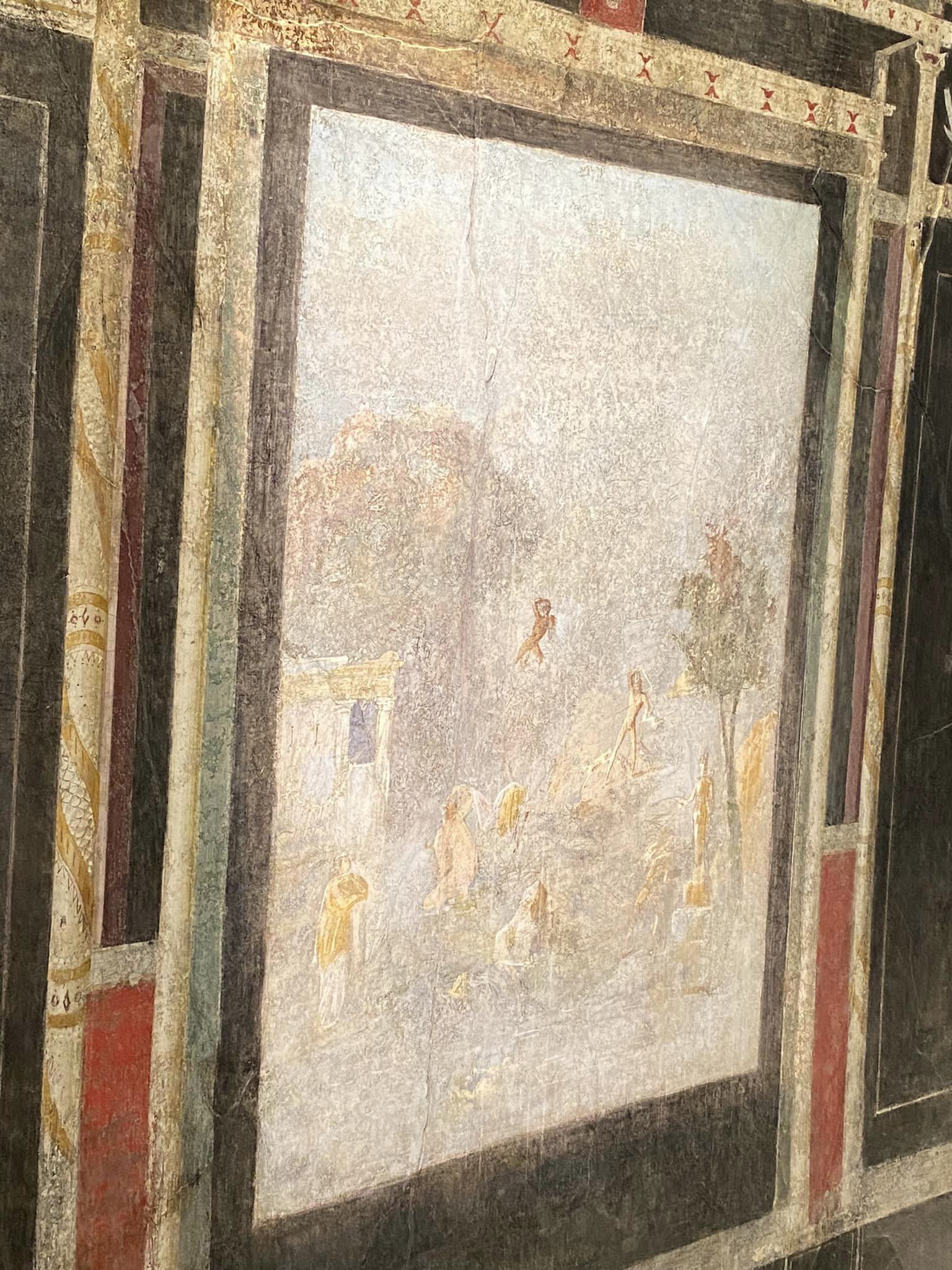
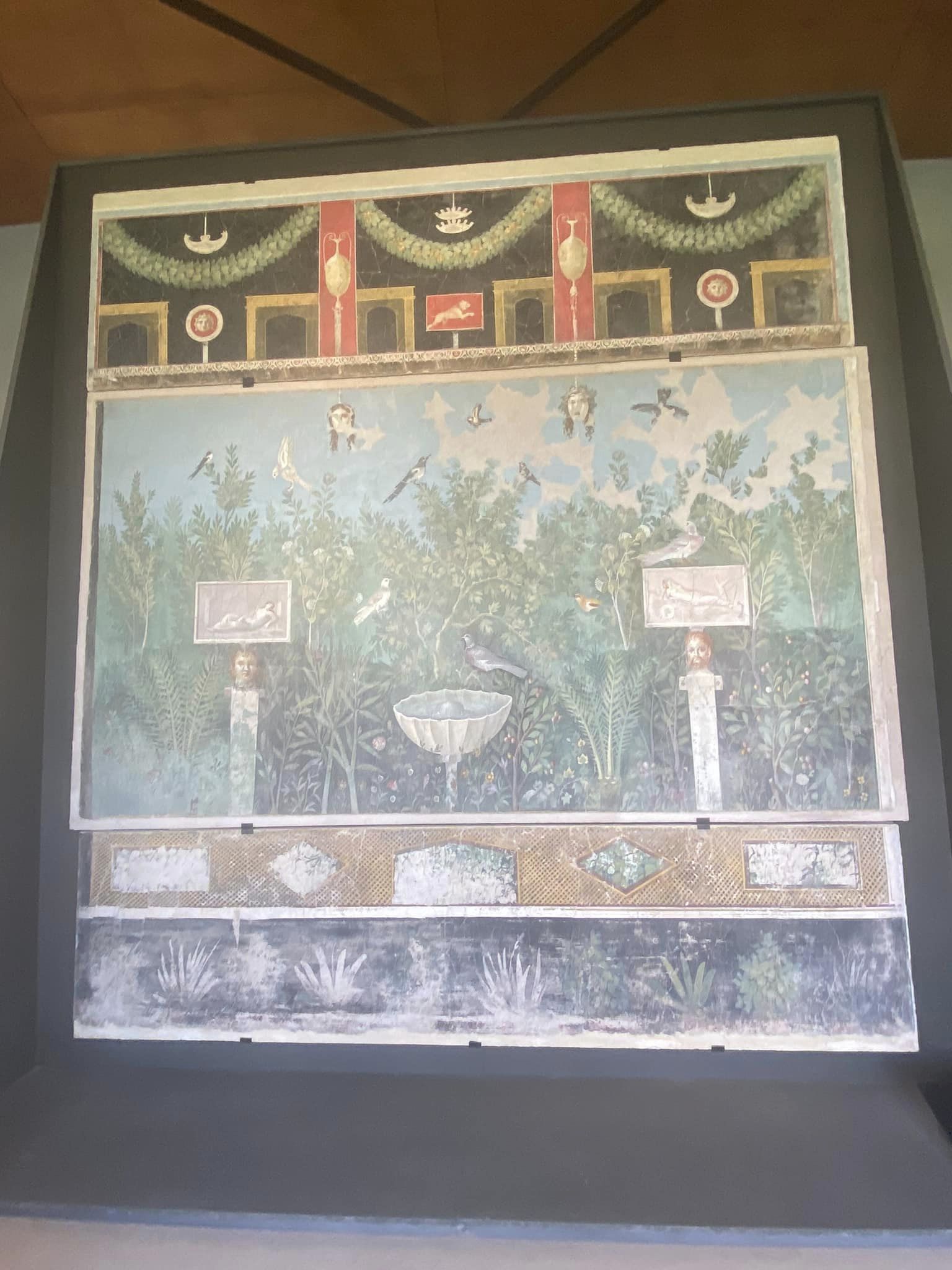
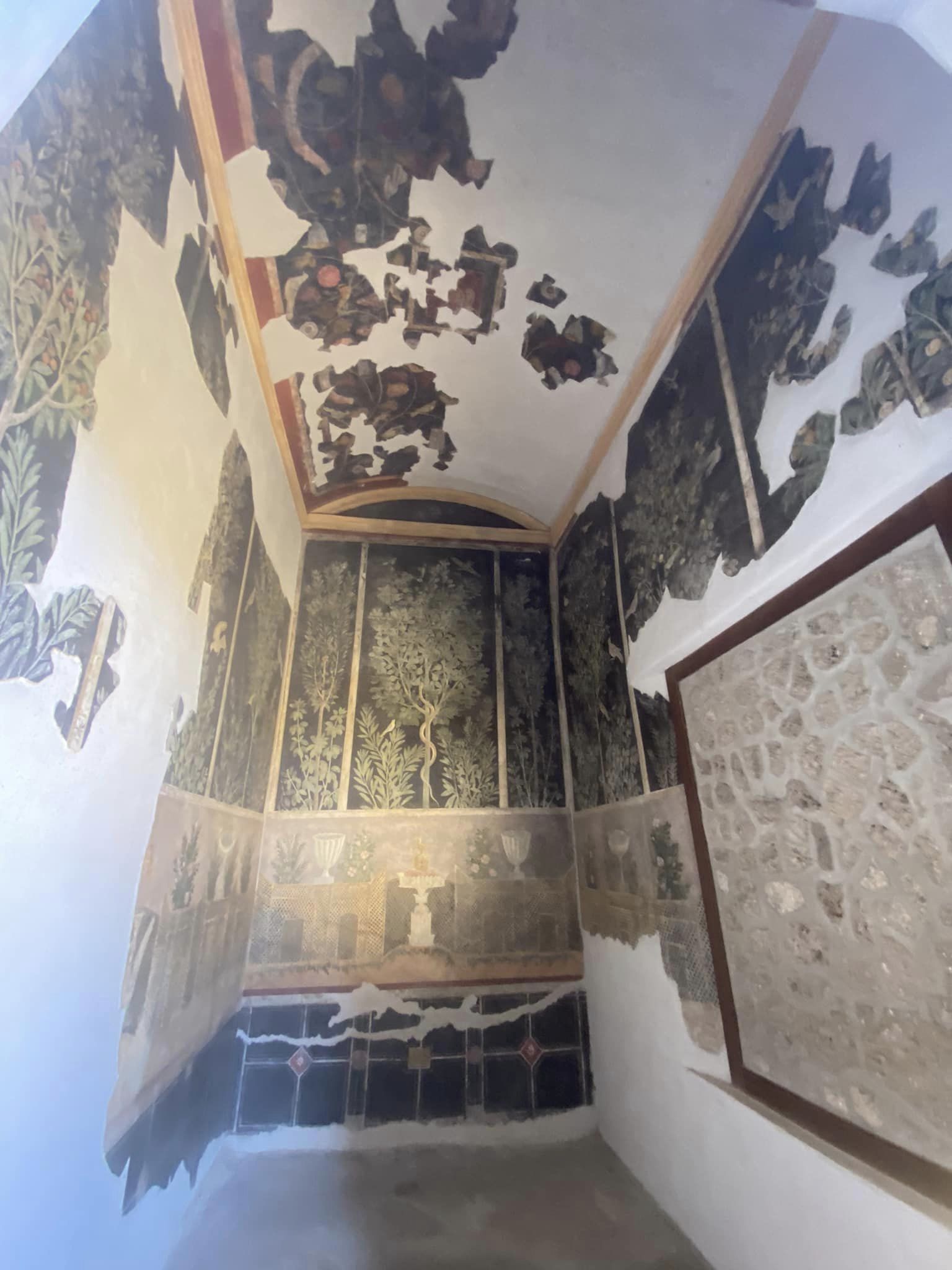
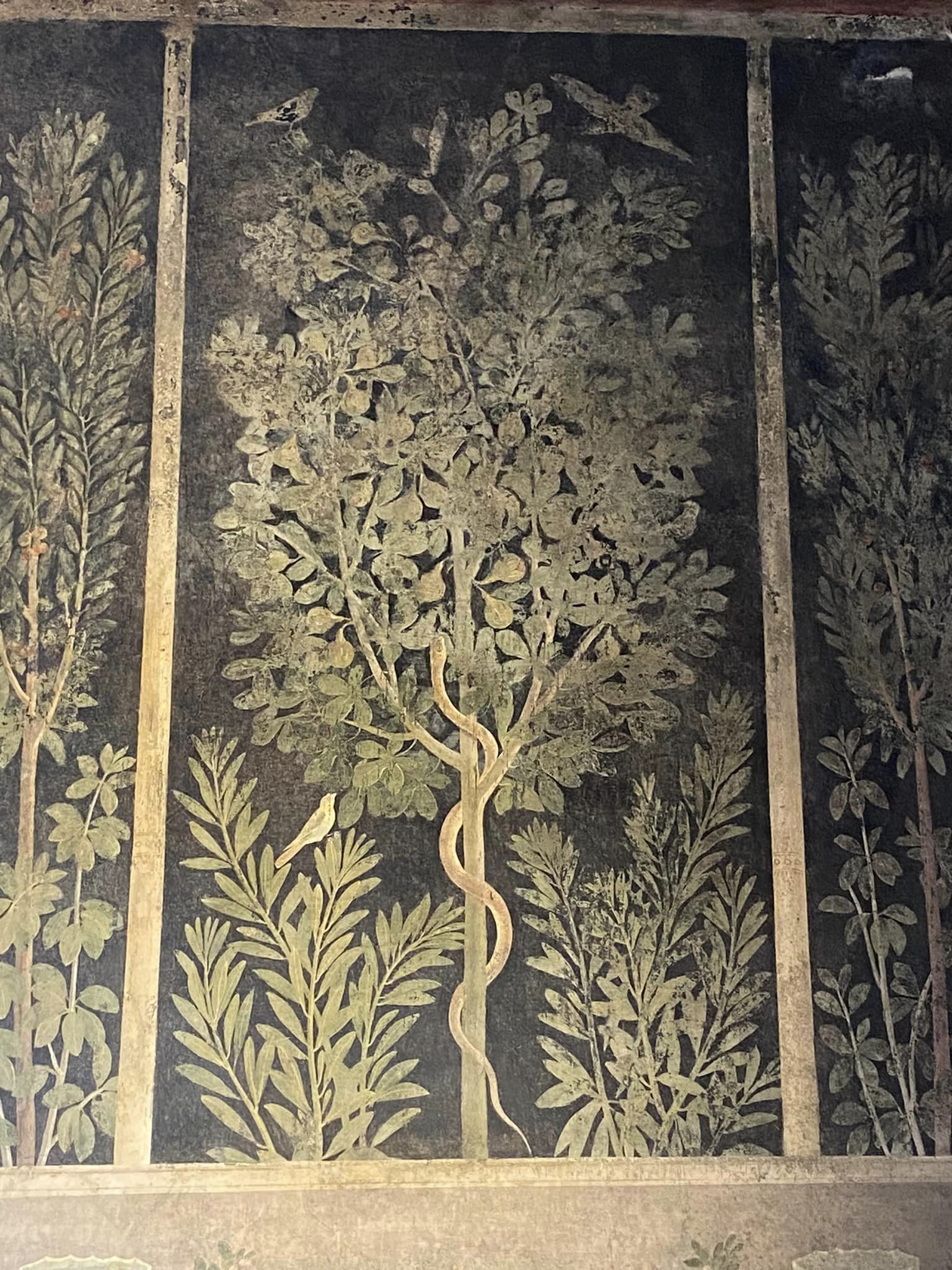
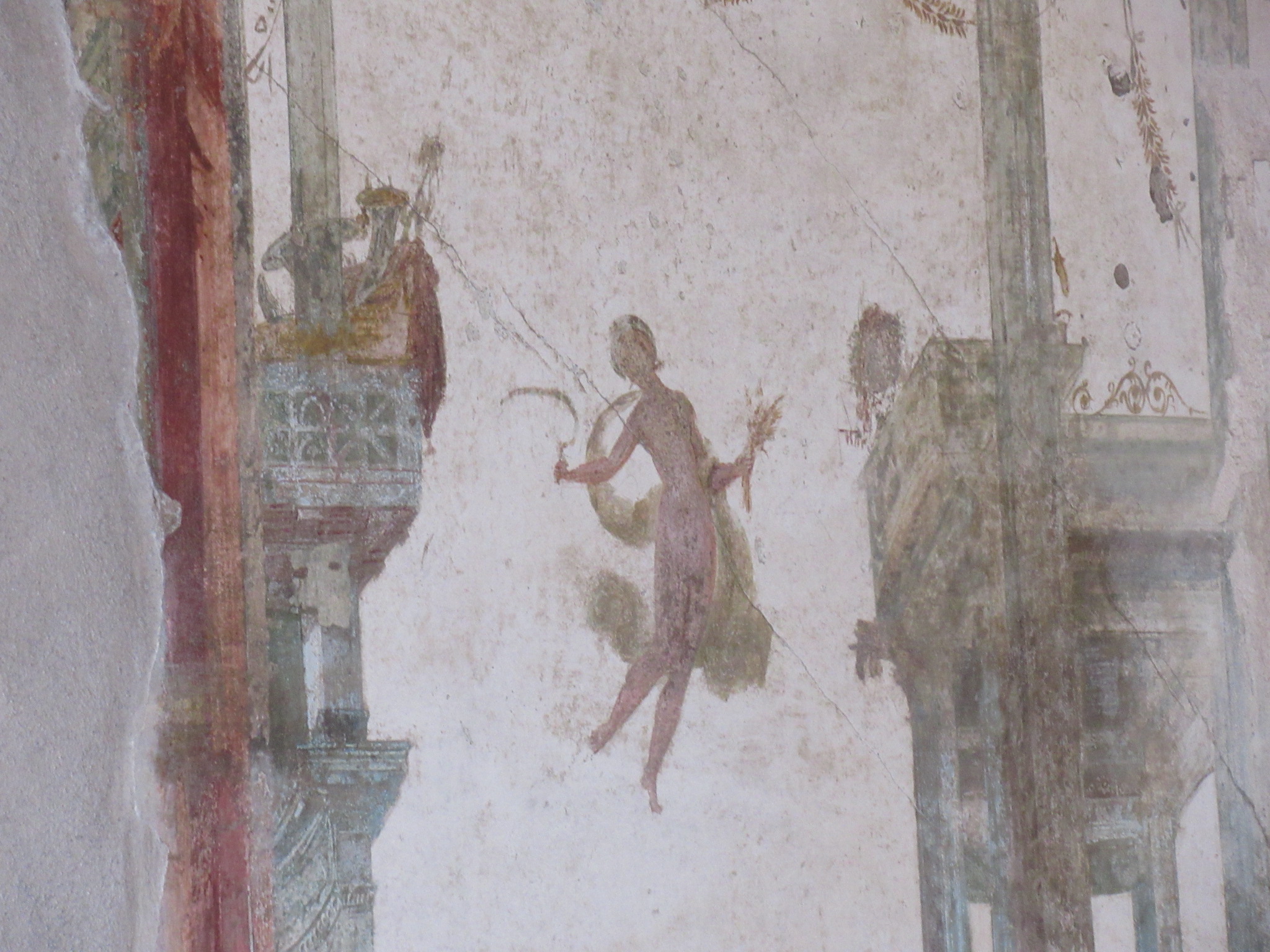
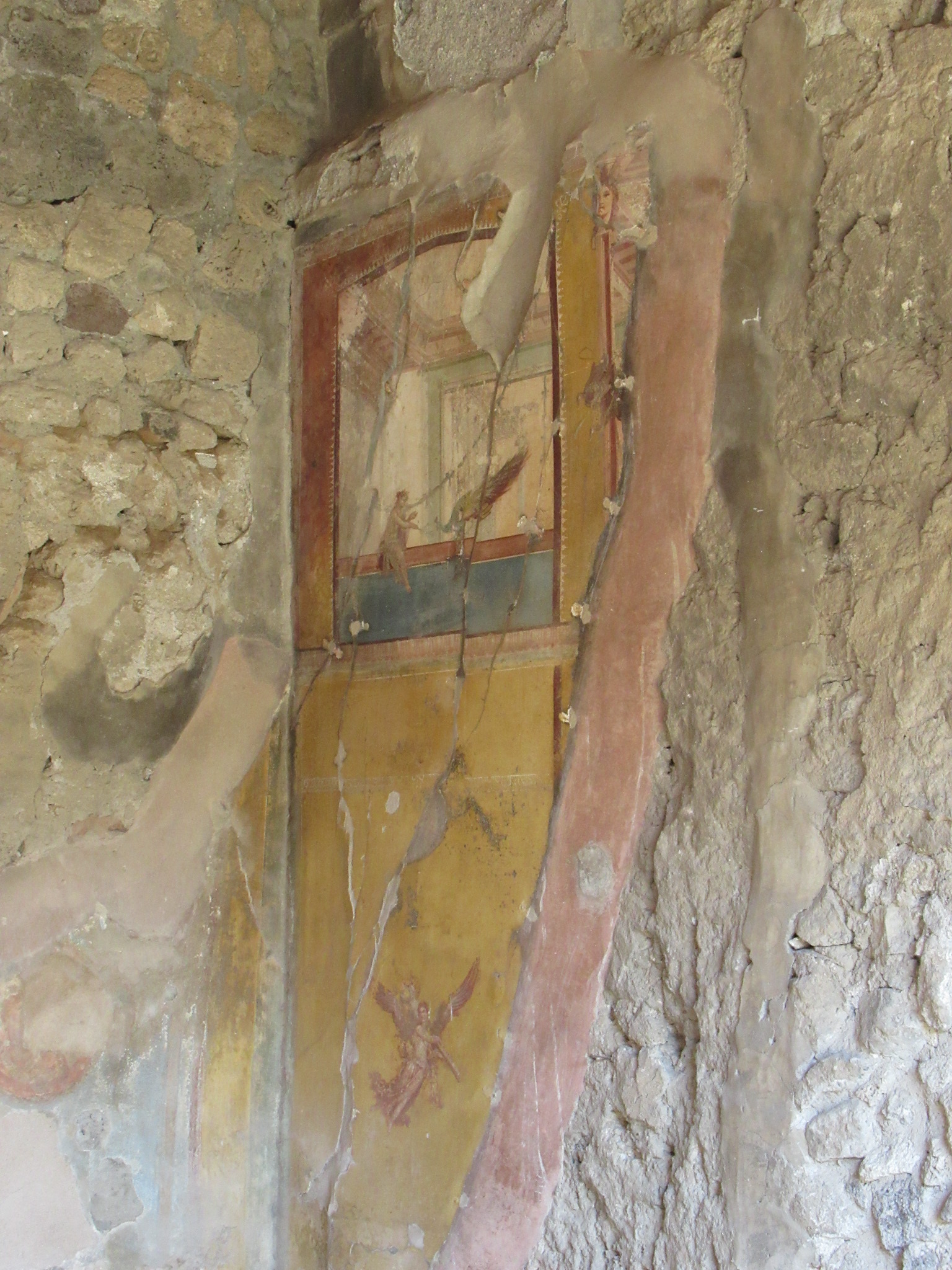
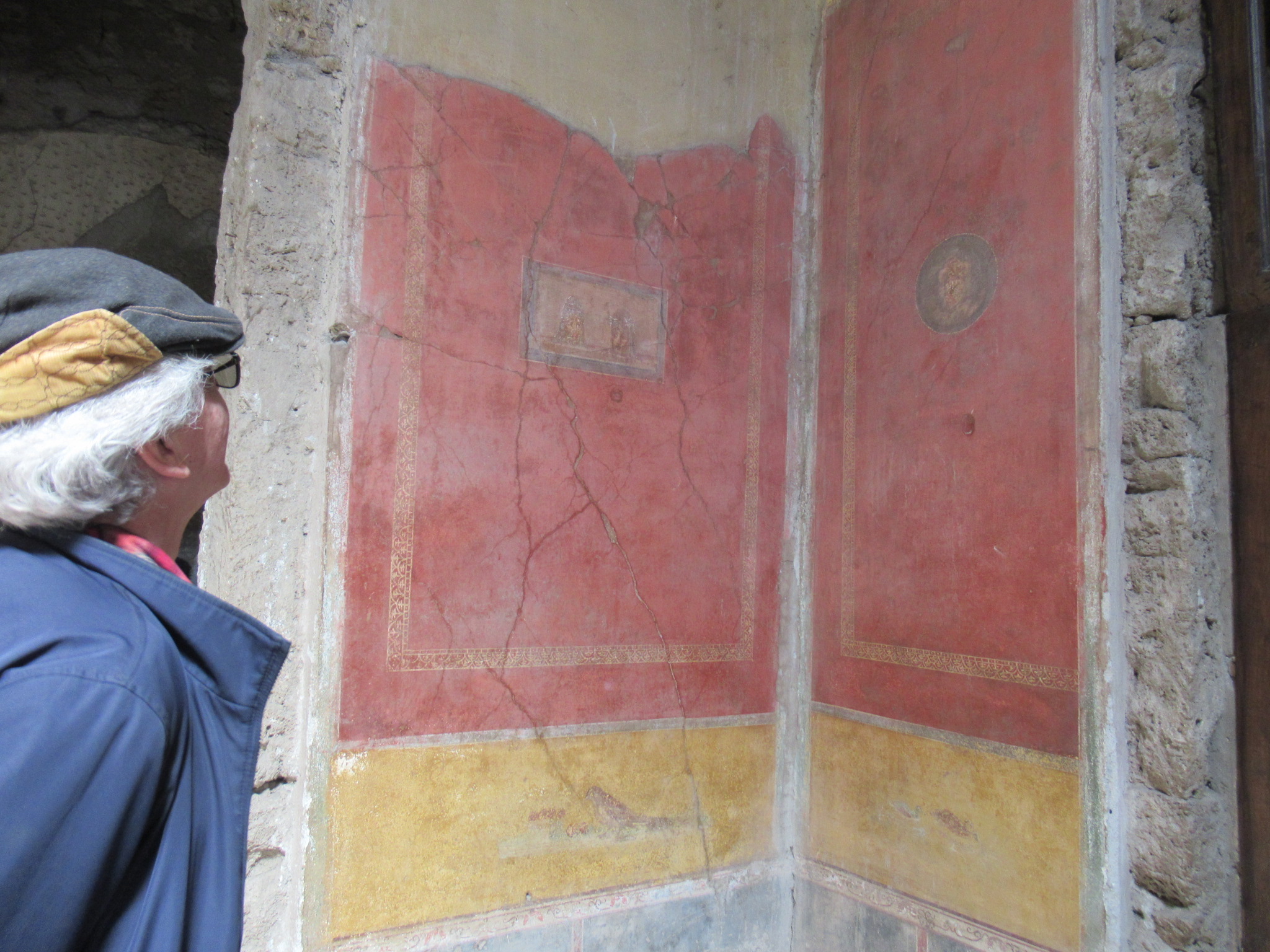
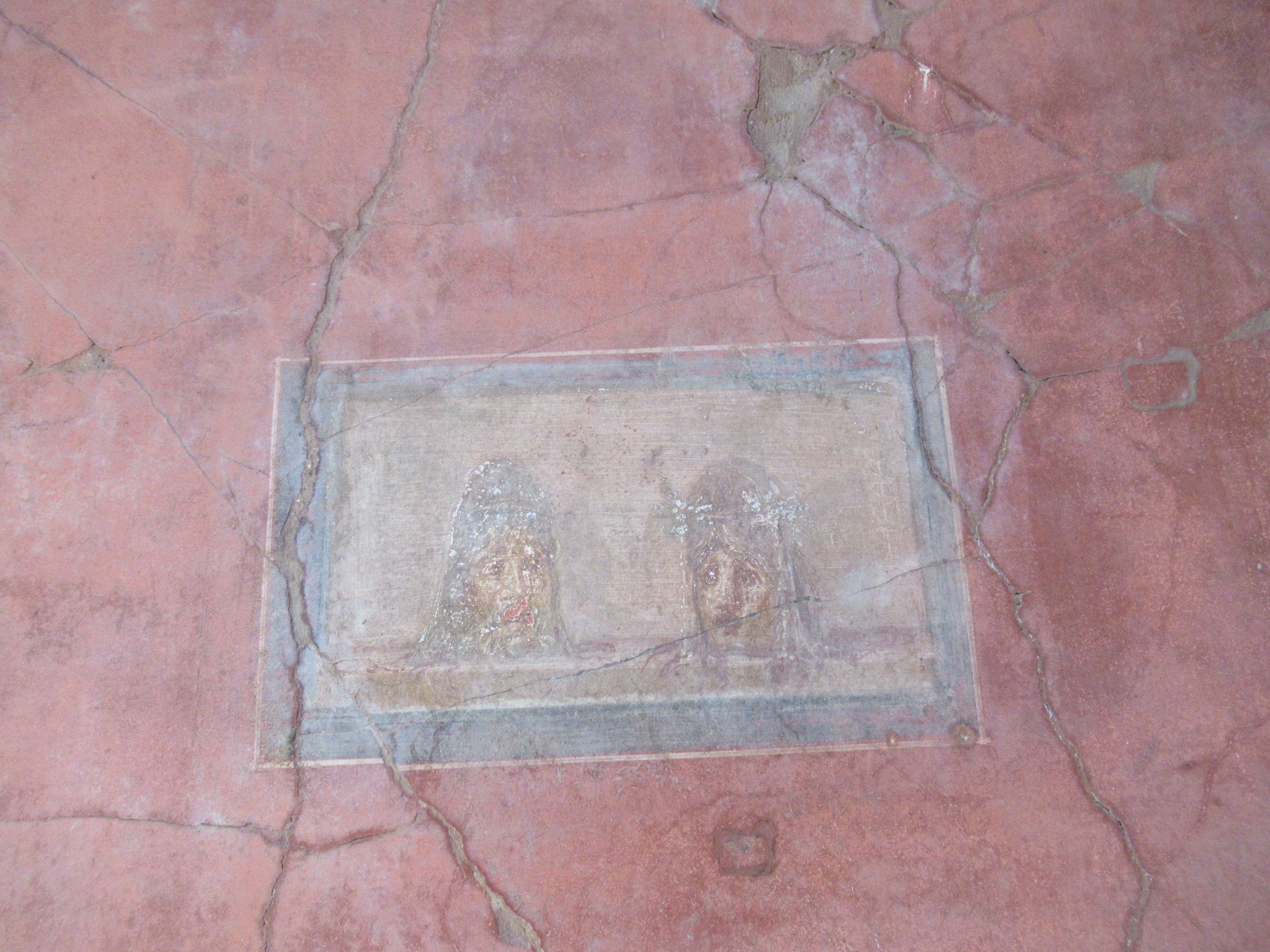
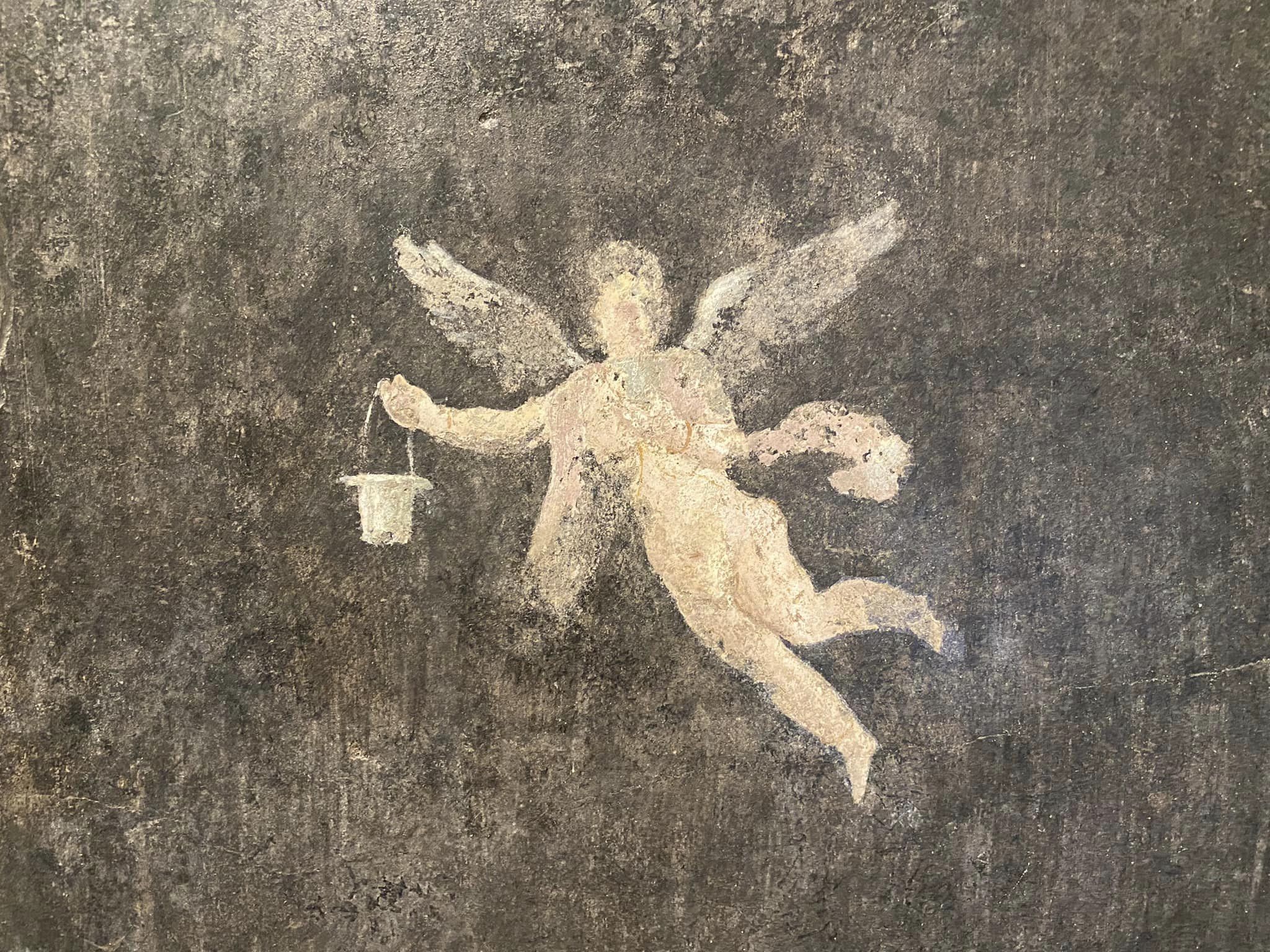
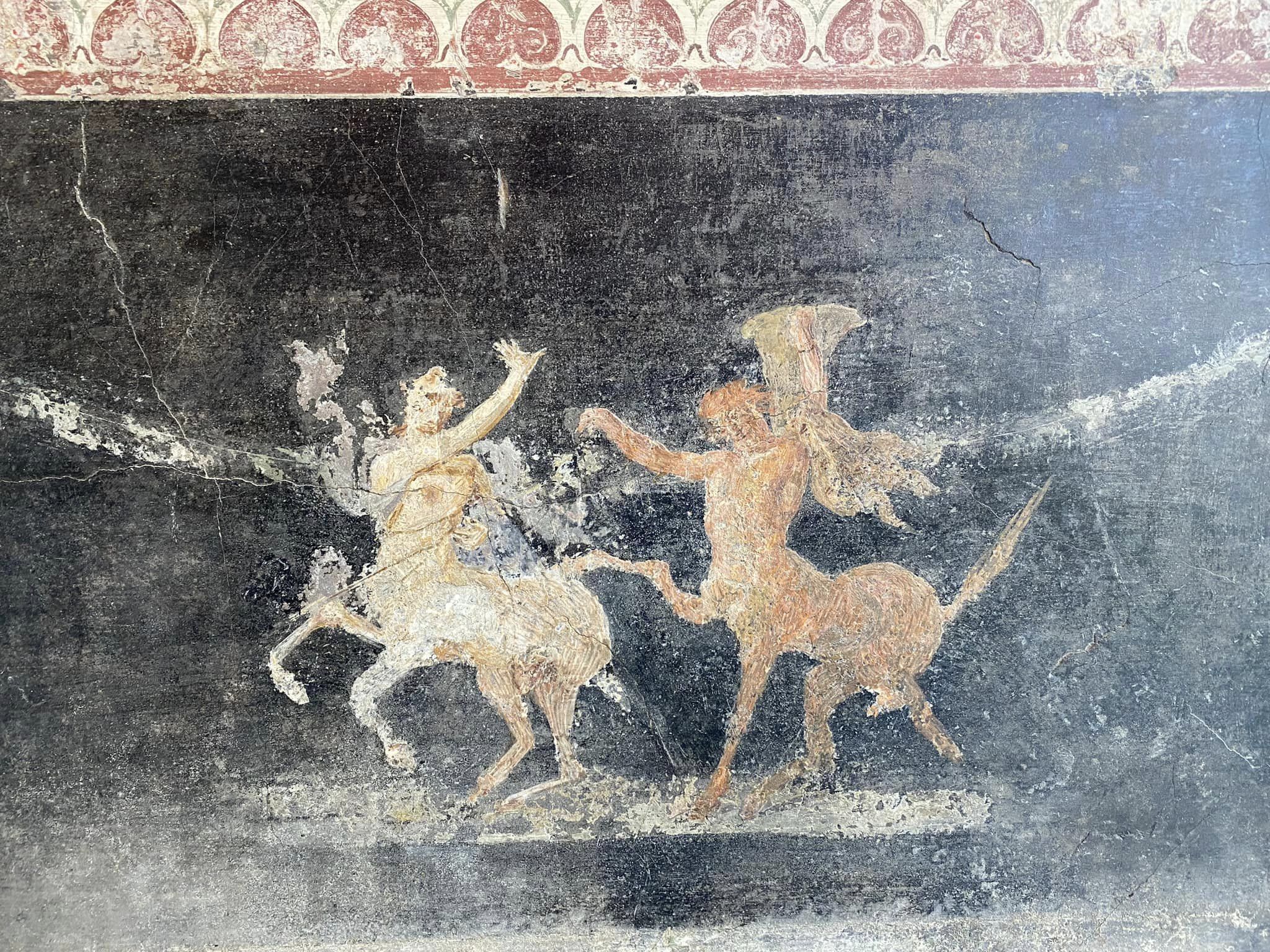
And more close-up details of wall paintings…
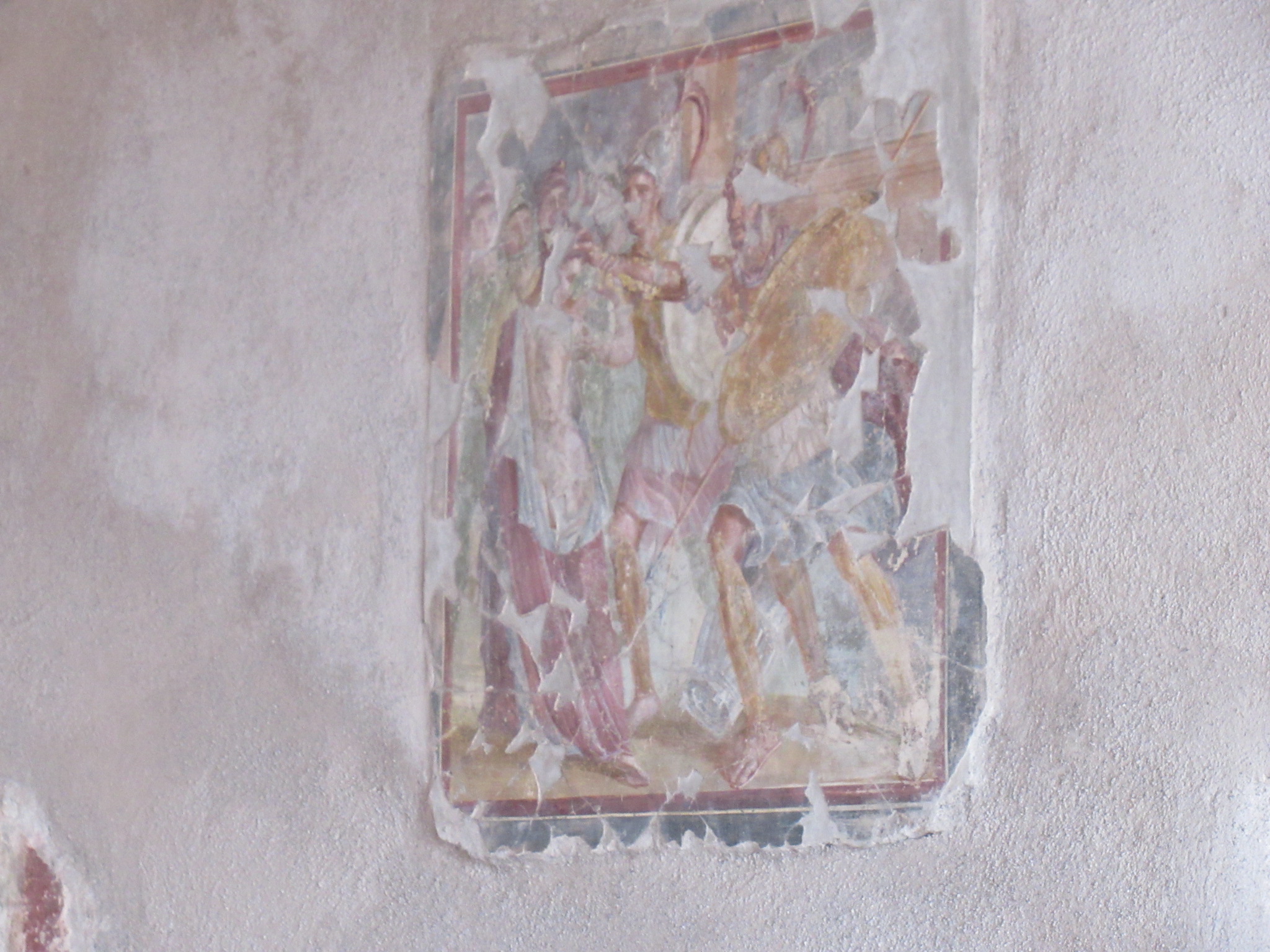

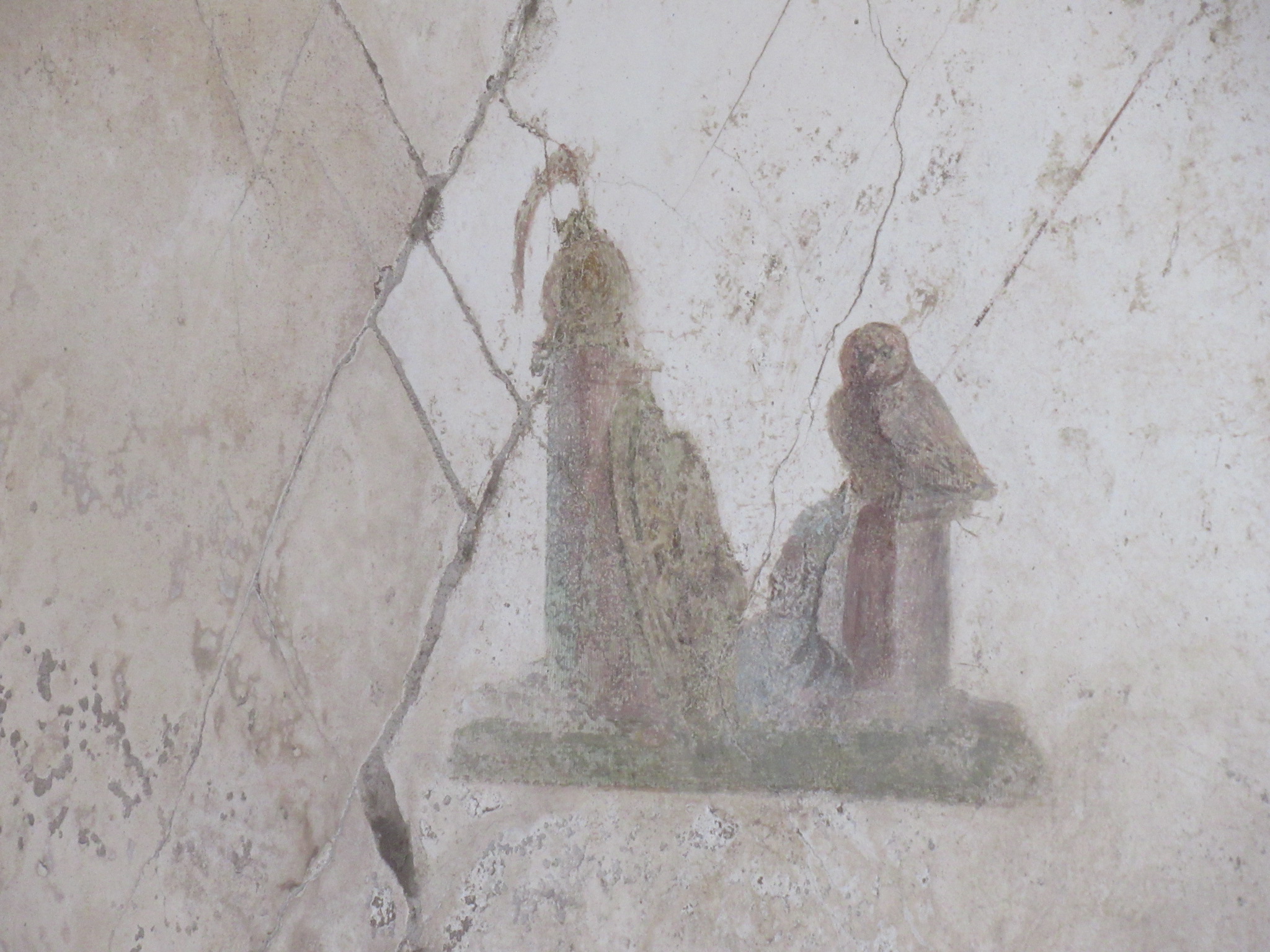

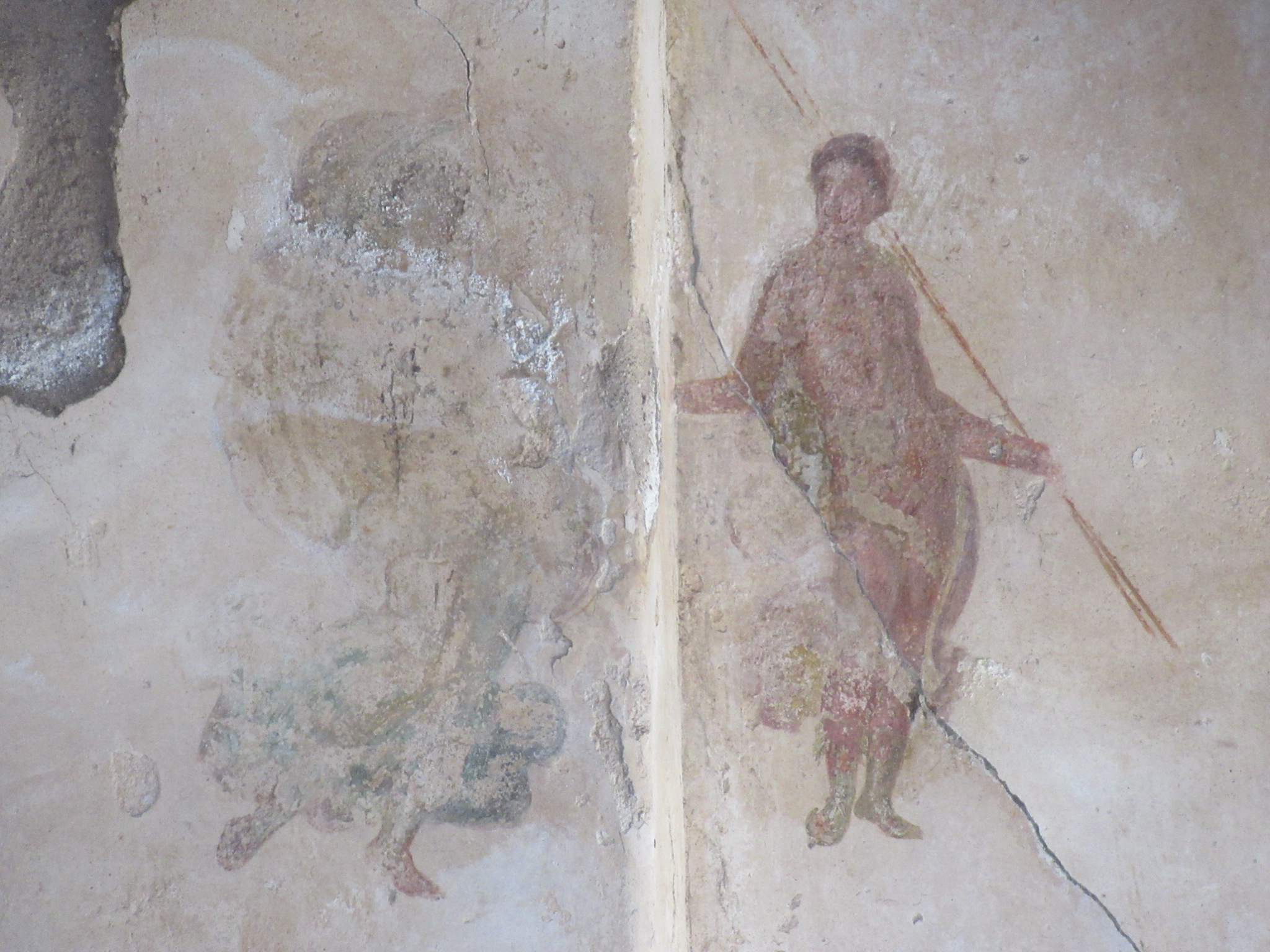
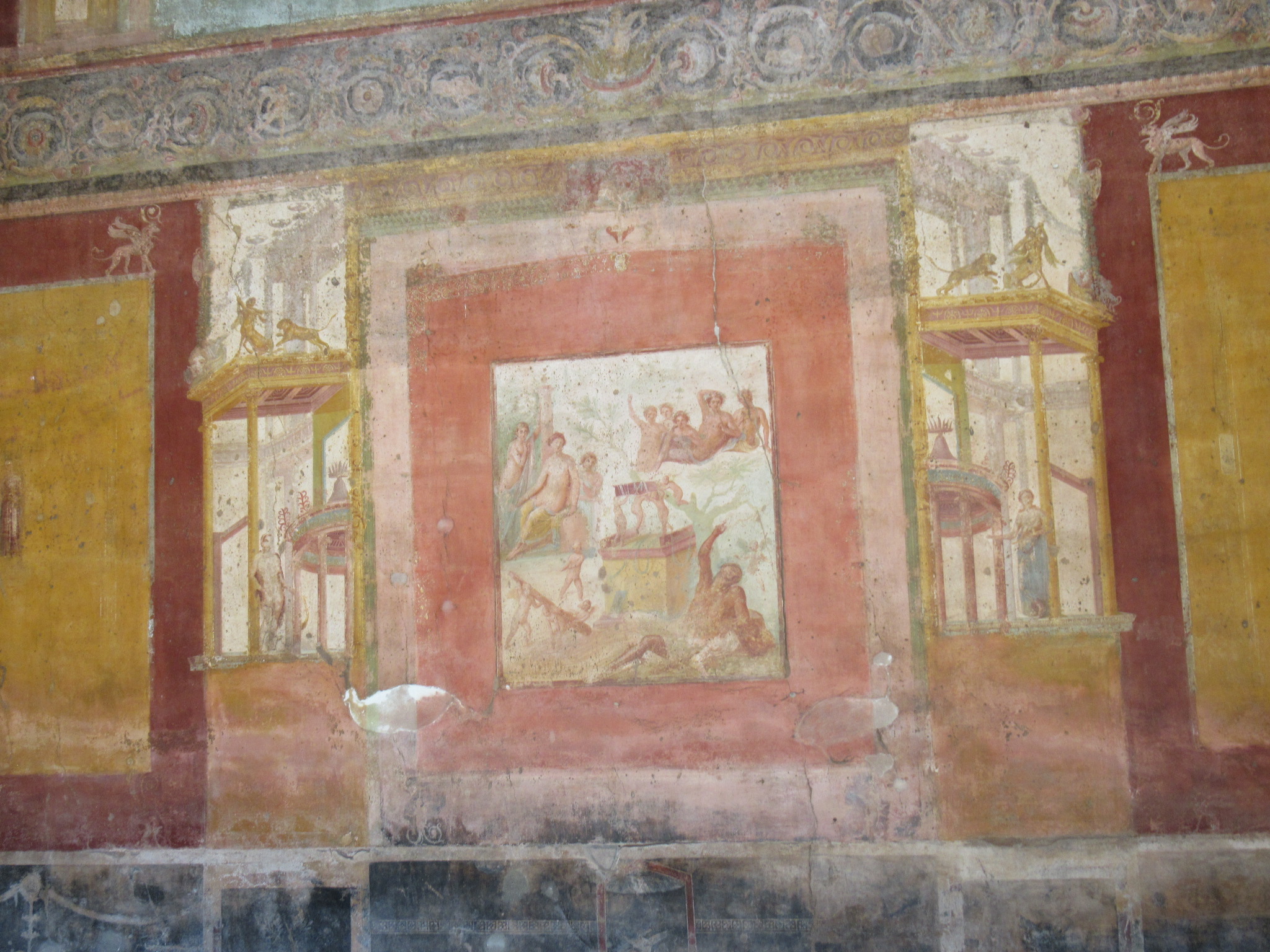
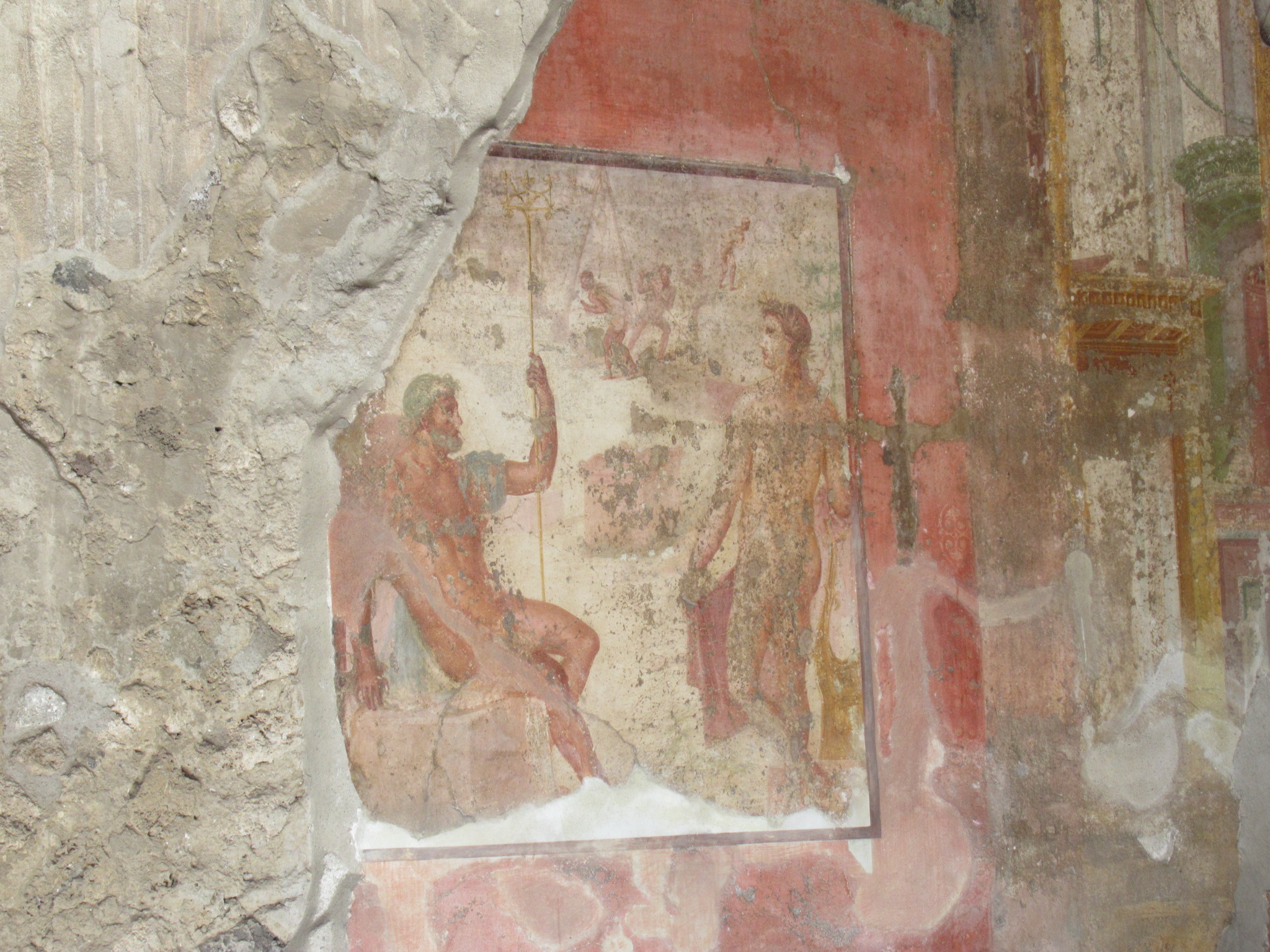
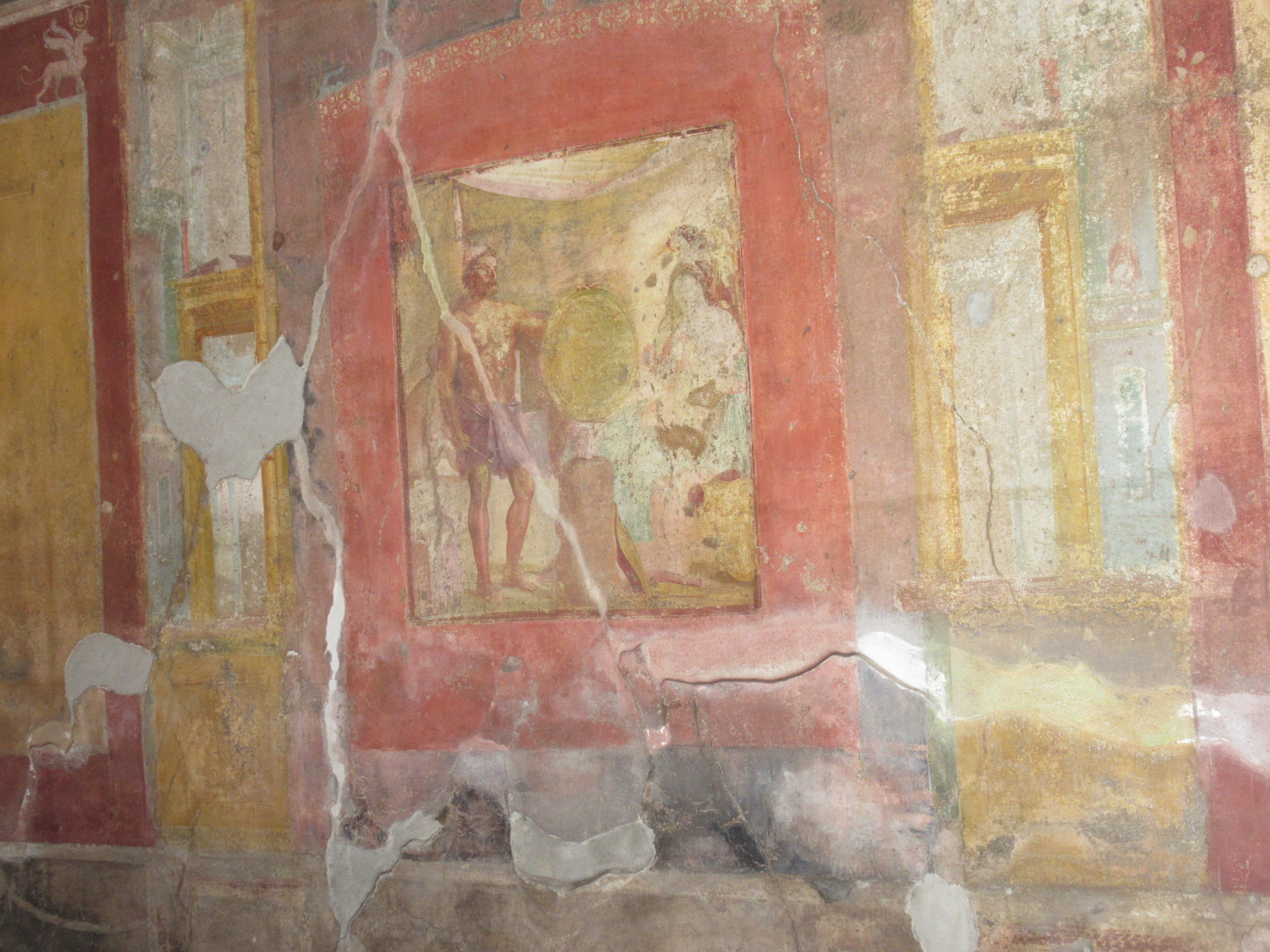

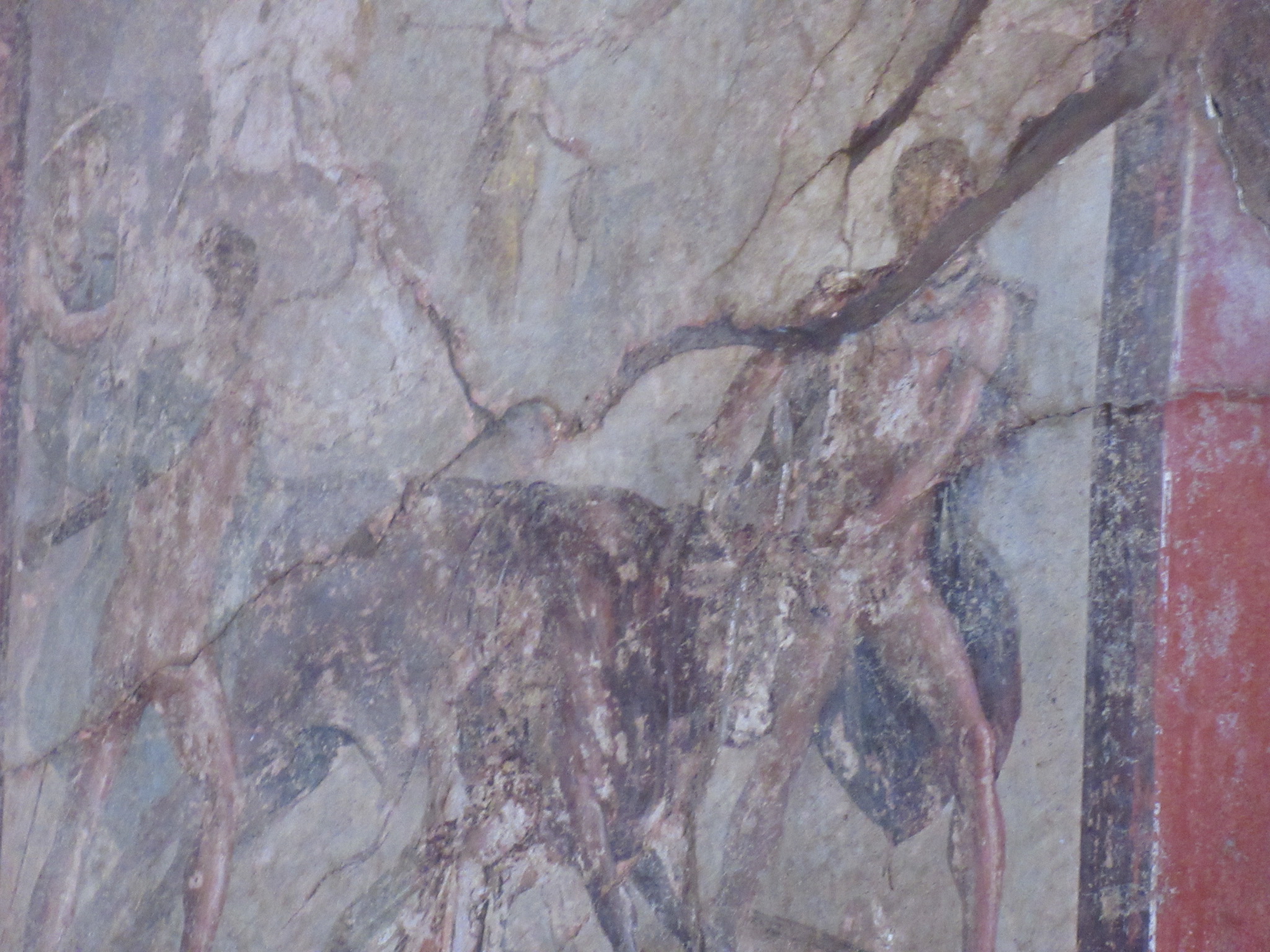
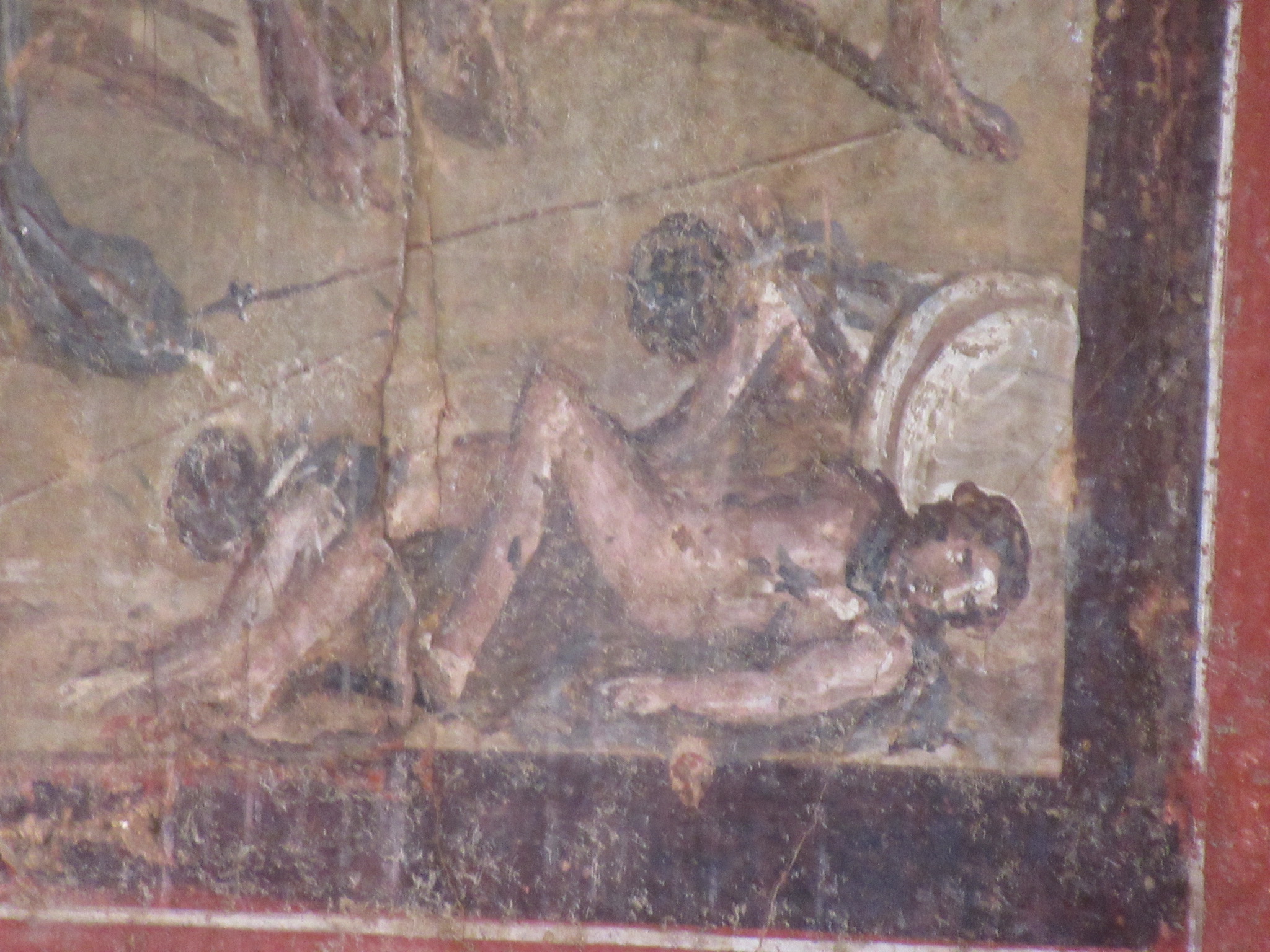
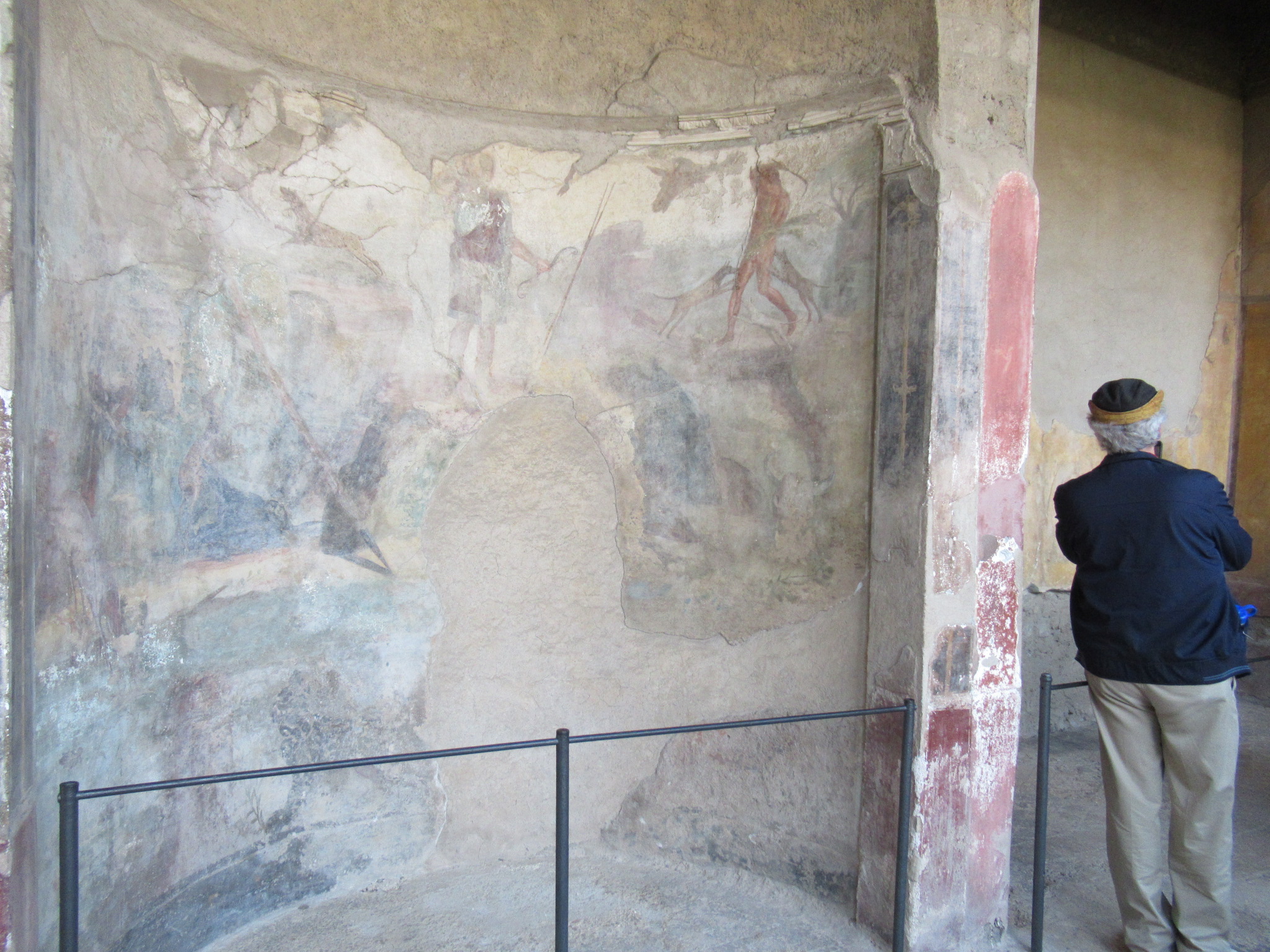
The above painting depicts the myth of Actaeon, the hunter who becomes the hunter. After he sees the goddess Diana (Artemis in the Greek pantheon) naked, she takes revenge by turning him into a stag, after which he is torn by his own dogs.
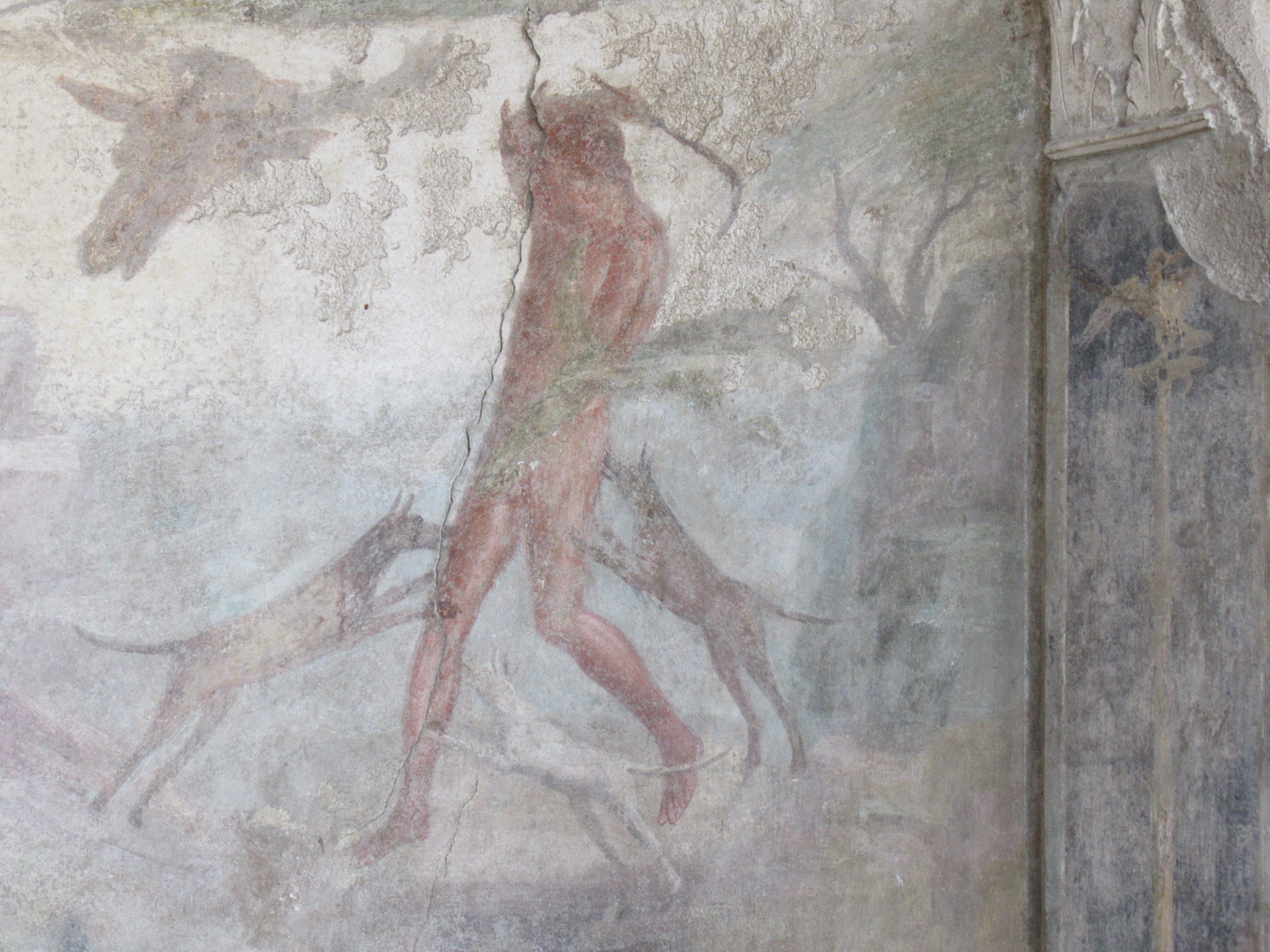
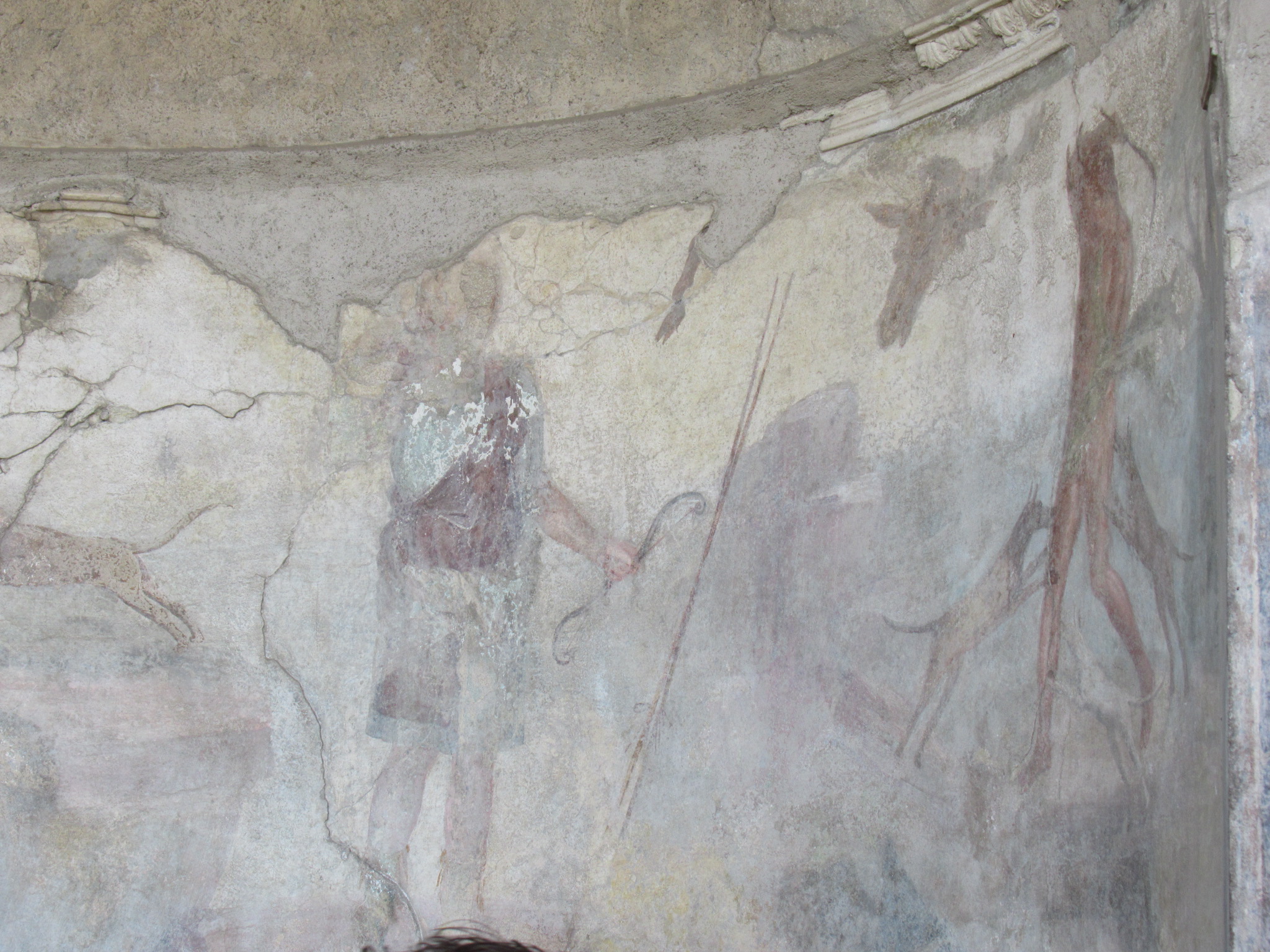
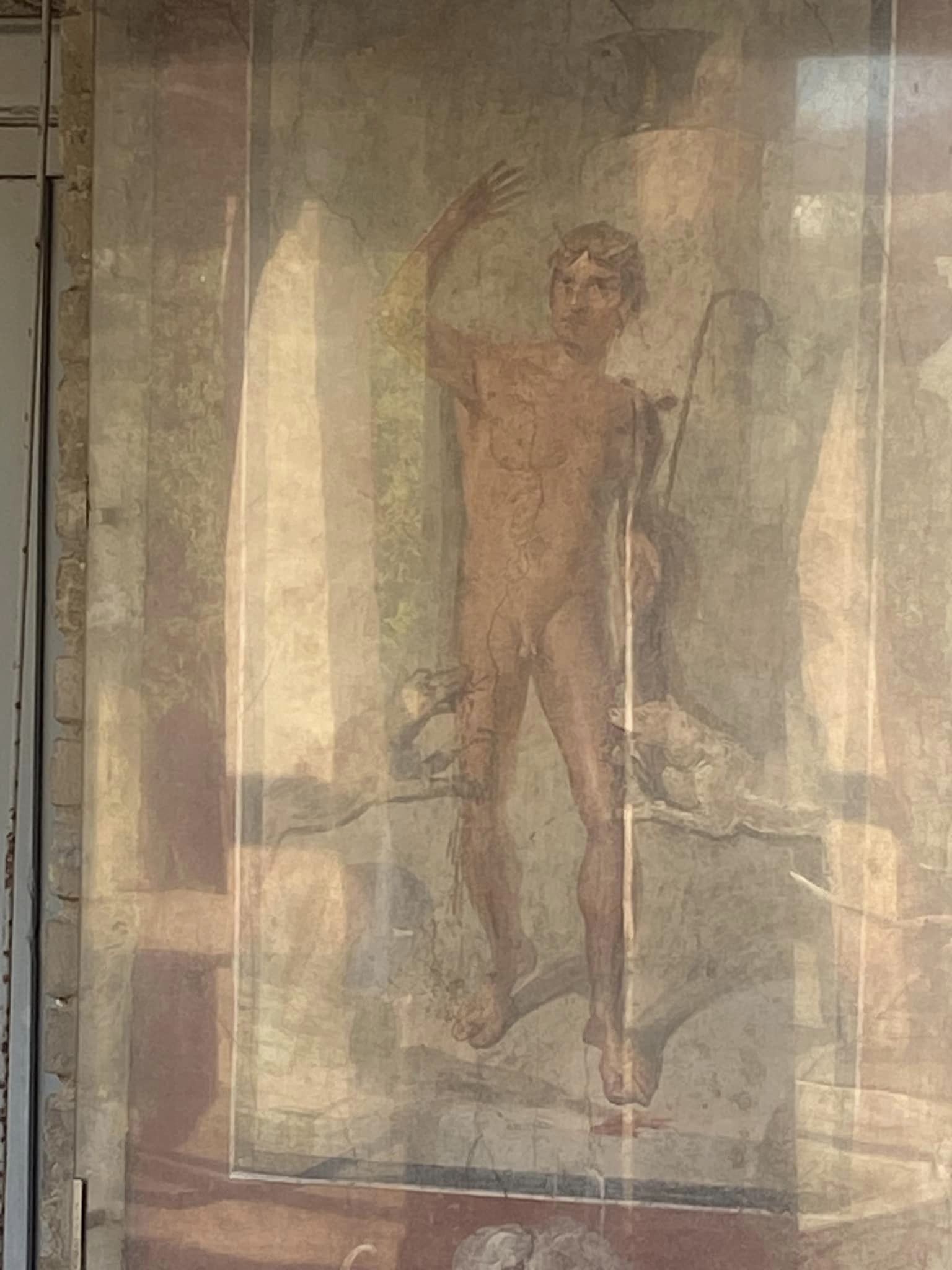

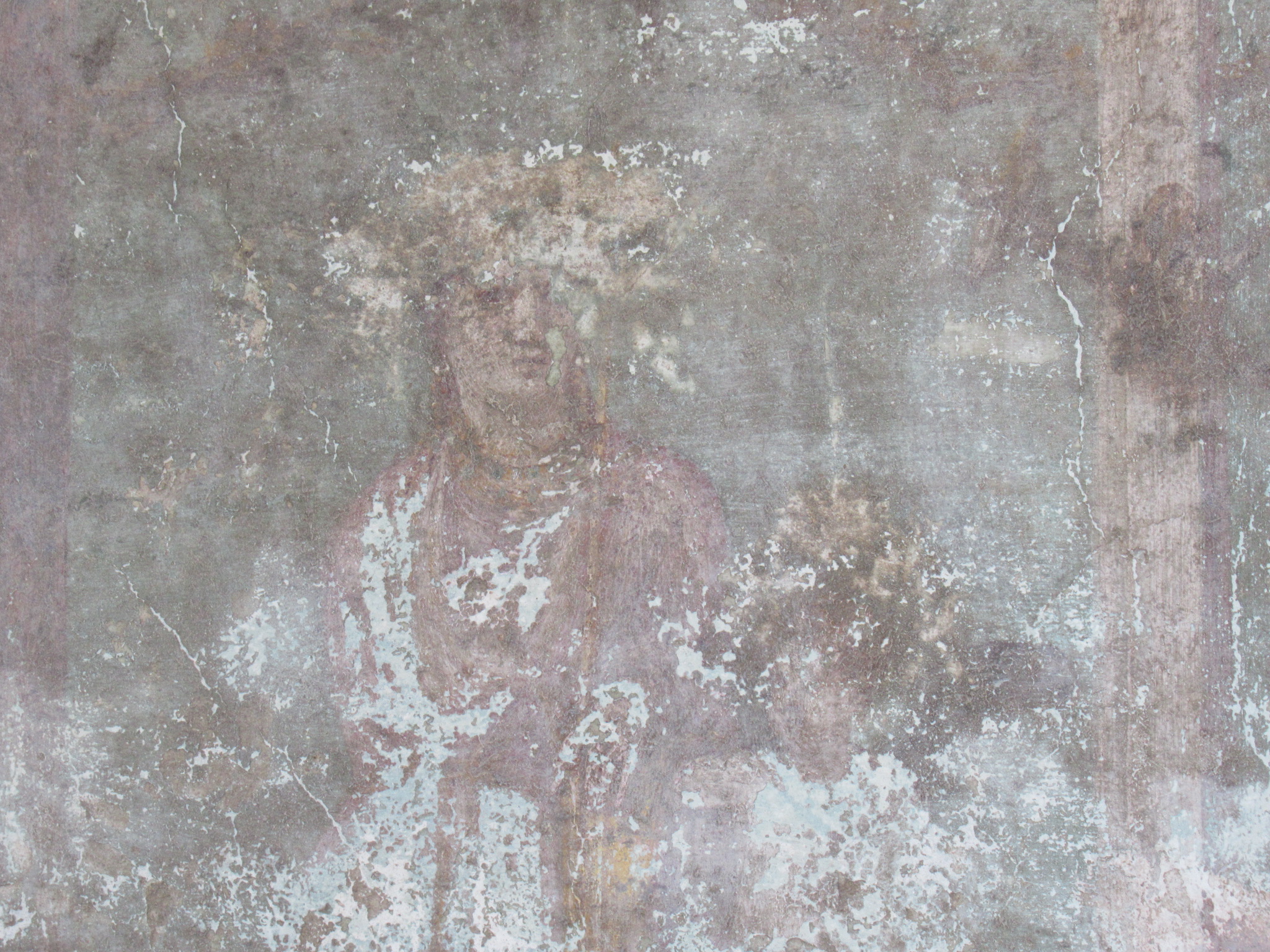
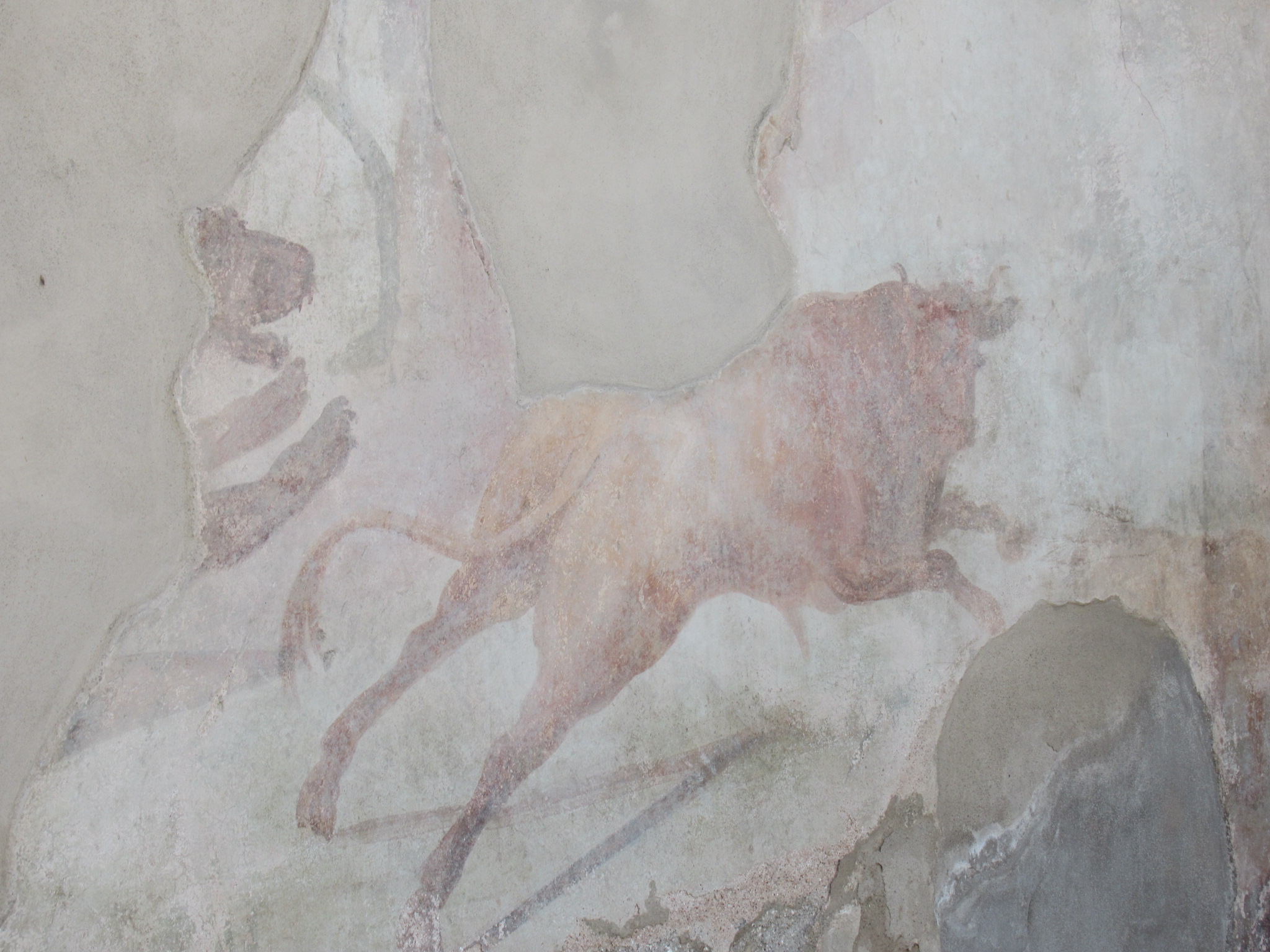
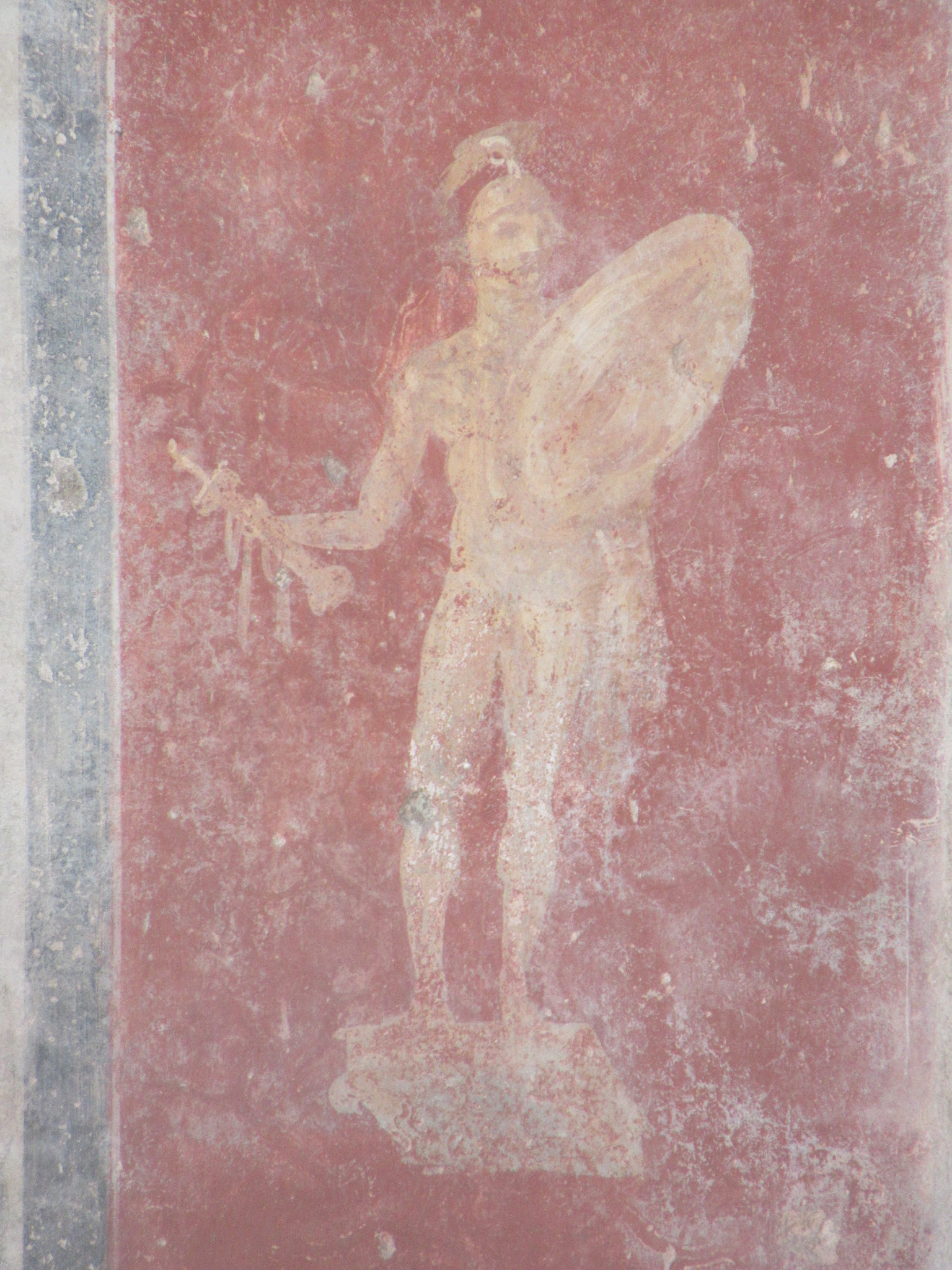
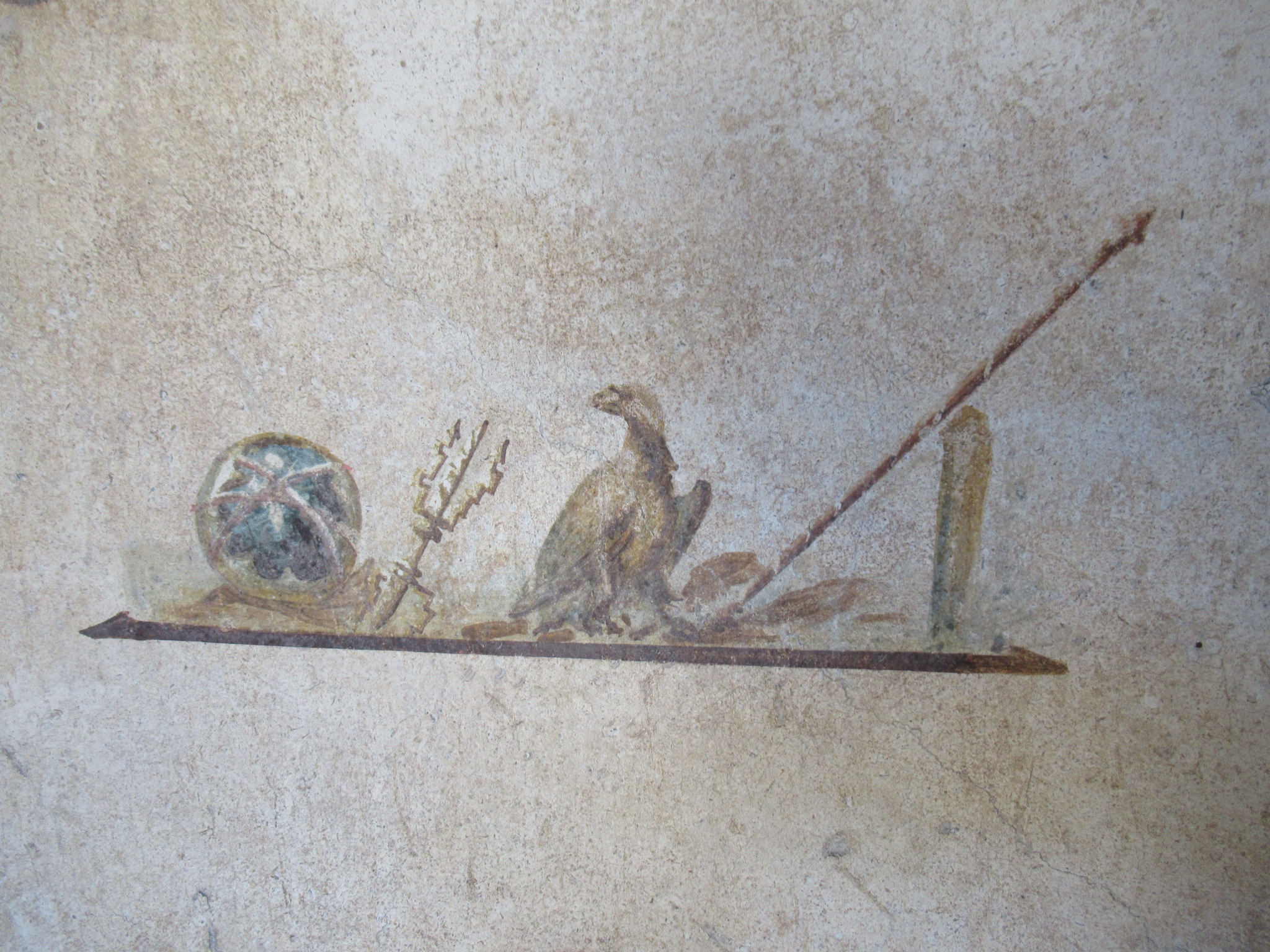
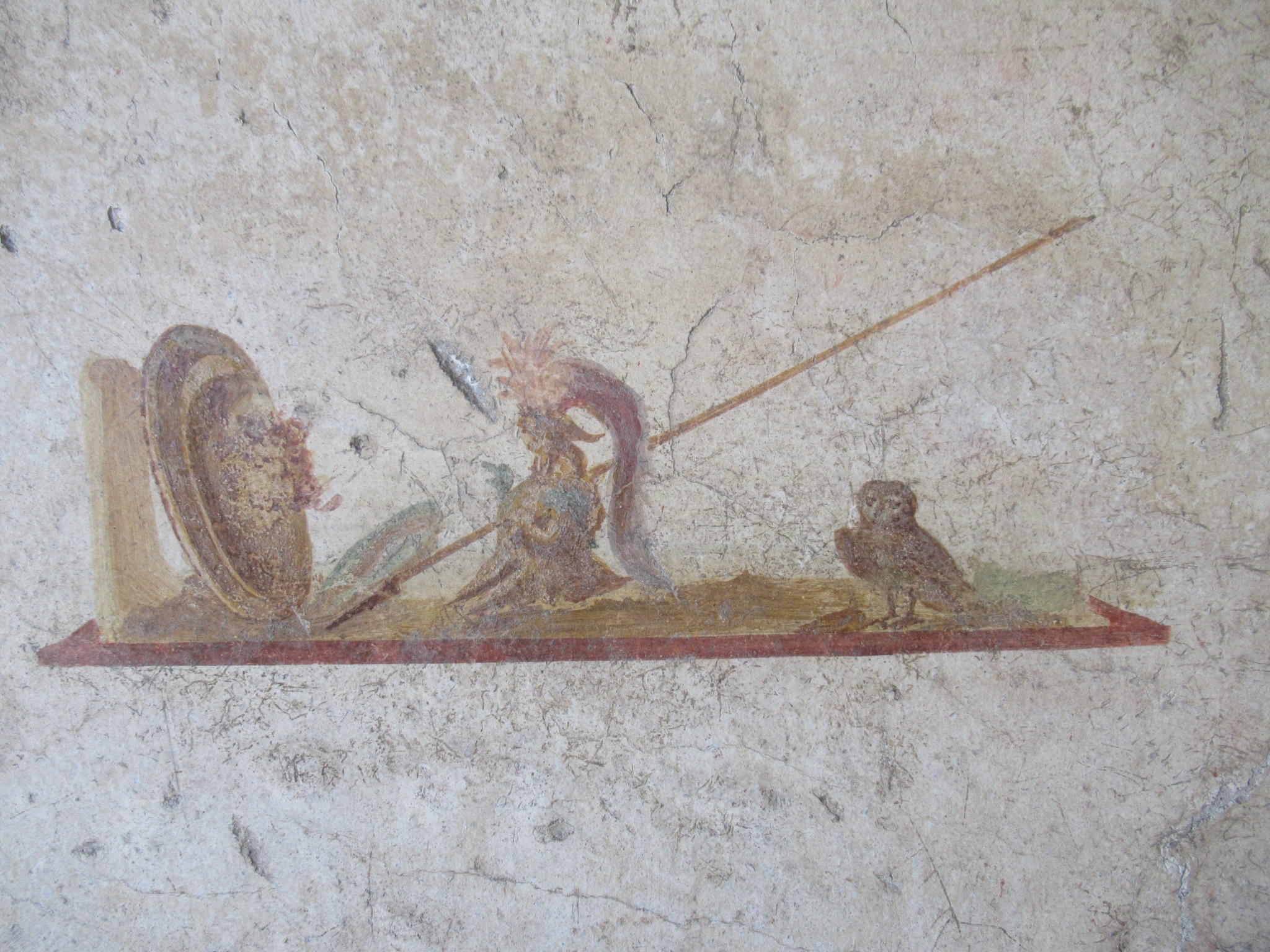
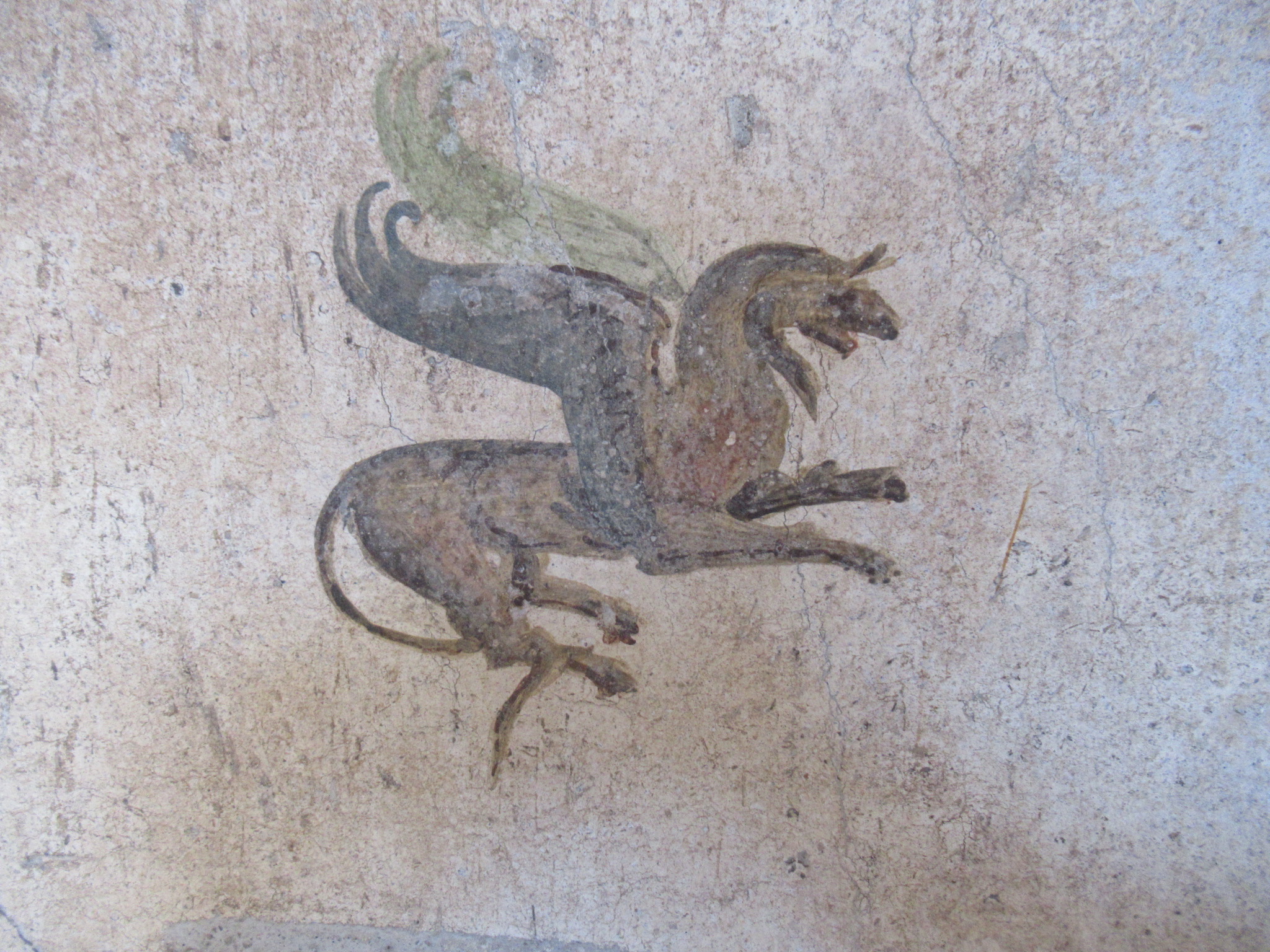

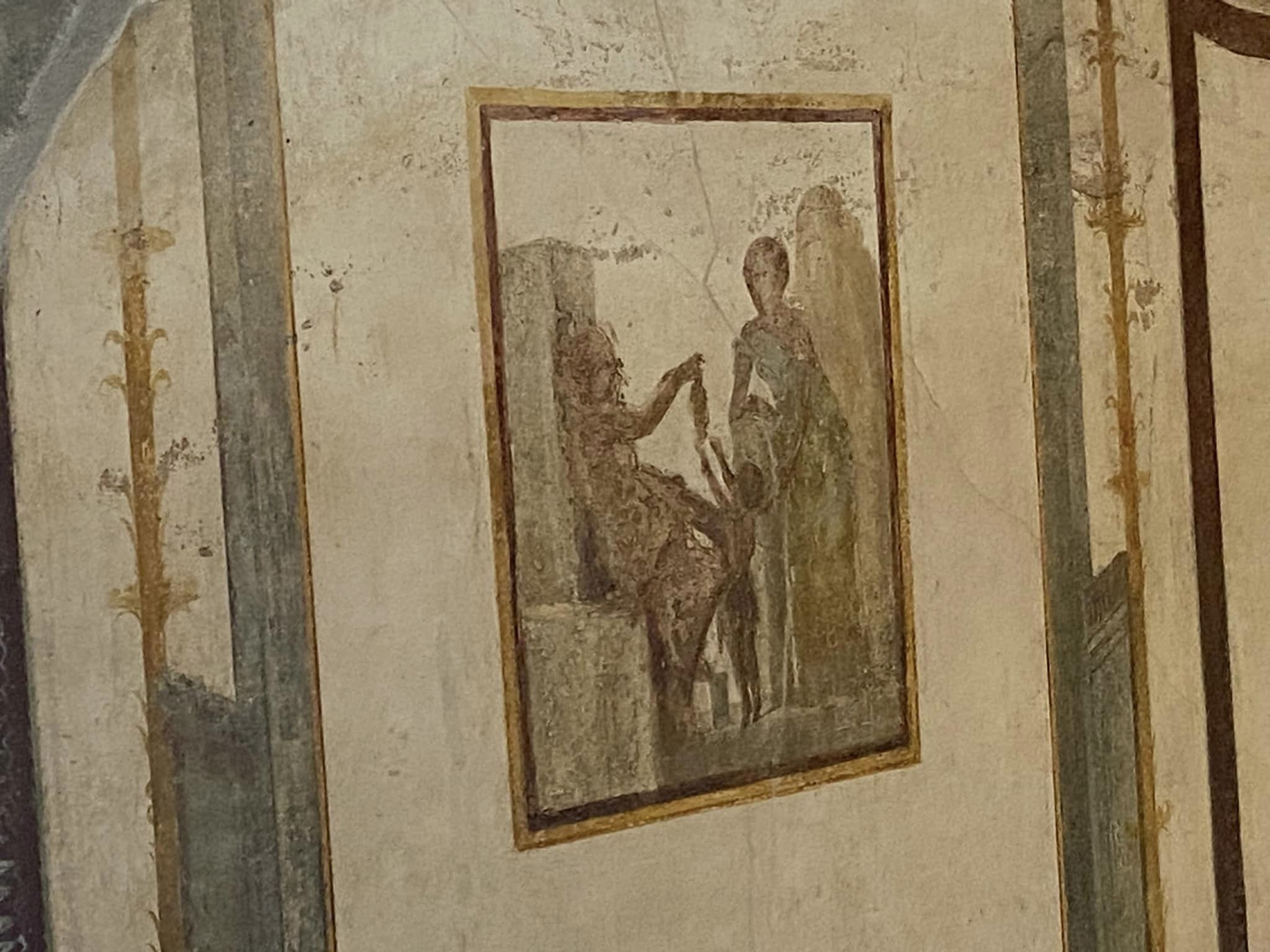
Wide open eyes is a feature in many paintings (why I don’t know).

Two more of the few examples of explicitly sexual art that hadn’t been transferred to the museum in Naples or otherwise not viewable in Pompeii itself.
Finally for this blog post, the plaster casts that were displayed in small special museum building by the exit.

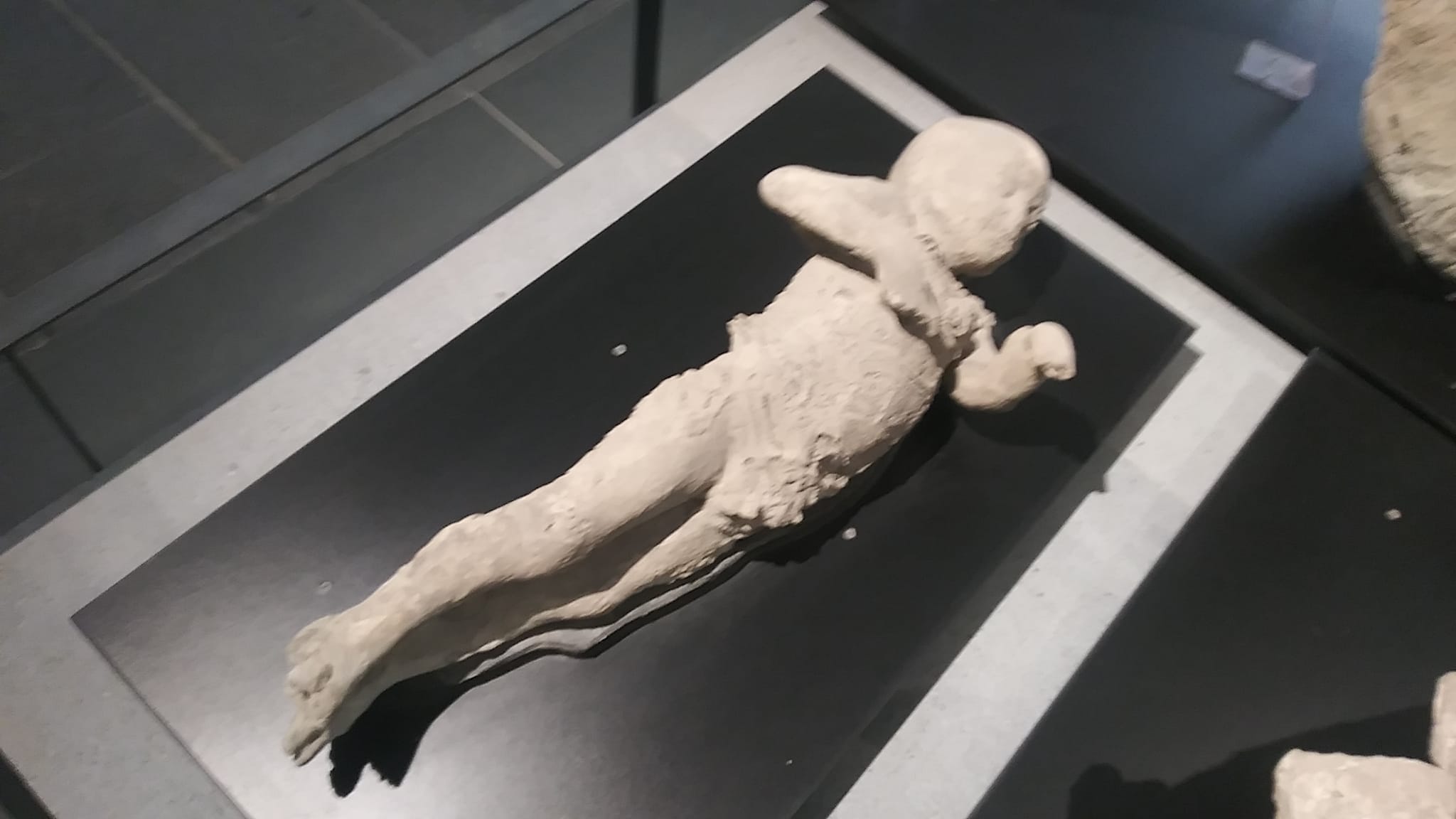
Another victim with the tell-tale waist-band of an enslaved person.




 Notes from a Composer