
Post 1 of the Pompeii Series
Pompeii.
I wrote a song about it (for my Mark Twain musical) long before I finally visited it this April.
And now finally I am posting my blog piece about the visit – blog pieces, because there is just too much to show to fit in one blog piece alone.
In this post I will focus on the streets of Pompeii, including the main public spaces. The Forum, temples and baths, the amphitheatres and Coliseum. And the victims.
Further posts will take us into the homes of Pompeii, show off more of its art, and also take us to Herculaneum, the other city buried by the devastating volcanic eruption of Mount Vesuvius in October, 79AD.
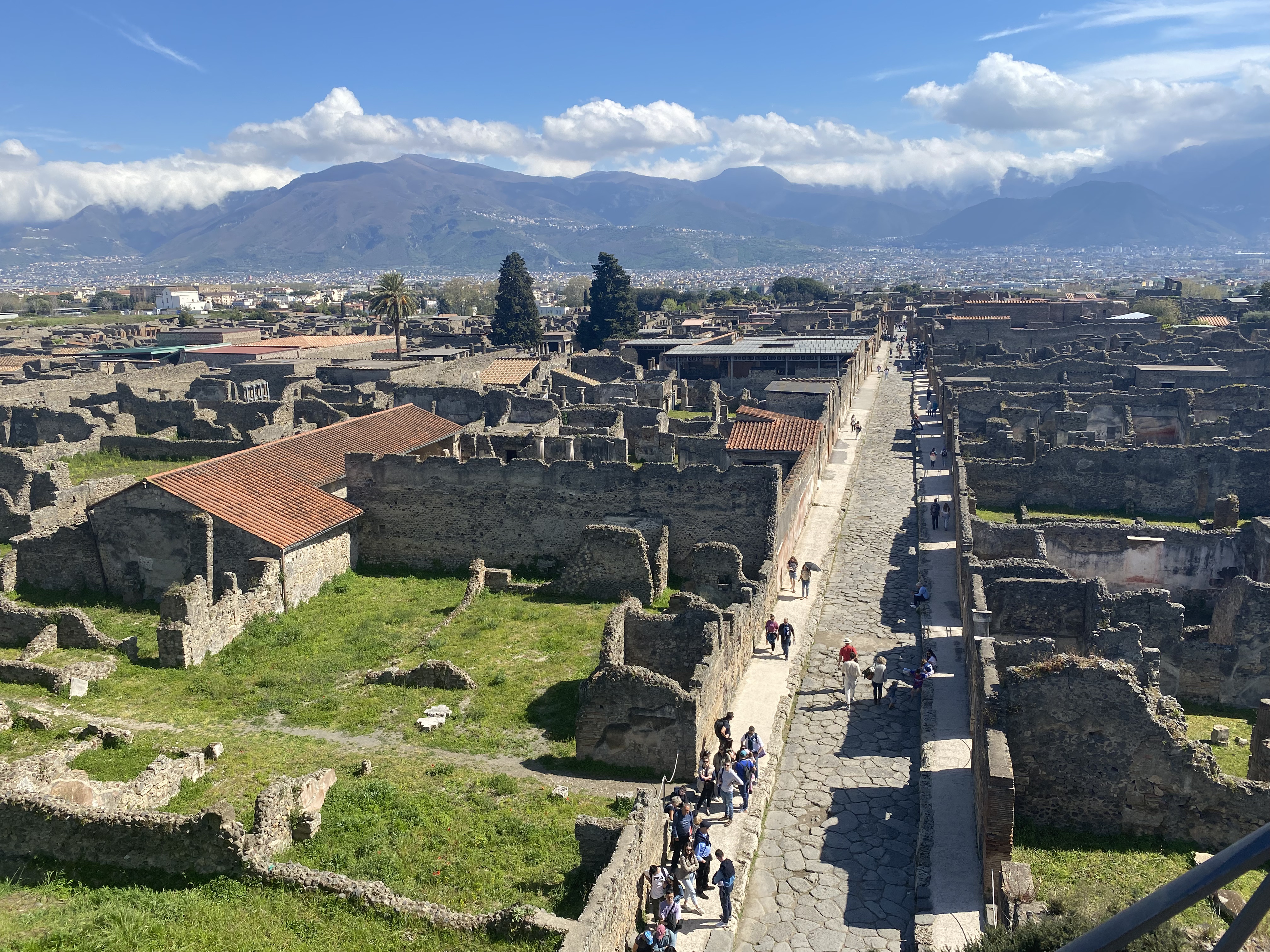
A panoramic view of Pompeii and environs, concluding with the culprit who did her in all those years ago…
Pompeii today is the largest museum in the world, a museum encompassing all of the ancient city limits as well as some of its old suburban areas. Since the late 18th century more and more parts of Pompeii (and Herculaneum) have been unearthed. What has been laid bare so far is overwhelming (like I said, far too much for just one blog post). It took us a whole day to explore all of Pompeii that’s available for viewing on site. That said I would estimate that about a third of the city’s ruins still lie buried under volcanic earth.
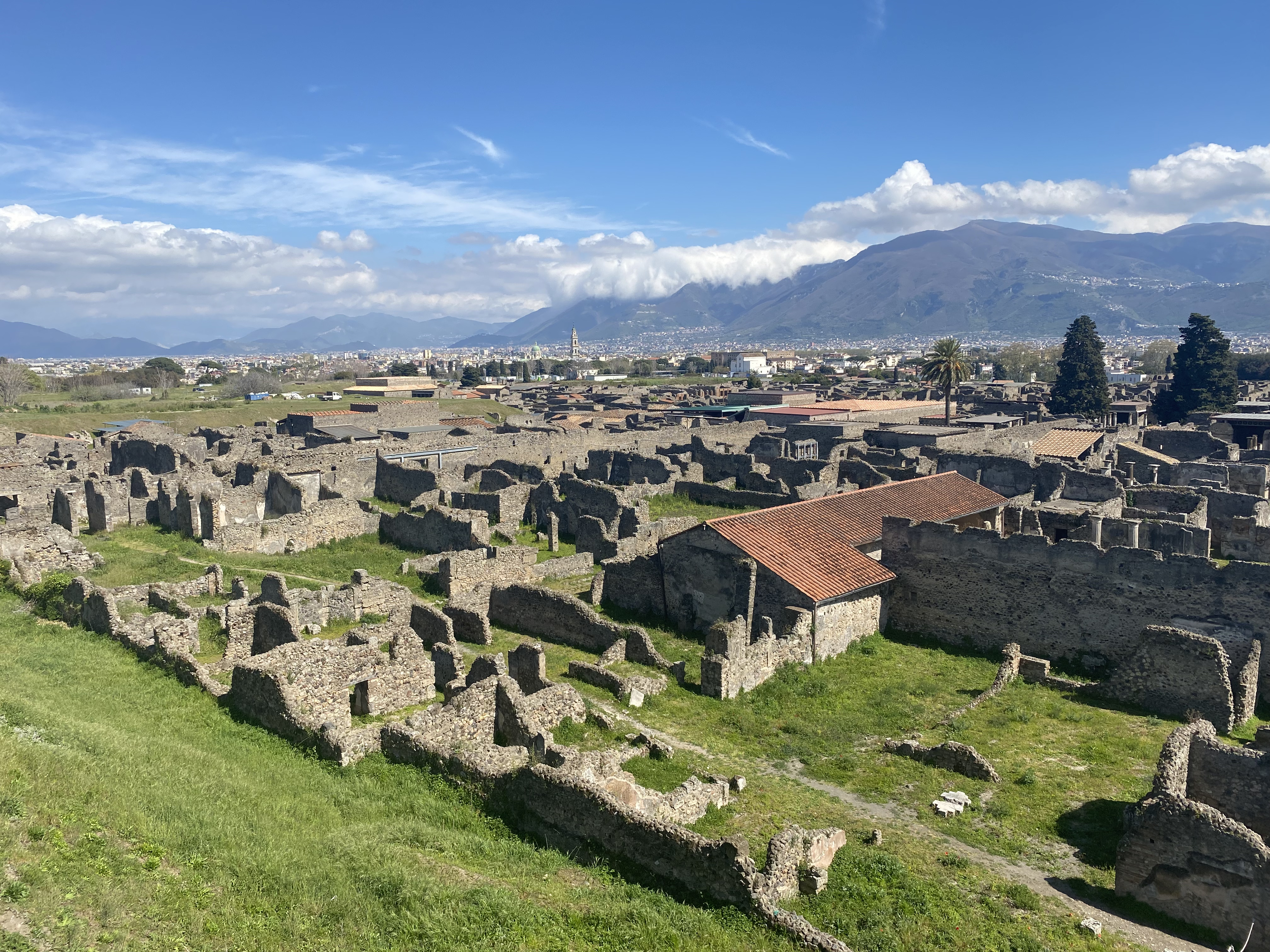

Mount Vesuvius, the ancient killer.


The tower from which these first photos and the video were taken.

The ancient road road leading from the tower.

That same road, with much of Pompeii, and in the background modern Italy.
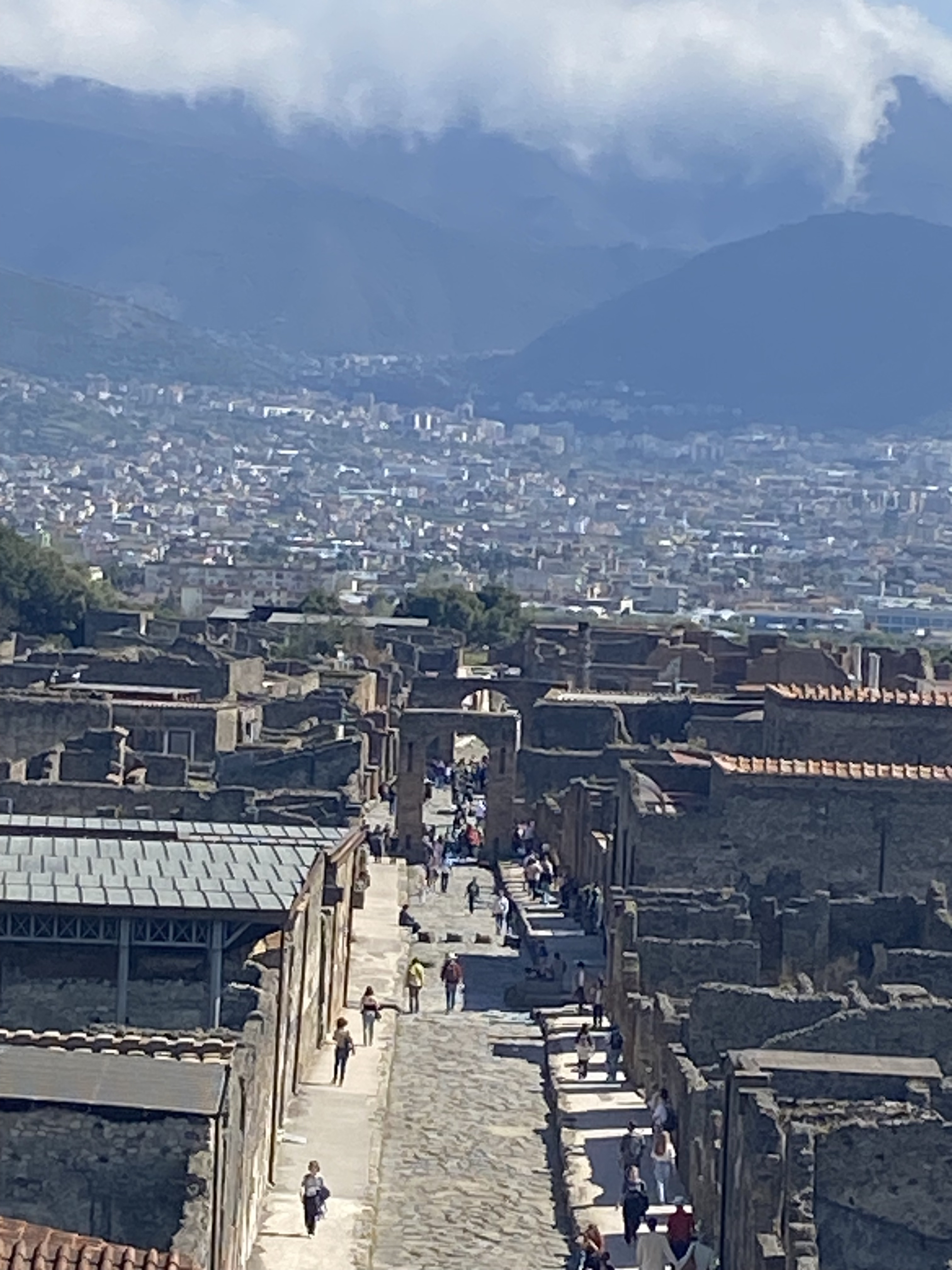
However, modern day museum visitors first enter Pompeii through this tunnel, which back in the day led directly to the ocean – the ocean nowadays is a kilometer or more to the southwest.

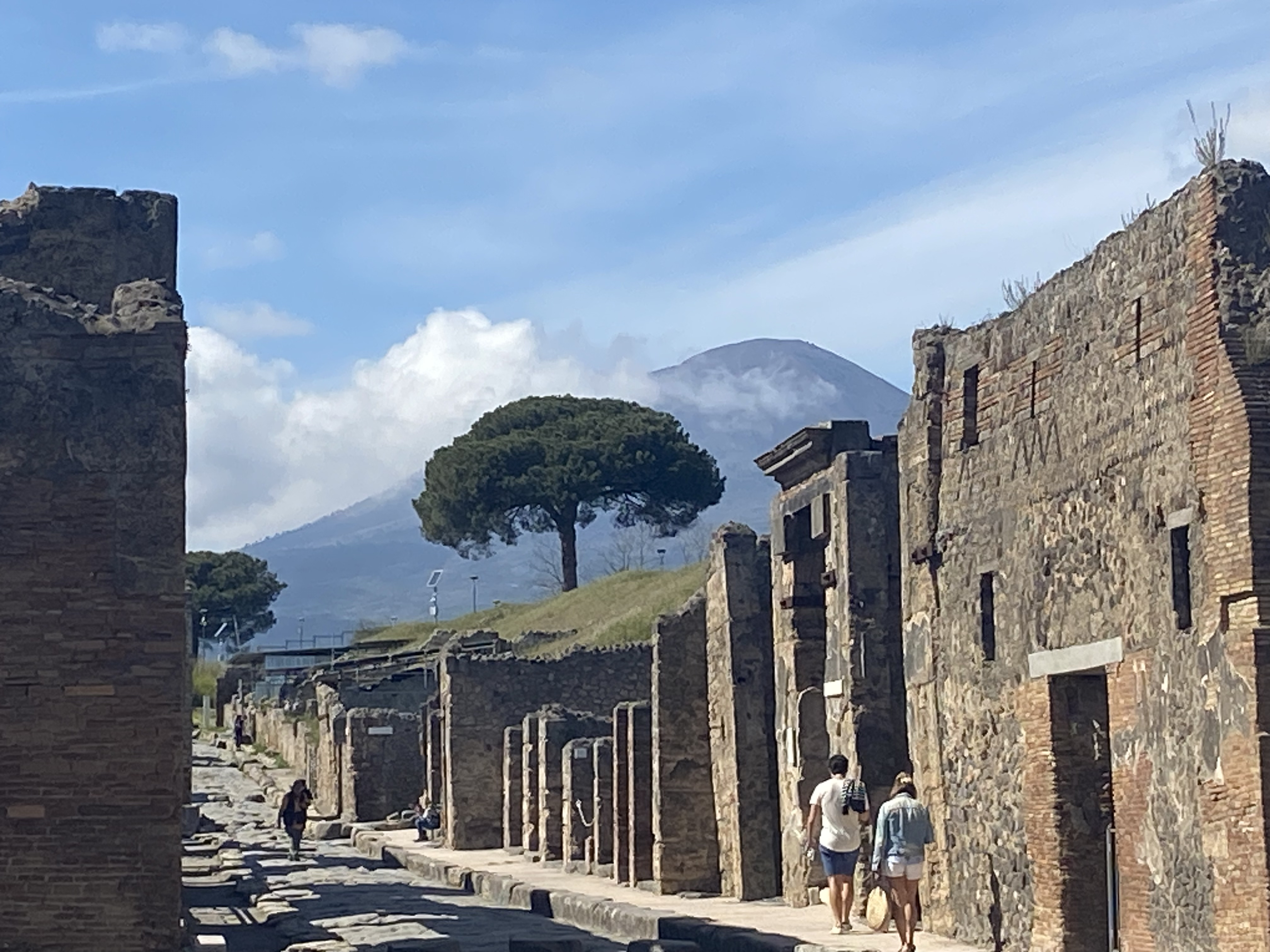
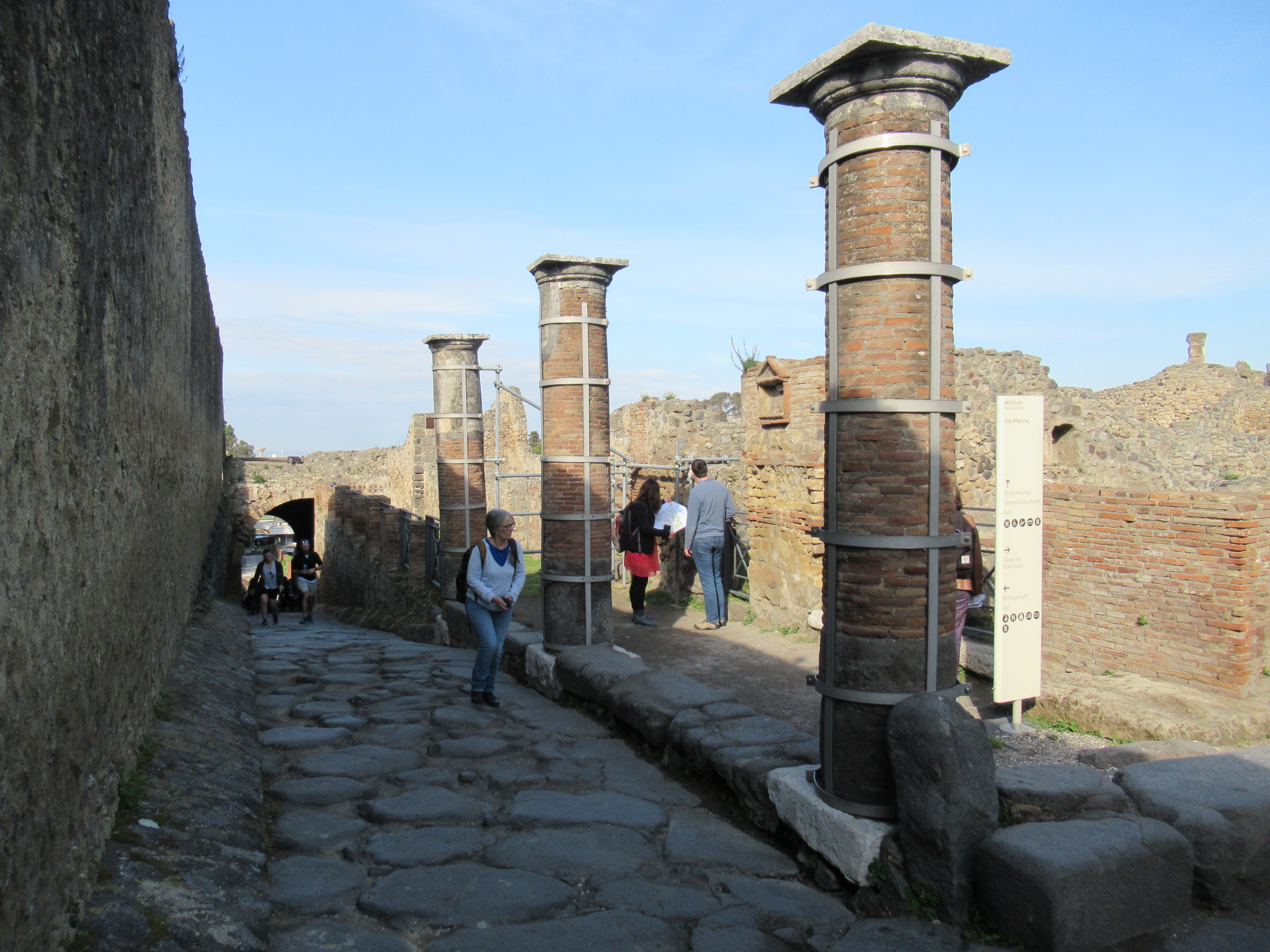
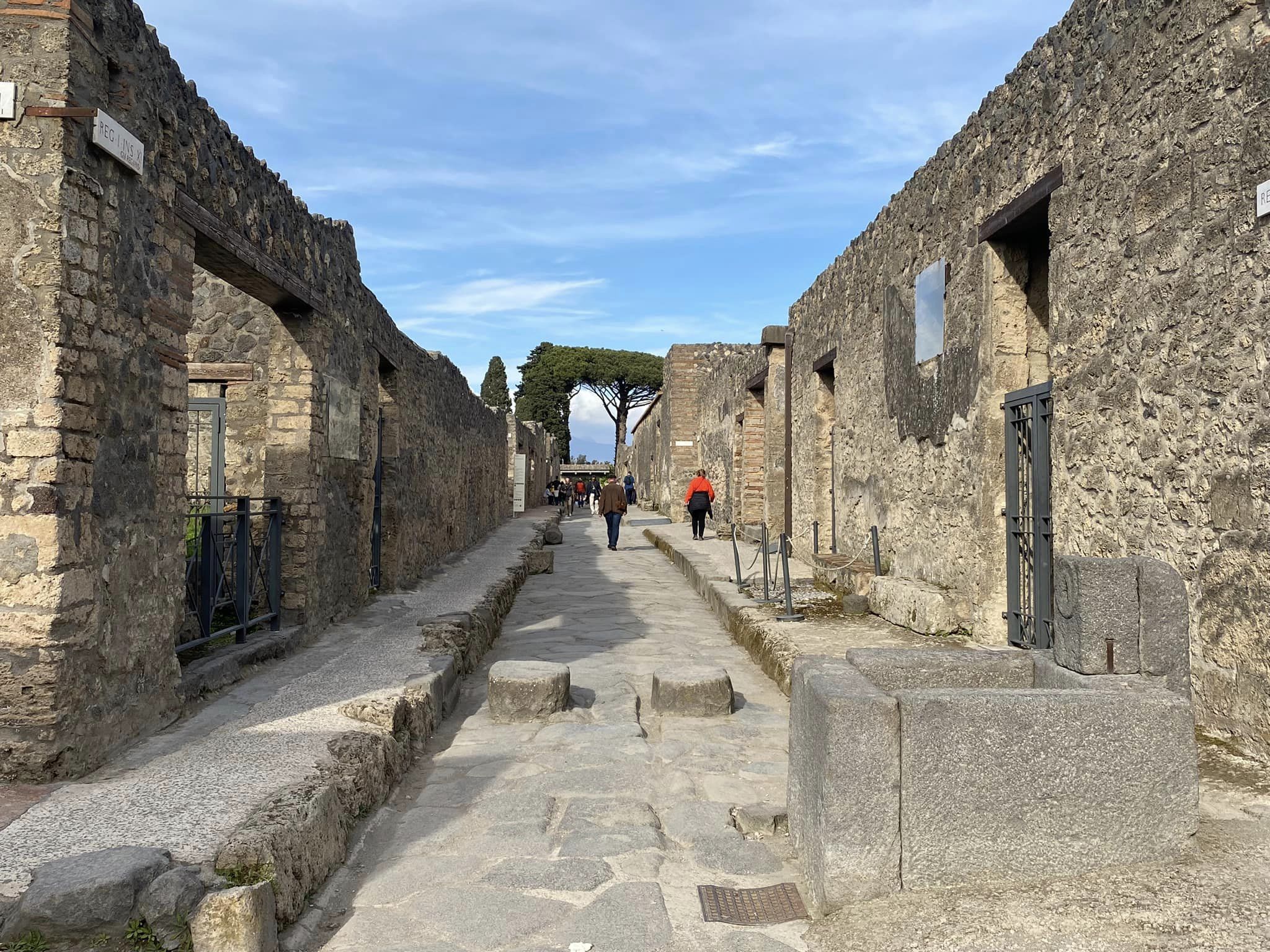
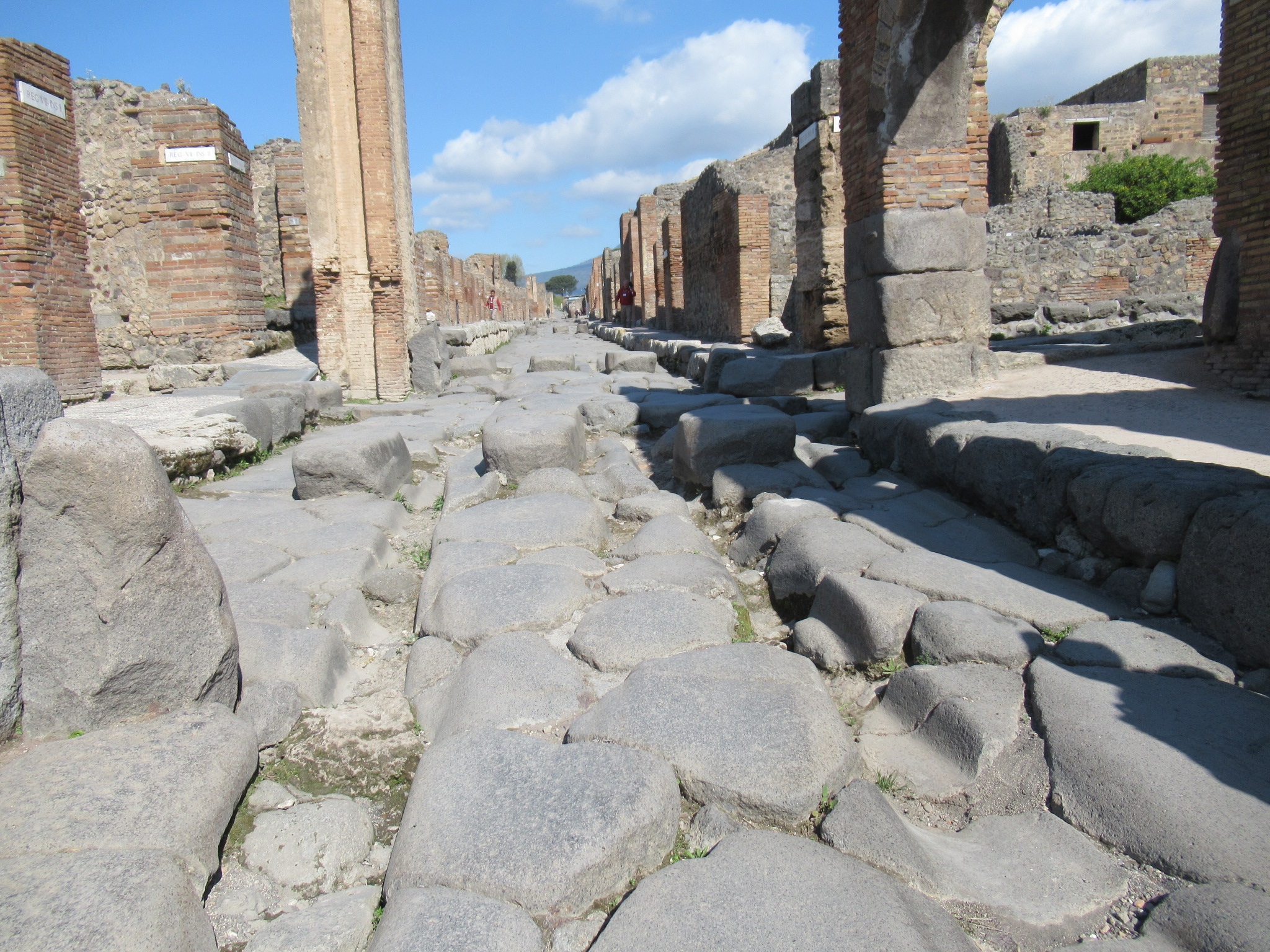
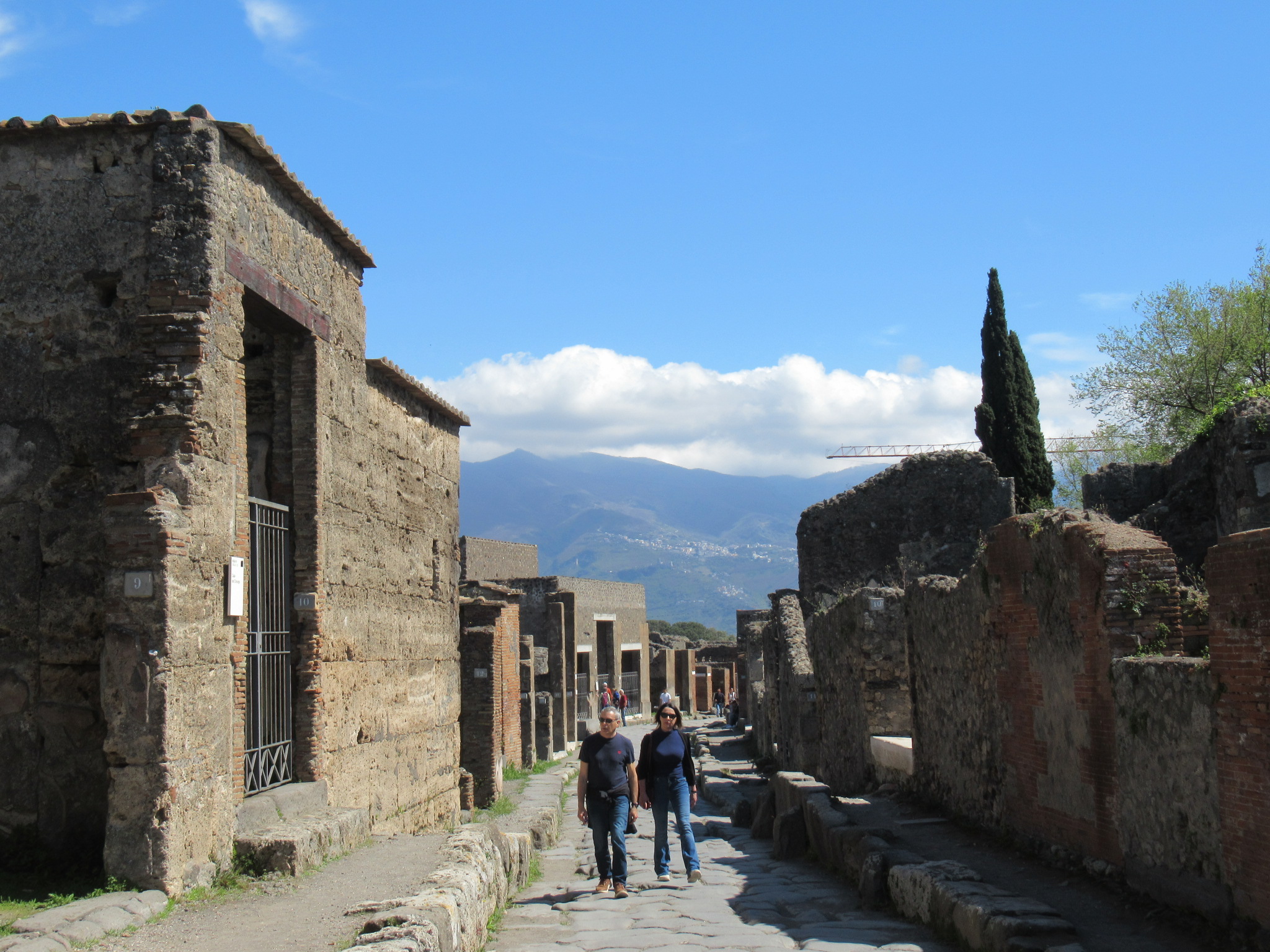
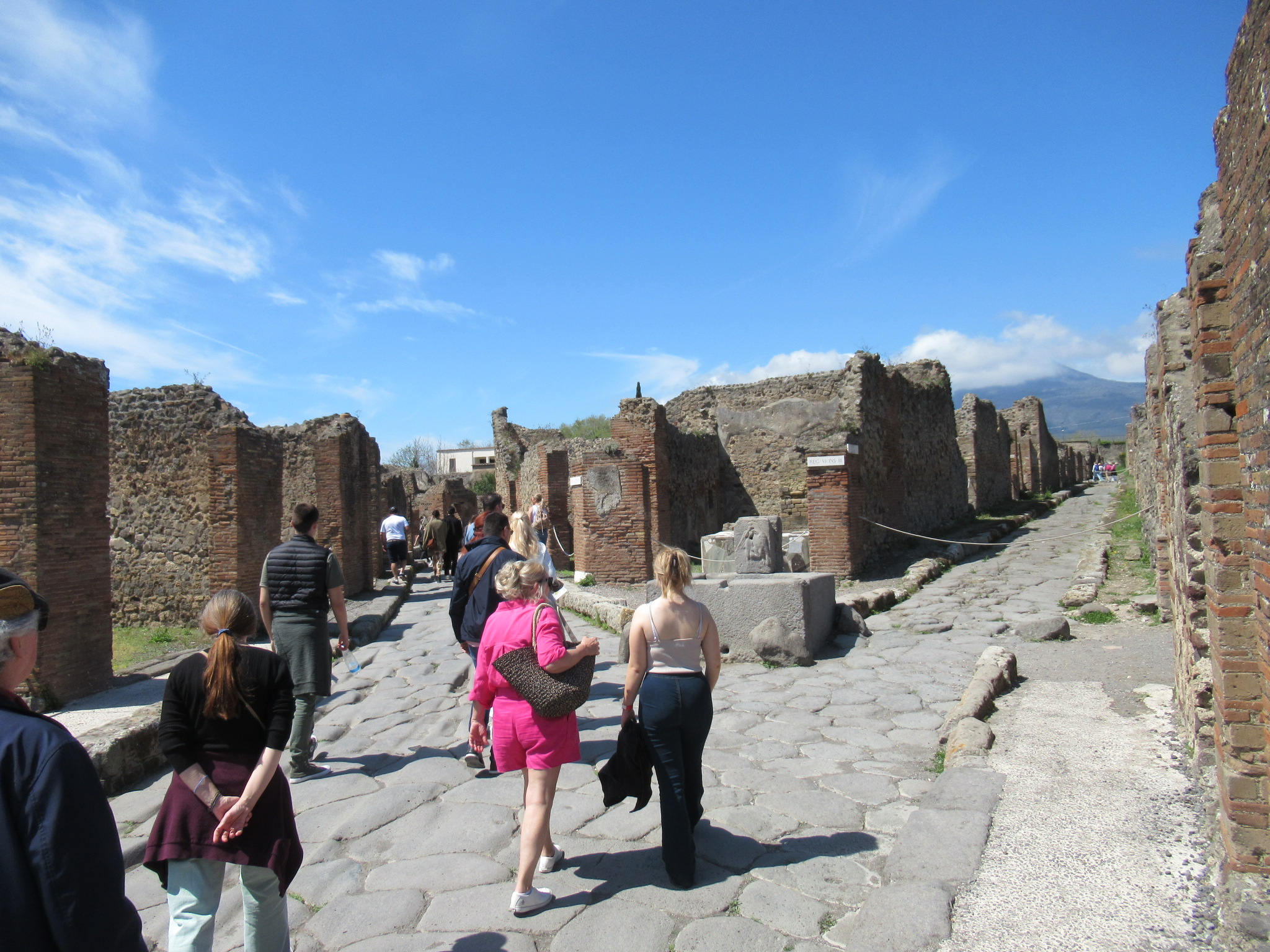
A main thoroughfare.
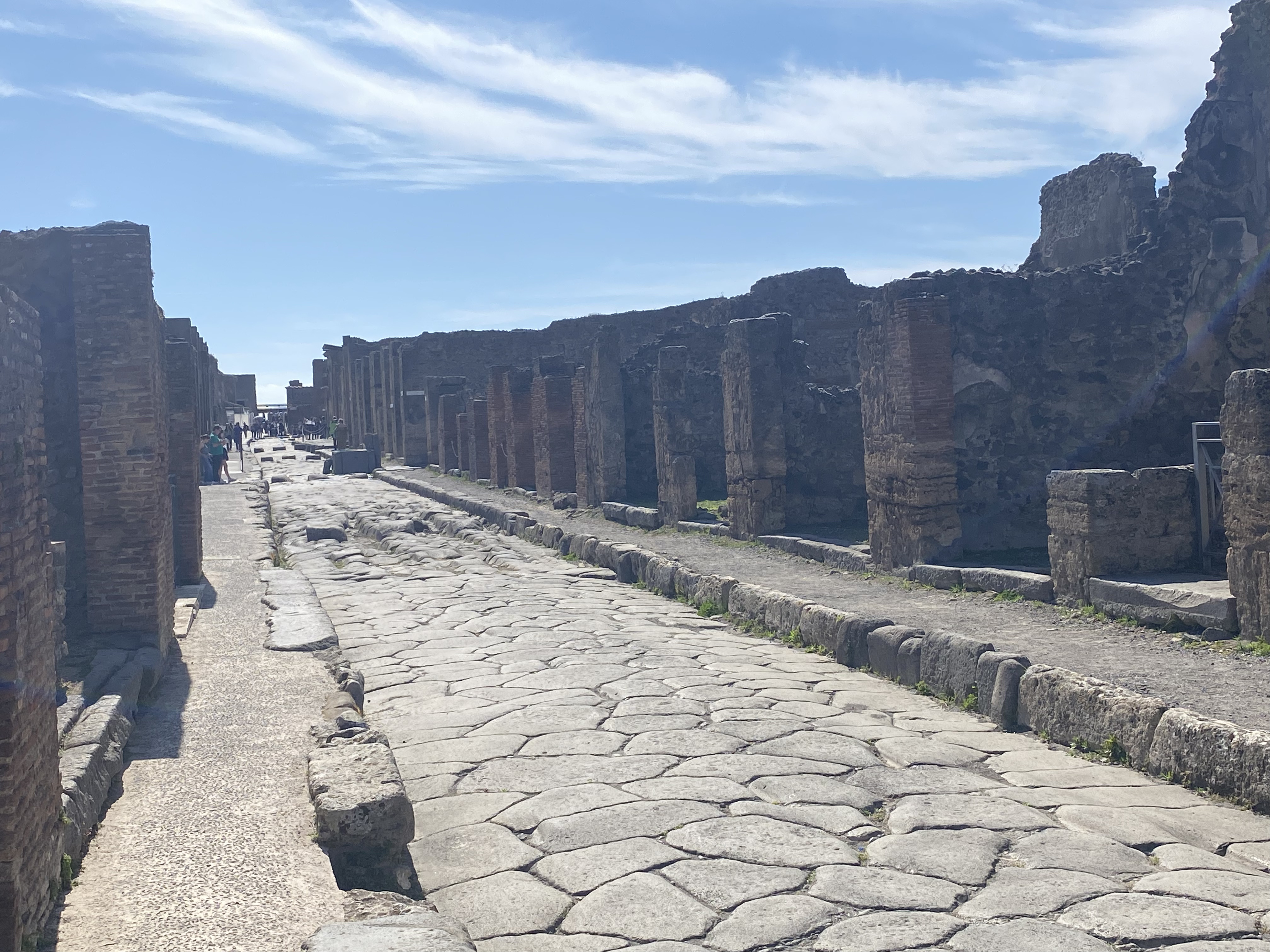
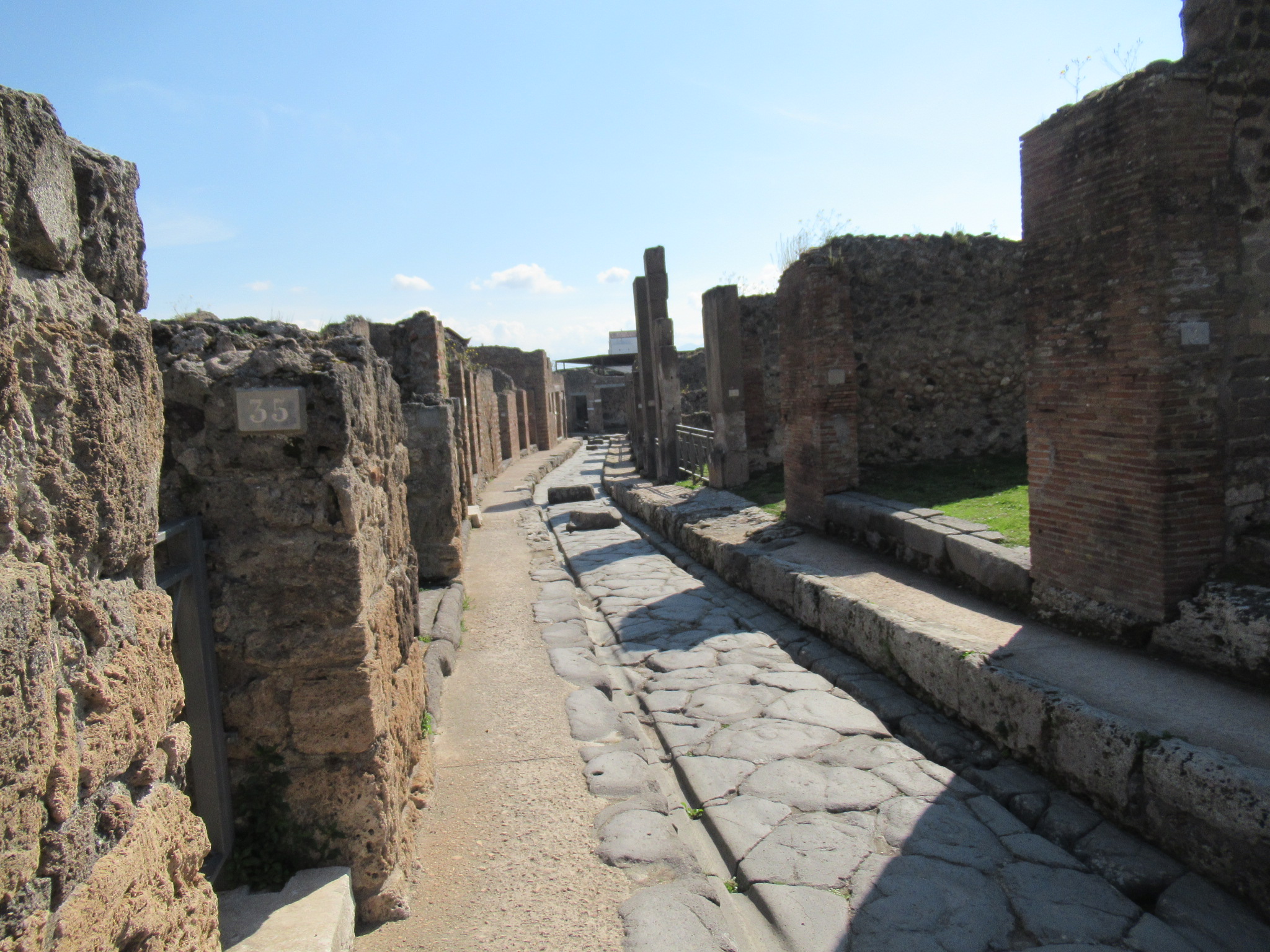
Below, you can see the deep grooves centuries of chariot wheels made in the stone roads, specifically where they maneuvered between the stepping stones. The stepping stones were there for ancient Roman pedestrians to safely step across the roads during their daily wash – apparently the roads were flooded with water daily to get rid of dirt (all those chariots, all those horses, all that … muck…). Romans wore sandals, not galoshes…
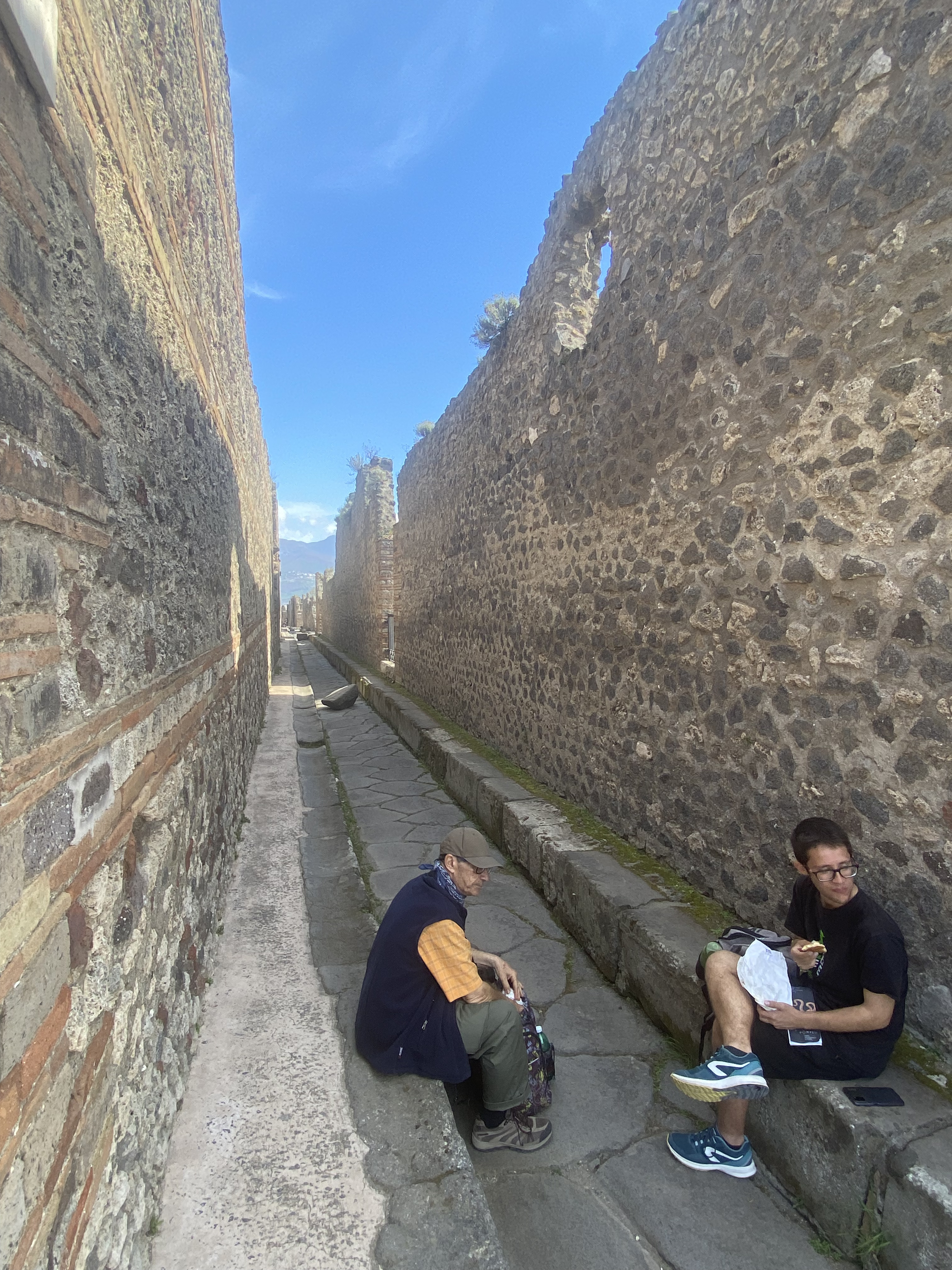
The roads and the stepping stones were precisely measured out. Main thoroughfares would be three stepping stones wide – other roads would be two stepping stones wide. The narrowest roads – one way streets for chariots – would have only one stepping stone between the sidewalks. Chariots were regulated to make sure their wheels were always the same width apart, which in turn determined the width of the streets and the size and placement of the stepping stones.


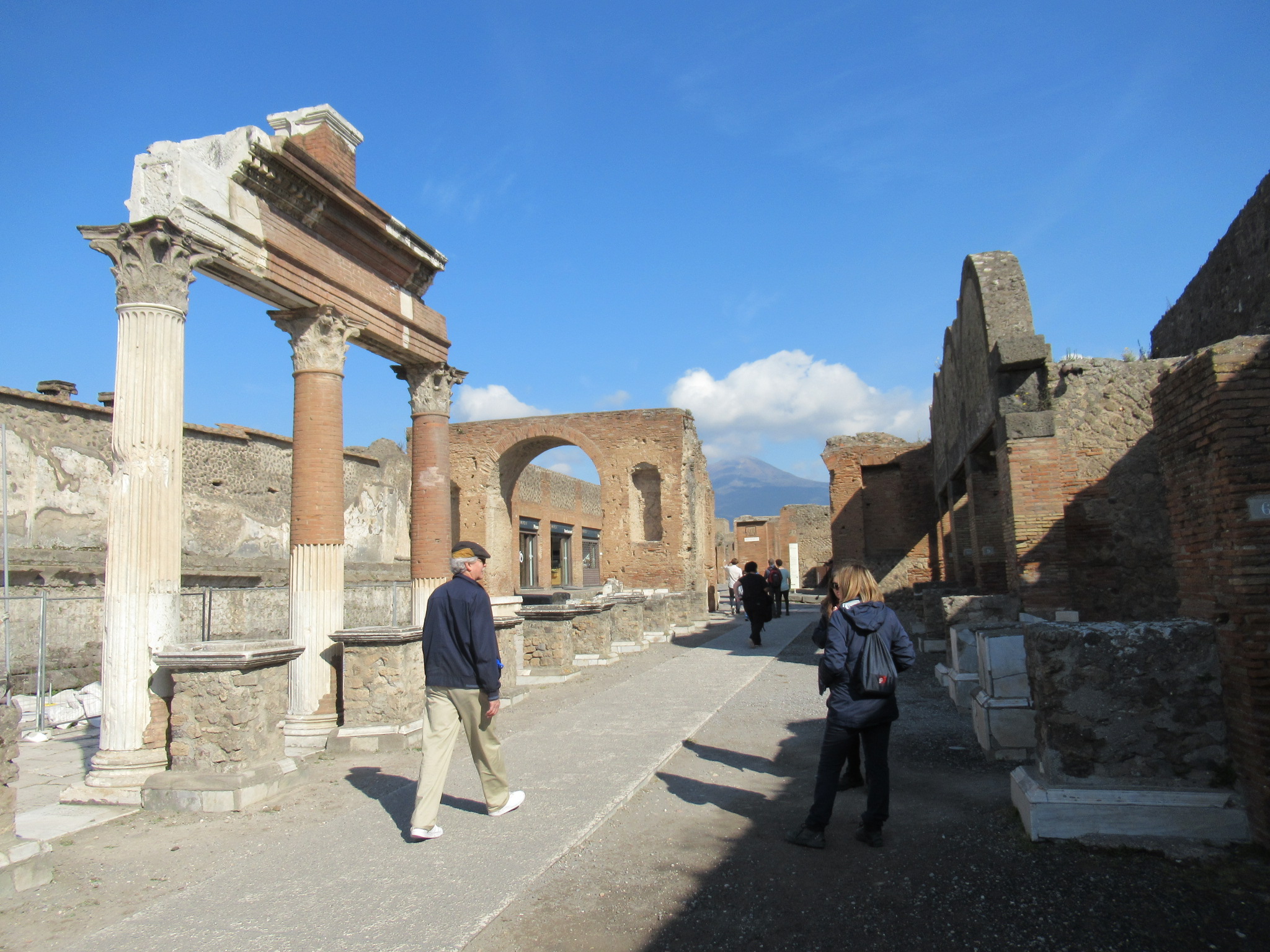
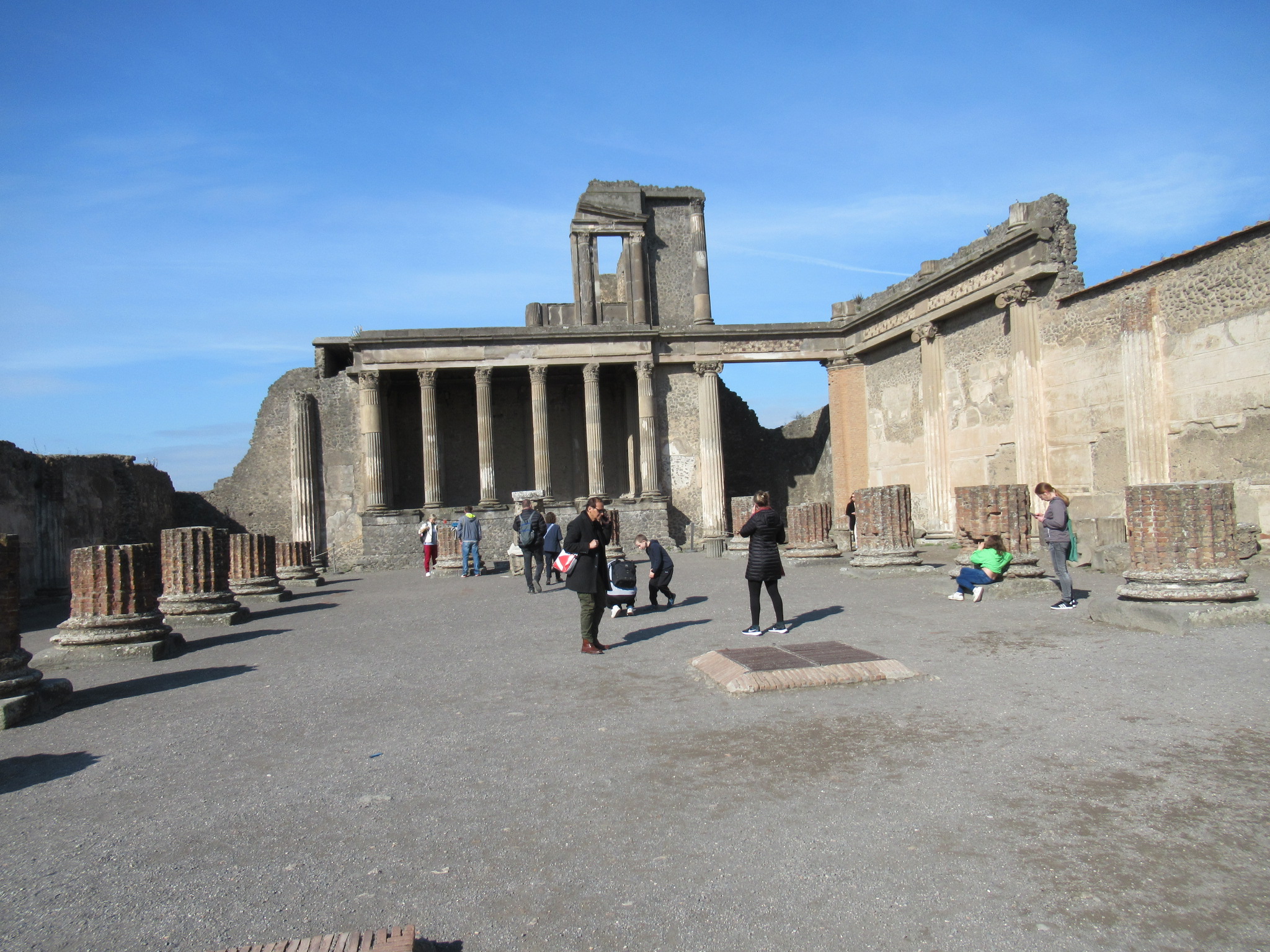
The Forum


Jupiter’s Temple. One of the few structures where any part of an upper story is still standing. When Vesuvius first erupted the prevailing winds sent so much ash towards Pompeii over the course of a day that the roofs collapsed. That is why very little above the first floor is recoverable in Pompeii – unlike in Herculaneum which was spared that first day-long ash cloud but not the pyroclastic flow, a fast-moving current of hot gas and matter, that followed it. That deadly explosion swiftly killed whoever was still in both cities. It was quickly followed by massive amounts of ash that completely covered – and preserved – what was left of Pompeii and Herculaneum.

One of the narrow one-stepping-stone streets I mentioned earlier.
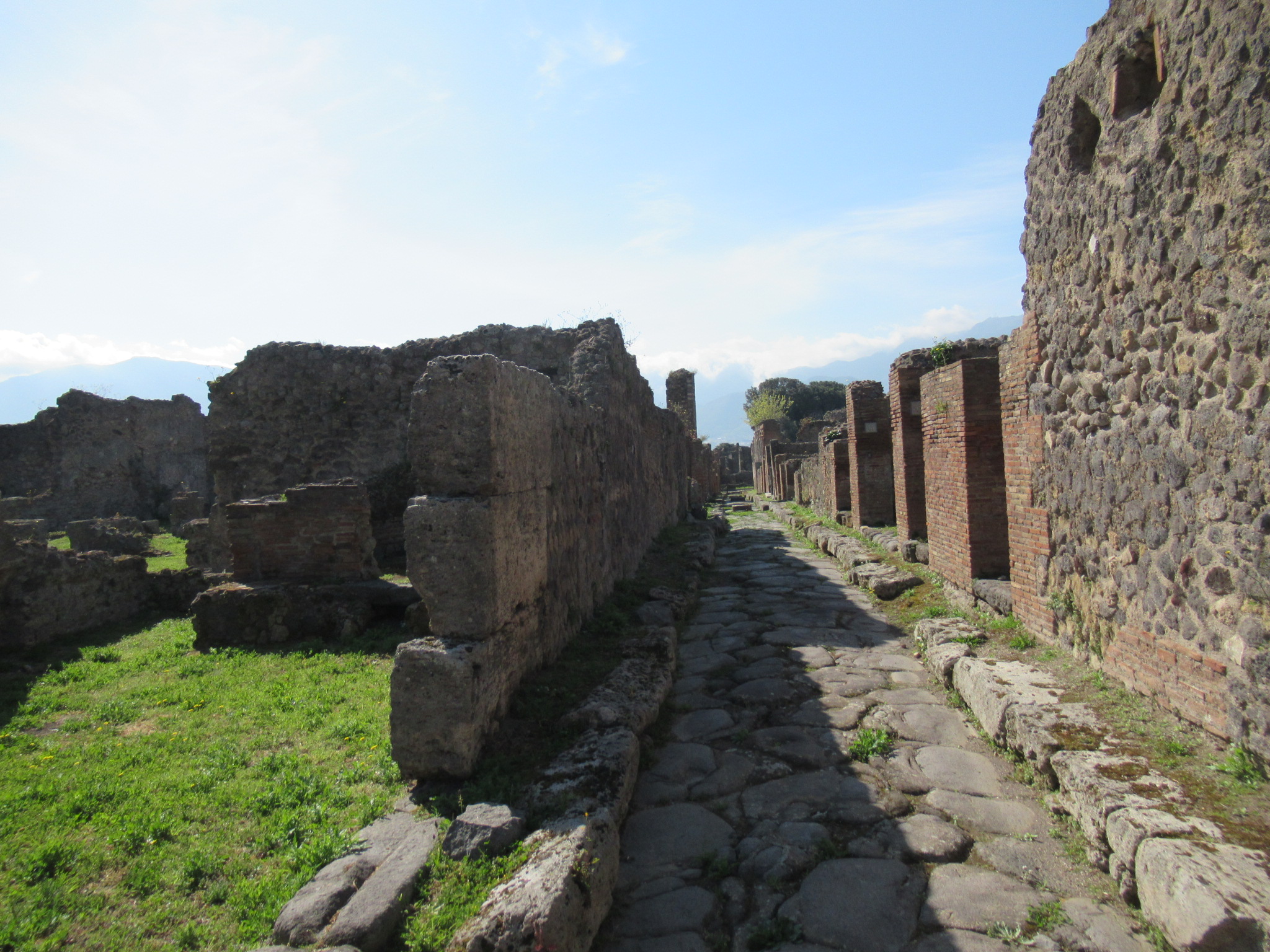
Note how there are almost uniformly no street side windows on the ground floors. Mostly to protect homes from burglars. The next post will show how wealthier, larger homes opened up their living spaces to spacious light-filled inner courtyards.

The phallus was considered a sign of good fortune and one that warded off evil spirits. Public displays of the phallus in front of homes was pretty common.

We’ll be seeing a lot more if these, including winged phalluses like this one, in the blog post on the art of Pompeii. As well as less symbolic depictions of erotica…


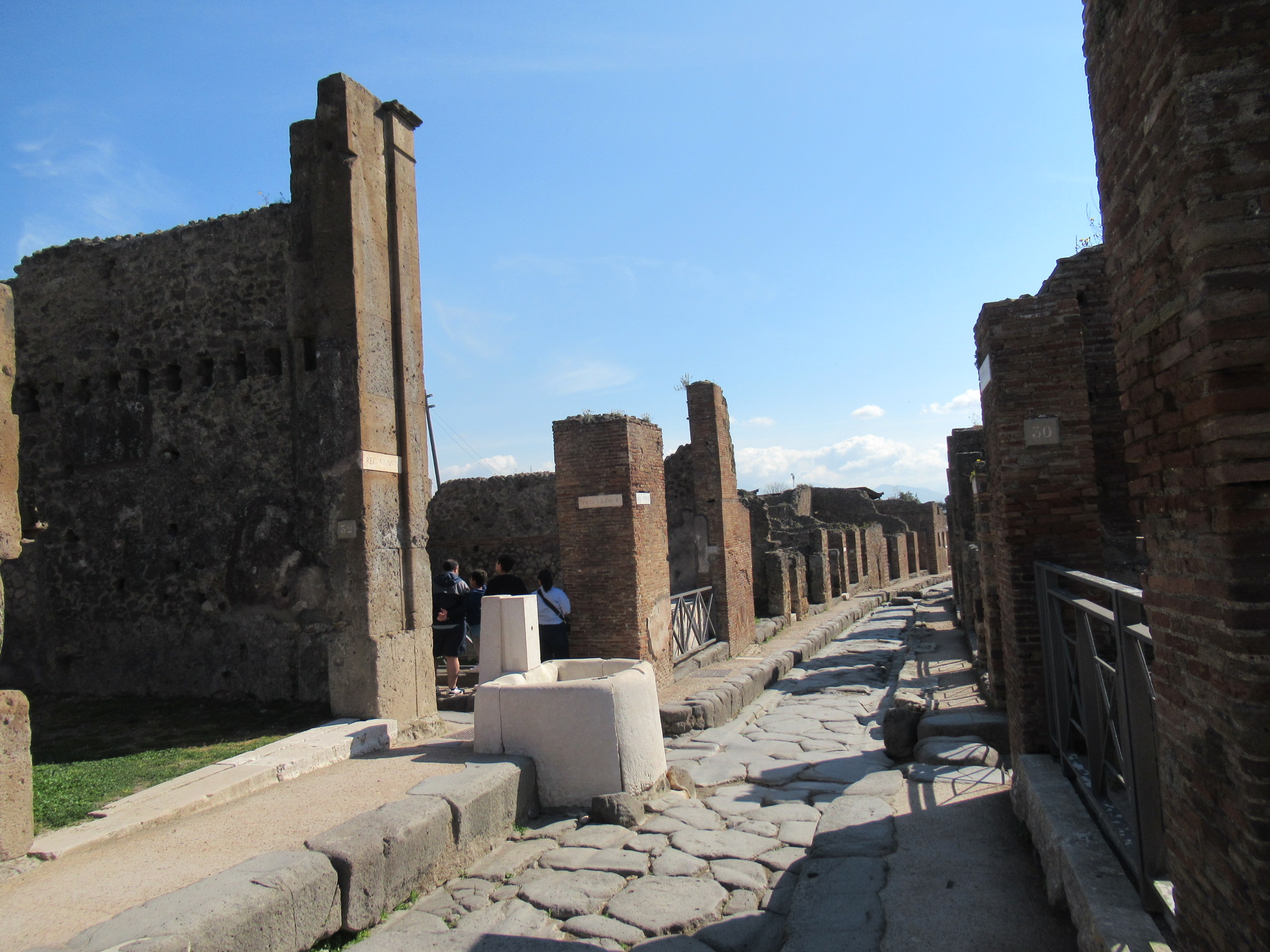
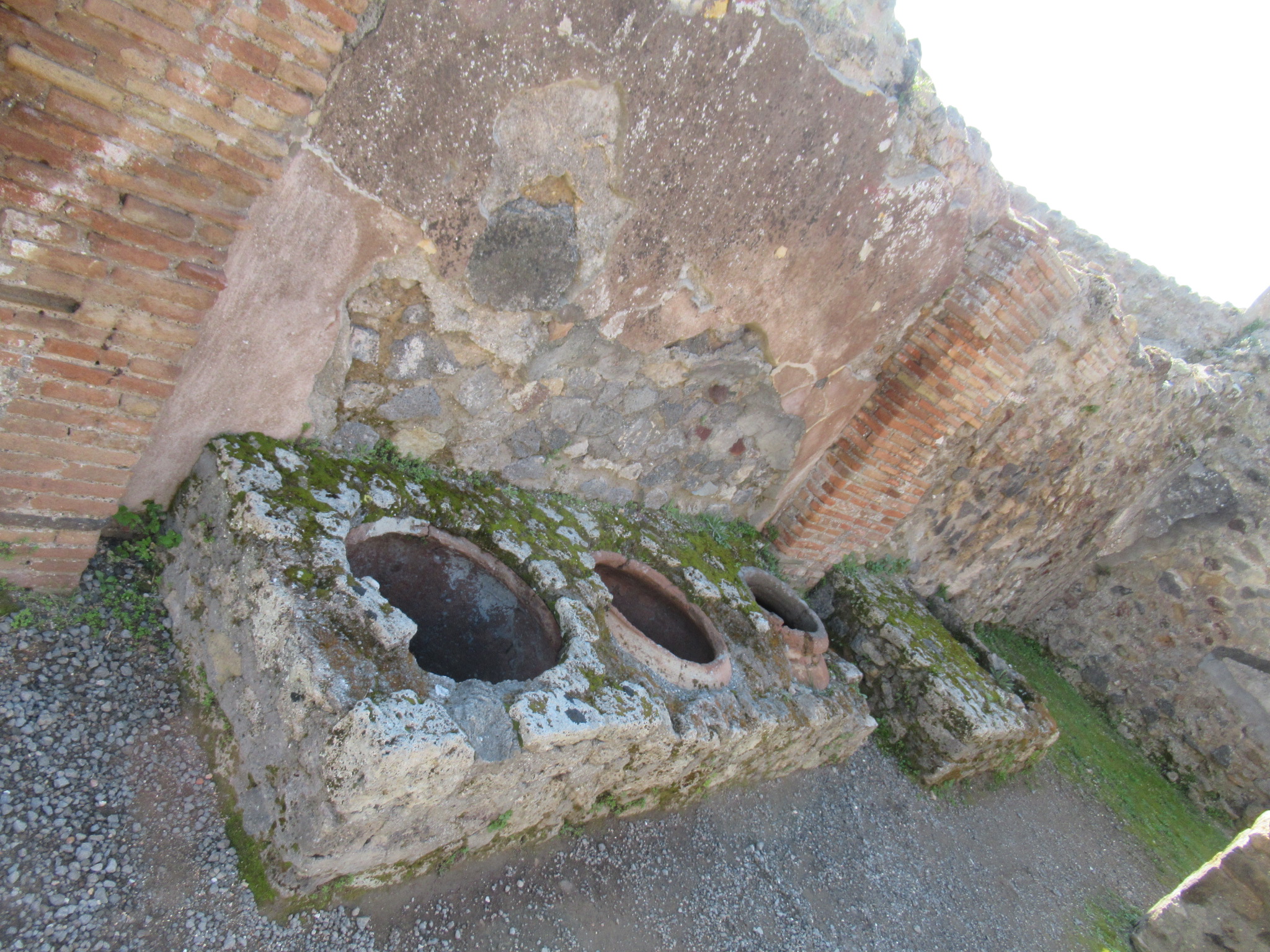
All over Pompeii there are thermopolium, literally “a place where (something) hot is sold”. The basins would hold vats or amphorae with different kinds of hot ready-to-eat food. The majority of Pompeii citizens got their meals from this kind of commercial establishment.



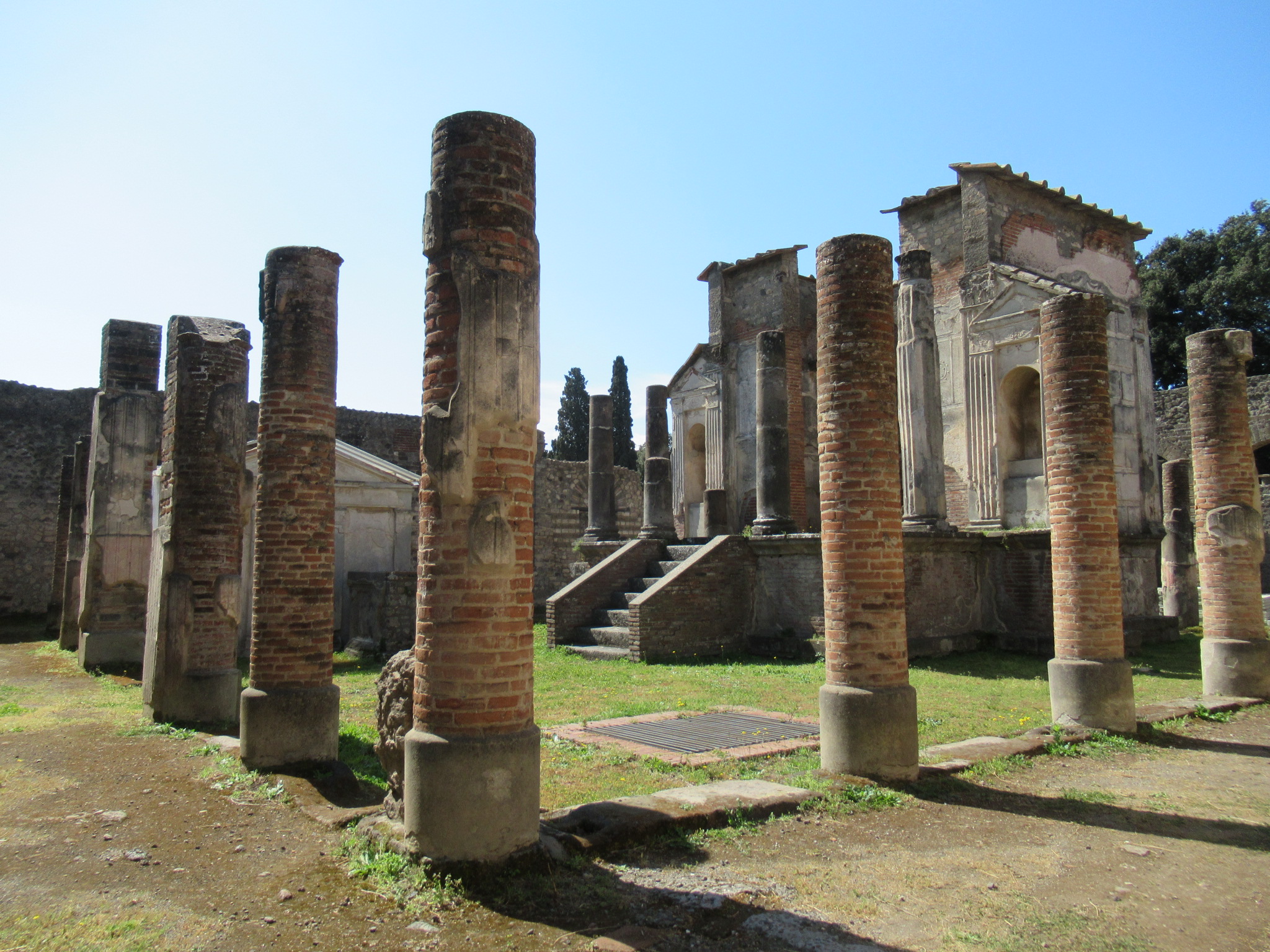
The Temple of Isis.
Egyptian art and culture were popular in the Roman Empire in this century.

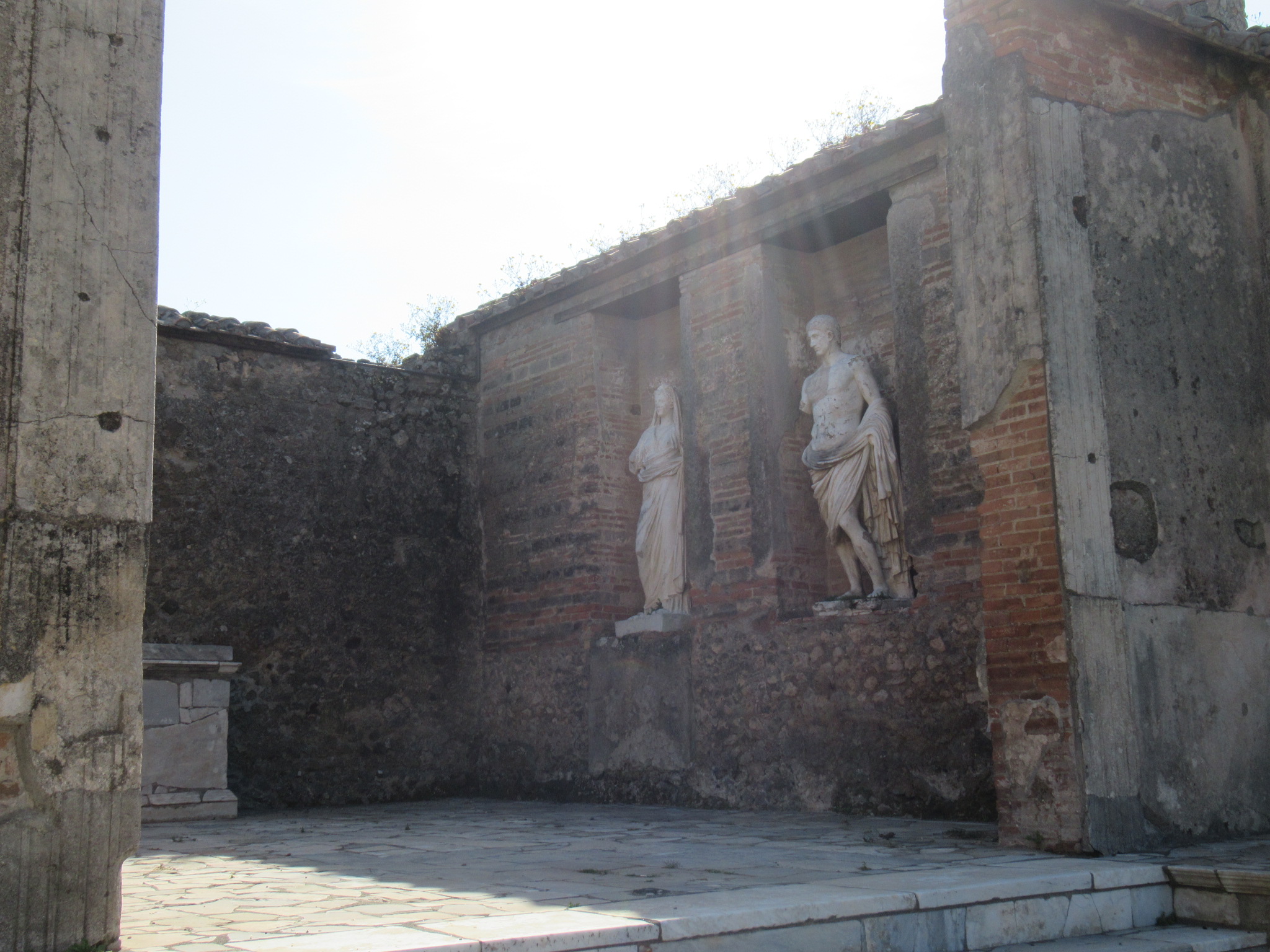
The Temple of Apollo
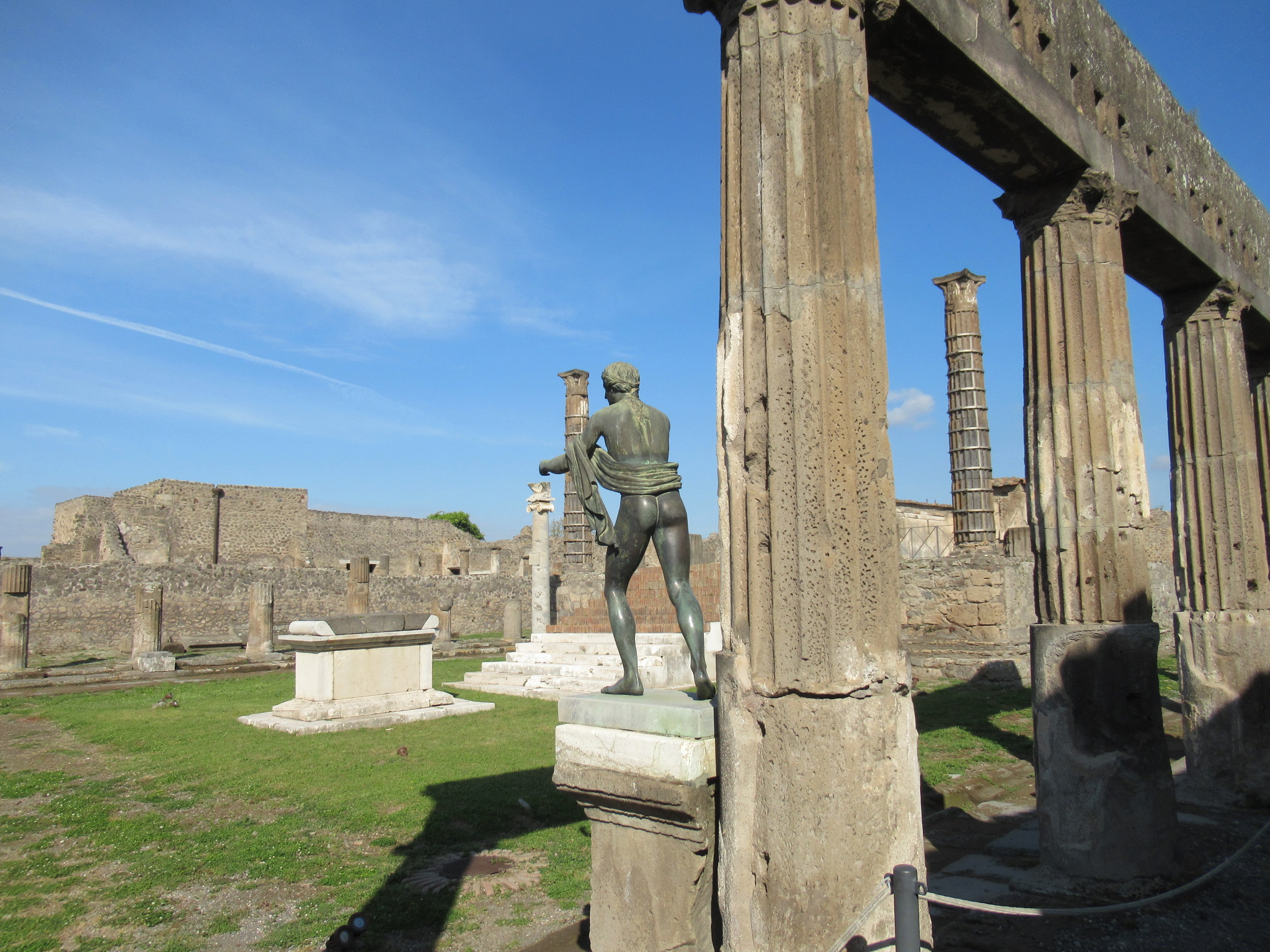
That statue is a replica. The original that stood there is now in the museum in Naples, where a treasure trove of statues and art from Pompeii and Herculaneum is displayed (future blog post alert).
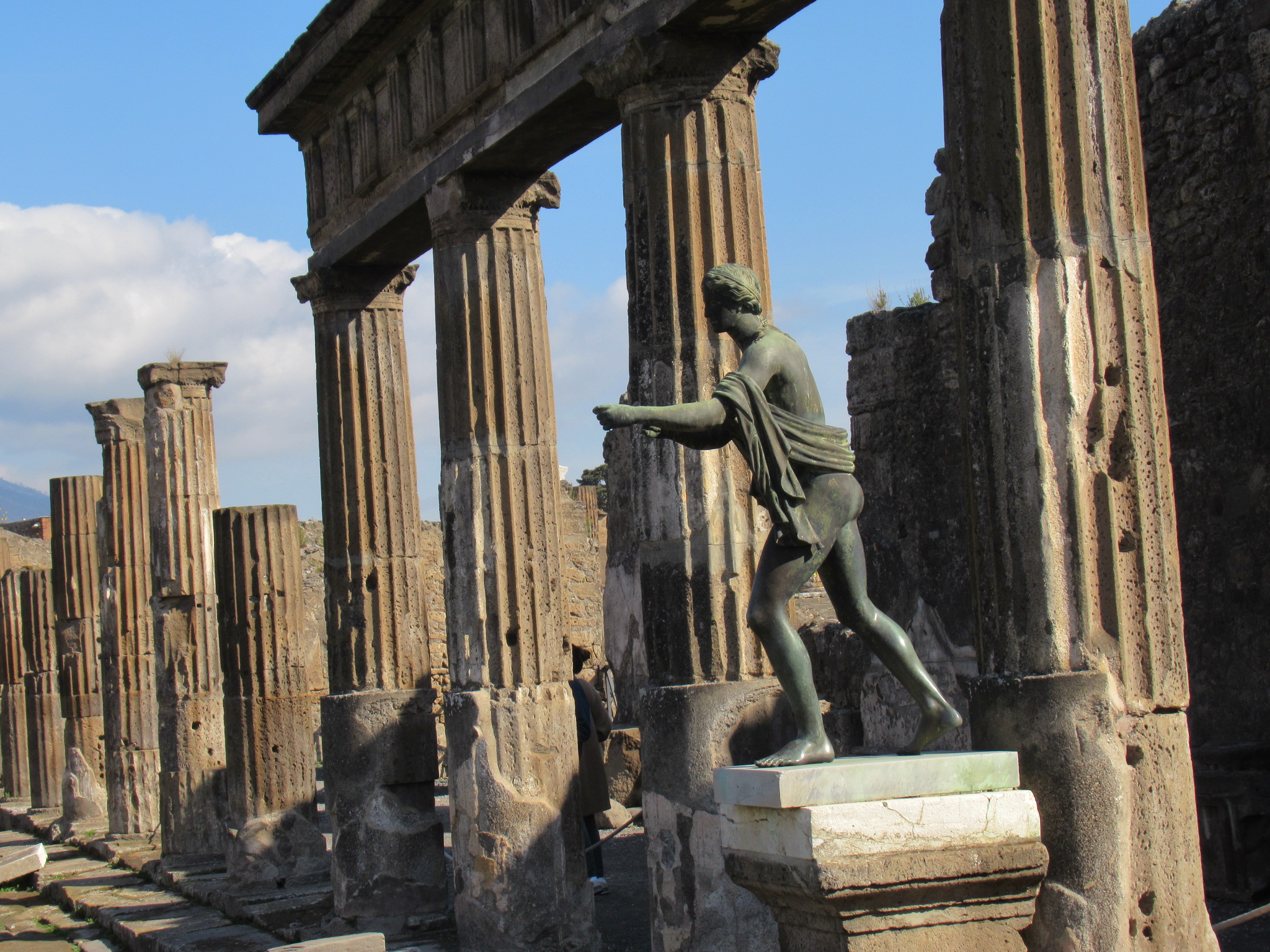
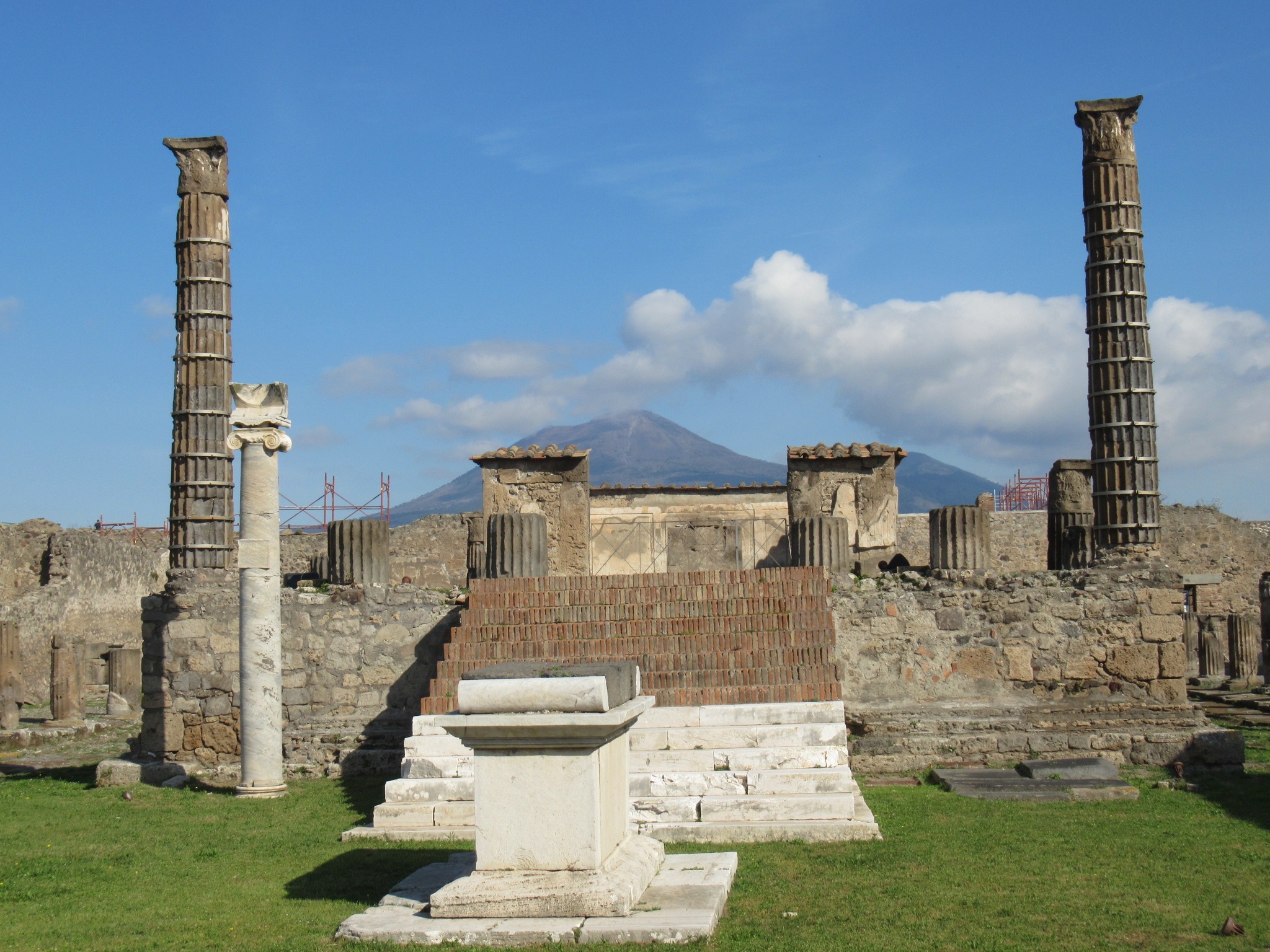


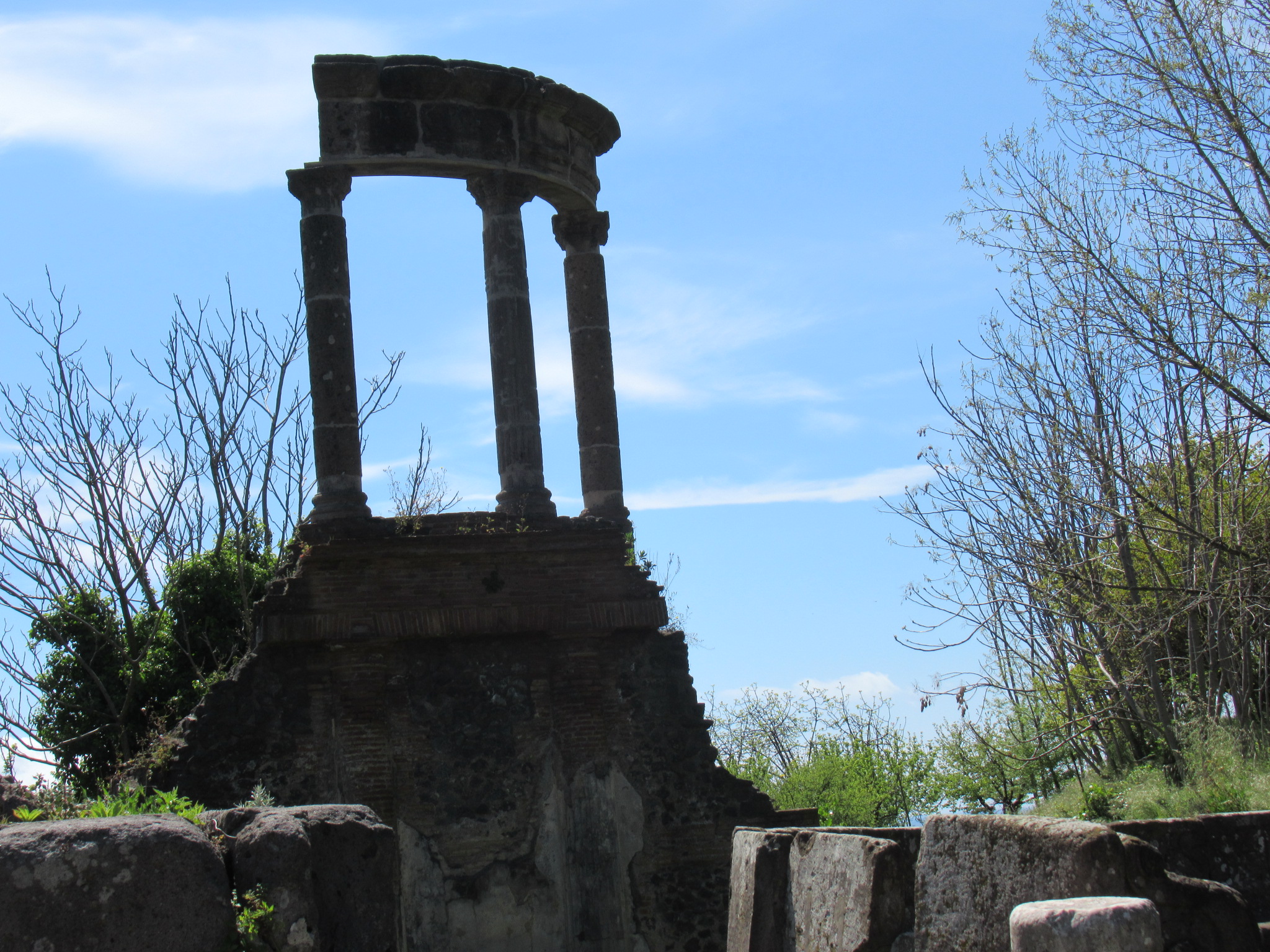


Yes that is my husband Ed whose back you see in a lot of these photos…

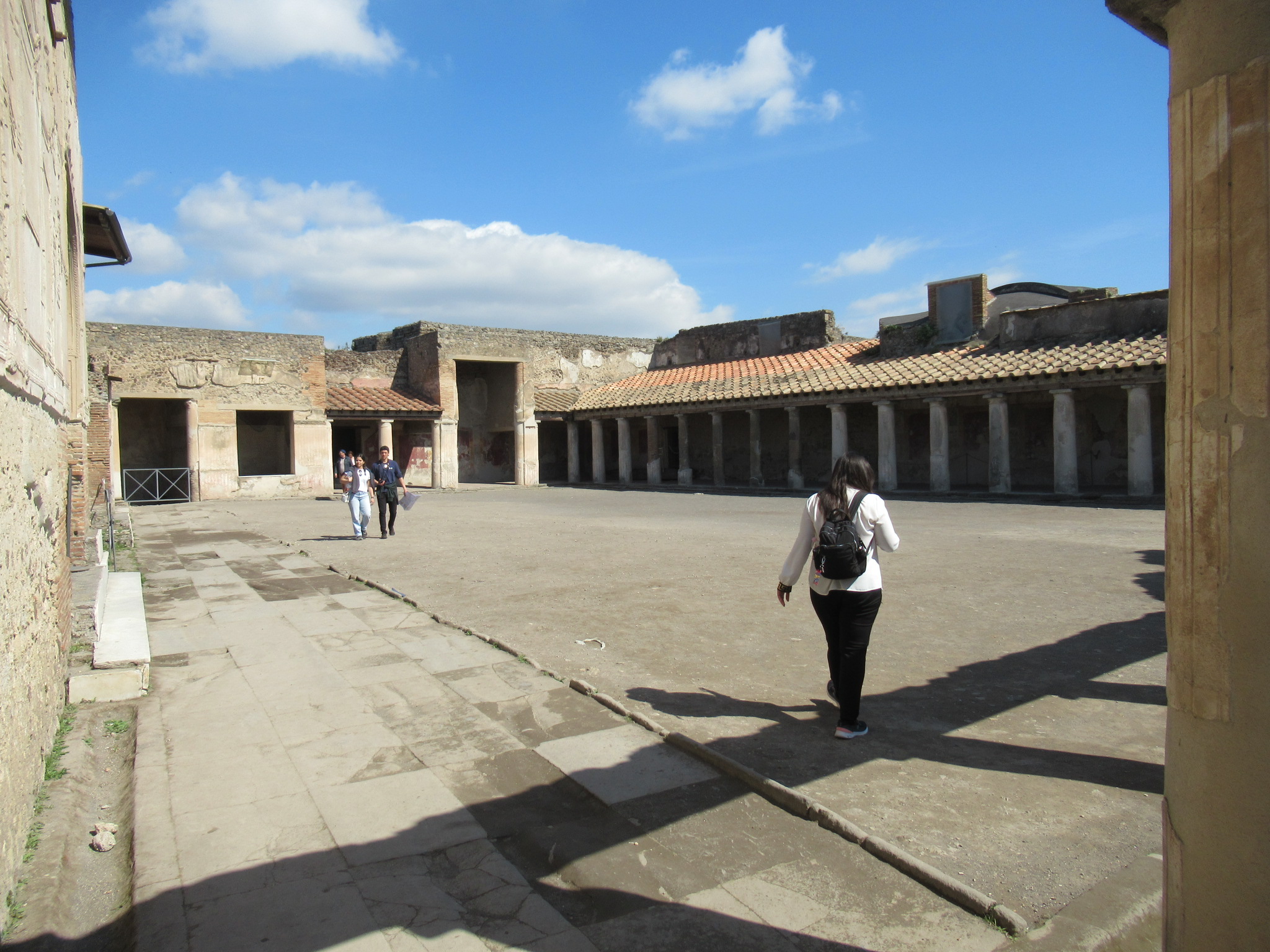
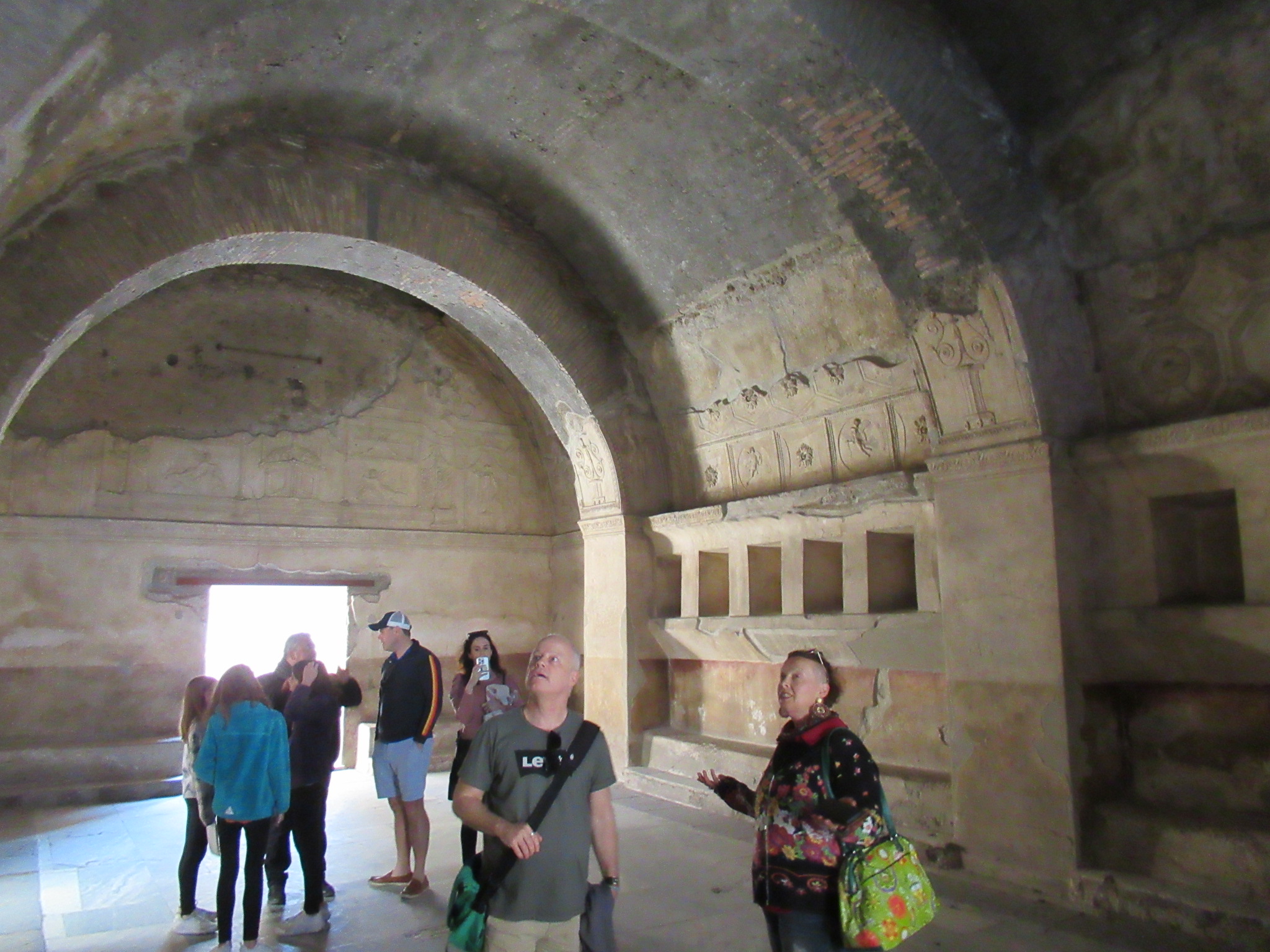
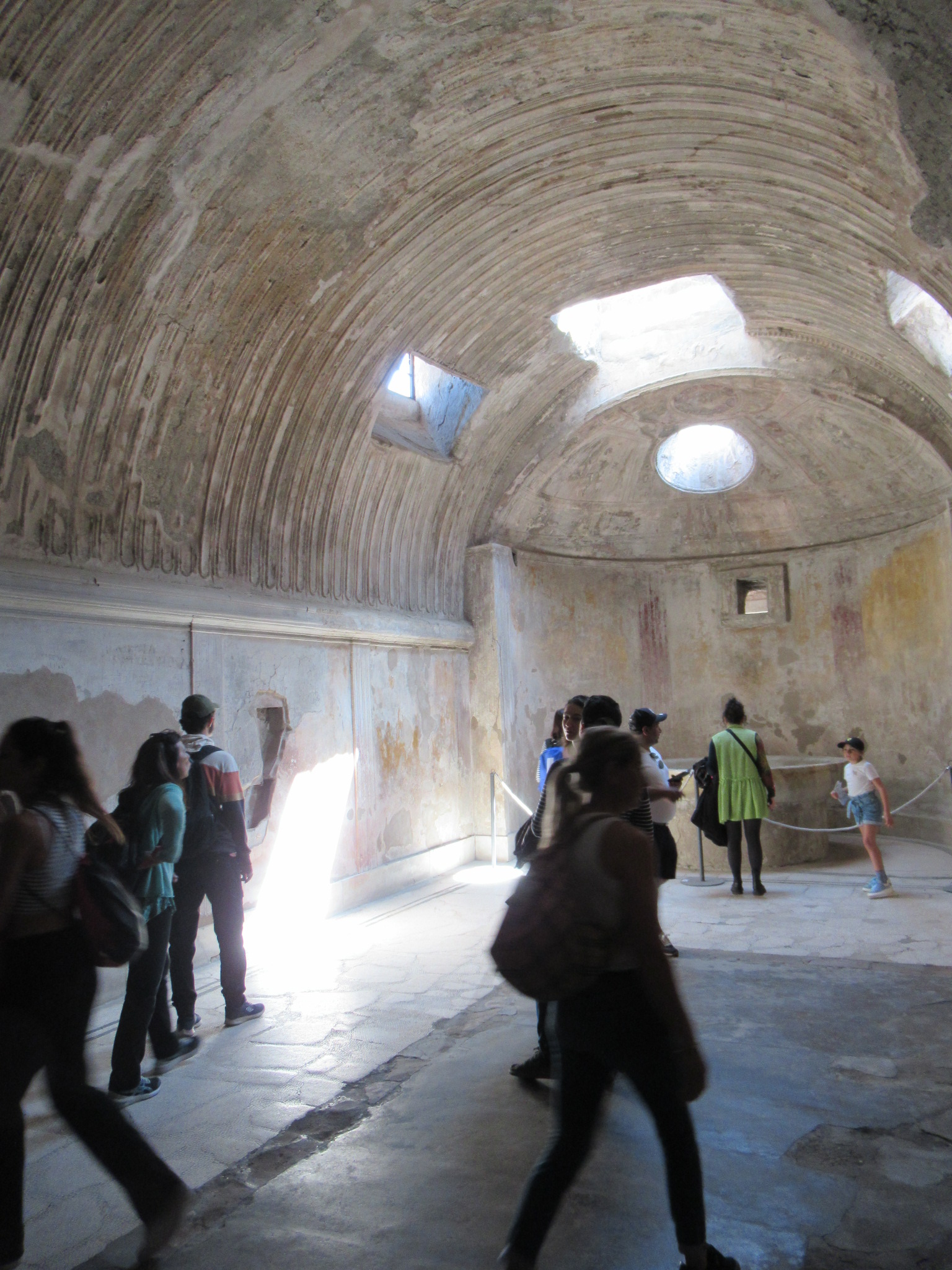
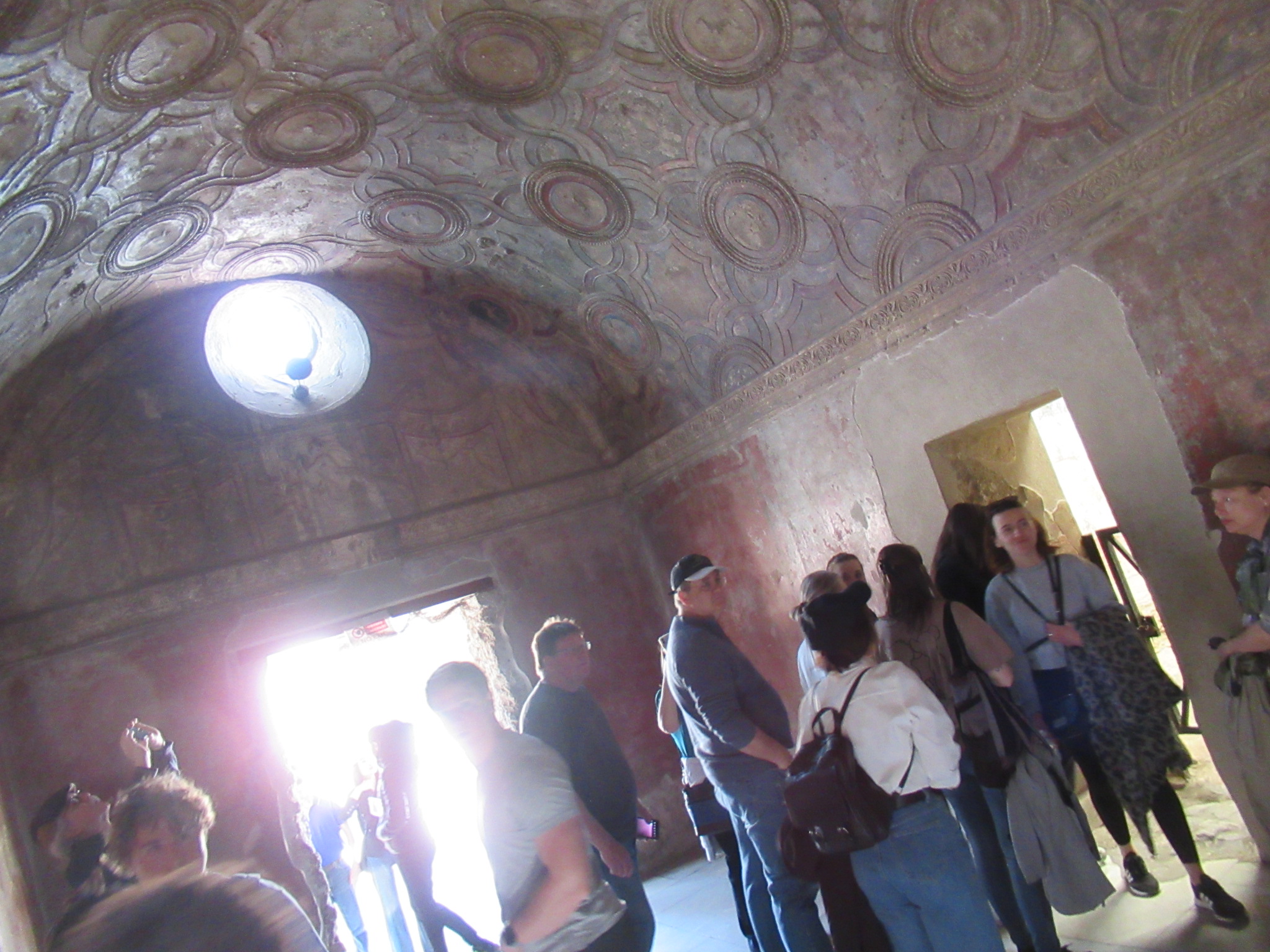
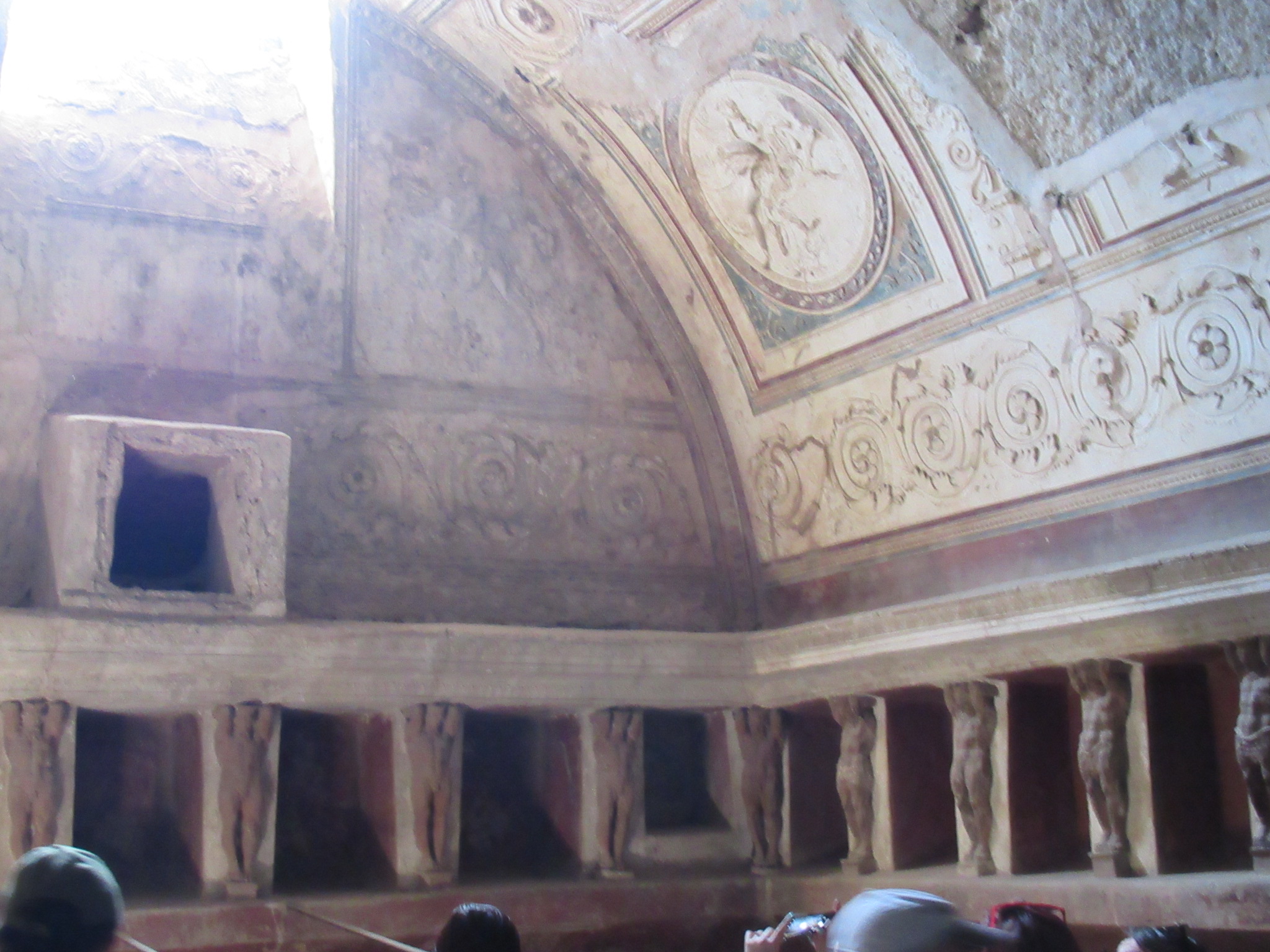
Pompeii had two Thermae – bathhouses – with a third one in mid-construction when Vesuvius put a stop to it all.
The Thermae each had an open courtyard area for exercise and a bathhouse with several sections, for storing ones clothing, and several bathing areas with waters of varying temperatures.
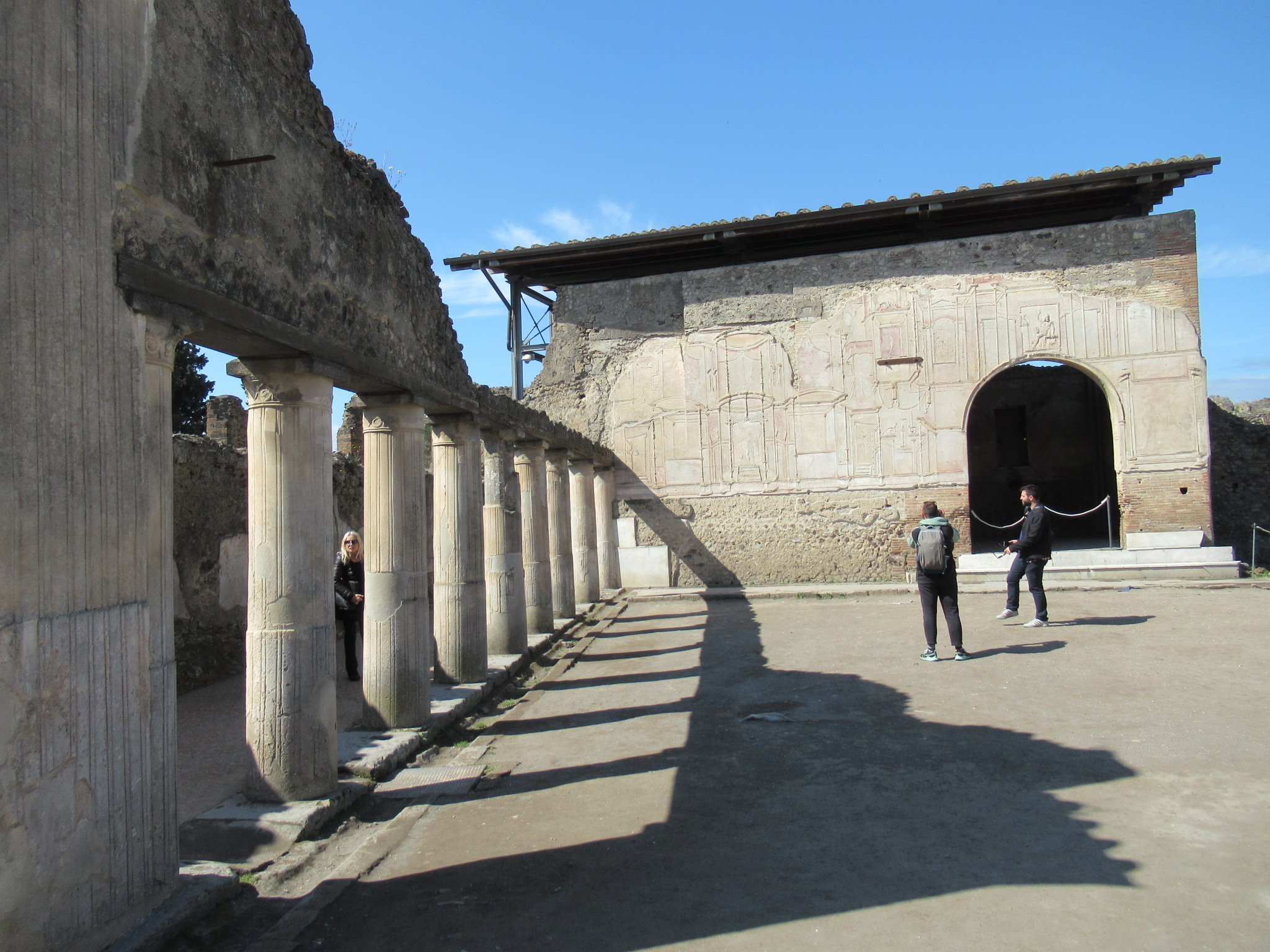

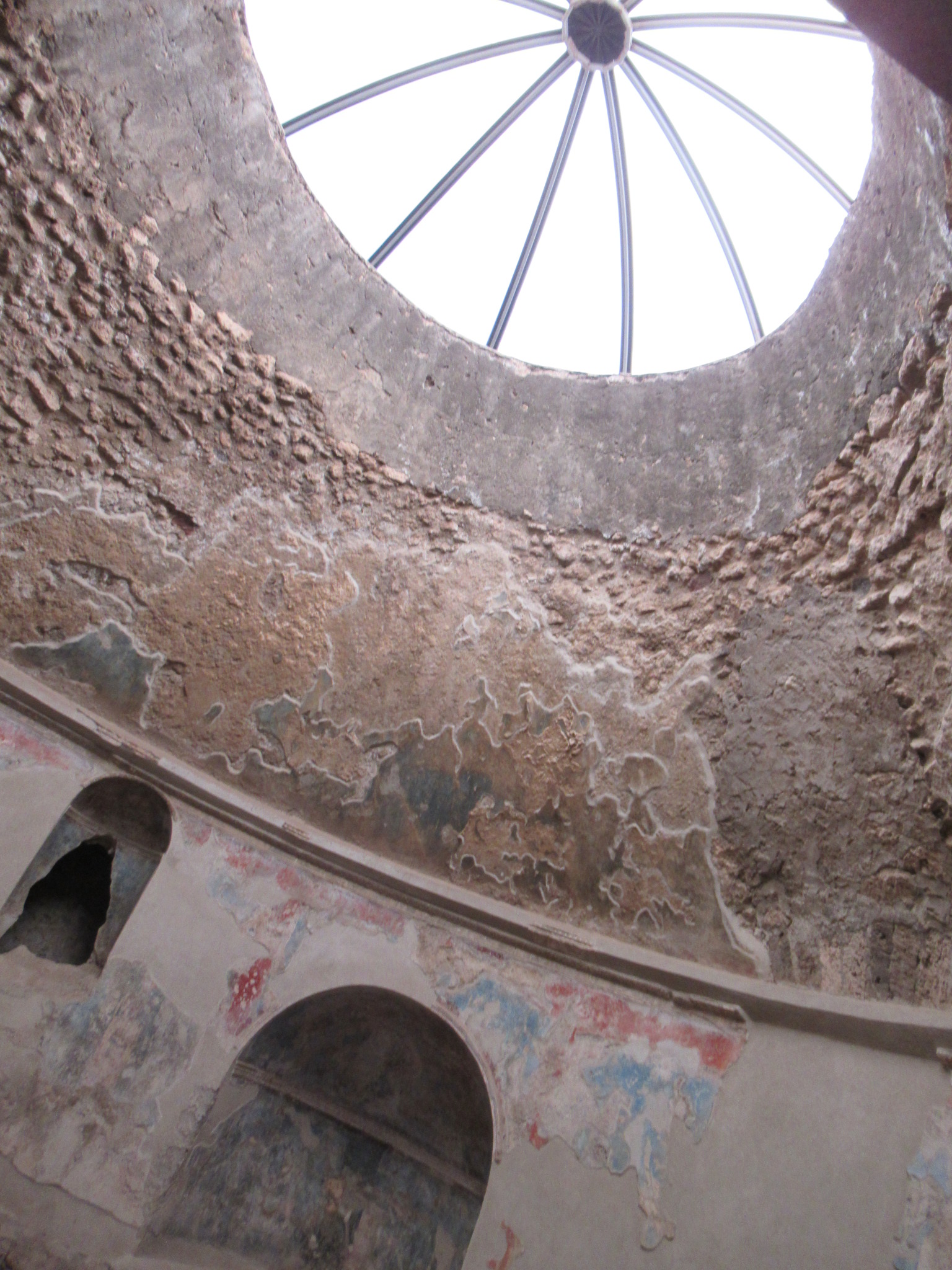
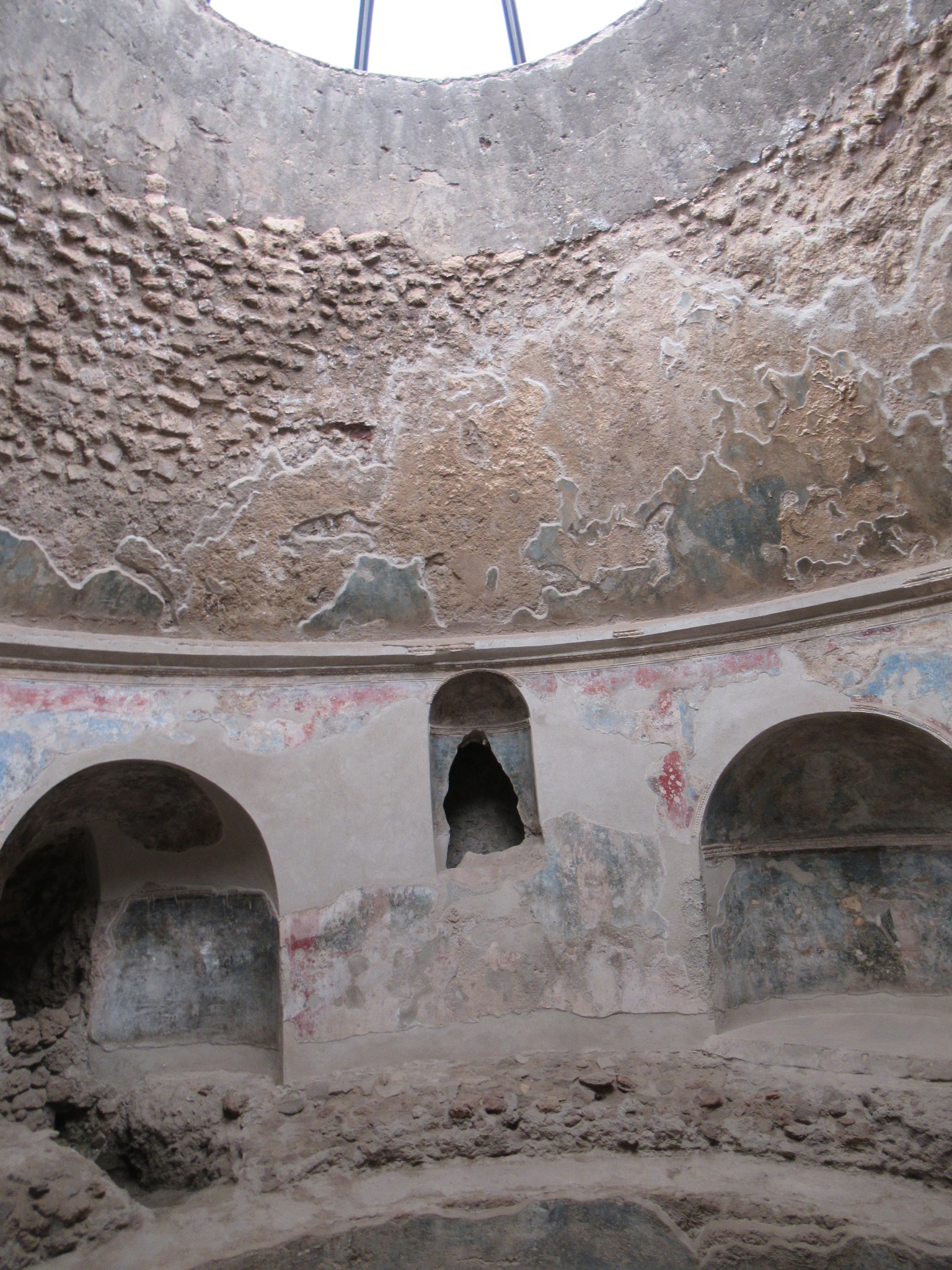


In this picture you can see remnants of the original floor resting on the short columns that held it up above the approx. meter high cavern where hot water heated the space from below.
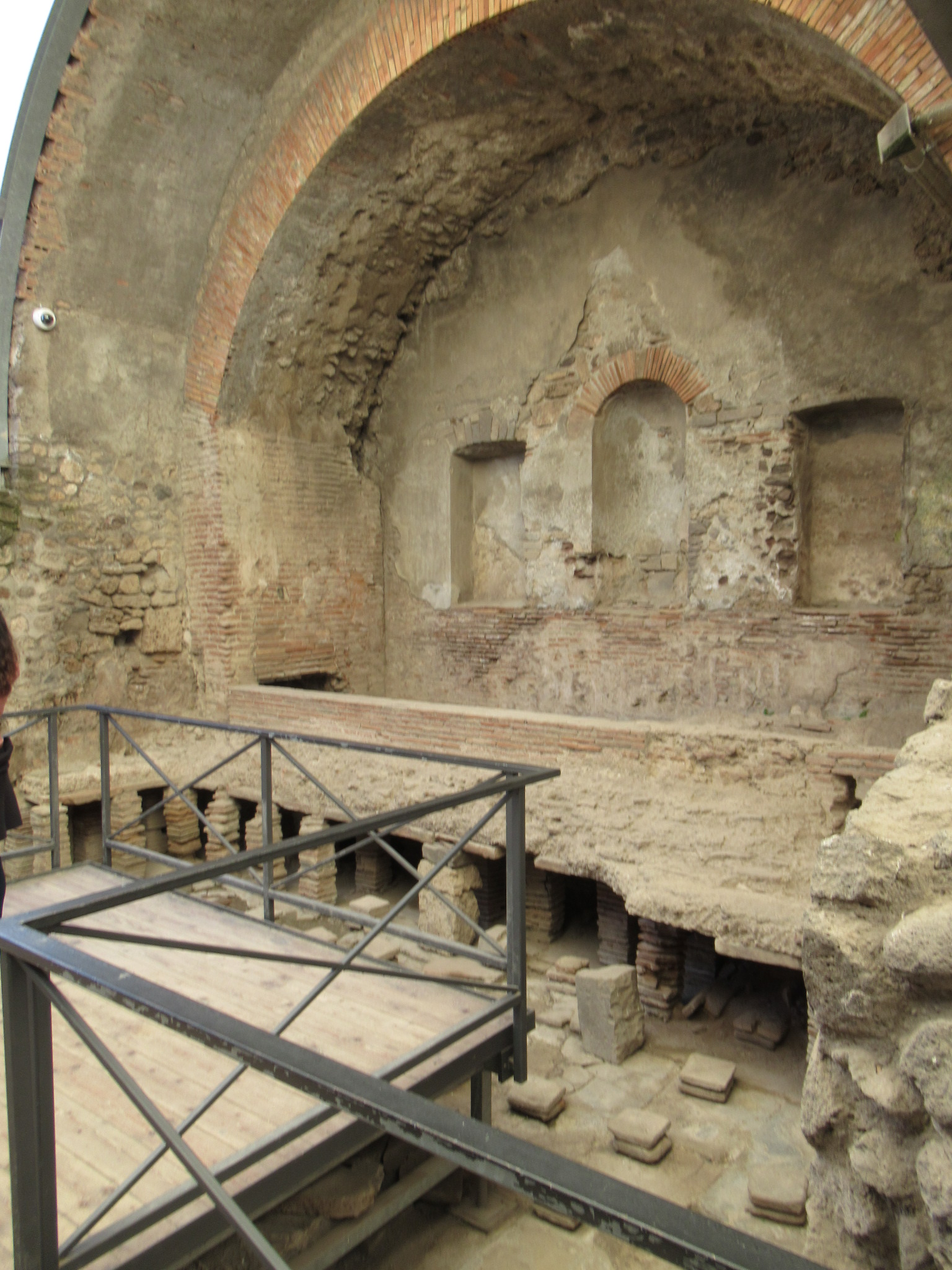
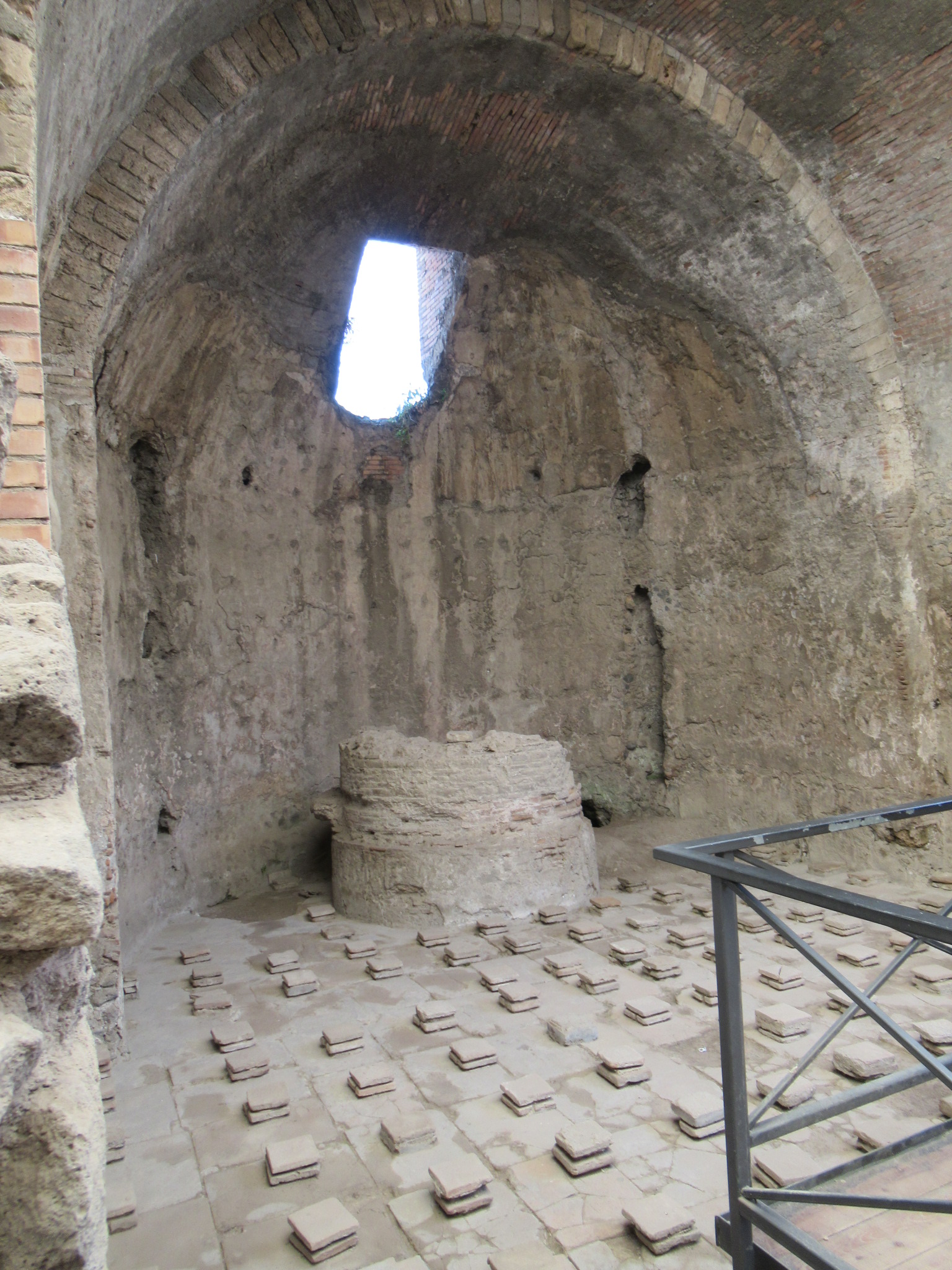
Grooves in the domed ceilings caught the water vapor and directed it to the sides. This way water droplets wouldn’t drip back down on the bath patrons.




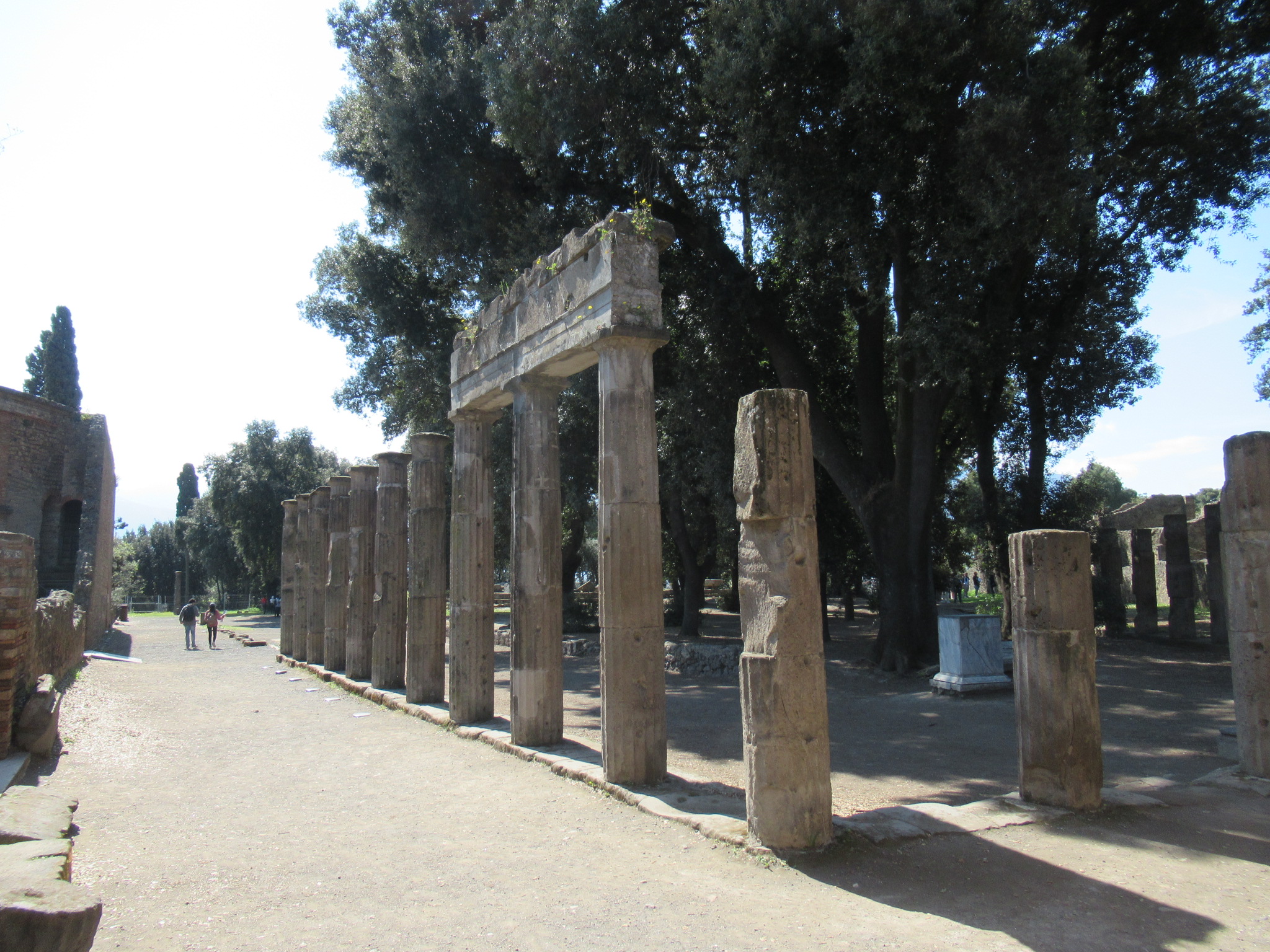
The large amphitheatre


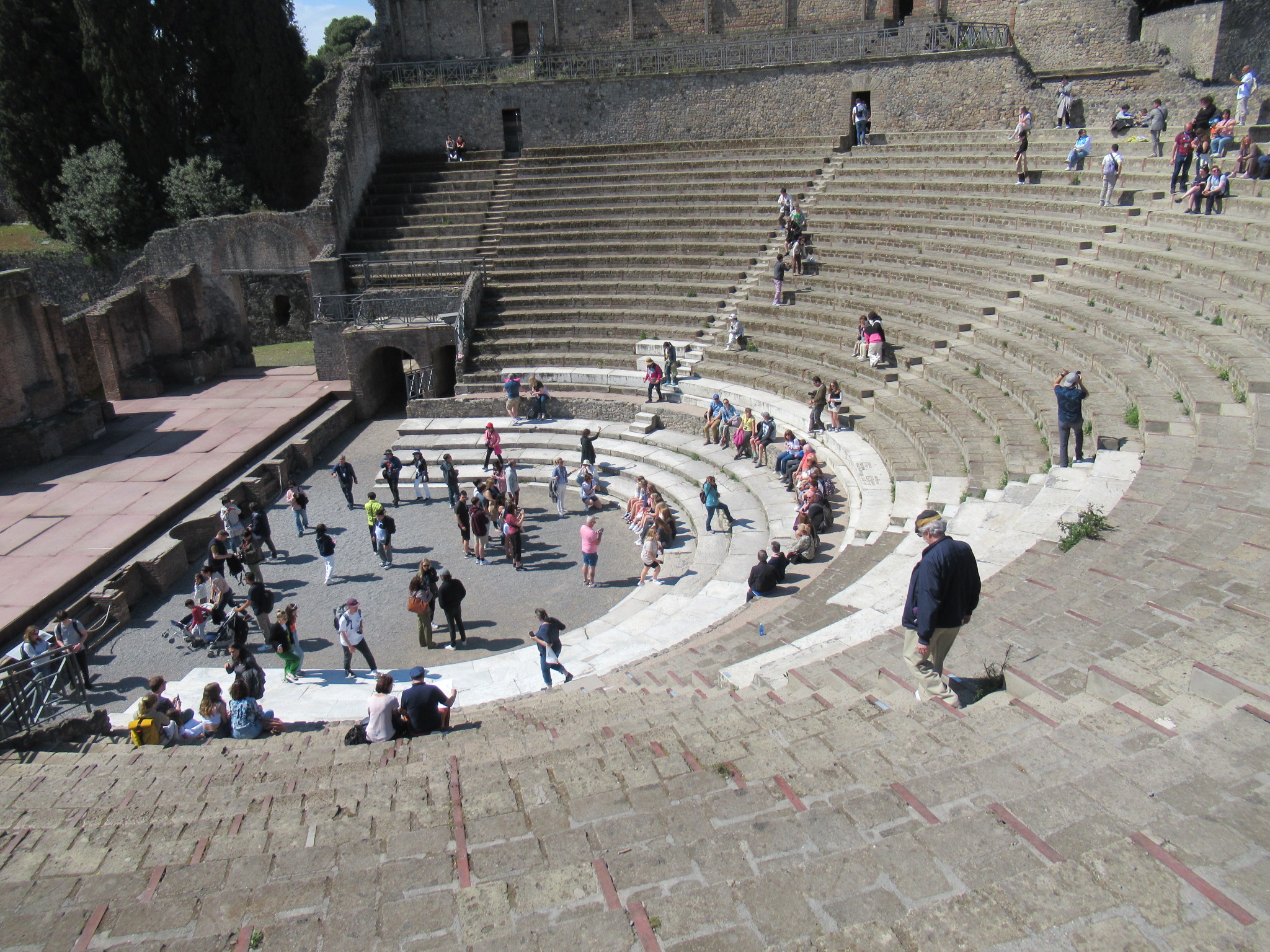
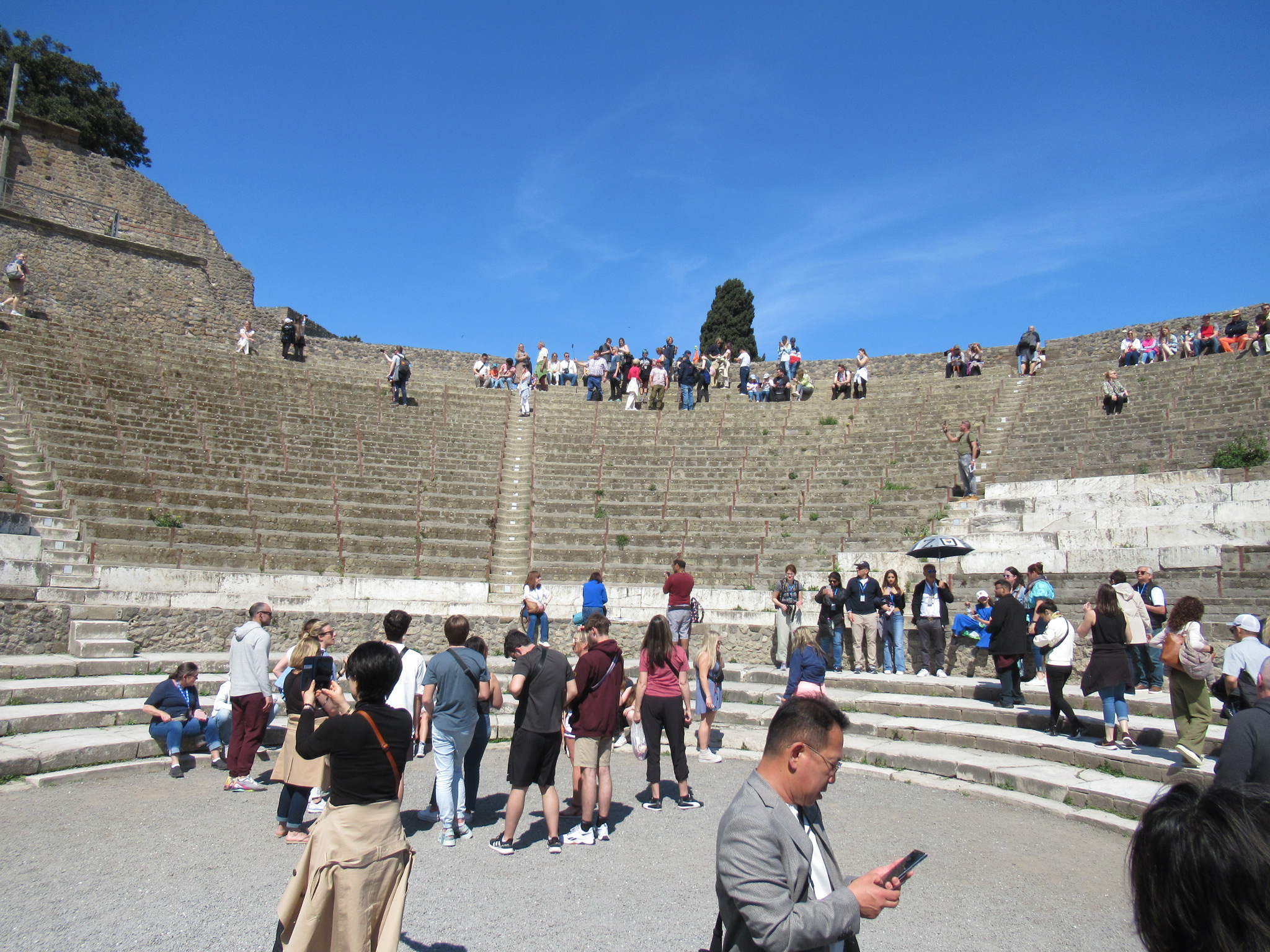
The small amphitheatre, right next door to the large one.


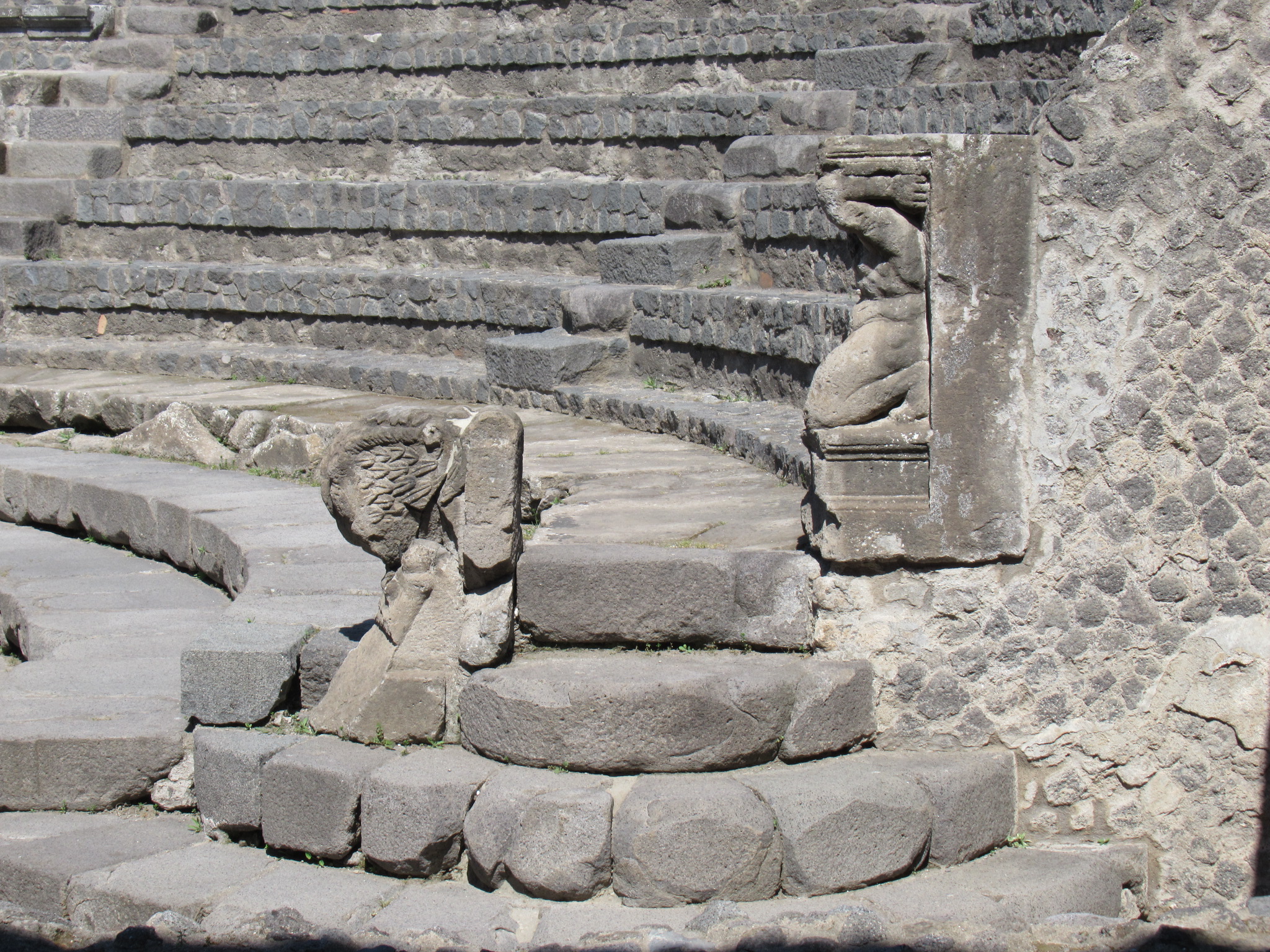
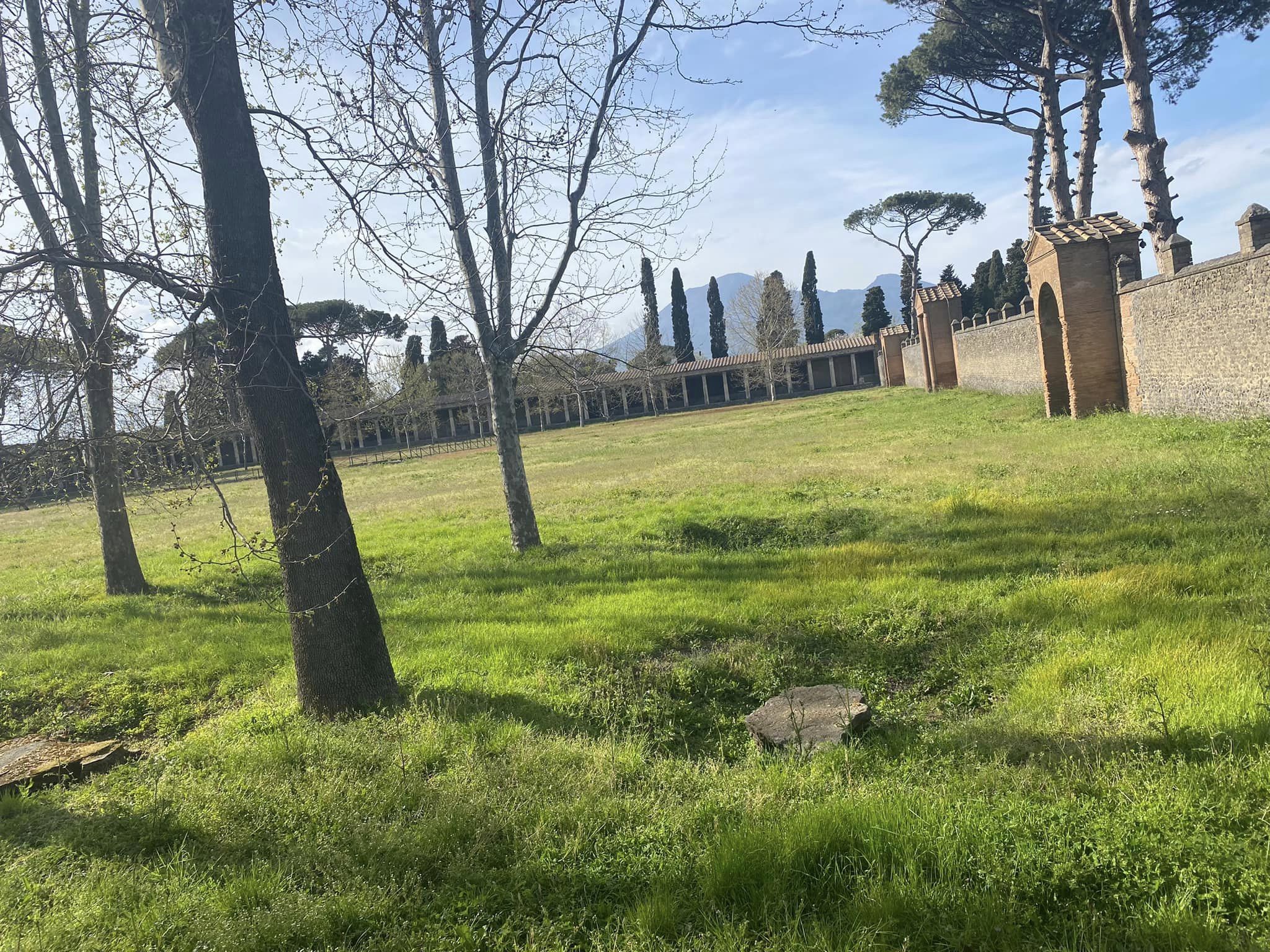
Right by the theatres, the barracks of the gladiators


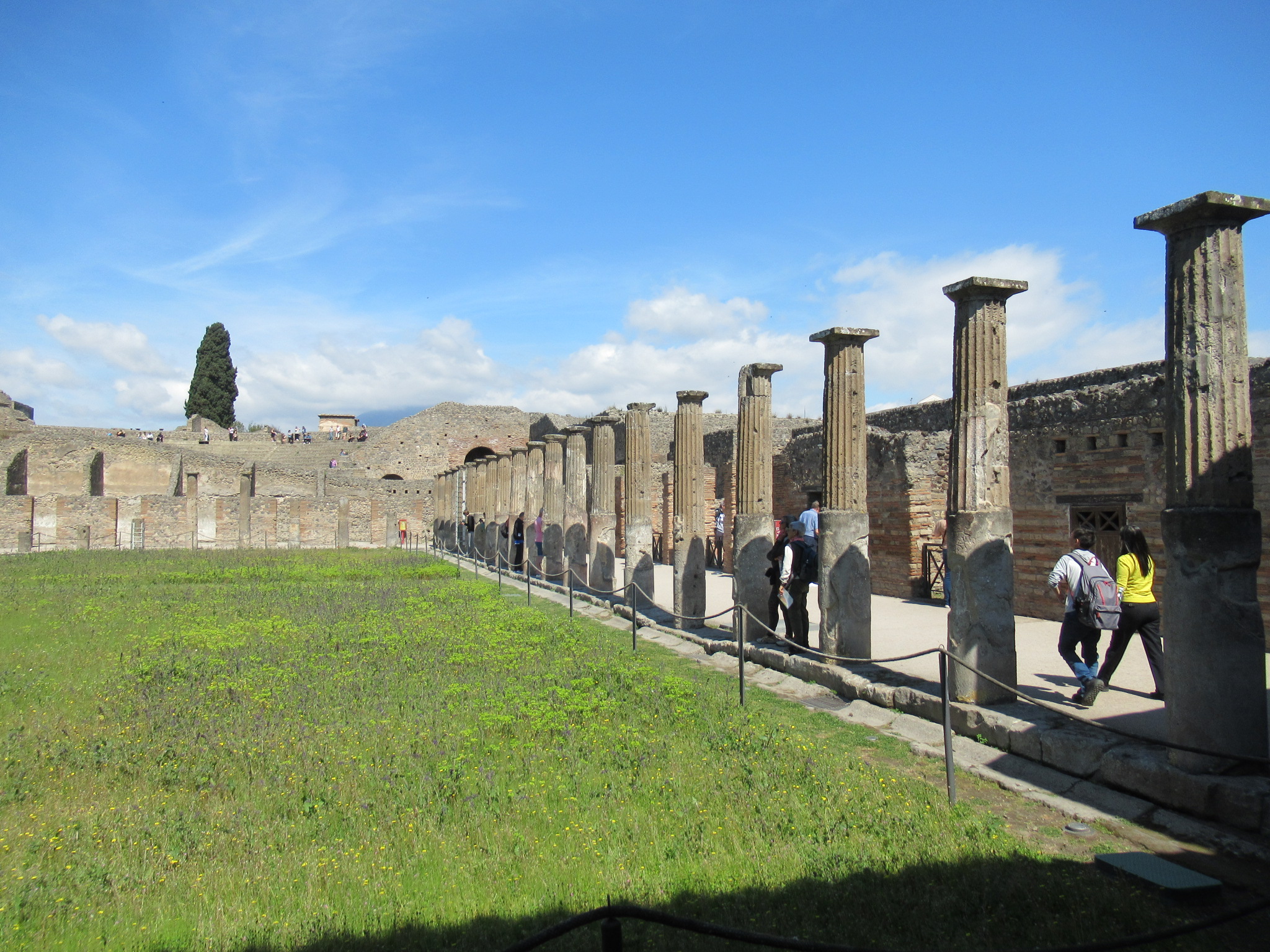
Another rare example of part a second story that survived the volcano’s destruction in Pompeii. The story will be different in Herculaneum.

A bakery. The oven is center back.
Front and center left are grey mill stones. One stone piece fits atop another. Grain is poured in the top and gets ground while the top piece is turned against the lower stone (you can see the holes where wooden spokes were placed to guide the turning). The ground flour would sift through to the bottom rim.


The city gate at the southeast is near the ampitheaters.
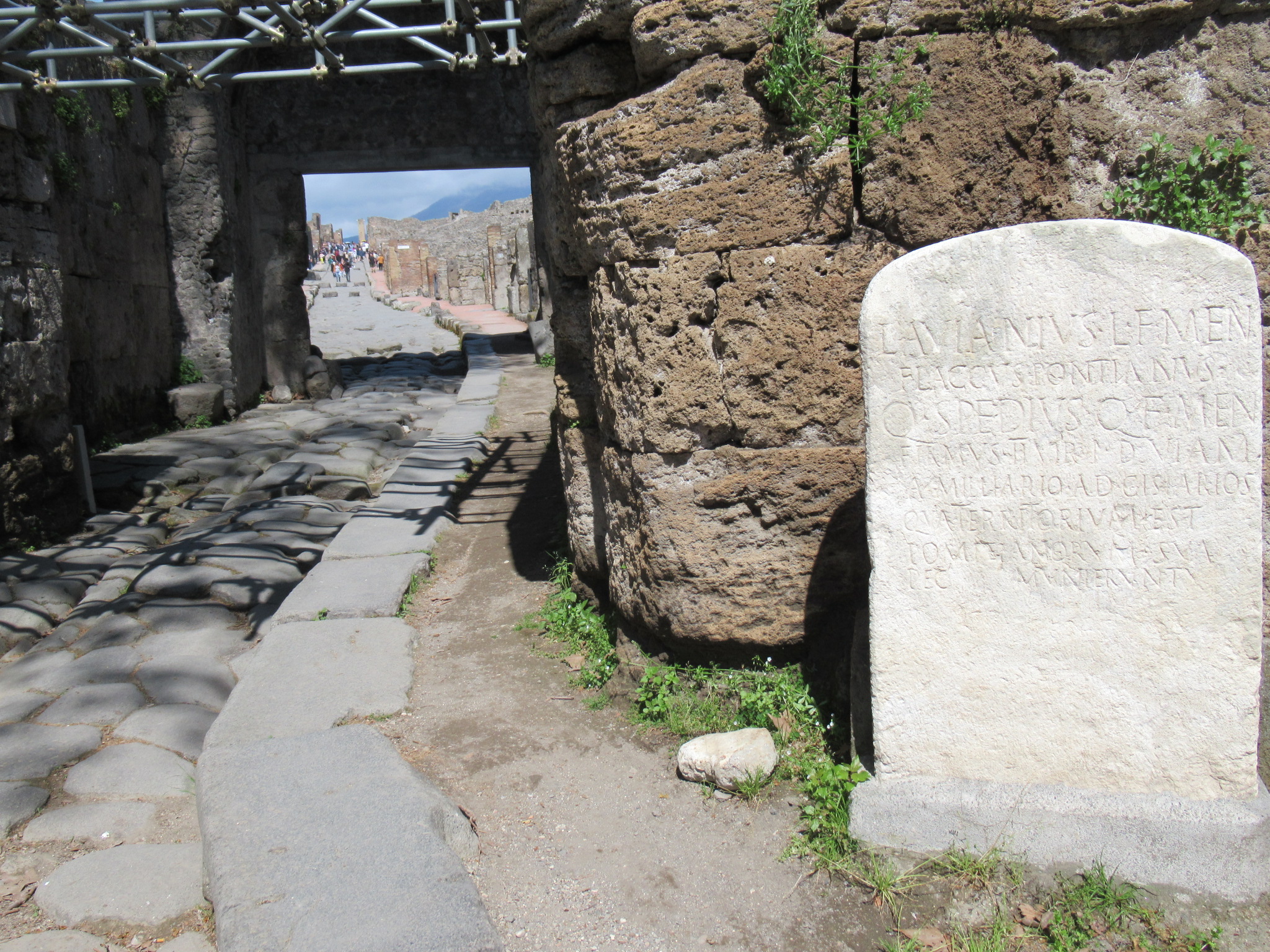
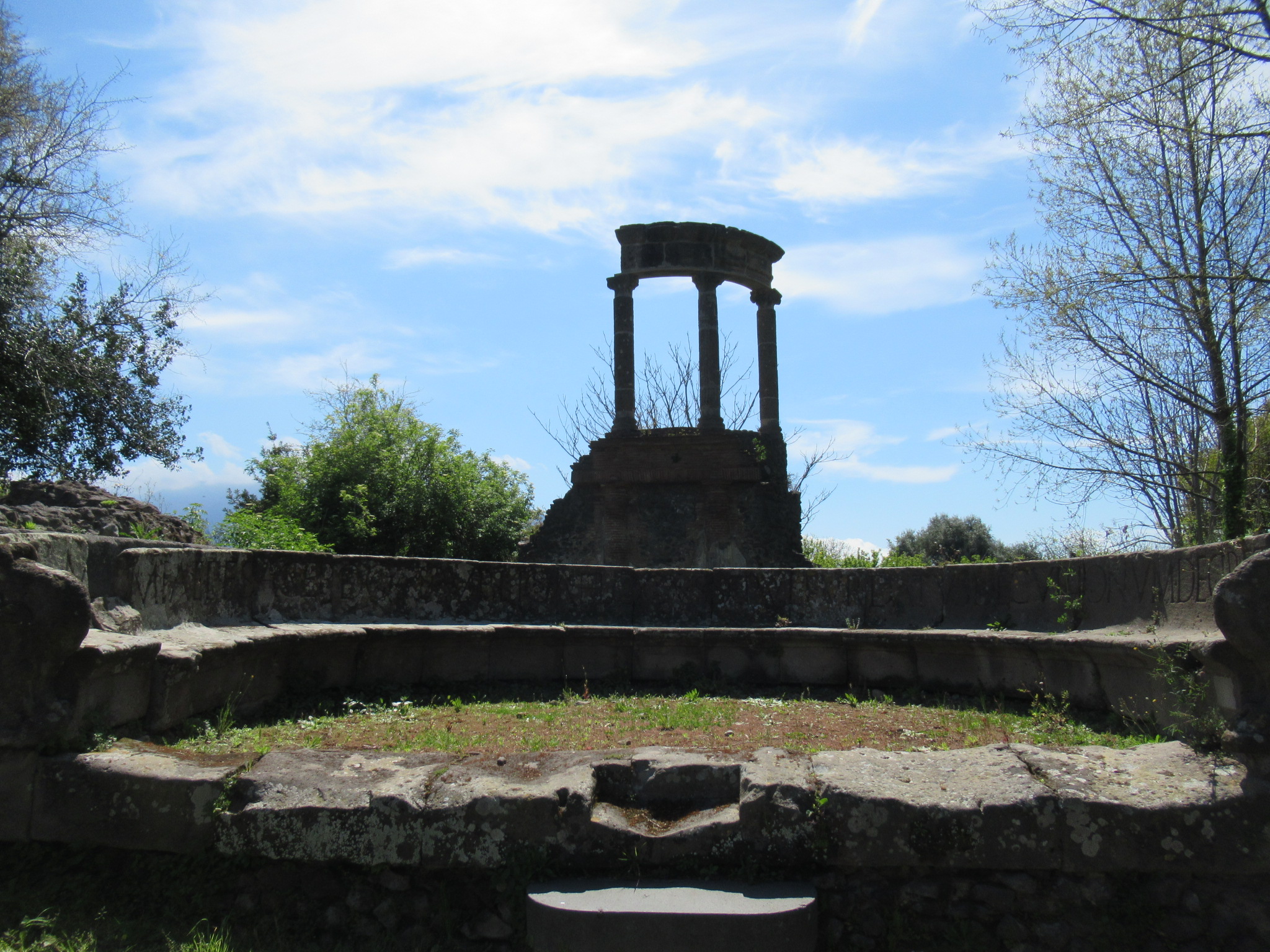
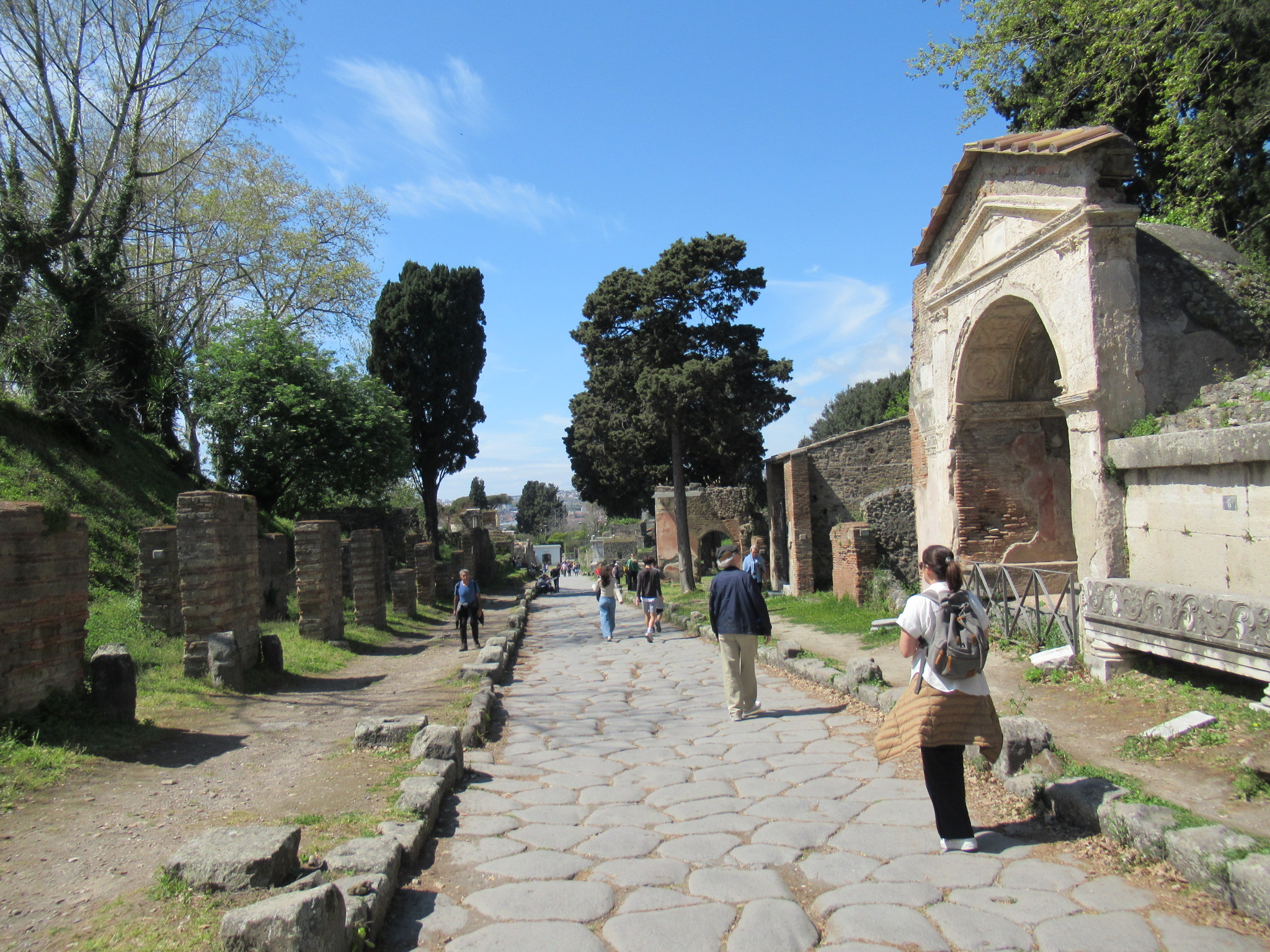
Exiting the city at the West one goes down a long road past family tombs and wealthy villa estates (which the next post on The Homes of Pompeii will feature.)
The Coliseum is at the north just at the edge of the city to better manage the influx of people from neighboring towns streaming in for the games. Gladiator barracks and training grounds just beside take up even more space than the Coliseum itself.


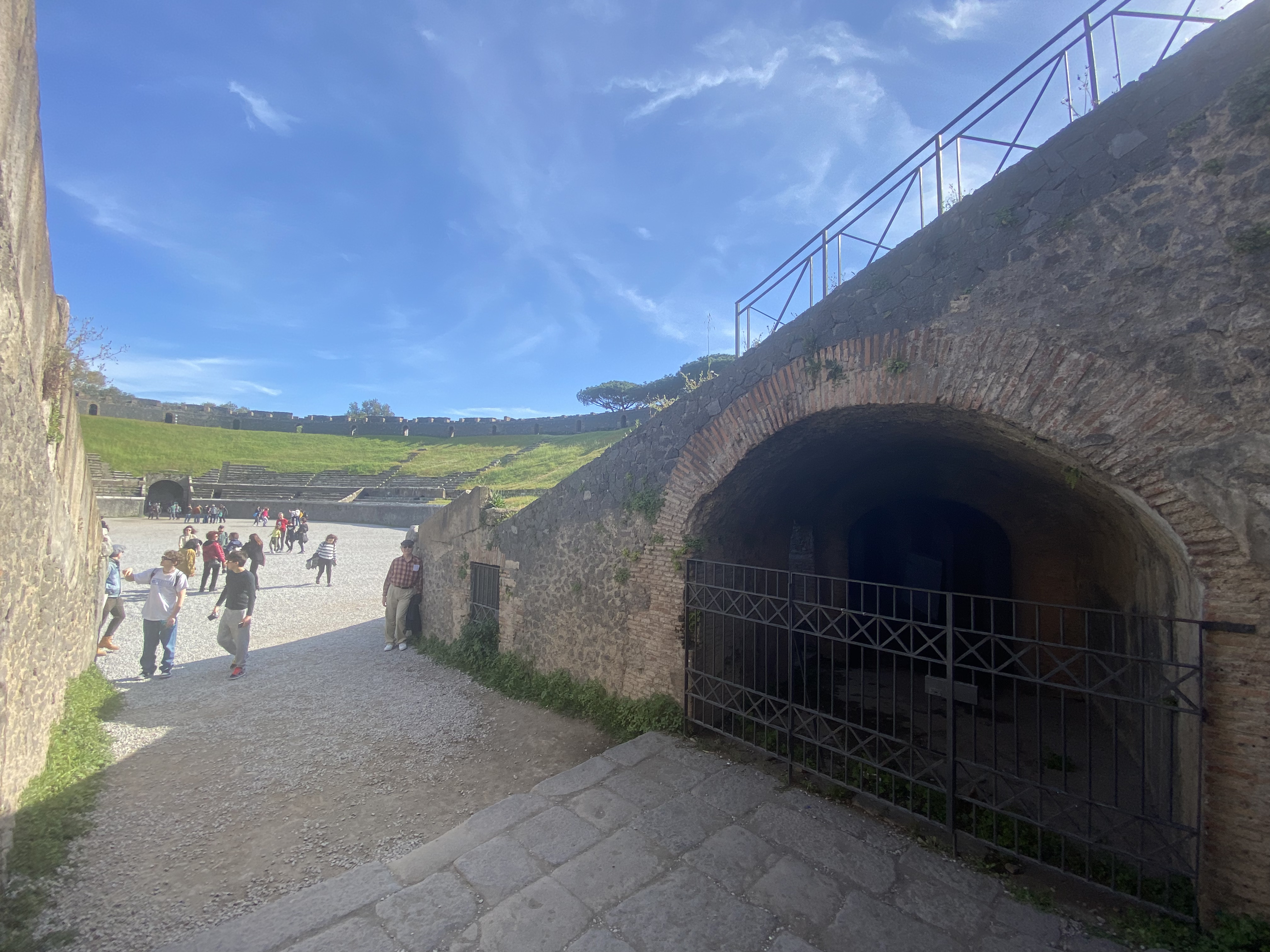

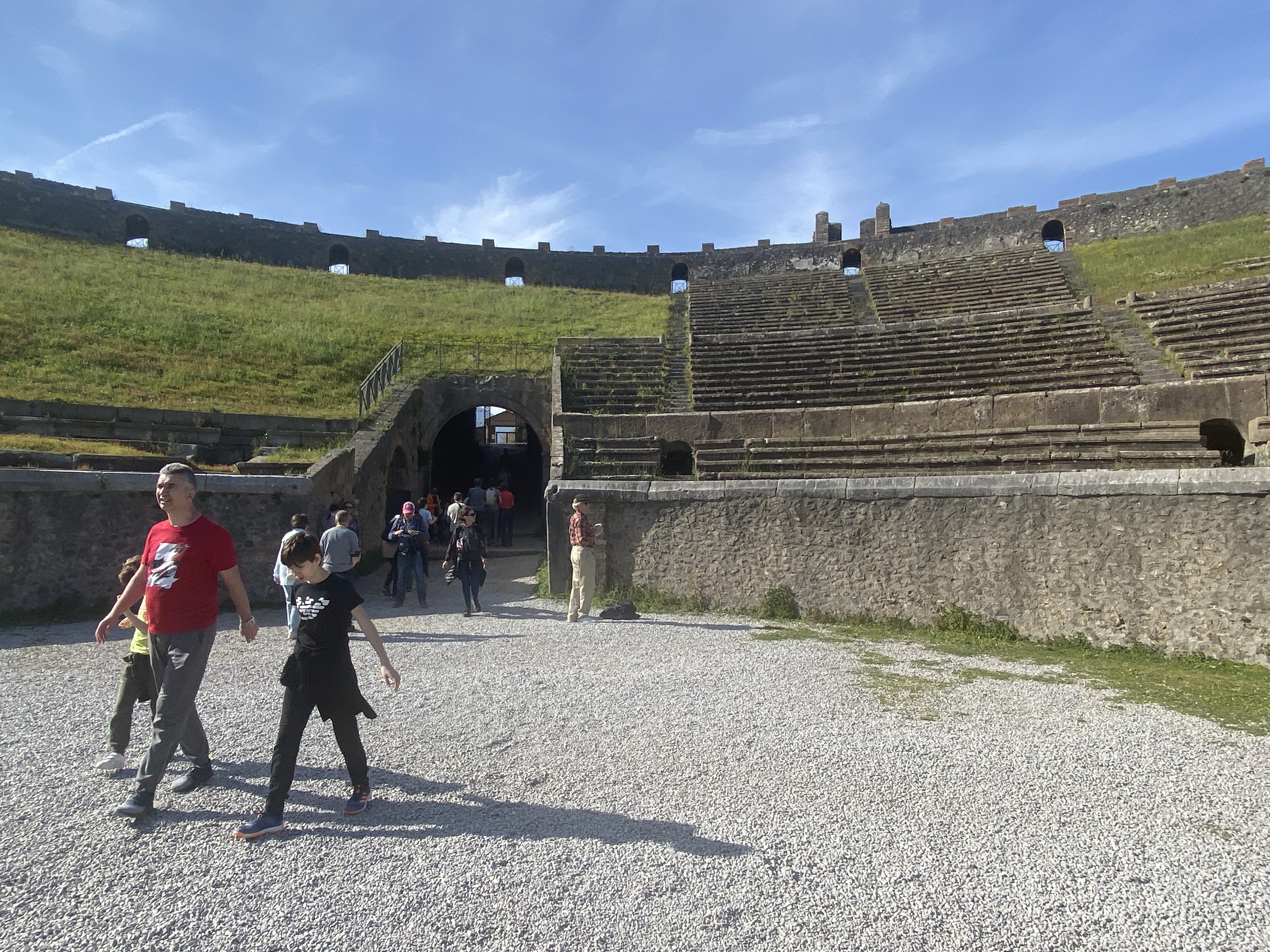
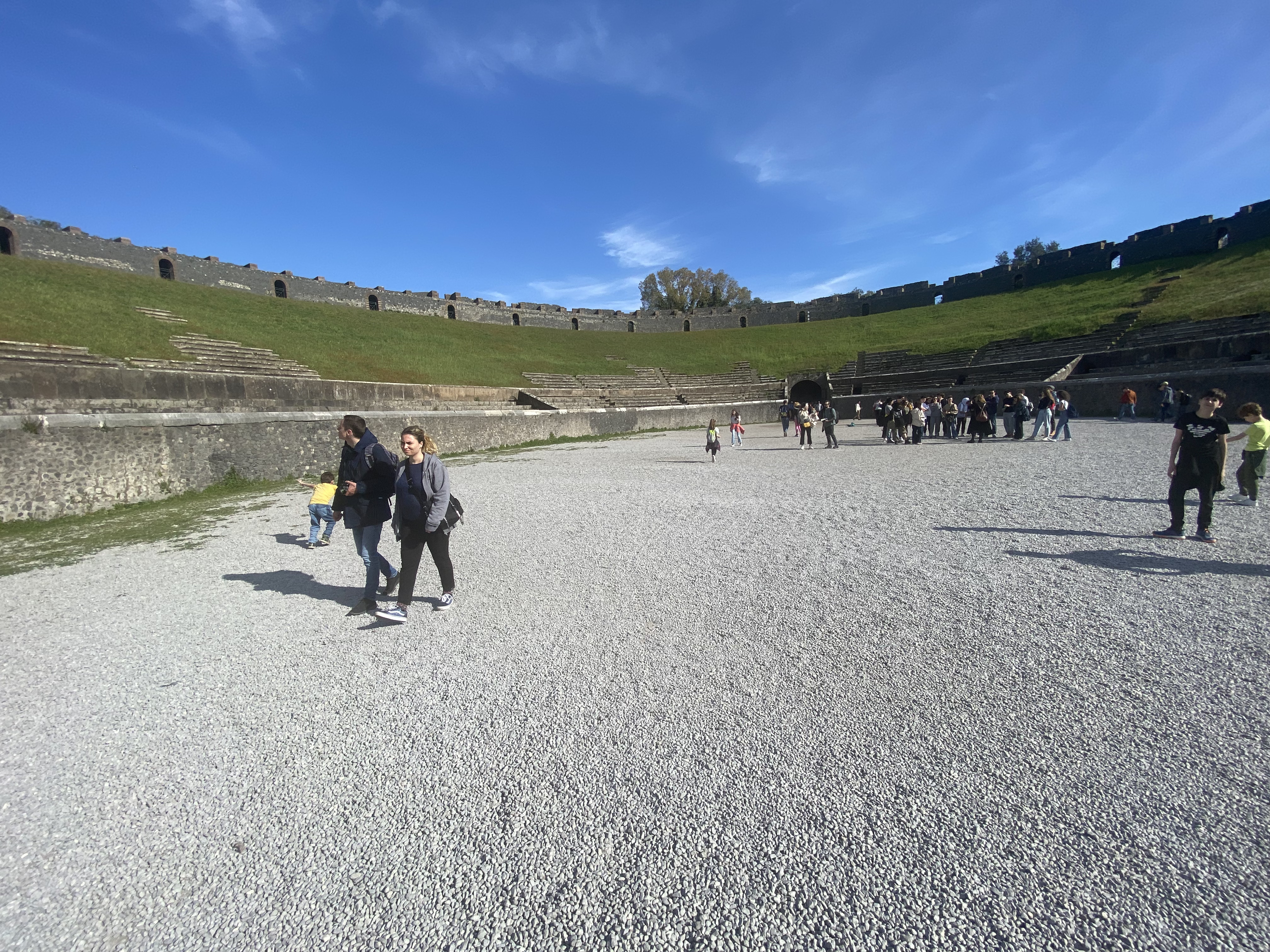


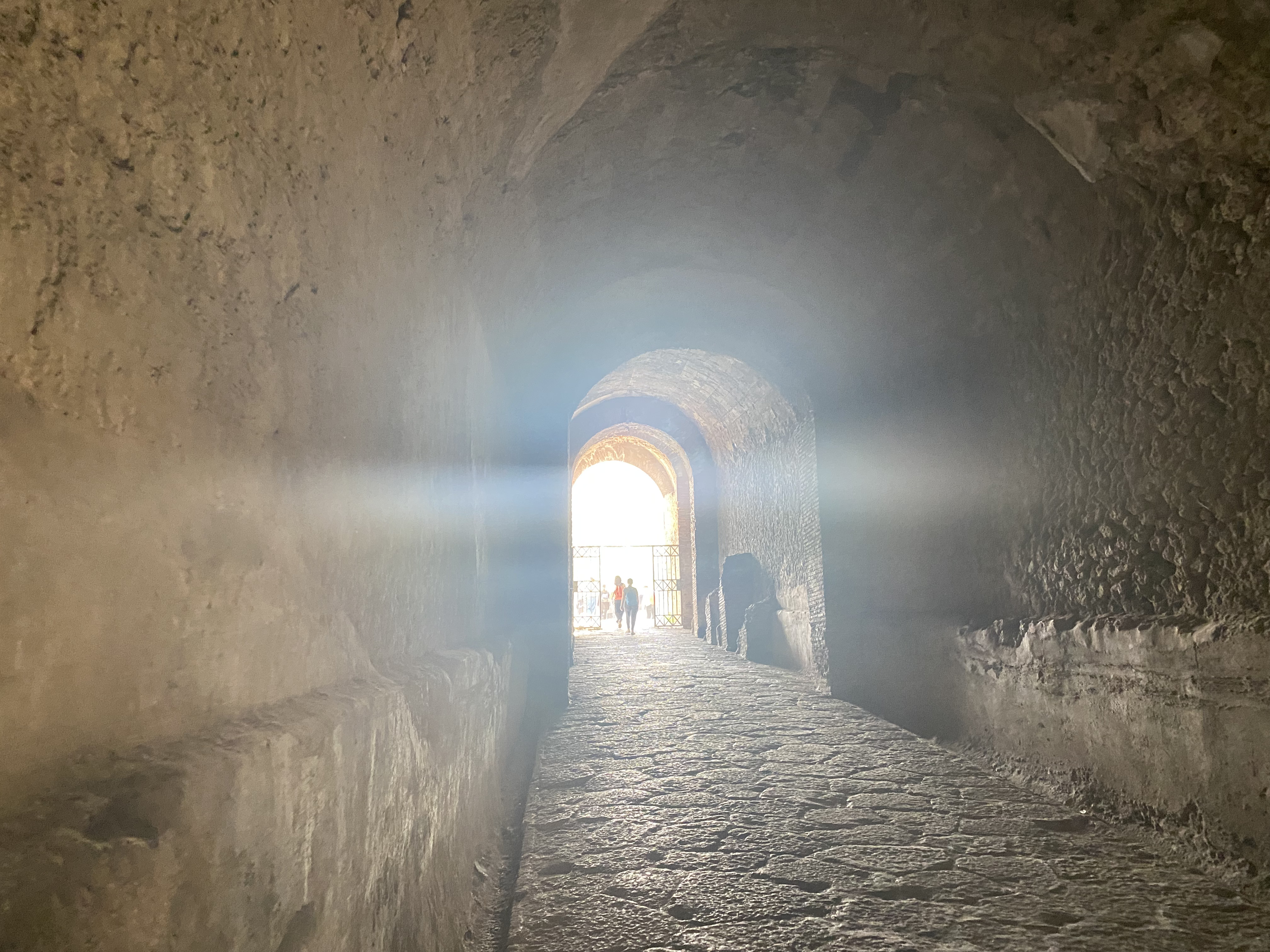
The gladiator barracks and training grounds next to the Coliseum.
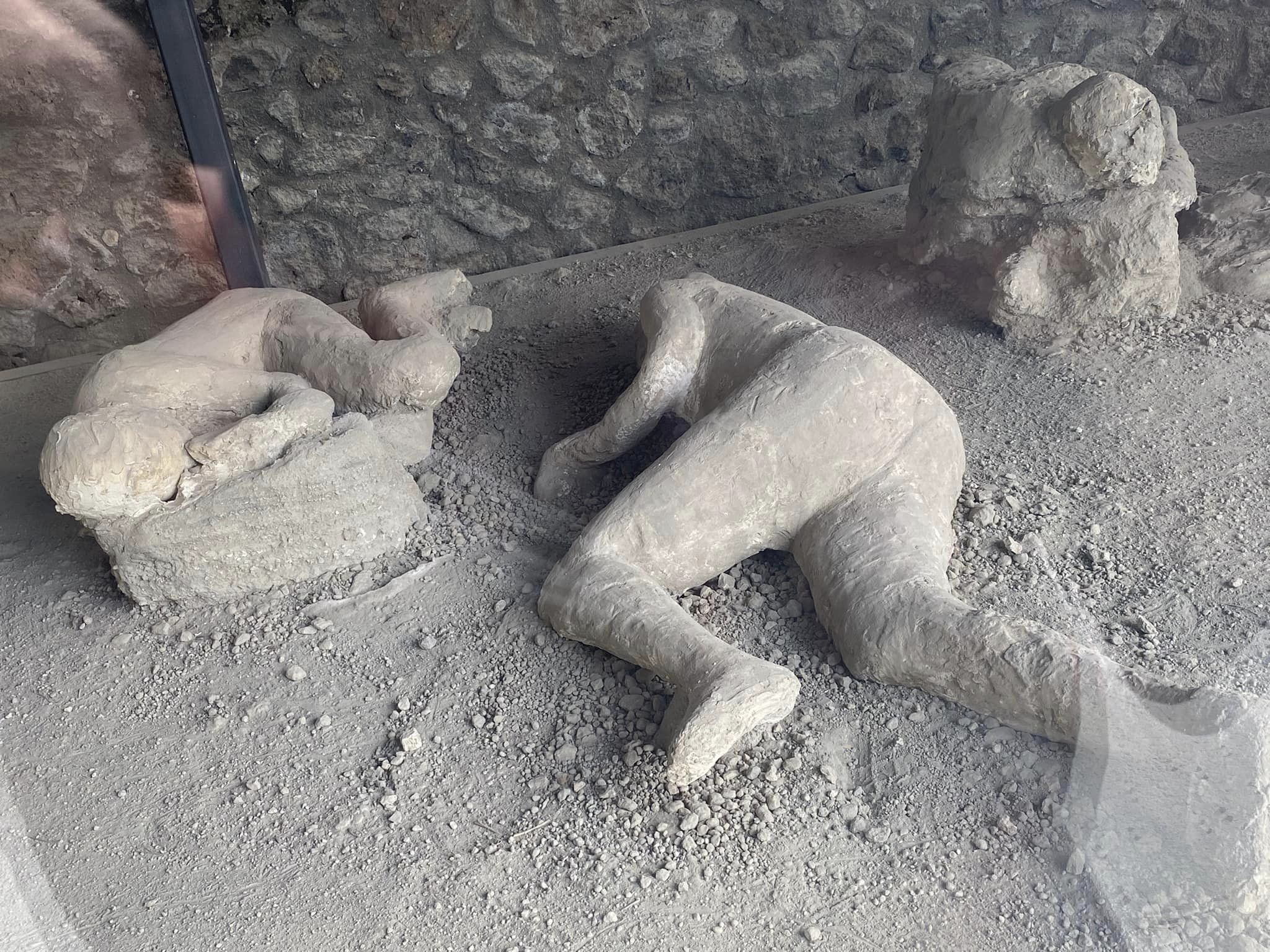
Plaster casts of the victims of Vesuvius can be found in the Naples and Pompeii museums as well as certain homes within Pompeii (to be shown in the next posts).
I want to close this post with the largest collection of individual bodies so far discovered within Pompeii, referred to as the fugitives of the garden. Over a dozen individuals who were caught by the pyroclastic blast as they were collectively trying to leave the doomed city.

These are not the actual bodies of the dead, but casts of the negative space the bodies left behind.
The pyroclastic flow killed the victims and also covered them in ash within seconds. Over time the bodies decomposed within the compacted ash, leaving behind a hollow space which future archeologists filled with plaster before removing the surrounding ancient ash dirt. These plaster casts hauntingly document the victim’s last living moments.



 Notes from a Composer